May 26th, 2025Second term starts for Trump

The Local journalist Tony Sawrey continues his US journey. “I simply wanted to see the USA at ground level through my own lens and form an opinion of this land via actual experience. I hope it’s worth reading.”

As of April 30, American President Donald Trump and his Republican administration completed their first 100 days in office.
The commencement of his second term was one of the most anticipated events in recent memory, and depending on who you talked to, was characterised by trepidation and anxiety, or anticipation and excitement.
For me, wandering around the United States, asking stupid questions, getting people’s names wrong and generally testing folks’ good-natured tolerance, allowed me to see that views on Trump and his administration were extremely diverse.
While Trump is often called a wannabe dictator it is important to note that most dictators start early so they have decades to really grind the boot in. Perhaps, being nearly 80 he is a little old and could very well die in office and leave us with Vice President Vance.
However his cultivation of an inward-looking America First agenda will be a hardship to reorientate even if his successors tried to attempt it and represents, in the words of historian Jason Steinhauer, The end of the 20th century.
Or, the end of a period marked by the (perhaps misguided) belief that post WWII diplomacy, cooperative agreements and open markets, fuelled by United States economic might could allow humanity to find solutions to global challenges.
But Trump has reinstalled the fences characterised by a climate of fear and uncertainty.
For Stacy Scheff, an immigration and prisoners rights lawyer in Arizona, the US government’s crosshairs seem firmly targeted on people such as her, her rights advocacy work and the marginalised people her firm supports. Over the next 18 months she predicts an American diaspora.
“Things are now at a crisis point,” she says. “The restraints on the executive branch (the office of the President) are being tested and they are not holding. In such a political climate, leaving the United States may become a real necessity. But of course, not everyone has that option.”
And regarding the international community: “No matter if there was a new leader tomorrow”, says Ted, a retired Tucson community organiser, “the trust that other countries had in the US previously will take years to recover. They cannot trust that the country will respect treaties or look after its friends.”
Meanwhile over on the east coast there is yet another range of opinions on the Trump effect. For retirees Tim and Cathy, they see that anyone with money likes Trump, no matter what steps he takes to avoid judicial oversight or bypass a meek compliant Congress.
But then, if you talk to young couples such as Drew and Elle working several jobs with kids to raise, they say: “Trump’s OK. He’s going to drain the swamp (meaning US federal bureaucracy) and bring jobs back to American soil.”
In Washington DC, the outlook tends to hover between grim or just fine depending on who you talk to.
Richard, a teacher at Georgetown University, put it like this: “Washington is a factory town and the industry is government. And in every street around here there are people who have had their employment abruptly terminated, often without access to pensions which they have worked their whole lives towards.”
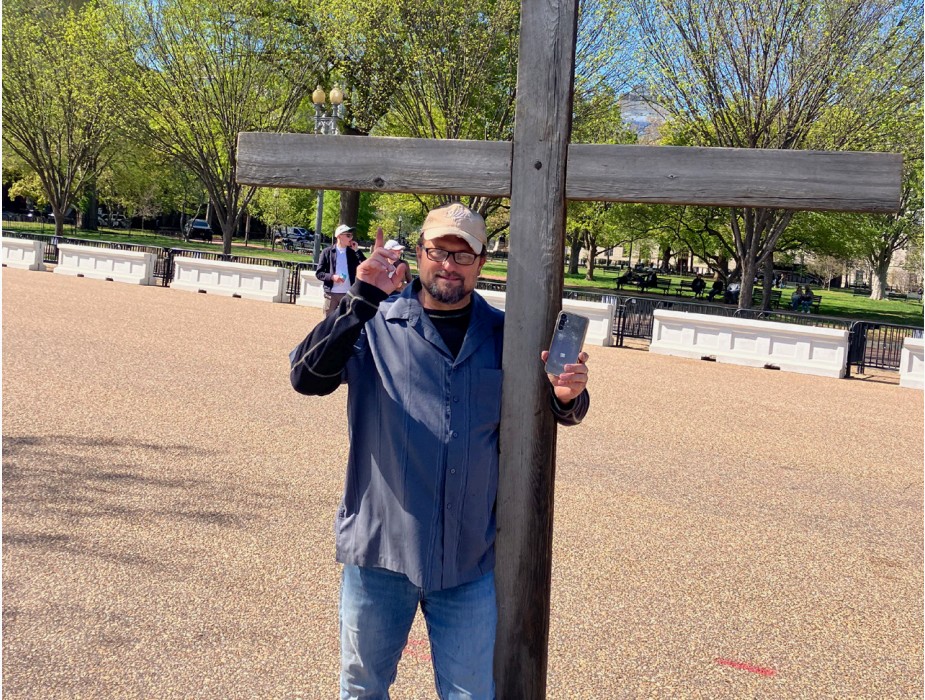
For Stephan, a Christian revivalist shouldering a cross outside the White House, he hopes Trump can succeed. “If he is truly a religious man which I believe he is, he has an opportunity to take part in the impossible and expose what’s really going on. He came in to drain the swamp but found out it was an ocean.”
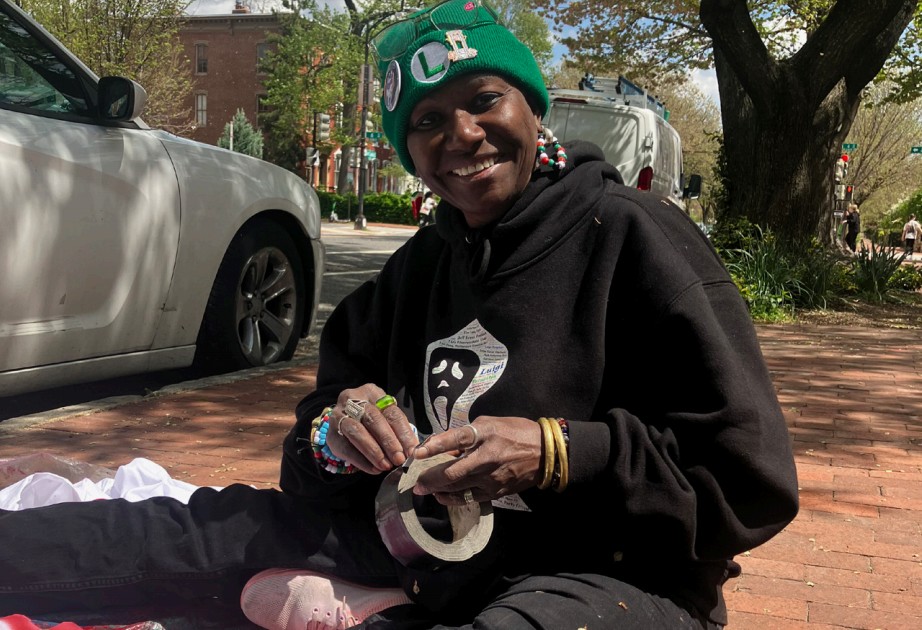
Nadine, a street busker from the Caribbean working in the Capitol Hill area says: “I believe that we are heading towards fascism. Do you know about Project 2025? It’s already more than two thirds completed.”
The Project 2025 plan was published by The Heritage Foundation, a conservative think tank which now has many of its members in government. And the Trump administration has actioned numerous directives that mirror proposals from the paper.
These include firing federal workers, funding cutbacks and, in keeping with the project’s expressly Christian cultural stance, suppressing diversity and inclusion programs and going after museums and institutions that don’t defer exclusively to ‘western cultural values’ or promote ‘non-traditional gender ideology or propaganda’.
It seems that tariffs may go up and down, international treaties and agreements can always be renegotiated. But if there is anything that Trump has been most keen to push down and exclude in his second term then it is anything that doesn’t adhere to a patriotic family-centric neo-classical meta narrative.
Ultimately, the wholesale suppression of dissenting artistic voices may in fact be his most profound legacy for the culture of the United States of America.