


July 10th, 2025Failing to vote fines
Victorians who have an outstanding fine for failing to vote in the 2024 local council elections are urged to act before the matter is referred to Fines Victoria.
Victorians who failed to vote in the October 2024 elections will start receiving a penalty reminder notice this week, which carries a fee of $29.20 in addition to the original $99 fine.
Electoral Commissioner Sven Bluemmel advised recipients of a penalty reminder notice to act as soon as possible.
‘If you receive a penalty reminder notice in the mail, you have 3 options: pay the fine, request an internal review, or elect to go to court,’ Mr Bluemmel said.
‘Please get in touch with us if you have any questions or require further clarification because once we hand it over to Fines Victoria for enforcement action, we are unable to further assist.’
Non-voters have 28 days to respond to the penalty reminder notice. The Victorian Electoral Commission encourages people who are unsure what to do, or who require assistance throughout any stage of the infringements process, to call 1300 551 575 or visit vec.vic.gov.au/voting/fines-and-reviews
July 10th, 2025What is a small business employer?
The Council of Small Business Organisations Australia (COSBOA) has responded to the release of the Fair Work Ombudsman’s (FWO) review into the definition of a ‘small business employer’, expressing disappointment that meaningful change has not been recommended.
COSBOA CEO Luke Achterstraat said the review’s outcome is an absolute missed opportunity to bring Australia’s definition in line with modern business realities and global standards.
“While we appreciate the FWO’s work in consulting stakeholders, it is inadequate that the review has not recommended any changes to the outdated 15-headcount definition of a small business employer,” Mr Achterstraat said.
“This was a real chance to create clarity, reduce red tape and unlock growth, but instead, we’re left with a definition that continues to penalise ambition.”
“One has to wonder whether this review was commissioned in good faith or whether it was window dressing, with a foregone conclusion pre-decided at the outset.”
COSBOA’s submission to the review strongly advocated for updating the small business definition under Section 23 of the Fair Work Act 2009 from fewer than 15 employees to 50 full-time equivalent (FTE) employees.
“A headcount-based definition is no longer fit for purpose,” Mr Achterstraat said.
“It discourages growth, burdens businesses with compliance costs, and is completely out of step with international counterparts like the European Union, the United Kingdom and Canada, who use the 50 FTE benchmark as the standard.”
COSBOA argues businesses with 15 to 49 employees make up a significant portion of the Australian economy but are too often treated the same as large corporations when it comes to workplace relations obligations. Despite lacking comparable HR, legal and compliance resources, these businesses are expected to navigate complex requirements –from multi-employer bargaining to workplace delegates’ rights and wage compliance – while continuing to operate within the constraints typical of small enterprises.
The policy recommendations made by COSBOA maintain that updating the definition to 50 FTE better reflects these operational realities, brings consistency across regulatory frameworks, and extends support to 97.5% of employing businesses nationwide.
“The Government has spoken a lot about reducing red tape and boosting productivity, yet has failed at this basic hurdle,” said Mr Achterstraat.
“If the European Union can agree on a universal definition, why can’t we?”
“Australia needs a workplace relations system that reflects the value of small business, not one that panders to vested interests and outdated assumptions.”
“It’s time to stop talking about productivity and start acting,” concluded Mr Achterstraat.
For more information, visit www.cosboa.org.au.
July 9th, 2025Seasonal firefighters help protect Victorian communities
Applications are now open for seasonal firefighter roles across Victoria. Forest Fire Management Victoria (FFMVic) is employing 500 seasonal firefighters prior to the summer bushfire season.
FFMVic Chief Fire Officer, Chris Hardman, said seasonal firefighters boost Victoria’s firefighting capacity in the lead-up to summer and during the peak fire season.
“New recruits will train and work alongside our permanent firefighting staff, responding to bushfires rapidly to keep communities safe this summer,” Mr Hardman said.
“They will be part of a team of close to 1800 frontline personnel and 1200 accredited incident management staff this bushfire season.”
Last year Forest Fire Management Victoria firefighters responded to more than 1265 bushfires across the state, and delivered priority planned burns which will help reduce the impact of bushfires this summer.
“Emergency response deployments can occur anywhere across the state, providing opportunities to travel and work in different locations,” Mr Hardman said.
“In previous seasons, some recruits have also been deployed to support firefighting efforts across Australia and internationally.”
Grampians Region Deputy Chief Fire Officer, Jason Hellyer, said seasonal firefighter roles provide rewarding career opportunities for those with a passion for the outdoors, learning new skills and making a difference.
“In addition to responding to bushfires and helping to deliver planned burns, new recruits will also undertake pest and weed control works, and maintain recreational reserves, strategic fire breaks and forest roads,” Mr Hellyer said.
“They can also be called on to support other emergencies such as major floods, storms and biosecurity incidents.”
“Many of the firefighters deployed to the current Canadian bushfires started their careers as project firefighters,” he said.
Applications are now open for seasonal firefighter roles across ten locations in the Grampians region including Ballarat, Horsham, Bacchus Marsh, Creswick, Daylesford, Beaufort, Halls Gap, Edenhope, Wail and Cavendish.
FFMVic is committed to a diverse and inclusive workplace that reflects the Victorian community. As part of its ongoing commitment to support meaningful careers for current and future First Nations staff, designated positions are available.
Applications close 27 July and employment occurs between October and May, with some variations depending on seasonal requirements.
For information and to apply, visit jobs.careers.vic.gov.au/pff or call 136 186.
July 9th, 2025Helping families with food
The state government is delivering support to more Victorian families so they can put food on the table with new grants to boost local food relief efforts across the state.
Minister for Carers and Volunteers Ros Spence has announced applications are open for the $9 million 2025-26 Community Food Relief Program – doubling the funding from last year to make sure help is reaching those who need it most.
Funding will support food relief services across local communities – tackling food insecurity and easing cost-of-living pressures for families doing it tough with two grant streams.
Coordination Grants of up to $300,000 are available for large-scale food relief organisations, and Local Grants of up to $100,000 are open for grassroots organisations, such as neighbourhood houses and social enterprises, that deliver culturally appropriate, healthy food to the communities they know best.
The program is already making a real difference – last year, four major Coordination Grants were distributed and 112 Local Grants supported food relief efforts across 58 local government areas, helping local organisations respond directly to the needs of their communities.
Applications close on 5 August 2025 for Coordination Grants and 19 August 2025 for Local Grants. For more information and how to apply, visit providers.dffh.vic.gov.au/community-food-relief.

July 9th, 2025More grants for First Nations athletes
Victoria’s next generation of First Nations athletes can take their performance to the next level with more grants for uniforms, equipment, travel and participation in sport carnivals, supported by the state government.
Minister for Community Sport Ros Spence has announced a new round of grants through the popular Aboriginal Sport Participation Grant Program.
From the Australian Indigenous Surfing Titles to Super Netball, the performances of First Nations athletes on the big stage are an inspiration to all Victorians.
The program delivers grants of up to $1,000 for team uniforms and equipment, and up to $2,500 for travel costs so clubs can participate in both Victorian and national tournaments.
Individuals can also access up to $250 to purchase sporting uniforms and equipment, and up to $750 for their own travel costs.
Previous recipients include Reservoir based Debbie’s Diamonds who scored almost $3,000 towards travel costs, supporting their Mens C Grade and Womens B Grade basketball teams to compete at the recent 2025 VACSAL State-wide Basketball Classic in Mildura.
Mernda Calisthenics Club also bagged more than $500 towards uniforms for five club members from ages 15 to 24 to enable them to compete in the local competition.
This grant program is part of the government’s strong support for the Victorian Aboriginal community. Since 2020, the Aboriginal Sport Participation Grant Program has provided more than 480 grants to community sport clubs and individuals in Victoria’s Indigenous communities.
Applications for this round are open until 11:59pm on 29 July 2025. For more information or to apply visit sport.vic.gov.au.
July 9th, 2025New CEO
The Victorian Chamber of Commerce and Industry Board is delighted to announce that accomplished transformational leader Sally Curtain has been appointed as the next Chief Executive of our state’s largest and most representative business organisation.
Sally will commence in the role at a date to be determined before 1 September 2025, taking over from Paul Guerra, who will remain with the Victorian Chamber to deliver the 14th World Chambers Congress from 2 to 4 September 2025. Paul will then commence his new role as Melbourne Football Club CEO.
Sally Curtain will join the Victorian Chamber from her current role as Bendigo Kangan Institute (BKI) Chief Executive Officer (CEO), bringing significant experience in leading transformational change across state and local government, as well as business enterprises. Sally understands the work of VCCI including through BKI’s Committee for Melbourne membership and her role as an inaugural Champion of our globally-recognised women in business program, Chamber Change.
BKI is an integrated skills organisation leading TAFE delivery and skilled migration assessments. It operates in the commercial market as a Victorian Government Enterprise. At BKI Sally has driven an ambitious strategy and organisational transformation program, realised with BKI being named 2022 Victorian and Australian Large Provider of the Year. It has doubled in size during Sally’s tenure, including the $60 million Bendigo City Campus revitalisation Project and the $60 million Kangan Institute Health and Community Centre of Excellence in Broadmeadows.
Prior to her appointment as BKI CEO, Sally successfully led organisational and operational changes within diverse and complex agencies. This included restructuring the former Department of Justice to better meet the needs of regional communities, creating new agencies such as the Independent Broad-based Anti-corruption Commission, scaling up services to a burgeoning population in City of Casey and operating as a regulator to modernise registration and licensing at Victoria’s largest service provider, VicRoads.
In 2022 Sally was made a Fellow of the Institute of Public Administration Australia (Victoria) for her outstanding contribution to public administration and exemplary service to the Victorian community.

July 8th, 2025Deer hunting
The state government is expanding recreational hunting in East Gippsland – boosting tourism, supporting local jobs and helping control wild deer.
Minister for Outdoor Recreation Steve Dimopoulos has announced that the National Parks Act will be amended to allow seasonal deer hunting in Errinundra and Snowy River National Park.
This will allow seasonal deer stalking in some 130,000 hectares of the two parks and means most public land in eastern Victoria will be available for recreational deer hunting.
This expanded access to seasonal deer stalking on public land adds to existing opportunities for accredited hunters – supporting outdoor recreation while helping control wild deer in parks across Victoria.
Anyone wishing to recreationally hunt deer in Victoria must hold a current Victorian Game Licence issued by the Game Management Authority.
Deer hunting is a popular activity in Victoria, with more than 45,000 licensed deer hunters in the state. The activity supports local industry and generates economic activity in regional areas.
Between 2013 and 2019, recreation hunting supported more than 3,100 jobs and contributed $356 million to the Victorian economy, $201 million of which was attributed to recreational deer hunting.
In 2023, recreational hunters harvested 137,000 deer and hunted for a total of 332,000 days, with 52 per cent of hunting occurring exclusively on public land.
Allowing recreational hunters greater access to help manage wild deer will also contribute to better biodiversity outcomes, making our bush healthier for our native wildlife.
This announcement compliments the Victorian Deer Control Strategy – a state-wide plan for government and authorities to manage deer populations across the state and coordinate control action in priority areas to minimise impacts on native habitat, biodiversity and agriculture.
For more information about game deer hunting please visit: gma.vic.gov.au/hunting/deer.
Minister for Outdoor Recreation Steve Dimopoulos:
“This is a win for regional communities – expanding deer hunting means more visitors, more jobs, and stronger local economies.”
“By providing access to deer hunting in Errinundra and Snowy River national parks we will reduce the impact of deer on our national parks and on native ecosystems, preserving our environment for future generations to enjoy.
Australian Deer Association Advocacy Lead Sean Kilkenny:
“This is a fantastic decision by the government and is welcomed by over 45,000 licensed recreational deer hunters.”
“
July 8th, 2025GREENING OUR FUTURE
We know that the move to electric vehicles (EVs) is moving fast with plenty of people use our EV charging station outside the Community Hub in Maryborough.
But what about all of the many machines we operate out of the Central Highlands Shire’s Council Depot?
Road graders, tractors, brush-cutters, lawnmowers, gutter cleaners, water tankers, diggers – the list goes on!
This week our Parks and Open Spaces team took a look at a battery-powered ride-on mower, to assess its performance in comparison to the many “fossil fueled” units we currently use.
There’s a plan to take one on board to test properly later in the year, and the idea looks promising.
Watch this space!

July 8th, 2025Pool funding
Central Goldfields Shire’s $3 million funding application to the Victorian Government’s Regional Community Sports and Infrastructure fund for the heritage-listed Maryborough Olympic Outdoor Pool Complex has been successful.
This follows the Federal Government’s $4.5 million funding announcement in April.
Council will co-contribute a further $1.5 million ($150,000 in the 2025-26 Annual Budget and $1.35 million in future borrowings in the 2026-27 Annual Budget) to the project which will be delivered in two stages.
Stage one will follow negotiations with our contractor to open the learn to swim and octagonal pools with refurbished, accessible changeroom facilities. Stage two will focus on the replacement of the heritage, 50 metre pool.
For further information visit:
July 8th, 2025Help for pet owners
Victorian pet owners will benefit from expanded and upgraded services delivered by not-for-profit animal care organisations across the state thanks to the state government.
Minister for Agriculture Ros Spence today announced 33 successful grant recipients as part of Round 12 of the Animal Welfare Fund Grants program, with a total of $1.6 million awarded in this round.
This includes almost $1.14 million to not-for-profit organisations, shelters, and community rescue and rehoming organisations to support the rehoming of companion animals.
Funding of $460,000 has been granted to not-for-profit and community vet clinics to upgrade or expand their services or facilities or set up new low-cost clinics in areas of need across the state, which will be a real game-changer for Victorian families needing access to cheaper veterinary care.
Pets In The Park is a national organisation that provides free access to preventative veterinary healthcare programs, enabling homeless individuals to care for their pets while supporting their own wellbeing.
The organisation will use its $131,000 grant to establish a new clinic in the Wangaratta area which will support the companion animals of vulnerable individuals experiencing homelessness in the north east Victoria region.
Since 2014, the Government has awarded $14.76 million to animal care organisations through the Animal Welfare Fund Grants program, which aims to improve companion animal welfare, encourage responsible pet ownership, and provide better animal welfare outcomes.
For more information on the Animal Welfare Fund Grants Program, visit agriculture.vic.gov.au/livestock-and-animals/animal-welfare-victoria/community-and-education/animal-welfare-fund-grants-program
Agriculture Minister Ros Spence: “The Animal Welfare Fund Grants Program is making a real difference in the lives of Victorian companion animals and their owners, helping as many pets as possible into loving families.”
“We are proud to work with animal care organisations to secure affordable care and we look forward to seeing the benefits of this work for many years to come.”
July 7th, 2025Records matter
Millions of livestock are travelling into, out of, and across Victoria each year and when an emergency happens, Agriculture Victoria needs to know where they are.
Quick traceability means we can contain and eradicate emergency animal diseases and contact livestock owners to assess animal welfare needs when there is a fire or flood. This helps to reduce the impacts on individual farmers and the wider industry.
The database isn’t just used in emergencies. Last year there were 33 million livestock movements recorded in Victoria and the database is used by Agriculture Victoria every day to assist stock agents with tracking consignments and undertaking tracebacks on livestock for national residue survey audits.
There are three parts to Victoria’s world-class traceability system:
- All locations where livestock are kept have a Property Identification Code (PIC). This includes farms and saleyards.
- All livestock are identified by a National Livestock Identification System ear tag or device.
- All livestock movements to a different PIC are recorded in the NLIS database.
Up-to-date records are vital and protecting our livestock industry relies on us all doing our part.
When cattle arrive at your property it’s your legal responsibility to ensure the National Livestock Identification System database is updated within two days. This includes cattle on agistment.
The NLIS can be updated by you, a stock agent, a farm manager or contractor.
Cattle tagging and recording of movements are a vital part of our protecting farming industry and wider community. For more information call our NLIS helpline on 1800 678 779 between 9 am and 4.30 pm Monday to Friday or visit agriculture.vic.gov.au/p2p
July 7th, 2025Help for wine industry
The state government is investing in the sustainability and profitability of Victoria’s prestigious wine industry – backing regional jobs and tourism.
Minister for Agriculture Ros Spence has announced a $160,000 investment to support Wine Victoria to provide the wine industry with the knowledge, tools and resources they need to improve their practises and outcomes.
The investment is matched by Wine Australia to total $400,000 to expand services, providing relevant and targeted advice, information and support to grape growers and winemakers to improve sustainability and innovation.
The extension officer will be a part of a national network of officers supported by Wine Australia, to guide wine grape growers, winemakers and other stakeholders with their farming and wine production practises.
Wine is an integral part of Victoria’s regional economy, providing jobs at wineries, vineyards, and cellar doors and contributes $9.5 billion to the Victorian economy. The industry attracts visitors from across the state and around the world into Victoria’s wine regions, proving to be an enduring and popular tourist drawcard.
The Government is backing the wine industry through market development programs including the $4.5 million Wine to the World export program. We are also working closely with industry to capture new opportunities as part of the Victorian Wine Strategy, which is set to be launched later in 2025.
The strategy has been co-designed with the Victorian wine industry, following extensive industry engagement in 2024-25. It focuses on improving domestic and international trade, innovation and sustainability, tourism, and people and community.
For more information on the Victorian Wine Strategy, visit agriculture.vic.gov.au/crops-and-horticulture/wine-and-grapes/wine-strategy
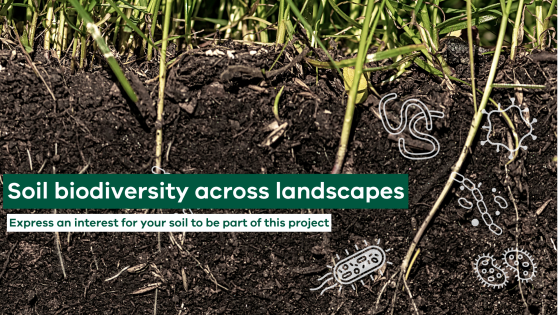
July 7th, 2025Soil needed to dig deeper into microbiome research
On World Microbiome Day, Agriculture Victoria launched an expression of interest campaign to encourage farmers to donate soil samples to a National Soil Action Plan-funded research project.
Funded by the Australian and Victorian governments, the ‘Soil biodiversity across landscapes’ project will seek to implement priority actions from the plan under the National Soil Strategy
Agriculture Victoria Research (AVR) principal scientist Tim Sawbridge said he hoped to attract interest from at least 50 farmers statewide.
‘We are looking at what microbiomes exist in soil and how they function across natural and farmed environments,’ Dr Sawbridge said.
‘A soil microbiome is a community of microbes, bacteria, invertebrates and other life forms that live within soil.
‘To gain a deep understanding of their role in soil health, we’re wanting a broad range of samples from various production zones and agricultural industries in Victoria.’
AVR is working alongside the Arthur Rylah Institute for Environmental Research (ARI) on the project to collect and analyse samples of soil from across the state.
ARI has provided over 200 samples from public land, such as state forests and parks and reserves, to AVR for analysis.
Samples are being taken at Agriculture Victoria’s SmartFarms, including over time at the existing DairySoils study* at Ellinbank SmartFarm.
‘We anticipate that farmers who express interest in submitting samples to the project will have a natural curiosity about what is living within their soil,’ Dr Sawbridge said.
‘Everyone is set to gain from this project.
‘Researchers, farmers and land conservationists will learn more about the benefits of this microscopic subterranean world.
‘We may discover ways to influence the microbiome’s effect on soil productivity, nutrient uptake, soil carbon and soil capacity to recover and maintain resilience in a changing climate.’
To express interest in participating in the project, farmers should email soil.microbiome@agriculture.vic.gov.au by 5 pm, Tuesday 30 September.
Soil samples will be taken from a single geo-location to a depth of 10 cm and 30 cm from a small area on the farm. The soil structure, chemistry, botanical information and DNA will be analysed and barcoded for comparison with other samples in the dataset.
This project has been funded by the Australian and Victorian governments through the National Soil Action Plan 2023 to 2028. You can read more about this project at www.premier.vic.gov.au/research-investment-digs-future-soil-health
* DairySoils is a project under the DairyFeedbase 23–28 research initiative, aimed at improving soil health in dairy farming, funded by Agriculture Victoria, Gardiner Foundation and Dairy Australia.
July 7th, 2025Drought support
Farmers anywhere in Victoria can register now for a one-on-one farm advisory consultation to take stock and discuss the best way forward for their business.
The consultation includes a session of up to 3 hours (face to face or online) and follow-up call, to develop and implement a drought management action plan.
When registering for the program, participants can indicate their preferred consultant from an extensive list of experienced service providers.
To view the full range of financial, technical and wellbeing support available visit agriculture.vic.gov.au/drought or call 136 186.
July 6th, 2025Welcome drought relief
Rural councils have commended the Victorian Government for listening to advice and acting to ease the pressure on drought affected communities.
The Victorian Government has announced $75m of new supports, following deliberations by the state’s Drought Response Taskforce. Rural Councils Victoria was one of several stakeholder groups represented on the Taskforce.
RCV is particularly pleased the Victorian Government has adopted its proposal to fund direct rate relief for farmers.
“Council rate discounts will help farmers survive the drought,” RCV Chair Cr Rob Amos said.
“This will mean more cash back into farm budgets, straight away.”
Corangamite Mayor Cr Kate Makin — who has served as the RCV representative on the Drought Taskforce — said the rate relief will be welcomed by farmers.
“This is something our rural communities and member councils have been calling for, and we’re grateful it’s been picked up.”
The relief will take the form of $35.8 million in Primary Producer Support Payments, to be distributed by the rural councils of Ararat, Moyne, Colac Otway, Pyrenees, Corangamite, Southern Grampians, Glenelg, Golden Plains and West Wimmera, plus Surf Coast, Warrnambool and Greater Geelong.
RCV modelling forecasts the payments will cover about 40% of eligible farmers’ expected rates bills.
Cr Amos said Rural Councils Victoria is also pleased the Government has announced:
- Food and grocery support through additional funding for the Country Women’s Association ($2m)
- Development of new and improved water infrastructure through the East Grampians Pipeline ($15m) and upgrades to standpipes, emergency and private bores ($5.5)
- Funding to progress the South West Sustainable Water Strategy, to boost water resilience into the future ($3.5m)
- Ongoing funding for community programs, such as the ‘Look over the Farm Gate’ mental health program ($5.9m)
“It’s great the government has listened and acted, though there remains more to be done,” Cr Amos said.
“Farmers and rural communities across the state will need sustained support.”