


June 14th, 2025New youth myki cards
Kids across the state have the chance to design the new youth myki cards that will hit the network next year – unlocking free public transport for every Victorian under the age of 18.
Minister for Public and Active Transport Gabrielle Williams says children between the ages of five and 17 will be able to put their creativity to the test as part of a competition to design the new youth myki cards.
Young Victorians can submit their designs for a chance to showcase their work on over a million youth myki cards and to win a $1,000 gift card.
Designs for the new youth myki can be hand drawn or a digital illustration – with the new card set to stand out from the current myki card range.
Entries will close on Sunday, June 15 with Premier Jacinta Allan and Minister Williams announcing the winner later this year.
The youth myki was announced as part of the Victorian Budget 2025/26 to deliver free public transport to children from 1 January 2026 – ensuring cheaper school runs, more affordable weekends and one less thing for families to worry about.
A yearly student pass currently costs $755, but from next year children aged under 18 can travel for free. For a family with three children under 18, that’s a saving of $2,265 each year.
More than one million young Victorians and their families will benefit – with the cards set to cost $5 and be valid until the child turns 18.
For more information on the design competition and how to enter visit engage.vic.gov.au/youthmyki
June 14th, 2025More boat upgrades
The state government is helping Victorians get out and enjoy the great outdoors with more major boat ramp upgrades and a brand-new launching point for recreational boaters.
Minister for Outdoor Recreation Steve Dimopoulos recently visited the Werribee South boat ramp to announce the latest round of Better Boating Fund will invest $36.3 million in major infrastructure upgrades across Victoria, as well as significant ramp maintenance and dredging to optimise the functionality of ramps.
As part of proposed upgrades at the bustling Werribee South facility, which services growing demand from boaters in Melbourne’s booming west, an extra ramp lane and accessible pontoon will be added while the car park and entry points will be reconfigured to reduce congestion and the need to queue back onto Beach Road.
Parking and access lanes will be redesigned and resurfaced to improve traffic flow and create a small number of additional spaces for cars with boat trailers. The $2.2 million project will also improve boat preparation areas so skippers can rig their vessels out of the way.
In addition to improvements at Werribee, the Better Boating Fund will support construction of major facility upgrades at Geelong’s Limeburners Point, Schnapper Point at Mornington, Tooradin and Port Welshpool.
A new ramp will also be built at Lake Eildon’s Howqua Inlet, featuring a concrete ramp and asphalt parking area, to provide another option for launching on the eastern side of the lake.
Ramp managers will be able to undertake critical dredging and ramp maintenance through a pair of competitive grants programs worth a combined $1 million, while planning will begin for future upgrades at another seven facilities.
The Fund is allocated via annual action plans, with the most recent including a range of initiatives to get more women into recreational boating, improve boating safety through better aids to navigation, support waterway management and deliver boating education clinics.
The Better Boating Fund reinvests recreational boating licence and registration fees back into boating projects and programs. Since 2021 nearly $140 million has been returned to recreational boating including more than 50 ramp upgrades such as St Leonards, Lake Bullen Merri, Clifton Springs and Inverloch.
To view the Better Boating Fund Action Plan and for more detail on major ramp infrastructure upgrades visit www.betterboating.vic.gov.au

June 14th, 2025Wanna be a WaterWatcher?
The North Central Catchment Management Authority (CMA) is on the lookout for volunteers to help monitor the health of two key waterways.
The CMA’s WaterWatch team is keen to recruit volunteers for sites along the Coliban and Little Coliban Rivers, as well as Kangaroo, Birchs, Creswick, and Tullaroop creeks.
North Central CMA Project Manager Tess Grieves said being a WaterWatch volunteer was a great way to contribute to the community.
“Citizen science is a great opportunity to meet a lot of like-minded people and make a real difference to your local waterway,” she said.
“We provide volunteers with all the training and equipment they need, and welcome people from all walks of life and all ages.
“You only have to monitor the waterway once a month and testing usually takes about half an hour.”
Ms Grieves said long-term regular water quality testing helps build a picture of a waterway’s health and the collected data is uploaded to a national database.
“At the moment we’re looking for volunteers for our Tullaroop Tributaries and A Healthy Coliban Catchment projects,” she said.
“Both projects are aimed at improving the quality of the waterways and everything that relies on them to survive and thrive.
“Becoming a WaterWatch volunteer means you can help an endangered butterfly, a vulnerable platypus, or threatened blackfish have a healthy home. The work of citizen science volunteers is really important.”
For more information on volunteering, email citizenscience@nccma.vic.gov.au or call 0447 824 514.
To find out more about the CMA’s citizen science projects, visit https://www.nccma.vic.gov.au/get-involved/citizen-science/north-central-citizen-science-projects/
June 14th, 2025Road works complete
Minister for Roads and Road Safety Melissa Horne says all major rehabilitation road projects backed by last year’s $964 million road maintenance blitz have wrapped up across Victoria’s west.
The region’s busiest roads have been strengthened including the Midland, Sunraysia, Wimmera and Western highways as well as Beaufort-Lexton, Bacchus Marsh-Gisborne and Horsham-Kalkee.
More than 1.5 kilometres of Midland Highway has been upgraded in Elaine near Woolshed Road as well as 800 metres of the Midland Highway in Blampied, near Blampied-Mollongghip Road.
The Midland Highway links Ballarat and Geelong and serves as a key freight route for agricultural industries – while also connecting local commuters to jobs and services.
Various sections of the Western Highway were improved, with rehabilitation works now complete on 2.7 kilometres between Spring Hill Creek and Trawalla Road at Trawalla, one kilometre near Mallee Dam Road at Lawloit and 500 metres near Olinda Street at Beaufort.
Other highways such as the Wimmera and the Sunraysia also had vital works completed as part of the $964 million road maintenance blitz – which saw 70 per cent go towards regional Victoria.

June 13th, 202550 years of the Victorian National Parks Act
The newly formed Victorian Protected Areas Council (VPAC) recently gathered at Grampians (Gariwerd) National Park to celebrate the 50th anniversary of the Victorian National Parks Act.
Over 30 former rangers, park managers and friends gathered in Halls Gap for a weekend of activities and celebration of Victoria’s protected areas.
Protected areas are the cornerstone of nature conservation in Victoria. They protect places the community has visited and loved for generations.
VPAC’s formation this year coincides with 50 years of protected area management under the National Parks Act. In 1975, the Act consolidated national parks under one agency and established the legislation and regulations that have directed park management for half a century.
“It seems ironic that in this anniversary year, Victoria’s parks are starved of funding and staff numbers are being greatly reduced,” said VPAC President, Felicity Brooke.
“Some recreational lobby groups appear to have gained far too much influence over the Government, misleadingly claiming that national parks are ‘locked up and left’ and unavailable for recreation.
“We strongly challenge this misinformation. Balancing the protection of nature and culture with recreation and tourism is the very foundation of Victoria’s National Parks Act.”
The Victorian Protected Areas Council’s members bring over 2000 years of collective expertise in protected area management to discussions about park management.
“We know these places and the many challenges they face. Our members have spent their working lives looking after parks, wildlife and people,” Ms Brooke said.
“We invite the State Government to join with us and the majority of Victorians in demonstrating their support for our wonderful parks, both now and in the future.”
Find out more at: https://victorianprotectedareascouncil.org/
June 13th, 2025Learning for Life funding
Deputy Premier and Minister for Education Ben Carroll visited St Albans East Primary School to announce a $6 million expansion of The Smith Family’s Learning for Life program, which provides financial help to low-income families and keeps our most vulnerable students engaged at every stage of their education.
The extension will support an additional 4000 students over four years through the program, which already helps almost 15,000 students across the state.
The program supports students from low-income families to remain engaged in learning and achieve their potential, focusing on improving learning, wellbeing, achievement, Year 12 completion and post-school engagement in education, employment and training.
The program includes initiatives aimed at easing financial burdens on families, helping with the cost of school essentials like uniforms, books, and excursions.
Families receive guidance and advice from a dedicated Learning for Life Coordinator, to make sure students and their families have the practical and emotional support they need throughout their education.
The program also delivers access to a range of programs to improve student engagement in education, including literacy and numeracy programs, learning clubs, careers and digital inclusion programs.
The Learning for Life program has proven to be highly effective. Over 80 per cent of participating students, who completed Year 12 in 2022, were in work, study or training in the 18 months after leaving school. A further 12 per cent were looking for work or volunteering.
The Smith Family has a strong presence in outer metropolitan Melbourne and regional Victoria where it supports 40,000 children, young people, parents and carers each year.

June 13th, 2025Manage the biosecurity risks
Agisting? Manage the biosecurity risks
If you’re considering agisting cattle on your property alongside your own herd or sending your stock for agistment elsewhere, taking some simple precautions may help avoid the risk of a costly disease outbreak.
There are 3 main considerations to protect agisted stock, where possible:
1. Follow your biosecurity plan and the procedures you have put in place to manage risks that could impact your stock or property
2. Request or provide as much information as possible about the health of the stock prior to agistment (i.e., ask for or provide a National Cattle Health Declaration)
3. Segregate livestock from different properties into designated paddocks. At a minimum, quarantine newly introduced animals in separate paddocks until their health and disease status is confirmed.
There are several disease or pests that can be introduced to the herd when they are parked or agisted.
To minimise the risk of the following diseases or parasites, there are several measures you can take:
Mastitis:
• Milk herds separately, for farmers who receive stock; milk the parked cows after the farm herd, and clean milking plant and equipment between uses
• Use good hygiene practices. Continue to monitor bulk milk cell count (BMCC), recording and treating clinical cases.
Bovine Johne’s Disease:
• Run the cattle as separate as possible, keeping in mind that bacteria may still be present in pastures for twelve months after agisted stock have left the property
• If Johne’s disease is a concern to you, consider only sending cattle older than 12 months. For those receiving cattle, ensure stock under 12 months are kept in a separate area from any agisted stock
• Participants in the Johne’s Disease Dairy Score program should be aware that movement of stock to herds with a lower Johne’s Disease Dairy Score may jeopardise their Johne’s Disease Dairy Score.
Pestivius:
• Vaccinate if it is in line with your biosecurity plan
• Keep newly introduced cattle away from the breeding herd, especially if in early pregnancy
• Ensure replacement females have developed a strong immunity before joining.
Intestinal parasites:
• Drench stock as they arrive at the agistment property (i.e. during their quarantine period) and again on their return home.
It’s important to remember there are other considerations if agisting or cow parking:
• National Livestock Identification System (NLIS): In order to maintain Lifetime Traceability, agisted or parked cattle need to be transferred between PICs on the NLIS database. Further information can be found on the Agriculture Victoria website
• National Vendor Declaration (NVD): As per any other movement when sending cattle to another property (with a different PIC), an NVD needs to be filled out
• Animal Welfare: The welfare of animals is always of the utmost importance. Stock owners and managers, including those who agist, have an obligation to, at all times, provide proper and sufficient food, water and shelter for stock under their care.
Failure to do so breaches the Prevention of Cruelty to Animals Act (1986). Find more information about drought and dry seasons on the Agriculture Victoria website or call 136 186.
June 13th, 2025Rail freight upgrades
More rail freight upgrades set to benefit producers and operators are being rolled out as longer, heavier and faster trains move more goods and take trucks off regional roads.
Three per cent more freight was carried on the V/line network this year than last financial year despite a smaller grain harvest.
A program to re-rail track, replace sleepers, lengthen passing loops and improve track geometry is almost complete on the Korong Vale to Manangatang line, one of Victoria’s busiest grain corridors with a growing container train service from Ultima – complementing a major siding extension commissioned at Boort in February.
The additional works will allow trains to operate with heavier loads at higher speeds, cutting times as longer-trains carry greater loads for our domestic and export markets.
Korong Vale’s passing loop has been lengthened to hold bigger trains which carry approximately $1.3 million worth of produce and reducing reliance on our roads.
Works to connect a new grain terminal at North Shore are imminent and final planning is underway for a similar project to follow at Tocumwal, which will further increase volumes of grain moved by rail to port.
In April 2025, V/Line leased 10 N-Class locomotives to a private freight operator on a long-term agreement and they are now hauling freight across network to support the significant growth in grain and intermodal haulage.
Additional locomotives will enter lease arrangements later in 2025.
This initiative and major government investments are improving operational capacity and efficiency and supporting deployment of longer trains delivering benefits for primary producers and freight operators.
June 12th, 2025Promoting road safety
Grassroots football and netball clubs are being asked to promote road safety in their communities for a share of $700,000 thanks to the Transport Accident Commission’s Club Rewards Program.
This year’s program aims to empower clubs to develop a culture where all players and members consider road safety before getting behind the wheel.
Now in its sixth year, the TAC Club Rewards Program allows AFL Victoria-affiliated football and netball clubs to apply for rewards of up to $10,000 to spend on club initiatives like club transport, new equipment and uniforms or facility upgrades.
A further $100,000 has been added to this year’s funding pool to support more clubs in spreading the message.
More than 230 clubs earned a share of last year’s pool, with many motivated to take part after being affected by road tragedy.
As part of this year’s program, clubs will be asked to start conversations and be part of the campaign to raise awareness of the dangers of speeding, with the tagline – “Be the difference”.
The launch comes as 133 people have lost their lives on Victorian roads, with more than 60 per cent of deaths happening on the same regional roads that footballers and netballers travel on for games every week. More information on the Club Rewards Program can be found at play.afl/victoria/tacclubrewards

June 12th, 2025Youth-led events
The state government is backing more youth-led events across Victoria – helping young people come together and shape the activities that matter to them during Youth Fest 2025.
Member for Macedon, Mary-Anne Thomas said Daylesford Secondary College, Macedon Ranges Shire Council and Mount Alexander Shire council will receive grants to design, plan and deliver the following events during Youth Fest in September 2025.
• Daylesford Secondary College’s ‘The Crew’, will hold a Live4Life community-based initiative aimed at enhancing the mental health and wellbeing of young people in regional and rural communities.
• The Macedon Ranges Shire will host a Live4Life Community Youth Mental Health First Aid Course. This project will deliver a certified Youth Mental Health First Aid course for educators, parents, and community leaders. Participants will learn how to identify mental health issues in youth, offer initial support, and refer them to services. The initiative aims to reduce stigma, increase local capacity for mental health support, and create a more proactive and informed community.
• Mount Alexander Shire will stage an upcycled youth festival that features a sustainable fashion parade where young people can express their personal style through second-hand fashion.
Youth Fest celebrates young Victorians by funding fun, creative and inclusive events designed and led by young people themselves. Schools, local councils and community organisations will use funding to deliver events including art exhibitions, cultural festivals, sports days and youth awards.
This year there are 66 events in metropolitan Melbourne and 44 across rural and regional Victoria.
Victorian Youth Fest 2025 will run from Monday, 1 September to Tuesday, 30 September.

June 12th, 2025More support for families
The Victorian Budget 2025/26 is investing in real cost of living help for families who need it most, including $152.3 million to increase the Camps, Sports and Excursions Fund and $15 million to deliver the popular Get Active Kids Vouchers for another two years.
More support for camps, school sports and excursions.
With the rising the cost of living, the cost of camps, school sports and excursions really add up. That’s why the Budget is boosting the Camps, Sports and Excursions Fund and increasing the payments families receive.
Currently, eligible primary school students receive $154 per year, while eligible secondary students receive $256.
With an investment of $152.3 million, all payments will be increased to $400 from Term 1, 2026 – making sure every student gets the chance to join camps, attend excursions and play on a team with their mates.
This targeted support helps around 200,000 kids from families with a Health Care or concession card every year and has supported over 2 million students since it was introduced by the Labor Government in 2015.
Families with multiple children at the same school can pool their allocated funding to use on one child or for one specific activity – helping in situations where the costs for activities in a certain year level are higher than others.
More support for sports, activities and equipment
Whether it’s swimming or soccer, every kid deserves to have a go – no matter their background. That’s why the Budget delivers the popular $200 Get Active Kids vouchers for another two years, helping more than 65,000 kids who need it.
These $200 vouchers cover the cost of memberships, registration fees, equipment and uniforms for sports and popular activities, and are available to families with a Health Care or concession card.
The program covers more than 70 sports and more than 2,100 activity providers across the state – making sure every child across Victoria has the chance to take part.
June 12th, 2025More money for volunteers
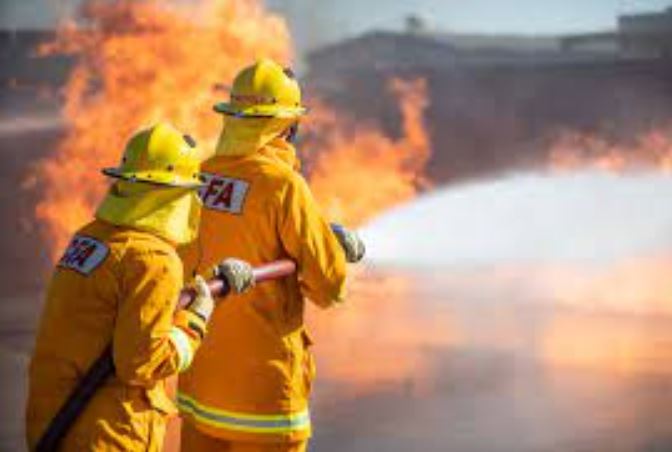
Hardworking volunteers right across Victoria will benefit from more money for trucks, equipment and modern facilities to help keep themselves and their communities safe with the state government’s Volunteer Emergency Services Equipment Program.
Member for Macedon Mary-Anne Thomas has said that $30 million is available for this year’s grants –double last year’s amount and the most ever available in one round – thanks to the Emergency Services and Volunteers Fund.
Over the next four years, an additional $62 million is being provided from the Emergency Services and Volunteers Fund to double the VESEP – just one of the ways money raised through the Fund is being used to support volunteers.
Every single dollar raised by the Emergency Services and Volunteers Fund will support our emergency and disaster recovery services.
VESEP is an annual grant program that helps Victorian emergency services volunteer groups to purchase essential equipment or make facility improvements so that they can strengthen and support their vital work in emergency response.
Groups can apply for a grant of up to $250,000 – a $100,000 increase on the previous maximum – with the Government contributing $2 for every $1 raised by the local volunteer group.
Volunteer groups can purchase equipment including generators, pumps, utility vehicles, tankers and rescue trucks. They can also fund minor refurbishments or amenity upgrades to their station, club or unit.
Eligible services include the Country Fire Authority (CFA), Victoria State Emergency Service (VICSES), Life Saving Victoria, and Volunteer Marine Search and Rescue units.
Over the past decade, the Government has invested more than $138 million in VESEP grants to volunteer groups across the state.
Recent VESEP recipients include CFA Bullengarook, Forrest, Laharum and Toongabbie brigades, which all received more than $140,000 each for new ultra-light tankers, and VICSES Warracknabeal, Goroke, Sunbury and Terang units, which received more than $100,000 each to replace utility vehicles.
The 2025-26 VESEP applications are now open and close on 28 July 2025. For more information about VESEP and to find out how to apply for a grant visit emv.vic.gov.au/vesep.
June 11th, 2025Australia’s first satellite to mobile texting service
Australia’s first satellite to mobile texting service now lands on iPhones.
Following the launch of Telstra Satellite Messaging on Tuesday (initially rolled out to Samsung Galaxy S25 series family) – Australia’s first satellite to mobile text messaging service – over 100,000 text messages have been sent or received using Telstra Satellite Messaging.
Telstra Satellite Messaging is available to eligible iPhone users! Customers with an iPhone 13, 14, 15 or 16 (all models) on an eligible plan can now send and receive text messages via satellite from some of the most remote corners of the country.
To get started, iPhone users need to ensure their device has the latest software update.
June 11th, 2025SEC signs retail contracts to power all Victorian Government operations
The state government announced the SEC has signed retail contracts to power all Victorian Government operations with cheap, renewable electricity.
From 1 July 2025, the SEC will be powering Victoria’s schools, hospitals, museums, trains, trams, traffic lights and more with clean, reliable, publicly owned renewable energy.
It’s the first time the SEC will deliver power to Victorians since it was sold off by the Liberals 30 years ago.
The SEC will light up classrooms across eleven public schools, three health services, thirty-four water services and train stations across Macedon.
The SEC will also keep the lights on at some of the state’s most iconic sites, including the Melbourne and Olympic Parks precinct, Melbourne Zoo, NGV, Melbourne Museum, Flinders Street Station, Parliament House, Phillip Island’s Penguin Parade, Mount Buller and Mount Hotham.
The SEC will power the way we move around the state. Over 350 million trips across the state each year on Victoria’s train and tram network will run on clean, renewable energy. It will power the Metro Tunnel when it opens later this year. It will power our traffic lights and the freeway lights that guide us home.
The SEC will supply 100 percent renewable electricity generated by its own projects, as well as Victorian Renewable Energy Auction contracts, such as Berrybank Wind Farm, Cohuna Solar Farm, Dundonnell Wind Farm, Winton Solar Farm and Bulgana Green Power Hub.
The signing of the retail contracts means the SEC will enter the market servicing five percent of Victoria’s electricity consumption – making it the fifth largest commercial and industrial electricity retailer in the state.
And later this year, the SEC will expand its retail offering to sell renewable electricity to commercial and industrial businesses – helping them switch to cheap renewable energy too.
All profits made by the SEC will be invested back into the SEC’s projects that deliver more renewable energy and cheaper power bills for all Victorians.
The SEC is building 819 megawatts of solar and battery storage at the SEC Renewable Energy Park in Horsham and the Melbourne Renewable Energy Hub near Melton – this will pump more renewable energy into the grid, drive down energy prices for Victorians and slash emissions as we work towards net zero by 2045.
June 8th, 2025Cutting energy bills
The state government is helping Victorian families cut their energy bills and boosting local manufacturing jobs with bigger rebates for Australian made products.
Minister for Energy and Resources Lily D’Ambrosio has announced Solar Victoria customers that choose an Australian made hot water system will get an extra $400 on their rebate – making it cheaper to install quality local products while supporting local jobs.
From 1 July, households that choose an eligible hot water system made in Australia will receive a higher rebate of $1,400. The $1,000 rebate is still available for customers that choose to install other hot water systems.
This is backed by a $29.7 million investment in the Victorian Budget 2025/26 to help more Victorian households lower their energy bills by installing electric appliances in their homes.
Installing a heat pump hot water system alone can save a household up to $330 a year on electricity bills, accounting for as much as 30 per cent of total energy use – making them one of the largest contributors to energy consumption in the home.
Heat pumps are the most popular part of the Solar Home Program, which experienced a 151 percent increase in the number of installations on the previous year.
Customers still have a choice when deciding which product is right for their home, while ensuring Australian businesses and workers benefit from the Labor Government’s investment in hot water rebates.
Solar Victoria will consult with industry and unions ahead of its 1 July implementation, including developing the requirements to demonstrate local content.
To apply for a hot water rebate, visit solar.vic.gov.au/hot-water-rebate