


June 18th, 2022Unemployment rate low
Victoria’s unemployment rate falling to the lowest level since monthly records began in 1978.
Data from the Australian Bureau of Statistics (ABS) shows Victoria’s unemployment rate sits at just
3.7 per cent. This dramatic fall also represents the equal-largest drop in unemployment among the states for the month of May.
Since November 2014, Victoria’s unemployment rate has nearly halved with unemployment falling from
6.7 per cent to 3.7 per cent.
Unemployment in regional Victoria has also fallen to near record lows, underscoring the breadth and depth of the recovery being experienced across the state.
Recent ABS figures released earlier this month showed Victoria had the strongest growth of all the states in state final demand since 2014, and the strongest annual growth in state final demand of 6 per cent.
Treasurer Tim Pallas: “The state’s economy continues to go from strength to strength as we confidently push forwards, with record low unemployment. This historically strong jobs market brings a cascade of benefits for Victorians, such as greater workplace security, options and opportunity.”
June 18th, 2022School upgrade

Students in Woodend will soon have access to the first-rate classrooms and facilities they deserve, with work under way upgrading St Ambrose Primary School.
Macedon MP Mary-Anne Thomas has turned the first sod to start construction on St Ambrose’s $3.2 million upgrade, which will help it deliver a 21st century education.
Raysett has been appointed to build the upgrade, which will include a refurbishment including two general learning areas, art room, administration and associated spaces.
The upgrade will see a refurbishment including two general learning areas, art room, administration and associated spaces.
St Ambrose’s upgrade will create local jobs, with work expected to be completed by early 2023.

June 18th, 2022Draft strategy up for comment

Council has released the draft Sustainable Hepburn strategy to the community for feedback. Sustainable Hepburn 2022-26 will be Council’s updated commitment to environmental sustainability and has been developed with the community over the past eight months.
Sustainable Hepburn is grounded in community sentiment with a dedicated Community Reference Group shaping the action plans and the broader community indicating their priorities towards the beginning of the project.
Mayor, Cr Tim Drylie said that Sustainable Hepburn 2022-26 acknowledges the interconnected nature of climate change, biodiversity and waste management and the need for Local Government to be at the forefront of implementing and facilitating local solutions and advocating for change at other levels.
“The strategy updates Council’s commitment to further reduce our corporate greenhouse gas emissions, protect and enhance our local biodiversity, transition to a low waste Shire and become more resilient to the impacts of climate change. Sustainable Hepburn includes actions for Council to reduce the impacts of its own operations as well as to empower community to be the change,” said Cr Tim Drylie.
““Think Global – Act Local, Act Now”, accurately reflects the intent of this strategy. Thriving, safe, just, resilient and sustainable local communities, living respectfully within planetary boundaries, is at the heart of Sustainable Hepburn. In partnership with Traditional Owners, the broader community and other stakeholders we believe we can make a difference to achieve our emissions reduction targets and heal country together.”
The four themes of Sustainable Hepburn are Beyond zero emissions, Natural environment and biodiversity, Low waste and Climate resilience. Tourism contributes over $106 million annually to Hepburn Shire’s economy as visitors seek out and enjoy the benefits of our forests and waterways, our walking and cycling trails and the comfortable pleasures of dining on gourmet food and wine produced locally.
“Our beautiful natural environment is one of the draw cards for and underpins our local economy. Sustainable Hepburn recognises that we depend on our ecosystems and biodiversity for life, and it is increasingly important to achieve a balance between people and place. This involves reducing our emissions, protecting our biodiversity and water, seeing waste as a resource and being prepared for climate change impacts such as extreme weather,” said Cr Tim Drylie.
Council would like to hear from the community on the draft Sustainable Hepburn strategy by 8 July 2022. Visit Sustainable Hepburn | Participate Hepburn.
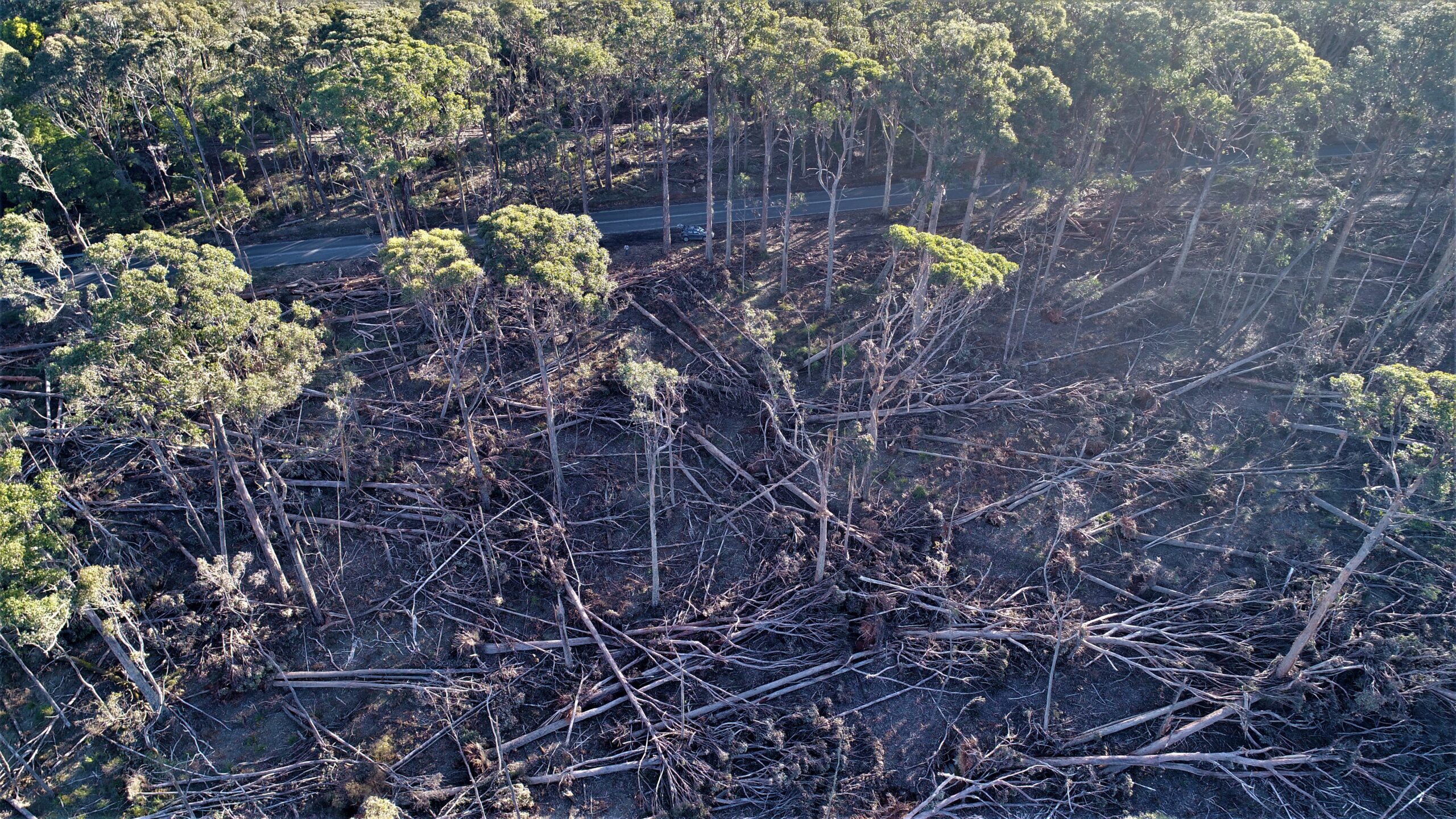
June 15th, 2022One year on from storm

This week we mark one year since the June 2021 storm, which caused widespread damage across the Macedon Ranges, and other parts of Victoria.
In the days immediately after the storm, people were trapped on their properties without power or mobile coverage for days or weeks, and hundreds of trees down across roads in the shire cut off people’s ability to move about as they usually would.
Covid-19 restrictions at the time also meant many people’s usual support networks of friends and family could not come up from Melbourne to help with clean-up, increasing the sense of isolation.
Over 1,400 residents registered with Council as having experienced some form of damage from the June storm.
Bernie O’Sullivan, Macedon Ranges Shire CEO, said that as well as hearing about the devastation, we also heard about our community going above and beyond for each other.
“I’d like to acknowledge the strength of our communities in the Macedon Ranges and the care they showed for each other,” Mr O’Sullivan said.
“We heard about locals jumping on chainsaws to clear not only their own driveways, but those of their neighbours in order to help. And we heard about neighbours checking in on those who didn’t have family locally, to ensure they were okay and that someone was looking out for them.”
Mr O’Sullivan said that recovery continues for both Council and private landowners, and acknowledged this will continue for some time.
“Recovery is ongoing and people are at different stages of their recovery. Some residents have completed their clean-up but others still have large trees down on their properties, some are working on repairing fences and getting business back to normal, and we know some people are working on repairing and rebuilding homes.”
Council continues to advocate on behalf of residents and provide support.
While our recovery is ongoing, we have reached some significant milestones:
We have seen over 160 private properties in our shire receive assistance from the Bushfire Recovery Victoria (BRV) Residential Clean-Up program.
We are grateful to the Department of Families, Fairness and Housing who have provided funding for social recovery programs and workshops like Mental Health First Aid for volunteers
One of the challenges for clean-up efforts in the Macedon Ranges, and across Victoria, after the 9 and 10 June storm has been the size and number of trees that came down in the severe storm event
In partnership with BRV, our Romsey site helps to overcome these challenges by operating with local crews and specialist equipment.
The Romsey facility has allowed us to not only clear and process storm waste faster and on an enormous scale, but up-cycle waste into products which benefit our community.
Since its creation, the Romsey site has so far:
Supplied ten different Men’s Sheds across six shires with timber for their community projects
o Woodend Men’s Shed have used milled timber to craft over 100 nest boxes for storm affected residents who want to support native animal habitats in their own backyards
Created 50 kilometres of fencing supplies, as well as retaining wall sleepers, for local residents and primary producers across the worst storm-affected farms and communities
Milled 11,500 stakes for Council tree planting programs, saving thousands of dollars
Created free firewood for residents
Given free firewood to vulnerable members of our community, delivered to their homes
90 truckloads of root balls to enhance fish breeding habitat within rivers and water systems across 10 different water catchment authorities
225 cubic metres of sawdust delivered to local pig farmers
Processed 180,000 cubic metres of mulch, with free mulch available at transfer stations
One year on from the devastating storms, recovery projects continue.
To support ongoing storm recovery efforts, a free mental health event will be held on the evening of Wednesday 15 June at the Woodend Community Centre.
‘Where are We Now? A Storm Recovery Conversation’ is a community information evening focussed on meeting the needs of storm-affected residents of the Macedon Ranges Shire. Disruption, stress, delays, fatigue, uncertainty about the future, and a realisation that there is still a lot of work to do, are all experiences that ring true for some residents.
This session will be facilitated by David Younger – Clinical & Consultant Psychologist, and an expert in the area of natural disasters and emergencies.
Register your interest at mrsc.vic.gov.au/storm-support
It’s not unusual for people affected by emergencies to experience distress (e.g. feelings of anxiety and sadness, hopelessness, difficulty sleeping, fatigue, irritability or anger and/or aches and pains).
Often volunteer and community organisations are at the forefront of community response and recovery after a severe weather event, and so thanks to the Department of Families Fairness and Housing, we are offering volunteers within the Macedon Ranges free Mental Health First Aid Training.
Each year one in five Australians will experience a mental illness. Many people are not knowledgeable or confident to offer assistance. Physical first aid is accepted and widespread in our community, however most do not cover mental health problems. MHFA teaches people the skills to help someone who they’re concerned about.
If you are a volunteer contact recovery@mrsc.vic.gov.au to enquire.

June 15th, 2022Boost for multicultural communities
The state government is continuing to invest in multicultural communities to promote COVIDSafe behaviour and support community recovery from the pandemic.
Ministerfor Multicultural Affairs Ros Spence today announced 60 multicultural community andmedia organisations and individuals have been awarded a share in more than $2.3 million in funding through the Multicultural Communications Outreach Program.
The program provides funding for diverse communities to develop skills, build community connections, share health information and produce innovative and meaningful content tailored to multicultural audiences.
The program will also support Victoria’s social and economic recovery by encouraging organisations to deliver creative training opportunities and workshops for community members.
Organisations funded include Know Your Roots, which will receive more than $63,000 to support young leaders in Shepparton to connect with other young people and share their experiences of the pandemic through stories, podcasts and original songs, fostering resilience and community connections.
South East Community Links will receive $62,000 to continue to create videos in multiple languages about vaccine information and addressing the impacts of the pandemic in collaboration with a local performer.
City in the Community will be funded almost $50,000 to promote COVIDSafe behaviour, the importance of physical activity and mental health, and vaccines by supporting young people from migrant and refugee backgrounds to create soccer inspired videos to display on social media.
June 15th, 2022Battle of the Bands

Battle of the Bands is back and live in 2022! We are calling on young people aged between 12 and 25 years who think they have what it takes to battle it out on stage with the cream of our local talent and take home some awesome prizes!
Music in the Sticks will host Battle of the Bands 2022 at Kyneton Town Hall on Friday 29 July. The event will showcase local young talent and provide young people within our FReeZA program an opportunity to learn new skills and gain experience performing live in front of an audience.
Two prizes are up for grabs on the night including the Judges Prize and the People’s Choice Prize. The Judges Prize will be awarded to the artist who receives the highest score from the judging panel, and the winner will receive a merchandise pack valued at $500 to help support the promotion of their music. The People’s Choice Prize will go to the artist who draws the largest crowd! This will be measured through ticket sales and at the door, with the winner receiving a $200 voucher for Manny’s/Store DJ, a leading music retailer in Australia.
The judging panel will consist of two community members who are prominent in the local music scene, a young person and a representative from Council.
Mayor Cr Jennifer Anderson said this was an exciting opportunity for young people in the shire to showcase their musical talent whilst gaining invaluable skills and experience.
“In 2020 this event was held online due to Covid-19 restrictions and while it was still a success it is fantastic to see the live event back up and running. I really encourage everyone to get there on the night and support our young people and soak up the great atmosphere!” she said.
Applications are open until June 30. Young people aged 12–25 years who live, work, study or participate in recreation within the Macedon Ranges are welcome to apply, including solo artists, duos and bands.
Successful applicants will be required to attend a compulsory pre-event meeting at Kyneton Town Hall on Monday 11 July.
To register online or download an application form visit mrsc.vic.gov.au/BOTB
June 11th, 2022Johne’s Disease control program
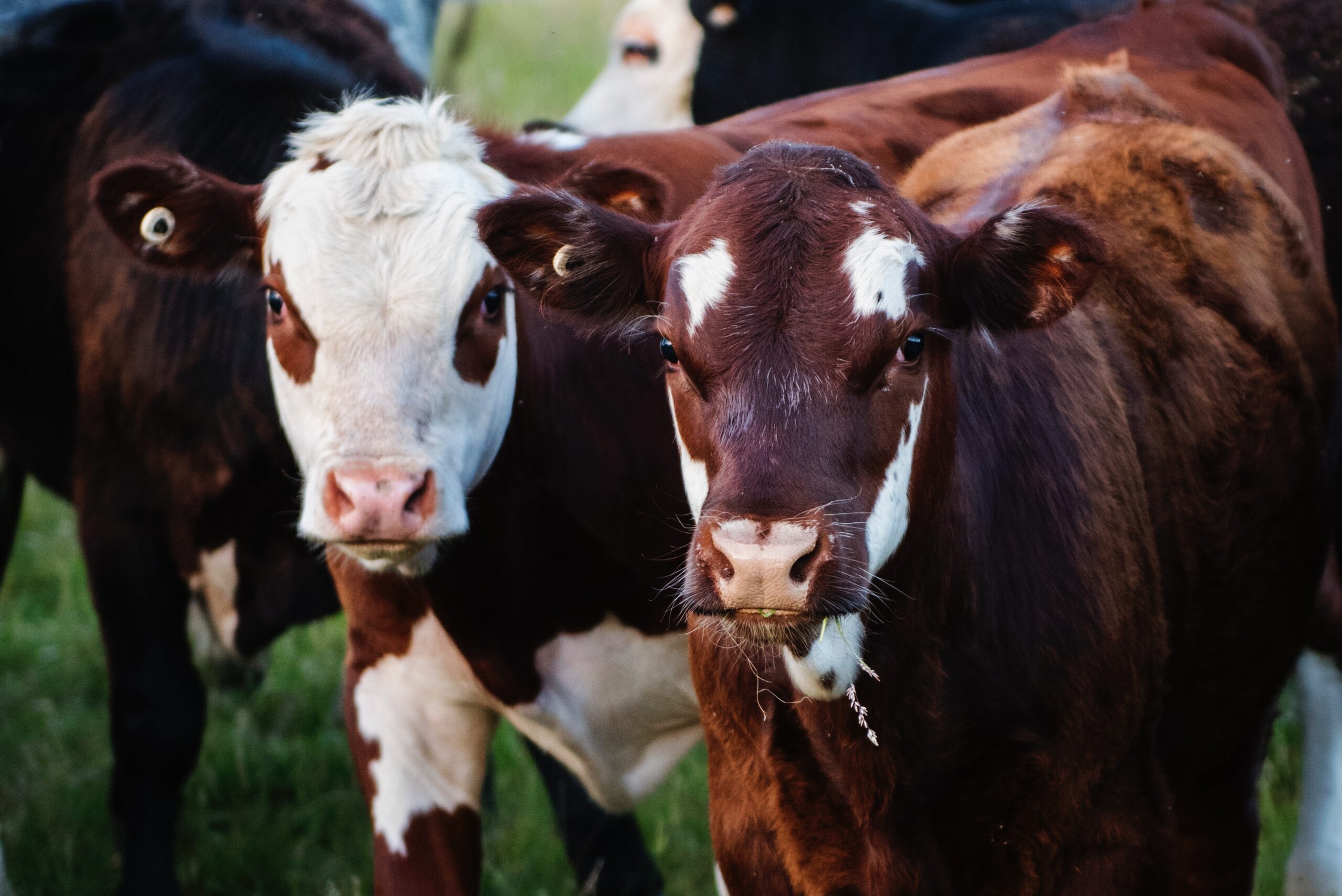
“During my 24 years working with Agriculture Victoria, I have seen several disease programs come and go, and change,” Dr Jeff Cave said.
The Johne’s Disease (JD) control program is a good example.
When I started as a district veterinarian, Australia was divided into zones according to JD prevalence.
You may recall the requirement of check testing and later a ‘Beef Only declaration’ to move cattle into the protected zones of New South Wales and Queensland.
Over time, with the development of a vaccine and the detection of JD in other states, these requirements were modified.
Perhaps the biggest change occurred in mid-2016 with the deregulation of BJD in most states and territories and the launch of the Johne’s Beef Assurance Score (J-BAS) to allow producers to self-assess and communicate their JD risk.
The Johne’s Disease Dairy Score (JDDS) for dairy cattle herds followed in early 2018.
The final barrier to the movement of cattle within Australia came down earlier this year in January, with the easing of import requirements into Western Australia.
Some certification requirements and other testing requirements remain, but overall, the movement of cattle from Victoria to any other part of Australia has become a relatively straightforward process.
That is not to say the risk of introduction of JD, or a host of other diseases has reduced when you introduce new cattle onto your property.
Agriculture Victoria strongly recommends that you develop and follow a biosecurity plan to protect your business and property.
Diseases are commonly introduced into herds by the introduction of livestock.
When you introduce new cattle, get a full and detailed history of the cattle being introduced, request a National Cattle Heath Declaration from the vendor, and apply an on-farm quarantine period in a well prepared, separate area where the newly introduced cattle can be monitored for disease. For further information please contact your local veterinarian or Agriculture Victoria veterinary or animal health officer on 136 186, or in NSW your Local Land Services.”
June 11th, 2022Community assembly feedback
A Community Assembly formed to guide key decisions in the development of the Macedon Ranges Open Space Strategy has now completed its deliberations and feedback on future priorities.
Assembly members met on 21 and 28 May 2022 at Jubilee Hall in Macedon to develop their understanding of the Open Space Strategy process and to set community priorities for the future of the shire’s parks, playgrounds, sporting facilities and conservation areas.
Twenty-seven community members were appointed to the assembly following an open selection process independently managed by deliberative engagement specialists i.e. community.
Wurundjeri Woi Wurrung elder Uncle Ringo Terrick welcomed the Assembly to Country. He spoke of the importance of open natural spaces as places of connection and community and inclusion of traditional owner values related to open space.
Director Environment and Planning Rebecca Stockfeld said project consultants and Council planners explained issues and opportunities vital to the strategy and how members’ views would be considered by Council.
“Assembly members were briefed on the challenges Council faces in managing open space. This includes the pressures of growth, increasing demand and competition for open space, and our changing climate,” she said.
Results from recent community consultation and perspectives of the broader community were shared with the assembly, as a starting point for discussions.
Facilitator Todd Beavis from i.e.community said the assembly recruitment process had delivered a diverse group that worked well together to represent the community. “We achieved a good representation of the Macedon Ranges community, managing to hit all our key target demographics,” he said.
Assembly members worked together to set the community priorities for the shire. They also explored seven primary townships of the Macedon Ranges Shire in greater detail. The assembly gave feedback on primary uses of open space and what trends and developments need to be considered locally. They also used a decision-making framework to test a number of scenarios designed to assist with setting priorities for the strategy.
“The group worked really well together, with some great energy and collaboration,” Mr Beavis said.
“We are very appreciative of the efforts of the Assembly in remaining committed as a group and providing clear recommendations to our project team throughout this deliberate engagement process,” Ms Stockfeld said.
The Mayor and several Councillors attended the final day’s session on 28 May to meet with participants and reinforce Council’s support for the process.
Reports on the outcomes from the Open Space Community Assembly will be presented in a formal briefing to Councillors in late June.
Assembly recommendations, along with all other public feedback and survey responses, will be used to inform the draft Open Space Strategy being developed by consultants and the project team.
“This draft strategy is due to be considered by Council later this year,” Ms Stockfeld said. “Further public consultation on the draft will be conducted before the final Open Space Strategy is refined and presented to Council for adoption.”
If you would like to receive project updates, please register at mrsc.vic.gov.au/open-space or call the Strategic Planning team on (03) 5422 0333.
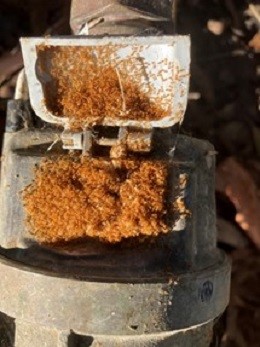
June 10th, 2022Tiny ants could have been trouble
| Exotic-looking tiny red ants found living inside a northern Victorian man’s water meter could’ve been big trouble for Agriculture Victoria’s biosecurity officers. Luckily, the man’s quick-thinking to contact Agriculture Victoria enabled them to rule out a potential incursion of electric ants (Wasmannia auropunctata). When the Echuca resident found the unusual ants, he contacted Agriculture Victoria straight away to make a report, which included providing a series of close-up photos. Agriculture Victoria Leading Biosecurity Officer Emily Hill said the photos were a great help. “However, our entomologists weren’t able to categorically determine whether they were a highly invasive exotic species or not,” she said. |
| As a result, biosecurity officers were soon on the scene and the ants were sampled for further formal identification at the Centre for AgriBioscience Bundoora. “Thankfully, in this instance, the ants sampled were found to be a native species that were morphologically similar to electric ants. “Electric ants are highly aggressive and can rapidly spread through a variety of landscapes, displacing native species and causing injury to livestock, wildlife, pets and people with painful bites,” she said. Ms Hill said these exotic ant species – which are present in Queensland and under an eradication program there – could come into Victoria in a variety of ways and quickly spread through human activity with the movement of plants, plant products, garden waste or machinery. Once established, they are known to spread up to 170 metres per year, with a more typical rate range of zero to 25 metres per year, depending on the environment. |
| Would you like to know more? |
| There are multiple exotic ant species of concern that are not known to occur in Victoria. Agriculture Victoria is working to ensure that Victoria remains free of these highly invasive pest species, to protect our environment, agricultural production, and social amenity. More information about Priority Pest Insects and Mites in Victoria can be found online via the Agriculture Victoria website, or the Plant Health Australia website. Reports of exotic species can be made plant.protection@agriculture.vic.gov.au or by calling 136 186. |

June 9th, 2022Just sayin’…
SO, DAYLESFORD is in the running for the Big Rainbow. Of just four towns. Daylesford, Hay, Katherine and Broome. I reckon we’re a shoo- in.
Someone emailed me about it last week and then heaps of people emailed, texted and called about it – so everyone is pretty keen.
Well, not everyone, I guess. When marriage equality came in I emailed something to all our clients about the great news. One wrote back: “Not everyone is happy about this.” I think I wrote back: “Whatever.” And they don’t advertise any more. C’est la vie.
Anyway, the competition is being run by Tinder. And I needed an image so I Googled Tinder. Afterwards I had a thought and told Kyle I had done that. Just in case he saw my search history and wondered a bit. You know, the 27-year itch and all that.
Anyway, Tinder didn’t write back but someone from their PR company did and provided some great photos. He was really friendly and pleased that we were so keen to win. He wrote: “I hope all of Australia is rooting for Daylesford.” I thought that was either very appropriate or not appropriate at all for a Tinder event. Maybe Grindr will come up with something next year. The Big … – you can add your own word there.
When I was a kid we used to make the trek up to Queensland every few years. Driving, of course. Mum and Dad and a kid in the front and three kids in the back. Three day drive. What fun memories I have of those trips. Kids: “Get on your own side, this is my bit, don’t touch me, I’m telling on you.” Dad: “If I have to pull over…” Mum: “Who wants to play I-Spy?”
We usually went up the Newell but sometimes the coast and we would stop at the Big Banana at Coffs Harbour. It seemed huge at the time. We would take a train ride through the banana trees and have a huge banana ice-cream concoction with all sorts of fruit on top. Made a nice change from cordial out of the Thermos and soggy sandwiches made up in the motel room about 6am. Dad loved nothing more than an early start. Always parked the car in frontwards to keep the engine from freezing over.
Kyle and I took a road trip recently, maybe we are still on it, doesn’t matter, but we did drive past the Big Banana. It was tiny. We didn’t even stop.
I don’t know how big the Big Rainbow will be or where it would go. An entrance to the town I guess. Near the tip side? Nah. Near the housing development that will start soon near the Malmsbury Road? Nah. Near Vic Park? Nah.
I know, knock down The Rex, make it into a stage/outdoor cinema/park and place it there. Middle of Daylesford, easy access, nice to have somewhere to go and eat lunch. Watch a movie. Listen to a muso. You’re welcome.
I have also seen a lot about the Borealis event at Lake Daylesford. Happening over winter. Sounds great and only $25 a head but I don’t get how they stop people from just visiting the lake for a look for free. What about if you own a house on the lake? Do they put up shutters? Could you just glide across on a canoe? Sort of like asking people to pay for fireworks and if you don’t pay, don’t look up. Hmmm. I am sure they will work it out. Been around the world for the past few years so someone knows what they are doing.
Maybe the lake is a good spot for the Big Rainbow. Down by the bridge with all the love locks. There are hundreds there now. And it started with just two. One for Kyle and I, one for Rosie and Curly. It all has to start somewhere. Just sayin’…

June 9th, 2022Local Lines
Mallacoota teacup poem
I broke a cup today,
deep azure, gold tipped
last of a set, a wedding gift, and
with its going saw another time
saw the bright lit cupboard
filled until tomorrow
saw the clothesline full and dancing, floating up
saw a warm and soapy, iridescent child
heard the silent song of a flower awakening.
Heard deep inside the memories speaking
years of slow moving afternoons
conversations around teapot and cake
gold-rimmed cups and chequered cloth
warm and gold tea and
eyes meeting at the heart.
We buried the shards in her garden
near the grapevine bearing fruit
near the jonquil’s gold-tipped song.
And set the cloth as if on an altar
on a clipped green table, decorous with daisy
and sunshine dapple
and together we drank tea
and ate cake, all afternoon long.
- Rhonda Cotsell
Retired librarian Rhonda lives in Creswick and though most of her working life was spent in cities, she was born to a farm and small towns have finally been able to build her writing life. Her other loves are her adult offspring and grandson, garden, cooking and eating, and reading way too much.
Local Lines comes mainly from a group of local poets but other submissions are always welcome. To have a poem considered for publication contact Bill Wootton at cottlesbreedge@gmail.com
June 9th, 2022Glen, About the House
June is bustin’ out all over
Well it certainly is – but not in the joyous manner Rodgers & Hammerstein envisaged when they created Carousel way back in 1945.
June 2022, in our neck of the woods, burst onto the scene with a rush of chilling winds, sleet, some snow and heaps of rain and unfortunately spells of frost whenever there’s a chilly, clear sky night. In other words another typical Central Victorian winter. So for us, it’s business as usual.
It’s getting close to planting and pruning time for roses and deciduous, open- rooted, ornamental and fruiting trees. But it’s best to wait a while yet, to let the weather settle in and sap movement to subside.
July is an excellent time and gives them plenty of time to settle in and prepare for the warmth of spring to start anew. There’s no real rush to plant either. You can always place an order with the growers to ensure they don’t sell out of your choice of plant.
Besides, one of the most important considerations after deciding which tree and where you are going to place it, is to make sure where you are going to plant them is right and ready for them. Such issues as drainage, soil acidity, and then sun or shade preferences are all important to ensure success.
As winter advances there becomes a time of slim pickings for the local bird population, especially if they have become dependent on your garden for more than a top-up snack. It is ill-advised to regularly hand-feed the birds especially with crumbs and kitchen scraps to the extent that they rely on your charity and lose the urge to forage, because not every handout will suit their diet.
It’s much better to grow nectar and berry (fruit) bearing plants and give them the option. We leave out seeds and nuts in tree feeders, but only spasmodically so they don’t rely too much on there being a regular feast.
Insect eaters such as the striated pardelote are wonderfully efficient garden pest removers, especially when it’s their infant feeding time.
Over the years, we’ve had several families of pardelote nesting under our balcony roof and in their little tunnels in the garden’s rock retaining walls in each of the 15 years we have been in the house. They feed mostly on the native lerps and other insects on the eucalypts surrounding our property, but I’m sure they find plenty among our trees and shrubs as well.
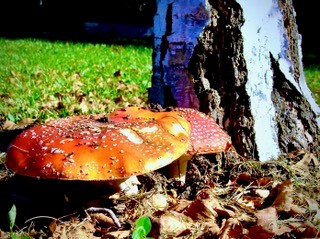
The over-plentiful autumn rainfall has created an unusual situation and probably perilous challenges for all of us, like waking to find a garden laden with what could possibly be huge and luscious mushrooms. Don’t be taken in by their charms because if, like us you don’t take the precaution of consulting someone who knows much better first, you will, more than likely, find yourself in an emergency ward.
For reindeers only
Among the more alluring of the treacherous fungi, is the strawberry red and white amanita muscaria or fly fungus – finding their way into parks and gardens – yet favourite fodder of Santa’s sleigh wranglers.
Apart from their apparent psychedelic properties, they have been known to cause death. They come from the pine forests of the north, which means their spore must have initially hitched a ride with the pine logs imported for early colonial construction works. I very much doubt they came here by sleigh. Pity – they look stunning in a garden scene.
Got a gardening question: Email glenzgarden@gmail.com

June 9th, 2022Amy turns 103 and celebrates a great life
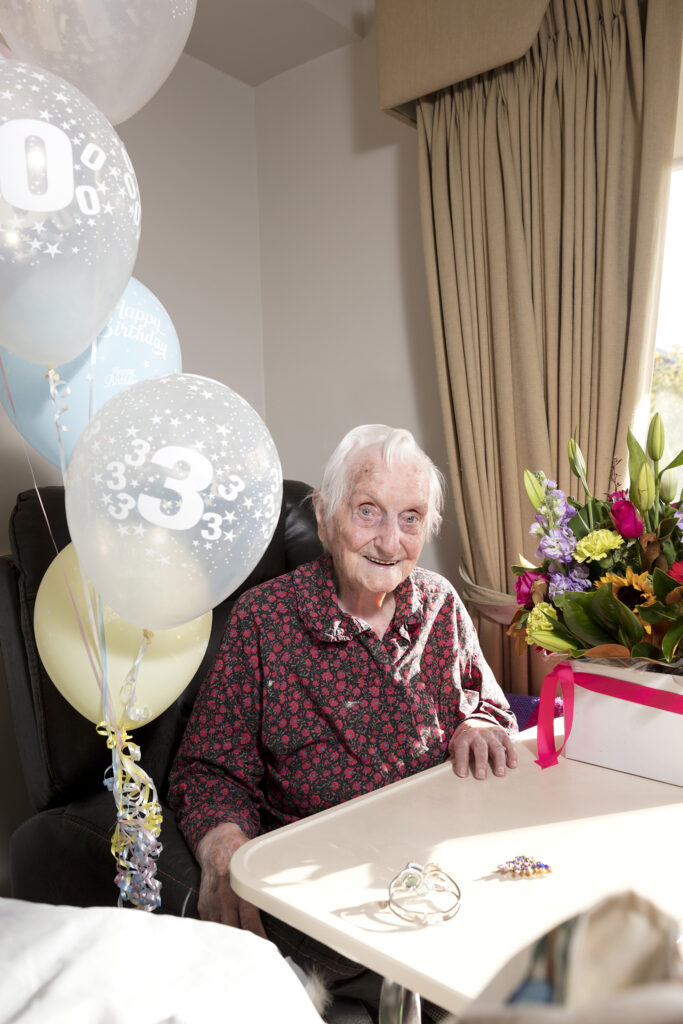
ATHLETICS legend Amy Burow AM celebrated her 103rd birthday on Monday, May 30.
The Hepburn House resident headed to her daughter’s Clunes’ home over the prior weekend with 50 family members including “grandchildren, nieces and nephews” keen to take part in the big event.
“It was a wonderful day with about 50 people celebrating with me. And I think they sang Happy Birthday about three times at Hepburn House on Monday.”
Amy was always a natural athlete, a runner, and “won everything I entered”. It was when she was 15 and a student at Swinburne Technical College that she received a letter asking her to join the Eastern Suburbs Women’s Amateur Athletics Club.
The club had got wind of this impressive teenager but only knew which school she attended.
The headmistress called her to the office and told her to open and read the letter aloud. Amy did, with the headmistress exclaiming joining an athletic club was no pursuit for a lady.
“All I thought was that I was good enough to be running for the school, so why not a club? I took the letter home and gave it to dad who told me he was going to knock off early the next day, pick me up from school and take me to the club.
“That was during the week and by the weekend I was a member.”
Amy said she competed everywhere, stopped to have her two children after marrying at the end of the war in 1945 and returned as an official.
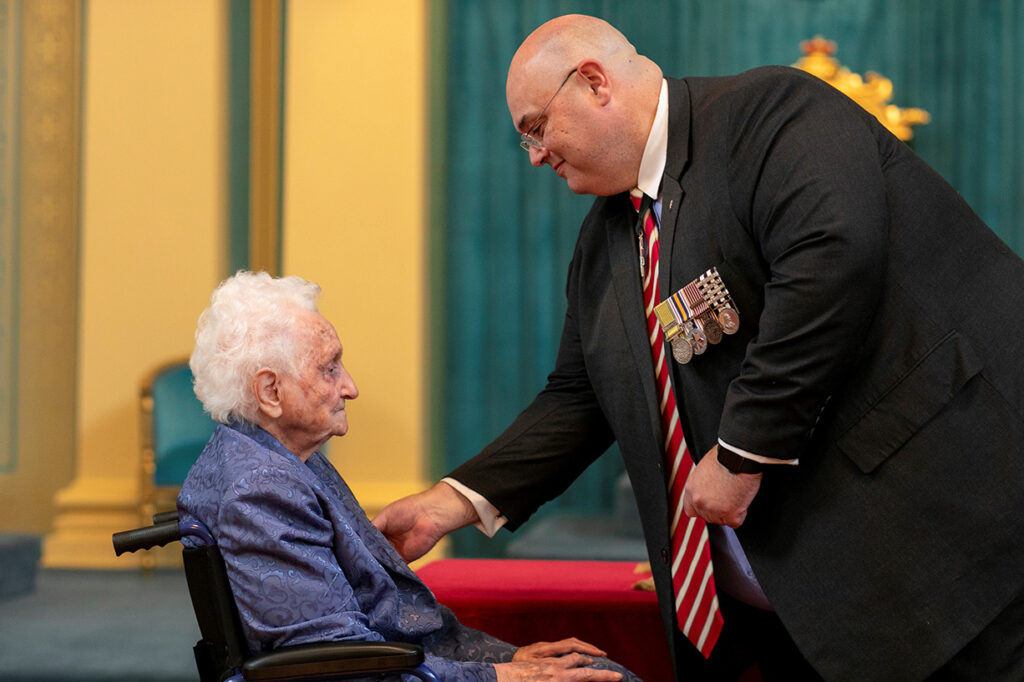
“An official” is a little bit of an understatement. When she received her Australia Medal last year for significant service to athletics through the support for women and junior sportspersons, the list of involvement was lengthy.
It included:
Victorian Athletics Association (now Athletics Victoria) – inaugural director, 1982-1983, convenor of athletics officials, 1982-1983, former committee member and life member.
Victorian Women’s Amateur Athletic Association (now part of Athletics Victoria) – vice-president, 1964-1982, board member (club representative), 1956-1983, treasurer, 1943-1945, convenor of athletics officials, 1980-1984, competition manager for the Doncaster East Athletic Track, 1971-1983, organiser and referee at the State Championships, 1956-1983 and life member.
Waverley Women’s Athletic Club – delegate to VWAAA, 1980s and member, 1980s.
Eastern Suburbs Women’s Amateur Athletic Club – delegate to VWAAA, 1955-1980, treasurer, 1936-1945, competitor (sprinter), 1934-1945, member, 1934-1979, life member.
Maisie McQuiston Foundation (fundraising group supporting female athletes) – inaugural director since 1982 and co-founder, 1982.
The Torch Club (fundraising group supporting junior athletes) – inaugural treasurer, 1984-2017, co-founder, 1984 and current treasurer.
Awards and recognition include a Platinum Service Award with Athletics Australia, 2003, a Life Member of Athletics Australia (formerly the Women’s Amateur Athletic Union of Australia), 1974 and a Merit Award with Athletics Australia.
“It was a wonderful day at Government House. I wasn’t going to go because it was at 10am and I thought it was too early from Clunes but my grandson James Cheshire put my daughter and I up at the RACV Club the night before.” James is also who Amy chose to pin her medal – thanks to Covid, the Governor could not do this.
“I met the Governor (Linda Dessau) who is lovely, and she remembered meeting me two years earlier when they had an event for all the Victorian centenarians. We were just chatting away. Later someone told me the Governor wanted to talk to me privately. I thought ‘what can she want’ but when I went into her office she had her photographer there and asked him to take a photo of her and ‘her friend’. It was just a lovely day. We also had a photo with my daughters Joy Cheshire and Lynette Rose. The Governor said she hoped to see me again in another two years. I said there was no reason I wouldn’t be there.”
Amy said in her day athletics were always divided into men’s and women’s divisions. The men were supported by the governments “but had no money” and the women had no support but plenty of money because they knew how to fundraise. “The men wanted our money for their clubs but not the women – that’s why we started our own fundraising groups.”
Now, for many, that would be a big enough life, but not for Amy. She also worked, starting with an apprenticeship at Myer as a tailoress and then moved to another company for 48 years where she pretty much “ended up running the show”.
Amy finally retired at 84 but later in life took up knitting. She now knits squares for blankets which are given to patients at the Austin Hospital’s Olivia Newton-John Cancer Centre. The blankets are all on display and when patients arrive they are asked to choose one and then take them home.
“My granddaughter-in-law is a big wig there and told me one day a bloke came in and asked for ‘a bloke’s blanket, I don’t want one for a sheila’ so she found him a ‘blokey’ one and told him who had made it. At the end of the day, he was really happy to take it home.”
Now living life at Hepburn House, Amy says she loves the staff and “helps them out” when she can. She is also already involved in the next fundraising calendar, with the theme of ageing disgracefully, as one of the models.
“My grandchildren think it’s hilarious. I was going to be sitting at a table with a cigarette in my hand but of course I have never smoked once in my life. So we are going with something a bit more glam.
“I never wanted to move into aged care and I was living at my daughter’s in Clunes but then I came here a couple of times for respite care and it was just fantastic. You hear all those stories about these places but none of them are true here. They just look after you so well and when you thank them they say ‘that’s just our job’ but it is more than that.
“I finally came for respite care for a third time, and it was getting really difficult for my daughter, and they asked how I felt about staying on. I feel bad but I didn’t even think about my daughter and just said ‘yes please’. It really is wonderful here and I would recommend it to anyone. Just come and have a look around. I wouldn’t be anywhere else.”
And how does she feel about being 103? “I really believe that when we come on this earth whatever happens is meant to be. When you go, you just go. There’s no point worrying ahead of time. I have a fantastic life and am very lucky to have my brain and no aches or pains. And for my birthday I got enough wool to last at least a year, so I am set!”
Words: Donna Kelly | Image: David White & Contributed

June 8th, 2022Recipes with Jen Clarke
Cauliflower, chickpea and halloumi tray bake
This is a delicious and easy vegetarian dish. You could add a bunch of asparagus spears (with woody stems snapped off) when you add the halloumi for a bit of spring flourish. Adapted from a recipe by Kate Gibbs.
Serves 4
1 small cauliflower or half a big one, cut into florets
¼ cup olive oil (plus 2 tblsp extra)
1/3 cup raisins (about 40g)
¼ cup verjuice or very hot water
1 400g can chickpeas, drained and rinsed
2 teaspoons sumac (or sweet paprika)
150g halloumi, cut into slices (about 5mm thick)
3 tblsp vinocotto or balsamic vinegar
Parsley leaves, to finish
Preheat the oven to 200C.
Place the cauliflower on a baking tray lined with baking paper and drizzle with about ¼ cup olive oil. Season generously with salt and pepper, toss and spread evenly on the tray. Bake for 15 minutes.
Meanwhile, put the raisins and verjuice or water in a small bowl and allow to soften.
Toss the chickpeas in a bowl with the sumac/paprika and season with salt and pepper.
Take the cauliflower out of the oven, toss well then add the chickpeas and halloumi (and asparagus if using) and spread on the tray in a single layer. Return to the oven for a further 20 minutes until the halloumi is nicely coloured.
For the dressing, mix the vinocotto/balsamic and remaining olive oil until well combined. Add the raisins and verjuice and season to taste.
To serve, place the cauliflower, chickpeas and halloumi on a serving platter and drizzle with the dressing. Scatter with chopped parsley and more sumac if desired.

June 8th, 2022Markets
Daylesford Railway Market – every Sunday
Golden Plains Farmers Market – first Saturday
Trentham Neighbourhood Centre Makers’ Market – first Saturday
Castlemaine Artists Market – first Sunday
Kyneton Farmers Market – second Saturday
Ballan Farmers Market – second Saturday
Kyneton Rotary Community Market – second Saturday
Maldon Market – second Sunday
Clunes Farmers Market – second Sunday
Trentham Farmers and Makers markets – third Saturday
Glenlyon Farmers Market – third Saturday
Creswick Market – third Saturday
Leonards Hill Market – third Saturday
Talbot Farmers Market – third Sunday
Woodend Lions Market – third Sunday
Malmsbury Farmers Market – third Sunday
Daylesford Market – fourth Saturday
Trentham Station Sunday Market – fourth Sunday