


April 16th, 2022Strategy for kids

Hepburn Shire Council has developed a draft Early and Middle Years Strategy 2022-2030 which aims to plan and prepare for family growth and the development needs of early years and middle years children.
The strategy provides direction for the development and coordination of services, programs, infrastructure, activities, and local community development processes that impact children aged 0 – 12 years living in Hepburn Shire. The Early and Middle Years Strategy 2022-2030 outlines a vision where all children who live in Hepburn Shire get the best start in life and go on to reach their potential. To have a say on the draft strategy visit www.participate.hepburn.vic.gov.au/early-and-middle-years-strategy-2022-2030


April 15th, 2022Free RATs

Free rapid antigen tests (RATs) are being given to eligible people with disability.
The state government has made two million RATs available to all NDIS participants and disability support pensioners over the next three months. RATs will be available at current testing sites and through Disability Liaisons Officers. To help manage supply, those eligible – disability support pensioner and NDIS participants aged 16 and over – can collect up to 20 RATs per visit to a testing centre.

April 15th, 2022AusNet pause

Hepburn Shire Council has welcomed the announcement by AusNet that it intends to invest more time in carrying out consultation with landholders and the community on the proposed route for overhead transmission lines and terminal station proposed as part of the Western Victoria Transmission Network Project.
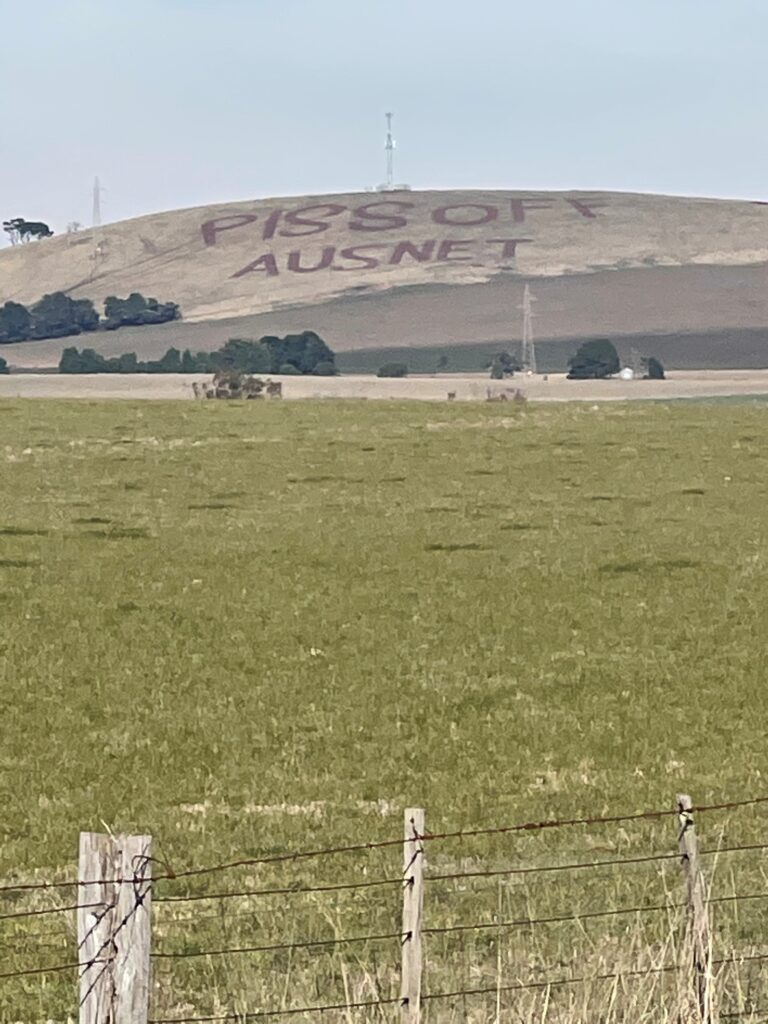
In a statement last week, AusNet advised the expected release date of its Environmental Effects Statement would be pushed out from mid-2022 to late-2022. The council is strongly opposed to the proposed route and 24ha terminal station in the shire, which is planned to be located on some of the highest value agriculture land in the country.
April 15th, 2022Ageing DisGracefully

HEPBURN House is taking orders for its 2023 calendar, with the theme of Ageing DisGracefully!
Manager Dianne Jones said anyone keen to make sure they don’t miss out should email her at dianne@hepburnhouse.com.au The cost will be $25.
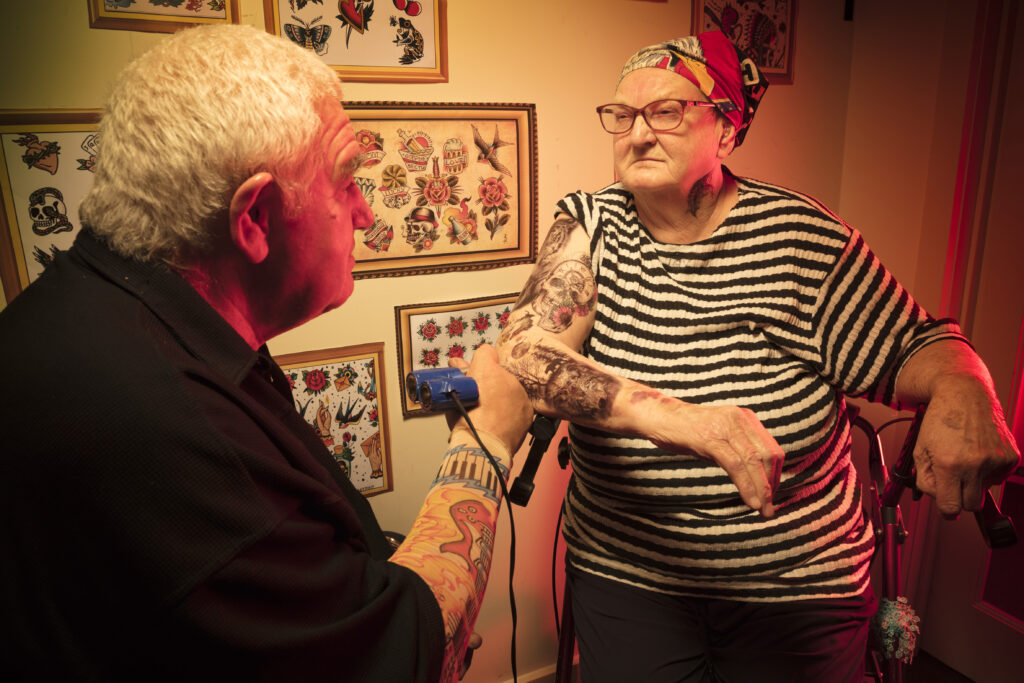
The theme is named after the Ageing DisGracefully group started after successful lobbying of the state government by Ms Jones and the Ageing With Pride committee.
The group meets every Wednesday at 11am at the Yardbird Cafe in Daylesford with everyone welcome. All enquires to coordinator Carmel Dennehy-Yardy on 0409 860 655 or email ageingdis3461@gmail.com or check out the Ageing DisGracefully Facebook page.
Hepburn House acknowledges the support of the Victorian Government.
Above, Mo Sheppard works on a ‘sleeve’ for Val Clarke Image: David White

April 15th, 2022Turn on, tune in, drop out with Jeff Glorfeld
“Drawing on data collected from [the National Drug Strategy Household Survey] over six years, the researchers found in a study published by the journal Drug and Alcohol Review that support for legalising cannabis in Australia stood at 41.1 per cent in 2019, up from 25.5 per cent in 2013.”
- Forbes magazine, December 29, 2021
“Estimates prepared by State Parliament suggested Victoria would save $725 million over 10 years due to a reduction in justice and police costs. Taking a further step and legalising cannabis for over-the-counter-sale, taxed at a rate of 30 per cent, would net the state $835 million over a decade. Victoria Police Assistant Commissioner Glenn Weir told the inquiry in June that ‘significant harm’ was caused by use, cultivation and trafficking of cannabis.”
- The Age, August 5, 2021
THERE’S a joke told on baby boomers that goes: “If you remember the 1960s, you weren’t there.” The funniest part about that old witticism is that no one remembers for certain who said it first.
Whoever thought it up, it started doing the rounds before boomers became old geezers, and it was supposed to be funny, or at least poignant, because they – and by “they” I really mean “I” – supposedly took a lot of mind-altering drugs in the ’60s and ’70s. “Turn on, tune in, drop out” was the message from Dr Timothy Leary, the Stanford University professor turned acid evangelist, and many folks did just that.
Even though Redding, where I grew up, was just a small town in rural northern California in the ’60s and ’70s, we were close enough to San Francisco to have a clear link to the radical changes occurring in popular music and fashion, and in the drug culture.
In my wide circle of friends the drug of choice was cannabis, aka pot, weed, and a dozen other nicknames and code-names. It was usually sold in one-ounce (about 28 grams) bags, which we called lids, and which sold for $10. Why lids? It never occurred to me to ask.
Most of our pot came up from Mexico or South America. We’re not talking about big shipments; a mate might know someone whose brother knew someone who had a few lids for sale. Also, it’s worth mentioning that pot in those days was extremely mild, compared to the hybrid varieties available today.
It is also important to note that, as it is in most of Australia, cannabis was illegal in California in the ’60s and ’70s, so even though it was readily available, if you knew who to ask, we were reasonably cautious about our partaking of this mildly hallucinogenic drug.

The Age points out that “some experts along with Victoria Police opposed decriminalisation, arguing cannabis use can exacerbate mental health problems, antisocial behaviour and road trauma”.
Even so, in 2016 California passed a law legalising the use of recreational marijuana. It also set up a strict – some would say onerous – framework of regulations and licensing requirements regarding its cultivation and distribution.
The reason for legalisation was simple: money. From January 2018 to November 2021, California brought in $US3.12 billion (about $A4.5 billion) in total cannabis tax revenue.
The law allowed individual towns to decide if they wanted to allow cannabis stores, and where. Thus, no legal dope sales near schools, but in a strip mall next to a doughnut shop – that’s cool. Shasta Lake City, a small perennial struggle-town a couple kilometres north-east of my house, was an early adopter, hopeful of grabbing some of that pot tax money.
Today there are three legal cannabis stores in Shasta Lake City, servicing a town of about 10,000 folks. In the interest of research, I decided to go shopping. Although the Queen of Dragons sounded wild, I went to High Times for my first legal pot foray.
I stopped partaking of the drug many years ago, and when I had used it, it was always with the knowledge that it was illegal. So it felt extraordinarily weird to enter a shop filled with nothing but marijuana.
Like wow. It wasn’t like walking into a Cheech and Chong movie. There were no clouds of pot smoke, no squinty eyed, tie-dyed hippies, no sitar music. The staff – people whose job it is to sell legal cannabis – were helpful and knowledgeable about their products.
They showed me jars of fresh green marijuana buds, available by the gram, and already-rolled joints, sold separately or in packets. I could buy strong weed, mild weed, energising weed and relaxing weed. I could buy weed marketed by country music legend Willie Nelson, or by the family of Grateful Dead’s late guitarist Jerry Garcia. Or if smoking wasn’t my thing, they had a wide range of edibles, from chewy candies to yummy chocolates.
Also, even though these legal cannabis stories are in the business of recreational pot, they also stock a range of medicinal products. Reading in a recent book, Weed: A Connoisseur’s Guide to Cannabis, by Ellen Holland, I’ve learnt that, along with getting you high, scientists have isolated several components to the plant that have medical efficacy.
Legalised marijuana has not been all high times and giggles. Law enforcement officials continue to pursue outlaw growers and sellers, but now it’s because the state wants the tax dollars. And there are other problems as well. But, as the song goes:
Don’t Bogart that joint, my friend
Pass it over to me
Roll another one
Just like the other one
You’ve been hangin’ onto it
And I sure would like a hit.
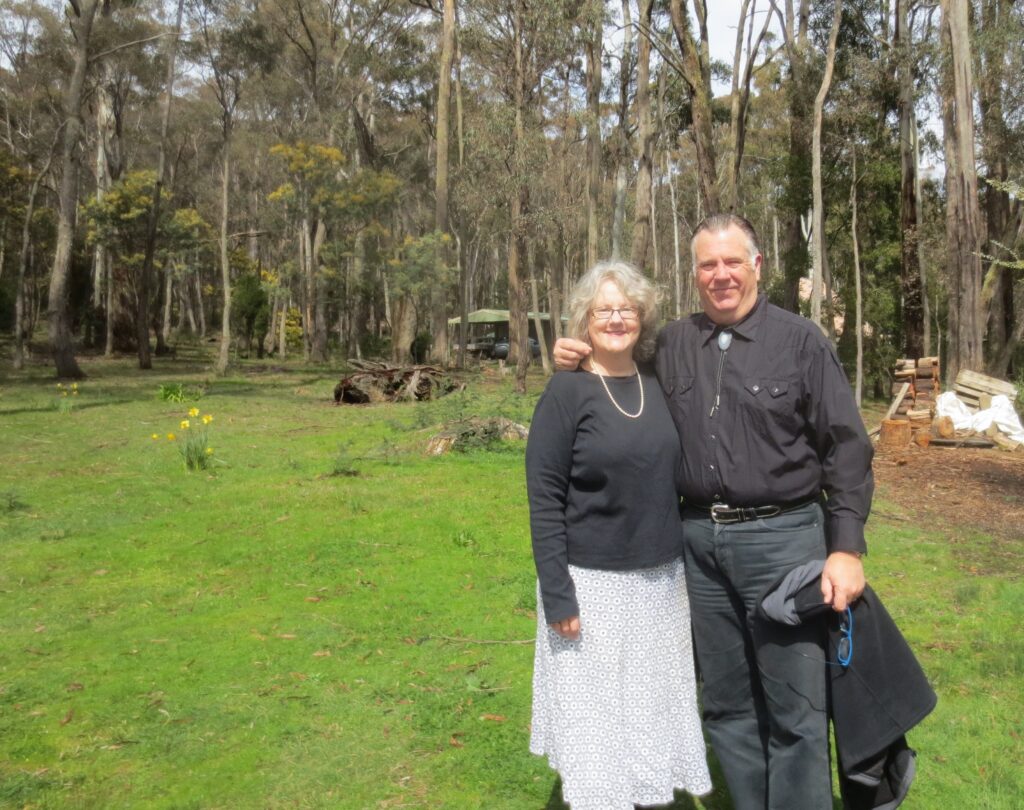
After many happy years living in Victoria and working at The Age, former Wheatsheaf resident Jeff Glorfeld, and his wife Carol, went back to California, the land of his birth, where in the past four years he has survived bushfires, snowstorms and drought. And Trump. And Covid. The cicadas and locusts didn’t arrive. Well, not yet.

April 14th, 2022Markets
You can find everything you need at weekend markets, from fresh fruit and veg to handmade jewellery and wares, throughout the Central Highlands and surrounds. Here are just a few.
Daylesford Railway Market – every Sunday
Golden Plains Farmers Market – first Saturday
Trentham Neighbourhood Centre Makers’ Market – first Saturday
Castlemaine Artists Market – first Sunday
Kyneton Farmers Market – second Saturday
Ballan Farmers Market – second Saturday
Kyneton Rotary Community Market – second Saturday
Maldon Market – second Sunday
Clunes Farmers Market – second Sunday
Trentham Farmers and Makers markets – third Saturday
Glenlyon Farmers Market – third Saturday
Creswick Market – third Saturday
Leonards Hill Market – third Saturday
Talbot Farmers Market – third Sunday
Woodend Lions Market – third Sunday
Malmsbury Farmers Market – third Sunday
Castlemaine Farmers Market – third Sunday
Daylesford Farmers Market – fourth Saturday
Trentham Station Sunday Market – fourth Sunday
Castlemaine Artist Market – fourth Sunday
Want to advertise your market? It’s free. Just email news@tlnews.com.au

April 14th, 2022Lest We Forget
Daylesford – Dawn Service at 6.30am. March from the Town Hall at 10.15am followed by the Anzac Day Service at 10.30am at the Cenotaph at Burke Square.
Hepburn Springs – Anzac Service at the Memorial Gates at 10th Street at 8.30am.
Eganstown – Anzac Day Service at the bottom of Old Main Road at 9am.
Bullarto – Anzac Service at the Bullarto Hall at 1.30pm followed by afternoon tea.
Creswick – Dawn Service at the Cenotaph at 5.50am followed by the Gunfire Breakfast in the Senior Citizens Centre. Service at the Soldiers Graves, Creswick Cemetery at 9.30am. Service at the RSL Hall at 9.50am. March from 10.45am from the Splash Park, Albert Street. Service at the Cenotaph at 11am.
Clunes – Dawn Service at the Cenotaph at 6am. Service at 8.30am at the cemetery. March from RSL at 10.30am. Anzac Day Service at 11am.

Kyneton – Dawn Service at the Cenotaph at 6am followed by a Gunfire Breakfast at the Kyneton RSL. March from Yaldwyn and Mollison streets to the Cenotaph at 9.45am followed by the Anzac Day Service.
Trentham – Dawn Service at the Cenotaph at 6am. March from the Town Square at 11.30am to the Cenotaph.
Malmsbury – Anzac Day Service at the Memorial Gardens at 8am.
Taradale – Anzac Day Service at 1.30pm.

April 14th, 2022Recipes with Jen Clarke
Simple apple cake
Ingredients
125g butter
2 eggs
¾ cup castor sugar
1 vanilla bean, or a teaspoon of vanilla extract
4 apples
½ cup plain flour
2 teaspoon baking powder
Pinch salt
½ cup milk
Method
Preheat the oven to 180C. Grease and line a 22-23cm springform cake tin and line with baking paper.
Melt the butter in a small saucepan or in the microwave and set aside. Beat the eggs and sugar in a bowl with a whisk (you can do this by hand). It should thicken and form a ribbon when dropped from a spoon.
Split the vanilla pod and scrape the seeds into the egg mixture and put the pod in with the butter (or just add the vanilla extract to the eggs).
Peel, core and slice the apples.
Remove the vanilla pod from the butter and discard. Add the butter to the egg mix. Combine the flour, baking powder and salt and gently whisk in to the egg mix with the milk. Add the apples and stir to combine. Put the batter into the tin and bake for about 25 minutes. Rotate the pan and return to the oven for another 25 minutes or until it is starting to brown nicely and a skewer inserted in the centre comes out clean.
Cool in the pan and sprinkle with icing sugar and serve with cream.
April 14th, 2022Gig Guide
The Palais-Hepburn, Hepburn Springs
Ousmane Sonko & Kairo Family Band – Friday, April 15, 6.30 pm
The Smith St Band – Friday, April 22
Babba – Saturday, April 23
Zep Boys – Thursday, April 28
Foggy Notion – Friday, April 29
Reuben Kaye – Saturday, April 30
Kathleen Halloran Trio – Friday, May 13
Milko Foucault-Larche – Saturday, May 14
The Martini Set – Friday, May 20
Analogue sounds with Paper Jane, and Dave Wright & The Midnight Ramblers – Saturday, May 21
Pure Black – Friday, May 27
Got a gig? Email news@tlnews.com.au
April 14th, 2022Music and movies
SMALL Space Music and the Radio Springs Hotel are pairing live improvised music scores with classic movies for the Magic Lantern Sessions.
When silent films first made an appearance, they were almost always accompanied by live music, starting with a pianist at the first movie projections by the Lumière Brothers in Paris in 1895.
The music for silent films was often improvised, and by around 1915, large city theatres began featuring organists or ensembles of musicians. Over 100 years later, members of the collective Small Space Music come together to improvise contemporary soundtracks to classic silent films.

Small Space Music connects curious listeners with music that is taking place in the nooks and crannies of the Victorian scene. Renowned drummer Ronny Ferella and Trentham guitarist Robbie Melville are curating a season of six performances at the Radio Springs Hotel.
Two performances, a matinee and evening show, will take place in the 35-seat Henri Langlois Screening Room at the hotel on the last Sunday of each month until September. The films will be selected from former career projectionist and Radio Springs proprietor Ken Parfrey’s private collection.
Magic Lantern Session One features Ronny, Robbie, bassist Zoe Frater and guitarist Fran Swinn performing to Buster Keaton’s 1927 masterpiece The General.
The musicians have worked with a variety of top Australian and international acts including Guy Sebastian, the Australian Pops Orchestra, Michelle Nicolle, Shane Howard, Krystle Warren, Stephen Magnusson, Julien Wilson and Nat Bartsch.
The performances, matinee at 2pm and evening at 4pm, are on Sunday, April 24. Tickets are $20/$15 concession at trybooking.com

April 13th, 2022The future is now, local tells uni students
STAYING home during the pandemic has meant a quiet revolution. For Daylesford’s Craig Mutton it changed a lot, including his job.
As a strategy and transformation chief at the state’s Environment Protection Authority, he saw it transform from being punitive to preventative. And while this massive change was under way, in swept Covid and 750 people were told to work from home.
When reflecting on formerly commuting to Melbourne five days a week, he says that in an odd way Covid was his saviour.
“We had to rethink the way we make change,” says Craig. “It may not take too long…when you are under the pump you can do it in a week.”
So a step that once may have meant enormous planning, seemingly endless committee meetings, perhaps over a year, was taken virtually overnight.
Craig is taking what he learnt in that upheaval to a new and rare job as chief digital officer at the University of Canberra. This is some step for a former computer programmer.
Having begun in computer science, he became more interested in working with people, and completed a Master’s degree in project management, first joining Telstra, then the EPA.
His experience helps him pose the question: What do students want from a modern university? One answer is that some students now find it weird having to turn up to a particular room at a particular time. Just as they can watch a TV show when it suits them, the same applies to lectures.
During the pandemic universities had to learn to provide what he calls meaningful touch points with staff and bring the team together.
And then there are the mid-career students who must balance demands of work and home with their studies. This means adjustments by academic and professional staff.
“The day of everybody turning up for a lecture is probably gone.”
Enter the personalised digital university, responding to students’ needs which, for some, will still mean face-to-face learning.
Clearly, the 13,000-student university is already going well: it is ranked world number one for reducing inequality. And indigenous campaigner for human rights and social justice, Tom Calma, is its chancellor.
In his decade here Craig contributed to the community as chair of the Castlemaine Art Museum and director on the board of the Hepburn Health Service, now Central Highlands Rural Health.
And while he will be leaving, he and his husband, yoga teacher Adrian Thia, are keeping their Vincent Street North home and studio, knowing they’ll be back.
He tells of the wrench Adrian is feeling about giving up his studio, possibly in June. His students’ first reaction was to congratulate Craig and Adrian, and then it hit: “Oh, my goodness, my yoga studio is going away.”
But the home and studio, with their vivid and imaginative décor, furnishings and paintings that had design bloggers exhausting their adjectives, will still be here. As Craig says, they made more friends in a couple of years here than in 12 years in Collingwood.
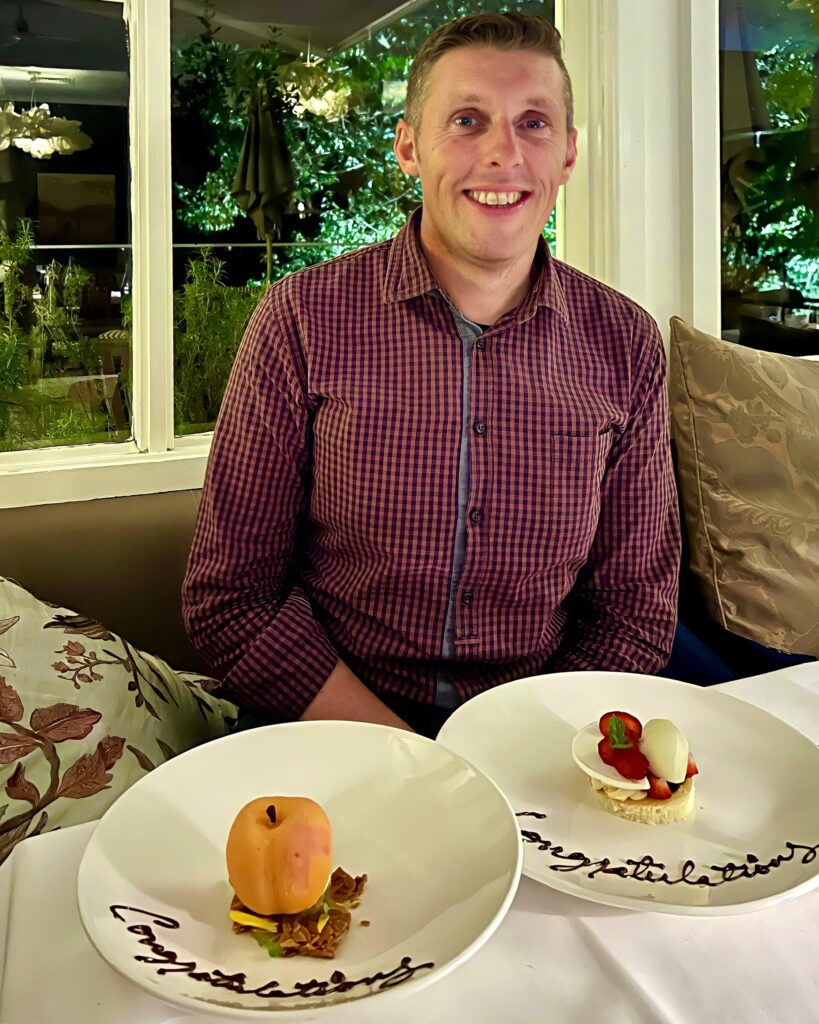
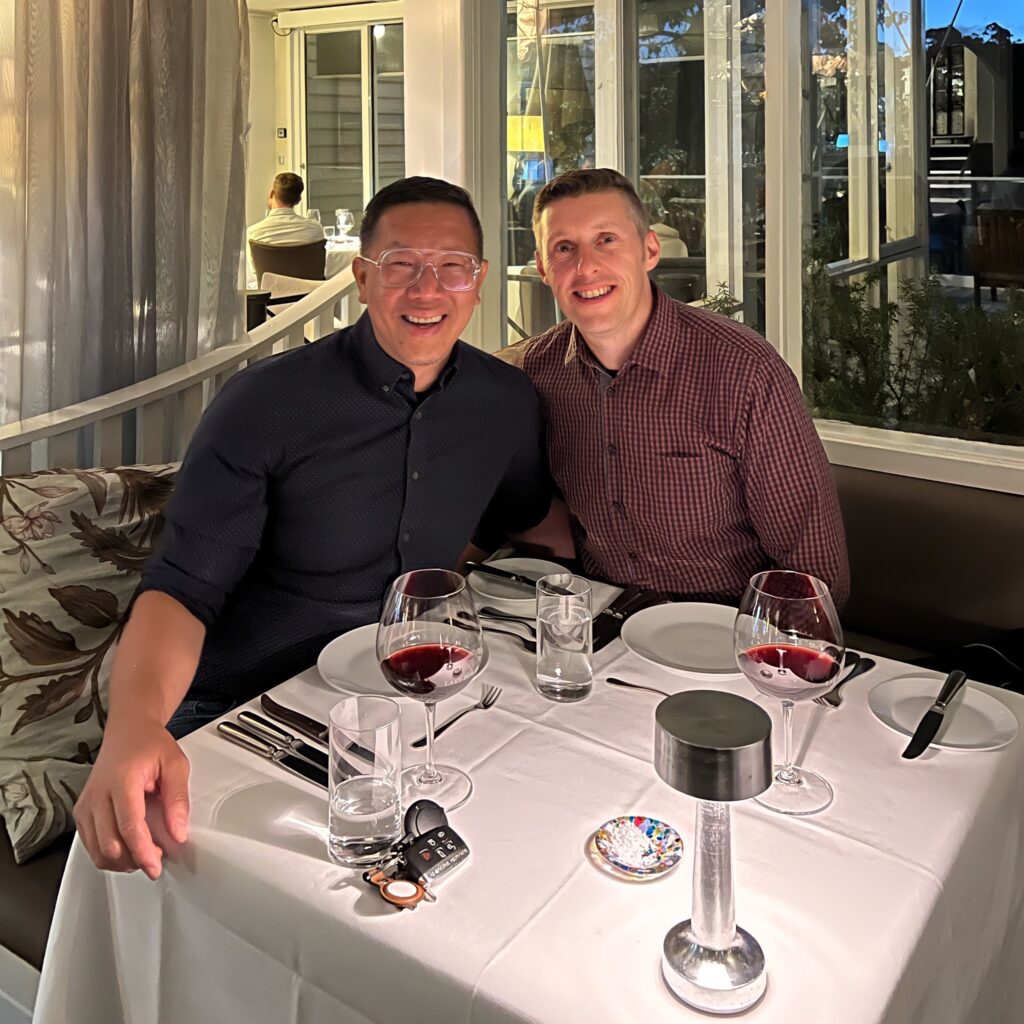
Pictured, Craig celebrating the move at Lake House, below, Craig and his husband, Adrian Thia
Words: Kevin Childs | Images: Contributed

April 13th, 2022From convict to land holder
ON THE river flats along Creswick Creek in the area known today as the township of Clunes, European settlement emerged to take advantage of the land for the growing of livestock.
And before the 1850s life was, for the handful of pastoralists scattered across the area, a relatively peaceful one dictated only by the weather and shift of the seasons. The discovery of gold in 1851 changed all that forever.
As historian Robert Hughes succinctly put it in his 1987 book The Fatal Shore: “Gold disturbed the order of Anglo-Australian society — from pastoral “aristocrat” down to convict — with shudders of democracy.”
With gold came a fresh influx of people from across the seas, not just those compelled to be here as punishment. While many came to feverishly pursue a metal described by the London Times in 1852 as the “yellow stuff”, others carved out prosperous careers servicing the needs of the exploding mining economy and development it facilitated.
“Gold wealth was not democratic,” Hughes writes, “but it did expand the existing oligarchy…and help create the Australian bourgeoisie.”
One of these people was Henry (Harry) Robins. He was born poor in 1827 growing up in Northamptonshire. At 17 years of age, he was convicted of ‘Robbery with Violence’ and transported to Van Diemen’s Land (Tasmania) for 15 years.
However, Robins must have demonstrated some potential for reform as he was granted a conditional pardon and ticket of leave after just two years. By the end of the 1840s he had added an extra ‘b’ to his surname and set out for the colony of Port Phillip.
The tiny colony on the southern coast of the Australian mainland was still a part of New South Wales. However, its small Anglo population, hobbled by the impracticalities of administration by far-off Sydney would soon form the new state of Victoria with Melbourne as its capital. Robbins soon found employment as an agricultural labourer in and around the district of Clunes station, a 32,000-acre (13,000-hectares) property held by Scottish businessman Donald Cameron.
At the same time the state of Victoria was formed, the discovery of payable gold was announced, despite the best efforts of pastoralists to keep the news out of the papers.
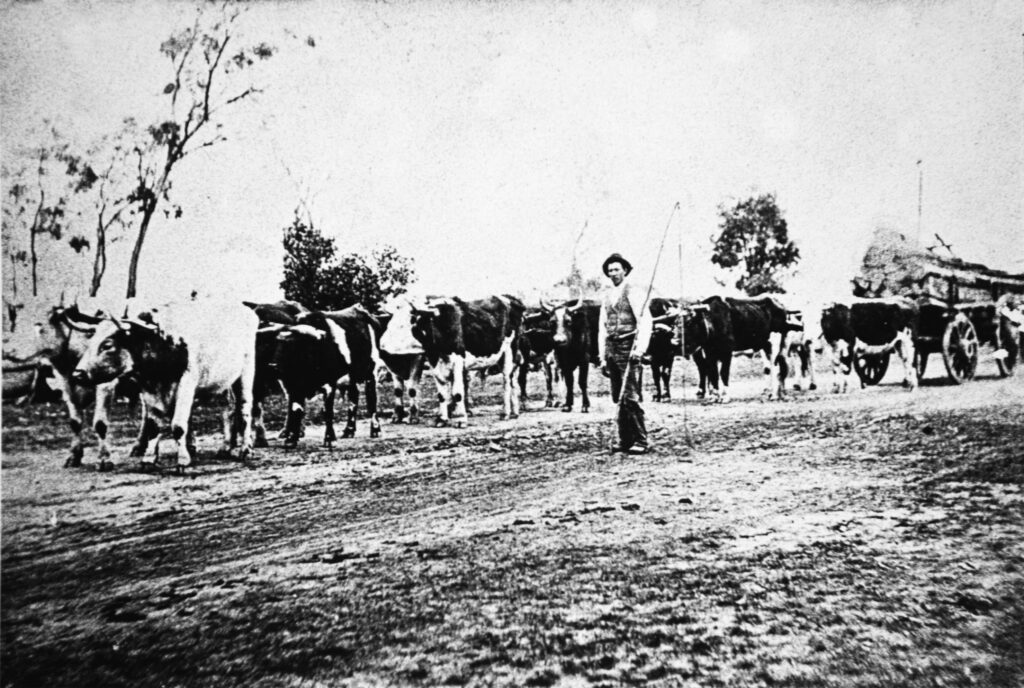
By 1851 thousands of people were pouring into central Victoria and for men like Harry Robbins the booming mining economy was a chance to make something of themselves. His own road to prosperity came not by swinging a pick but establishing himself as a bullock driver and he is believed to have transported the first shipment of gold quartz from Clunes to Ballarat.
Some may say it was akin to leaving a fox in charge of the chook shed for an ex-convict to be tasked with moving a shipment of gold but it appears that Robbins may have successfully obscured his convict past.
According to one recent community contribution on the Australian Convict Records website: “It was firmly believed by his descendants that he ran away from home, jumped on a ship to Van Diemen’s Land, deserted it while docked in Melbourne and joined the gold rush.”
By 1853 he had married one Elizabeth Macintosh at the Clunes station homestead and they went on to have 10 children with several descendants remaining in the Clunes district to this day. By the 1860s Robbins had bought land at Glendaruel and Tourello before finally moving to a farm at St Arnaud where he died in 1899.
The story of Harry Robbins is a modest one but familiar to anyone who has delved into the social history of European Australia and the development of 19th century Victoria. In England, Robbins would have had little chance for advancement.
But transportation along with the economic opportunities brought about by the Victorian gold rush allowed him to turn his life around from that of a convicted robber to a prosperous farmer. He succeeded in living a life far beyond the station that would have been allocated him back in the old country.
Thanks to Allison Thorpe and the Clunes Museum for their assistance with this article.
Above, Harry Robbins with his bullock team on the Clunes Road 1860s.
Words: Tony Sawrey
April 13th, 2022Lauriston Hall
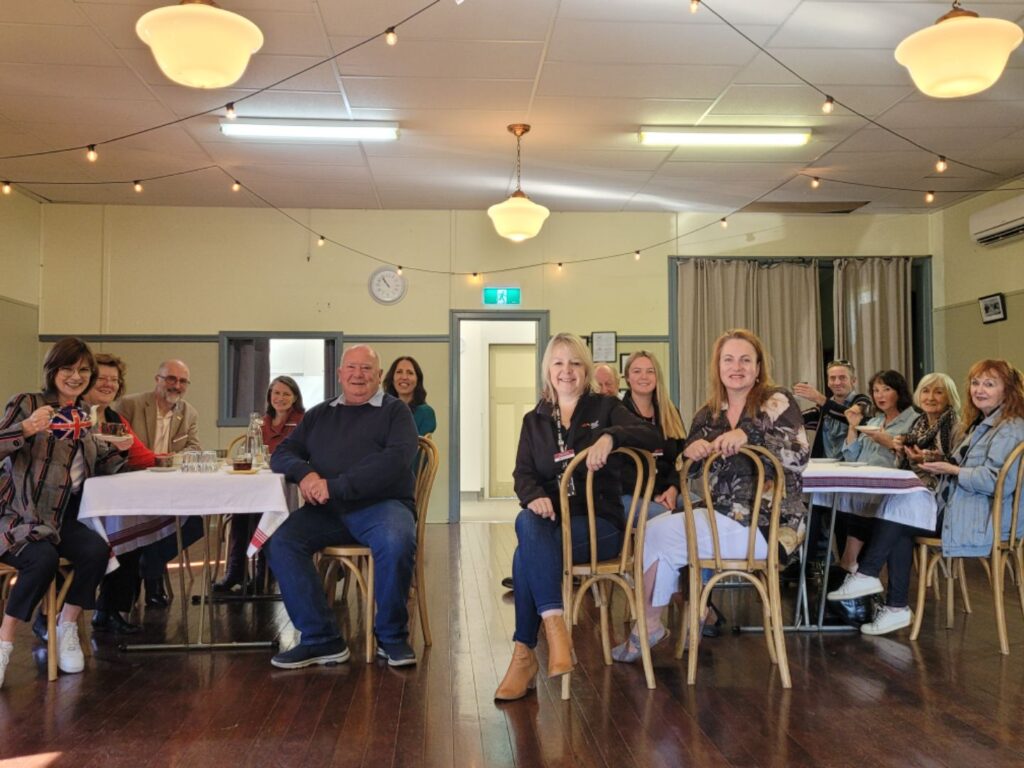
Ninety-year-old Lauriston Hall has been upgraded into a more accessible space to be better equipped to host more events – thanks to the state government and Macedon Ranges Shire Council.
The building has a long history of community spirit, with two local sisters pooling their money to fund construction of the community hall in the early 1930s.
The upgrade ensures the hall can continue to be an important cultural and social hub for locals and visitors, including space for children’s playgroups, performances, not-for-profit group meetings, exhibitions and private functions for the Lauriston community.
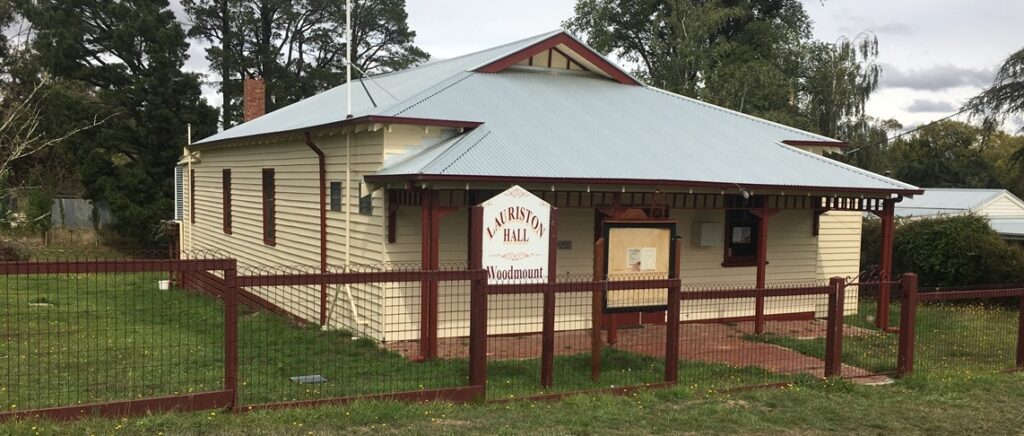
The project included rehabilitation works to retain the hall’s heritage character, while a new kitchen, bathroom and entrance have modernised its internal fit out. Construction works have also made the hall more accessible for people of all abilities.
Above, community members join members of the Lauriston Hall Committee

April 13th, 20225000 Club back
After several years of necessary closure, the 5000 Club has decided to re-open operations.
President Loretta Little said the first day back would be a celebration on Friday, April 29 at noon at the Victoria Park Pavilion.
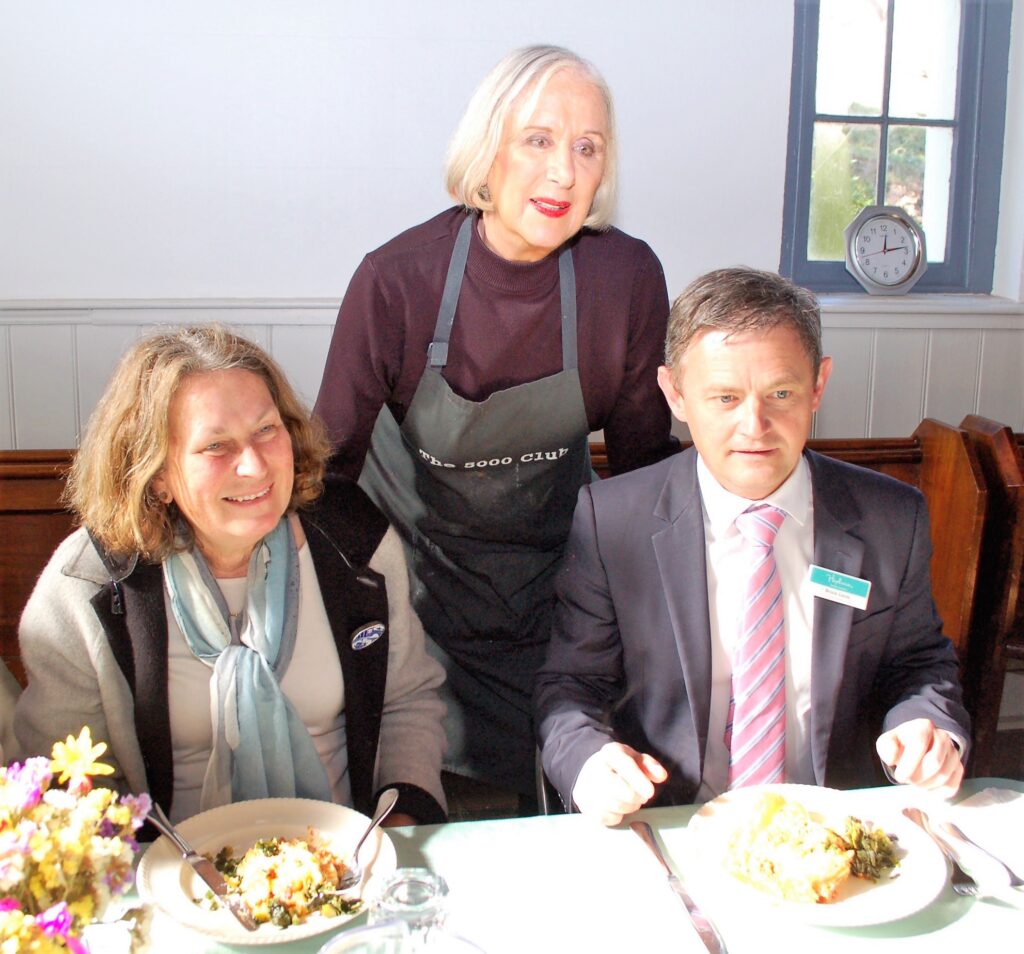
“We will then be open each Friday, providing our healthy hot three-course meals for our friends.
“We will be observing all health protocols, and will be requiring all attendees to provide proof of double vaccination.
“This is in accord with state government rulings for hospitality venues, and to ensure that we are taking all measures to safe-guard our attendees.
“We regret that this means that non-vaccinated people will not be given access to the venue.
“It will be a joy to return to what we have been doing for over ten years…we believe we have been missed, and we look forward to seeing you all once more.”
April 12th, 2022Night of the Proms
Night of the Proms will be held at the Daylesford Town Hall on Saturday, April 30 and is a fundraiser for the Daylesford Community Brass Band, sponsored by Community Bank Daylesford District and U3A Hepburn Shire.
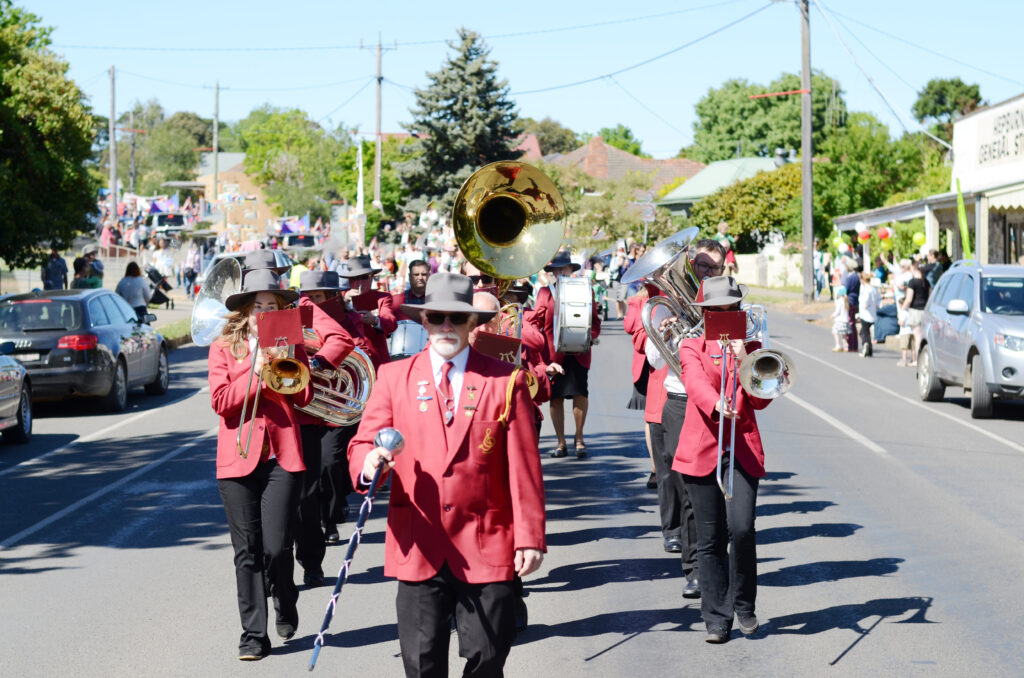
The musical program will include the best loved BBC Prom favourites plus songs by Tom Jones, Van Morrison and The Beatles. Daylesford Pipes and Drums, local singers and soloists will add variety to a night of English, Irish, Welsh and Scottish songs.
With a self-catering dinner, revellers are asked to BYO food, drinks, cutlery and crockery. Make up a table of 10 or join a table and make new friends. There are raffle prizes for best decorated table and best male and female costumes.
The evening starts at 6.30 for 7 and ends at 10.30pm. Cost is $20 per person with bookings essential to Monica Cole at onicaske@hotmail.com or 0425 851 679. Proceeds will go towards the purchase of new instruments for the band.