


March 29th, 2022‘Mortar-fied’: no council cash for old gun

WORLD War I lasted four years. Paul Dwyer has spent that much time trying unsuccessfully to restore an historic weapon from that conflict that is rusting away in Wombat Hill Botanic Gardens.
Councils across Australia bought such weapons from the federal government at the end of that war to try to ease the national debt.
The former shire of Daylesford and Glenlyon paid 5000 pounds for a German mortar captured by the 22nd Australian artillery in 1918. Today’s equivalent sum would be about $516,000. No money has been set aside by the council to restore the mortar.
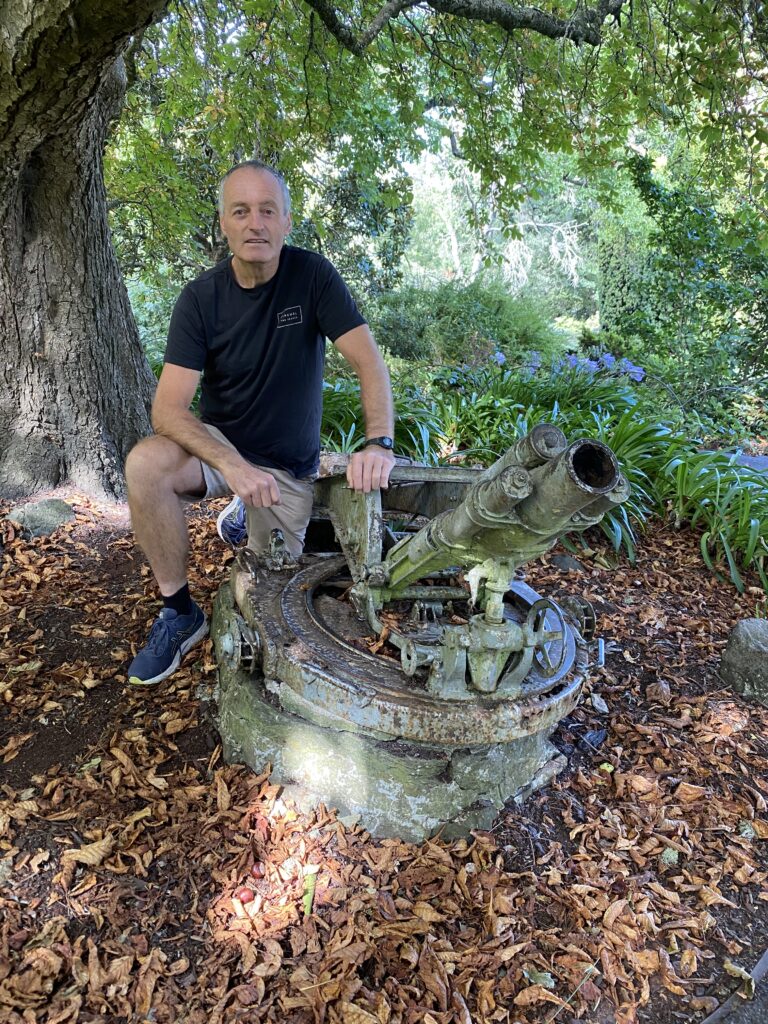
During his campaign, Paul, Daylesford born and bred and at 59 in his 43rd year with the railway workshops United Group Limited, in Ballarat, waited exactly a year for a response from the council to an email message about the mortar, which is near the garden’s glasshouse.
The Local asked the council about this, but it did not respond. It did say it has been in regular contact “for an extended period”.
He has offered to restore the mortar at his firm’s workshops for nothing. He is worried that it may suffer a similar fate to a cannon which fell into disrepair in the 50s and 60s and is rumoured to have disappeared down a mine shaft in the East Street Sunday Market car park.
A council spokesperson acknowledged Paul’s “fantastic” offer and says it is “equally disappointed we are not able to take advantage of this without incurring significant additional costs”.
The spokesperson added that in early 2019, council officers met Paul at the mortar to discuss the possibilities and his kind restoration offer.
“In considering this, it is important to understand that Wombat Hill Botanic Gardens is listed on the Victorian Heritage Register which mandates a permit from Heritage Victoria for any works within the Botanic Gardens (including the WWI mortar). It should also be noted that the WWI mortar is specifically detailed in the Conservation Management Plan for the site.”
In December 2019, the council told Paul that Heritage Victoria had said the mortar was individually listed and “considered to be of primary significance” in the 2007 conservation management plan for the gardens.
But any work on it would need to be “by suitably qualified and experienced professionals (usually conservators), in line with the best conservation practice.”
The council added that if Heritage Victoria were to consider approval of this restoration by the workshops, it would likely require, as a minimum, that the council engage a conservator to oversee it. This was because it needed to believe that the workshops had sufficient skill and experience, to “manage the restoration works in accordance with best conservation practice”. Says Paul: “They’re just going around in circles when what they mean is, ‘We don’t have to do anything’.”
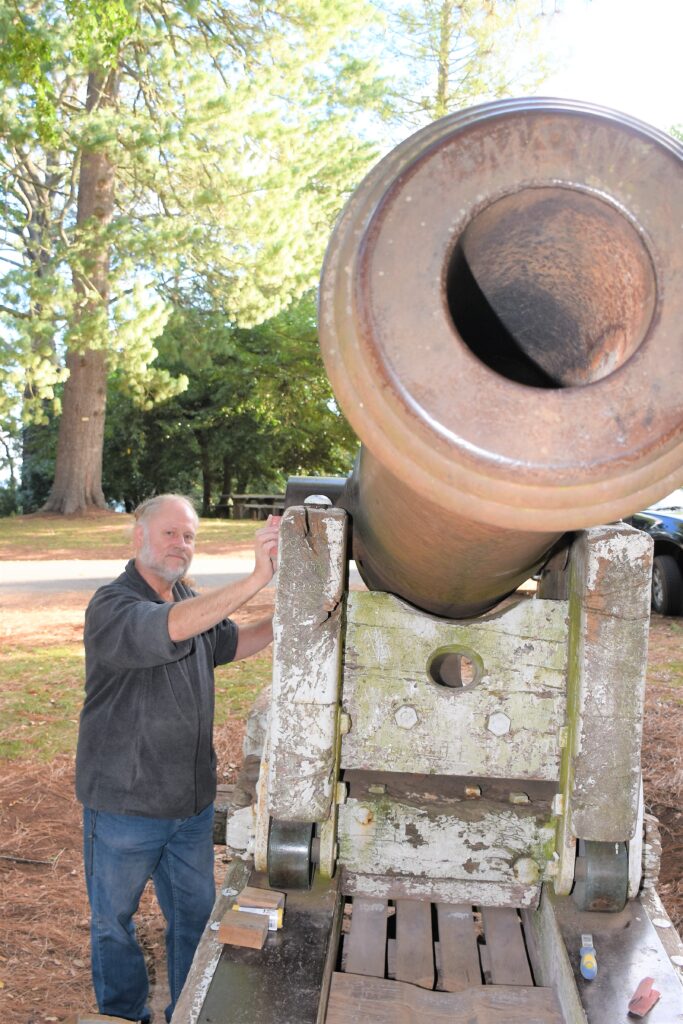
Back in 2017 The Local covered a story about researcher Peter Webster, inset image, who travelled from Sydney, at his own expense, to work on a 1861 cannon, also at the botanic gardens. The wooden mounting of the cannon is the oldest in Australia.
Peter was in touch with Hepburn Shire Council at the time but spent four days on his own sanding back some of the paint work so it would be possible to give the wood a coat of linseed oil to protect it.
At the time, he said it would also be a starting point for locals, whether council or volunteers, to come and “carry on and finish this work bit by bit”.
Both the one-tonne mounting and almost five-tonne gun came from Britain with the gun cast at Low Moor Ironworks in Yorkshire before being taken to the Royal Arsenal in Woolwich in London to be proofed and accepted into army service. The mounting was made at the Royal Carriage Department, part of the Royal Arsenal.
Mr Webster said the guns were brought out to Australia to protect defences around Port Phillip Bay in the mid-1860s. But by the late 1890s it became obvious they were becoming obsolete and after federation, between 1901 and 1910 the new federal government decided to distribute them around the country.
Asked the worth of the cannon, Mr Webster just says “priceless”.
Words: Kevin Childs | Images: Kyle Barnes


March 29th, 2022Puppy Pride

Is your dog a puppy prodigy? Do you swell with pride at the tricks your dog can do? Or perhaps your pooch has a unique feature to share.

At next month’s Puppy Pride event at the Kyneton Botanic Gardens, the LGBTIQA+ community, their friends, family and allies will come together to celebrate their four-legged friends.
Held as part of the Macedon Ranges Autumn Festival, the event will start with a dog walk along the Campaspe River ending up at the Botanic Gardens.
Along with food and drinks, there will be canine and pride-themed stalls, dog displays and the Fashions on the Fur competition. The event is for all ages and those without a dog can enter the Cutest Faux Pup.
There will also be representatives from Dogs Victoria, specialist breeders’ clubs, health and wellbeing services and animal-themed gifts.
Puppy Pride is on Sunday, April 10. The walk will start at St Agnes Place at 11.30am and the main event starts at 12pm. Details: healthpromotion@scchc.org.au or call 5421 1666.
March 29th, 2022Rethink The Rex

A public meeting to Rethink The Rex will be held at the Daylesford Town Hall on Tuesday, April 5 from 6pm.
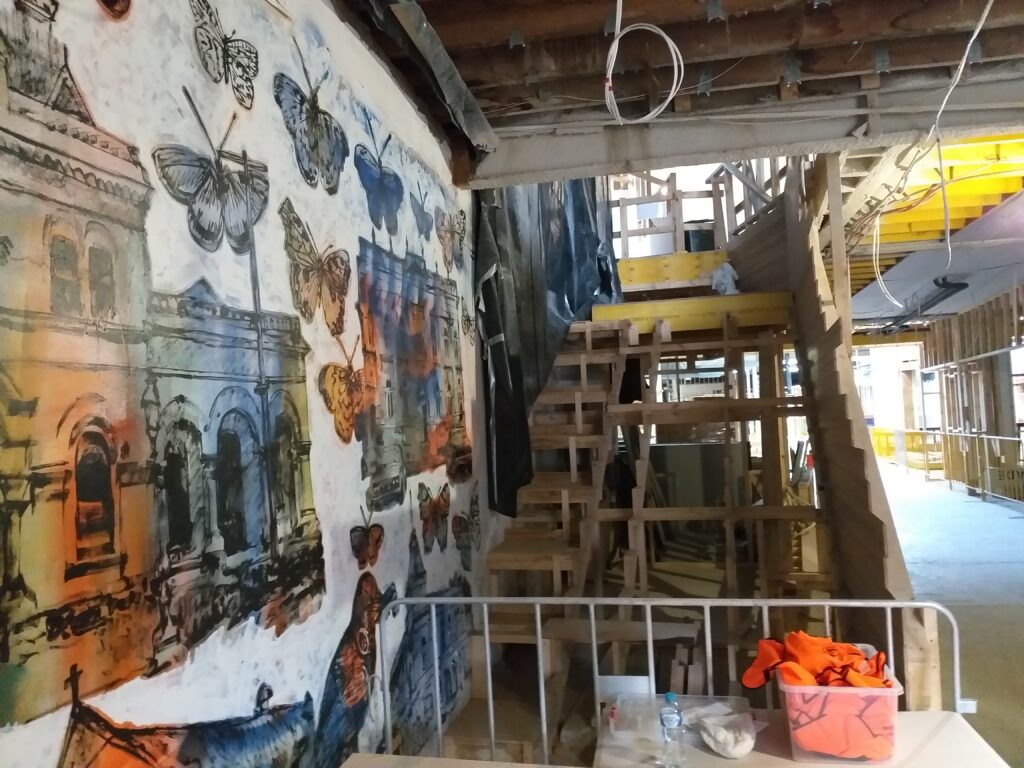
Group convenor Jules McDonald said the sudden decision by Hepburn Shire Council in November last year to sell the Rex against the recommendation of council officers, had prompted the formation of the Rethink The Rex community group aimed at halting the sale pending a proper community consultation.
“The group has been researching the appalling processes that have occurred since council purchased the building in 2016 and will provide this to the meeting.
“The heritage value of the building, identified youth and community needs, alternatives to sale, potential private and public use of the building and site, financial perspectives and innovative ideas will be presented together with some inspirational initiatives from other regional areas. The thorny issue of ‘to sell or not to sell’ will also be explored.”
Ms McDonald said community members will have opportunity to express their views and ask questions.

March 28th, 2022Operation Cookies

MANY of us have watched in horror and disbelief as Russia has rolled over Ukraine, killing soldiers and civilians, and wondered what we can do to help.
Yuliya Wojcicki has the answer. Operation Cookies.
Yuliya and her Aussie husband Steven run Wojcicki Constructions, a custom-home building specialist company in Daylesford.
But Yuliya was born and raised in a small town in Ukraine an hour from Kyiv. Her family, including a sister now living in the UK, moved to Australia in 1997. They became Australian citizens but when Yuliya’s grandmother needed care, her parents moved back 12 years later.
Along with her parents, other relatives and former high school friends still live in the now war-ravaged country although have so far managed to stay safe or evacuate from towns being bombed.
When the war started on February 24, Yuliya knew she needed to do something to help and decided to raise an initial amount of $7000 to help with humanitarian aid for those in need.


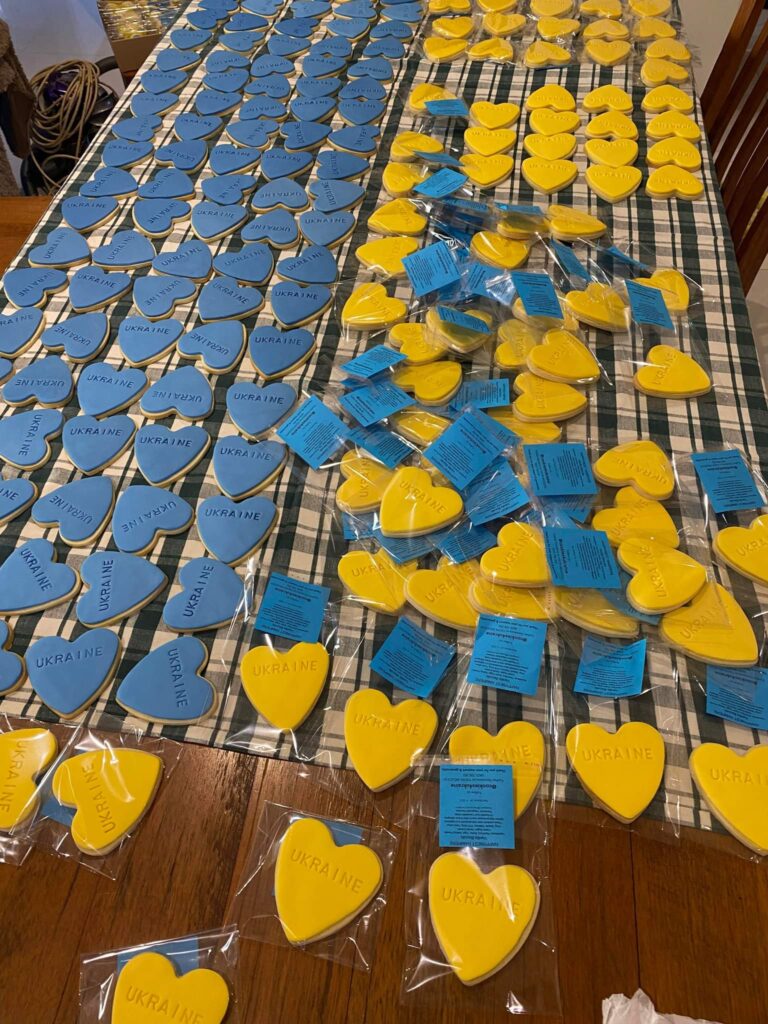
She reached out to Caroline Goulding of Happynest Hampers in Campbells Creek who is now creating heart-shaped cookies in blue and yellow, the colours of the Ukrainian flag.
Wojcicki Constructions covers the cost of the cookies, buying them at cost price. They are then sold for $6 each or a box of 20 for $120, with every dollar raised going to Spirit of Victory, pictured, an aid organisation run by friends in Ukraine. The company is also covering all bank fees so that 100 per cent of the money raised goes to Ukraine and its people.
The money is then used to buy food and hygiene products which are distributed to those in need – many of them people who have been evacuated with their children to safer areas.
Yuliya said they had chosen Spirit of Victory because they knew them personally and knew the work they have been doing for many years. They also know none of the money raised will be spent on administration fees.
She said she had asked her parents to return to Australia in January, but they had refused.
“People find it hard to understand but they want to be there, they want to be useful. They are safe enough at this stage and while I would like them to be here or in the UK with my sister, when the war started they became even more adamant that Ukraine is their home and they will stay in their home. I just have to accept their decision and honestly, if I was still there, I would probably do the same thing.”
Yuliya said her parents, both 71, were helping the army as much as they could, with her mother making camouflage nets for trucks and tanks. “They will do whatever they can to assist their country.”
Yuliya said the local community had been amazing, both buying cookies and just donating money to help reach their fundraising goal.
“And Caroline from Happynest Hampers has been incredible. She jumped on board straight away, offered a very, very good price and has been pulling all-nighters to keep up with demand.”
To order cookies or donate, SMS Yuliya on 0425 708 292. She has asked people not to call as she is juggling work and Operation Cookies “and life”. Cookies can be picked up or delivered.
Links: Operation Cookies in on Instagram @cookies4ukraine
Spirit of Victory @spirit.of.victory.ua
Words: Donna Kelly

March 28th, 2022Daylesford…not just a place but a community
Sarah Flemming 31, and Marlie Regis 30, met in England six years ago.They left their IT and marketing careers to see the world and have been in Australia for four years and are now influencers and bloggers, highlighting the sights and people they come across on their journey. Their recent return to Daylesford, a community that supported them during lockdown, homeless and alone, has seen them spread the joy of ChillOut with their Instagram, Facebook posts and videos – so far reaching more than 200,000 keen followers. This is their story.
WHILST travelling through Victoria at the beginning of 2020, we had no idea that we would end up living in the state for the entire year.
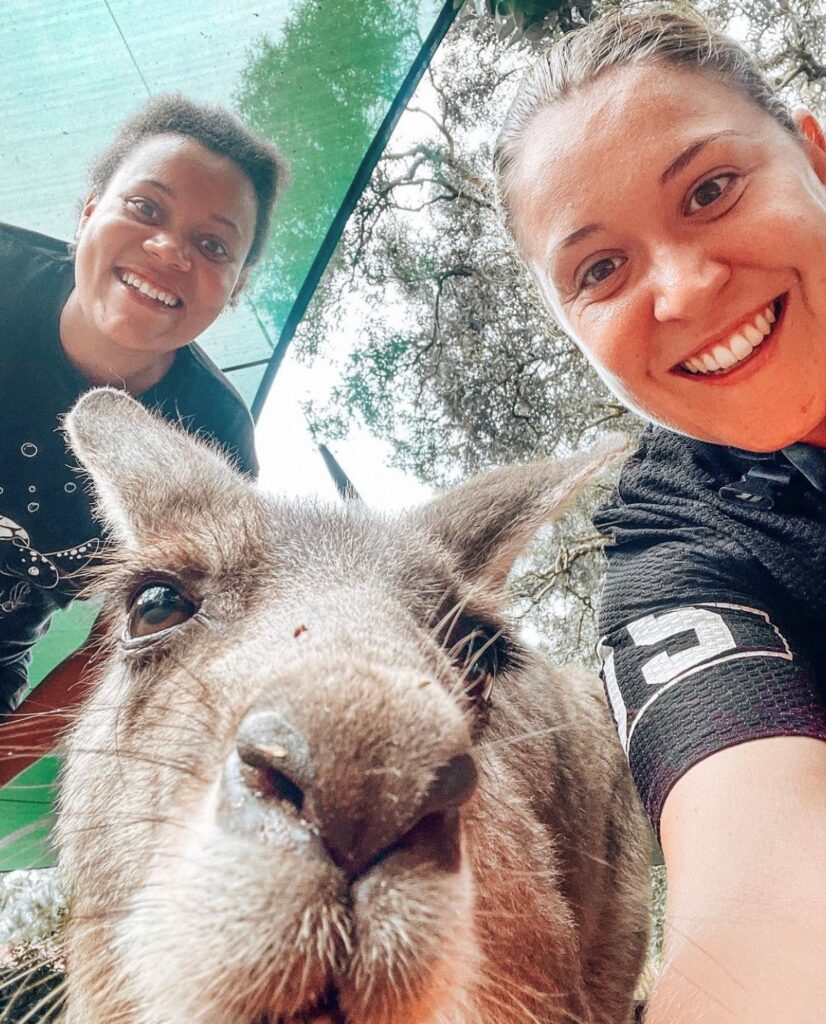
As backpackers, we were initially working towards the six months of farm work that we needed to do in order to gain an extra year of our working holiday visa, when the pandemic hit us all by surprise.
In March, we found ourselves in Creswick working on a potato farm. After only our first day on the farm, the lockdown started. We headed back to the free campsite we were staying at, with the intentions of sorting out something more permanent later, only to find a locked gate with a sign reading ‘closed due to Covid’. We thought we’d better get ourselves booked into an official campsite but they weren’t taking new people.

Luckily for us, the evenings were still pretty light and between Creswick and Daylesford we had mastered the art of finding electric plugs to use, hot water to fill our shower and the public barbeque facilities gave us shelter and light to cook our dinners.
In case you are wondering where we slept, the locations of the Bushfire Neighbourhood Safer Place became our home, in the car parks at Daylesford and Creswick information centres. At the time, we were just grateful to be in a country that was taking Covid so seriously and keeping us safe from this virus that was ripping our home country, the UK, and the rest of the world apart.
The potato farm we were working on was heavily reliant on the weather, so on our rainy days off we would treat ourselves to a pie or a baked good from the many bakeries and cafes in Daylesford. On one of these occasions, a lovely guy who was also living out of his van told us about what we now know as the Good Grub Club. At the time, he explained that they offered a free breakfast a few times a week and that we should pop in there.

Along we went one morning and at this point, we discovered that the Good Grub Club was this incredible food kitchen supporting the community during this extremely difficult time. The ladies working there, particularly Sallie, insisted that they help us, knowing that we were living in our Holden Commodore station wagon.
They gave us a box of beautiful fresh food and some home cooked meals too. This is such an incredible memory for us and we were so grateful and humbled by the community’s initial support in helping us. It was also our first home cooked meal that wasn’t cooked on a camping stove in a very long time.
After this day, we decided that we’d offer our assistance on any days that we were free from work. As the nights were getting darker and the potato season was coming to an end, this became a regular place to find us. We divided out the delicious meals and helped to make the boxes for the community. Sallie and Jen (who was the reverend at the time, from the Uniting Church next door) had been discussing where we might be able to stay. They were so concerned about us staying in our car, as it was getting much colder with the winter creeping in.
Jen kindly offered us the small community hall next door, which was going unused due to Covid. We set up our tent and mattress inside, surrounded by heaters and felt like we were living a life of luxury. It even had a little kitchen with an oven so we could finally make our own banana bread (remember that Covid trend?).
We were fortunate enough to stay in the hall for around a month and throughout this time we really became part of the Daylesford community. We felt so welcomed and were humbled by the kindness of everyone living in this small regional town. Just a couple of days before we were due to head off to our next job near the Great Ocean Road, we went to see Jen hold a service in the church next door.
It turned out that there was also a homeless man at the service that the community wanted to help house in the hall. With us still having a little extra time before heading off, a local mother and journalist offered to let us stay in their house whilst the homeless man moved into our temporary humble abode. This lovely local we had the pleasure of meeting was Narelle Groenhout.
Little did we know that this meeting would change our lives forever. Narelle took us into her home with her husband, Pat and their two children. They gave us a real bed to sleep in for a few nights and even hosted a wonderful leaving party for us.
Pat is a wonderful cook and made a delicious paella for us all and we were showered with gifts from the locals. These included an oil painting of Lake Daylesford from Chris and Malcolm and some tough gum boots from Jo at the local shoe store to use at our next job.
It was such a pleasure meeting this beautiful community and as backpackers who’ve travelled all across Australia, we haven’t come across anywhere that has given us so much love and kindness. It was amazing to find our little Aussie family here in Daylesford; a place that was also more than welcoming of us as an LGBTQ+ couple.
After leaving Daylesford, we went off to our next job, which was intended to be for just two months. However, due to the tough lockdown laws, we ended up being there for six months instead. Once there were more freedoms, we made sure we swung by Daylesford again, before leaving Victoria.
One of the positives of getting stuck in Victoria was that we had more time to focus on our travel blog, Cloud Walks. Skip to 2022 and we were offered the opportunity to co-author a coffee table book about the best LGBTQ+ events and locations around the world.
We, of course, decided to add Daylesford and the ChillOut Festival to the book. After being away for a year and a half, it has been so lovely to be back in this lovely town, especially during such a special time of the year with ChillOut. We have spent our time here reconnecting with all of the kind people that helped us out so much back in 2020 and making new precious connections too.
We truly love the community here in Daylesford; they rescued us from the harsh Victorian winter and gave us a true sense of belonging in so many ways. There is no doubt that Daylesford will always hold a special place in our hearts.

March 28th, 2022Hepburn Shire pulls pin on aged services
Hepburn Shire Council will stop delivering aged care and disability services to more than 300 residents.
The decision has been labelled appalling, abhorrent and out of touch by members of the community, especially as it follows an earlier in-principle decision made behind closed doors, against which the initial public response caused council to seek community feedback.
Despite the consultation process with residents, aged care groups and carers, the council pushed through with its initial intentions to scrap the services.
Creswick Ward councillor Don Henderson was the only councillor who opposed the recommendations at last week’s council meeting. Now the decision has been made, Cr Henderson has to be seen to support the decision to avoid being in breach of the Local Government Code of Conduct.
Prior to the meeting, Cr Henderson aired his concerns with pursuing a privatised model, citing local government as the closest form of government to the people and expressed his concerned for many vulnerable and elderly residents across the shire.
He recently attended the Lions Club of Creswick’s community working bee to help flood-affected residents and said many were the same residents affected by the severe floods 10 years ago. This time many were aged care service recipients, a service which has allowed them to stay in their homes with dignity.
Hepburn Shire Mayor Cr Tim Drylie said it was a long lead time reaching the decision. “It certainly wasn’t an easy decision and we all sought a lot of advice to make sure we were on the right track. Because of the Federal Government reforms coming in next year, we had no choice as it is (the delivery model) moving to an open market model. As a small council we were not in a position to fill the void in service delivery required.”
Cr Drylie said staff had been fully engaged with and would be offered redundancy packages, would be able to apply for other positions available with the council and also had the choice to work with the chosen provider. He said many staff members were nearing retirement age.
However, The Local was contacted by a number of service recipients and carers who said the consultation process was inadequate, with one resident saying she was not informed during that process.
Wheatsheaf resident Loris Duclos, an aged care nurse with more than 30 years’ experience, has cared for her mother and mother in-law, navigating privatised aged care models. She called the decision appalling.
“I think the councillors have sold out our most vulnerable residents. I had hoped the councillors would stand up and have a backbone,” she said.
“I have seen first-hand how inadequate a privatised model is. My mother has to go through accreditation processes every six months and only gets a few hours a fortnight in care. She still pays $100 a week in administration costs and now with staff shortages in her area, she doesn’t even have a case manager.
“Elected representatives are there to stand up, step outside their areas of interest and form their own views. Not simply do what they are told by council officers,” she said.
While a number of councils across the state have already outsourced aged and disability services, there are councils who will continue to deliver the services under the reforms.
The council has stated it will “act as an advocate for the needs of the community and will hold accountable Commonwealth and State Governments and the appointed home support providers for the delivery of quality services to the Hepburn community”.
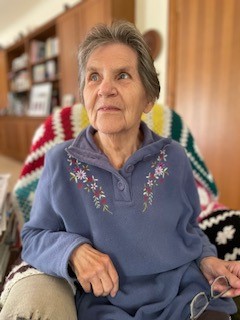
Cornelia Kimstra, pictured, is 86. She lives independently in her own home in Daylesford with her beloved dog Daisy. She lost her husband 13 years ago and relies heavily on council services.
Cornelia is one of many elderly residents in the shire concerned about the decision to privatise the current services.
“My carer has been coming here for many years. She knows me, knows what I need and always asks me if I need anything else. She is more than a carer to me. When my late husband Klaas was alive, it was the services and the carers that we knew that helped us manage in our own home,” she said.
Cornelia was one of the founding members of the Daylesford U3A. She and Klaas helped start the Daylesford Men’s Shed, and she was a national advocate for euthanasia reforms at a parliamentary level. Cornelia has donated thousands of hours to volunteer work and says she deserves better after paying rates for 30 years.
Neighbour and community welfare advocate Michelle Clifford labelled the decision disgusting and abhorrent, and believes it will cost people’s quality of life.
“I think it’s abhorrent that the decision was made before the federal election and this decision will only alienate aged and disabled residents. A lot of people don’t like outsiders, (they) feel uncomfortable with a new carer every week,” she said.
“I really believe this decision will cost people’s quality of life. I get that fiscal management is part of council’s game but I don’t feel they even considered their options. There could have been ways to work within the budget and to fill the gap but I guess the money that could have been used was wasted on The Rex.”
Michelle, who ran the Community Op Shop, said groups and services including the Op Shop, Central Highlands Rural Health, Creswick Lions Club and the Good Grub Club will no doubt have increased workloads when a new provider takes over the running of the services.
Words & image: Narelle Groenhout
March 28th, 2022Farewell to Anne, ‘the ground’s
not the same’
FOR Anne E Stewart, brilliant storyteller, one long narrative is about to end and another to start.
After some 31 years she is moving to be near her daughter and two grandchildren in Brisbane.
When it comes to Anne, the shop-worn phrase about being on a journey has seldom been truer. Storytelling has taken her across the globe, while at home, she has given much to the district and beyond.
After a happy childhood, the next stage was grim. Born in Melbourne in 1958, she was doing matriculation when her world and that of her family was shattered. Her brother, Tony, was killed in East Timor by Indonesian soldiers, along with two others in a Channel Seven news crew and two members of a Channel Nine crew. Anne’s anger is still potent. “We were told he ‘went missing’, but ‘they’ (the government) knew they were dead, but (for diplomatic reasons) had to lie.”
After a couple of false starts her career began at, of all places, a party in Torquay. She learned of a job in Geelong and at 19 became an assistant children’s librarian in Geelong and found her groove working for the Bellarine Peninsula Bookmobile.
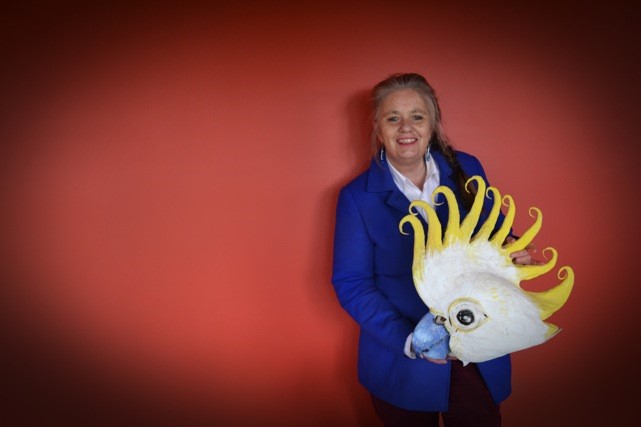
After being pushed into storytelling with the team from the Jolly Jumbuck, a Storytelling Van sponsored by the State Library of Victoria to promote literacy, she was also put behind the steering wheel. Off she went, entertaining children across the state with Judith Kerr’s The Tiger Who Came to Tea.
This came naturally because she grew up in a family of storytellers, she says, with plenty of competition to tell a yarn at home.
From the start, she set out to develop a love of language and literature in the youngsters. Now she tells her stories to those of any age, promoting cultural understanding, social justice and helping people with their unique stories.
Her storytelling skills were honed by going to Darwin, dropping into remote and fascinating outback spots in her boyfriend’s plane. Darwin was also where she first encountered bias towards indigenous people, leading to a 25-year relationship with the Dja Dja Wurrung people here and work on the shire’s reconciliation advisory panel.
Like so many young Australians at the time she roamed Asia and Europe even finding paying work at a Scottish storytelling festival.
Once back home, she won the 1998 Storytelling Competition in Port Fairy. She has been invited to tell stories in places as distant as Iran, Colombia, Mexico and even Timor.
Daylesford came up on her radar after her brother Greg moved here. He has just retired as a doctor. Back then, she says, an affordable house could be found.
Once here, Anne plunged into running the Words in Winter writers’ festival, organised the New Year’s Eve Parade for nine years, spent a similar time as Daylesford Primary School Council president and six terms as president of the Swiss Italian Festa while her two children were learning Italian. She had four terms as the president of the Victorian branch of the Australian Storytelling Guild.
Reflecting on the changes she has noticed here, she remembers the many theatrical performances at the Powerhouse, opposite the former police station in Daylesford, and gigs at the Palais and Town Hall. Today, she finds, the focus is more on hospitality and business.
“But, she adds, ”there are still people with passion, although it just doesn’t feel like my ground to dig into.”
Five years ago she was struck another blow when her partner, Rod May, an ecological farming pioneer, was killed in a road accident aged 63.
Awaiting her in Brisbane are her daughter, Cassandra, a tailor, and grandchildren aged four and almost two. Anne’s son Dominic is a physiotherapist in Melbourne.
“I’m very proud of my kids and contributions I made to the town for their benefit,” she says. “I’m pleased with my storytelling efforts and the huge amount of experience I’ve had in Australia and worldwide, and that I’m known as a storyteller.”
Her sunny side bursts through early in our interview when she tells of how much she is looking forward to the Olympics being held in Brisbane in 10 years’ time. She is eager to help with the Cultural Olympics. Her story continues.
Words: Kevin Childs
Image: Poppy Dahmer/Daylesford Strong Women Exhibition 2015

March 27th, 2022Open space future
Now is your chance to get involved in shaping the future of open spaces in the Macedon Ranges Shire.
Council is calling for expressions of interest to participate in a Community Assembly to guide key decisions about the future of our parks, playgrounds, sporting facilities and conservation areas.
Recruitment for the new Open Space Community Assembly has now launched with expressions of interest closing at midnight on 8 April. The Community Assembly will be asked to consider the outcomes of the public consultation process which runs until 8 April.
You can provide input to the process by sharing your views on parks, sporting fields and conservation areas within the shire and the role they play in areas such as the health and wellbeing of the community and protecting the natural environment of the shire on Council’s Have Your Say website.
The new strategy will provide clear direction for planning, management and delivery of public open space in the shire, including conservation uses and developer contributions from new residential areas. These issues directly affect many local community members, park users, recreation, sporting and environmental groups and volunteers.
Mayor, Cr Jennifer Anderson said the Community Assembly will provide recommendations to guide the development of the Open Space Strategy.
“Open space is one of the most significant land uses provided by Council for everyone to access. Deliberative engagement provides the opportunity for Council and the community to work together to make important decisions about open space in our shire.
“The Community Assembly is a randomly selected group of around 25 residents, who reflect the diversity of our community. Members will be independently recruited and chosen to reflect our population, including age, gender, location and other characteristics.
“I encourage everyone to consider getting involved. This is an opportunity to work closely with other members of the community to engage in how we can best manage our open space to meet both our current and potential future needs, whilst acknowledging that we have limited resources to do so,” she said.
The Community Assembly will meet for an evening briefing and two full-day sessions in May 2022. Members of the Assembly will receive a total honorarium of $400, in recognition of their commitment.
Assembly selection will be managed by i.e. community, an independent organisation, which will also guide and support the Assembly members through the process. All expressions of interest will be treated in accordance with Council’s privacy policy.
Cr Anderson said Council owns and manages more than 900 hectares of open space including public parks, waterways, recreation reserves and bushland conservation reserves.
“Over time we have seen an increasing desire for quality open spaces for both formal and informal recreation, conservation, environmental connectivity, and social gatherings.
“Members of the Assembly will learn about the challenges Council faces in managing open space, including the pressures of residential growth, increasing desire and competition for varying uses of open space, and our changing climate,” she said.
“After hearing from experts, reviewing initial community feedback and discussing and assessing different options in depth, the Assembly will make recommendations on how to best create and manage our open space.
“The Assembly will help determine how Council responds to the priorities, needs and expectations of the Macedon Ranges community. Their recommendations will then be considered in the development of the draft Open Space Strategy, which will then be made available for feedback from the rest of the community.
“This process provides multiple opportunities for members of the Macedon Ranges community to have their say on such an important topic to us all,” she said.
How to get involved
If you or anyone in your household (16 years or older) is interested in being a part of the Open Space Community Assembly, please register your interest at the link available on Council’s website. Registrations close at midnight on Friday 8 April. Note: Councillors, Council employees and their immediate families are not eligible to register. For more information, to register, and to Have Your Say, visit mrsc.vic.gov.au/yoursay If you would like to receive project updates, please register at mrsc.vic.gov.au/open-space or call the Strategic Planning team on (03) 5422 0333.

March 27th, 2022Kids entertainment over school hols
Given lockdowns appear to now be a thing of the past, the pressure will be on parents once more to keep kids entertained over the upcoming April school holidays.
In particular, in-person activities for kids are back in force with many parents keen to encourage face to face interactions, given the isolation kids have endured over the past year.
Hayley Markham, co-founder of Code Camp, a popular learn-to-code camp which offers two-to-three-day camps as well as online, says one area of school holiday fun that has grown has been educational-based or skills learning programs.
“For us we wanted to offer programs that were enjoyable, but also taught kids specific skills we know will be highly in demand in a fast-paced, technology-driven age,” says Ms Markham.
“Often people pursue a particular job later on that has been sparked by a key moment or positive experience during their school years. So, it’s important to expose kids to as many of those moments and encourage them to try a variety of things.”
Ms Markham says being technologically clued up won’t just be necessary in our everyday lives, it will be the core feature of many future jobs. “We’ll see a massive increase in the use of drones, robots and other automation, which in turn will see a huge rise in related tech jobs.”
Last school holidays the business, which also does programs on how to become and animator, DJ or YouTuber, offered Drone Camp for the first time – where kids learn to fly and code a drone. More than 400 kids attended one of the 31 Drone Camps held at 29 different venues across Australia, completing 2,500 drone missions.
“From learning the fundamentals of drone technology and safety, to discovering how drones can spot sharks, fight bushfires and rescue koalas, the camp combines STEM learning, teamwork and social awareness,” Ms Markham says. “It was actually a smash hit selling out in just a few days, which resulted in extra camps being put on – which also sold out.”
Another pastime with a purpose is escape rooms for kids – basically where a team of players discover clues, solve puzzles, accomplish tasks or escape from a room. This encourages critical thinking and complex problem solving – important skills kids will need in the coming years.
Alternately, for parents wanting kids to work though hard situations, develop courage and learning to take educated risks, a simple and fun intro is a tree climbing course, available in all states. Ninja courses also encourage kids to jump knowing they might fall, whilst getting up and trying again.
Being sensitive and empathetic to the needs of others and issues affecting society will also be vitally important in years to come so signing kids up for volunteering is also beneficial.
“We all want our kids to develop strong interests,” says Ms Markham. “The school holidays are a great time to push kids’ boundaries so they’re not just lying around playing games on their devices every day. Now’s the time to sign kids up so they can have something interesting to look forward to.”

March 27th, 2022Public meeting to Rethink The Rex
A public meeting will be held at the Daylesford Town Hall on Tuesday, April 5 from 6pm to Rethink The Rex.
The sudden decision by Council in November 2021 to sell the Rex, against the recommendation of council officers, prompted the formation of the ‘Rethink the Rex’ community group aimed at halting the sale pending a proper community consultation.
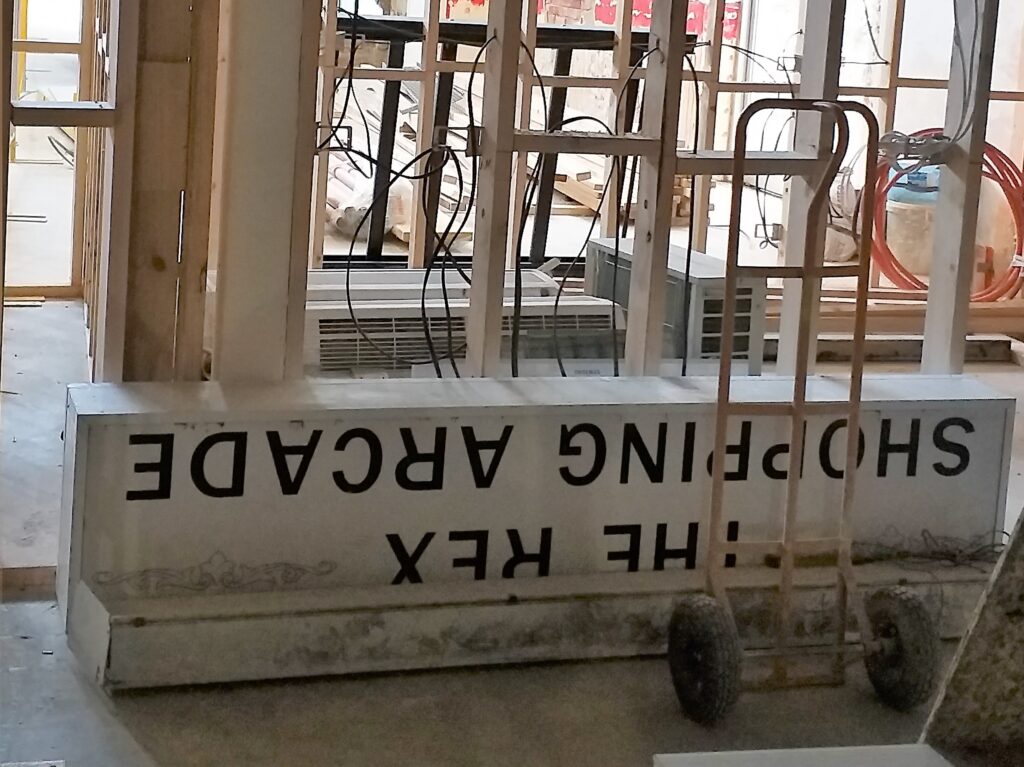
The group has been researching the appalling processes that have occurred since Council purchased the building in 2016 and will provide this information to the meeting. The heritage value of the building, identified youth and community needs, alternatives to sale, potential private and public use of the building and site, financial perspectives and innovative ideas will be presented together with some inspirational initiatives from other regional areas. The thorny issue of ‘to sell or not to sell’ will also be explored.
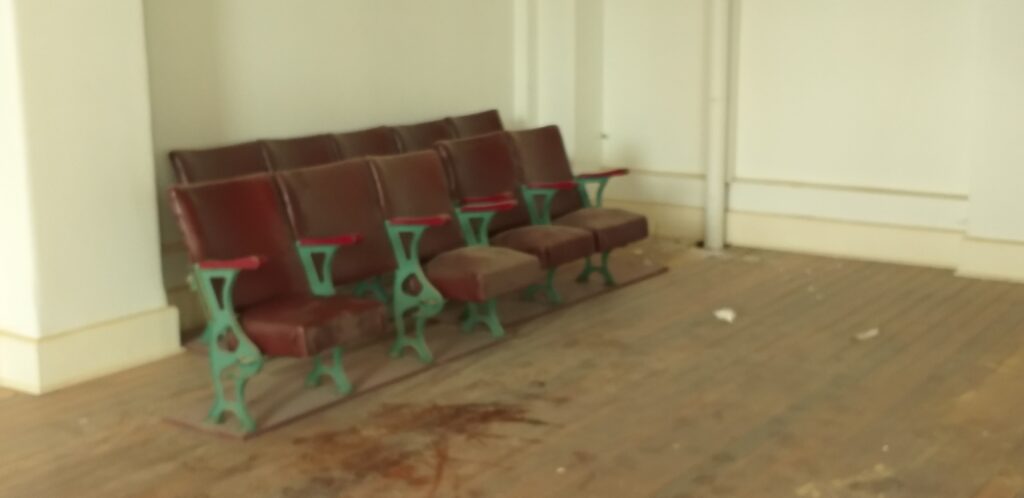
Community members will have opportunity to express their views and ask questions. We hope this public meeting will be followed by a comprehensive community consultation conducted by council and this meeting will be a useful forerunner providing both information and stimulus for involvement.
Jules McDonald, Convenor of the Rethink the Rex group said “Whatever the final decision or solution, it is important that the community is fully informed and has a real opportunity to explore possibilities and express their views.”

March 27th, 2022School redevelopment complete
Students at Bendigo’s Kalianna School are now making use of modern new classrooms and facilities, with the state government’s huge redevelopment of the specialist school complete.
Premier Daniel Andrews, Member for Bendigo East Jacinta Allan and Member for Bendigo West Maree Edwards have officially opened the redeveloped Nolan Street site after major upgrade works were completed last year.
The project’s first stage included a brand-new multipurpose area and classroom facilities, café space/school hub, repurposed administration area including kitchen and dining facilities, meeting spaces and reading nook, and improved staff facilities, as well as new bus drop-off and pick-up areas.
The new café space has allowed Year 11 and 12 VCAL students to complete their hospitality training at school, getting real-world experience for the future while still at school.
The second stage of the project included a new classroom block and the redevelopment of existing classroom blocks, as well as a new roof over the quadrangle play area.
Each classroom block now has a combination of flexible learning areas, collaborative meeting spaces with wet areas and staff resources, with the learning areas catering for the school’s move to team teaching as well as individual student needs.
The government will also deliver a third stage of works, featuring a multipurpose building – with construction set to begin later this year.
Kalianna School was established as a specialist school in 1963, and draws students from the Mount Alexander, Loddon and Greater Bendigo shires.

March 26th, 2022Japanese encephalitis at new piggery
Agriculture Victoria has detected Japanese encephalitis virus at one new piggery.
The detection is the result of national surveillance efforts to identify new cases and determine the extent and spread of the disease and the source of its introduction.
Japanese encephalitis has also been confirmed in piggeries in New South Wales, Queensland and South Australia.
Agriculture Victoria is also working closely with both the pig and horse industries in response to the disease. A number of suspected cases are under investigation.
Detections have been confirmed at a total of 12 properties in the Wangaratta, Moira, Greater Shepparton, Campaspe, Gannawarra, Loddon, Greater Bendigo and Northern Grampians local government areas.
Agriculture Victoria’s incident management team continues to work closely with industry, conducting surveillance activities and providing advice and information to farmers, livestock and horse owners.
Infection is not spread directly from pigs to people, and there is no risk to humans from eating pig meat.
In general, spread is through the movement of migratory water birds and through the movement of infected mosquitoes, often over long distances. It does not usually spread directly from animal to animal (i.e. it is not considered contagious).
Victorians are being reminded to protect themselves from mosquito bites particularly when we are spending time outdoors.
Japanese Encephalitis vaccines are recommended for people at a higher risk of exposure to the virus, such as those working with pigs. All people should undertake measures to reduce exposure to mosquitos.
For more information about Japanese Encephalitis virus and animals visit Agriculture Victoria’s website: agriculture.vic.gov.au/biosecurity/animal-diseases/pig-diseases/japanese-encephalitis-virus-jev
For more information about Japanese Encephalitis virus and human health contact your GP or phone NURSE-ON-CALL on 1300 606 024, or go to www.health.vic.gov.au/jev

March 26th, 2022More jobs for Victorians
More Victorians will have access to the skills they need for the job they want, with funding for an extra 10,000 places across the TAFE and training system for people looking to reskill after the pandemic and move into healthcare and other in-demand jobs.
Premier Daniel Andrews and Minister for Training and Skills Gayle Tierney visited Bendigo Kangan Institute’s new Essendon Health Hub to announce the $61.6 million investment – which will give more Victorians the opportunity to get new skills for a secure job.
The pandemic has seen people all over the world thinking more about what really matters to each of us – family, where we want to live, what we want to do for work. For many, it’s been a time consider a different career path and these new subsidised places will help people get started.
Jobseekers can choose to study any VET course, including from the Andrews Labor Government’s signature Free TAFE list. Even Victorians who already have another qualification – including a degree – can still access these training places at any TAFE across the state if they’re looking to reskill or change careers after the pandemic.
Once its refurbishment is completed in June this year, the new Health Hub at Essendon will train approximately 900 health students each year. New nursing and pathology simulation labs have been built to reflect actual healthcare settings and ensure students are fully prepared when they start work, strengthening Victoria’s healthcare workforce.
In 2020, the most popular courses across the TAFE system included mental health, nursing and allied health assistance – as the pandemic highlighted the importance of a strong health and care workforce.

March 26th, 2022Locals returning home
One regional organization is seeing unexpected benefits flowing from the COVID-19 pandemic in the form of highly skilled Ballarat residents returning to the city for employment.
Cafs (Child and Family Services, Ballarat), has recently been on a recruitment drive with a series of roles, across a number of specialist teams since the pandemic started to ease late last year.
Like many other organisations, Cafs has been casting a wide net when recruiting for vacancies looking to Melbourne and other regional centres for staff, but has in fact seen that Ballarat residents (who have previously resorted to long daily commutes to further their careers) are now looking closer to home for roles that provide a positive work life balance and are aligned with their personal values.
“Some of the vacancies have undeniably been created by employees re-assessing their priorities during lockdowns and changing careers,” said Robyn Clark, Executive Manager – People and Engagement, “but the encouraging development has been the fact that we are seeing an increasing number of people from the regions we operate in looking for career opportunities closer to home and family.”
“As an organization we have focused on accessibility, inclusivity and building a team culture to position ourselves as an employer of choice. This focus, coupled with the diversity of opportunities available, has enabled us to attract and retain highly skilled locals back to the region and working for the greater good of our cities. We have appointed people in client facing roles such as Family Support, The Orange Door and Home Based Care, but there have also been great opportunities in our less familiar teams such as History & Heritage, Brand Development and Learning & Development.”
One of the people to make the switch back to Ballarat based employment is Mika Pediaditis. Mika was commuting to Richmond each day (a daily four hour round trip) and was attracted to the range of ongoing positions available at Cafs. She commenced in Cafs Housing and Homelessness Team in May 2021.
“I chose housing and homelessness over other positions because I wanted to do direct practice again (after a reasonably long period of working in other roles in the sector). The current housing crisis is a social issue that I feel passionately about. I did focus on Ballarat as I wanted to participate in and contribute to social local issues”, said Mika. “My role at Cafs is rewarding for a number of reasons. Firstly, the feeling that I may be making a small difference in someone’s very challenging and distressing current life situation and also the opportunity to participate in and contribute to a social issue that aligns with my value system.”
Fast Facts
Cafs employs 250 staff and has offices in Ballarat, Daylesford, Ararat and Bacchus Marsh.
Cafs currently has 7 roles available – https://cafs.org.au/positions-available/
Accreditations received – Rainbow Tick, Diversity Council Australia, White Ribbon Workplace, CORE Alliance

March 26th, 2022Laptops for locals
The state government will deliver refurbished laptops to Victorian Learn Locals as part of a pilot program that reduces e-waste and will build up digital literacy and increase online access in communities across the state.
Th government’s program will allow learners across the state to develop stronger digital literacy skills – with Learn Locals making the laptops available onsite as well as lending them to community members.
An initial 50 computers have been delivered across regional Victoria with a total of 1,000 expected to be rolled-out this year to up to 200 Learn Locals.
The computers have been repurposed from the Department of Education and Training and have been securely wiped, tested and have Microsoft Windows 10.
The program will help Learn Locals overcome the financial barriers associated with purchasing the laptops, collectively valued at about $300,000.
Learn Local providers offer a unique, community-based learning option, with a focus on the individual needs of learners. They are particularly suited to adult learners of all ages looking to develop their digital, literacy, numeracy and employability skills for study, work and life.
There are more than 240 not-for-profit community organisations registered as Learn Locals across Victoria, which deliver pre-accredited training and other programs to nearly 30,000 people each year.