


March 11th, 2022Award for rural woman
A Central Victorian entrepreneur has taken home the 2022 Victorian AgriFutures Rural Women’s award for her innovative work to connect regional and rural women through her print magazine publication.
Parliamentary Secretary for Regional Victoria Danielle Green announced the winner at last night’s ceremony in Melbourne, with Strathfieldsaye resident Kimberley Furness winning a $15,000 bursary to bring her project to life.
The AgriFutures Rural Women’s award acknowledges and celebrates the essential role women play in rural and regional businesses, industries and communities.
Kimberley was selected from a group of three finalists from across the state. She was acknowledged for her efforts in creating OAK Magazine, a proudly independent print publication dedicated to female entrepreneurs and women in business across regional and rural Australia.
The magazine combines Kimberley’s passion for telling regional stories and her experience as a regional journalist to enhance community and collaboration between female business leaders.
Kimberley looks forward to using the $15,000 bursary to grow her publication to span print, digital and audio by working with dedicated digital specialists, editors, writers and photographers to amplify the voices of rural Australia.
Kimberley will now compete for a further $20,000 bursary and the National Award, which will be announced at a Gala event in Canberra in September.

March 10th, 2022Supporting events
The state government is supporting multicultural and multifaith communities to reconnect, celebrate and share their culture through community festivals and events.
Minister for Multicultural Affairs Ros Spence has announced the opening of the next round of funding from the Multicultural Festivals and Events Program for communities to deliver COVIDSafe events between 1 July and 31 December 2022.
Grants of up to $50,000 are available for community organisations to host face to face, digital or hybrid events that share culture and traditions and help revitalise Victoria’s events industry.
Applications from regional and rural communities, as well as new and emerging communities, will be prioritised.
The program also includes $50,000 to deliver the fourth and final round of the Hindu Festivals and Events Program – which provides dedicated support for the Hindu community and was a 2018 election commitment.
Previous events funded through the Multicultural Festivals and Events program include the Johnson Street Hispanic Latin American Festival in Fitzroy, 2021 African Music and Cultural Festival in Federation Square and Geelong’s Pako Festa.
Applications are open until 13 April 2022.
All events will be required to adhere to COVIDSafe settings. To apply, visit vic.gov.au/multicultural-festivals-and-events-program.
Minister for Multicultural Affairs Ros Spence: “We are supporting Victorians from multicultural backgrounds to come together and reconnect as in-person festivals spring to life once again.
“These events allow Victoria’s multicultural and multifaith communities to stay connected to their culture, traditions and identity – and share them with all Victorians.
“Getting people back to festivals and events will help revitalise our events industry after a difficult couple of years.”

March 10th, 2022Schools saving energy and emissions

Hepburn Energy’s Impact Fund has provided $10,287 to help six Hepburn Shire schools save energy and emissions with demand management and education.
These six schools, Daylesford Dharma School, Daylesford Secondary, St Michael’s, Daylesford, Hepburn, Trentham and Bullarto Primary, received free packages from Solar Schools that offer educational resources on renewables and emissions, and smart energy devices that help schools monitor and control their energy use.
These devices come from the Australian technological platform Watt Watchers, that’s looking to help businesses and households be more energy-efficient and maximise their renewable energy use.
As the Hepburn Shire seeks to transition to zero-net emissions by 2030 Hepburn Energy’s General Manager, Taryn Lane, said that there is a big opportunity to reduce energy costs and emissions through these smart energy technologies.
“These tools offer insight into when and how schools use energy, helping staff and students reduce their use when energy is most costly, helping to lower energy bills.”
The Daylesford Dharma School was one of the first schools to jump at the offer.
“Being aware and mindful of our energy use is such an important responsibility for us all. This opportunity to be able to actively engage our students in an interactive and educational way is a meaningful and important gift to the school.” Stated Jennifer Willis, the principal of the Dharma school.
Hepburn Energy is not only supporting schools to reduce their energy use but finding new ways to engage local students in our changing energy and climate future.
Hepburn Wind partnered with CERES School of Nature and Climate to create a free, bespoke curriculum looking at climate change, renewables, town planning and systems change.
“After engaging with our members and local schools, we discovered the huge appetite for educational resources on climate change and sustainability in our region. We will be launching our climate and renewables curriculum in 2022 and we really encourage school staff to get in touch.”. To find out more about the program, jump on the Hepburn Z-NET website here: https://hepburnznet.org.au/program/energy-smart-schools/


March 10th, 2022Supporting stolen generations to heal
The state government has unveiled its landmark Stolen Generations Reparations Package, recognising the lasting suffering caused by the forced removal of Aboriginal children from their families.
Members of the Stolen Generations will be able to access financial reparations, an apology from the state and healing support, with applications opening on Thursday, 31 March 2022.
The package has been designed by and for Aboriginal people, backed by an investment of $155 million from the government. The Stolen Generations Reparations Steering Committee engaged with more than 400 members of Victoria’s Stolen Generations and their families during the consultation process in 2021.
Those who are eligible can apply to receive financial reparations of $100,000, as well as a personal apology from the Government, access to healing and reconnection to Country programs, and an opportunity to share their story.
No amount of reparations can ever make up for what happened, but this package is designed to go some way towards addressing the actions of past governments that resulted in ongoing suffering for Stolen Generations members and communities.
The application process will prioritise terminally and critically ill applicants who will be able to receive interim payments.
Applications will start being assessed by June and payments will begin later this year. The package is open to those who were removed by a government or non-government agency in Victoria prior to the 31 December 1976.
Acting under past laws, Victorian authorities forcibly removed many Aboriginal children from their families causing lasting distress, trauma and pain.
A 2018 survey found many Stolen Generations members still suffer health, social and economic disadvantage, with up to 70 per cent relying on welfare and more than half living with disability or a chronic health condition.
A reparations package was one of the key items raised at the first meeting of the First Peoples’ Assembly of Victoria. The Government continues to work with Aboriginal communities on our historic path towards truth, justice and Treaty.
Premier Daniel Andrews: “Healing and reconciliation for Aboriginal Victorians doesn’t just mean talking about what we can do – it means taking action. While we’re on a pathway to Treaty, and truth telling is underway, more can be done. Only by righting the wrongs of our past, and addressing ongoing injustices, can we achieve a fairer and stronger future – for all Victorians.”
March 10th, 2022New grants for quarries
The state government is making new grants available to encourage innovative ideas to transform quarries into more parks and community spaces across Victoria.
Minister for Resources Jaala Pulford has announced the Quarry Transformation Grants for quarry operators to begin the groundwork on how current sites can benefit local communities long after production ends.
Some of Victoria’s best-known public spaces, Fitzroy Gardens and Cranbourne Botanic Gardens among them, were once quarries which provided the raw materials to build the suburbs around them.
Thirty years ago, a paddock in the eastern suburbs was turned into a quarry providing vital sand to help build the suburbs of Clarinda and Dingley Village. Fast-forward to today and Karkarook Park in Heatherton is a much-loved space with bike paths, a running park and a fishing spot.
Quarries don’t last forever and these new grants will provide quarry operators financial support to look at the feasibility of turning their space into something the community can enjoy when quarrying ends.
A total of $550,000 is available for four projects across two categories, small quarries and larger operations, with the grants to help fund feasibility studies, design renders or plans for future utility services including power networks and water management services.
Innovation is a key focus for Helping Victoria Grow, the state’s first Extractive Resources Strategy and this includes promoting what can be achieved after quarrying ends.
Grant applications opened on Monday 7 March 2022 and are information is available at earthresources.vic.gov.au.
Minister for Resources Jaala Pulford: “Some of Victoria’s most iconic parks and popular tourist destinations were once quarries and these grants present an opportunity to create more spaces for communities to enjoy. Quarries are essential in securing affordable materials for Victorians, the process of transforming these spaces for community uses will also create jobs in the future.”

March 9th, 2022Get Your Move On for kids
The state government is giving Victorian kids more opportunities to lace up the boots, hit the dance studio or slide down to a skatepark, as part of a refreshed campaign promoting physical activity.
Member for Macedon, Mary-Anne Thomas has announced the launch of the Get Your Move On campaign in Macedon as well as the latest Active Schools grant recipients.
Get Your Move On encourages kids to engage in 15 minutes of physical activity four times a day, through activities they enjoy – like walking their dog, riding to school, or kicking a football with friends.
It is part of the broader $24.2 million Active Schools initiative ensuring all Victorians aged 5 to 18 years old have the skills, confidence and motivation to live a happy and healthy life by boosting their physical movement each day outside of school.
Active Schools supports schools to take a holistic approach to physical activity, recognising there is no single solution to shifting inactivity, and encourages kids to be active through quality physical education, quality school sport, active classrooms, active travel, active recreation and a supportive school environment.
Active Schools Grants are for the purchase of sports equipment, to upskill physical education teachers and to engage local organisations and clubs to deliver sporting programs.
Among the 96 Victorian schools to receive $30,000, through the latest round, is Daylesford Primary School and Langley Primary School.
The grants can also be used to make classrooms more active, encourage greater active travel to and from school through bicycle education programs, upgrade playgrounds to support greater physical activity, and provide opportunities for more recreation activities such as dance, Pilates or skateboarding.
Mary-Anne Thomas Member for Macedon: “The Get Your Move On initiative will be really exciting for young people in Macedon, encouraging them to find something they enjoy doing to get active – just for 15 minutes, four times a day. Just a small amount of extra physical activity is all it takes to boost the social, physical and mental health of young people – in turn boosting educational outcomes.”
March 9th, 2022New mental health help
People in Geelong with mental health and wellbeing concerns are set to have access to further mental health support – with no fee, and no appointment needed – at the permanent site of the federal government-funded Geelong Head to Health Centre.
The purpose-built site for the Geelong Head to Health Centre will be at 8-16 Station Street, Norlane. It is expected to be fully operating by June this year. The Minister for Health and Aged Care, Greg Hunt, and Victorian Senator, Sarah Henderson, visited the Station Street building site recently.
“The COVID-19 pandemic has had a significant impact on the mental health and wellbeing of many Australians,” Minister Hunt said.
“Our Government’s investment in Head to Health centres like this one in Geelong will boost mental health and wellbeing access and support. It will save lives and improve lives.”
“Geelong locals have been accessing Head to Health mental health services since December 2021, at various community-based locations around Geelong. This has been helping to support people in the community where they live and over the holiday season, and addressing the increasing demand for mental health services resulting from COVID-19.”
Senator Henderson said the new site will offer a comprehensive range of services at a single, easy to access location.
“The purpose-built site has focused on privacy for those accessing the site, and the location and size of the site encourages other services to be located in the same building, to support service integration and a seamless and coordinated patient journey,” she said.
“Services provided at Geelong Head to Health will be recovery focused, trauma informed and person-centred, with an emphasis on ensuring consumers and carers do not need to retell their story.”
“Head to Health centres are designed to provide a welcoming, low stigma, ‘no wrong door’ entry point for adults to access mental health information, services and support.”
“This is provided through a multidisciplinary team operating over extended hours, without needing a prior appointment or paying a fee. This makes it easier to get the help you need.”
Geelong Head to Health will offer support to adults with moderate to severe mental illness by providing mental health treatment over the short to medium term.
It will also provide a safe place to present for people experiencing high levels of distress, or who are at heightened risk of suicide.
The Geelong Head to Health Centre is one of 8 initial trial of Head to Health Centres in each state and territory, funded by the Australian Government at a cost of $114.5 million.
The Morrison Government is expanding the program, with a further 8 centres and 24 satellites over the coming years. The Government has allocated $487.2 million for the expansion and to provide ongoing funding for the initial 8 trial sites. This investment is part of the record $2.3 billion National Mental Health and Suicide Prevention Plan announced in the 2021–22 Budget.
The Geelong Head to Health Centre services are currently available 7 days per week across extended hours from 9am-9pm weekdays and 12pm-6pm on weekends and public holidays.
The service has been commissioned by the Western Victoria Primary Health Network and will be operated by Neami National in partnership with Drummond St Services.
The government is committed to working towards zero suicides and transforming the mental health system to ensure that all Australians can access the right care and essential services whenever and wherever they need.
Australians looking for support throughout the COVID-19 pandemic can access the Beyond Blue Coronavirus Wellbeing Support Service any time via telephone at 1800 512 348 or online at coronavirus.beyondblue.org.au.
Anyone experiencing distress can also seek immediate advice and support through Lifeline (13 11 14), Kids Helpline (1800 55 1800), or the Government’s digital mental health gateway, Head to Health.
If you are concerned about suicide, living with someone who is considering suicide, or bereaved by suicide, the Suicide Call Back Service is available at 1300 659 467 or www.suicidecallbackservice.org.au.
March 9th, 2022Roll up sleeves for research
The call is out for Victorians willing to roll up their sleeves and donate blood for a research initiative into COVID-19, backed by the state government.
Minister for Innovation, Medical Research and Digital Economy Jaala Pulford et with researchers for the Victorian COVID-19 Vaccines Collection biobank as they seek volunteers to provide blood samples in between their vaccine doses.
The biobank is a $5 million project that will provide critical insights into the effectiveness of vaccines, long-term effects of COVID-19 while also helping experts prepare for new strains of coronavirus.
Any Victorian who is due to receive their third dose is eligible and donors to the biobank will provide five blood samples over a two-year period including, shortly before and soon after their third dose, then at regular intervals through to 2024.
Researchers are seeking up to 1500 donors and are after a strong cross section of the population. The elderly, people living with HIV, healthcare workers, people who’ve been infected with coronavirus and those who are immunocompromised, are strongly encouraged to apply.
The Doherty Institute will house the biobank and lead the project, with seven Victorian health and medical research institutions participating in the rollout. The Australian Partnership for Preparedness Research on Infectious disease Emergencies (APPRISE) will also assist in the long-term management of the collection.
This project is funded through the Government’s $35.6 million COVID-19 Research Fund created in May 2020 to better understand transmission, immunity and the long-term health impacts of COVID-19.
The Government is making significant investments in medical research to keep the state at the forefront of Australia’s defence against future pandemics, including $400 million for the new Australian Institute for Infectious Disease and $50 million for mRNA Victoria to fast-track local mRNA vaccine manufacturing.
Interested volunteers can find out more information and register to donate to the biobank via vc2.org.au.
Minister for Innovation, Medical Research and the Digital Economy Jaala Pulford: “Our extraordinary medical research institutes have produced world-leading results throughout the pandemic and we’re backing them to continue that vital work. “This new biobank will be a key part of managing coronavirus going forward while allowing researchers to monitor the effects of vaccines and prepare for any new strains.”

March 9th, 2022Community sport for women
Community sport will play a role in the prevention of violence against women, on and off the field, as the state government equips clubs and organisations with new grants and guidelines.
Minister for Prevention of Family Violence Gabrielle Williams and Minister for Community Sport Ros Spence has announced $2.3 million for the Preventing Violence Through Sport grants program and Guidelines for Preventing Violence Against Women.
Grants of up to $200,000 will be available to support new and existing partnerships for clubs, leagues and associations to deliver violence prevention initiatives for players, coaches and volunteers.
The prevention strategies must be driven by the new guidelines, which focus on working with young people to build safe and respectful cultures in sporting clubs to end attitudes that excuse or downplay violence including sexual violence.
This includes the development of gender equality action plans, gender equity and bystander action training – including how to call out disrespect and sexism.
Violence against women is serious and prevalent in our community but it is preventable. The Labor Government is committed to ending this violence by addressing the underlying social conditions that allow it to occur.
Victorians love sport and community sport can play a crucial role in driving inclusion and equality – breaking down prejudice and fostering a common ground for everyone in the club room, on the field and in the stands.
The Government has invested $1.5 million in the development of the Guidelines, including pilot projects funded by the Office for Women and coordinated by Sport and Recreation Victoria.
Applications for the grants opened on Monday, March 7 and will close on Friday, April 29. For more information or to apply, visit sport.vic.gov.au.
Minister for Prevention of Family Violence Gabrielle Williams: “To end violence against women we need a whole community approach. By challenging gender inequality in community sport, we can make it more inclusive. By promoting and normalising gender equality on and off the field, we can change the attitudes and behaviours that allow violence against women to occur.”
Minister for Community Sport Ros Spence: “I’m proud that these grants and guidelines will create opportunities for sporting clubs and organisations to address inequality and promote safe environments for all to get active. Our community sporting clubs can play a vital role in shifting attitudes. Everyone in sport deserves to be part of a club that is respectful and free from violence.”
March 8th, 2022Child care subsidy increase
Senator for Victoria Sarah Henderson has welcomed a significant increase in the rate of Child Care Subsidy (CCS) for local families with multiple children aged five or under in child care.
Acting Minister for Education and Youth, Stuart Robert, said the Australian Government had lifted the rate of CCS by 30 per cent for the second child aged five or under and any younger children in child care, up to a maximum rate of 95 per cent.
The higher subsidy will boost support for working families and follows the removal of the annual CCS cap of $10,655 for families earning over $190,015 (in 2021-22 terms) from 10 December 2021 – and beyond.
‘These measures will ease the cost of child care for about 250,000 families throughout Australia who on average will be around $2,260 a year better off,’ Minister Robert said.
‘For a family who are charged a typical fee and earns $120,000 a year with two children in child care for five days per week, the saving will be $144 per week compared to current settings.’
The government fast-tracked the increased subsidy, bringing it forward from 1 July 2022 to Monday 7 March.
‘Families do not have to do anything to receive the increased subsidy – it will flow to families automatically, with no need to apply to Services Australia,’ Minister Robert said.
‘But families keen to know their benefits can go to the new StartingBlocks.gov.au website and use the simple family estimator.’
Senator for Victoria Sarah Henderson said the Australian Government measures would make a significant contribution to easing the pressure on the cost of living for many families with young children.
‘For local families with more than one child aged five or under in child care, today’s increase in the CCS, means more money in your pocket each week,’ Senator Sarah Henderson said.
‘This is good news for eligible families who will benefit from reduced out-of-pocket child care costs, which also provides an incentive to consider either returning to work or working additional hours.
‘Local families know that the cost of child care – particularly for families with more than one child in care – can be a barrier to pursuing employment or working additional hours.
‘This is especially so for local mums who may be able to use this to get back into the workforce or to increase their hours in their current job.’
Minister for Women’s Economic Security, Jane Hume, said about one million Australian families are being supported by record levels of child care funding.
March 8th, 2022More women in solar industry
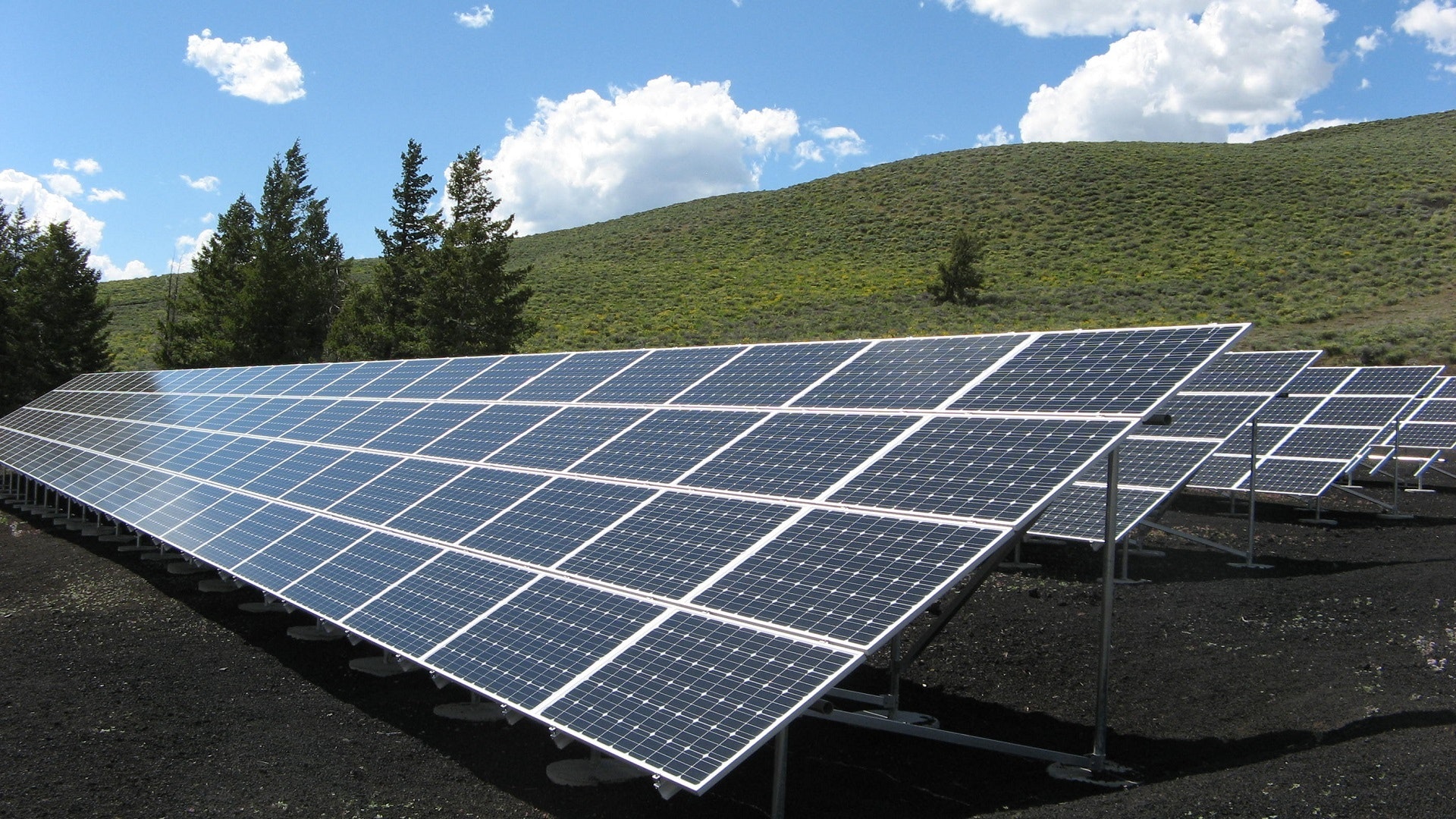
The state government is boosting the number of women in the solar industry with new training and support measures – ensuring women are part of Victoria’s transition to a clean, cheap and reliable energy future.
Minister for Solar Homes Lily D’Ambrosio has announced subsidised apprenticeships, professional mentoring, and access to ongoing education to lift the number of women participating in the renewables industry thanks to the $11 million Growing our Clean Energy Workforce package.
Women are significantly under-represented in solar, making up less than one per cent of electricians, plumbers, air conditioning and refrigeration mechanics, solar designers and installers, and licensed electrical inspectors.
The government will subsidise 50 per cent of the cost of new apprenticeships to help women enter the industry and provide apprentices a tool allowance along with six-monthly incentive payments.
Group training organisations Ai Group Apprentice Training Centre and Apprenticeships Group Australia will manage the apprenticeships.
For women working in related energy industries, free or low-cost training delivered by registered training organisations will be available to help transition to clean energy or to upskill in renewables.
The package also includes targeted support from industry group Tradeswomen Australia for women working in, entering or thinking of entering the solar industry through access to online workshops, conversational information sessions promoting a career in solar, and professional mentoring.
In addition to targeted supports to increase the participation of women, the Growing Our Clean Energy Workforce package offer programs to upskill women and men already working in clean energy, as well as targeted safety and mental health first aid training.
Since launching in 2018, the Solar Homes program has supported up to 5,500 clean energy jobs across Victoria.
The landmark program has helped more than 200,000 Victorians reduce their carbon footprint through rebates for the installation of solar panels, batteries, solar hot water, zero emissions vehicles and heating upgrades.
For further information on training and support opportunities visit: solar.vic.gov.au/training-workforce-development
March 8th, 2022Helping police do their job
The state government has introduced legislation to ensure dedicated police and Protective Services Officers have the authority and certainty they need to get their job done and keep Victorians safe.
This legislation will fix an error arising from the Victoria Police Act, introduced in 2013 under the former Liberal Government, that resulted in a number of graduating police officers being sworn in under incorrect delegation.
Under the changes made in 2013, acting Assistant Commissioners needed to be appointed by the Chief Commissioner or by a Deputy Commissioner to whom the Chief Commissioner had delegated authority to.
Between July 2014 and August 2021, Deputy Commissioners appointed acting Assistant Commissioners without the required delegation, with those acting Assistant Commissioners swearing in some graduating police officers.
A review conducted by Victoria Police identified that between 1 July 2014 and August 2021, more than 1,200 officers were sworn in by Acting Assistant Commissioners (AACs) without the required delegation.
In total, 1,057 police officers, 156 Protective Services Officers and 29 Police Custody Officers were invalidly sworn in by AACs during this time.
To date nearly 1,000 officers have been re-sworn by Victoria Police since the error was identified to ensure they can continue working to keep the community safe. The remaining officers have not worked a shift due to leave or other reasons and will be considered correctly sworn when the Bill passes Parliament and receives royal assent.
The new legislation will amend the Act to retrospectively validate the appointment of police officers as AACs by Deputy Commissioners between 1 July 2014 and 31 August 2021.
It will also validate all exercises of power by AACs pursuant to their appointments, including to administer the oath or affirmation.
The changes will ensure that the work of the identified officers and any related legal cases are not affected by this issue.
This issue has had no impact on the training or work of these officers who remain highly valued and vital members of the force.
The Bill is expected to pass the Legislative Assembly today. It will then go straight to the Legislative Council where we expect it to pass with the support of the Opposition.
Minister for Police Lisa Neville: “We’ve moved quickly to fix this issue and introduced legislation at the first possible opportunity to provide certainty to the affected officers and to the Victorian community.
“We will continue to back the work of our hardworking police, and this ensures they can get on with the job of serving the community and keeping Victorians safe.”

March 8th, 2022Mobile networks resilience strengthened
The federal government is strengthening the resilience of mobile networks against bushfires and other natural disasters across the country including in the Corangamite, Corio, Bendigo and Ballarat electorates through Round 2 of the Mobile Network Hardening Program (MNHP), with successful applications announced.
Optus, Telstra and TPG Telecom will deliver 544 mobile network resilience upgrades across the country, building on the success of the first round.
Minister for Regional Communications and Minister for Emergency Management and National Recovery and Resilience, Senator the Hon Bridget McKenzie, said the Liberals and Nationals Government was committed to keeping communities safe during a natural disaster.
“This strong outcome from Stage 2 of the MNHP demonstrates our Government’s ongoing commitment to improving mobile network resilience and preparedness so communities can better deal with future emergencies and natural disasters,” Minister McKenzie said.
“Successful projects we’ve announced nationally include the installation of permanent power generators, increased battery reserves, transmission resiliency upgrades to protect against network transmission outages and site hardening measures such as protective ember screening to protect sites from potential impacts of embers, radiation or flames.
“Mobile phones are increasingly important for people in regional and remote communities to stay in contact with friends and loved ones and to access critical supports both during and after natural disasters such as bushfires and floods.
“While these upgrades will provide a significant boost locally, it’s also important to remind people of the need to prepare for emergencies and natural disasters which can occur at any time. I would encourage people to ensure they are prepared, including having plans in the event of power and other service outages.”
Senator for Victoria Sarah Henderson, said they were pleased to see the Australian Government investing in projects that will keep people safe from harm.
“In addition to Optus delivering transmission diversity for a cluster of sites across the state, I welcome the 15 projects this region will see delivered, each of which will make a big difference to the lives of people living in and visiting this region:
Corangamite and Corio electorates:
– Permanent generator at Mt Duneed to be delivered by Optus
– Improved redundancy within a cluster of sites outside Geelong to be delivered by TPG
Bendigo electorate:
– Supplementary battery module at Castlemaine to be delivered by Optus
– Supplementary battery module at Churchill and Churchill Town to be delivered by Optus
– Supplementary battery module at Garfield-Bunyip to be delivered by Optus
– Battery upgrade to 12+ hours at Axedale to be delivered by Telstra
– Portable generator at Bendigo Short Street to be delivered by Telstra
– Improved redundancy within a cluster of sites at Bendigo to be delivered by TPG
Ballarat electorate:
– Portable generator at Ballarat to be delivered by Telstra
– Improved redundancy within a cluster of sites at Ballarat to be delivered by Telstra
– Generator and power system upgrade to be delivered by Telstra at Snake Valley
– Generator and power system upgrade to be delivered by Telstra at Blackwood
– Battery upgrade to 12+ hours to be delivered by Telstra at Hepburn.
“Having access to up-to-date information can genuinely save lives, particularly during a fast moving event like a bushfire, where conditions can change dramatically,” Senator Henderson said.
The MNHP is part of the Strengthening Telecommunications Against Natural Disasters (STAND) package introduced in May 2020 to help prevent, mitigate and manage outages during bushfires and other natural disasters.
Under Stage 1 of the MNHP, Telstra, Optus and TPG Telecom were awarded funding to upgrade the auxiliary backup power supply at 467 sites funded under Rounds 1 and 2 of the Government’s Mobile Black Spot Program (MBSP).
Funding under Stage 2 was awarded through a competitive grants process. Further information on the MNHP and STAND, including a list of sites to receive upgrades, is available on the Department of Infrastructure, Transport, Regional Development and Communications website at www.infrastructure.gov.au/media-technology-communications/phone/communications-emergencies/strengthen-resilience

March 7th, 2022Funding for regional students
Applications are now open for funding for initiatives that encourage students and individuals in regional and remote areas of Australia to aspire to completing higher education.
The Australian Government’s Regional Partnerships Project Pool Program provides $7.1 million over three years for the delivery of collaborative outreach programs that support the higher education aspirations of students in regional communities.
Senator for Victoria Sarah Henderson urged tertiary education providers to take up the challenge and work with regional communities on proposals that would give more opportunities for local students to go to university.
“Many young school leavers would appreciate opportunities to go to university or get a qualification that will help them get a job and build a career,” Senator Henderson said.
“The program will fund universities, Regional University Centres, other higher education providers, vocational education and training providers, schools and community groups to collaborate on tailored approaches that support the best possible outcomes for students.
Minister for Regionalisation, Regional Communications and Regional Education Senator the Hon Bridget McKenzie said the program responds to the Napthine Review, which found students from regional areas were often disincentivised from pursuing university or other studies.
“There is no easy fix to the barriers many students face in accessing higher education, which is why we’re looking to fund innovative proposals that will directly involve regional communities themselves,” Minister McKenzie said.
“I encourage applicants to explore new ways to engage with regional communities to meet the needs of local students, and to make the most of any existing connections between community groups and education providers.
“The initial funding round offers eligible applicants funding totalling $1 million to establish partnerships with regional communities in their state or territory and co-design a proposal for initiatives which offer students the same quality and diversity of higher education outreach as metropolitan students.”
“Phase 2 of the Program will then identify the proposed outreach initiatives with the strongest regional buy-in to receive multi-year funding to deliver the outreach program.
“People in regional Australia are half as likely to attend a tertiary education institution as their city counterparts. We need to see this improve.
“Australian Government initiatives like establishing Regional University Centres have had positive impacts on improving higher education outcomes in regional Australia.
“This program can demonstrate to people in regional and remote areas that higher education is a legitimate and attainable goal and I hope to see education providers and community groups participate.”
Applications for Phase 1 will close on 14 March 2022 and more information is available at www.dese.gov.au/rpppp.
March 7th, 2022Funding for wildlife carers
Local wildlife shelters and carers across Macedon will benefit from grants of up to $3000 thanks to the Victorian Government’s Wildlife Rehabilitator Grants program.
Local carers groups will receive funding under the program, including Red Box Wildlife Shelter in Elphinstone, Naturally, Native in Dales Creek, Dalli Wadthin Shelter in Woodend, Shamrock Wildlife Shelter in Woodend, and S. Anderson Shelter in Gisborne. In addition to the local groups, five dedicated animal foster carers across Macedon have also received funding.
Grants in this round have funded shade for recovering wildlife, rescue equipment, specialist native animal food, personal safety equipment and wildlife housing.
Member for Macedon, Mary-Anne Thomas, said these grants are worthy recognition for the tireless and invaluable work of wildlife carers across the Macedon region.
These local grants are all part of the Victorian Government’s $292,000 of support to 122 hardworking wildlife carers across the state, including an extra $60,000 to support shelters impacted by the July storms.
Since 2008, a total $3.3 million has been awarded through the Wildlife Rehabilitator Grants program to assist authorised wildlife shelter operators, foster carers and key wildlife organisations.
To further boost support for native wildlife across the state the Victorian Government is also providing $870,000 to support 14 projects which protect iconic species, including the Brush-tailed Rock Wallaby, Eastern Barred Bandicoot, Southern Bent-Wing Bat, Burranan Dolphin and Eltham Copper Butterfly.
As part of the Icon Species funding a Bogong Moth monitoring project will soon launch across the Victorian Alps to protect the vulnerable species, which is a key food source of the critically endangered Mountain Pygmy Possum.
The Icon Species Program has provided more than $2.6 million of support to 19 of Victoria’s native species in the past five years, helping to protect some of our most valuable wildlife.
Member for Macedon, Mary-Anne Thomas: “Congratulations to our local wildlife shelters and foster carers, they do a wonderful job protecting our local wildlife. This funding is recognition of their hard work and will ensure they can continue to support our environment and our native animals.”