


October 28th, 2021Local lines
Laugh or Cry
You’ve got to laugh or you will cry
You’ve got to dance or you will die
Lose your heart to learn to sigh
Lose loved ones to know goodbye
Lose your way to see the sky
Make beds of nails where you will lie
Find a dream that makes you try
Leave home behind so you can fly
And fall to earth from aiming high
Think well before you make reply
Think more of “us” and less of “I”
Take action now not by and by
Ignore the how embrace the why
Learn the rules and then defy
Face yourself do not deny
Always think the end is nigh
- Tom Perfect
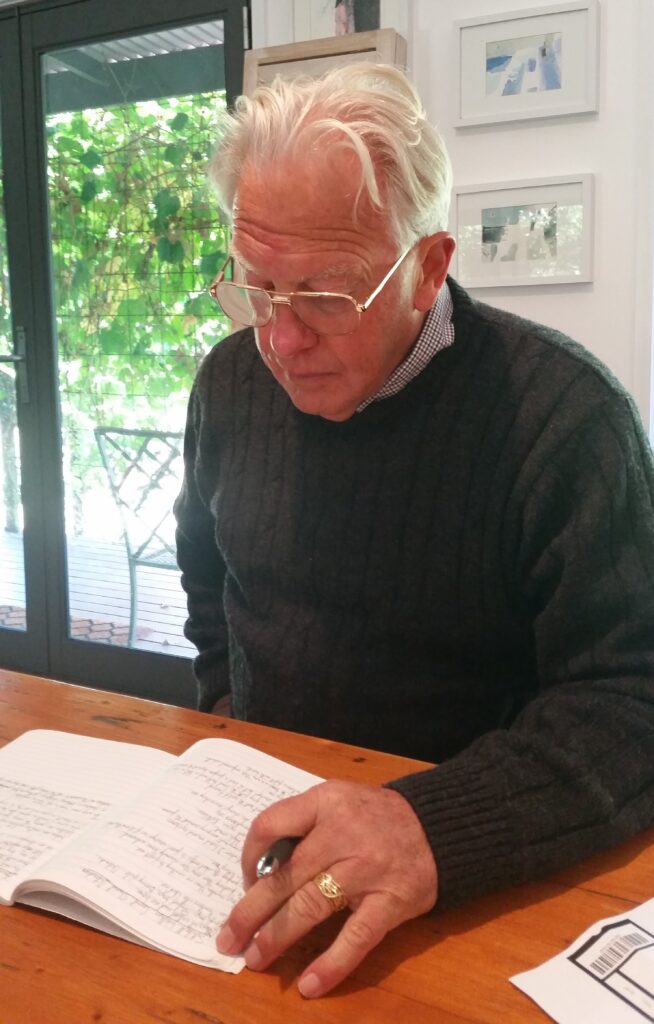
Tom Perfect lives in Glenlyon behind a big hedge where he talks to the birds about when the weather will get warmer.
Local Lines comes mainly from a group of local poets but other submissions are always welcome. To have a poem considered for publication contact Bill Wootton at cottlesbreedge@gmail.com
October 28th, 2021Cooking with Jen Clarke
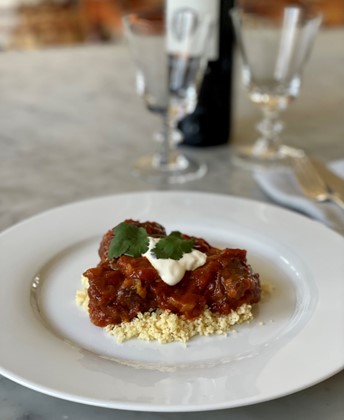
This slow-cooked lamb dish is brightened up with Middle Eastern flavours. Ras el hanout is a Middle Eastern spice mix, available from gourmet food shops.
Ingredients (serves 4)
• 600–750g diced lamb (I use the shank meat that you can get at the supermarket. This would also work well with leg chops or whole lamb shanks)
• 1 tablespoon plain flour
• 1 tablespoon olive oil
• 1 brown onion, diced
• 2cm piece of fresh ginger, grated
• 2 cloves garlic, chopped
• 1 red chilli, deseeded and chopped
• 1 tablespoon ras el hanout (or you could use a teaspoon each of cumin and paprika)
• 5 tomatoes, chopped, or a 400g tin chopped tomatoes
• About 450g parsnip, carrots or sweet potato, cut into large chunks
• 2 tablespoons lemon juice
• 1 tablespoon soy sauce
• 1 tablespoon honey
• 1 cinnamon quill
• About 400ml chicken stock or water
• 1/3 cup natural yoghurt
• 1 tablespoon lemon juice or half a preserved lemon rind, chopped (optional)
• Coriander to serve
Method
Preheat the oven to 160c.
Season the lamb generously with salt and pepper and toss with flour.
Heat the oil in a sturdy casserole dish over a medium heat. Brown the lamb for two minutes on each side, you may have to do this in batches. Remove the lamb and set aside.
Allow the pot to cool slightly, then add the onion and cook gently, stirring often, for about five minutes until soft. Add the ginger, garlic, chilli and ras el hanout. Stir for a couple of minutes until fragrant. Add the tomatoes and simmer for about five minutes, stirring occasionally until the sauce thickens and reduces slightly.
Add the lamb, root vegetable of choice, lemon juice, soy sauce, honey and cinnamon. Add enough stock or water to just cover the meat. Cover and bake in the oven for two hours.
While the lamb is cooking, mix the yoghurt with the lemon juice or preserved lemon and add salt to taste (you probably won’t need salt with the preserved lemons). Set aside in the fridge. When the lamb is very tender, season to taste. Serve with couscous or rice and top with yoghurt and coriander.
October 27th, 2021BOOM Clunes up for Mainstreet awards

BOOM Clunes has been shortlisted in the Mainstreet Australia awards to be announced in November.
The awards have been running for 20 years and recognise and celebrate the achievements of businesses or volunteers who ensure the ongoing success and survival of main streets.
BOOM Clunes chief entrepreneur Lana de Kort said BOOM Clunes, a social enterprise by Clunes Neighbourhood House, was launched earlier this year in response to the pandemic and the need to help strengthen the community as the world returned to a new normal. The award recognition was just icing on the cake.
“Main streets play an incredibly important role in contributing to the vitality of communities – big or small. The intention was to provide a place that would have a role for visitors to our town, as well as the many people who live and work here.
“Nearly a year into our start-up the book and gift shop are a regular destination for locals and tourists alike. Upstairs our co-working space has become home to local businesses, with one office still available, as well as an open workspace for many people living and working at home.
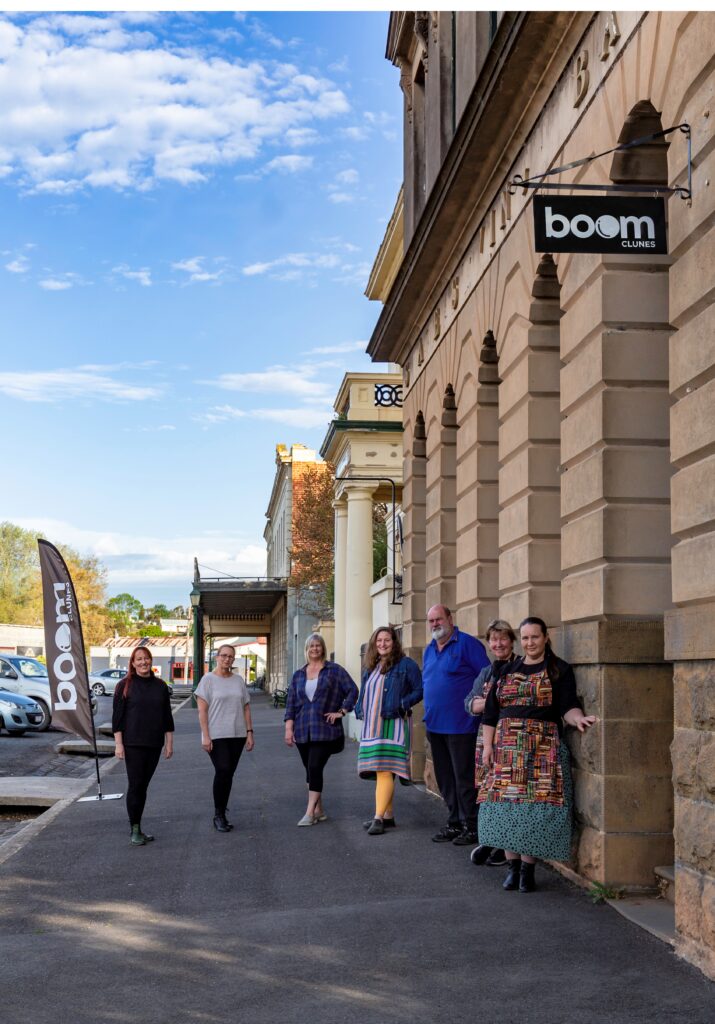
“It is something we are all very proud of. To be honest, when you roll out a project in small town you don’t think people beyond will be aware of what you are doing, so just being a part of the Mainstreet awards is really encouraging.”
Lana said a big part of the Clunes Neighbourhood House strategy over the years had been concentrating on contributing to the neighbourhood first, knowing that benefits for the House would follow. “So, during the pandemic it was natural for us to think of how we could contribute to the town as the world started opening up. The beauty of BOOM Clunes is that it’s a circular business model with diverse income streams – both the retail, and the co-working space. That means we can better weather the ups and downs that come with operating a business in a pandemic, as well as generating income we can reinvest into the community going forward.
“Establishing a business like this in our main street has been a big commitment. We’ve raised our own funds to match the start-up grant we received from the Business Chambers and Trader Groups program, and volunteers have contributed hours of their time to get our doors open, and keep us running.”
Lana said the store, offering a real Clunes experience, has included products from more than 20 different local suppliers. It means when people buy from BOOM Clunes that they are buying local on more than one level.
Upstairs people are working, networking, thinking and talking in serviced offices, contributing to a culture of confidence that’s important now as the world opens up.
“It has been a challenging time but also really exciting to see the overwhelming support we have received to bring it to fruition. To be shortlisted for this award, up there with some pretty huge initiatives, feels like an incredible acknowledgement of the vision and hard work that’s been behind BOOM Clunes from the beginning.”
Link: www.boomclunes.org | www.mainstreetaustralia.org.au

October 27th, 2021Just briefly
Honour Roll nominations
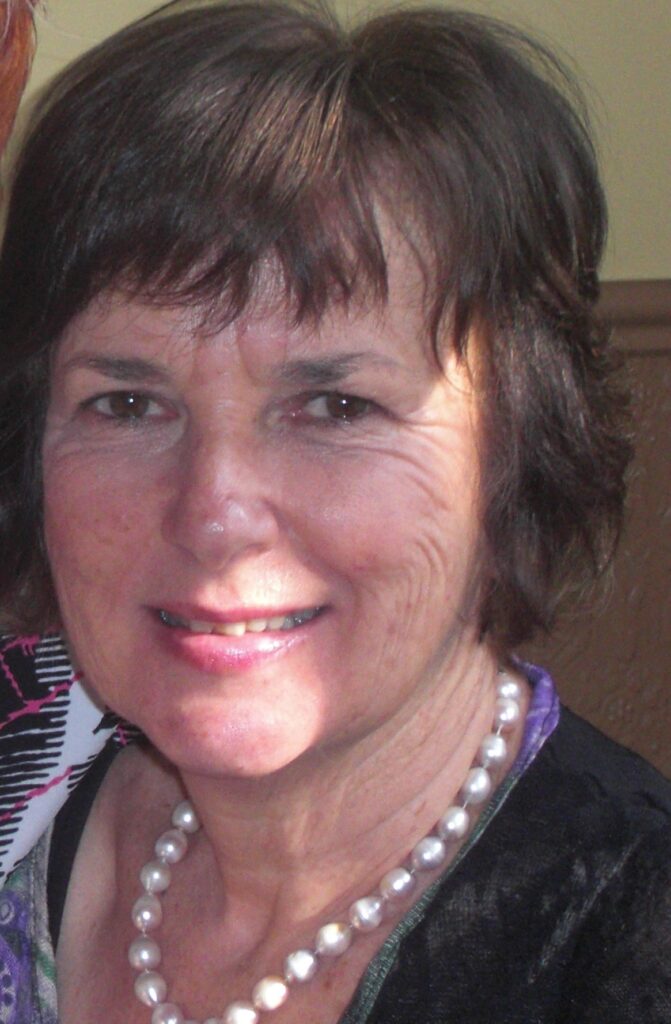
Nominations are open for the Hepburn Shire’s Heather Mutimer (pictured) International Women’s Day Honour Role.
From teenagers not afraid to stand up for change to some of the incredible seniors and every age in between, it’s time to highlight the inspirational women in the shire. Nominations close on November 8. Link: www.hepburn.vic.gov.au
No more library fines
Hepburn Shire Council has joined a growing number of public libraries around the world removing library fines for overdue returns.
Instead there will be a limited borrowing for members who have outstanding items. Lost or damaged books will still have to be paid for, as is the case now.
Those with existing fines will be asked to donated non-perishable food to a Forgiving Tree. The food will be donated to the food banks across Hepburn Shire.
Daylesford Hospital theatre upgrade
Central Highlands Rural Health is planning for the $4.5 million upgrade to its theatre facilities at Daylesford Health.
Construction is expected to commence in mid next year and will require the temporary suspension of surgical procedures for a limited time. Some procedures may be scheduled at Kyneton Health during this time. All other Daylesford Health services including urgent care, acute care, aged care and community services will operate as normal.
Webinars on heat pump hot water
Hepburn Wind is partnering with local provider t2zero (t2z) to deliver an affordable bulk-buy, providing heat pump water heaters for Hepburn Shire residents.
Two webinars, on October 27 and November 8, will demystify the technology, explain the bulk-buy process and give community members an opportunity to ask questions. Registrations: https://heatpumphotwaterbulkbuy.eventbrite.com.au/
Local Law No.2
Local Law No.2 guidelines have been endorsed by Hepburn Shire Council.
Under planting on nature strips there are two main options including natives and edible gardens, relating to vegetation planted from now onwards. The salvaging guidelines focus on improving accessibility to council’s waste transfer station goods while the firewood collection guidelines will protect biodiversity, community safety and allow for the collection of firewood in council designated areas.
Trentham Pavilion
Hepburn Shire Council has awarded a contract for the $2.5 million redevelopment of the Trentham Sportsground Reserve Pavilion to Ballarat-based 4Front Construction.
Construction on the multi-million dollar project will begin in November.
October 27th, 2021Kate Taylor does not write inspiration porn

I DO not write inspiration porn.
If you don’t know me, or this is the first time you’ve read anything by me, for over 12 months I have been writing stories for a disability support service provider. About giving voice to the people they provide support to.
Sometimes it’s employees with great stories, but usually the stories of the people to whom we provide supports. They are short, to increase readability as audiences tend to have shorter attention spans for online stories. They’re weekly, because we have a lot of great people living life. My one rule is that I always, always communicate with the person that the story is about. They are the one telling their story. They are the one controlling the narrative. I’m the one with 15 years’ experience as a journalist, I’m the one that’s won an award, I’m the one that presents to Deakin journalism students…and I’m the one handing over every bit of that control and power to the person I am interviewing.
They’re the one who can tell me to bugger off, they’re the one who can tell me what to leave in and what to leave out, they’re the one telling me their story the way they want it told. And it’s an honour to hear it. It’s a bloody huge privilege to help them tell it, too. Sometimes they use a communication partner. Sometimes they can only use the words ‘yes’ or ‘no’ so it happily becomes a game of 20 Questions. Or I only get one question before they yell ‘bye!’ and hang up.
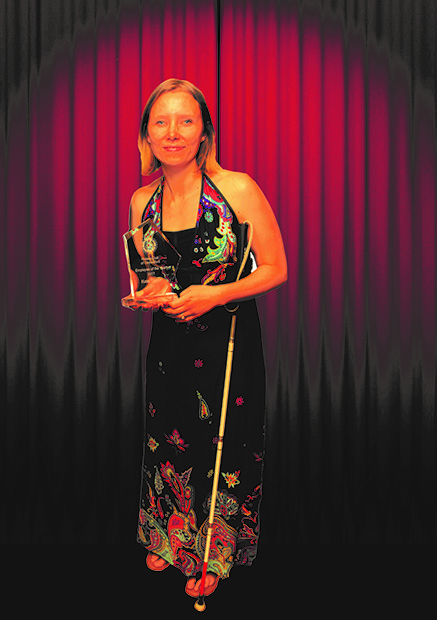
Stories about disability tend to fall into one of two categories – inspiration porn, or pity prose. We’ve all seen it in the media. And that’s what I fight against. In my lectures, in my stories. I’m presenting on this very topic at the Victorian Country Press Association annual conference in November. Disability literacy. So that we no longer write stories about disability that are purely designed to make the people reading them feel better about themselves/the world. So that we call out every bit of pity prose as bulls. So I give control over the narrative to the people I’m writing stories about. I give them the power to tell their own stories, the way they want them to be told. I do it because I’ve had the inspiration-porn thing done to me. Twice. Once, a few years ago, in a Fairfax newspaper. I told my story to a cracking young journo. And in the article he said of me ‘she did not have time to wallow in her affliction’. And again…‘rather than wallowing over her new situation’. One more quote…the vomit-inducing inspiring intro to the article: “At only 19, Kate Taylor went blind within a matter of months. But with her whole life before her, the Ballarat woman was not going to let a debilitating obstacle stand in her way. “Now 14 years on, the young mother and journalist is taking each new challenge with the same spirit.” I won’t put a link to it here. I don’t have time to wallow in shy journalism. Such good intentions, to show the world what a great job a blind woman is doing. And such lazy, uninformed writing. Wallowing? Affliction? I’m not ‘overcoming’ anything. I’m just me. The second time? I was invited on ABC Radio’s Statewide Drive program to talk about a journalism award I had won. And the presenter only asked about me losing my sight. She was trying really, really hard for tears. She got so frustrated with me she asked ‘why are you so happy?’ and I said ‘Why wouldn’t I be?’ So, if I write a story about a person we support and I’m on about their daily life, I’m writing what they want me to tell? And it sounds ‘basic?’ And it’s devoid of excessive adverbs? And it’s not a tear-jerker? Then I call bulls**. And I laugh in your face, because every single person I interview for a story is really, really hard to get hold of because they are always out and about doing things. Things that they choose to do. Things that they love doing. And I appreciate it every single time they put me in their calendar to chat to, fitting me into their busy life. And I repay their trust by telling their story the way that they want it to be told. I don’t try to turn them into inspiration porn. I know how that feels. There’s no mention of ‘wallowing’ or ‘affliction’ or ‘spirit’ in my stories. I write real stories about real people, just the way they are.
‘I cried because I had no shoes, until I saw a man with no feet.’ What!? Pfft. I’d prefer to talk to the man with no feet than the one whinging about having no shoes. At least the one with no feet’s got a bloody good story. It’s not up to me to pick you up, brighten your day by telling you stories about people with no feet, just to make you feel better about yourself. I’m not here for inspiration porn. Mostly, the stories I write don’t even specify what a person’s disability is. I forget to ask. I’m too busy asking about the medals they’ve won, their recent trip across Italy, their work in an art gallery. About how they live their life. Feet or no feet…
I’m putting stories out there into a world that doesn’t always see disability the way people with disability do. Sadly? A lot of readers are amazed to see that the people we provide supports to lead really busy and full lives. Happily. I get to show them how it’s done.
Kate Taylor is an award-winning journalist…and she’s also blind. In this series, she explores world issues through the lens of living in regional Victoria with a disability. Sometimes dark, sometimes funny, her stories will always make you think.
Email: kate.elizabeth.taylor.1@gmail.com

October 27th, 2021Movie extras needed

A FEATURE film, In God’s Care, is being shot in Hepburn Shire in November and December – and they need extras!
Harvest Pictures Group co-CEO Tony Coombs said the film was inspired by tragic and true events which happened in the mid-90s but the story line was being kept under wraps for the time being.
A number of well known, along with emerging Australian actors, have already signed up for the project.
Mr Coombs said the film was being produced in towns around Hepburn Shire including Daylesford, Hepburn, Dean, Kyneton, Yandoit and Franklinford.

“The rural charm and classic streetscapes were an important aspect in the decision-making process of the producers, understanding the film is set early 1990s,” he said.
“The authenticity and condition of original buildings’ exterior and interior, rather than contrived production dressing, was paramount in this decision.”
Mr Coombs said one of the producers of the film, Lauren Simpson of Iris Arc Pictures, who is also the president of Women In Film & Television Victoria is keen to find a limited number of 8-12 extras across two separate days in late November and early December.
“The producers, cast and crew felt it important to get the community involved further and invite them to be part of the film,” Ms Simpson said.
“Cultural diversity, gender and age is no barrier and people of all backgrounds are welcome to email their information including a photo to igc@irisarcpictures.com Attention Maddie – if they would like to be involved.”
Mr Coombs said the project would also support many Hepburn Shire businesses throughout the production including caterers, equipment suppliers, local amenities and accommodation.

October 26th, 2021Moderna booster but not for ‘old and fat’

A SEPTEMBER 17 CNN online story was headlined: “Moderna’s vaccine is the most effective, but Pfizer and J&J also protect well, CDC-led study says”. That news suited me just fine – as previously reported in this fine publication, I received my first dose of the Moderna vaccine in January and took the second shot in February.
Meanwhile, in Redding, the northern California town where I live, on September 15 the local newspaper reported that “public health officials announced this week that the Covid-19 outbreak in Shasta County is the worst of any county in the state”.
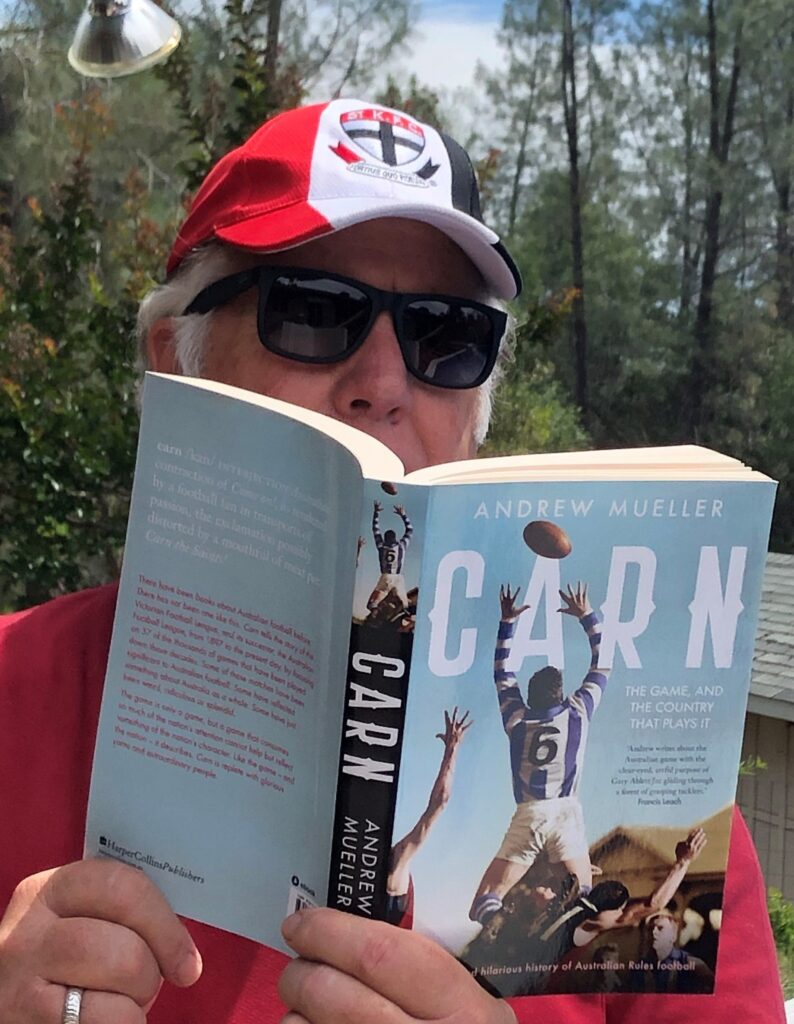
In much of the United States, and aggressively so here in Shasta County, the solution to the Covid crisis is to pretend it’s over. Mask wearing here has always been optional. And, although during the northern winter months, while national and local Covid numbers soared, mask wearers were generally in the majority in indoor public places here, this summer our numbers have dwindled into a small minority, and the number of Covid cases increased day by day, amid anti-vax and anti-mask demonstrations.
For these reasons, and because I am a care-giver for my elderly parents, I have been closely following reports about Covid vaccine booster shots.
On September 29, the CNET website published a story with the headline, “FDA could authorise Moderna Covid booster vaccine at a half dose. What to know.” The story also came with this secondary line: “If you got the Moderna vaccine against Covid-19, you could be in line for a booster shot.” Notice in both lines the use of the auxiliary verb “could”, indicating doubt, uncertainty.
The story made reference to a September 28 Bloomberg story headlined “Food and Drug Administration leans toward authorising Moderna booster at a half dose”.
Again, note the tentative wording, “leans toward”, and also the part about only needing a half dose. I mention these grammatical points because on September 24 my wife and I received Moderna booster shots – full shots.
It came about because a friend wanted to have a booster, even though his first Moderna shots had been administered weeks after we’d had ours. He simply showed up at the pharmacy department of the local supermarket chain where he’d received his original shots, filled out a form, and got the jab.
It sounded so easy, we decided to follow suit. We don’t usually shop in this store, because it isn’t near our house and isn’t known for low prices or excellent fruit and veg – it isn’t one of those mega-marts where you can have the tyres on your car rotated while you shop for shoes and bananas, but it does have a pharmacy, which we found at the back of the store, just past the cleaning-products aisle, near the packaged meat department.
On the form we were given to fill out, the only question that mattered was the one about which medical condition we had that made us believe a booster was necessary. Because we didn’t meet any of the listed criteria, we wrote in the blank: “Old and fat”.
We gave our completed forms to one of the pharmacists and went to sit in the waiting room. A few minutes later the pharmacist came in and explained that our reason for wanting a booster wasn’t acceptable, but that if it was OK with us, he’d ignore it and proceed with the injections – full shots of Moderna vaccine. Bring it on, we said.
As a postscript, I feel obliged to say that the booster had some unpleasant after-effects – nothing serious, but we did feel tired, achy and listless, as if we’d caught a dose of influenza, for about three days. Other than that, it’s been fine.
After many happy years living in Victoria and working at The Age, former Wheatsheaf resident Jeff Glorfeld went back to California, the land of his birth, where in the past three years he has survived bushfires, snowstorms and drought. And Trump. The cicadas and locusts didn’t arrive. Well, not yet.

October 26th, 2021Glen, About the House
Some like it cool
I’m sure that, like me, you have a dark, shady corner of the garden where the hardy sunlovers just simply can’t do their best. Fortunately, there’s an equal number of beautiful shade-seeking plants of all kinds just itching to strut their stuff.
These plants, although preferring cool, moist conditions in the warmer months, are just as dependent on good drainage and rich, friable soil. Many shade-loving plants also prefer an acidic soil, so this must also be taken into consideration when preparing the bed.
Unfortunately many cool, shady spots are poorly drained and will need careful preparation before any planting can take place. Where the area is low-lying and water lies around during wet weather, it would be advisable to raise the soil level by at least 10-12cm by spreading a thick layer of compost or crumbly loam, well mixed with finely pulverised cow or horse manure to a depth of at least 10 cm. This layer should be dug well into the existing soil.
When planting trees or shrubs, always form a small mound on which to plant to assist in drainage. A 5-6cm layer around the base of the plant will reduce the need for excessive watering during hot weather as well as keeping the roots cool.
Shade-loving plants are best placed where they receive early morning or late afternoon sun, avoiding the leaf-scorching heat of the midday summer sun and any damage to delicate foliage, especially young growth.
Ideally they should face either south or south-east or at least be planted where larger trees or overhanging eaves give protection during the middle of the day. Naturally, wherever you choose, protection from hot, drying winds is essential.
As well as the more commonly grown shade lovers such as azaleas, camellias, and fuchsias there are many trees, shrubs and perennials that deserve greater recognition.
Shady spots aren’t only the domain of those from cold climates that simply frizzle in our summers. There are quite a few that simply perform better with a bit of protection. Among these are the Japanese sacred bamboo, nandina and abelia which although evergreen turn to a delightful bronze on the cooler months and are even more colourful in the cool.
The actual make-up of the foliage of plants can determine their ability to handle weather extremes such as searing sunlight and even frosts. For example azaleas and their cousins the rhododendrons. Azaleas, with their flimsy, soft-textured leaves just wilt at the first summer blast, whereas rhododendrons, with their hard, glossy- surfaced foliage fare much better, as do similarly clad camellias. Obviously the tough mirror-like foliage can deflect much of the heat.
A simple guide in choosing locations for planting
Ficus pumila, the small-leafed trailing fig, which will cover the ground or a wall in the shade, is in its young growth an attractive golden colour. As the plant grows, they become deeper green and larger.
Gordonia axillaris, a small, evergreen tree growing to 3 metres in height is often mistaken for a camellia with its glossy leaves and large single white flowers with a cluster of bright yellow stamens. It requires a slightly warmer climate than camellias and protection from frost when young.
Laburnum vulgare (golden chain tree) with its long trailing sprays of golden yellow will brighten up even the shadiest corner and will even grow under taller trees.
Among the small shrubs, the all-time favourite, daphne odora, revels in shade and will spread its perfume throughout the whole area. Nandina domestica, the Japanese sacred bamboo, in its many forms, makes handsome, multi-coloured clumps and its white flower clusters are frequently followed by bright red berries.
Got a gardening question? Email glenzgarden@gmail.com

October 26th, 2021Daylesford to come alive with ‘Art on Vincent’
DAYLESFORD’S town centre will come alive with colour when ‘Art on Vincent’ kicks off this Friday.
As part of the 2021 Daylesford Art Show, hosted by Rotary, the exciting new concept will bring artwork to the community and truly highlight our region’s remarkable talent.
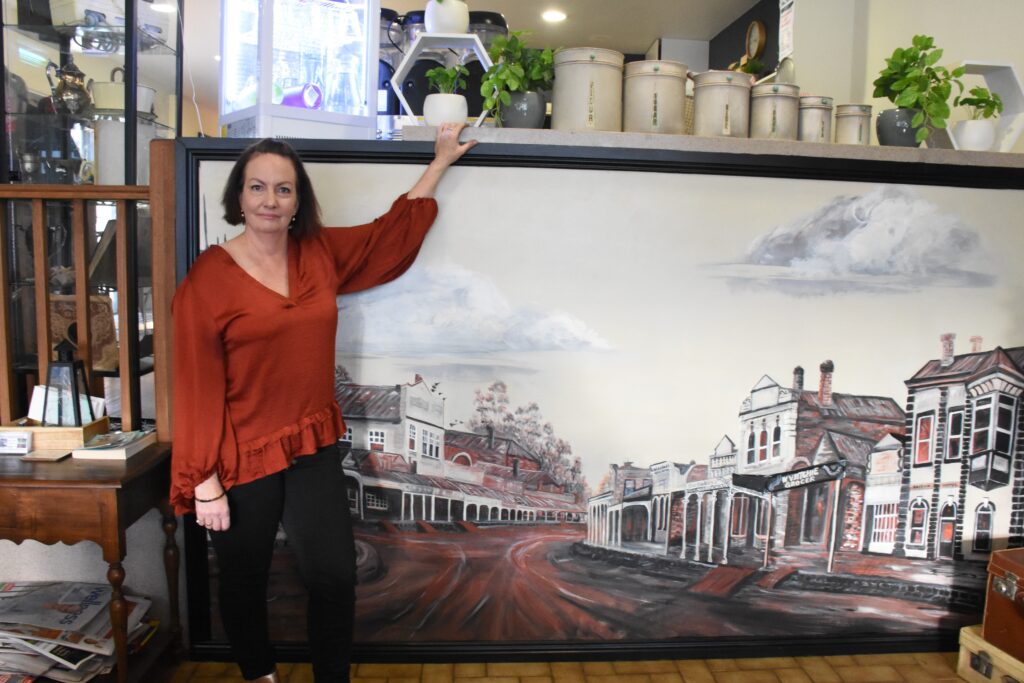
For Creswick artist Di Lehne, who won the Best Portrait Category in last year’s show, being able to exhibit this year has given artists an incredible boost.
“Many art shows across the region have been cancelled so it is wonderful as an artist to be able to showcase our work. Daylesford Rotary has organised it in such a unique way that the show can still happen,” she said.
Di, pictured above and well known across the region for her inspirational and thought-provoking pieces and for engaging the Creswick and Clunes community through art, has her work on display year-round at the Rose & Oak Café in Clunes.
This year Di has entered four pieces in the art show including still life, abstract and landscape – and make sure you view her work titled Fractured State 2. It’s timely, political and absorbing!
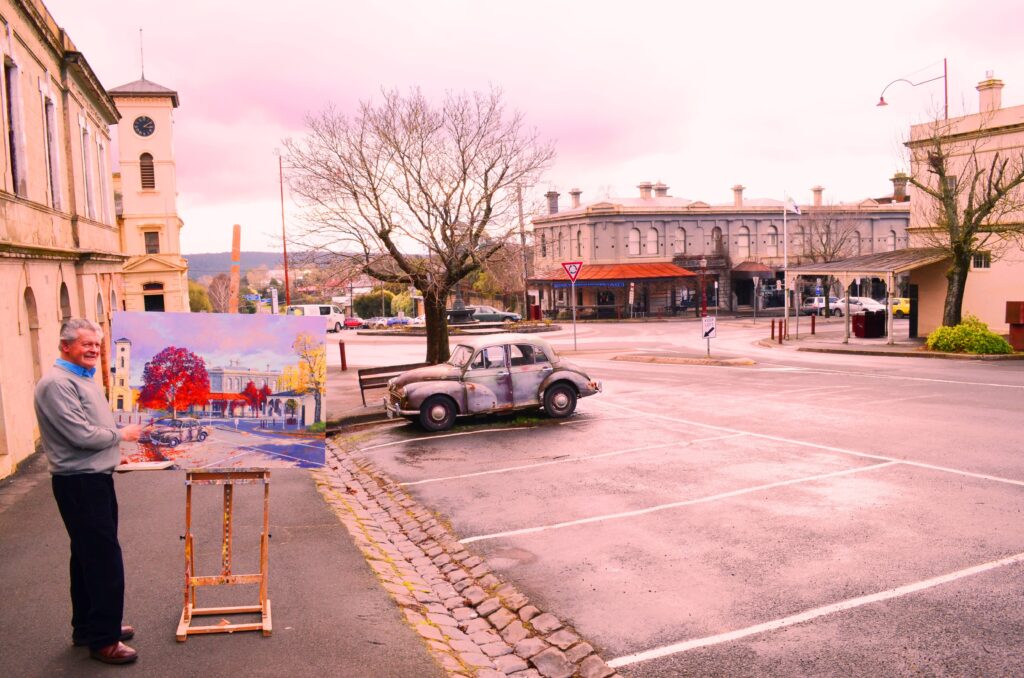
Running for a month, the Daylesford Art Show will not only feature artwork in local businesses but will also include unique self-guided audio tours, including Australian Sign Language interpretation, along Vincent Street featuring artworks on display thanks to local business QRush Media.
Daylesford Rotarian, Tim Cansfield-Smith, said this year’s show is one that the entire community has thrown its support behind.
“From local businesses embracing artwork in their shops, to students from the Dharma School painting the easels for the displayed art, right through to many businesses sponsoring the event, our show highlights what really can be achieved when the community comes together,” he said.
“The idea for people to listen to the audio by simply scanning a QR code in the window, hear about the featured artwork and then go and view the work is an incredibly engaging experience. If you love the work then you can even buy it on the spot.

“The important aspect is 25 per cent of proceeds from each sale goes towards much-needed education, health, environment and community welfare projects in our local community.
“We are looking forward to artists and art-lovers alike celebrating the best painting talent our region has to offer. Covid restrictions have made us really think about ways we can bring artwork to our community and by bringing art to the streets we hope ‘Art on Vincent’ will inspire many across our regions to embrace the 2021 Daylesford Art Show.”
The Daylesford Art Show will run from Friday, October 29 – Tuesday, November 2 from 10am – 5pm in the Daylesford Town Hall with a 20-person limit. Over 25 artworks will be on display in participating businesses as part of ‘Art on Vincent’ from Wednesday, November 3.

October 26th, 2021Vale Bob McKinnon
SILENCE fell over the small town of Clunes last Tuesday in a beautiful farewell for town stalwart Bob McKinnon.
A small family service ended in a community event that some locals have described as a once in a lifetime moment.
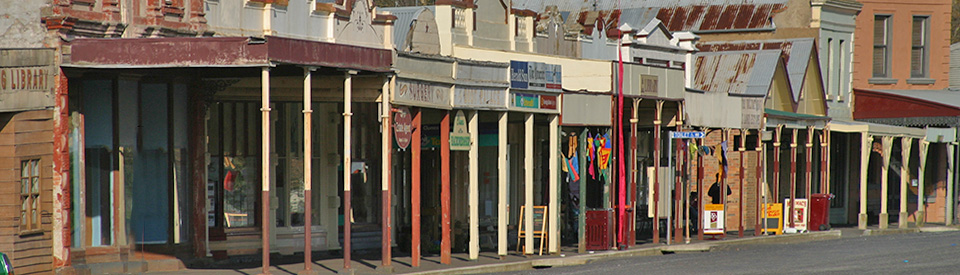
Townspeople gathered along the main street of the historic town, shops closed their doors momentarily, the Australian flag flew at half-mast at the RSL, while a lone piper lead the funeral procession through the streets.
Bob McKinnon was 61 years old. He was known and loved by his community – evident in the hundreds of people that formed a guard of honour.
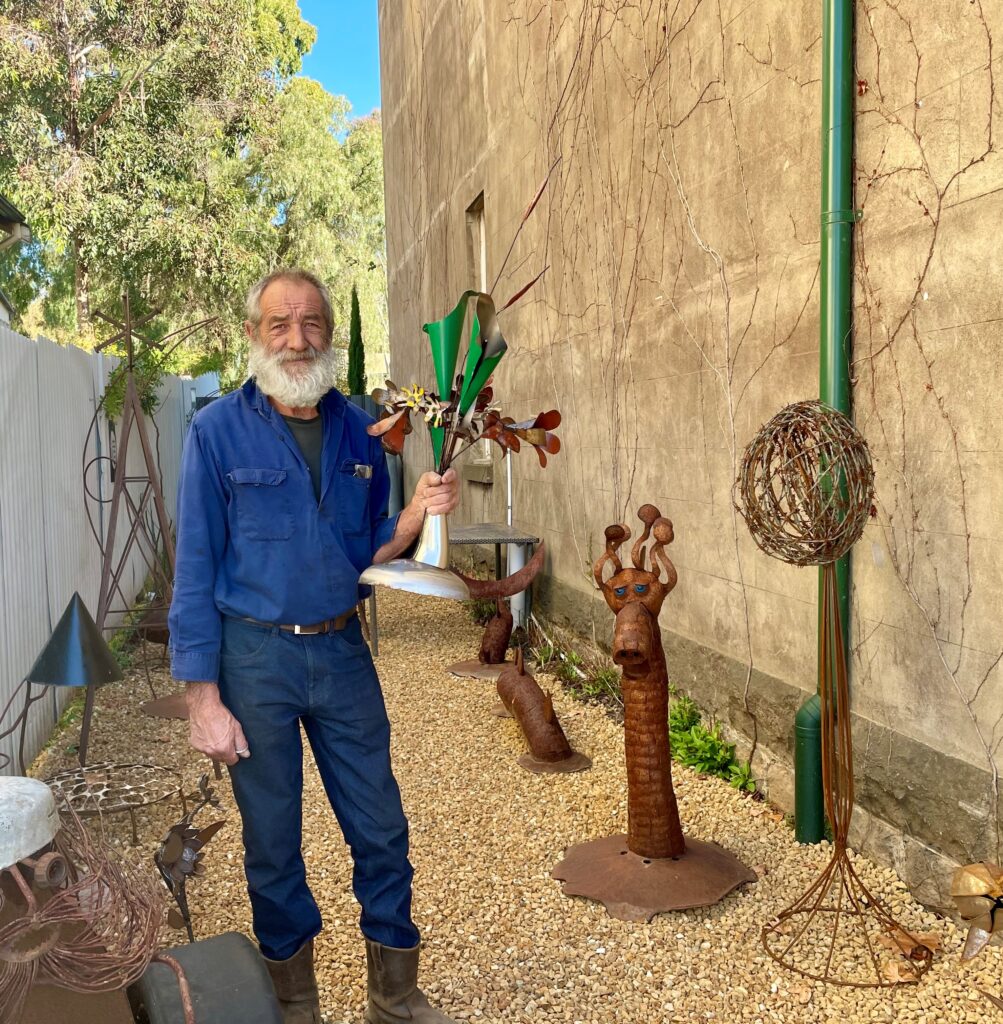
Two weeks ago, this incredibly talented sculptor, writer, poet, motorbike enthusiast, a local member of a band, the Clunes Lodge, the RSL and all-round great bloke, died unexpectedly while out test driving a customer’s motorbike.
For his daughter Kodie, the shock for her family is something she said they will never get over. But the outpouring of emotion from this close community is something she will never forget.
“Words can’t describe what it meant to our family to have the community come out and show us how much he was loved and respected. Both sides of the street were lined with people. It was simply beautiful and overwhelming. He meant so much to so many people and for my family, it meant the world to us,” she said.

“My mum Lyn has lost her soulmate. Lyndon and I have lost our father. We grew up having a dad tell us that he could never make decisions for us but would always be there when we needed him. He was an incredible role model, an inspiration and lived by the motto, just be kind. Just help others.”
Bob’s sister Nola Brewer publicly thanked the community for its outpouring of emotion and good friend Dave Reynolds said Clunes has lost a friend to all.
“It didn’t matter what he was doing or where he was going, he always had time for a chat. He did so much for many different groups, was such an ally to the local Men’s Shed, was a brilliant artist and poet and involved in so many different community groups. He will be missed terribly. We were both motorbike enthusiasts and he spent a lot of time on my bike so I will have him with me,” Dave said.
While Dave said he feels the spirit of the Clunes township and its tight knit community, he was “simply blown away” by Bob’s send off.
“I’ve never seen anything like it. There were people from all walks of life, mothers, children, farmers, artists, poets and our local councillor was there. His legacy will live on in his sculptures and art work in our town.”
There were people of all ages, from all walks of life. Something the family said showed Bob could “cross all ages and was friends with everyone”.
For Kodie and Lyndon, losing their dad at such a young age has meant their young kids have lost their Poppy.
“He was an amazing Poppy. He had been making a billycart with my little boy and was excited to be bringing it over to us on the Saturday. He died on the Friday. It’s been so hard trying to explain to the kids that we can’t see Poppy anymore but he is in heaven. It’s heartbreaking,” she said.
“He never judged anybody and spent his time just giving back to his family and those around him. No words can describe how his community came out to say one last goodbye.”
Bob’s sidekick Monroe travelled on Bob’s truck as part of the procession, sitting among Bob’s sculptures. Three of Bob’s mates made sure Monroe was there at the end.
Because Bob was so active in the region, his sculptures, artwork, paintings and poems will continue to be his legacy. He sculptured the Anzac Man which the family donated to the RSL and it takes pride and place at the front door. He recently voiced vignettes for a local initiative to capture stories from the past that have made Clunes what it is today.
Bob always reminded his family he was there for them. And in a moving tribute, unrehearsed, unscripted, the community showed that they were there for him and for the family he leaves behind.
Words: Narelle Groenhout
Images: Jason Judd (main image) & Clunes Neighbourhood House

October 25th, 2021Skills to change gender inequality and family violence
More Victorians will be given the skills to identify and respond to gender inequality and family violence, with two new courses added to the Victorian Government’s Free TAFE program from 2022.
Minister for Training and Skills Gayle Tierney has announced the new skillsets, which meet key recommendations of the Royal Commission into Family Violence and support the Gender Equality Act 2020.

They include Course in Gender Equity, the first accredited training program of its type in Australia, to give workers the tools to promote gender equity in the workplace and understand Victorian legislation.
Identifying and Responding to Family Violence Risk will help upskill community services workers with key risk assessment, risk management and referral skills to provide an initial response to family violence.
The Government has made training more accessible through the signature Free TAFE program, offering eligible students fully subsidised courses that directly lead to jobs now and into the future. Ninety-three thousand students have started courses – saving $150 million in the first two years.
A further seven new Free TAFE courses will be offered in 2022, including in veterinary nursing, tourism and health and aged care to meet key government priority areas and skills demands while also boosting the Victorian economy.
Last year, the Government announced an investment of $631.4 million to drive economic recovery and increase access to training, which includes $163 million for a Skills for Economic Recovery package announced in July 2020.
This investment will create up to 60,000 new training places over four years in Free TAFE courses and builds on the additional 10,000 Free TAFE places announced in July 2020 as part of the Skills for Economic Recovery Package.
The Government has made a record $3.2 billion investment in TAFE and training to ensure Victorians have access to high quality education and rewarding career pathways.
Explore your options with Free TAFE at freetafe.vic.gov.au.
October 25th, 2021Stories of the Storm
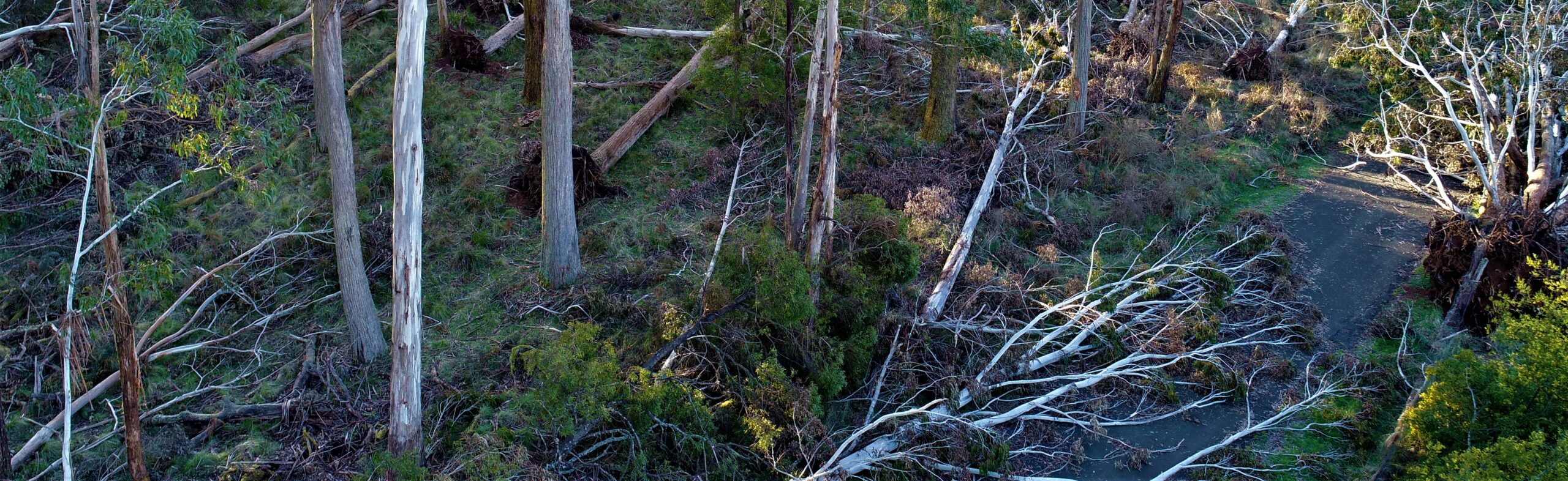
SANDY Scheltema’s Stories of the Storm series is supported by Hepburn Shire Council, Trentham & Districts Community Bank and the Trentham Lions Club. The series showcases stories of courage, tenacity, bravery and resilience within the community from people who experienced the terrifying storm of June 10, 2021.
This piece features Paul Hilder, director of Nursing at Trentham Aged Care (Central Highlands Rural Health).
“I knew it was a windy night. One of my staff rang early in the morning and told me some staff couldn’t get in, some couldn’t get home. About 7am I started to drive in to work from Greendale. I got as far as Barrys Reef and the SES were on the road. I saw powerlines down. Some other blokes and I thought we’d give them a hand. I reckon there were about five or six blokes including me lifting branches and small logs. There were branches over the road; you’d get through, then there’d be more – about 50 metres apart. We did that for about an hour, then a tree fell right behind us.
“That’s when the SES guy said ‘I’m gonna call it. It’s too dangerous, we’re stopping.’ I said, ‘I’m the director of nursing, I’ve got 35 residents at Trentham that I need to get up to!’ The SES guy said, ‘Well you’re not getting there today.’
“I felt a sense of responsibility to get there. There was another guy helping, with a four-wheel drive and trailer, Patrick. I said to him ‘Do you want to give it a crack at getting through one of the back tracks?’ We tried one or two tracks off the main road, but they were all blocked with fallen trees. He took me to my car and I went home.
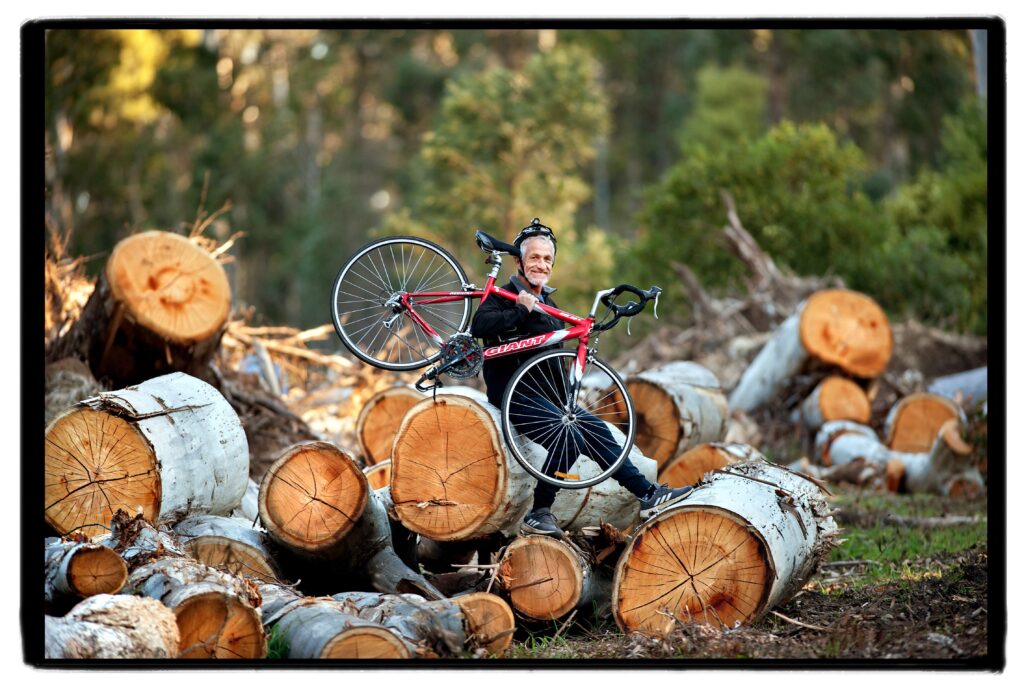
“I couldn’t get through by either landline or mobile to work. I felt the gravity of what had happened. I said to my wife ‘I’m gonna try and ride to work’. She wasn’t happy about it. I put the bike in the back of the ute. I could only get just north of Blackwood with the car. The thing that really struck me was the quietness: it was like the end of the world. I got to a house which had smoke coming out of the chimney. I thought it would be quicker if they could throw my bike in the back of their ute.
“The woman who answered said she’d get her husband to help. We got as far as Wheelers Track, before Newbury. There were more massive logs on the road – big manna gums. The road was blocked. I thanked the guy and got out my bike.
“I told the SES guy that was on the road I was going to ride my bike through. He said, ‘Good luck – I wouldn’t recommend it!’ I went under some logs, over, around, holding my bike. You could ride every now and again. I saw Ana and Lance Whitehouse in Newbury. Like everyone else they had no power or phone.
“I was thinking, ‘I can do this, I’m pretty fit!’ What struck me again was the silence – every now and again you’d see people just standing there.
“I think they were all in shock. Every five metres there was another tree to get under or over or another branch to get through. I would look at what was in front of me and think ‘Does this ever end?’
“Occasionally I’d lift my bike to the top of the pile, then scramble under the pile, then from the other side get it from its perch on the top. Each pile of logs had to be assessed on its own merits.
“I got hot. I didn’t have water. I got scratched quite a bit. I got near the tip, saw the next pile and I thought: ‘I can’t get through here, I can’t do this.’ But it was stupid to go back, so I persisted. It was just a mountain of massive logs, almost impenetrable, wet, and slippery. I just did it. Eventually I got past the cemetery and rode through town; people were just standing around on the street. I was relieved and quite happy I’d got through. I’ll never be able to explain how arduous it was.
“I knew the staff at Trentham Aged Care would have things in hand. Local Trentham staff who could get in whether they were on duty or not were at work. The cook couldn’t get in because of the blocked roads. The cook’s assistant and other Trentham nursing staff organised for their daughters to come in and give meals to the residents and help. The power was out, the diesel generator had kicked in automatically, but it ran out of fuel and the maintenance man couldn’t get in from Woodend. Kath, the assistant cook, called her husband Dave who brought in diesel fuel. We’ve now got a bigger tank for the genny. The community spirit was amazing. We had offers of diesel fuel from other community members as well.
“The staff from the evening shift of the night of the storm who couldn’t get home stayed and slept here. We had members of the public who got stuck in town staying here too. When I got here Jacqui Tisdale (nurse unit manager) and Raelene Gardiner (assistant nurse unit manager) had already enacted the emergency management plan – Code Yellow – the staff had it all in hand. I wasn’t surprised. The real heroes here were the staff and the residents. It was Kath and the kids of the staff, and the community. There were so many offers of help.
“The residents are a stoic generation; they took it all in their stride. There was a massive pine tree down outside the living room, they were a bit shocked. Subconsciously, Covid is impacting on everyone’s mental health. I don’t think there is a true awareness of this. I think the storm just compounded what has already been a horrible 12 or 18 months with Covid.
“I believe in climate change, but I don’t think this storm was a result of climate change – I think it was nature at her worst. We can be proud and grateful that we live in such a caring, beautiful, supportive community. We need to take time to reflect on that. Look what’s happening in Afghanistan, it really does make you take stock of how fortunate we are in this community. Even before I started the ride through the fallen logs, I knew my staff and the community would do all they could within their powers to ensure the safety of the residents. The sacrifices people made to ensure the safety of our residents – the nurses in Trentham were impacted by the storm personally – but they put that aside to come to work.”
To read the final eight stories in Sandy’s series, head to www.tlnews.com.au

October 25th, 2021Fresh wave of myxomatosis concern for domestic pets
RABBITS came to Australia with the First Fleet in 1788 and were bred and maintained as food animals with more introduced in later years for recreational hunting.
Like much exotic flora and fauna, rabbits adapted to their new country extremely well, numbers began to grow and by the 1820s, they were becoming a problem. Mild winters let them breed all year round and the opening up of large areas of bush to farming and grazing on the land’s fertile fringes created ideal conditions for rabbits to flourish.
By the early 20th century it was estimated that 10 billion rabbits were spread across the land. Along with this incredible growth came a multitude of methods employed to control them, ranging from laying poison to shooting and trapping. Such work, while effective in contained areas, really did nothing to control overall numbers.
However, biological measures such as the introduction of the myxoma virus in the 1950s and calicivirus in the 1990s contributed to a large reduction in overall rabbit numbers. Nonetheless, Australia still remains home to around 150 million of them.
It is commonly assumed that myxomatosis caused by the myxoma virus quickly became ineffective and only the calicivirus remains as a control for present-day populations. However myxomatosis is still about doing its job, as Daylesford vet Andrew Hitchman explains:
“Wild rabbits that are resistant to these viruses won’t die and some of their offspring might have some of that resistance as well. But a couple of generations down the track as the population recovers, a lot more are susceptible as another wave of disease comes into the area.”
Such a process can be seen around the region. As rabbit numbers have increased, a fresh wave of disease has emerged. The most obvious is myxomatosis with sick, blind creatures affected by it stumbling around in broad daylight for several days before death. Rabbit haemorrhagic disease or calicivirus kills far more rapidly. “You don’t tend to see the ones with calicivirus,” says Andrew, “because they die out of sight and quickly.”
The upswing of these diseases in the feral population is of great interest to owners of domestic rabbits along with what steps can be taken to protect them. Let’s start with calicivirus.
First of all, leporidae (rabbit) calicivirus is different from feline (cat) calicivirus so there is no chance of these animals catching each other’s disease. There is also a vaccine available in Australia called Cylap for your pet bunny and should be administered every 12 months.
Myxomatosis is a different story. There is no vaccine for myxomatosis available in Australia. The official reason as stated on the federal Department of Agriculture, Water and the Environment website is: “The myxomatosis vaccines available overseas are live attenuated vaccines (also known as ‘modified live’ vaccines). The virus in these types of vaccines may spread from vaccinated rabbits into the wild rabbit population which could allow wild rabbits to increase their immunity to myxomatosis.” In light of this restriction, other precautions are required.
“Myxomatosis is spread by mosquitoes and rabbit fleas, so flywire on their hutches is effective,” says Andrew, “as is keeping the hutch inside.”
“Basically, keep them away from biting insects and wild rabbits who would be carrying fleas. There are also many flea treatments that are perfectly suitable for rabbits.”
Andrew also added that myxomatosis is a blood-borne disease and cannot be brought into your house or rabbit hutch on shoes.
While we are on the subject of pet rabbits, Andrew would also like to mention several other tips: Never feed your bunny pellets because they can damage teeth and create abscesses. Give them grass or grass/clover hay instead. Consider neutering them to reduce aggression in males and uterine tumours in females. Never house rabbits with guinea pigs and finally: the best advice is always from your vet.
Words: Tony Sawrey
October 25th, 2021Clay trail roadmap
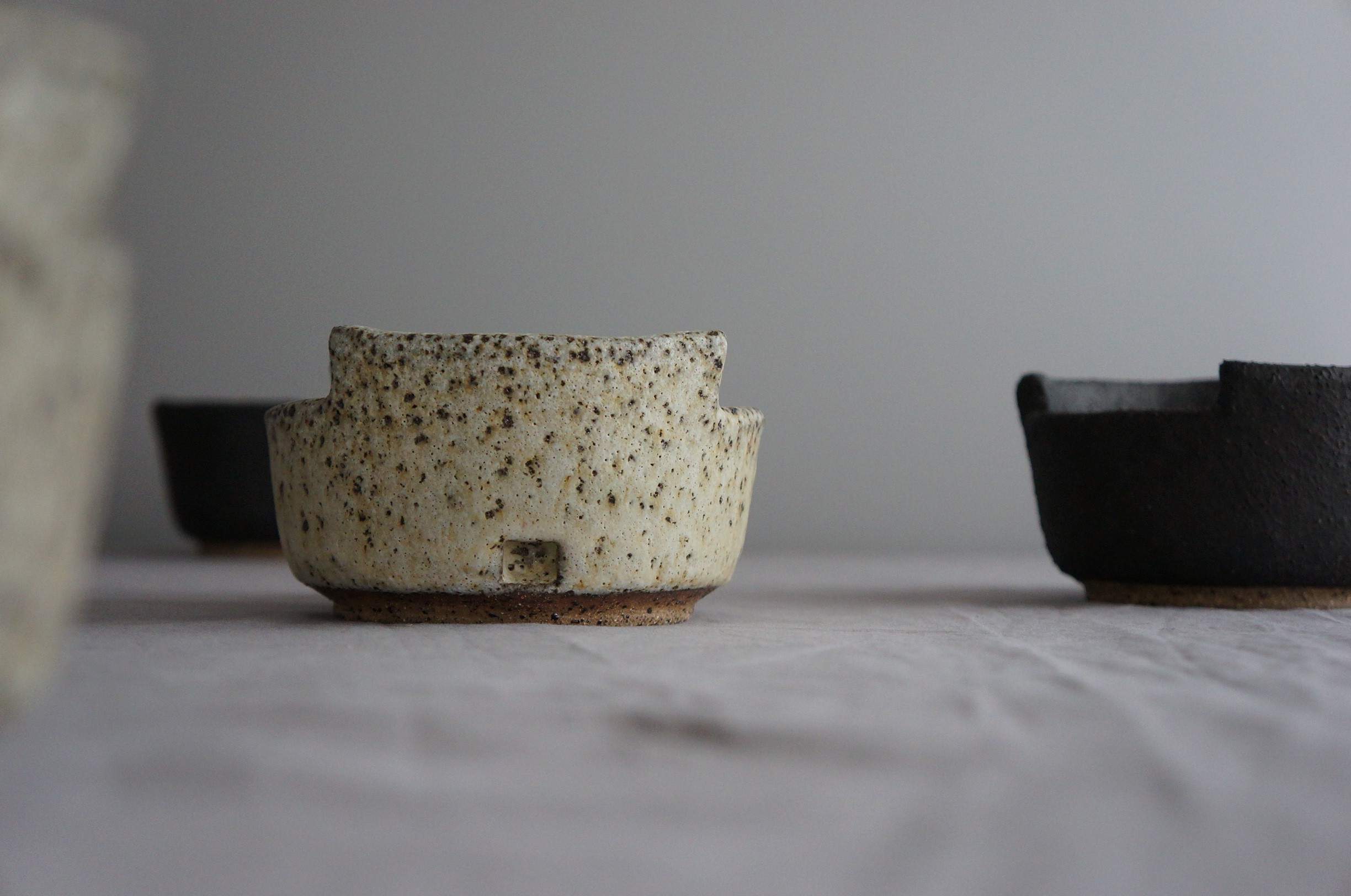
THE Central Victorian Clay Trail is one roadmap that will lead you on a journey of discovery to the inner sanctums of the region’s ceramicists and help blow out the lockdown cobwebs.
This year 14 ceramics studios will open to the public over the weekend of November 13 and 14, from 10am to 4pm, offering a glimpse into the working life of a potter.
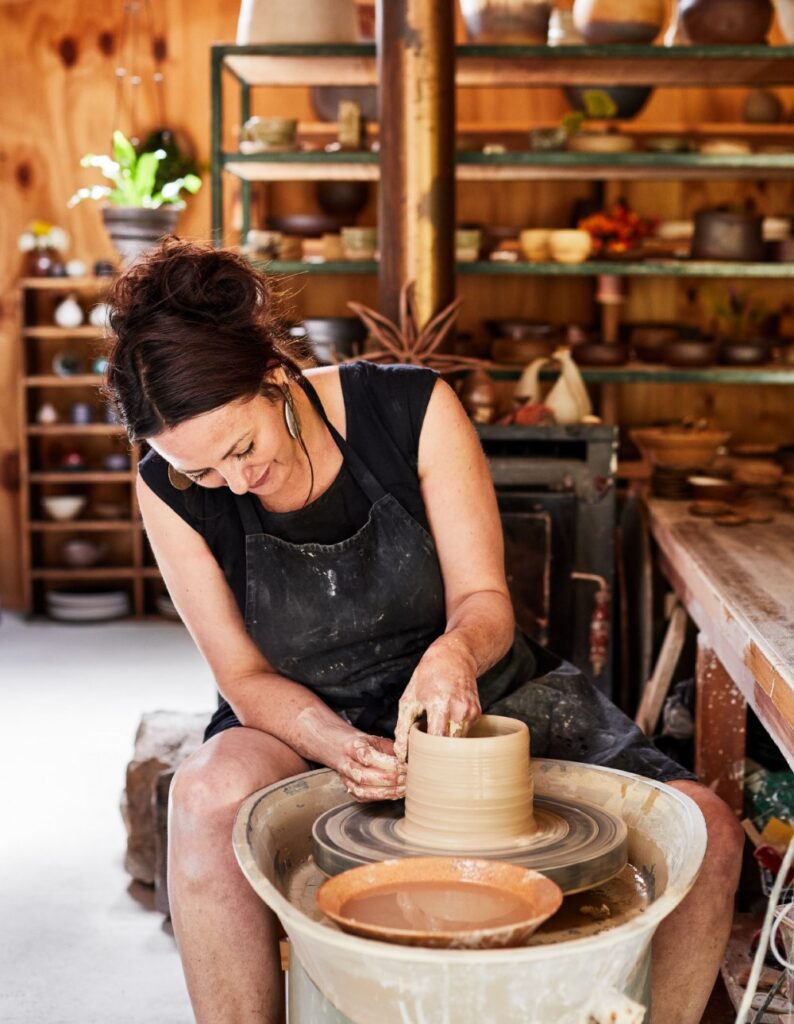
Artists from Mount Alexander and Hepburn shires will welcome visitors to explore the individual processes they use to take clay through to its final state. There will be a huge range of styles and techniques on show, from sculptural work to tableware and everything in between.
All studios will follow Covid guidelines, including QR and manual check-in, and adhere to numbers of visitors allowed in the studio.
Hepburn Shire participants include Minna Graham (Musk Vale), Kim Haughie (Springmount), Angie Izard (Porcupine Ridge) and Chandra Paul (Clunes).
Mt Alexander Shire participants include Oxart Pottery (Taradale), Ann Ferguson (Castlemaine), Fluxed Earth (Castlemaine), Dee Hutchison (Castlemaine), Andrea Ebsworth (Maldon), Tracey Koolen (Maldon), Felicity Ceramics (Muckleford), Angie Robinson (Walmer), Chris Johnston (Green Gully) and Sarah Koschak (Newstead).
Download the map from www. centralvictorianpotters.org
*The brochure lists 15 studios, however, number five, Ellen Hansa-Stanyer, has withdrawn from the trail.
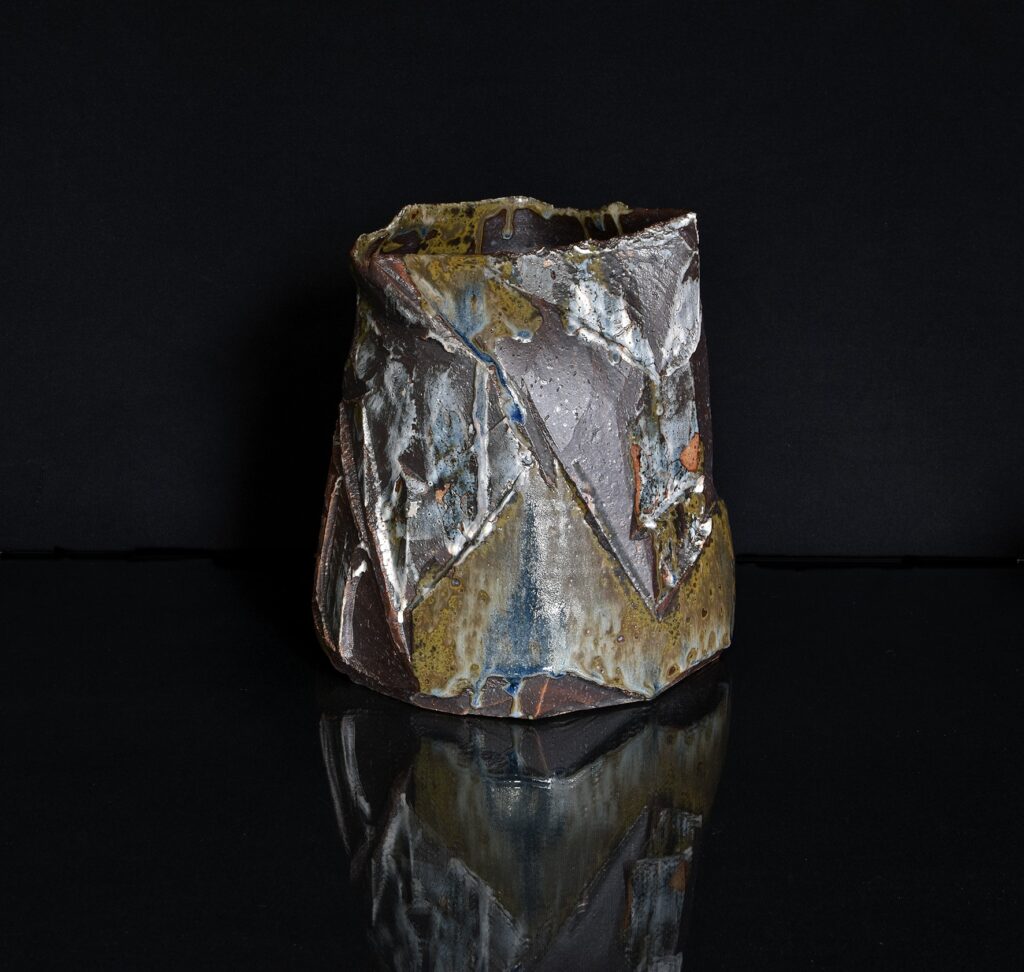
Pictured, right, Kim Haughie’s studio is situated in the basalt-rich region of Springmount, with her mostly wheel-formed, functional pieces an immediate response to her environment
Main image: Amelia Stanwix
October 24th, 2021Romsey Stranger winner
WHILE the pandemic killed off the Words in Winter writers’ festival for the second year, it couldn’t stop a vigorous short story competition under the theme of The Stranger.

The winner is Belinda Oliver of Romsey who, at 37, has been writing since she was about 11. That was when she won her first writing competition at school. She went on to study professional writing at university, winning the Flash Fiction category in the 2019 Wyndham Writing Awards Anthology. Her stories have appeared in several publications.
Ms Oliver lives with her husband, nine-year-old son and two cats and works as a gardener with her father and as a community lifestyle enhancement worker with Macedon Ranges Health.
“I write fairly sporadically but spend most days at least exploring story ideas in my head. I write most of my ideas in the notes section of my phone and then flesh them out from there on my laptop, sometimes a few days later, sometimes a few months even. I find I write best at night.”
Short stories, she says, have the power to make a great impact on readers and hopes that this includes her work.
As well as locally, entries came from across the state, including Fish Creek in Gippsland, Bendigo, Geelong and Melbourne suburbs such as Box Hill and Yarraville. Ms Oliver won $500.
The Stranger by Belinda Oliver
The stranger who’d been in this cubicle before me died in it. I know this because the patient in the next bed, an older man by the name of Ken, tells me.
‘She’d only been here two days. One minute we were talking, then she went quiet,’ he whispers, shaking his head. He sighs and looks out the window to the twinkling lights of the city, his lower lip trembling. I pretend I haven’t noticed and continue to listen as he tells me how three nurses had rushed in, yanking the thin blue curtain around her bed.
‘They couldn’t do anything for her…she was already gone. She was only thirty nine. Never married, no kids. She had a cat. She never had any visitors in here, not that I saw anyway,’ he shakes his head again. ‘We talked about all the things she wanted to do when she got out.’
‘What were they?’ I ask, imagining that she’d had plenty of time to think about all the things she hadn’t achieved in her life. I knew I’d been thinking that way during my stay so far.
He turns to face me. ‘Simple things,’ he smiles. ‘She wanted to visit a tulip farm. She wanted to pick a peach straight off the tree and eat it while it was still warm from the sun. She said the first thing she was going to do was sit on the beach at sunset and dig her toes into the sand.’
‘There’s one thing that bothers me.’ He lowers his voice. ‘I never got her name. I never even thought to check her board. When they opened the curtain, she was gone and they’d wiped it clean. You came in a few hours later.’
He looks out the window again as I sit there processing what he’s told me. Is the simple act of wiping a board clean all that it takes to erase someone’s existence, I wonder?
We say goodnight and I draw the curtain around my bed. I lay there listening to the nurse’s rubber soled shoes squeaking on the floor as they move throughout the ward, not able to sleep. No matter how I position myself, I just can’t get comfortable. My mind races as I think about her – were tulips her favourite flowers? What would happen to her cat? Why hadn’t anyone visited her? And what was her name?
I desperately want to give her a name. She can’t just be the stranger who died in the bed before I came here, the stranger who left a hair on my tray table. I’d found it on my first day. At least, I assumed it was hers. Where else would a random hair come from, but than from the stranger who’d occupied this space before me? Maybe it was from a cleaner, falling loose as they’d quickly wiped down the table before moving on to their next task? I decided against that, wanting to believe it was hers. It was long, thick and jet black. I hadn’t touched it, I didn’t dare move it. It was the only proof I had that she’d ever existed.
The cardiologist visits me a few days later, his dark eyes scanning over his notes. He tells me that my heart is showing all the right signs of making a full recovery and that I should be able to go home in a few days. I’m secretly glad that Ken isn’t there to hear this news. He’d been wheeled out to have an x-ray only a few minutes earlier, giving me the thumbs up on his way past. I lay there afterwards staring at the hair, wondering how many times the cardiologist has visited this bed and if he’d visited her.
Ken sips his morning coffee, watching as I collect all the ‘Get Well ‘cards from my bedside table and put them in my bag.
‘They’re setting you free, love?’ he grins and I nod. I feel guilty for leaving, for leaving him and for leaving when she never got the chance to. I give him a hug and add my number to his phone.
‘Call me any time. Don’t be a stranger,’ I mumble, blinking away tears.
I sit on Port Melbourne beach that afternoon holding an envelope, the sun deliciously warm on my skin. I lose myself in the comforting, rhythmic motion of the waves crashing against the shoreline, surging forwards only to be dragged straight back out to sea. A cargo ship appears far out on the horizon, slowly inching its way in towards civilization. I think of all the people on board, how amazing it really was – a vessel carrying hundreds of living strangers all over the globe, coming in to dock here. Any of them could be next, any one of them could be the next one to end up in that bed and they didn’t know it. I wanted to wave out to them, I wanted to tell them: I see you. You matter. Your thoughts, your hopes, your dreams. They all matter!
My phone buzzes in my pocket. I don’t recognise the number but I answer it anyway. ‘Hello?’
‘Laura?’ It’s Ken.’
‘Oh Ken! Are they letting you out?’
‘No, love, not yet.’ He takes a deep breath. ‘I found out her name. I asked my favourite nurse. I wanted you to know. It was Elsie,’ he whispers. My heart hammers against my chest and my face is hot with tears. Elsie.
I thank him, say goodbye and walk down to the shore. I walk into the water until my ankles are fully submerged, my bare feet sinking deep into the sand. I gently pull out one of my ‘Get Well’ cards from the envelope and slowly open it. The lone strand of hair that I’d carefully brushed that morning from the tray table into it is quickly snatched away by the breeze. I watch as it dances in the wind and whisper her name, over and over.