


August 16th, 2021Housing policy but no quick fix on cards

HEPBURN Shire Council has included funding for a strategic plan into an affordable housing policy in its June budget but there will be no quick fix.
Safe Place Advocacy vice-president Mary-Faeth Chenery said the council would now put a contract out to tender for the creation of the plan – but that could take three months.
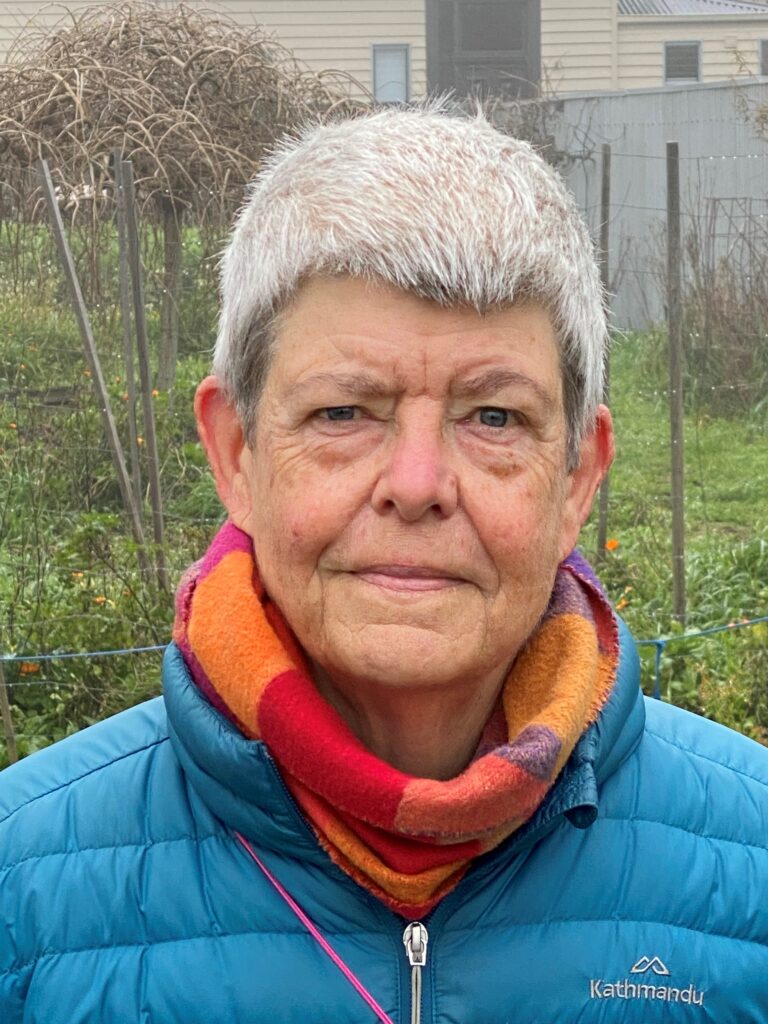
“It will take 12 months to complete the plan and it will then be open for community consultation, so we are looking at a long time. We are worried (about an actionable timeline) as the wheels of local government move at their own pace, and I understand that.”
Safe Place Advocacy is a passionate group of citizens aspiring to influence positive changes for social and affordable housing in Hepburn Shire.
Ms Chenery believes having a safe and affordable place to live is just the basic staff of life. “I am very fortunate that I have one, but I believe very much in trying to help others. I am not sure how housing evolved to become my issue, but I am happy to take my part in this.”
The group meets regularly with Hepburn Shire CEO Bradley Thomas, lobbying for changes they believe are achievable to meet the need for social housing in the shire. Safe Place has identified land and existing buildings that are suitable for social housing including Daylesford’s former police station and residence.Safe Place is also advocating for a change in the issuing of a secondary dwelling permit. “A secondary dwelling is a small dwelling, either detached or attached to an existing dwelling on the same lot. Council appears to have the flexibility to approve secondary dwellings such as a tiny home, caravan or granny flat. However, you are not allowed to live in them year-round, so we have people currently working on having this rule changed.”
Ms Chenery said the “tricky bit” was connecting services but it was achievable. “There are often power points on the exterior of a house, there are taps in the yard, and composting toilets eliminate the need for connection to sewerage. It’s just not that hard except for the will of councils and others who feel that this is not the way to go.”
Council planning permit policy stipulates that new residential housing developments need to allocate space for affordable homes to comply with inclusionary zoning.
Safe Place Advocacy has been pushing the council for any development with more than 10 lots to have affordable housing inclusionary zoning.
Ms Chenery said she recently spoke to someone looking to find housing for their daughter and family in Daylesford but at the time there were only two homes for rent in the town – with 350 homes on the short-term accommodation list.
“I can appreciate that people want holiday housing to come to, and Daylesford is the perfect place for that, but if it is at the expense of many people in the community, I think we need to find a middle ground,” she said.
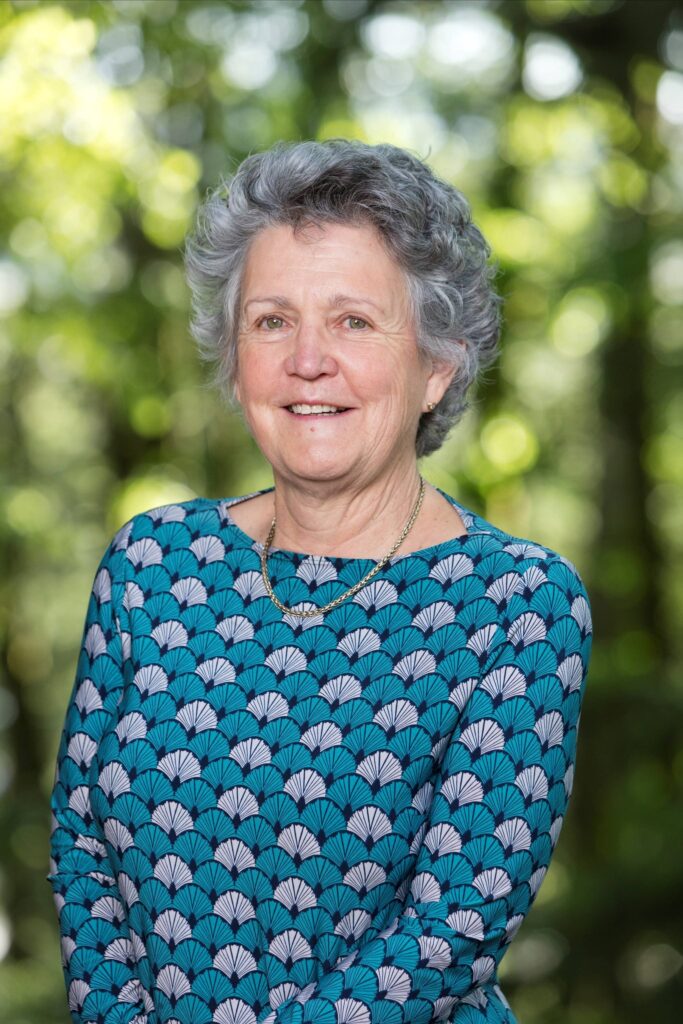
Hepburn Shire Mayor Cr Lesley Hewitt said that affordable housing was a significant issue state-wide, and the shire was experiencing affordable housing shortages in both purchase and rental stock.
“Everybody knows that there’s difficulty finding affordable housing to either rent or buy right across the shire, and this is the start of some high-level work to try and do what the council can to impact on that situation,” Cr Hewitt said.
“The lack of affordable housing is having a significant impact on recruiting staff for key industries and businesses in the shire, with some businesses having to reduce their operating times and services offered.”
Macedon Ranges Shire Council does not have an affordable housing policy or strategy. However its planning scheme includes some local policy that encourages the provision of responsive and affordable housing and a diversity of lot sizes and styles.
These are designed to meet the requirements of all age groups, household types, lifestyles and preferences within the shire’s towns. It especially promotes a range of housing options to improve housing affordability in the larger towns, focusing on Kyneton.

Macedon MP and Minister for Regional Development Mary-Anne Thomas said the Victorian Government understood the shortage of housing was a real issue in many parts of the state.
“That’s why we have listened and are investing $5 million in new pilots in targeted locations to test solutions that might be applied in a range of other locations experiencing similar challenges. The government’s landmark $5.3 billion Big Housing Build will construct more than 12,000 new homes across Victoria – with a minimum of $30 million being invested in the Macedon Ranges for more social and affordable housing.”
Above, Safe Place Advocacy vice-president Mary-Faeth Chenery, Hepburn Shire Mayor Cr Lesley Hewitt and Macedon MP and Minister for Regional Development Mary-Anne Thomas
Listen to Carol chat with Mary-Faeth on The Local’s
podcast, Country Life at www.tlnews.com.au
Words: Carol Saffer | Images: Contributed


August 16th, 2021Pets@Work

Working in real estate is not all about selling property, as Belle Property Trentham’s Fiona Kelly has found out. When her Trentham clients had to suddenly leave to head overseas for work, Fiona took on the role of caring for best mates, Doris the Donkey and Gavin the Goose.
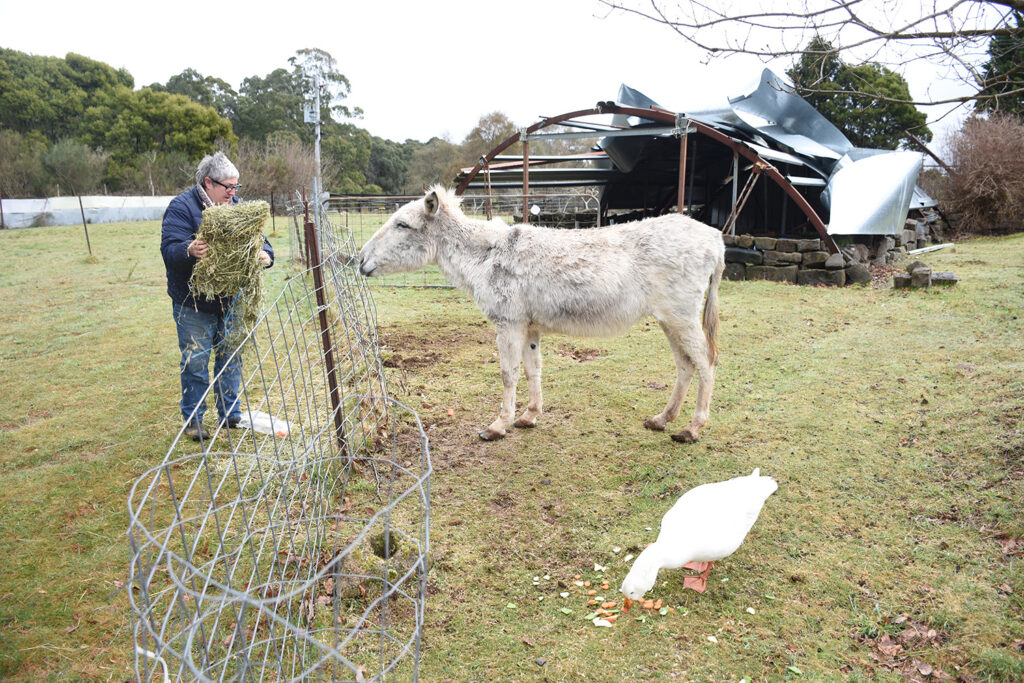
The pair will head to a new farmyard home shortly but in the meantime Ms Kelly’s formerly spotless car is now filled with hay from her regular visits.
Do you know a Pet@Work?
Email news@tlnews.com.au

August 16th, 2021Soccer star loving community life in Daylesford

Former Young England soccer star Lee Stevens, moved with his wife Danielle six years ago to Daylesford, and is loving the community life.
The couple had been living in California, where he had been playing soccer, coaching and travelling, but found themselves in Melbourne where Lee and his engineer recruiting partner set up a company recruiting architects and interior designers. “We visited Daylesford and found it was close enough that I could still run my company. It’s a good community: people are willing to help make you feel at home.”
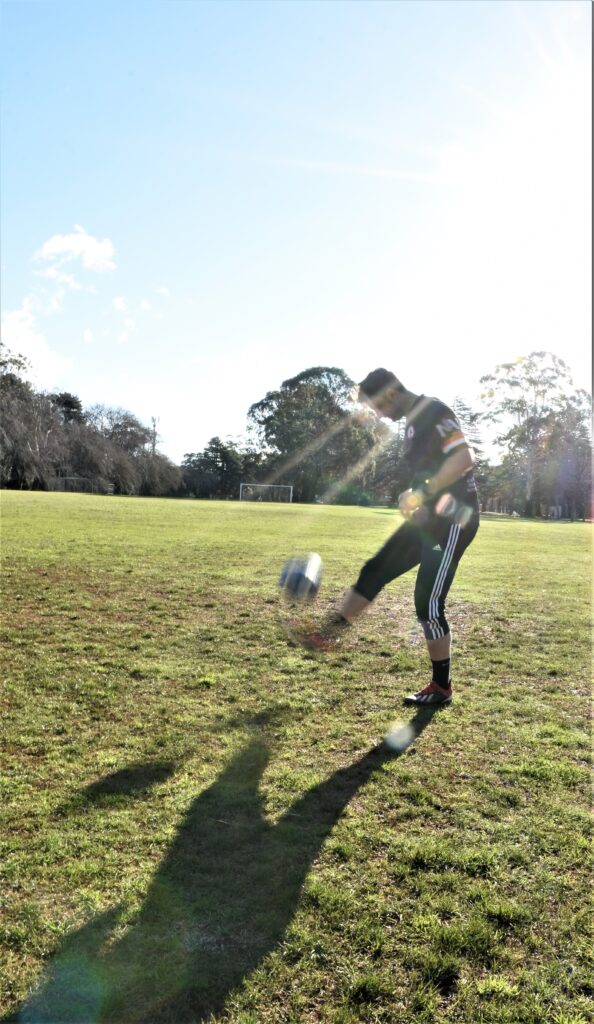
Like many industries, Covid has hit fairly hard, but also created a fairly level playing field for small and large businesses able to tough it out. And playing fields have been Lee’s life, growing up in a small English town the son and grandson of footballers and besting thousands of rivals to play, and score at the revered Wembley Stadium before thousands of fans.
Lee also played there in a Football Association final, this time in front of 56,000 people. Now he plays for Daylesford where he’s found friendship and a strong community.
Growing up in the county of Wiltshire, Lee and his three brothers were the sons of a former Chelsea and England Youth player, who later became a coach. Sporting life meant football in winter and cricket in summer.
At 15, Lee captained the Young England side, winning a couple of games and losing a couple, he says. Offered a scholarship to the US he spent three years at a major university before returning to the UK and joining Bristol Rovers.
He met his future wife Danielle, a former South African, through her two teacher sisters, one of whom now works in Kazakhstan. Danielle now runs cooking and health workshops.

Playing here has meant mixed results on the pitch but excellent ones off it. “They’re a good bunch of people. You always meet people on the same wavelength as you.”
With a two-year-old daughter, Lee and Danielle have also become involved with the local childcare centre.
His experience with architects leads him to comment that he would not like new developments in Daylesford to take away its character. “You don’t want city-based designs. You want to keep it rustic.”
Perhaps, he jokes, Daylesford needs a giant gate out front to keep demeaning designers at bay.
Words: Kevin Childs | Images: Kyle Barnes & Contributed

August 13th, 2021

Let’s celebrate the return of Wattle Day
Glenlyon has revisited and revitalised the celebration of Wattle Day, once an annual one-day salute to our national floral emblem, the wattle, but this year it is embraced in a week long feast of poetry and art commencing on August 8.
Towards the end of the 19th century there had been several attempts within the colonies to find a national emblem. No doubt Canada’s choice of the maple leaf for theirs had something to do with their choice of the wattle flower and in 1910 we had the first national celebration of Wattle Day.
Early celebrations included the planting of wattle trees on school grounds, school lessons on botany and the wearing of sprigs of wattle, often sold for a charity.
In 1913 the then Prime Minister, Andrew Fisher changed Australia’s Coat of to Arms to include more relevant Australian symbols with a spray of wattle the background feature. In December, the same year, the first wattle blossom stamp was released.
Unfortunately enthusiasm somehow waned, and despite the efforts of ABC’s Ian McNamara’s valiant efforts on his national Sunday morning radio program, Wattle Day appeared to die out. Until now, in Glenlyon!
Wattle trees to celebrate spring
Among the 700 odd species of acacia (wattle) to choose from there must be at least one to satisfy your needs for every spot in your garden. With foliage ranging from spikes, through lacy and fern-like, to long pendulous lush leaves and growing habits from prostrate, ground coverers, through to bushy shrubs, up-right or weeping trees, they have it all covered.
Although early September is when flowering reaches a crescendo, by careful selection you can arrange to have flowers from early winter until early summer.
If that isn’t enough, avid plant breeders have been busy producing hybrid forms including those beautiful soft-leaved weeping forms of acacia cognata and the horizontally growing acacia cultriformis.
I have listed here a reasonable selection of my favourites to suit your possible needs. These may not all be available from your local growers but a quick browse on the internet will no doubt lead you to a specialist native plant supplier. They are mostly capable of success in our climate and in most soil types.

A. acinacea (also known as rotundifolia) H.2m x W. 1.5m – A dense, bushy shrub suitable for use as a windbreak or hedge plant. Its long, arching branches and small, round leaves are smothered in spring by masses of bright golden ball-shaped flowers. Grows best in full sun to partial shade.
A. baileyana (Cootamundra wattle) H.4-6m x W.5m – A favourite small-to-medium tree with attractive silvery-blue, fern-like foliage. In winter its masses of golden, perfumed flowers provide spectacular colour to the garden. Tolerates full sun or shade in any soil from sand to heavy clay.
A. baileyana var. purpurea – A distinctive purple-bronze foliaged variety with all the attributes.
A. boormanii (Snowy River Wattle) H.3-4m x W.2.3m – A large shrub or small tree, often pendulous, ideal as a screen or windbreak, with long, narrow foliage. Its fragrant, golden, ball-like flowers appear from late winter until spring.
A. cultriformis( knife-leaf wattle) – A quick-growing, dense and shapely arching branches. Silvery grey triangular leaves sit closely on the branchlets and are excellent for floral work. The shrub is smothered in golden ball-like flowers in spring. Grows well in well drained light to heavy soil.
A. cultriformis prostrata – An excellent ground cover version with all the attractive features of the upright form.
A. melanoxylon (blackwood) H.20.m x W.10m – A hardy shade tree with long narrow leaves. A shy flowerer with cream, ball-shaped flowers in spring. Prefers a well-watered position with light to-medium soil.
Got a gardening question? Ask Glen. Email glenzgarden@gmail.com
August 1st, 2021Pets@Work
Harry, a seven-year-old labradoodle, loves working at Hepburn Community Radio.
He comes along with Robyn Rogers on Wednesday, from 8am to 10am, when she co-hosts with Max Primmer, who broadcasts the Breakfast Show from Monday to Friday with various guests.
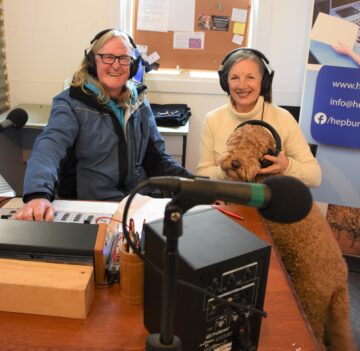
Robyn said Harry barks as if on cue during conversations. “He just keeps us on track, snoozes in the studio and jumps up for cuddles.”
To listen to the show head to the TuneIn app and then type in Hepburn Community Radio.

August 1st, 2021From Doggy to AFL premierships: Pearcy’s parade
A YOUNG man starts out with the Daylesford Football Netball Club. Impossible, then, to even think that one day he would stand on the dais at the MCG with a premiership AFL team.
Matt Pearce’s first step came when he was approached by the then VFL side North Ballarat. “After joining the Roosters, I took on the role of head trainer for four years.”
Daylesford born and bred, “Pearcy”, as he is widely known, continued his rise when he was asked to join the medical staff at Melbourne for the 2007 season. “After two years at the Demons, I was asked to join the Tigers for season 2009 – and well the rest is history, I guess…I jumped at the opportunity.”
With his time at Melbourne, this adds up to over 350 games.
Football had always been a big part of his life, whether as a supporter or a junior.

“In more recent times I’ve had the pleasure of running around for a few reserves games for Daylesford when my Richmond commitments allowed me the time to do so.”
The peak of his 12 years at the Tigers was, of course, those three premierships in four years. “However, the 2017 Premiership probably stands out because it was the culmination of so many years of hard work by all involved. There is a point when a dream becomes a reality, and for me that realisation came at the 22-minute mark of the last quarter when it dawned on me that we had won our first premiership in 37 years.
“The other two premierships are also very special, but it’s a bit like when you have kids…you don’t love them any less…they’re all just a little different.” He has two sons.
As a trainer he saw a lot of injuries up close.
He remembers Tiger Reece Conca having a significant ankle dislocation in his 100th game, against Sydney in 2018 after a tackle by Buddy Franklin.
Another was this year when ex-Geelong player and Daylesford local Josh Cowan suffered a bad leg fracture in Round 1, his comeback game at Daylesford.
“Both were really nasty injuries that happened to two of the best human beings I’ve had the pleasure of knowing.”
Tiger great Alex Rance featured in the most remarkable recovery Pearcy has seen, and although, ultimately, it didn’t mean a return to the playing field, Rance came very close.
He injured his ACL in Round 1, 2019. An ACL injury is a tear or sprain of the anterior cruciate ligament, one of the strong bands of tissue that help connect the thigh bone to the shin bone. Usually this means 12 months out of the game, but the grand final was approaching so he put himself into a position where he could almost have played, an unheard of feat.
We discussed the burning issue of head injuries. “Concussion in sport is a very real issue but also a very wide ranging one. I honestly believe we are heading in the right direction, however, there is a lot of work to be done, particularly by the code and the local leagues, in continuing to educate and develop policy to protect players at any age level.”

Pearcy also counts himself lucky because of opportunities football presented, including overseas training camps and travel and being selected as head trainer for the Victorian side in the 2020 State of Origin game for bushfire relief. As a 20-plus years member of the Daylesford CFA, this was close to his heart.
Asked about why he retired from Richmond he offers one word: “Family.”
The AFL world is all-consuming for players, staff and their families.
“Retirement had been on my mind, but after spending almost five months away from my wife and two young boys last season in the AFL hubs I made the decision to step away while on top. I left on my own terms – something that not many in the industry get to do.”
At 37 he finds getting involved again at Daylesford a bit like coming full circle. He mentions being able to give back to the club that gave him a start. “My role has evolved since returning and I now find myself overseeing the club trainers, mentoring the leadership group and assistant coaching – not quite what I (or my wife) thought I’d be doing but really happy to be able to be involved.
“The nice thing about local footy is that now my boys are able to experience the community that sports clubs provide, they are participating in Auskick and they love coming to cheer on the Doggies on the weekends.”
Pearcy will join Konrad Marshall, author of Yellow & Black: A Season with Richmond, Stronger & Bolder: Inside the 2019 AFL Finals Series with Richmond and The Hard Way: The story of Richmond’s 13th Premiership, and Cameron Schwab, former CEO of Richmond, at the Daylesford Football Club for a special Words in Winter forum on Saturday, August 21.
Details: https://www.trybooking.com/events/landing?eid=789452&
Words: Kevin Childs | Image: Contributed
June 19th, 2021Communities rally together after the storm
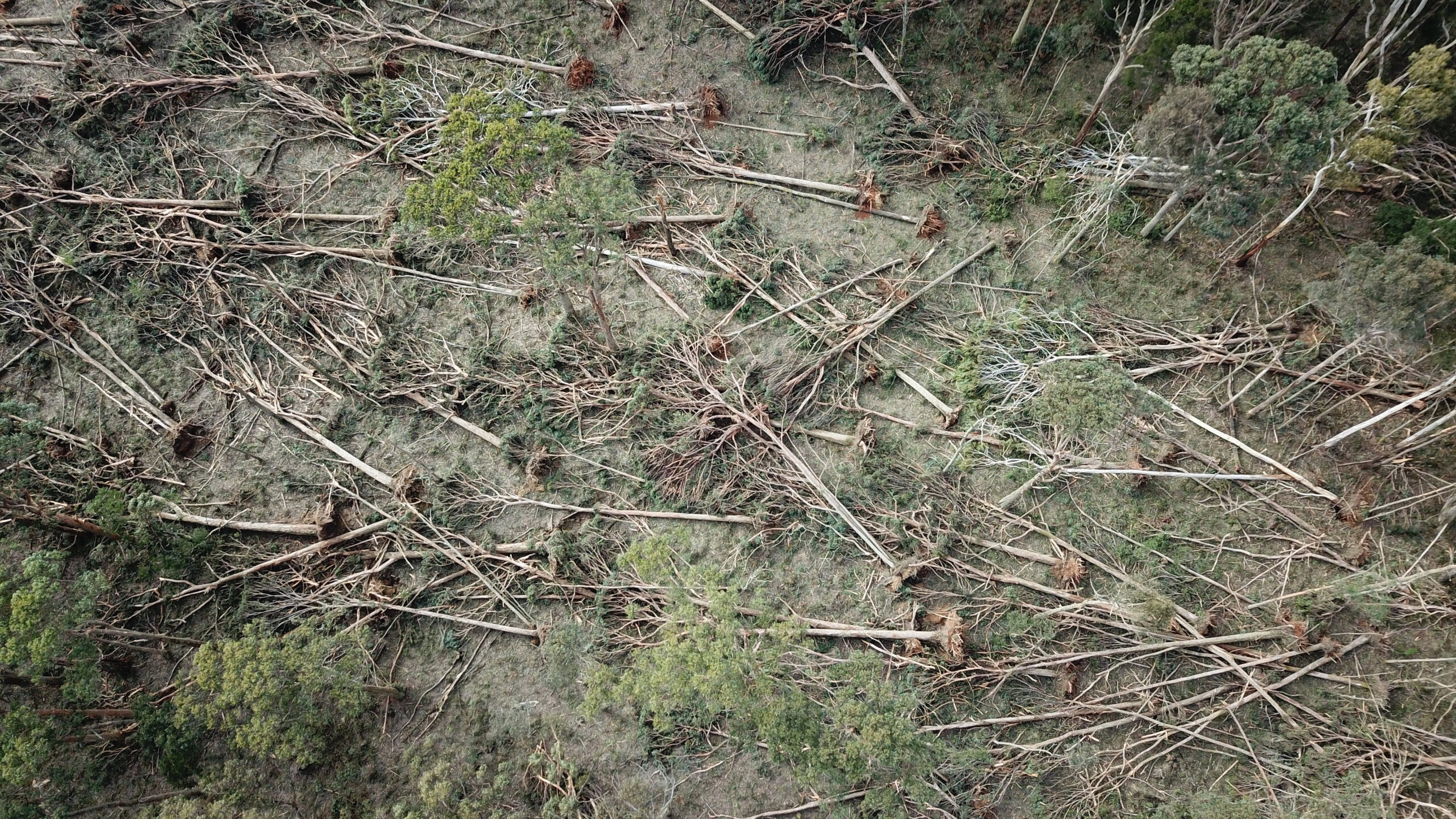
THE great storm of June 9/10 will go down in history as one of the most devastating events in the Central Highlands. Thousands of trees came down, crashing onto homes, cars, sheds, fences and powerlines. More continue to fall as people deal with the aftermath and the clean-up.
Luckily no-one was killed or injured but many people have harrowing stories to tell. In most regions though, there are also tales of community support and strength, and looking to rebuild as soon as possible.
Korweinguboora’s Ross Redwin lost his home but says he is intent on looking forward and returning to his beloved community as soon as possible. Meanwhile, Daylesford Spa Country Railway has been struck a blow with possibly 1000 trees down on its line. But president Stuart Smithwick says it will take more than a storm to stop its volunteers from getting up and running again. Meanwhile Hepburn Shire Mayor Lesley Hewitt says the council is doing what it can to help with the clean up. Mr Redwin, Mr Smithwick and Cr Hewitt spoke with Donna Kelly.
Individuals
ROSS Redwin was asleep in his Korweinguboora home on Thursday morning when he was woken by “a thunderous crash” and got up to investigate.
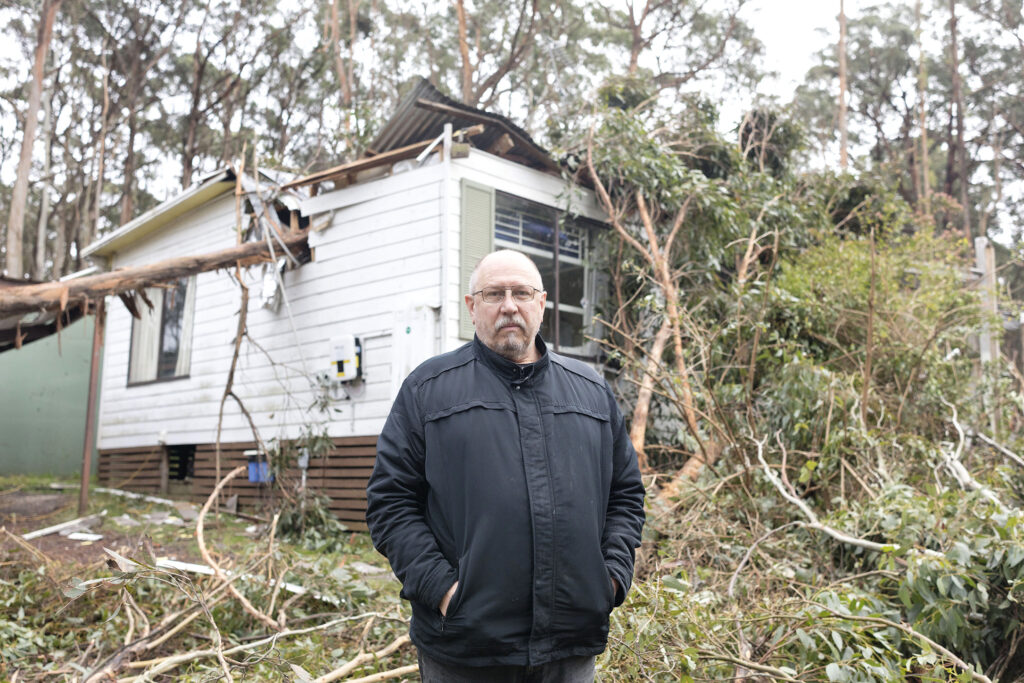
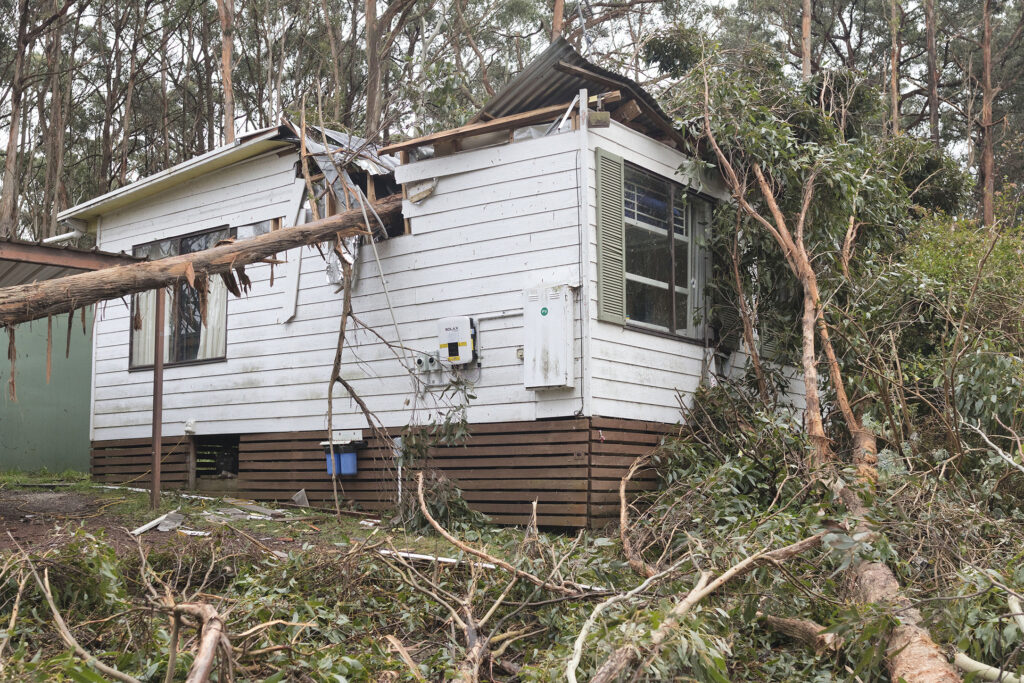
He was just about to step outside when his 14-year-old daughter Sam rang to say she was trapped in her bedroom. A tree had crashed onto the house, bringing down part of the roof. The teenager had woken to broken plaster and branches above her. Ross helped her make her way out and then went and woke 16-year-old son Herbert.
The trio then moved to the lounge/kitchen area where they sat as more trees fell onto the house, ripping off fascia boards and gutters and destroying the front verandah. It was then Ross made the decision to leave the house for safety, something he says, in hindsight, was probably the wrong thing to do.
“We couldn’t get down the driveway because of the trees so we had a quick conversation and decided we were going to walk to friends of ours who live about 2km down the road. I didn’t think there were many options but it was scary as hell.
“It was the middle of the night and we had to climb over seven or eight trees just to get out of the forested area around our house, and we could hear even more trees crashing down around us but we didn’t know where they were because our torches didn’t go that far.
“My daughter kept having panic attacks, which was perfectly understandable, and I had to stop every five minutes to soothe her down and then another tree would crash down. It was really, really scary.”
Ross, Sam and Herbert finally arrived at their neighbour’s home at 3am and were greeted with warm drinks, food and a bed. “Greg and Donna were just wonderful. We chose their place because there are no trees around their house and thought it would be reasonably safe but they were just so good to us, it was unbelievable.
“In hindsight, we probably would have been better staying in the house that night. We took an enormous risk walking through that part of the forest but I was worried that the house would not be left standing and we would be killed.”
Ross said Moorabool Shire Council got in touch with him on Friday, after phone issues, and put a notice to vacate on the house, while his insurance company had provided emergency accommodation.
“The council was terrific. I was really impressed with how quickly they got onto us and the range of things they could offer us.”
Ross said while he had had a few sleepless nights the trio were looking forward to getting back into his home as soon as possible. “You can’t keep looking backwards, you have to make a decision to look forward. You can ask, ‘why us?’ but it doesn’t matter why, what matters is what we do tomorrow, not what happened yesterday.
“And I love this community. On Friday (June 11) we couldn’t get out because of all the trees down. But people just got together and there were about 20 blokes out there with chainsaws and tractors and they just cleared the roads themselves. A real act of community spirit. I bought in Lyonville in 1989 and have lived around here ever since. I moved to Korweingi in 2013. I love the area, I love the people. It is a wonderful place to live and I feel so lucky to be a part of this community.”
Organisations
IT’S already been a tough 18 months for the historic Daylesford Spa Country Railway with Covid restrictions and lockdowns affecting its main fundraiser, the Sunday Market.
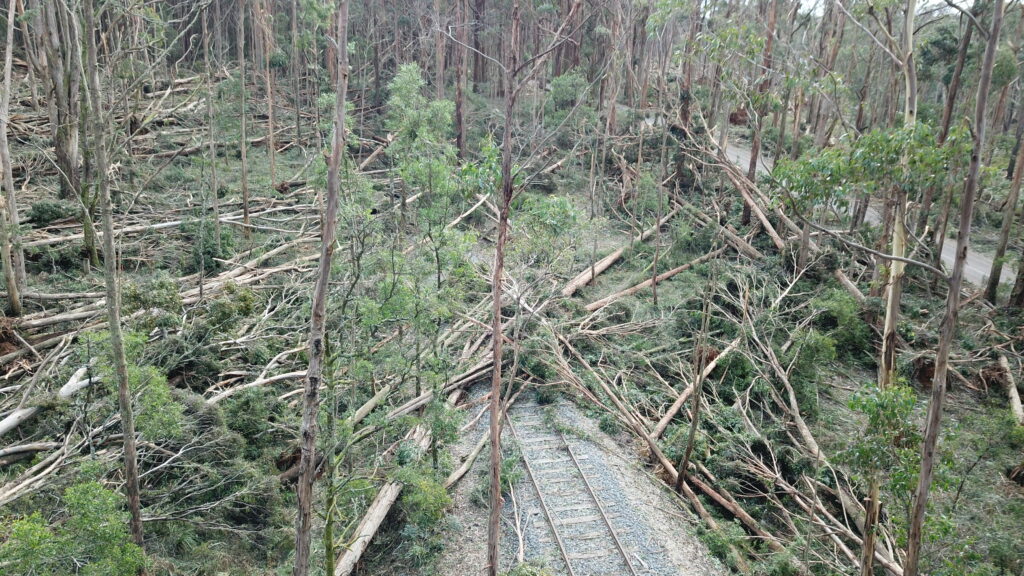
But the June 9/10 storm has wreaked unbelievable devastation with between 400 and 1000 trees down on the track between Musk and Bullarto – and even more alongside waiting to fall in the next gust of wind.
President Stuart Smithwick said the state of the track was “overwhelming”.
“I have walked through the corridor a couple of times, if you call it walking, it’s pretty challenging, and there is no obvious damage to the track but you can’t actually see the sleepers in some places, they are covered with trees.”
Mr Smithwick said the track between Daylesford and the relatively new station at Musk had not been so heavily impacted and the trains should be running again within a few weeks. The rest of the track, to Bullarto, could take months, he said.
“We are currently in discussion with VicTrack, our landlord, a state government agency, and hopefully they come to the party and give us some support, whether that is working with other government agencies or Hepburn Shire. It is beyond the capacity of our volunteers. We are going to need heavy equipment and people who know how to do forestry to get in there and clean up the mess.
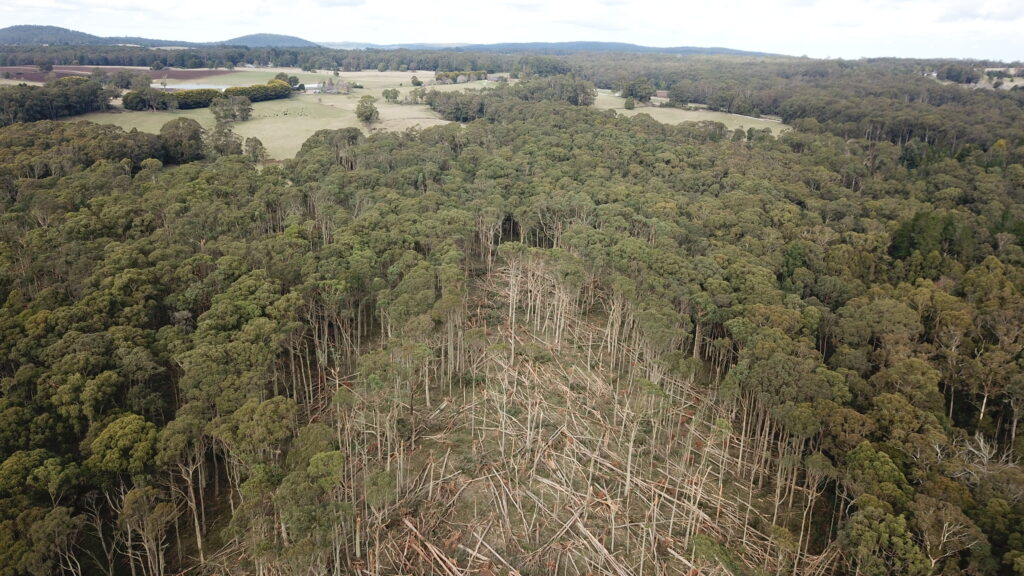
“The other thing is finding somewhere for all that timber to go. It would not make any sense to leave it laying on the ground, it would be a massive fire risk along the corridor.”
Mr Smithwick said while the storm damage was disappointing for volunteers, the railway would survive. “Generally, when we have had a crisis we always come back bigger and better, it makes us more resilient and other opportunities often arrive in the process. We also have great local support, most people have been on the train at least once in their lifetime or come to the Sunday Market for their fresh produce.
“We’ve been doing it over 40 years, so I think there is going to have to be a worldwide catastrophe to close this place down. Bigger than a pandemic and certainly bigger than a storm.”
And from the shires
HEPBURN Shire Council Mayor Cr Lesley Hewitt said council was now at the stage of recovering and were working out exactly what the damage was, how much it was going to cost and how to deal with it.
“Council staff are meeting with various agencies around the state to get an understanding of what help is available to residents and property owners and we will make that information available as soon as we know what that is and how to help people apply for it. Council staff have also been cleaning up the roads and are working with organisations to see how the public can safely access the wood.”
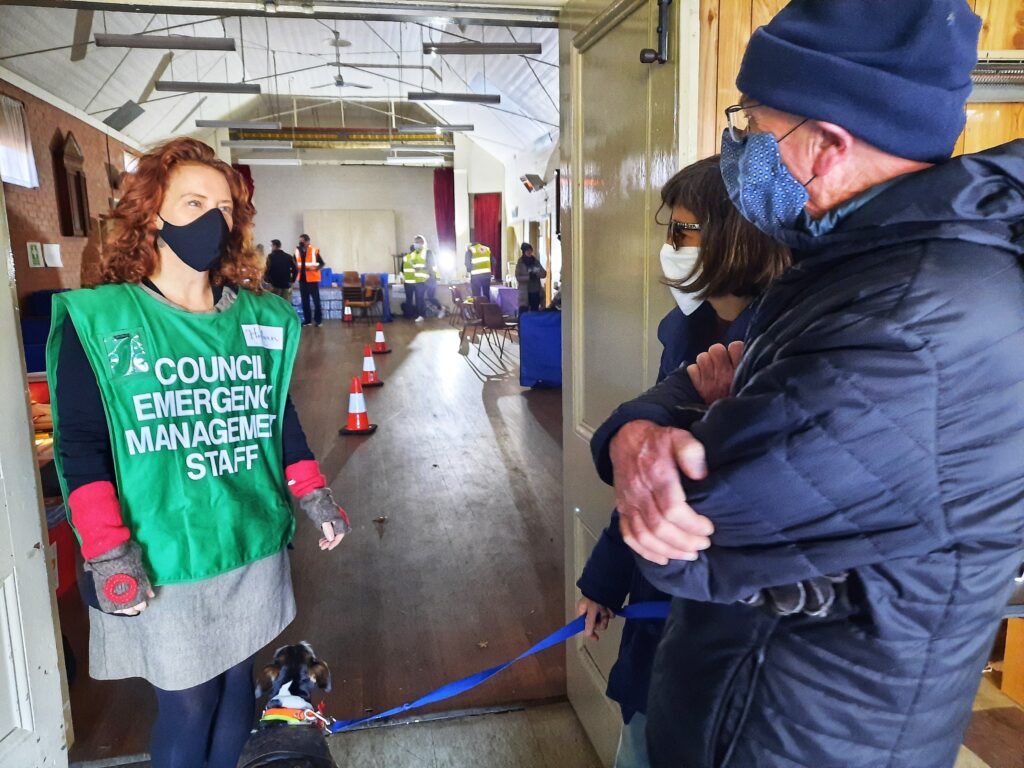
Cr Hewitt said an extension to the current June 27 cutoff for free green waste disposal at all transfer stations was under consideration.
Link: www.hepburn.vic.gov.au/storm-update/
MOORABOOL Shire Council CEO Derek Madden, in an emailed response to calls to The Local from Korweinguboora and neighbouring community members expressing anger at the shire’s lack of response, said there was impact across most of the shire “so as fast as contractors and works crews could clean up, more trees were falling”.
“Some dangerous trees were taking five hours to remove with two crews and contractors. Springbank Road had so many trees down and had cars crushed – this road took up most of one day. Greenhills Road had 30 trees over most it. Moorabool West Road in Gordon on Thursday and Friday had eight trees down and when access was cleared and crews and contractors tried to leave, another six trees came down.
“Council staff made phone calls to 58 residents in Korweinguboora on Saturday, some calls lasting 30-40 minutes each. This was in addition to meetings in Blackwood where power and communications remained unresolved in some instances until Monday evening. Due to Covid-19 restrictions, a physical relief centre is the last option. Hepburn Shire opened a relief centre for Trentham because they were cut off completely with no access in or out of the township.
“We will take learnings from this event and have a look at how we can improve our services and procedures. We are committed to supporting all communities across the shire.”
If you are struggling with any personal issues support is available from:
Central Highlands Rural Health social worker at Trentham – 5321 6550
The Victorian Council of Churches Emergencies Ministry – www.vccem.org.au/services/personal-support/ or 9654 1736
Beyond Blue – www.beyondblue.org.au or 1300 224 636
Images: David White, Daylesford Spa Country Railway, Sandy Scheltema
More storm coverage:
Central Highlands Rural Health rallies p18
Images: p24 & 25 & www.tlnews.com.au
And listen to the podcast by scanning the QR code
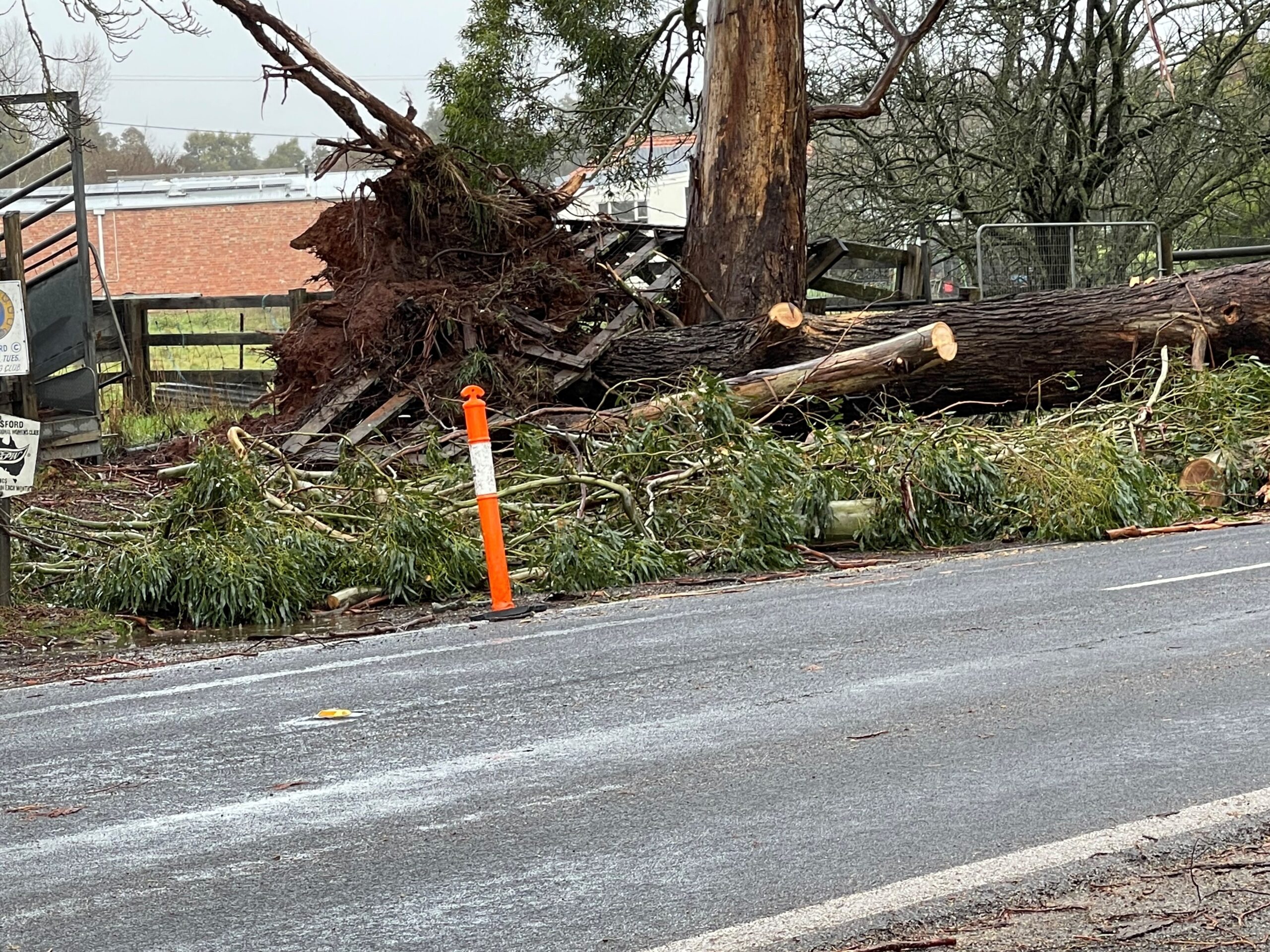
June 10th, 2021Storm damage and relief in sight for Trentham
Just a few photos from around the region. Top four taken at Trentham’s relief centre by Sandy Scheltema.
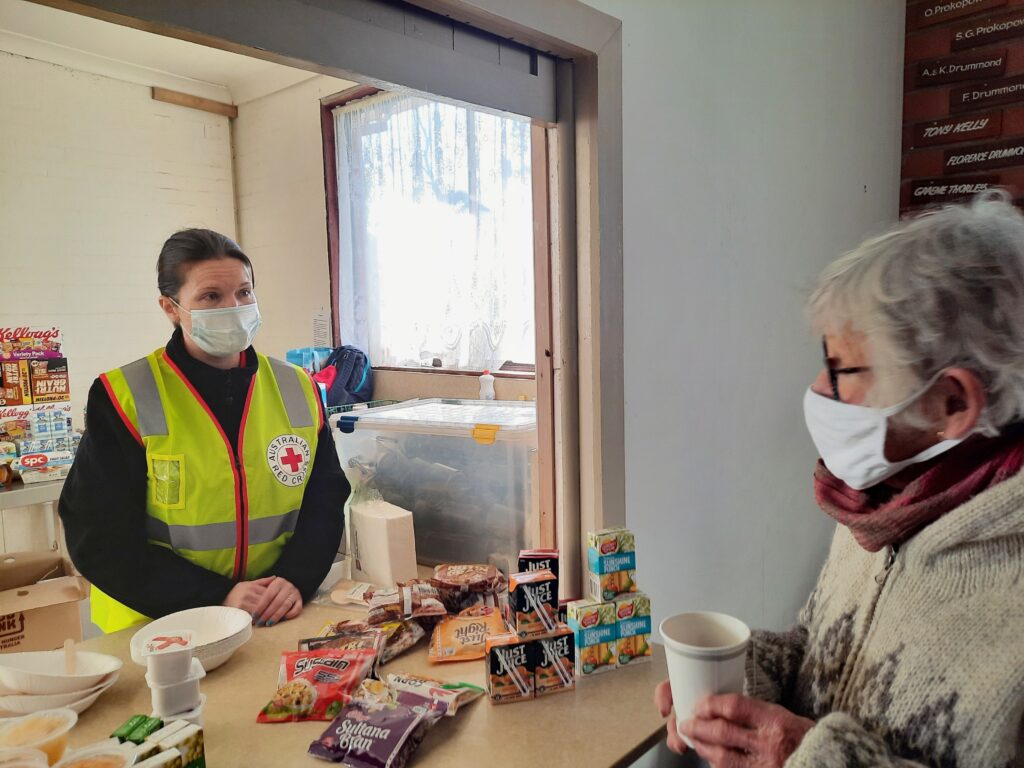
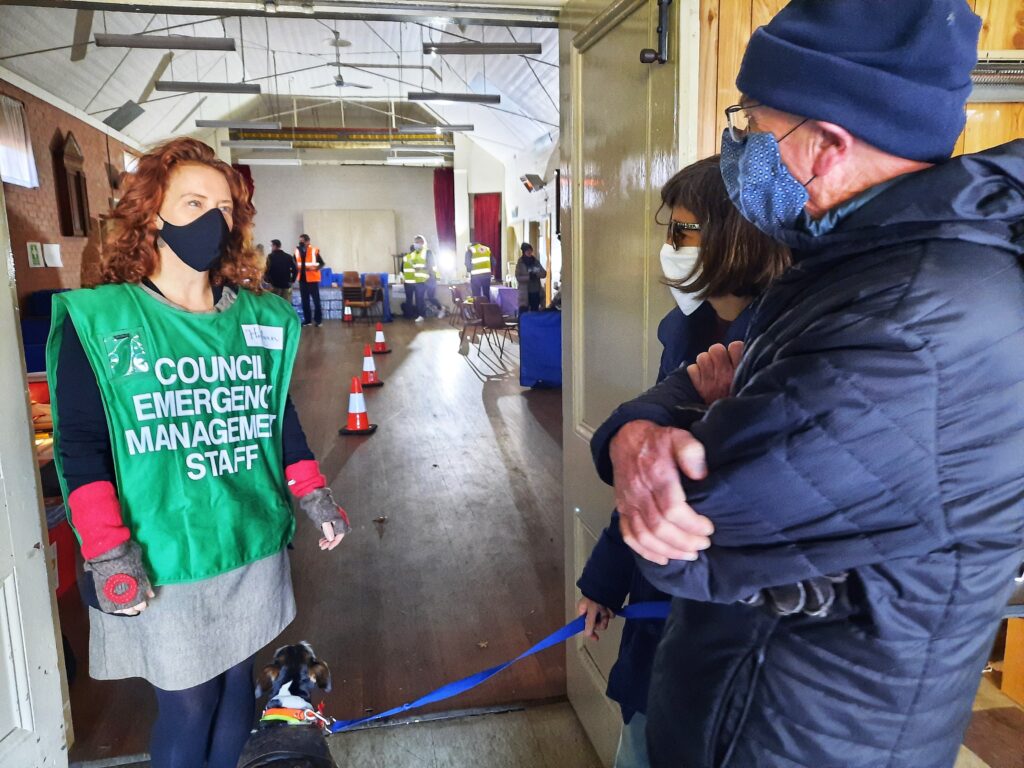
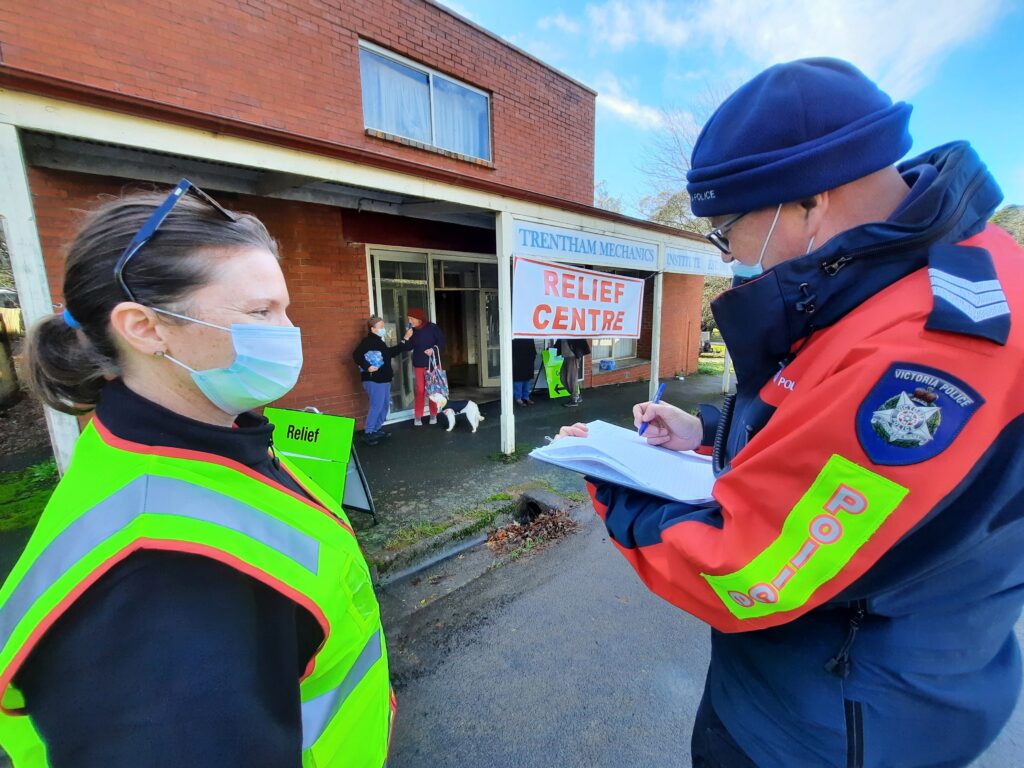
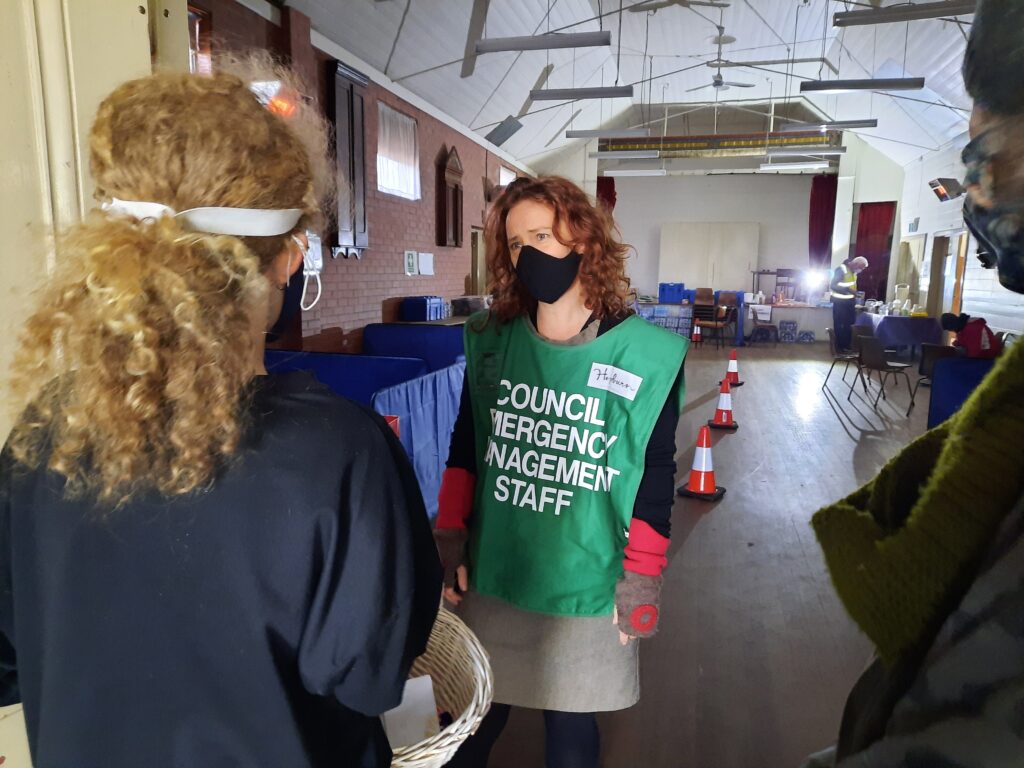
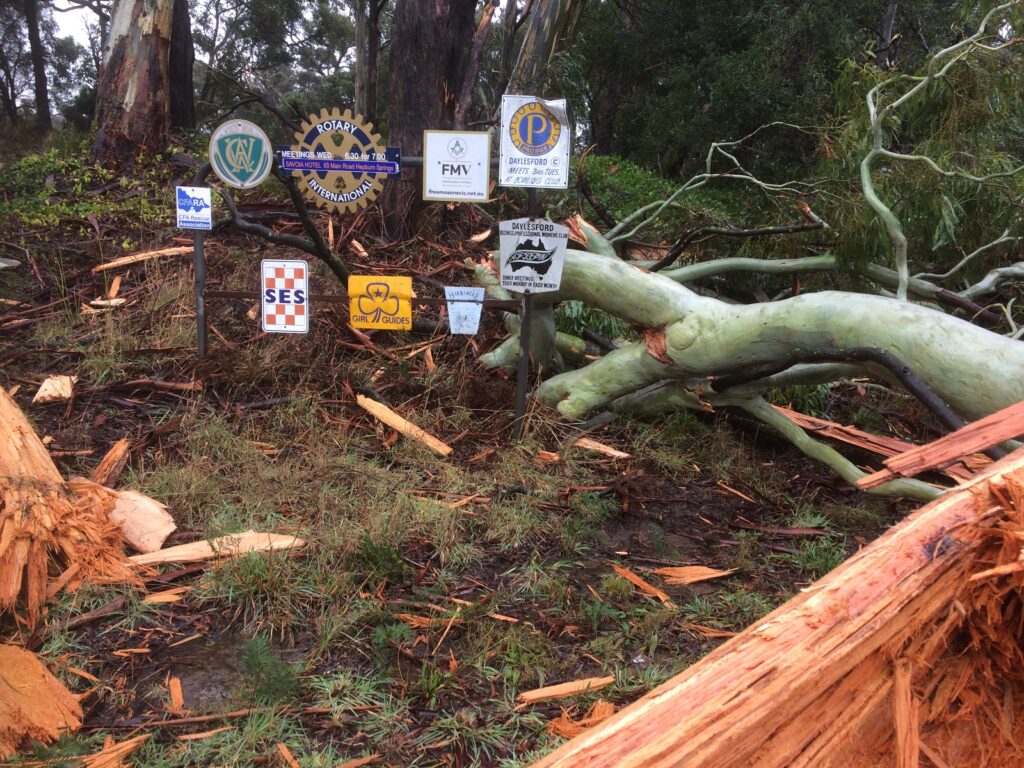
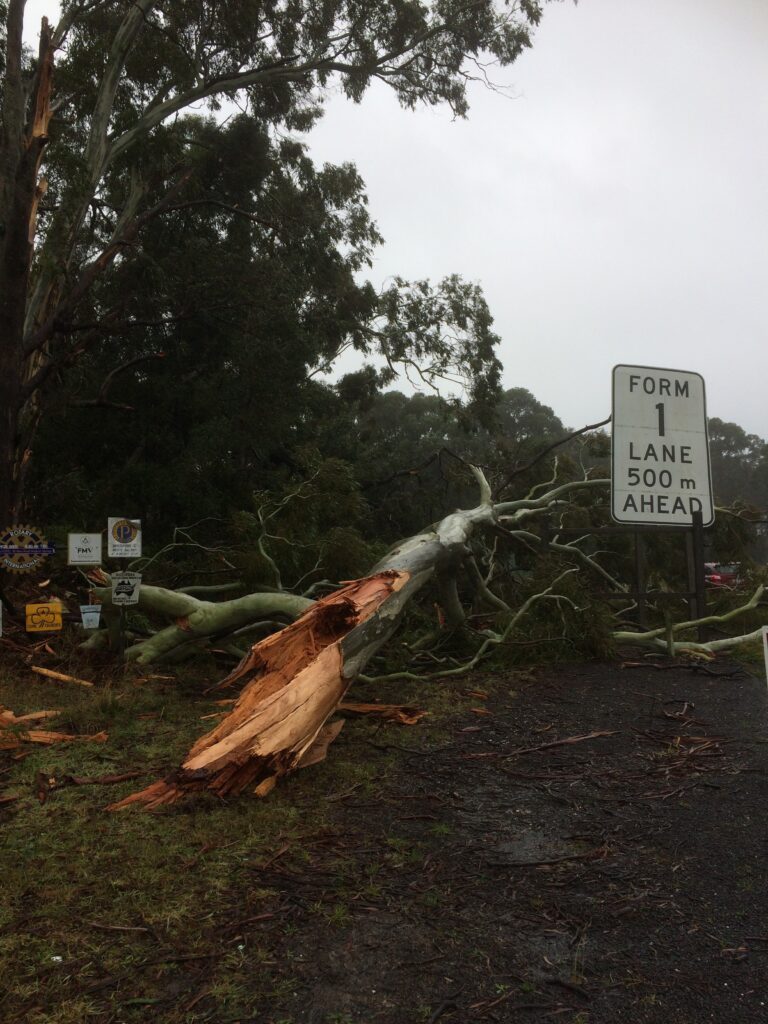
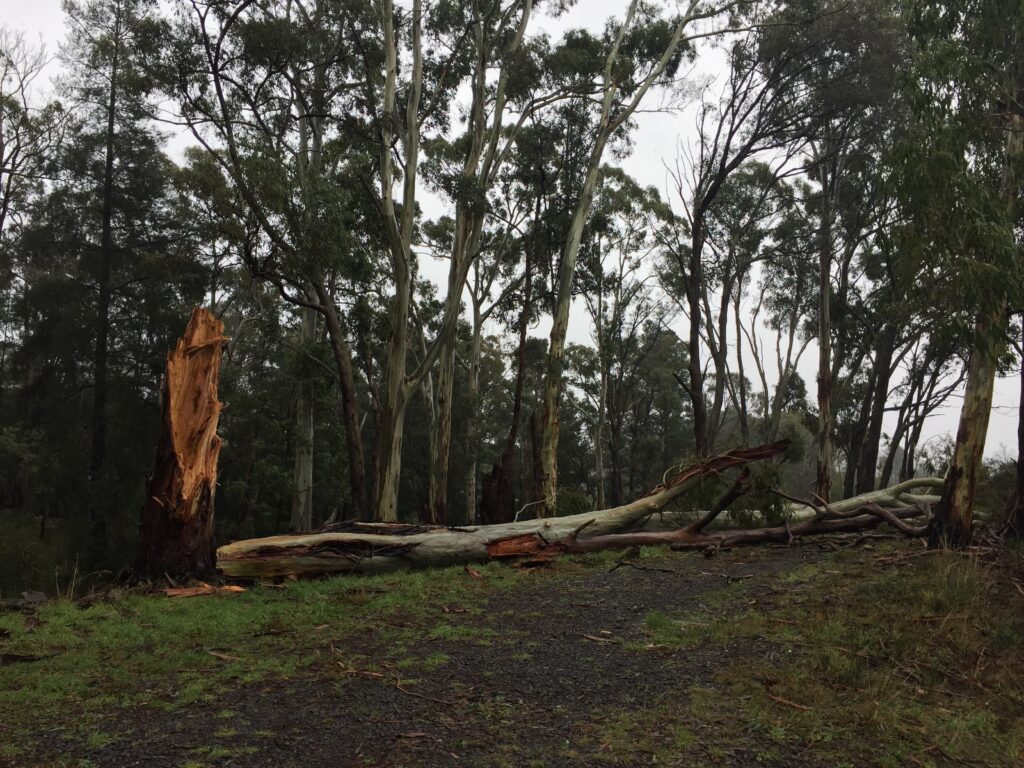
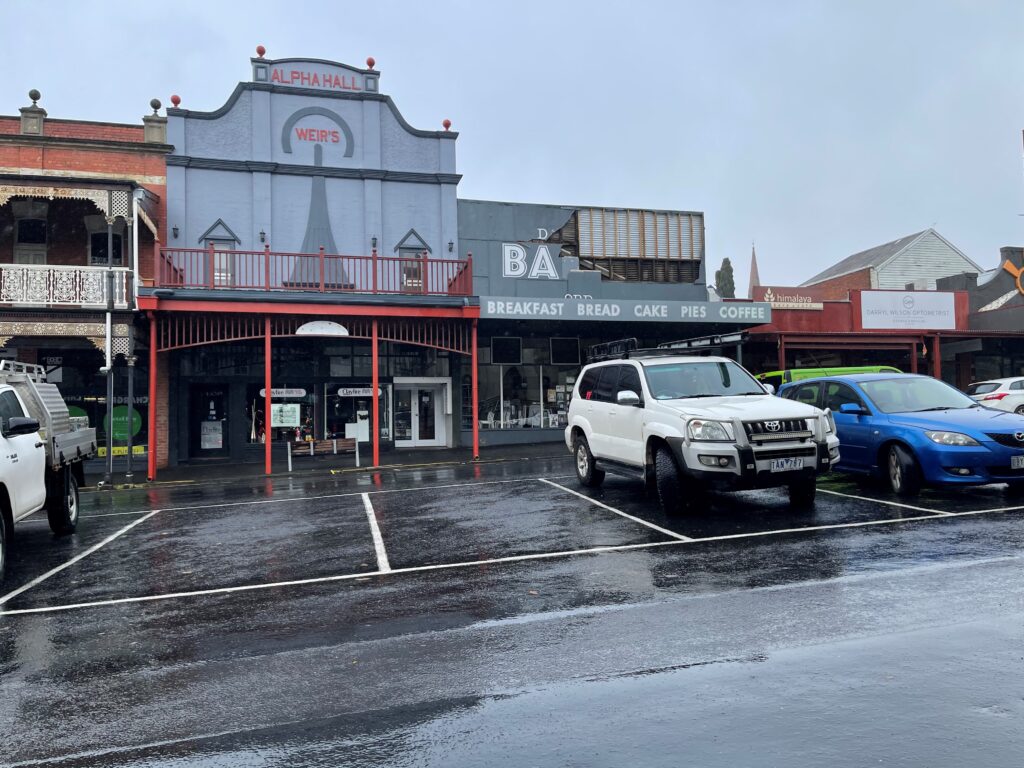
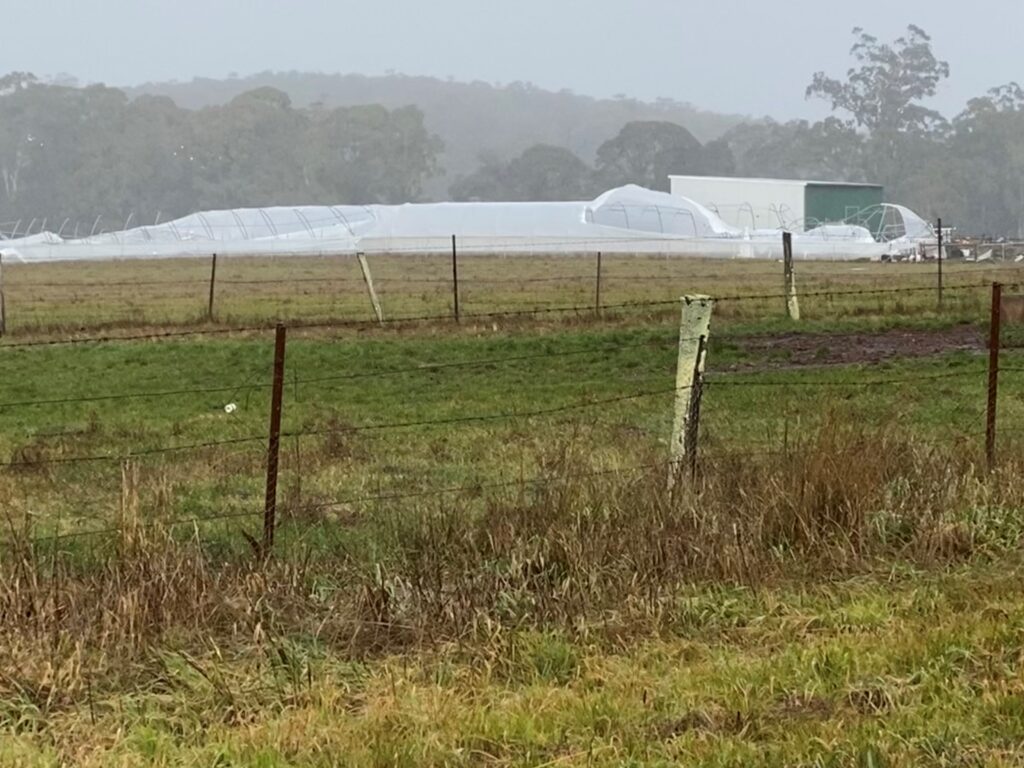
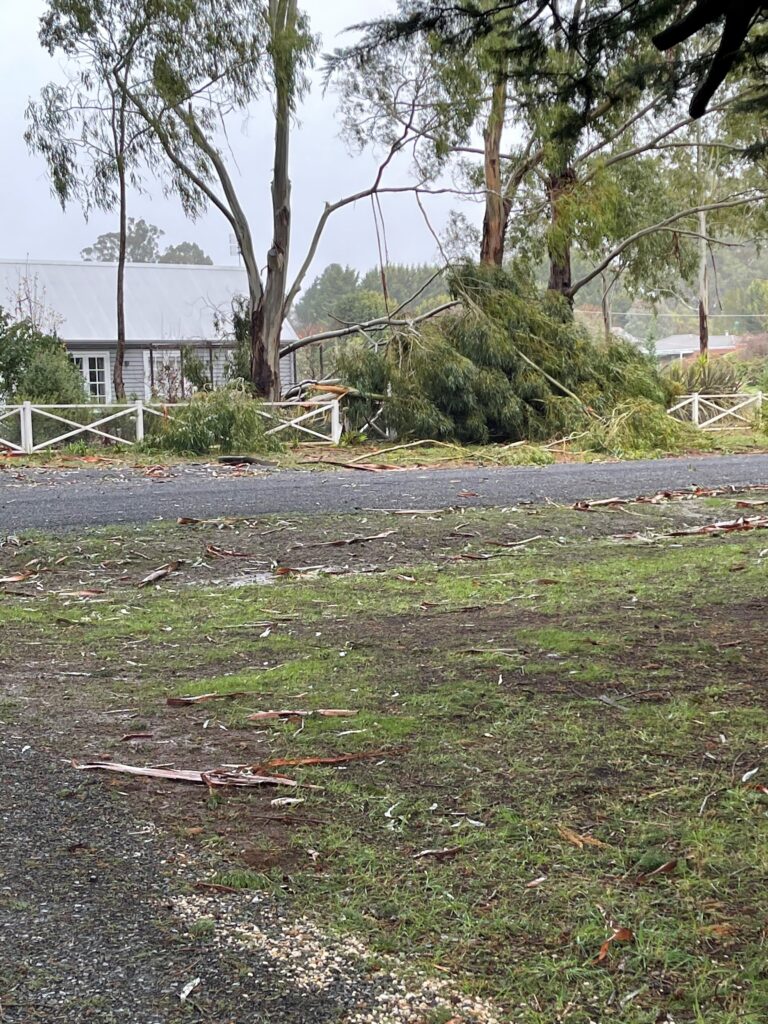
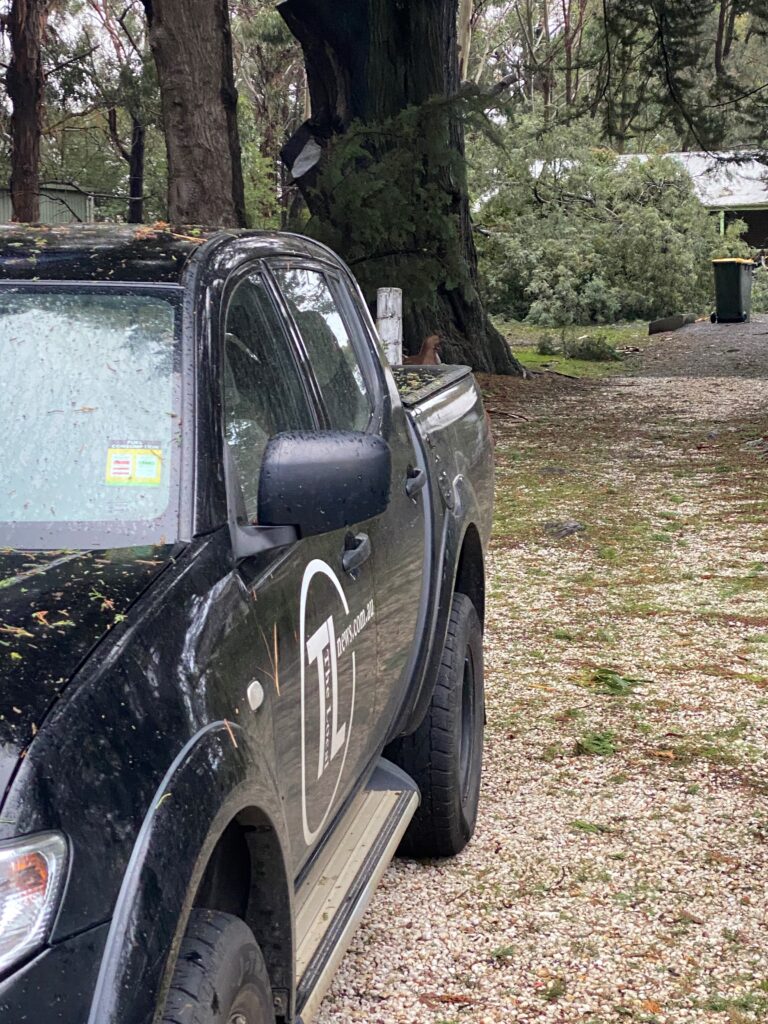
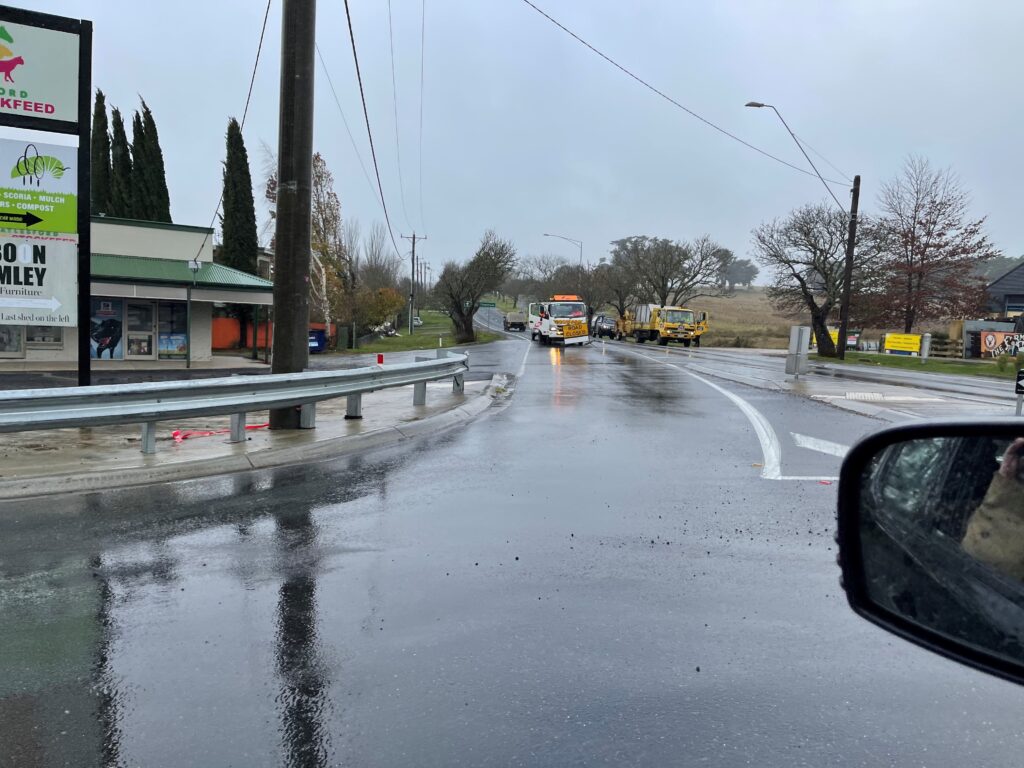
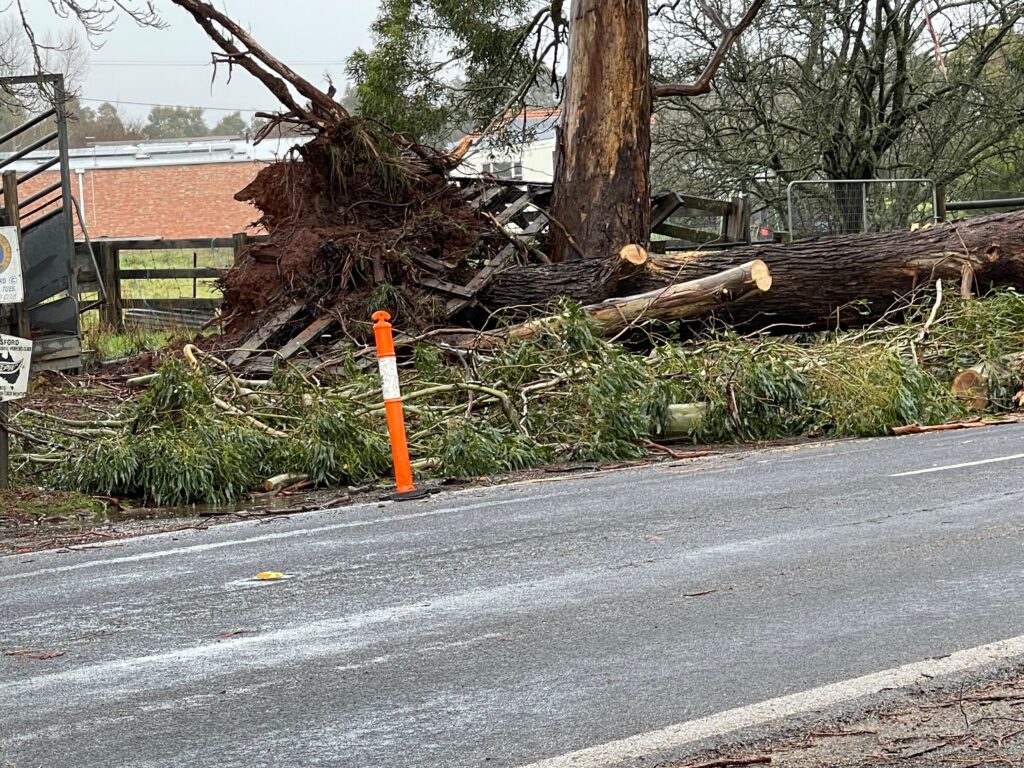
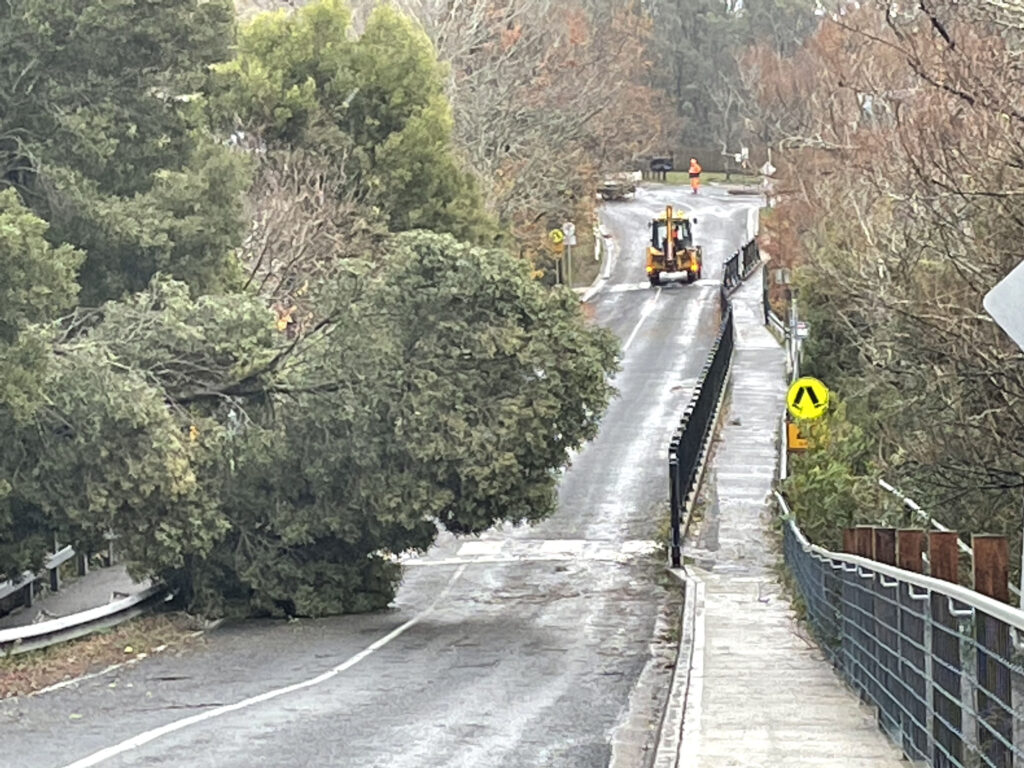


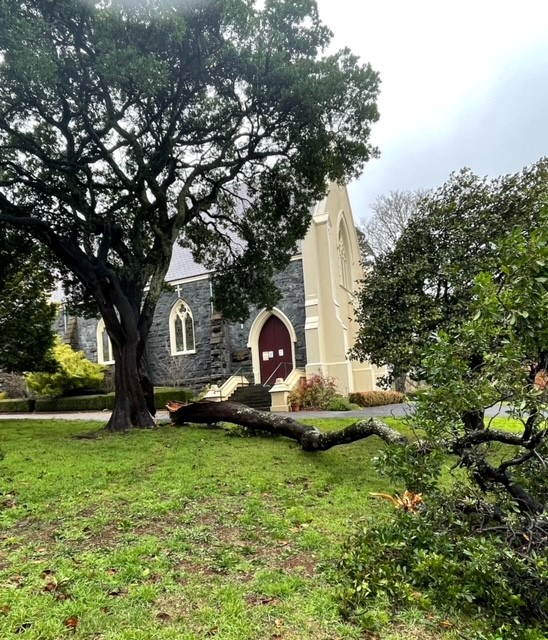

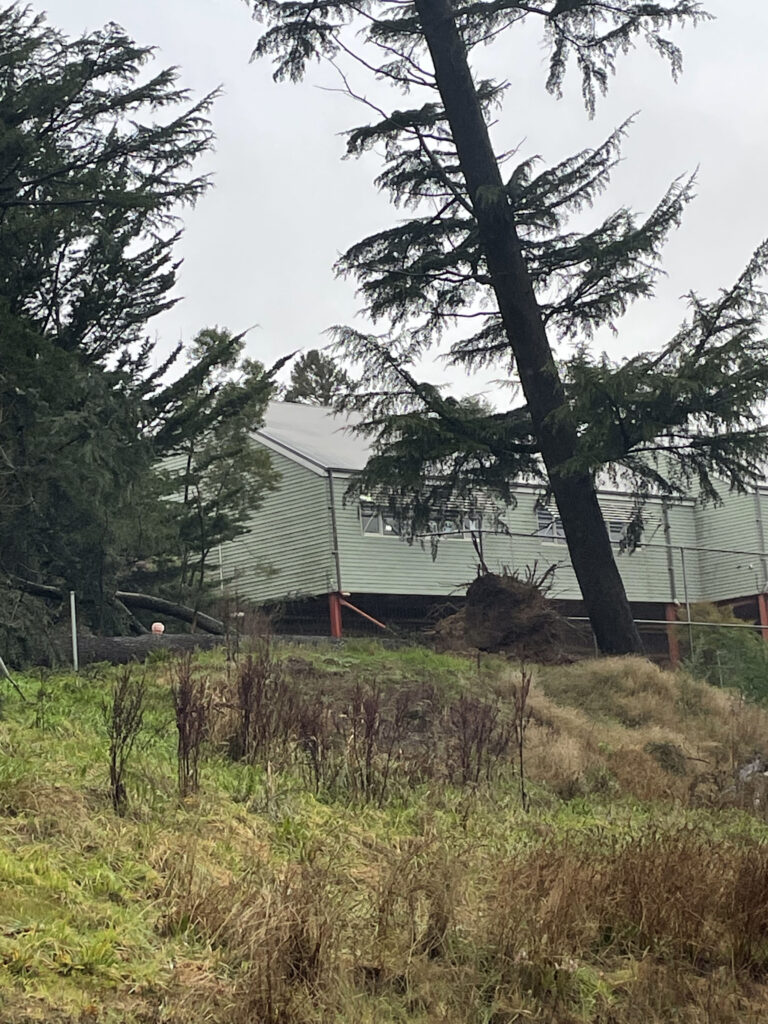
Feel free to send more to donna@tlnews.com.au and I will add them here.
Below, the latest from Telstra, sent about 3.35pm on Thursday. Hope they get that 000 up and running soon! (Tried to load earlier but power and internet were both down.)
Stay safe everyone.
- We’re continuing to assess the impact of storms to our network in Victoria and our focus is turning to restoration efforts in areas including:
- Latrobe Valley
- West and South Gippsland
- Melbourne’s eastern and south-eastern suburbs
- Yarra Ranges
- Dandenong Ranges
- Central Highlands
- North Central Victoria.
- The main issue we’re facing is the loss of mains power to our sites, so we’re working closely with power authorities and our power and facilities teams are on the ground to prioritise the restoration of key sites where we can do so safely.
- Fallen trees are preventing road access to some of our sites and we need to wait for the path to be cleared before we can restore these services.
- Due to the loss of power impacting both mobile and fixed line services, a number of communities may be isolated and unable to call 000. We’ve prioritised the restoration of services into these locations as quickly as possible. These include some communities north and east of Melbourne and in South Gippsland.
- Telstra is providing free Wi-Fi hotspots and phone charging stations to the evacuation centre at Traralgon basketball stadium to ensure people can stay connected.

June 8th, 2021Completing Year 12 in the time of Covid
AS KIARA Clifton says, it’s been a year like no other. The Glenlyon resident, who completed Year 12 last year at Daylesford College, concedes that there are many worse off, but says she is not alone in feeling ripped off by Covid. Kiara chatted with Donna Kelly.

Donna: It must have been a difficult year to try to complete Year 12? Do you think your education suffered?
Kiara: Definitely it was difficult. I did arts subjects, like drama and acting, so that was really difficult, and I know other people who were doing science and maths and having to do it all online. It was really hard considering that we could ask our teachers questions, but they might be on another call and we had to wait, and then we could only show them our work in photos. That was really difficult because we really didn’t know how we were going. So, I feel like it probably did impact on our learning, especially the kids doing physical activities like music and drama and sport, they were all virtually impossible. Speaking from personal experience from doing drama last year we had an ensemble performance which we had try to create online and it just didn’t work. It was really, really hard and I know with some sports students they just couldn’t do their sport and just had to do the core work and wait until they went back to school in person.
Donna: When did you first realise things were not going well?
Kiara: I think the first lockdown was not great but then with the second lockdown it was ‘OK we are doing this again, so things must be getting pretty bad’ and then we had the 700 cases a day. It was a really bizarre time and quite scary because we had no idea what this virus was, where it was, and we weren’t sure if we were going to get back to school. Thankfully we did in the end, but it was a scary time to wonder if we were going to come back and do it (school) as we usually would. It was a weird and scary time.
Donna: Did the exam system take into account the difficult year?
Kiara: I think so, they did acknowledge it but I don’t remember if there was an exemption, like they will put our grades up. I am not sure if that applies but they definitely took into account we had to do it all online and it was a really hard year unlike anything else. The exams were alright, they were held at the school, usually we do them at Vic Park, but we had to do it in the gym because we couldn’t go outside (of the school). That was hard because we could hear the noise around the gym. The bells were turned off but we could hear the kids, you can’t turn the kids off. It was fine but not preferred.

Donna: Year 12 is a hard year but also one of lots of celebration. Do you feel a bit ripped off?
Kiara: Yeah, absolutely, I know I definitely do and quite a lot of other Year 12 students do as well. Not only did we not get to experience the small things like wearing the Year 12 jacket and warming up your food in your own room that no other students have access to, we also lost our senior ball, our presentation night, our valedictory dinner…my mum and I started to plan the dinner for last Friday and then we went back into lockdown. It has been really, really difficult especially with the rewarding stuff. We got a muck-up day and that was about it. And now we are still waiting for a date to do the valedictory dinner, but it is June 2021 and we graduated in December 2020. It has been a long haul to wait for what we want but with the team effort it will come together. It’s just been really hard in terms of looking forward to it for so long and then it just keeps getting taken away.
Donna: Did you have a gap year and travel planned?
Kiara: No and I personally didn’t know anyone that did have travel plans but I can’t imagine what it would feel like to have all those plans to travel to places and see things and do things. I know with me personally I was going to do a performing arts course, but I didn’t want to do that online after last year. So, I decided to take the year off which wasn’t in my plan but it’s really changed a lot of things for a lot of people.
Donna: Will you head back to uni next year?
Kiara: Yeah, I might. Personally, I want to see what happens in the uni depending on Covid. If it is all settling down by next year then probably I will. I would really like to do a performing arts course and I have seen and heard many good things out of that course. I have been eyeing off Federation University in Ballarat for a few years now, it looks really good.
Donna: I hear you have been doing a bit of acting already?
Kiara: Yes, I am doing a few bits and pieces outside school including a small kids production called Wanda’s Monster in Creswick and also doing a feature film as an extra here in Glenlyon, which is really good. It’s called Stricken and it’s an interesting storyline about people infected by fear. It’s been a full-on experience. I am probably more a music theatre person and never done screen up until now so that has been really different. In film you wait around until you are called and then shoot the same thing multiple times where on stage you rehearse it multiple times and then you perform it once. It’s been a really interesting experience and also with the effects make-up it’s been a really cool experience. It’s been awesome.

June 8th, 2021Cinema frustration
THE Daylesford Cinema Committee is “frustrated, bitterly disappointed and gobsmacked” that plans for the Hepburn Hub at The Rex are being revisited by Hepburn Shire Council, with the project now being workshopped by councillors.
President Gina Lyons said that the $13 million project going back to the drawing board, with one of the options including dumping the plans, was unbelievable.

The cinema, when it first started, was housed in The Rex but lost its home when renovations started in 2016, running instead, at times, out of the community rooms at Victoria Park in Daylesford and the Daylesford Town Hall.
But the committee members and volunteers were hopeful they would be back in the centrally located Rex building by the middle of this year.
“There have been so many twists and turns with The Rex project over the past five years, but when the council awarded a contract to Hutchinson Builders in September 2020 and a contract was signed with them, we thought finally the project was at a stage where it would be completed mid-2021,” Ms Lyons said.
“Prior to recommencing screenings, the cinema will need access to the site in order to retrain the volunteers and rewrite all of our procedures for operating in the new environment. This will take about four weeks.
“The build will take six months. The way things are going it is looking increasingly unlikely that we will be in the new cinema in time for the December holidays.
“December/January was always a very busy time for us and we really hoped that we would be in the new cinema this Christmas so that we could offer the latest movies to our community and the visitors in town, as well as replenish our coffers, which have been seriously impacted )over) the last four years.
“What we don’t want to see is the job retendered, because by the time that process is complete and a recommendation made to council, another year will have been wasted.
“How do we feel? Frustrated. Bitterly disappointed. Gobsmacked.”
A Hepburn Shire Council spokesperson said the workshop was a confidential briefing but it was on track for a report to be tabled at the June council meeting.
Words: Donna Kelly

June 8th, 2021High tea at Daylesford Bowling Club
THERE has never been a better time to indulge in a high tea – designed to take you away from reality and into a more pleasant era where people took time to sit back and indulge in decadent food and gentle conversation.

And if that sounds like you, then you can’t go past the high tea on offer at the Daylesford Bowling Club. We headed there last Friday and were seated by the friendly Jo Best at a table graced with beautiful, vintage crockery and then poured a lovely glass of bubbles.
Along with the sparkling wine, there is also a selection of T2 teas including a Melbourne breakfast tea, Earl Grey, pomegranate, chamomile and peppermint. Something for everyone, but as Jo explained, if coffee is more your thing, just ask.
After a couple of sips, bubbles for me, tea for Kyle, chef Lee Littlepage, the person behind this great idea, served our high tea. And just OMG!

For starters there are two giant scones with plenty of jam and cream. And then there are the other sweets – caramel mousse in a tiny cup, salted caramel macarons, Danish pastries, tiny chocolate eclairs, cute little chocolate and jelly slices.
But wait, there’s more. Over on the tiered peacock-design plates were smoked salmon and avocado sandwiches, egg and lettuce sandwiches, a brioche bun with ham and parmesan cheese, pea, mint and haloumi fritters with minted yoghurt, spinach and fetta filo parcels and beef empanadas. Oh, did I mention extra servings of jam and cream?
Everything was perfect. The scones were light and fluffy, the sandwich fillings delicious, the savoury fritters and parcels were flavour hits and then there were those amazingly good sweet offerings. Kyle dipped into his caramel mousse and nearly swooned. “A cup of heaven,” he declared. I loved the chocolate eclairs, my favourite “sometimes” food, and small enough to devour in one bite and feel no guilt. All up, a lovely way to spend an hour or so – with one of the best views in town.
High tea is on offer at the Daylesford Bowling Club on the weekend – but can also happen during the week on request. You must book at least 24 hours in advance and they can cater for any number of people, restrictions permitting of course. Lee changes the menu from time to time but it’s always going to be brilliant! The cost is $49 per person which includes a glass of bubbles and tea/coffee, which is really good value for some refined time out of this crazy world.
Daylesford Bowling Club is at 8 Camp St, Daylesford. Phone: 5348 2130.

June 8th, 2021Embracing the six seasons of our land
A TRADITIONAL smoking ceremony, community elders, a didgeridoo performance and a captivated audience of school children, set the scene for the unveiling of an amazing indigenous mural depicting the six main seasons of Djandak.
Created by local artist Natasha Carter, a Djaara, Yorta Yorta and Jaru woman, and inspired by parents who worked tirelessly to raise funds for the mural more than three years ago, the artwork at the Daylesford Primary School depicts the seasons of the Dja Dja Wurrung.
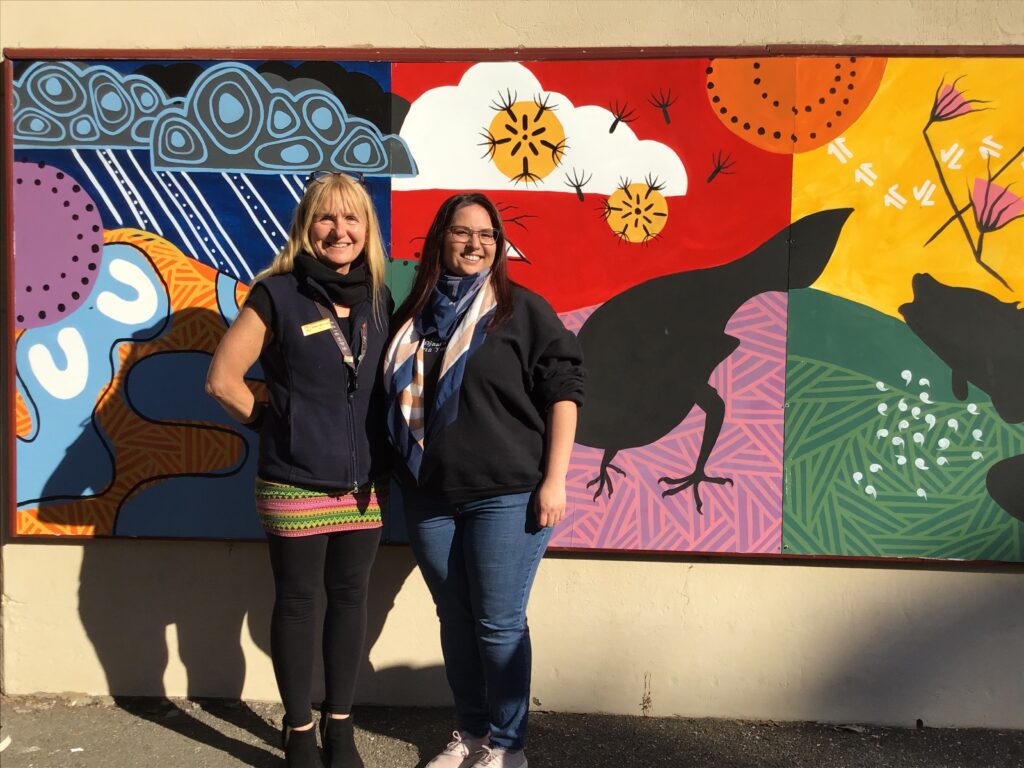
For Natasha, creating a mural to engage children to have a better understanding of the country’s indigenous past is something incredibly important.
“There are six panels, and each is focused on a season which will be a really good educational tool for the kids and the parents as well,” she said.
“A lot of my art is generally really colourful so I think that works well for a school environment while gaining kids’ interest at the same time.”
Initially Natasha intended to paint the mural on boards onsite at the school but Covid and lockdown changed those plans.
Natasha worked on the mural boards at her home and kept the school community up to date with photos capturing her work during each stage.
Natasha said she hoped the mural depicting the importance of the six seasons would be embraced by generations to come.
“From December to March is the milakuk and burramul time (lightning and emu time). This is the period when emus pair up and lay their eggs and once hatched it is the father who raises the baby emus,” she said.
Natasha explained ngaari (duck time) is the month of April and a time when ducks begin their courtship and nest making. April is also a time when the yam daisy (murnong) flowers and indicates when ngaari has begun.
“Wai-kalk time (golden wattle time) is from May to June and is a time when wattle bloom and when we can make our wooden tools and instruments such as the darnook (wooden bowl) and the datim-datim (the boomerang),” she said.
Next comes June to August and this is the wanyarra time (water time) when waterholes fill and creeks and rivers overflow.
From here we move to the lawan and murnong time from September through to October and it’s a time for collecting seeds. At this time the mallee fowl have laid their eggs.
The final season on the mural, the wirrap and giranul season, closes the cycle and from November to December it’s a time when the fish lay their eggs and kangaroo seed is available to harvest.
Daylesford Primary School acting principal Karen McHugh said the mural would be enjoyed by many generations of school children and the wider community.
“It’s only when we look back that we will realise the effort and the significance of this mural for future generations. Ceremony and traditions need to be taught to our children so they can remember and reflect. Remembrance can take your emotions to the next place of learning for future generations and as we look and absorb the mural, we know that it will bring joy to many,” she said.
Ms McHugh said the mural wouldn’t have been possible without support from the Hepburn Shire Council, the Rotary Club of Daylesford and many hours of work and organising by the school community.
“Pivotal to this was Karri Flood (parent/school councillor) who orchestrated the enthusiasm behind this event – hours of organising culminating in the amazing mural,” she said.
The mural is visible from the Vincent Street entrance of the school and can be viewed more closely when the school grounds are opened to the public once a month for the Rotary Market.
Daylesford Primary School acting principal Karen McHugh, left, and Aboriginal artist Natasha Carter with the mural
Words: Narelle Groenhout | Image: Grade 5/6 students Paula and Liam
June 8th, 2021Pets@Work
These pigeons have certainly chosen a great perch.
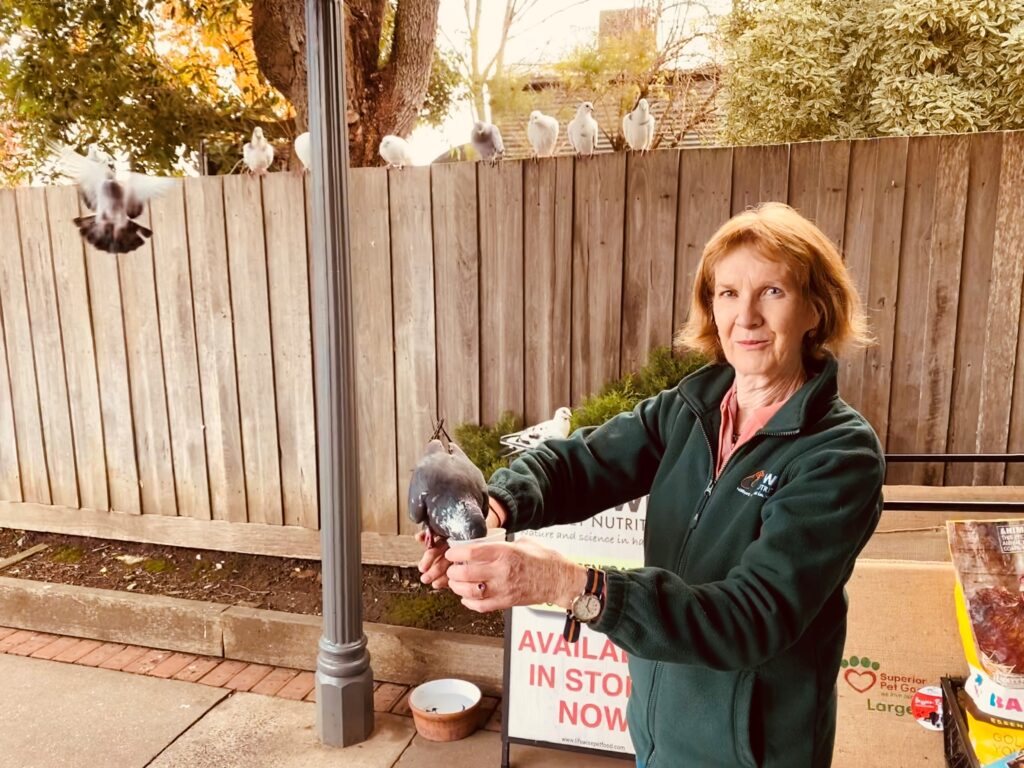
Daylesford’s Mind Your Pet owner Annie Reeve said the pigeons appeared a few years ago and she started feeding them on the ground but soon found a couple were happy to sit on her hand to get the best food service.
“They come and go but there are also regulars. It is lovely when I walk around the corner and they are waiting for me. I say ‘hello, just let me get sorted and I will get some food for you’.”
Do you know a Pet@Work? Email donna@tlnews.com.au
June 8th, 2021Aussie rules future bright for Chloe Leonard
AS ANY regular follower of Australian rules football will be aware, women’s footy has really taken off.
While state based leagues emerged as far back as the 1980s it was really only in the past decade that the women’s game became professionalised.
In Victoria, VFL Women’s competition commenced in 2016 and the national league (AFL Women’s) had its inaugural season in 2017.
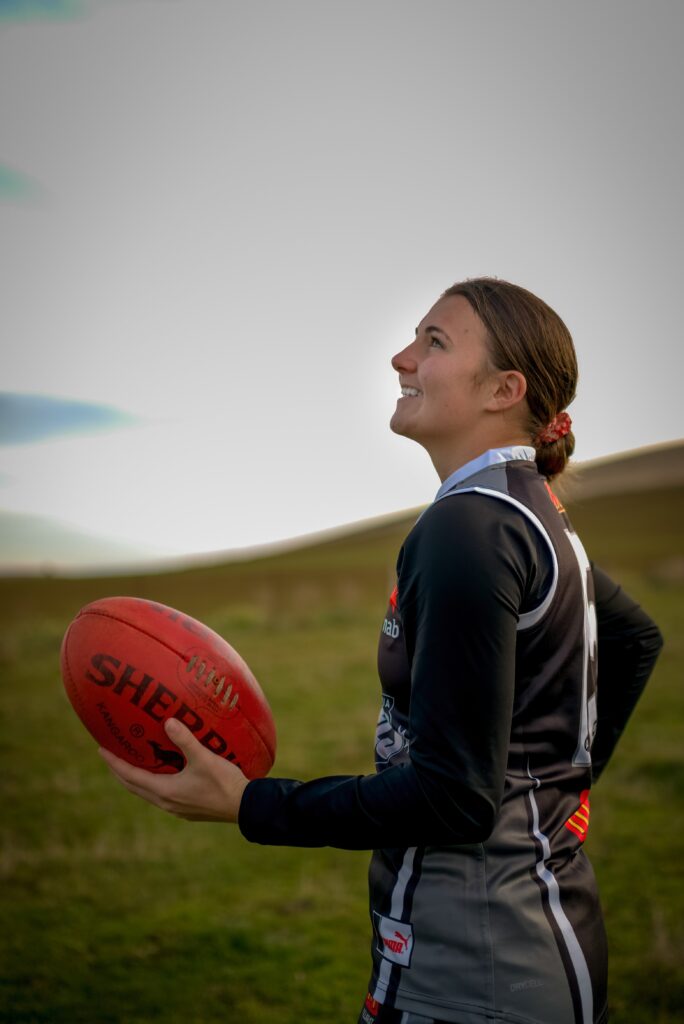
By this time Glenlyon’s Chloe Leonard had already been playing Aussie rules football for six years. Her career started with the boys in the Hepburn Burras under 12s before moving to the Ballarat Swans. During that time she was also in the School Sport Victoria U15 side two years in a row winning back-to-back national championshipsBy 2018 Chloe had commenced playing for the Greater Western Victoria Rebels as part of the NAB League Girls and was part of the Victorian Country U16s in 2018 where the top footballers from the NAB competition played against the best from other states.
Now in 2021, Chloe is completing her last season with the Rebels after six years with the possibility of joining the Geelong Cats, part of the VFL Women’s League and currently sitting second on the ladder behind Collingwood.
“I trained with the Cats over the summer and played with them against the Southern Saints in Round 11 (May 15) but I made a decision at the start of the year. I just said to the Cats: ‘Thank you very much for the opportunity but the Rebels will be my priority’. This will be my last year with the Rebels as the NAB league is under 19s competition. I will play the season out but continue training with the Cats and hopefully earn a spot on their squad next year.”
Chloe’s dedication to the sport is the strongest impression you have when talking to her. While obviously talented, it is not something she takes for granted and believes you really have to put your mind and body to work to improve your game.
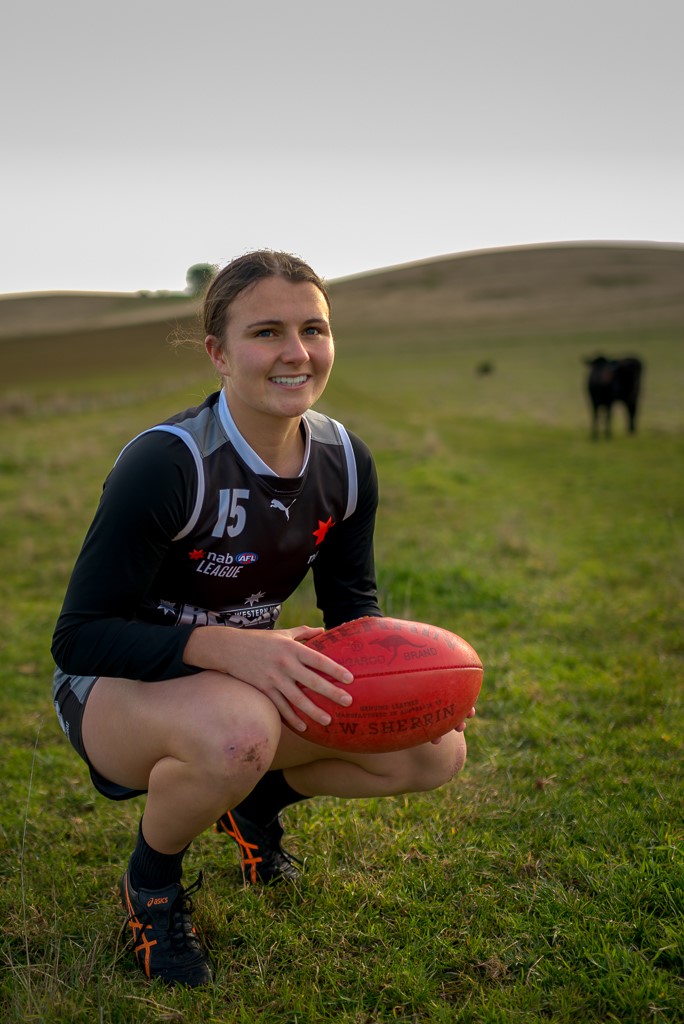
“I am probably not naturally the best athlete or anything,” she says, “so I do put in the extra time to try to be better for my team. You may hate the workouts at the time but it’s not a burden. Once I’m done it makes me happy just working to try and get better and be better for my team mates. Any time I put in is good.”
Outside of the game Chloe is in her first year of a Bachelor of Health and Physical Education at Deakin University in Geelong and the studies are certainly something useful to distract her from the prospect of senior women’s competition come 2022 which will bring with it some tougher, talented and more experienced opponents.
“I would definitely say it is tough, especially at senior level. But it is just great to see how far the women’s game has come and the skill level. When I played with Geelong this year, just watching those girls I was in awe of them. They just hit every target, pinpoint.
“The future for women’s footy is very bright if people keep investing in it going forward. There are a lot of quality girls coming through who are very impressive.”
Words: Tony Sawrey | Image: Louise Gay

June 5th, 2021Rush to buy regional double-edged sword
ALL tiers of government need to think and act faster with Covid leading more and more people to regional lives, says REIV president Leah Calnan.

Ms Calnan said there was a lot of activity in regional Victoria, including the Central Highlands, with people particularly interested in moving into areas within a one to three-hour commute of Melbourne’s CBD.
“If you think about it, if you have employment where you can still commute into metro Melbourne whether it’s one or two or three days a week and that might be an hour (to) three-hour commute, it is a very attractive space and location to be. I think that’s just one of the contributors driving up the prices.
“Covid has really been that contributor, everyone has had this desire for a long time for a more relaxed regional lifestyle, a bigger block of land, perhaps a different type of lifestyle, a different type of employment, any of those sort of scenarios mean Covid has really given people that kick or push, whatever word you want to use, to make that decision to say: ‘Look I don’t want to continue with my large mortgage, what are the opportunities that I can see if I go back to that commuting aspect?’ “Regional centres are very attractive to people to be able to live regionally but potentially still be employed in metro Melbourne.”
Trend here to stay
Ms Calnan said she believed the trend was here to stay with just over 12 months of dealing with Covid but the desire of regional centres “getting hotter and hotter”. Which was good and bad.
“I think employers and business now see there is an opportunity for people to work remotely, albeit for a couple of days and still going into the office, but I think what this does ultimately is put a fair amount of pressure on the local governments in these regional areas because the stock shortage has been the key factor for many, many months and there has to be quicker planning and quicker land release from local government to make sure housing is available to accommodate the growing population we have.”
Housing affordability
Ms Calnan acknowledges housing affordability across regional Victoria was a key issue and a “double-edged sword”. “We know there is a shortage in rental accommodation in the Central Highlands and surrounding areas, the vacancy rates are well under that one per cent mark, so the government needs to look at ways, really for state and federal (governments) that they can release land but also develop some affordable housing in the communities so those long term renters who have been in the community and lived through however many years, don’t get outpriced in that local area.”
Development new way of life
Ms Calnan said more housing development needed to be accepted as a new way of life for regional areas.
“That is always a really big challenge for the locals at the moment. Covid creates this ability for talent to come into local communities and then there is more money spent in the centre of town, more in the restaurants, more in the cafes and shops but with it does come a bit of development and people have to accept that the Daylesford of today is different to the Daylesford of five years ago, or 10 years ago.
“If you want to have a growing regional area where you have people that don’t just grow up there and leave to a metro area or a larger regional town to raise a family or seek employment, you need to have that level of attraction in your own area. It does create a need for locals to say ‘I may not necessarily like it but I have to look at all the positives it brings to our town’.”
Regional Victoria not for everyone
Ms Calnan said a move to regional Victoria would not suit everyone and it came down to what people were looking for, whether that was a new lifestyle, different employment or schooling.
“Again, it is a double-edged sword, because it does also put additional pressure on all the services. If you have an increase in population to your area what pressure does that put on the local hospital, the local dentist or doctors, chiropractors? There are all those facilities which you are very used to being able to get into quicker than if you have an increase in population. (Development) is a positive but does come with some negative challenges that people need to get their head around.
“I think there are far more positives than negatives, but we just have to change the way we think and look at how work operates. We have been able to adapt as a country, we just need to continue to be flexible and adapt in these changing environments.”
Government challenges
Ms Calnan said she believes government has started rising to the challenge of providing more developments while thinking about services to the community.
“I have been talking about the need for land release for well over six months, coming into nine months now, because we could see this time last year, particularly around the Ballarat area having such low vacancy rates, that local government as well as state need to do more. They have to reduce the red tape and make it more attractive for developers to come in and create those additional housing estates.”
Role of presidency
Ms Calnan took on the role of REIV president two years ago this October with the normal term just 12 months. But in October last year, as Covid swirled, the REIV board asked her to remain for another 12 months to steer the industry through the pandemic.
“It’s been incredibly interesting, challenging and rewarding and I have to say I used to feel the industry was like the Titanic, very hard to move and not very agile, but it is a much more flexible and agile industry now. I’ve got my own business and three teenagers who have all been home schooling so it has created a lot of chatter in our house and my kids know a lot more about real estate than they ever really wanted to.”

Words: Donna Kelly