

March 29th, 2021Thursday means Steak Night at the Daylesford

Firstly, if you have had a long day, there is nothing better than having someone else cook for you. Secondly, if you are over each other, there is nothing better than chatting to other people. So, we found ourselves ordering and eating great food and chatting with one of the owners Rosie and our lovely waitress Kerry. (I am not sure if we still say waitress. I know that landlord is being ditched at the start of April…)
Anyway, Kerry showed us to our seat, a top spot overlooking the dining room but also looking out to the setting sun. We started with a chardonnay and lager while we checked out the menu although Kyle was already settled on the steak special for his main. It was, after all, Steak Night.
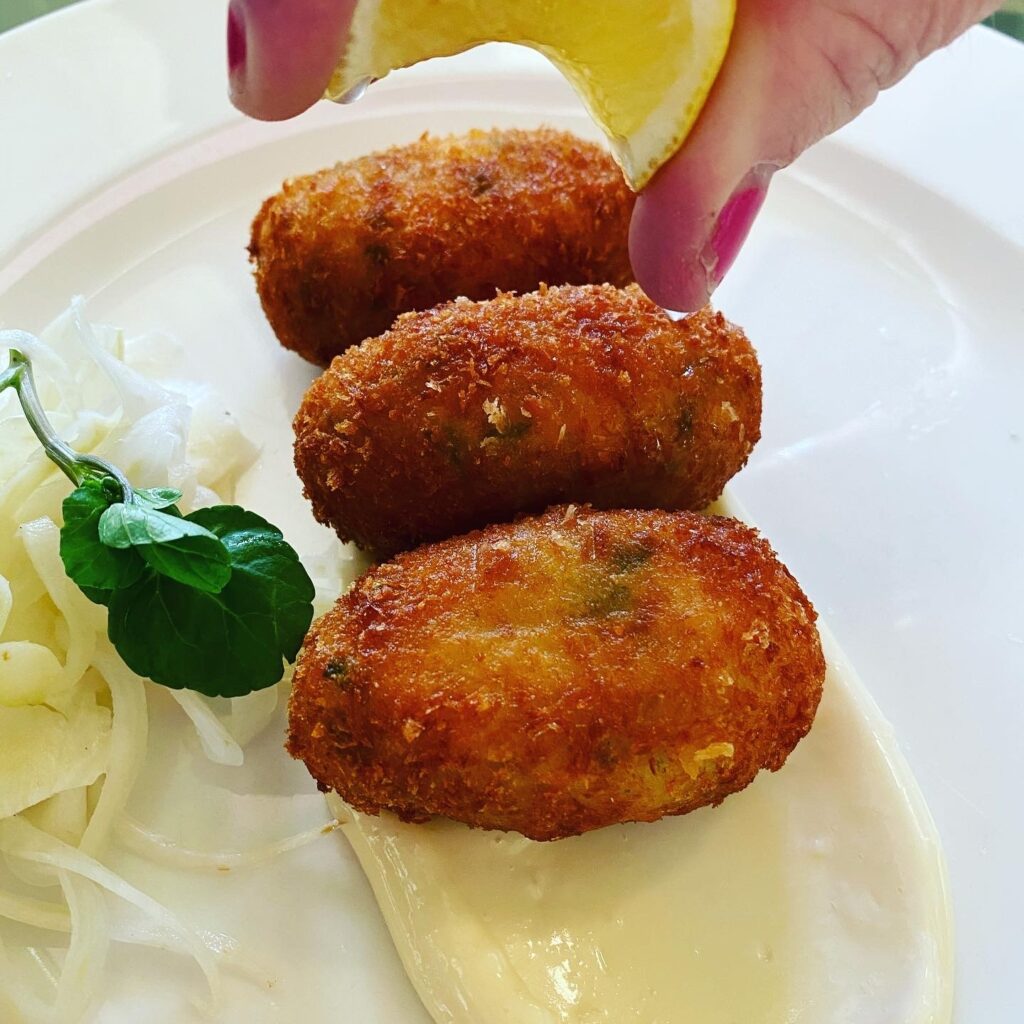
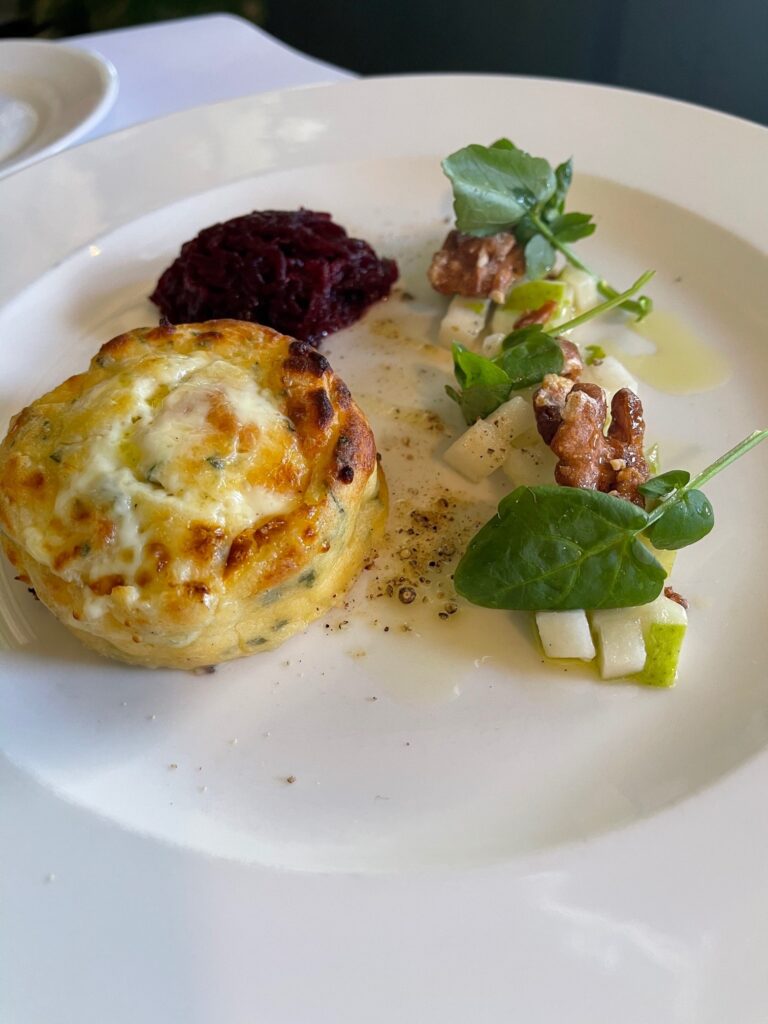
But back to entrees. We decided to share, after asking Kerry her opinion, the twice cooked goats cheese souffle with beetroot relish and a pear, caramelised walnut and watercress salad as well as the salt cod croquettes with shaved fennel and lemon aioli (both $16). Kerry was spot on with these two. Both were absolutely delicious, the souffle so light and perfect with the tangy relish and crunchy salad, and the housemade croquettes just zinged with flavour.
The Steak Night offer is a chargrilled Green Hills rump (180g) with a garden salad and chips with a choice of Dijon mustard, red wine jus, herb and garlic butter or green peppercorn sauce. All for just $25 which is amazing value. Obviously the word is out because the hotel was busy from 6pm with people keen for a great steak that won’t break the bank. I, sort of heading towards being a vegetarian, settled on the potato gnocchi with heirloom tomatoes, lemon ricotta and fresh basil ($27).
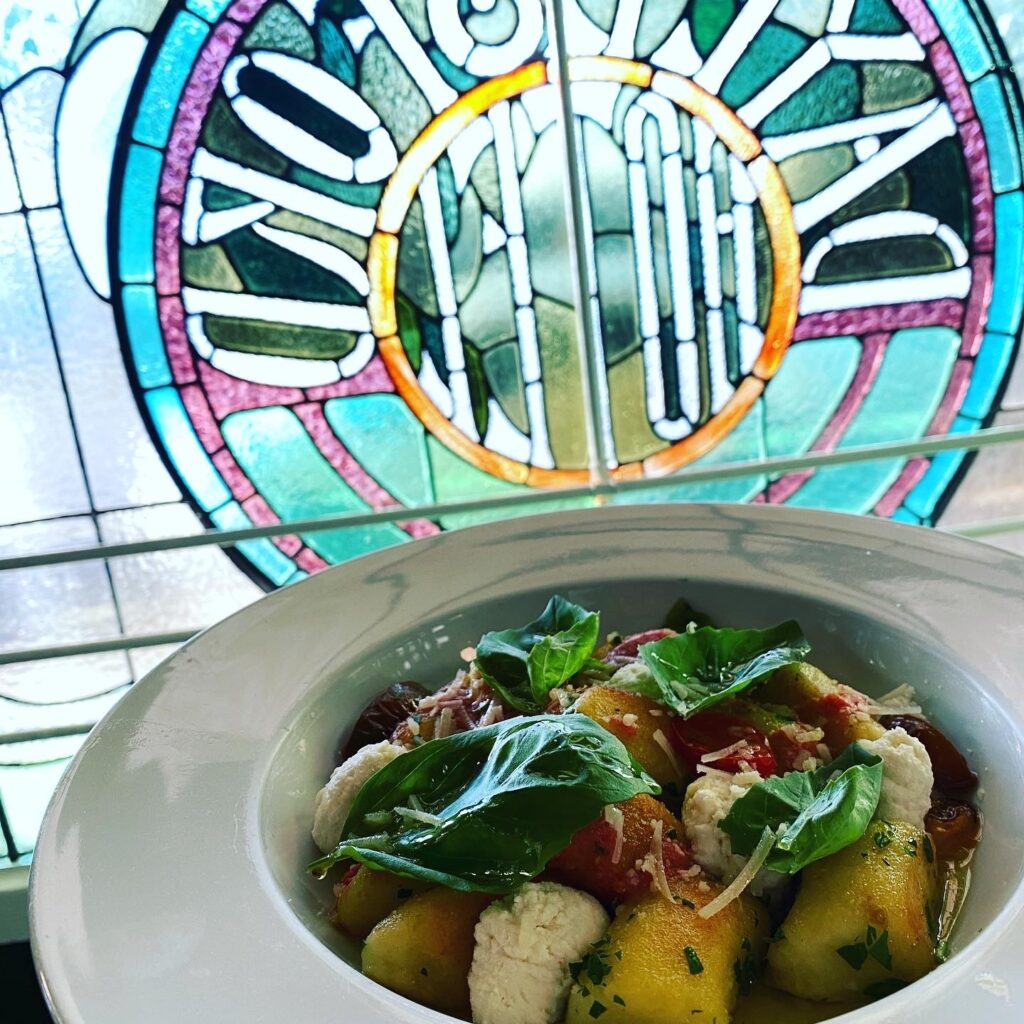
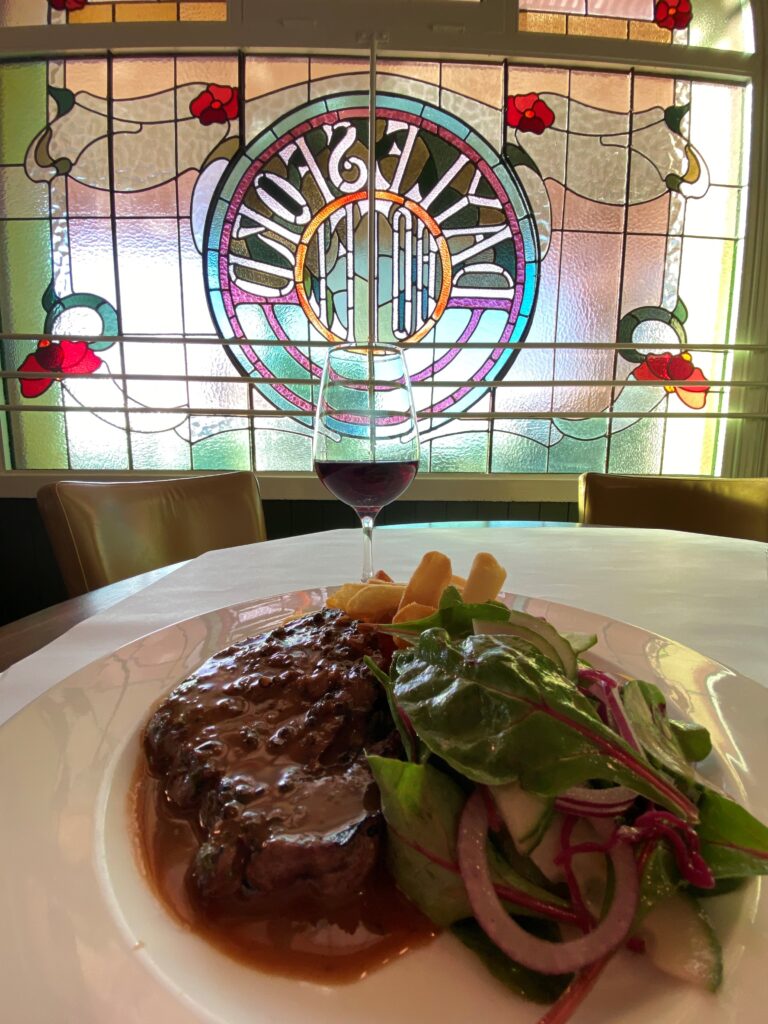
Both were fantastic. Kyle said the steak was perfectly cooked (he always goes for medium), full of flavours from the smoky chargrill to the peppercorn sauce, and the chips were big and crunchy. My gnocchi was light and fluffy, as was the ricotta and those tomatoes are just yum.
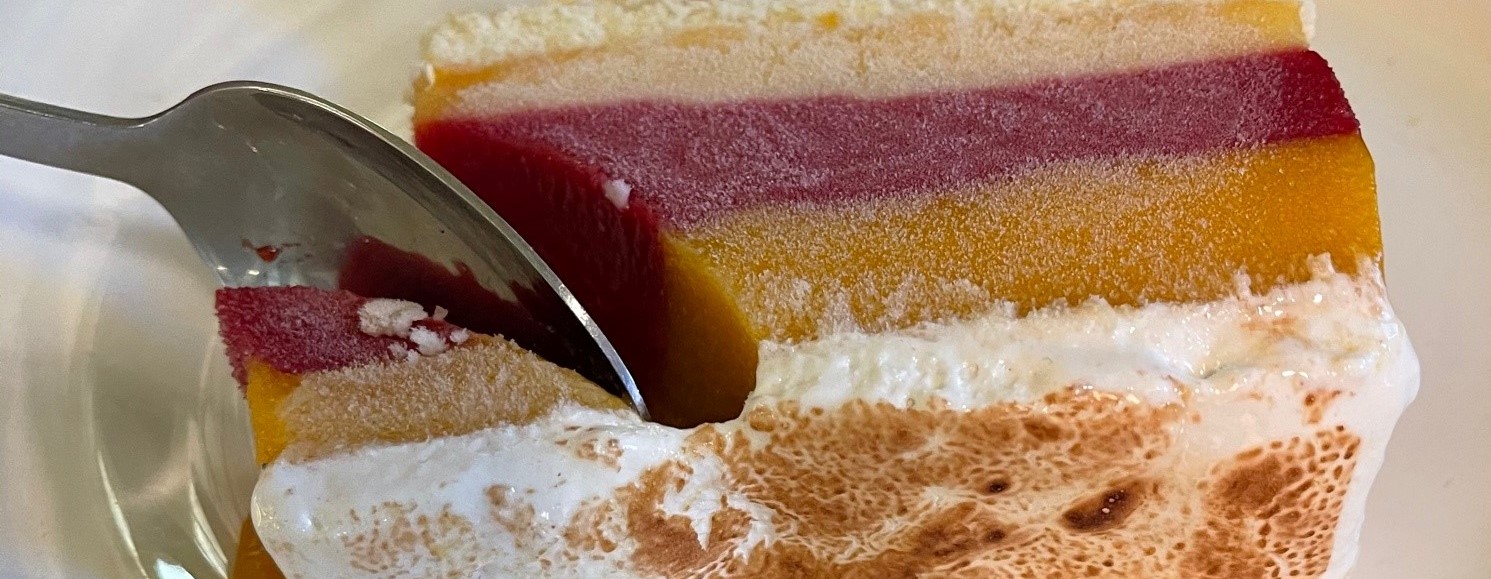
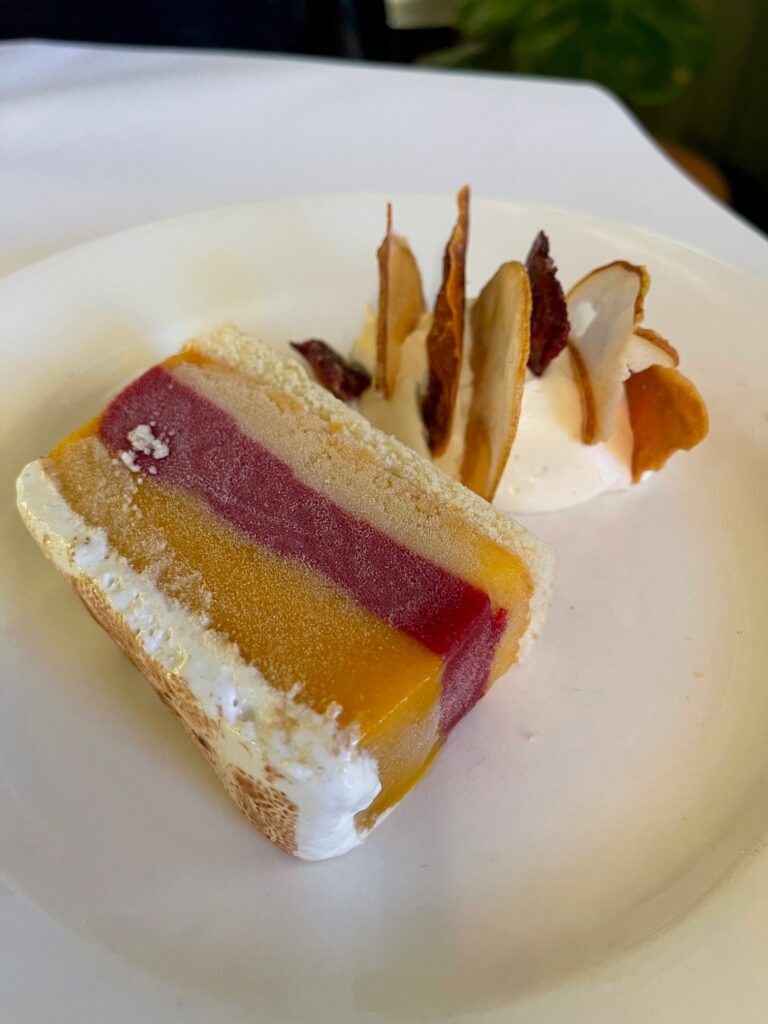
With entrees and mains done, we were also pretty done but we had heard about the ice-cream terrine ($16) which apparently is becoming quite famous around the traps. No wonder. It is amazing. Sponge cake, passionfruit sorbet, mango sorbet, raspberry sorbet with strawberry sauce and a side serve of cream and dried fruit slices. Wow! This is some way to end a meal.
Owners Rosie and Anne Marie have done a great job at the Daylesford Hotel. Like many they worked over COVID and lockdowns and gave the place a lovely refresh. We ate in the dining room but there are so many places to kick back and relax – one of our favourites is the snug by the bar, and there’s also that great view of the town from the balcony.
We left feeling refreshed, certainly refuelled and relaxed. A great night out and the perfect end to deadline.
Words: Donna Kelly | Images: Kyle Barnes


March 29th, 2021Design with Indre
Falling coloured leaves with oversized jumpers, blankies, a warm hot chocolate and a cosy fire.
Chilly evenings outside under a starry sky are even better next to an outdoor pit fire. Before you say, hold on, it’s still fire danger period and we can’t light fires, you actually can, provided you follow the guidelines. A barbeque, campfire or fire for warmth or comfort is permitted if the wind is less than 10km/hr. A good gauge is when leaves and twigs are in constant motion, the wind speed is greater than that.
It must be in a properly constructed fireplace or trench at least 30cm deep. Stone, concrete or metal is best. Have nothing flammable within 3m from the fire perimeter or 1m of the highest point of the fire. The fire must be smaller than 1m2 with a person in attendance at all times whilst the fire is alight. Water to fully extinguish the fire must also be handy.
This fire pit area need not be fancy. It certainly can be grand with polished marble or granite, built-in stone carved seating with a water feature and fancy lighting. It can also be a dug out earthen pit ringed with stones out in the open.
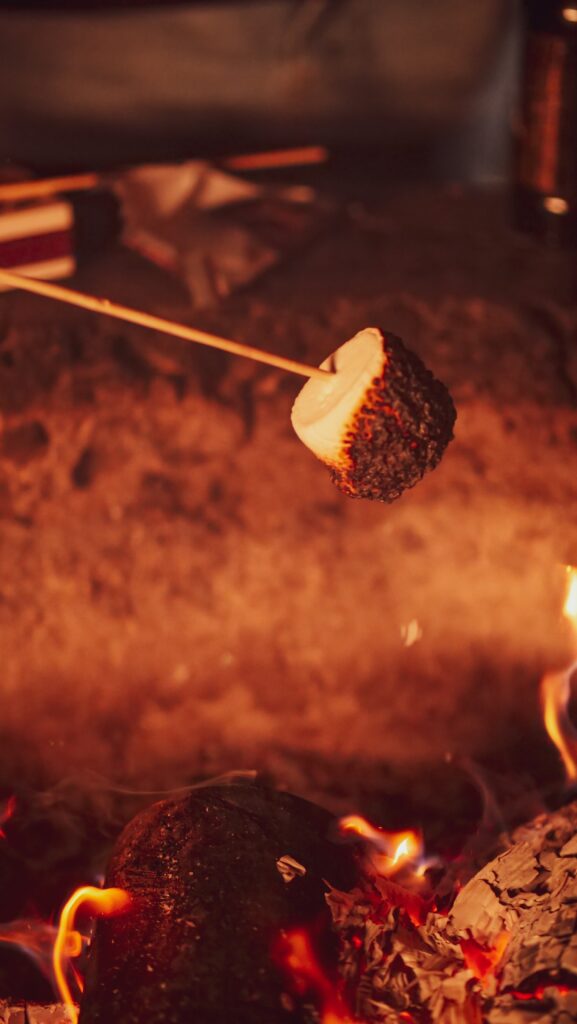
Whatever your taste and purse size, take advantage of the evening bird song whilst the mozzies and march flies will be dying off in the cooler temperatures. Put a sausage or cob of corn on a stick and let the kids cook their own dinner. A bit of Bear Grylls adventuring never hurt anybody. It saves you getting up, fussing, or washing up. Dessert is a marshmallow on the same greasy stick. It’s what a childhood outdoor evening is all about. Perfectly relaxing and a great way to enjoy the autumnal cool and still weather that we love so much. Oh, did I say hot chocolate? I meant hot toddy.
For extra clarification visit the cfa.vic.gov.au website and search “Can I or Can’t I” to find out what’s allowed during fire danger periods or on Total Fire Ban days.
Indre Kisonas – owner and principal designer- iok design
indre@iokdesign.com.au | www.iokdesgn.com.au

Fire restrictions have ended in Macedon Ranges Shire and will end in Hepburn Shire on April 6.
March 29th, 2021Glen: About the house
For a start, there are many forms of fruit fly including the cucumber fly which attacks all forms of the cucurbit/melon family along with tomatoes, eggplants etc. But the main protagonists are the reddish brown with yellow markings Queensland fruit fly and the smaller, usually yellow, brown-banded wings Mediterranean fruit fly.
These two fruit flies have similar life cycles and are both considered serious pests in most areas. But it’s the Queensland variety in its seemingly unstoppable plague proportions that demands our constant attention and action. And it’s a year-round task.
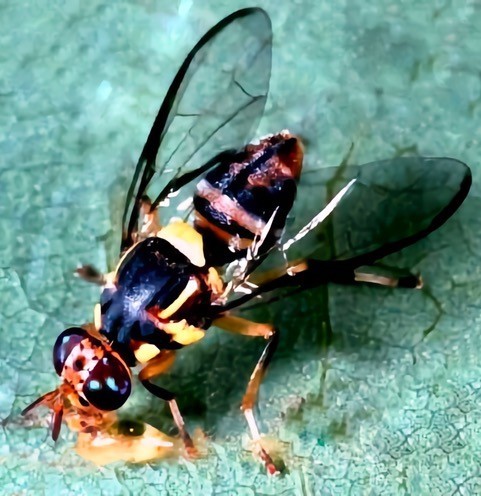
Fortunately so far the attacks are mostly limited to warmer, fruit and vegetable-growing areas but that doesn’t mean we’re totally immune. It only takes a few maggot- infested fruit to be carelessly thrown out onto the roadside or a compost heap for a new colony to breed.
Their larvae reach about 7-9mm fully grown and leave the fruit at that stage to burrow down into the soil to pupate in elongated brown pupal cases. The females are capable of laying their own eggs within a week of emergence.
The adults may survive over winter for many weeks, feeding on sweet liquids such as the honeydew excreted by aphids and other similar insects. Another good reason to keep your garden aphid-free. They become active when warm weather begins in August and lay their eggs in whatever fruit, such as citrus, are starting to ripen.
Control
Cleanliness in the garden is the first and probably best defence. Never leave fallen fruit on the ground or infested fruit on the tree. It should be removed and destroyed by burning or boiling.
Other methods are immersing the fruit for several days in water with a layer of kerosene on top.
Or you can leave them in the sun for at least three days in a tightly-sealed plastic bag. It must not be buried as it would simply continue their life cycle.
Fly traps
Fortunately, fruit flies can be attracted and trapped before they reach your fruit by using exactly the same method and traps as for European wasps. That goes, in fact, for almost any fruit-loving flying insect.
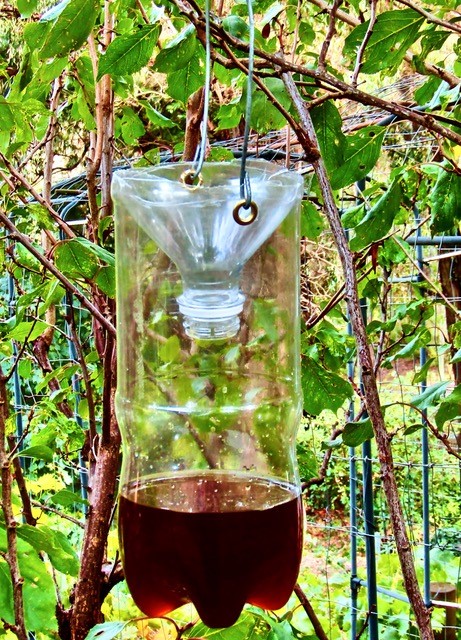
There is no need to purchase a trap, you can simply make your own using an empty plastic drink bottle and some light wire, pictured. I happen to have one of those small eyelet punches to reinforce the holes, but that isn’t totally necessary.
For the bait you can purchase attractants from most hardware or garden outlets or, like me, mix your own. Fruit flies love vinegar so make them up a cocktail of three or four parts vinegar to one of fruit juice. But why stop at one? Strategically place several of them as a ring of protection.
Begin your campaign just after the fruit blossoms wilt and the fruit buds start to emerge.
If you wish to mount a “belt and braces” attack once the fruit starts to colour, you could also spray the trees with one of the many safe organic pesticides now available at almost any garden supply outlet.
Cuttings
This wet/warm weather is a great chance to do a spot of gardening out of the weather and a great opportunity and time to try striking cuttings of your favourite shrubs and woody perennials.
Some of the hardier types can simply be put into a sand-filled hole in a sheltered part of the garden, but the more difficult varieties will need to be placed into pots or boxes of coarse sand, or a mixture of equal parts peat moss and sand. Place the pots in a large plastic tub or box with a sheet of clear plastic or glass over the top and locate it in a warm, semi-shaded spot.
Got a gardening question? Ask Glen. Email glenzgarden@gmail.com

March 29th, 2021Peter Waters: Running his own race

There’s a remarkable tenacity about Peter. Despite never being able to run, let alone walk his entire life, nothing, he says, will hold him back from living his life to the full.
“When you are given life then you have to live it. We all have problems but it’s how we handle them. I’m happiest when I am around people and helping in any way,” he said.
“I have to keep busy and I believe when you live in a community you have to be a part of it and contribute however you can.”

Cerebral palsy is a physical disability that affects movement and posture. Every 20 hours, an Australian child is born with cerebral palsy. It’s the most common physical disability in childhood.
Cerebral palsy is an umbrella term for a group of disorders – a condition that is permanent, but not unchanging according to the Australian Cerebral Palsy Alliance.
It’s hard to believe Peter has lived in Hepburn Springs for only seven months. Catching up for an interview in Daylesford was a three-hour experience, simply because of the number of people stopping by to say ‘hi’ to this charismatic, and often cheeky bloke.
But there is a serious side and one that has driven him for years. Educating others.
“I studied at the Yooralla School in Melbourne and then went to high school where I finished year 11. I really did muck around before completing a Community Development diploma and then found my passion in educating people about the issues affecting people living with a disability,” he said.
Peter is now a resident at Hepburn House. At 51 he is a tad younger than many of the residents. But if you assume that he’d rather be living independently and not in an aged care facility, you’d be mistaken.
“I am so well treated and cared for. The staff always help me stay motivated and connected. I wouldn’t want to live anywhere else.”
For Peter, joining clubs like Rotary and contributing to the community keeps him going. He certainly doesn’t want his disability to define him.
When Peter suggested to the Hepburn House manager that he wanted to join a community group, the Rotary Club of Daylesford was contacted. Rotarian Jenny Hopkins met Peter at Hepburn House and that evening he was at his first meeting.
“It wasn’t long before we realised his capacity to organise. Such enthusiasm.” Jenny said.
“He is continually coming up with new ideas and ways for Rotary to support the community. Even before he officially became a member, he arranged a successful dinner meeting for the club. This community is very fortunate to have Peter,” she said.
To date Peter has delivered more than 3000 talks to community groups and schools. He hopes to continue to do so here.
In 2012 Peter embarked on a 12-day ride from Sydney to Melbourne to raise money for Variety – the Children’s Charity and the Lions Children’s Mobility Foundation. With a donated scooter to handle the trip and plenty of determination, Peter averaged 100 kilometres a day and raised a remarkable $35,000.
Now Peter is looking for more groups to join and people to meet.
“I need to keep busy and active. I love to educate people so I would be happy to give talks or get involved with other groups in the area and give my time. I just want to get out there and live,” he said.
“I simply love being involved. I need structure and hate feeling stagnated so being involved in the community is so rewarding. For me it’s about always doing my best. And that’s got me where I am today.
“I just won’t let anything become a barrier. Nothing can stop me from trying and I will never give up.”
Fellow Rotary member Chris Soper said the contribution he has made to the club and town to date is certainly evidence that Peter is a man who refuses to give up.
If schools or community groups would like to engage Peter to hear one of his talks or if you are part of a group that you think Peter might like to join, you can reach him by phoning Hepburn House or email peter.waters1969@gmail.com
Words & image: Narelle Groenhout

March 29th, 2021Pets@Work

Jill said she chose Molly for her “compact size, personality and temperament”. “Molly doesn’t actually help do anything but she keeps us entertained. Customers are always asking what breed she is. Brittanys are from the pointer family, so bird dogs. She is a real talking point.”

Do you know of a Pet@Work? Email news@tlnews.com.au
Image: Kyle Barnes
March 13th, 2021Just sayin’…

First up we finally decided to go back to a fortnightly paper. So that was pretty big. We had been holding off until the end of this autumn, then the end of the financial year, but then we just thought: “You know what, let’s just do it.” And we did. And the sun came up the next day and all was well.

I think it is the right move. We will get some semblance of a life back, like being able to head to Cairns for a wedding in May, and with advertising starting to come back, we can make The Local bigger and better again. Well, I would like to think it has always been better, but I do like those big editions of 48 pages or so. And you need a fortnight to read all that.
Then I have been watching the vaccine roll-out. A tad slow I think privately but then in public you have to say how lucky Australia has been and we can just wait quietly for the jab. They have started at Kyneton so that’s good news and then there are apparently quite a few people in regional Australia who won’t be rolling up their sleeves. Which is also good because there will be loads of spare vaccines but bad because we won’t reach that all important herd immunity.

Oddly, as I watched all those photo opportunities for the vaccine I thought how lucky it was that it’s one that goes in your arm and not in your arse. I know all publicity is good publicity but I am not sure how many world leaders would have been happy to take part in those shots. Pardon the pun. “Your Majesty, if you could just lean a little to the right and try not to clench…” Scotty from Marketing, proving he is as ocker as the next bloke, would probably be OK with flashing his bum, as long as Jenny said it was OK. Kyle would agree, always check with the wife.
Then there was the interview. I watched for about an hour and then switched over to Suits. Better acting. Joke! I don’t really have an opinion on Meghan and Harry’s life. It has probably been a rough ride and I am sure their mental health has suffered. I hope they get the help they need and can bunker down for a while in their 8000-square-foot, $US14.65M Californian home and don’t get too caught up on cleaning the nine bedrooms and 16 bathrooms.
Hmmm. But then that race card. That seems a bit too much to swallow. I mean, the Royals can’t be racist, can they? Oh, hang on, Google Prince Philip + gaffes.
1986: “If you stay here much longer you’ll all be slitty-eyed.” To a group of British students during a royal visit to China. 1995: “How do you keep the natives off the booze long enough to pass the test?” To a Scottish driving instructor. 1999: “It looks as if it was put in by an Indian.” Referring to an old-fashioned fuse box in a factory near Edinburgh. 2002: “Still throwing spears?” Question put to an Australian Aborigine during a visit.
A strange week but I am very happy to be a plain old Australian and not a royal in England or America. Time to go and clean the bathroom. Just sayin’…

March 13th, 2021Kyle’s Rant
I know that the red blobs of COVID doom have long ago stopped bouncing around over our TV screens and I would never wish it back, but come on mainstream media, what the “yawn” are you shoving down our throats?
It is enough of a rollercoaster ride to find out Dan (The Man) Andrews is down. One minute needing brain surgery, the next spinal and now no surgery. And our Federal Health Minister Greg Hunt has an infection due to his COVID jab…oh no, wait a minute, it’s something to do with his leg…you guys at the TV newsrooms are making this stuff up as you go along.
I think sometimes the weekly grind of producing public interest news content has a detrimental effect in terms of the “just get it out the door” attitudes of newsrooms. As you can see by the above, some of the mainstream media latch on to half-truths and rumours and race to get the aforementioned non-fact online first, and then adjust the story as the facts start to stack up. It’s sort of like building a sandcastle. You start with a large lump of sand (the rumour) and firm it up as you beat it into shape and it starts to reveal itself. It is the same with a rushed story, it simply takes shape as the real facts reveal themselves.
But on to my point. The past 12 months have been tumultuous for all on our mortal coil and it is not much different here at TL HQ – with tears, tantrums and tirades as we have not missed a beat keeping our community informed.
While some publications shut down and then reopened and then shut down again, or just remained shut down, our crew stood fast, never missing a deadline.
That is also despite having two printers close down and being currently printed in NSW. Still we endeavoured to always have our paper in the readers’ hands every Tuesday without fail – even if that meant working seven days, driving to NSW and back to pick up the paper – the team at TL HQ were always up for the challenge, and now it’s time to crank up the marching band.
The pandemic surely is in its last throes and we have ensured the community have been kept up to date and we have even sprinkled in a bit of humour and brightness with the characters and stories we have unearthed.
Moving forward your Local news will always be available seven days per week at www.tlnews.com.au and the magazine will be produced every fortnight starting from now, just like the good old pre-pandemic days.
It is now time for us and our crew to take a long breath of fresh air, not those shallow rapid ones of the past 12 months.
Deep breath rant over…

March 13th, 2021Good Friday Appeal
Teacher and mum of two Natalie Kirby heads the Daylesford and surrounds appeal and is keen for people to buy a raffle ticket or donate to the virtual tin shake.

Natalie, pictured left with Tania Henderson, said raffle tickets would be sold outside Coles for two weeks leading up to Good Friday. The raffle prize includes a pamper voucher from EKO Skin Care Spa, Tim’s Toasties and Josh Cooper Wines along with a hamper and coffee table books.
Virtual tin shake details can be found at www.facebook.com/gfadaylesford or www.virtualtinshake.com.au/fundraisers/Daylesford
Natalie said the community raised just over $9000 last year despite the onset of COVID “which was amazing”.

“People were incredibly generous and we are hoping we can be as successful again. The philosophy is still the same. I attended the hospital a lot as a child and I know the value behind it. I am a teacher now and know children are our future and if we can have children who are healthy and happy we have a better future.”
March 13th, 2021Glen, about the house
Shoo fly!
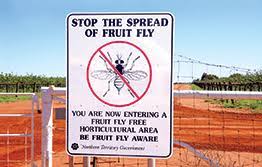
I was rather disturbed to recently read that Queensland fruit fly, the world’s worst fruit pest, still infests Victoria’s fruit growing districts despite all the efforts by the Department of Agriculture, thus leaving Tasmania and South Australia the only “clean” states.
Obviously Bass Strait is a natural hurdle for the Apple Isle and since the 1950s South Australia’s borders have become almost impenetrable barriers. The major suspects are New South Wales and Queensland themselves who were “doing nothing about the problem” according to our Agriculture Minister Peter Walsh in 2012 when he wound back our fruit fly programs. He asked: “Is it the best use of taxpayers’ money to be trying to control something we can’t control?”
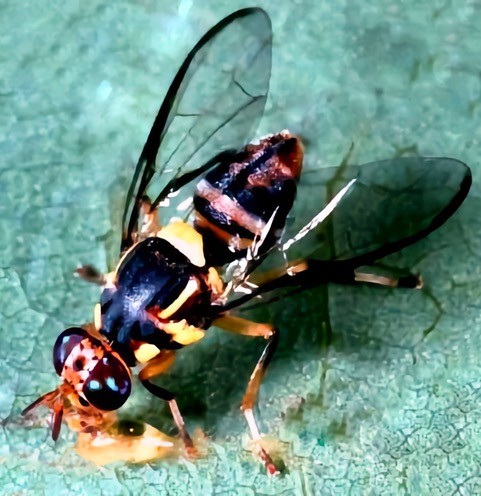
Fortunately subsequent governments and industry groups have rewound the fruit fly eradication and exclusion programs but little out-breaks will always result from the actions of the few careless or uncaring, despite dire warnings of hefty punishment.
Our region seems, so far, to have escaped the worst of the attacks. But it is up to us to be ever watchful of any signs of the little blighters and do all we can to prevent any local outbreaks.
My home state, South Australia, through its geographic location and climate seems to evade most natural invasions. Certainly, from the west and north, it’s the vast distances and dry desert-like environments, which leaves only Victoria, NSW and SA’s Riverland, not co-incidentally, the major source of where most action takes place.

The mid to late fifties saw the first of the fearful outbreaks where our fruit growers and market growers, statewide, were decimated until quarantine zones and mass sprayings started to gain ground.
Since then the border controls, which saw the introduction of plant life cargo fumigation and the prevention of the entry of all fruit and quite a variety of other plant life has seen the state relatively clean.
One Victorian pest of note that fortunately never made its way across the borderline is the pesky Argentine ant.
The first plague year was the worst for our family nursery as we were a major supplier of flower and vegetable seedlings and in particular the target plants were tomatoes, capsicum, cucurbits and eggplant along with cabbage, cauliflower and lettuce.
Once I started school, all my free time on weekends and after school hours were spent in the nursery. Among my least favourite tasks was to prick out the juvenile seedlings, transferring each one from a crowded seedling tray, 12 at a time, into strawberry punnets.
Considering that we were supplying much of the eastern Adelaide suburbs, the total number of tomato plant punnets alone would be several thousand.
So you will understand my grief and frustration when we received notice that we were to trash and burn all vegetable seedlings whether they were fruitbearers or not.
We were to calculate our costs and would receive “adequate” compensation for the perceived price of the goods.
Dad’s claim for over a million lost plants, was received with ridicule and resulted in an inspector coming out to check our claim.
After wading through a sea of plants in punnets he started berating dad for trying to “pull a shifty” but soon gave in and apologised when dad suggested he count the number of seedlings in a yet-to-be pricked out tray. He struggled through about one five-square centimetres of plants, lost count about three times and capitulated, asking if we were sure our claim was really sufficient.
Compensation was reasonably prompt but only to cover the estimated wholesale income from the crop – nothing for wages and overheads. We were a family business so – no wage bill to claim.
Next edition: How to identify and repel the dreaded fly!
Got a gardening question? Ask Glen. Email glenzgarden@gmail.com
March 13th, 2021The life and times of our Swiss Italian settlers
THE very personal letters of the Swiss Italian miners back home to their loved ones tell a story of hard work, hardship and daily life in Daylesford and Hepburn from the 1850s onwards.
They appear, with stunning photos, in the recently published and translated version of Giorgio Cheda’s The Emigration of Swiss Italians to the Australian Goldfields. The book will be launched at Hotel Bellinzona, Hepburn Springs on Tuesday, March 23 from 5.30pm to 7pm as the lead-in to the Swiss Italian Festa in October.
Translator Tony Pagliaro, an Italian studies academic, said he was given a copy of the original book by his sister and was intrigued.
“I had always thought that with people writing back to their home countries there must be a lot of material about Australia that Australians were unaware of,” he said.
“This book was a study of the reason this very numerous contingent, about 2000 peasants and tradesmen, left Switzerland from 1852 to 1854 to come to Australia.
“And on top of the study were these letters from Ticino in Switzerland, a treasure house of 326 documents, mostly letters, from Australia. I started to translate them, a long time ago, I think I was still using a typewriter, and then as I moved through different computer programs, I got to a good point but always had in the back of my mind how they would be published. It is such a big book.”

Mr Pagliaro said the book was tremendously important for the region. “We get a good idea of the daily life of miners, first-hand experience, even three members of one family writing 30 to 40 letters over a period of time. It gives us a tremendous idea of community. We learn about all the hardships of the journey, which could take up to 120 days, and the health and safety issues on the gold mines.
“And there are the usual anxieties, which are not exclusive to Swiss Italians, about families back home, sending money to them and eventually moving on, although quite a few stayed in the region with about 33 per cent successful in returning home.”
Mr Pagliaro said some miners, many farmers back home, eventually bought farms in the region but they generally also had “a second string to their bows” including as stonemasons, glaziers, chimney sweeps or port workers.
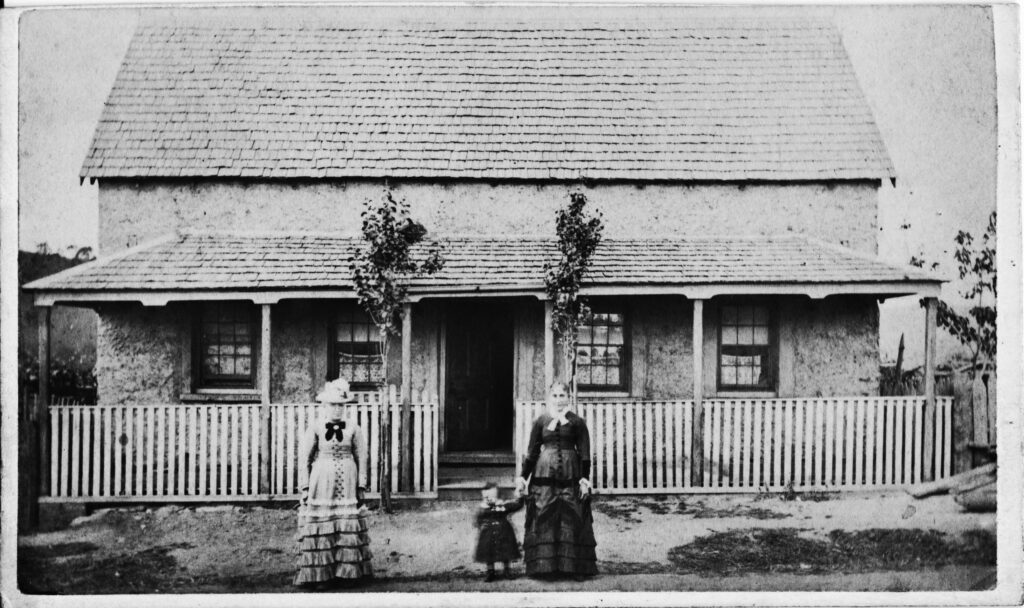
“You can see many left their heritage of stone houses around Daylesford, Hepburn and Yandoit.
“They also had their own problems with health and one complained about a doctor who left one leg shorter than the other, and there was another chap who didn’t want his leg operated on, but the doctor convinced him and he died.
“Another miner followed the gold rush to New Zealand and had a mining accident and the only ones to help him were the Chinese. He said they always got a bad rap but they carried him on a stretcher 10 miles with one running ahead to stop a train for him. He spent six months in hospital and survived.”
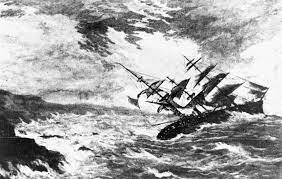
And in good news for ancestors, but terrible news for those at the time, Mr Pagliaro said a ship, the Royal Charter was carrying a lot of successful miners back home in the late 1850s via England, when it sank off the coast in the Great Storm of 1859. Their gold also went to the bottom of the sea but started washing up on English shores some years back and the Receiver of Wreck says if anyone can prove a claim he is open to their story. Mr Pagliaro said he thought there could be a few people in the region who might be interested in checking their family histories. Anyone with the surname Pedriata?
There are also stories of men undertaking second marriages, with first wives still at home and unaware of the change in their circumstances, and others, like Leonard Pozzi, trained in making orthopedic applications who turned his hand to photography and then in the 1890s patented an early form of the fountain pen. His older brother Stefano also became a well-known figure in Daylesford.
Meanwhile, the bloke who complained about his one short leg, moved on to buy a shop in Bendigo which later went broke, but then returned to his first trade of carpentry and wrote in 1885 about repairing a house he had built 30 years earlier.
The Righetti family, still a well-known name in the region and with the Righetti Oval in Malvern, wrote about their children dying in WWI at Anzac Cove.
Another letter mentions the Aborigines of the area who “used to be naked but now they go around with a blanket” thanks to a gift from the Queen.
Mr Pagliaro said there were very few other references to the Aborigines “they didn’t notice them but it was probably just a sign of the times” and only two or three letters from women. One woman wrote to her family that her husband had died after being overcome by fumes after jumping in a wine vat to clean it. She had tried to pull him out but failed and then ran to a neighbour for help but it was too late. She wrote she had to work night and day because of the harvest and with four children there was always one at her feet asking where their father had gone.
Mr Pagliaro said the original book was written with great love and dedication and the translated version would be enjoyed by many people whose lives have been touched and enhanced by the Swiss Italian migrants.
“They were undoubtedly intrepid people. Many of them would be thinking they would return home but the characteristic of migrants is of people who want to get up and do something about their situation while more conservative people stay at home curled up in a corner.”
Attendance of the launch is free but bookings are limited and essential at https://bit.ly/2NGaSpF
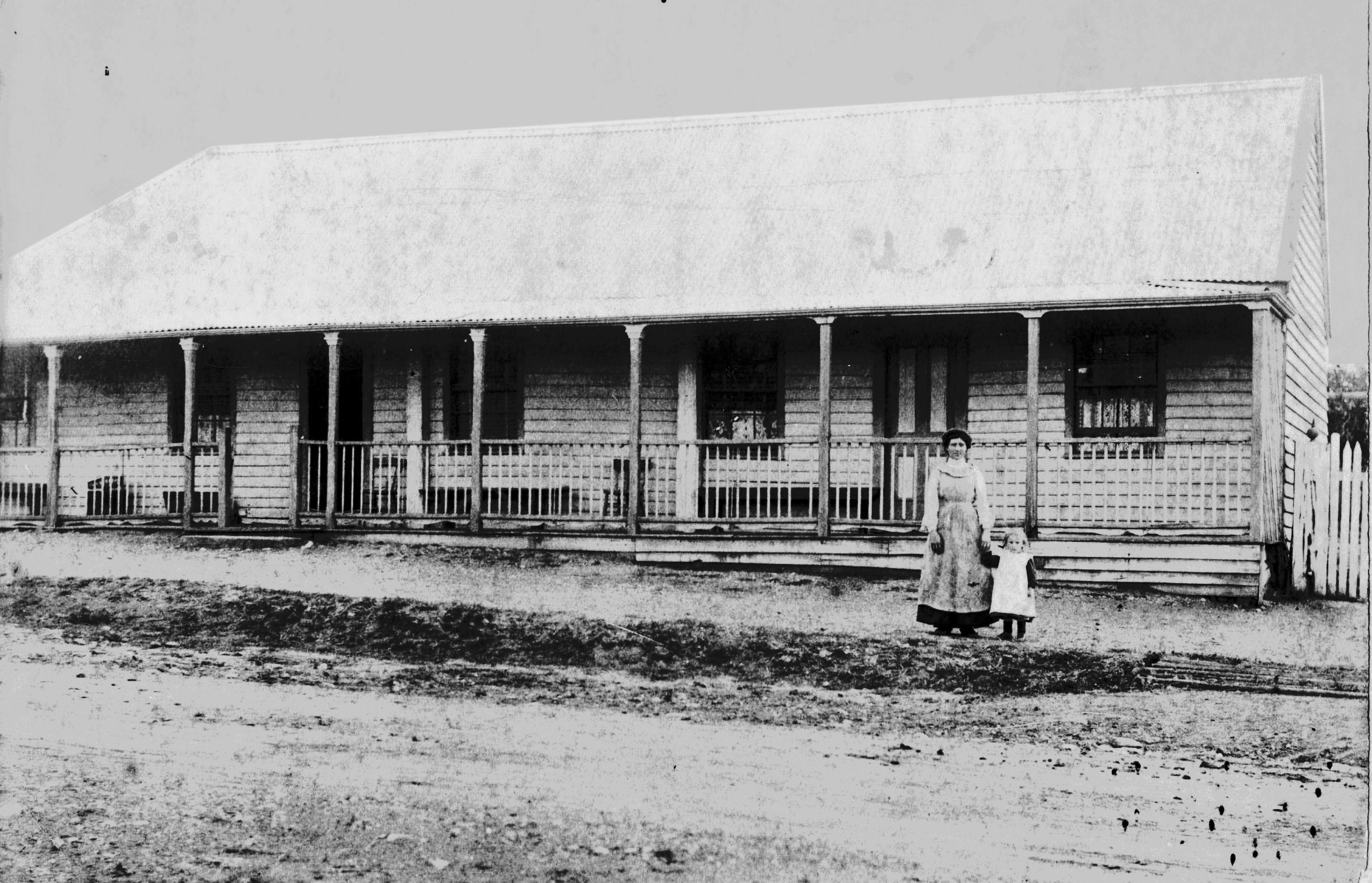
Above, the Gaggioni family, below, Tony Pagliaro
Words: Donna Kelly | Images: Contributed
March 13th, 2021Corruption, intrigue and damn delays and danger
WITH the Victorian gold rush of the 1850s, came the realisation of just how vulnerable the growing settlements were to unsanitary water. The few creeks that ran through Castlemaine to Bendigo flowed well in winter but were reduced to fetid ponds in the summer.
Outbreaks of cholera and typhoid were common with a death rate for infants at around 220 for every 1000 births. The need for a reliable and clean water supply was undeniable.
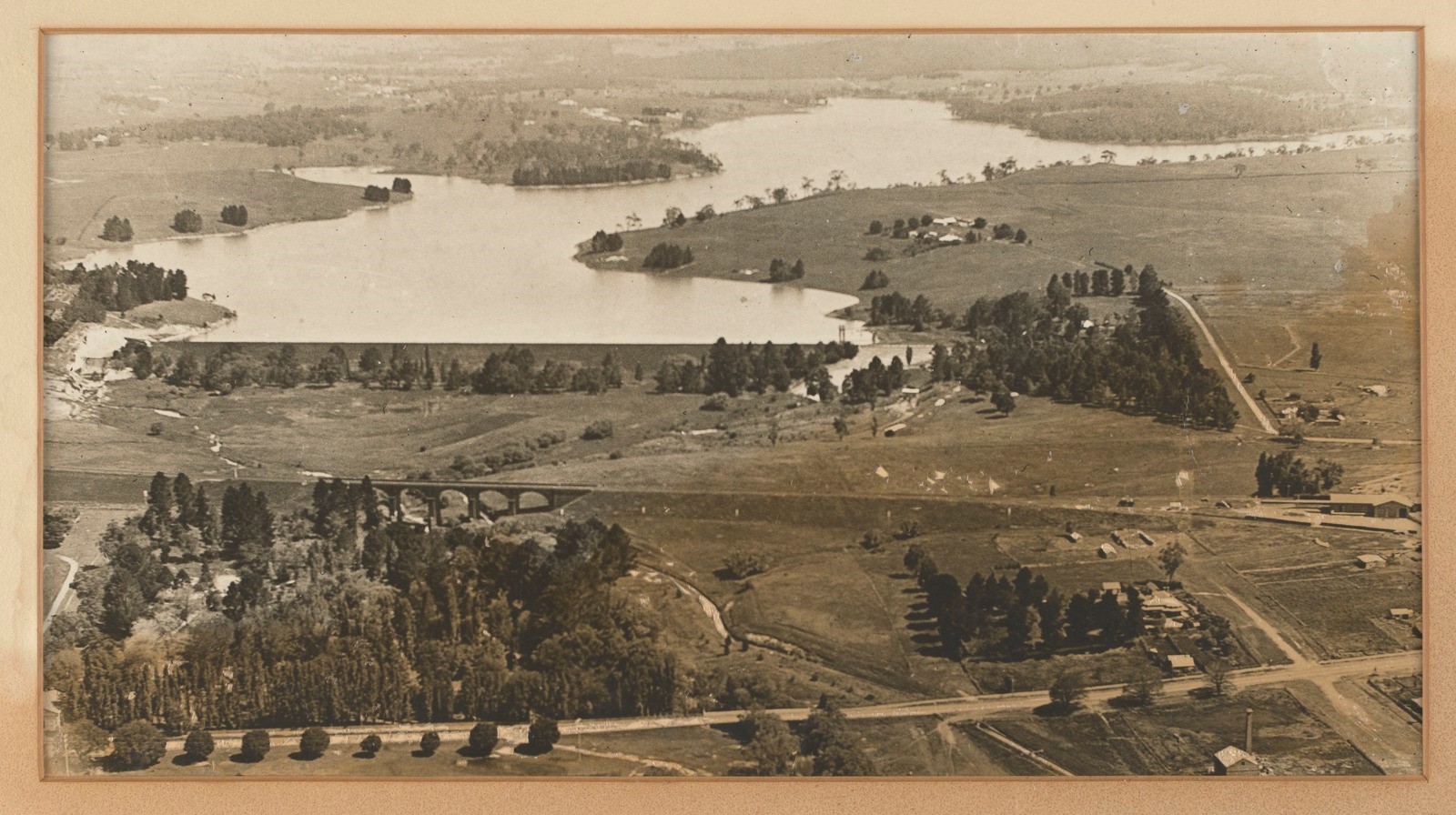
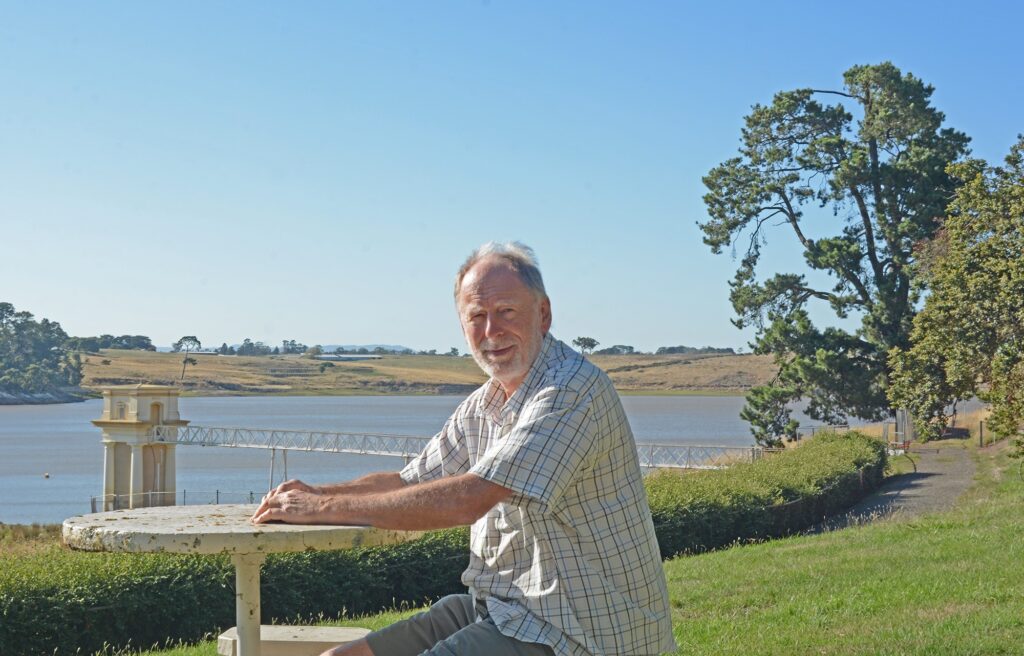
In 1862 the Victorian Government offered a prize of 500 pounds for a suitable design of a drinking water reservoir on the Coliban River just south of Malmsbury. It set in motion an industrial saga replete with all the corruption, delays, intrigues and danger befitting a grand engineering project of the Victorian age. Enough to even fill a book, and that’s what Malmsbury resident Rod Andrew did, he put a book together on the subject – Malmsbury Reservoir: A History in News Articles and Pictures.
“I first heard about (the Malmsbury Reservoir) back in the 1970s,” says Rod. “I worked for the State Rivers and Water Supply Commission, the predecessors to Coliban Water. There were many stories going around about the Coliban water system and the Malmsbury Reservoir had a bit of a name. It was mainly bad from the engineers’ point of view because they had a lot of trouble with it.”
Today there are two additional sites along the river that opens out from its headwaters at Trentham. These include the Upper Coliban Reservoir near Tylden completed in 1903 and Lauriston Reservoir completed in 1941. Together they make up the Coliban Water Works. The winning design (titled Progress) was presented by Joseph Brady, the chief engineer at the Bendigo Water Works Co (later absorbed into the Department of Victorian Water Supply).
Mr Brady was capable and respected, and the construction project may have run smoothly under his guidance but he departed to Queensland to manage other projects before construction commenced. Ultimately charge of the project fell to one Henry Christofferson, the newly minted chief engineer of water supply. Contractor Thomas Greenwood was employed to commence building the wall in 1866. Construction was fairly straightforward, featuring an earthen embankment with a puddle clay core (packed clay to prevent leaks) and washes at either end to pass floods.
But as it was, the construction was beset by delays and recriminations which saw a 15-month build stretch to seven years not helped by the inexperience of Christofferson.
But bad engineering and catastrophic failures were very much a part of the spirit of the age. Engineers were often hired on experience, not necessarily actual qualifications. This led to spectacular disasters such as the 1864 collapse of the Dale Dyke Dam in Yorkshire, England which drowned 240 people. Such events weighed heavily on the Victorian Government during planning, and the Malmsbury Reservoir came very close to joining that ignominious list.
“Christofferson specified building materials that should not have been used, didn’t supervise the work and there was corruption at every level,” says Rod. “He was eventually sacked along with two other resident engineers who were charged with concealing faults in the construction. It was a sign of the times that Christofferson had the role at all but he was well connected and had friends in parliament.”
The year 1870 saw a lot of rain in Victoria and the newly completed reservoir was full to overflowing which quickly revealed its poor construction. By July leaks had appeared with some described by the Kyneton Guardian as: “Strong jets as if thrown by a powerful syringe.”
Christofferson remained sanguine stating: “The percolation of water was trifling.” However by September The Argus wrote: “It must be evident that, with such a rush of water, the destruction of the embankment at this point is but a matter of time.”
History notes no flood of biblical proportions sweeping away the village of Malmsbury. The leaks (caused by a poorly constructed outlet pipe beneath the embankment) were addressed.
Embarrassingly it required the Victorian Government to bring in engineering expertise from the then British colony of India to effect solutions. That came in the form of Lieutenant-Colonel Richard Hieram Sankey of the Royal Engineers. Another imported expert, one G. Gordon, then rectified the worst defects as Sankey found them. The result being a reservoir that remains in operation to this day, 155 years after the turning of the first sod.
Thanks to Rod Andrew, author of Malmsbury Reservoir: A History in News Articles and Pictures for his assistance with this article.
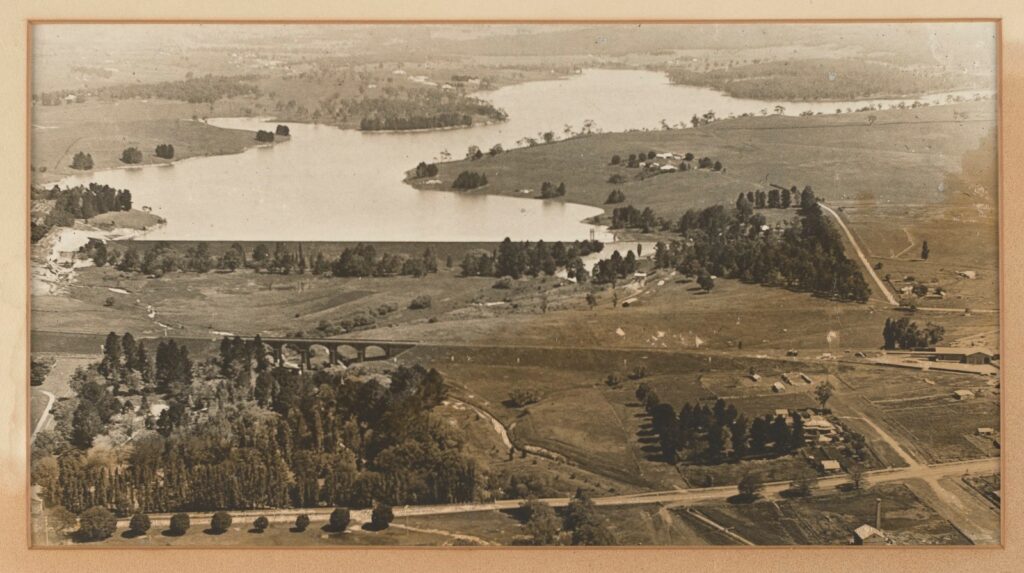
Above, an aerial view Malmsbury Reservoir with the village in the foreground from 1931 | Image: State Library of Victoria
Below, Rod Andrew | Image: Tony Sawrey
Words: Tony Sawrey
March 13th, 2021Exotic fauna or a pesky pest? Still no idea!
BACK in the 1880s various species of deer were introduced to Australia as game animals and their descendants remain in forests across Australia.
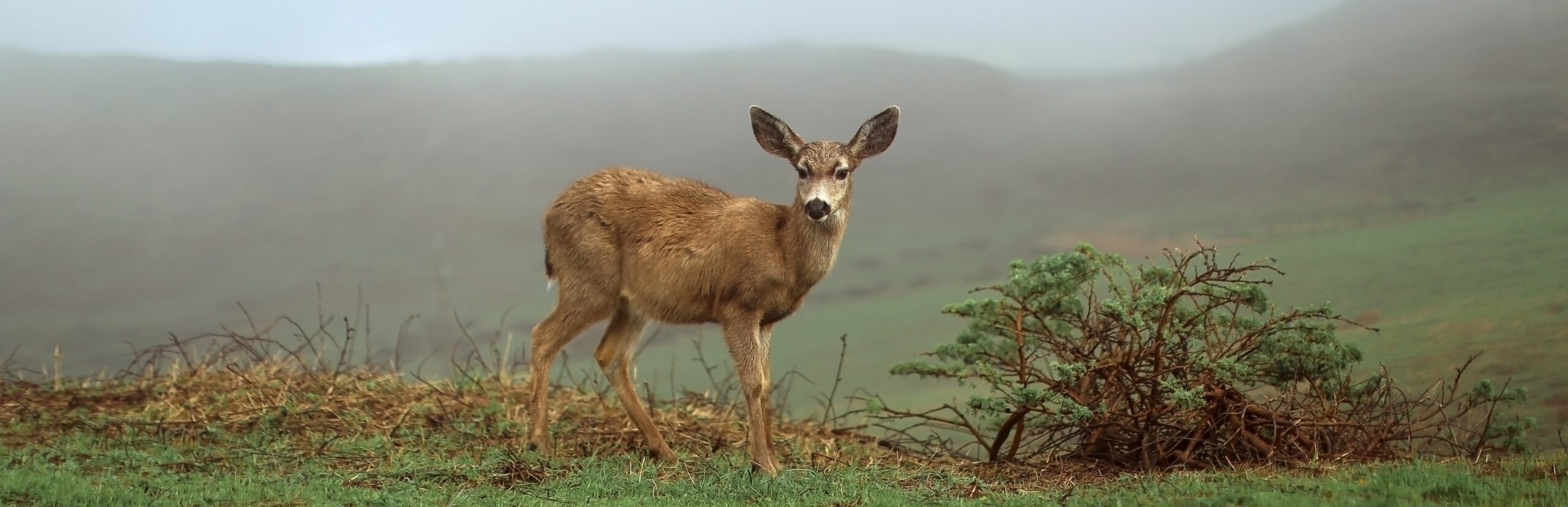
In Victoria there are now four wild species of deer including sambar, red, hog and fallow, living predominantly in the vast forests of the lower alpine regions. However the Wombat State Forest, despite its isolation from these areas, also has a significant population of fallow deer. While official numbers in the region are not clear, regular sightings are part of living next to the Wombat as expressed in these comments from social media.

“We see deer in our paddock two or three times a year, and see evidence of them browsing our introduced trees,” says a landowner in Bullarto South. “There’s a herd of about 10 down the Coliban Valley,” says another.
An East Trentham resident writes: “There’s a mob of 15 plus around Mill Road. I’ve seen them as far east as Fern Hill.”
“Had fallow deer on my property and next door,” says a resident in the same area. “They came out from the Wombat Forest perhaps six or seven times a year to get to the grass.”
And from a farmer near Trentham: “I have seen one or two spikers come through my farm block. This time of the year deer come into the rut and the young bucks get belted out of the herd so you’ll see them in places they haven’t been seen before.”
“Cooked some local shot deer this week,” says a local hunter. “Good eating.”
Victoria has possibly the largest deer population in Australia, estimated at more than a million animals and while they are listed as a game species and can be shot by licenced hunters, deer are also classed as protected wildlife.
In national parks they are known as exotic fauna and subject to extermination across those areas. Lately there has been significant pressure exerted by lobby groups and communities (particularly in the east of the state) to change the legal status of deer from protected wildlife to pest animal but with the release of the Victorian Deer Control Strategy in 2020 the state government left their protected status in place.
A perplexing decision in the face of strong evidence that feral deer are emerging as one of the state’s most serious environmental and agricultural threats.

It is a concerning decision for Andrew Cox, CEO of the Invasive Species Council which campaigns for stronger laws, policies and programs to keep Australia’s native environment safe from invasive species.
“Deer are prolific grazers therefore they consume large amounts of vegetation,” says Andrew. “As well as competing with native animals, they pretty much take out the understorey, open up the forest and remove all those shrubs growing in moist gullies.”
However, at this point in time, there is a fairly common perception that, despite a gradual increase in sightings of the animal in local bushland, deer are not a pressing issue. Indeed foxes, cats and pigs are also present and arguably causing more damage.
The difference is of course, all those creatures are classed as pests with all the eradication strategies and funding that goes with that classification. Deer as mentioned are not currently classed as pests, but they are now established here and growing in numbers, adding to the woes for the forests.

“This is what happens,” says Andrew. “When you first see them they are in reasonable numbers but in two or three years the numbers can grow rapidly. Their growth rate is 30 or 40 per cent a year and though they only have one fawn per year they are quite prolific breeders. (Does can reproduce at 16 months and can give birth to up to a dozen fawns in their lifetime). “Often you don’t notice them because they are good at hiding and then suddenly they just become very visible. By then it is often too late.”
Above, a fallow deer buck caught by a camera trap in the Wombat State Forest Image: Arthur Rylah Institute for Environmental Research (DELWP)
Below, Andrew Cox, CEO of the Invasive Species Council Image supplied.
Words: Tony Sawrey

March 13th, 2021Beautiful blooming begonias…and bees
And while thousands flock to Ballarat every year to see the amazing begonia displays at the annual festival, a local online nursery run by a couple with a love of begonias is opening up their piece of paradise for the first time, to sell a selection of their tuberous begonia collection. Peter Harris and Jesse Exiner, pictured, run White House Nursery, a mail order nursery, and the Tuberous Begonia Garden in Ashbourne.
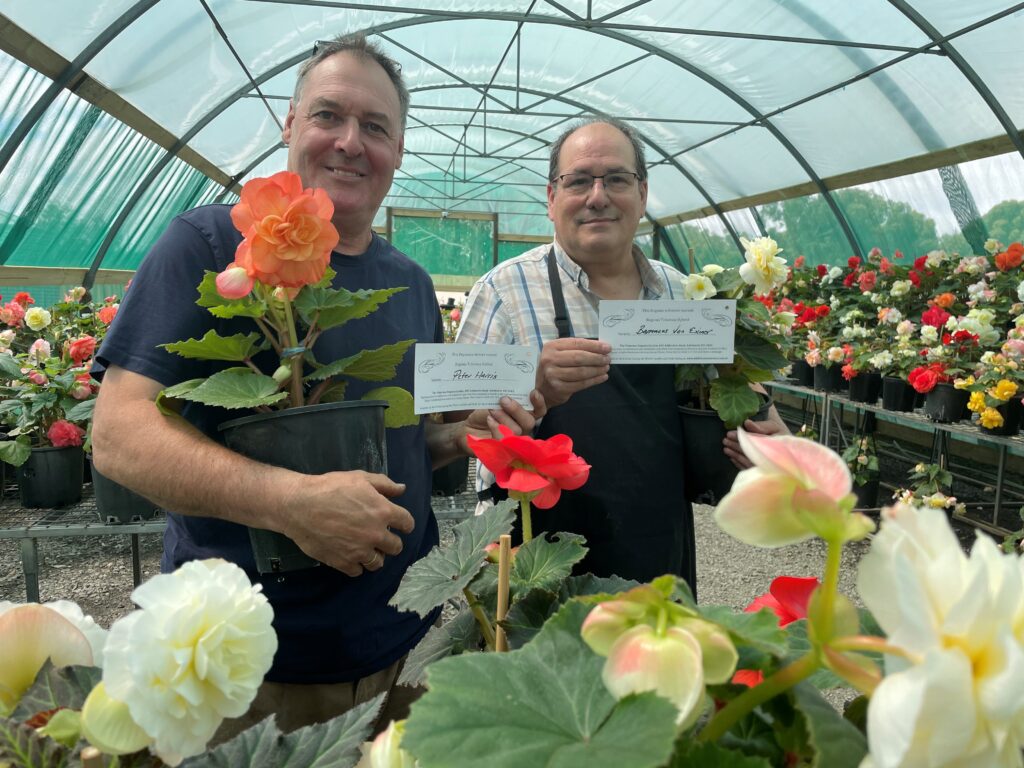
Year round the couple plant, cultivate, prepare and send beautiful heirloom plants to customers across the country. Some are quite rare and others simply difficult to find. Peter, left, has spent around 30 years perfecting his collection and from now until the last weekend in May, his begonias will not only be on display but many will be for sale as well.
The White House Nursery was born eight years ago when Jesse and Peter purchased an 32-hectare farm in Fern Hill. The name was inspired by the quintessential Australian white cottage on the property and nothing to do with American politics, Jesse insists. The couple decided to focus on their mail-order business rather than an open-sales nursery.
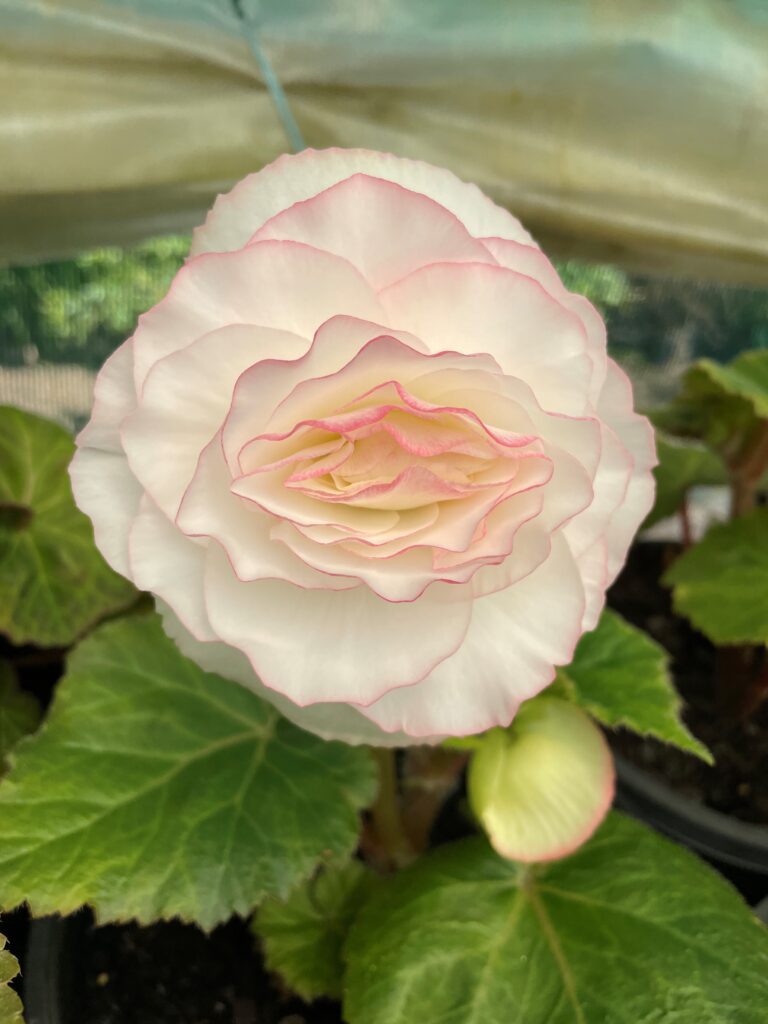
Four years ago, the couple down-sized to an eight-acre property on the outskirts of the hamlet of Ashbourne, near Woodend. “We love this property so much and it’s not as windy and cold as Fern Hill was. The plants love it more as well as they all thrive in the conditions here,” he said.
Jesse happily admits Peter is the hands-on gardener while he manages the hundreds of orders they receive each week. “People get warned when they come here in the morning that I might still be in my dressing gown. And why not?” he said. “And yes, I’m more than happy to let Peter potter in the nursery all day. He can stand in one place in silence for hours on end potting and planting, with no music: just him and the plants. I like to be warm…so I’d last 10 minutes and be bored with a sore back!”
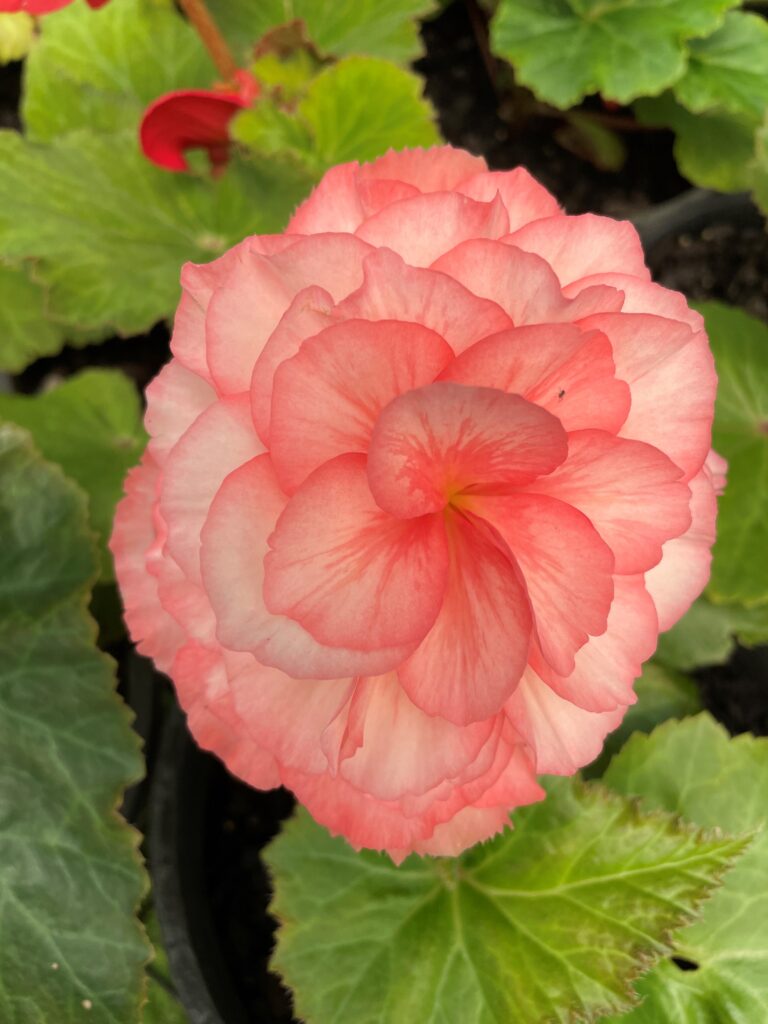
However, boredom certainly isn’t a word the couple would use when reflecting on the impacts of COVID. “We were so busy it was ridiculous. Everyone was getting out into their gardens. It was fantastic on one hand because we were receiving hundreds of orders a week but we actually had to close the business twice over lockdown as we were so behind in filling the orders. One thousand orders behind in fact. So, in the end it balanced itself out but we were certainly kept on our toes.”
While Jesse isn’t one for spending hours on end in the shade houses, he did spend five years restoring the gardens and the house at Mawarra in Sherbrooke. “My passion lies with the design side of things and it was a labour of love for five years restoring the house and the historic garden,” he said.
The nursery is home to more than 500 species with a cross section of varieties. Jesse said peonies are incredibly popular as is another plant of yesteryear – the fuchsia.
“Fuchsias aren’t rare but they’re quite hard to get,” he said.
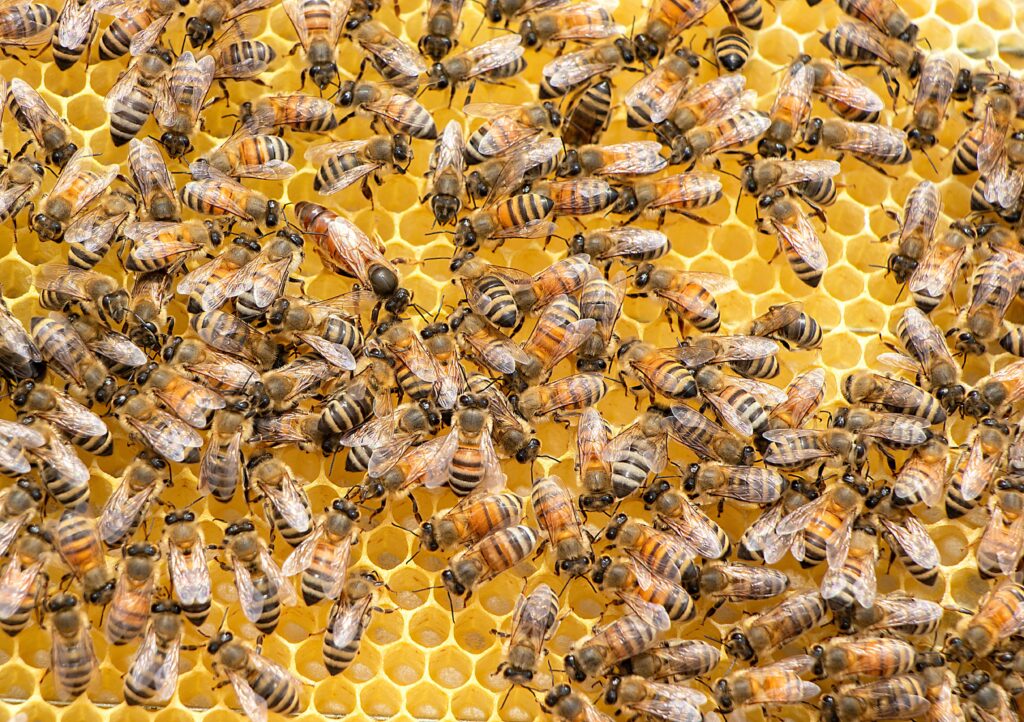
The couple were inspired by a pair of beehives they received as a gift and now they provide a growing number of bee-loving plants and are even part of the Woodend Bee Friendly Society. The couple recently agreed to bee-sit 150 hives trucked in from Bendigo that were in desperate need of food. “The apiarist had run out of food so we looked after them here. They loved our flowering gum trees and the plants across the gardens. I did mention that next time I wouldn’t mind some honey in return and the next thing I received a 40-kilo bucket of honey.”
And because they live in an area that attracts people growing and creating their own produce, the couple even has a selection of brewing hops from across the globe so beer lovers can have a go at creating their own blend.
Back to begonias and Jesse has a hard time picking his favourite.
“That’s like asking me to pick a favourite child. But I really love the different coloured pale pink one that has dark pink edging. That really fascinates me in all its wonderful glory. Begonias are so unique and its quite personal picking a favourite. Peter likes different ones to myself but they are all glorious.”
There is also a special inclusion with the tuberous begonias on offer. You get to name the plant you choose. This, says Jesse, is a lovely way for people to share in their love of begonias. “What’s nicer than to have a plant named after you? Ordinarily, naming rights are quite expensive and time consuming to register but because every begonia is unique with its own DNA, we are happy to hand those rights over and let our customers name the plants after their friends, their mothers, anyone,” he said.
“We are both passionate about what we do and the beautiful collection we can share with people. We are not into running a huge business with thirty staff. We love being a small operation and we are both doing what we enjoy best.”
Words & image: Narelle Groenhout

March 13th, 2021Alice, crossing the desert of love and Sufism
Its highlights would include a near-death experience in Turkey, meeting her husband-to-be in one of the most exotic places on the planet, standing near-paralysed as US warplanes flew to bomb Syria and finding serenity in a woodfire-heated home.
She is now sharing that peacefulness with locals by introducing them to Sufism, centring on the search to be a better person through sharing knowledge of Sufi traditions, including meditation, chanting and prayer.
“I grew up coming to Trentham, where my mum had a shack since 1974, so I’d spent my life visiting before moving here in 2017.
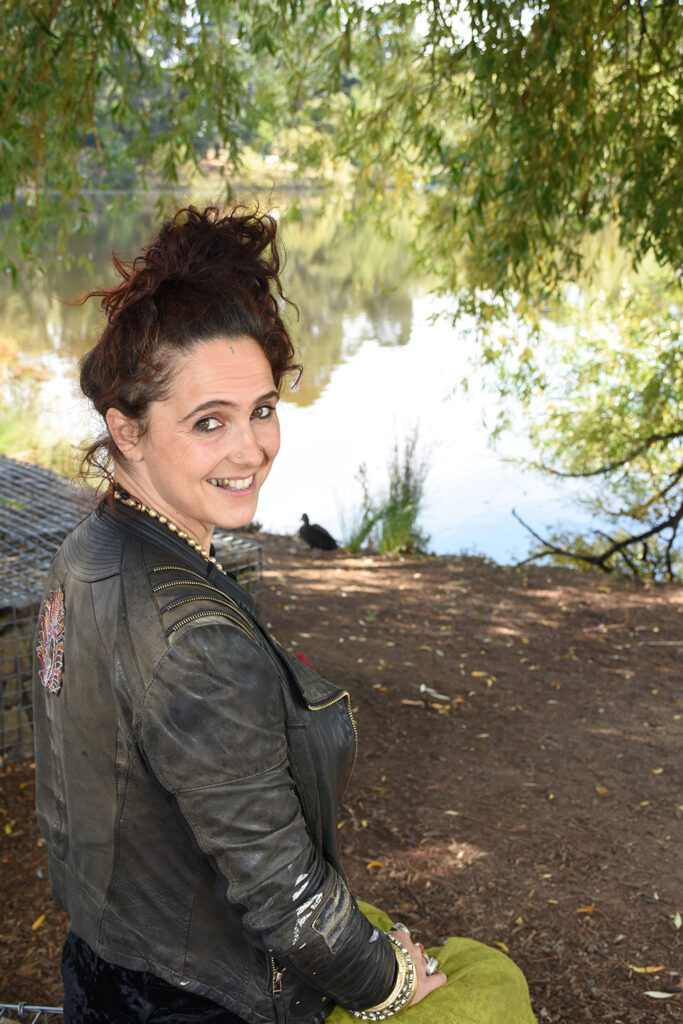
“Before that, because I’m half Turkish and I’d been going back and forward to there for 20 years, I wanted to live there and have the experience of being there on my own terms…not being the sort of black sheep of the family, not being the sort of wayward cousin, or something…”
What followed was “pretty wonderful”, plunging into life in Central Anatolia, Turkey.
There she was at work on her second novel, having published her first one at 32, eight years ago. Called The Memory of Salt, it’s her parents’ love story. Her mother was a doctor and her father a musician who mastered a great array of instruments, performing in the then gritty world of Brixton, London.
Love intervened when Alice saw Ahmet, a Kurdish artist, and they married. “We met and lived in an incredible place, which is historically very rich. It’s full of underground cities, which are still being dug up.
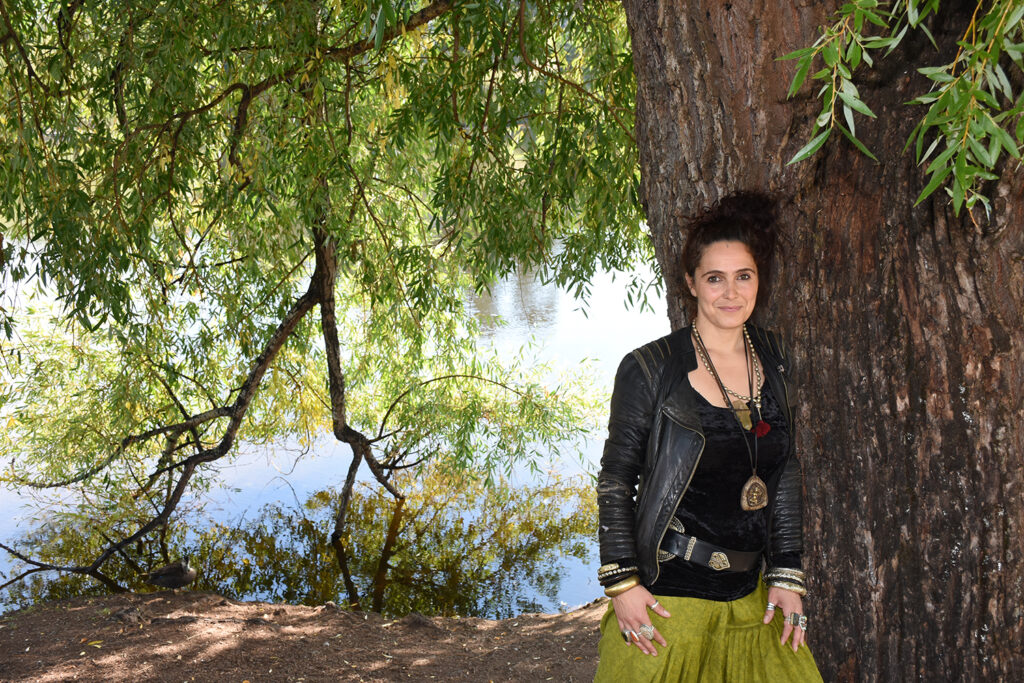
“People still don’t know who built these underground cities and why they were there. They are for the most part not explored and not understood.
“The landscape is almost reminiscent of the termite mounds of Australia, except it’s volcanic, soft and easy to carve. So it’s a sort of gnarled landscape, with this volcanic rock, cliffs, mountains and caves that were inhabited by Christian ascetics, done over with murals of St George and the Dragon and all the saints.”
So, here in this Muslim country was this buried city of Christianity. She walked from town to town, easily getting lost.
In one town, she and friends picked apples from a laden tree, which revealed a cave, its walls dense with frescoes.
In March 2015 she became pregnant, leading to a stillbirth in September. From her hospital window she could see a volcanic mountain, written about by the Rumi, the greatest Persian poet, whom she is now reading.
“The stillbirth in a small country town was pretty traumatic.” She came to on the floor surrounded by six nurses. “They stole my nose rings, my wedding ring and bangles. My baby was taken by a woman who didn’t look at me.”
A week later she became critically ill. She reached her mother by Skype at 1.30 in the morning and was told to urgently go to emergency. She got to the best hospital for women and children in the capital, Ankara, but not before having to skirt anti-government protests and roadblocks. With blood pouring from her, she prayed aloud in Arabic. She had been unable to make herself understood.
“It was almost as if I were giving myself the last rites. Within about 10 minutes, maximum, of getting to emergency I was clinically dead.
“I perceived a being, even though I had no body with which to perceive and she had no body to speak of either, a light being who emanated… light and love. It was like a lightscape, you could say.”
Alice and Ahmet now have a four year-old son, Nesim.
Earlier in her life, Alice studied Arabic at Melbourne University, which took her to Cairo and then Damascus and Islamic studies.
With chooks and the occasional cocky at her door, a mountain of new firewood from a recently fallen tree and the wood stove offering warmth and cooking, an elegant song in the background, her life seems impressively simple.
She is also running a 10-week course in Trentham on Sufism, ranging from the Bedouin poets of pre-Islamic Arabia, who set its tone and template.
“Sufism is not a religion,” she says. “Historically, it’s a response to empire and wealth…a spiritual response, unmediated but specifically Muslim.
“It’s about trying to stay close to consciousness. You can push and push, but everything happens anyway…it’s an annihilation of the self, of the ego.”
One way of explaining it is through the quotation tattooed on her left arm, a Sufi poem by Mahwiy, a Kurdish poet, that says, “Even though I knew the desert of love was dangerous, still I went to cross and still it took me.”
Words: Kevin Childs | Image: Kyle Barnes
March 13th, 2021How Basil brewed a golden beauty
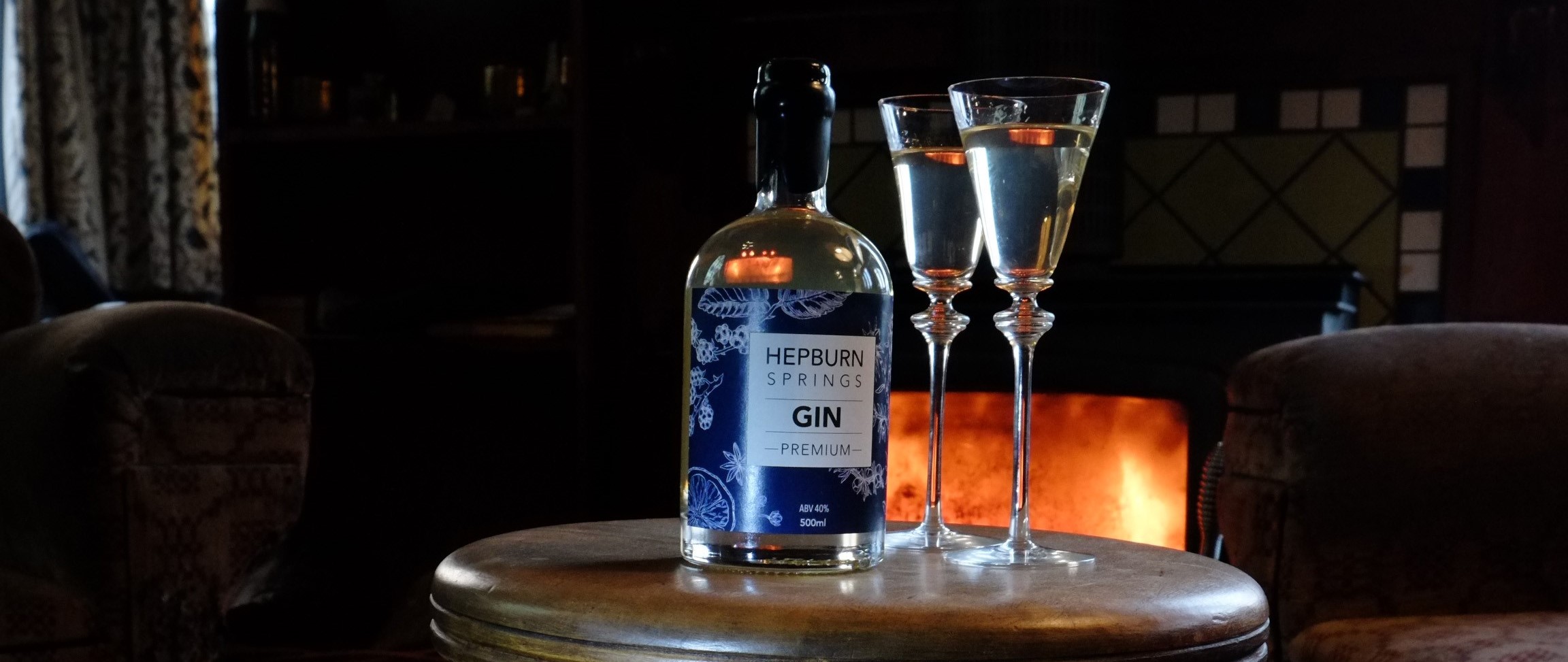
Recently 55-year-old Basil’s been whooping around their house, celebrating the awarding of a gold medal to his vodka in an international competition judged in London.
Artist, teacher, national martial arts trainer, poet and author of about a dozen books, Basil began his medal-winning run by considering climbing his apple tree and making cider. He was just 15 and living in Sweden in 1982 when he first learned about distilling.
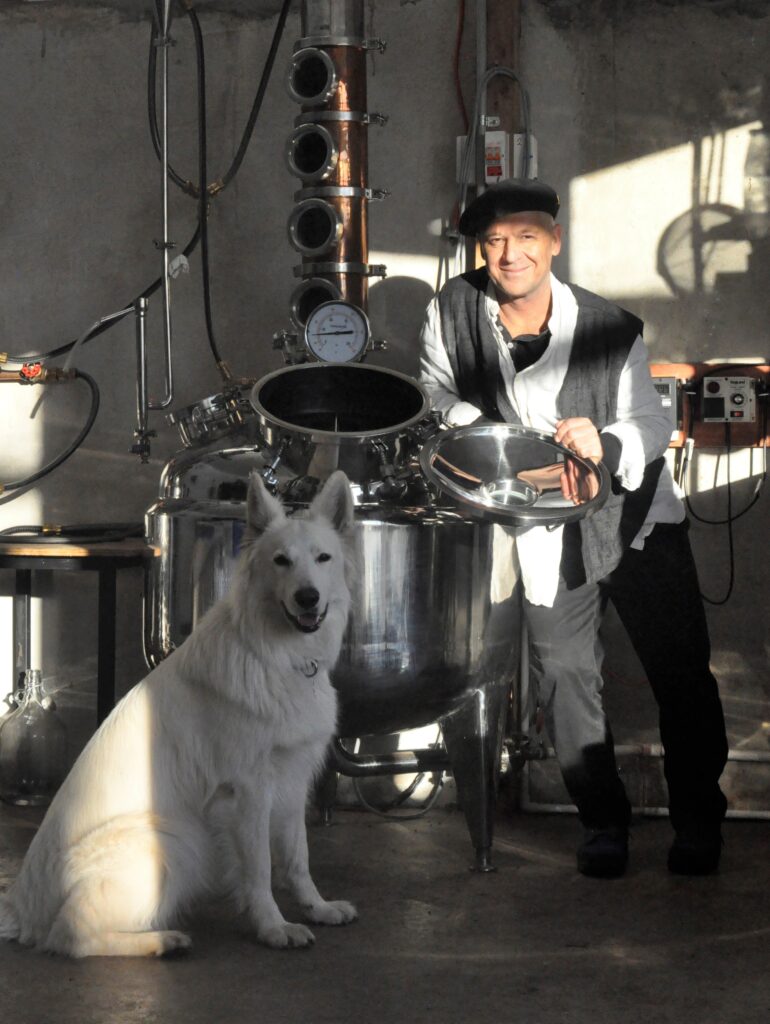
“Wouldn’t you rather make whisky?” asked Jane. In fact, he expects the first batch of whisky to be released at Christmas, but meanwhile he’d been busy with the gin and vodka “on the side”. Behind his brew is a fascinating story. Alcohol was made there during the goldrush at a pub called Gleeson’s or the Travellers’ Rest. Woodcutters who cleared Lyonville bush to make props for the Bendigo mines would slake their thirst.
Basil started making vodka two years ago. Of course, COVID meant life had got a bit tough and production went along quietly. After some difficulty and delay his entry was accepted in London. He sent three bottles and forgot them.
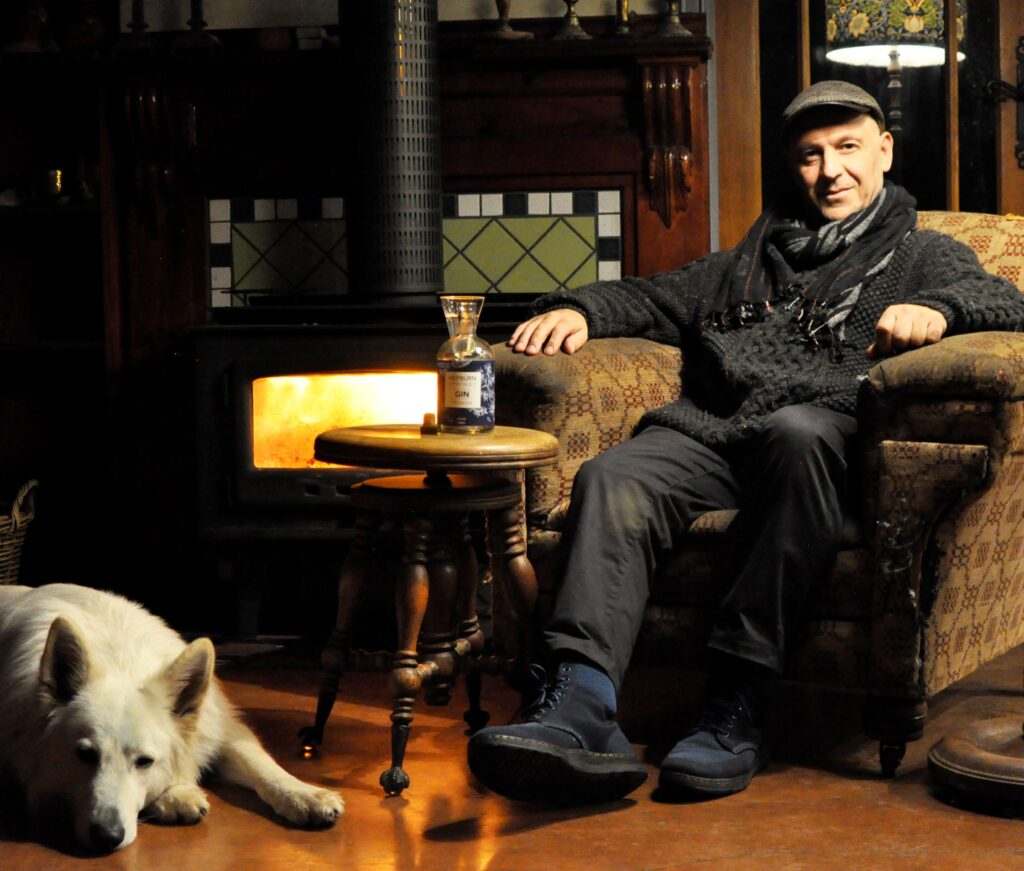
Then came the emailed news. “Gold and silver medals are allocated to each country,” he says. “But some countries don’t get a gold.”
Already he’s been approached from the US and Japan. He told the Japanese it’s not for export, saying, “No, no, no. It’s local, local, local.”
The potatoes for his vodka come from Wombat Forest Organics, “64 seconds from our fence”, where Adam Bremner is a sixth generation farmer.
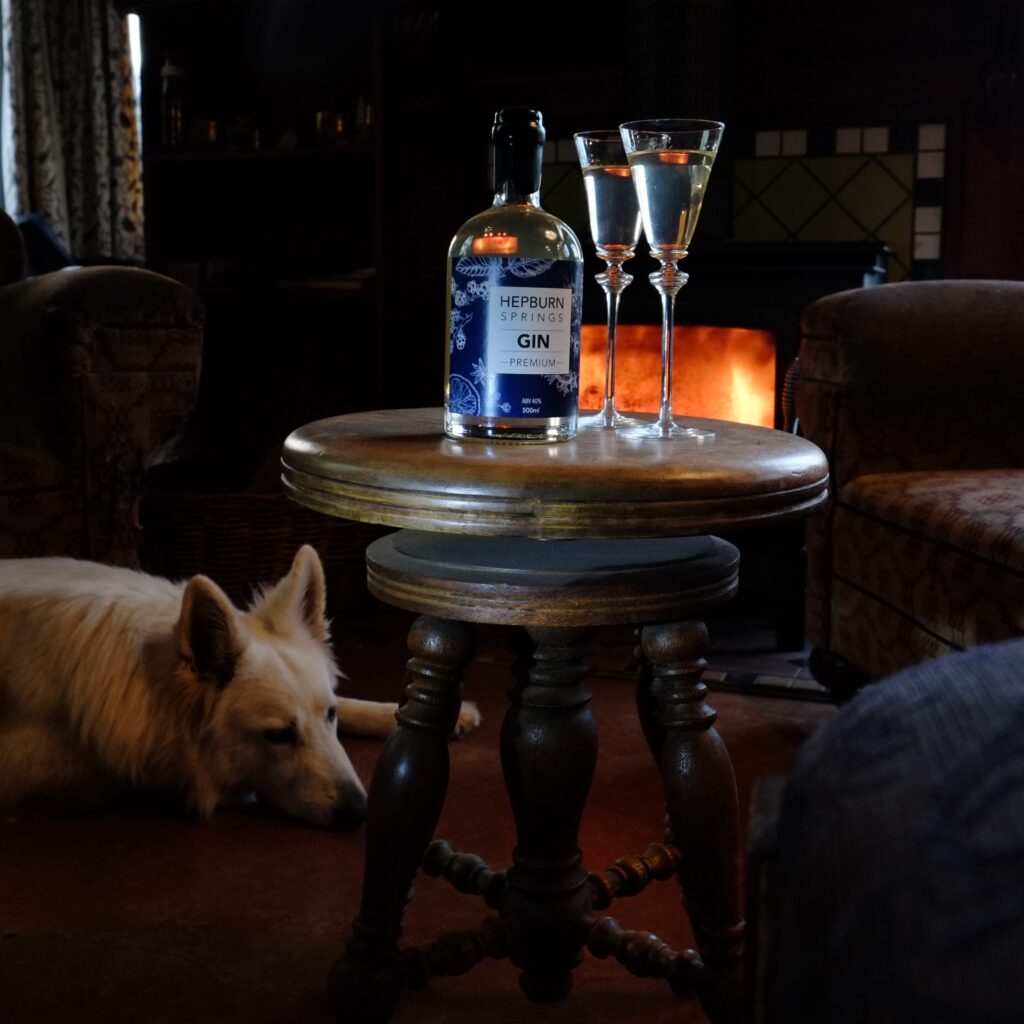
The well water is pure and solar power drives the stills. And there’s muscle involved: Basil reckons his 15 tonnes of spuds had to be lifted 10 times. Now he’ll scale up production. At $78 a bottle his vodka is not expensive, he says. As for its taste: “Sweet, soft and smooth and a tiny bit peppery.”
Words: Kevin Childs | Image: Contributed