

February 27th, 2021A chance meeting, friendship and a time to shine

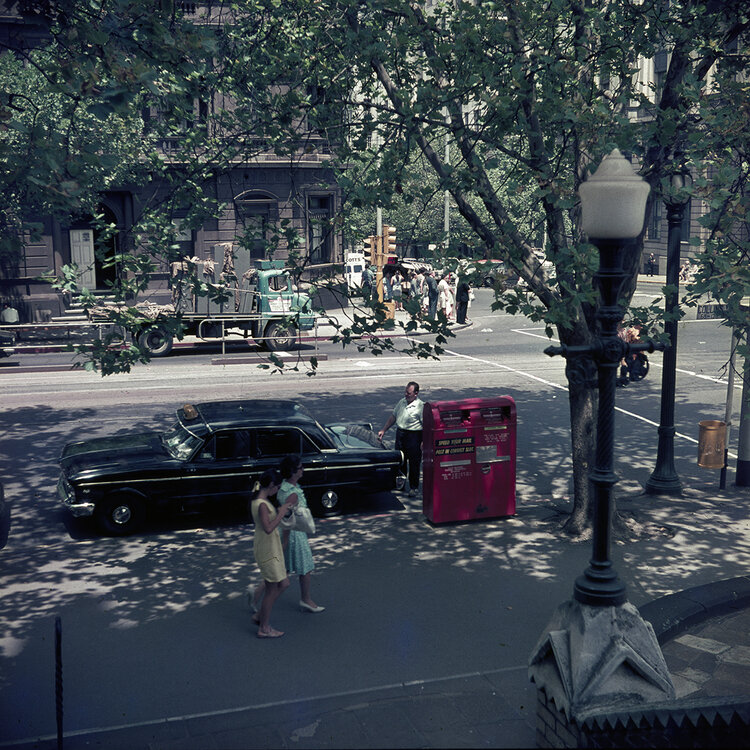
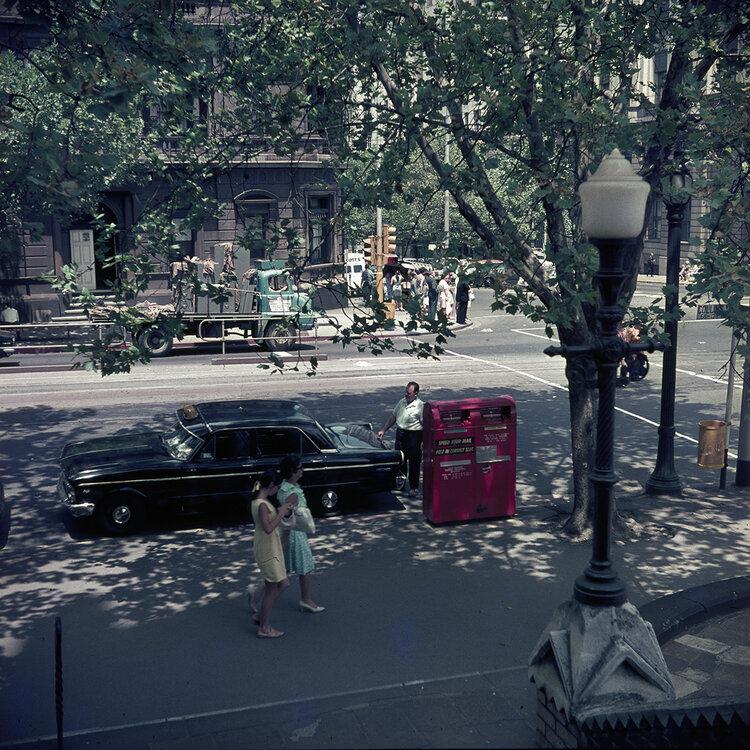
Angus commenced his career as a photographer during World War II, documenting the devastation in Syria. After the war, Angus returned to civilian life, working as a school teacher. But he had a fascination for photography and began capturing Melbourne in a series of works between1969 and 1971 with two medium-format Yashicaflex twin lens cameras, one for black and white and one for colour.

For years fame escaped the now 98-year-old as he tried to navigate the exclusive art clique. He tried to manage his own affairs to no avail. Throughout all this, he never gave up on his dream.
Nor did his wife Lynette. The couple met in Kyneton and lived in the township for a number of years in the late nineties. Escaping the cold, they eventually moved to Queensland before returning to live in Melbourne.
It was Lynette who, after finding a collection of negatives hidden away in the attic over 10 years ago, encouraged Angus to follow the dream that escaped him for all of those years. Lynette had one of the prints framed and donated it to a Brighton Primary School fundraiser.
It was sold for a great deal of money. There were art connections at the school fare who went on to represent Angus through a well-known auction house. But Angus likes autonomy and he soon discovered the partnership wasn’t quite panning out.
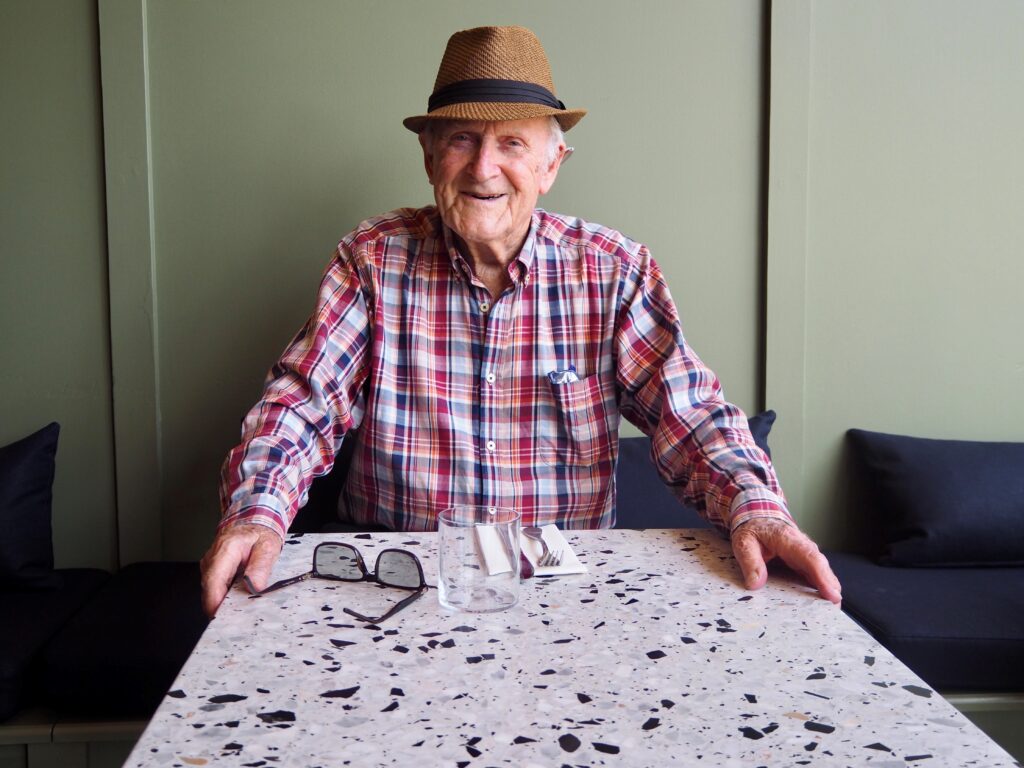
Fast track a few years and enter Kyneton’s Genevieve Wearne, owner of boutique accommodation provider, Flop House.
Genevieve and her husband moved from busy Northcote to the serenity of Kyneton in 2010. Genevieve was a CEO of a government-appointed advisory board but a building debacle on her property was the catalyst for testing the waters in the picturesque township.
“We decided to rent for six months to get a feel for the area and for the first three years I was commuting to Melbourne. The days were long and at that time my health was suffering so I decided to take a year off and work out what I really wanted to do, connect with the area and reflect.”
Genevieve has a background in arts, business management and events and wanted to reflect her skills and passions in a new venture. Flop House in Kyneton was born in 2013 which saw a number of boutique and luxurious local guest houses managed by Genevieve. And this is where Angus comes into the picture. Genevieve attended an art exhibition in Kyneton three years ago featuring the then 95-year old’s photographs.
“Angus and Lynette were running late and when they did arrive, as Lynette was about to sit down, someone took her chair. I quickly found another chair and stayed with the couple chatting. I ended up buying two of the photographs and displayed them in our retail space,” she said.
“I had so many enquiries and when I made contact with Angus, he remembered me for being kind to Lynette. Our relationship and our trust grew and since then it has evolved to me representing Angus and his works. His photographs resonate with people’s memories from that period of time in Melbourne. The baby boomers particularly have a connection to his works and what Melbourne was really like then.”
Angus’s work was showcased in 2018 and Genevieve said the response from the community and those visiting the Kyneton area was amazing.
“We sold a lot of work and have since gone on to sell his photographs to interstate and overseas buyers. It was wonderful that we could hold an exhibition in Kyneton given he still has many friends in the area and that is where he met Lynette. He has a very strong connection to the area.”
Angus’s works have been exhibited across the country including in Melbourne and Daylesford and his dream of having his works showcased in a book, Angus O’Callaghan’s Melbourne has also been realised. Angus will soon also meet one of the subjects from a photo he took all those years ago at the then baby’s christening.
*The Local didn’t get a chance to speak to Angus but that’s where he trusts Genevieve to handle all the business that goes with being recognised and being in demand.
Words: Narelle Groenhout
Images: Supplied


February 27th, 2021Festival: fun and fundraising

But it is more than just a day’s entertainment. One hundred per cent of the profits go to the Cambodian Kids Foundation (CKF) founded by Sam Cooper after her first visit to the country with her mother Donna in 2006.
Fifteen years later the CKF operates in Kampong Thom Province, one of the poorest provinces of the country, with its administration base in Daylesford. It just goes to show how wide a regional net can be cast when it comes to fundraising and assisting those in need across the world.
The festival is the idea of Macedon Ranges musician and festival director Jimmy O’Hare and commenced in 2013 in his family’s backyard. Initially, it was simply a jam session with friends with a donations jar passed around to raise money for the CKF. But the story goes back a little further than that.

“Myself and my family went to Cambodia with the Cambodian Kids Foundation in 2012. They were just setting up this school in a remote area of the country for kids that would otherwise not have any access to schooling or healthcare in the region. This is the first time they had taken volunteers over with them so myself and my family were lucky enough to be a part of that.”
For a 16-year-old kid leading a pretty comfortable life outside Melbourne, the poverty he saw with children in poor health and suffering malnutrition, was a wakeup call. And when he came back Jimmy wanted to make further contributions to the foundation’s work.
His family are big music fans and music has always been their lives so it was natural enough that a live music event would be their way of offering support. And although the festival is always a big effort, especially with current health restrictions, the rewards make it well worthwhile.
“We are a volunteer-run festival, none of the committee or the volunteers get paid. We all have other jobs so finding time to prioritise the event is sometimes a challenge. But I have returned several times to Cambodia to visit the school and the money we have raised and the changes it has helped bring about have been absolutely remarkable. Many of the children are thriving and going on to be teachers themselves. It has been incredibly rewarding to see that and be helping that process develop.”

Donna Cooper is part of the Cooper family who created the CKF and its partner company The Sew Good Company which provides women in rural Cambodia with fair, safe, family-friendly employment. Normally she resides in the South East Asian nation but is currently in Daylesford due to the bans on international travel. She has high praise for the efforts of Jimmy, his family and the host of volunteers.
“People always ask: ‘How can we help you’, ” says Donna. “And Jimmy asked the same question. I said: ‘You know what I would love, Jimmy? If people could think of something that they’re passionate about, that they can do well, and do it on our behalf.’
“Just over a year later he came back to us with the festival as a fundraising initiative. It is my favourite day of the year and I will always fly home for it. The money raised makes sure that school remains open for those children, making sure breakfast is available, making it just that tiny bit easier to do the work we do. You truly do not meet people like Jimmy every day.”
Above: Festival director Jimmy O’Hare
Below: Students at Soksan International School, Cambodia
Words: Tony Sawrey | Images: Supplied

February 14th, 2021Kyle’s Rant

I seem to have a bit on at the moment, with Google’s recent training session, which is basically a couple of ex-journos who work for Google, gathering around a Zoom call with a bunch of journalists, some dinosaurs, trying to teach us how to operate all the tools in the fun-time Google garden shed.
And then there is the podcast, which started off as a field microphone and quickly expanded, as all the journos at TL HQ wanted to be in on the podcast action.
Now it seems it is a lot of work for our 500-odd listeners to bring them our interviews edited and all for free.
So to make it worth our while I would like to ask a few more people to “lend me their ears” as we rock the airwaves here at TL HQ. Just go to our website at www.tlnews.com.au or, just over to the right, you will see a QR code and we all know by now what to do with those.
The other thing that has made my brain smoke is the new website. It has really made the gears turn. Not that I had to develop it, it was a brainchild of the whole team, but now it is working we have to populate it. Which I hadn’t really thought of at its conception. Mind you, it does have an automatic local property listing so as local real estate agents list or sell properties, it picks up that information and displays it through our portal (pretty impressive).
It also boasts editorial from the eight years that The Local has been pumping them out, but this rant is now sounding like an advertising spiel and it was not meant to go that way. It was simply meant to explain my brain fuzz but since I have your attention, get on the bloody website and have a look around at all our hard work!

It also seems to me that a few years ago I would have met these Olympic-sized mental challenges head-on but nowadays it takes a lot longer to digest, especially when they are piled on my usual workload, and there I go again.
The other day I went to the hairdresser, a lovely fresh young local woman runs the joint, and she asked in her welcoming manner “how’s it going”. My eyes simply turned to the mirror in front of me to see this old looking fun-sponge of a guy in front of me. I thought for a second – was it a rhetorical question? Was she really interested in how I was going or my pearls of wisdom and nuggets of circumspect philosophy I am able to drop at a moment’s notice?
But I really think she was just being polite. Feeling old rant over…

February 14th, 2021Glen, About the house

Probably the best thing about creating a bird- and bee-centric garden is the year-round colour and fragrance it will bring. Not to mention the pleasure of the birdsong and company of delightful feathered visitors.
Actually the birds provide a double benefit. A goodly number of the nectar-seeking bird species are also insectivores and so will help you in the war against the bad bugs. Another good reason not to use nasty chemicals.
The beauty of it all is that almost all plant species that rely on outside assistance in their pollination process of reproduction resort to colour and/or heightened fragrance, and a tasty sip, to entice their assistants into the act. This of course means that it undoubtedly makes them well worthwhile for inclusion in our gardens.
Practically every flowering plant, from the minuscule flowering annuals to the mighty eucalypts, are included in the perfume/colour plot. So you have plenty of options to select the right ones for your garden.
Apart from the obvious choices of lavender, jasmine, gardenias, roses, salvia, lilac etc, there are many favourite Australian native shrub and tree species with a powerful attraction for birds, butterflies and insects alike. So they are not just deserving of a place in your garden for their sheer beauty alone.
A few indigenous, nectar-providing favourites
Anigozanthos spp (kangaroo paw): Through hybridising they are now available in a great range of colours from yellow, green and pink to vivid red. These fast-growing perennials are much favoured by butterflies and nectar- and insect-eating birds, and look great grown en masse or scattered among other perennials along a pathway.
Banksia spp: An amazingly diverse tribe of the proteaceae family ranging in size from low groundcovers to shady trees, all with the distinctive bottlebrush-like flowers and in many colours. Banksias provide a never-ending supply of nectar for both birds and bees as well as nesting places and protection from larger predators in their dense growth, and larval food for butterflies. Some varieties even provide seed for the yellow-tailed black cockatoos. A pair of which make annual visits to the large banksia in our lane.
Callistemon spp: Commonly known as bottlebrush, again widely ranging in size of growth, all come with their trademark brush flowers and range in size from knee-high bushes to small trees. All are attractive in various ways whether as shelter, nectar or insect feasts for the insectivores. Some provide seeds and fruits for rosellas and other parrot species.
Correa spp: Commonly known as native fuchsia, these hardy, compact shrubs come in a range of coloured, bell-shaped flowers and attract honeyeaters and nectar-feeders alike. Some small parrots actually eat the flowers. Some varieties provide a haven for lizards – at least our neighbourhood shingleback, Lenny, seems to think so.
Darwinia citriodora: A low-spreading shrub with narrow lemon-scented leaves and nodding heads of small yellow and red flowers. Attractive to honeyeaters, native bees and butterflies. In turn, the bees and insects gathering pollen are a source of food for wrens and flycatchers.
Eremophila spp: Small, low-growing shrubs commonly known as emu bush with pale blue flowers similar to the native mint. They are attractive to smaller honeyeaters and apparently occasionally to blue-tongue lizards, who dine on their fallen leaves.
Grevillea spp: A large genus of some 200 or so species of the proteaceae clan, ranging from delicate ground-huggers to the mighty silky oaks of the tropical forests. They all bear similarly formed nectar-laden flowers so are attractive to honeyeaters of all kinds and insects, which in turn small birds like scrub wrens feed on. Their seed cones are a magnet for parrots and rosellas.
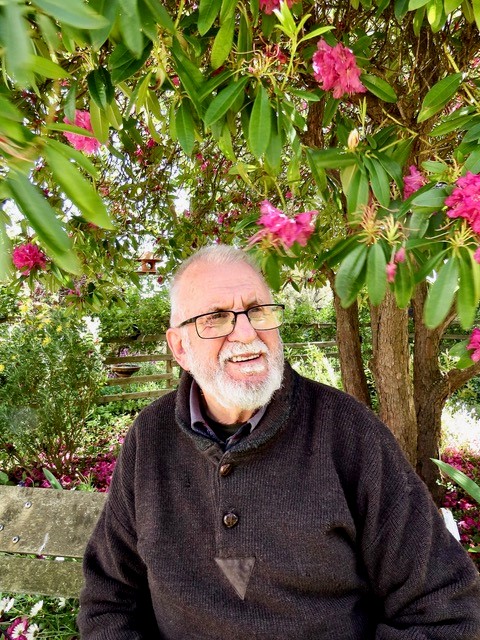
These are but a few of my favourite native bird baits. There are many more such as kunzea, leptospermum, melaleuca, prostanthera etc not to mention the seed-eater attracting trees and shrubs, but that’s a story for another time.
Got a gardening question? Ask Glen. Email glenzgarden@gmail.com
February 14th, 2021Just 15 and creating futuristic folk songs
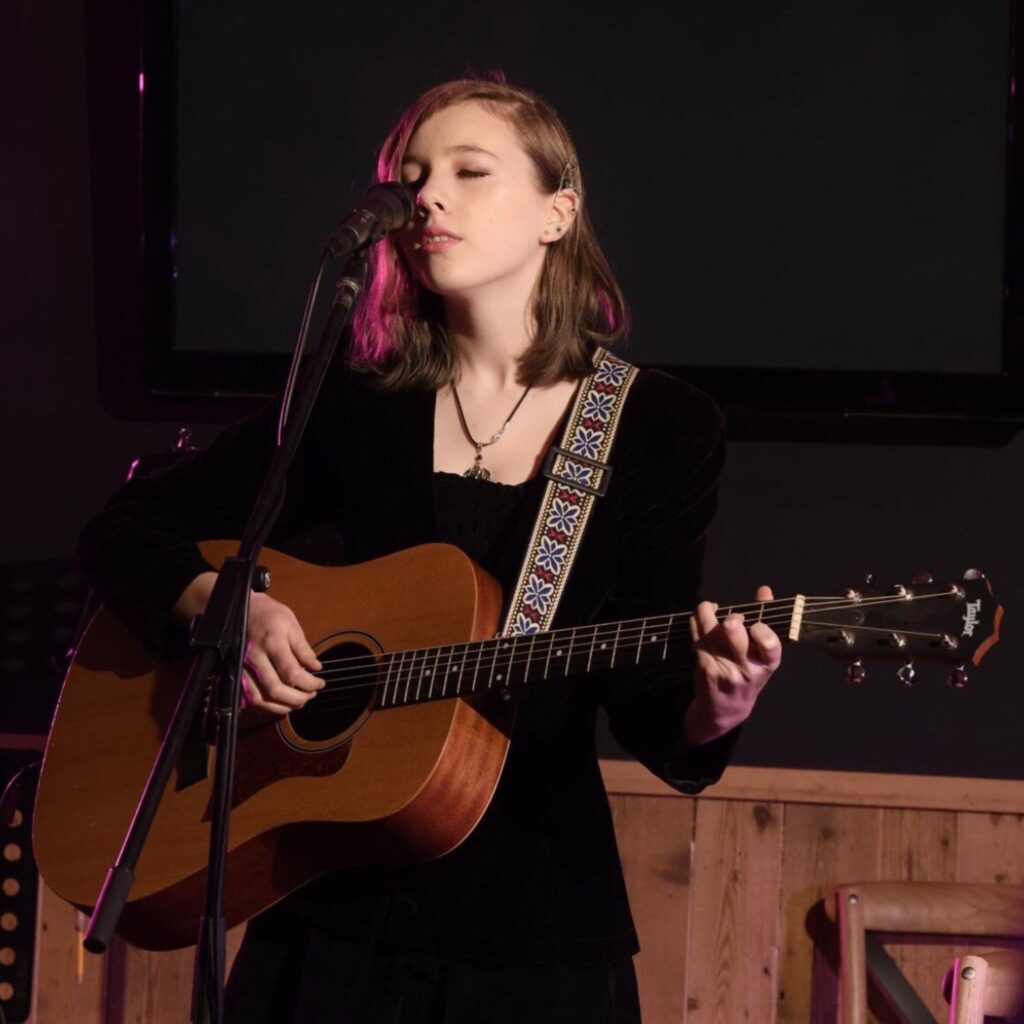
With a diverse range of influences from mope rockers Radiohead to alt-J and Laura Marling, over the past couple of years she has performed regularly and put out a regular stream of singles. Her debut album Living Thing is due to be released in a couple of months.

This year started out pretty well for the Romsey singer/songwriter when she won the Macedon Ranges Shire Council’s Battle of the Bandwidth competition in early January. The judges were no doubt impressed with her songwriting skills which she started developing at nine years old.
With pieces such as Rights for Robots inspired by Karel Čapek’s 1920 play Rossum’s Universal Robots (R.U.R.), it should come as no surprise that she is an avid reader of sci-fi/fantasy with dystopian and end-of-the-world themes.
“I get a lot of inspiration from the Throne of Glass series by Sarah J Maas, Suzanne Collins (Hunger Games) and Robin Hobb (creator of the Realm of the Elderlings universe.)
“I just find it very easy to write about those kinds of situations because there is a lot you can do with them. You can make a song really sad or moving if it’s about something kind of tragic. It doesn’t always have to be the case but I just find it a lot easier to write like that.”
Another important aspect of her artistic output is video clips. One of those was produced with the assistance of David Blake of Kelly’s Lane Studio in Kilmore. The studio has a travelling pop-up component called Montville Lane Sessions and David worked with Sage to produce a brooding clip filmed among fogbound hills for her song Iron and Lashing.
“Since then I have produced more in my film class and I actually have a new song coming out which I did completely by myself. I’m really excited for people to see that because I put so much effort into it. It’s called Here are the Mountains. I like working by myself and can be a bit of a control freak at times. I like to know exactly what’s happening in the production.”
Like many performers she has been trying to put a positive spin on being locked down over most of the past year. But it is not hard to detect a bit of excitement in her voice when she talks about her next live gig – March 7 at Palling Bros Brewery, Heathcote.
“2020 had its benefits and I was able to sit down and write,” she says in another recent interview. “I have written so many songs over lockdown…and have also recorded quite a few songs. But I would definitely prefer to be out there playing live. There is something different to playing to an audience rather than a screen.”
Words: Tony Sawrey | Top image: Jacqueline Rae
February 14th, 2021At one with a horse’s heart
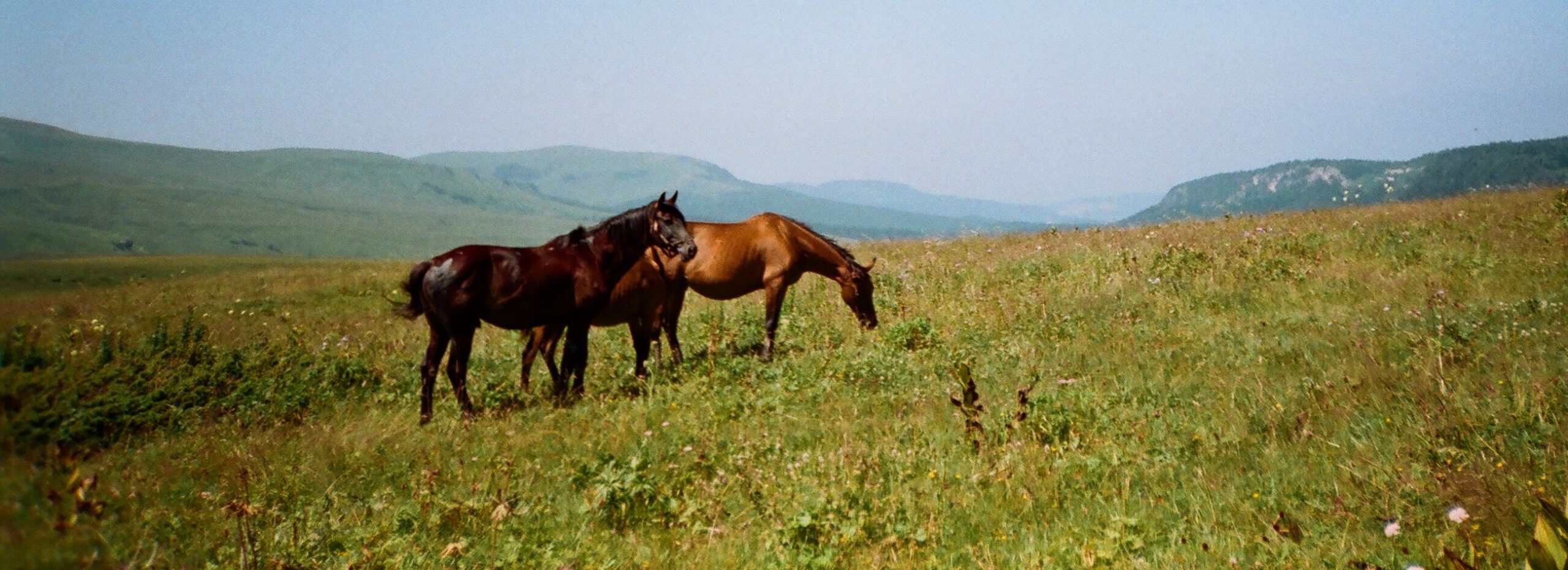
And that, according to creator of Heart of the Horse, Rachael Gibson, is the magic of horses and their power to be still in the moment.
“There is such a subtle energy at work that people sometimes find it hard to describe how they feel afterwards,” she said.
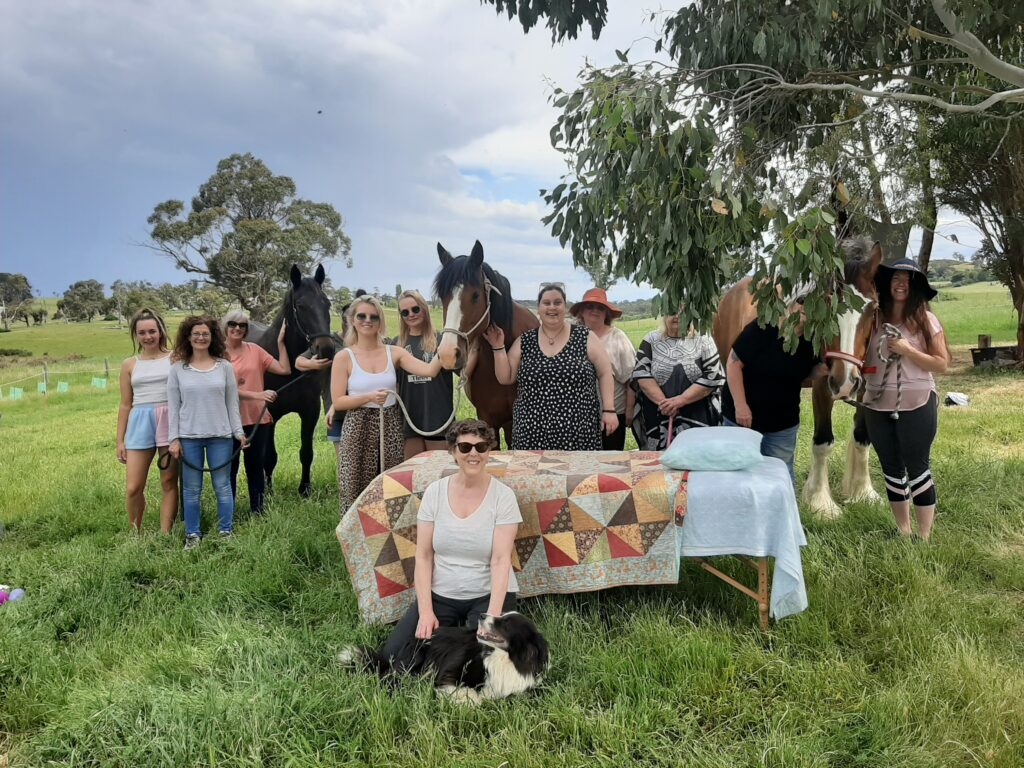
“Horses are naturally present and live in the moment. I have an amazing herd of four horses as well as Kasey, a very astute border collie, who are all incredibly connected and can feel the energy around them. They respond to that in so many subtle ways throughout the time spent in the paddock.”
There seems to be a greater understanding of the power of horses in helping heal and relieve anxiety in humans. For a long time, we have been reading about their ability to make a difference in the lives of children and adults on the spectrum and those suffering PTSD.
For Rachael, certified in Equine Assisted Learning, her lifelong passion with horses and her roles, which always included working with people and families in a wholistic way, paved the way for her to include her beloved herd of horses – Boomer, Lady, Tavi and Clover – into her passion for working with people and helping them to walk away from a session a little lighter and perhaps a little more grounded.
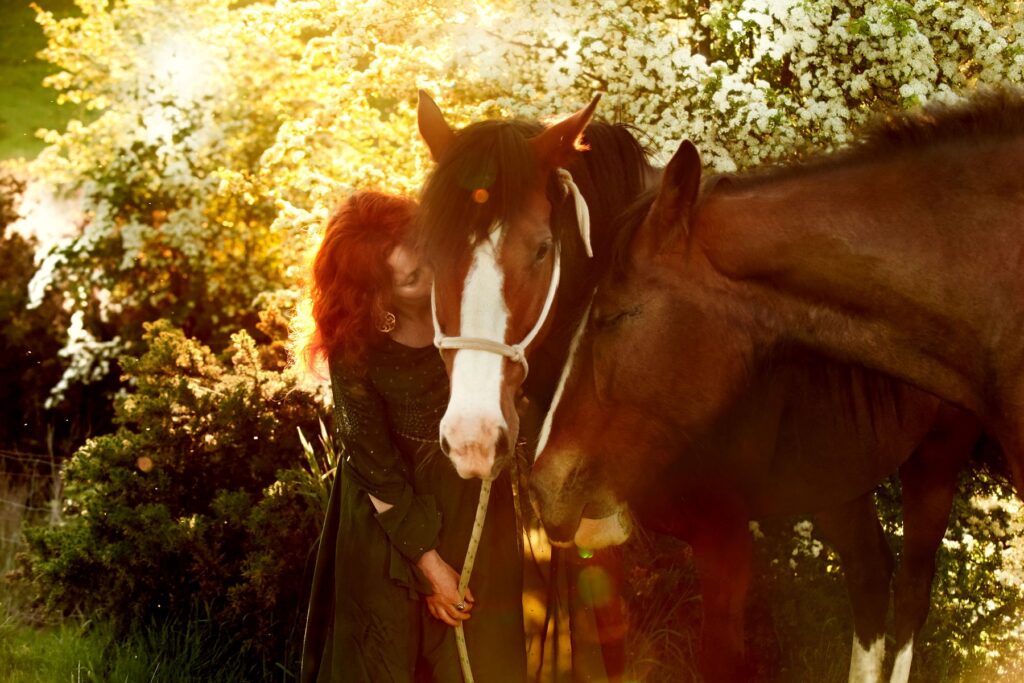
Rachael worked as a doula for 10 years and as part of a team in holistic rehabilitation in Daylesford for five years prior to working with horses in this way. She is passionate about being present with people through times of intensity and transformation. All of her offerings have a central theme of connecting people back home within themselves and their personal empowerment.
“I harness the wisdom of horses, in a facilitated environment, to help people explore aspects of their lives that are causing concern or even distress. My certification with horses combined with the healing processes and skills that I have cultivated in private practice for the last decade has led me to create an equine-based healing experience quite unlike any other,” she said.
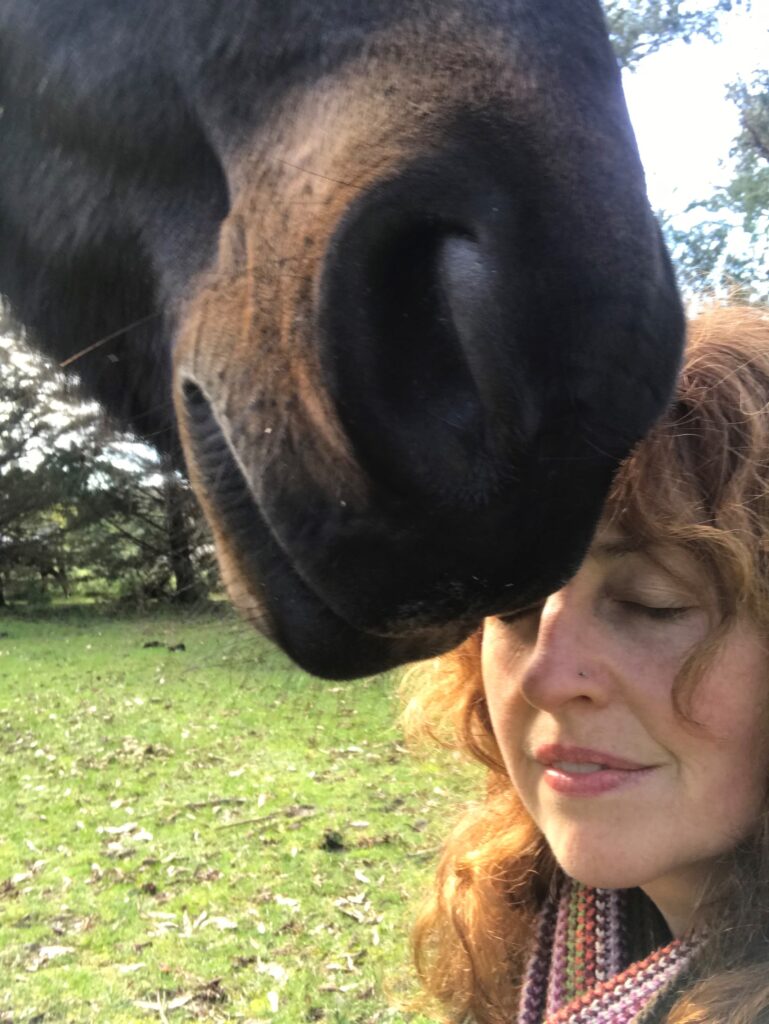
At the beginning of each group session Rachael sets up what she describes as a sacred space. Once seated in a large circle, the group takes turn to chat about themselves. For some it’s brief. Others are more willing to share. But whatever an individual’s journey, Rachael says the initial ice breaker is all about people speaking from the heart and paves the way for some ‘special moments’ with the horses.
“There is an amazing energy that comes from being in a group and the sacred circle sets everyone up for moving into the space where the horses are. It takes a few minutes for people to settle before the magic happens. People can sit, lie on a bed under a beautiful tree, move towards the horses straight away. It is simply a matter of being in the presence of these magnificent animals,” she said.
Horses can mirror human emotions and behaviour back to the individual, this can help people understand the energy they convey in their lives. Rachael believes by exploring these unfoldings in a facilitated environment it helps people take responsibility for their choices, emotional responses and reactions.
“One of the most subtle but powerful aspects of this work is how the horses model stillness and the profound effect it has on people in their presence,” she said.
“By taking some time to be with calm and healthy horses, every part of you surrenders to the present moment. Sessions involve practical tools that you can take back into your everyday life, giving you the opportunity to continue with ongoing healing and transformation.”
The majority of Rachael’s work is connecting one on one through individual sessions as it creates for a more personal and private environment for therapeutic work.
Whether you choose to simply be with the horses for a couple of hours, be part of a day retreat or a four-month course, Rachael’s gentle nature and that of her horses truly makes for an incredibly unique experience.
Just as it did for a group of 20 strangers who all shared such an experience together and walked away after feeling a little bit of magic in a paddock.
Above, group therapy, below, Rachael and her horses
Words: Narelle Groenhout | Images: Supplied

February 14th, 2021Dr Monica Nolan at the COVID front line
The wastewater surveillance work is a collaborative effort between the Department of Health and Human Services, Victorian water utilities and laboratories, and research partners.
Dr Nolan, who lives with her husband, sculptor Issa Ouattara, trained as a field epidemiologist with the US Center for Disease Control’s disease detective fellowship program and has long divided her time living at their historic church home with public health work in Africa. Most recently she co-lead the Makerere University-Johns Hopkins University Research Collaboration in Uganda.
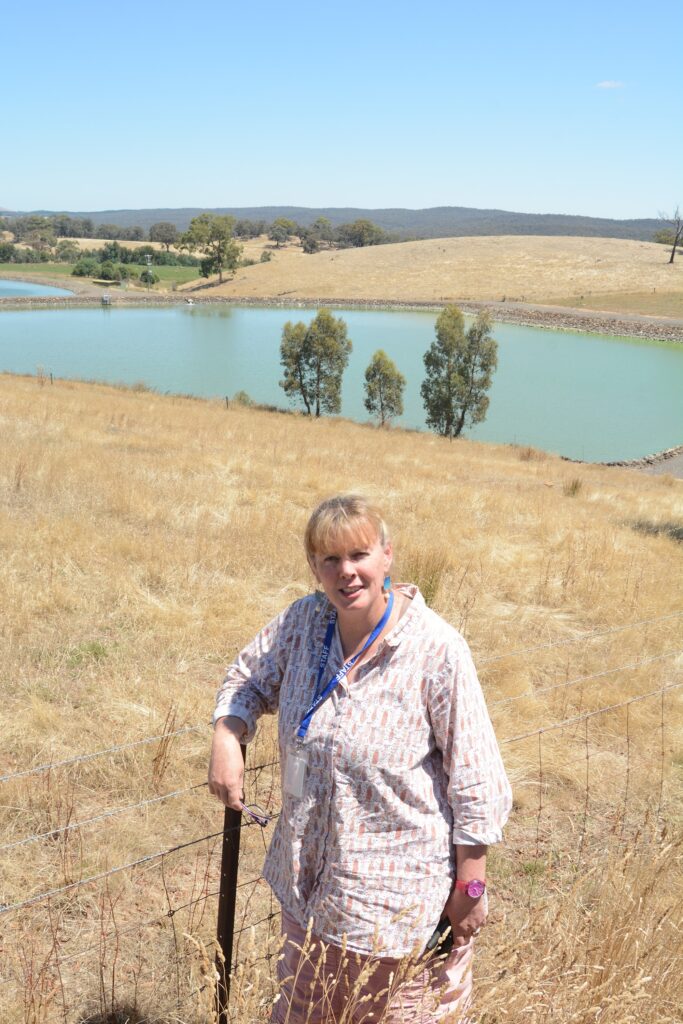
All that changed in March 2020 when Dr Nolan was visiting Australia and could not leave due to COVID-related border closures. In May she joined the Department of Health and Human Services, Victoria as the epidemiology lead for the wastewater surveillance program for SARS-CoV-2, the virus that causes COVID-19.
When new diseases such as COVID emerge, epidemiologists investigate how it is spread, the type of illness it causes, people at risk and define what steps can be taken to limit its spread and impact.
Victoria is also participating actively in the national Collaboration on Sewage Surveillance on SARS-CoV-2, modestly known as “ColloSSoS” coordinated by Water Research Australia.
“There wasn’t a program of wastewater surveillance in Victoria before the emergence of SARS-CoV-2 although there have been prior applications for pathogens like polio. This is really an innovative program which has required us and our partners to rapidly develop and start up laboratory and sampling methods and develop capacity for real time implementation.
“There’s been pioneering work globally, particularly in the Netherlands but certainly Australia and Victoria has been part of the vanguard of establishing these programs.”

Of course Australia has been very different from most other countries because the country has relatively few COVID-19 cases. So the DHHS has been able to use the testing technology for early detection and the presence of possible undiagnosed cases.
When traces of the virus are found it is significant and serves as a very effective means of monitoring possible COVID incursions and triggering a call to test if symptomatic, and intensifying wastewater sampling to monitor trends.
Last December, Daylesford made the news when a sample from the inlet to the Daylesford wastewater treatment plant picked up virus fragments. The announcement caused a brief flurry of alarm but ultimately provided a sense of security as well. The discovery affirmed the effectiveness of a program which, up until then, had been doing its work in relative local obscurity.
However, Dr Nolan says the program is part of the toolkit and works in conjunction with individual testing as well as reinforcing the behavioural practices that keep people safe, including social distancing and correct use of masks.
“When we find traces in the sewage system, we can’t tell if they are early or undiagnosed, in their infectious period or if it is someone who has had COVID previously and recovered and still doing what we call ‘shedding’ parts of the virus, but who is not an infection risk.
“So the sewage surveillance is quite a blunt population level instrument, we are looking to see if it is there. And in the case of Daylesford, we only found it once with follow-up samples not showing any traces which was reassuring.”
However, Dr Nolan would like to point out that there have been examples in the state which have affirmed how effective water testing can be in conjunction with contact tracing and other outbreak control methods.
“There was a wastewater detection in Lakes Entrance (on January 1) where within a short period we were able to make a link with a couple from the Black Rock Thai restaurant infection cluster (on December 21) that had visited the town during the same period. That was an interesting proof of concept.”
The testing process works by the sampling team drawing a wastewater sample before the wastewater is treated. They then conduct a PCR (polymerase chain reaction) test similar to that used for individual diagnosis. PCR testing greatly reduces the time required to test for certain types of viruses and bacteria, from days to hours.
Recently the DHHS has been quite busy with eight detections across the state including one at nearby Castlemaine on January 27.
“It is the first detection there and we are following it up with more sampling to make sure that there isn’t an infectious person or unknown community transmission.” says Dr Nolan. “It is unlikely, but that’s the reason this work is done.”
Words & image: Tony Sawrey

February 14th, 2021Local Lines
Big ears and noddies
If you listen for long enough, you’re sure to hear
the sounds of gossips, white-ants at their toil.
Some demon feeds these advocates on fear,
the type of fear that boils your truth in oil.
Ruthless big ears interpret your little life
with boiled-up bits of truth in cooked-up codes,
with wide-eyed exclamations, bitter lies,
and dramatic shaded whispers, conspiracy mode.
Many big ears are tuned to every body,
picking up the vibes of human flaws
like spies abroad, and bringing it home to a noddy
who nods and nods between excited calls.
This is the game that big ears and noddies play,
like ASIO on your computer, seizing your day.
James Baillie
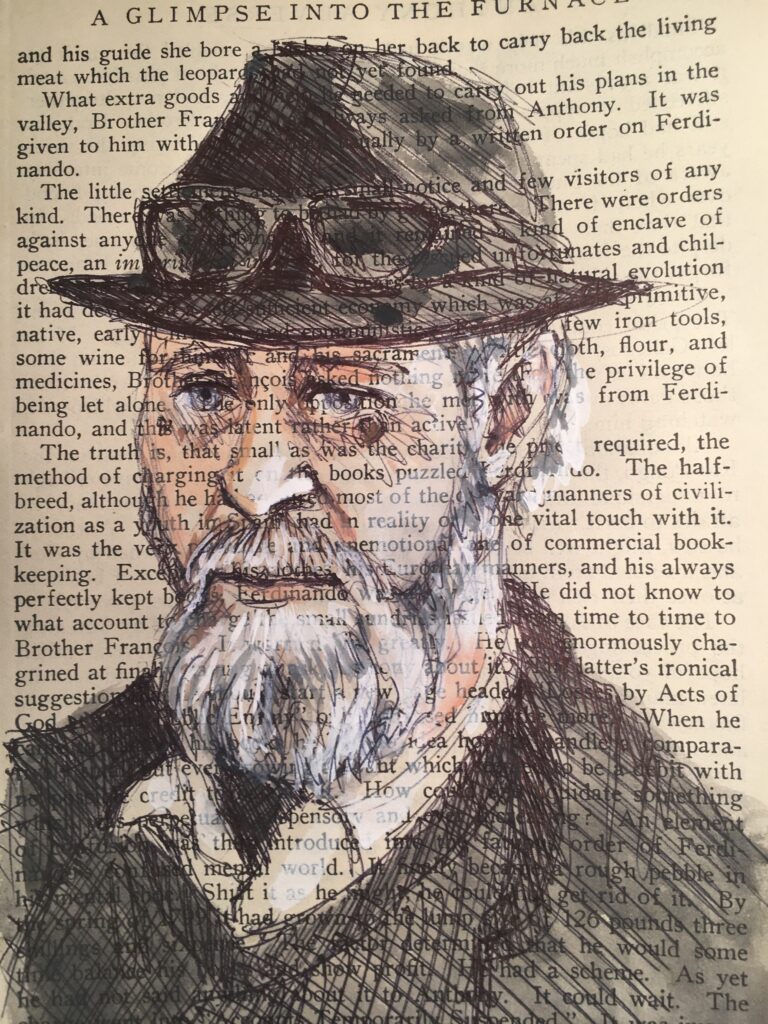
James Baillie lives in Glenlyon and runs a business called The Arthritis Man. He has been writing rhythm and rhyme as a hobby since age 11.
Local Lines comes mainly from a group of local poets but other submissions are always welcome. To have a poem considered for publication contact Bill Wootton at cottlesbreedge@gmail.com

February 14th, 2021Bullarto Primary: The little school that could
And that is because only four years ago, with four students, Bullarto Primary School was destined for closure.
But when principal Jo Pegg had an opportunity to move from a state school in the Grampians to see if she could either regrow Bullarto Primary School or come up with an exit strategy, she chose the former.
“After two weeks at the school I just knew how important it was for the local community that it stayed open,” she said.
“It was about coming up with a local niche to provide the community with a nature-based learning program which included a music and art program, because that’s what the community was looking for.”
Four years on and the little school has grown in strength and numbers and now 18 children are enrolled.
Bullarto Primary School is part of the state government education system and while policies and government guidelines are adhered to, this small but shining education light has developed a unique and inspirational learning environment where every child is supported on an individual basis.
“Our parents all look for a school where their children’s wellbeing and happiness is the most important aspect of their learning. We owe our academic success to our dedication and commitment to a healthy mind and healthy body attitude and every child can be themselves,” Jo said.
“We just let each child shine and be their own person. If a child is autistic, is shy or has anxiety, our school is about celebrating every child and who they are as an individual.”
The school has a dedicated sensory room where the kids can take the time they need to move through the learning at hand. A junior room houses preps through to grade two students and a senior room shapes the minds of the grade 3 to grade 6 kids.
“All of the children learn to their individual standards and pace. If a child is in grade 3 but is capable of grade 5 maths, then we come up with angles to support that child and their capabilities. We are focused on every single child and their families.”
Jo is a hands-on principal who spends half of the week teaching and shares the teaching role with a full-time teacher, which is a first for the school in a long time. Jo devotes the rest of the week to administration tasks but says more often than not she will take paperwork home if it means more hands-on work in the classrooms.
“I came from a mainstream school, classroom-based where play time was outside for recess and lunch and where data was collected and tests were a major focus. Here at Bullarto, if we feel like going outside at any time for our classes we can,” she said.
“Studies show us that our mental health is improved when we are at one with nature. Nature-based learning underpins what we do and inspires our school community.”
And despite COVID forcing all of our school kids into remote learning, for Jo and the rest of the school, they embraced it by simply being positive.
“We are a positively-driven school so when we were faced with remote learning we all supported each other. The entire school and families would connect every morning so we could all see each other and catch up,” she said.
“I spoke with some families every day and all families on a regular basis and we all adapted very quickly. We were lucky to have incredibly supportive and engaged parents and not once did we receive any negative feedback. We also found our children came back with a greater appreciation of school and of their own learning.”
Jo said she, like every other school principal worldwide, hopes remote learning is a thing of the past but says if it should happen again her school community is prepared and will get through by concentrating on the positives.
Jo is hoping to continue to grow the little school – just as the resident goats grew their family at the school last year, and is always searching for new ways to engage the wider community and highlight the importance of Bullarto Primary School.
“We already have future enrolments and a family is due to begin here when they can return from England. They are originally from Victoria but researched our school and have chosen to send their children here because of what we can provide.”
And a nature/art playgroup open to all pre-school children is in the process of re-starting on Friday, February 26.
“Being surrounded by nature makes my job easy. Our school is set in a beautiful environment and we are connected to an amazing forest. Our children, their families and the supportive community are the real success stories for keeping the school alive.”
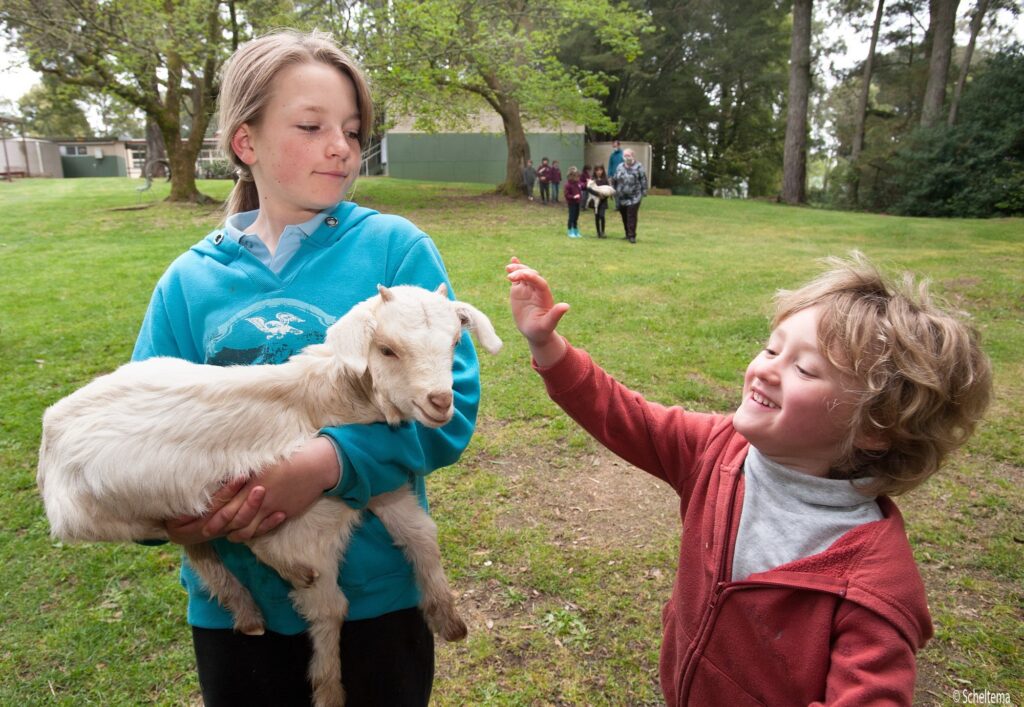
Above, Lily and Rupert with Milkshake, the school’s newest ‘kid’, who was born during remote learning last year,
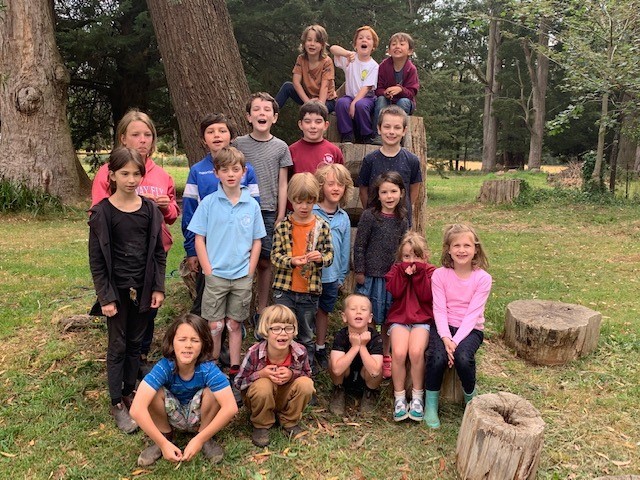
below, the entire school body
Images: Sandy Scheltema
Words: Narelle Groenhout

February 14th, 2021Local Lines
Silence and Pain
Silence has its own music
It remembers the drift of sounds
the curdle of words
Pain presses insistently
but when absent is more gone
than music from an unplugged wireless
Silences break with a whisper a gong a hum
Pain withdraws and quickens
soundlessly
Bill Wootton
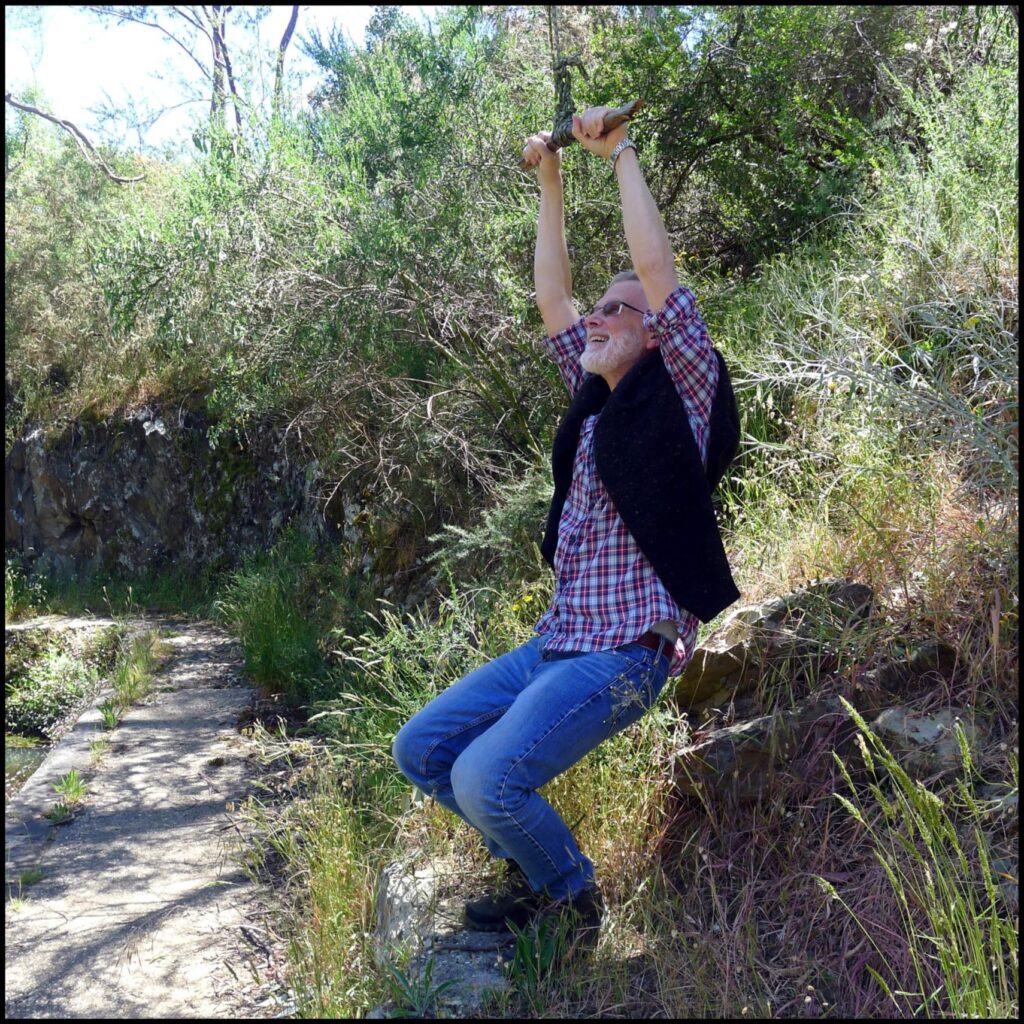
Bill lives in Hepburn Springs, sometimes silently, sometimes painlessly.
Local Lines comes mainly from a group of local poets but other submissions are always welcome. To have a poem considered for publication contact Bill Wootton at cottlesbreedge@gmail.com

February 14th, 2021Just sayin’…
First up is the “lawyer cat”, pictured. That Zoom meeting must be the funniest of the past 12 months. Just when you thought nothing more could surprise you from Zoom or Facetime or Google Meet, a lawyer turns up with a cat filter and even says “I am not a cat”. I can watch that for hours. Well, minutes really but it is still funny.
I did go and look for the filter to use in my next VCPA meeting but apparently it is really old and can’t be found anymore. And let’s face it, like Bernie Sanders and his mittens, it will become passé pretty quickly.
Next up, today is Valentine’s Day. Now we don’t celebrate the day. As Kyle says: “We celebrate our love every day.” Which is either very sweet or just a way out of buying flowers. My only real Valentine gift arrived in my letterbox when I lived in Japan, more than 30 years ago. A good friend had gone to the city – we lived in the country – and returned with a much coveted McDonald’s burger and fries. I wasn’t home so he shoved them into my letterbox along with a little card with a heart on it. I discovered them about four hours later and yes, I ate the burger. The fries were a bit too soggy.

Kyle’s and my most memorable Valentine’s Day was when our Frankston home burnt down, well half of it. We battled to save the dogs, which we did, and then ended up in hospital in emergency. Our beds were separated but Kyle made such a fuss they moved things around so we could be side by side. Holding hands while sucking in oxygen. How romantic.
Finally, last week we had our first trip away in what seems like forever. Nothing amazing but a few days around Victoria, no plans, just wandering. It was really fun and lifted our spirits which, I must admit, have been a little down. We explored new places, had some great food, met interesting people and just wound down. It’s amazing how quickly you can relax and more amazing that we have held onto that feeling after coming back home and even going into this short lockdown.

It also made us decide to start some travel planning. I know that is difficult but everyone needs something to look forward to. So we are going online and making bookings, that can be refunded of course, to places we want to see and people we want to catch up with. On the list so far, and probably in this order, are New South Wales, Queensland, New Zealand and Japan. I know we are still in a pandemic but I think for our mental state, it’s time to start looking forward to life again. Just sayin’…
February 14th, 2021Kyle’s Rant
Anyway I am here to catch you up. I suppose the guards can be forgiven for letting a nebuliser slip through the dragnet that is our hotel quarantine, and for those of us that wonder what such a machine does, I have done the research for you.

A nebuliser is a machine used to change liquid medication into a vapour that you can inhale. It works by pumping pressurised air through the liquid to form a fine mist, which can then be breathed in through a mask or mouthpiece.
That is, it pushes air through the liquid, which can include COVID-19 droplets, and vaporises it, so as the bug can hang around in small air particles for much longer than normal, so one and all can have a chance to inhale it. WTH.
It beggars belief that after all this time, hard work and getting protocols in place one year after this all began, the dimwits who are largely responsible for the health of the country are still slipping up in such a big way.
And then there is the tracing and tracking, which I am led to believe is “gold standard” which is great because the guards who are out and about after their shift are certainly out and about. One guard’s movements looked something like a mailman’s run at Christmas time.
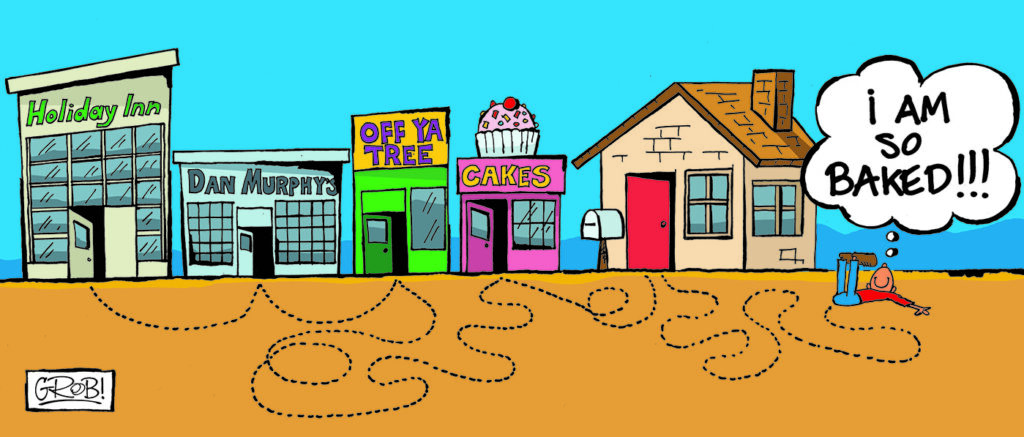
They went everywhere. I cannot even think of the last time I went to a bank. This particular individual went to two different banks on the one day and then there are the two visits to Dan Murphy’s and one visit to the Thirsty Camel – all on the same day. Can’t these guys just settle for a reasonable priced bottle of chardonnay and some online banking at the end of their day?
The last word on the subject is “airflow”. It seems a no-brainer that you are more likely to catch or spread a bug in a hotel with little or low airflow. The bug doesn’t seem to live long out in the sun, so maybe give some of these poor iso-bunnies a balcony with air and sunshine.
It’s like if you have ever walked into a teenager’s room after they have a sleep-in. The fart-imbued air knocks you off your feet and I imagine it is the same with this bug.
Open up an airless room with a family of four hunkered down together and you will get a sudden release of the bug and I imagine probably get the fart cloud on top.
I am not a scientist, despite all I espouse, however I am a thinking human, and when the WHO declared masks were a no-goer, I was running around the supermarket with an N95 strapped to my nozzle.
I figured the WHO was simply trying to conserve PPE gear. In the same fashion that these iso-bunnies are thrown into an airless cell of a hotel, it is just a matter of bureaucratism catching up with science.
And now you are caught up, rant over…

February 14th, 2021Design with Indre
The humble park bench is invaluable for our appreciation of our landscape, be it solitary or social, exclusive or inclusive. It offers respite and a place for contemplation, social engagement, or not, as well as partaking of food, alone or shared.

Often the park bench is not an obvious statement. Not made for comfort, lounging or sleeping until recently. Its design beginnings were originally stone slabs in Italian Renaissance town plazas and used for markets and town meetings. They encouraged a sense of belonging and inclusion in town squares plus they offered shelter outside churches, from the weather or for the disadvantaged. Socialising in a town square was now encouraged. It wasn’t solely about making transactions in town.
Rustic stone and timber benches transformed into mass-produced cast iron benches and chairs during the Industrial Revolution. Cast iron was durable and cheap. Designs were still not made for comfort but became decorative with motifs depicting flora and fauna, when viewed empty and in situ. The fashion at this time was social parading in the towns.
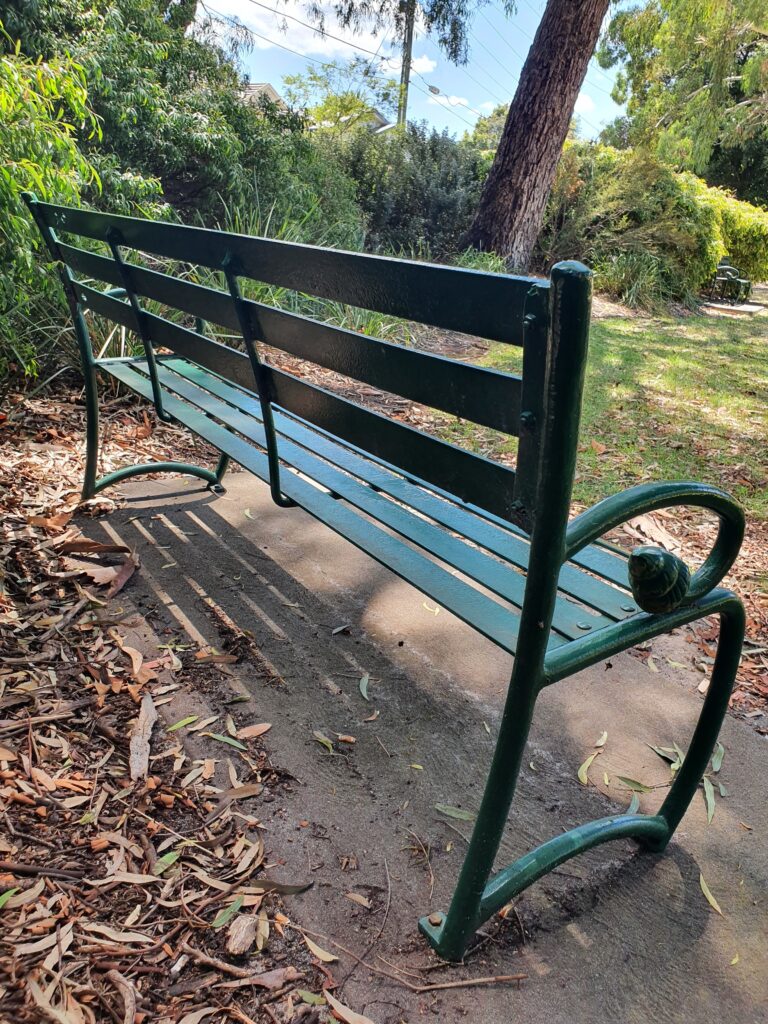
Often straight backed, if a back was offered, narrow so you could perch but not sleep – chairs or benches were for support only. Add dividers or middle arm rests and you could be sure your stay is temporary.
Regardless of discomfort, the respite provided offered a welcome contemplation. Many an idea has been thought from a bench. As many a problem has been solved. Lovers are united in sharing a space and friends or strangers pass time, united by a bench. We have all noticed the dedication plaques displayed on particular benches. These tend to invoke a sense of intrusion, perhaps of memory, reflection and ghosts?
The plaza at Harvard University has provided a ‘new organisation of social space’ by introducing Stoss hand-designed contemporary benches. These benches are ergonomic, allowing for multiple functions like stretching, playing or lounging.
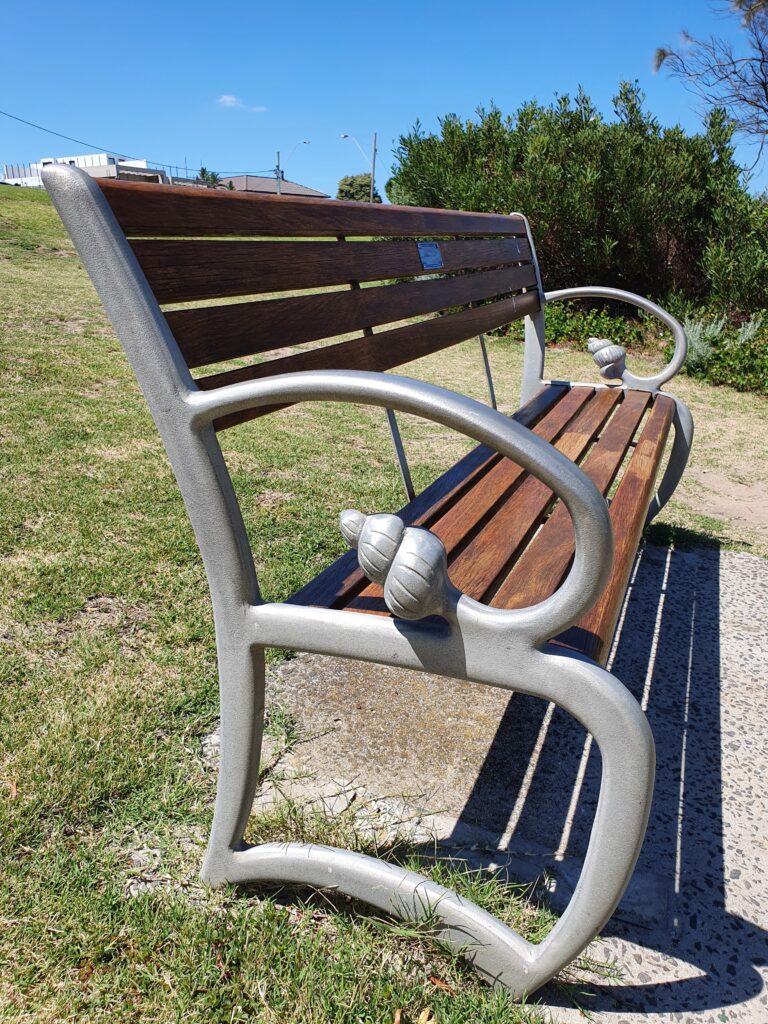
This is made possible with 3D modelling and fabrication. It creates a new sense of community, reflecting broader societal changes toward a healthier, more inclusive public space. Similar sentiments are seen in Italy by architect and yoga instructor Robyne Kassen with the ‘zero point’ bench.
Unire/Unite is an installation in Rome using the zero point benches. They are timber frames covered in ‘concrete canvas’ – concrete on the inside with canvas on the outside. The installation enables visitors to do yoga-inspired body positions to ‘activate, strengthen and balance the mind and body’.
Today we are seeing our benches and public spaces reflecting our obsession with comfort, technology, health and social wellbeing. Regardless of the type of bench you find, I think the time of respite and peace found there is welcome, no matter the bodily position you must take up. Go forth and explore your nearest park bench. You’ll be pleased you did.
Indre Kisonas owner and principal designer – iok design
indre@iokdesign.com.au | www.iokdesign.com.au
February 14th, 2021Glen, Around the house
That was just when weather switched to feral Summer and our trees and garden beds were readying for their weather worn, parched faces.
So now we can leave our hoses coiled for just a little longer. Not that we rely on hoses in our garden, except to link our various networks of trickle irrigation to their nearest tap…and a couple of short lengths of those black ‘dribbly’ hoses to trickle around the base of isolated trees and shrubs.
It was nowhere near other area’s massive downpours. But aided by the accompanying lower temperatures, it certainly helped top up our tanks and gives us time to catch our breath before the next wave of heat reaches us. Our gardens certainly appreciated the break.
So best take advantage of the damp, softened soil to prepare your plants for the real Summer weather by getting rid of any weeds and lightly raking or digging over the top soil to gain maximum soakage of any further rain. And be ready to spread mulch over the beds once you are sure the rains are over. Trees and shrubs in particular will appreciate a light dressing of an organic fertiliser at this stage as the present damp conditions will assist in its journey to the roots.
Don’t turn your back on your fruit trees, especially now at the end of their crops. This is a critical time of the year for them as they are recovering from the stress of producing a heavy load of fruit and, at the same time, start storing up energy to see them through Winter and into Spring, and the next harvest.
Don’t rely on the rain or run-off from the rest of the garden. Give them good, soaking drinks by letting a hose run slowly into a shallow moat around their base. Better still, encircle their drip line with a loop of trickle irrigation hose for a frequent session to ensure the soil is kept moist.
Roses should be allowed to rest now after their Spring/Summer burst of blooms, in readiness for their next bout in Autumn. Mulch the plants and ease up a little on the watering. Do not feed them at this time of year or you could encourage a burst of vigorous leaf growth at the cost of plentiful Autumn flowers.
Garden ornaments turning to rust
It seems that gardens, wherever you look, have turned to rusted metal as the theme for furniture or ornamentation, and artisans and garden stockists alike, are thriving on the boom.
And why not? Especially living, as we do, in a rural setting where the landscape is liberally dotted with rusting implements and easy to obtain bric-a-brac, rusted ornamentation is the logical and certainly fitting choice.
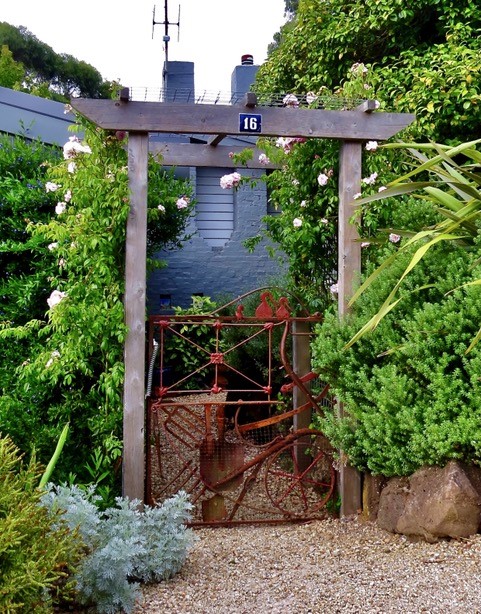
Our garden is liberally sprinkled with ‘rustique’ ornamentation – created, found, purchased and gifted over the 35 years we’ve been here. They range from an ornate wrought iron chaise longue down to pendant draught-horse shoes. But the piece-de-resistance is the elegant wrought iron settlers-themed farmgate framed by a fast-growing Renae climbing rose at our entrance, pictured. It was created for us by noted Daylesford sculptor/artist Stefan Nechwatal.
Garden Query
Hi Glen, In the edition dated 4.1.2021 you referred to a “long-handled gadget to remove weeds”. Could you please provide me with the name of the gadget, make and if you know who sells them. You may not know seeing it was a Kris Kringle gift.
Thank you, Tim
Hi Tim, Among the quite varied range of similar weed pullers I’ve experienced, this one, Xact Weed Puller really takes the cake both in design, and ease of operation. It can be obtained from the leading hardware warehouses, also online.
Cheers, Glen
Got a gardening question? Ask Glen. Email glenzgarden@gmail.com

February 14th, 2021Pets@Work
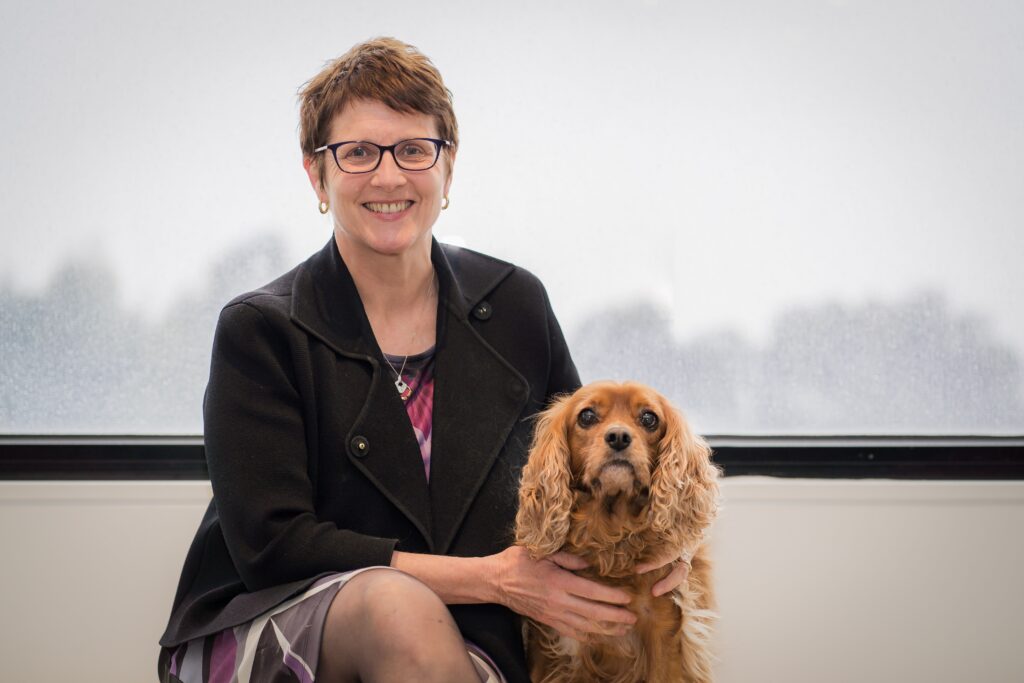
To get the ball rolling RSPCA CEO Dr Liz Walker chatted with Donna Kelly about the benefits of having a pet at work.
Donna: How does having a pet in the workplace help morale, mental health?
Liz: Animals are integral to the lives of Victorians – we have 6.7 million pet animals in Victoria, and around 24 million pets in Australia. That’s a lot of animal lovers. The research says pets are good for people. They bring people together during times of joy, and times of sadness. We know that pets can help improve our quality of life including reducing stress, improving health, reducing loneliness and providing companionship.
Research has shown that owning a pet can have a number of psychological benefits: Those who have pets have been shown to have higher self-esteem; pet owners report less depression and appear to cope with grief, stress and loss better than non-pet owners; pets enhance social connectedness and social skills and are great conversation starters and pets are also great caregivers. They keep us company when we’re sick or feeling down. They can make us feel safe while we’re home alone and they keep an eye on the house while we’re out.
Research has also shown that owning a pet can have a number of physical health benefits too, including: increased cardiovascular health (lower blood pressure, lower triglycerides and in men, lower cholesterol); and increased physical activity. Dogs especially help us get out and enjoy the outdoors while getting some regular exercise. They are great motivators and personal trainers, never wanting to miss a training session no matter the weather and fewer visits to the doctor.
Growing up with a dog (and other pets to a lesser extent) during infancy may help to strengthen the immune system and may reduce the risk of allergies.
Donna: Would you recommend a pet in the workplace?
Liz: I think dogs can be a wonderful addition to a workplace environment, for the dogs and people alike. It is a great way to socialise your dog and give them companionship throughout the day, and a great source of wellbeing and satisfaction amongst staff.
However, there are a few things people should consider before bringing their dogs into an office. Not every dog is suited to this opportunity, and the onus is on the owner to ensure their dog is comfortable and prepared to spend a day in an office environment. For example, a dog who is happy in an office would be relaxed and comfortable in busy environments and meeting new people. An anxious or super- energetic dog may not be as suited to spend the day in an office and may be much happier at home.
Owners should ensure that their dog is adequately house-trained, is wearing a collar and identification, has received all relevant vaccinations and is on an effective regime of flea and parasite control.
Animals should be supervised at all times when in the workplace and due diligence should be done to ensure the office is free from hazards or chewable items that might be picked up by a cheeky dog. It’s a good idea to have a specific area/bed for the dogs to sit – this also helps with hygiene and cleaning.
Make sure you take your dog for frequent toilet breaks and a walk throughout the day to help them burn off any extra energy. It’s also worth checking to see if anyone else plans on bringing their dog into work that day to make sure that any interaction is managed if necessary.
Donna: What pets work best?
Liz: Every animal is different. If you see people take their dogs into the office, chances are they have been really well-socialised and have been exposed to a wide variety of different environments enabling them to feel comfortable in new situations.
However, it really does depend on each animal’s temperament. Owners should make a decision based on their animal’s unique needs. My advice would be to start with short visits to the office to see how an animal copes, increasing the time in the office as the animal becomes used to the environment. Or stopping office visits if the office is just not where they feel happy.
As an example, I know Will’s (Belle Property Daylesford’s Will Walton), prior pooch, Ziggy. Ziggy loved being in the office – he even spent time in my office when I looked after him many years ago. Ziggy loved the people and attention and would snooze through meetings after making sure he’d said hello to everyone.
In contrast, my current dog, Princess Esther The Great, is a homebody. She will come to the office and sit quietly but her ears are back and she hunches low when people come to visit me. She finds the interruptions and other animals that we sometimes see quite overwhelming. These signs tell me that this is not her preferred place, so in her case, it is better for her to stay at home. It’s fair to say she has enjoyed the COVID-19 working from home regime.

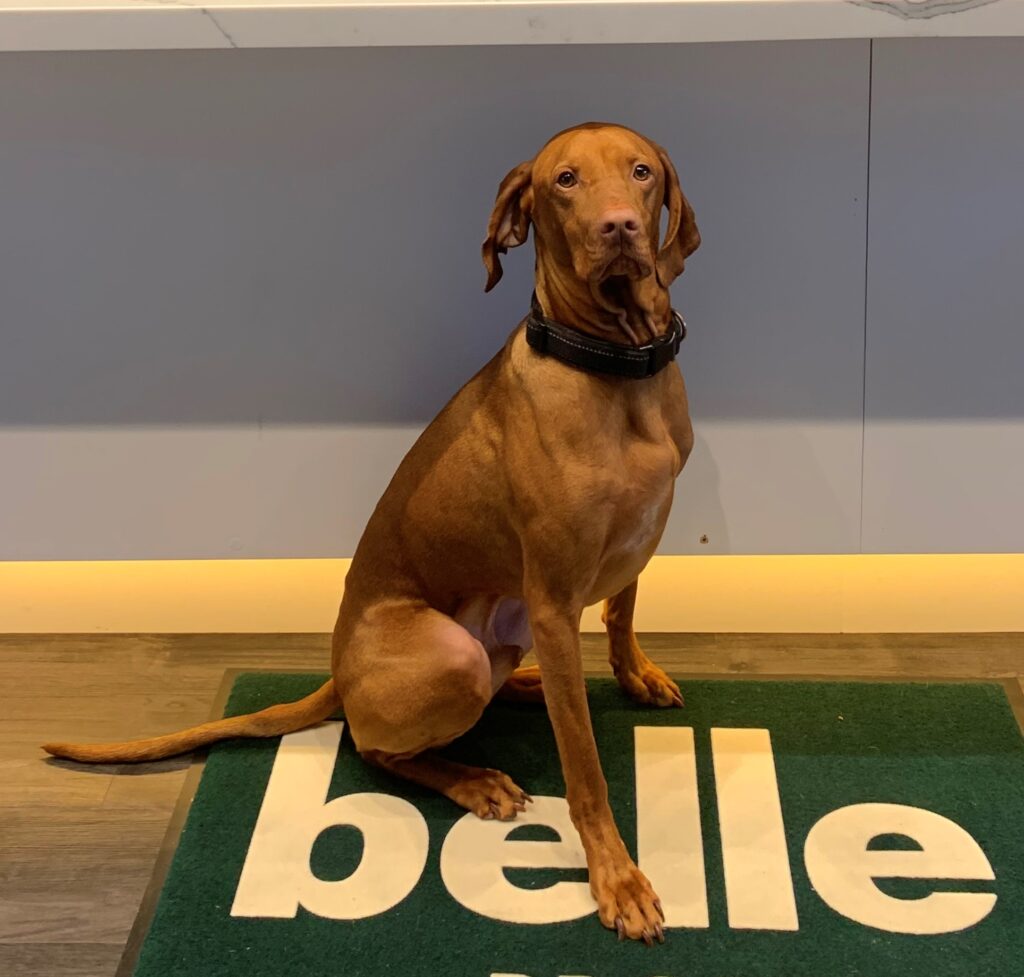
Will Walton and Pete Douglas, of Belle Property Daylesford, have had a tradition of sharing their vizsla dogs in their real estate offices with both team members and clients enjoying the interaction.
“Currently we own Pixel who moonlights between our Daylesford and Trentham Belle Property offices. He’s even gathered up his own database of loyal clients!”