


February 14th, 2021Uncovering the history of the Convent Gallery

The first Presentation convent in Australia opened at Richmond, Tasmania in 1866 and as the need for Catholic education in the new colony of Victoria grew, pioneering Presentation Sisters responded by establishing convents and schools there including Daylesford.
By the turn of the 1890s the order took possession of an empty house on the slopes of Wombat Hill, first built in 1862 for gold warden and magistrate James Daley. It was named the Holy Cross Convent and Boarding School for Girls and was opened in 1891 with 27 students. Over the course of 80 years with renovations and additions of extra rooms and buildings they turned it into what visitors encounter today as the Convent Gallery. Some 50 years since the remaining four nuns moved to a new convent next to St Peter’s Church in Duke Street, the memory of the Presentation Sisters order still infuses its atmosphere. And owner Tina Banitska has made sure the many stories associated with their tenure are not lost to time.
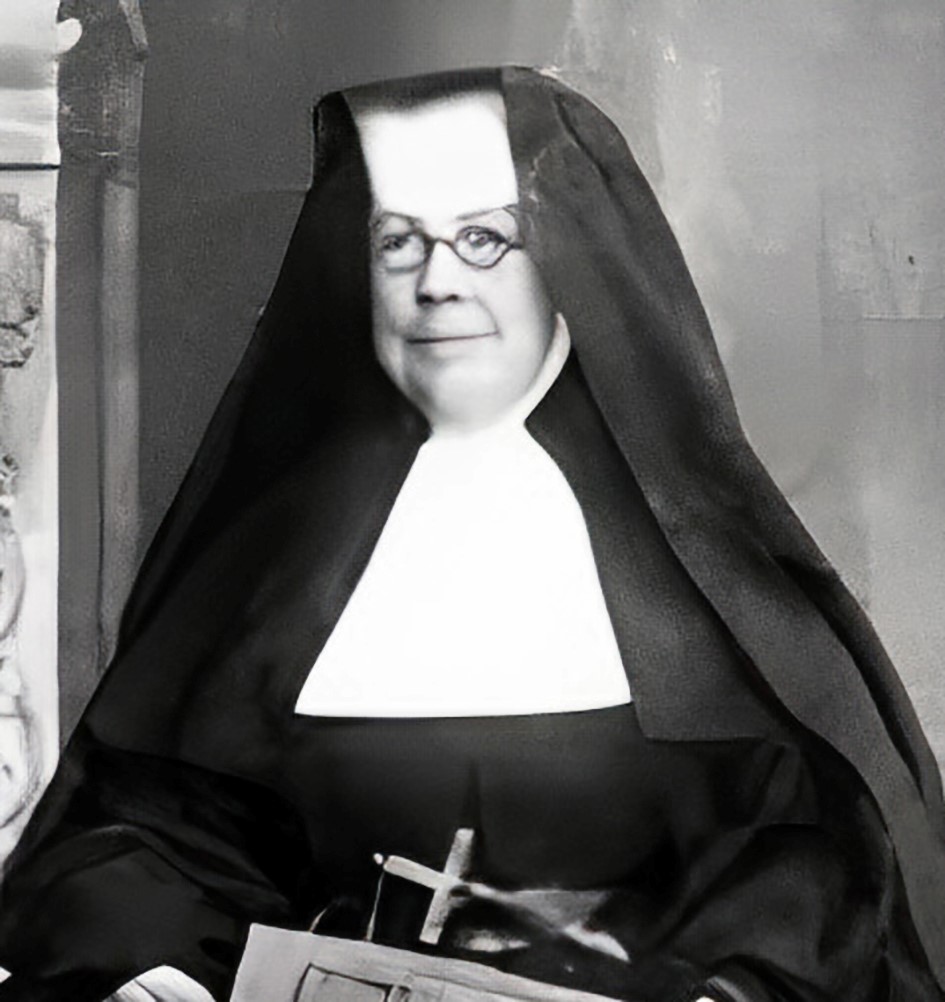
In fact, one of the positives to come out of the 2020 lockdown, when attractions like the Convent Gallery had to shut their doors, was to give staff Marija Fina and Rebecca Walker the chance to properly collate the various strands of the sisters’ history, their cloistered lives and ultimately their legacy.
“What I took away from the project,” says Marija, “was a real admiration for these women who were living in a time when women didn’t have a lot of rights and many just got married. Perhaps for some women (joining an order) was a way of actually having more control in their lives, a form of empowerment in a way.”
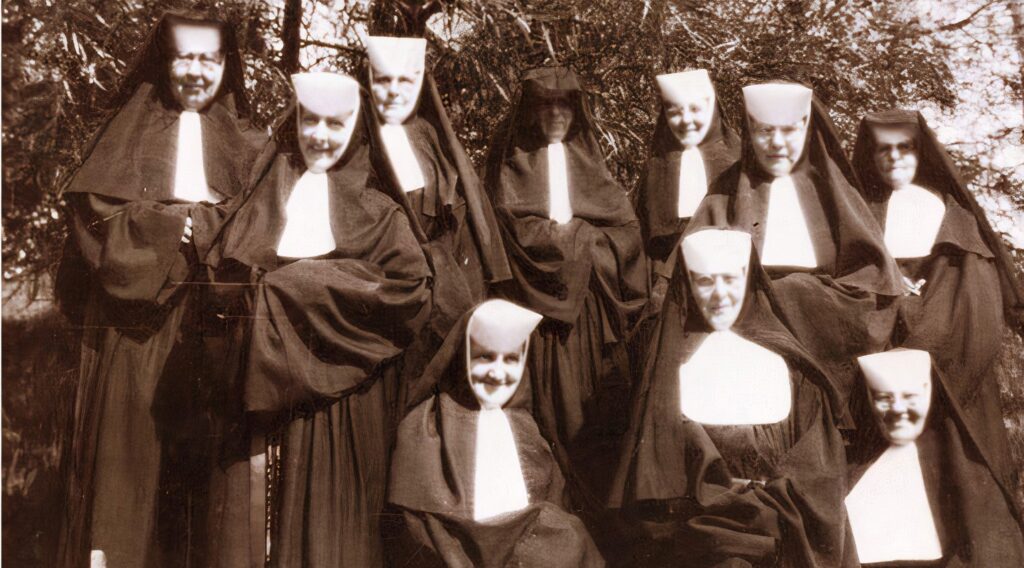
This certainly seemed to be the case for Mother John Byrne – the woman who established the local order and served as its first Reverend Mother or leader. Originally from Kildare, Ireland she arrived in Melbourne in 1873 and set about establishing convents in Wagga Wagga in 1874 and Elsternwick in 1881 before heading to Daylesford. Accompanied by sisters Alphonsus Southwell, Michelle O’Sullivan, Gertrude Donaghy, Teresa Bourke and Angela Sullivan, Mother Byrne was determined to bring culture, education and the arts to the Daylesford community.
Sister Sebastian Lardi, later to become Reverend Mother serving from 1923 to 1928, remembered her as: “A dignified and gracious lady and aristocrat to her fingertips. A woman of great breadth of mind, hospitable, well educated, strong and in the liberal tradition of Nano Nagle, she had a vision and the courage to carry out her plans.” After Daylesford, Mother John established convents in Rutherglen, Chiltern and Inglewood before passing away in 1906. In 1897 Alphonsus Southwell was made the Daylesford Convent Mother Superior and remained in that position until Sister Joseph Masterton took over in 1914. She was followed in turn by Sister Alphonsus in 1917.

When a woman officially entered the novitiate – becoming a novice in a religious order, they would receive a name, such as a saint, to denote their new state in life. That is why many of the inducted nuns carry men’s Christian names.)
Over the years, 106 women followed Mother Byrne into the Daylesford Convent. And while the first eight years were difficult, by the end of 1901 the number of boarders were increasing and the order was prospering. The dormitory spaces were increased and the recollection of women who passed through there over the years opens a window to another time and place.
For example, Mary Buckley Sparks vividly describes the presence of Sister Christopher, a nun there in the years before WWII. “Sister Christopher glided about as though her feet were not on the ground. Head erect, taking in all as she went.” Or this recollection from Bernadette Cleary. “The nuns (were) remarkably competent, admirable women who instilled in me a lifetime love of learning.” To other girls, the women with their black full-length coverings were a source of great mystery. Monte Jenkins who was educated there in the 1920s recalled that she never saw the nuns out of their habit and the girls always imagined them as bald.
Former student and boarder from 1932 to 1941 Merlyn de Van der Schueren also offered these snapshots of life at the Holy Cross. “Sister Teresa: never gave up the old ‘habit’ and never gave up trying to turn Holy Cross girls into ladies. Sister Vincent: bent praying in the chapel. Mother Aloysius: a wonderful teacher and respected Reverend Mother. (And) The Presentation Sisters were women who gave their life to Christ. They were the true biblical holy women. They were holy, prayerful, hard-working, caring, happy and human.”
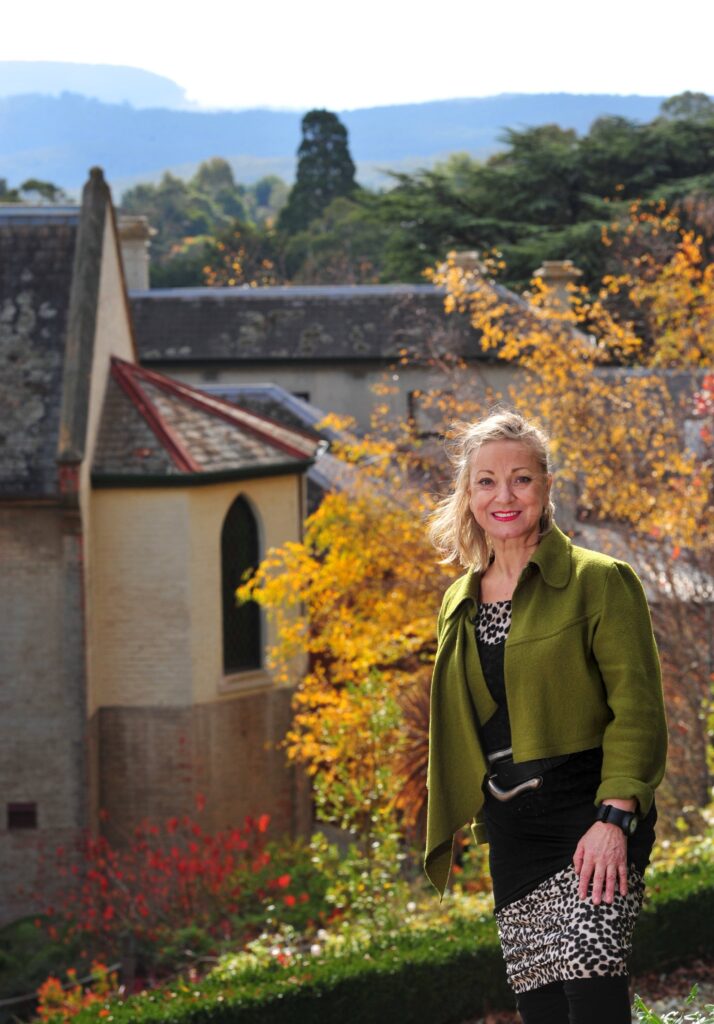
Thanks to Marija Fina and Rebecca Walker and the Daylesford Convent Gallery for their assistance with this feature
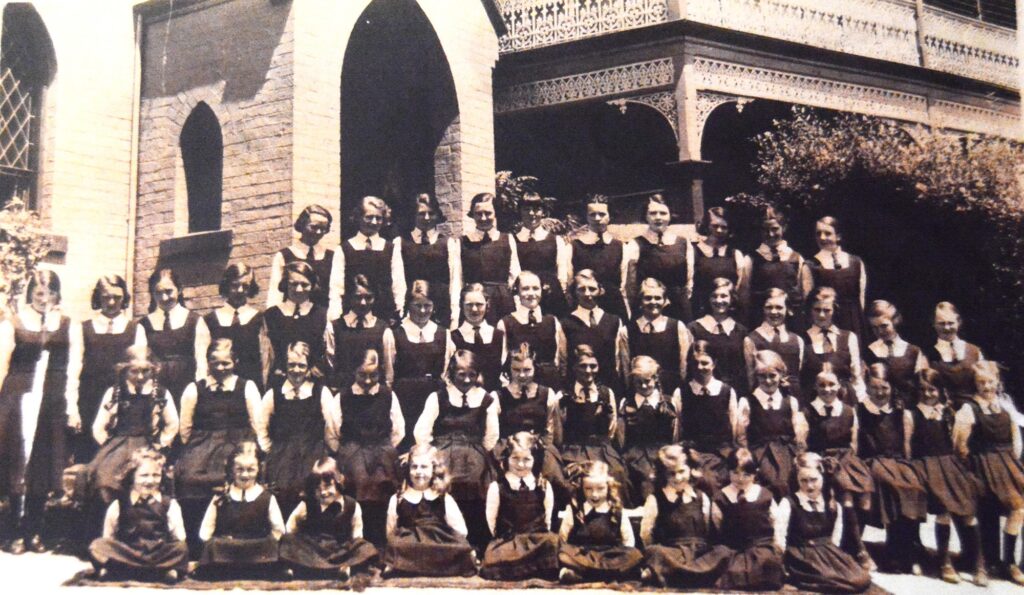
Pictured, above, Mother John Byrne 1890s; centre, Brides of Christ, rear from left, Sisters Margaret Mary Crowley, Loyola Moloney, Lawrence Teahy, Aloysius Evans, Columba Bailie, Fabian O’Keefe and Di Pazzi Hensker, front, from left, Joan Gallagher, Teresa McMahon and Gerard Walter; below, boarders at the Holy Cross Convent 1934; and final image, owner Tina Banitska and the Convent Gallery today
Words: Tony Sawrey | Images: Supplied


February 14th, 2021Playing games at Woodend

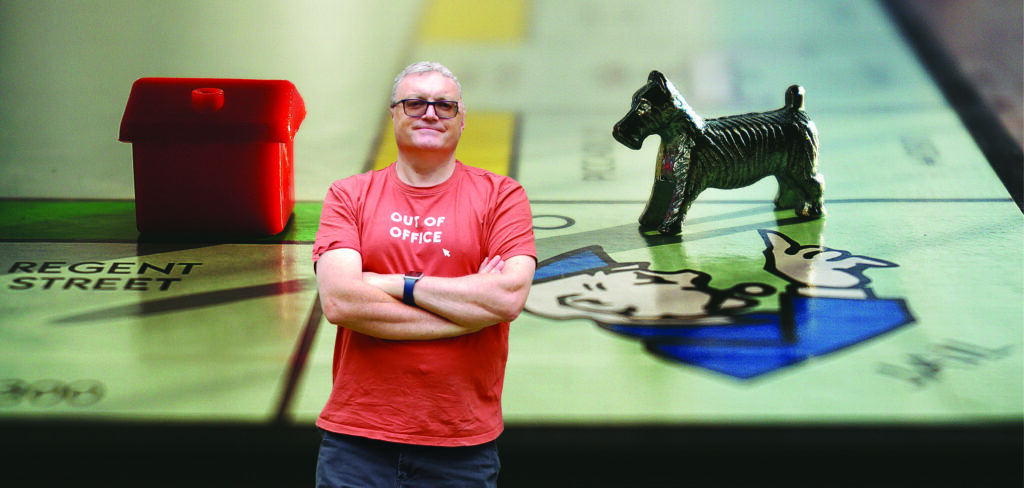
He created the Woodend Board Game Gathering Facebook page mid-December to test the water.
At the first gathering on Sunday, January 24, at the Woodend Neighbourhood House, there were 70 plus Facebook members signed up, with 15 members turning up on the day and five apologies.
David said the response to the post was mostly through word of mouth.
“The monthly gathering’s aim is a mix of social and competitive playing of different board games,” he said.
“Once you start talking about board games you come across people who say ‘Oh, yeah, me and my friend or partner played but never with a large group’. There has been a renaissance in board game playing since the COVID lockdown.”
Melissa Rogerson, a lecturer at the School of Computing & Information Systems/Interaction Design Lab at the University of Melbourne is an academic authority on board gaming and a dyed in the wool enthusiast.
Ms Rogerson said there are four main reasons which explain the appeal for board games in an article she wrote for The Conversation.

Firstly, social interaction. You need at least one other person as an opponent. In most cases three or four players are usual.
“Even a mediocre game can be fun and memorable when you play it with the right group of people,” writes Ms Rogerson.
Secondly, playing board games is good for your brain. It delivers intellectual and strategic thinking.
Thirdly is physical interaction. The artwork on the board and the tokens each player moves provide a tactile pleasure.
Finally, there is a never-ending supply of board games offering variety for contestants.

David said he was delighted with the attendance at the gathering, with six different games played during the three-hour session.
The plan from now on is to hold a free-of-charge Woodend Board Game Gathering on the fourth Sunday of each month.
“There was only one person who had not played board games before,” he said.
“Some people were taught new games. Wingspan, a game about birds, was simple enough to teach the basics to a four-year-old.”
Board gaming includes American-style combat games and European games such as favourites Carcassonne and Catan, which are very complex, involving deep strategy.
Of course, the old favourites Monopoly and Scrabble are still around.
Joseph Bromley, one of the attendees, said he couldn’t get excited about playing digital games.
“Half the fun is the desire to caress the cardboard and fondle the little tic-tac energy cells,” Joseph said.
“The other half is hanging with nice people.”
Pictured, Woodend Neighbourhood Centre treasurer Anthony Montague is just one of those taking part in board games at Woodend
Words: Carol Saffer | Image: Kyle Barnes & Henry Maxwell
February 14th, 2021Plenty of attitude for those ageing in Clunes

But the void left by the closure was not to remain that way for very long especially since more than 23 per cent of the town’s population are 60 years or older. Members of this community soon approached the Hepburn Shire Council arguing that there was still an ongoing need for this valuable social resource to be maintained and used. And out of this need came Attitude – Ageing Well in Clunes.
“The governance responsibilities of the centre had gradually eroded their capacity to run a full program of activities and there had not really been a succession plan until Clunes Neighbourhood House (at the behest of the council) put out the call to take up where they had left off. Suddenly there was a heap of people in their early 60s keen to have some sort of a program. However they didn’t want it to be under the banner of the Clunes Senior Citizens Centre,” Attitude coordinator Lois Nichols said.
The over-60s who call the Clunes area home are made up of a mixed range of people – some multi-generation locals, others treechangers coming from large towns and cities, some are retired, some working and from all backgrounds. And while most are content with the change of pace that comes with age, they certainly didn’t really think of themselves as senior citizens just yet. And at the first meeting on the subject at the neighbourhood house, people were keen to create something that reflected that attitude.
“One of the locals, a girl called Christine Rowe of Tourello, south of Clunes said: ‘Why don’t we call it attitude? Because we’ve all got it.’ Everyone said: ‘OK, that’s as good a name as any.’ Then Sue Gubby said: ‘Well I don’t care what we call it, but all I want to do is age well in Clunes.’ So we called it Attitude – Ageing Well in Clunes.”
Attitude will operate in a similar fashion to the men’s shed, under the auspices of the Clunes Neighbourhood House who will look after the governance. It also means if someone comes to the neighbourhood house with an idea for a class or activity aimed at older people, they can be referred to Attitude.
With more than 40 active community groups within the Clunes area, there is a great scope for the group to grow. In the few short months since those first meetings Attitude has now developed a full program of activities for February, March and April. To ensure people know about it, the schedule will be distributed to letterboxes, available at the library, advertised on social media and in the community newsletter.
Just some of the events coming up in February include: Something to Talk About – a chaired talk session about refugees in Australia, Goldfields Track Walks, Mid Week Movies, Historical Walking Tours around Clunes, and Winery Tours. Several of the activities have been created with help from the Ballarat chapter of the University of the Third Age.
“The association with U3A is very strong,” says Lois. “And that was something that came up when we were first discussing ideas. Someone said U3A has some pretty good courses so we asked them if they were interested in doing some at Clunes. They have agreed to partner with us and now there are various activities including ukulele lessons, decoupage, Australian literature, practical philosophy and permaculture which will run through U3A but be hosted at the centre in Clunes.”
Link: https://www.clunesnh.org/attitude
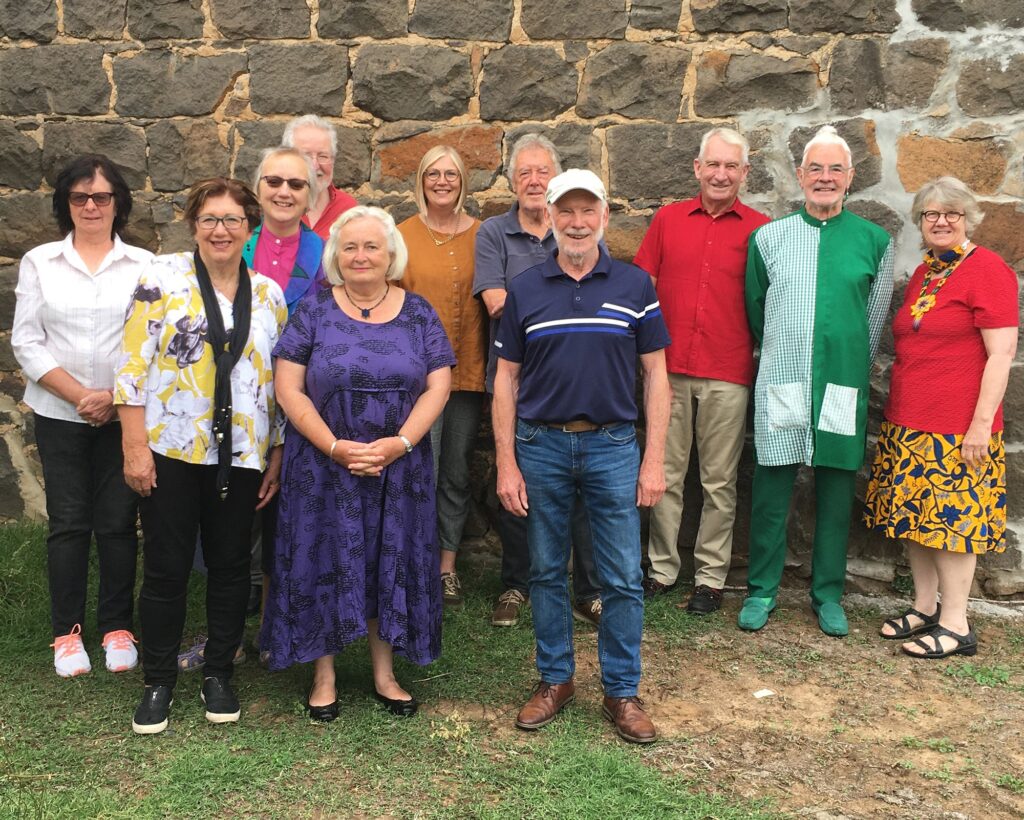
Pictured above, left to right, Christine Rowe, Helen Weber, Maureen Ward, John Weickhardt, Sandra Nichols, Gill Jedwab, Gary Sharp, Mick Sullivan, Doug Gellately, Jon Lock and Tess Brady
Image: Lois Nichols
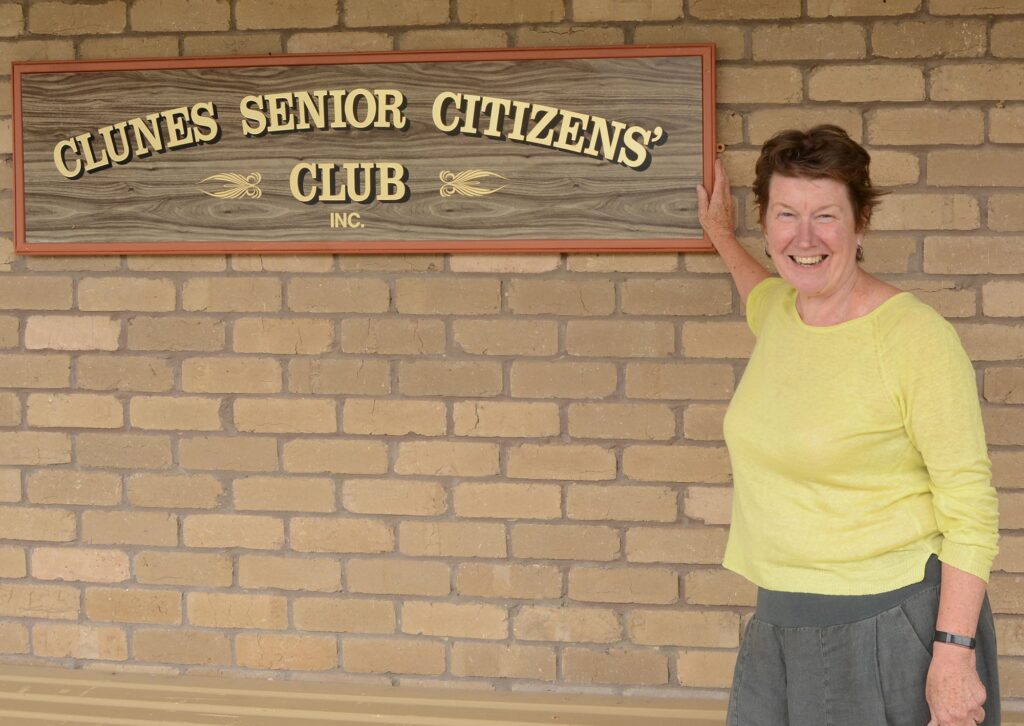
Above: Attitude – Ageing Well in Clunes coordinator Lois Nichols
Image & words: Tony Sawrey

February 6th, 2021Carnies coming to curbsides near you

On a mission to find any grants available during lockdown, Sophie phoned, emailed and connected with local governments across the state. And she wasn’t going to give up on her mission to find seed funding.
She had a perfect opportunity to create a pop-up circus act that could be rolled out to regional Victoria – post-lockdown of course. The act needed to engage local artists, delight performance-starved crowds and, most importantly, add a little joy after a pretty tough year.
Sophie had nothing to lose. She had time on her hands and knew she just needed to make it happen.
And Sophie’s determination paid off. With grant funding available but with the state in lockdown, councils across the state (including Hepburn, Banyule, Yarra Ranges, Whittlesea and Port Phillip) welcomed the chance to fund a unique and timely project – and Curbside Circus was born.
“I started planning a portable stage with the help of friends. Originally, I had an idea to make something that I could take to festivals for my roving cabaret show and then COVID hit and a small amount of funding from an arts festival grant allowed me to build a small, portable stage. At the start I joked in conversation that I’d roll it around the local neighbourhoods and perform in front of people’s windows during lockdown.
“I wanted to provide an opportunity to take the circus on the road and use local artists as part of the show. It gives artists work, helps local economies and gives people wonderful entertainment and a great little escape – for free. And given it’s outdoors, it’s COVID-safe which is something we all have had to manage as artists and performers.”
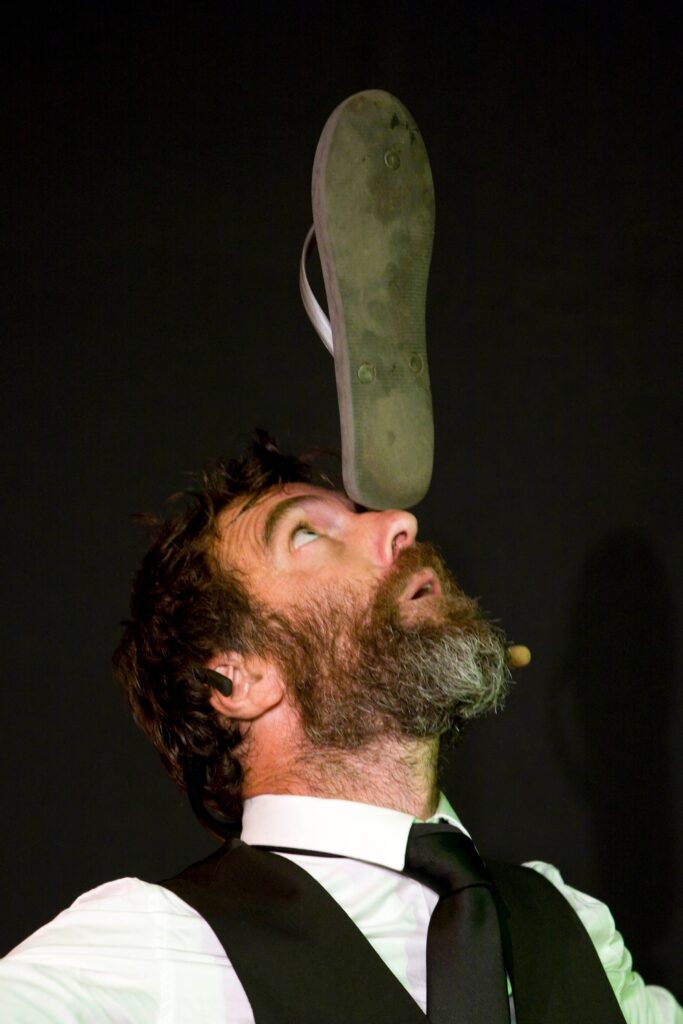
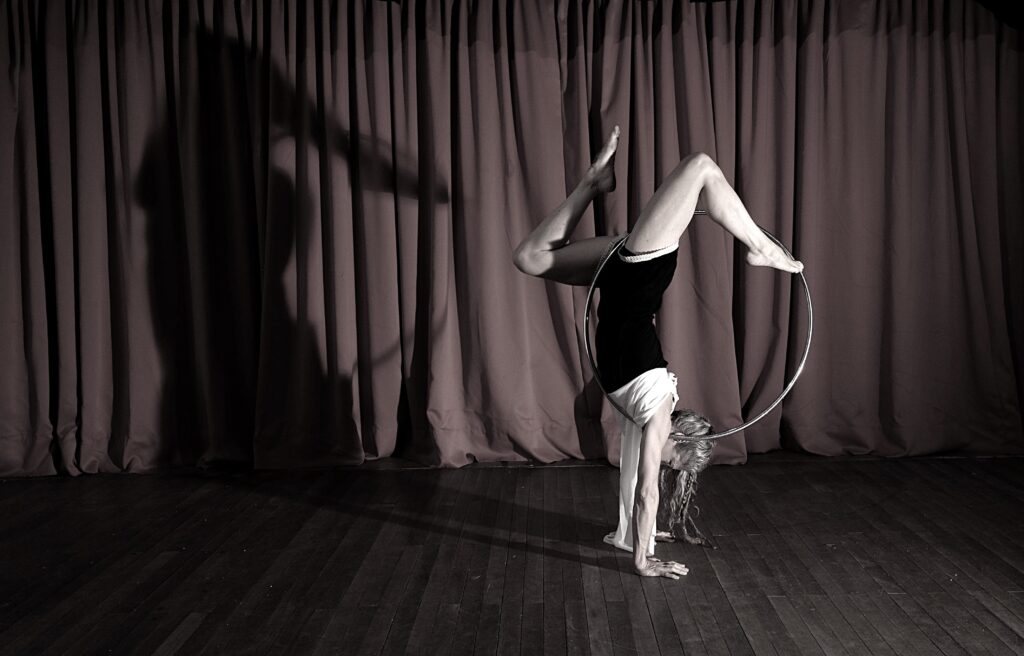
Local artists including Daylesford’s own unicycle juggler Sam Hrycrow as The Amazing Mr Fish, Ballarat’s hand balancer Erika Hansson and Castlemaine’s hula hooper Nicola Hall, will join Sophie as part of Circus Carnies.

“It seems logical to perform with the same three artists at each Curbside Carnies outing. But locally sourcing each cast is a way to showcase local talent and give them an opportunity to perform after such a long break between jobs.”
Sophie is no stranger to the region. She has been holidaying here and visiting friends for years. But, despite her familiarity with the region, she said she has been overwhelmed with the response to her initiative, reflecting that the region’s response to the circus was incredibly supportive.
“Giving back to local communities was the main reason for me starting this venture and as soon as I put out a message, there were so many positive messages of support and so many people eager to tell me about local artists across the Macedon and Hepburn regions,” she said.

The Daylesford-Creswick-Glenlyon leg of Curbside Carnies kicks off at the Creswick Skate Park this Sunday (February 7) at 11am. Curbside Carnies will then head to Lake Daylesford where Sophie and our home-grown circus talent will perform at 2pm before heading to the Glenlyon Hall for a final show at 4pm.
Pictured Daylesford’s Sam Hrycrow aka the Amazing Mr Fish, Castlemaine hula hooper Nicola Hall and Curbside Carnies’ Sophie deLightful
Words: Narelle Groenhout
Images: Contributed and Elise Mezner

February 6th, 2021Artist Dorothy Enders keen to hang work
Its very first gathering was on Tuesday, March 29, 1977 with the first teacher Geoffrey Sayer from Castlemaine. Just over a month later, in May 1977, they had their first exhibition at the library during the Kyneton Daffodil Festival. Complete with a wine and cheese opening in the supper room at the shire hall, the paintings were lined up on trestle tables, while others were pinned on a line of clothes hooks along one wall. One painting by Shirley Wakefield was sold. The title: Dingo and Pups.
Dorothy Enders was at that first exhibition. Today she is in her 80s, is the longest serving member of the Kyneton Art Group and continues to attend the Tuesday sessions. She remembers well the circumstances that led to the group’s forming.
“I decided to get some lessons in painting and went to evening classes at the high school,” Dorothy says. “The classes were held in one of the portables and it was freezing so some of us decided to start an afternoon painting group. We broke off from the evening art classes and one of our members was associated with the Presbyterian Church and knew the Sunday School hall was available to rent. That’s where the group started.”

Dorothy was originally from West Footscray and had been active in artistic creativity since childhood. Her first career was as a draughtswoman, although she would say “tracer”, at an engineering firm in Melbourne before getting married and relocating to Tylden and later Kyneton, where she raised two children.
“I married a man and I did what I was supposed to do; have children and look after him. I didn’t have a chance to do anything creative until I started painting again in 1970. Then my brother asked if I would do him a painting. So I thought ‘I will have a go at this’ and it worked. It was a night scene, all in Prussian blue with a little bit of white here and there. I still have the painting, it needs reframing but I’ll hang onto it. I think I will get them to bury it with me.”
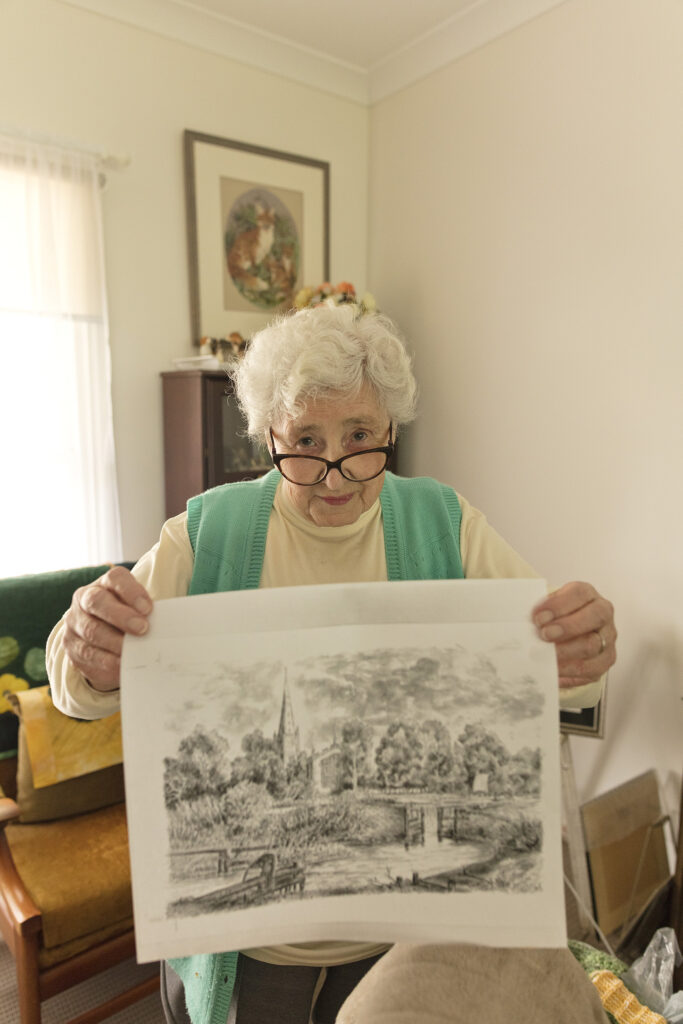
Dorothy paints a range of subjects from flowers to landscape studies, but she has a particular interest in architecture, especially the array of historic bluestone buildings scattered around the town. In fact Dorothy likes to think that by documenting these old structures over the years, she has helped to preserve them for future generations. And while Dorothy says she technically retired in 1992, other members said she had to keep coming along.

“I’m not a teacher but if they want me to help with a line or two, I’ve got a pretty keen eye and I can sort of guide them in the right direction.”
Like everything else the Kyneton Art Group was disrupted by the circumstances of the past year. For the first time in over 40 years they were unable to hold their yearly exhibition, a show which normally coincides with the Kyneton Daffodil and Arts Festival in September. However their display will return this year and Dorothy’s name will be on the room sheet.
“I still have some old paintings here that no-one has ever seen, which I’ve hung onto. I just have to get them framed and they will go into the show.” She adds: “I’m a terrible hoarder.”
Words: Tony Sawrey | Image: David White

February 5th, 2021Communities rally around Brad Fernando
Friend Kate Davis said Brad would never ask for help for himself, but with months “to endure and some major expenses along the way including speech therapy and the hope of reconstructive surgery”, his friends were rallying for him.
“It’s always the most generous people who ask for nothing in return. But now we are asking for the friends of the most giving person, Brad Fernando, to come forward and support him.
“Raised in the inner north Melbourne suburb of Carlton, home to iconic Italian restaurants as well as Jimmy Watson’s Wine Bar and King & Godfree supermarket and wine shop, there was a life plan mapped out for Brad, even if he was unaware at the time.
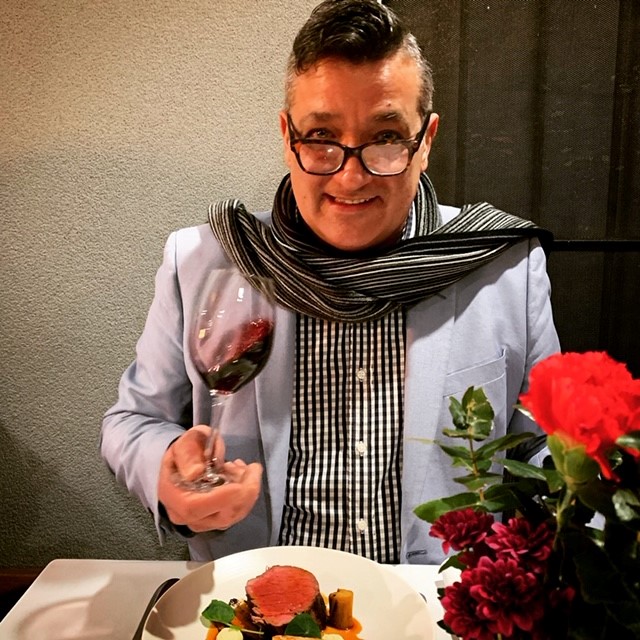
“Brad started his first part-time role at 14 years of age, packing groceries at King & Godfree, while his mum Heather worked just down the way at Watson’s Wine Bar.
“‘All my wages went on cured meats, Bisleri mineral water, plus olives and cheeses etc. from the great deli at K&G’, he always says.
“At the very young age of 17 and a half, Brad headed to Europe, where he worked front of house in London for a couple of years.
“Six and a half years later, he returned to Melbourne and worked at Alphington House wine bar in Carlton, under the guidance of Brenda Symons, and alongside renowned chef and restaurateur Annie Smithers. From here, it was on to the Lord Newry Hotel in North Fitzroy, followed by time spent with Iain Hewitson at Memories of the Mediterranean.
“Brad had the privilege of working with some amazing people at Memories of the Mediterranean, and learnt so much about the hospitality industry.
“Years later a move to regional Victoria to Ballarat where Brad worked at Bibo café, followed by time at Eclectic Tastes.
“A job came up with well-known Pyrenees winery Summerfield. Brad worked with Summerfield for eight years, before going out on his own with his own business Regional Wine Sales Victoria, and also working with Australian Wine Agencies.
“Brad always was a great advocate for the region and now represents some fantastic wineries from the Ballarat, Pyrenees, Grampians and Macedon Ranges wine growing areas.”
They include A.T Richardson, Grampians, Clarnette & Ludvigsen, Grampians, Fratin Bros, Grampians, Tomboy Hill, Ballarat, Sally’s Paddock, Pyrenees, DogRock, Pyrenees, Will Talbot Wines, Pyrenees, Summerfield, Pyrenees, Amherst, Pyrenees, Glenlofty, Pyrenees, Granite Hills, Macedon Ranges, Welshman’s Reef Vineyard, Bendigo, Turners Crossing, Bendigo, Bill Brand Family Vineyards, Coonawarra, 321 Cider, Learmonth and Springmount Fine Foods.
But Kate said last September, Brad was diagnosed with an aggressive tumour of his jaw, resulting in the removal of most of his bottom jaw, and a lot of his tongue. Brad has spent the last three months at the Alfred Hospital, and is now undergoing radiation and chemotherapy.
He has, she says, a path to endure with major expenses including speech therapy and the hope of reconstructive surgery.
“Ever the bon vivant, Brad has been a passionate advocate, tireless and generous in his promotion of all things regional, wine and hospitality. Now is our chance to give back. It is time to get around our mate, and Rally for Braddy.
“We all know that Braddy would not be comfortable with people donating directly to him, no matter how tough his battle. However, we also know that he loves all things wine, and he would be happy if people were buying and drinking good wine in his name.
“Therefore, we are calling on all of Brad’s friends to donate wine, so we can create a ‘Brad’s Box’ to raise money for our mate. You may have one bottle, six or dozens – any donation will help.
“Once we have collected all of the wine, we will package them into a Brad’s Box”, which will consist of six bottles of wine and these will be sold via the Mitchell Harris Wines website. If you can donate wine, or if you can buy wine, then you can help!
“If you are in a position to donate wine, we are asking for all bottles to be dropped off to the Forge Pizzeria, 14 Armstrong Street, North Ballarat by February 5.
“Once we have all of the bottles, we will create the boxes and the wine will go on sale from February 11. All boxes will be priced at $150, although depending on donations we may also have some premium offers which will be priced accordingly.”
Anyone interested in receiving an email when the wines go on sale can email Kate at kate@plateupballarat.com.au. The sale will also be promoted on the social media pages of Plate Up Ballarat and Eat Drink West.
All wines are to be collected from Housey Housey at The Forge on the weekend of February 27-28 unless it is being delivered.
Words: Kate Davis & Donna Kelly | Image: Contributed

January 23rd, 2021Alex loving new work at Hepburn House
But after 15 years of working as a systems analyst “sitting in an office all day and with very little social contact”, Alex decided to retrain as a personal care worker.
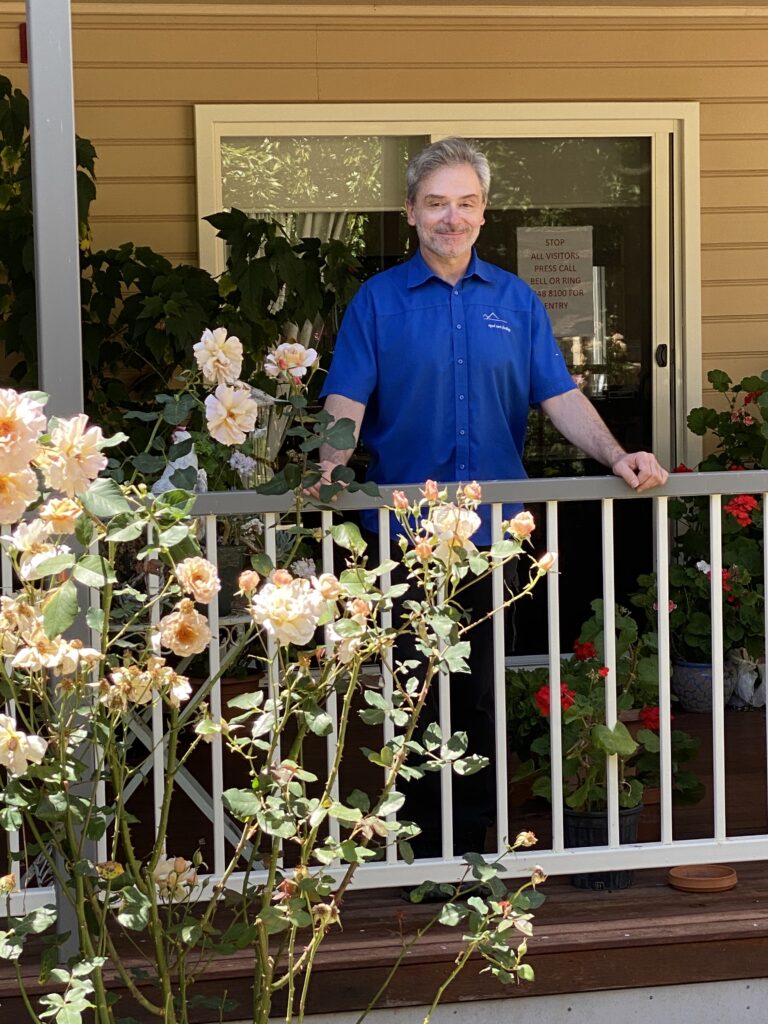
Alex then moved to Melbourne for 10 years and then last year, he and his partner decided the time was right to make the move to Daylesford.
“We love it here. We used to come here regularly most weekends over the past few years and finally found the property of our dreams and decided it was the right time to make the move.”
Alex then found a position with Hepburn House which he says has “a fantastic environment – even compared to the places I worked in Melbourne”.
“Hepburn House is the ideal facility just for the way residents are catered for and supported, I haven’t found anywhere like this anywhere else. I have a number of jobs, but I just like the daily interaction with the residents. And it gives me the chance to do something more community-minded.”
Alex, who is half Italian and half German, said he still returned often to Italy to catch up with his family although, of course, COVID had stopped visits for a while. He also keeps busy with his love of music having been in a band professionally for many years including in the 80s and 90s back in Europe.
“The band I was part of is called Pankow, a suburb of Berlin, and the band is still active, although I left my role of live performer in 1993 when I moved to Australia.
“I was the full-time singer from 1981 to 1993, with the name Alex Spalck. I still write all the songs and record all the albums, I can’t perform live because of the distance.”
And does he ever play for the residents of Hepburn House? “Hmm. I don’t think it is really the kind of music that would be appreciated by this age group, but you never know…” To see Alex in action on YouTube, head to www.tlnews.com.au
Hepburn House is a government-funded aged care facility that is set in beautiful surrounds and caters for all levels of care, from respite to permanent.
Hepburn House is located at 1 Hepburn Road, Daylesford. For more information, please call 5348 8100 or visit www.hepburnhouse.com.au

January 23rd, 2021Loving the locks at Lake Daylesford
The locks first appeared there in March 2014, reported on by The Local.
Now there are almost 250 of all shapes and sizes running across the bridge – gaining interest from wandering locals and visitors.
Love locks, or love padlocks, are a phenomenon which took off around the world in 2000.
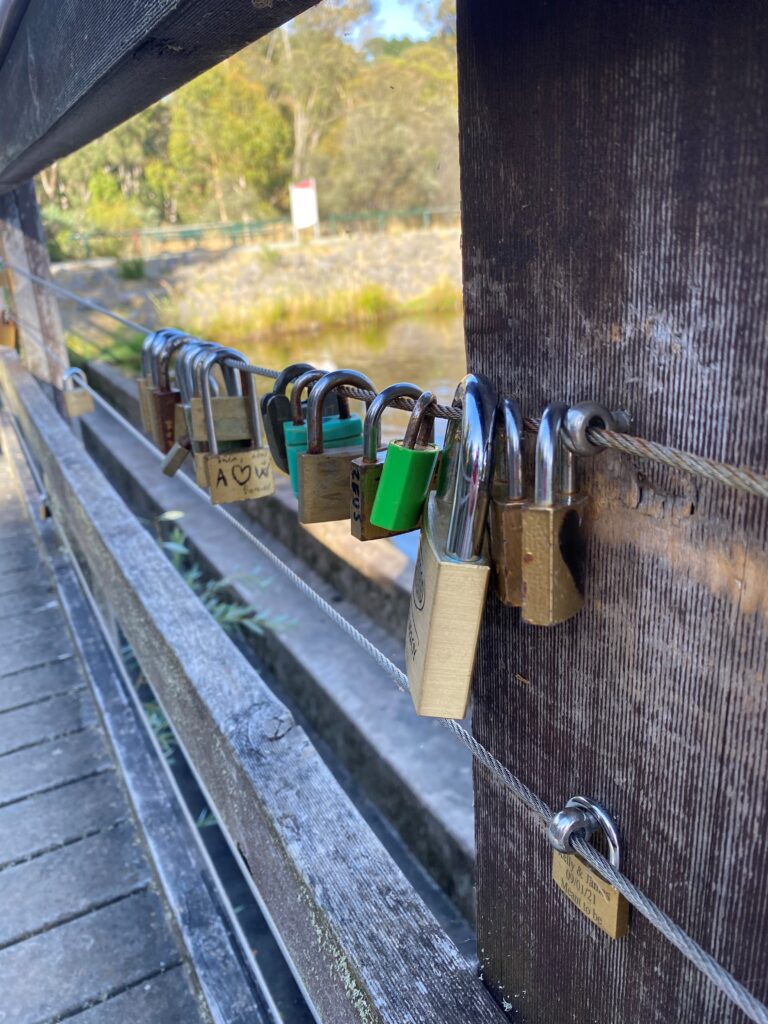
Sweethearts, friends or family use the locks to symbolise their love, often writing or engraving their names on the lock and then throwing the keys into the water – so the locks can never be undone.
One of the most famous lovelocks bridges is the Pont des Arts, a footbridge in Paris which crosses the Seine River. In 2018 36 tonnes of padlocks were removed to stop the bridge collapsing.
In Australia, locks of love can be found at the Mt Keira lookout near Wollongong, on bridges across the Yarra River in Melbourne and on the University Footbridge over the River Torrens in Adelaide.
Words: Donna Kelly | Image: Kyle Barnes

January 23rd, 2021Glen, about the house
Freeze your berries
If you have a bumper crop of berry fruits in your home orchard or have found some ripe for the picking, don’t let them go to waste – save them for another day by freezing them whole.
This method is excellent for strawberries, mulberries, gooseberries, currants and cherries. And even oranges, lemons and grapefruit can be frozen in the same way.

In this case slice or cube the fruit, and place the portions in a lidded plastic container sprinkling each layer with a thin coating of dry sugar. Then seal the container and place it in the freezer compartment of your refrigerator. The fruit will keep there for months if unopened.
To use the fruit simply let it thaw, unopened for about a half hour at room temperature. Don’t attempt to refreeze the leftovers and use several small individual containers to avoid wastage.
If you normally use a small number of berries at any one time, another method is to loosely freeze them in a freezer tray then store them in a freezer bag. Then you can remove and thaw out the quantity required at any one time and then reseal the bag in much the same way as you would frozen peas.
Another freezing technique with berries, especially if they have become soft and pulpy, is to put them through a blender with honey to taste and then pour into a sealable container and freeze. Once frozen the fruit can be taken out and put through the blender while still frozen, for use either as a topping for ice-cream or as a syrup for fruit salads, etc.
Care for your fruit trees
Don’t turn your back on your fruit trees and vines once you have picked their crops. This is a rather critical time of the year for them as they are recovering from the stress of producing a heavy (we hope) load of fruit and at the same time trying to store up energy to see them through Winter and into Spring.
Don’t rely on there being sufficient rain or run-off from the rest of the garden to see them through until Autumn. Give them good, long, soaking drinks, either by letting the hose run slowly into a shallow moat, or better still circle the tree just inside the drip line with a length of slow-release trickle hose.
Leave this running for several hours around each tree to ensure the soil is completely soaked. This method ensures that the tree, and only the tree, benefits from all of the water.
Repeat this watering throughout the hot months whenever the soil at the bottom of the moat is dry. Insufficient moisture at this time of year could cause leaf drop, which in itself is not necessarily dangerous for the tree but could reduce the necessary stored material for next season’s crop.
Just a note of explanation: If you aren’t familiar with the term drip line it refers to the outer reach of the foliage and is obviously where the main feed roots develop.
Acid loss
In some areas where the quality of water can deteriorate with hot dry conditions, acid-loving plants could be showing signs of yellowing as the pH level starts to turn to alkalinity.
You can correct the imbalance by spraying your acid lovers with Epsom salts (magnesium sulphate) at the rate of 37gm to 20 litres of water.
Got a gardening question? Ask Glen. Email glenzgarden@gmail.com

January 23rd, 2021Local Lines
A moment arrived in the stillness of the garden
Breathing in the morning sun, watching the wind
Nearby in the town, city crowds rush in bustling for car parks,
scanning shop windows wondering what is missing,
maybe it will arrive with the special order of coffee,
a day away from the city of millions now spent
crammed into the small shopping strip of a country town
on the brink of losing its soul.
While in the splendour of the hills and forest
the business of monarch butterflies
drinking nectar from gardenia flowers is taking place
The wind shimmers and rustles the leaves of trees
And the birds sing their little songs with passion
In this wonder I hear the origin of music
Wind blowing across taut fibre,
or through hollow reeds
and thunderclap crescendos.
I am glad to have grown old, knowing the Zephyr breeze
The Greeks knew the wind to be sentient
a breeze so subtle it enters the heart, inducing raptures
that banish burdens and come to rest
Now the judges’ eye is blind and ears grow into silence
each day with its simple gifts savoured quietly
In this way there is enough for everyone
everyone is at the table and there is enough.
- Frances Guerin
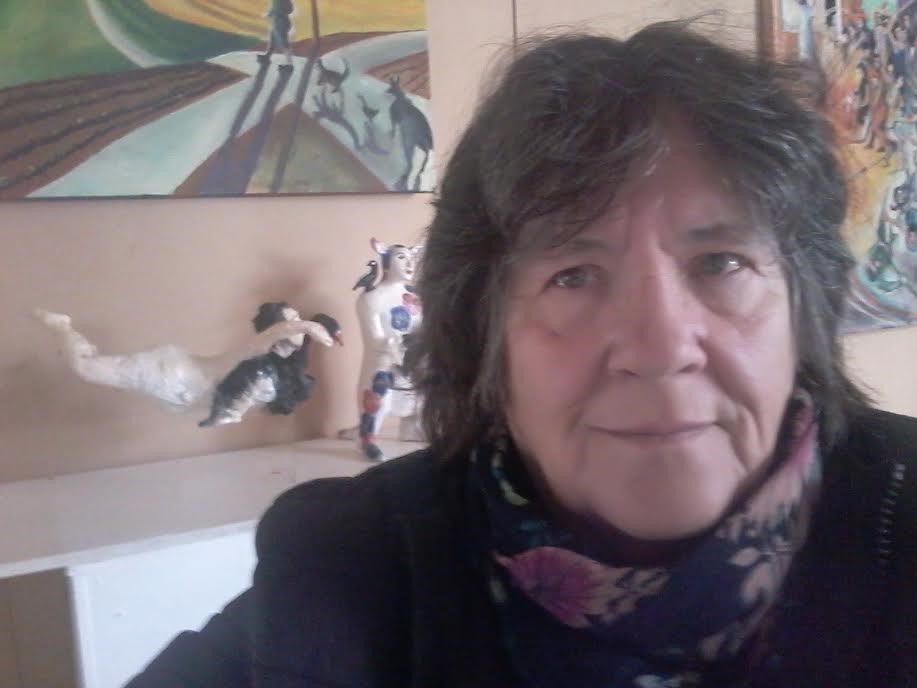
Frances’ studio is located at Wheatsheaf in the Wombat Forest. Her studio serves both her creative spirit and visitors who come for open studio visits, community exhibitions and meditation practice.

January 23rd, 2021Changing women’s lives – one pack at a time
It’s also unthinkable that while women worldwide in 2021 lack the basic and fundamental right to have access to pads and meds to manage their periods, it is still one of those issues that even educated first world communities struggle to openly talk about.
But a group of locals across the Hepburn Shire is doing their part to make a difference. Over the past 18 months, women of all ages and backgrounds, and even a couple of men, meet to help create much-needed reusable, hygienic and safe period kits to make monthly periods more bearable for women and young girls.
The Days for Girls movement started in America and the initiative has directly helped more than a million girls and women across the world. Days for Girls increases access to menstrual care and education by developing global partnerships, cultivating social enterprises, mobilising volunteers and finding sustainable solutions to help stop the stigmas and limitations for women.
When local Hepburn Shire residents Terri Oprean, Lynn McCauly and Kathy Hancock first heard about the project, they were immediately inspired to be part of the program and went on to set up a group locally with the support of the Rotary Club of Daylesford.
Now up to 20 people a month meet in the chapel of the local funeral director to play a small part in a movement that has a massive immediate impact on the lives of young girls and women – access to pads, meds, underwear and knowledge.
Terri taught health and human development at girls’ schools in Melbourne for many years. When she made the move to Daylesford, she quickly became involved with the community, working part time as a food tech teacher at the local secondary college, joining Rotary, and becoming an integral part of the community. When she heard about Days for Girls, she said it “ticked all the boxes”.
“Despite media campaigns to change the way we view the issue in Western Society, for many girls and women around the world, monthly periods invoke fear, loneliness, sickness and separation. For some there simply is no school. For others, like girls in some parts of Nepal, they are confined to their home, sitting on a flattened cardboard box until their period ends,” she said.
“I taught health and human development for many years to girls and knew this was such a wonderful program to become involved with.
“Days for Girls increases access to menstrual care and education by developing global partnerships, cultivating social enterprises, mobilising volunteers, and innovating sustainable solutions that shatter stigmas and limitations for women and girls,” she said.
So much work goes into the kits.
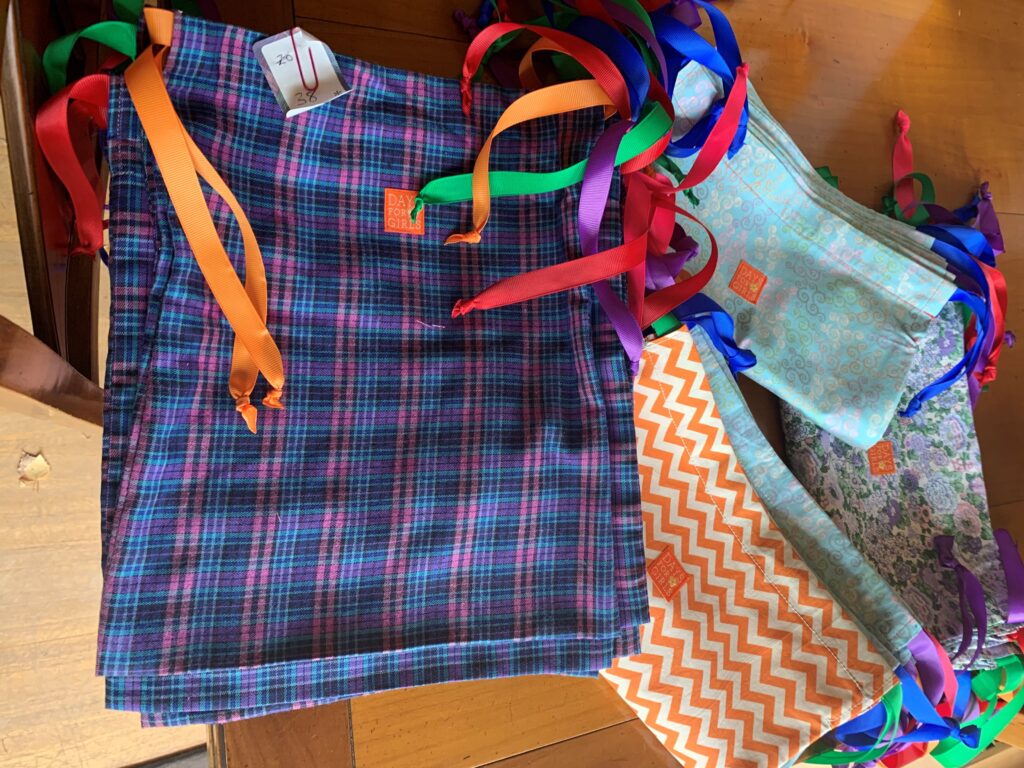
“A waterproof liner is shaped like a pad and it is designed to clip around undies at each end. The liners are designed to be reusable so can be rinsed out and can last between three to five years.
“But the kits also contain information to help young girls understand basic hygiene and menstrual cycles. It’s helping them better understand their bodies and to manage and continue to live their lives, go to school and be part of their communities when they have their periods.”
Terri said strict guidelines mean absolute quality control so the products are reusable, sustainable and environmentally friendly.
“There are extremely strict guidelines, quality control and instructions that must be followed to ensure every component in the kit is of the highest standard. Over the years there have been around 18 iterations to the kits,” she said.
“All the material used must be 100 per cent cotton, a dark colour and we adhere to a stringent tick sheet to ensure all the components are of a gold standard.”
The group found innovative ways to continue creating and sending off more than 300 packs during COVID. “A wonderful group of people living in a Creswick Aged Care Facility spent hours opening up little bars of soap to place in the kits. Many continued sewing over COVID, picking up material at my doorstep, and leaving the finished products back there again, so we could continue our work without the regular contact.”
But not everyone involved in the group sews. There are many different and important roles people play in the group.
“There is washing and ironing of the fabric, folding face washers and underwear, taking small bars of soap out of the packets and putting the kits together. Whatever the task, according to Terri, everyone plays an important role in the kits coming together.
“We have a lot of fun, a lot of laughs and really connect over such a wonderful and important cause. Local women have even donated money to the cause and in return have received a kit as some have already realised the value in reusable pads not only for periods, but for incontinence as well,” she said.
Periods have become political. In Victoria all state government schools now provide free tampons and pads for students. In America a law was passed to make it illegal for schools not to. But for many young girls and women across the world, having and managing their periods is not as easy as accessing a pad at school. Days for Girls in Hepburn and across the world are changing the status quo – one kit at a time.
To get involved, contact Terri at daylesfordvic@daylesfordforgirls.org
Words: Narelle Groenhunt
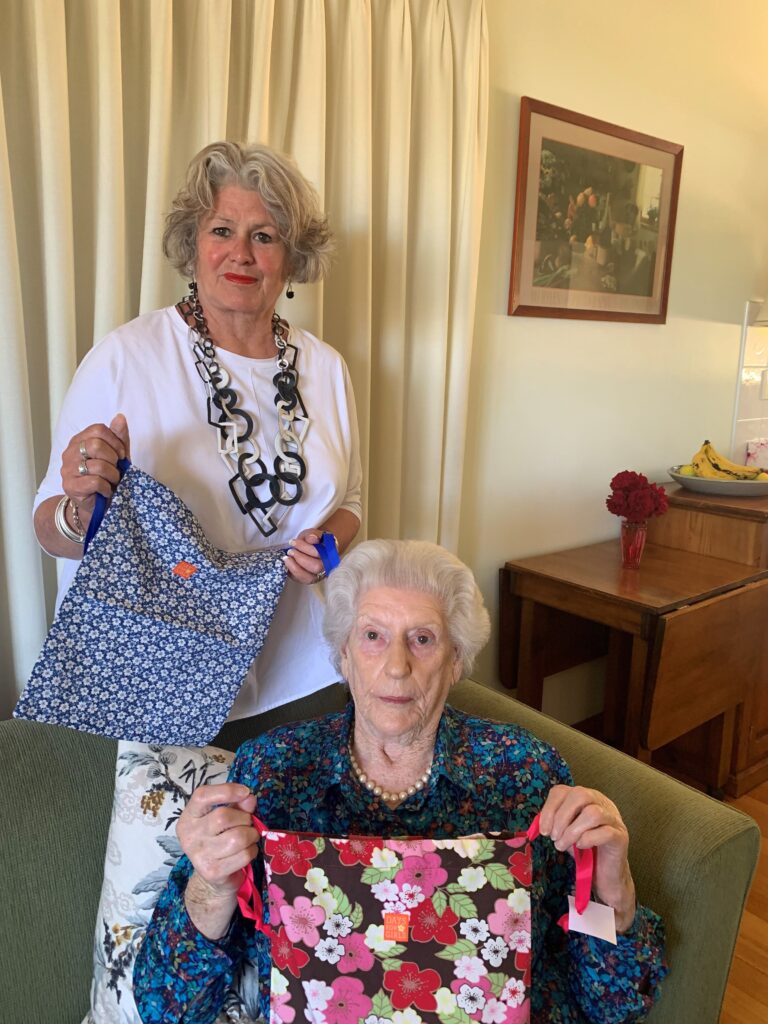
Above, standing, one of the organisers Terri Oprean with volunteer Joan Oates
Below, the Days for Girls kits
Images: Contributed
January 23rd, 2021Uncovering Lauriston’s history
But in the 60 years beforehand, the town had a lot more residents. Like so many settlements around the region, its population was buoyed by the work available through intensive gold mining and industrial activity. The ruins of which remained until recently, under a carpet of blackberry and gorse; common across much of the disturbed ground of the Victorian Goldfields.
While some mining sites elsewhere are very well known and extensively documented, Lauriston’s diggings do not have a very high profile. Like nearby Drummond and Taradale, Lauriston’s part in the gold rush was quickly forgotten after the machinery was sold and removed, except as stories passed on by the people who remained. That is until Malmsbury Historical Society president Dr Susan Walter volunteered to write up a heritage study of mining remnants north of the village. It took her around 10 months to complete.
“In May 2019, works were undertaken by Malmsbury District Landcare Group to remove the gorse and blackberry on the land adjoining the Coliban River,” says Susan, “and as the research coordinator for the Malmsbury Historical Society, I was asked if I could do a site history report.
“We had been told that there were mining remains in there and the project uncovered various machinery footings, remains of cyanide extraction tanks, bricks, scraps of boilers and various mine shafts.”
Around 1852 the first local alluvial gold discoveries were made at Kangaroo Creek west of Lauriston and soon diggings extended north along the Coliban River towards Malmsbury and Taradale.
The excavations south of Malmsbury were originally known as the Coliban Diggings and eventually a township in the vicinity was surveyed and became known as Lauriston. Over the next four decades there was a significant amount of gold mining and associated activity around the new township with several hundred workers and their families living in the valley.
However, by the 1890s the peak of gold extraction had passed and the only remaining operations of any size were those run by the Russell’s Reef Amalgamated Gold Mining Company and they too were played out by 1912.
By that time the village had shrunk to approximately 215 souls. In contrast, nearby Kyneton, being a major stopover on the road to Bendigo, now had a population of over 3500 and a pressing need for housing stock. Many of them were moved there from Lauriston by bullock dray.
“There are stories that some period houses in Kyneton have great big cavities underneath them,” says Susan. “It was said they would first dig a large hole with an incline and guide the loaded dray down into the pit, deposit the house on the ground and get the empty dray out afterwards. The same method was used in reverse at Lauriston to load them.”
From relocated houses to mullock heaps and bluestone footings, it does not take too much investigation to reveal the array of material, physical and anecdotal, that make up local mining history. In contrast, gold rush sites of a similar size in places such as California have been largely obliterated by development.
It is for this reason that the push continues by shires such as Macedon, Mt Alexander and Hepburn and others to give the Central Victorian Goldfields World Heritage listing status. And the heritage study completed by Susan is one more small but important contribution to a larger story.
“Lauriston and the Russell’s Reef complex is one of many overlooked areas around the area,” says Susan. “It is only one rich little pocket of a greater whole. To truly collate what is there could easily take a decade and up until now no-one has really taken on the challenge. But now that Macedon Ranges, Mt Alexander and Hepburn shires are all part of this push to get world heritage status for the Central Victorian Goldfields, uncovering the history of the emergence of Lauriston can make a small, valuable contribution to those efforts.”
Thanks to Dr Susan Walter and the Malmsbury Historical Society for assistance with this article.
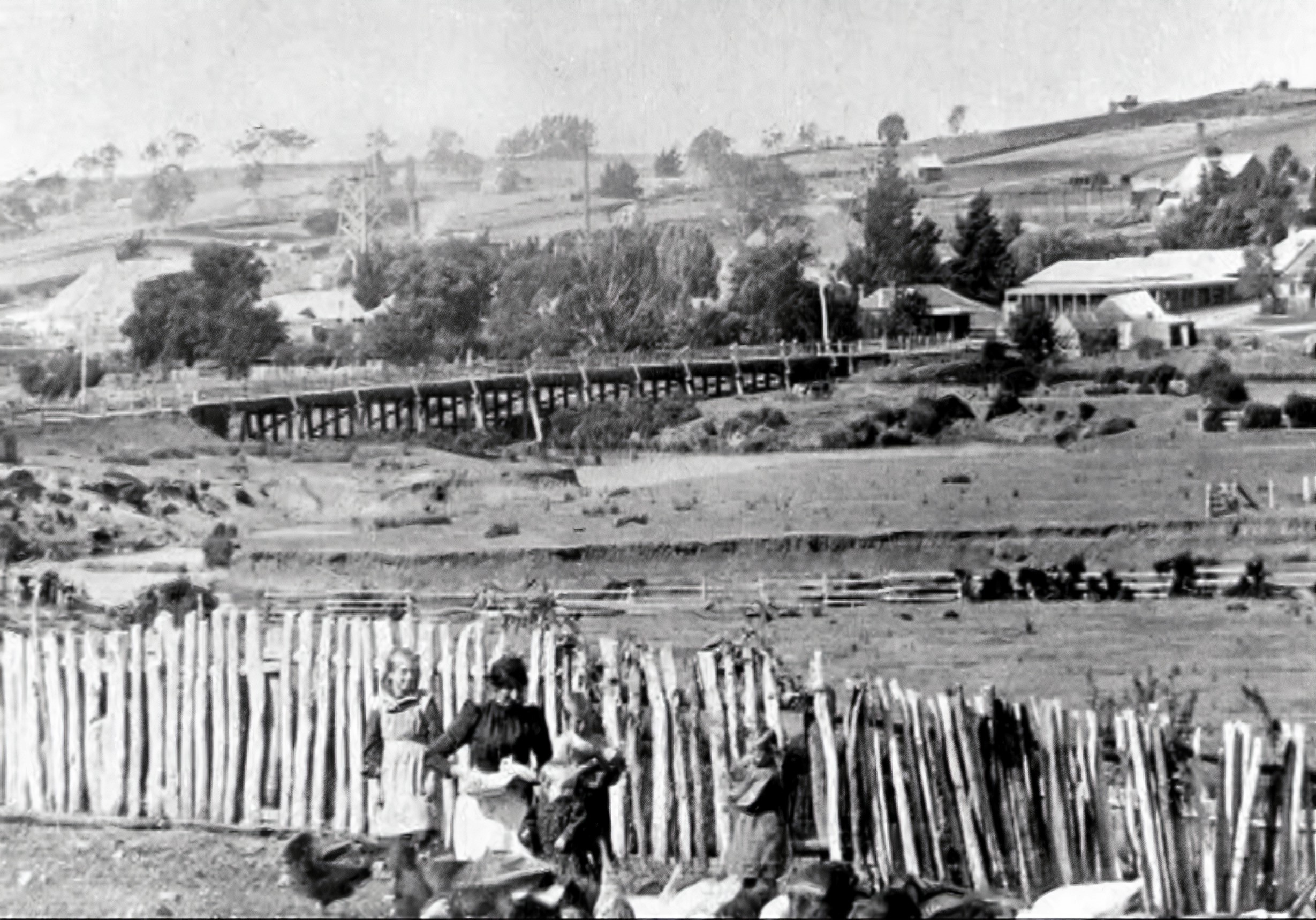
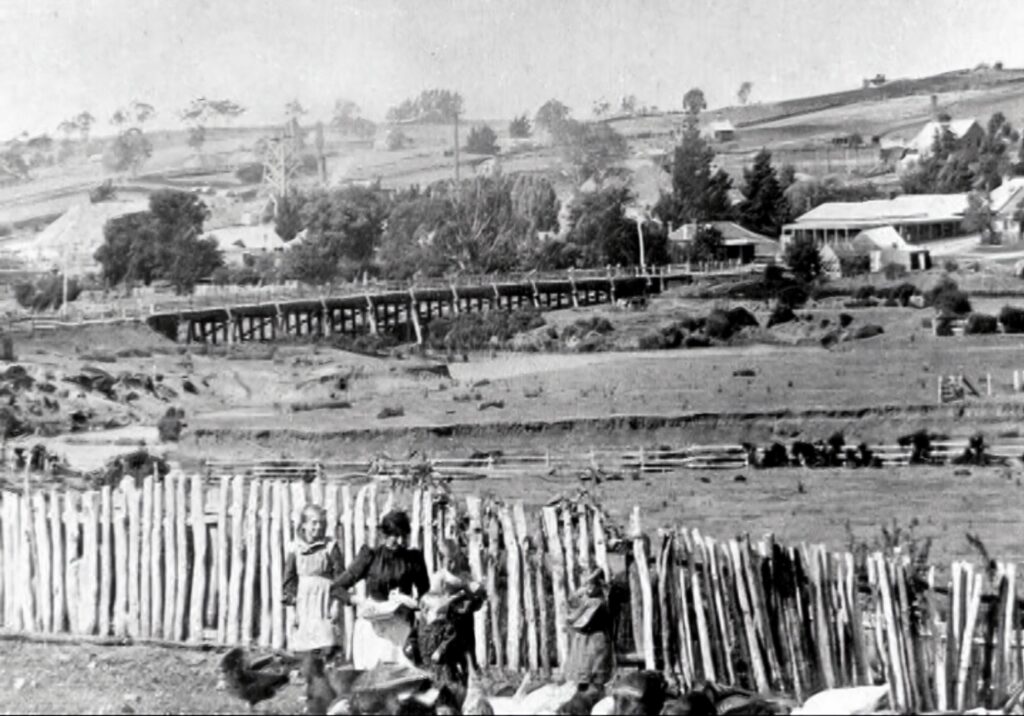
Above, Lauriston looking north-east and showing the Coliban River and the old timber road bridge, circa 1900
Image: Courtesy of Malmsbury Historical Society
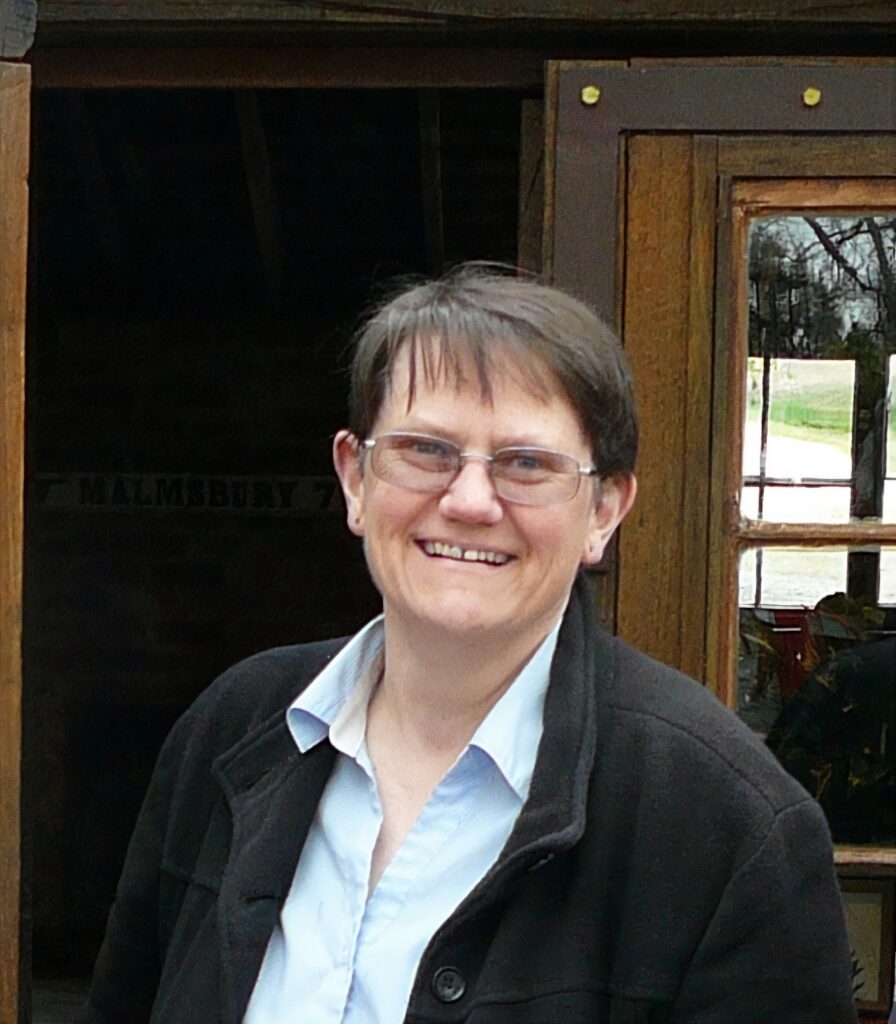
Dr Susan Walter Image: Contributed
Words: Tony Sawrey

January 23rd, 2021Just sayin’…
They were very happy, as you can imagine, but how it came about is very strange. And not so much funny ha ha but funny peculiar. It involves a dog park, a clandestine call from Carol’s sister and a mad dash to an airport.
We spoke to them last week, after the vaccination, which I am pleased to report only really caused a sore arm the next morning.

When we chatted they were enjoying a care package we sent about a month ago. It contained important things like Vegemite, Twisties, Tim Tams, kangaroo jerky (for the pups) and two mugs with The Local branding all over them. Jeff said he was loving the jerky but then added that Scout, who travelled from Australia with them and is now quite a senior, was really loving the jerky and seemed to have an extra spring in his step. Memories of afternoons watching the roos abound at Wheatsheaf perhaps?
Jeff and Carol and Scout left here about two years ago to be with family and we parted with cries of “See you soon!”. But, of course, we have not seen them except for Facetime and Zoom.
And it looks like another year or two will slip by before we either head to America or they come home for a visit.
Like many people, we now think we should have gone in 2019, but hindsight is a wonderful thing. And there is always something else going on. I guess if we take anything from 2020 it is to not let things slide – although I hope there is not another pandemic for at least another 100 years, and even not then.
With that in mind, we have booked a few trips for this year (domestic) and next (international) and last week ventured to Melbourne for a couple of days. As you can read from Kyle’s Rant opposite, the highlight was a wander up the Yarra in a little powered dinghy which was fabulous.
We also made it to Williamstown which I have to say was dead. I talked to a volunteer in the information centre and she said she expected the Central Highlands was the same. I said, no, it was pumping and she said “Oh, the regions”. So I guess Melburnians are travelling further afield and places like Hobsons Bay are missing out. A shopkeeper told me that during the hard lockdown there were about 50 shops with For Lease signs on them.
It is easy, as vaccines roll out and life returns to a sort of normal, to forget that many lives have been impacted and will continue to be so. I just know that we are lucky to live in Australia and lucky to live in the Central Highlands. Just sayin’…

January 23rd, 2021Kyle’s Rant
All the boats I have ever driven have never been mine. I was lucky enough to get a start as a 16-year-old with my dad on his fishing boat, gained my qualifications along the way and by some weird turn of fate, these qualifications have become perpetual.
That means I am legally allowed to captain commercial vessels up to 90 metres in length around most of Australia as long as I have a current first aid certificate. Forever thanks to a bureaucratic loophole.
I still do refine my skills from time to time, training the nouveau riche on their new toys down in Melbourne, parking the big gin palaces in tight spots but without the investment. Even if I could afford it on the grandiose wage I get here at TL HQ, I wouldn’t bother, as I have been around enough boat owners to know the actual cost of maintaining such rigs.

From time to time while living it up on the flybridge of someone else’s motor yacht along the lower reaches of the Yarra, I see the little charter dinghies bobbing around, filled to the brim with families out for a sunburnt day. As they look up longingly on my ride, I give a nonchalant wave in their general direction as if I actually own the vessel and am not being paid by the hour to be onboard. But recently with this pandemic things have been a little dry in my world of boat training and I haven’t been able to get my nautical fix at someone else’s expense, so I have committed an atrocity. I rented a dinghy. (Donna is also a boating snob and once remarked she wouldn’t climb aboard anything less than a 50-footer moored on a floating dock.)
So we negotiated the fare and the young man asked if I would be self-driving or required a skipper. I think I bored him to tears as I told him about my many adventures on the brine. He walked away with that look of “whatever, old man”.
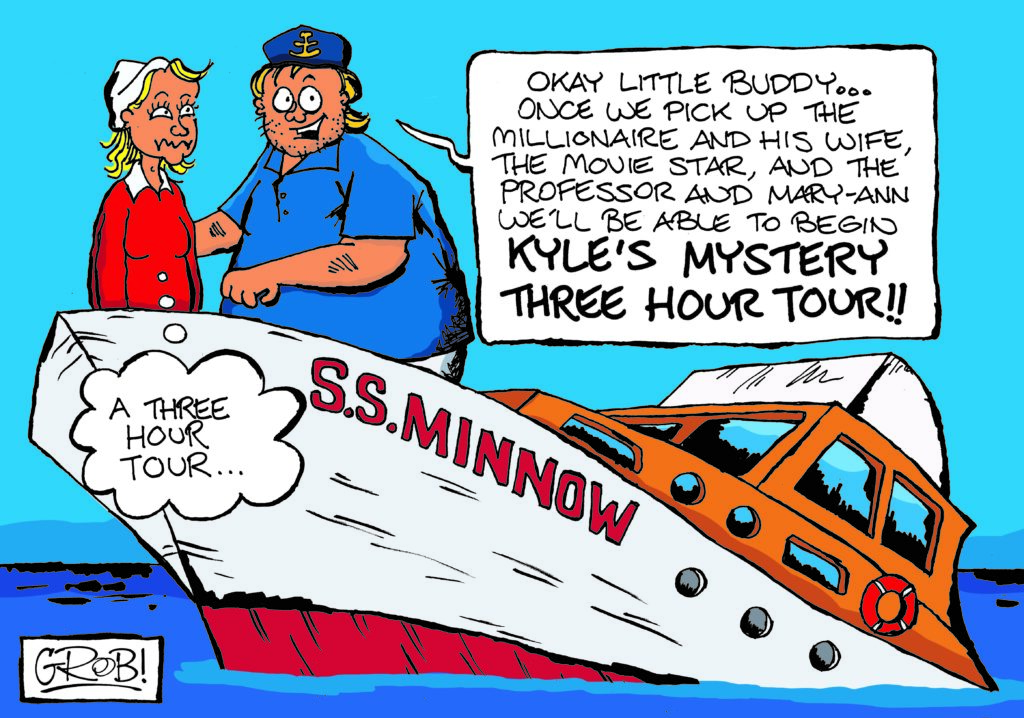
Anyway, we climbed on board our tender and took off up river towards the gardens. It was electric drive and clipped along against the current at five knots, two boat snobs…but I must say, we had a blast. It is so peaceful up there once you say goodbye to the Southeast Freeway. The traffic roar gives way to nature and contemplation. It was a fabulous day and my boat snobbery has certainly been kicked to the kerb. I truly couldn’t recommend a punt up the Yarra in a small rental boat highly enough.
I love messing around in boats rant over…

January 23rd, 2021Beating the odds with incredible will power
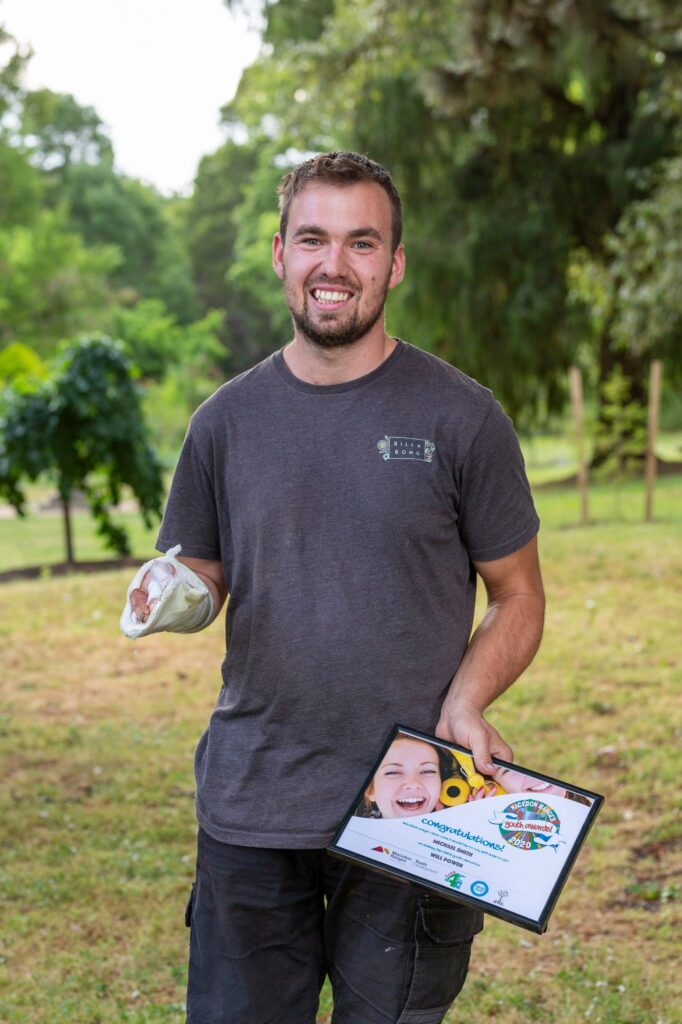
Michael was recently named the winner of the Will Power category at the Macedon Ranges Youth Awards, something he is incredibly proud of but something he certainly wasn’t expecting.
“I had no idea the manager at my local gym had nominated me for the award. I was so proud given I have had to overcome so many obstacles and hardships since having an accident when I was seven,” he said.
Michael was just like every other seven-year-old boy – inquisitive, adventurous and loved being outdoors. So when Michael climbed a tree, it was something he had done many times before.
“I had always been outdoors and loved climbing trees. On that particular day, I can’t remember anything about the accident but can remember climbing the tree,” he said.
“I fell five metres and landed in the tree roots at the base of the tree. I was in a coma for three months. When I woke up, I couldn’t remember the accident at all and had to learn to do everything again – walk, talk, chew, swallow and eat,” he said.
“But now I look back and realise I had the determination to just push through. It’s the sink or swim attitude and I’ve always swum! And to win the award has just made everything worth it.”
Michael left hospital before his eighth birthday with an acquired brain injury and paralysed down his right side. He remembers a time when he had to restart school from prep and knew early on his life was going to be extremely different from his friends.
“I always struggled at school since the accident. Everything changed and while I had to learn everything all over again, I still had to have therapy before and after school which was so tiring.
“But as I got older, I realised more and more the importance of pushing through the pain and to never give up. I have endured 16 years of operations as well and my daily therapy and gym work continues. It will probably never end.”
Michael left school after completing Year 10. He said despite doing his best, he remembers a number of teachers who were supportive but some who failed to understand his learning hindrances.
“School was always a struggle for me and so tiring. I suffer from fatigue every day and I found school very hard at times. Unfortunately, I had a few teachers who just didn’t understand my situation and gave me a really hard time. I knew if I made it to Year 10, I could at least try to find a job in a supportive environment.”
And that he did. Michael worked for his local butcher before joining the crew at the Macedon Nursery and Gardens. A job he still loves going to each day.
“I have been given such amazing opportunities and I feel very lucky and fortunate. I think it always gets back to having that sink or swim mentality and I will always aim to swim no matter what.”
Above, Michael Smith receives his Will Power prize for the Macedon Shire Youth Awards, pictured in the Kyneton Botanical Gardens
Words & image: Narelle Groenhunt