


January 23rd, 2021Staying positive about the live music scene

Furthermore, if you’re a young musician trying to get some traction, then the Central Highlands could well be a doubly frustrating place to try and cultivate your craft.
Setbacks such as venues closing down, limited opportunities for rehearsal spaces and difficulty making connection with other musicians just add to the general malaise. But as far as the local scene goes, there may be reason for optimism regarding 2021. The opportunities are out there on the horizon, just like COVID vaccines. It’s just a matter of when they are going to kick in and get things moving again. Gotta keep positive, right?
Abby Ashmore, 19, is a singer-songwriter and guitarist based in Ballarat. She is involved with three bands, including Grove, and has recently taken on a role as a youth support worker at Hepburn Shire Council.
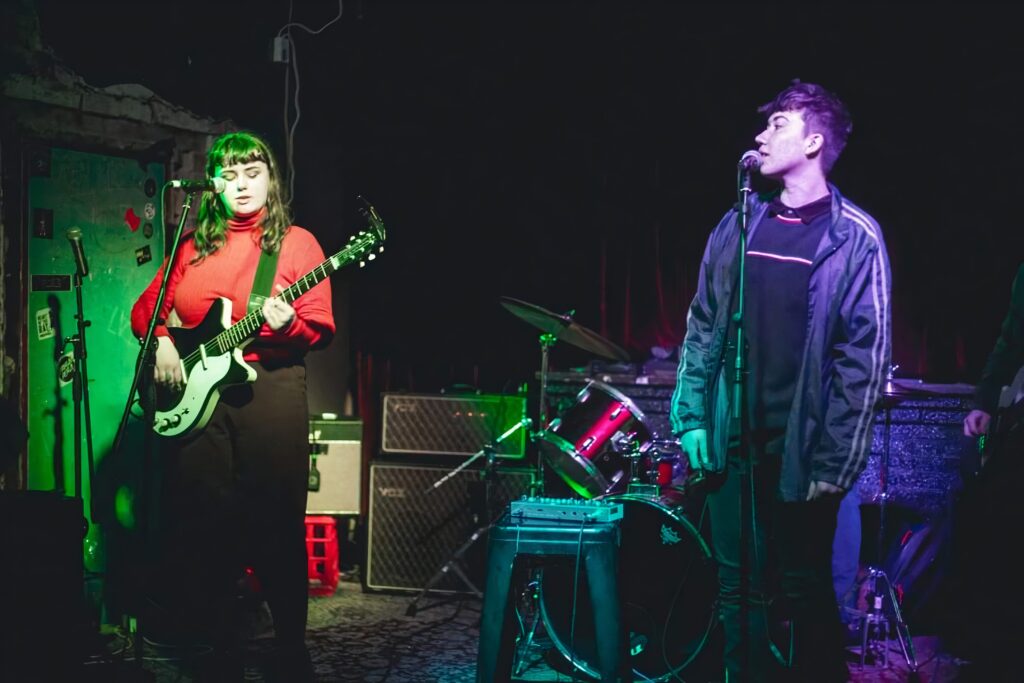
“For regional areas in general, it has always been quite tricky being a young person and having creative projects because there is little access to things like rehearsal rooms and recording. But there is a strong music community here that is willing to support each other.
“There are lots of budding musicians and there are going to be some good things happening. There just needs to be a little bit of work done so we will be able to have access to the same resources that a lot of metro areas do.”
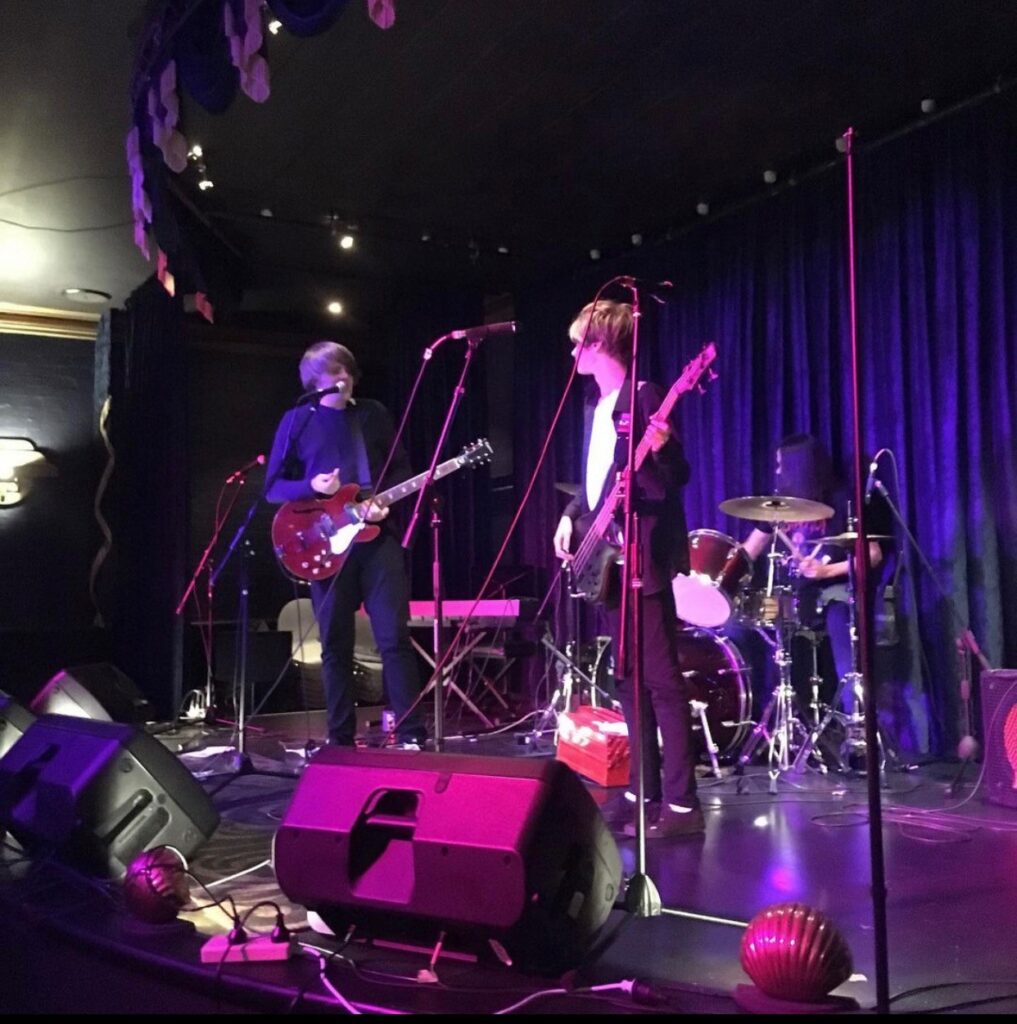
Pyramid Noise, below, have been together for about two years now and are well known around the area. After the setbacks of the last several months singer and guitarist Ciarán Harraghy, 17, is eager to perform again.
“Before COVID we were going pretty well. We had quite a lot of opportunities and were getting really comfortable with playing. We were playing mostly at The Palais and also small school gigs. We don’t have any solid plans yet but we are definitely looking to get out there and play as soon as things get good and we can rehearse again.”
Marlon Toner-McLachlan, 19, aka Marlon T, is comfortable with keyboards, bass, guitar, trombone and vocals. He understands well the limitations of making music in the area.
“In a shire such as this I think it is really hard in a lot of ways for young people to connect with each other because everyone is so spread out. I have quite a few mates in Castlemaine and over there the scene is quite a bit bigger. You’ve got venues that are willing to take on younger bands. Whereas here, at the moment we’ve only got The Palais.”
At this point in time The Palais-Hepburn is one of the last private venues standing but they have held alcohol-free shows to support musicians just starting out, as manager Richard Fanale explains.
“We are doing all we can to continue new and old live music and the all-ages events we’ve had in previous years went really well. FReeZA have said they are going to get back to me again to program three or more events in the coming months subject to health restrictions.”
The FReeZA program is a youth development program providing opportunities for young Victorians to enjoy artistic events that are drug-, alcohol- and smoke-free in supervised venues.
Hepburn Shire Council has two FReeZA committees which cover the Creswick and Clunes area and the Trentham and Daylesford districts. All the musicians featured here have spoken highly of the program.
Council spokesperson Adam Perrett said the council was currently in the process of developing its next Youth Engagement Strategy, which coincided with the council plan.
“We’re currently consulting young people and we are sure that creating spaces for art and performance will be an important element of that consultation. Hepburn Shire Council’s FReeZA program called Octave will be back in term one.
“We held online events during lockdown last year and the young people are looking forward to performing to an audience again. In November, Octave also ran an online training session with The Push Inc to help young musicians manage their band.
“With the unpredictability of live performance with COVID-19, we’re also hoping to work closer with musicians regarding studio recordings to produce work they can promote and sell online.”
Above, Grove with from left, Abby Ashmore and Matthew McEgan with Fletcher Wragg and Joshua Knight not pictured.
Below, Pyramid Noise, with from left, Ciarán Harraghy, Lachy Taylor and Liam Mrsic (partly obscured on drums)
Words: Tony Sawrey | Images: Supplied


January 23rd, 2021Junior bowlers compete at Daylesford

The winners were The Northern Flyers and the runners-up were the Bendigo Dragons.
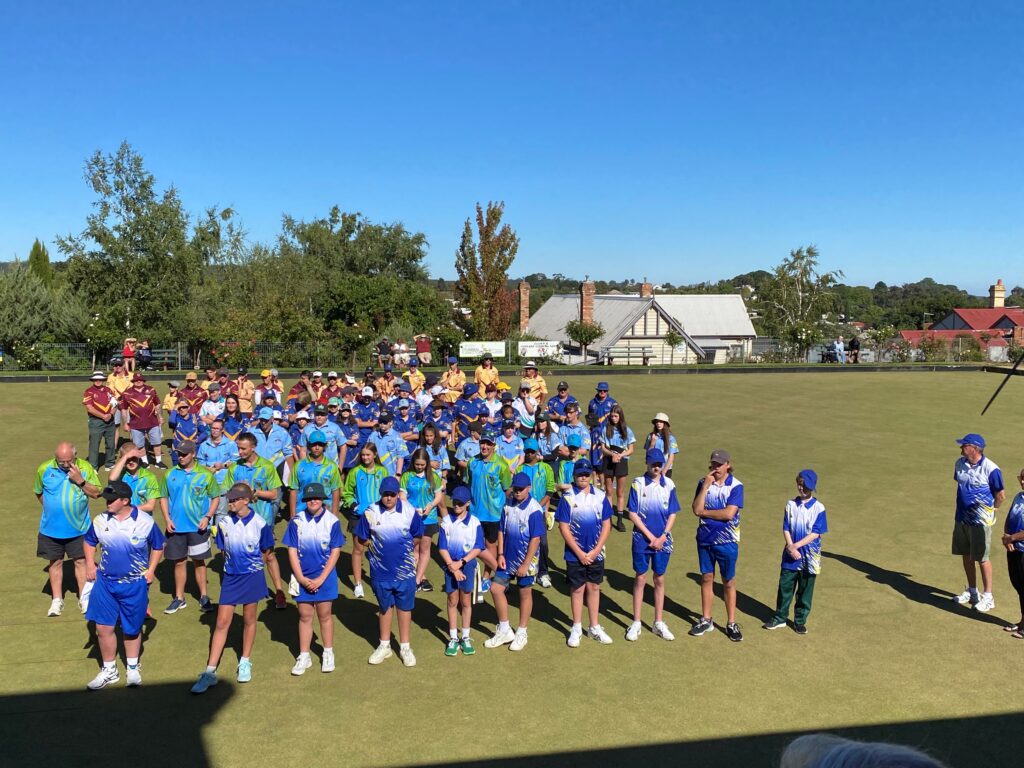

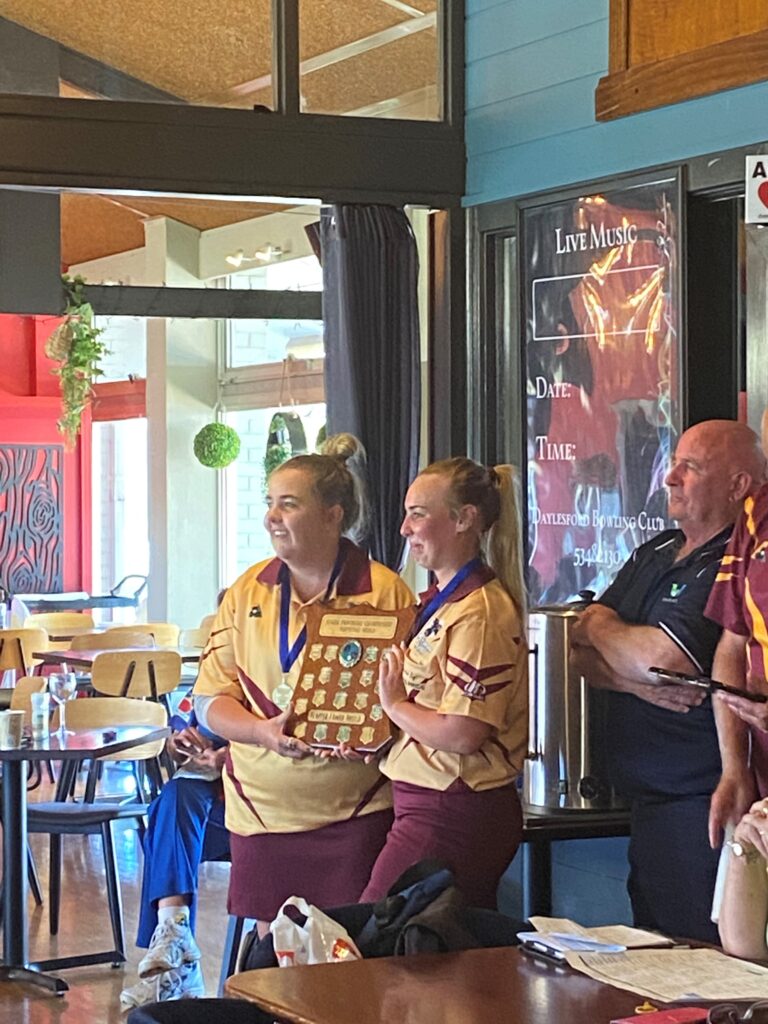
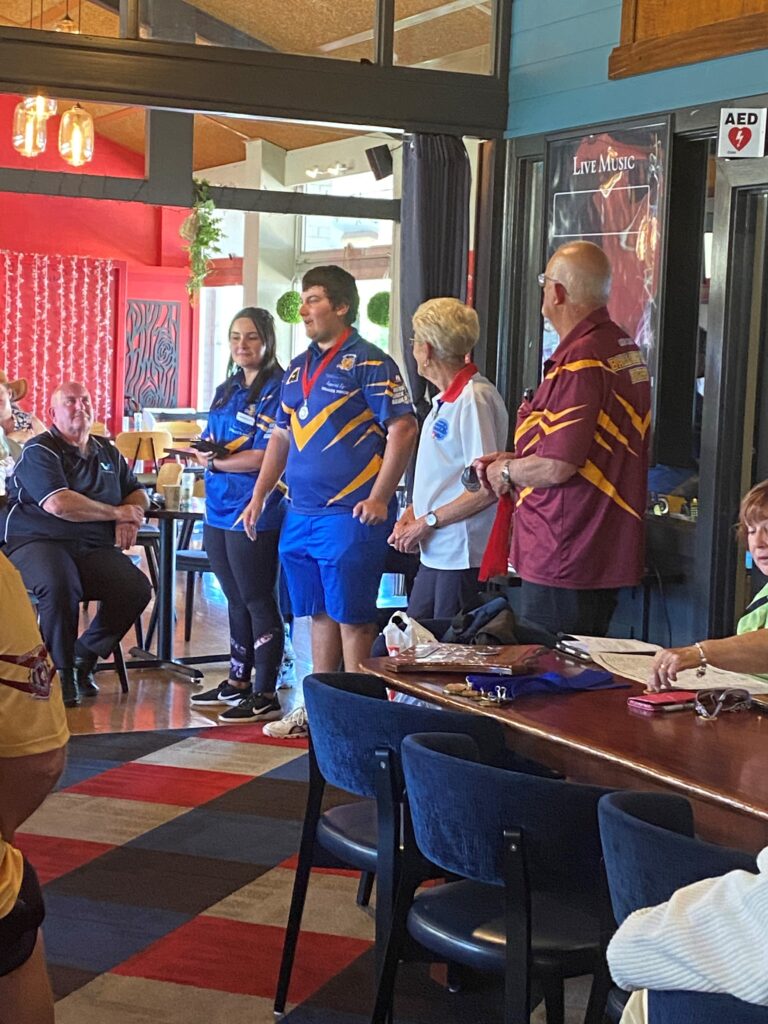
Spokesperson Tallulah Sargeson said junior bowlers came from Geelong, Bendigo, Ballarat and Goulburn Valley.
“They had an amazing time, a lot of happy, smiley faces for the day.”
See more photos at www.tlnews.com.au

January 23rd, 2021A shot in the arm

Here in California, you need to apply to a medical service provider in order to become a patient. When we arrived here in 2018 we signed up with a few likely organisations, and in mid-2020 we were thrilled to be accepted by one. Happily, my wife and I were both still alive and not in need of immediate medical attention. Nonetheless, we were thrilled to join the ranks of the medically blessed.
When I went to see my new physician for the first time – for no reason except to establish a working relationship – she was flummoxed to note on the 82-page form I’d been required to fill out, detailing every ache, pain and odd rash I’d experienced since 1960, that I was currently taking no medication. It seemed incomprehensible to her that I’d somehow managed to live my life thus far without the aid of dozens of life-supporting prescription medications.

I’m afraid that when she learned I’d been under the care of Australian doctors for the past 35 years, rather than seeing it as proof of the efficacy of that style of medical practice, she regarded it as an abject failure of that country’s system, as if Australia’s practitioners were in craven open revolt against the pharmaceutical industry.
I’ll admit here that when I left her consulting rooms at the end of our first meeting, my new doctor had done her job most admirably: I now had prescriptions for two medications and a referral to a specialist for a malady of whose existence I’d previously been wholly unaware.
Now, about a week ago I was summoned by my doctor to attend a six-month check-up, presumably because I am old and well-insured. I was informed of this appointment by robocall and text message; the latter requiring me to fill out a questionnaire concerning my likelihood of having come into contact with one of the 94 million COVID-19 cases in the world.
I went to my appointment, and the doctor was pleased to see that I now had medications to list on my paperwork, but when I asked about the COVID-19 vaccine, she gave me a solemn look, with her eyes peering from above her mask. She admitted that at her medical practice they’d received no notification from any source regarding COVID-19 vaccinations, and that they would not be notifying patients in that regard.
Now, this is not some little country practice run by a doctor with bushy eyebrows and untrimmed nose hair – not that you could tell about the nose hair, what with the mask and all. No, my doctor works for a medical corporation that has offices and hospitals the length and breadth of California.
With no ironic intention, I suggested to my doctor that perhaps I should check with the health department of our local government authority about the possibility of a COVID-19 vaccine roll-out, and she agreed that could be a possible source of information.
Here in California the march of progress has ensured that no telephone of a business bigger than a mom-and-pop corner shop, and no professional or government agency, will ever be answered by a human being. So I consulted the modern oracle, Google. Finding the appropriate website, I found that people of my age, career and medical history should be eligible for a COVID-19 vaccination some time in March. Or April. Or May. Supposedly, the only people being vaccinated were health-care workers and people 75 and older. I am neither.
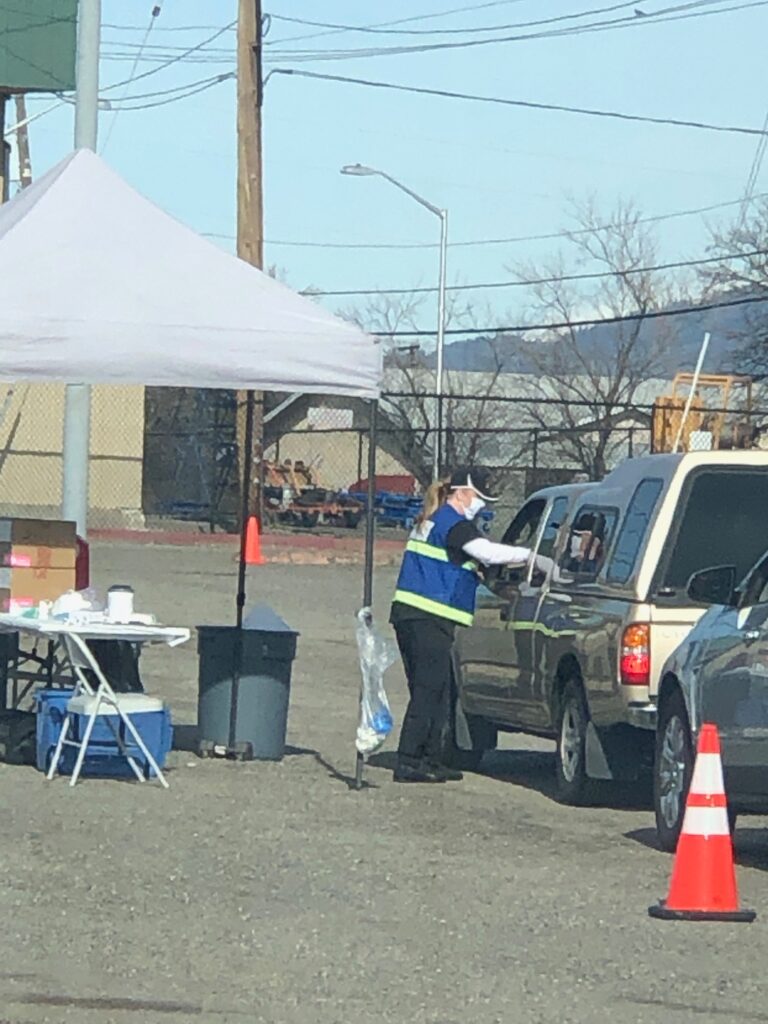
Anyway, it’s now Saturday morning in mid-January. I’m in my weekend morning lounge-wear – trackie-daks, a T-shirt and Ugg boots. The phone rings. It’s my wife’s youngest sister, who isn’t yet 60 years old. She has just been to the dog park, where she takes her beloved hound for a play, most days.
The dog park is next door to a small local airport. Someone at the dog park tells Sister that they’ve heard that the local government was going to be giving COVID-19 vaccine shots to anyone who wanted them, at the airport, starting right now. Sister calls us. She is sixth in line for the shot. She’s been told her age doesn’t matter, whether or not she’s in essential services, has pre-existing conditions, or calls a parmigiana a parma or a parmi – all are welcome to receive the COVID-19 vaccine. We consult the oracle. The corresponding website insists Sister is wrong, as the vaccinating needle slides into her arm.
We choose to believe dog park gossip and Sister’s on-the-spot report over the official online information, and race over to where the COVID-19 vaccines are allegedly being administered.
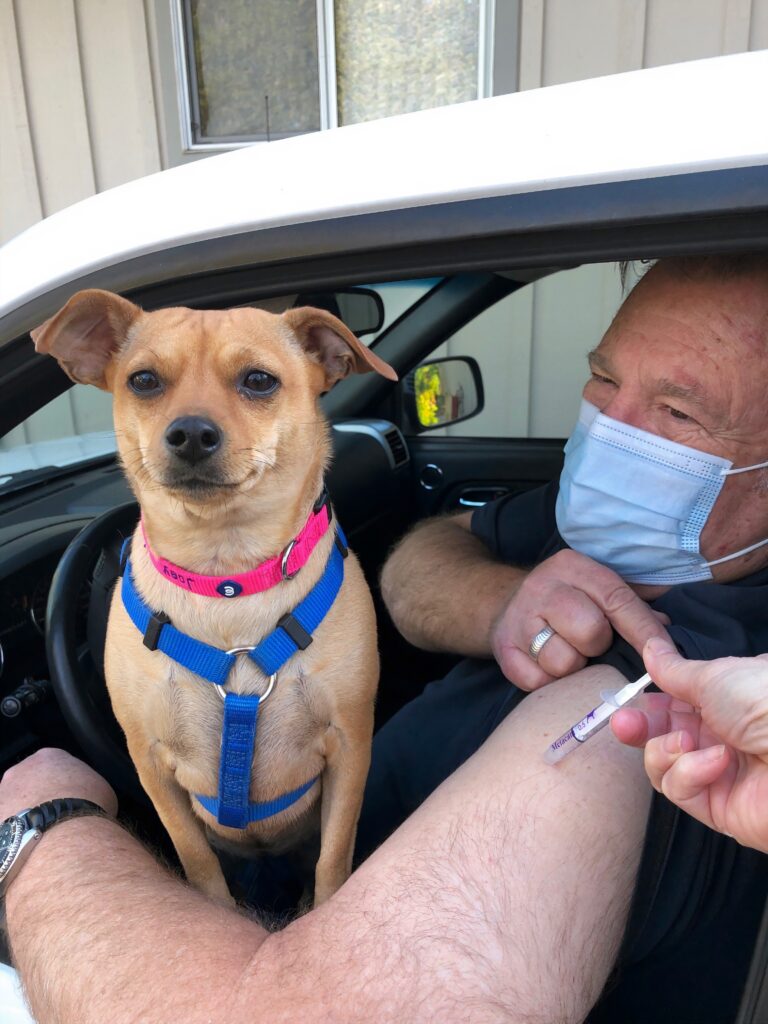
We arrive to find a well-organised operation, with excellent traffic control and information dissemination. It takes about an hour in our car to work our way to the vaccination site. It’s the Moderna jab and we’re given the shot and a card to be presented in a month when we return for the follow-up injection.
As for side-effects, my left arm where I received the jab is a bit sore, but – and this might sound pathetic or stupid – I feel a great sense of relief, as if this pandemic disaster might be coming to an end. In a month I go for my follow-up injection, and supposedly two weeks after that I’ll be pretty much immune to COVID-19, at least for a little while.
Here in the United States, Insanity Central, that counts as a major victory.
Jeff Glorfeld is a former editor with The Age and journalist with The Local. A couple of years back Jeff, his wife Carol and their dog Scout moved from Wheatsheaf to California, USA to be with family. They have since adopted pooch Joey. Along with being happy to be vaccinated, Jeff hopes for a St Kilda premiership one day.

January 17th, 2021Local Lines
I walked a time
through streets and
graves – to see the fields
the hay and heat
the peace
the sound
the passes of now
and the past replete
One time for all
never to give
that strange soft
breath
the wind
the yellow grass
The fences left
the times past
but
still so now.
- Tim Rooney
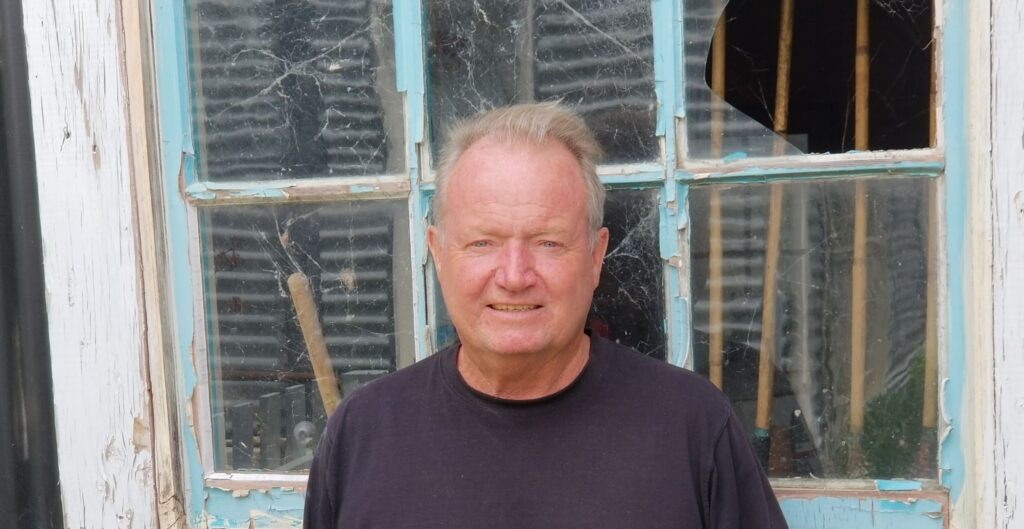
Tim Rooney has been involved with a wide range of the arts including visual, performance and writing and is interested in how senses and images can create deep feelings. He has worked as a teacher across a range of settings and has tortured many dinner guests with his interpretive blues guitar playing.
January 17th, 2021Design with Indre
“Colour is a power which directly influences the soul” – Wassily Kandinsky
Kandinsky’s words cannot be truer. His highly colourful works ignited my passion for colour, abstract expression, art and sculpture. It is well known that colour affects the mind and body through its wavelengths and therefore moods and behaviour.
A major portion of my work with clients is colour consultation for the individual, family or business. As colour is an influencer, it is important to match the environment with the individual (or collective) for certain tasks and during certain periods of time. For instance, this year’s 2021 colour forecasts will reflect the events of 2020.
Every year Pantone and Dulux, as the major players, will release their colour forecasts for the following year. This year’s theme will reflect the stress of 2020, the unpredictability, fear and the change to working from home.

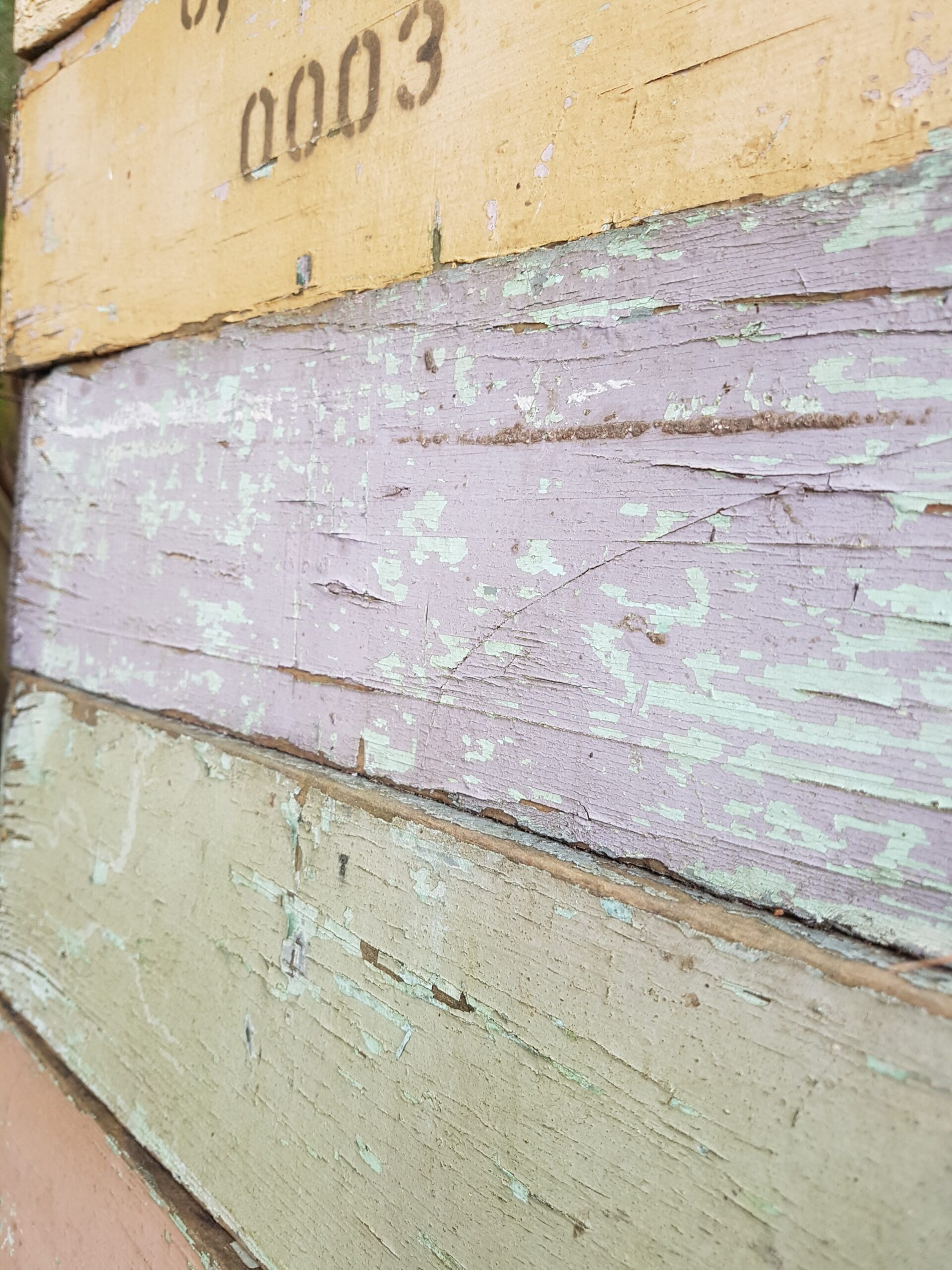
Pantone chose only two colours this time. Pantone 17-5104 Ultimate grey, being firm and dependable, as you would need after a year of unpredictability. The second is Pantone 13-0647 Illuminating yellow, representing strength and optimism as it is ‘bright and vivacious” (Dulux.com).
In my profession as interior designer, I love to be validated and my photo representing these two colours was Instagramed by me for the beginning of 2020. Same colours I am pleased to note and much earlier.
Dulux has a range they are calling Soothing “from three nurturing colour palettes that evoked retreat, nourish and reset”. (Dulux.com).
Everybody will have their own colour preferences that will make them comfortable this year. The easiest way the individual will express these choices is through their clothing choices. Already we are seeing much pink with uplifting colour choices for clothing. Sofas and manchester are using pinks and soft blues and greens. These colours are soothing and healing for the body and mind. Think sunrise over the bush or the beach. Soothing is needed after the year we all had.
Personally, my colours for 2021 are nourishingly rich and luxurious. Rich, luscious and lustrous equals richness and pleasure for the self. This is my mantra for this year. Be kind and generous with yourself. Find where and what makes you happy.
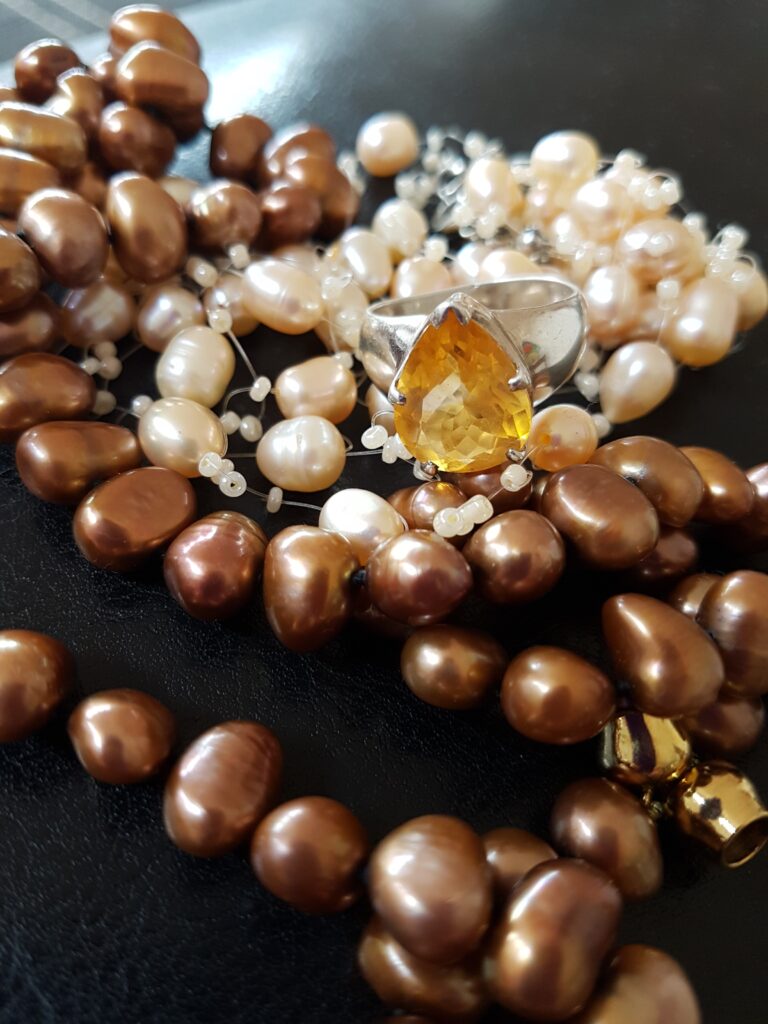
May we all find the colours that make us feel supported and nourished. Water pearls and a cognac citrine gemstone are my colour supports this year. May you also find your colour supports to assist through another challenging year. I don’t for a moment think the challenges from 2020 will miraculously come to a stop just because a calendar date changed to 2021.
Indre Kisonas owner and principal designer – iok design
indre@iokdesign.com.au | www.iokdesign.com.au

January 17th, 2021Around the house with Glen
Drying is an excellent yet basically simple method of preserving surplus stone fruits and pears for later use. The only equipment needed is a couple of 10-litre plastic buckets, sufficient drying trays and a preservative to extend storage life and improve the colour of the fruit.
Commercial dryers (of my memory) used such chemicals as potassium metabisulphite and other wine-making preservatives but I would prefer to use lemon juice at the rate of one cupful to four of water and avoid any allergic reactions. The drying racks can be made by stretching fine chicken wire over wooden frames.
(This all brings back fun memories of childhood Riverland Summer holidays helping out in the family drying sheds.)
Use only firm, fully ripened fruit. Halve the fruit and remove the stone. Remove the stem core and calyx from the pears.
Make up a solution using 10 litres of water, 4 cupfuls of lemon/water and 1.5 kg of sugar. This will be enough to dip about 20kg of fruit. The sugar prevents the natural fruit sugars being drawn out during dripping. Dipping without the sugar results in papery, poor-tasting dried fruit.
Place a weighted dinner plate over the top of the fruit to prevent it from floating to the surface.
Dipping times for the different fruits are:
Apricots and plums – 12-15 hours
Nectarines – 15-20 hours
Peaches – 20-24 hours
Pears – 24-30 hours
Rinse the fruit in clean water after dipping and place them cup-half up on the trays to dry in the sun. Filling the cups with a fine mist of water during the drying process prevents discoloration. Apricots should be totally dried in the sun but other fruits are best moved after two days for the drying process to be completed in a well-ventilated, shady spot.
Remove the pears from the full sun when their edges start to darken and turn up.
The fruit will be ready to store in sealed containers and placed in a cool, dark place when it is chewy and hard to bend.
Organic wasp trap
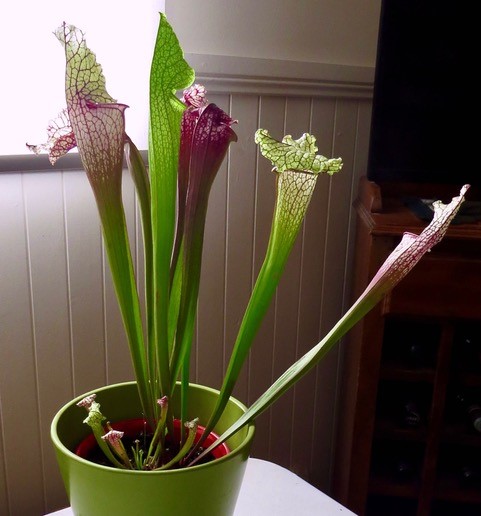
Sarracenia or pitcher plants are among the most attractive, if not lethargic, insectivorous plants of all the meat-eating plants in the world, and possibly one of the easiest to grow.
Unlike its worldwide plethora of fellow carnivores, which have to rely on split-second timing and physical movement of trap-doors and toothed jaws, this botanical Delilah merely uses its colourful plumage and alluring perfume to attract its prey down the ever-narrowing funnel until it finds itself drowning in the flesh-dissolving cooking pot.
Apparently, European wasps regularly succumb to their charms. So another good reason for growing them.
The botanical world is literally littered with carnivorous plants ranging from the tiny sundews with their sticky-tip hairs to the enormous tropical nepenthes vines, some with bucket-sized flowers, capable of trapping small animals and birds.
The one common factor is they are all found in zero to low nitrogen soils so have adapted to hunt for the nitrogen themselves in the form of decomposing bodies.
Sarracenias are bog-dwelling plants growing in warmer climes. They need a warm, well-lit spot away from direct sunlight but take them out of doors in warm weather to top up their insect quota.
They do best in a mixture of peat and sphagnum moss. As for watering, once the pot has initially been given a good soaking, place it in a saucer of regularly topped water to let the moss take up the moisture as needed.
Got a gardening question? Ask Glen. Email glenzgarden@gmail.com

January 17th, 2021Just sayin’…

The reader, obviously a writer as well, said he had been thinking about us being weekly and that he could offer his skills to help out. And then he saw that Kyle was out and thought he would jump in and become our new ranter.
He even sent me a column to kick off the new year, which was very good, but unfortunately I can’t very well sack Kyle who, when he found out he was replaceable quickly decided he would jump back onto his column. See oppposite.
Another reader wrote in saying: “Hi Donna, The year that was. You and Kyle on the front cover and the goose with the s… paper making the wall at the lake was bloody brilliant. Thanks to The Local and all the staff, Robbo (cartoonist Glenn Robinson) included for getting us through the year. All the best.”
Now that was a really nice email to receive. And to think we helped people get through such a year, even in a small way, is very rewarding. But then I was thinking “Kyle and I on the front?”. The cover of the last edition was our Pick me pet Bingo the dog. Hmmm. Then it dawned on me, our nice reader was talking about the one prior with the cartoon of our Legends of Lockdown on the front. Hahaha. We would never call ourselves legends – but it is a very sweet thought.
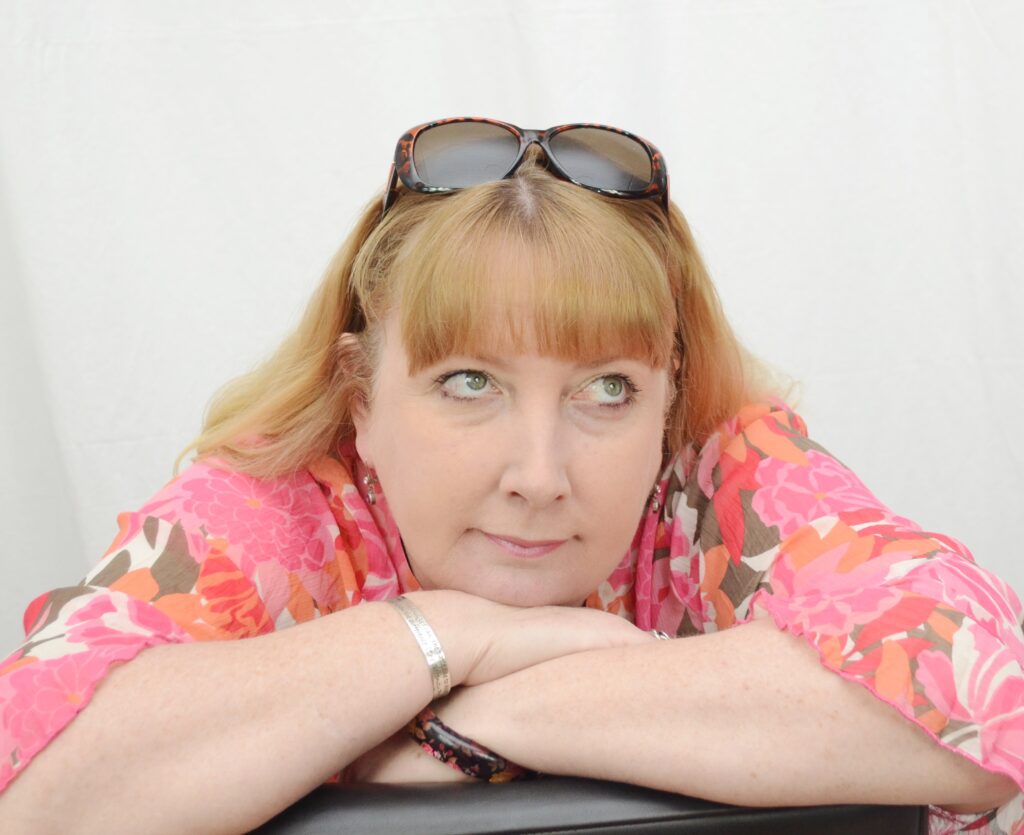
And moving on to yet another reader, who we met while walking around Lake Daylesford. Let’s just call him Rodney, mostly because that’s his name. Rodney said he loved Kyle’s “I’m done” Rant and said he never bothered with the rest of The Local and just went straight to Kyle’s piece. He looked at me and quickly added “and your column” and then said we didn’t need to bother with the rest of the paper, just a front page, inside columns and a back page. Hmmm. What have we been doing with our time all those years? Any advertisers reading this, please note that Rodney is not to be trusted as the advertising guru. Readers love your adverts!
Anyway, it’s nice to receive the feedback. Thank you for putting fingers to keyboard. And what is also especially nice is to be printing/onlining (is that a word) events again. I was about to pull the plug on the free ones below, just because my call-outs were being answered by crickets, but we seem to be up and running again. Roll on 2021 and the vaccine.
Finally, a thought about lockdowns. My brother lives in Brisbane and I wrote to him when the three-day lockdown was happening, telling him to stay safe. Rick replied saying it was nothing compared to Victoria and all was well. I emailed last Tuesday asking “please don’t tell me you had an ‘end of lockdown’ party?”.
His reply: “It was awesome.” I hope he was kidding. Just sayin’…

January 17th, 2021Kyle’s Rant
A bit of a weird concept granted, but you try having a holiday on a weekly paper and coming up with this luke-warm homogenised wordsmithery muck that I come up with every week.
All while trying to keep my words politically correct while attempting to slip the odd clanger through the editor and two sub-editors who pick over my copy with a fine-tooth comb forensically testing for legalities.
If only I could live in a world where I could actually say what I want about the oxygen thieves that inhabit my sphere without fear of persecution and being stoned to death in the town square by the great unwashed.
But, anyway here I am back in 2021 with a spring in my step. Well, not actually a spring, more like something that happens when you trip over a crack in the footpath and turn back to it as if to blame the crack for suddenly appearing.

But onward I ply into the wonderment of what the year has to offer and so far it’s been eye-wateringly tantalising with what’s going on in America with the circus known as Trump and the tease of a vaccine on the horizon – letting us think we are almost out of this COVID conundrum.
For a few of my very few readers it would seem an opportunity came up to take my place as I rested my weary burnt-out brain from the turmoil that was 2020 for a whole week.
I had readers writing in calling me lazy and a couple of opportunists offered to fill my chair before it was even cool. Would you jump in my grave just as quick?
But no, I am back to claim the full benefits of what the TL HQ has to offer. Stuff like the coffee (it is instant but of a reasonable quality), the wage (it is weekly but not such a good quality) and the working conditions, which wouldn’t pass the pub test in terms of sexual harassment.
I’m back, rant over…

January 17th, 2021The Last Word – A pandemic reading guide
Here in California, hospitals are reporting record numbers of cases and deaths related to COVID-19, as we experience another wave of infection and as a vast number of Americans continue to refuse to wear masks or accept the reality of the pandemic. Recently a new, reportedly more infectious, strain of the virus has found its way to the US from the UK. And then on December 29, 2020, the Washington Post newspaper carried this headline: “COV-19 ‘not necessarily the big one’, WHO warns”. So, happy 2021. With that in mind, here are a few books to read during a pandemic.
- The Stand, by Stephen King
King published The Stand in 1978 but has revised it a couple of times, so even if you’ve read it years ago, it’s worth picking up a new copy. Warning: at a Wikipedia-estimated 1152 pages, you might need help getting it into the car.
It is only tangentially about a pandemic but what happens is, an extremely snotty, man-made flu-like disease called Captain Trips (and why are we stuck with a nerdy virus like COVID-19 – why can’t we have a bug with a cool name?) wipes out almost the entire population of the Unites States – the rest of the world doesn’t figure in the story – and that’s about it.
This being Stephen King, of course, the next thousand or so pages involve supernatural powers influencing survivors to coalesce into two groups – one good and the other evil – who battle it out for control of the world. Sure, yep, it’s for control of the US, but we’re Americans and don’t really care about anyone but ourselves.
For those who prefer to consume their literature through the medium of television, The Stand has been made into a mini-series twice – once in 1994, and a new version that is streaming in the US now. Although the ’94 series is OK, and we’ve only seen the first episode of the new one, it’s safe to say that neither captures the epic sweep of the book. - I Am Legend, by Richard Matheson
Matheson was one of the great masters of horror literature, and this novel from 1954 was one of his best.
The story has twice been adapted for the cinema. In 1964 Vincent Price was masterful in a version titled The Last Man on Earth, an excellent attempt at capturing the mood of Matheson’s tale. As for the 2007 movie with Will Smith, it’s barely adequate and takes too many liberties with the book.
Matheson’s story takes place in a US city – it could be Los Angeles – after a disease has left a man named Robert Neville as the last human. But he isn’t alone – the pandemic disease has turned everyone but Neville into vampires.
It might sound like a silly idea, but Matheson’s story goes deep into Neville’s loneliness, his longing for a sexual partner, his crushing sadness over the loss of his wife and child; all the while, vampires come to his house each night to taunt him, calling out his name, trying to smash their way into his fortress-like home. It’s horror writing at its finest. - Wanderers, by Chuck Wendig
Wendig is one of the most prolific writers you’ve probably never heard of, unless you’re a fan of comic books spun off from the Star Wars franchise.
This is a recent book, published in 2019, and at almost 800 pages, even a writer of Wendig’s fecundity would’ve had to have started it before the COVID-19 pandemic struck, which makes it extremely prophetic.
The book takes its time getting into its main plot, and to discuss it in detail would be to drop too many spoilers. Suffice it to say, many elements of the story could have come directly from the pages of any newspaper, populated by heroic, disease-fighting public health workers; heavily armed, right-wing lunatic militias; duplicitous, useless politicians; and a frightened, angry general population.
It is worth noting, and should indicate some of the book’s plot arc, that Wendig made the news in 2018 when he was fired by the Marvel company from his job as a writer of Star Wars books and comics, because of a series of tweets he sent out that were highly critical of US conservative policies and politicians, expressed in some, shall we say, colourful language. - The Great Influenza, by John M Barry
For non-fiction readers, and first published in 2004, this is one of the best books available on the 1918-20 influenza pandemic that killed “more people than any other outbreak of disease in human history”.
Barry does an amazing job telling the story in a highly readable style while including the dark details and the enlightening science. It is unfortunate that this book resonates so profoundly in today’s world.
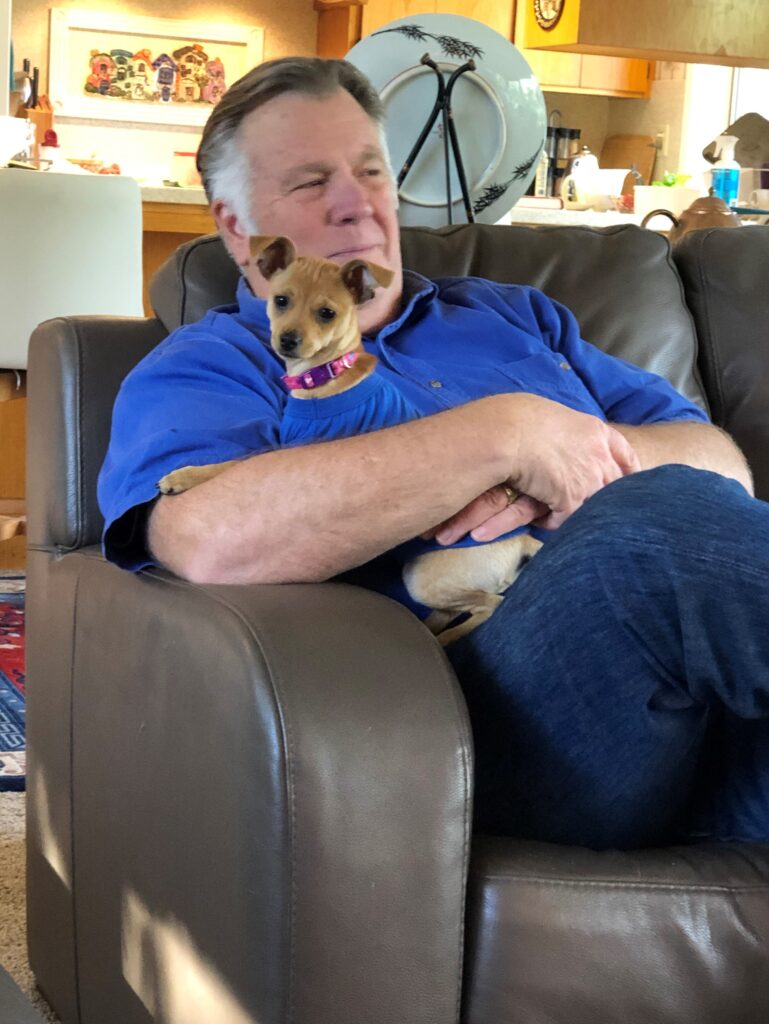
Jeff Glorfeld is a former editor with The Age and journalist with The Local. A couple of years back Jeff, his wife Carol and their dog Scout moved from Wheatsheaf to California, America to be with family. They have since adopted Joey, pictured above with Jeff, who is now The Local’s US correspondent. Jeff, not Joey. He hopes for a St Kilda premiership one day. Again, Jeff.
January 17th, 2021Bread tags: From little things big things grow
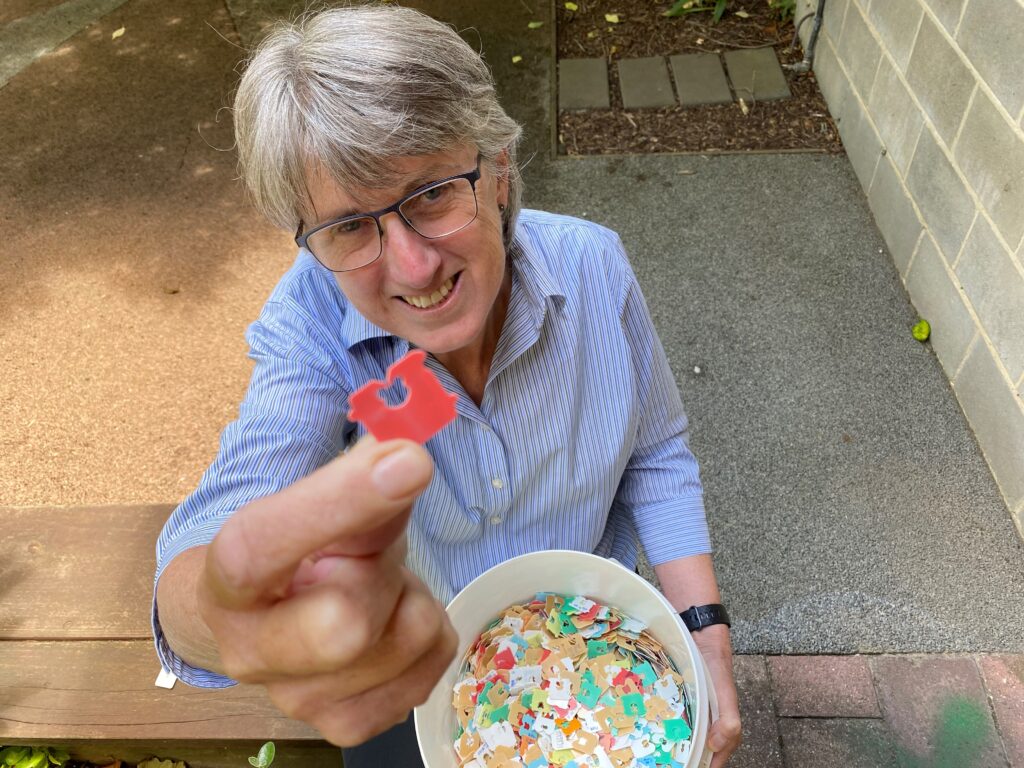
What started as a brainstorm by retired South African nurse Mary Honeybun in 2006 expanded into Aussie Bread Tags for Wheelchairs when South African migrant Jenny Cooper established a national collection system in this country in 2018.
The Woodend Library became the 200th collection point in July 2019.
Library manager Lulu Cockram, pictured, tells the story of one of the library staff visiting Transmutation, a plastic recycling workshop and retail outlet in Robe, South Australia.
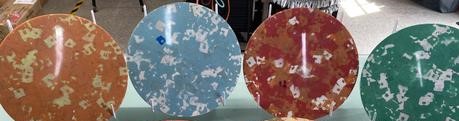
“She bought one of the bowls that co-owner Brad Scott made from recycling the bread tags, and we displayed it in the library,” Lulu said.The idea was to show the library’s visitors what happens when something small and everyday, like a plastic bread tag, is collected and changed into something useful, such as a bowl.
Lulu said the community’s response had been very positive.
“An activity such as the bread tag collection bucket we have on our recycling bench is our way of promoting the ‘Libraries Changes Lives’ message,” Lulu said.
“It is quite rewarding in our roles in the library to encounter this level of engagement.
“We tell library visitors if they are going to Robe to drop in and see Brad.”
The Australian charity sells the collected tags to Transmutation. The money raised is sent to South Africa to purchase the wheelchairs.
Aussie Bread Tags for Wheelchairs founder Jenny Cooper said it takes 200kg of tags to pay for an entry-level wheelchair.
“It is the local communities that make our organisation succeed,” Jenny said.
“We can’t do it without them.”
There are now 460 collection points in Australia recycling a total of 100kg of tags per month.
Ironically, in November 2020, Tip Top Bakeries announced its transition to 100 per cent recycled and recyclable cardboard bread tags.
Tip Top will phase in the cardboard tags nationally over the next two years, eliminating over 400 million plastic ones per year, as part of its sustainability initiative for all packaging to be 100 per cent recyclable, reusable or compostable by 2025.
Rather than seeing Tip Top’s elimination of plastic bread tags as unfavourable to the Aussie Bread Tags for Wheelchairs cause, Jenny Cooper applauds its decision.
“I think this is a fantastic move for the environment,” she said.
“We will continue recycling while plastic tags are still around.”
Words: Carol Saffer | Image: Contributed

January 17th, 2021Why not everyone’s a fan of a solar farm
But what happens when that investment is earmarked for a project which directly impacts on you?
When Adele Chivers, pictured, and her husband bought a property on Leonards Hill in 2007, they envisaged a sanctuary with idyllic vistas where their family could gather and they could eventually retire.
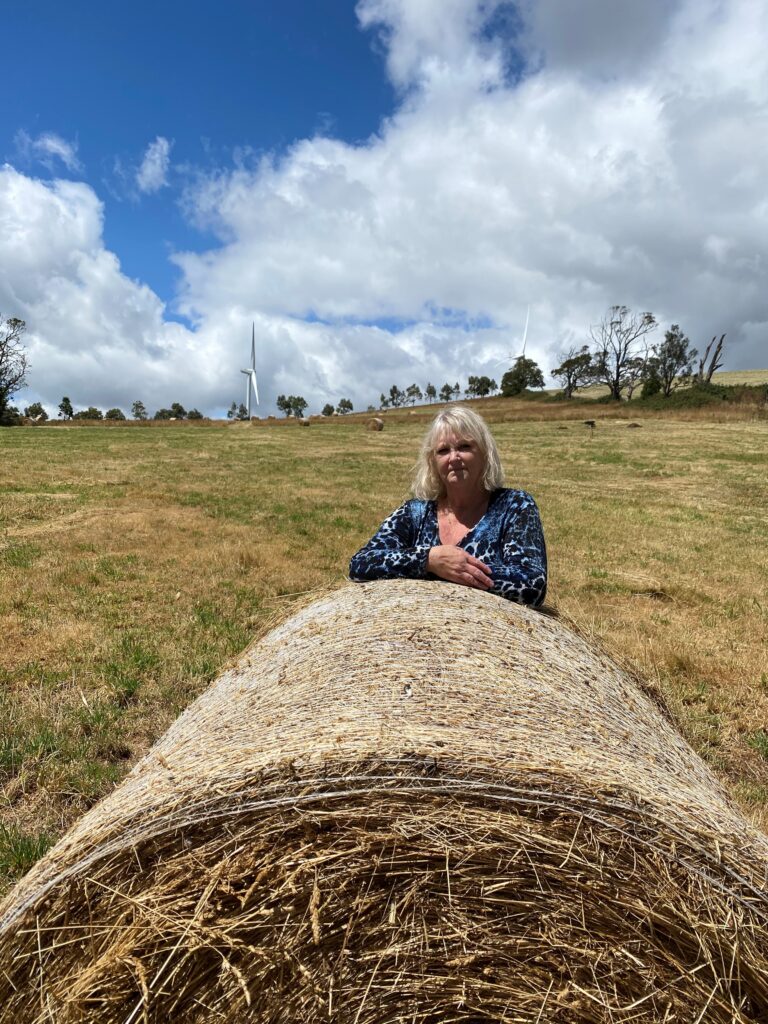
Shortly after they signed the deeds, two wind turbines were built on the paddock behind their house. As supporters of renewable energy this was something they learned to live with. Then in November last year, Adele was told the development was to be expanded with eight hectares of industrial solar panels reaching just 30 metres from their property. This, she says, is too much.
“When the wind turbines operate, they run all night,” Adele told The Local. “You can hear the constant whoosh from inside the house.
“I’ve learnt to look at the wind farm in a positive way. But I can’t be positive about this latest development. It’s much more intrusive and much closer to my fenceline.”
Hepburn Wind, the community co-operative which owns the 4.1 MW wind farm, has been monitoring the Leonards Hill site for three years to determine its suitability for solar. Feasibility studies showed that a mid-scale solar development could double the farm’s renewable energy capacity, abating the emissions of more than 1500 residential homes.
“What we are proposing is an Australian first for how to integrate solar appropriately into valuable agricultural areas,” said Hepburn Wind spokesperson Taryn Lane.
“The solar array will be placed on the least arable area on the farm using a technology which reduces the footprint of the solar system by over 50 per cent.”
The site was selected for maximum sun and its proximity away from tree lines and close to existing infrastructure. Panels will be one metre off the ground and special permission has been sought to forego lighting and security fencing to minimise the impact on neighbouring properties.
The project has been supported by Hepburn Shire and in 2019 received a $500,000 grant as part of the Victorian Government’s Renewable Communities Program.
A social licence to operate
Research has shown that community acceptance of renewable energy farms in rural areas is most successful when accompanied by transparent well-structured community engagement. Adele says that in this case, communication has been lacking.
“They have been working towards this development for three years but the first I heard about it was on Melbourne Cup weekend last year when I was sent specifics of the project and a detailed image. As the plans come to 30m from my fenceline I find it extraordinary that no-one was in contact before it reached this stage.”
Hepburn Wind say they have gone out of their way to keep the community informed, releasing updates through newsletters, local and social media and community meetings.
While it had been challenging during COVID-19 to know if people with weekender properties were being kept in the loop, Taryn said that multiple letters had been sent. However, due to privacy regulations, “we were using old information which was unfortunately incorrect in a few cases”.
In coming months, as part of the State Government planning permit assessment process, all neighbours will be formally notified and provided instructions on how to make a submission about the proposal. An opportunity Adele says she will be taking.
“I don’t want the green fields around my property replaced with shiny, noisy, industrial-scale solar panels. Just thinking about it makes me ill.”
“Hepburn Wind has the high moral ground here, and they are so confident that everybody should be happy with their plans.
“I’m in favour of renewable energy but I’m having my sanctuary threatened and I feel people will be judging me for objecting.”
Words: Jane Williams | Image: Kyle Barnes

January 17th, 2021Pandemic pivot: Seat swap for Steve
And if you were one of those hundreds of air crews normally at work flying the air routes of the world you would have been left with little more to do than twiddle your thumbs at home, wondering when the whole nightmare was going to end. One of those affected by this catastrophic shutdown was Fern Hill resident and Jetstar international pilot Steve Peirce.
Steve began his working career with an apprenticeship at the old Victorian State Electricity Commission as a linesman but soon decided to train as a pilot at Melbourne’s Moorabbin airport around 1985. By the 1990s he had worked in Saudi Arabia and in Australia’s top end doing charter flights and regular public transport routes from Darwin to Alice Springs and countless places in between.

Eventually he went to Sydney to work for a company called Impulse Airlines which, after being bought out by Qantas, soon evolved into Jetstar. He has remained with them ever since and by March 2020 was flying Boeing 787 Dreamliners out of Melbourne on international routes across Asia and the Pacific including Thailand, Vietnam, China, South Korea, Japan and Hawaii. But then suddenly, everything stopped.
“When COVID hit, like all my other colleagues, I was officially stood down. You’d imagine somebody with the nous of Alan Joyce (current CEO of Qantas, parent organisation of Jetstar ) was going to move quickly on these things and he did. We were all stood down within a matter of a week or so.”
Since Steve had been working at Jetstar for many years, the break was a means of using up his accumulated leave and he was quite happy to just sleep in and work around the house and in the garden.
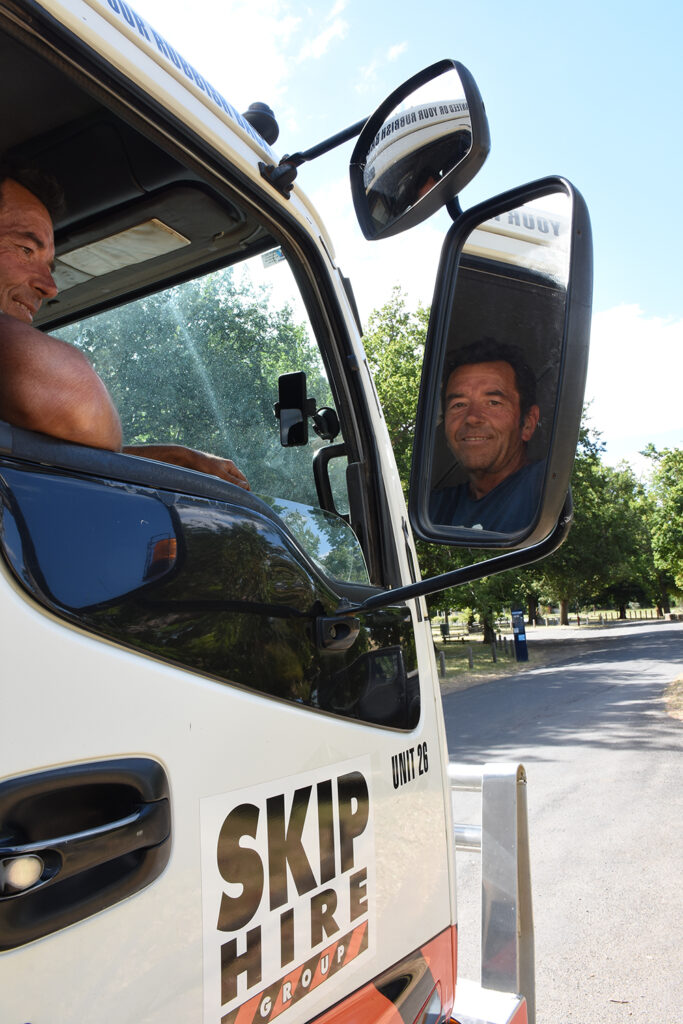
But when it was clear the down time was going to drag on longer, Steve thought he’d better get out from under his partner Rose’s feet and find something to do. He approached his neighbour and good friend Steve Manifold, owner of waste disposal business Skip Hire Group based at Lauriston who was happy to give him a few hours a week driving his trucks which Steve continues to do currently.
“I enjoy driving the trucks, I’m seeing parts of the area I have never seen before, all those little towns and side roads. Getting out and about has raised my awareness of what we’ve got on our own back door.
“There are a lot of people who are taken aback when I say I’m a garbo and it’s not just me, I’ve got colleagues who are out there driving Coles delivery vans and stacking shelves at Woolies. But just because we are pilots it does not mean we are too good to do certain types of jobs. We will do whatever we have to, to make a living just like everyone else.”
While international air travel remains greatly truncated, there is clearly change just over the horizon. Just prior to Christmas Jetstar employees were made aware the company was going to “stand up” a selection of international crew and operate them on domestic routes.
In case people don’t realise, it is not a matter of just stepping back on the tractor for these highly specialised workers. Standing up crews is intended to ready them for their return to commercial flights and entails an array of preparatory tasks including ground courses, simulator training and training in the aircraft before resuming.
“They are planning to stand us up for the Easter peak,” Steve says. “Each crew will work one week on with several weeks off to rotate the flying around (sharing limited domestic routes). That will keep us all current and when international borders open up, we will be good to go.”
Above, captains photographed on the flight deck of a Boeing Dreamliner, from left to right, Peter Terrill, Anthony Hallebone, Kester Van Ass and Steve Peirce
Image: Contributed
Centre, Steve Peirce working the bins at Skip Hire Group
Image: Tony Sawrey
Words: Tony Sawrey

January 17th, 2021Rewiring neural pathways part of healthy ageing
But taking those all important steps is the key. Once you do so it becomes clear that the mind, like truth, is actually malleable and in many cases it takes surprisingly little to rewire those neural pathways. For some people that realisation may have come about through learning new job skills. For others via a refusal to accept that acquiring and storing fresh knowledge is only for the young.
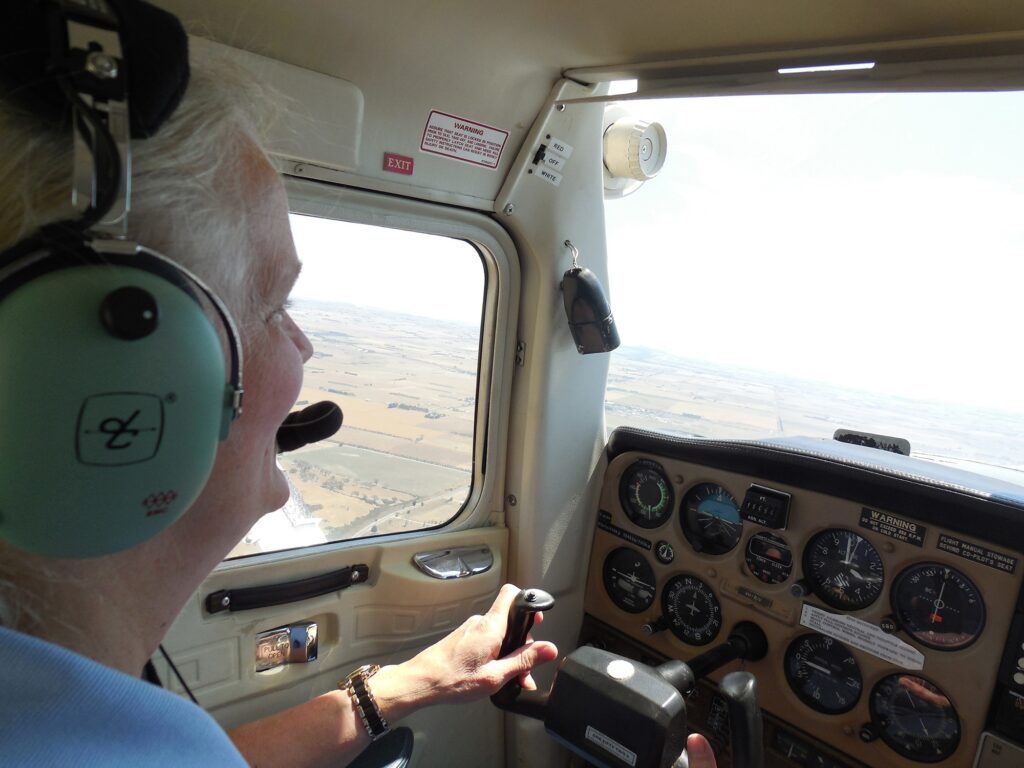
This is certainly the case for Eganstown’s Margaret Frederick. Margaret, 65, is a retired physiotherapist and during her working career she was mostly involved in aged care. It made her very aware of what can happen to people’s minds as they age and the steps that can easily be taken earlier on to mitigate decline. Combine this with a lifelong love of learning, and you have someone who is keen to step up to new challenges whereever possible
“The film Bucket List made a very big impression on me,” she says. “Don’t muck around, you don’t know how long you’ve got. The principal thing is I have always loved learning and I love challenges rather than everything being easy.”
Perhaps the most significant new endeavour out of many for Margaret was learning to fly a light aircraft at 59 years of age.
“My eldest daughter was a commercial pilot and I decided I would really like to understand what she was doing so I took some lessons. I was doing really quite well and probably my proudest moment was when I was able to hold a 360-degree turn at perfect level. I did enjoy what I did and I loved that marrying of theory and practice.”
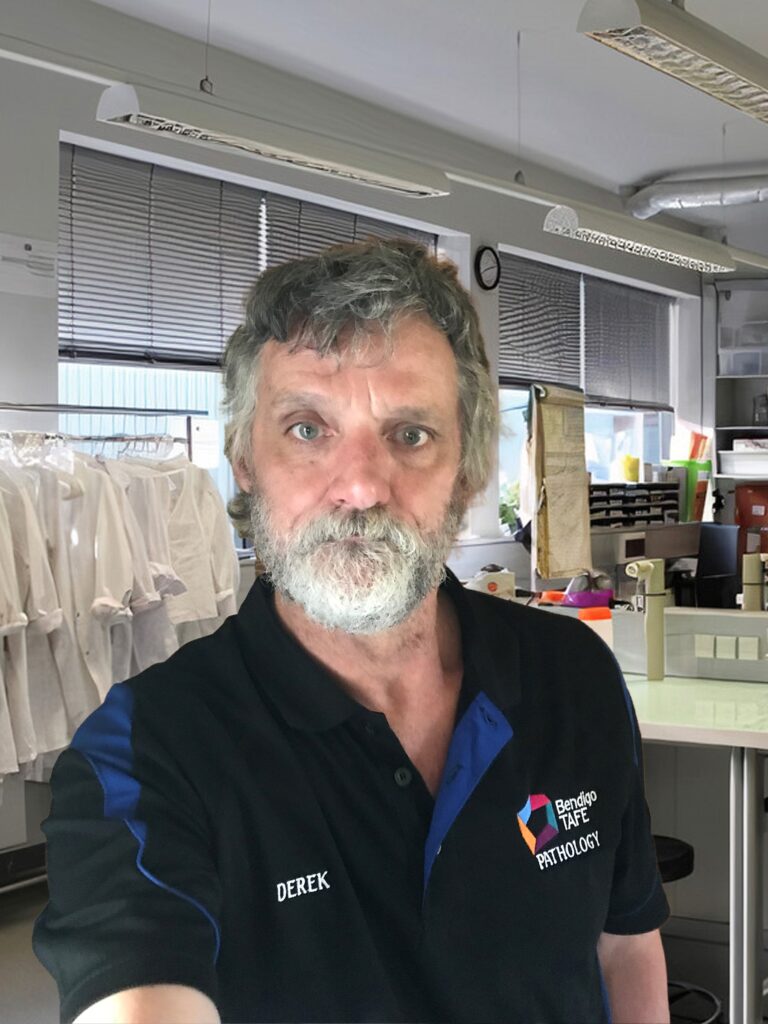
For Derek Raffin, his entry into a new area of learning was a career pivot brought about by COVID. His early working career was as a chef and most recently he was working doing admin at the Creswick Neighbourhood Centre before being made redundant last March. But now at 56 he has begun a Certificate III Pathology Collection course at Bendigo TAFE.“It is a year-long course. My partner recommended it and I thought I would give it a go and it would be pretty interesting,” says Derek. “But while it’s great to make the step into something new, it hasn’t been easy. There is a lot of theory with an intense learning curve and it has been a challenge learning new things after a long absence. I’m certainly finding the process of remembering information harder than I did when I was younger and I have had to come up with new ways of remembering things.”
Another way for people to expand their horizons and keep mentally fit is to join a community group such as the University of the Third Age. U3A is an international movement whose aims are the education and stimulation of mainly retired members of the community; those in their third age of life. The group has chapters locally in Kyneton, Creswick and Daylesford.
The Daylesford chapter, known as Hepburn Shire U3A, was established in 2000 and in a typical year hosts courses and activities ranging from bushwalking and Tai Chi through to academic courses such as philosophy and indigenous studies. All of which provides important mental stimulation and social connectivity for its 260 members.
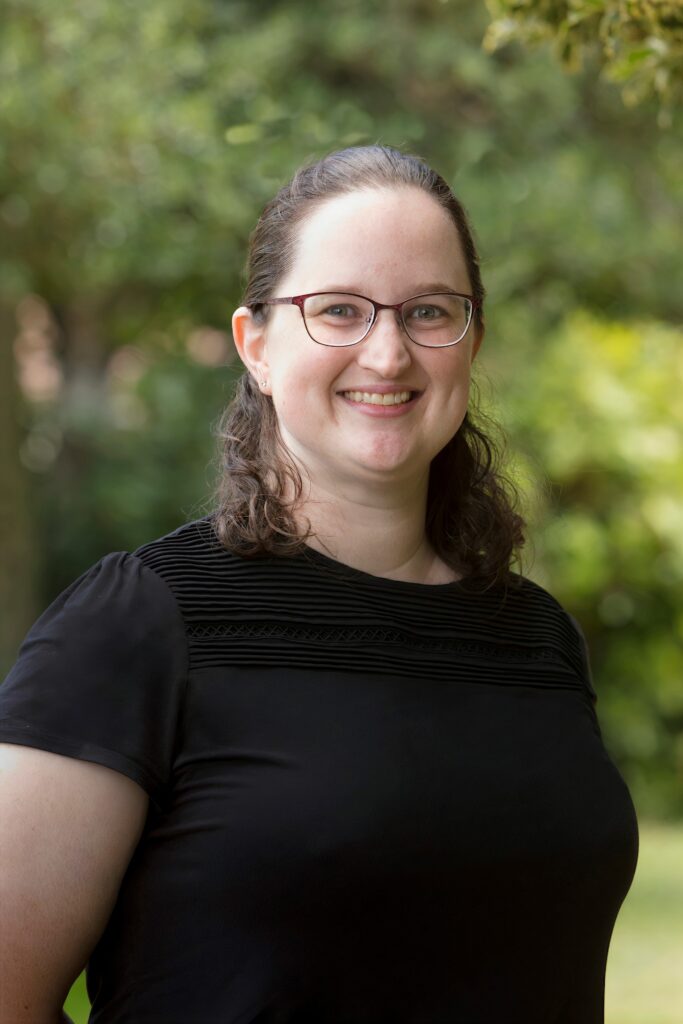
And as we get older these two areas of engagement are a vital component of addressing cognitive decline, as Springs Medical GP Dr Danielle Robinson explains.
“We know from the medical scientific evidence that learning new things can prevent or slow the progression to dementia so that’s why keeping socially active is important. That can be achieved by doing something different (for instance, learning a language or a new physical activity such as dancing or a new sport) along with a healthy diet and smoking cessation. Basically, I tell people what’s healthy for your heart is also healthy for your brain. I also like that this community encourages the input of older people and they are involved. I think that is very important.”
Words: Tony Sawrey | Images: Contributed

January 14th, 2021Mobile phones out at Bullarto/Lyonville
A Telstra spokesperson told The Local on Thursday, January 14 that the theft had been reported to police and temporary power, to be connected to the site to bring services back online, was being organised over the next 24 hours.

The spokesperson said they believed the cabling was stolen on the weekend.
“Damage or vandalism like this impacts not only on the network but the local community who relies on the mobile site.”
A Bullarto resident told The Local that there had been no Telstra reception for either Bullarto or neighbouring Lyonville for six days.
“And here we are in the middle of the fire season.”
A check of the Telstra website for outages says for Bullarto mobile reception: “There are no confirmed interruptions in your area.”
December 20th, 2020One step forward… the Hepburn Hub
The building, a former theatre which had most recently been a bargain shop and then shopping mall before it was bought by Hepburn Shire Council in 2016 for $6.345 million, now has a price tag north of $12 million.
The project stalled in June 2018 after it was realised the renovation cost would be more than $1 million, creating a need for a planning permit.
More recently it was found that some of the building works had not been done to building codes and had to be dumped. A photo, taken last year, shows the work that was started on the council staffing areas, while the next photo shows that work has been removed.
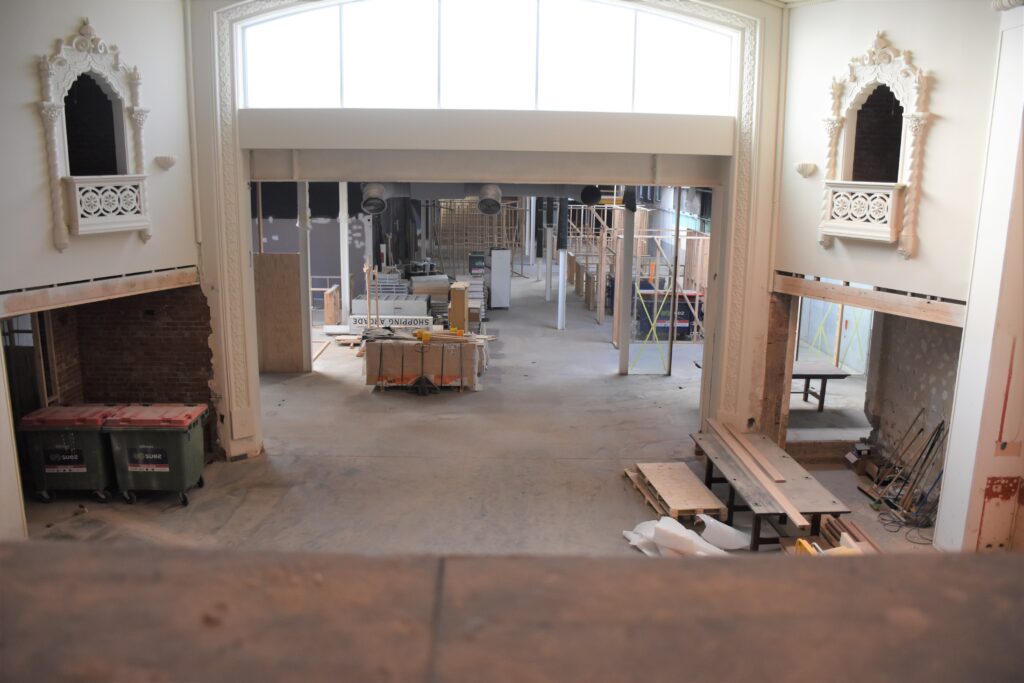
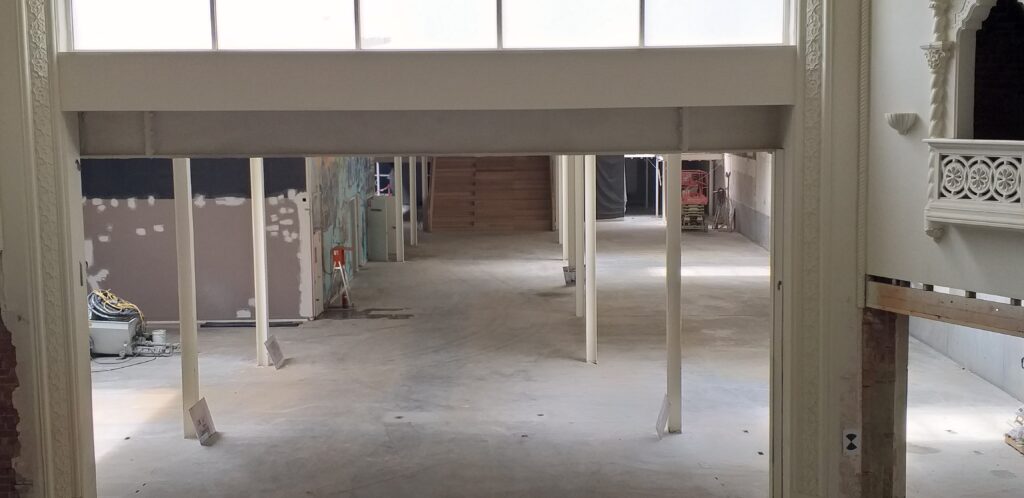
Insulation and glass, not to code, has been thrown out with a council spokesperson saying no-one wants second-hand goods. The building is also not water-tight, with water clearly visible in the second photo.
I took a tour of the building last Friday and it was quite upsetting, also as a ratepayer, to see the costs mounting as the council tries to salvage what it can of the formerly beautiful building.
An investigation into what happened is pending and there are concerns about libel, so no-one is laying blame and it is clear the council is now set on a path to do what it can to recover and open a fully functional and attractive Hepburn Hub with a library, community theatre, information centre, youth drop-in space, meeting rooms for rent and council offices. But there are plenty of questions not yet answered.
The building, which was originally bought so the council could re-open public toilets in the main street of Daylesford, has just three public unisex toilets. This is within the building code but it will be interesting to see how that works with a full cinema and a few library patrons, and people popping in off the street. The operating hours have not yet been determined.
The only access to the community cinema’s projector is via a crawl space. Yes, it will mostly be run remotely, but if something goes wrong, one of the volunteers, many older residents, will be expected to crawl through a man-hole to gain access.

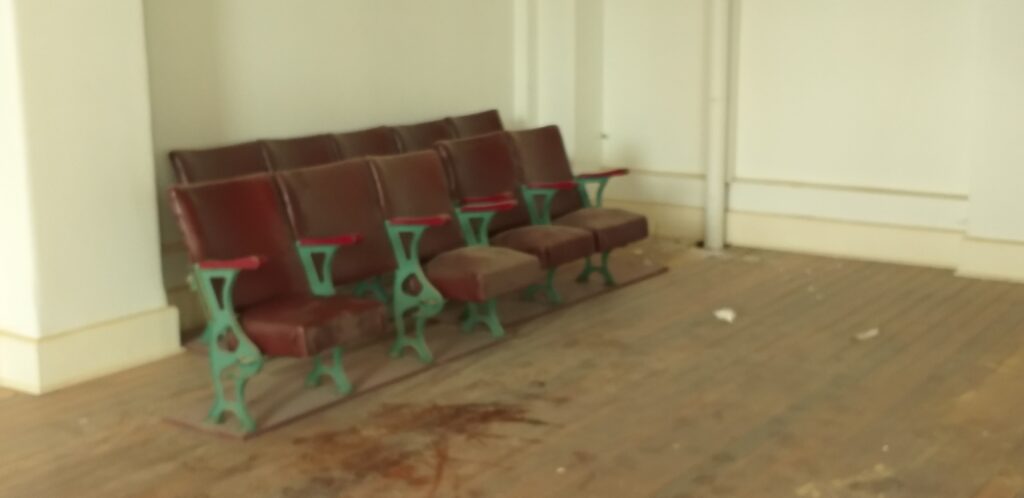
Council staff will have to hot desk. Hot desking is where you do not have a particular desk, you just take whichever is vacant on the day. It is quite controversial with the pros including greater flexibility and desks not left vacant while people take leave. Among the cons are workers who like to personalise their desk with a photo of family or a pot plant, perhaps pop a couple of muesli bars in a top drawer, and IT issues like phone extensions and printer connections. The council says the only way hot desking can be avoided is if all meeting rooms are removed or the size of the building is increased. There is an office allocated for the CEO and a dedicated space for the mayor and councillors.
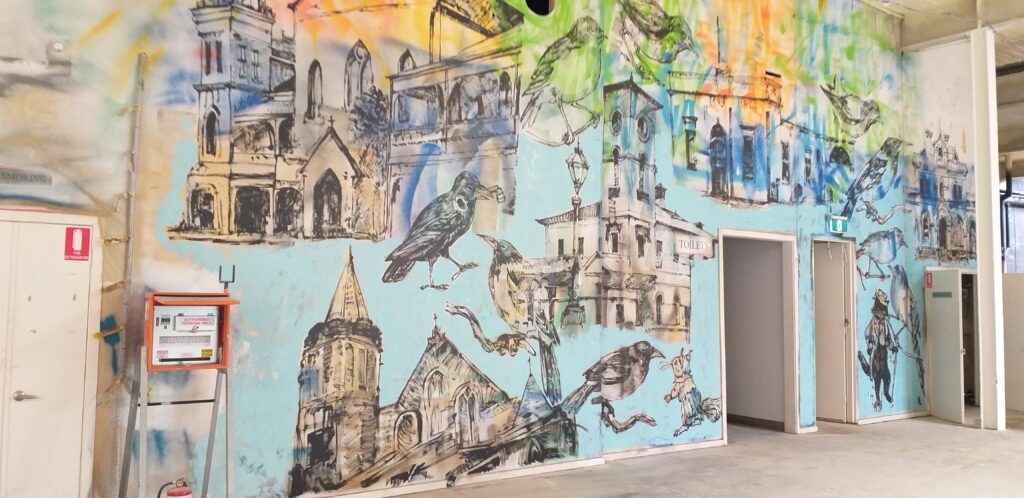
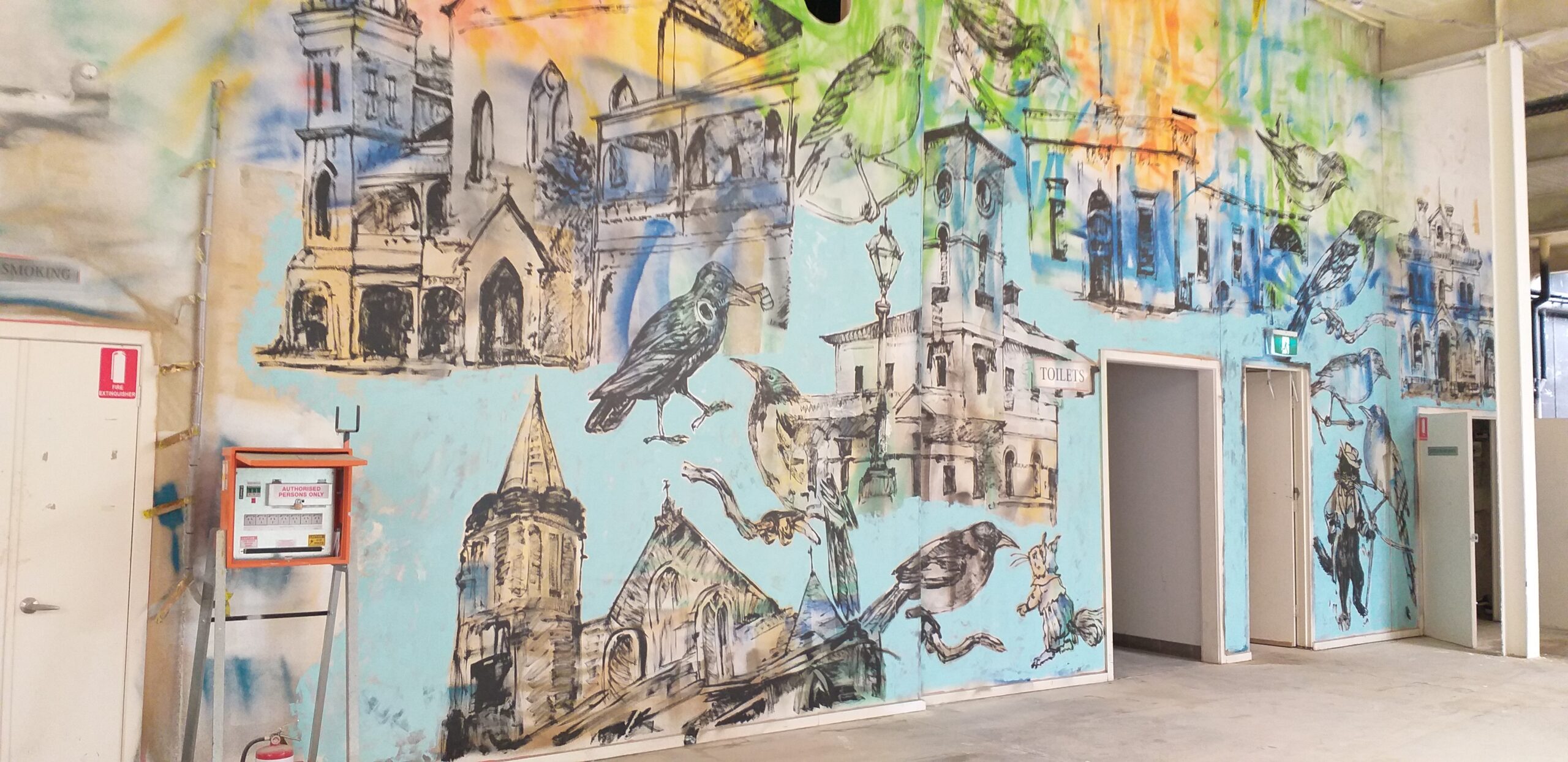
There are two large David Bromley murals, on the wall leading up to the cinema and on the wall outside the council staff toilets. These were both commissioned by the former council and not run past the council’s Public Art Panel. The murals will remain and the Public Art Panel will now look at some way of displaying other local artists on other walls on a rotating basis. Finally, a social enterprise cafe, which would have provided hospitality work experience to young people, has been dropped because government funding for the library relied on a metreage space, and the cafe impinged on that.
It really is a case of “watch this space”.
Words & images: Donna Kelly