


December 20th, 2020Just sayin’…

I just read Kyle’s Rant and thought of this song. Not as funny as Fred Dagg but then, this year has not been funny. It really does seem like we have been down a long road, especially in Victoria, but most of us have just made it out, fingers crossed, in time for Christmas. (As I write this, the Northern Beaches outbreak is happening, so I guess some of us will still be be relying on Zoom or Skype.)
We are doing it quietly this year. Over the past many years Christmas has involved my mum, who we lost in May. Well, we didn’t lose her, she died. Yes, at 87, but no, she is not in a better place, she would rather be here, spending time with her family and friends. I miss her so much.
Luckily, last year I managed to coerce my brother and sister-in-law and sister and two sons, to Glenlyon where we had our first full family Christmas in many years. Maybe 25? We ate lunch under the oak tree, dessert in the school house and snoozed on the deck. It was pretty much a perfect day.
Mum had come up for a few other Christmas Days here. Spent with friends. They were fantastic as well. I remember one with one friend bringing a turkey and gravy, another friend bringing the pav and another the potatoes. I just made a salad. Mum spent the morning fretting that we weren’t doing anything and was a bit amazed when it all just came together.
Another time we visited good friends in Wheatsheaf. Their lovely neighbour took mum off for a walk and offered to share a joint with her. Very neighbourly. Mum, 83 at the time, said she declined but I am not sure. She was pretty happy that afternoon.
Anyway, this year we will again spend the day with good friends who will do a full Christmas dinner and expect nothing in return. We have decided on no presents but will get them something anyway. We will eat too much, drink too much and probably have a dance or two at the end of the night. Those sort of friends.
And then roll on 2021. I will be very happy to put 2020 behind us. What a shit year. I think the only thing that kept me sane was The Local. Producing a good read, week in and week out. So thanks for the sanity and the support. And Merry Christmas – I hope you have fun with your near and dear, and old and young. And finally without any fear. Just sayin’…


December 20th, 2020Kyle’s Rant

I googled some sentiments around this statement and came up with a cracker song by Fred Dagg. He was a fictional black singlet, shorts and gumboot-wearing farmer character from New Zealand. Created and acted on stage, film and television by satirist John Clarke. (Do yourself a favour and Google this.)
While going down the virtual Google rabbit hole I found another song by the same character, Mr Dagg, and it goes to the tune of We Three Kings. It is more grumbled along to by a set of blokes than sung, but it is my offering to your Christmas collection of merriment.
We three Kings of Orient are
One on a tractor, two in a car
One on a scooter
Tooting his hooter
Following yonder star
Oh, oh
Star of wonder
Star of light
Star of bewdy, she’ll be right
Star of glory, that’s the story
Following yonder star…

Happy grumbling and a happier Christmas rant over…

December 20th, 2020Magic hour in the Wombat Forest

One of the things we loved to do was sit out on our back verandah and listen to the Wombat Forest put itself to bed – we called it the magic hour, and it became a ritual that was observed at least two or three nights a week.
The CFA might call it a death trap – narrow, tree-lined roads and limited access in and out – but Wheatsheaf is a lovely part of the world. Everyone has their five-acre block, there are few fences, some properties have been cleared while others remain heavily forested.
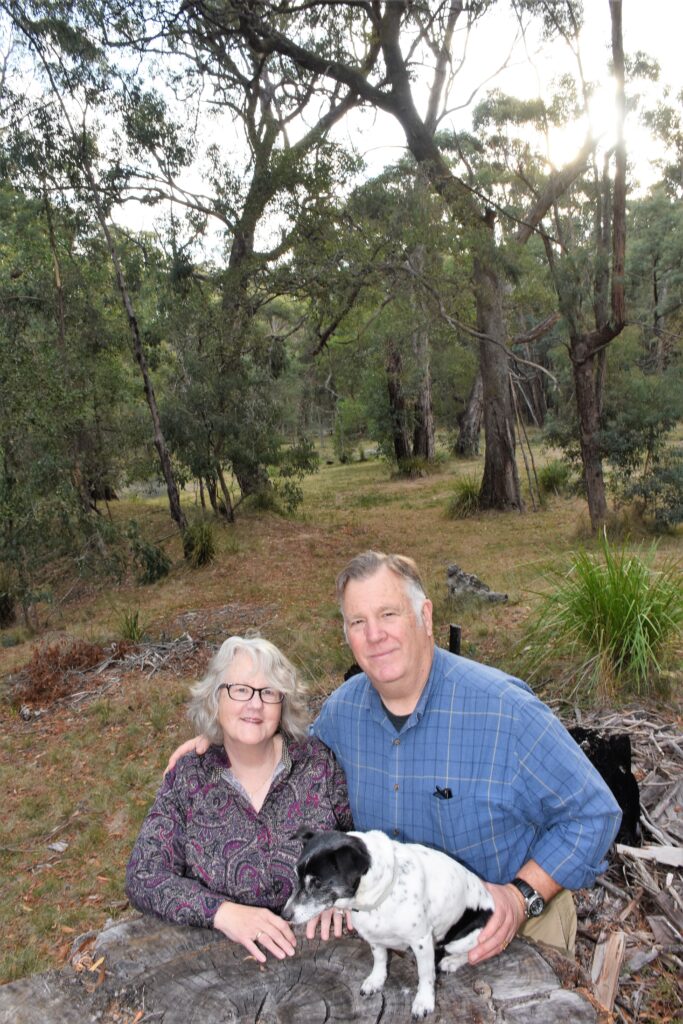
As the daylight faded into dusk, we’d pour ourselves a cheerful beverage, settle into our chairs, and enjoy the chorus of the forest. On weekends we had to wait for the chainsaw symphony to conclude – even the woodcutters had to stop when the light failed – but after that, the evening belonged to the birds.
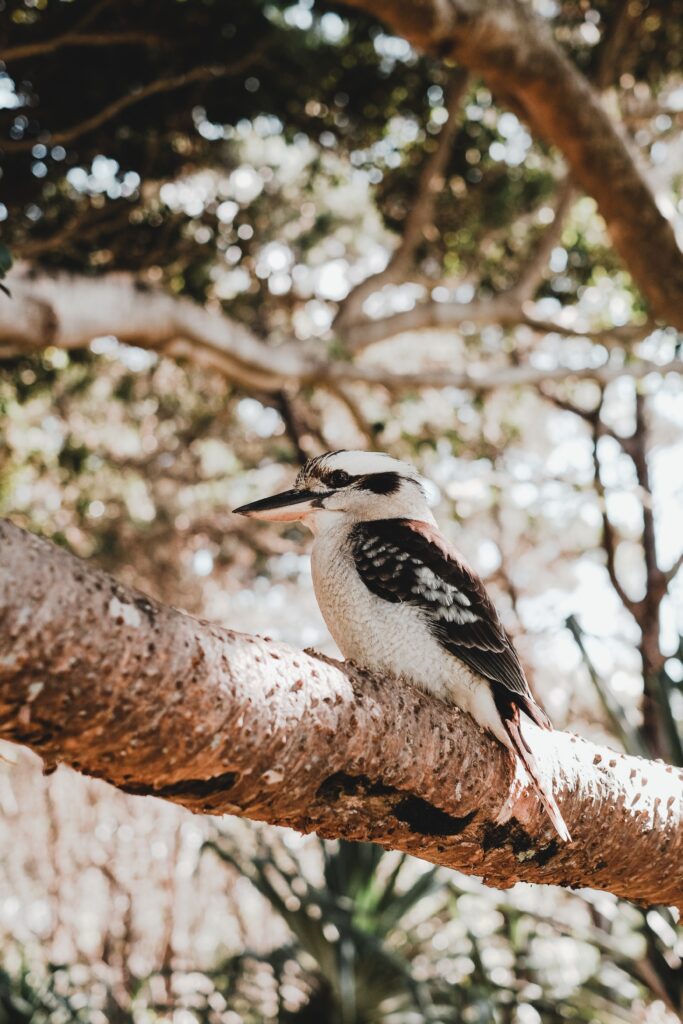
The kookaburras would laugh uproariously at their silly jokes, magpies would croon and the sulfur-crested cockatoos would shriek and proclaim their superiority from the tops of the tallest trees, while the crimson rosellas whistled down below. It was all incredibly peaceful, and a lovely way to end the day.
We had an ancient candlebark gum tree standing tall near our house. Each year we witnessed a war between the cockies and little corellas, over which clan would claim the best nesting holes made by decades of lost limbs. Every year, we were relieved when the cockies emerged victorious.It’s funny to think that when we lived in St Kilda we’d make the trek each year out west to Halls Gap, to spend a few days hiking around the rocks and peaks. But after we moved so close that the Grampians were almost in our backyard, we only drove up there once in a dozen-plus years, and that was to explore the epicurean wonders of the Royal Mail Hotel in Dunkeld.
Anyway, when we did holiday in Halls Gap, one of the least pleasant features was the infestation of corellas in the park across the street from the motel where we stayed. It would have been more enjoyable listening to the Melbourne Symphony Orchestra tuning up for 90 minutes with the Grateful Dead jamming along beside them. So there was no way we wanted corellas taking up residence in our backyard.
Our new home is also in a forest, mostly a variety of pines, oaks and low-growing scrub, but we have brought our magic-hour ritual with us to California.
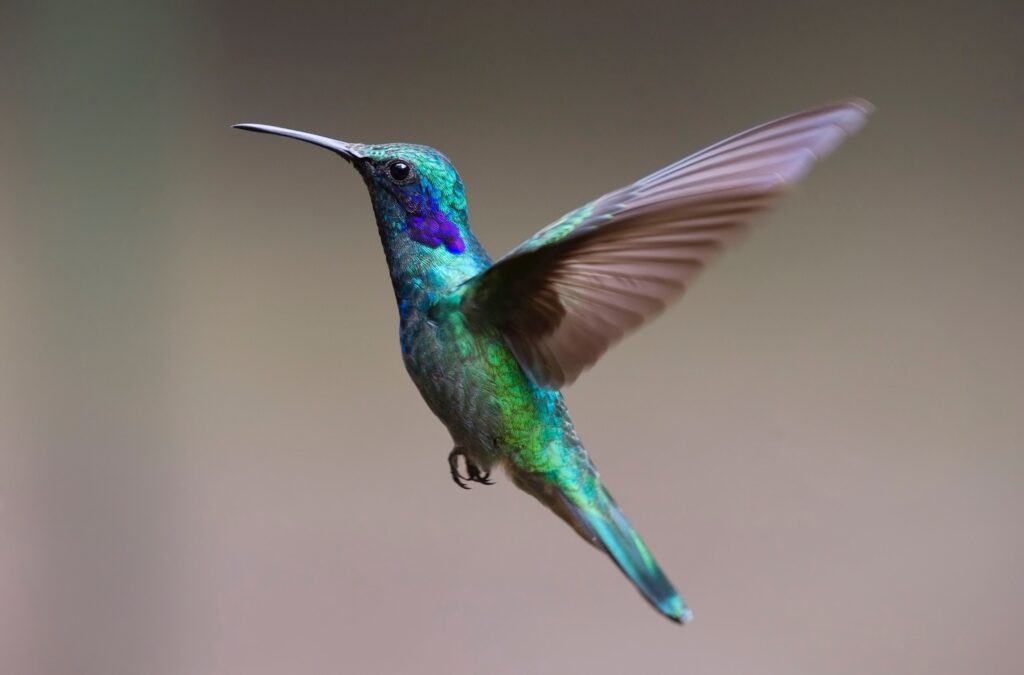
The bird life is nothing like what we had in Victoria – nothing as grand, colourful or just flat-out funny as cockies, rosellas or kookaburras – but over the months we have come to appreciate the comedy of woodpeckers, the dusty blues and greys of the scrub jays, and the quicksilver iridescence of the hummingbirds.
After all our years in Wheatsheaf, we never ceased to marvel, like gawping tourists, at the mobs of kangaroos that would roam and graze all around our property. Here in California we have deer, which are much less social than the roos, tending to appear alone or in twos or threes rather than in big groups, and far more likely to bound away at the slightest provocation.
When our dog Scout was a youngster, if she got away from us, she would chase the roos from our property and across neighbouring paddocks, all the way to the next tree line. As she got older, she would only scatter the mob, just out of spite. In California the deer have fled before old Scout even sees them.
Some folks might disagree, but we found another delicious fact of life in the Wombat Forest was living with tank water. Especially in Winter there was nothing as refreshing as a tall, icy cold glass of rainwater, straight from the tank. Often when we went into Daylesford for a meal we’d decline offers of water – that chemical soup that pours from the town taps. I’d have a beer anyway.
The tap water here in California is even worse. We have filters on our drinking-water taps. Today, as I was topping up the dogs’ water bowl, I realised I was filling it with filtered water – this for animals who would prefer to drink out of a handy mud puddle.
Of course, unlike with our tank water, here we have unlimited supplies flowing from our townie taps. Even so, we have not succumbed to the temptation of becoming wallies with water.
Years ago in Daylesford we knew a young fella who wasn’t a local but who had a good amount of bush smarts. He lived in a basic rented house out in the forest. As these things happen, he met a tourist girl who’d come up to visit friends, love ensued, and our friend moved down to Melbourne with his true love.
He came back to visit his mates in Daylesford every so often, and one time I asked him what he liked best about living in the big city. He told me – and this is true – that he liked being able to leave the tap running while he brushed his teeth.
Words: Jeff Glorfeld
December 20th, 2020Bland life in Clunes

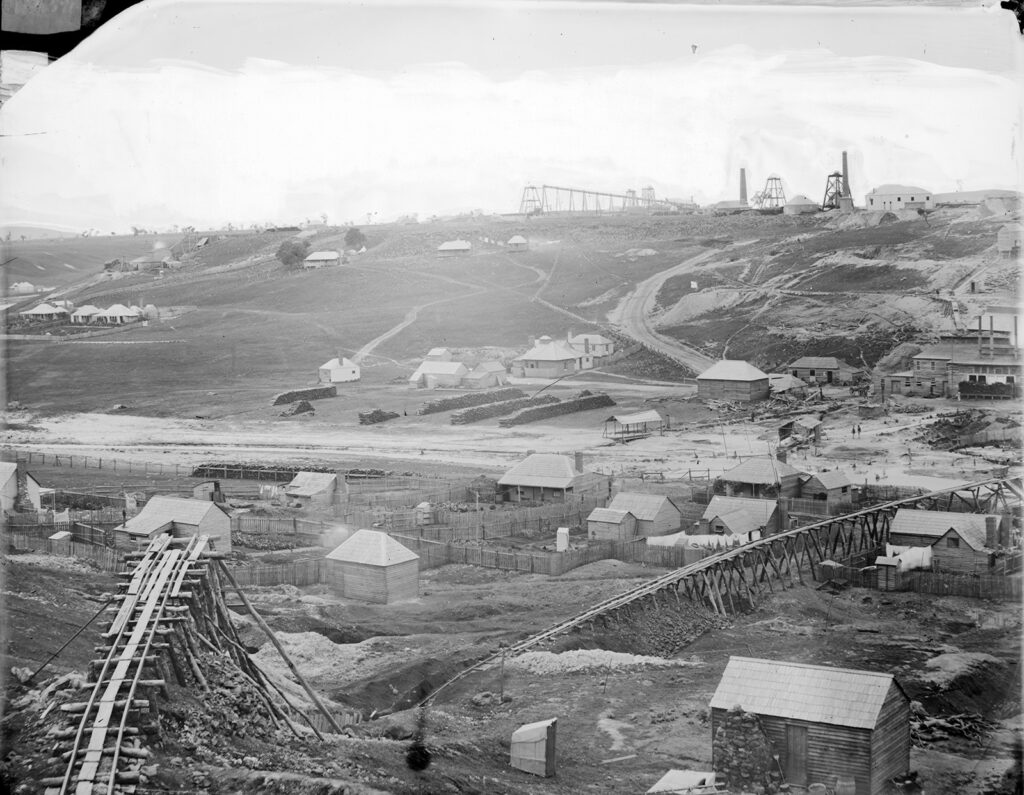
The leaseholders of the site were the Port Phillip and Colonial Gold Mining Company established in 1851. Towards the end of 1856, its representatives visited Clunes to inspect the quartz outcropping in Creswick Creek. They liked what they saw and formed the Clunes Mining Company under their management that became the first and largest company to exploit the local reefs. Eventually the Port Phillip Company took over work at the site and remained in operation until 1894. They produced over 500,000 ounces of gold in that time.
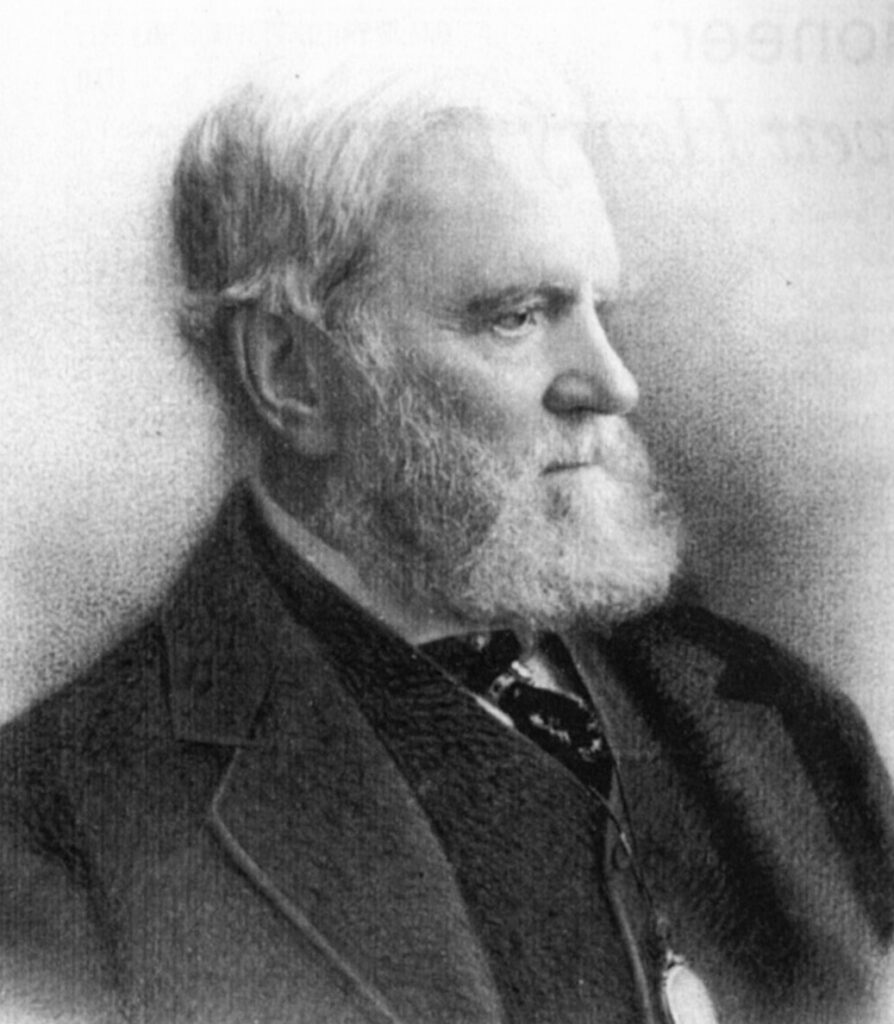
But this is not a tale about gold hard won but the activities of one man whose reticent shadow still hovers over Clunes in the form of numerous beloved public buildings. His name was Rivett Henry Bland. Little is known about him today. He left no children and there is little historical material out there that speaks in his voice. No relation to the more well-known New South Wales convict and politician William Bland, Rivett Bland was born in February 1811 in Nottinghamshire, England and first arrived in the colony of Western Australia in 1829. He was allocated 8000 acres along the Swan River, the sale of which secured his fortunes.
From there he served in a diverse range of roles in colonial administration before being appointed resident director of the Port Phillip and Colonial Gold Mining Company and its Clunes mining site in 1852. He arrived in Melbourne in 1856 to take up his position before moving to Clunes in 1868. And, as noted in John Woodland’s 2001 book 16 Tons of Clunes Gold: A History of the Port Phillip and Colonial Gold Mining Company “…followed the nineteenth century philosophy of self improvement through education and religious enlightenment”.
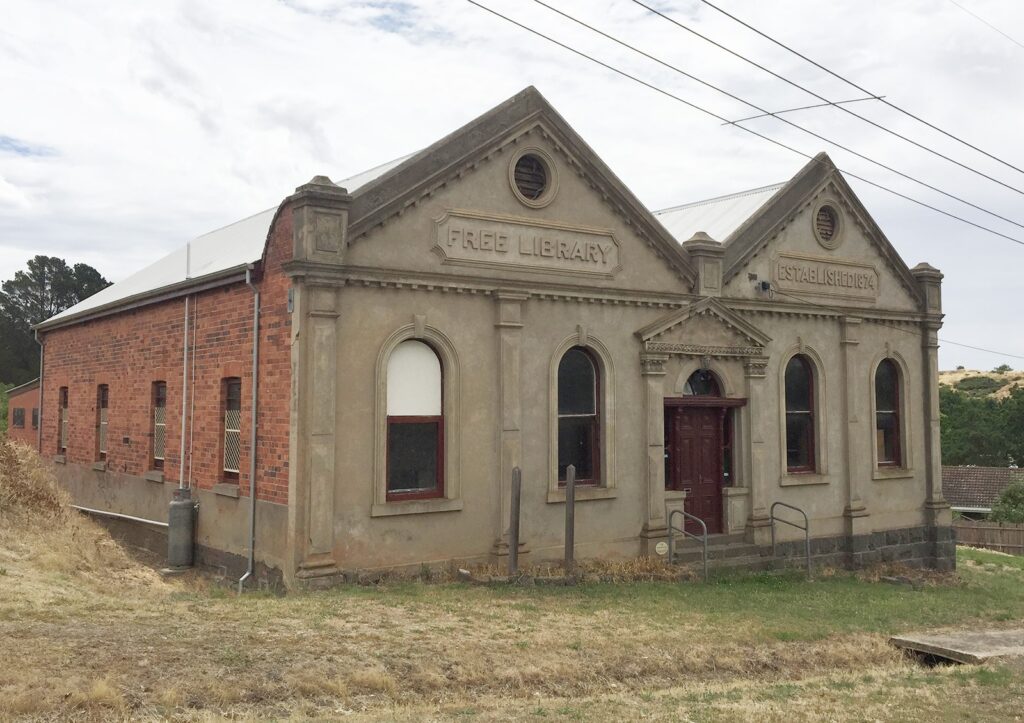
To this end he involved himself with “establishing and supporting a number of institutions in Clunes including the local Mechanics Institute in 1864 which over time evolved into the Clunes Free Library where Bland was president from 1874 until his death”.
But the free library was not the only initiative he supported as a now prominent businessman, mining director and philanthropist as Clunes Museum director James Curzon Siggers explains.
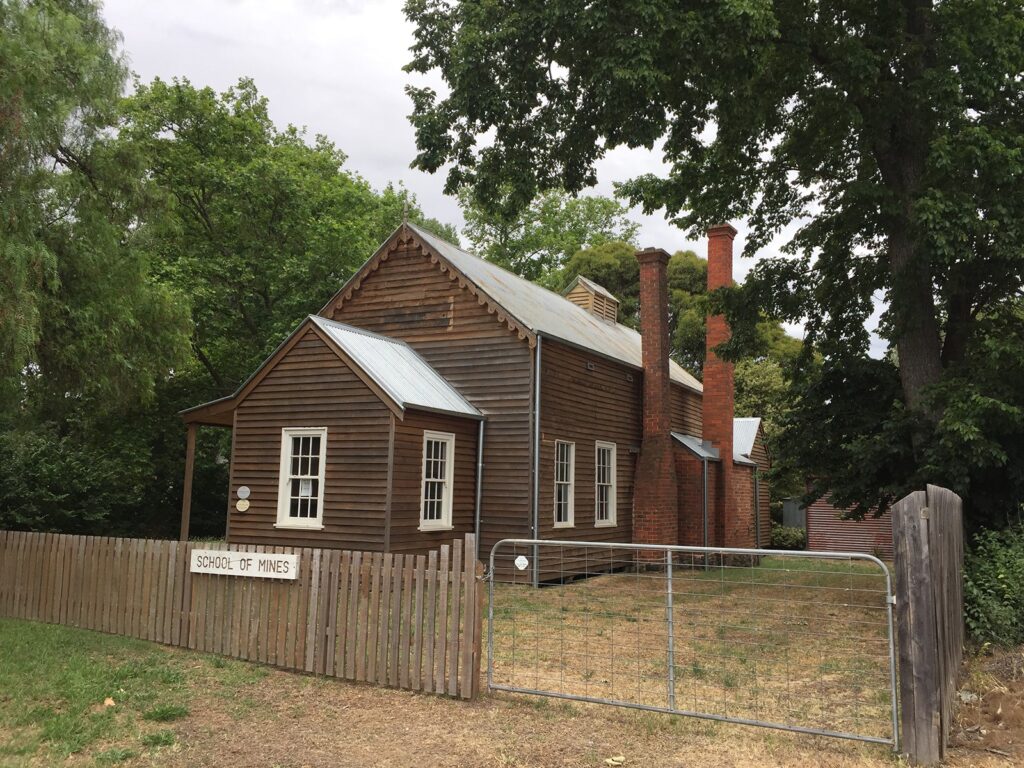
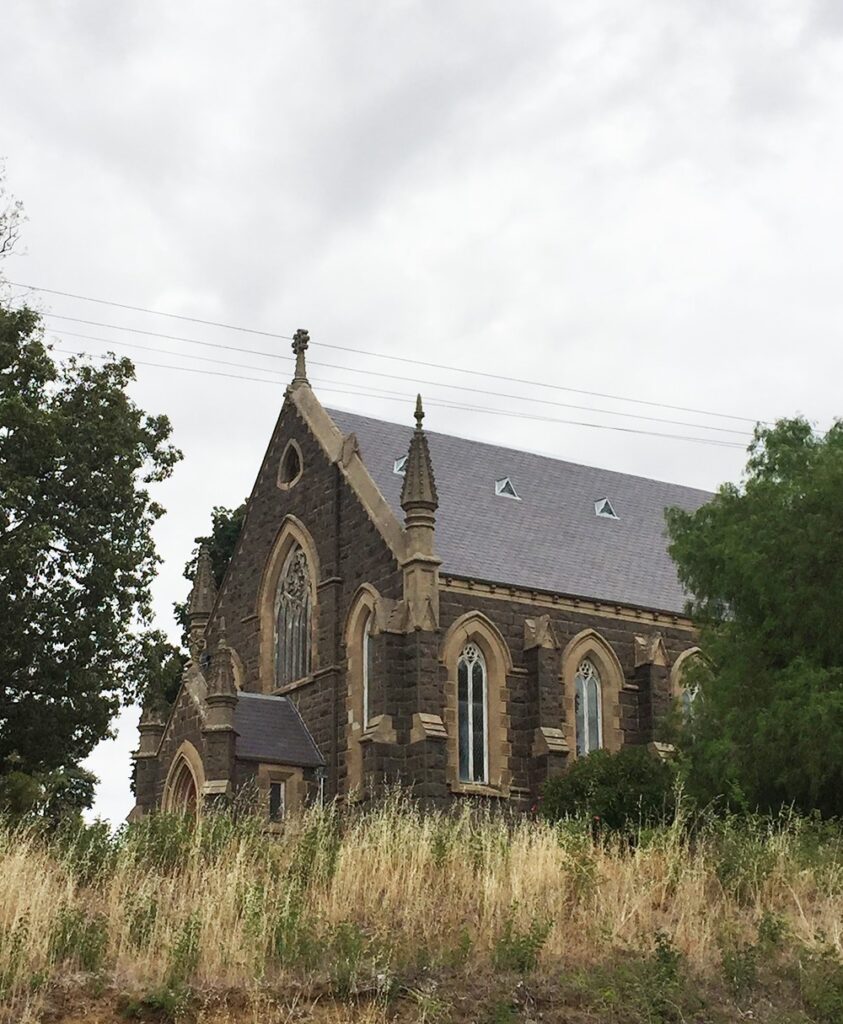
“It seems strange they didn’t set up a School of Mines until 1890 when mining was on its knees, but one of its founding patrons was Rivett Bland. It closed down barely two years later but continued to be used as a meeting place for groups such as the Australian Natives Association (a mutual society founded in Melbourne, 1871) and The County Women’s Association. The hall next to Creswick Creek also served as a mattress factory and an infant welfare centre before being restored in 2011. Today it is generally known as the Anglers Hall. Bland also donated, on behalf of the Port Phillip Mine, eight acres (three hectares) of the company’s pre-emptive right to establish the North Clunes State School (now Clunes Primary) on Canterbury Street in 1875. He also established the St Paul’s Anglican Church on Templeton Street, laying the foundation stone there in 1871.”
As with many of the public figures involved in the region’s mining operations, he was also a lightning rod for the grievances of the miners that worked for them. In the 1870s he was, along with Peter Lalor of Eureka Stockade fame, one of the directors of the Lothair Mine when its workers initiated strike action over pay and hours. In that role Bland was privy to the decision to employ Chinese miners as strikebreakers, leading to the Clunes Riot on December 9, 1873.
Rivett Bland died in Clunes on Sunday February 18, 1894 at 83 years of age and was buried alongside his last wife Martha in Melbourne General Cemetery. John Woodland writes: “The town hall flag flew at half mast and most shops remained closed the following day as a sign of respect for one of Clunes’ best known and most respected citizens.”
*Thanks to James Curzon Siggers, director of the Clunes Museum for his assistance with this article
Images: Rivett Henry Bland – image courtesy of the Clunes Museum and the Port Phillip Mine (Richard Daintree 1832-1878) – image courtesy of the State Library of Victoria
The Clunes School of Mines building restored in 2011, a present day view of St Paul’s Anglican Church and, the Clunes Free Library
Images: Tony Sawrey
Words: Tony Sawrey
December 20th, 2020Glen, about the house
2020 – Groundhog Day revisited
I don’t know about anyone else but apart from the fear of the virus itself and the mind-numbing isolation from family and friends, the lockdown itself at least gave us time to “find ourselves”. With me, it was mostly getting back into writing and an opportunity to spend more time in the garden.
Incidentally, it was my regular column in The Local that relit that horticultural spark, especially since we graduated to weekly issues.
Researching and keeping on top of garden trends does tend to keep the grey matter active. Admittedly I have more than 50 years of writing and broadcasting material to fall back on for subject matter.
I do have a confession to make though – I am totally over gardening. That is, the actual repetitive tasks of weeding, digging and watering, all the mind-numbing tasks. After 15 years in the family nursery, from the age of eight, hand watering, weeding, carrying pots etc, daily after school, on weekends and holidays. I constantly searched for a means of escape and it came via an offer to write a weekly column for an Adelaide daily, The News. Then followed the first gardening talkback programs for Adelaide, both on radio and then television, and I was free to build my own life.
But my love of plants and all things botanical has never wavered. It’s all in my genes, handed down in a straight line from my celebrated botanist great-grandfather, and like him, I’m fascinated by the entomology, history and discovery of plant life. He was also a prolific writer.
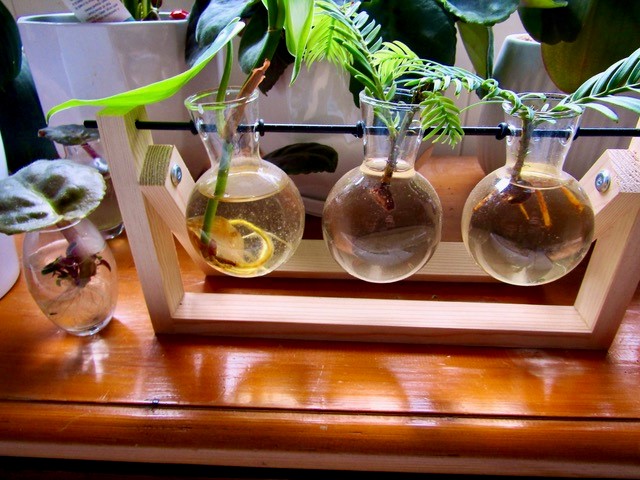
One of my latest thrills was to successfully cultivate the prehistoric Wollemi pines. First in sand-filled pots, and now, indoors in water, along with African violets and other plants. Pictured below.
Peta and I make a great team. I do the planning and planting and she delights in tending and fussing over them and keeping the weeds at bay.
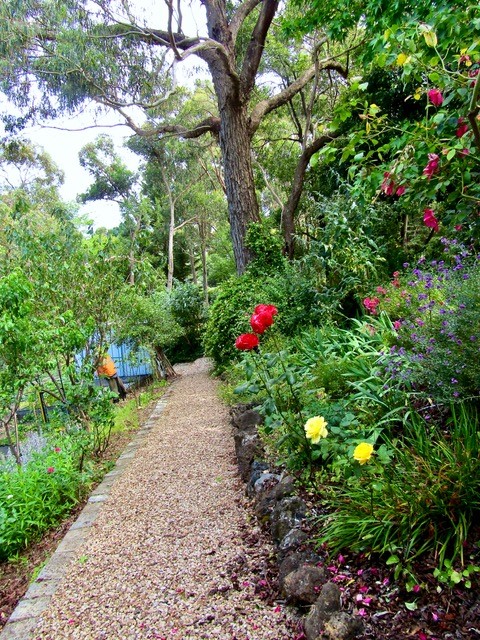
Our garden, the first of many I have started but lived with long enough to see the results is no show garden, rambling as it does through separate rooms and over several sloping banks and levels. Friends have described it as an ever-changing woodland garden and they’re probably right.
Now, back to work
I couldn’t possibly let the rest of the year go by without setting you at least one more gardening task for this decade – save the citrus.
If, like mine, your citrus trees look a little worse for wear, yellowing leaves and a little droopy, it’s time to give them a boost.
Firstly, although we have just experienced a wetter than usual Spring, with the promise of more rain to come, it isn’t wise to trust just the rain.
Mature citrus trees require at least 200 litres every two or three weeks through the Summer months but feed mainly through surface roots, so will need regular watering from now on to ensure they do not suffer from the heat or drying out.
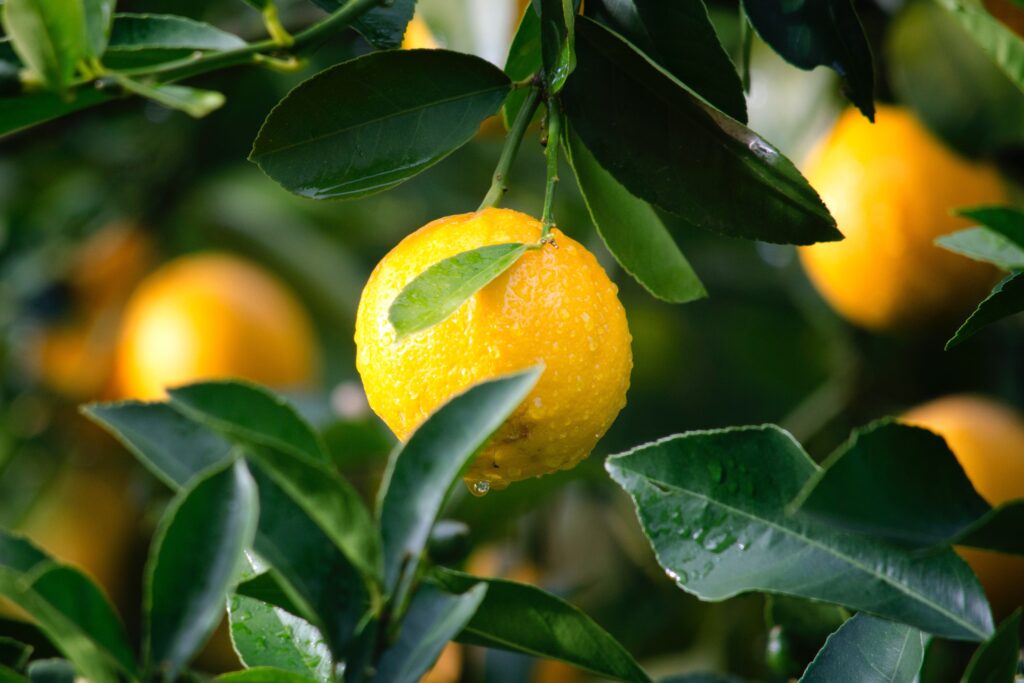
The remedy is simple. Keep the soil within the foliage dripline (approximate spread of root growth), well mulched to retain the moisture and water directly to the roots – trickle or drip feed is easiest and best – to avoid extreme wet/dry variations which are the main cause of splitting fruit.
Citrus are voracious feeders responding well to nitrogenous fertilisers. Again, regular small doses are more beneficial than heavy-handed infrequent feasts.
While you are at it, they will appreciate a pruning and thinning out of close or overcrowding branches and this is the best time of year to encourage fresh new growth.
Got a gardening question? Ask Glen.
Email glenzgarden@gmail.com
December 20th, 2020Joan looks back on sowing her wild Oates
Take just one example. Over 80 years may have passed, but there is a day that she remembers with startling clarity.
She is 11 and just back from boarding school, at home at the family cattle and sheep farm. A bad heart has prematurely killed her father.
Eight bulls of all ages are fighting and must be separated, says her mother. Get your horses and do it. Joan and her 10-year-old sister Betty ride out, but a bull charges Betty and gores her horse Black from rear leg to stomach. “She just yelled out ‘Joan!’ and I raced down and grabbed her,” says Joan.
“We rode on my horse at great speed, the best we could, about half a kilometre, yelling out to my mother, ‘Get the gun! Get the gun!’ My mother didn’t hear or understand what we wanted. Anyway, I ran in and got the double-barrelled shotgun and went down and shot the horse.” That wasn’t the end. Picture two young girls then having to strip the dead horse and burn it from late afternoon into the evening and next day.
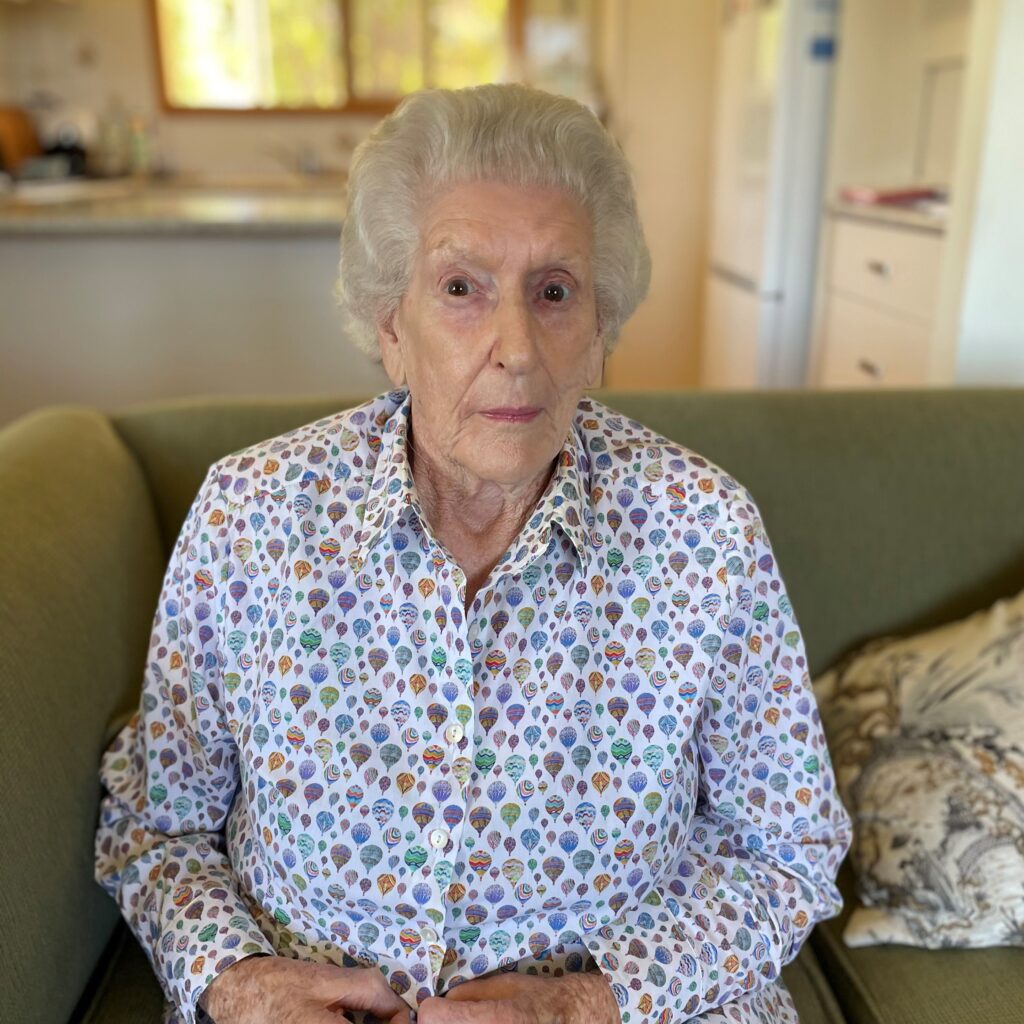
The starkness of Joan’s account as she sits in her neat-as-a-pin Hepburn home captures another time. “After that, whenever we came home for holidays, everything was organised for us to help with whatever was going on, whether it was shearing, making porridge and other meals for the shearers, dipping the sheep, branding or desexing the calves.” Skill with a knife and a red-hot poker perhaps equips one for life? She agrees.
The family farm was near what was then a mining town, Captain’s Flat, not far from Canberra. Enough gold was produced, she says, to pay all the miners’ wages. And then there was zinc, lead, copper and silver. Because the town lacked facilities, Joan was born in Sydney. “My mother and father weren’t young to have children in those days; I don’t think I gave her any complications when I was born, but I probably gave her problems later on in life.” She chuckles.
“My sister and I had a great life. Children today would probably think it was terribly, terribly boring, but we didn’t. We had no distractions, and then we went to boarding school when I was 11 and my sister 10. Until then, my mother taught us. She was a hard taskmaster; my father was the gentle one.”
Her father’s mother, “Granny”, lived with the family. “She was a lovely old lady. In those days, when people were widowed, they always wore black. It was just the thing that people did. She was a great person; she was always on my side. She used to wander, (she had Alzheimer’s, you would call it today) it was very hard and we’d all be out looking for Granny. She’d come back, because she was always going home.”
Joan chose to go nursing, training in Canberra before working in the obstetrics department at Sydney’s Crown Street Hospital. She abandoned her career when confronted with a very ill pregnant woman whose husband was given a choice: his wife’s life or that of their unborn baby. When he chose the baby, Joan left nursing forever. To her mother’s horror, she became a barmaid, working in a pub for a year. The resulting barrage of phone calls drew Joan’s response: “No, this is going to be it and I’m going to enjoy myself.”
During World War II, Joan’s father was convinced that Japan would invade Australia. He belonged to a group that believed invaders should be met with a scorched earth policy, with the burning of all the towns and land around Canberra, except the capital. She shows a book on this policy.
Once the threat of invasion was over, she was away from home and in her twenties when she married a young trucking business owner called Barry. He was to be run over and killed when Joan was pregnant with her second child. “I think I got through it because of my sister. She was always there for me.”
Later, Joan met Don Oates. They were together for 51 years until his death in March last year. “We had a wonderful life, a life of great joy, happiness and adventure,” although there were inevitably sad times.
One remarkable, almost unbelievable, event happened when her son Barry was just 11. He was very late home from school. When questioned, he said he had been to the office of Births, Deaths and Marriages in the city, where he managed to change his name to that of his stepfather. “I never knew my father,” Barry explained, never speaking of this again.
In taking this name he linked to Captain Lawrence “Titus” Oates, his stepfather’s great-uncle, the renowned Antarctic explorer who in 1912 sacrificed his life to give his three companions chances of survival.
Another Oates great-uncle was Richard, one of two prospectors who found Australia’s biggest alluvial gold nugget, the 97kg Welcome Stranger at Moliagul, about 15km kilometres north-west of Dunolly.
Life with her husband, says Joan, was marked by joy, especially because of Don’s wonderful friends. She and Don ran a liquor store. Once, they took all the family for Christmas at the renowned Boulevard Hotel in Sydney. They decided drinks for 30 would cost a bit, so young Barry was told to carry a suitcase of champagne and spirits. No offers of help from porters could persuade him.
After a glorious Christmas dinner, and while the others were sleeping it off, Joan looked out her window to the harbour only to see hundreds of soldiers and sailors rushing about. Turning on the TV she found Cyclone Tracy had struck Darwin. “That was a Christmas Day I remember vividly.”
Her road to Hepburn includes a time as a sales rep selling French perfume, such as Chanel. She also managed a French perfumery and worked front-of-house in an Italian restaurant. “I’ve always believed in being independent. I’ve had a rich and colourful life and enjoyed every bit of it.” She retired at 67 and has three grandchildren and five great-grandchildren.
The lure of Hepburn for husband Don was its resemblance to Tumut in the Snowy Mountains, where he worked for the old PMG’s department. For her, it brings to mind her childhood home. She is full of praise for the community here and the friends made in the 15 years she has lived here. “I probably wouldn’t have survived without them.”
Words & image: Kevin Childs

December 20th, 2020Local Lines
Afternoon, a Doctors Gully stroll,
Hepburn Springs. Behind an abandoned guest house
a stony path curls
before broadening into a surprise
slashed grass track.
Pass under tall manna gums, the odd sycamore.
Among them appears a redgum,
a lumpy-trunked, unfinished-looking river redgum.
What’s that sound?
Not psithurism.
Bees massing.
A sidetrack dips
to an unslashed, earthen creek crossing.
Keep eyes peeled for Joe Blakes.
Sheds, woodstacks, porch entrances,
the backs of properties only ever seen from the front.
Sniff out Main Road.
The crunch of slipping stones as you climb
in full sun, past netted fruit trees until
bitumen.
- Bill Wootton
Bill likes walking round Hepburn and Daylesford, especially on slashed paths. Thanks DELWP.
Local Lines are mostly written by a group of local poets but if you would like a poem considered for publication, contact Bill Wootton at cottlesbreedge@gmail.com
December 20th, 2020Kerryn Wildenburg: Out of the darkness, into the light
Kyneton’s Kerryn Wildenburg is one such person.
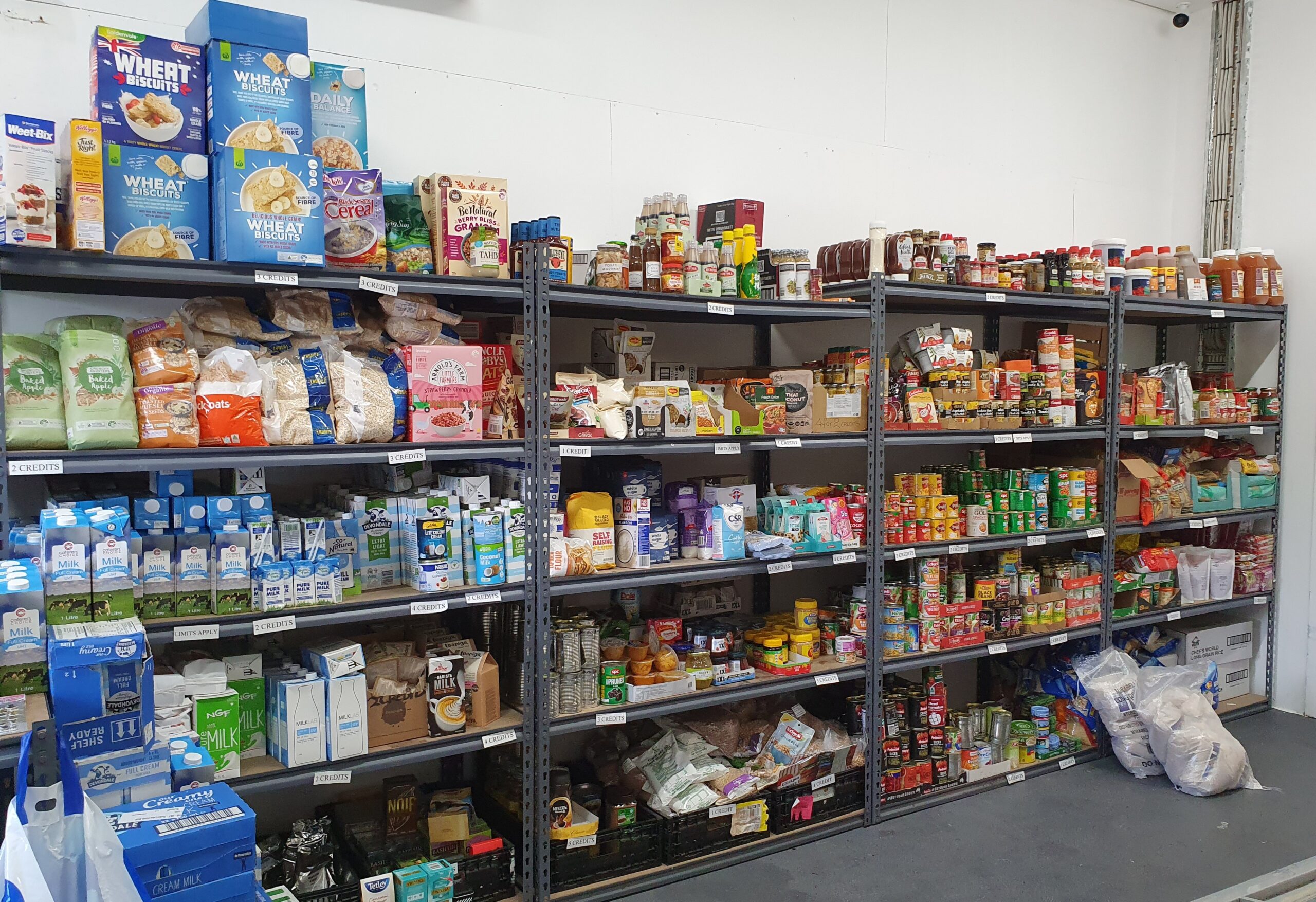
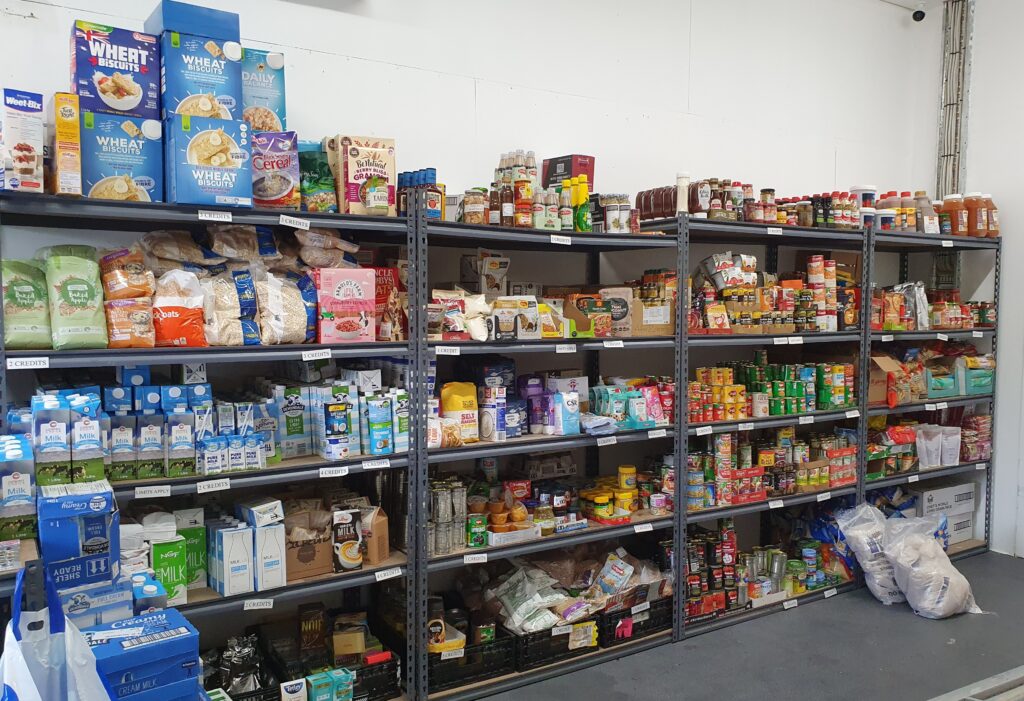
Kerryn is known for her work at Kyneton Caring Community, an independent, community-based incorporated association, which supports those in the local community who find themselves in need.
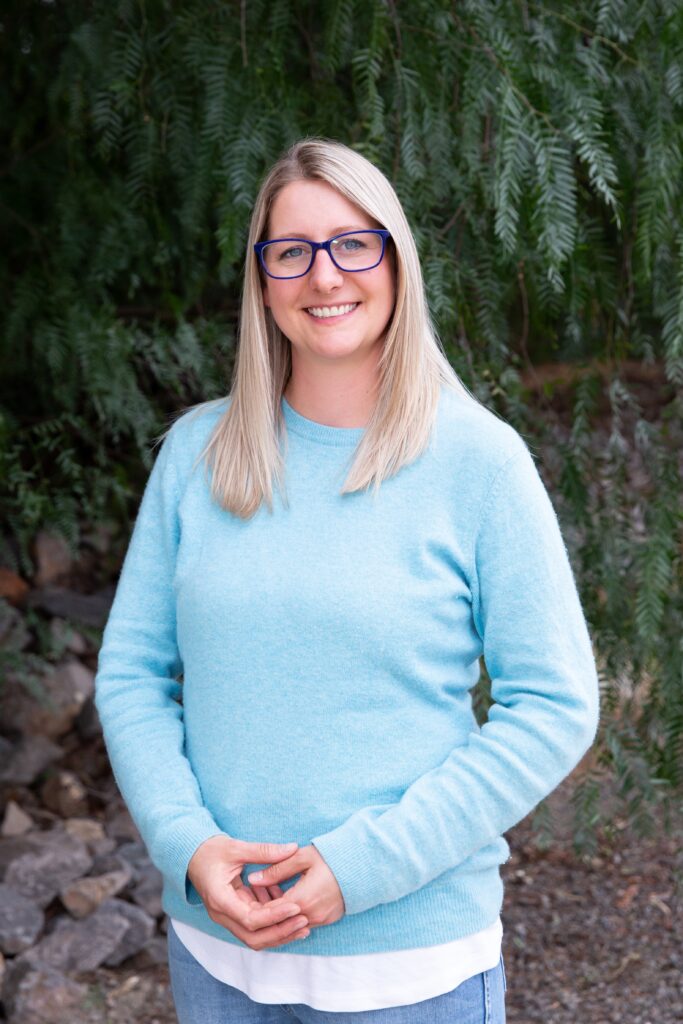
Her idea to set up a forest food garden was recently reported across the region and her dedication to the community and its people is well known.
But few know the journey Kerryn has taken to where she is today and how her own life story could have been a very different one.
Kerryn grew up on the Mornington Peninsula and despite her parents divorcing when she was 10, she said she came from a good family. Despite being a troubled teenager, she held down a part-time job at a local fruit and vegetable shop, and had her own dreams and aspirations.
A horrific life-changing event saw the start of what Kerryn describes as the dark side of life.
“I was sexually assaulted at 14 and that sent me on a spin during my teenage years and that’s when my battle with addiction began. I wasn’t living on the streets but I was essentially homeless when I was 19 and had to battle my own demons,” she said.
But this wasn’t the lowest point in Kerryn’s life.
When Kerryn and her husband Simon Furness’ first child was 10-months-old, they embraced the opportunity to move to Kyneton, living at Simon’s parents’ farm, saving for their own place and experiencing the country dream.
“It was 2011. We were down to one wage as I was a full-time mum. Simon had a terrible accident at work causing a spinal injury which he lives with still. He was off work. I was looking after Simon and a baby, pregnant with my second baby, with no family and no friends at that stage. I felt completely isolated,” she said.
“It was the worst time of my life. I suffered post-natal depression, anxiety and depression and at times contemplated taking my own life.”
Then three life-changing things happened. Kerryn got sober, became involved with a local church and started seeing a psychologist.
“I began to live again. I faced up to my stuff and started working through all of my crap. I got to conquer it all and, through the journey to healing, all these amazing people started to appear. My life had purpose and meaning and I knew at that point that I needed to give back to the people and the community that helped me live again.”
Through the Baptist Church Kerryn started volunteering with Kyneton Caring Community. It was through that that Kerryn became employed at KCC.
“Simon and I began working full-time, sharing a part-time wage. We knew that was all that the charity could afford but my motivation was to give back,” she said.
“People helped me so much and I needed to pass that on. When my parents split up, I remember people dropping off Christmas hampers and I will never forget how that made me feel. Now I get to do that.”
Kerryn believes everyone has a story and at times everyone has faced hardships.
“We have to walk alongside each other and do life together. I’ve been there, humbled and embarrassed to receive help and I know what it feels like. It’s not easy asking. If I know there are people who need a hand but are reluctant to come in, I’ll personally deliver packages to them. I often share my story with people so I am on equal grounding.”
When COVID hit, Kerryn and her team knew their services would be needed more than ever. Within a month of the first lockdown, KCC was feeding around 1800 people a month. People received pre-prepared food baskets and care packages. However, while it worked, Kerryn realised the connection was missing.
“Over the second wave we had people come in to choose their food. It’s important for people to have the dignity of choice but also that people were still connected. The Macedon Ranges is seen as a very affluent area but there are people in need of some help to get back on their feet.”
For now, Kerryn is working around the clock to ensure Christmas hampers are ready and to provide beautiful handbags for mums in the community who often go without at this time of year. In the New Year, Kerryn and her family will focus on increasing the large food garden and orchard they’ve set up on their own property.
Kerryn is incredibly proud of her two daughters who she believes sacrifice so much so their parents can give back.
“They are amazing young ladies and so caring and kind. Because we do the work for love over money we don’t go on holidays and the girls don’t get the big fancy presents. We do sacrifice as a family but we all know it is worth it,” she said.
“When we show up for the little things, the big things take care of themselves. It’s important we all give back. The world really is a better place when that happens.
“I have done a 180-degree turn from darkness to light and now I live such a blessed life – it’s my turn to pass it on to others.”
Kyneton Caring Community provides a safety-net for members of the community by delivering a range of services including a free food bank, emergency relief service for clothing and household items, a drop-in centre and soup kitchen and a need assessment and referral service. KCC is self-funding and depends on the generosity of the local community who support its work through the donation of food and other goods, as well as important financial contributions.
Words: Narelle Groenhout | Images: Supplied

December 20th, 2020Pandemic has brought people back to reality: Don
“Generations of kids have come here, jumped off the tower, swam in the dredge hole built in the gold mining days. We used to have Miss Creswick here.” He points out where the catwalk was.

Voted in for his fourth term with Hepburn Shire Council, Cr Henderson tells me he got the highest percentage of votes for a councillor in a multi-ward in Victoria. “At a time when people were dissatisfied and kicking councillors out of office, I increased my vote by 10 percent. My way of consulting is a bit different. I like to get out in the community and meet people in their own territory. I’ll go up to the young people at the top of the tower and ask them how they feel about things in the town. There’re still people here who knew my parents and grandparents. I have that legacy of trust. I know the satisfaction survey said people were dissatisfied, but for years Creswick has led the way in the shire with people being satisfied.”
Born in Creswick, he has strong connections to the area, with his ancestors coming here in the early 1850s as goldminers and woodcutters. He tells me about his background. “As a child growing up, we had no electricity, just kero lamps and fridges, I was 18 when we got power. I started work in ’64 as a carpenter and joiner apprentice. I worked in almost every phase of the building and construction industry, and I was the secretary of the Builders Workers Industrial Union. I spent 20 years working in Melbourne looking after industrial relations on projects such as the City Link Tunnel, then went back to the building industry. I moved back to Creswick in 2008, I wanted to come back, this has always been home, the other places are just houses lived in.
“I ran for council because I didn’t like the way the council was running, I had a problem with the planning permits taking too long, I thought that needed to change. I was elected straight away 12 years ago. This time I ran because there’d been a lot of instability in the council. I wanted to see that the good work done by previous councillors didn’t get wasted, and I wanted to support the shire. I’ve got a big commitment to the staff of the shire.
“The top three priorities for me are to get the projects done that we’ve already committed to, such as the 100km Creswick trail bike track. I want to see the Rex project finished. I voted against the Rex project because I thought it wasn’t in the right place, and it would be too expensive. But once it was through, I supported it. I also want to see the Trentham Community Hub finished. I want stability, what I promised is nothing new, I promised more of the same to get projects done.
“The council must support its community. In some ways I see the pandemic as positive, it’s brought people back to reality and looking after each other in the community. On the other hand, its destroyed businesses and family lives. The shire needs to do everything it can to support the community, we need to make it easier for business to operate, we need to be careful about how we deal with money. We’re going to be stretched financially, we need to do things that our community benefit from. Every dollar we spend needs to be accounted for. We must be caring for our community, for the most vulnerable in our community.”
With six of the seven councillors recently elected to the Hepburn Shire being new to the game, a sense of optimism and hope exists for more positive interactions between community and council. This weekly series by Sandy Scheltema explores the councillors’ hopes and wishes for the shire.
December 20th, 2020Group taking action on vegetable front
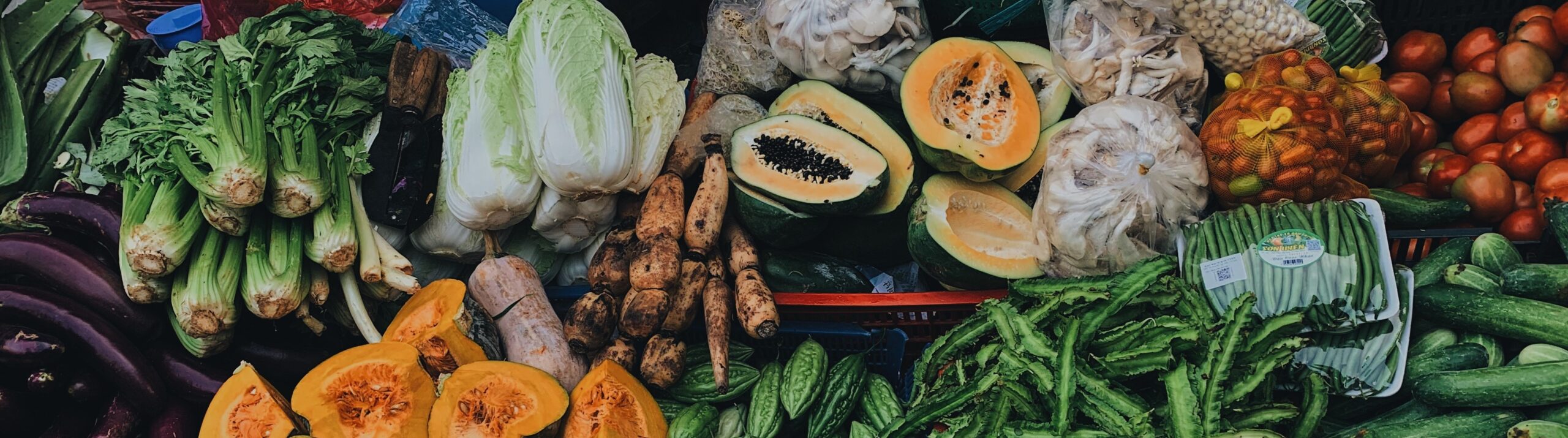
The National Health and Medical Research Council is Australia’s peak body for supporting health and medical research. Its recommended guidelines for healthy vegetable consumption in adults comes in at roughly five serves of veggies per day.
But, according to the Active Living Census commissioned by Healthy Heart of Victoria to assess the health and wellbeing of community members in the Macedon Ranges, only 14 per cent of adults around here meet the guidelines. That is a woefully low figure especially when you consider the number of growers in the area and the farmers market network that supports them.
And before everyone starts blaming the pandemic for those poor percentages (market closures etc), it is best to note that this data was collected May to June 2019, well before the emergence of these so-called unprecedented times.
When the members of Veg Action read the results five months ago they were determined to do something to improve the figure and draw attention to our regional producers at the same time.
Veg Action began 10 years ago as MR VEG (Macedon Ranges Veg Group) to encourage sustainable plant-based eating. Today they operate under the Macedon Ranges Sustainability Group and when the Macedon Ranges Shire Council invited submissions to Cool Changes, a community plan being developed for local action on climate change, they were in with an idea.
“Our group Veg Action ended up forming a joint project with Cobaw Community Health,” says treasurer Greg Potter.
“Called Get to know your local grower, it intends to show that one way to invigorate local food supply and promote healthier and more sustainable eating is to make locally produced food more accessible.”
To initiate the project Veg Action and CCH have begun with a call-out to local growers inviting them to take part in a survey to get a better understanding of who and where people buy from in the local area.
They are also encouraging the region’s fresh produce lovers to nominate their favourite grower and go in the draw to win a locally sourced mixed veggie box.
“The main aim will be to produce an information booklet and web resource on what our local farmers produce and how it can be accessed to promote the idea of eating fresh veggies and fruit.
“That information can then be put on the MRSG website, our own FB page, the pages of foodie groups and elsewhere.”
There is a good reason for this. While such knowledge may seem self-evident if you are an activist veggie lover and regular shopper at farmers markets, a directory is aimed at those busy folks whose idea of regionally sourced produce is the local mall.
Such consumers may very well appreciate the idea of eating more local veggies and supporting regional producers, but unless they can access a directory of growers and where they sell, they’ll keep buying at those nice, shiny (read convenient), supermarket chain stores.
“Yes, it has really stemmed from that idea there are growers out there,” says Greg. “It would be nice to find out who they are, highlight them and publish that as widely as we can so people can access it. It is a good idea for the environment, the local economy and is an effective way of reducing food miles and strengthening local supply chains.”
Details: www.mrsg.org.au/vegaction or lauren.tyrrell@cobaw.org.au
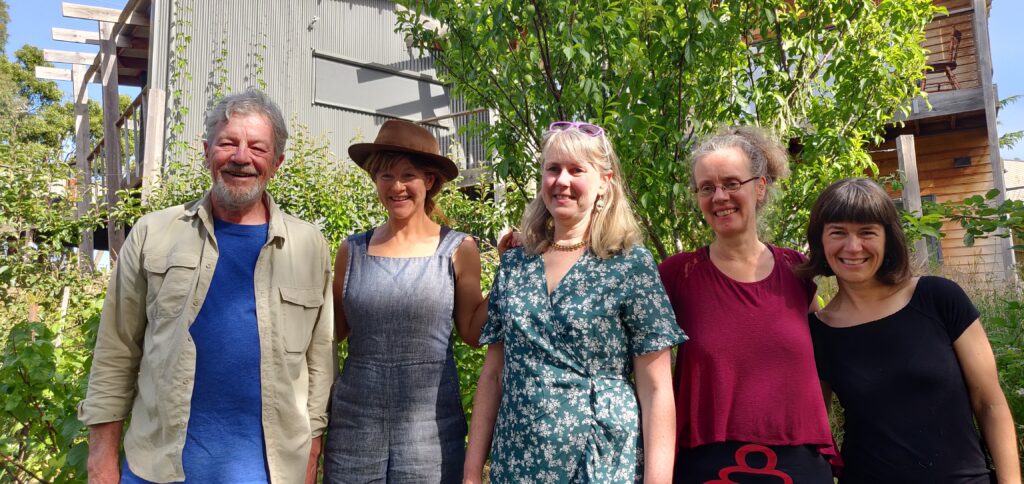
Veg Action committee members left to right: Greg Potter, Lucy Campbell, Heather Steele, Chitra Stern, Claire Rowland (group leader). Image supplied
Words: Tony Sawrey

December 20th, 2020Lighting up Trentham
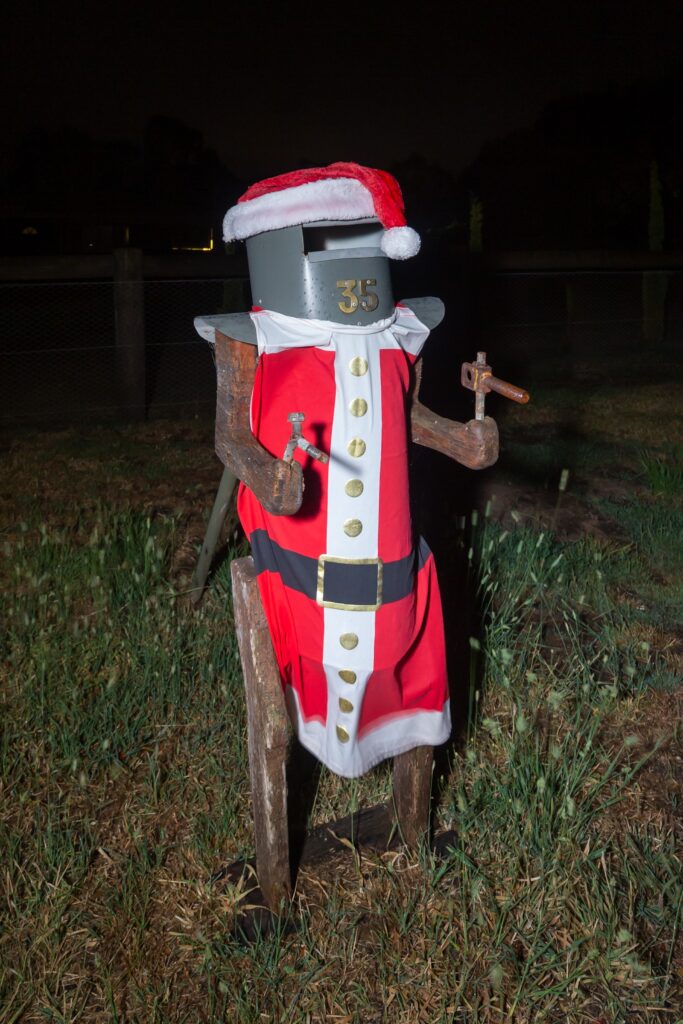
The Trentham Neighbourhood Centre got the idea up and running with the promise of prizes for the best three. There is a map available for anyone keen to criss-cross the town after dark to check out the lights.



The winner was announced on Sunday, December 20, after The Local went to press.
Images: Belle Real Estate
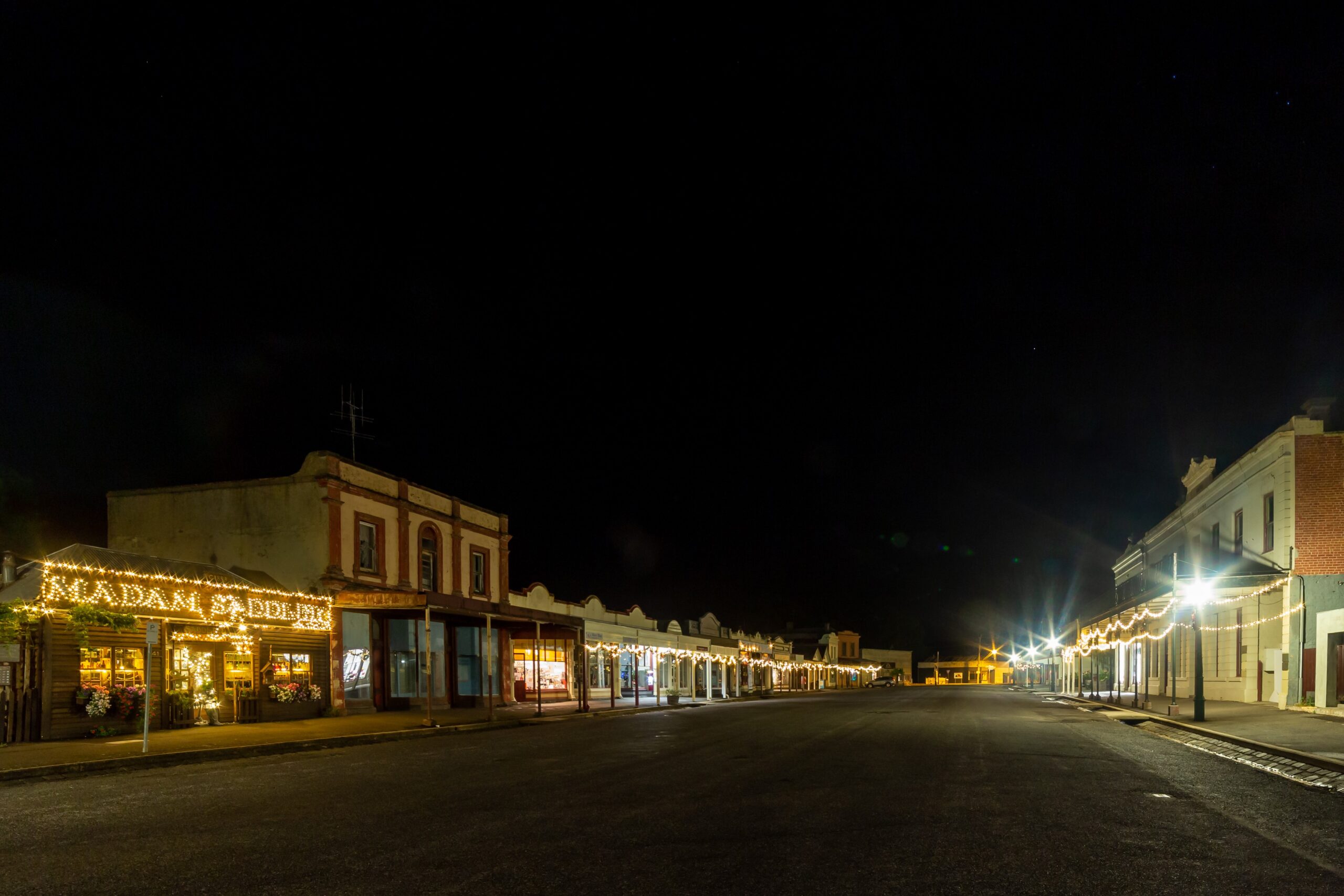
December 20th, 2020A very Christmassy Clunes
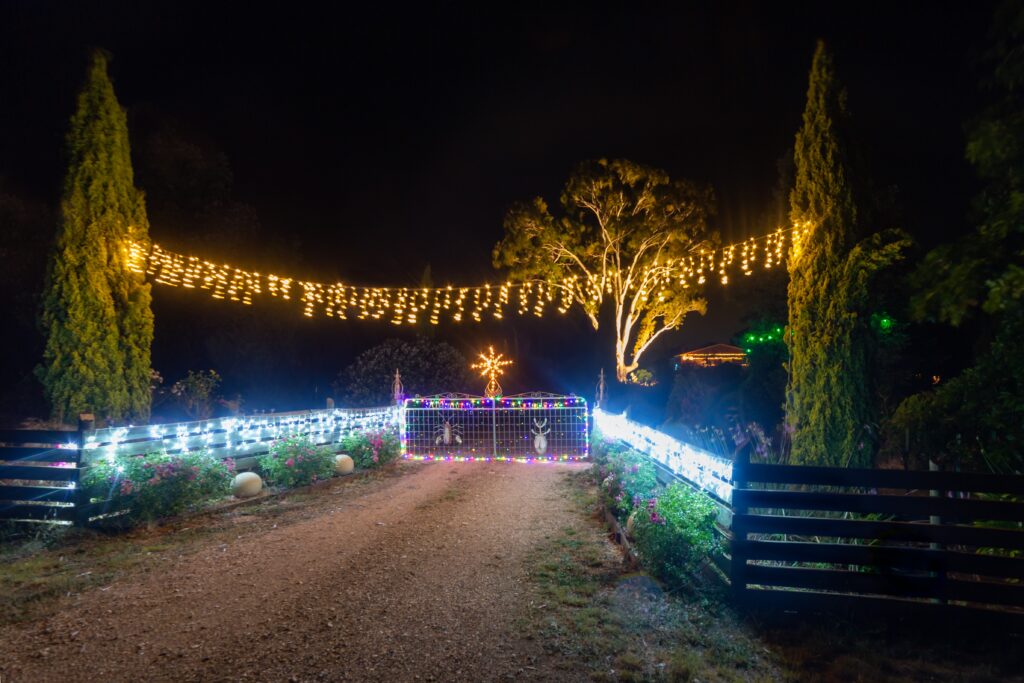
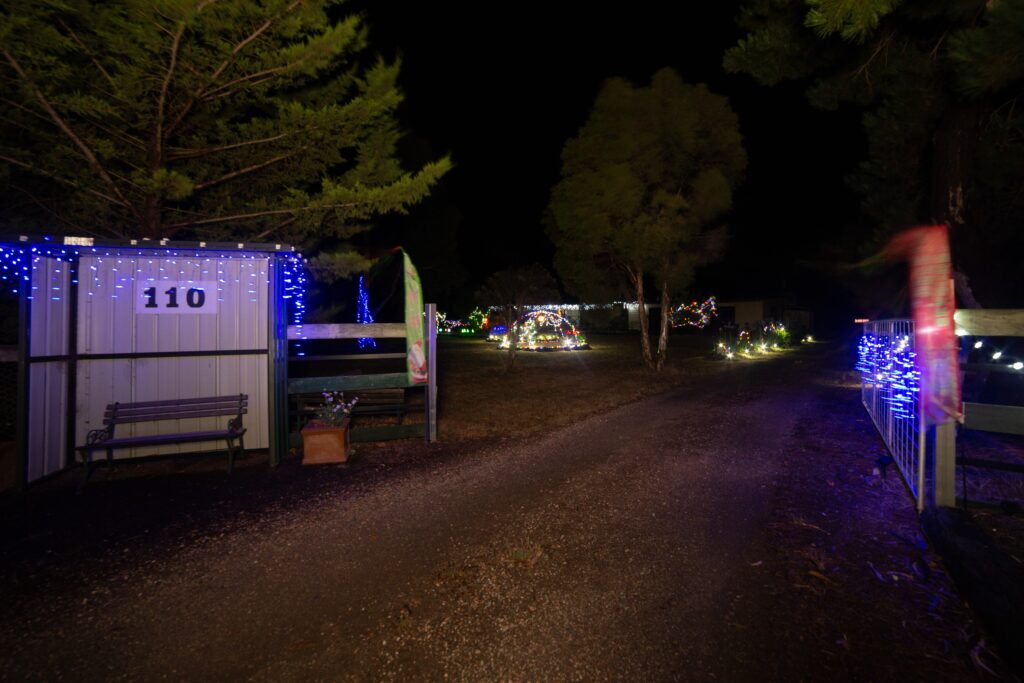
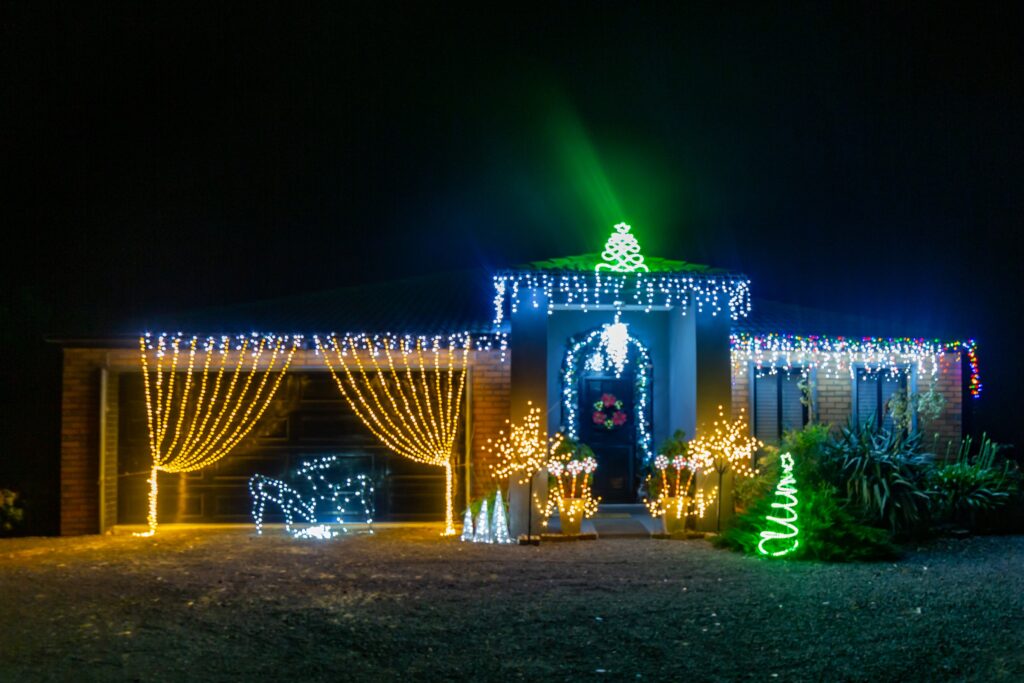
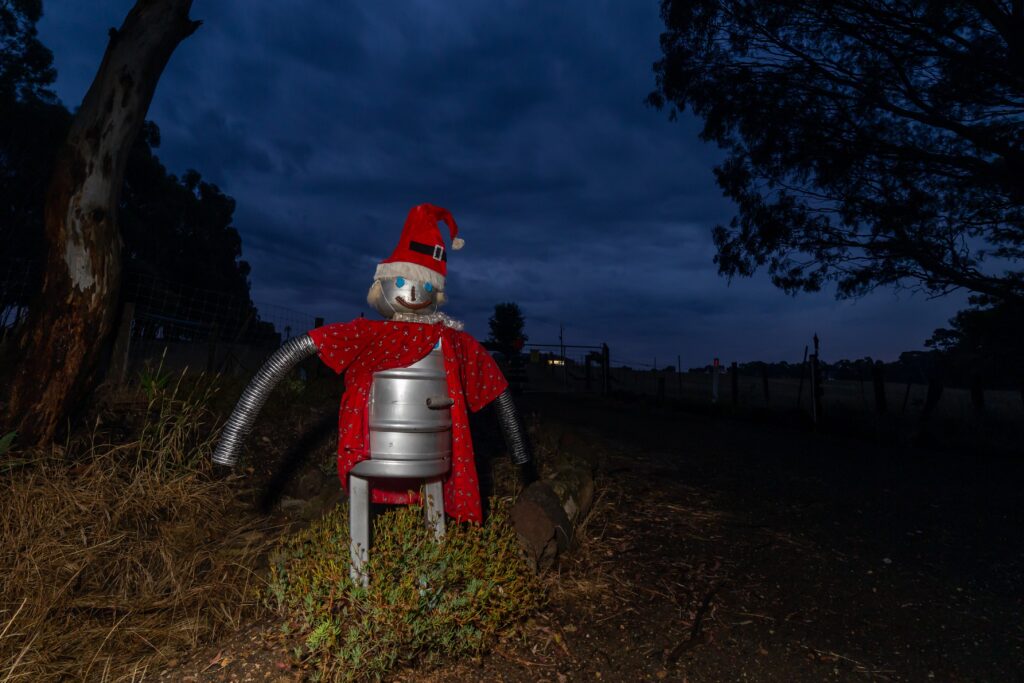
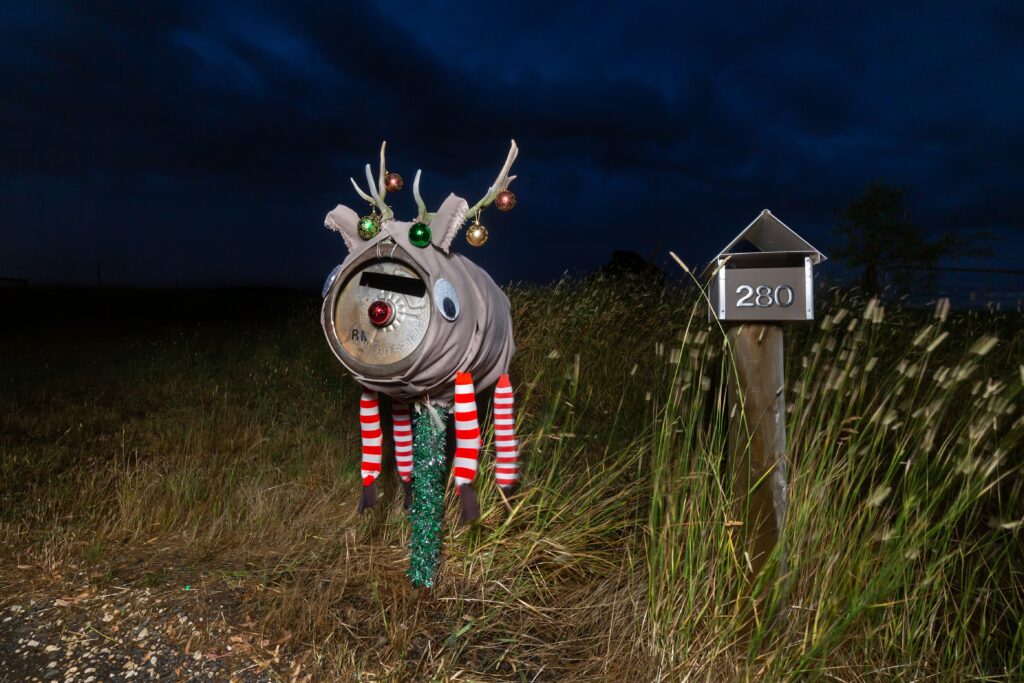
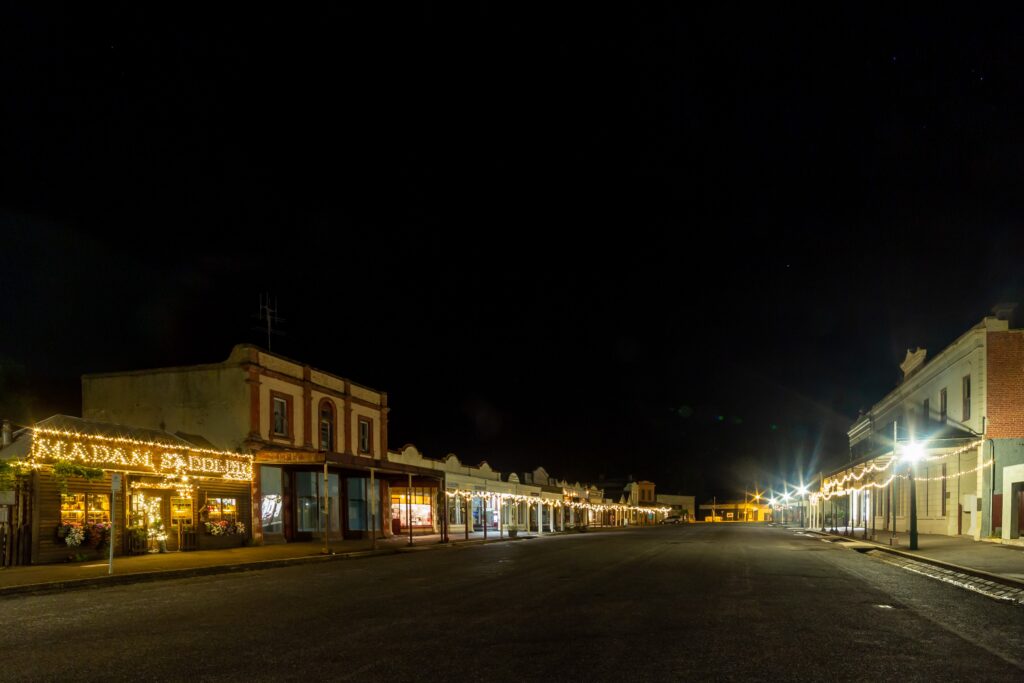
Images: Ann Jeffree
December 20th, 2020Harry’s Lights in West Street Daylesford
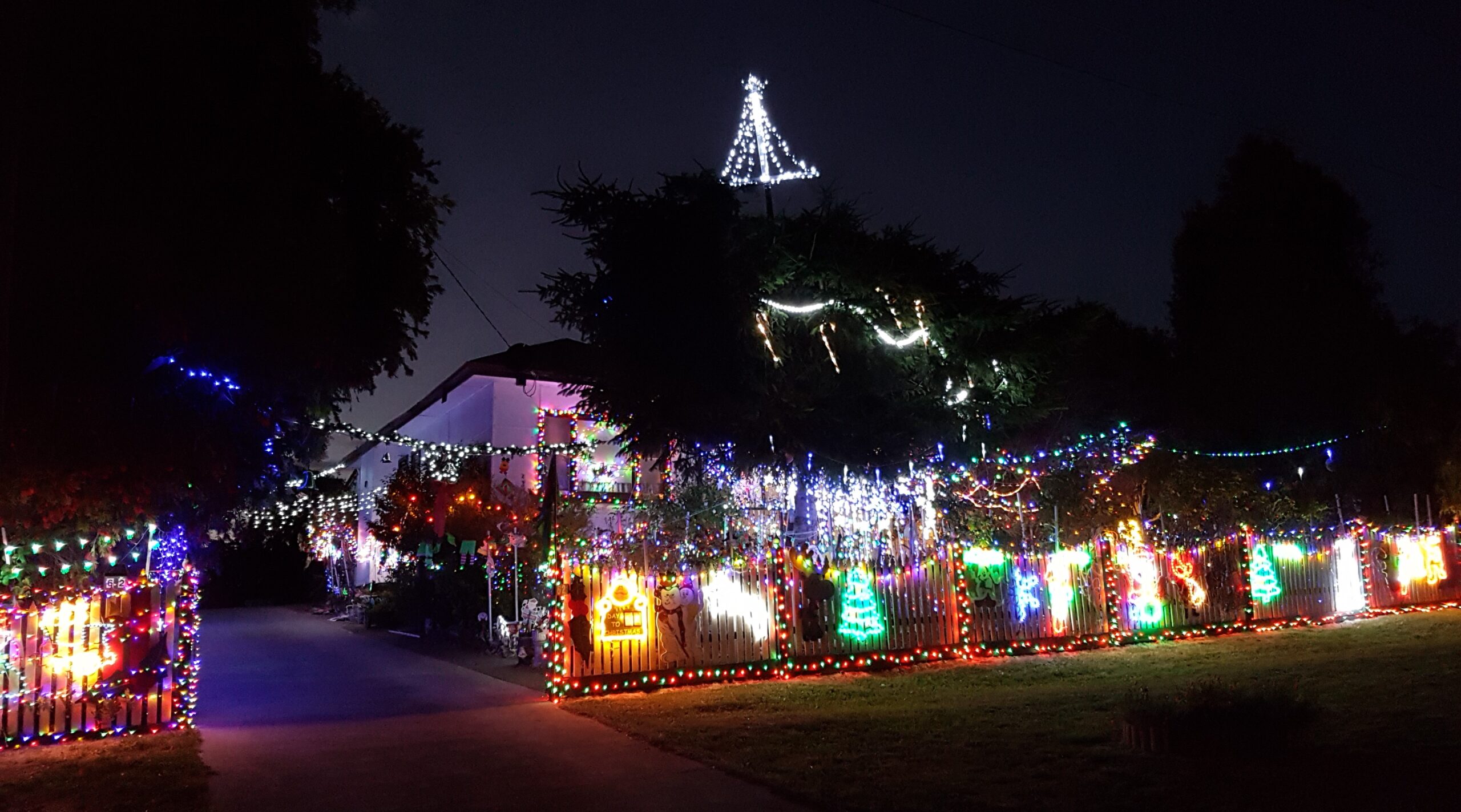
Not content with the string of globes he had for his kids Harry was inspired to go bigger and “have a go at it”. He feels that traditions are dying out so he’s doing his bit to keep Christmas alive.
Harry now has grandchildren and when asked why he keeps putting the lights up, he says it’s the reaction from the kids that come to see them. Kids and adults alike, look awestruck, smile, laugh and giggle.
Harry is also Santa. He puts on his Santa suit with his well-worn CFA fire boots to greet the community as they come to experience a special slice of Christmas.
Every other year he’s handed out lollies and had a chat. Everybody ends up happy as they head to their beds. Christmas lights, a sighting of Santa plus lollies (not this COVID-19 year). What isn’t there to be happy about, in that moment?
The fact that Harry is asked whether he’s putting his lights up again, as soon as he brings them down, may or may not contribute to his keeping of the tradition. You see, Harry doesn’t like to disappoint. He is community-minded and has community spirit, evidenced by his tireless CFA turnouts. Firefighting turnouts that he’s been doing for 47 years. The Santa suit gets another showing at the CFA family barbeque, the preschool Santa run and the yearly street parade. When you’re onto a good thing, don’t let him go.
Harry is part of the community and the community thanks Harry. Thanks for adding some Christmas cheer Harry and for having contributed for so long. Merry Christmas to all.
Words & image: Indre Kisonas
(indre@iokdesign.com.au / www.iokdesign.com.au)

December 13th, 2020Local Lines
The moon called me from sleep
and said, go and see the tiny flowers at Gariwerd.
I went out into the night bathed in Luna’s beauty
driving through empty streets as the radio
played Dvorak’s Song to the Moon
the soprano soared above violins
and I knew the radio announcer had been summoned as well
as he said this is the day Adams took
a famous photo of the moon rise in 1945 in New Mexico
the half light between dusk and dark
makes dull places look extraordinary.
I drove on through towns where people lay sleeping,
beset by memory of past journeys this way
until I arrived at the Djab Wurrung embassy fenced off
and guarded by men in hard hats and orange vests,
reporting my presence by phone to headquarters.
Here every tree here looks sacred,
in a wild frozen corroboree of branches.
Then the moon shone on a dark church
looming on a hill rise entering Ararat
bearing the name Immaculate Conception
A joke belied by the memorial of coloured ribbons on the fence.
The street is lined with senescent pines, some long dead
Why aren’t they cut down yet and flung from Ararat
where no ark came to rest
The mountains come into view with the dawn
And I search for the exquisite wonderland of flowers
But it has changed since last I was here
No longer wild, but manicured, organised, rocks pulled into place
Car parks full of SUVs never used for cross country
Barriers at the edge of cliff faces for fear of being sued
By someone lured by the pull of the fall.
Being safe constantly is a worse fate, at the edge the lights come on.
Somehow, the holocaust of trees of past summers
Stole the magic and replaced it with chic restaurants
I left and drove on and on into a zone where no sightseers bother
On and on till the natural world was free of tethers, star pickets
And fluoro signs barking directions
Until at last, a wow moment
of banksias, the balgas black boys and little flowers
and each ridge of mountain with a rocky face
drew me all the way from Halls Gap to Dunkeld,
Nothing smart here but quiet, undisturbed
Trees growing to shade sheep.
I drank it in and pondered the moon asking me
To blow away the dust of memories
By shining her light to see with new eyes
That being utterly without hope
Is a doorway to the rainbow bridge
and losing your mind is the key that opens it.
- Frances Guerin
Frances Guerin’s studio is located outside the spa town of Daylesford in the Wombat Forest. Her studio serves both her creative spirit and visitors who come for open studio visits, community exhibitions and meditation practice. Her background in philosophy and transpersonal psychology lends itself to deep enquiry into human consciousness which informs and generates her prolific art practice
Local Lines are mostly written by a group of local poets but if you would like a poem considered for publication, contact Bill Wootton – cottlesbreedge@gmail.com

December 13th, 2020Floyd finds forever home
But despite his plea it seemed no-one wanted Floyd. That was until he made another appearance a couple of months back. Kyneton resident Maggie saw him again and couldn’t believe he had not been adopted.
Despite her partner Peter declaring “no more cats”, Maggie told him the adoption was going ahead. The back story is that the couple had been given a cat 24 years prior and told she was neutered. Two months later that idea was gone with Muttie starting to show a rounded tummy. A vet confirmed the diagnosis and asked Peter if he would like to feel two growing kittens. He agreed and was hooked, but determined to find them good homes.
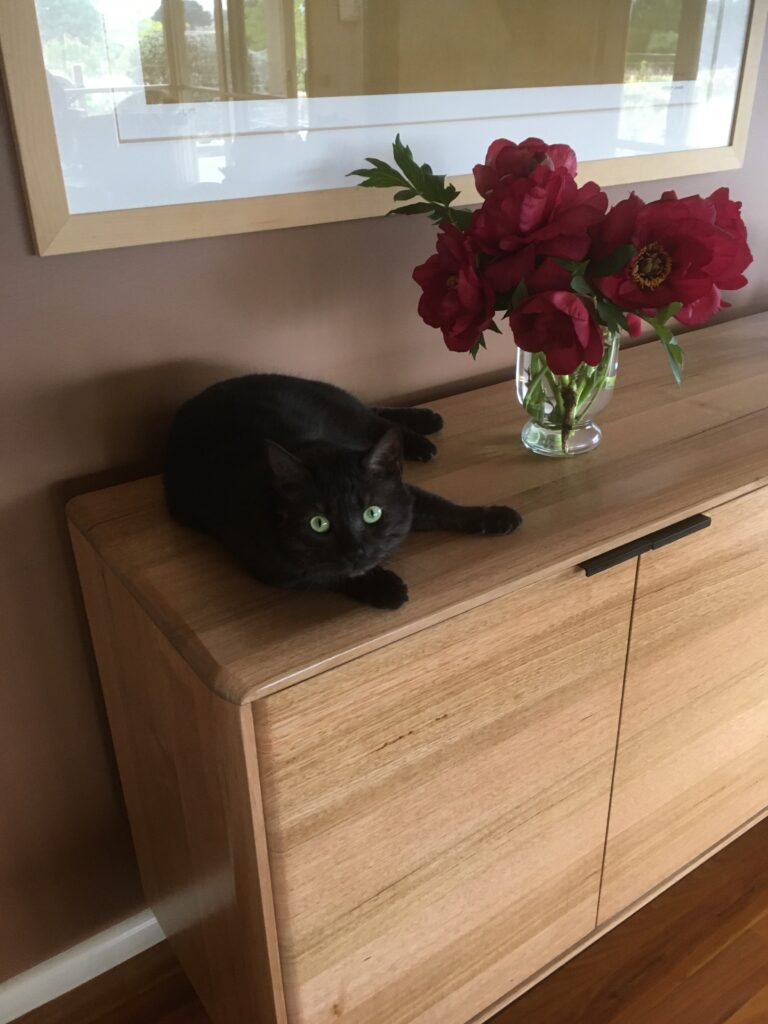
Twenty-one years later the couple had to euthanise Muttie and, in the same year, her two 19-year-old kittens. Maggie and Peter were devastated.
“It destroyed us and we decided no more cats but then I saw Floyd. And he is the most divine, affectionate cat who gives the most magnificent head butts, has about 10 designated beds around the house and likes to have pan-fried salmon when we have salmon. His meows are very loud then,” Maggie said.
“Peter was a little apprehensive about the FIV but they were very upfront and honest about that and he was reassured. I have nursed people with that disease and it doesn’t bother me at all. So what?
“And Peter came along to pick up Floyd and said ‘hasn’t he got the most beautiful eyes’ and I hear him talking to Floyd and patting him. We are just so glad we have Floyd – we are the lucky ones.”
Maggie said she wanted to thank the staff at the Mount Alexander Animal Welfare centre and express the couple’s gratitude.
“The staff there are just fabulous and as soon as I knew that Robyn Slattery (manager) and vet Yvette Berkeley (Castlemaine Vet Clinic) were involved I was really happy. I know them both and they are just wonderful.
“Robyn said the staff would really miss Floyd but they would be happy he was going to a good home. We are just so happy to have him in our home.”