


December 3rd, 2020COVID detected in wastewater in Daylesford

COVID-19 has been detected in wastewater samples collected from Daylesford, Hepburn and Hepburn Springs.
A Department of Health and Human Services media release, issued on Thursday, December 3, said the viral fragments of coronavirus were detected from a sample taken on Monday, November 30 and further samples were being taken on Thursday.
“People who have or have recently had COVID-19 may shed fragments of the virus and these can enter wastewater through toilets, sinks and drains.
“As always, anyone with symptoms in the Daylesford, Hepburn and Hepburn Springs area – or anyone with symptoms who visited the region on the weekend – should get tested. Testing is available at Daylesford Health from 9am to 4pm Monday to Friday.”
Testing is also available at Kyneton Hospital.
Hepburn Shire Mayor Cr Lesley Hewitt said the council had been notified of the findings on Thursday. She said she could not offer any comment on why the discovery of virus traces was not made public earlier.
“My understanding is that DHHS were of the view that it is probably someone shedding who has previously had the virus. It just means that it probably someone has come here and has been shedding the virus.”
Cr Hewitt said there was no reason the finding should impact on tourism and people should not be alarmed but just follow the health guidelines including sanitising, practicing social distancing and wearing a mask while indoors or if it is not possible to social distance outdoors.
Cr Hewitt said it was impossible to know who the virus had come from, resident or visitor.
“It is an important health message that people should continue to take all the precautions that we are supposed to take. If anyone has any symptoms, they should get tested.”
The Respiratory Assessment Centres in Daylesford and Kyneton continue to offer testing to anyone in the community with symptoms of the coronavirus, no matter how mild.
Symptoms are: fever, chills or sweats; cough; sore throat; shortness of breath; runny nose; and/or loss of sense of smell or taste
Call first, from Monday to Friday, for an appointment. Daylesford Health is 5321 6654 and Kyneton Health is 5422 9900.


November 29th, 2020Local Lines
It is what it is,
and was what it was,
None of it makes sense
and that’s just because.
I can’t tell you why.
I really don’t know.
Is it just because,
or is it just so?
No need to worry
if it’s right or it’s wrong,
just heed these few words,
don’t ponder too long.
For if you don’t know,
there was never a doubt.
It’s just one of those things
to make you think about.
I’ve now said enough,
I won’t give it away.
It’s not mine to tell,
so I really can’t say.
- Gary Wilkinson
Gary is married to Kerrie with two children and four beautiful grandchildren. He and his family have lived in the region for around 25 years and run a small Angus Stud in Blampied called Kyah Park Angus.
If you would like a poem considered for publication, contact Bill Wootton – cottlesbreedge@gmail.com

November 29th, 2020Out of the frying pan…

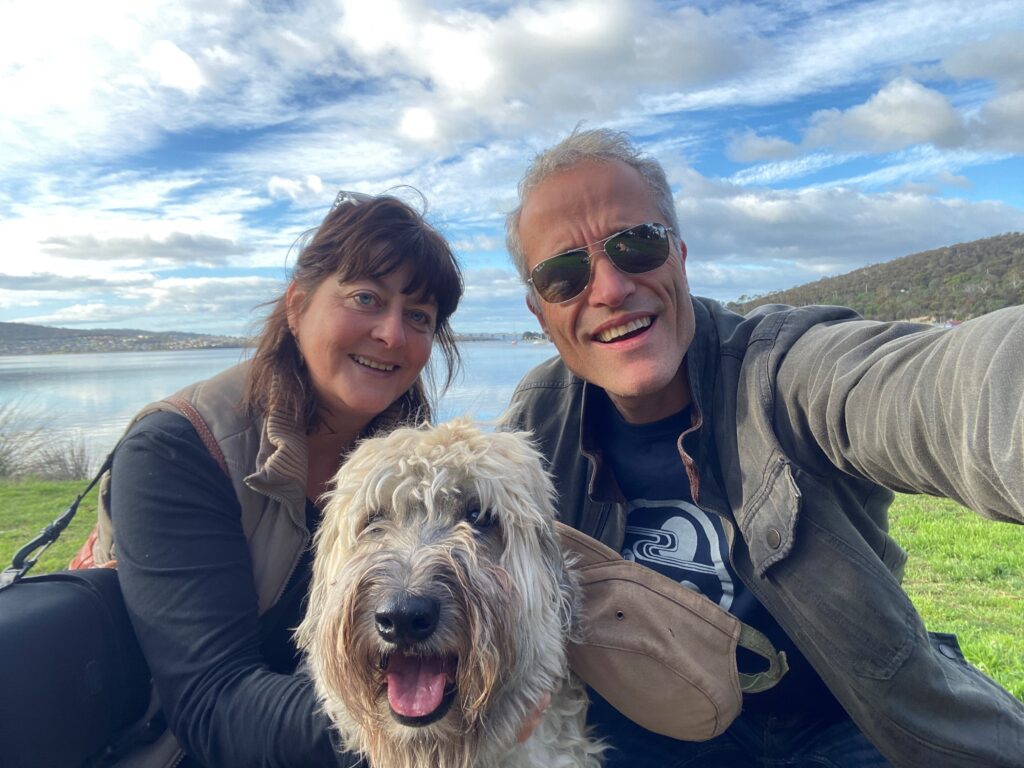
ANDY and I had been happily living in Daylesford fully anticipating our retirement there, when he got offered a job at MONA. It was obviously, too good an offer to refuse.
What at first was a daunting move soon turned into an amazing adventure. Uprooting ourselves wasn’t easy, but it’s been so exciting – new jobs, new friends, new restaurants, cafes and bars and a new home. And of course, we’ve got the whole of Tasmania, with its many pristine natural wonders to discover and enjoy.
Not only has the change of scene been a revelation and one we’ve totally embraced, but it’s also been an important reminder that we shouldn’t get too set in our ways.
And just to prove that point, along came COVID-19. It quickly became apparent that we’d timed our relocation to Tasmania perfectly, especially as the premier Peter Gutwein went in hard to protect his island state.
Along with the national restrictions, penalties were high if anyone here was caught flouting them. A whopping $16,000 for some of the more serious breaches. It certainly seemed to have the desired effect, with Tasmanians quickly pulling together to support each other and do the right thing by emergency service workers. The police were also used to regularly check up on all home self-isolaters, which was also encouraging.
We were both so fortunate in not losing our jobs and being able to work from home. As we’d not long moved into our new house, all of our additional free time was spent planning and carrying out improvements and setting up the garden.
Luckily, the strictly enforced restrictions meant that Tasmania wasn’t in full lockdown for very long. Slowly, cafes, bars and restaurants opened, along with general retail stores.
We were all very relieved, when after 21 days of being COVID-19 free, we were finally able to book accommodation or visit personal beach ‘shacks’ for the Queen’s Birthday weekend (ironically, a week later than Victoria). It definitely was a turning point for Andy and I to start exploring Hobart again.
I suppose from the other side of the fence, we were totally shocked when Victoria announced they were opening up accommodation and decreasing restrictions. It was a week ahead of us and we hadn’t any cases for 14 days at that point. And then you guys were opening whilst you still had cases.
We also couldn’t believe how minimal the fines were for breaking the rules. The whole of Tassie was talking about it. So I’m pretty sure that other states were too. It cost the country a lot of money and also put its people through a lot of mental and financial anguish that could have been prevented if Daniel Andrews had just waited longer.
He should have done the first time around what he did for the second wave. I do feel sorry for him though. He knew he’d stuffed up big time and he did a good job of finally getting it sorted.
So yes, we know that you went through hell, although we can’t appreciate it. We spent a lot of time on Zoom with our Melbourne friends – three in particular who lived in one-bedroom apartments. One of them doesn’t even have an open view.
But hopefully, it’s over now. We are still anxiously hoping that it doesn’t return to any serious degree again. And for those who know us, you’ll not be surprised to hear that we’ve been doing our utmost to support the Tasmanian economy.
Meanwhile, in the UK, they’re having 20k new cases a day and they’ve not fully locked down. The country is in uproar…
Images: Andy Greenwood

November 29th, 2020Kyle’s Rant

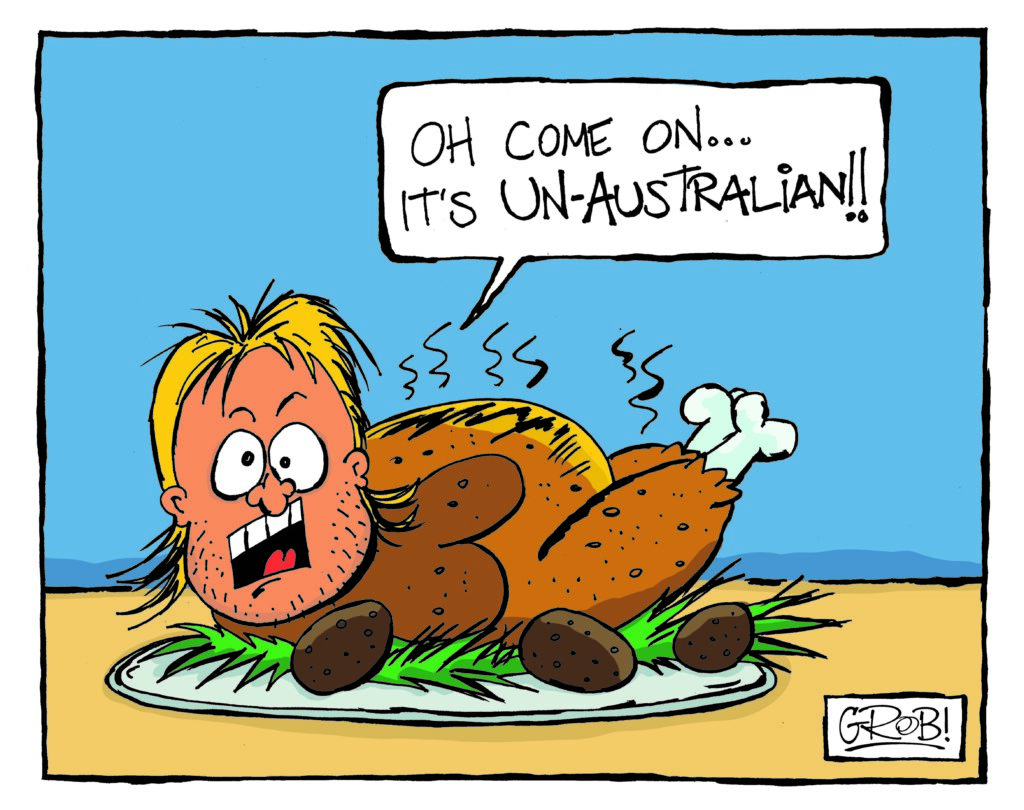
Black Friday has nothing to do with Australia but, like bunch of shopping sheep, Australians are now part of the whole Christmas procurement picture, following American dreams like Halloween and Valentine’s Day. Black Friday is an informal name for the Friday following Thanksgiving Day in the US, the day regarded as the beginning of the Christmas shopping season for the Yanks, not us.
Australia doesn’t exactly have a history rich in Pilgrim fathers and pardoning turkeys, we have our own history and milestones to remember, so let’s give back the stupid Black Friday sales and clean up our inboxes.
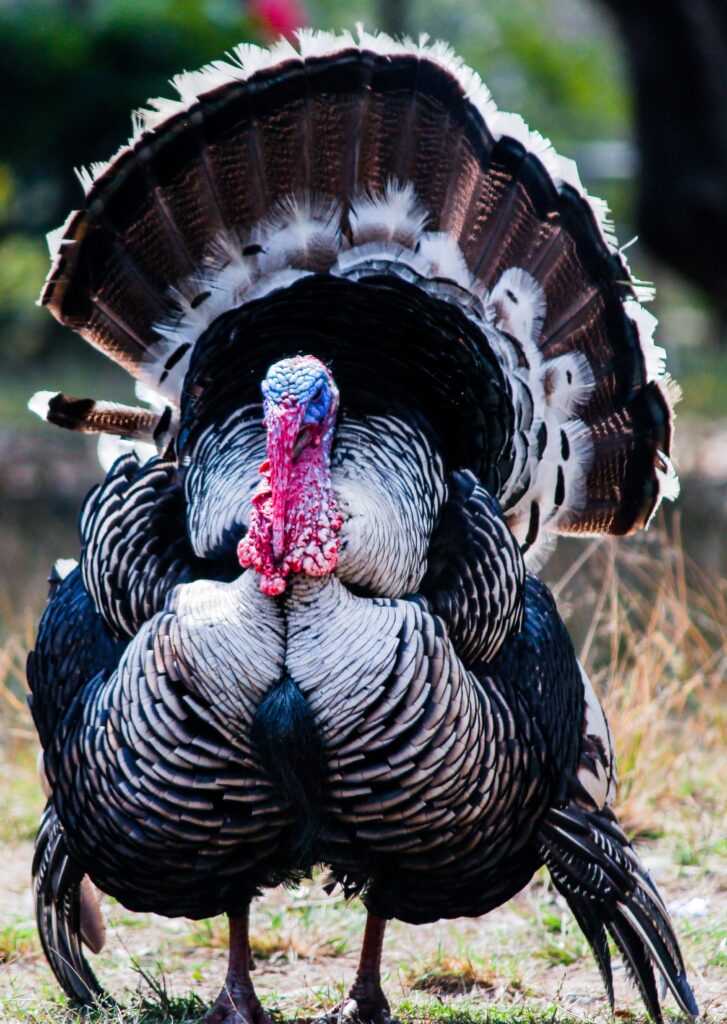
Speaking of pardoning turkeys, this is something the President of America does every year. They wrestle a huge, white feathered turkey onto a podium with hundreds of cameras pointed at it, frightening the life out of the poor fowl, I imagine. Then it is approached by something that looks remarkably similar and certainly comparable in intelligence aka Trump (or is that being rude to the turkey?) and the poor creature is told it gets to live another year. Or at least until the media circus is gone.
Speaking about the end of the year, we are getting close to that point in about four weeks when it is time to reflect on what you liked from the year. And let’s face it, it is 2020 so the list is not exactly long.
For me, one of the things that I have had to battle with is technology and this is because we embarked the year with a clear objective here at TL HQ and that was to make our editorial flow into multiple channels to keep up with the digital age and complement our print magazine.
Granted, around the middle of March our plans were hosed down for a week or two while we rocked in the corner blowing bubbles, trying to figure out the way forward, however we stuck to our commitment and now are up to speed with the digital world. For those reading this, it means you have multiple opportunities to read, listen and engage with our editorial.
You can jump on our Podcast, check out regular posts on Instagram and Facebook and not only read the online magazine but get spoon-fed the featured stories. Then there is the real estate feed – live listing all local properties as they come on the market in real time. All available through our new website www.tlnews.com.au
You’re welcome, turkey and blatant plug rant over…
(Ed’s note: Hmmm. Who bought Rodd & Gunn shorts online on Friday?)

November 29th, 2020Just sayin’…

Anyway, there was a 10-second bit about a “rare 1977 LX Torana” once owned by race car driver John Harvey, which could sell for up to $2 million.
It got me thinking, not about buying it because quite frankly if I had $2 million the last thing I would buy is an old car, but about my first car, a Holden Sunbird.

(Interesting Wikipedia fact: Sunbirds are pretty much the same as Toranas but a little shorter in the chassis and instead of six-cylinders they have just four. The word Torana comes from an Aboriginal word meaning “to fly” while the Sunbird is named after an Australian bird with long thin down-curved bills and brush-tipped tubular tongues, both adaptations to their nectar feeding. You’re welcome.)
I bought my sky-blue Sunbird when I turned 18 and got my driver’s licence. Yes, you say, that is pretty normal, but I have two nephews, one who turned 21 last Friday and still to get his P Plates and another who waited until 23 to learn to drive. Kids.
Anyway, it was my pride and joy. I think I paid about $1000 and it was just about the only possession I owned. I also bought a car cleaning kit and cushions for the back seat. Embroidered, white. I don’t know what I was thinking.
For a four-cylinder car it went like the clappers. Fish-tailing now and again in the wet. Over-revving when the choke was left out too long on those cold mornings. (People under 40, ask an old person what a choke is.) And I remember the tap dance of the high-beam button on the floor and the clutch. (Again, people under 40…)

But as enamoured as I was with my Sunbird, I secretly coveted both of my Dad’s cars. One a Holden Kingswood, maybe 1968, nice and square, white with red leather trim. He gave it to my older brother, I think hoping he would see the historic value, but who promptly traded it in for an ugly 1980s Holden Camira. Dad then bought a genuine one-owner 1970 Chrysler Valiant. A sleepy six which, at the lights, could leap off the starting blocks like the launch of a space shuttle. Dad had great fun revving the engine next to Frankston would-be rev heads and then leaving them behind by about a mile. When Dad died in 1986 my Mum gave that to my younger brother, who promptly wrote it off in a crash about two days later. My brother was fine.

Meanwhile, I had been heading overseas and sold my Sunbird to my sister, who promptly wrecked the engine in an incident involving a scarf and leaning in under the bonnet to apparently see how things worked. My sister was fine.
Now I drive a Mitsubishi Triton and a Toyota Camry. Nice and safe. But maybe if I had $20 million I would think about that Torana. Just sayin’…

November 29th, 2020About the house with Glen
Fortunately in any natural, organically-controlled garden, for every form of pestilence, there’s at least one equally ravenous predator critter ready to pounce.
Among these are the little wasp-like hoverflies, preying mantis, katydids and more – all doing their best to maintain order, but not always as welcome as you would expect, especially when they decide to try their luck indoors…like our friendly neighbourhood huntsman.
Now, I admit to being a bit of an arachnophobe ever since my early teens and the embarrassing examination of my nether regions, by a lady doctor, due to an all too close encounter on our outdoor toilet seat…but I do appreciate the noble huntsmen and the role they play in cleaning up vermin – even if I get the heebie-jeebies if one pops up on the wall over my bedhead.

Golden huntsman
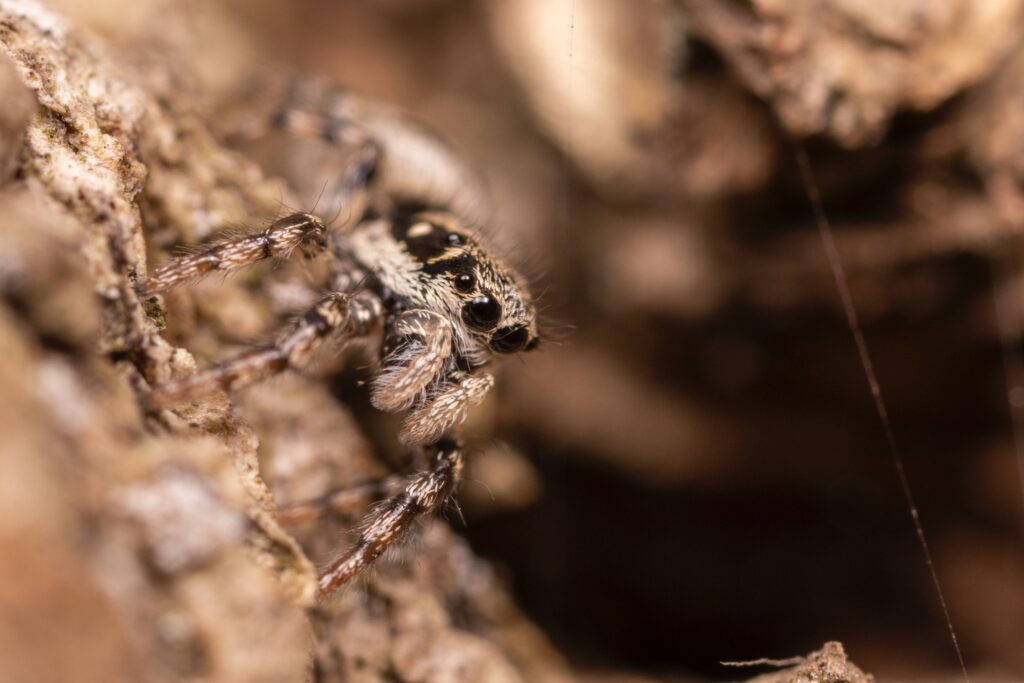
Huntsman spiders, especially the golden huntsman (beregama aurea), have been seen around in the past few weeks, bringing about a few anxious enquiries. It is uncommon for them to be found indoors, they tend to live beneath the bark on the trunks of large eucalypts and other native trees, feeding on moths, cockroaches, crickets, flies and other spiders. They are neither aggressive, nor dangerously venomous, but the adults do have large fangs and their bite is quite painful. The good news is that they are rather timid and, like me, would rather run than fight. You probably didn’t want to hear this but they apparently make good pets.
Venomous caterpillars
Peta came into my study to announce that there was a weird but pretty little caterpillar sunbaking on the edge of our birdbath. “Come and look before a bird eats it!” “It” looked like nothing I’d ever seen in a garden, more akin to the current rash of those multicoloured kids’ toys. I remembered that many of the multi-coloured, highly decorated moth or butterfly larvae have a secondary defence mechanism – either stingers amongst their finery or they squirt lethal substances when threatened.
I couldn’t find any defining references to that particular caterpillar, but realised that it is one of the native cup moths. Needless to say both we and, obviously the birds, have left it to its own devices.
Alien outcrops
This week I received an emailed plea for help and several photographs of unhappy potted plants that had been attacked by what appeared to be rather rancid scrambled eggs. Many of the leaves were looking the worse for wear as well.
The plants, growing as they are in the window of a salon, would be subject to a warm, dry atmosphere, open to straying chemical vapours from sprays and probably over-watered. In other words, the usual environment for many indoor plants.
The remedy is simple: Cease watering and allow the soil to dry out; scrape away and remove any sign of fungus; spray the soil several times at weekly intervals with a tablespoon of baking soda mixed into two litres of water; cut off any dead or dying leaf stems; evacuate the plants to a warm, shady outdoor spot to rejuvenate; and water the plants by giving them a thorough soaking and water again only when the soil is dry down to knuckle depth. You can bring them back indoors as soon as you see signs of recovery.
Got a gardening query? Email glenzgarden@gmail.com
November 29th, 2020Keeping up with the Joneses in Clunes
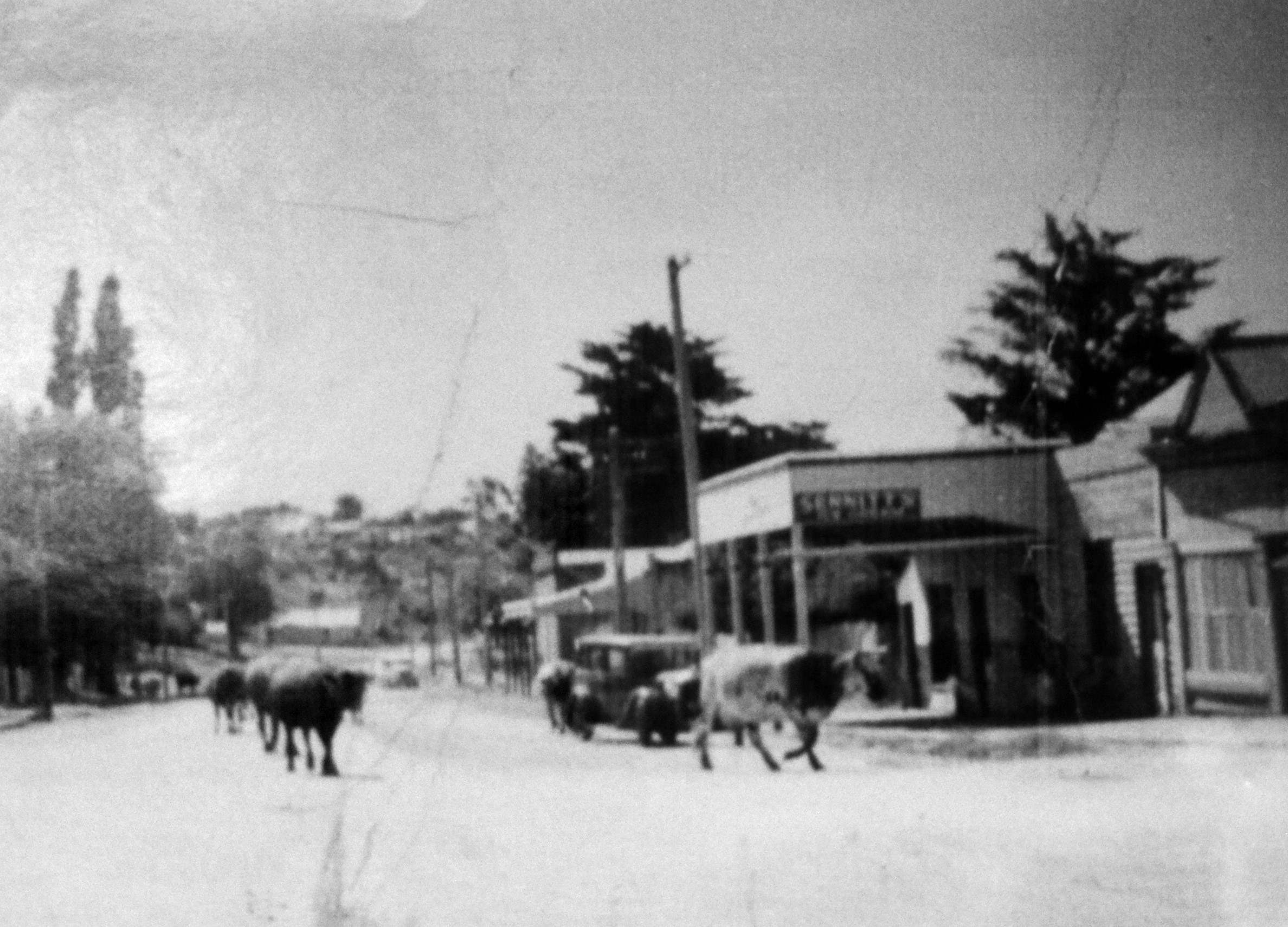
But when mining eventually came to an end, Clunes, like many resource boom towns, started to wither. By the 1930s the population had drastically declined and the place was practically a ghost town. Those who remained had to find jobs in the factories of Ballarat, as agricultural workers or they went hungry.
One of the families who remained were the Jones family. They were descended from William Jones, a native of north Wales who came to work the mines in the 1860s. While the elder Jones left Clunes for richer pickings in Western Australia, many of his children and grandchildren remained in what became a quiet backwater.
One of those descendants was Lloyd Jones, born 1933, who produced a book in 1989 about his childhood years, Just a Boy From the Bush. It is a highly detailed account of life growing up during the depression years in Clunes and regional Victoria and a window into another world.
Lloyd’s father Edward Jones was a typical rural worker of the time, moving from job to job, depending on the season in order to provide for his wife Florence and 13 children, as Lloyd recalls:
“Throughout his long working life, my father was a ‘jack-of-all trades’ – a man who could turn his hand to almost anything. He was a most proficient shearer – and for virtually all of his adult life was a member of the Australian Workers’ Union. During the Summer months he was usually employed in harvesting, he was an expert at building fences and fancied himself as a bush carpenter. On top of all that he kept us well provided with vegetables from his garden.”
At a time when roads were poor and not everyone could afford a car to travel them, life in places like Clunes was both insular and self-sufficient. Every place had its garden and large store of firewood with some other necessities provided by regular visits from the butcher, grocer, fruit vendor and chaff man. While Clunes was finally connected to the state electricity grid in 1938, the average house lacked this technological marvel along with all the toys and conveniences powered by it. Which meant of course, poor old Florence (Ed was often away working) had to take care of all the household duties, including cooking, cleaning and washing by hand.But kids such as Lloyd and his siblings could not be loafers and were expected to carry some of the load. In his memoirs, much of what he did outside of school was expressed as youthful adventure including snaring rabbits, collecting loads of firewood in the middle of Winter and feeding, rounding up and milking a mob of cows every morning and night. One could also see his activities as child slavery, it all depends which way you wear your rose-tinted glasses.
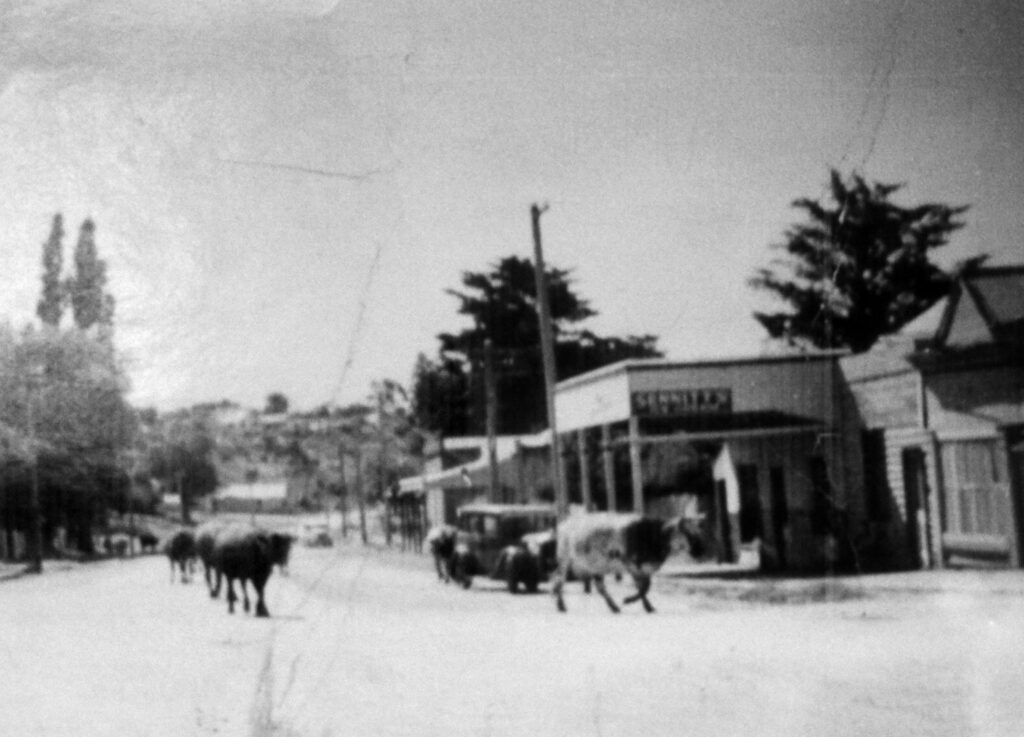
“Finding the cows (on the Clunes public common) and bringing them home was virtually a daily occupation for most of my school days. On these daily trips I certainly learned all about the vagaries of our climate and I doubt whether the memories of extreme heat and biting southerly winds will ever leave me.”
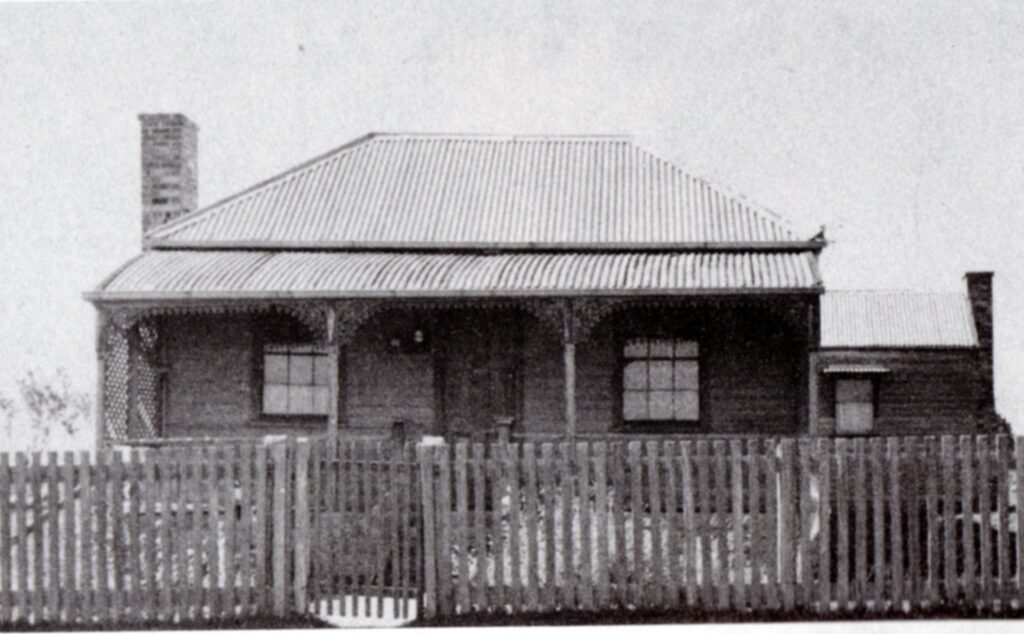
Lloyd Jones spent most of his youth living in the family home in Canterbury Street on the north side of town. Backed on the town common, it was a modest weatherboard cottage with a corrugated tin roof built from 1860 to 1880. These days when a person decides to build their regional dream home they usually lay down the entire edifice all at once, working off a comprehensive plan. Besides being horrendously expensive up front, it also takes a greater time to build. Which is funny considering all the tools and construction conveniences we have today. Nothing could be further from a typical working man’s house back then which was built small and quickly, then extended over time as needed.
“Originally there were two front rooms built at a higher level than the rest of the house,” writes Lloyd. “Gradually the size and shape of the building altered somewhat as the years went by and the family increased. A front verandah and wooden dairy which served as a bedroom, with various sheds and outside lavatory at the rear of the block, completed the picture.”
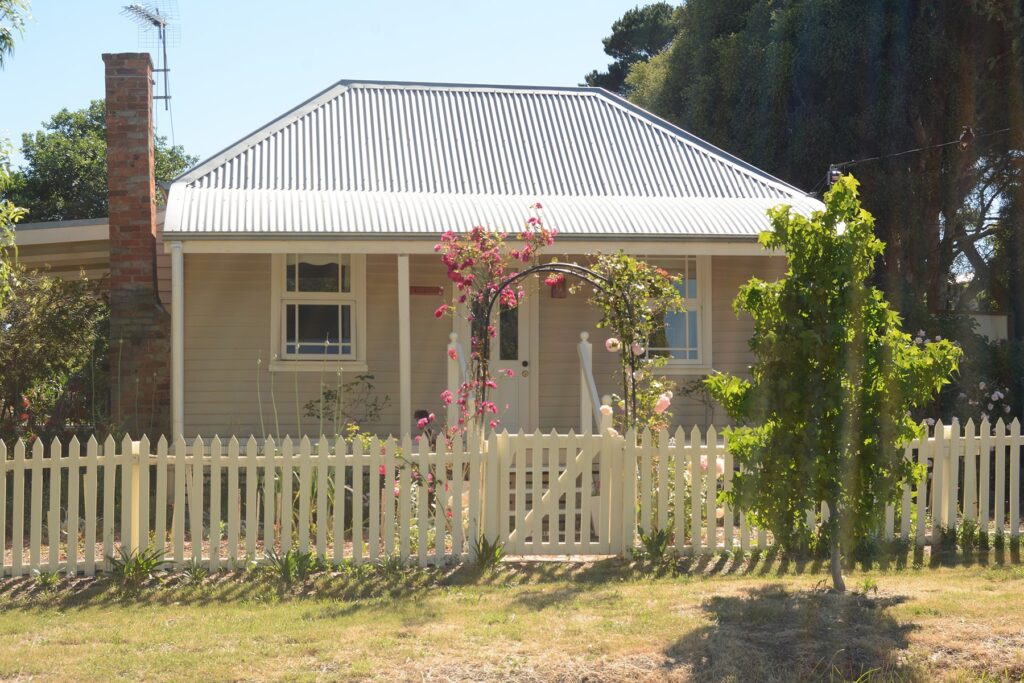
In those times, the house sat between two vacant blocks. The land around Clunes was mostly bare and wandering goats munched on gorse and blackberry bushes in Creswick Creek. A far cry from the leafy surrounds of the former Joneses’ family home which still stands today.
Pictured, above, the Joneses’ family home in the 1930s from the book Just a Boy From the Bush and courtesy of the Clunes Museum
Pictured, below, the house today, and Clunes of old
Words & second image: Tony Sawrey

November 29th, 2020Principal and staff rise to COVID challenge
With its historic, picturesque building, including the imposing original clock (despite a bent minute hand) and set among stunning gardens, the walls could tell a thousand stories.
None possibly as unbelievable and unprecedented as the story of remote learning 2020. When Daylesford Primary, along with its annex schools Yandoit and Drummond, faced the challenges and uncharted COVID waters like millions of schools worldwide, it was important to view the situation as something unique. School principal Brett Millott also realised that this would be a time that everybody in the community would need to learn a lot of new things very quickly.
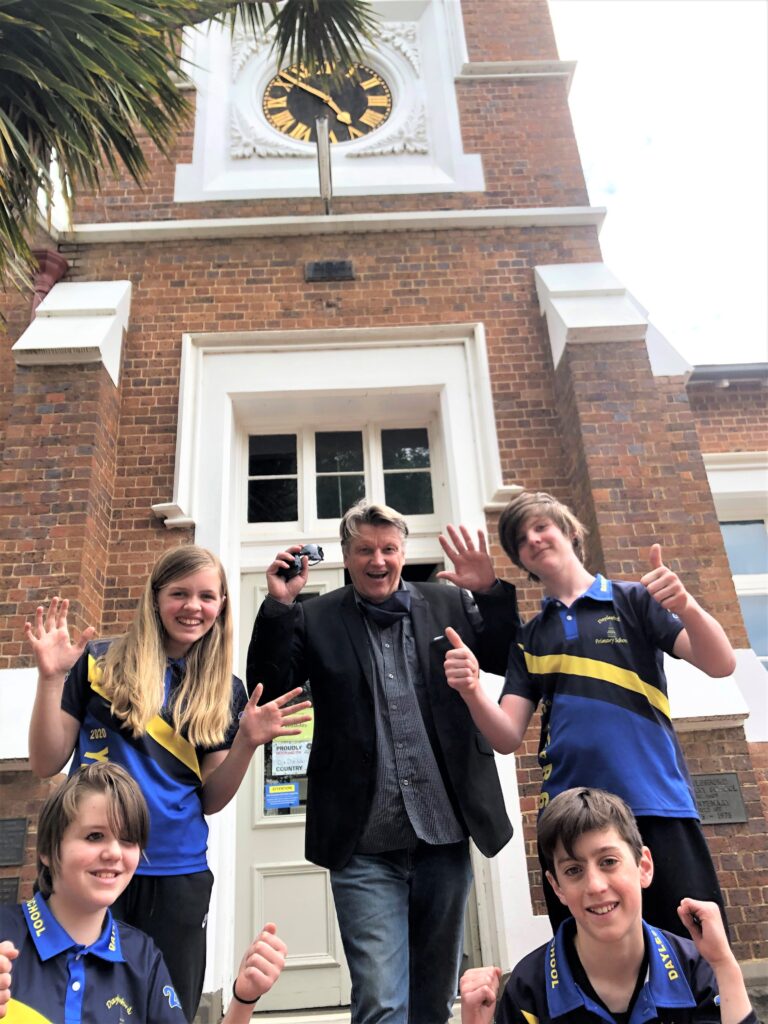
Supported by the teachers, education and administrative staff and backed by the school council, Brett worked with his team to organise the 250-plus students, their families and carers in an effort to get the best possible result from the first lockdown phase.
Brett admits while all schools have action plans in place for unique scenarios, no-one could have really foreseen a pandemic.
“Immediately we knew technology was the vital component. Families needed IT equipment and internet connection and we made sure they got it. We tapped into the community and we ensured every family had the support and access they needed for remote learning,” he said.
“Teachers, like thousands of Victorians, were working from home. It was an enormous undertaking and I don’t think anyone in the school community underestimates the work the teachers did over the two remote learning phases.”
While every family was faced with its own set of challenges, Brett said the first approach adopted was to try and replicate school with a focus on literature, numeracy and physical education as guided by the Education Department.
“That was our starting point. To encourage everyone to get into a rhythm and try to stay in the rhythm. But during the first lockdown we realised the importance of flexibility, knowing that every family was unique – many with multiple children, parents working from home, and uncertain times faced by everyone,” he said.
“Immediately following the first lockdown, the school council suggested that we survey families in order to generate vital feedback about the learning process. The response from the families was extraordinary and certainly influenced the way the school responded the second time around.
“’The survey feedback was about flexibility and individual needs. So, we started planning for the scenario of another remote learning phase and worked on models that were tailored for individual families. Teachers engaged with the school community so we could meet the needs of all students and their requirements within their individual context,” he said.
Brett looks back over the past year and said it certainly had its challenges. But when he made the decision to move to Daylesford a few years ago, he was “looking for a challenge”.
“When you’ve been in the principal gig for a while you start looking around for other challenges,” he said.
“I’d been at schools in Melbourne, taught in the UK for a year, spent time in Austria on a short-term teaching exchange and taught in Vienna with a high migrant population which spoke three languages. Thankfully I could speak some basic German, and many spoke English so we engaged in multiple languages which was fantastic.”
“So, when the principal’s position became available in Daylesford, I took it. I wanted the challenge of working in a regional school in a small community environment,” he said.
But the area wasn’t new to Brett. He has a long family connection from when his grandfather bought a property in Blackwood in 1938 – the property is still in the Coleman and Millott families.
“I’d spent a lot of time in the area as a child and the welcome shown by the community over the years was tremendous. Moving here to take on a principal’s role was a way of giving some of that goodwill back.
“The encouragement and advice I have received from Paul Nolan (senior education leader), local principals and the team from the Ballarat Regional Office has been fantastic. And the support from the local community has continued to this day,” he said.
Brett is a principal who, through his leadership and his team, has driven remote learning with compassion and courage over a one-size-fits-all curriculum style.
“We all had our ups and downs during the time but when the kids came back, they came back as a group, really switched on and it was like they really celebrated learning alongside their friends. It was a joy to see and the kids were fantastic throughout remote learning. The staff, students and families should all be proud of what they achieved,” he said.
…About that bent clock hand. A little digging has revealed it was local boy Nigel (small town, you’ll work it out) who, in grade 6 thought it would be a good idea for him and his mates to wrap a tennis ball in tape for additional strength. A pretty swift attacking shot sees the ball smash into the minute hand where it remains like that today…40-something years later.
Daylesford Primary School Principal Brett Millott with school captains Amelia (below left) and Tate (below right) with Naidoc Week Ambassadors Bianca and Bohdi who are among millions of kids around the world happy to be back at school following remote learning
Words & image: Narelle Groenhout

November 29th, 2020To bee, or not to bee
It seems that every other day someone is left wondering how to deal with a mass of bees in their backyard. But there is a solution, and it is not calling in the pest control guy. Rather you can report a swarm on the Woodend Bee Friendly Society webpage.
“Its origins go back to 2014,” says spokesperson Matty Be. “My partner Samantha Rixon, and David Gormley-O’Brien, went down to the Diggers Rest Bee Club, sat through a few of the meetings and thought it may be a good idea to start up a local bee group in the Macedon Ranges. Unlike an association like Diggers Rest which was made up of established apiarists they decided to concentrate on backyard beekeeping and have an area of education for newcomers. They got 40 people at their first meeting.”
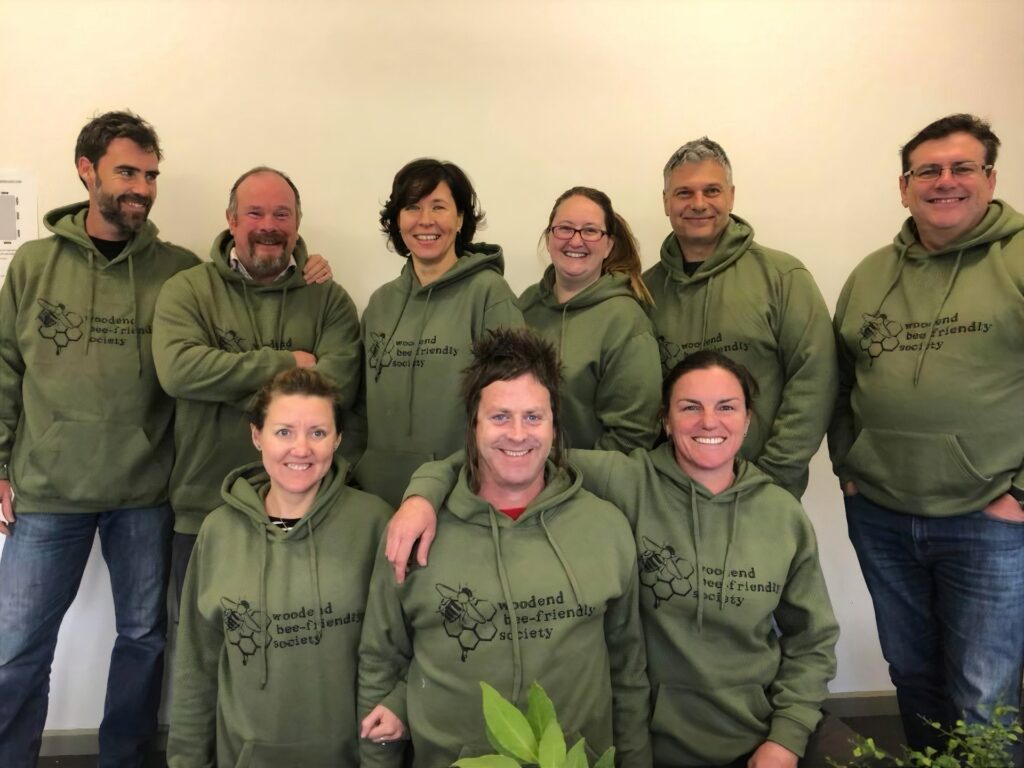
After a year or so the members decided to move underneath the umbrella of the Macedon Ranges Sustainability Group. Today, along with 11 others, they operate as an action group with the MRSG taking care of administration duties. That means the Woodend Bee Friendly Society can concentrate on all the fun stuff, which is keeping bees.
Normally they have a monthly meeting (outside of COVID) where members spend time talking about what is needed to keep bees for the month in advance. They also run designated beekeeping courses twice a year and do practical bee handling days. And, it should be noted, the society members are not commercial beekeepers. Typically they do not rob the bees of their honey, they are more concerned with bee health and wellbeing and limiting competition with native species.
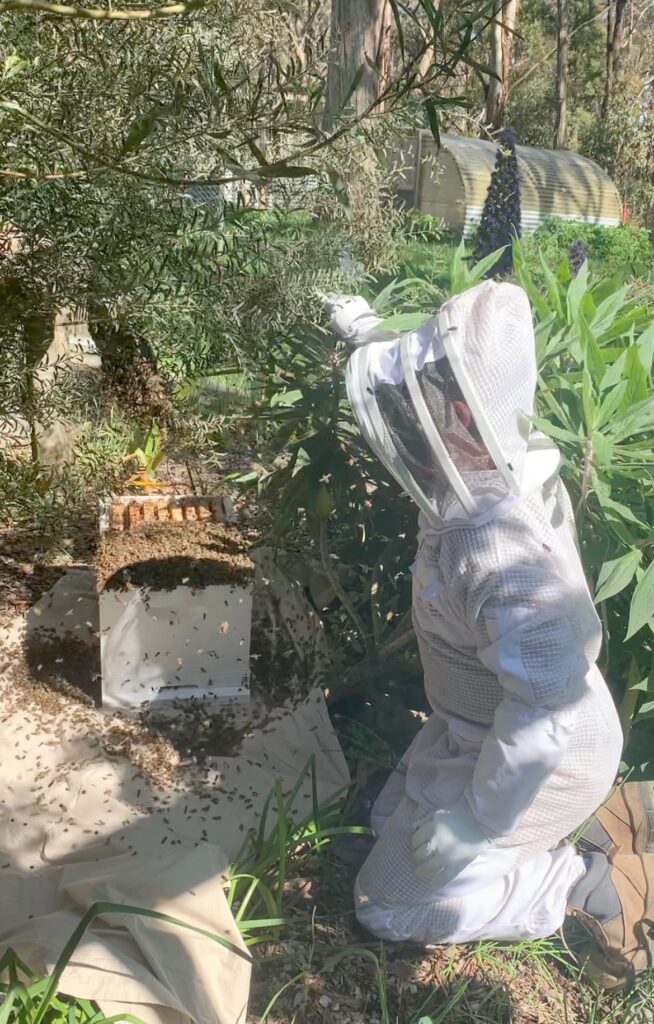
Competition usually comes about during swarming season. A queen bee may make the decision to expand and find a new home which puts bees in competition with possums, bats, birds and other native fauna for suitable nesting sites.
But catching a swarm is a very easy and cheap way to get yourself a hive of bees. The society has a register of people interested in going out and catching a swarm. If a (presumably terrified) homeowner rings up ‘the report a swarm number’ on the Woodend Bee Friendly Society webpage, the Swarm Management and Allocation officer starts going down a list, making phone calls. The first person to answer goes out to collect.
But how in the world do you catch a swarm of bees?
“First of all you stay calm,” says Matty. “You lay a sheet out with a box under the swarm if possible, shake them if they are in a tree, and most of the bees will fall into the box. Then you close the lid up a little bit and the bees will usually decide this is better than where they were. Through the course of the day, all the rest will make their way into the dark box in an orderly procession called a bee march. Typically you wait until dark when you use the sheet on the ground to wrap the whole hive up and relocate it.”
So, no problem at all. In fact Matty, who has been working with bees for over six years, now looks after 10 hives, nine of which are from captured swarms. Seven of them are awaiting members to take ownership of them. Sometimes the delay is because bees, being bees, sting.
Matty agrees: “Being stung is a big changing point for some people in bee- keeping. It can change a lot of people and brings with it an understanding of the responsibility and occasional perils associated with looking after them.”
Group shot above,Woodend Bee Friendly Society leadership team, top row from left, Paul Green, David Gormley-O’Brien, Sally Scanlan, Shelly Andrews, Matthew Croatto and Nev Spiers, bottom row, Samantha Rixon, Matty Be and Emma Collins, Below, Matty Be
Words: Tony Sawrey | Images: Supplied
November 29th, 2020Vision for sustainable future for Hepburn Shire
Cr Drylie grew up in Warrnambool and was involved in the community through the local youth theatre and youth centre. He moved to Melbourne on a music scholarship at University High School. He has a Bachelor of Arts in drama and music, and a Postgraduate degree in cinema studies. He was soon working for the ABC TV drama division as an assistant director and tutoring at university level in cinema studies.
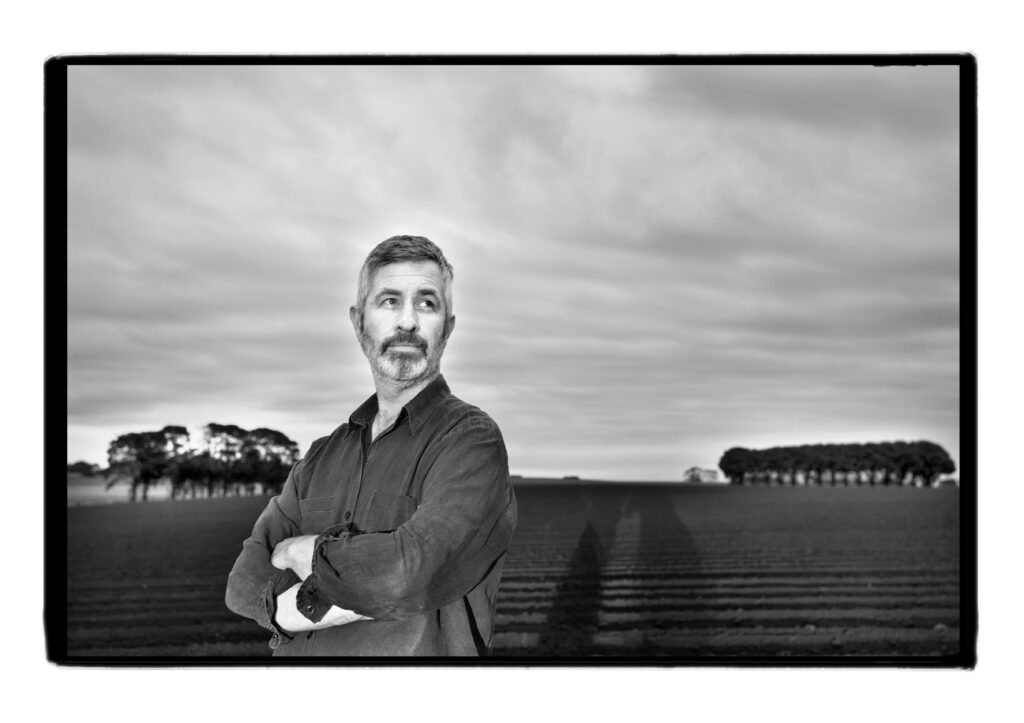
He moved back to the country to raise his three children in Creswick, where he’s lived for nearly 10 years. Tim runs a second-hand vintage furniture shop in Albert Street with his partner, Holly.
“I wanted to become a councillor to extend my community involvement. I understand firsthand the importance of community connection and participation, and I wanted to be a part of that at another level. I’ve been involved with the Transition Creswick sustainability group, Creswick Neighbourhood Centre as coordinator of the successful Creswick Market, and as the vice president of Creswick Theatre Company.”
Cr Drylie is also on the Hepburn Z-NET roundtable committee where he is a home-energy efficiency assessor. Z-NET is a collaborative partnership bringing together community groups, organisations, experts and council to achieve a goal in Hepburn Shire of zero net energy by 2025 and zero net emissions by 2030.
“I’d like to look at different models and tools for community engagement and to better defend our local social, environmental and economic interests. To promote and extend sustainable practices and lifestyles to meet our 2030 emission targets in the shire is important to me. It’s about looking out for the diversity of life on our planet, and for the future wellbeing of our children.
“Another priority for me is helping create a more resilient, and abundant community as we come out of the pandemic by supporting and involving local groups such as small business owners, our artists, makers and local food producers.
“Youth mental health is also something we will need to address and encourage. Supporting meaningful youth mental health programs is vital now that we’re coming out of COVID-19. I’d like to see more affordable housing so that vulnerable people can continue to buy and rent within our shire. Local people need to be able to be supported to live, work and be part of their own town.
“Other important issues for me are looking at ways we can minimise our waste through community-led resource recovery initiatives, looking after our food producers and listening and responding proactively to the concerns of constituents.
“The community have spoken loudly for a real change at this election. I aligned with the charter of Community Voice, a group of people who’ve come together because of dissatisfaction with aspects of the previous council. They also see the great potential of our shire to be a lighthouse community for leadership on issues such as sustainability, community cohesion, social justice, and innovations in democratic participation. We can be a beacon for other communities to look up to. My vision for the shire is to celebrate sustainable living and embrace the power of community.”
With six of the seven councillors recently elected to the Hepburn Shire being new to the game, a sense of optimism and hope exists for more positive interactions between community and council. This weekly series by Sandy Scheltema will explore the new councillors’ hopes and wishes for the shire.
November 29th, 2020Mayor back at Macedon Ranges
Councillors also elected fellow West Ward and first-time councillor, Cr Mark Ridgeway as Deputy Mayor.
Cr Anderson said she was looking forward to the year ahead, thanked her fellow councillors for their support and Wurundjeri Woi Wurrung elder Uncle Bill Nicholson, who performed a Smoking Ceremony prior to the council meeting.
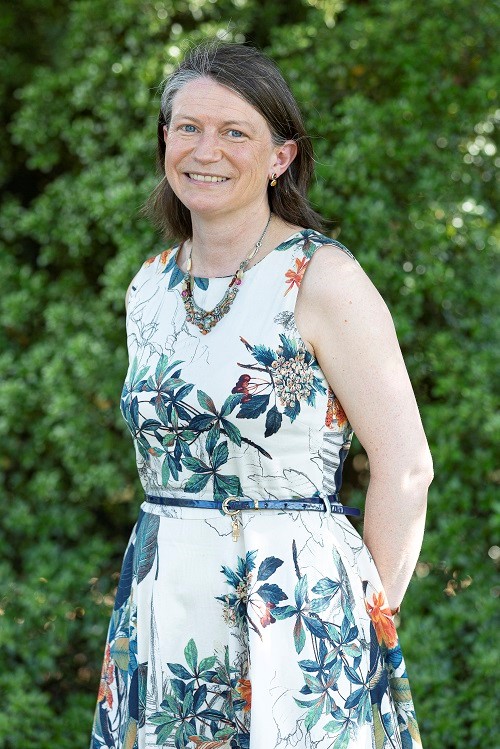
For thousands of years the Wurundjeri Woi Wurrung have employed Smoking Ceremonies to cleanse places and people of bad spirits to promote the wellbeing of their people as well as guests on country.
Cr Anderson mentioned that Uncle Bill had shared a word which meant “unity” and, while she felt it not appropriate to use the word herself, it was appropriate to the coming together of a new council.
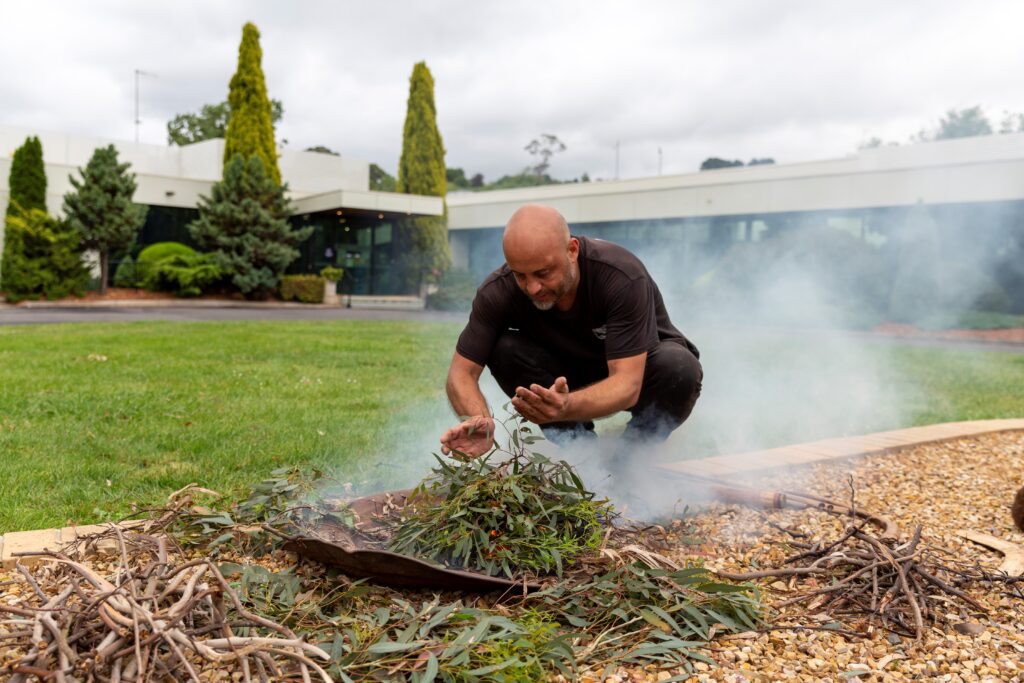
“Unity is very, very important, both amongst our councillors, with our staff and the community, and I think united the Macedon Ranges has already achieved an awful lot of things and we can continue to do that together,” she said.
“Thank you for electing me as your mayor, and I know we are going to have a fantastic year together and a fantastic four years ahead.”
Cr Ridgeway said he was very honoured to be appointed deputy mayor and was looking forward to supporting and working with the mayor and fellow councillors over the next year.
The first scheduled council meeting for the new council was held last Wednesday, November 25 and was livestreamed.
Images: Macedon Ranges Shire Council
November 29th, 2020New mayor for Hepburn Shire
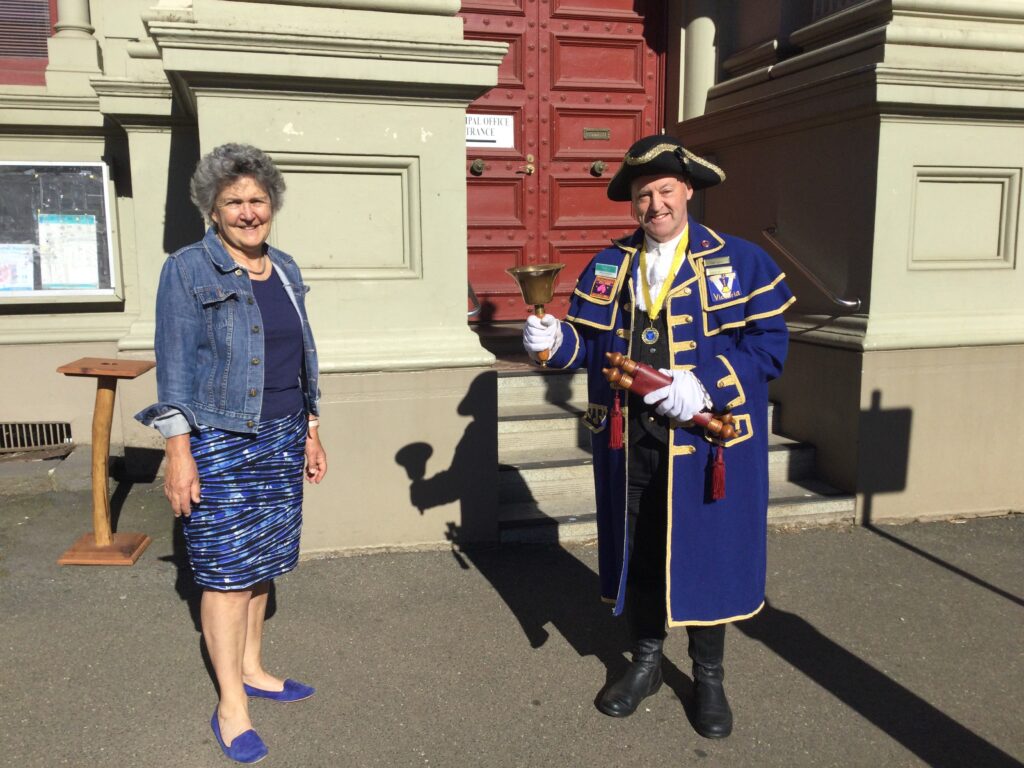
Cr Hewitt said she was honoured by the trust and responsibility shown by her fellow councillors and looked forward to working with them, (CEO) Evan King and the community to manage the impact of the pandemic and continue to provide the services and infrastructure the community needed and deserved.
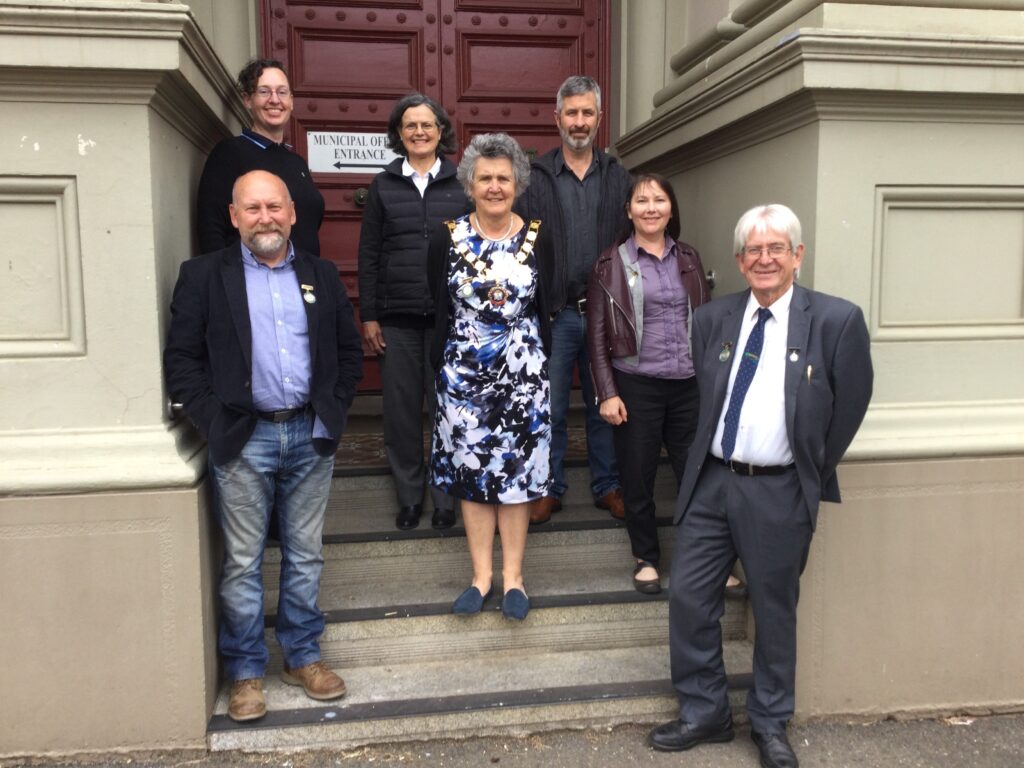
Mr King congratulated them both, saying he was pleased to be working with them as they lead the council in the first year of the new council term.
“I look forward to working closely with both councillors, and the rest of the council team, as we move into a busy period, delivering important services and infrastructure projects for our community.”
The first council meeting will be held on Tuesday, December 1 from 6pm. It will be virtual and livestreamed.
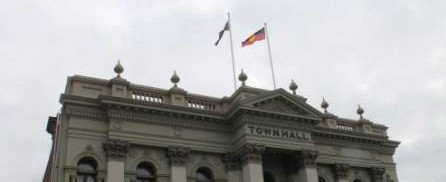
Above, Mayor Cr Lesley Hewitt with Hepburn Shire Council’s Town Crier Philip Greenbank outside the Daylesford Town Hall
Below, from left, Cr Brian Hood, Cr Tessa Halliday, Cr Juliet Simpson, Mayor Cr Lesley Hewitt, Cr Tim Drylie, Cr Jen Bray and Cr Don Henderson
Images: Hepburn Shire Council
November 23rd, 2020Out of the frying pan …into ???
“Out of the frying pan…into ???. In the first of our series, Trentham’s Peter Young talks about his near escape to New South Wales and southern Queensland.
A FLUKE of timing saw my wife Sally and I spend most of Victoria’s lockdown in a 19×7 foot aluminium box trundling around pleasant climes in northern NSW and southern Queensland.
Our annual grey and bald nomad trek to skip Trentham’s Winter saw us head north across state borders just before they closed.
We had mixed feelings during 116 days of caravan travel, wondering whether we should discreetly smudge mud on them to disguise our Victorian number plates.
We were relieved to be in what were low coronavirus risk environments compared to home.
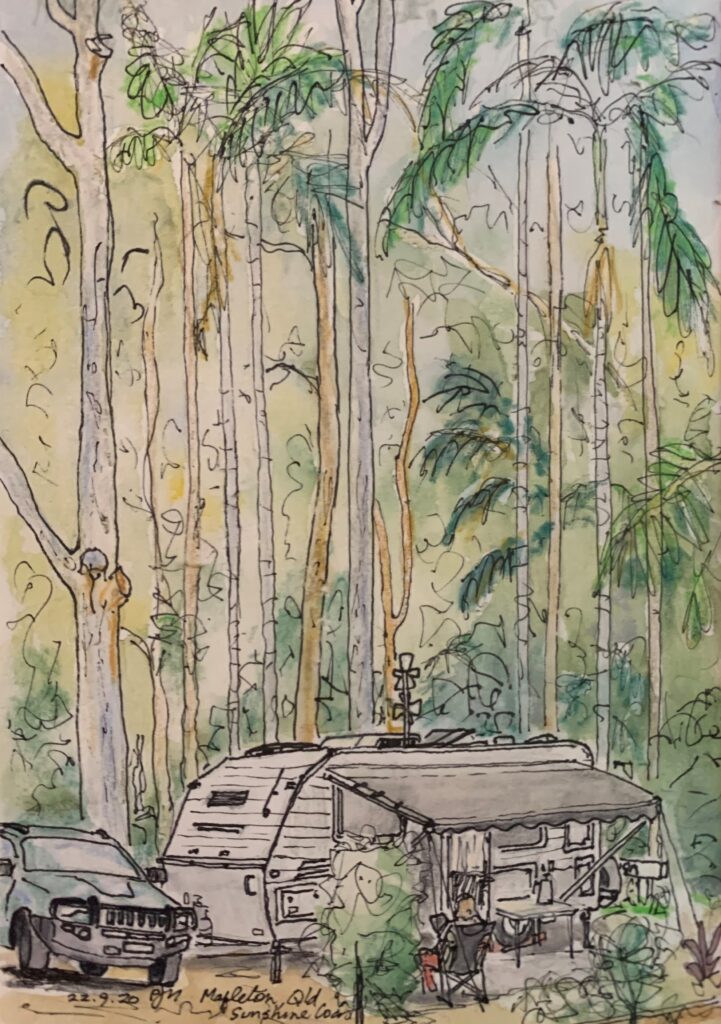
We felt slightly guilty gambolling about in shorts and T-shirts while family, friends and neighbours were doing it tough in Melbourne and Victoria.
And then there was something I would never have expected as a white, elderly, privileged and probably entitled (ew…this coffee has beans which were burned and is too cold!) Australian male (what we used to call the “pale, male and stale” demographic in my corporate days).
We occasionally felt like despised Australian refugees in our own country.
There was the road worker in southern NSW who gave us the finger and shouted obscenities about going back where we came from; the man in a NSW service station who stood toe to toe shrieking at me that we had no right being there and letting me know he had photographed our number plates and was alerting police; the frequent embarrassed pauses when we dutifully filled in cafe and shop coronavirus tracing forms while staff stepped back, cleared their throats and said: “Oh…that’s…a Victorian postcode!”.
One major chain caravan park where we had pre-booked sent a message saying we were no longer welcome (not in words that blunt, but I can read between the lines).
A TV bulletin we saw early on incorrectly reported Victorians were being ordered home and an angry letter to an editor demanded that Victorians who had poured into NSW just before the border closed (e.g., us!) be rounded up and sent home.
And I was reminded, when arriving in Queensland, of a day back in the 1970s when I crossed the Berlin Wall into East Germany through Checkpoint Charlie.
As we approached the border in stop-start, bumper-to-bumper traffic, our Victorian rego plates were spotted and police ushered us off the highway into what I called “the lane of shame” – a sorry straggle of Victorian vehicles lined up by the freeway.
A burly cop eventually appeared, took our drivers’ licences, looked at us, looked at them, looked at us…and then asked for our Queensland Border Permit. A passport to travel within Australia.
He then examined our documents and receipts proving we had been in NSW and not Victoria for the past month, smiled nicely, and said: “You folk have done the right thing, welcome to Queensland”.
However, having noted all of the above, we were more often welcomed with either sympathy and concern about “poor Victoria” and, quite frequently, with “thank goodness you have brought your tourism dollars here – we are really missing our Victorian visitors”.
Back home now, and pleased to be here, despite some apprehension around the place about the horde of Melburnians descending on us.
Knowing how we were made to feel in our own country up north, we are making them feel welcome.
As long as they mask up, socially distance and use sanitiser.
Above, Sunshine Coast hinterland
Words & image: Peter Young
Listen to the Country Life podcast
November 23rd, 2020Ray Spencer – Creswick’s own forestry pioneer
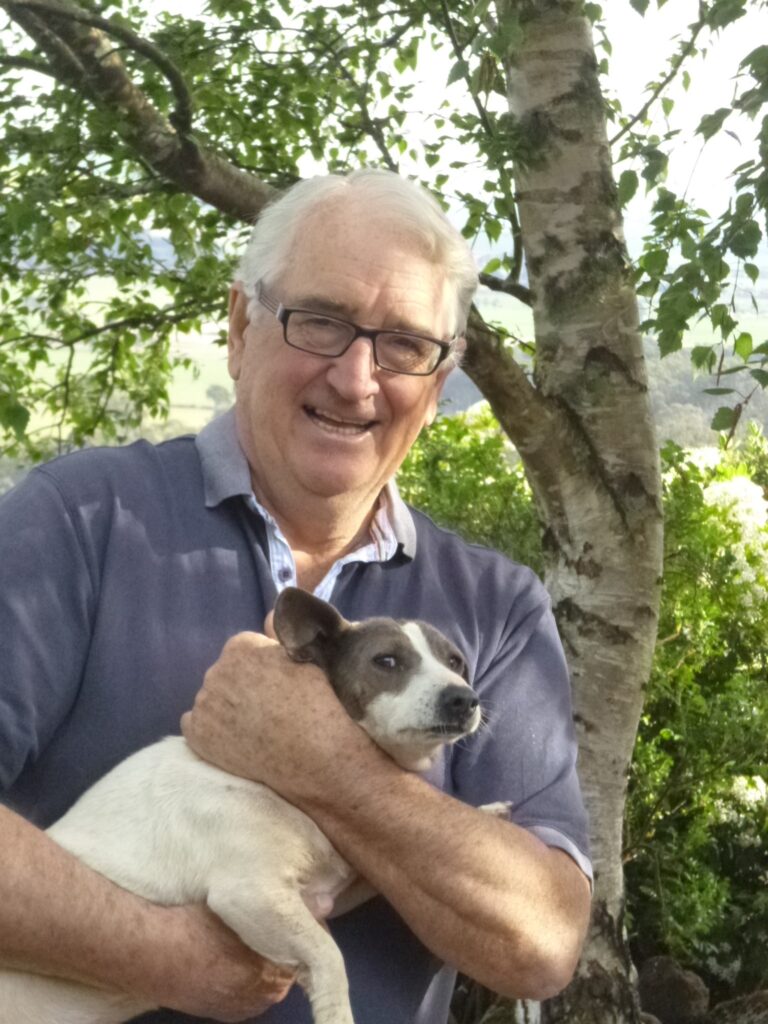
He is a highly regarded forestry academic, has created policies that still guide Victoria’s land management frameworks today and has taught hundreds of Australia’s professional foresters.
Often, when driving through the region he reminisces about the local forests of years gone by and gets concerned with the current state of our forests. But that’s a story for another day.
Ray’s work history is as extensive as it is impressive but behind these achievements is a husband and father of three sons whose greatest honour was the opportunities he was afforded as a young forestry student at the then Victorian School of Forestry in Creswick.
Creswick owes much of its beautiful forested setting to the early pioneering foresters. In 1872 close to 6000 hectares of land was reserved for Ballarat and Creswick State Forests by the legendary John La Gerche who became Victoria’s first forester.
Fast forward 81 years and a young man born in Ararat with a curious mind and a love for the natural environment started at the Victorian School of Forestry in Creswick.
“I was always interested in agricultural science and also thought about becoming a commercial artist. But I was lucky to be accepted into the forestry school given it was extremely competitive – only 12 intakes each year,” he said.
“The first year was very science- and academic-based and in the second and third years there was a lot of practical work. We wore our green forestry school blazers with pride. We had our own football team and because of the school I was able to meet my wife,” he said.
It turns out that Ray had arranged for a group of students to attend Ballarat to give blood and a young medical scientist from Newlyn was on duty. A few weeks later they attended a ball (Barbara can still recall the aqua organza dress she wore) and the following day Barbara attended her first footy match to watch Ray.
It wasn’t long after they married that their life became one of regularly relocating for forestry postings to places many of their friends had never heard of.
Because of Ray’s excellent results at the forestry school, (Dux 2nd and 3rd years) doors started to open.
Ray’s ability to make things happen had him earmarked for promotion. He worked for the Forests Commission Victoria as an inventory and remote sensing specialist before a senior planning role with the fledgling Westernport Bay Environmental Study and then assistant director with the Town and Country Planning Board.
Ray said the experience he gained outside forestry taught him how to navigate the political nature of authorities and competing interests which he later applied as a Principal Research Scientist working on National Forest Policy in Canberra.
He was instrumental in developing the concepts and methods of supplementary aerial photography in light aircraft for monitoring and mapping forest changes including fires. Ray continues to be internationally recognised for his work in this area.
Ray completed his Honours Degree at Melbourne University in 1967 where the top students from Creswick were sent. A Masters degree followed, then a Masters in Regional and Urban Planning in England and in 1997 he was awarded a rare Doctor of Forest Science. In 1980 Ray became a senior lecturer at The University of Melbourne.
“At that time there were only two nationally-accredited forestry schools. The program highlighted the important roles of science and judgment in natural resources management. Those who choose a path in forestry are true environmentalists, despite rhetoric to the contrary.”
While his career path has seen him work and study in Europe, the United States and Canada and he has spent the best part of 30 years travelling the world as a forestry expert, Ray and Barbara have always called the Central Highlands home.
“I’m so proud of what I did over the years and I couldn’t have done any of it without Barbara by my side.”
With a career rich in opportunities and recognition, many would describe Ray as a true local living treasure.
And a little extra…Ray’s youngest son Lachlan followed in his father’s footsteps inspired by the work of his father and a love for the environment and people. Lachlan has a passion for forestry and has forged his own reputation as a senior leader in Australia’s forestry and forest product sector.
Above, Ray with pooch, Bam
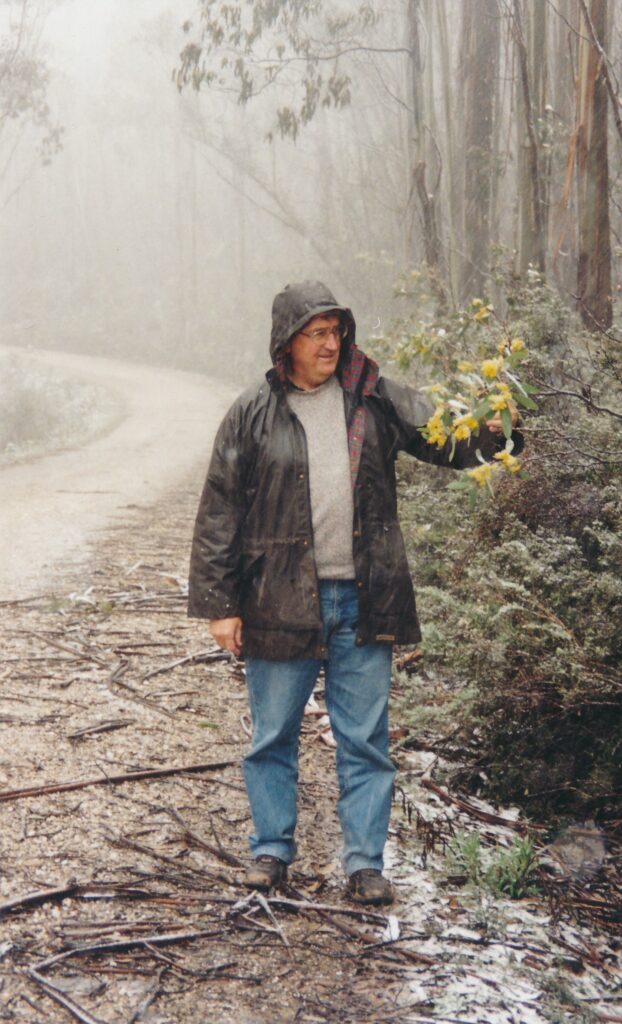
Below, Ray in the Australian bush in the 1990s
Images: Contributed
Words: Narelle Groenhout
November 23rd, 2020Home grown and hand made at Trentham
Like other growers around the area they frequented the local farmers markets to sell their produce including Lancefield, Woodend and Malmsbury. Come 2020 everyone knows what happened. The pandemic took hold and public gatherings such as markets were one of the first areas of the regional economy to be restricted and shut down.
“When COVID-19 started to look really concerning and serious back in March,” recalls Irene, “none of us knew what an earth it was going to be all about and where that journey was going to go.
“The word around was older people were more vulnerable and my husband and I are both in our 60s. I said to him I just wasn’t comfortable going anymore, so we basically stopped all farmers market activity at that point.”
But they realised, as the weeks of shutdown turned into months, that just because the markets had been closed, that didn’t mean the garden would stop producing.
They pondered on what they might be able to do to get the produce they had to customers. Then they had the idea to reopen their business at their farm under the name of Home Grown & Hand Made. They returned to trading in November and the results have been very encouraging. Love it or hate it, Irene is the first to acknowledge that Facebook has been instrumental in helping the Brooks set up anew.
“I was a person who avoided any involvement with Facebook since its inception but I realised that I would probably find it most useful for the transition and getting the word out to potential customers. So I enrolled for Facebook and have been training myself to use it as a way of letting people know.”
At Home Grown & Hand Made the ethos of the property is: If we don’t grow it, make it, or create it here then we don’t sell it. The range of produce available unfolds with the seasons and currently some of the food they offer is asparagus, rhubarb, apples, cherries, blueberries and raspberries.
They also grow saffron and have fresh cut flowers when available including peonies, liliums and David Austin roses. Next they have a range of what Irene describes as pantry items and shelf staples all ready for Christmas. These include roasted cherry jam with brandy, lemon and lime marmalade and tomato and saffron relish.
“There are a lot of new people coming to us, many from the local community and even from Melbourne and overall feedback has been excellent. It has been great to re-engage with stall trading after a six-month layoff. But I think selling from home is definitely the way forward for us.”
Restrictions are now easing and farmers markets are coming back again. Many traders will return to their old ways of doing business, but not the Brooks. At their farm everything is on hand, if they need something they can go get it. They will not miss the demands of market days; the travel, the early starts and all the arrangements that have to be in place the day before.
Still, that does not mean there is less work to do.
“Maintaining productive gardens takes lots of maintenance,” says Irene, “pruning, plantings, general weeding, mulching, feeding and all those things. But I truly love doing it and it is a major creative outlet. Others may play an instrument or do art, but this is how I express my creativity.”
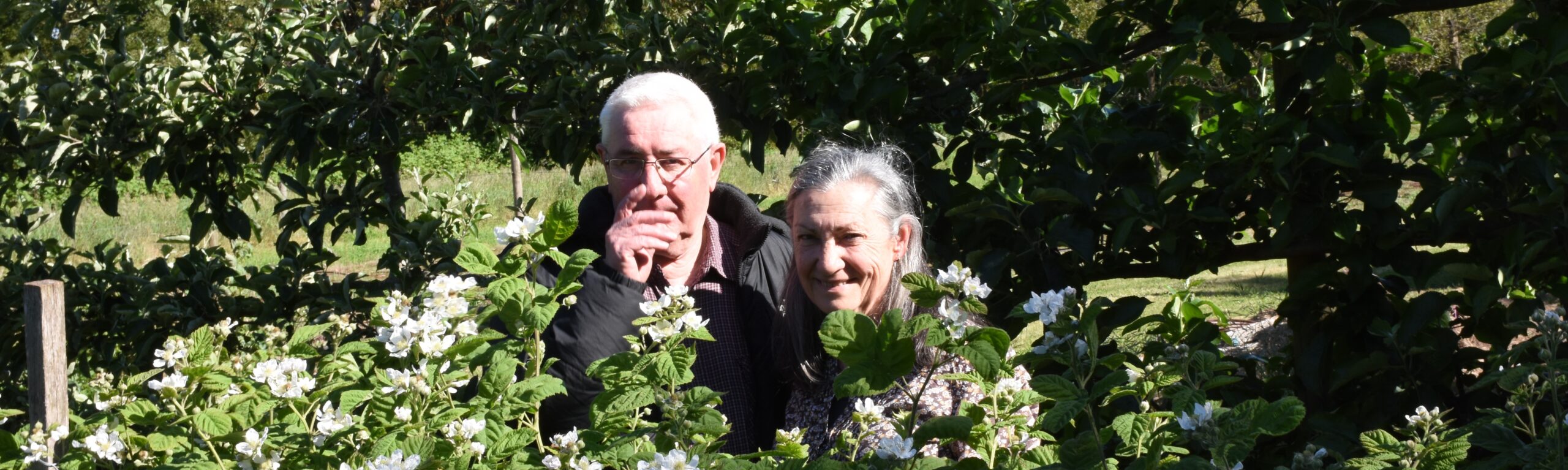
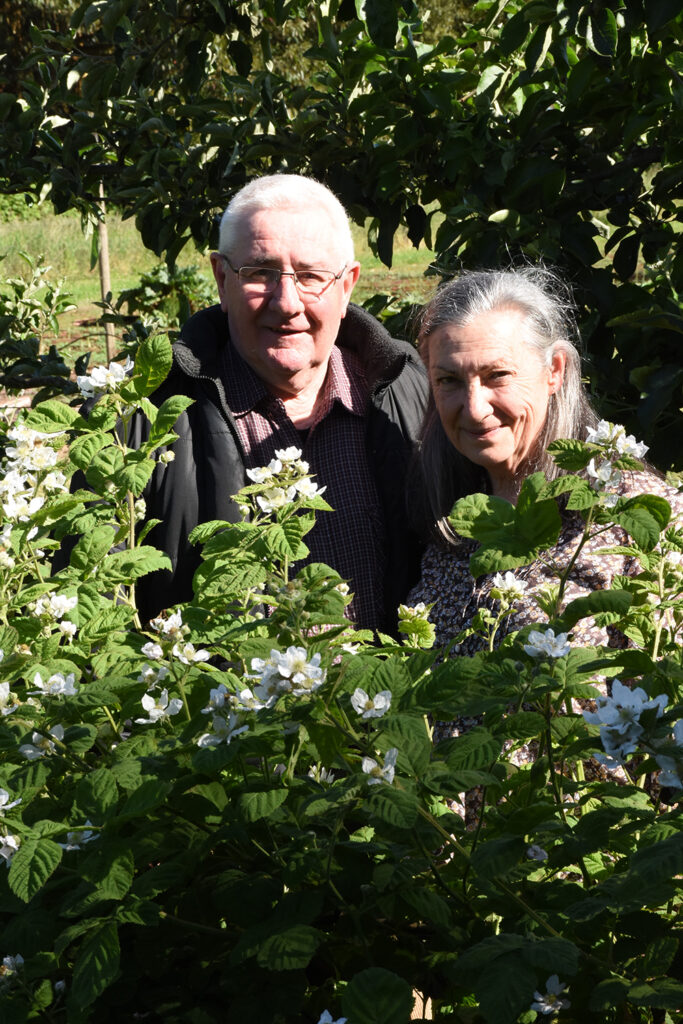
Words: Tony Sawrey | Image: Kyle Barnes
Listen to the Country Life podcast