


November 23rd, 2020An Aussie in America

One day I was walking in North Melbourne, near the Queen Vic Market, when I noticed a gun shop. Now, in the town where I grew up, in northern California, there was a bottle shop – what we call a liquor store – in which, when I was a young man, we could buy beer, wine, spirits, and handguns and ammunition.

Also, my grandfather kept rifles and shotguns in a rack, hanging on a wall, in his home. No locks, no restraints. Plus, my father kept a .45-calibre pistol and a few boxes of ammo in a drawer in his bedroom, under a stack of T-shirts. He’d brought the gun home with him from the Korean War.
Us kids could use these guns, but we’d been taught to ask permission before we took them out target shooting.
I later became friends with a guy who was a Vietnam War veteran who had an M-16 automatic rifle like the one he’d carried in the Army, and we used to go out and shoot it.
I also had a friend, a guy I’d grown up with, who was a fan of the Dirty Harry movies; such a big fan, he bought himself a .44 magnum revolver just like the one Harry used (“The most powerful handgun in the world, and would blow your head clean off.”), and we shot that too.
Yes, I am comfortable being around guns. So when I saw this gun shop in downtown Melbourne, I was curious and decided to go inside.
The shop door was locked, however. I had to press a button so someone inside could buzz me in. Once inside, I saw rifles and shotguns displayed in securely locked racks along the walls.
I asked if I could look at an Italian-made Benelli shotgun, which had a beautiful hardwood stock and grip and lovely engraved receiver – easily a $4000 gun.

The sales clerk asked to see my gun owner licence. I don’t have one, I told him. Well then, he replied, you can’t touch the guns.
I was surprised, but not upset. I lived in St Kilda, worked at The Age in the heart of Melbourne, and had no use for a gun. I admired them for their craftsmanship, but had no need to own one.
Several years later, now a resident and owner of some Wombat Forest property, near Daylesford, I decided I might like to own a gun, and began the process of obtaining a licence. Bear in mind, this is to own a “long-arm”, not a handgun.
First, I had to demonstrate a need for owning a gun. I could claim that as a land owner I wanted to shoot varmints, aka rabbits. We didn’t have a rabbit problem, so my next route was to join a shooters’ club. I did this by subscribing to a club magazine; later, I thought, I might apply to join the shooting club at the Glenlyon Recration Reserve.
Next, I attended a firearms safety course in Ballarat, which included a thorough briefing by a law enforcement officer, who described how extraordinarily thorough and careful gun owners in Victoria need to be when it comes to storing their firearms and ammunition.
Finally, I had to supply two pieces of identification, and a reference from “an acceptable referee who has known you for at least 12 months and is not related to you by either birth or marriage”.
For my referee I used our friendly local dentist, who also owned a winery in Glenlyon.
I sent everything to the authorities and some weeks later received a letter in the mail, which politely explained that I had neglected to have one of my documents initialled by my referee, and if I would rectify this shortcoming, I could receive my licence. At this point, after all the hassles, I decided I didn’t want to buy a gun. I let the application lapse.
OK, here’s the point. In the US, the National Rifle Association claims to have 5 million members and bills itself as “proud defenders of history’s patriots and diligent protectors of the Second Amendment”.
The US Constitution has had 27 amendments, including the first 10, known collectively as the Bill of Rights.
The First Amendment deals with freedom of religion, freedom of speech, freedom of the press, freedom of assembly and the right to petition the government.
The Sixth Amendment protects the right to a speedy public trial by jury, and the right to be represented by a lawyer.
These are some fine and important pieces of the American way of life.
And yet for many Americans, the only amendment of consequence is the second, which says: A well regulated Militia, being necessary to the security of a free State, the right of the people to keep and bear Arms, shall not be infringed.
Over the years, the NRA has convinced its many millions of members and supporters that this right to “keep and bear arms” is absolute. Whenever there is a mass shooting, and some people question the need for unregulated access to weapons of war, politicians refuse to act for fear of angering NRA supporters.
The NRA has also convinced its members and supporters that the Democratic Party wants to impose harsh gun control laws, and take their guns. This might be an excellent idea but no American politician has ever advanced such a policy.
I’ve been asked several times by Australian friends, how did Trump manage to win so many votes? Well, for many millions of Americans, nothing Trump says or does has any impact; all that matters is their belief that he won’t come for their guns.
Bloody hell. And they say Aussies are a weird mob.
Words: Jeff Glorfeld
(Jeff, a former editor at The Age and writer for The Local, lived in Wheatsheaf for a long time with his wife Carol before moving back to America.)


November 23rd, 2020Woodend Warblers back to full rehearsals

Andrew had a lot of experience with choral singing and had been a member of the Men in Suits choir for many years where he also served as assistant musical director. So he decided to get in touch with Tricia Hartshorn, the person who put up the post.
It turned out Tricia and her friends had been out for a fairly big night and they all talked about how they would like to have a get-together and start having a sing. So she posted it up to Facebook when she got home but totally forgot about it.
She woke up the next morning to a raft of comments from people keen to join in.
“I put my hand up to coordinate,” says Andrew, “and talked with Tricia about what I thought we could do. She said: ‘I thought we could get together for a bit of a group sing-along, nothing too serious and we definitely wouldn’t want to perform.’ I said: ‘Don’t make any firm decisions on any of that and we will see how we go’.”
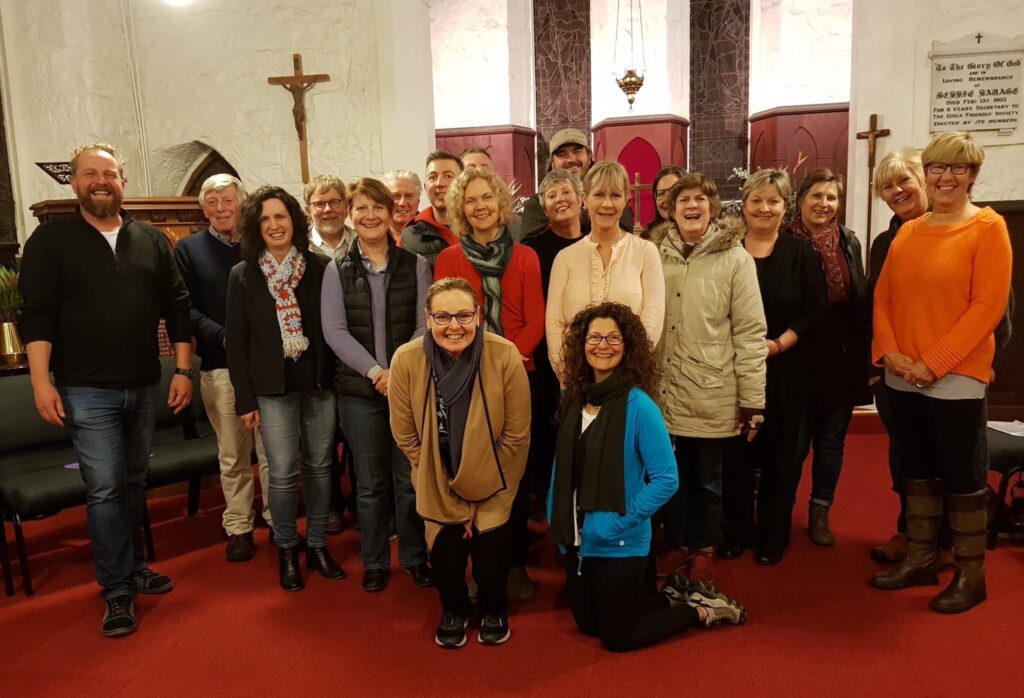
Today the group is known as The Woodend Warblers. They are a community choir with no audition required and everybody welcome. Their first rehearsal attracted about 20 people and by the beginning of this year they were getting up to 40 people coming along. At this time last year they were at their busiest preparing for a number of Christmas engagements around the town including about four or five different carol services and singing in the streets during Thursday late night shopping.
“Obviously COVID had a massive impact on that. After singing in person became impossible mid-March we continued meeting via Zoom for four or five months,” Andrew said.
“Numbers did dwindle since it was a very different experience on Zoom. You don’t get to hear each other and in spite of our best efforts a few months ago we decided to put a pause on the Zoom singing until we were able to get back together face-to-face.”
In the past four weeks, with the loosening of restrictions, they have been meeting up again in small groups outdoors. Right now that is set at 10 singers plus a leader. But as of November 23 group gatherings limits will increase to 50.
For the Warblers, this will mean the entire choir can come together again and they will be returning to a full rehearsal on November 25 – all socially distanced with hand sanitiser and other precautions. One of the members of the choir has even made special masks that have more room in them so that everyone can move their mouths and breathe easier while singing.
“We are planning to meet that Wednesday evening at the old Black Forest timber mill on Black Forest Drive because they have a large open covered area. The owners are keen to support community activities and we are massively grateful to them for making the space available to us.”
The Woodend Warblers began as an informal group singalong. Today they can again come together in four-part harmony, perform whenever they can and have a great time doing it.
“I’m overjoyed with the way the choir has progressed,” says Andrew, “and what it does, the purpose it serves for a lot of the members of the group is as an important social hub and creative outlet as well.”
Above, from left, Andrew Price, Arthur Hayes, Kelly Clune, Henry Roberts, Alex Murfett, Mike Moore, Andy Scicluna, Katie Street (front row), Rebecca Franke (middle row), Grant Thomas (behind Rebecca), Sandra Turnbull, Ray Tadd, Cleo Moore (front row), Kerry Backhouse (middle row), Brenda Secker, Marina Herriman, Liz Higgs, Janice Koop, Keran Barrett and Tricia Hartshorn (aka Dame Violet Crumble)
Words: Tony Sawrey | Image: Supplied
Listen to the Country Life podcast
November 23rd, 2020Council to provide for the needs of community

Cr Bray is also one of the founders of the grass-roots movement Community Voice which she said aimed to shift the process of local government in Hepburn Shire towards participatory democracy by encouraging continual community participation.
“I’ve always been active in the community because it gives twice; it adds value to the community but it’s also really rewarding for me personally. People have seen me stand up for the community and wanted me to advocate for them.
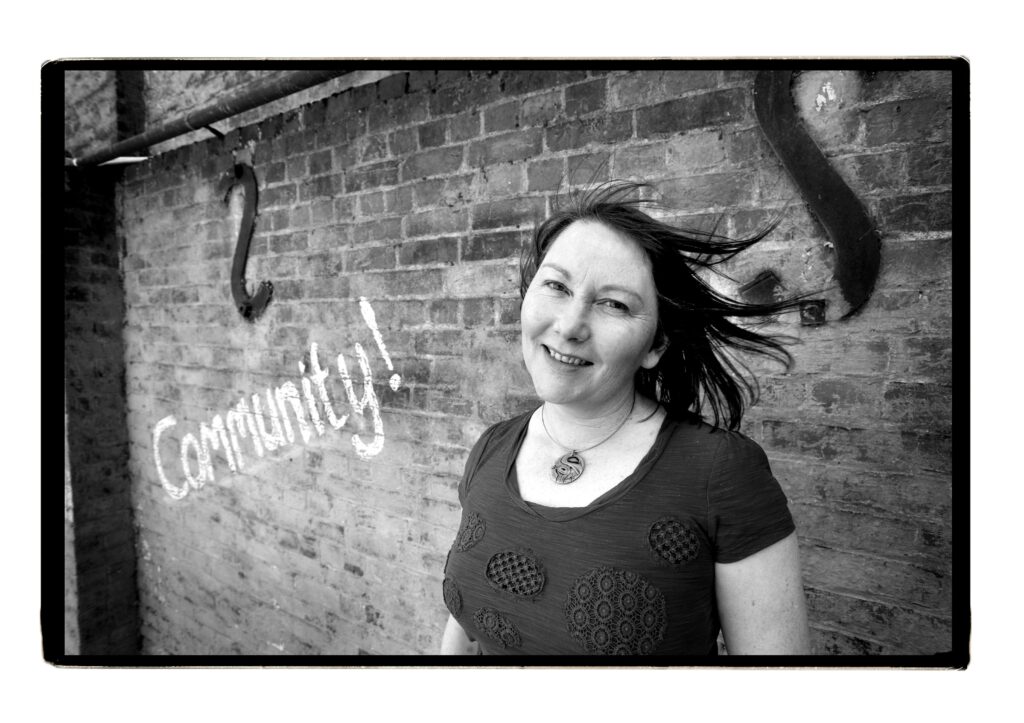
“My background is in performing arts, event management, running festivals and community events and teaching. I’ve worked at the Victorian College of the Arts and NICA (National Institute of Circus Arts). I grew up in the country, moved to the city to study and work, but came back to the country to raise a family. I’ve lived in Hepburn Shire for 20 years.
“I wanted to become a councillor because I wanted to change the dynamic between council and community. I see it as a collaboration. Council are there to provide for the needs of the community. The community can offer expertise and insights into making things work. Rather than it being an ‘us and them’ situation, I’m hoping we can change that to ‘we’.
“My number one goal is to find a way for council and community to work collaboratively on decision making. This is actually something that will be mandated by the new Local Government Act 2020. It may seem like participatory democracy is a grass-roots buzzword but in fact it’s already written into the new legislation. It’s something council is required to implement. It’s exciting to be part of this process.
“Given that I want to listen to the community, my key goals will stem from what the community expresses. I’m also passionate about a rethink of our tips and how we can do waste management better: salvaging, recycling, organics. I want to keep on track with Hepburn Shire Council’s goal to reach net zero emissions by 2030.”
Cr Bray reflects on how the Hepburn Shire can move forward after the challenges of COVID-19.
“I want to ensure that a social housing policy is put into place as soon as possible. We need to support the most vulnerable members of our community. I want to make sure that stays on the agenda.
“Council needs to reach out to those who that have been hardest hit by COVID-19; mental health and domestic violence have been exacerbated throughout the lockdowns. Council can play a role in linking people to relevant services. We need to support local and that includes business, agriculture, and the arts.
“We’re in a challenging time. But I have a lot of faith in the strength and creativity of this community. By harnessing that energy and working together I believe our shire will really grow and thrive.”
With six of the seven councillors recently elected to the Hepburn Shire being new to the game, a sense of optimism and hope exists for more positive interactions between community and council. This weekly series by Sandy Scheltema will explore the new councillors’ hopes and wishes for the shire.
November 23rd, 2020A bell helps give new life to a Blackwood

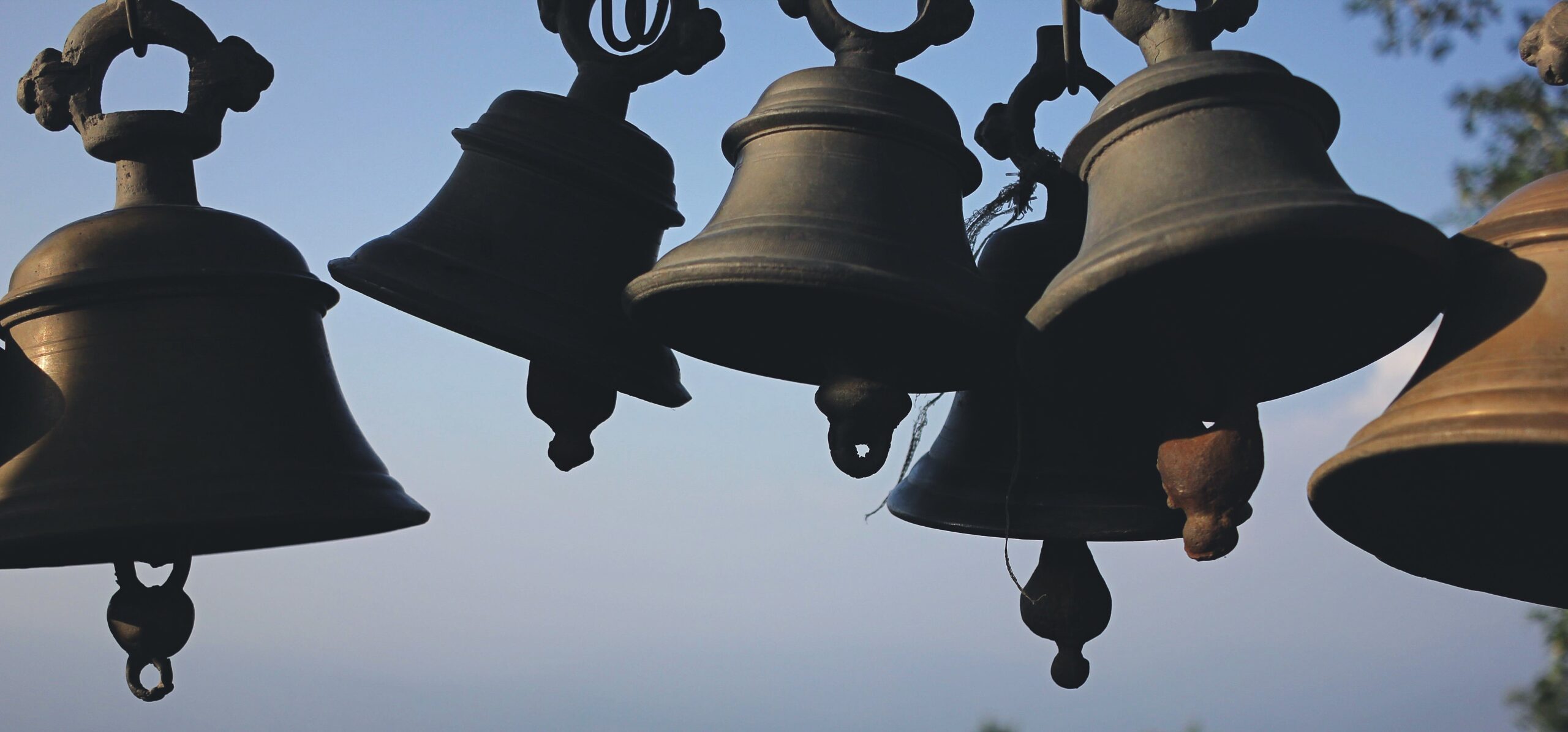
A bell found in the 130-year-old Uniting Church is from the same foundry that made London’s Big Ben. Dated 1854, the Blackwood bell has been silent for about 30 years. It carries the name of J.Warner & Sons, a firm that made over 2200 bells over its 135-year history until 1921.
There is unlikely to be any written history of these bells, however, for all records were destroyed by German bombing of London during the World War II.
Two people who can scarcely contain their delight at the discovery are working on the restoration of the church, which will also become a community centre.
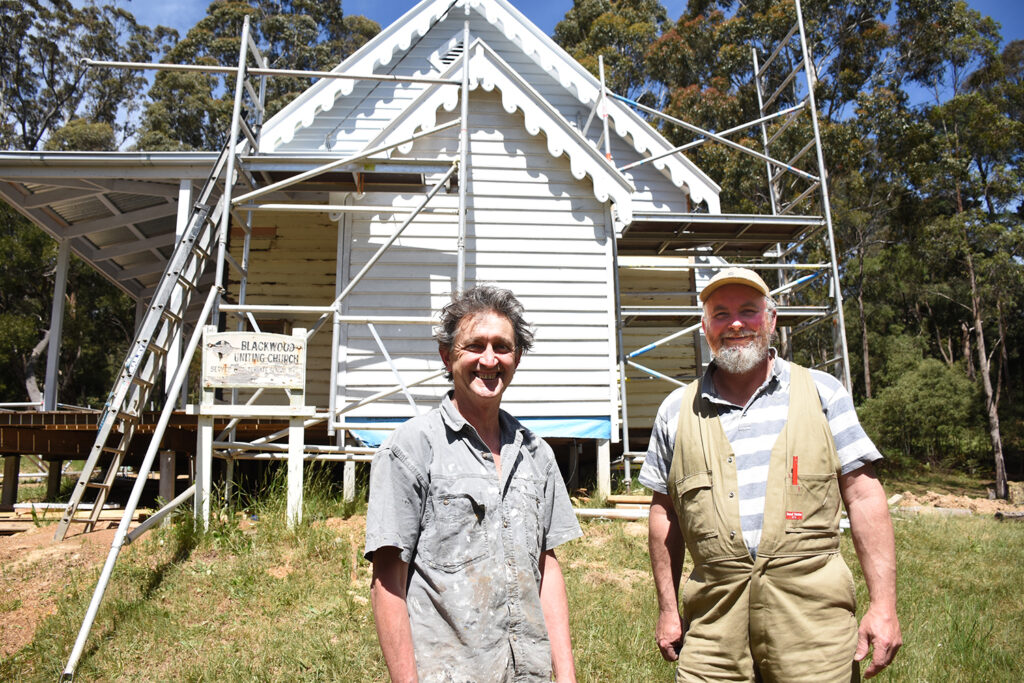
Restorer and acclaimed bluegrass musician Nick Dear and his offsider-cum-painter Brendan Hehir both remember their children ringing the bell at Sunday School about 30 years ago.
But it remained hidden until 63-year-old Brendan crawled up and filmed it with his phone. There’s no trapdoor so a hole was cut in the roof. “By the time I got down the ladder Nick had found that Warner’s foundry had started in 1790 and forged Big Ben.”
The bell sits in a recess in the roof cavity and Nick reckons it has remained unseen over the 130 years. “We knew it was up there because a sash cord hung down, but it broke about 30 years ago.”
He began restoration work three years ago. “It’s become like the Sydney Opera House,” he says of progress, speculating that it could be finished by Christmas.
The former Methodist Church had to be restumped. The tea room, which had been added, was “on its way down the hill”, so it’s given way to a tiled bathroom, including access for people with a disability.
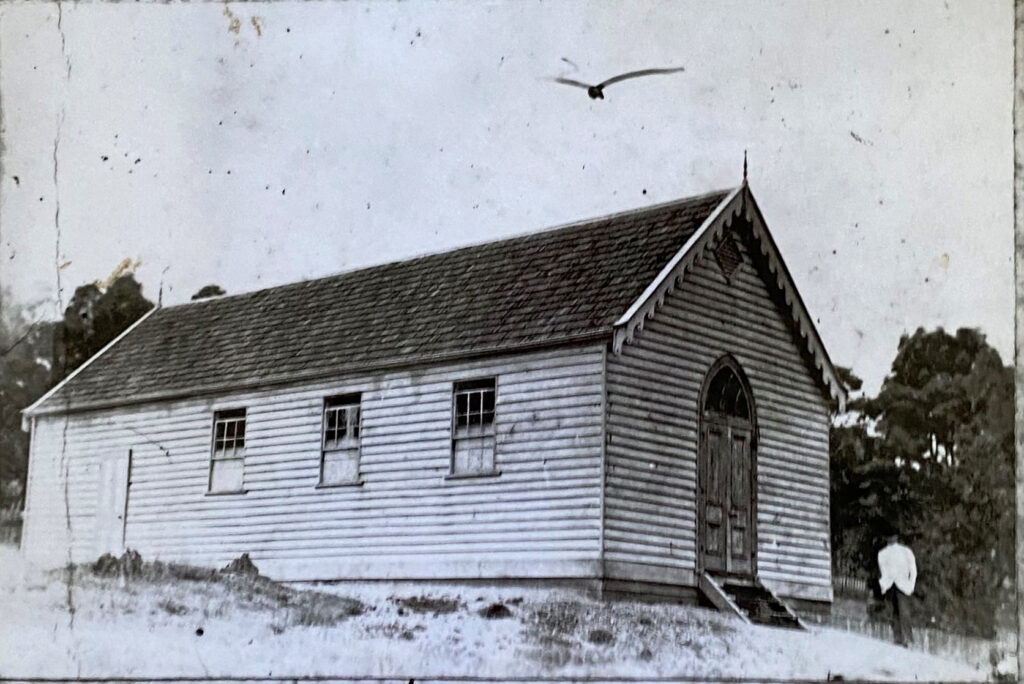
There’s double-glazing on windows that also cunningly tilt open to allow air flow.
Nick is making what look like remarkable doors, their panels from ancient submerged Tasmanian timber. The finished product will be of Tasmanian oak and Victorian ash.
The architraves have been made in Victorian style with two detailed panels, jokingly called frilly knickers.
Nick refashioned a couple of bed-ends for the finials, the decorative top-knobs.
There’s an eye on quality, he says, mentioning the new floorboards of Baltic pine, 100mm boards instead of the usual 140mm, and found at a company in Werribee.
Nick milled the joists and verandah timber.
He won’t disclose the cost (the budget is “slim”) but says the church is paying, with some help from Moorabool Shire.
When it’s finished the church will sit on a town square, which will run down to the nearby pub. There are plans for a rotunda for big shows and the square will be home to markets, fetes, art shows and music. When I mention this in the pub later, the delight is almost overwhelming.
For a town of 350-360, which doubles at weekends, this is shaping up like a real community hub, with talk of weddings at the church, which was first renovated by a working bee. The Uniting Church apparently used money from the sale of other disused churches to pay for some of the restoration.
Blackwood has something of a reputation as a home for a remarkable number of talented musicians, so Nick is clearly looking forward to some gigs. He tells of “shape note” singing, an old English style for those who can’t read music or even sing.
The conductor stands in the middle of the singers who are grouped in ranges. “It’s easy to follow, with shapes on the page instead of notes. Within minutes, you’re full tilt. You bellow it out. We’ll do it again.”
And for the musically minded, the bell’s note is F Sharp, although as Nick explains, back when it was made, this note was closest to G. And seeing he hasn’t heard the bell ring in 30 years, he’s looking forward to that grand day.
Words: Kevin Childs | Images: Kyle Barnes & contributed

November 16th, 2020Local Lines
The ring of steel placed around the suburbs and city,
We knew why it was there but it is a great pity.
The ignorant others who said it was so shitty,
In stopping big business grow further their kitty.
“Economy’s suffering!” they yelled and they shouted.
“Mask wearing is offensive!” they complained and pouted,
Yelled, “Dictator Dan!” as the rules they all flouted.
They ranted and raved and protested about it.
But it was good to know we had a leader so tough,
Who could lead through the good times as well as the rough,
Who can speak straight with conviction, right off the cuff,
While Michael O’Brien was all huff and puff.
Hotel quarantine had its ups and its downs.
Could have worked but for some irresponsible clowns.
Took it home to their high-rise, spread it everywhere,
Then low-paid staff carried it on into aged care.
Melbourne into lockdown was the only real way
That many more of us would live to see one more day,
And around the whole suburbs, placed the ring of steel,
Protecting country Victoria ’cos the danger was real.
That vast ring of steel will be finally lifted,
When COVID emphasis has sufficiently shifted
To zero coronavirus cases across the whole state.
Then all Melbourne people will be let out of the gate.
- Gordon Nightingale
Gordon Nightingale, an ex-civil engineer, now turns his creativity towards writing. He organises the U3A Writers’ Group in Daylesford and specialises in poetry (several written as songs) and short stories (including several for his grandchildren).
Poems for Local Lines come predominantly from a group of poets. However, other locals who would like a poem considered for publication can contact Bill Wootton – cottlesbreedge@gmail.com

November 16th, 2020Kyle’s Rant
After all, life is a series of lessons. You are born with a few instincts like where your mum’s boob is located and how to get attention, and the rest is learnt. Mannerisms and the way you handle stuff is nature or nurture but the big life lessons come about by practical learning.
Mum always said don’t eat anything bigger than your head but I had to go out and give it a go, in the same way (so I am told) that Adam was told that he can eat freely of all the trees in the garden, except for the tree of the knowledge of good and evil. But he had to give it a red-hot crack and now here we are paying for his produce cravings.
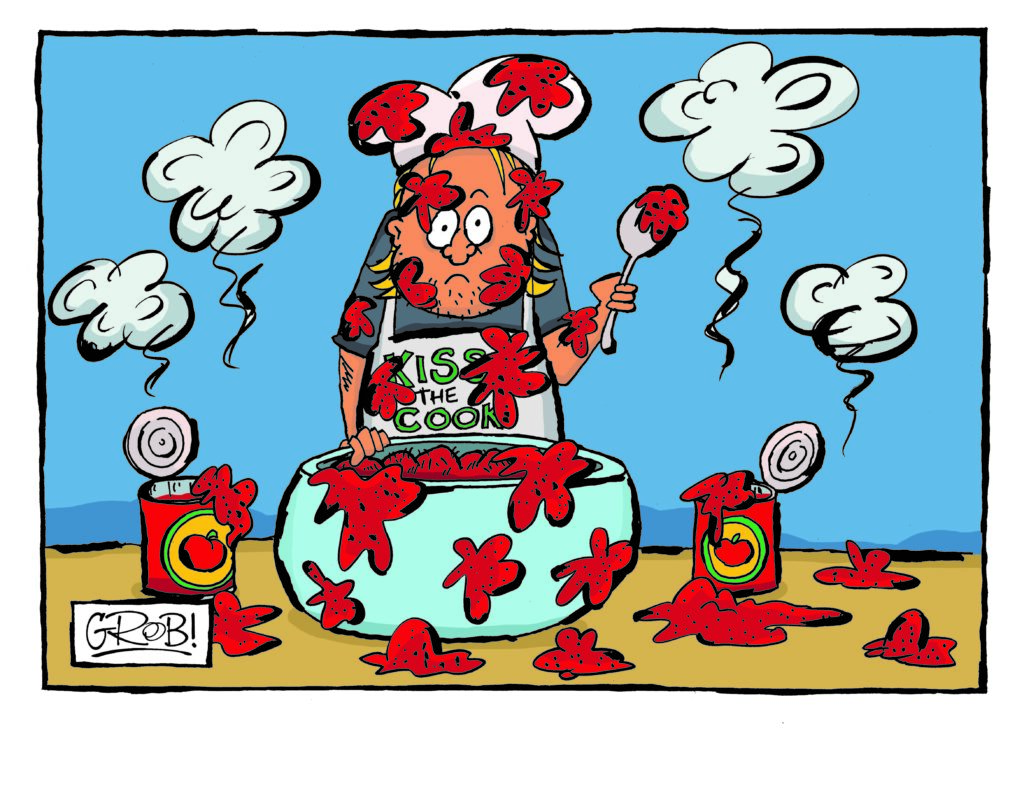
So, what have we learned from the panic buying other than there is little difference in the brands of canned tomatoes and a huge difference in the quality of toilet paper brands? I suggest not much.
And what have we learnt about relationships, hopefully a lot, with family being separated by rings of steel and border closures. I also feel the friends’ cards have been shuffled, with a few not making the grade. The kind of friends that you keep around to stack numbers at the post-pandemic party but are no longer the ones that come half an hour before the party starts so as guests don’t feel they are walking into an empty room and your party sucks big time.
But what have we learnt about patience? Once again I fear it is a fleeting education with things returning to a new normal fairly soon. Business will go on and customers’ expectations will be higher than Keith Richards at an all-you-can-eat hash cookie buffet. And the foodie reviews will once again start rating our good restaurants low stars because the coffee wasn’t served at precisely 100 degrees from a coffee bean that has passed through a marsupial’s bottom – back to first world problems.
I do hope we take something tangible out of this whole débâcle but looking at the drivel on the community Facebook sites, I fear we won’t. The problem is that humans are a unique animal, highly adaptive and highly forgetful. How quickly did we learn to live with lockdown restrictions, supermarket buying restrictions and that awful homemade sourdough bread? It is quite likely we will simply resume head-first into our consumerism society, looking for the next shiny thing to draw our attention away from our interconnected universe.
Dark Rant over… (Ed’s note: I only made that sourdough once…)

November 16th, 2020Just sayin’…
For one, it has probably kept us sane. I don’t know what I would do without work, well this year anyway. An ideal break would include being somewhere warmer than the Central Highlands of Victoria, beach strolls and lots of movie trips. So that was never going to happen.
Instead we kept busy in our office, with our wonderful crew virtually by our side, and kept going. First, we went weekly in March. Fortnightly had been a nice lifestyle pace but with no lifestyle on offer, why bother.
Then the break in the two lockdowns happened right at the start of Winter and so we thought, why not bring out our tourist magazine The Little Local. I mean, why would you stop anyway, people were still reading online and thinking about their next holiday – better to stay front of mind than not produce anything. That was our reasoning, each to their own.
Then as the regional Victoria lockdown ended and we could see Melbourne one day making a break for it, we produced our biggest ever real estate magazine, House.Land.Home.Premium – making the October 26 edition of The Local our biggest ever as well – during a pandemic. Who knew?
Oh, in between all that, we launched our new website – uninspiringly named www.tlnews.com.au – but we did want people to be able to find it. It’s got all the up-to-date stories, opinion pieces, dine reviews, real estate and, maybe best of all, anyone can upload sports results, club news, fundraisers…jump on to have a look. Maybe join up as a member or an advertiser. There are already tonnes of business listings!

And while you are there, check out our latest venture – a podcast. Yes, just when you think we would take a little break, we decided to add another string and start podcasting. It’s called Country Life and it’s my gig. Each week Kyle and I talk about what’s coming up in The Local and there are also another two or three chats with people we have interviewed. Sometimes my interviews, sometimes our other wonderful journos, always nice and low-key, easy listening.
And easy to find. Head to www.tlnews.com.au, hit Enter or just wait and the landing page will appear anyway, and then it is the fifth tile along that says, helpfully, Country Life Podcast – with a little movie of a country gate and lots of butterflies.
(I love butterflies except when they swarm by the roadside and you hit them with the car and think: “Damn, you only had one day, sorry.”)
Anyway, time to get back to work, it’s almost Summer and The Little Local won’t produce itself. Just sayin’…
November 16th, 2020Horsin’ around in the family
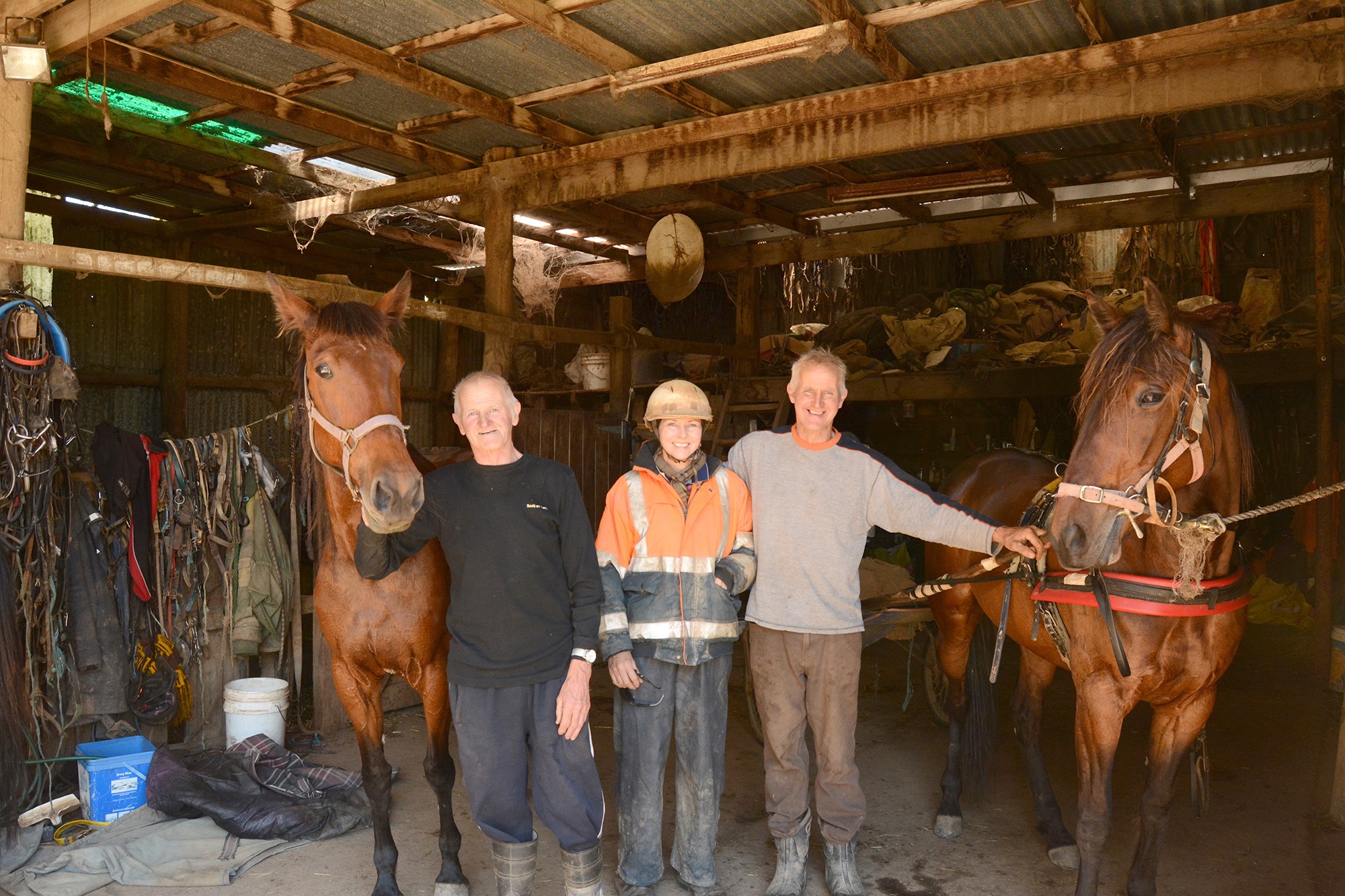
Today Pat continues to live in the same house and their children Anne-Maree, Peter and Glenn have taken over the running of Conroy training stables to continue the equine tradition.
“When Dad died we decided to keep going like how Dad had set up,” says Anne-Maree. “The training stables are in my name but we all share the work including Mum. I do the workbooks, which decide who is the best fit for each horse and what needs to be done. Glenn does most of the shoeing, Peter does most of the swimming, we all do the fast work and jogging out in the bush, and come race day Glenn and myself compete.”
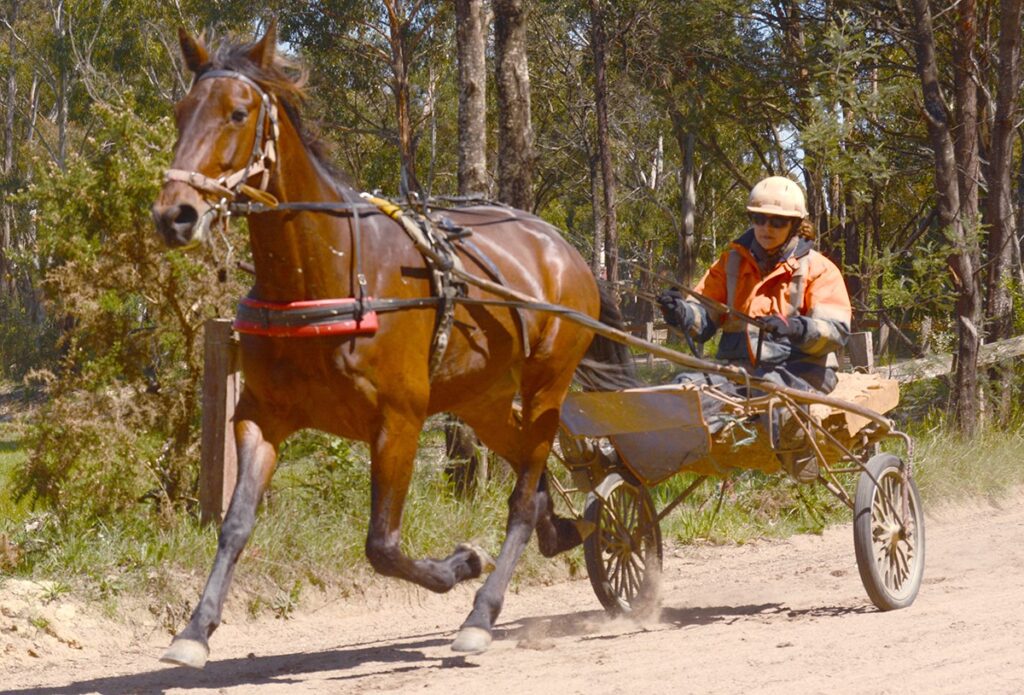
In a sense Bob Conroy was training his kids as much as the horses while they grew up. When the time came to take over the stables they all knew how to do pretty much everything. They are all capable horse people within an intuitive understanding of what each animal needs to do well.
As well as their personal abilities, the harness racing industry also has a lot of oversight. To operate in it and earn a living you have to have licences for training, driving, and working in the stables and at meetings. Finally, there is a matter of reputation which only comes with experience and time.
“We make our living out of training for other people and Dad had a really good reputation in the sport for integrity, which we want to maintain. We have always been known for getting horses going that other people could not and we try to give them the individual care needed to keep them as happy and healthy as we can.”
Currently Anne-Maree has around 15 horses at the stables in varying stages of training. The star of the stable is six-year-old Margaret Ruth that Bob and Pat bred. She was Victorian four-year-old trotting mare of the year in 2018 and won the 2020 Hamilton Trotters Cup with Anne-Maree driving in January. They are hoping with the easing of restrictions the mare will be able to compete again in the big races of the Summer carnival.
It goes without saying that the character of Daylesford has changed immensely since the Conroy training stables were started. Furthermore, the prospect of the surrounding forest turning to national park will impact their training a great deal.
But Anne-Maree, husband and fellow trainer Mick Barby, and her brothers continue to exercise their horses in the bush regardless; just as Bob did. And now there is a new generation of Conroys ready to step in to continue what was started all those years ago.
“Glenn’s daughter Lyndal is interested, she goes to the races and straps for him and may get her trainer’s licence. Our son Lincoln, though he is only 12, also comes to the races when he can and has ideas of maybe being involved in the horses. In fact he is worried that I might get too old by the time he gets to drive. ‘Who’s gunna help me?’ he says.”
Lincoln shouldn’t have any worries about that. Bob was still training and driving right into his 80s. And Anne-Maree, Mick, Glenn and Peter are set to maintain similar lengthy careers in the harness racing industry.
“It’s a lifetime’s occupation,” says Anne-Maree “and we are dedicated to it.”
Pictured: Ruby Roulette held by Peter, Anne-Maree and Glenn with Whirily Rolls
Pictured: Anne-Maree and Whirily Rolls at the old Daylesford trotting track
Words & images: Tony Sawrey

November 16th, 2020Out to Africa: and now helping from here
She is one of thousands who have been plucked from poverty by an agency operating here and in England.
Steve Argent, founder of OrphFund, lives in Campbells Creek and one of his strongest supporters, Peita Herrick, pictured with Fortunate and Scovia, is a Daylesford shop assistant and cleaner.
She dedicates time and money to helping the homeless and the struggling among the 46 million people of Uganda, a nation known for the cruelty of its dictator, Idi Amin, its civil war which has killed tens of thousands and its president since 1986 who refuses to budge.
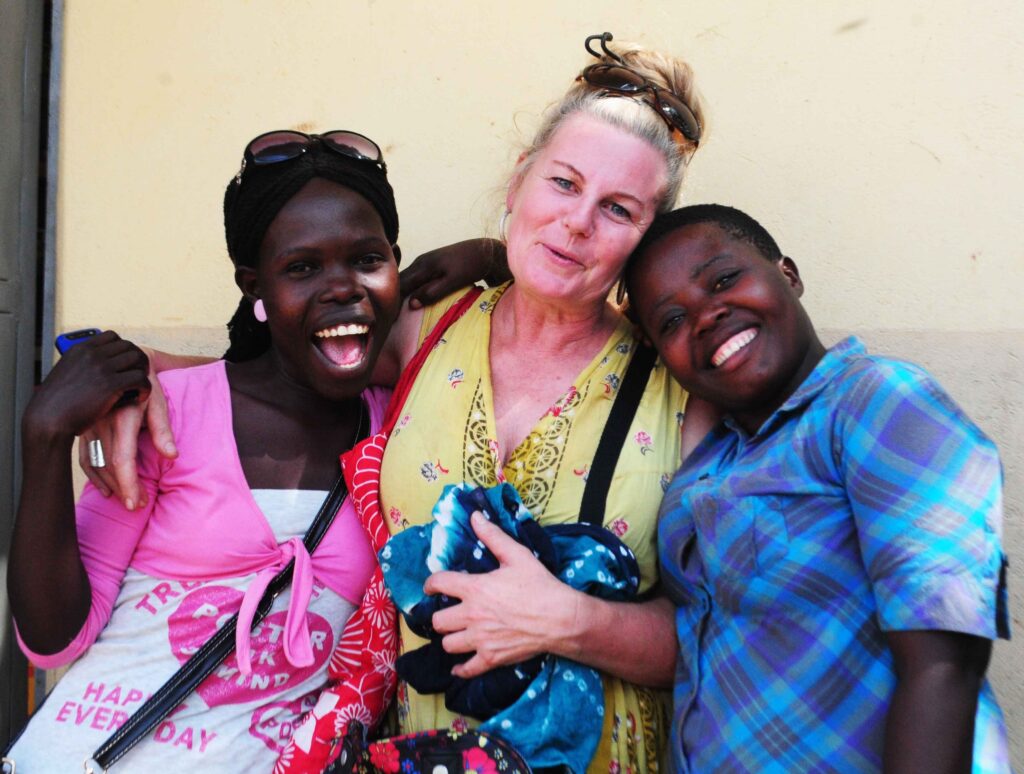
Peita (it means deep, or deep-rooted tree) heard about the 18-year-old through locals and began volunteering in 2015. Two decades earlier she had seen poverty first-hand in India, returning regularly to help some women forced to live on the street to move towards self-sufficiency through “beautiful and creative” sewing and other skills. “I felt,” she says, “like I broke and fell apart and was desperately trying to see what I could do. I’ve always wanted to help people and lift them from being under-privileged.
“If they do something for themselves it’s empowering and they can go further.” Sewing machines and training in tailoring have rescued women.
In Steve, a photographer, she found “a devoted person and major human being” whose organisation, she says ensures that all money raised goes to those in need.
During COVID this means providing food and essentials to Ugandan single mothers and their children. The women pay $11 to $16 so that they will not be evicted from the concrete rooms they call home. And it costs them a further $30 per head for a good staple diet each month.
OrphFund, she says, has helped educate 9500 children, seeing them through university or courses to become hairdressers, welders, carpenters or hospitality workers. Besides Uganda, OrphFund works in Kenya and Sierra Leone.
The help may come in the form of shipping containers of school desks, books, clothing and even a ute. The containers are sometimes converted into little shops.
“We build schools, help kids get medical checks and plant vegie gardens and farms. We’ve provided school lunches for thousands of kids…whoever needs help.
“So many generous people have shown great support.”
Because of COVID and its devastation Peita has been working on a women’s emergency fund where Ugandan women nominated three friends or acquaintances doing it hard, so that more could be done. Another 17 women were found caring for 38 children. Another woman looks after 10 homeless children.
The death rate from COVID remains unknown in Uganda and although shops are now open, there is little money. Peita acknowledges that some Australians, too, have been doing it hard through the pandemic, but because of government and other support, this nation is very lucky. For her the joy and fulfilment through volunteering “is abundant, nourishing and brings happiness and further purpose to my life”.
Three of the original women tailors now make beautiful work such as buntings, shoulder and shopping bags, pencil cases, cushion covers, kids’ skirts and dresses and more, using pure African cotton, which are sold at markets and on websites in Australia to raise money for the children.
“Now,” says Peita, “ I’m looking for as many kind people as I can find to commit to $10 a month for one year to help support these women and children.” And she has a final message: “If there is one thing that the current world situation has showcased to me more than ever, it is that we of privilege, opportunity, access and abundance live a life of fantasy compared to the lives of many in the same world. We have a chance to make a big difference for very, very little.”
Link: www.orphfund.org
Words: Kevin Childs | Image: Contributed

November 16th, 2020Glen, about the house
Tree roots, like those of all plant life, take water from any available source whether it be natural groundwater, accumulated moisture from under your house or driveway, water from a fractured or leaking drain pipe or from your watering system.
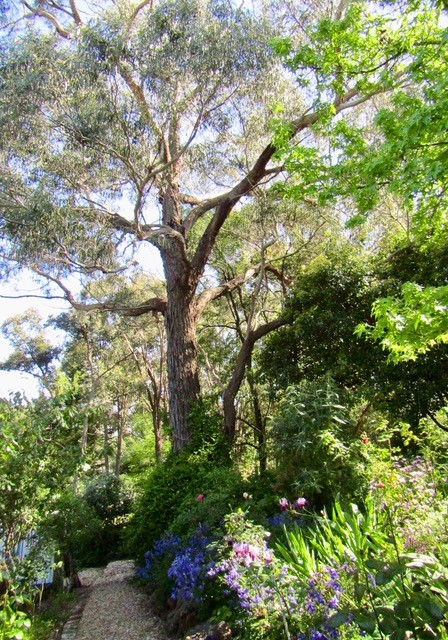
It may be a fallacy that tree roots break into pipes, unless they are cracked or broken earthenware, but they will follow any source of moisture and certainly can make small holes a lot bigger. Once inside a drain or sewer pipe their fine, fibrous feed roots can soon grow to restrict the flow, eventually completely blocking the pipe.
It is not simply a matter of trying to trace the offending tree to have it removed once you have had the offending roots cleared from your blocked drains. There is no guarantee you can positively identify the exact tree or that roots from another nearby tree won’t enter the pipe.
The only sure way to completely overcome the problem is to repair the leaking pipe or, if it is one of the old terracotta systems, have it replaced with a new single-piece PVC one. Then you will at least know that there is little future likelihood of escaping moisture attracting tree roots and inviting any more blockages.
Roots of large trees planted close to house foundations or slabs, especially in areas of clay soil, will siphon large amounts of moisture from the soil under and around the house, causing soil shrinkage and movement, and eventual structural damage. Fortunately areas of sandy loam are significantly less affected by soil movement.
Surface roots can also lift and shift footpaths, driveways – even concrete driveways – and fences. When choosing trees and large shrubs for your garden always consider their ultimate height and, probably more importantly, their spread.
As a general rule most trees have a root spread area similar to the spread of their above ground growth so be sure to plant them sufficiently clear of buildings and other structures so their large supporting roots don’t penetrate beneath the foundations or into the drains.
Avoid planting such trees as willows, poplars, ash and elms and the largest growing eucalypts, unless you have an extra large block and plenty of room for them to spread. They are best left for parks or reserves where they can grow free. No matter how severely you prune and keep any tree or large shrub in check, unless you constrain them in a large container or totally restrict them as a bonsai, almost nothing will keep the roots from doing their thing. In fact they will probably try harder in a bid to encourage top growth.
Holiday or maternity accommodation?
Living, as we do, adjacent to Doctors Gully and virtually surrounded by forest we have done our best to make our garden attractive to the many beautiful local, and transient, native wildlife. As a result, we are continually delighted by the great variety of regular visitors to our bird baths and nectar-bearing shrubs.
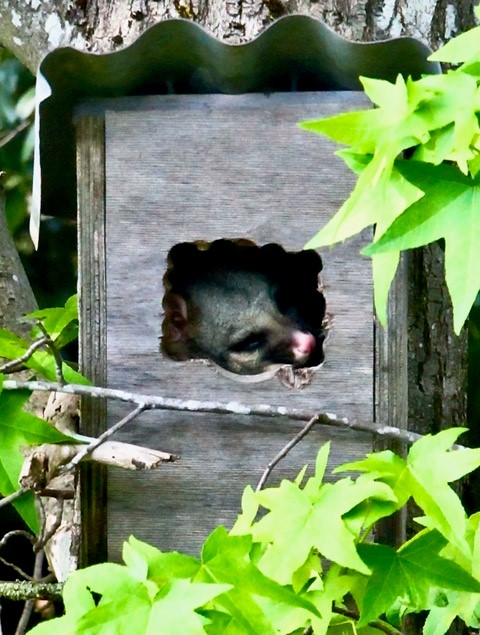
We were particularly delighted this week to discover our long-neglected parrot breeding box has acquired a new resident – a ringtail possum who is now ensconced and enjoying the “room service”. Our neighbours also have resident mother and child ringtails in their oak tree, so we can only hope our visitor is maternal and not just another escapee from the CBD ring of steel.
Got a gardening query? Email glenzgarden@gmail.com
November 16th, 2020An Aussie in America
As with all good festivals, participation in this one is strictly voluntary. Unlike Australians, labouring under the boot-heel of a parliamentary constitutional monarchy and forced to participate in their government, Americans aren’t required to vote, so, of course, a great many of us don’t. It’s on a Tuesday and we’re busy.
Plus, we can’t ignore the fact that no US election has ever offered prospective voters a sausage sizzle at their polling places.
In 1996, in the race between incumbent Democrat president Bill Clinton versus Republican challenger Bob Dole, barely half – about 51 per cent – of eligible voters bothered to cast ballots. In 2016, when voters elected Donald Trump to the presidency, that number rose to almost 60 per cent.
This year’s voter turnout, estimated to be more than 66 per cent, is the highest since 1900, with the Democrat challenger, Joe Biden, receiving more votes than the incumbent, Donald Trump.
It is noteworthy that in 2016, Democrat Hillary Clinton received almost 3 million more votes than her opponent, Trump, and we all know how that turned out.
Now, in countries that claim to adhere to democratic principles and follow the rule of law, the candidate – or the party – that receives the most votes wins, but not in the US.
Here we have something called the Electoral College, which can be explained briefly as a system whereby Americans cast their ballots, which are counted, and then 538 Americans, called electors, choose the president.
It is worth remembering that in the 2000 election, Republican George W. Bush lost the popular vote to Democrat Al Gore by more than 500,000 votes and yet took the presidency via the Electoral College.
This year Biden beat Trump in the popular tally by more than 4 million votes, and yet the outcome – although Biden has widely been acknowledged the winner – remains on a knife edge because of the Electoral College, where states with lower populations carry disproportionate weight, and Republicans furiously demand the votes be recounted in states where the totals were close, in the hope of changing the electoral outcome.
At this stage of the process it is generally accepted that Trump lost the election – cue parties such as the one at the end of Return of the Jedi, before we knew there was going to be Hayden Christensen as Anakin Skywalker or a character named Jar Jar Binks; or the one where the Munchkins celebrate Dorothy Gale of Kansas smushing the Wicked Witch of the East with her house.
Throughout the 2020 election campaign, one thing that was never said, or even considered, was that Trump would accept defeat graciously. Gracious and Donald Trump – this might be the only time these words have appeared together in a sentence.
The Washington Post newspaper has kept a running tally of Trump’s lies during the past four years, saying now that he has made more than 22,000 “false or misleading statements” (apparently “lie” is too harsh a word for The Post’s sensitive readers, but here at The Local we don’t believe in calling a spade a shovel) as president.
A recent edition of the New Yorker magazine discusses some post-presidential options for Trump. The article takes into account that many of his lies concern his wealth and acumen as a businessman, and points out that he is personally on the hook for debts of about $US400 million. Also, many of his businesses have been hard hit by the pandemic, so his cash flow isn’t looking great.
Also, it notes the several court cases coming up in which Trump faces a variety of charges, some of which could attract jail time – it’s suggested one reason he is so desperate to win the election is the convention that a sitting president can’t be prosecuted.
Many of the people interviewed in the New Yorker story say Trump might seek a job in hate media. The magazine floats the idea that a defeated Trump might flee the country; Russia is mentioned.
But here’s a thought. Trump has had a cosy relationship with Australia’s conservative leaders, Australia has some magnificent golf courses, and Rupert Murdoch could use some right-wing media firepower – does anyone ever watch Andrew Bolt’s TV program? How does Aussie Donnie sound?
Words: Jeff Glorfeld
(Jeff, a former editor at The Age and writer for The Local, lived in Wheatsheaf for a long time with his wife Carol before moving back to America.)
November 16th, 20203bears: Just right
Sharing a love of ethically grown food and a belief that there is something primitive and fundamentally satisfying in feeding people, this newly formed family is already making a difference with the eggs and beef they supply to the local community.
Their large flock of Brave Hen chooks, (they even have their own Mel Gibson inspired catchcry…‘You can take our eggs but you’ll never take our freedom,’) and prized cattle have already made their mark on the local area with support from individuals and shops including an established food co-op, Woodend Online Farmers Market, Mt Macedon Trading Post, Tylden General Store, Riddells Creek Bakery, Black Forest Meats and the roadhouse in Carlsruhe.
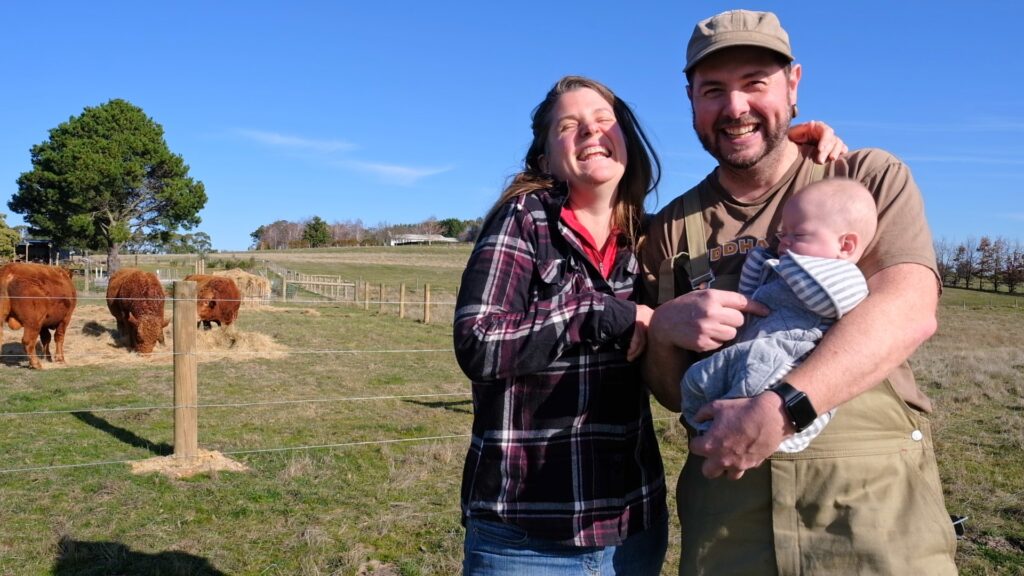
According to Tim, their last round of beef hampers sold out so quickly they needed a second animal.
“We are so incredibly grateful for the community support we have received. People realise our grass-fed beef is premium quality and ethically raised and I think more folk want these assurances around where their food comes from,” he said.
“We love each of our animals and treat them with utmost respect. They also play a key role in regenerating our land, using rotational grazing techniques. We share a passion for ethical food production, native re-vegetation and regenerative agriculture.”
Cliched, but they truly are living their dream.
But five years ago, their lives looked very different to where they are today, sitting under a massive pine tree overlooking a postcard-perfect view with Leela happily taking in the views, animals and country air.
Madeleine’s journey had her stationed in remote parts of northern Australia, changing lives literally by working with remote traditional owners to set up the basics we all take for granted, like power and water. Testament to her belief in giving back and making a huge difference to those in need though, it couldn’t satisfy a hole in her life and Melbourne beckoned her with the chance of love in the big smoke.
For Tim, years as a high-profile PR and marketing consultant in the events industry and one of the organisers of a major music festival was his life. Despite his long-term dream to move to the country, he also knew the odds of finding someone to settle down with were more in his favour in the city.
With a little help from a dating site, five years on and they are now building their ethical and sustainable businesses with a baby in tow.
“We knew we needed to get out of Melbourne and had family and friend connections in Daylesford and Trentham. We both loved the idea of finding a piece of this beautiful country to revegetate and repair,” Tim said.
When they purchased their stunning patch of paradise in September 2018, Madeleine and Tim’s business plan was to slowly develop land into a working farm, showcasing ethical food production, native revegetation and regenerative agriculture.
But while COVID has forced everyone to navigate their own journey, for Tim and Madeleine the premature birth of Leela and their journey to parenthood far outweighed anything they endured during COVID.
“On the same day Tim was at a conference in the city discussing strategies for reducing drug harm at festivals, a colleague at work insisted I see a doctor. I was pregnant and she knew something wasn’t right. I’m not sure why but I collected a few personal belongings from work, including my violin, and my full-time work ended up being a hospital patient until Leela was born,” Madeleine said.
Madeleine’s calm disposition clearly helped her through that time. When she was allowed to leave hospital after Leela was born prematurely and only weighing 806 grams, her steadfast determination saw her expressing milk and visiting Leela daily. One of the greatest challenges during COVID was not being able to see family and friends as a new mum but she learned to embrace the challenges of a baby, a new farm and a new business head-on.
For Tim, the joy of becoming a father at 46 was “overwhelming, as I never thought I’d become a father”. He was attempting to keep it all together to support his girls but his own work was adding even greater pressure.
“Four days after Leela was born, bushfires swept through the music festival I was working on. With Leela in a special care nursery and with the festival’s future uncertain my mental health was really taking a battering. In the end I just had to focus on my family,” he said.
“Leela was discharged from hospital on February 20 this year and then COVID hit. I knew our dream of sustainable farming had to be fast-tracked and I knew I needed to bring in an income so we ordered the mobile chicken caravan and 300 chickens and it all took off from there. COVID motivated us to radically accelerate our plans,” he said.
So, while many of us were forced to slow down over COVID, or simply change the way we work and live, for Tim and Madeleine life has never been so busy or rewarding.
On top of running the farm, they have been working with the North Central Catchment Authority to rejuvenate their creek which runs into the Upper Coliban Reservoir. So far, they have planted more than 2000 mixed-species trees and have seen an increase in birdlife as part of the plan to restore the waterway health and regenerate the creek in preparedness for the area’s predicted population growth.
For now, they both look forward to one day getting farm sitters so they can take a break and the easing of restrictions which will mean they can finally have their parents share in the joy of Leela.
Until then it’s full steam ahead with 3bearsfarm, increasing the number of chickens and cattle and their dream of providing ethical, sustainable and local produce to their local community and beyond.
A little extra…
To throw your support behind this venture, you can become a regular purchaser, spread the word through your networks or become a Hub Host where you volunteer your space for others to pick up their produce. Go to 3bearsfarm.com.au or email your interest at hello@3bearsfarm.com.au
Words: Narelle Groenhout | Images: Supplied

November 16th, 2020Communication, better performance, Trentham
NEWLY elected to Coliban Ward is Brian Hood. Councillor-elect Hood is one of four new councillors who were supported by lobby group Community Voice after agreeing to its charter calling for proper consultation with community.
Regarding Community Voice, councillor-elect Hood said he agreed with its charter which aligned with his values and approach. “CV is a group of active community members and four of the seven councillors agreed to their community charter which calls for proper consultation between community and council before making decisions.
“The only effect it will have on me and how I vote is in ensuring there has been genuine communication with the community. We will all be voting as individuals.
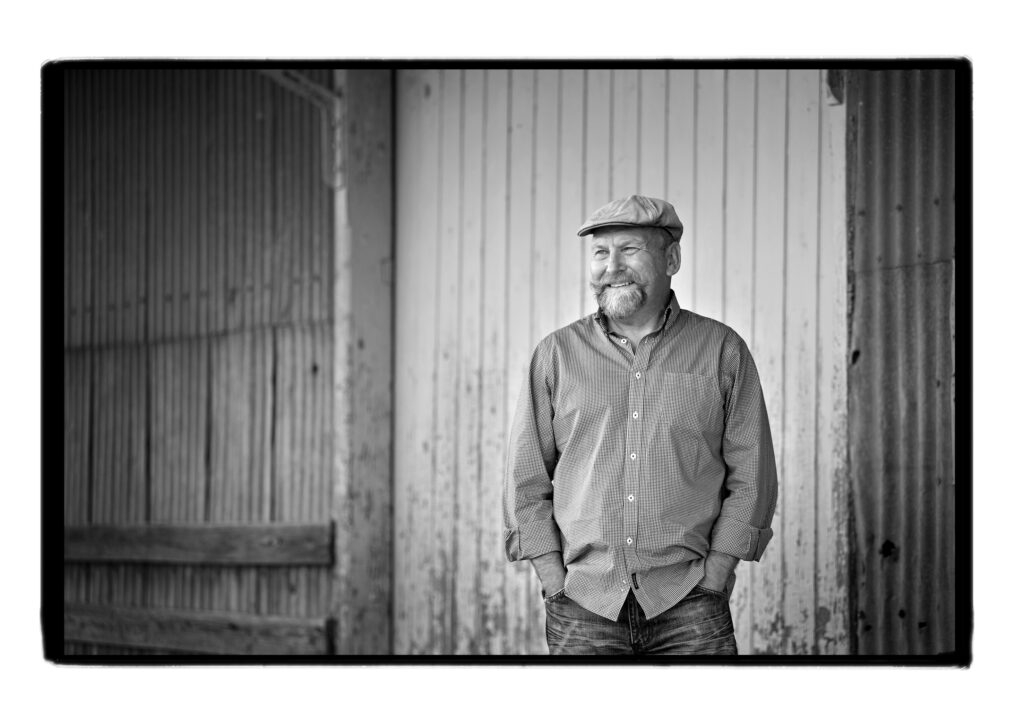
“My aim is to make a contribution to the community, to work for them, to make our area a better place to live and work. Under the Local Government Act my job is to represent the community and that makes it incumbent upon me to listen to people.
“My job is to understand what the majority of people want; I’m their voice, I need to let council know what they need. Local government is grassroots democracy at its most meaningful level – the provision of important services and infrastructure – is there a library, good roads, value for rates, pre-schools etc? Listening is key as is making sensible financial decisions in the best interests of the community.
“I will act on behalf of our whole diverse community. I’m aware, through the community satisfaction survey, that the community felt council was failing. With newly-elected councillors I hope that people are encouraged. They should expect that council will perform much better.
“There are specific infrastructure projects I’d like to see completed. The Trentham Community Centre needs to be completed in a way that caters for the community’s current and future needs, and the redevelopment of Trentham Sportsground – good sports facilities can bind our community together.
“I want to see council’s culture and attitude towards people change. In the next four years I’d like to see the community satisfaction survey results improve significantly (and) that the community feels well served by council and is getting value for the substantial rates we pay.
“I know that Coliban Ward hasn’t been getting its fair share of council resources and that’s a trend that must be addressed urgently.
“Moving forward from the pandemic, one of the most tangible things that council can do is listen to and support local business. How can we help them get back on their feet? Away from business, I think council needs to keep its fingers on the pulse to assess the health and wellbeing of the community. We need to interact with and listen to community groups and organisations to understand how council can most effectively meet the needs of the community.
“Research has shown there is a need for social and affordable housing in our shire. Council has committed to developing a social housing policy. We need to explore how we can address this issue shire-wide.
“I’d like to think something positive will come out of the COVID experience. When times were tough, people supported each other. There’s an even greater feeling of community. Council needs to harness that. It’s as though we have collectively pressed the reset button…reassessed what is important. If the community is even more connected because of COVID let’s use that new-found energy to move forward.
“This new group of councillors is diverse, younger, with four women, and hopefully we’ll operate as a team for the benefit of our wonderful community.”
Words & image: Sandy Scheltema
*A ceremony to conduct the swearing in of Hepburn Shire Councillors will be held on Thursday, November 19. A statutory meeting of Hepburn Shire Council will be held on Tuesday, November 24 to elect the mayor and deputy mayor and appoint councillor delegates to committees. The new council will hold its first meeting on Tuesday, December 1 from 6pm. Both meetings will be live-streamed on council’s Facebook page.
Opinion: Kyle’s Rant – what have we learnt from the pandemic? Page 21
November 16th, 2020Newstead Live Music Festival back for 2021
The 2020 festival took place as usual and, unlike many other music events, was fortunate to have gotten in before the COVID crisis took hold. Unfortunately on August 1, in a climate of uncertainty, it was decided to cancel next year’s event.
How things change. With the gradual easing of current restrictions, music lovers will be pleased to hear that something will take place after all. The Newstead Live organising committee announced the hosting of an outdoor concert event on Sunday, January 24. It will mark the weekend that would have been the 2021 festival and while an official name for this boutique event has not been finalised, the venue will be the recreation reserve in Newstead.
There will be two shows with identical line-ups. The first session will be from 10am to 2pm with the second from 3.30pm to 7.30pm, both with only a very limited number of tickets – in line with COVID-19 health restrictions. At this time the line-up and ticket sale dates have also not been decided since the abridged event was only confirmed on November 1. But keep an eye on the Newstead Live Facebook page for updates.
Glenlyon’s Bronwyn Rowbotham is the program manager for the event, working with festival director Kelly Skinner. She is overjoyed to see something go ahead in 2021 despite the limitations.
“It has been really difficult this year, especially with a lot of the musicians since they have been unable to work. But we had always held onto the idea of keeping the weekend of Newstead Live and just running something as a placeholder for the locals at least. The council is all for it and it is great to know we are going to be able to put on something even if it is an abridged version.”
The committee is only just now getting around to contacting people to play. But Bronwyn can say that there will be at least five performers including a well known headliner and the format will be very much like the Live and Local stage at their regular event.
In further good news for local musos, Bronwyn will one day be resurrecting her White Room concerts in Glenlyon. The first White Room concert took place at her house in March 2017 soon after her first stint at Newstead Live. After affirming her ability to program manage an event like Newstead, it was only logical that she do something closer to home. The first show featured Canadian group Scott Cook and The Second Chances. There have been 15 White Room sessions since then.
“As far as my concert venue goes,” says Bronwyn, “I am holding off starting up again until the restrictions have eased further. I like the format and I’m very much looking forward to being able to welcome guests and musicians back for my weekend afternoon concerts as soon as practicable.”
Words: Tony Sawrey
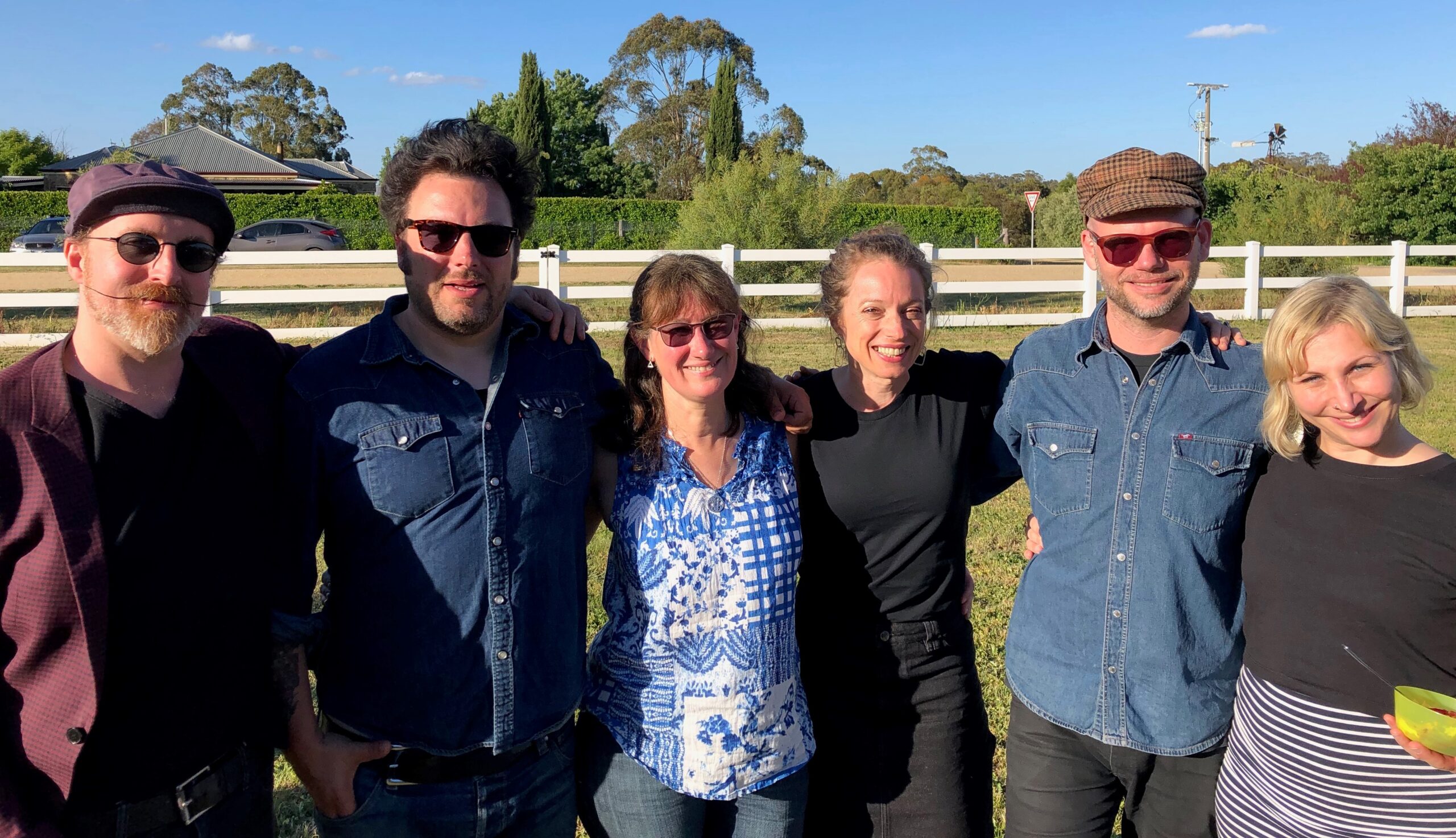
Pictured: Rich Davies & The Low Road with Bronwyn at a White Room concert in Glenlyon, from left, Stirling Gill-Chambers, Rich Davies, Bronwyn Rowbotham, Kat Ogilvie, Craig Kelly and Bek Chapman
Image: Contributed
Pictured: Dirt Bird Duo at the 2019 Newstead Live Festival 2019 Image: Tony Sawrey
November 14th, 2020Melbourne returns
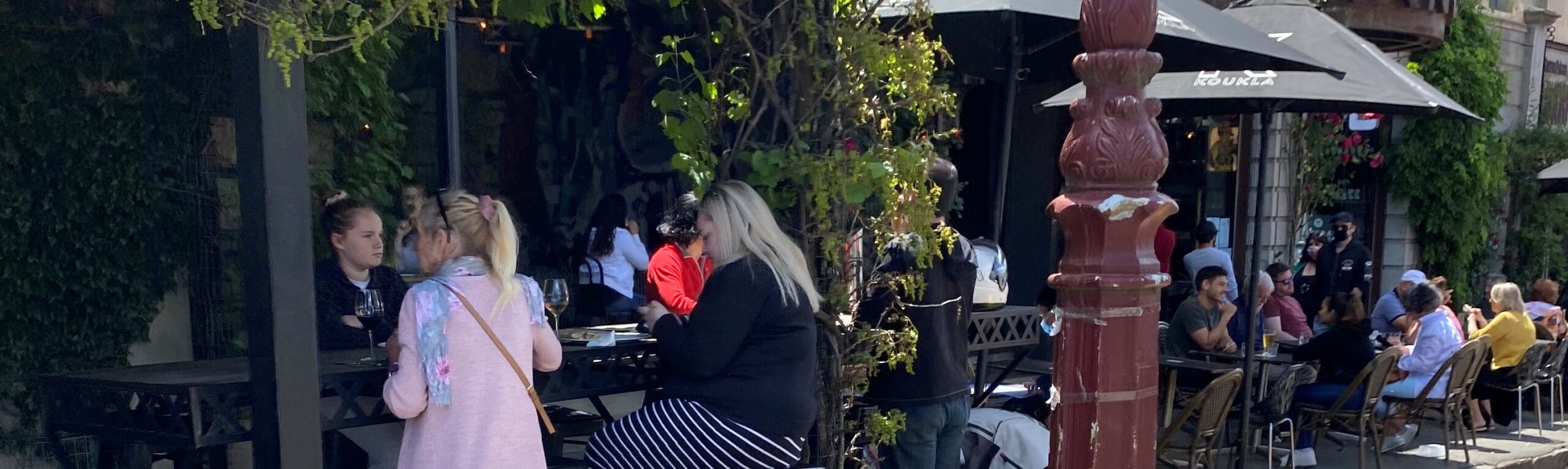
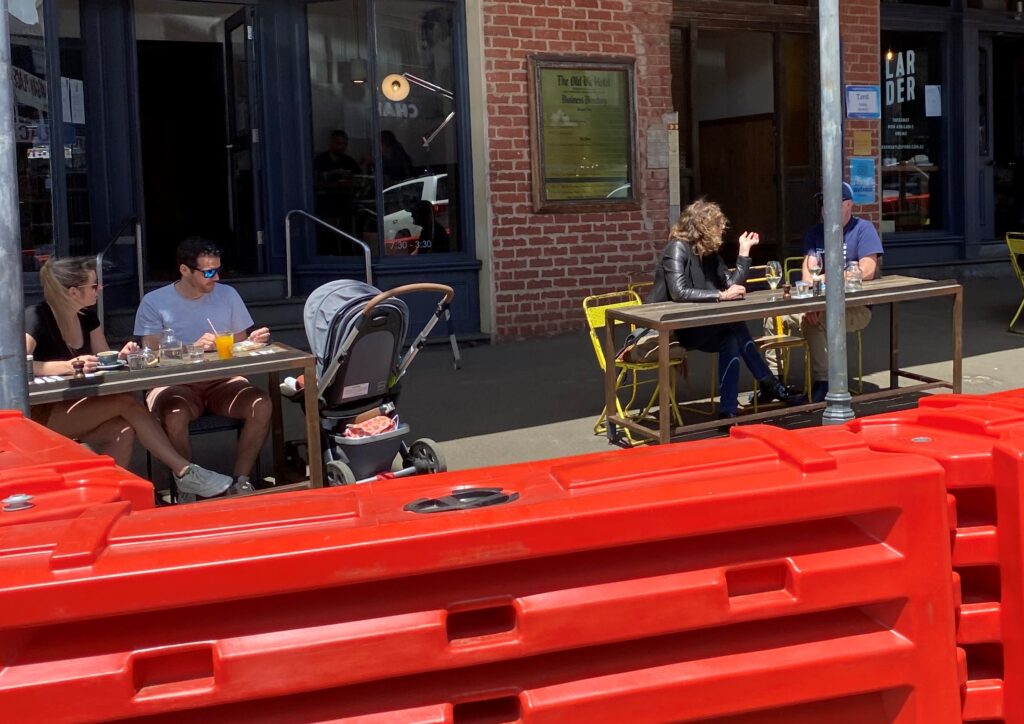
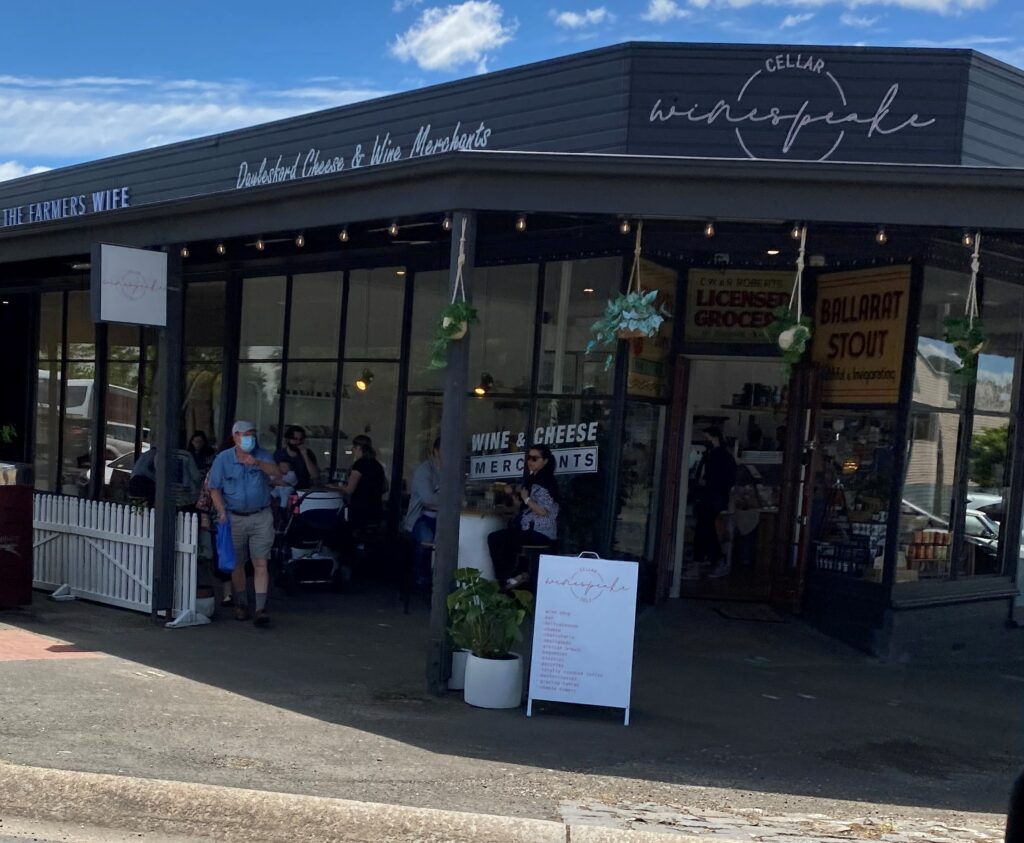
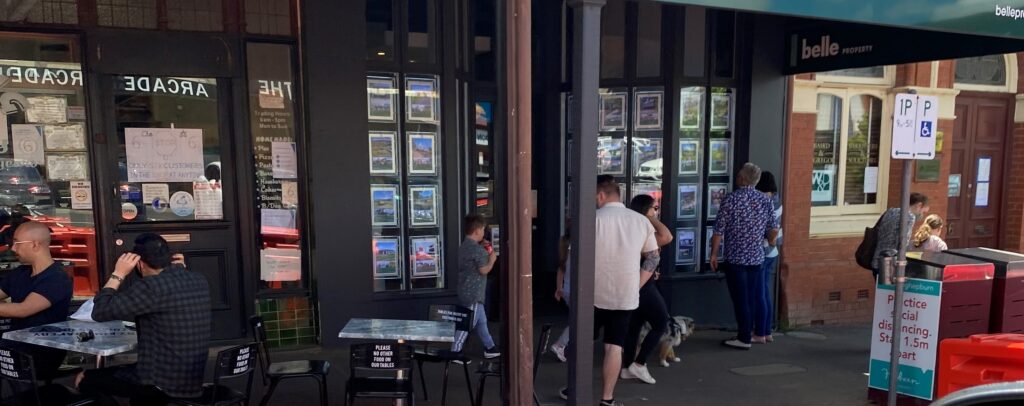
But while some residents were worried about social distancing, or the lack of it, it seemed that most people were doing the right thing with masks and social distance.
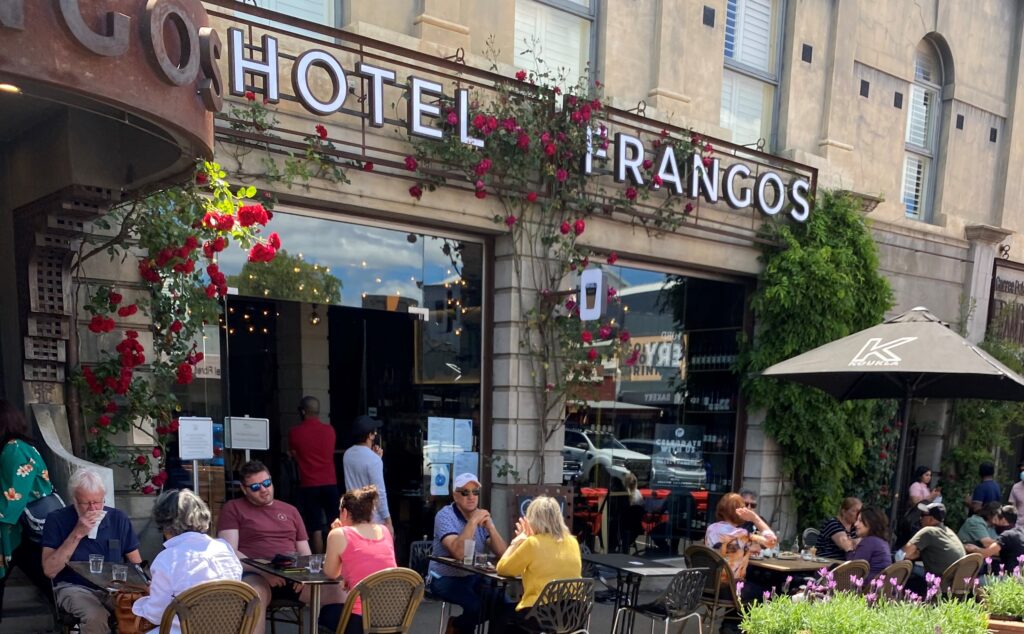
The Local‘s Donna Kelly and Kyle Barnes headed out for a look and found while there were more visitors, 99 per cent were just busy enjoying being back in regional Victoria.
Do you have photos or video to share? Email news@tlnews.com.au