


November 9th, 2020Kyle’s Rant
This breed of humankind are most definitely in demand for our local businesses as the roads open and there is some stiff competition for their dollar. I am talking about all the other regions that are enticing these folks back to their communities such as the Great Ocean Road, Yarra Valley and, soon enough, NSW.
It is with shallow breathing and trepidation that I look forward to the Melbourne masses returning to our region. I have been out a few times recently, frequenting some of the eateries and pubs that have reopened their doors, and I must admit I have had a couple of panicked moments as wait staff come too close and patrons stagger from their tables with no mask. I saw a person in a shop in Ballarat with a coffee in hand, so no need to don a mask (WTH). This unmasked bandit glided past the flower display and sneezed twice. In a pre-pandemic world that would be fine and simply attributed to hay fever, but these days a sneeze is a sin tantamount to a terrorist attack.
I like to think of myself as more of a coal miner than a canary. That is, I will sit back in reserved judgement as the masses flow up the freeways onto our country roads and spill into our pubs and retail stores. I am obviously pro-tourism and know what this income will mean for our area, however I am a naturally cautious person and am, quite frankly, afraid of the potential onset of a third wave and what that will do for our economy.
I guess it will come down to the professionalism of our food and beverage, retail and health, operators and staff, and the mutual respect given to them by the visitors. I do hope it all goes swimmingly and folks are gentle, as it has been a rough year.
Speaking of rough years and elections, congratulations to all those new councillors across Hepburn and Macedon Ranges who put themselves out there and won. Going from candidate to councillor, even though it’s not swapping sheep stations, is a big deal for our communities.
So this is where the rubber meets the road for you guys. You have a lot to do, particularly in our current “unprecedented” health crisis and for a lot of you this is your first entanglement with bureaucracy, which can be difficult to unravel. It is also good to see a lot of new faces who will naturally come with fresh ideas. So good luck to one and all…and try not to stuff it up!
Rambly rant over…

November 9th, 2020Just sayin’… Donna Kelly
I was pretty sure it was a combination of hay fever and just feeling a bit rundown which can sometimes exacerbate my asthma. So, we went through the usual questions and then the COVID questions. “Are you short of breath?” “Yes, I have asthma.” “Are you tired?” “Yes, it’s been a crazy year.” “OK, I don’t think you have COVID but under the guidelines you should get tested.”
Now, as a journo, I foresee the headlines. And I saw “The Local’s Donna Kelly has proven positive to COVID-19 and has ruined Victoria’s chances of knocking down the ring of steel and reuniting loved ones by Christmas, along with closing down the businesses of many of her friends.” Well, that would be a long headline but still, you get the picture.
But you’ve got to do the right thing so I obediently took down the number for the Daylesford testing station and rang. I felt like I was calling the Batphone. It was sure to be red and with a rotary face. (People under 40, ask an old person what this means.) And they answered. But Monday had been a quiet day and everyone had already packed up. Of course, only in Australia would you have a global pandemic and knock off early because it was a bit quiet. But that didn’t put me off. “OK then, tomorrow it is.” But it was not to be. “Tomorrow is Cup Day.” Of course it is. And you wouldn’t want to test anyone for a global pandemic on Cup Day. Never mind the pandemic that stops the nation. Got to see the gee-gees.
But I am nothing if not insistent. “OK, Wednesday it is.” And with that they took my number and said someone would call on Wednesday. Hmmm, I thought, Kyneton…so I called and they were nup about the cup and I was in for 9.05am.
I was a bit worried about the up-the-nose test but it was fine. And let’s face it, if women can do mammograms and full bladder abdominal ultrasounds, and, not me, but give birth, this is a walk in the park. And I went home and waited.
I told Kyle that if it was negative I would get a text message, positive would be a phone call. He ignores most of what I say but obviously took that in because on Wednesday I got a call from the Daylesford mob wanting to book me in. I said thanks but all done and hung up. “Who was that?” Kyle asked. “Oh, just the COVID people,” I replied. “Oh, shit, you’re positive…” He finally calmed down with the explanation. And last Wednesday I checked my phone and the text was there. Negative. I know we are meant to try and be upbeat for our mental health, but sometimes being told you are negative is the best feeling in the world. Just sayin’…
Ed’s note: We really appreciate all frontline workers!

November 9th, 2020Glen, Man about the house
As citrus trees grow they tend to accumulate dead, woody twigs and light growth towards their centre. By using a sharp pair of pruners and a little patience you can open up the tree and allow plenty of sunlight in, thus preventing the build-up of fungus diseases, moulds and insect pests that normally thrive on weak, shaded growth. Don’t take too much growth from the top or centre of the tree because citrus prefer a healthy covering of leaves all over as protection from the scorching rays of Summer sun.
Normally hard pruning of citrus is best carried out from late August to September but this year, thanks to La Nina and her beautiful rains, it wouldn’t be such a problem for you to tackle it in the next couple of weeks. This, coupled with the warmth, will encourage a quick regrowth of young wood to cover and protect bare branches left after the pruning. Any fungal growths or mould you may discover in the process can be easily despatched with a quick dose of copper sulphate or bordeaux spray.
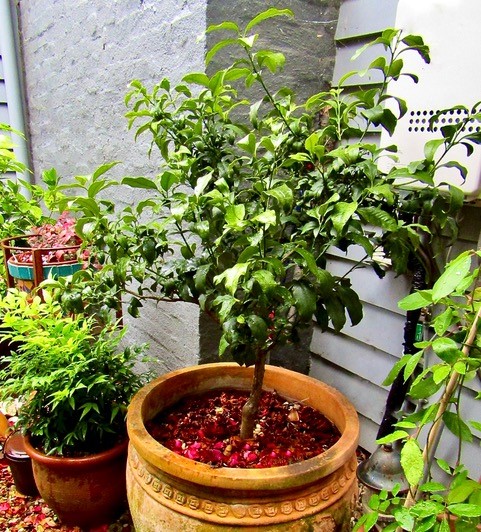
Citrus trees are rather particular about their environment, requiring it to be well-drained, slightly acid and regularly fed. The simplest way to achieve all of this is to grow them either in a large container or a raised bed where you have complete control of the conditions. This is the case with the nagami cumquat. Nagamis are somewhat different from other varieties in that they produce sweeter than usual, thin-skinned, oval fruit that can be eaten straight from the tree, as well as be turned into delicious marmalade jam.
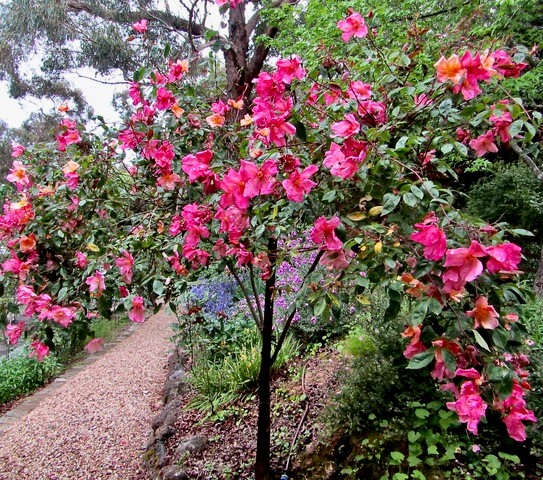
The lush green plant is a relatively recently released variety of nandina (Japanese sacred bamboo) called emerald sea. It’s a beautiful, frequent-flowering, shrub rose variety – rosa mutabilis – a reference to its ever colour-changing single flowers that open cream and end up almost red. They can grow to three metres or so and I’ve almost convinced it that it’s really a tree.
Water – the key to success
Gardens can be damaged as much by incorrect watering as they can by neglect. Fresh green lawns and lush, healthy flower and shrub beds can be maintained year round by regular maintenance, but it’s the way the garden is being watered that holds the key. Prolonged hot weather may place the plants under great stress if the moisture supply isn’t kept up to their feeder roots. But the problem isn’t necessarily lessened in the cooler months if the plants aren’t being watered correctly.
It’s important to remember that it’s the root system that takes in the water to supply the rest of the plant, so there’s little point in directing water anywhere but onto the ground. That is why drip watering systems are so successful. They supply all the plant’s needs directly to the roots using less than half the amount of water of sprinklers, and eliminate wasteful evaporation. At the same time they encourage deep, strong and self-sufficient roots.
A heavy watering once or twice a week, depending on the weather, is far better than frequent surface waterings that encourage developing root systems to grow close to the surface in anticipation of the next supply. Water early in the morning so that moisture can soak in before the sun’s drying rays can take effect.

November 9th, 2020Kyneton Art Group goes online and ‘plein air’

Secretary Jenny Chester said as long-standing supporters of the Kyneton Daffodil and Arts Festival each year, Kyneton Art Group members staged their own annual art exhibition as part of the festival program.
“Many members would also work towards exhibiting as part of the Daffodil Festival’s own art show. Unfortunately, this year both art shows have been cancelled, taking away a valuable resource to exhibit and sell work,” she said.
“But, never ones to sit back and give in, Kyneton Art Group members have taken their fabulous new works online for all to see and purchase. Kyneton Art Group’s online sale site, a new addition to our existing website, is full of fresh, affordable and local art. The works come in various mediums – canvases in oil or acrylic and watercolour, pastel, pencil and mixed mediums on paper or board, framed and unframed.”
Ms Chester said as everyone adapted to a new normal, going online had the benefit of giving the viewer the opportunity to browse at leisure and “snap up a painting from the comfort of their couch and have it delivered to their door”.
“If you are looking to buy beautiful, original art for your home, office or as a gift then be quick and jump online to make your purchase – and keep an eye on our site as new art will be added each month, with great exhibitions and fantastic sales to come.”
Ms Chester said Kyneton Art Group welcomed new members with contact via the website.
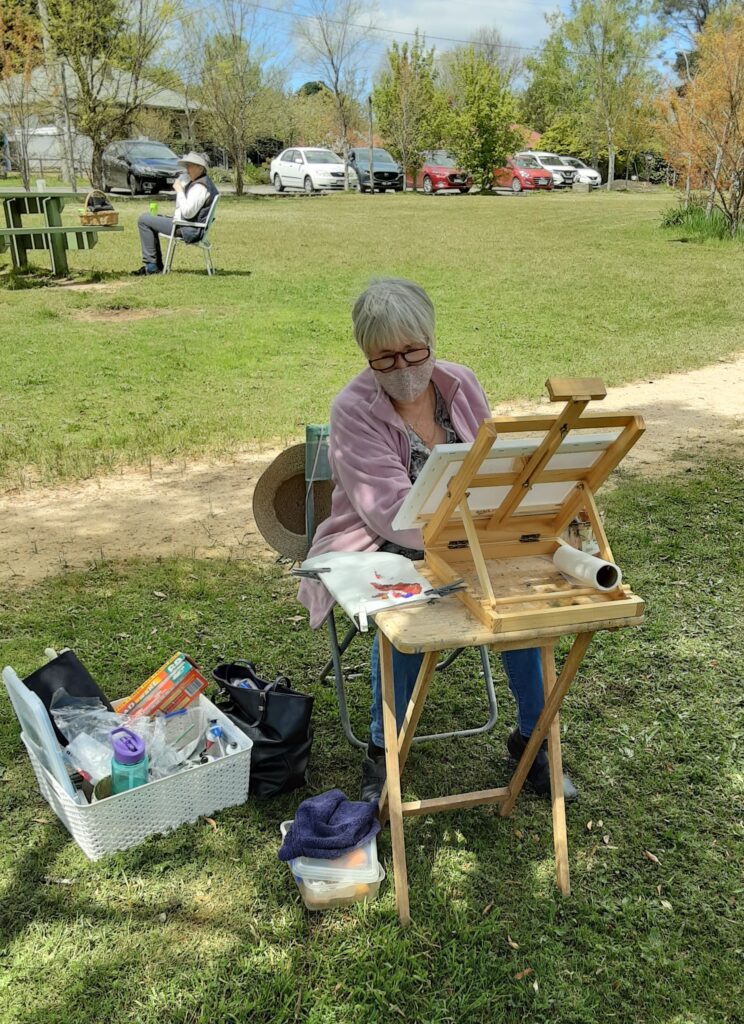
The group, which started in 1977 and has members from Kyneton, Daylesford, Taradale, Drummond, Glenlyon, Carlsruhe and Romsey, met every Tuesday at the Red Brick Hall in Kyneton pre-COVID, to create and share time with like-minded people.
“Unable to meet, the group has kept in touch online supporting each other through the tough times and encouraging each other to create and as restrictions ease, we have been meeting ‘plein air’ at the Kyneton Botanical Gardens and surrounding towns. Venues we have painted at so far also include Malmsbury Botanical Gardens, Trentham Public Park and Taradale Reserve.
“The group plans to continue ‘plein air’ sessions throughout Spring, Summer and Autumn, weather permitting visiting Daylesford, Glenlyon and Woodend, and previous locations.”
Link: www.kynetonartgroup.com
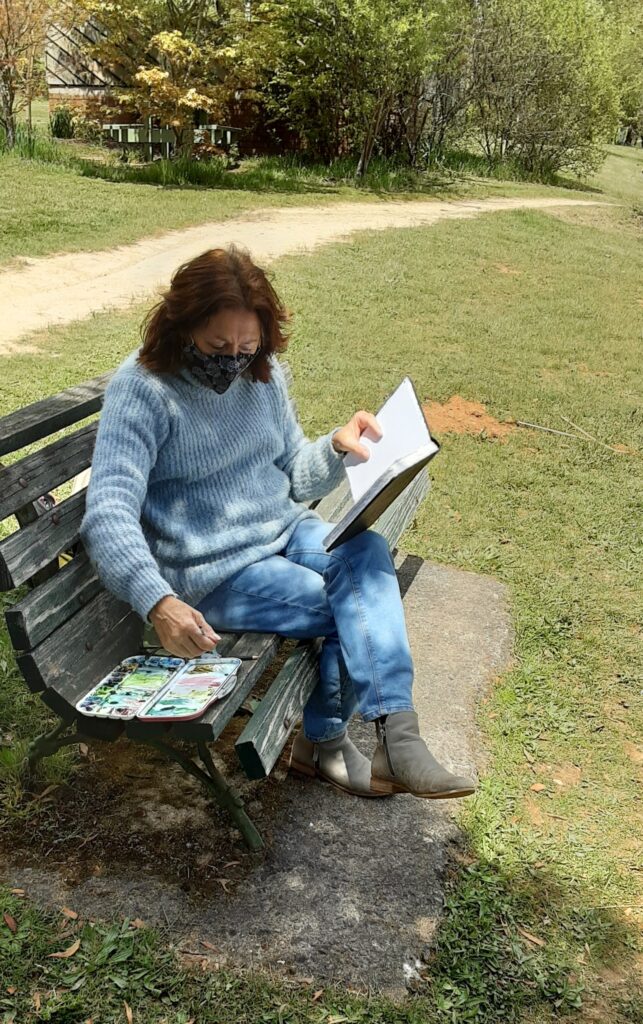
Image: President Anna McGrath does a watercolour sketch for future paintings and treasurer Stephanie Warr paints a landscape in acrylic
Words & images: Contributed

November 9th, 2020Clunes history

The modern incarnation of the Rechabites was part of the larger temperance movement popular at the time and encouraged complete abstinence from alcohol. The Order grew to have chapters around the world including Australia and still exists today as a financial institution retaining its temperance message.
In the burgeoning colony of Victoria, its members were concerned for the wellbeing of the workers of the Goldfields and set up their first “tent” at Clunes on June 27, 1865.
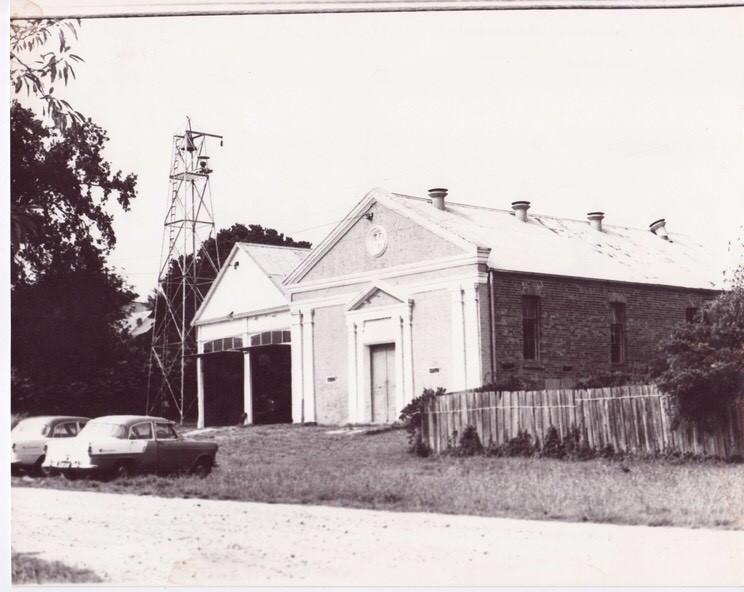
The term tent was another nod to the historic Rechabites and the nomadic dwellings where they lived and preached. But moves were immediately afoot to secure the funding for a permanent structure and by June 13, 1868, a capacity crowd attended the formal opening of a new solid brick hall.
In the cosy 17-metre x 9-metre space more than 300 attendees listened to “Yankee Bill” Ward and Mr. Mathew Barnett extol the virtues of an alcohol-free life and principles of the Rechabite Order. A good time was had by all.
The Morning Star Tent of Rechabites, Clunes continued to operate up to 1902 when its last residing Brother, G.S. Allen, was sent to Beechworth. However, within a few years the space became popularly known as the Apollo Hall. It went through several owners including local journalist Joseph Tarrant before eventually being sold to the Clunes Fire Brigade in 1907.
Over the course of its history, the hall was a big part of the social life of Clunes. In fact, a ball (presumably alcohol-free) was being held there when lower Fraser Street was destroyed by fire in October 1870. The smouldering remains were then inundated by the great flood of 1870 the next day.
Even though it was turned into a fire station, this did not spell the end of the space being regularly appropriated for social occasions. Fawcett’s Rhythm Aces with Bill and Madge Fawcett played many times there in the 1930s.
And Spike Jones, a long-time Clunes resident stationed at the Fire Brigade from the 1950s on remembers well the gatherings at the old building. “They had big events there, dances, balls, even table tennis. Many local musicians performed there and the shows would attract hundreds of people from all around the district including Avoca and Campbelltown.”
The Fire Brigade Service remained at the site for 84 years, adding an extra shed and emergency bell tower during that time. Today the building is in private hands but retains the façade of the original building and all the features that would have been familiar to a person viewing it 152 years ago. It remains the oldest surviving hall of the Independent Order of Rechabites in Victoria.
Image: The former Rechabite Hall in the 1950s when it was the base for the Clunes Fire Brigade, courtesy of the Clunes Museum.
As the building is today
Words and inset image: Tony Sawrey
Thanks to Clunes Museum president James Curzon-Siggers for his assistance with this article.
November 9th, 2020Noel shadowing This Farm Needs a Farmer

And in that moment an idea took shape in her mind. Melissa and her husband David were tree changers. They had recently moved onto a block near Kyneton and quickly realised they knew next to nothing about how to look after a rural property.
The couple and their farm needed an experienced hand to help them; someone like Noel. And they were not the only ex-city greenhorns who needed folk with a lifetime’s experience on the land to help them make a go of country life. The idea that day turned into This Farm Needs a Farmer; a community project intended to bring the two groups together.
Five years later the project has grown. Melissa knew back when The Local first featured the project that it had the potential for a massive ripple effect Australia-wide and that reality has come to pass.
“It’s been amazing, actually. Since then we have had two field days with another postponed this year. I also won the 2018 AgriFutures Rural Women’s Award with the idea. And earlier this year in January there was the soft launch of a new concept called Shadow Farming, which is basically a means for people to book time to come onto a mentor’s farm through the This Farm Needs a Farmer website.”

Shadow Farming allows users to go through a list of mentors across Australia, see what their specialties are and meet up with them to spend time with them on their farm.
The concept allows This Farm Needs a Farmer to work nationally because if Melissa has a mentor listed in say, Yeppoon, and someone who wants to learn in the same area they can be connected straight away.
“Physically I don’t have to be visiting all these communities and towns setting up connections,” says Melissa. “If there is a match, it can be arranged straight away no matter where the people are.”
And while public outings at events such as the Victorian Farmers Market Association Easter Field Day have been restricted this year, Melissa has found that the enquiry rate during lockdown has remained consistent.
“The disruption caused by COVID has piqued the interest of people wanting to be a little more self-sufficient, growing their own produce and also accessing Australian produce. In that regard This Farm Needs a Farmer has heightened people’s awareness that Australian agriculture is an important part of our wellbeing and isn’t valued highly enough.”
Next year is promising to be a big year for Melissa and This Farm Needs a Farmer. However it is tinged with a touch of sadness as Noel, the catalyst for the entire project passed away suddenly on October 27.
“It has left a really big hole in me personally,” says Melissa. “I am so grateful for the day I had that conversation with him because if he hadn’t sparked the idea when we had that initial chat I don’t know whether I would have started it and if the whole thing would have got to where it is now.
“As things turned out we became really good mates and I was honoured, not only to be invited to his funeral, but to be able to speak there too. His passing has given me that extra drive to just reach to the stars with the project and no doubt Noel will keep helping from the other side.”
Pictured, the late Noel Jenner with Melissa Connors, Tux the border collie and Emma “the little ratbag”
Words: Tony Sawrey | Image: Nicole Cleary

November 9th, 2020Macedon Ranges Shire: The tribe has spoken
The new councillors are East Ward – Annette Death, Geoff Neil and Bill West, South Ward – Dominic Bonanno, Rob Guthrie and Anne Moore, and West Ward – Jennifer Anderson, Janet Pearce and Mark Ridgway.
The race for West Ward proved the most challenging with two of the candidates receiving 1765 votes and another 1764.
In first preferences, former mayor Janet Pearce led the way with 1803 votes (17.29 per cent) followed by Jennifer Anderson – 1764 (16.91), Mark Ridgway – 1765 (16.92), Lenka Thompson – 1765 (16.92), Wes Turner – 1517 (14.54), Hayden Walsh – 752 (7.21), Diana Abruzzi – 614 (5.89) and Brian Wilson – 450 (4.31).
In East Ward, Annette Death received 2647 votes (26.94 per cent) followed by Bill West – 1833 (18.65), Geoff Neil – 1590 (16.18), Natasha Gayfer – 1571 (15.99), Henry Bleeck – 1346 (13.70) and Deborah Alford-Kerr – 839 (8.54).
In South Ward, Rob Guthrie received 3087 votes (28.66 per cent) followed by Dominic Bonanno – 2361 (21.92), Anne Moore – 1492 (13.85), Christine Walker – 1344 (12.48), Graham Hacket – 1159 (10.76), Adrian Gauci – 968 (8.99) and J.S. Amenta – 361 (3.35).
The new councillors will be sworn in on Monday, November 16. The ceremony will be livestreamed from 6pm. The mayor will be elected at a council meeting on Monday, November 23.
The new council’s next meeting will be the scheduled council meeting in Gisborne on Wednesday, November 25.
Link: www.mrsc.vic.gov.au/livestream
November 9th, 2020Hepburn Shire Council: The tribe has spoken

Successful candidates for the election, which took almost two weeks to be declared, are: Birch Ward – Jen Bray (CV) and Lesley Hewitt, Cameron Ward – Tessa Halliday (CV), Coliban Ward – Brian Hood (CV), Creswick Ward – Don Henderson and Tim Drylie (CV) and Holcombe Ward – Juliet Simpson.
In Birch Ward, under first preferences, Jen Bray received 823 votes (24.65 per cent) followed by Lesley Hewitt – 700 (20.96), Anne Stewart – 678 votes (20.31), former councillor Fiona Robson – 600 votes (19.97), Gary Carter – 499 (14.94) and Celia Waldron – 39 (1.17).
In Cameron Ward, Tessa Halliday received 788 votes (47.76 per cent) followed by Dorothy Russell – 498 (30.18) and Nicholas Ayres-Wearne – 364 (22.06).
In Coliban Ward, Brian Hood received 1002 votes (52.46 per cent) followed by former councillor and mayor Licia Kokocinski – 551 (28.85) and Ethan Brown – 357 (18.69).
In Creswick Ward, Don Henderson received 1709 votes (47.26 per cent) followed by Tim Drylie – 1203 (33.27) and Stuart Jonas – 704 (19.47).
In Holcombe Ward, Juliet Simpson received 557 votes (33.92 per cent) followed by Daniel McMillan – 414 (25.21), Bill McClenaghan – 383 (23.33) and former councillor John Cottrell – 288 (17.54).
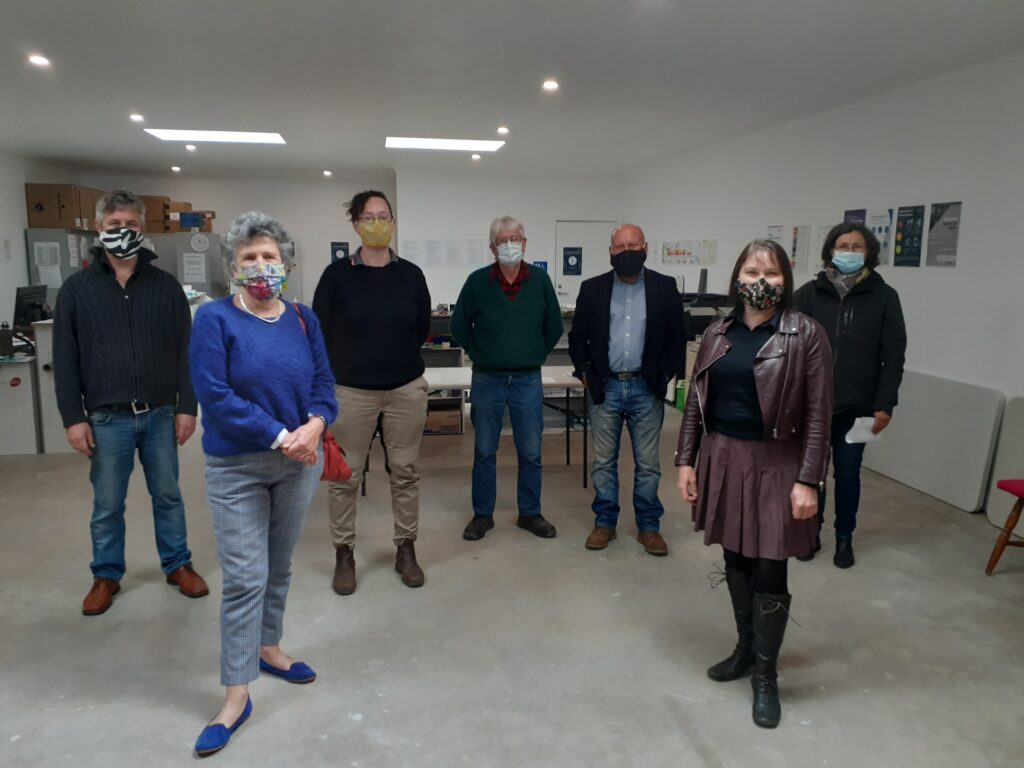
Pictured, from left, Tim Drylie, Lesley Hewitt, Tessa Halliday, Don Henderson, Brian Hood, Jen Bray and Juliet Simpson

November 4th, 2020Local Lines
i
A tentative rustle of leaves
before a breeze flicks the green curtains apart.
Glimpses of a private underglade.
In rushes the sun, revealing a mud floor
and the cracked stone base of a once-fountain
clogged with yellow leaves.
In you go.
The curtains swish closed behind you.
Look up.
Huge knotted heads
sit on twin pollarded trunks,
defying climbing access.
Step on to the fountain. Twist
a few tresses together. Grab with both hands
and swing out into the sun.
ii
Longer than its branches, Willow’s
drain-disturbing roots extend to all quarters
of the lawn, tracking down water,
some erupting into nuggety elbows,
the better to mess with mower blades.
Dangerous, Dad reckons.
iii
With Willow’s passing, shadows are subtracted,
the lawn flattens to featurelessness and
northerlies freely batter my bedroom window.
- Bill Wootton
Bill lives on an expansively treed block in Hepburn Springs, overlooking willows on Doctor’s Gully. He weeds like hell but has given up mowing.
Poems for Local Lines come predominantly from a group of poets. However, other locals who would like a poem considered for publication can contact Bill Wootton – cottlesbreedge@gmail.com
November 4th, 2020Look forward to seeing you at the Daylesford
Open for now, Thursday through to Sunday, the team is busy supporting local producers including Tonna’s Fruit & Vegetables, Brooklands Free Range Farms and Hazeldene. The menu’s online and Kyle and I are already making choices for when we head back next week.
For starters I reckon I will have to go to the cauliflower fritters with truffle mayo, parsley and cheddar ($14) while Kyle can never say no to fried lamb ribs and these come packed with flavour with garlic, za’atar – a blend of savoury dried herbs like oregano, marjoram or thyme, and earthy spices like cumin and coriander, with sesame seeds, and zhoug – a bright green, spicy cilantro sauce that originated in Yemen ($14).
If you’re hungry, and aren’t we all for great pub fare, load up with some sides like the garlic & herb sourdough cob ($10), grilled broccolini with a lemon vinaigrette ($12) or just a side serve of wonderful chips and aioli ($10).

Mains are harder to choose. I would be happy with any of them but it is probably a toss-up between the roast pumpkin gnocchi with sage, roasted walnuts, Tuscan kale, ricotta and parmesan ($26). I love the Daylesford’s gnocchi, so light and fluffy. But, then again, the Furphy-battered flathead tails, chips, coleslaw, herb and caper mayo ($28) is also on the cards. Like many people, we have tried to hone a few more home- cooking skills. Kyle even bought a deep fryer (which we used once) but we have never bothered to recreate fish and chips. Just no point.
Kyle is going to have it even harder with mains. The hotel’s famous pie with mash, peas and gravy ($29) or the DH classic local burger with a 100 per cent sher wagyu beef patty, house-cured bacon, lettuce, tomato, pickles, onion and mustard sauce ($35) or perhaps the chicken parma with Napoli sauce, free range ham, scamorza – South Italian cow’s milk cheese, slaw and chips ($28). I reckon he will go with the last option, with a side serve of a pint of tap beer.
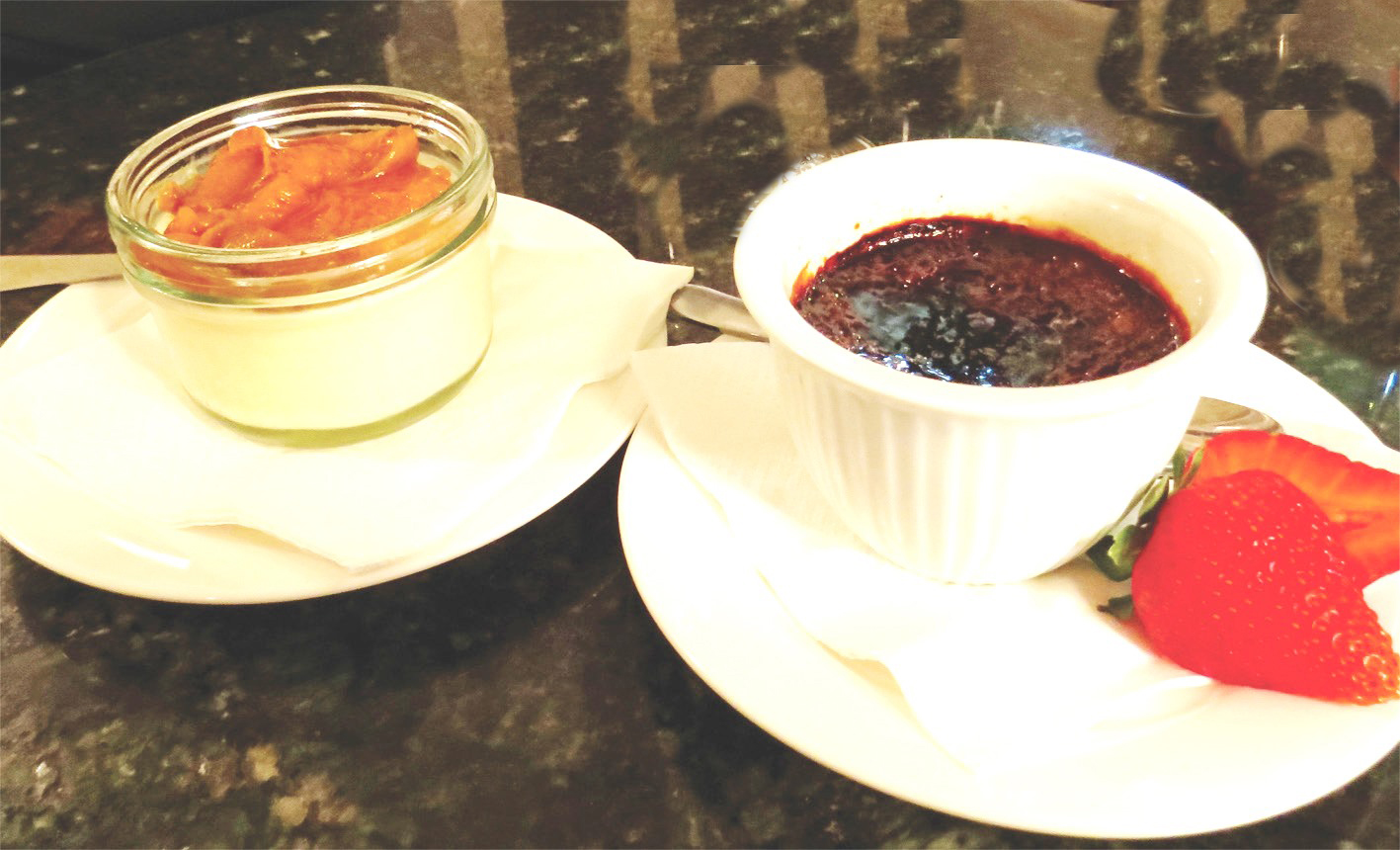
Wonderful desserts ($14) are always on offer and there’s also a kids’ menu. And being a pub, the drink choices are endless. So, as people have been saying for 107 years this December: “See you at the Daylesford!”
November 4th, 2020Just sayin’…
I must admit I felt a bit teary. It’s been a long bloody haul and I feel like making up a tee-shirt that says “COVID-19. 2020. And yes, Victoria!”. I would like to say “I survived…” but as I said it is not over yet and I am not going to jinx anything. Not now.
Some good friends of ours, well our subs Nick and Lindsay, said we should run some symbolic doughnuts on this edition’s front page. (For anyone who is not watching or listening to the news, the doughnut stands for zero, unless it is a doughnut like we got from the Sunday Market from the Wombat Hill stand. It did not have a hole but it was filled with delicious custard and was bloody amazing. But I digress.) I did think about the doughnut front page idea but then, you know, the printed edition comes out Monday and suddenly, bam, the figures are up again…best leave that one alone.
Anyway, lifting restrictions means I can finally see my sister and her kids, some very good friends, some of whom have been doing it pretty tough, and just enjoy other people being able to catch up with friends and family. We are also hoping that if things keep going in the right direction we can head to Queensland in May for a wedding that was meant to be this year in October. A pacific bubble also looks pretty promising so that gets us to Kyle’s family still living in the country of the long white cloud. Of course, my favourite place is Japan. On the cards for 2022.
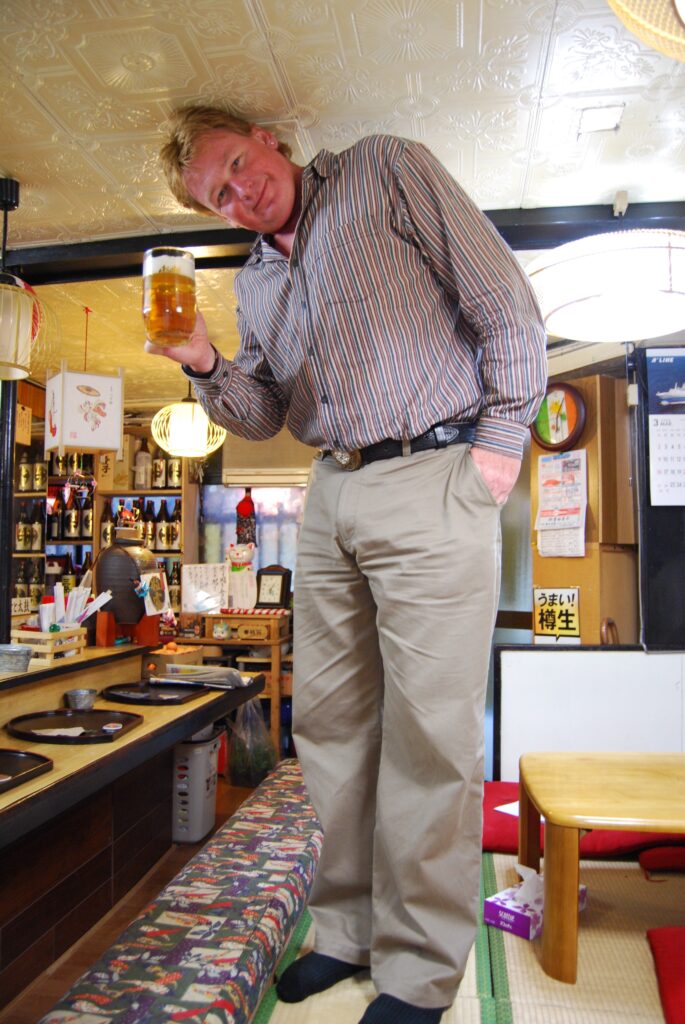
Yes, on the downside masks are with us for a while and it looks like hugs and kisses are out until we find a vaccine. But masks are a small price to pay and there is positive news on the vaccine front. So fingers crossed.
I still find it quite surreal that we are in a pandemic. It is not what I thought one would look like and we often head off for a country drive and, with our masks firmly trapped in the glovebox, you could forget you are living through a once-in-a-century event. Unprecendented times. (How great will it be when that word is stood down?)
People say there are upsides – life slowing down, time to take stock, revel in the important things, which are all great, but if I had my druthers I would like a life without COVID-19 on my horizon, or anyone’s. Anyway, let’s enjoy this time, keep doing the right thing, and also support local. It’s been a long dry run for many of our businesses and if we can support them, and if you want to, we should. And a big heartfelt thanks to everyone who has kept reading and advertising and generally supporting The Local. We couldn’t have made it this far without you. Just sayin’…
November 4th, 2020Kyle’s Rant
And now I have all the technology I need in the palm of my normal-sized hand. I know a lot of people have the same phone, however I don’t think they fully understand the horsepower or the shortcomings of the device.
For instance, the other day while driving, a text dropped onto my phone and I thought to ask Siri what the message was. She told me I had a new message, who it was from and after reading it asked would I like to reply. I, of course, said yes and she took my statement word-for-word including the prolonged “ummm” at the start and asked if I would like to send it. I said yes and she proclaimed message sent. All while flying down the road in the car.
Siri is short for “speech interpretation and recognition interface” so this little piece of tech I carry around has now learnt a few things about me and I about them. I would call it a her as it sounds like one, but I think a neutral pronoun better suits.

But all things with my new toy aren’t beer and skittles. We are starting a little bit of a generational grudge and I am sure that this bit of tech’s voice and mannerisms were set up by a Generation Z, someone younger than a millennial.
For instance, somehow the torch on the back of the phone came on and after half an hour of trying to turn it off, I decided to ask my pugnacious young friend to do the deed. The conversation went something like this:
Me: “Hey Siri!” They: “Aha?”
Me: “Please turn the torch off.” They: “I turn torch off.”
And like that I was in the dark even though Siri couldn’t be bothered with a complete sentence. Grrr. But there were the clues to work out who was behind the phone. After all, no-one over 23 says “Aha?” and I am sure instead of saying “You’re welcome” the little bugger would spit out that teeth-grinding line “That’s OK” with that annoying upward inflection at the end.
Siri also came undone recently when I tried to find out if I was allowed to take a photo of someone posed in the main street of town without a facemask on. She led me on a wild Google search which ended at the local vet. WTH?
I ended up simply phoning a guy from the Department of Health and Human Services, an actual human with definitive answers and was told “Yes”. So we won’t be seeing too many more facemask photos in The Local, thank God.
Sorry Siri rant over…

November 4th, 2020The Mount Players: Marg and Allan Cameron
Their ongoing commitment over this time has helped establish the strong basis for what we enjoy today. They met through the theatre in 1979 and were married in 1981. Residing in Gisborne they are still actively involved with the theatre.
Allan became involved in the mid 1970s and was recruited to the committee in late 1978 with a core group of about 10 managing the original theatre. It was tiny with cramped backstage facilities and half the current stage area we have now.
Allan performed on stage in a couple of musicals from 1979 and went on to be involved in everything from stage managing, set building, lighting and front of house for more than 30 shows over the coming years.
He was secretary for a while and elected president in 1983 following the Ash Wednesday fires that destroyed the original theatre. In 1984 he resigned the presidency to concentrate on the process of incorporation which was achieved in 1985. He was then elected the original public officer of the group.

Allan was caught by surprise in 2004 when he was awarded life membership. “It means a great deal as a thoughtful memento from the group for those years we had all put in,” Allan said. “That simple plaque contains a million memories. The gallery in the theatre – a million more.”
After reading an ad in the local paper in March 1978 inviting people to join the group, Marg found herself stage managing her first show in April the same year.
She had been a member of theatre groups in all the towns in which she had worked as a teacher so embraced the opportunity to meet people from a wide background, and the chance to work in a team for a common positive purpose enjoying the fun and friendship.
Marg has worked on about 70 shows with the company in a variety of roles – directing, backstage, lighting, set building, pianist, front of house and was even on stage for two productions.
Serving on the committee from 1983 until 1987 she had a range of major tasks including, importantly, supporting members who had been affected by the fires, designing the new theatre, raising money, starting rebuilding, creating and being part of endless working bees and taking shows on the road. Marg was also an adviser to the committee during the 1980s and early 1990s on lighting needs and design.
In 1997 Marg was also very surprised and proud to receive life membership of The Mount Players in recognition for her contribution to the company.
Words: Marg and Allan Cameron, and Karen Hunt
Image: Contributed
November 4th, 2020Glen, about the house
Some four or so years ago our friends’ move to Ballarat came with the bonus of a beautifully established garden. They also inherited a collection of well-established potted plants.
Most were obviously root-bound and in need of repotting into larger containers, but the aucuba looked almost beyond redemption and was already in a rather large container.
Removing it from its pot revealed a tangled, compressed, pot-wide mass of thick fleshy roots. Rather than seeing it consigned to the compost heap I offered to take it home and hopefully rejuvenate it.
The root mass, as well as being much too large for any of my containers, was so compressed and self-strangulating, that it was necessary for some drastic surgery – namely dissection, more than a little TLC and a suitable spot in the garden for it to become the beautiful plant in the picture.

The 3Rs – Rejuvenate, Repot, Release!
We often wonder why some potted plants, whether they’re newly purchased or long-term possessions, wilt and fail, despite our best attention to their needs.
When shopping for plants one of the worst mistakes is to head for the biggest, strongest looking plants in the batch. If they’re much bigger and tougher-looking than the rest it could mean they’ve been there longest. If you were to tip them out of the pot you would probably find a tightly woven “basket” of roots around the inside of the pot – a sure sign the plant is long overdue for a container upsize.
Being root-bound doesn’t necessarily mean the end for any plant unless it has been left in the pot for so long that the roots have become so inextricably entangled that, without a severe amputation session with your secateurs, the plant will, like as not, slowly self-strangulate.
Almost all but the most delicate root systems will tolerate or even respond to a degree of root pruning. Unfortunately it would seem that it’s always the most precious ones that don’t.

I’ve always followed the school that it’s a good plan to help the small, outer roots of any potted plant with a little loosening massage after a good soaking, pot and all, in a bucket of water to soften up the soil. The longer and thicker those outer roots, the more to remove.
If you think about it, the root system is a mirror image of the upper branches. The only difference is the roots are at the supply end of the water and nourishment and just like the branches, will respond to judicious pruning by “branching out” and creating new rootlets, to help support and supply the plant.
There are no distinct rules to follow, other than leave more than you take and, if the plant is a tree or tall shrub producing a central taproot, leave that one intact if at all possible. Also, choose the cooler months when growth is slowest and the roots are in less demand for moisture.
Repotting
Whether you are planting out into the garden or a larger pot be sure to surround the root ball with a generous layer of a good friable mixture of garden loam, compost or peat moss, to keep the new root growth moist and provide an easy, soft environment in which to develop.
The rescued aucuba
Because there was no evident taproot I was able to successfully dissect that whole root ball without any stress to the plant. A subsequent removal of much of the outer soil and trimming of the roots enabled me to plant it into my largest available pot, which will hopefully be large enough for quite a few more years.
Got a gardening question? Ask Glen. Email glenzgarden@gmail.com

November 4th, 2020Design with Indre
Lac beetles swarm and feed on lac trees primarily in India and Thailand, the trees are inundated by the tiny beetles who gorge on the sap of the trees. They mate, lay eggs and secrete the resin as protection for the larvae which the larvae then crack to escape, when hatched.
The resin is scraped from the twigs and sold as flakes. When mixed with methylated spirits it can be brushed on as a protective coating.
Shellac has been found to have been used in the Vedic period, about 3000 years ago. Original shellac has survived from that time. Marco Polo’s journeys to the Orient in the late 13th century brought shellac and its by-products to Europe. In the 16th century shellac was found useful as a lacquer for fine furniture and quality musical instruments. Until the 1870s shellac was primarily produced and used to colour silk, leather and cosmetics. Many a masterpiece was painted with and protected by shellac resins, waxes and dyes.
Ironically, the attempt to synthesise this amazing resin developed early plastics. Bakelite was the first manufactured synthetic plastic. It was highly desirable for its non-conductivity, heat resistance and versatility. Unfortunately, we now know how hazardous making Bakelite was, containing formaldehyde, asbestos and other toxic polymers. When Bakelite breaks it still poses a health threat as these particles can become airborne to be inhaled, ingested or directly contacted on the skin.
It was the development of synthetic resin compounds in the early 20th century that led to the demise of shellac’s industrial and architectural dominance.

Shellac on the other hand, if discovered today would be hailed as a miracle substance. Not only is it an all-natural, renewable insect by-product, it has a fleeting odour that dissipates quickly.
It naturally comes in colour variants depending on the tree the beetle feeds from i.e. clear, white or orange. It has a fast drying time. Application can happen in cold temperatures. It is non-toxic and hypoallergenic.
Unlike oil-based varnishes, shellac is UV stable. It doesn’t yellow or darken with age. It enhances the beauty of wood grain as well as sealing in stain. The dried film is impervious to odours. Shellac can adhere to wood, paint, glass, ceramics and plastic.
Recoats and touch-ups are possible with cleanup easy. Shellac is dissolved by household ammonia and alcohol.
The only disadvantage I can see is that the natural product has a short shelf life – approximately six months. You can gauge this by the drying time getting longer.
Shellac lends itself to a wide and varied industrial application, including floor polishes, inks, grinding wheels, electrical insulation and leather dressings. It is approved safe to ingest so you may find it interesting to know that it coats lollies and is labelled confectioner’s glaze e.g. jellybeans, plus pharmaceuticals, fruit and children’s furniture.
I know I will be thinking about my lolly coatings next time I feel inclined and also about my furniture coatings. When an oil is not suitable for the project I will more than likely turn to shellac. The long forgotten, natural product that I am thankful I have been reacquainted with.
Indre Kisonas – owner and principal designer – iok design
indre@iokdesign.com.au | www.iokdesign.com.au