

May 17th, 2026Compulsory acquisition

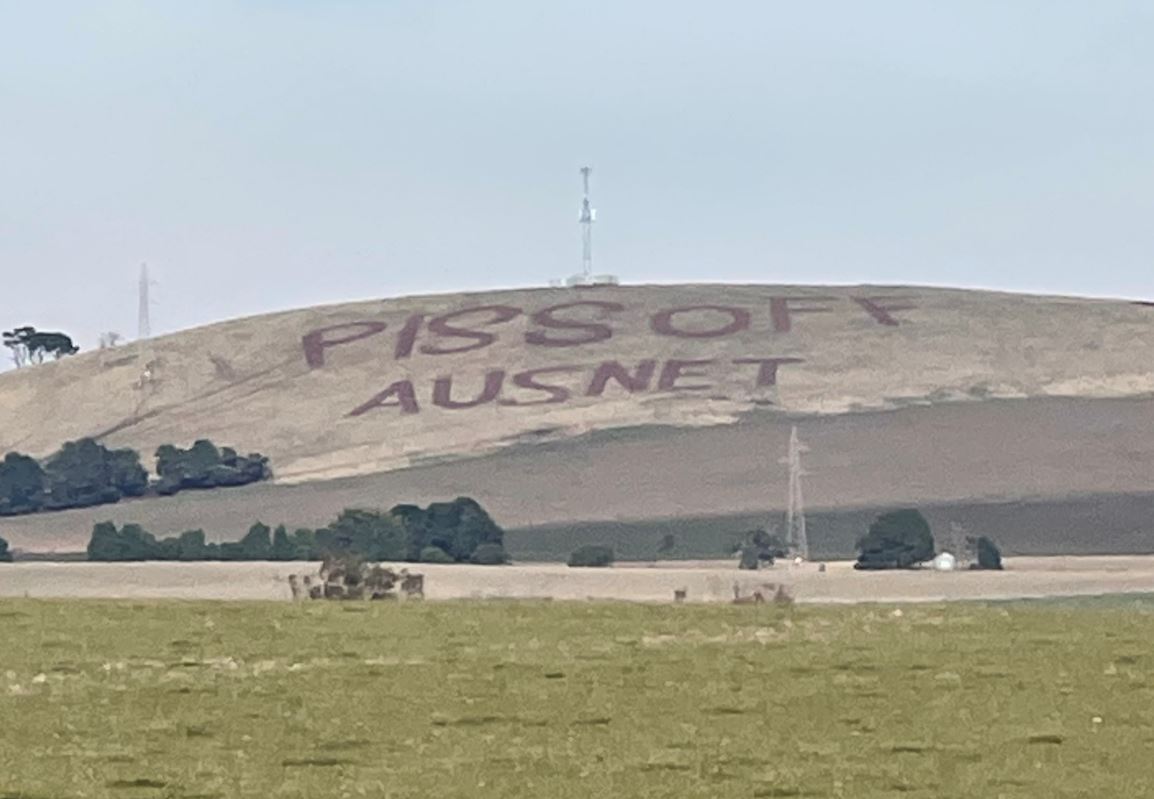
AusNet has formally applied to the state government to compulsorily acquire easements from Victorian farmers to build the Western Renewables Link transmission line before the Environmental Effects Statement is completed.
The state government has recently introduced legislation allowing energy companies to compulsorily acquire private land for transmission lines before the necessary environmental assessments have been completed. The move would see AusNet and the WRL project heavily advanced if the EES is successful.
Hepburn Shire Council Mayor Cr Tony Clark, pictured, has condemned the move saying it is an insult to those who have worked hard to provide evidence-based submissions.
“If the Victorian Government grant AusNet compulsory acquisition powers before the outcome of the EES, landholders and community are not only disrespected, but it also questions the EES process,” he said.
“We know that AusNet has already contacted landowners, urging them to sign voluntary agreements by the end of September while they seek additional acquisition powers from the government. The move has left many of us and our community feeling that the EES process is a tick the box exercise designed to distract while AusNet makes calculated moves to advance the project.”
A Hepburn Shire community working group was established five years ago to review the WRL project and assess its potential impacts on the shire’s community.
In December last year, the council concluded its submission to the project hearing process by presenting experts on tourism, agriculture, land values, biodiversity, habitat, mental health and wellbeing, roads and infrastructure, and bushfire risk.
Cr Clark said the council respected the roles of the WRS Advisory Committee and the Minister for Planning in the EES process and would heed any decisions made.
“However, council also expects AusNet, VicGrid and the government to show the same level of respect for the process. Council calls upon the government to make no decision on (the) compulsory acquisition until the EES decision is handed down.”


May 16th, 2026Backing Victorian Innovators To Succeed
The Victorian Goverment is accelerating local startups with a new agency to help businesses grow and thrive.
Minister Dimopoulos today announced the first step towards LaunchVic and Breakthrough Victoria coming together to create Innovation Victoria, with Rod Bristow appointed Chief Executive Officer.
As the current CEO of Breakthrough Victoria, Mr Bristow has a distinguished track record across finance, investment and environmental markets.
He is well positioned to accelerate the future growth of innovation and commercialisation across the state.
LaunchVic’s CEO Kate Cornick has recently been appointed CEO of the Tech Council of Australia.
Under Dr Cornick’s decade long leadership, Victoria’s startup ecosystem has gone from strength to strength, positioning the state as a national leader in innovation and entrepreneurship.
As Innovation Victoria comes together, the transition also marks a leadership handover.
The Hon. John Brumby AO, Chair of Breakthrough Victoria, and Leigh Jasper, Chair of LaunchVic, will depart their roles following a period of significant leadership and impact.
The appointment process for the new Chair and Board is underway.
Since its establishment, LaunchVic has helped Victoria’s startup ecosystem grow nearly 20-fold. It’s now home to 4,400 startups valued at $139 billion.
Breakthrough Victoria has committed $497 million across 91 investments, attracting $1.4 billion in co-investment, helping shape the state’s economic future.
Innovation Victoria will provide the capability uplift, connections and capital pathways to accelerate the commercialisation from idea to growth, scale and global opportunity.
It will also drive investment that delivers real benefits for Victoria’s future economy – creating high-skilled jobs, solving real-world challenges and building the industries of tomorrow.
Minister for Economic Growth and Jobs Steve Dimopoulos said:
“We are focused on the future – supporting more founders, entrepreneurs and investors to grow and succeed in Victoria, while driving economic growth, creating high-skilled jobs and strengthening our global competitiveness.”
“I would like to sincerely thank John Brumby and Leigh Jasper for their significant contributions, leadership and dedication in supporting the growth of our startup and investment landscape.”
Innovation Victoria CEO Rod Bristow said:
“Innovation Victoria isn’t about starting again or leaving anything behind — it’s about bringing together what already works and connecting it purposefully to support founders, researchers and investors to be successful.”
“We’re integrating innovation ecosystem development and research translation and investment. Over time this will create a system that’s easier to navigate and better positioned to support ideas from idea through growth to global scale.”
departing Breakthrough Victoria Chair the Hon. John Brumby AO said:
“Breakthrough Victoria was always conceived as a long-term institution, what’s exciting about Innovation Victoria is that it builds on that foundation — connecting capital, capability and ecosystem support into a stronger, more coherent system that backs innovation over the long haul.”

May 16th, 2026MORE SUPPORT FOR VOLUNTEER WILDLIFE REHABILITATORS
The Victorian Government is boosting support for Victoria’s wildlife rehabilitators, helping them care for more injured and vulnerable native animals.
Minister Erdogan announced $150,000 of Wildlife Recovery Support Rebates that will help authorised wildlife rehabilitators cover the costs of providing care to wildlife impacted by recent emergency events.
These rebates recognise the important role of wildlife rehabilitators who often dedicate their own time and money to rehabilitate injured or displaced wildlife and release them back into the wild.
Rebates will be available to registered wildlife carers to recoup some of the costs associated with care, including veterinary supplies like x-rays, blood tests and medication, milk formula and food, fuel costs for travel and personal protective equipment.
This is in addition to more than $218,000, which has supported over 100 wildlife carers from across the state as part of 2025-2026 Wildlife Rehabilitator Grants Program.
The grants program aims to increase the standards of wildlife care through upgrades to rescue equipment, appropriate training and education.
This funding delivers on the Government’s long-term plan to protect the environment – Biodiversity 2037.
Grants are open from today until 5pm 15 June 2026. For more information about the Wildlife Rehabilitator Grants visit environment.vic.gov.au/grants/wildlife-recovery-support-rebate.
Minister for Environment Enver Erdogan said:
“We’re making sure our wildlife carers get the support they need to protect our precious wildlife.”
“These rebates will help cover the costs of caring for injured and orphaned native animals so our wildlife volunteers can focus on giving them the best chance to recover and return to the wild.”
May 16th, 2026Putting The Brakes On Graffiti
The Victorian Budget 2026/27 is cracking down on graffiti and boosting safety across the rail network.
The Government is investing:
$2.5 million for a graffiti blitz across Melbourne’s rail network
$2 million for better CCTV at a number of regional stations
The new graffiti blitz will target areas of our rail network hardest hit by graffiti and vandalism, in Melbourne and surrounds.
The blitz will speed up graffiti removal in hard-to-reach locations including rail bridges and rail corridors.
The additional funding builds on strong action already underway.
Metro removed almost 260,000 square metres of graffiti last year – equal to 13 MCGs.
This is backed by more than $10 million spent annually on graffiti removal and vandalism repair.
The Budget also invests in better CCTV at Ballarat, Little River and Beaufort to make stations safer.
This includes upgrades to 36 cameras at Ballarat, CCTV at Little River for the first time, and planning for a new CCTV system at Beaufort.
This adds to the more than 13,000 CCTV cameras already helping track offenders across the network.
Minister for Public and Active Transport Gabrielle Williams said:
“We’re backing a clean-up blitz to help stop graffiti in its tracks across our rail network.”
“Vandals are on notice, with stronger action to curb graffiti and keep stations clean.”
“Better CCTV means safer stations, safer journeys and stronger support to track offenders.”

May 16th, 2026Ballarat takes hospital care to new heights
The Victorian Government is bringing care closer to home and making life easier for families.
The $655 million Ballarat Base Hospital will provide locals across the region with the care they need, faster.
Minister for Health Infrastructure today visited the site to mark the completion of the tower.
Works will now turn to installing the rooftop helipad, over 1,100 façade panels, and internal fit out to get the new hospital tower patient ready.
Once complete, the new multi-level tower will include:
- a new main entrance off Sturt Street
- a new emergency department
- 100 more inpatient and short stay beds
- a new state-of-the-art theatre suite
- a new helipad
- a new and expanded women and children’s hub.
The bigger and better hospital will have the capacity to treat 18,000 more emergency patients and 14,500 more inpatients per year.
It is also expected to create up to 1,000 more jobs.
The redevelopment has already delivered a new Central Energy Plant and Support Services building and an expanded multi-deck carpark with 400 more parking spaces.
The tower stands at 44 metres tall and has been built from 360 tonnes of steel by thousands of local workers.
The new tower is being delivered by the Victorian Health Building Authority, in partnership with Grampians Health and Built.
Minister for Health Infrastructure Melissa Horne said:
“The new Ballarat Base Hospital will deliver faster care for locals and help get ambos back on the road sooner.”
Member for Wendouree Juliana Addison said:
“We are improving access and providing better healthcare at the Ballarat Base Hospital with our record investment in the redevelopment.”
Member for Eureka Michaela Settle said:
“The Government is bringing care closer to home, delivering a bigger, better Ballarat Base Hospital so local families can get faster, world-class care close to where they live.”
May 15th, 2026Helping reverse ageing
Improving cognitive health and managing everyday memory challenges is at the forefront of a course Griffith University is running to help older Australians reverse the impact of ageing and health issues.
Griffith’s Psychology Clinic is running a six-week course called the LaTCH Memory Management Group Program which offers practical skills training and strategies for older adults with memory concerns.
LaTCH was developed by a team of researchers from La Trobe University and Caulfield Hospital to reduce the risk of older Australians developing dementia later in life and to assist middle to older adults who were often concerned about age-related memory changes.
Associate Professor Kerryn Pike from the School of Applied Psychology said attendees participate two hours per week over a six-week period and will learn about memory and memory loss, and how to improve everyday memory.
“LaTCH focuses on strategies to assist common everyday memory issues such as name recall, remembering tasks, and remembering where you have put things or not losing them to begin with,” Associate Professor Pike said.
“By the end of the sessions, we find people feel more confident with their memory, which often leads to more confidence in engaging in different everyday activities.”
One of the methods, spaced retrieval, involved repeating things over increasingly longer intervals.
Active retrieval and spacing of repetition was key with the exercise.
Participants recited a list of words or a name and then repeated it after a specific amount of time, and then stretched out that time to test memory capability.
Group members receive handouts during the session to reinforce learning and are asked to complete weekly assignments to assist in applying memory strategies to everyday memory lapses.
Topics included:
– How memory works
– Factors that can impact on memory performance, including health concerns and ageing
– Different strategies for different tasks including remembering names, things to do, appointments, keeping track of belongings
– Positive lifestyle choices for brain health and ageing well
– What to do if you have concerns
Associate Professor Pike said LaTCH had been running for 20 years.
Results from several research studies demonstrate that LaTCH is effective in improving everyday memory ability, knowledge and use of memory strategies in daily life, and how people feel about their memory.
“Most people who attend LaTCH find the program effective and saw a marked improvement in how they manage their memory in daily life,” she said.
For more information on the LaTCH program, click here.

May 15th, 2026Getting More Young People Into Jobs In Melbourne’s West
The Western Pathways Program at St Albans Tin Shed has been launched.
Delivered by Jesuit Social Services in partnership with Opendoor, the program provides tailored support for young people who are experiencing unemployment.
The inclusive services help young people develop skills, connect with local social support and participate in meaningful jobs, training and community activities.
The two-year pilot program will focus on people aged 15 to 24, people from multicultural communities and people who are at risk of involvement, or have previously been involved, with the justice system.
Participants can access mentoring and coaching, skills assessments, resume and interview preparation, support with training and tickets, job placement and support, and referrals to health and housing services.
Getting people into employment and training keeps them on the right path, which benefits the whole community.
For more information visit jss.org.au.
Minister for Employment Natalie Suleyman said the Western Pathways Program will continue to back young people to transition into employment.
Jesuit Social Services Acting Chief Executive Officer Michael Livingstone said the Western Pathways Program was a great opportunity to support young people from Melbourne’s west to engage in training and employment outcomes.
“We look forward to working with Opendoor and the Victorian Government to deliver this exciting initiative. Working in and alongside local communities, we can make a real difference in improving long-term wellbeing and employment outcomes for young people.”

May 15th, 2026Safe Food Victoria appoints board members
The Minister for Agriculture has approved the inaugural Safe Food Victoria Board.
The Board will be led by experienced regulators Luke Wilson PSM as Chair and Fran Freeman as Deputy Chair.
Bringing Victoria’s food regulatory bodies together into one authority, Safe Food Victoria will formally commence on 1 July, in accordance with the Safe Food Victoria Act 2026.
Serving as the inaugural Safe Food Victoria chairperson on the 7-person board, Mr Wilson brings extensive experience. He is the current Chairperson of Dairy Food Safety Victoria and of the North East Catchment Management Authority and sits on the board of the Game Management Authority. Mr Wilson also has extensive senior executive experience, including holding numerous deputy secretary positions in the Victorian Government, including in the agriculture portfolio, and having been Victoria’s Cross Border Commissioner.
Deputy Chair Fran Freeman is the current Chairperson of PrimeSafe and a consultant for the Global Food Safety Initiative. She has a long and distinguished senior executive career with the Australian Government, including having oversight of Australia’s food export and certification arrangements.
Agriculture Victoria Executive Director Trevor Pisciotta said the appointment of Mr Wilson, Ms Freeman and the rest of the board will ensure a smooth and stable start for Safe Food Victoria.
‘The new board brings decades of regulation, food safety, public health and industry experience and understands what it takes to get Safe Food Victoria up and running quickly and effectively,’ Dr Pisciotta said.
‘Safe Food Victoria will report to the Minister for Agriculture and will create a simpler and more streamlined regulatory system.
‘Having a one-stop-shop for food safety regulation will support industry with simpler processes and improving food safety for Victorians.’
This reform will align Victoria with Queensland and New South Wales and with arrangements in most countries with strong agri-food sectors in having a consolidated food safety regulator.
Both Mr Wilson and Ms Freeman will provide clear continuity of leadership during the transition to the new regulator.
Also appointed to serve on the new Safe Food Victoria board are Dr Kate Maxfield, Tania Luckin, John Merritt, Polly Bennett and Susan Lebish.
Members were appointed following an open and competitive process in late 2025 and comprise a valuable mix of regional, industry and food safety experts with significant regulatory experience.
Board members have been appointed until 30 June 2030, with the chair and deputy chair holding these roles until 30 June 2028.
Applications are open for the Safe Food Victoria CEO position and will close on Friday 22 May. For further information, please visit the VicGov Careers website: https://jobs.careers.vic.gov.au/jobs/VG-CEOSFV
A second stage of reforms will be undertaken to modernise and streamline laws, improve the tools and responsibilities to manage food safety and provide a stronger and more flexible food safety system that mitigate risks.
The consolidation of regulators is part of Victoria’s Economic Growth Statement, focusing on unlocking new economic growth by cutting red tape and making it simpler to do business in Victoria.
Safe Food Victoria – inaugural board members
- Mr Luke Wilson – Chairperson
- Ms Fran Freeman – Deputy Chairperson
- Mr John Merritt
- Dr Kate Maxfield
- Ms Tania Luckin
- Ms Kerry (Polly) Bennett
- Ms Susan Lebish
May 15th, 2026Bendigo’s Arena Theatre Company Turns 60 — and the Community is Celebrating
Australia’s longest-running professional theatre company for young people marks six decades with a fundraising campaign where every dollar is matched.
Arena Theatre Company, Australia’s longest-running professional theatre company for young audiences, is celebrating its 60th year – and inviting the community to be part of its future.
To mark the milestone, Arena hosted a 60th birthday morning tea in Bendigo last month, bringing together friends, supporters and advocates to celebrate six decades of live performance and creative programming for children and young people. The event also marked the launch of Arena’s Plus1 fundraising campaign, a matched giving initiative through Creative Australia.
This initiative means that every dollar donated to Arena before 31 May 2026 is matched dollar-for-dollar through Creative Australia’s Plus1 program up to a target of $50,000. Arena has already raised $33,500 – 67% of its goal – anchored by a lead commitment from the Betty Amsden Foundation.
“Sixty years is extraordinary for any arts organisation, and for one dedicated entirely to young people it’s a true landmark,” said Arena CEO and Executive Producer Debra Allanson. “The Plus1 campaign is our way of inviting the community to invest in the next chapter. With every dollar doubled, the impact of each gift is real and immediate.”
Founded in 1966, Arena creates live performances and creative programs for children and young people across regional Victoria and beyond. Arena’s commitment is to reach young people where they are — in regional communities, schools, and family settings where access to professional creative experiences is often limited.
Arena’s Creativerse festival – launched in 2025 – brought more than 1,500 attendees to Ulumbarra Theatre, establishing a new annual event for young people and families in Bendigo. The 2026 edition is in development.
Donations can be made at wearearena.org.au/support-arena before 31 May 2026.
May 14th, 2026Primary Producer Bushfire Recovery Grants and Concessional Loans
Bushfire support is available for impacted farmers.
Primary Producer Bushfire Recovery Grants: up to $75,000 is available to primary producers impacted by the January 2026 bushfires, to help cover the costs of clean-up and reinstating their enterprises. You don’t need to contribute any funds to apply for this grant.
Primary Producers Bushfire Recovery Concessional Loans: up to $250,000 is available for producers who have suffered significant damage to assets, while loans of up to $100,000 can support those experiencing a major loss of income due to the bushfires.
Applications will close at 4 pm on 21 October.
Check your eligibility via Rural Finance www.ruralfinance.com.au or call them on 1800 260 425 with any questions.
If you need help working through what support you can get or how to apply, the Rural Financial Counselling Service is available at:
- Rural Financial Counselling Service Victoria North East for farmers and small farm businesses.
- RFCS Victoria West | Home(Mildura and north western).
May 14th, 2026On-farm action at off farm events across the state
Agriculture Victoria is supporting farmers through drought with practical events, both in-person and online.
Agriculture Victoria Program Manager Aimee McCutcheon said having access to specialists and sharing challenges and approaches with other farmers at a workshop, field day or farm walk is incredibly valuable.
‘Every farm is different, and we have a range of events to deliver the professional business and technical advice our farmers need right now.
‘The events give producers the chance to discuss topical drought management and fire recovery issues and opportunities and connect with like-minded farmers.
‘Events are being held across the state covering topics like succession planning, seasonal outlooks, farm finances, irrigation and red meat marketing and selling.
‘It’s important that farmers know that support is available to help with the complex and difficult decisions,’ Ms McCutcheon said.

May 14th, 2026Tap into valuable soil moisture data this season
Farmers statewide are encouraged to subscribe to Agriculture Victoria’s Soil Moisture Monitoring Cropping Report e-newsletter for real-time soil water data in their region.
The report summarises data from underground probes at 20 monitoring sites across Victorian cropping regions as part of Agriculture Victoria’s Soil Moisture Monitoring (SMM) project.
Agriculture Victoria seasonal risk agronomist Dale Boyd said the newsletter aims to be both informative and educational about seasonal rain events and how far they have soaked down into the soil profile.
Some key findings noted in the current report include:
- Summer weed control remains critical to conserving soil moisture.
- Cropping regions north of the divide are showing improvement due to March rainfall increasing stored soil water.
- Several grain-growing areas still have deep soil moisture deficits following a dry summer.
- Regions with decile 9 March rainfall are showing strong recovery and soil profiles that are at least half full receiving more than 100 mm of rain during March.
- Districts that received rainfall greater than 150 mm (decile 10 or highest on record) are more than 75% full and many have deep moisture that is 100%.
- Overall, soil water app data is showing mixed trends with notable increases at Ouyen (88%) and Coonooer Bridge (88%) while other areas remain low in the south-west around Hamilton (12%) and Lake Bolac (29%).
Subscribe to the Soil Moisture Monitoring e-newsletter on the Agriculture Victoria website.

May 14th, 2026More Than $37 Million Boost For Long-Term Bushfire Recovery In Victoria
An extra $37 million will help bushfire-affected Victorians get back on their feet where it’s needed most.
Nearly $33 million will provide more than 100 temporary modular homes for people without adequate insurance whose home was significantly damaged or destroyed.
Navigating insurance and housing issues can also be complicated, so $4 million will fund more legal services for families, small businesses and primary producers.
Support will be delivered by Disaster Legal Help Victoria and other existing legal centres.
The Rural Financial Counselling Service (RFCS) will also receive an $880,000 boost to employ more financial and wellbeing counsellors.
The services will provide free, confidential support to farmers as they work through the financial impacts of the bushfires.
This includes analysing their business position, negotiating with lenders and accessing government support.
The wellbeing counsellors will support the mental health of their clients.
The Rural Financial Counselling Service can be accessed by calling 1300 771 741.
This funding brings the total recovery assistance provided for the January 2026 bushfires to more than $420 million including cost-sharing under the DRFA.
For more information on the DRFA packages and supports provided, visit vic.gov.au/disaster-recovery-funding-arrangements.
Federal Minister for Emergency Management Kristy McBain said the government stands with the bushfire affected communities in Victoria and will make sure they’re being supported throughout the extent of the recovery journey.
“This additional support acknowledges disaster recovery is complex, and we must ensure all available measures have been undertaken.
“We will continue to work together with the Victorian Government to make sure that effective assistance gets to where it’s needed and communities are able to move onto the next stages of recovery.”

May 13th, 2026Improving memory health
Improving cognitive health and managing everyday memory challenges is at the forefront of a course Griffith University is running to help older Australians reverse the impact of ageing and health issues.
Griffith’s Psychology Clinic is running a six-week course called the LaTCH Memory Management Group Program which offers practical skills training and strategies for older adults with memory concerns.
LaTCH was developed by a team of researchers from La Trobe University and Caulfield Hospital to reduce the risk of older Australians developing dementia later in life and to assist middle to older adults who were often concerned about age-related memory changes.
Associate Professor Kerryn Pike from the School of Applied Psychology said attendees participate two hours per week over a six-week period and will learn about memory and memory loss, and how to improve everyday memory.
“LaTCH focuses on strategies to assist common everyday memory issues such as name recall, remembering tasks, and remembering where you have put things or not losing them to begin with,” Associate Professor Pike said.
“By the end of the sessions, we find people feel more confident with their memory, which often leads to more confidence in engaging in different everyday activities.”
One of the methods, spaced retrieval, involved repeating things over increasingly longer intervals.
Active retrieval and spacing of repetition was key with the exercise.
Participants recited a list of words or a name and then repeated it after a specific amount of time, and then stretched out that time to test memory capability.
Group members receive handouts during the session to reinforce learning and are asked to complete weekly assignments to assist in applying memory strategies to everyday memory lapses.
Topics included:
– How memory works
– Factors that can impact on memory performance, including health concerns and ageing
– Different strategies for different tasks including remembering names, things to do, appointments, keeping track of belongings
– Positive lifestyle choices for brain health and ageing well
– What to do if you have concerns
Associate Professor Pike said LaTCH had been running for 20 years.
Results from several research studies demonstrate that LaTCH is effective in improving everyday memory ability, knowledge and use of memory strategies in daily life, and how people feel about their memory.
“Most people who attend LaTCH find the program effective and saw a marked improvement in how they manage their memory in daily life,” she said.
For more information on the LaTCH program, click here.
May 13th, 2026Malaria vaccine showing promise
Malaria is a deadly disease killing more than half a million people every year, but a new vaccine is showing promise as it not only offers long-lasting strong protection but also inhibits transmission of malaria by mosquitos.
The vaccine is predicted to be low cost and its cold-chain independence strongly enhances its deployability.
Professor Bernd Rehm, Director of the Centre for Cell Factories and Biopolymers within Griffith University’s Institute for Biomedicine and Glycomics, and his team led the development of a next-generation malaria vaccine.
“Existing vaccines offer only partial and short-lived protection and are difficult to distribute across the globe as they require strict refrigeration,” Professor Rehm said.
“The difference with our vaccine is that not only does it not require refrigeration, but it also takes a different approach when targeting the malaria parasite.
“It attacks two critical stages at once – before infection and during transmission by stopping the parasite from reaching and infecting the liver, and also by preventing parasites from developing inside mosquitoes and spreading to others.”
The vaccine works by using tiny, safe particles made by engineered bacteria.
The particles acted like a scaffold which displayed key malaria proteins on their surface, training the immune system to recognise and destroy the parasite.
The dual-target strategy gave the immune system more ways to fight malaria and reduced the chance of the parasite escaping from the mosquito into the human body.
Results showed the vaccine reduced malaria infection in the liver by up to 80 per cent, completely protected one in four from developing malaria, produced antibody levels well above those needed for protection, and strongly reduced parasite transmission by mosquitoes by around two-thirds.
Furthermore, the vaccine offered immunity protection for at least six months, exceeding the longevity of many existing malaria vaccine candidates.
Lead author on the research paper, Dr Nivethika Sivakumaran, said: “One of the biggest challenges in malaria-affected regions is keeping vaccines cold and viable while in storage, and during transportation.”
Co-author Dr Shuxiong Chen said: “This new vaccine remains stable and effective for at least a month in 37°C degree weather, drastically improving access to rural and remote areas.”
The paper ‘Robust bioconjugated antigens induce immune responses preventing malaria infection and its transmission’ has been published in Small.