


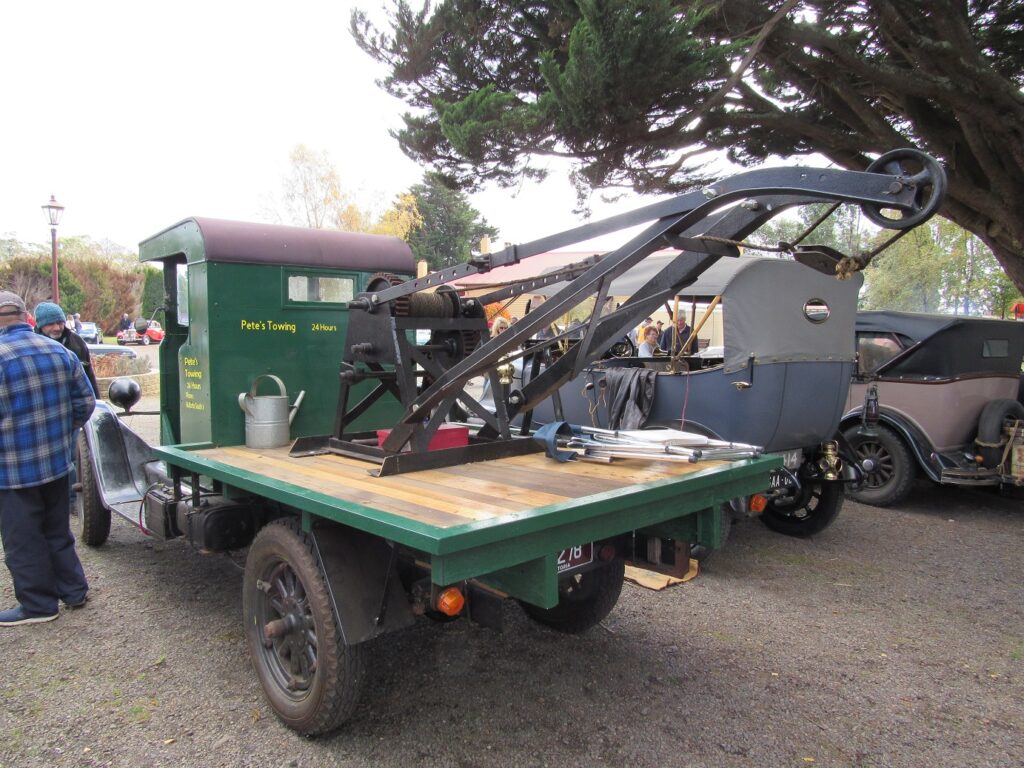
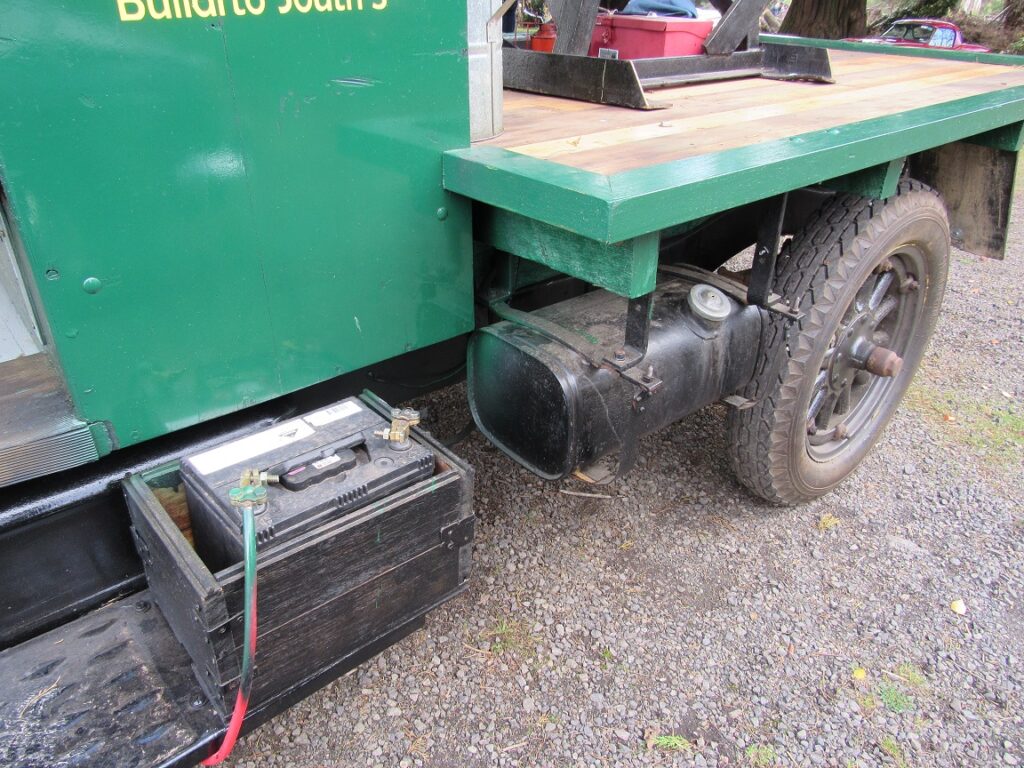
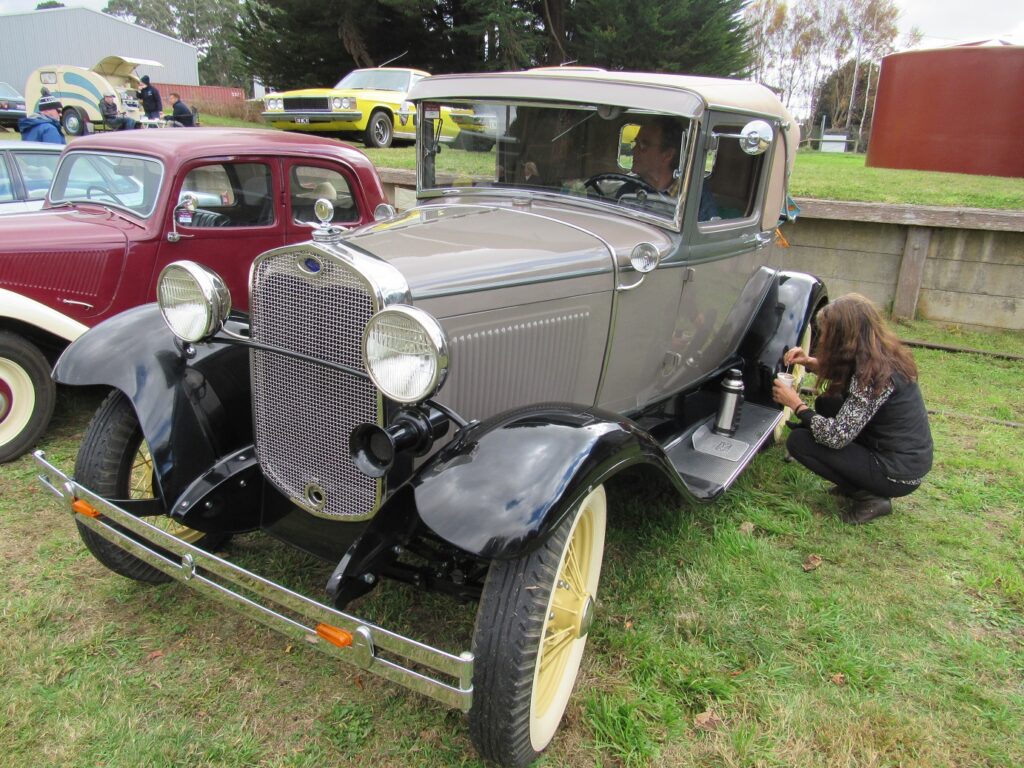
May 27th, 2022Heritage motoring on display at Trentham




May 27th, 2022Just sayin’…

IT’S a funny thing getting older. Just the other day I was joking with Kyle that he used to be ripped and now he’s more just Van Winkled, or Van Wrinkled. Actually he’s in great shape, thanks to interval fasting and refusing to have a drink until 6pm. I am more of a “must be 5pm somewhere in the world” kind of a woman.
But I think everyone has an age that they feel in their mind. I think I am at about 35. Just over 20 years younger than the calendar, or my body, would tell me. And Kyle would probably say about the same – but then there are the “old man” habits he is slowly embracing.
For example we are now the proud owners of a key cupboard. A lockable metal black box with lots of keys inside, all carefully labelled and colour coded. Who does this? In the old days we would just hang keys anywhere and hope we could find them again. Or spend quite some time trying different keys until we hit pay dirt. Now you just go to the key cupboard and select the right key from its label. Seems very “old man” to me but it makes Kyle very happy. The only thing I want to know is where the key to the key cupboard goes once it is locked. No point leaving it in the lock, nothing safe about that, but what if you lose that key? Then you have no keys. Not being sexist, well I guess I am, but I reckon a man made this box.
Getting older also means more tests and I am absolutely sure a man made the mammogram machine. What woman in their right mind would create a machine whose sole purpose is to squash a breast until it’s pretty much a pancake? And then give the machine one more squeeze. And honestly, the instructions. Move forward, left arm up, right arm down, bum back, chest forward, chin up, shoulder to the left, look up…It’s like a vertical game of twister. I bet if for every woman they then drag a man into the room and check his testicles in the same way, there would be a new testing regime in no time.
I guess one good thing about growing older is doing it pretty much together – as in being roughly the same age. It would be really hard to have a much younger partner with them trim, taut and terrific, while you were more saggy, sloth-like and scary. A friend of my mum’s married a bloke 15 years older than her when she was in her early 20s. “It’s OK when you are young,” she would say, “and being with an older man can be quite exciting,” she would add, “but when you are 70 and they are 85, it’s not that much fun anymore,” she would finish, with a sigh.
Hmmm. It’s not just Kyle doing “old man” things. We just had lunch with a bloke doing some work at our place and they both talked about how great traveller pies are. I have included a photo so you don’t have to imagine this but also a short explanation as well. You’re welcome. Read below.
This is a long pie, rather then round, which fits into your hand much better than a normal round pie, so you can drive safely. WTAF? Are they 90? And aren’t sausage rolls already perfectly designed for drivers? The world has gone mad.
And I do recall, back in the day, when we met on Hamilton Island, Kyle being more carefree and very keen to take part in a “how many people can you fit in and on a golf buggy” competition. Turned out to be 12. Not safe at all, but fun at the time. And then we all had to run very fast to avoid the island police because fun like this was a NBO offence. That’s Next Boat Out. But even that was OK. I know people who had t-shirts made proudly proclaiming “I was NBO’d off Hamilton Island”. In the end, after only three months of working on the island we moved to the Gold Coast. And perhaps that was the start of growing older. You see, the reason we moved was that we had consciously coupled up and if you are working on a tropical island it’s more of a singles life. Maybe that’s when the Van Wrinkles started? Just sayin’…

May 27th, 2022Local Lines
Amongst the Corridors of our Minds
Amongst the corridors of our minds
a myriad rooms abound
each hold a knowledge
sense, learning, memory.
Ease of recollection varies.
Those with doors fully open
are safe, offer up their content
without the slightest resistance.
Others, harmless, yet closed
need a push, a conscious effort
to open wide so we can
retrieve the information within.
Then there are those,
shut tight, securely locked
holding darknesses
long hidden.
Yet, there may be a moment
an occurrence, that provides the key
to unlock one of these doors
releasing repressed secrets.
Once opened, turmoil, grief,
heartache, distress pervade us
but hopefully, also an understanding
which enables that door to be left ajar.
- Gary Wilkinson
Gary Wilkinson has found a new passion since retiring in putting pen to paper and he would like to acknowledge the encouragement and mentoring from Bill Wootton by providing extremely useful comments to help turn something from being OK into something he is very proud of.
Local Lines comes mainly from a group of local poets but other submissions are always welcome. To have a poem considered for publication
contact Bill Wootton at cottlesbreedge@gmail.com
May 26th, 2022Kyle’s Rant

BY THE narrowest of margins the better of two weevils have won the race, we have chosen one white balding 50-something-year-old chump over another.
And that’s just because they dropped the sharpest barb at the right time during our emotional crisis and tilted our view just enough to put them in power.
The cardboard voting boxes and weird poll things have all been packed up along with the how-to-vote cards and taken to the recycling centres, and depending on your persuasion you are feeling happy or sad. Either way it’s time to get comfortable, plug your headphones into the music, belt up and hang on for the next three years.
It’s now Friday, May 20 and I have no idea which bozo to vote for and I have just written the preamble as our sub-editors require my column well before it’s time to count the votes. I hear a collective gasp, not about the fact that I pre-wrote this column, but because yes, we are old-fashioned, and we still use sub-editors to proof our work, unlike a lot of news outlets.
Anyway, live it up because whatever happens I think we might all be a bit stuffed with climate change is on its way.
Tucked away up the back of the late-night news I noticed a piece on north-west India and Pakistan, which are currently suffering days of 45 plus degrees. I researched this a bit more and found a piece from The Washington Post that read:
The enduring heat, which began in March, has altered life for millions in the region, placing a strain on outdoor workers, shortening the school calendar and cutting crop yields. The Met Office analysis examined how climate change was increasing the risk of such heat, using the record-setting event in April and May of 2010 – which 2022 is set to surpass – as a benchmark. In the absence of climate change, an event like the 2010 heat wave would be expected only every 300 years, the analysis found. But factoring in the effects of increasing heat-trapping gases from the burning of fossil fuel, the researchers now expect record-breaking temperatures about every three years.
So, while we’ve all been fighting for scraps from the politicians’ tables, they’ve been stitching us up with a lack of leadership on the climate, and ultimately the earth has decided that there are too many fleas living on its back and it’s time to give them a good shake. It tried to wipe out a few of us with a pandemic, but we fought back with tech, so now it’s time for a literal fire sale.
Meanwhile we have been watching who won The Voice or who got kicked off MasterChef on what has become the new opiate for the masses, TV.
I am not sure how preventable or inevitable this climate shift is and to that end am not sure if there is much that I can do about it because without slightly larger entities getting involved such as China, America and Europe. I am not sure that wheeling out my impeccably stacked recycle bin every other week will make any difference.
Dark rant over…
May 26th, 2022Wombat Hill lecture

THE Taylor and Sangster Lecture will be held by the Friends of Wombat Hill Botanic Gardens, Daylesford at Stanbridge Hall, Daylesford on Friday, June 17 at 7.30pm.
Guest speakers are GbLA landscape architects Ashley Sheldrick and Annette Warner. Ashley and Annette are designing the refurbished and restored Day Basin and Tower forecourt at Wombat Hill Botanic Gardens and will talk about the project which they have been working on for two years.
Ashley has 25 years’ experience working in local government and private practice in Melbourne, Sydney and the USA. He is skilled in open space and recreational planning and design, particularly involving spaces of heritage or ecological significance, and is experienced in community consultation and the preparation of management plans.
Ashley’s experience includes Castle Hill Heritage Park, The University of Melbourne Parkville Campus Master Plan including Conservation Management Plan for the System Garden and South Lawn, Malmsbury Botanic Gardens and now Wombat Hill Botanic Gardens.
Annette has had more than 20 years’ experience working on a diverse range of large and small-scale projects in the public and private sectors, including academic teaching and research in Australia.
Her PhD investigates the relationship between the archive and the garden. Annette’s expertise includes designing in landscapes with heritage and archaeological sensitivities.
Annette’s experience includes a number of large public gardens including the Royal Botanic Gardens, Melbourne, Malmsbury Botanic Gardens, Burnley Gardens, Victorian Parliament House Gardens and now Wombat Hill Botanic Gardens.
In 1884 the Daylesford Borough Council commissioned eminent landscape designers William Sangster and Robert Taylor to lay out the public gardens. Their work is celebrated with the Taylor and Sangster occasional lecture series.
Everyone is welcome and asked to bring a plate to share and a beverage to drink. Glasses, tea and coffee provided. RSVP by June 6 to patriceoshea68@gmail.com
An autumn raffle will also be drawn on the night.
May 26th, 2022Glen about the house
Winter proof your precious house plants
Most, if not all the plants we grow indoors originate from tropical or sub-tropical regions where in winter the temperatures are moderate and the humidity relatively low. In other words, much warmer days and nights than anything Central Victoria has on offer with temperatures generally rather low and the atmosphere correspondingly damp to wet. (OK, let’s not kid ourselves – it’s mostly bloody freezing!)
It’s under these conditions that indoor plants suffer the most, usually from over-watering and a lack of natural warmth and light. Obviously few plant species, apart from the hard, glossy-leafed ones, can withstand the onslaught of direct afternoon summer sunlight through an exposed window. But there is nothing wrong with placing any of them in a well-lit, south-facing window with long hours of indirect sunlight.
Winter watering control
During summer months the moisture content of a pot’s soil will drop within a few hours of watering, even in poorly drained soil, so that the plant does not suffer from wet feet. In winter however water stays in the soil so much longer, leaving the plant open to infection by root rot and other diseases brought about by micro-organisms.
Symptoms of overwatering are a general yellowing of the plant and the drooping and eventual dropping of the older leaves.
There is only one correct way to water plants during winter or indeed throughout the year and that is to give them a good soaking drink when, and only when, they are dry. Allow the water to soak right down through the soil. Test the soil by inserting your finger to the first knuckle. When the soil is dry right down to that knuckle you will know that it’s time to water again.
If potted plants are watered lightly and frequently it is difficult to really assess their needs. Although the top soil may kept damp the lower part where the roots are, may be either permanently dry or totally wet. Both conditions are equally dangerous for the plant.
Don’t feed them now because their need for sustenance decreases until the arrival of spring weather, besides unused fertiliser is likely to build up in the soil and can cause root damage.
One exception is the cyclamen which is now commencing growth and will rely on any nourishment as their flower buds form. Avoid repotting until spring as they will take hold of the new soil better when fresh growth is developing.
A good spot to place indoor plants which appear to be suffering is in your bathroom where steam from showers and baths raises the temperature and humidity a little closer to that of their natural environment. Also, don’t ever let your plants near an active gas heater, the fumes are deadly.
I’m pleased to say that after a lifetime of struggling to find the perfect spot for house plants, mostly in sunny (parched) South Australia and in a multitude of dwellings, I have found “houseplant heaven” on our Daylesford kitchen windowsill.
Not only does almost any plant placed there thrive and blossom, but I have had success in striking cuttings of quite a few relatively recalcitrant varieties including a couple of that elusive dinosaur, the Wollemi pine. Obviously, with my background and time amidst things botanical, I should hang my head in shame if I couldn’t.
I can also now for the first time get my African violets to survive and flower year round. There’s no magic, it’s simply because in making our house “climate friendlier’, we included double glazing throughout. Which, of course, added unfettered, year-long indirect sunlight to the other benefits of a pest free and consistently warm, greenhouse-like environment.
Got a gardening question: Email glenzgarden@gmail.com

May 26th, 2022Modular for housing crisis
THE state government is rolling out modular homes to mostly regional areas where construction shortages and supply issues can impact the timing of building new houses.
A media release said $30.38 million was being invested to build 114 modular homes, which are either in construction, being assembled on site, ready to move in or already tenanted across Victoria.
“The new homes have created more than 200 jobs and will house people who are experiencing or at risk of homelessness.
The modular homes can be constructed quickly, are easily transported and can be permanently placed on vacant and underutilised land, which immediately addresses housing availability and reduces reliance on emergency accommodation and transient housing.
The homes are being built for areas including Warrnambool, Horsham, Glenelg, East Gippsland, Swan Hill, Mildura and the Colac Otways.
A query from The Local about modular homes coming to help wiht the Central Highlands housing crisis was not replied to before publication.
May 25th, 2022Blessed with a fabulous job called ‘art’
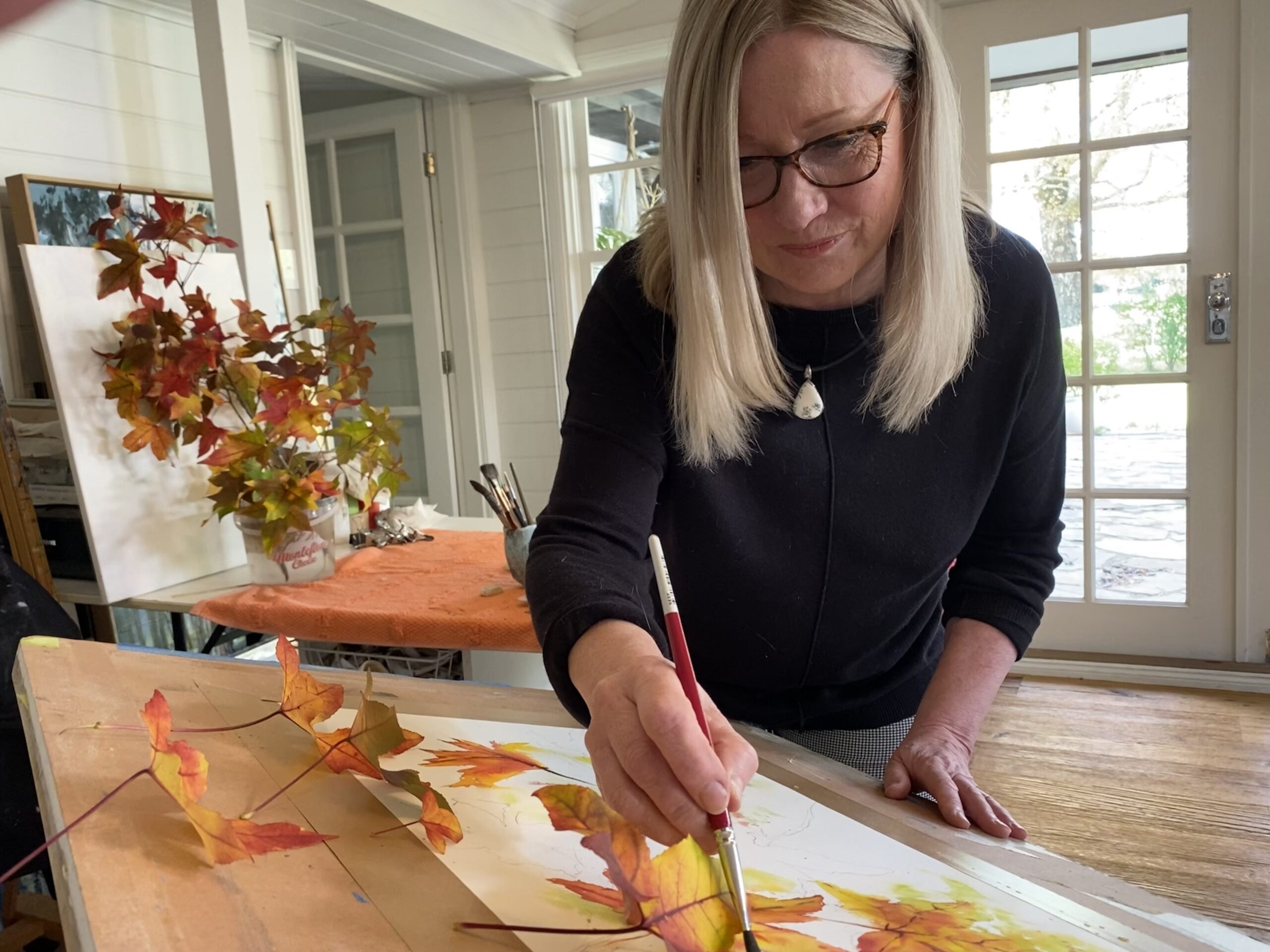
TRENTHAM artist Helen Cottle grew up in the western suburbs of Melbourne and began drawing from a very early age. Even though she was obsessed with art she was also an animal lover and intended to become a vet, not an artist. During her later high school years her art teachers strongly convinced Helen to continue her passion for art and she took their advice and studied art. The venture lasted all of three days before she realised it was not for her. She said in those days it was more about commercial art, graphic design or teaching and not fine art which she believed was her direction. Helen left art school and pursued her passion in “my own way”, self-educating by absorbing all the information she could through visiting art galleries, exhibitions and art books. She chatted with Donna Kelly.
Donna: So your journey started as a teenager?
Helen: It all began around 16-17 years of age and after running away from art school I became a dental assistant. My parents gave me a set of oil paints for my 18th birthday which I experimented with and totally fell in love with. I realised l needed to learn more about the paint, materials and equipment so I joined a local art group to gain more knowledge. During this time I was a part of a group exhibition and was very blessed as I sold my first oil painting at the age of 18. Everything escalated from there as this event then inspired me to enter more art shows and competitions and I began selling well and winning many awards and prizes.
Donna: What brought you to the Central Highlands?
Helen: I had previously lived in Gisborne in the Macedon Ranges for 32 years, thankfully it was a very supportive “arty” environment and I had my first solo exhibition back in 1991. This was a great success with many sales and commissions and as a result I was often asked if I would teach and continually I said “no” but I was then asked if I could just show people what I do and I said “oh yes”. This became the beginning of my art teaching and tutoring career in adult education and it has continued on now for over 30 years.
Donna: What medium do you most enjoy?
Helen: I paint mainly in watercolour, acrylic and occasionally in oil. I am totally in love with watercolour however I equally enjoy the variety of painting in acrylic and adding interesting textures to create depth. I do like to paint in oil but have to limit its use as I am quite sensitive to turps and chemicals so I mostly use water-based mediums. I am also very passionate about drawing so I love to use any medium to express my creative vision.
Donna: You do some amazing Australian scenes – is that your thing?
Helen: I enjoy painting everything but I am particularly passionate about our Aussie landscape. Whatever I choose to work on I am always looking for the play of light on the subject and the stories that are told through connecting shapes and lines. Mood and atmosphere are a big influence and this helps me emotionally connect with the viewer. No matter what I choose whether it is wildlife, floral, landscape or a figurative focus my approach usually involves the above important elements. Following on tone and colour tie it all together.
Donna: You tutor and teach art – do you think anyone can be an artist?
Helen: Yes I do tutor or teach art or as I like to call it I “guide” people to discover art and creativity. I have taught workshops and classes throughout Australia in many art venues, galleries and private or public art institutions. I have conducted workshops for the National Gallery of Victoria, and regional galleries in many states.
I am blessed with this fabulous “job” as I do what I love and love to share my passion and gift with others and with no so-called formal qualifications. I teach intuitively, tuning into and connecting with my students’ needs by observation and insight. With the recent challenging and changing pandemic times everything has slowed down, all travel and teaching, but I do intend to conduct more workshops in the near future, although the short break has been most welcome.
Donna: When and why did you get involved in the Little Gallery in Trentham?
Helen: I joined the Little Gallery in 2015. I was invited to participate in the annual winter exhibition and after the show ended I was asked by one of the members if I would like to temporarily take her place for 10 weeks while she travelled. After this time she had decided not to continue on as a member of the gallery and offered her position to me, I most gratefully accepted. The Little Gallery has been a huge part of my life for the past seven years. I absolutely love the gallery and all it represents. This is a very special hamlet, so much so that I have recently moved here and now reside in this beautiful region.
Donna: I saw you on Escape to the City recently. How did you get that gig?
Helen: I accepted the offer to feature on the TV show a few years ago. The film crew visited my studio and we conducted an on-site lesson with a potential client wishing to move to the Macedon Ranges. She was an avid art lover and collector. It seemed only fitting that she would find her deep passion for art may be met in the area she would choose to potentially live. It was an interesting experience. I do not like being on camera but I did enjoyed this challenge. I have also been involved in another media production called Colour in your life, an Australian production featuring artists in their own home environment and studios highlighting their craft. This show is now seen internationally.
Donna: It’s been a great journey so far. Anything else you would like to add?
Helen: In the near future I will be building a new home studio which will be open for visits by appointment and select open studio times. Future workshops are in the pipeline. And the Little Gallery is preparing for its annual Winter Show from July 15 to 22 – so stay tuned for that!
Image: Kyle Barnes
May 25th, 2022Zelman in Daylesford
THE Zelman Concert will be held at Daylesford Town Hall on Sunday, June 19 – but who or what was Zelman?
The Zelman Memorial Symphony Orchestra is a regular and very popular visitor to Daylesford. In fact, it is the only full symphony orchestra to regularly visit the Hepburn Shire.
Alberto Zelman (Junior) dominated the musical life of Melbourne for more than 20 years until his early death at age 52 in 1927. He was a prodigious musical talent and arguably Australia’s foremost violinist in his day, as well as a highly talented orchestra and choral conductor, pianist and violin teacher.
Alberto, the son of an eminent Italian musician (Alberto Zelman Senior), was born in Carlton and made his first public performance as a violinist at the age of six. During his relatively short but illustrious career he founded the Orchestral League, the Melbourne String Quartet and the British Music Quartet and was president of the Music Society of Melbourne.
His greatest achievement however was founding and conducting the original Melbourne Symphony Orchestra. After Alberto’s death in 1927, the original Melbourne Symphony Orchestra continued to perform until 1932 when it became all professional. The amateur players formed their own orchestra in 1933 and named it in memory of Alberto Zelman (Junior) and 89 years later it is still going strong.
The guest soloists, Kalina Krusteva (cello) and Roy Theaker (violin) are world- renowned artists. Kalina is described as “a cellist of the highest standard who will play an important part in musical life” while Roy has performed from Tokyo to London via the Holy Citadel, Amman and the European Parliament, Brussels.
The Hepburn Connection
Two of Alberto’s three brothers married sisters from the prominent Borsa family of Hepburn Springs. Victor Zelman married Clara Borsa. Victor was a prominent landscape artist and musician and had his studio in Seventh Street, Hepburn Springs. Ernest Zelman married Blanch Borsa. Ernest was a professional flautist, however after returning from WWI, he turned to farming and later he and Blanch ran the Bellinzona guest house in Hepburn Springs.
May 25th, 2022Photography competition
Autumn photography winners:
Natasha Morgan with Autumn

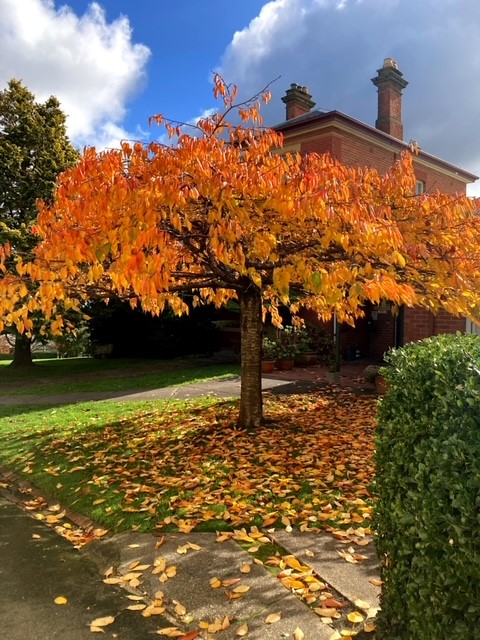
Leonie Keynes
May 25th, 2022Weddings, parties… Just less noise please
RESIDENTS in the small township of Lyonville are fed up with the unruly behaviour of guests staying in nearby accommodation sites. Unregulated all night loud music, trespassing and a blatant disregard for locals and their property are among the numerous complaints being made.
Nervous about using their names, the residents say that despite requests to speak with the owners of the properties and calling on help from Hepburn Shire Council their attempts have fallen on deaf ears.
“We chose here because it is zoned semi-rural and a magnificent part of the world to live. Many of us have hobby farms, animals and originally moved here because of the relaxed lifestyle,” said one resident who lives next door to an accommodation site.
“We are not upset that we have a growing number of accommodation sites, but the fact that there doesn’t seem to be any decency or respect when it comes to caring about the impact on neighbours is distressing,” she said.
“On many occasions there are more than 100 people on the properties, music plays all night, bright lights from some of the sites literally light up the sky. It’s simply appalling that we have to put up with this – in our own homes. And we have tried to seek help from Council given we believe they have powers to speak to the owners but again our attempts have failed.”
A Hepburn Shire Council spokesperson said while council understood the transient nature of short-term accommodation sites, it did not have a policy on bed and breakfasts or short-term accommodation sites.
“We encourage residents to contact Victoria Police if they have concerns in relation to noise or inappropriate behaviour. Due to privacy, we are unable to provide comments specific to particular properties.”
Only recently, two visitors from an accommodation site jumped a fence to enter a property without permission, removed a dinghy from a shed and went rowing on a private dam. On the same day in a separate incident, two visitors also from a nearby accommodation site climbed through a fence and entered a neighbour’s shed.
One resident said guests regularly attempted to feed farm animals chocolate and other food over the fence.
Coliban Ward Cr Brian Hood, pictured in the township, said he was aware of the complaints and has raised the issue with council officers on numerous occasions.
“While we have a large proliferation of visitors I think it only makes sense that council has a policy regarding short-term accommodation. I have raised the Lyonville issues with officers each time residents have contacted me. At the end of the day councillors are here to represent residents and protect their interests,” he said.
Cr Hood said council needed to be alerted to any issues regarding unruly behaviour and noise issues so officers can keep a record.
“While noise issues are a matter for the police, I appreciate that police attendance may not always be immediate. I believe council has it within its powers to create local laws around accommodation sites.”
One of the residents said he hoped council could follow the actions of the Mornington Peninsula Shire Council which adopted a Short Stay Rental Accommodation Local Law two years ago, providing clear guidelines on the required standards for the operation of this type of accommodation. The local law places the responsibility for occupant behaviour on the owner of the property.
Yarra Ranges Council has also introduced a short-term accommodation provision under its Local Laws which is ‘aimed to protect our neighbours from anti-social behaviours and amenity caused by short-term properties.’
Lyonville residents are hoping Hepburn Shire Council follows suit.
Bacchus Marsh police confirmed they had received calls on numerous occasions regarding noise complaints in Lyonville. They said Daylesford Police Station is staffed for 16 hours a day so when calls go to Bacchus Marsh if police and cars are available they will attend, but jobs are prioritised.
New laws
Changes to the Owners Corporations Act 2006 were introduced in February 2019 in Victoria to help prevent short-term accommodation sites being used to host unruly parties.
The reforms allow owners, corporations and residents to take action against owners and guests who are now jointly and individually liable for any compensation, fines and awards for damage to common property.
Fines of up to $11,000 may be imposed by VCAT for a range of breaches including unreasonable noise, security hazards and damaging common property.
Words: Narelle Groenhout | Image: Kyle Barnes
May 24th, 2022Not so much a Victorian gold rush, a job rush
THE great Central Victorian gold rush brought thousands of people to the region. Today most people imagine men humping swags and tools ready to scratch away at the earth in a fevered hope of finding something to secure their fortune.
It is a somewhat inaccurate representation of what gold mining actually required. Alluvial digging, carried out by individuals and small groups working in shallow shafts, had mostly disappeared by the end of the 1850s.
In later years, large syndicates took over the work and gold mining evolved into massive industrial operations, including plunging shafts over 200 metres through layers of basalt chasing the courses of ancient gold-filled riverbeds that had not seen the light of day for several million years. One of the richest areas was the area north of Creswick known today as the Buried Rivers of Gold region.
“The area has some of the best preserved gold rush landscape anywhere,” says Margaret Giles, secretary of the Creswick Business and Tourism Association. “The mullock heaps, mining relics and tiny miners cottages are still here to tell the story.”
It is a story the association wishes to keep alive. With support from Hepburn Shire Council, Heritage Victoria, Creswick and District Community Bank, RACV Goldfields Resort and others, they are in the process of renewing signage identifying the many sites along with a new website and guides for self-driving tours.
Once the installation of new markers is complete they hope to officially launch the revitalised trail later on this year.
From the 1870s until the turn of the 20th century dozens of mines were built there, requiring vast reserves of manpower to operate them. And for the thousands of workers who flocked to the area answering the call, this was not a gold rush, it was a job rush; brought about not by some irrational tilt at instant riches but just the chance of a decent steady income.
All the true irrational impulses lay with the numerous investors financing the developments. From as far away as the United Kingdom, they poured money into numerous start-up companies and dozens of operations.
A huge amount of capital was required for the manufacture and installation of machinery and the development of the sites. Speculation was rife, some mines paid off handsomely, others produced nothing or were defeated by rising water and deadly gases.
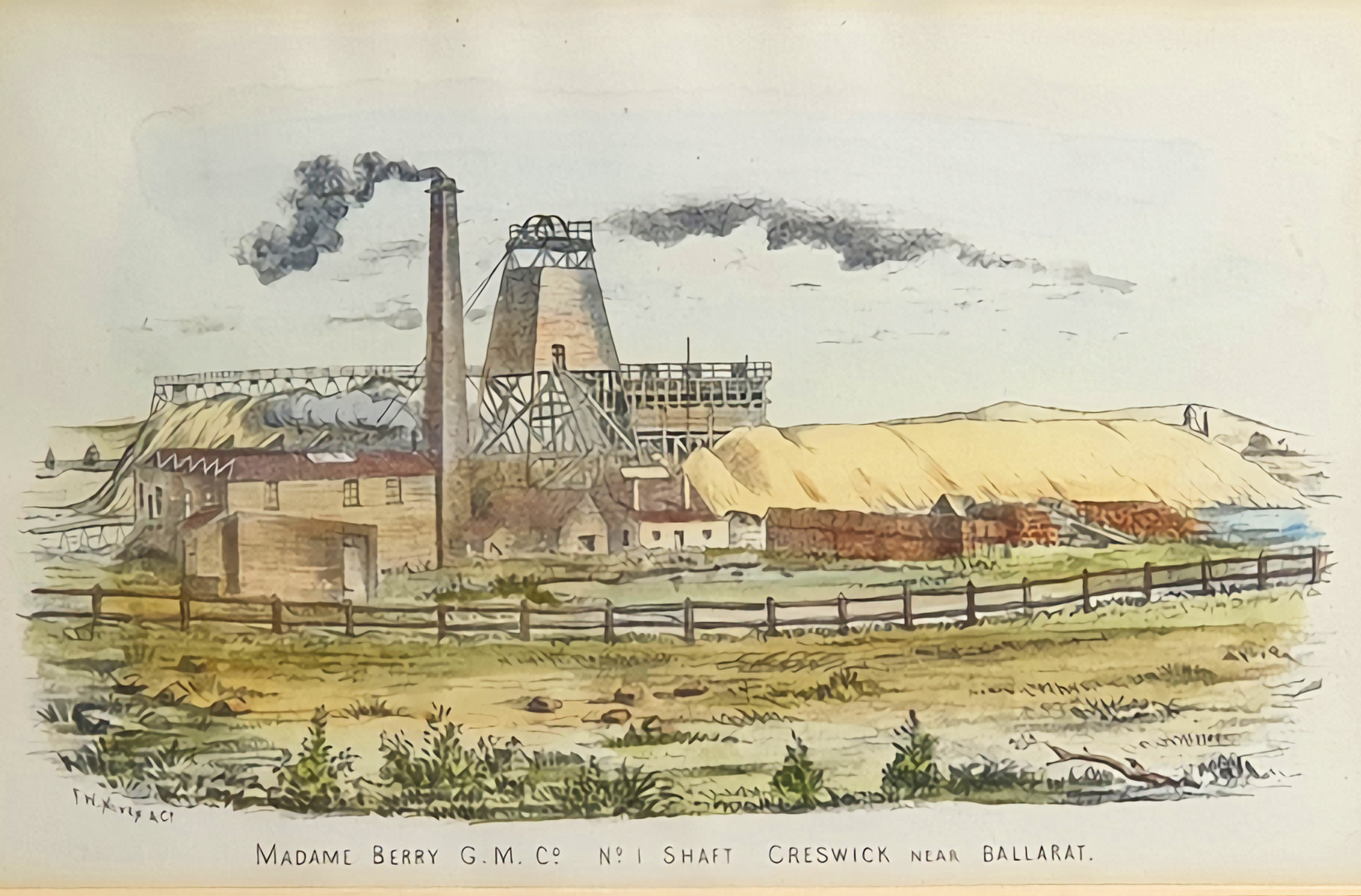
Of all these operations the most successful mine was Madame Berry No 1 securing over 10,000 kilograms of gold from its tunnels. Others, such as Berry No 1 mine further north, despite the installation of a 10-tonne pump withdrawing up to 270,000 litres of water an hour, were destined to fail. Millions of pounds were made, millions of pounds lost with little more than mullock heaps remaining to show for all that effort.
Today’s Buried Rivers of Gold route begins north of Creswick at the New Australasian No 2 mine. This was the site of Australia’s worst mine disaster in 1882 when 22 miners drowned. From there, the trail heads 10 kilometres north to Berry No 1, back east towards Smeaton before turning south and passing through the remnants of old mining villages such as Allendale, Broomfield and Smokeytown before returning to Creswick.
In all there are around 100 waypoints on the drive comprising a substantial portion of the UNESCO World Heritage bid to recognise the historical Central Victorian goldfields region.
“The plan to submit a World Heritage bid demonstrates that the areas have a connection to the past that has deep meaning for the local community.” says Margaret. “But the bid process will take time and meanwhile local sites such as the Buried Rivers of Gold region continue to need protection and that’s what we are doing.”
Words: Tony Sawrey
Main image: Madame Berry GMC No 1 shaft 1887 lithograph, courtesy Victorian Collections | Bottom image: Berry No 1 mine ruins, Tony Sawrey
May 24th, 2022Viva! A precious slice of Italy is born again
THE year 1859 was amazing. Among inventions patented that year were the paper bag, electric range, lifts and rechargeable batteries. A Tale of Two Cities was published by Charles Dickens, as was Charles Darwin’s On the Origin of Species. Big Ben began ticking in London and the French acrobat Blondin crossed Niagara Falls.
As wars raged across Europe, two brothers escaping political persecution found their way to their gold-seeking countrymen in Hepburn Springs, where they built what became the beloved Old Macaroni Factory.
Now, for the first time, the ancient stone and brick building has been sold and is about to be given a new life by Daylesford couple Jennie Wilmoth, right, and Jenni Draper, left, with pooch Dash.
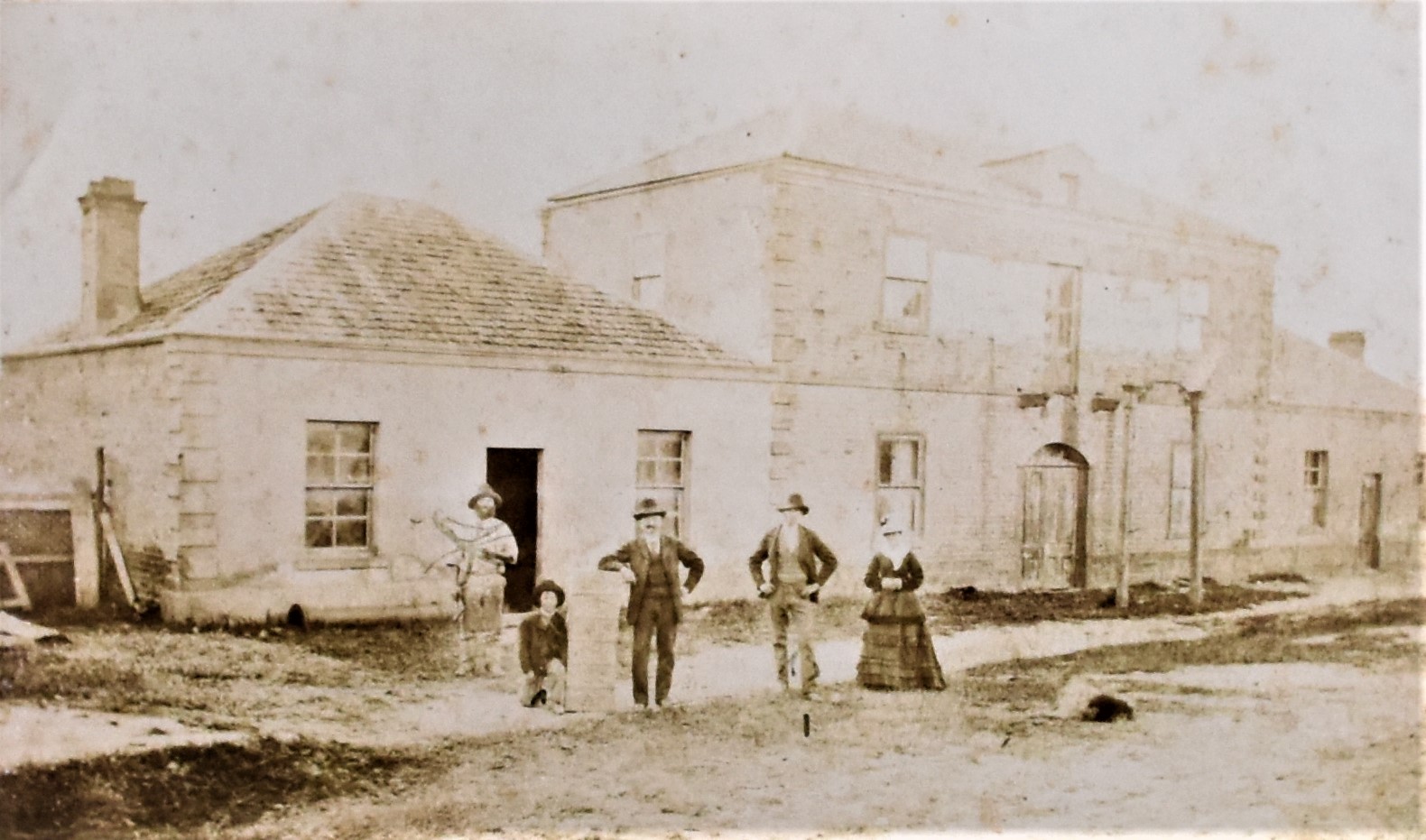
History, politics and art blend beautifully in this 13-room building on Main Road, the creation of Giacomo and Pietro Lucini, with inspiring murals by Giacomo. A faded hand-painted sign on the street announces the Hepburn Democratic Club.
The boldest ceiling mural displays the flags of Italy, Switzerland, France and Britain (representing Australia), and six vignettes of home and family life. The brothers were fabric merchants from Intra on Lake Maggiore in northern Italy, so the lake shines in one mural. Others feature flowers.
A powerful political statement is made by a handcuffed female figure chained to a cell wall in a room with walls covered with stylised frescoes of chains derived from Verdi’s Il Trovatore. The opera is written from Verdi’s heart because like the brothers, he supported the unification of Italy.
Stones from the nearby creek bed are in the walls, some half a metre thick and fixed with a sand-style mortar. On the plaster a hand-written note bears an order by Heritage Victoria: “Leave”.
Out the back is a bocce court, a 162-year-old apple tree, the remnants of vines brought from Italy, and humble corrugated iron dunnies.
The building has had many incarnations. At first, Pietro set up a bakery, over the road, to feed the goldminers, then made macaroni, salami and sausages. Macaroni was a catch-all word for pasta and such was the standard of the brothers’ product that it won a prize at the 1880 Melbourne Exhibition.
They also “grubstaked” – they issued miners new to the area with provisions and implements to start mining. In return Pietro received one stake in their mine. The first investment resulted in a very profitable gain but a list of unpaid monies showed it was not a very profitable investment. Pietro’s own mines had a good return for a couple of years.
The brothers even opened a licensed hotel, the Roma, while the pasta making went on until the 1930s when the building became holiday apartments.
Eventually it passed to Giacomo’s great-granddaughter, Maria Viola, who now lives next door. She inherited a derelict building, with rats, possums, rotting floors, collapsed ceilings, rising damp, blackberry plague and squatting tenants in 1990.
Maria was a widow with six children. She says that after becoming caretaker, “I became hooked, the passion just somehow snuck in”. On weekends and holidays she and her family would come up from Melbourne to tackle an epic restoration.
Fourteen years after taking over, she opened Lucini’s Pasta Restaurant, a step up from when the place was a 1940s caravan park, and later, a “haunted house” (ghost sounds courtesy of brooms banging floorboards from below). After 14 years the restaurant shut in 2017. Now, for the first time, the owners are outside the family.
The new owners did some hard yards in restoration when they converted a former church at Scrub Hill, Dean, into a wedding and hospitality venue. They are working closely with Heritage Victoria.
“It’s a magical place,” says Jen Draper, “…how you wind through the building, feeling its history, into a garden where you begin to believe you’ve found ‘Little Italy’.” Adds Jennie Wilmoth: “Everything will be left as it is, the fabric of the building will be honoured,” expressing delight that the heritage architect involved also worked on the building 30 years ago.
She is almost equally as excited to note that here and there knots in the floorboards stick up to show the wear of hobnail boots and more over time.
With this weight of history and tradition, many people would find tackling such a restoration too daunting. So are the new owners, “the two Jens” as they are known, being courageous? “Are we brave?” answers Jennie Wilmoth. “No, we have great architects and tradies, with whom we’ve worked before. We have a track record with Scrub Hill, and we love the Old Macaroni Factory – we are just so excited!
“As we launch into ‘retirement’ we know this project is well within our scope, and it’s just the sort of legacy we’d be thrilled to leave behind!”
Words: Kevin Childs | Image: Kyle Barnes

May 24th, 2022Your Say – Letters
Last issue (The Local, May 9) had two letters condemning the recent fire risk mitigation and timber salvage operations being undertaken by VicForests in the Wombat State Forest abutting Lyonville township, calling it environmental destruction.
Having worked in forest and ecosystem management, Landcare and revegetation for over 40 years I must contest this emotive opinion.
Rather than rely solely on my own experience, qualifications and onsite observations however, I refer firstly to Dr Kevin Tolhurst AM, Associate Professor Fire Ecology and Management, School of Ecosystem and Forest Science, University of Melbourne from his recent ABC interview on Drive on this very topic.
Tolhurst referred specifically to the June 2021 storm damage at Bullarto where, like Lyonville, the fallen trees have completely blocked most of the CFA access tracks abutting the township, pictured, and also throughout the surrounding forest making it almost impossible to walk through. The fact these tracks are now blocked is in itself a major fire hazard as in the event of a fire CFA crews will not be able to access many areas.
Tolhurst went on to suggest it’s not healthy from a human life and property point of view or from an environmental point of view to leave the woody material on the ground, agreeing with the Dja Dja Wurrung traditional owners to remove same.
From a logistics point of view the only way to remove the tens of thousands of large and small fallen trees is with large harvest and haulage machinery which will open the numerous forest trails essential to future CFA fire-fighting efforts. I have spoken to many residents in Bullarto who are also looking forward to these works being undertaken for future forest safety, amenity and access.
As many, including Tolhurst have said, this regrowth forest needs thinning and needed it long before the storm.
Link: https://omny.fm/shows/drive-with-tom-elliot/protesters-block-fallen-timber-clearing-despite-fi
- Gary McIntosh, Forestry and Landcare consultant, Bullarto
May 24th, 2022Your Say – Letters
In our unpretentious street in Clunes I can count at least five houses which I would describe as uninhabited.
Some others are supposedly weekenders, but several of these are seldom visited and effectively empty for 99 percent of the year. This is duplicated across the shire.
More than 500,000 Australians own holiday homes. A report published in 2020 found 69,000 underused or empty homes in Melbourne. At the same time, there are over 2.2 million property investors in Australia, of which around 30 percent own two or more properties, accounting for more than three million homes.
The rental crisis in the regions is driven by demand but the practice of buying country properties up and shutting them down has escalated dramatically during the lockdowns.
It’s still a free country and folk can choose how they invest as it suits them but investing in people’s homes comes with consequences.
- Pat Hockey, Clunes