


January 2nd, 2022In Design with Indre – Merch’n dise
The mood is shifting. You can feel it. We, as a society, are more confident that the COVID-19 pandemic is under control.
You see this with more traffic on the roads this week, more tourists in small towns and encouragement from the government that 1 million people will be back in work by June.
People will be making decisions about whether they want to continue working from home, go back to the office or a combination of both. Shops, cafes and pubs are talking of re-opening which means they need to entice customers back. We have been experiencing a new normal where food is take-away or delivered to your door and retail purchases are a click of a button away in the comfort of your home.
Businesses now have the golden opportunity to refresh themselves. To incorporate some visual merchandising theories to entice the customer, not just provide a service. To maximise the aesthetics of a product with the intent to increase sales. To bring people back to your door.
Customers eat first with their eyes. You have three seconds to be recognised, to state what your business does and to appeal. Good examples of visual merchandising in retail are those that leave the customer with a positive experience.
Some important points to remember are:
Be visible, once the customer is attracted, lead them in with an appropriate focal point. Lead the eye to what you want them to see and lead them through, so they don’t have to guess where to step next. Same goes in retail, food and services.
Place seasonal or special items upfront. Be relevant.
Use signage, inside and out and be clear with what it is and how much it is.
Leave blank space to keep it simple as less is more, so you don’t overwhelm the customer. Display a wide variety of product but present it in an organised way. Add interest by using something different to display on, like a chair or sideboard instead of shelving or hang an artwork from the ceiling or outside. Anything goes when being creative.
Tell a story by featuring a cluster of goods that will be great together, such as trousers, a shirt, a bag, shoes, an umbrella, perhaps a picnic rug and an unusual item that will grab attention e.g. a teapot and cup in a menswear window, used for contrast. IKEA shows scenes and stories very well by presenting a whole bedroom or kitchen scene to save you imagining. It’s all laid out for you to indulge in.

Lighting will set the mood in the premises, as will music. Bright lights are modern and casual while soft lighting is intimate, giving more ambience. Highlight merchandising with spotlights. Use dimmers and underlighting on shelves and steps. Choose the tempo and volume of your music to match visual elements and product in store. It sets the mood.
Let us not forget the power of smell. Seventy-five per cent of people’s emotions come from what they smell. A 40 per cent improvement in mood is experienced when people encounter a pleasant smell. Real estate agents are well aware of the enhanced appeal during a house inspection when there is fresh brewed coffee or baked bread smells.
Above all else, use imagination and creativity. Regardless of the type or size of business, create an atmosphere that puts the customer at ease. Adding inexpensive and personal touches can give a unique personality. Shopfronts are all about individuality and finding a niche to sit in. Be enticing and satisfying and remember to engage all senses. A computer can’t give you experiences but your creativity can.
Indre Kisonas – principal designer – iok design
indre@iokdesign.com.au
www.iokdesign.com.au
January 2nd, 2022Powlett Hill – leading proponent of biodynamic farming
Deep gullies cut through the ground, and the land is studded with rocks and boulders, making access all the more difficult. When seasonal green covers the land, it softens the harsh contours, but you still marvel at the tenacity of the early farmers who settled – and stayed – here.
It seems a little unreal, then, to be out here, about 35 kilometres north-west of Daylesford, at Campbelltown, on our way to a flour mill. And not just any flour mill; we’re on our way to visit a leading proponent of Australian biodynamic farming, Powlett Hill.
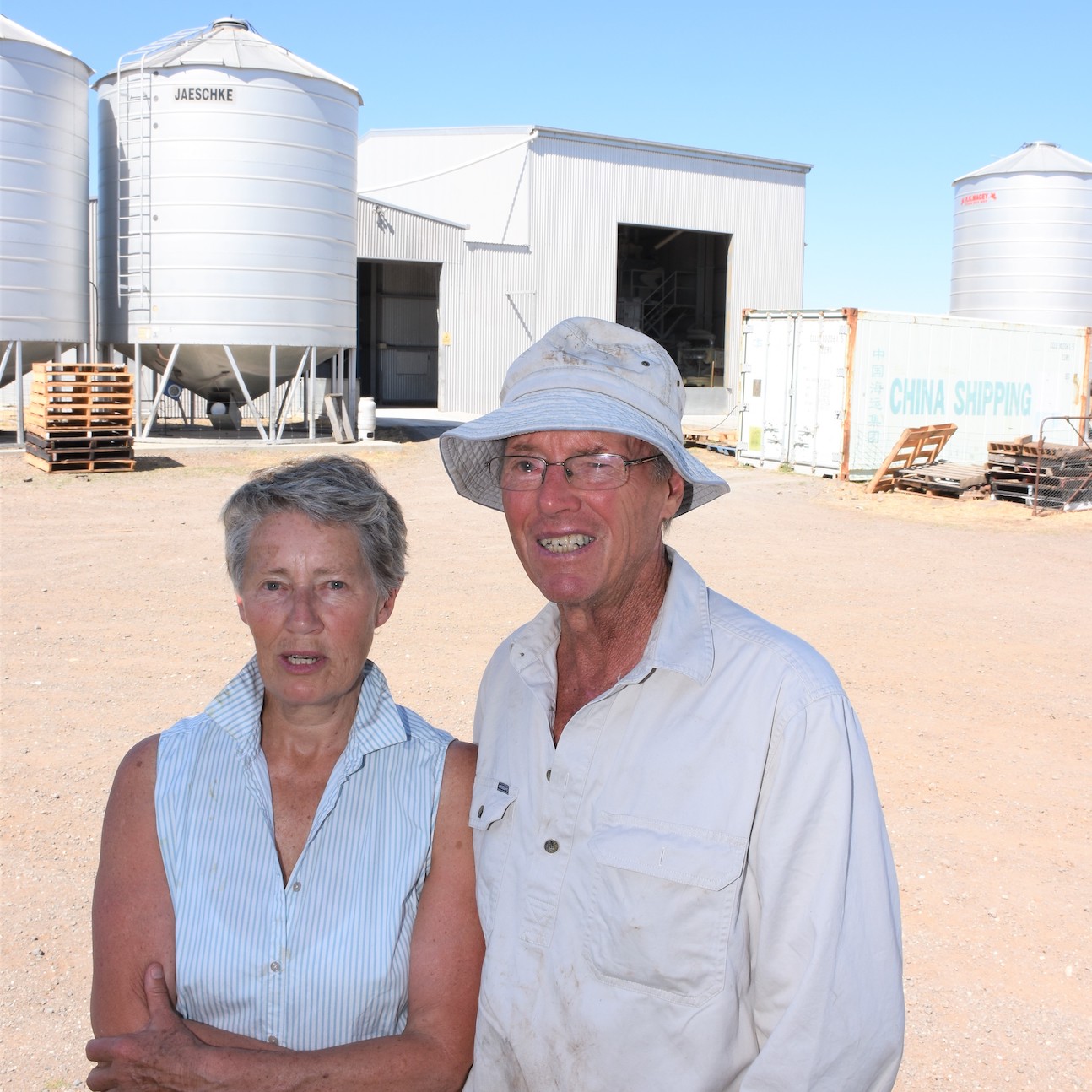
When we arrive at the mill we’re greeted by Andrew Fawcett, whose family has been farming land around these parts for more than 150 years. Inside the dusky, surprisingly cool shed, the flour mill is in operation.
Andrew takes us to where grain is being slowly fed into the millstone grinder. The pulverised material is fed by a conveyor belt into a sifter box, where the chaff is separated out along with the various consistencies of flour.
Andrew sticks his hand under one of the spouts protruding from the sifter and collects a sample of flour. He gently taps the powder into his palm, showing us how fluffy it is, free from unwanted materials or clumps.
“You know where the saying ‘nose to the grindstone’ comes from?” he asks. “Because the only way you can tell if the flour is right is by putting your nose in it, smelling it, feeling it,” he says, gently rubbing flour between work-hardened thumb and forefinger.
And yes, from the aroma of this freshly ground flour, you can easily imagine the loaf of bread it will eventually become.
Wheat, rye and spelt grains are stone-ground in the mill, and Andrew is equally taken by the artistry that goes into the making of milling stones, as by the quality of the product they help create.
Andrew, his wife Jenny and their son Ben farm about 1200 hectares here in Central Victoria, where they raise livestock, and grow spelt, a grain prized for its low gluten content, and wheat, although the Central Victorian climate is challenging in this regard, so the Fawcetts buy much of their wheat and rye from other biodynamic farmers around the region.
They also sell eggs from their more than 2000 free-range chooks, which are raised according to strict biodynamic principles, and part of their diet includes whole wheat and bran from the flour mill.
Fresh is as important when buying flour as it is when choosing a cabbage or a bunch of asparagus. As Jenny explains, flour, like pretty much all fresh foods, begins to lose nutritional value as soon as it is processed. Powlett Hill sells flour to several bakers and pasta makers in Victoria and New South Wales, including the Zeally Bay bakery in Torquay and the sacks of flour don’t hang around the mill for long.
While the pandemic disruptions of the last couple of months have affected many producers, the Powletts’ operation has seen only minor changes. “It has been a bit tricky,” says Andrew. “We had to actually stop people randomly coming up from Melbourne to pick up from the farmgate but we have been supplying the normal amount of product to our business regulars. And our main outlet, the Melbourne-based Biodynamic Marketing Company, are actually having trouble keeping up supply. There has been an increase in demand for flour due to people being at home doing more cooking and baking.”
When it comes to biodynamics, Andrew is a potent proselytiser. Around 2000 the family decided there had to be a better way to farm. Andrew’s great-grandfather Joseph Powlett came to the region from Britain and found success as a butcher. When gold fever swept through the country, Joseph stayed put and made his way by feeding the miners, as a grazier and farmer, putting his money into land and livestock.
The Powlett holdings changed over the years, as these things happen with time; parcels of land were added and sold, although Andrew says son Ben has recently bought back some of Joseph’s original property.
Andrew explains how they’d been using conventional farming methods, including chemical sprays and fertilisers, for decades – Ben, who runs much of the business today, is the fifth generation of Powletts to work this land – and they saw a noticeable degradation in the quality of the soil and the crops it produced.
Following the teaching of Alex Podolinsky, one of the key developers of biodynamic agriculture in Australia, the Powletts transformed their practices. Briefly, biodynamics is an advanced form of organic farming that involves soil preparation and treatment techniques that have been shown to produce more friable, fertile soils, with excellent water retention, and healthier plants and animals.
It’s a big commitment to doing things differently, but it appears to have paid off for the Powletts. They don’t see biodynamics as a marketing point of difference. Rather, they regard it as a better way to farm, and live.
Words: Jeff Glorfeld & Tony Sawrey | Image: Kyle Barnes
January 2nd, 2022Sustainably produced food for the masses
But much of that has changed since travel restrictions were put in place. Tourists disappeared and the public places where he sold his produce shuttered in the blink of an eye. It has led to some reflection on where to next for Danny’s Farm at Blampied.
Danny came to Daylesford as a kid with his parents and went to school in Daylesford and Ballarat before heading to Melbourne University to study psychology and English. He moved back to Blampied six years ago and promptly changed career direction towards farming, initially leasing two hectares from his father. His desire was and remains to practice sustainable agriculture and reconnect consumers with the places their food comes from.
One way to do that was to establish a presence at places like the Daylesford Sunday Market, farmers markets at Melbourne University, Creswick and Ballan. Initially he did this by providing egg and bacon wraps, using his free-range eggs, his neighbour’s free-range bacon, creating the wraps from scratch and adding a home-made mayo, again using his eggs and thyme grown on his farm. But every market he approached already had someone selling the breakfast staple.
His sister, a keen baker, suggested friands, which are made from egg whites and are gluten-free, and soon every market was keen to have him on the books.
But it meant a lot of leftover egg yolks. Again, his sister came to the rescue with the idea of the Portuguese custard tarts. The story goes that they were first made by monks who were using all their egg whites to starch nun’s habits.
Whatever, the idea was a hit and Danny’s Farm was doing a roaring trade with them, along with brownies and pulled pork rolls using local free-range pork, apple sauce from locally grown apples, and even coleslaw from locally grown cabbages. The next was a food van, which was being built in a shed on his property, to sell the tarts “straight out of the oven” and specials depending on what was in season.
Then came the pandemic crisis.
“It had a pretty big impact on our outlets. All the farmers markets where I was trading were cancelled. I’m still doing the Daylesford Sunday Market but that is restricted and there are no tourists. And the items we do, Portugese tarts, brownies and ice cream are kind of luxury eats, not a necessity. At one point I was thinking of wholesaling to cafes but then they have been impacted as well. So it has been a time of uncertainty here and has made me rethink the direction I want to go in.”
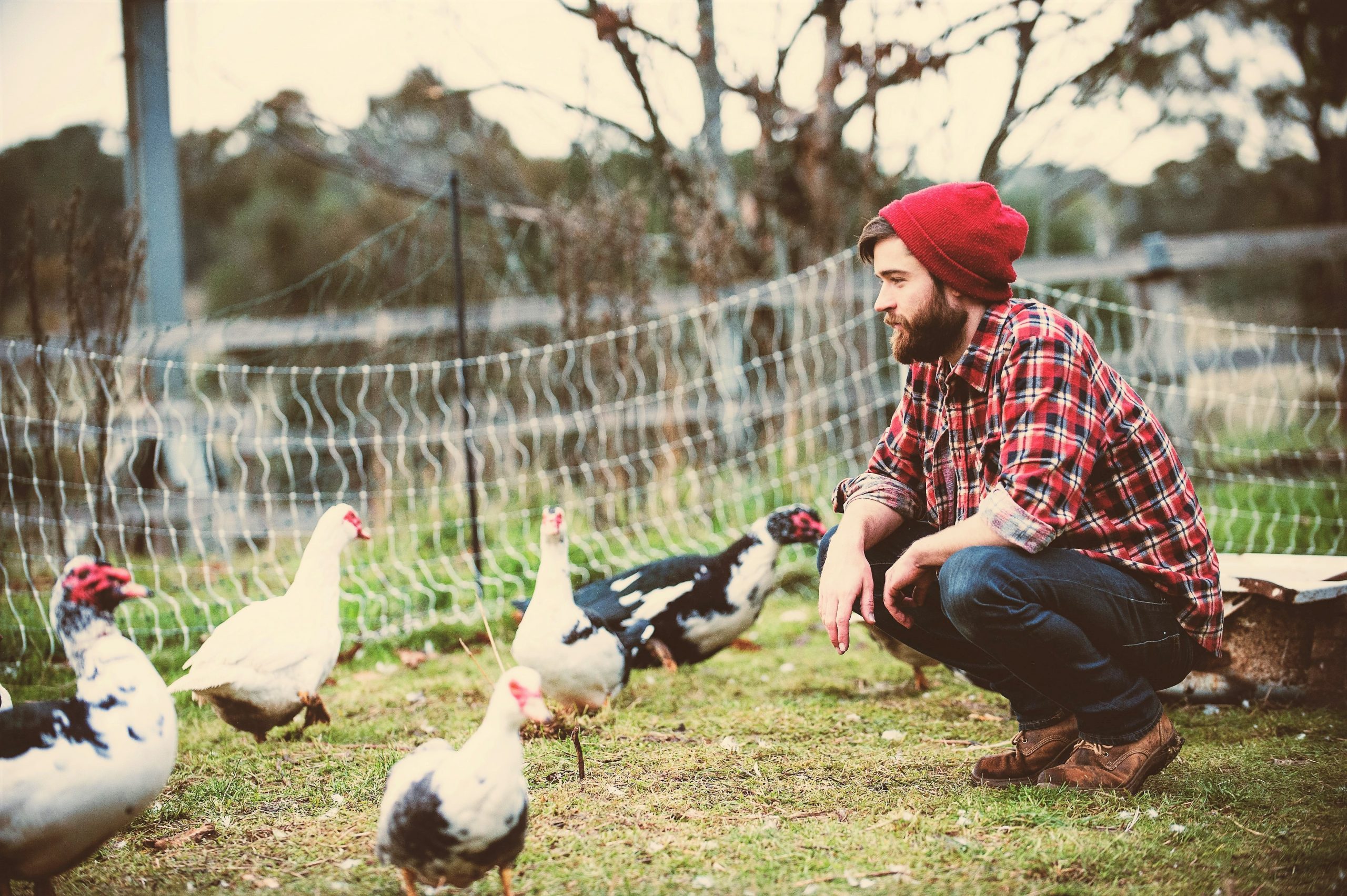
The 30-year-old, who has a steer, cow, calf, ducks, hens and large veggie patches, says that his current property (two hectares) is “probably the smallest scale you can do” and clearly was not flexible enough when the business model went belly-up.
However, not all is gloom. The enforced hibernation may be frustrating but it has also allowed Danny some time to consolidate what he has, to work on new projects and set about planning his next steps. That includes buying a further 10 hectares to extend his holdings. The additional land will help him rebound from his current difficulties and let him pursue his interest in the regenerative agriculture movement at a larger scale.
“The movement is based around constantly moving the animals so the grass gets the chance to rest and recover and you can make use of that manure and your animals are always moving onto fresh grass as well. You regenerate the ground and the grass comes back with more diversity as well. The roots go deeper and you get more carbon into the ground, it’s a really nice little system. I’m looking forward to doing it on a larger scale and being able to produce more for the community.”
Agriculture in Australia has always been vulnerable to the vagaries of weather and climate. Farming success always comes moderated by times of difficulty and setbacks and the COVID-19 pandemic is just another hurdle to address. There is no doubt that Danny Kinnear and his farm will come back from this current setback and he has already started his journey.
Words: Tony Sawrey & Donna Kelly | Image: Contributed
January 2nd, 2022Community-minded, passionate and dedicated
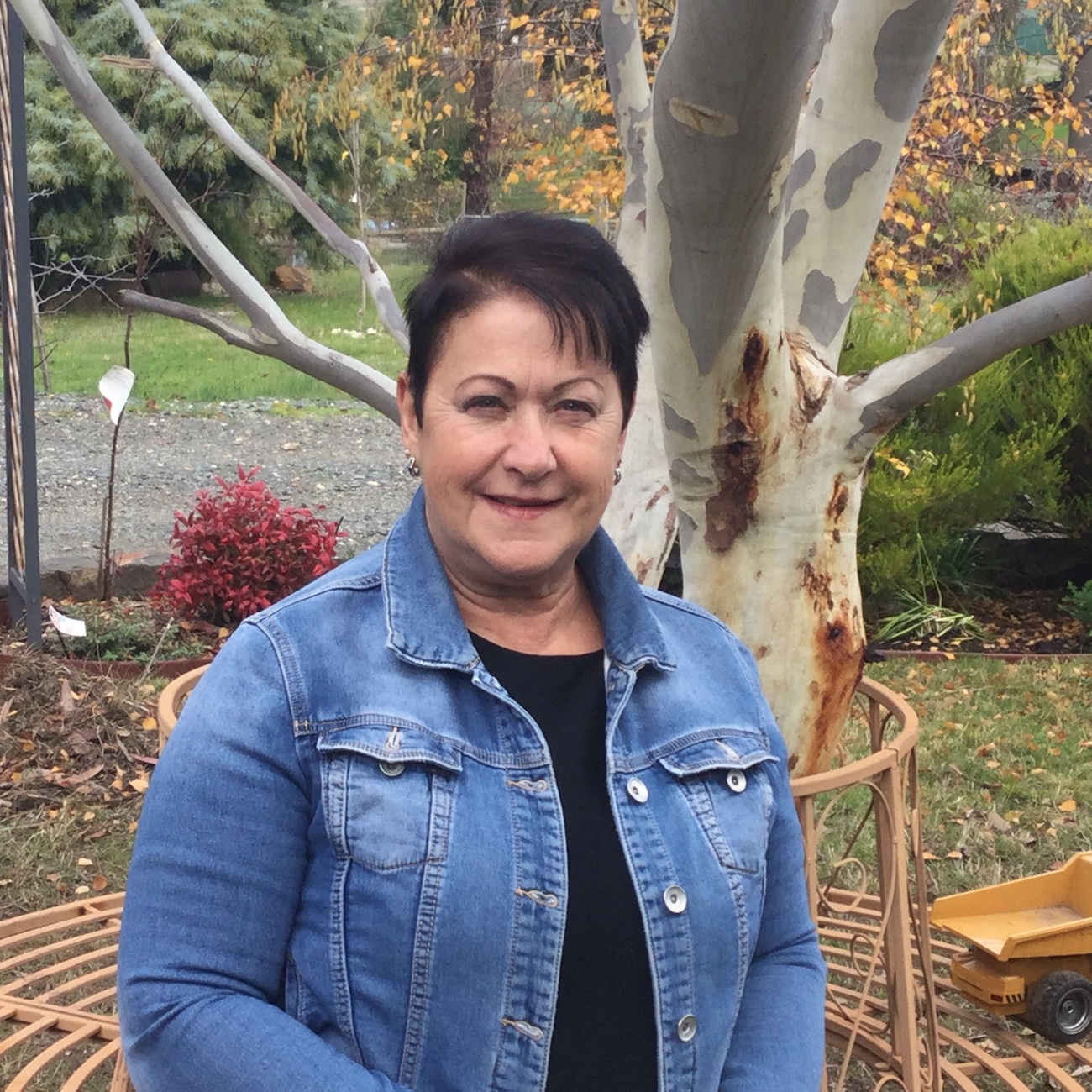
GIVING back to her community has been very rewarding for Janine Booth – and it’s been pretty rewarding for her home town of Creswick, too.
This Saturday morning, Janine will probably be at home and that is very unlike her. Usually, she’s down at the Visitor Information Centre, volunteering on Saturday morning. The centre was built while she was serving on Hepburn Shire Council and it’s just one of many projects that Janine has helped along in her community.
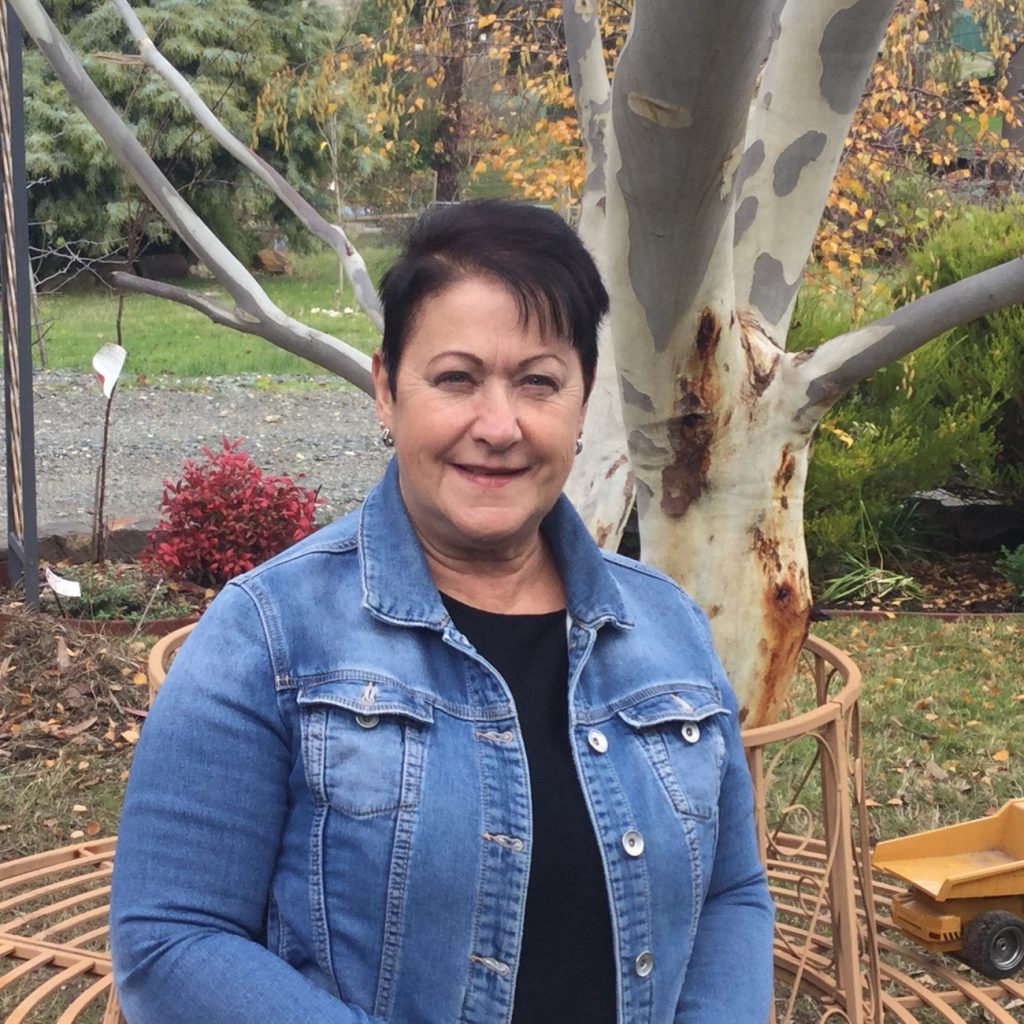
“Please don’t make me out to be a hero,” she said. “I have a lot of support, friends and family, and there’s so many volunteers too.”
Still, non-hero Janine has achieved a lot for her community.
She was born and bred in Kingston, briefly moved to Melbourne to work for Australia Post and then returned, marrying a local boy, Bill, over 40 years ago and eventually taking over the Creswick Post Office business.
“I’m very fortunate to own a business in my hometown. We’ve had it 21 years now, it’s a bit of a coming of age.”
Her community involvement started way back at the beginning, though.
“I think that, having lived here for 40 years now, and having raised our kids here, so you get involved initially with the kindergarten, the primary school, the netball club… I was the secretary and treasurer of the footy club, you get involved in what your kids are doing.
“You get into those things and then also I was with the pre-school and president of the primary school council at Creswick for five years. And I was involved in the Mt Prospect Tennis Association as well, so naturally I think you’re going to be involved in council as well, because it’s the closest government to you.”
Janine was the Creswick Ward councillor for seven years and also served a term as mayor.
“It was really interesting and I learned a lot, particularly around the diversity within our shire. I was very comfortable as the representative for my local area around here on council. But I try not to get too much involved with local politics now – I’ve got seven grandchildren who all live within a few minutes’ drive from me, and that leads to what I’m doing now.”
With the global pandemic, Janine has been at home looking after her two youngest grandchildren. There’s a bonus to that, too – they’re helping her in the garden.
“I had an open garden for the Garden Lovers’ Weekend, I have a bit of a passion for gardening as well.
“COVID-19 has been an opportunity for me to step back. I’m working part-time at the post office, my daughter pretty much runs it now, and I go in to sort the mail and do the books. It’s a good family business. And I’ve been able to put more time into the garden.”
Leading up to her semi-voluntary semi-retirement, Janine has also been involved long-term with Creswick Business and Tourism, the local business advisory group, she is a committee of management member for the Doug Lindsay Reserve, which she also has a great passion for, and not only was she an original member of the steering committee to establish the Creswick Community Bank but she has also served as a director for 13 years.
Hero? Maybe not. But a community-minded, passionate, dedicated and committed hard worker? Definitely. “I really believe that everybody puts in what they can, when they can. You get out of a community what you put into it. It’s good to be able to give back. It’s been very rewarding.”
“COVID-19 has been an opportunity for me to step back. I’m working part-time at the post office, my daughter pretty much runs it now. It’s a good family business. And I’ve been able to put more time
into the garden.”
Words: Kate Taylor | Image: Contributed
(This article is supported by the Judith Neilson Institute for Journalism and Ideas.)
January 1st, 2022Treading the Path of the Horse
HUMANS and horses as a species have been intertwined for nearly 6000 years and it has been for the most part, a relationship built on necessity.
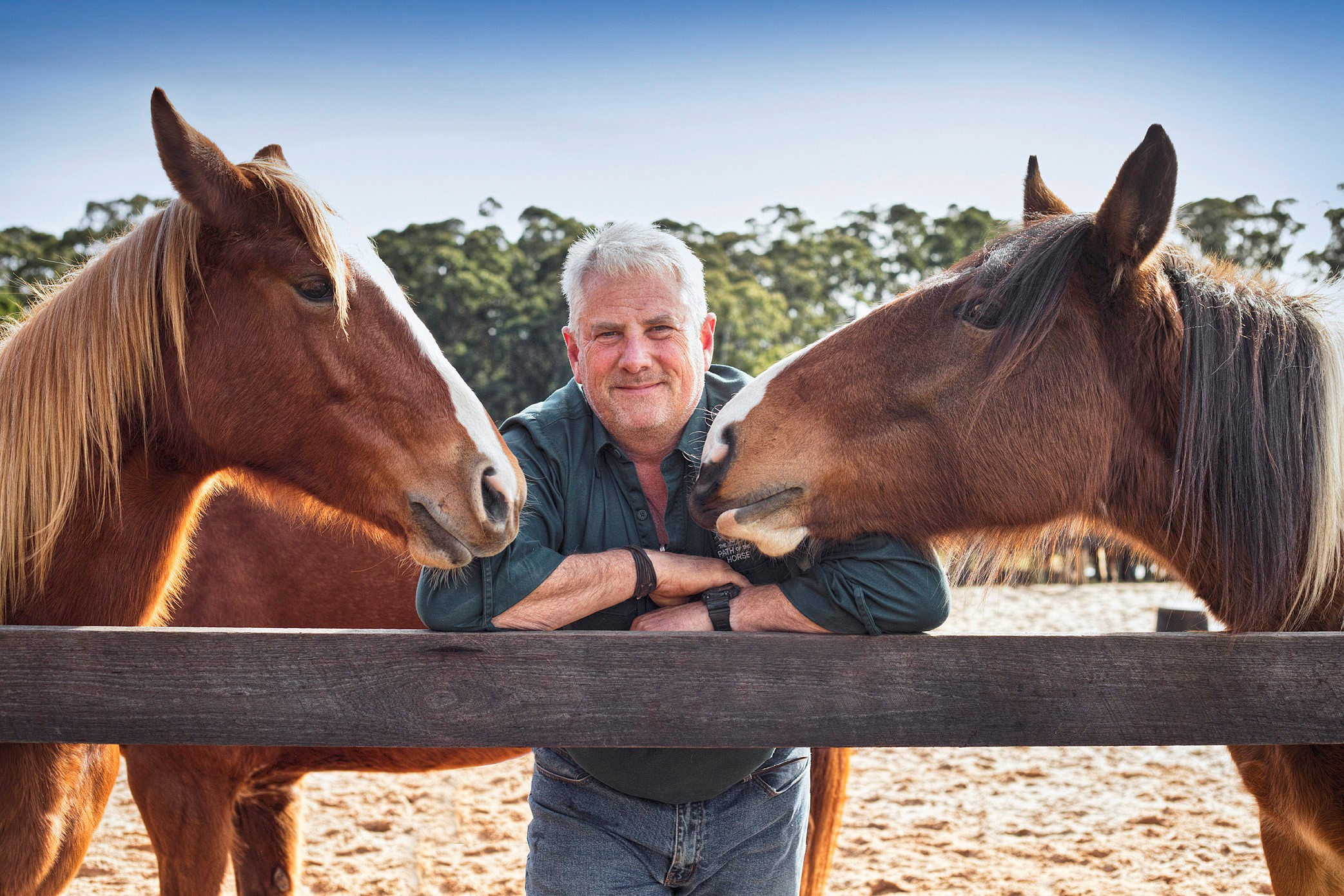
But the arrival of machines and internal combustion engines was far from the end of the horse as far as our relationship with them was concerned. They remain as our companions in sports, recreation and in recent decades, as participants in the practice of equine psychotherapy. Dean Mighell, founder and director of the fundraising charity The Path of the Horse is a practitioner of this form of treatment based in the Wombat State Forest near Trentham, at the John Monash Equine Therapy Centre.
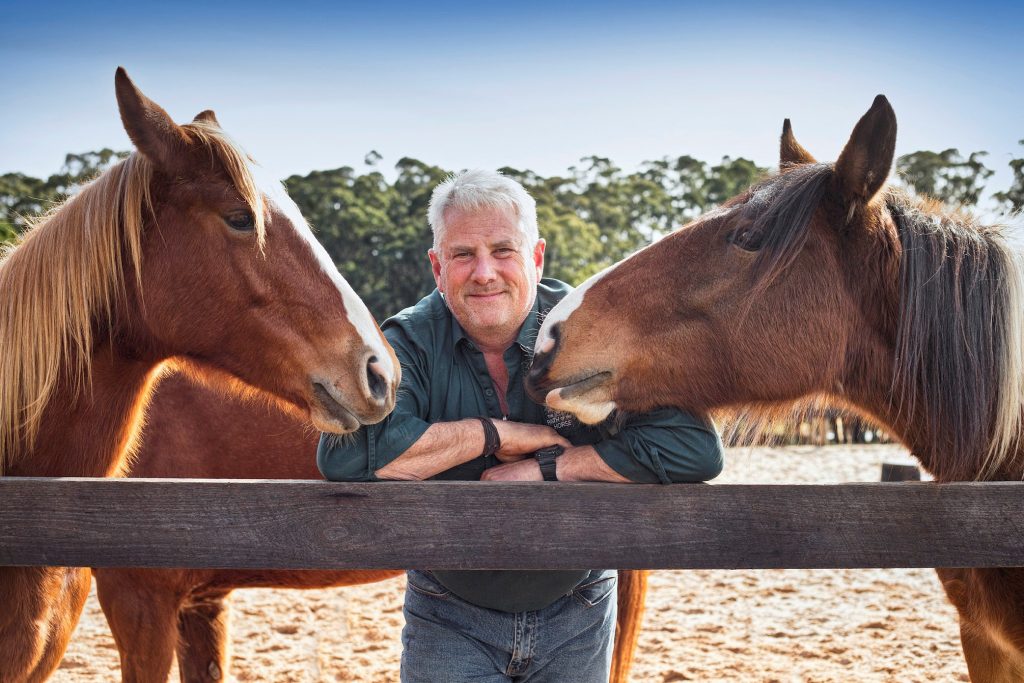
“After working in the labour movement for 25 years I decided to get away from the conflict and politics and get some peace in my life. At the same time, I became interested in the treatment of US military veterans suffering post-traumatic stress disorder using horses. I thought ‘Wow, I have a lot of experience with horses and I’ve got a beautiful place in Trentham, I’ll do something like that here’.”
Dean began his own journey on the path of the horse in his early 20s. And over the years he continued to develop his skills working on weekend trail rides through the Barmah Forest. But he realised that he did not know enough about helping people with mental health issues and would have to learn more about the profession; especially if he wanted to include horses.
Then while on a trail ride, someone mentioned Meg Kirby of the Equine Psychotherapy Institute, based at Mt Prospect near Daylesford. He got in contact and soon completed its Equine Assisted Learning Practitioner program. He has also completed an Advanced Trauma Training course and continues to study at the Gestalt Institute of Australia.
By 2015, Dean began developing his property with facilities for conducting treatment sessions and gradually acquired a motley collection of horses and ponies who love nothing more than to say hello, make friends, get pats and help people heal.
“My herd ranges in age from two to 20. Montana is the youngest and Rocky is the oldest,” says Dean, “and they are trained specifically for their role as therapy horses. Most of the work we do is ground work and very gentle but the training is really important because safety is paramount physically and mentally for both horse and person. However, I still want my horses to be an inquisitive bunch. They are all very individual and very curious about new people, new opportunities.”
Since The Path of the Horse was established, they have been building up a client base that covers a wide spectrum. Dean has worked with children as young as 10 and teenagers. He has assisted people with autism, people battling addictions, grief and issues with self-harm. Sessions at the John Monash Equine Therapy Centre have also included soldiers, emergency services workers and nurses with conditions such as PTSD, anxiety and depression. There are also many clients, especially women, recovering from relationship trauma and other conditions.
And while the last few months have been difficult, with visitors thinning and group sessions out of the question, the time has been a very enlightening one.
“It did go pretty quiet for a while but we continued much of our critical work helping those with trauma, anxiety and depression via Facetime and Zoom.
“In fact, some of our client base actually were really enjoying the time out.
“The solitude, the slowing down, the time to reflect on themselves, relationships and such. But what we also have noticed, especially in the last month since COVID-19 started to really bite, was other people feeling the negative effects of isolation. Some found it very, very difficult particularly in the last month.”
However, things are looking good for The Path of the Horse now that social restrictions have been eased. In recent weeks they have already started to get more enquiries. “We have seen more people coming out for support work,” says Dean “and more are really beginning to understand what lovely assistants our horses are.”
Words: Tony Sawrey Image: David White

January 1st, 2022Wine Notes
JOHN Burford is the owner/operator of Limestone Track Vineyard near Guildford.
The vineyard was established by the Burford Family with the first plantings being cabernet sauvignon in 1989. Soon followed plantings of shiraz and later chardonnay, merlot, and a small block of tempranillo.
“Located near Guildford, the warmer climate is more suitable to the red varieties we grow, providing fruit at optimum levels to enable us to provide quality wines,” John said.
“My favourite wine in the winter months is our cabernet sauvignon. A full-body wine with a fruity bouquet, rich berry characters and soft tannins on the pallet. To be enjoyed over dinner with friends near a nice glowing fire to keep warm.
“Our rosé is also extremely popular, and every year we sell out well before summer ends. This wine is made from cabernet sauvignon and a small amount of merlot fruit.

“During these stay at home, isolated conditions that we are currently experiencing, we are open by appointment for purchases only so please check our web site www.limestonetrack.com for contact details or our Facebook page. We offer free delivery in the local region for a minimum of six bottles.
“If you are in the Daylesford region call in to Cellarbrations where you can also purchase our wines. They have been great supporters of ours for many years and their friendly staff will be happy to advise you on our wines.”
The Local is running Wine Notes in each edition – featuring wineries from around the region. To take part email donna@tlnews.com.au
And please, when you can, support local. Oh, and drink responsibly.

January 1st, 2022Historic finds unearthed during Sewer Build
Central Highlands Water (CHW) today celebrated the successful completion of Stage 1 of the Ballarat Sewer Build.
The major community legacy project, which represents an investment of over $25m in the Ballarat region, began in April this year.
CHW Managing Director, Paul O’Donohue, highlighted that Stage 1 of the project has seen the installation of almost one kilometre (960 metres) of sewer pipe 4-6 metres beneath the CBD, along Peel Street, Eastwood Street and Anderson Streets East and West.
“Construction has included more than 13,000 tonnes of crushed rock compacted, two micro-tunnels bored beneath critical traffic intersections, 220m3 of concrete poured and three large sewer connections made into the existing network. A total of 22,000 working hours have been undertaken to complete Stage 1.
“We’re also looking forward to reinstating the temporarily sealed roads in Eastwood and Peel Street, which we will be working with the City of Ballarat to action in early 2022,” Mr O’Donohue said.
CHW project manager Mick Dwyer said the completion of Stage 1 was an incredible example of the Ballarat community’s resilience and future-focus.
“The support of our local community has enabled us to meet every challenge throughout this intricate major infrastructure project. We sincerely thank the many businesses, residents and stakeholders for their collaboration and patience throughout stage 1 construction,” said Mr Dwyer.
“The community spirit shown during construction, particularly during challenging COVID-19 times and severe weather events, has been greatly appreciated. The understanding shown by both our business community, and residents, have made a highly complex project achievable,” said Mr Dwyer.
Ballarat Sewer Build excavation works also unearthed significant remnants of Ballarat’s colourful history, with an unexpected historical discovery – The Bakery Hill Sawn Timber Water Supply Pipe, located 1m beneath the road surface at the junction of Peel Street and Eastwood Street.
The historical artefact, which is now registered on the Victorian Heritage Inventory, consists of an enclosed square sawn timber box water supply pipe, measuring approximately 0.5m x 0.5m. The pipe likely formed part of the drainage infrastructure from the nearby Yarrowee Creek in the 1850s. While no specific documentation relating to the timber structure has been located, mid-nineteenth century maps of Ballarat indicate it is situated near washpools and workings associated with gold mining in the area.
Page 2
Other significant discoveries during construction included a large tree stump located approximately 3m beneath the road surface at Little Bridge Street, with its root structure still in place, and an old redundant water main from the 1850s was also found that was part of Ballarat’s original water supply. Preserving historical infrastructure was also strongly considered throughout the project. As the project’s new 900mm diameter sewer main crossed the Yarrowee River, qualified stonemasons were engaged to individually number, remove and then reinstate the stones which form Ballarat’s iconic bluestone-lined section.
When all stages are complete, the Ballarat Sewer Build will duplicate the existing sewer line from Ballarat East to Ballarat South, servicing the Ballarat community for another 100 years.
Stage 2: White Flat Oval to Prest Street, will commence in 2022.
For more information visit www.chw.net.au/sewerbuild or phone 1800 061 514.
January 1st, 2022A family affair at the Good Life Farm Co
Stockbroking came first and after studying politics at university Claire found herself in the banking industry for the next 12 years – but also dabbled in beekeeping, getting her first bee hive in 2007.
“I was this weird mix of stockbroking and beekeeping – and I used to get in trouble for having my queen bees sent to the snail mail room at work.”
Claire says there are three types of beekeepers: those doing it for honey, those for pollination and those for breeding queens. The last is the most technical, she says, and also her passion.
“So, for a queen breeder, 14 days before you want to breed a queen, you start breeding male bees and specifically get a queen to start laying drone cells so they can start laying the boys. Then you get a piece of honeycomb that has an egg in it that is less than 24 hours old, and use a special tool to grasp the royal jelly and the egg out and place that into a queen cell and a hanger, and then you put that queen cell into a hive that doesn’t have a queen bee in it and the bees will naturally make the cell into a queen and start creating more queens for you. After a period of time, you take that queen out, and you know exactly what day she will be born, and you put her in a hive without a queen and she will mate with the boys you planted 14 days earlier.”
Such specialist work is of vital importance for the apiary industry. Claire says the majority of our foods need pollination to exist. And many industries like almonds are already under stress and are aware that for the 2025 harvest they will be 110,000 hives short. So every hive that Claire and others like her produce is another that can be distributed on to the honey and pollination industries to help reduce that shortage.
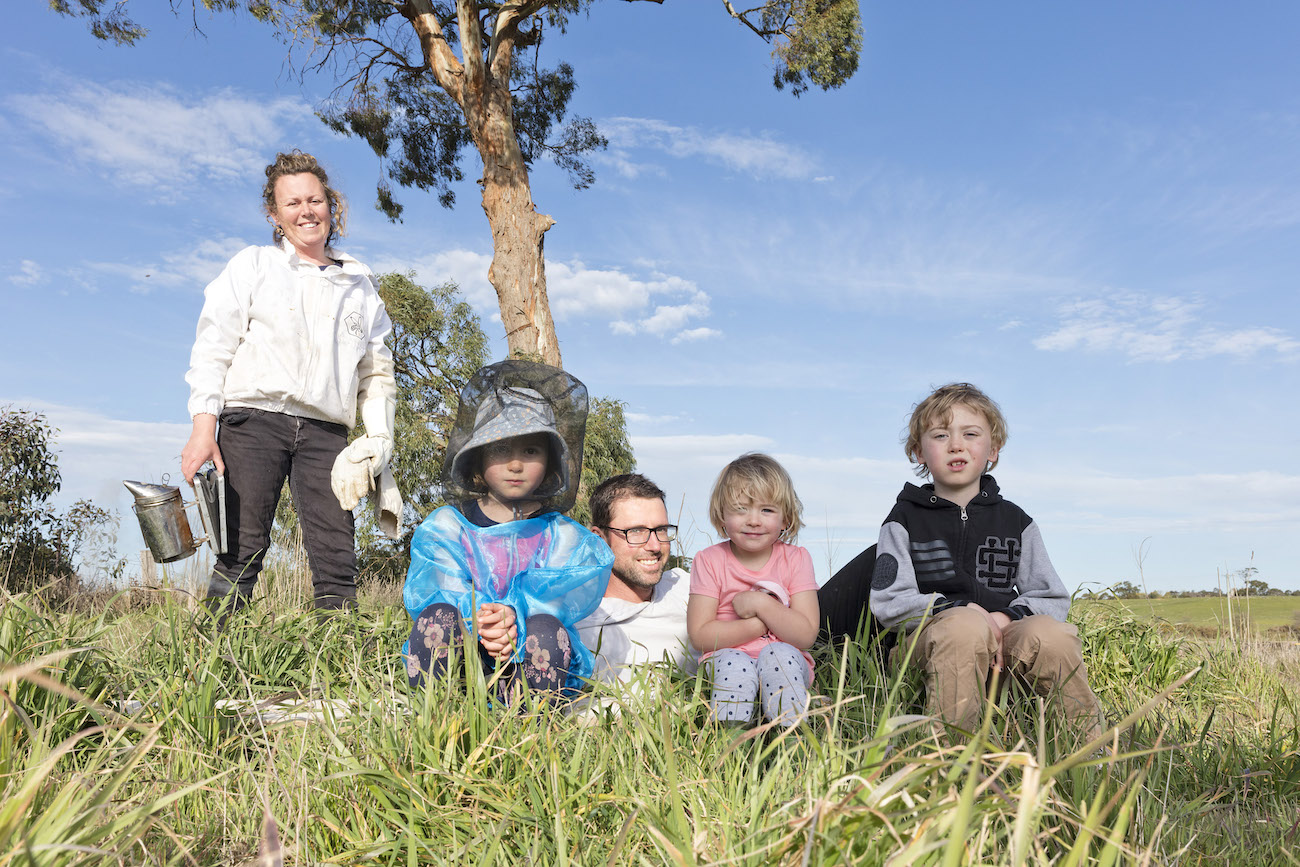
But the Good Life Farm Company consisting of Claire, her partner Paul and three children is more than just bees. They also grow pastured hens and do regular farmers markets. Certainly a good life, but it was not the best of circumstances that led them into farming full time.
They had the property already but the career change came suddenly, after Paul suffered a massive seizure on the way home from his landscaping work. It happened in Kyneton’s Piper Street and he nearly died. Paul recovered but had his driver’s licence taken away for two years. At the same time the global financial crisis hit and Claire also lost her job. The family was about to go under, but not on Claire’s watch.
“I was ‘Right, neither of us have anything going on but we have a farm’. So we started farming. We had a few tough years but we are back now and I enjoy it. I love working with Paul and the kids and going to the farmers markets.”
But of course, in this year of wonders that has seen lockdowns, social distancing and panic buying, primary producers such as The Good Life Farm have witnessed and experienced some extraordinary things.
“We are mainly focusing on the chickens at the moment and there has been a massive shortage of eggs Australia-wide which is crazy. We have had people calling us for eggs at one in the morning on a Sunday and queues of people at the front gate looking for chickens. We were carrying boxes of eggs into shops and getting mobbed. So much so we had to start delivering at different times to avoid panic shoppers.”
Back at their regular farmers markets, the family had nothing left except their reject eggs. So they forwarded them to local chefs to make pasta which could then be made available to people who missed out at the supermarkets. It was just one of the ways as producers they were able to help during the crisis, especially for the vulnerable. Because not everyone can just bolt into a store and fight for what they need. Another was the creation late last year of Small Farmers United.
“It is a collective of farmers based around Kyneton,” says Claire. “We got together to be able to put all of our produce at farmers market prices in a box scheme and deliver locally. Over the last months we couldn’t keep up with demand, most of it is certified organic and getting a certified organic box of produce is often very difficult, especially in regional places. I believe it is one of those things that is going to stay around even after lockdown now that people know about it.
Meanwhile, what about the bees? “Well, I’m looking at increasing hive numbers and grafting more queens come Spring. I’ve been teaching beekeeping at the farm and I’m making progress working with the state government and training organisations to reintroduce a Certificate III Beekeeping course in Victoria. In December I’m off to Tocal Agricultural College in NSW to do a course on how to artificially inseminate honey bees. So yes, the bee side of things is still very active.”
Words: Donna Kelly & Tony Sawrey | Image: David White

December 31st, 2021Boosting social housing in Central Victoria
The State Government is providing safe and affordable housing for vulnerable, ageing Victorians at risk of homelessness in regional Victoria.
Minister for Consumer Affairs, Gaming and Liquor Regulation Melissa Horne today attended the official opening of four new social housing units in Heathcote, thanks to a $795,000 grant from the Victorian Property Fund.
The one-bedroom units will serve as long-term affordable rental housing for vulnerable older Victorians, equipped with high accessibility standards that will allow renters to age in place, avoiding the need to move to another service provider. The units were successfully completed and tenanted in October 2020.
The grant for the units was provided to Wintringham Housing, a not-for-profit welfare organisation created to address the issue of elderly homelessness. The Heathcote site adjoins an existing Wintringham Housing affordable accommodation development.
There has been a significant shortage of long-term, age-appropriate housing in the Heathcote district, and these new units are helping to fill that gap.
Rent for the four units is set at 25 per cent of the renter’s income plus Commonwealth Rental Assistance, or 75 per cent of market rent, whichever is lower.
The units incorporate environmentally sustainable design features, helping to save energy and water and reduce utility bills.
The property is well situated for accommodating older residents, being located on a flat block 600 metres from shops and public transport, and 850 metres to the local hospital and other services in the town.
The project involves a partnership with the Heathcote Lions Club, Heathcote Health, Heathcote and Nagambie Community Bank, and the City of Greater Bendigo.
This project is on top of the Big Housing Build which is investing $1.25 billion in regional Victoria, ensuring the economic and social benefits of the program are felt in communities across the state. A minimum of $85 million will be invested the Greater Bendigo area.
Minister for Consumer Affairs, Gaming and Liquor Regulation Melissa Horne said:
“Everyone deserves a safe and affordable place to live – this accommodation provides a secure and long-term home for those who need it most.”
“These new social housing units will make a huge impact on the quality of life for older Victorians, giving them the security, support and amenities they need to thrive.”
December 31st, 2021The ANZAC spirit
The State Government has awarded 40 high school students across Victoria with scholarships of $2,500 for outstanding art and writing projects that build awareness of the contributions made by Australia’s veterans.
Students in Years 9 to 11 were invited to enter the Premier’s Spirit of Anzac Prize by reflecting on the Spirit of ANZAC and how it represents resilience, courage and good humour.
Submissions included a range of formats such as essays, artworks, video, audio, music, webpages and poems. Many applicants sought the views of veterans or families of veterans in their own communities.
Recipients include Macklin Spicer, a Year 11 student at the Kilmore International School, who created an oil artwork capturing how the military displayed the Spirit of Anzac while assisting with the coronavirus pandemic response.
Fellow recipient Syazwani Saifudin, a Year 9 student at Hoppers Crossing Secondary College, created a moving video submission about Indigenous World War One soldier William Rawlings, who was awarded the Military Medal for courage before being killed in action on the Western Front.
Another recipient, Mia Charlotte Brice in Year 10 at Norwood Secondary College, created a portrait of Sister Rachel Pratt. Sister Pratt was one of only eight Australian nurses to be awarded the Military Medal during World War One, after she continued to tend to the wounded despite suffering significant wounds herself in an explosion.
The winning students each receive $2,500 to support educational experiences and expenses, administered by their school.
The Premier’s Spirit of Anzac Prize began in 2005 and has since been awarded to more than 500 students.
For more information and the list of winners, visit vic.gov.au/soap.
Minister for Veterans Shaun Leane said:
“It is wonderful to see these young Victorians ensuring the sacrifices of our veteran community are never forgotten.”
“Our 40 winners have produced remarkable work across a range of mediums – I congratulate them on their efforts.”
“Students are our future, and it’s important we pass on the significant chapters in our country’s story for the next generation to commemorate.”

December 31st, 2021Backing Victorian Med-Tech
The State Government is supporting the manufacture of a world-first fitness and health tracker in Melbourne bringing production back from offshore and creating highly skilled local jobs.
Minister for Industry Support and Recovery Martin Pakula today announced Melbourne-based medical technology company Compumedics will manufacture its Somfit medical-grade wearable monitoring device at its global headquarters in Abbotsford after a decade of manufacturing most of its products overseas.
Labor Government support for the project has helped Compumedics establish automated production lines at its Abbotsford base, allowing the company to expand its sophisticated medical device manufacturing operations. Initial production has begun and will ramp up in the new year.
The project will represent the first volume manufacturing of wearable medical-grade monitoring technology in Australia – creating 33 jobs in engineering, design and ICT in the state over three years. Compumedics is targeting an estimated export market value of $60 million over five years.
Somfit is a cloud-based patient monitoring system worn on the forehead, chest and wrist that remotely monitors sleep and medical conditions including COVID-19 cases that do not require hospitalisation and mental health disorders, as well as serving occupational health needs.
Vital signs such as sleep, blood pressure and oxygen, heart rate, level of consciousness, body temperature, breathing, sleep position and movement are captured and recoded on a phone app.
Compumedics is selling the Somfit technology to local and global markets with hospitals and health organisations planning to use the device to remotely monitor at-risk patients, freeing up public hospital beds.
Founded in Melbourne in 1987, Compumedics is a global market leader of medical technology for sleep and brain diagnostics supplying researchers, universities and hospitals across Australia and around the world including the Royal Children’s Hospital, the Alfred Hospital, NASA and Stanford School of Medicine.
The Government will continue to drive growth and deliver new jobs in Victoria’s medical technology manufacturing sector through initiatives such as the $2 billion Breakthrough Victoria Fund and the $20 million Australian MedTech Manufacturing Centre to be established in Melbourne.
Minister for Industry Support and Recovery Martin Pakula said:
“This investment demonstrates Victoria’s strengths as a key advanced manufacturing destination.”
“We’re supporting Victorian medtech companies to grow and thrive because they can play a crucial role in driving our economic recovery and creating new jobs.”
Member for Richmond Richard Wynne said:
“Innovators like Compumedics are kicking goals on a global scale – we’re proud to support companies that are creating a new generation of local jobs.”
Compumedics CEO and Chairman Dr David Burton
“Somfit is a result of 30 years of product and technology innovation and development and will help transform the way we monitor our health.”
“We are grateful for the support of the Victorian Government to help bring this vision to life as we expand our global presence and create high-quality employment opportunities right here in Victoria.”
December 31st, 2021One million fish bound for Lake Eppalock
Recreational anglers will soon have one million chances to reel in a fish at Lake Eppalock with a record stocking for the waterway in the coming months.
Set to improve freshwater fishing for decades to come, the one million fish stocking is part of an Andrews Labor Government promise to stock an Australian-record 10 million fish across the state by April 2022. It is also a key component of its $35 million Go Fishing Victoria plan to get more people fishing more often.
The Lake Eppalock stocking will consist of 500,000 Murray cod and 500,000 golden perch fingerlings, set to grow to catchable size within three to four years.
This stocking is a milestone, easily surpassing the lake’s previous season records – 200,000 Murray cod fingerlings in 2017 and 315,000 golden perch last summer.
A short drive from Bendigo, the lake is known for producing exceptional freshwater fishing, including golden perch and redfin. At the same time, more Murray cod are stocked every year as part of an increased focus on the iconic native species by the Victorian Fisheries Authority (VFA).
Many of the stocked Murray cod are grown by the VFA at its Snobs Creek hatchery, made possible by the Government’s reinvestment of recreational fishing licence fees.
This season, other Victorian waterways also receiving record stockings include Lake Eildon with 500,000 Murray cod and 500,000 golden perch – an addition to 200,000 brown trout and 50,000 rainbow trout that have already been released.
Out west, Rocklands Reservoir completes the trio of large waterways receiving a significant stocking with 500,000 Murray cod and 500,000 golden perch to be released.
The VFA began stocking Rocklands Reservoir with native fish in 2017, with fishers already reporting remarkable results, including golden perch up to 60 centimetres and Murray cod now reaching takeable size (between 55 and 75 centimetres).
These three major waterways join more than 125 others across Victoria set to share in millions of native fish this summer, including Australian bass, estuary perch, silver perch, Macquarie perch, trout cod, golden perch, and Murray cod.
Minister for Fishing and Boating Melissa Horne said:
“Stocking Lake Eppalock with 1 million fish will see it remain a must-visit destination of choice for anglers right across the state.”
“Investing in our local waterways ensures we are not only supporting local anglers, but we are also encouraging tourism to our regional towns – of particular importance in adding the economic recovery from the pandemic.”
Member for Bendigo East Jacinta Allan said:
“Lake Eppalock is a favourite amongst locals right across the region – this stocking will see its popularity continue as keen anglers young and old head to the Lake to try their luck.”
December 30th, 2021Boost for sustainable hunting
The State Government is delivering new programs to support safe, responsible and sustainable hunting across the state.
The next phase of the Sustainable Hunting Action Plan (SHAP) 2021-2024 was announced today, backed by $5.3 million funding from the Labor Government. The four-year plan will support the state’s 60,000 licenced game hunters, improve animal welfare and help facilitate important research – delivering on our election commitment.
The Government is providing $1 million to increase the role of Traditional Owners in managing the land where hunting takes place. This funding will be provided to implement the Traditional Owner Game Management Strategy, which was a key achievement of the most recent Sustainable Hunting Action Plan.
Members of the Traditional Owner community led the development of the strategy, which was launched earlier this year at the Tang Tang Swamp – a pilot project showcasing a Dja Dja Wurrung led restoration of Country including replanting native vegetation along with restoring cultural water and fire regimes.
New grants for community initiatives will be available under the strategy to fund a range of activities such as regional game food events, habitat restoration and conservation projects, hunter education and research.
The strategy also outlines the need for better access to information about hunting locations by enhancing the “More to Explore App”, as well as new education programs through online learning modules and improving animal welfare through wounding reduction action plans.
Hunting is a popular recreational activity in Victoria that makes a significant contribution to the economy. Game licence holders added an estimated $356 million to the Victorian economy in 2019, supporting around 3,100 full-time-equivalent jobs.
Minister for Agriculture Mary-Anne Thomas said:
“Safe, responsible and sustainable game hunting makes an important contribution to our regional economy.”
“I’m excited to see the Traditional Owner Game Management Strategy being put into practice – it offers opportunities for Aboriginal communities to manage Country while sharing their traditional values and practices.”
Traditional Owner Game Management Strategy Project Control Group Chair Rodney Carter said:
“It is great to see the Government supporting opportunities for Traditional Owners to manage Country and pass on knowledge and wisdom to future generations so they can maintain strong connections to the land.”
Chair of the Game Management Authority Brian Hine said:
“This Plan funds important research to enable GMA to achieve our vision – that game hunting meets community expectations as a sustainable, well-regulated activity based on science and conducted in a responsible manner.”
December 30th, 2021Recreational fishing tourism strategy
The State Government has released its Victorian Recreational Fishing Tourism Strategy showcasing the diverse, year-round fishing opportunities on offer across the state.
The strategy was an election commitment and is part of the Government’s $35 million Go Fishing Victoria plan, aiming to position Victoria as Australia’s premier recreational fishing destination with some of the world’s best multi-species, multi-region fishing tourism locations.
The strategy focuses on working towards combining the best of Victorian tourism alongside outstanding fishing experiences.
The ten locations identified in the strategy – as well as the fish species to target at each of them – includes West Coast blue barrels, Lake Eildon cod mecca, Gippsland Lakes and Mallacoota, Sunset Country, Central Highlands trail, Burnanga Trail, Aussie bass Trail, High Country, South West Trophy Lakes and the Grampians, and Port Phillip Bay.
The strategy will implement 53 recommendations over the next five years and provide a vision, goals, and priority areas for further developing fishing as a pivotal contributor to Victoria’s visitor economy.
It will encourage more people to fish more often and entice inbound and intrastate visitor markets to fish these destinations, stay longer and contribute to regional economies.
Freshwater favourites such as Murray cod, golden perch and trout are recognised in the strategy alongside popular saltwater targets, including southern bluefin tuna, snapper, and kingfish.
Victorian Fisheries Authority is leading the strategy’s implementation in partnership with regional tourism bodies and shires and is available online at www.vfa.vic.gov.au/tourismstrategy.
Minister for Fishing and Boating Melissa Horne said:
“Victoria offers some of the most exciting and diverse recreational fishing opportunities. This strategy will help us to attract more people from overseas and within Australia to wet a line and explore some of our state’s most picturesque destinations.”
“We know recreational fishing is big business and contributes a great deal to regional tourism – supporting local jobs at a time our economy continues to bounce back.”
Minister for Tourism, Sport and Major Events Martin Pakula said
“The strategy will make it easier for visitors to go fishing at the amazing number of top locations on offer around the state, and to book a holiday with confidence.”
December 30th, 2021Give ethically to farmers in need this Christmas
Everyday Aussies have a chance to make a farming family’s Christmas; as part of the Aussie Helpers’ ‘Give back to the Outback’ Christmas appeal.
Rural charity Aussie Helpers have seen an increase in calls from those under the emotional and financial strain of life on the land; following seasons of flood, fire, mouse plagues and more.
Aussie Helpers CEO Tash Kocks said Aussies could help the producers who put the Christmas feast on our tables by donating.
All proceeds will go to purchasing Visa gift cards and/or fuel cards for those in need, ensuring the money donated is spent back in rural communities.
“Australia is built on a sensational spirit of mateship. So, this Christmas, we’re asking our country to come together and support the producers who support us,” Ms Kocks said.
“Our farmers are incredibly proud, so asking for help is really difficult. Something like a Christmas gift voucher can be that saving grace in a trying time.”
“From ticking items of their children’s Christmas wish lists to paying for groceries or enjoying a night out on the town, we have the power to help make this Christmas one to remember while saying ‘thank you’.”
As a thank you, all that donate will be given free downloadable country Christmas cards and decorations.
Last year Aussie Helpers delivered 1,000 Christmas hampers and $27,000 in Visa gift cards and fuel vouchers to Aussie farmers across the country.
“The overwhelming support from our community last Christmas was incredibly emotional. We had a goal to deliver 500 hampers, but by mid-December, we had to cap the number at 1,000 because we physically couldn’t deliver anymore,” Ms Kocks said.
“This generosity just shows how much people want to help, and we truly couldn’t do what we do without the support of our generous sponsors, and selfless volunteers, so thank you.”
For more information about Aussie Helpers and to ‘Give back to the Outback’, visit aussiehelpers.org.au.
-Ends
Notes to editor:
Aussie Helpers CEO Tash Kocks is available for interviews on request.
About Aussie Helpers
Aussie Helpers is devoted to helping our farmers, farming families and farming communities survive through the tough times so they can thrive in the good. Founded in 2002 by Nerida Egan OAM and the late Brian Egan OAM, the not-for-profit which began with a $20 raffle has now grown into one of Australia’s largest charities assisting struggling farmers. Aussie Helpers is entirely privately funded through donations and sponsorships and rely on a generous network of volunteers to help us achieve our mission to keep farmers on their land when times get tough. We are honoured to have assisted more than 13,000 farming families through financial aid, supply donations, education support and mental health support.