


December 18th, 2021Driving investment in tech start-ups
The State Government is backing local startups to grow, with a new fund manager announced to help roll out a landmark scheme which will create thousands of jobs across the state.
Leading international fund manager Lighter Capital has been appointed as one of the two managers to deliver the Venture Growth Fund (VGF).
Announced as part of the Victorian Budget 2020/21, the $25 million VGF will see the Labor Government co-investing with institutional investors to give high-growth, revenue-generating startups access to the capital they need to expand their businesses.
The Government will allocate $10 million of capital to the Lighter Capital Fund, which will also include $20 million from private investors as senior capital and $1.6 million from Lighter Capital as equity capital.
The news of Lighter Capital’s involvement in the VGF follows the appointment of OneVentures as a fund manager for the VGF in November.
The VGF is part of the Government’s suite of initiatives to support growth opportunities for startups, including the $2 billion Breakthrough Victoria Fund, the Victorian Business Growth Fund, the Alice Anderson Fund and the Victorian Startup Capital Fund.
The Breakthrough Victoria Fund recently announced support for a $95 million biotech startup incubator in Parkville, providing access to industry expertise, academic and clinical facilities and capital to help great ideas become commercial success stories.
Victoria has a strong track record in transforming startups into high-growth firms and is home to 18 unicorns including Afterpay, Airwallex, Carsales.com, Culture Amp, Judo Bank, MYOB, REA Group, Redbubble and SEEK.
Minister for Economic Development Tim Pallas said:
“We’ve seen how startups can rapidly grow from one or two people to employing hundreds of people – so supporting the growth of companies like these will help create jobs for Victorians.”
“The Venture Growth Fund addresses a gap in the market where technology-focused startups are often considered too risky to finance.”
Minister for Innovation, Medical Research and the Digital Economy Jaala Pulford said:
“Victoria’s startup sector is on the rise – growing by $3 billion to $10.5 billion in the past year alone. This fund will support more startups to scale, accelerate the growth of the sector and create more exciting jobs for Victorians.”
Lighter Capital CEO Melissa Widner said:
“Our mission is to help founders grow their companies on their terms and we look forward to helping startups succeed through this new fund.”

December 18th, 2021Cafs named in Diversity Council Australia Inclusive Employer List
Cafs (Child and Family Services Ballarat) has continued a stellar year of organizational achievement being named as an Inclusive Employer by Diversity Council Australia.
The announcement places Cafs in the esteemed company of some significant multi-national organisations and, again, highlights the commitment of the Cafs Board, Executive and broader team to providing a safe and inclusive workspace for all people. Accreditation is offered every 2 years to organisations by DCA, and this is the second term that Cafs has been recognised.
“We know that inclusion at work can have a significant impact on the performance, satisfaction and well-being of our people,” said Wendy Sturgess, Cafs CEO. “The impact of the pandemic on the labour market has meant that prospective employees are more attuned to working for organisations that are aligned with their values and provide a higher level of job satisfaction. That is what we aspire to at Cafs – providing rewarding roles that celebrate all people.”
Every two years, Australian organisations are able to participate in DCA’s Inclusion@Work Member Index, which enables them to measure diversity and inclusion in their workforce and compare findings to a National Index Benchmark (derived from a nationally representative survey of 3000 Australian workers).
Those that exceeded the National Index Benchmark on at least five out of six measures- Awareness; Engagement; Inclusive Organisational Climate; Inclusive Leadership; Inclusive Team and Exclusion – are eligible to be named Inclusive Employers.
December 18th, 2021Sprucing up schools
As the school year draws to a close, the State Government is supporting more Victorian schools to complete small but vital upgrades through the Minor Capital Works Fund.
Minister for Education James Merlino today announced 63 schools will share in more than $18.6 million to fast-track their highest priority project through this year’s second round of the Labor Government’s $90 million fund.
The fund builds on the Labor Government’s extensive investment in government school facilities to improve learning spaces as well as the condition and character of schools – making sure every student and staff member has a safe and comfortable place to teach and learn.
Some of the funded projects include 27 projects to refurbish school toilets – improving amenity, cleanliness and hygiene, 12 projects to upgrade, refurbish and modernise school buildings, and eight projects to repair, replace or maintain watertight roofs.
The fund will also see six schools receive fencing upgrades for safety and security, six exterior upgrades supporting better outdoor learning, play and sport, three projects to upgrade existing ovals and one service upgrade to electrical infrastructure.
More than 300 Victorian government schools have already received $70 million through the first round of the Minor Capital Works Fund to upgrade toilet amenities and roofs, improve playgrounds, refurbish classrooms and upgrade ovals.
In the past seven years, the State Government has invested more than $10.9 billion in building new schools and more than 1,700 school upgrades, creating more than 13,500 jobs in construction and associated industries.
With 62 schools opening between 2019 and 2024, the Government is well ahead in its work to open 100 new schools by 2026, ensuring every Victorian child has access to a great local school.
Minister for Education James Merlino said:
“Every student should have the best local school facilities, no matter where they live. That’s why we’re investing in hundreds of small, but important projects, that will make a big difference for schools and create local jobs for Victorians.”
“Whether it’s upgrading toilets or building a new fence – this is all about making sure our students have the facilities they need to learn in a safe and comfortable environment.”
December 17th, 2021SCHOLARSHIPS ON COURSE TO DRIVE MORE GOLF CAREERS
The State Government has announced the latest recipients of its scholarship scheme for jobs in the Victorian golf industry.
Minister for Community Sport Ros Spence today announced six recipients as part of the second round of the Golf Scholarship Program, which offers up to $7,500 in golf administration, player, and horticulture and design categories.
Among the recipients is Jade Shellback from Royal Melbourne Golf Club who will use her scholarship to compete on the Australian PGA Tour.
Other recipients include Jasmine Davis from Barwon Valley Golf Club, Vanessa Roberts from Leongatha Golf Club, Maddy Caldwell from Ballarat Golf Club, Brady Watt from the PGA of Australia and Kate Torgersen from Golf Australia.
The scholarships are part of the Labor Government’s commitment to a range of golf initiatives throughout the state, which also include $15.3 million invested in the new home of golf in Australia at Sandringham Golf Course.
Golf contributes $883 million to the state’s economy and supports 6,900 jobs – and this program is part of the Government’s $7.46 million Supporting Growth of Golf Clubs Around Victoria initiative.
Applications are now open for the next round of grants – closing on 17 February 2022.
For more information about the Golf Scholarship Program visit sport.vic.gov.au.
Minister for Community Sport Ros Spence said:
“This program is all about creating more pathways for keen golfers on and off the green.”
“By encouraging people to get their handicap down and enjoy the game we are investing in an industry that supports thousands of jobs across Victoria.”
“I’m proud these scholarships can help more people get the best guidance and support needed to further develop and advance their golfing careers.”
Scholarship recipient Jade Shellback said:
“As a lifelong golfer, I’ve always aspired to become a professional on the tour and thanks to this grant from the Andrews Labor Government, I can now take a major step forward in realising that goal.”

December 17th, 2021BASKETBALL BONANZA
More basketball games are bouncing into regional Victoria in January 2022 as part of a festival of women’s basketball, with seven additional WNBL fixtures confirmed for Ballarat and Traralgon.
Minister for Tourism, Sport and Major Events Martin Pakula today confirmed the extra games will complement four WNBL matches in the regions, four WNBL matches across Dandenong and Parkville and an NBL duel between the South East Melbourne Phoenix and New Zealand Breakers on Australia Day Eve in Traralgon.
The 15 WNBL matches will feature all teams – including home-town favourites the Melbourne Boomers, Southside Flyers and Bendigo Spirit – and the Perth Lynx will be based in Ballarat in January.
The Ballarat Sports and Events Centre, Bendigo Stadium and Gippsland Regional Indoor Stadium will all host matches as part of the festival.
The extra games are complemented by a comprehensive sport development and community engagement program that includes coaching workshops, junior basketball camps and drop-ins by elite players at community basketball training.
The Stater Government is backing the return of a packed calendar sporting events in regional Victoria in 2022 – bringing thousands of visitors and supporting local jobs.
The Labour Government’s Significant Sporting Events Program and Regional Events Fund supported bringing the extra basketball games to Ballarat and Traralgon.
For more information on the WNBL season, visit wnbl.basketball.
Minister for Tourism, Sport and Major Events Martin Pakula said
“We’re bringing more basketball to regional Victoria because sporting events attract visitors and support local jobs.”
“As Australia’s premier sporting state, we’re delivering a packed events calendar this summer right across Victoria.”
Member for Wendouree Juliana Addison said:
“Basketball has a huge following in Ballarat, with thousands of locals playing each week. BSEC was designed to host major events like the WNBL and we look forward to being the Victorian home of the Perth Lynx.”
Member for Buninyong Michaela Settle said:
“Basketball is a great sport to play and getting a chance to see their heroes up close is great for our local clubs and athletes.”

December 17th, 2021Responding locally to climate change
The Victorian Government is empowering the Macedon electorate to prepare and adapt to the impacts of climate change following the development of a new community-led adaptation strategy.
Member for Macedon, Mary-Anne Thomas said the Macedon and Hepburn Regional Adaptation Strategy is one of six being delivered across Victoria and will provide practical ways for local communities to adapt to the impacts of climate change through on-ground action.
Themes across all six strategies include preparing for and recovering from emergencies, caring for the natural environment, improving health and wellbeing, strengthening the economy and workforce, improving resilience of our built environment, and embracing renewable energy.
Local communities have developed and will lead the implementation of this five-year strategy, ensuring that priorities for action in the face of a changing climate reflect the unique story of the region.
As part of implementation, five on-ground community-led projects will commence this financial year to help local communities prepare and adapt to the impacts of climate change.
Projects include:
Expanding the Hepburn Z-NET Model into Climate Change Adaptation: Hepburn Shire Council
Leverage and expand on the Hepburn Z-NET mitigation model (the first zero-net emission shire in Australia) to develop an approach to climate change adaptation that is place-based and locally appropriate. It will provide a replicable process for other regional local government areas.
Trentham Food Hub Feasibility Study: Trentham Sustainability Group
This project will develop a business case for a centrally located facility which aggregates, stores, processes, distributes, and/or markets locally/regionally produced food products. As well as contributing to the region’s Z-Net transition by actively supporting climate adaptive agriculture, the Trentham Food Hub will encourage Grampians’ artisanal food sector and regional food processors to operate their businesses in a climate-adaptive way, by promoting and selling their products specifically due to their climate responsive practices.
Climate Ready Radio Broadcasting: Central Vic Community Radio
Promote the Climate Ready Plan to the maximum number of people in the Loddon Mallee region and to include the Loddon Mallee people in the production of the program content. The project will produce a weekly one-hour program for radio about climate change in the Loddon Mallee to be broadcast over Central Victorian Community Radio and made available to all 460 community radio stations in Australia via the community radio network.
Off-grid Relief and Recovery Centres Feasibility Study and Business Case: Macedon Ranges Shire Council
Assess the feasibility of the Macedon Community Centre, Riddells Creek Leisure Centre, and Romsey Recreation Centre to be off-grid and there by establishing self-sufficient community facilities that can be utilised as relief, recovery and “hot day out” centres in the event essential services such as electricity and water are cut off as a result of a natural disaster, heat wave or emergency.
Elphinstone Resilient Landscape: Elphinstone Landcare
Bring a community care approach to Elphinstone’s local creek aiming to test strategies to manage weeds at creek edge, reconnect community to the local creek and gather data on vegetation changes and biodiversity using a citizen science approach. Consultation with an ecologist will guide what data will be collected, and guidance will be sought from local Dja Dja Wurrung Elders on priorities and approaches in management and planting. Ongoing community care of the site will facilitate reduction of bushfire risk and increase riparian habitat.
The development of this strategy was funded by the Victorian Government’s $9.32 million Supporting our Regions to Adapt program through the Sustainability Fund.
It builds on other Victorian Government climate change investments, including a $1.6 billion clean energy package, $100 million towards zero emissions vehicles and $92 million for land restoration and carbon farming to help build the state’s resistance to climate change.
To view the strategy, please visit:
climatechange.vic.gov.au/supporting-local-action-on-climate-change
Member for Macedon, Mary-Anne Thomas said:
“I commend all of our outstanding local groups and all our community members who have developed these strategies, ensuring that the unique challenges and opportunities of the Macedon and Hepburn regions are at the forefront of how we adapt to the impacts of climate change.”
“This is another example of how we’re delivering real action on climate change – by supporting regional Victorians to deliver their local projects and build thriving and sustainable futures.”
Minister for Energy, Environment and Climate Change Lily D’Ambrosio said:
“Our climate is changing, and the effects are being felt across the state – that’s why we’re supporting regional communities to act now and adapt to the impacts of climate change.”
“This is another example of how we’re delivering real action on climate change – by supporting regional Victorians to deliver their local projects and build thriving and sustainable futures.”
December 17th, 2021NAPLAN’s highest achievers
Victorian students have achieved outstanding results in this year’s NAPLAN in the face of unprecedented challenges, with the detailed breakdown of results confirming the state is the best-performing jurisdiction in Australia.
The NAPLAN 2021 National Report released today shows Victoria had the highest number of students performing at or above the national minimum standard of any state or territory on 13 of the 20 NAPLAN measures – with the ACT the next-best jurisdiction with 5.
Victoria has also improved on its results since 2019 in half of the assessed measures – including the critically important foundational Reading skills in both Year 3 and Year 5 – despite the challenges of the pandemic.
The results show the Andrews Labor Government’s investments in the Education State are paying off. Students in Year 5 began Prep as the reforms began, and are now seeing the benefits of six years of dedicated investment – with primary school results improving in eight out of the 10 measures.
These improvements are expected to be reflected in secondary school results in the coming years as Victorian students see the benefits of targeted investment in every student and every school across the state.
The report shows that, while many Victorian students and families have faced profound challenges over the past two years, fears of a loss of learning as a result of the coronavirus pandemic have not eventuated.
Those predicted to be most affected by remote learning, including Koorie, rural and regional students, had better reading results at the primary level this year than in 2019. Koorie students improved in reading from 2019 to 2021 in Years 3, 5 and 7, and rural and regional primary students also improved their reading levels in Years 3 and 5.
The final NAPLAN results also indicate that more Victorian students than ever before are performing highly – with the percentage of Year 3 students scoring in the top two bands for Reading rising from 58 per cent in 2019 to 61.9 per cent in 2021. For Year 5 students, this figure rose from 40.4 per cent to 44.8 per cent.
There is still work to do, particularly in numeracy, in every jurisdiction across Australia – and maths will be a strong area of focus for schools throughout 2022.The Labor Government’s Tutor Learning Initiative is providing students with individualised support to help them thrive at school.
Overall, the final NAPLAN results show the Labor Government’s record investment in school infrastructure, a fairer funding model and unprecedented support for student wellbeing during the pandemic is delivering better learning outcomes for Victorian students.
This includes $480 million for the Tutor Learning Initiative over two years, $217.8 million in mental health support for schools – including $200 million for a new School Mental Health Fund – and $24.5 million in the Victorian Budget 2020-21 to support students and their families to bridge the digital divide with devices and internet access.
Since coming to government, the Labor Government has invested more than $22.2 billion in schools, including almost $1.3 billion in equity funding this year alone to improve student learning.
Minister for Education James Merlino said:
“These results show that our investment in the Education State is paying off – not just improving students’ school outcomes, but setting them up with the skills they need to succeed into their adult lives.”
“I thank every teacher, tutor, principal, family and everyone else who supported Victorian students through 2021 – our nation-leading results show despite the pandemic’s challenges, our kids are learning better than ever before.”

December 16th, 2021BRIGHT FUTURE FOR SOCIAL HOUSING IN BALLARAT

More Victorians will have a place to call home thanks to the State Government’s social housing investment in the Ballarat and wider Grampians area.
Minister for Housing Richard Wynne officially opened nine apartments today as part of more than $70 million invested in the Ballarat, Ararat and Stawell to build 279 homes for those who need it most.
The $3.6 million Wendouree project delivers nine homes – six one-bedroom and three two-bedroom apartments – and is one of three developments funded in partnership with housing provider Centacare which will be constructed by a local builder and result in 85 local jobs.
Residents will move in this month and come from a range of backgrounds and circumstances with a mix of singles and small families.
Another two Centacare developments in Delacombe, which will deliver a total of 25 townhouses, will commence construction in coming weeks and be allocated to people on the Victorian Housing Register.
The Delacombe developments are two of nine projects being built in Ballarat by the Labor Government in partnership with community housing providers.
These projects are on top of $39.6 million of Government investment for a further 131 homes in Ballarat under the Big Housing Build.
In addition, $7.5 million is being invested to build 30 new homes in Ararat and $4.5 million to build 20 homes in Stawell for singles, couples and families facing homelessness.
The houses are part of the Government’s landmark $5.3 billion Big Housing Build – the largest single investment in social and affordable housing in Australia’s history – which is delivering more than 12,000 new homes and creating an average of 10,000 jobs per year over the next four years.
The Big Housing Build is investing $1.25 billion in regional areas – with a minimum investment guarantee of $80 million for Greater Ballarat – ensuring the economic and social benefits are felt in communities across the state.
Minister for Housing Richard Wynne said:
“Everyone deserves a safe place to call home and these new developments provide just that, allowing people to live a life of stability.”
“This investment is an opportunity for community housing agencies to work together with private, non-profit and local government partners for their communities, and creates secure housing for low-income Victorians.”
Member for Wendouree Juliana Addison said:
“These homes in Wendouree will transform lives and make a real difference to people who need it most.”
”The social housing developments across Ballarat are proof of our Government’s committment to tackling homelessness and investing in real and tangible soloutions.”

December 16th, 2021EMPOWERING COMMUNITIES TO RESPOND TO CLIMATE CHANGE
The State Government is empowering Victorian communities across the state to prepare and adapt to the impacts of climate change with the development of six new community-led action plans.
The Regional Adaptation Strategies provide practical ways for communities to adapt to the impacts of climate change through on-ground action.
Communities across six regions − Barwon South West, Gippsland, Grampians, Hume, Loddon Mallee and Port Phillip – have developed and will lead the implementation of the five-year strategies.
The strategies include preparing for and recovering from emergencies, caring for the natural environment, improving health and wellbeing, strengthening the economy and workforce, improving resilience of our built environment, and embracing renewable energy.
As part of the implementation of the strategies, $1.5 million will be invested in 54 on-the-ground community-led projects that will commence this financial year to help local communities prepare and adapt to the impacts of climate change.
Projects include a citizen science biodiversity monitoring program in Barwon South West, helping low-income households in Bass Coast and South Gippsland to reduce their energy costs and more support to empower Aboriginal communities and Traditional Owner Groups to identify climate adaptation actions.
The development of the strategies was funded by the Labor Government’s $9.32 million Supporting our Regions to Adapt program through the Sustainability Fund.
It builds on other Government climate change investments, including a $1.6 billion clean energy package, $100 million towards zero emissions vehicles and $92 million for land restoration and carbon farming to help build the state’s resistance to climate change.
To view the strategies, please visit climatechange.vic.gov.au/supporting-local-action-on-climate-change.
Minister for Energy, Environment and Climate Change Lily D’Ambrosio said:
“Our climate is changing, and the effects are being felt across the state – that’s why we’re supporting communities to act now and adapt to the impacts of climate change.”
“This is another example of how we’re delivering real action on climate change by supporting communities to deliver their local projects and build thriving and sustainable futures.”

December 16th, 2021Ballarat Health Services partner project receives $9 million research project grant
Ballarat Health Services will deliver enhanced healthcare at home for older people in rural and regional Western Victoria through a project in partnership with the Western Alliance Academic Health Science Centre (Western Alliance).
The Western Alliance project, called DELIVER, was awarded a $9 million research project grant through the Federal Government Medical Research Future Fund (MRFF). Led by Western Alliance in partnership with healthcare consumers, regional and rural health services, universities and primary healthcare providers across western Victoria, the project will identify and build a suite of programs to improve and extend in-home healthcare.
Ballarat Health Services Executive Director Primary and Community Care Craig Wilding said the project would help improve health outcomes for older people across the Grampians region.
“Care at home benefits us all, with patients feeling more comfortable in their own environment, families not having to travel to hospital to visit, and more hospital beds available for higher-acuity patients,” Mr Wilding said. “This project is a natural extension of our Grampians and BHS at Home programs, which provides our patients with a highly qualified health care team and is a valuable alternative to traditional hospital admissions.
“We’re continually reminding our community of the importance of preventative health measures and having issues or concerns looked at to avoid becoming seriously ill or needing to visit the Emergency Department, and this project will explore additional ways that we can help provide care and remotely monitor patients in their own homes.”
The project aims to improve health outcomes for older Australians in rural areas with feasibility-tested interventions to improve the timeliness, accessibility to and integration of care. This should also result in fewer avoidable hospitalisations, and improved patient experience. DELIVER Project Director Professor Anna Peeters is Director of the Institute for Health Transformation at Deakin University and Principal Research Translation Investigator at Western Alliance. Professor Peeters said DELIVER would address key challenges to providing sustainable and effective Home-Based Care to older people in rural areas, initially in Western Victoria but with potential to deliver tested programs nationally.
“Australians living in rural, regional, and remote communities face unique challenges due to their geographic location,” Professor Peeters said. “Improving the care of older Australians will address the significant issue of 750,000 potentially avoidable hospitalisations a year in Australia. These rates increase with age and remoteness.
Ballarat Health Services | Media Release Page 2 of 3
“Older people often have more complex health needs including frailty, multi-morbidity, and cognitive impairment, resulting in a higher need for care, and reduced capacity to access care, compounded in rural settings by large travel distances, variable infrastructure, and reduced availability of specialist care.
“For older people, healthcare delivered at home can reduce the large disparities in healthcare quality and outcomes experienced by rural populations, and address barriers such as geography and social structures that impact negatively on health service access.
“DELIVER aims to develop a streamlined process for rural healthcare providers to rapidly access and test relevant evidence to help them make decisions about which digital and non-digital solutions could be embedded into home-based care to improve service delivery, patient experience, and health outcomes for the communities they serve.
“Top priorities include improving care for people who frequently present to the Emergency Department, and improving Home Based Care, including cancer care at home,” Professor Peeters said.
The project will also build national clinical trial capacity in rural areas, which are traditionally underserved.
Associate Professor Anna Wong Shee is Chair of the Western Alliance Research Translation Committee and co-funded by Deakin University and Ballarat Health Services. Associate Professor Wong Shee was excited to have research that is led by rural health services. “DELIVER will enable Western Victoria to grow our own clinician researchers who can engage with rural communities to address local health issues.”
Western Alliance project partners include:
Australian Healthcare and Hospitals Association
Ballarat Health Services
Barwon Health
Beaufort and Skipton Health Service
Central Highlands Rural Health
Colac Area Health
Consumers Health Forum of Australia
Deakin Rural Health
Deakin University
East Grampians Health Service
Edenhope and District Memorial Hospital
Federation University Australia
Maryborough District Health Service
Melbourne Academic Centre for Health
Monash Partners
National Ageing Research Institute
Rural Northwest Health
South West Healthcare
St John of God Health Care
Stawell Regional Health
Terang and Mortlake Health Service
Victorian Collaborative Healthcare Recovery Initiative
Ballarat Health Services | Media Release Page 3 of 3
Victorian Department of Health
West Wimmera Health Service
Western District Health Service
Western Victoria Primary Health Network
Wimmera Health Care Group
Ballarat Health Services is part of Grampians Health.

December 16th, 2021Local Lines: Felling the Mighty Mountain Ash
An axe so sharp with spit and stone, sharp enough for shaving.
A mighty tree trunk eight foot through the task the axeman’s facing
First cut a slot for a timber plank, a plank for him to stand,
To cut a scarf the tree will fall exactly where he’s planned.
The sharp axe swings, the forest rings it echoes every blow.
The axeman never seems to tire if he does it doesn’t show.
The deep scarf cut he turns around the other side to start,
Cut from the rear above the scarf till the timber starts to part.
A cracking sound like thunder building, sharp and crisp and loud.
A warning to the axeman, jump clear or wear a shroud.
The mighty mountain ash succumbs to the axe and pull of gravity,
A victim of human progress or a symbol of his depravity.
Fine timber once and housing frames but now the latest caper.
No more axe, the chainsaw wails, it’s woodchip into paper.
– Gordon Nightingale
Gordon Nightingale is a retired design draftsman who has turned to writing to keep his mind alert. He has involvement with U3A, Daylesford and the Hepburn Shire regional community.

Poems for Local Lines come predominantly from a group of poets. However, other locals who would like a poem considered for publication can contact Bill Wootton – cottlesbreedge@gmail.com

December 15th, 2021Money with Matt – Negative gearing is a positive thing. Yeah?
Negative gearing – “the practice of investing borrowed money in such a way as to result in a loss that can be claimed as a tax deduction”.
Over the years I have heard the following statement numerous times:“My rental is negatively geared, which is good.”
Without fail, I always have to remember not to spill my coffee resulting from the shock. My reasoning is the concept of negative gearing is revolved around losing money.
I feel the need to be clear on this. In order to obtain negative gearing (basically known as a tax deduction) you need to essentially lose money. This is a concept that I feel important to educate people on.
Tax deductions can be helpful but consider that in order to receive a tax deduction of $30, you would have to have spent $100 (using a 30 per cent tax rate). In this scenario, you are still out of pocket by $70.
I said to a client recently that I’d take a positively geared rental property any day over a negatively geared one. That is, if I make a profit of $100, I have to pay $30 income tax. Yes, I have to hand over the $30, but I get to keep the remaining $70. In that same conversation, I made a client laugh by saying that I’d happily pay $300,000 income tax per year if possible, because it would mean that my income would be $1,000,000 per year.
My view is that a good accountant will help you in every way possible to minimise tax, but paying tax is actually a good thing, because it means that you are employed and earning a healthy wage.
– Matthew Richardson is a certified accountant with Cooke & Foley based in Ballarat
The content expressed within Matt’s column does not necessarily reflect the opinions, beliefs and viewpoints of The Local Publishing Group Pty Ltd. But we do like Matt!
December 15th, 2021Design with Indre Kisonas -Innovation Nation
“The only limitations are the ones we put on ourselves.” – Ita Buttrose
Australians have always been leaders and pioneers when it comes to invention. Living in a land accessible only by sea or air, isolation has bred a culture of resourcefulness, salvaging and ‘can do’ attitude to fix our problems; we have done this quietly with many of our inventors not well known.
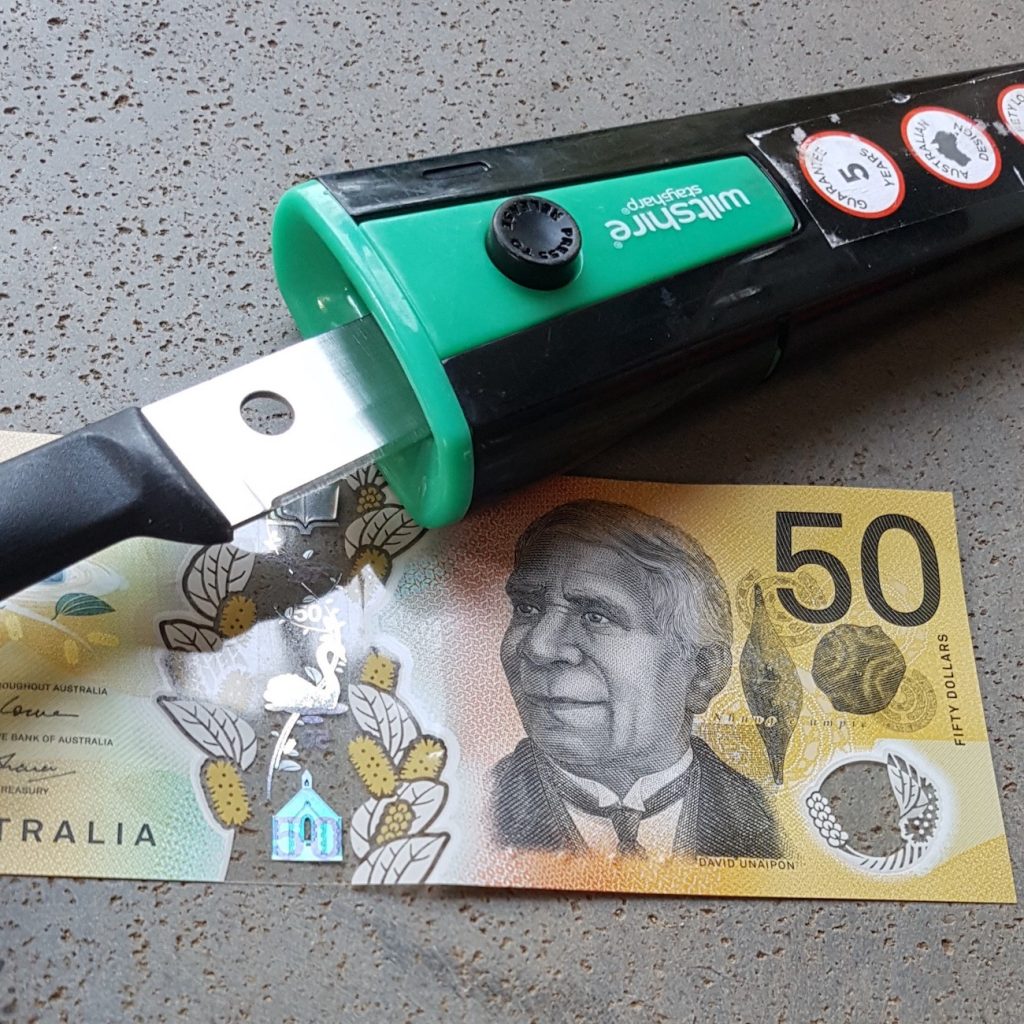
Australian David Unaipon was one such inventor. Perpetual motion fascinated David and he spent much time designing and patenting, but never gaining financial support to develop his ideas. These included an improved hand piece for sheep shearing, a centrifugal motor, a multi-radial wheel and a mechanical propulsion device. As early as 1914 he had the concept for a helicopter based on the boomerang. He was the first Aboriginal writer published and became a motivational speaker for aboriginal rights. He is seen on our $50 banknote.
Inventions are borne from a place of necessity. As agriculture and mining were important, initiatives included the stump-jump plough in 1876, to enable cultivation of newly cleared land, mechanical clippers in 1877 and an electric drill in 1889 which was the world’s first by Arthur Arnot, patented primarily to drill rock and dig for coal.
The Dethridge water wheel measured the flow of water from an irrigation supply to a farm. The Coolgardie safe in 1892 by Patrick McCormick, used the principle of water evaporation from hessian bags draped over a wire mesh box to cool and help preserve food. They were put on verandahs and used any breeze available.
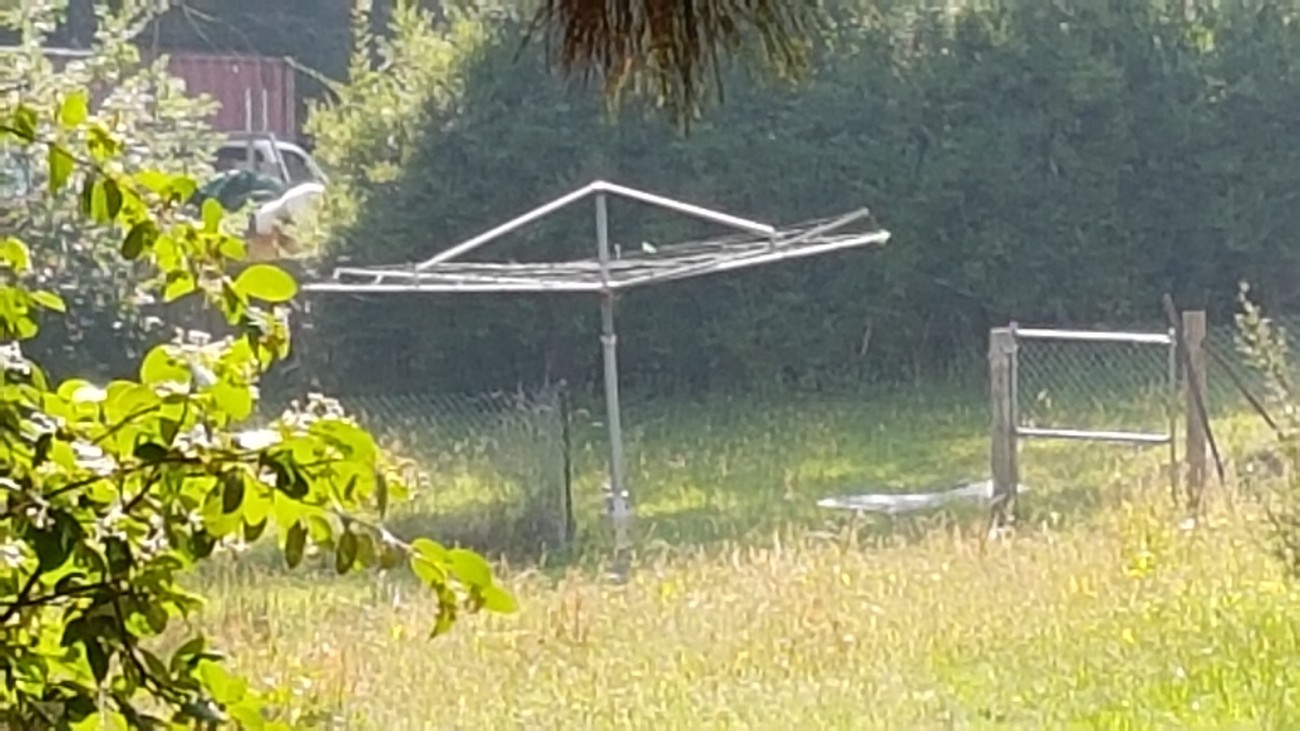
The year 1945 saw the rotary Hills Hoist patented. An iconic Australian symbol that graced every suburban backyard, which was then mowed by the ‘Victa’ mower, originally invented and made in the backyard of Mervyn Victor Richardson in Concord, Sydney. Along with the Thomas Angove wine cask in 1965 and using the Wiltshire Staysharp knife, backyards and family barbeques would never be the same again.
Australian science and medical breakthroughs were leading the world through our then government support of the Commonwealth Scientific Industrial Research Organisation (CSIRO).
Once a dominating scientific centre funded primarily by the Commonwealth Treasury, it made purified penicillin, the ultrasound scanner which you used while wearing permanent pleated wool clothing and paying for spray on skin after a particular nasty burn accident, with polymer banknotes.
Sadly, since the late 1980s, the CSIRO has been forced to find external funding and work with industry, for its financial viability. Many CSIRO jobs have been lost or lost to other countries due to major Australian Federal Government policy changes in 2013.
Without a culture for research and innovation we wouldn’t have the Australian bionic ear, pacemaker, dual flush toilet, power board, jet ski, underwater torpedo, plastic glasses lenses and bifocals, wifi, racecam, vaccines and permaculture.
Government policy and legislative changes no longer embrace innovation, invention and collaboration without a profit in sight. Government legislation should be a voice from the people to encourage better ways of doing things, not to stifle and regress because all voices have not been valued.
At a local level, incredibly, salvage and reuse for innovation and environmental benefit is under threat. Our Australian tradition of finding practical uses for discarded items and making use of what we have encourages us to be a Nation of Innovation.
I wonder what David Unaipon would say?
Indre Kisonas – owner and principal designer of iok design
indre@iokdesign.com.au www.indre@iokdesign.com.au

December 15th, 2021Top tips for a safe home
MOST burglaries are committed by amateur burglars looking for an easy target, so make your home safe with a few easy ideas:
Make sure you have good quality locks on all doors and windows;
Double cylinder deadlocks or deadlatches should be on all external doors;
Install key operated window locks;
Change locks and cylinders when you move into a new property or if you lose your keys;
Use padlocks on gates, garages, sheds and even letterboxes should be padlocked;
Always lock your house when you leave, even if you are only going to be away for a short time, that’s all it can take;
Install a door viewer so you can see who is at the door before you open it;
Always check service providers’ credentials before letting them in your home;
Make sure you have a photographic record of your valuables;
Think about a safe for jewellery and other important possessions; and
Shrubs and trees around the house should be well pruned. You don’t want to provide cover for a burglar.

December 15th, 2021Pathway to sustainability
A LANDMARK new plan sets out a practical pathway for transforming Australian homes, workplaces and other buildings into low carbon, high-performance structures while cost-effectively reducing emissions.
Every building counts: A practical plan for emissions reduction, is a policy toolkit jointly developed by the Property Council of Australia and Green Building Council of Australia was launched recently by the Federal Minister for Energy and Emissions Reduction Angus Taylor.
The package includes 75 recommendations to federal, state and territory and local governments, designed to transform Australia’s built environment and achieve net zero emissions by 2050. Buildings currently account over 50 per cent of Australia’s electricity use and almost a quarter of our carbon emissions.
The toolkit was informed by an international review of effective policies for reducing emissions in buildings. In shaping the toolkit’s recommendations, various policy options were assessed against three key criteria; impact: emissions reduction opportunity; ease of implementation; lack of barriers or challenges for adoption; and cost effectiveness.
The recommendations cover all building types and the full building lifecycle and are shaped around seven key themes:
1. Set out a long term vision for net zero buildings and extend the trajectory for low energy buildings to 2050;
2. Ensure the Climate Solutions Fund drives low cost abatement and provide targeted financial incentives;
3. Deliver a zero carbon ready building code and improve enforcement and compliance;
4. Expand the mandate of the Energy Security Board to drive energy productivity across the economy;
5. Deliver city deals that drive cost effective emissions reductions;
6. Empower buyers and renters with a single national rating scheme for home energy performance; and
7. Make Australia a global leader in high-performance building products.
The toolkit was sponsored by Low Carbon Living CRC with support of steering group partners ASBEC and the Energy Efficiency Council and is available at www.everybuildingcounts.com.au