

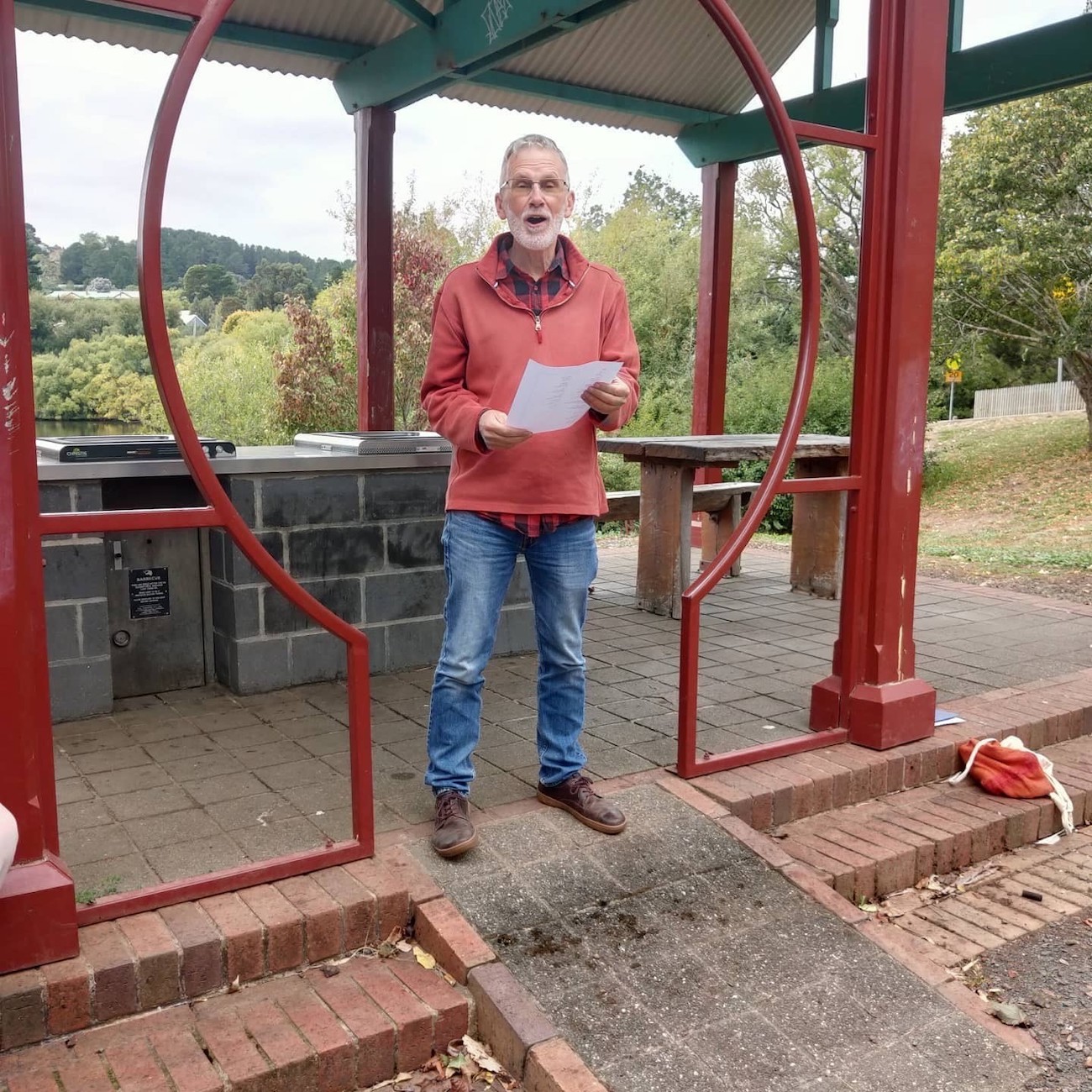
June 29th, 2020Parties
A party used to be called a do.
What do you do at a party? Chat,
drink, flirt, dance…Da do doo ron?
A party used also to be called a turn.
What turns? You, maybe, as you swirl?
Or your behaviour, not at work or home.
A party sets you a-part,
adrift from customary habits.
Your job now is to socialise.
Parties were the best fun
before food got involved.
Eating was cheating back in the day.
Food should be incidental at a party
or spontaneously called for, late,
laughter the craving to slake.
Parties these days are verboten.
The very idea of clamour is fading.
Music has lost its dance dimension.
Good parties gathered their own
momentum, created circumstances
for doing and turning.
May they yet re-turn. (Bill Wootton)
Bill Wootton has attended many turns and hopes to live long enough to attend some more.
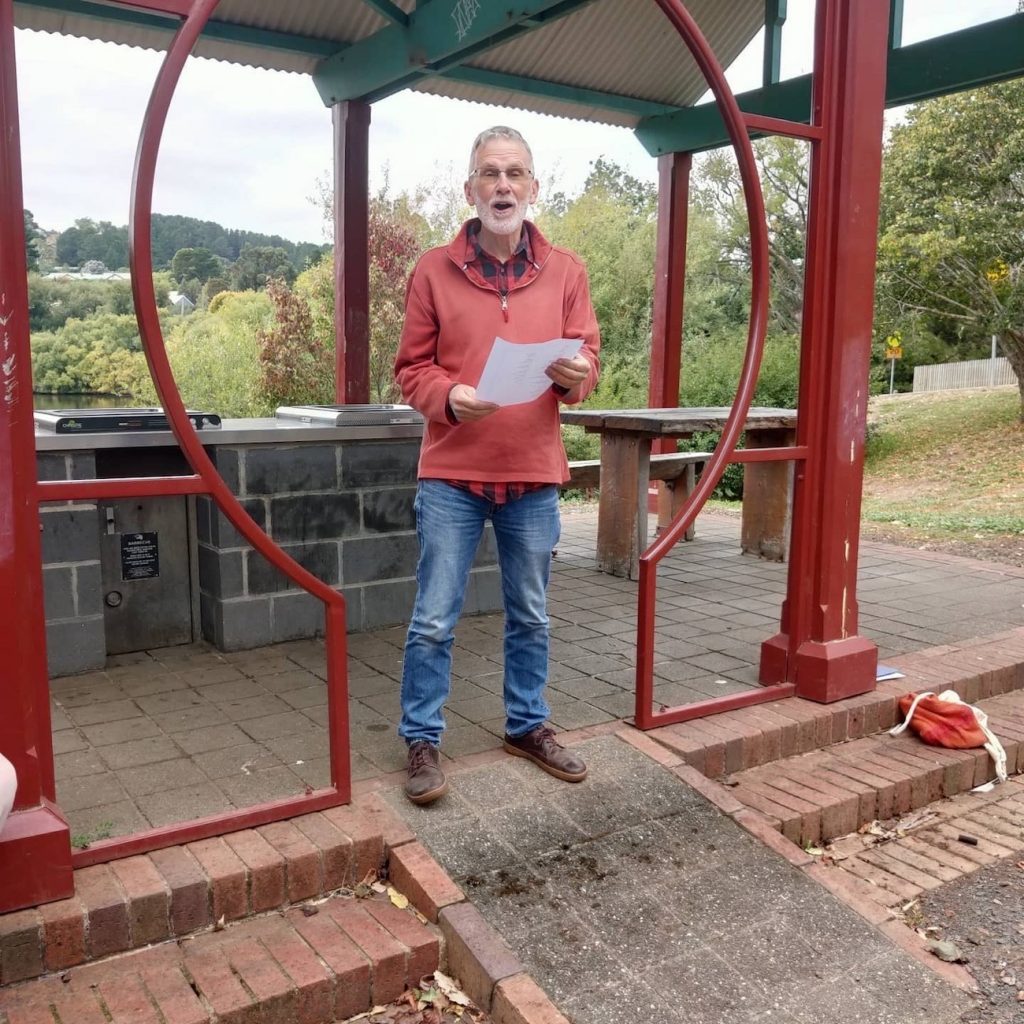
Poems for Local Lines come predominantly from a group of poets. However, other locals who would like a poem considered for publication can contact Bill Wootton cottlesbreedge@gmail.com
June 29th, 2020The Many Humans Of Clunes
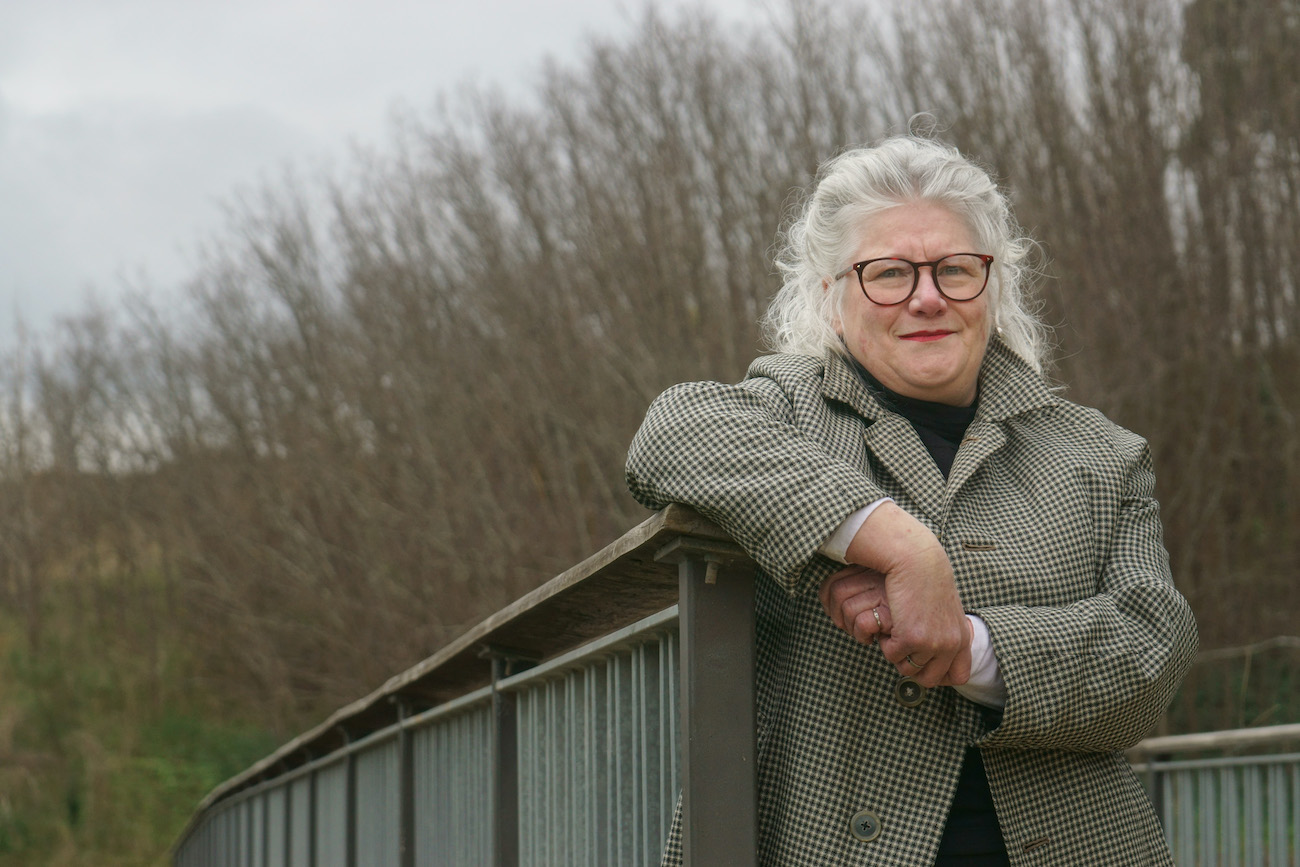
BARBARA Curzon-Siggers is a particularly fascinating human of Clunes.
A talented writer – she has been published in The Age along with other publications – Barbara has a passion for telling stories that she has now linked with her passion for volunteering in her local community.
And the result truly is a beautiful thing.
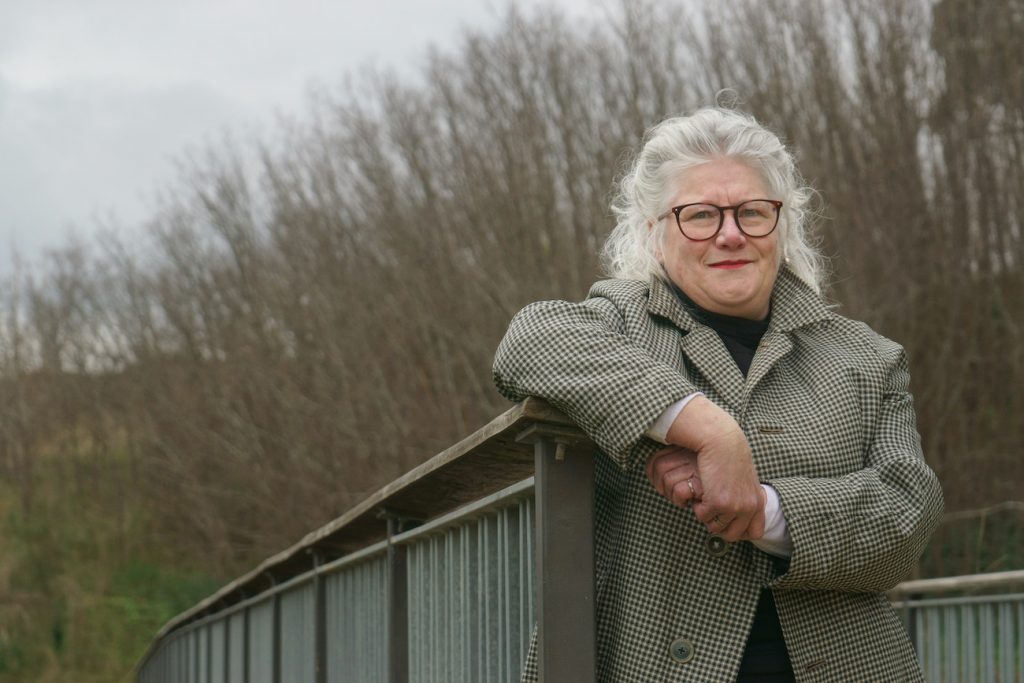
“I think like most people, to me making a contribution is hugely important – we aren’t here on our own, we’re here together and it’s just part of what we should do as people,” Barbara said.
For Barbara, those contributions focus mostly on environmental sustainability and the local community, as well as “quite a few bits and pieces here and there, because that’s what you do when you’re part of a community”.
There’s been Booktown, and also the Neighbourhood House, as well as Hepburn Shire’s Z-NET project for renewable energy. She also sits on the Department of Environment, Land, Water and Planning’s Grampians region Climate Adaptation Group.
And now? Her latest contribution is the stunning Humans of Clunes Facebook page, based on the wildly popular Humans of New York photo blog which captures images and photos of people in New York in the most fascinating ways.
One of many offspring around the world of the original idea, Humans of Clunes is equally as fascinating, with a zoomed-in local focus tightly capturing the town’s stories.
“Like all small towns we have cliques, but also there’s a lot of people coming and going and I was eager to introduce newcomers to long-term Clunians, and much older Clunians. Each could hear each other’s stories and also just appreciate the journey that each has been on, whether they’ve been in Clunes all their lives or moved around. It’s very much to engage with others and their lives, without judgement or callousness or cruelty, it’s about compassion and understanding.”
Barbara started the page last year and has been pouring countless volunteer hours into it ever since.
“The re-telling of stories of people’s ways, it’s about building social capital, building connections between people that normally wouldn’t perhaps cross paths.”
It’s a project that’s creative, voluntary, beautiful, straight from the heart and perfect for Barbara because it clearly taps into her curiosity about human nature, but it also benefits her community by creating a perfect space for their stories.
“I love it, I love individual stories – I love hearing about people’s lives, it’s why I do Humans of Clunes. It’s what drives me, I’m fascinated by people’s lives, how they make the choices they make, the journeys they take. And how people build resilience, what they might regret, and how they navigate all that, it’s an intrinsic human quality, it’s the essential story of every human being. There’s seven billion people on the planet and we all have some commonality of course, but we are all different.
“The idea of leaning into understanding and compassion is the most magnificent endeavour.”
Words: Kate Taylor | Image: Neil Newitt
(This article is supported by the Judith Neilson Institute for Journalism and Ideas.)


June 29th, 2020An Aussie in America Part 2
I was already overdue for a haircut in late March, when California issued its first coronavirus shutdown orders. Unlike the august proprietor of this esteemed journal currently in your possession, I have no desire to be able to wear my hair in a ponytail or – saints preserve – a man-bun, but it’s now well into June and my hair is longer than it’s been since I was 19 and decided to give the “hippy” look a try.
I just don’t fancy the idea of allowing a scissors-wielding someone to hover centimetres from my face, mask or no mask. So, the hair now hangs over my collar and curls into my ears and tickles like crazy!
Speaking of crazy, I think I’m heading in that direction.
Here in Calabama …
In many ways the US Civil War, which began in 1861, didn’t end in 1865 as the history books say. Much the same as that war pitted the north, in blue, and the south, in grey, today the political landscape is divided into red states and blue states – red denoting conservative Republican and blue indicating liberal, progressive Democrat.
California, with its entertainment industries in the Los Angeles region, and technology businesses in the San Francisco Bay Area, is generally considered a Blue stronghold state.
The reality, however, is that outside of those two centres of culture and art, much of California glows bright Red, much the same as the nation’s poorest, most regressive state, Alabama. Hence, Calabama.
As it turns out, the town in which I live is pure Red Calabama.
California’s leader, Gavin Newsom, is a progressive liberal and was the first governor in the US to issue lock-down orders when COVID-19 hit. Much as it was in Victoria with Daniel Andrews, Newsom’s fast action kept infection and death rates relatively low and allowed the healthcare system time to prepare.
But then President Trump undid much of that good work by browbeating state governors into easing restrictions and going back to business as usual far too soon.
With the result that – much as it is in Victoria – California is being slammed with a new wave of COVID-19 infections.
Acting quickly again, Governor Newsom issued orders making it mandatory for face coverings to be worn in public spaces.
Here in Calabama, the response has been predictable. In the local newspaper, a devoted supporter of all things Trump and conservative, readers commenting on news stories about the mask order are outraged at what they see as a gross and blatant attack on their constitutional rights as freedom-loving Americans.
“I will not comply to the dictator!!!!” cries one respondent.
Another sees the dead hand of the deep state in the Governor’s action: “Maybe because people are on to the Bullshit!! It’s not about F…ing Safety..
Tell me this isn’t Political..
YOU CAN’T CHANGE MY MIND!!
The Government is trying to divide Americans”.
One commentator has some trouble with his keyboard and language skills but ignores his ignorance in order to make his feelings known: “I think its halarious government sucks terrible way of showing and tbrowing around there power.”
A group of Calabama patriots has responded by launching a movement to have the Governor removed from office for his shameful abuse of power.
At hastily erected tables outside stores around town, shoppers are invited to sign petitions calling for Newsom’s sacking. They can also buy Trump 2020 presidential campaign hats.
Knowing it is a mistake, but feeling a dizzying rush of blood to the brain after many weeks of self-isolating, I engaged the online commentariat, hoping to catch the general mood of the masses and engage them in dialog, even if I don’t share their sentiments.
“Right on!” I wrote. “With fake social justice protests, the most corrupt federal government in US history, hospitals overwhelmed by people pretending to have some jumped-up flu, rampant unemployment caused by the fake news media, but what really really pisses me off is being told to wear face covering at Walmart. Newsom gotta go! Right on!”
My rants attracted one response: “Jeff Glorfeld did someone pee in your cereal?”
I think I’ll go back to quarantine in private.
– Jeff Glorfeld

Jeff, who held a number of editorial positions at the The Age, and was a regular editorial contributor for The Local, lived in Wheatsheaf for 17 plus years before returning to California, with wife Carol, in 2018 to be with family. Along with having ink in his veins, Jeff is a dyed-in-the-wool St Kilda supporter.
June 22nd, 2020Daylesford Courthouse recollections
ALICE’S Journeys and Lynda Poke are writing an unofficial history series…and next up are memories of the Daylesford Courthouse, now the Daylesford Neighbourhood Centre, from long time Daylesford resident Judy Files.
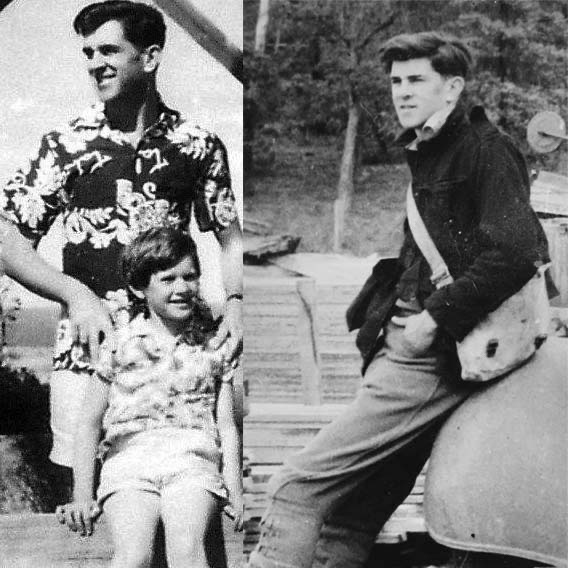
“The rooms at the back were used (presumably rented) by the Forests Commission. My Dad, Norman Endacott was the District Forest Officer and worked from there. I remember visiting him there at work. This would have been in the mid 1950s.

“It was a highlight for me, rabbiting through the rubbish bins looking for bits of unused paper and carbon paper, which we thought was treasure…we loved making copies of our drawings and writings. I have no knowledge about whether the court was operating at this time, but suspect it was, but on a circuit with a visiting judge and staff who didn’t require office space.
“We had left Daylesford by the time the new Forests Commission office was built in Vincent Street, next to Trigger’s second-hand shop, so I have no idea how long they occupied the back rooms for offices.
“As an adult, I was a member of the committee which ran the Toy Library, when my kids were small. It operated out of a small side room of the courthouse with a storeroom attached. We used to move everything to the lockable storeroom after sessions, but eventually we gained sole access to the room and could leave the toys on the shelves and lock the door for security. This lasted for about three years until we moved to another location.
“In the early days Words in Winter was based there, and Les, Anne and I gave a few historical talks from the bench, getting a judge’s eye view of proceedings.”
Feel free to share more stories of the Daylesford Courthouse and Police Lockup and we’ll share them as part of the unofficial history series we are supporting during 2020. Email: info@alicesjourneys.com
Pictured, left, Norman Endacott with his daughter Judy Files, circa 1958, at the Mt Franklin fire tower, right, Norman Endacott, circa 1950s
Images: Judy Files family collection
June 22nd, 2020Just can’t get no satisfaction…
HEPBURN Shire Council has recorded its worst ever annual Local Government Community Satisfaction Survey.
Conducted by JW Research, the phone survey is in its 21st year and participation is optional. The survey also produces average ratings for small rural shires and state-wide results.
The 2020 report stated that perceptions of Hepburn Shire Council’s overall performance reached a peak in 2019, only to fall to an all-time low in 2020.
“This is reflected in most service areas, where performance ratings have declined significantly over the past year. Indeed, two in five residents believe that Hepburn Shire Council’s overall performance has deteriorated in the last 12 months.
“Council should strive to maintain and improve performance in the individual service areas that most influence perceptions of overall performance. Council should focus on good communication and transparency with residents about decisions made in the community’s interest, including on business and community development.
“Over the past 12 months, community sentiment toward council performance has deteriorated. Statistically significant declines have occurred across most service performance measures, and across all demographic and geographic groups. Moving forward, it will be important to rebuild positive perceptions of council and demonstrate that council is once again moving in the right direction.”
The report said the appearance of public areas was the area where Hepburn Shire Council performed best in 2020 although ratings of the appearance of public areas is significantly lower than the Small Rural group and State-wide averages.
Tourism development was the council’s next highest rated service area although it dropped from 69 last year to 63 in 2020. But that rating is in line with the Small Rural group and the State-wide average.
Council’s next highest rated service area is recreational facilities, down from 62 to 61, and still significantly lower than the Small Rural group and State-wide averages.
“Hepburn Shire Council rates lowest in the area of slashing and weed control, index score of 37, down a significant 11 points in the last 12 months. Council’s rating of slashing and weed control is significantly lower than the Small Rural group and State-wide averages.
“Decisions made in the interest of the community is council’s next lowest rated service area. Perceptions of this service area have also declined significantly over the last year, by 14 index points.”
Hepburn Shire Council results:
| 2020 | 2019 | Small Rural | State-wide | ||
|---|---|---|---|---|---|
| Overall performance | 45 | 56 | 56 | 58 | |
| Overall council direction | 36 | 52 | 50 | 51 | |
| Customer service | 63 | 68 | 70 | 70 | |
| Appearance of public areas | 64 | 67 | 72 | 72 | |
| Tourism development | 63 | 69 | 63 | 62 | |
| Recreational facilities | 61 | 62 | 68 | 70 | |
| Business & community dev. | 55 | 60 | 57 | 59 | |
| Waste management | 54 | 64 | 64 | 65 | |
| Enforcement of local laws | 53 | 57 | 62 | 63 | |
| Environmental sustainability | 50 | 59 | 57 | 60 | |
| Sealed local roads | 44 | 50 | 51 | 54 | |
| Consultation & engagement | 41 | 51 | 54 | 55 | |
| Building & planning permits | 41 | 49 | 46 | 51 | |
| Lobbying | 40 | 51 | 52 | 53 | |
| Community decisions | 38 | 52 | 53 | 53 | |
| Slashing & weed control | 37 | 48 | 48 | 49 |
June 22nd, 2020From the Mayor: Cr Licia Kokocinski
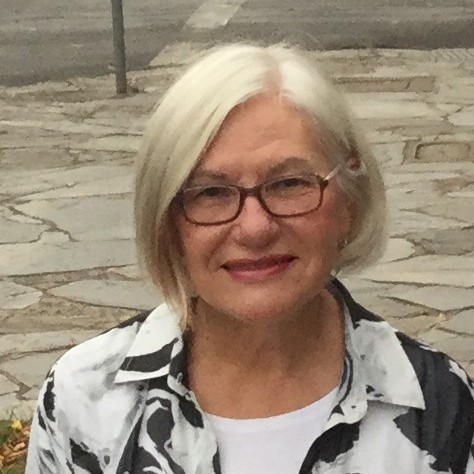
WE TAKE on board and acknowledge what the community is saying to us about our performance and direction of council. We don’t shy away from that the fact that we can do better. We clearly have to take note of the fact our overall performance has dropped significantly, particularly in some specific areas.
“Examination of the survey results over many years shows that the results fluctuate significantly year on year, which is driven by events happening at the time of the survey. Overall Performance was rated at 47 in 2012, climbing to its highest ever rating of 56 last year. This year we have seen a significant decrease from last year with council Overall Performance dropping to 45.
“The community will be able to have input into the direction of council through the development of a new Council Plan after the upcoming local government election.
“The community will also be able to have input into how council engages with the community through the development of a new Community Engagement Policy, which is requited to be developed by March next year.
“We are an organisation that has invested heavily over the past two years in resourcing under-resourced areas of council, which will help deliver important projects and services for the community. We have a committed team of staff who pride themselves on the services they deliver for the community.”
– Mayor, Cr Licia Kokocinski
June 22nd, 2020Wonderful feeling in just helping people
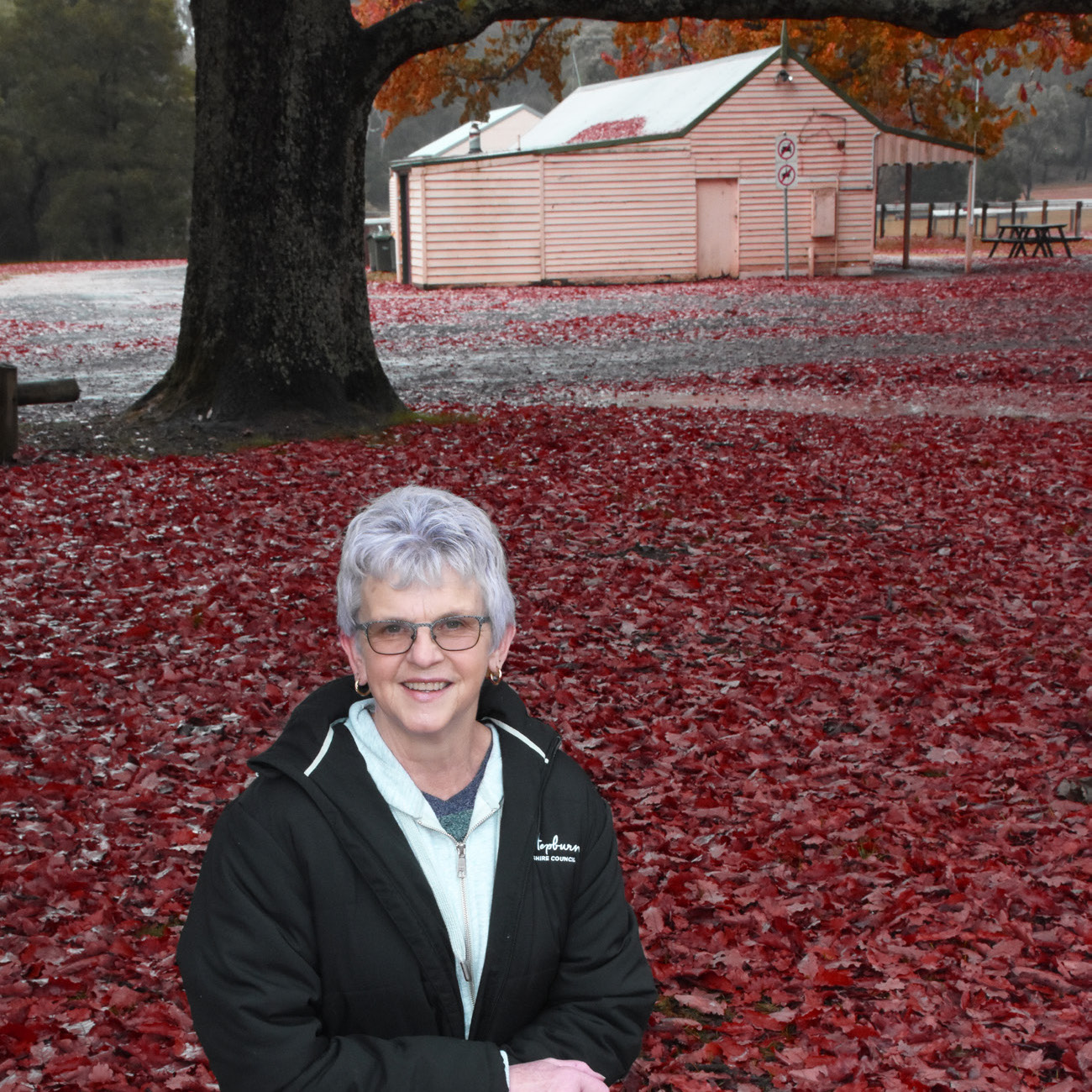
IF THERE’S one definition of a good woman, Gayle McCarthy certainly fits it.
The best part is, all of her community work, all of her fundraising efforts, just comes naturally to her and are straight from the heart.
“It just goes back to – I love what I do. It’s not rocket science. What I do is wonderful, I love helping people and it’s just a wonderful feeling,” Gayle explained.
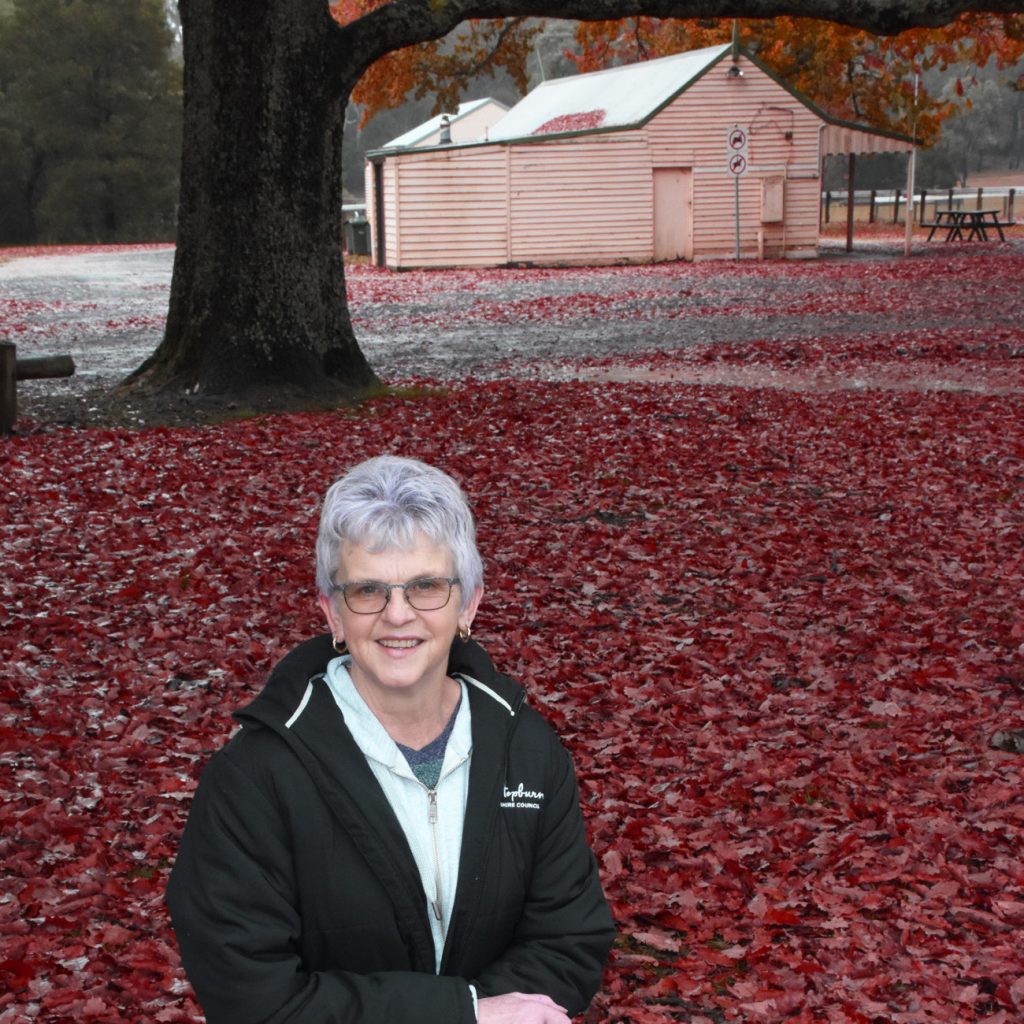
Gayle is the Social Support coordinator for Hepburn Shire Council and she has been for more than 30 years, having started back in the day assisting with things like housekeeping and shopping and showering.
“I call myself a repeat offender, because I was doing it for a while, then I had a break for about 13 months, and then I came back and I’ve been doing it for about 23 years now.”
The objective of the social support program is to support keeping people living independent in their home and the community, so Gayle’s job is to coordinate social groups of older residents and, very clearly, it’s also her passion.
“They may be isolated because of age, illness or physical disability, and we provide days out – we could go to the movies, we could go to Morning Melodies, those types of things and they really enjoy that.
“But sometimes it’s the really simple things, like grabbing a bus full of people and going and getting fish and chips, wrapped up in paper like they remember, each one individually, and sitting at a park bench with a coffee and a chat. It’s things like that, the simplest things that we take for granted, that give my clients the greatest of pleasure.”
The groups are suspended at the moment due to the global pandemic but Gayle was still determined to find a way to help her clients connect. She has led her team in making activity bags which are dropped off at clients’ houses and contain activities tailored to what the client likes and dislikes, including card-making kits, crossword and find-a-word puzzles, even an old-style recipe for things like bread and butter pudding.
“We’ve got a modified style now, we keep checking in by phone and we have quite a good relationship so it makes it a lot easier to check in by phone. Actually, they keep telling me ‘I’m fine, love. I’m fine’. And they are. And I think ‘oh, yes, these people have been through things in their life that are a lot more challenging than this’, our older people in our community are very resilient.”
The other passion that Gayle has is closer to home.
Each year, at The Farmer’s Arms in Daylesford, she helps raise thousands for Movember. Her husband, Ian, passed away in October last year due to cancer.
“The fundraising started very small and as Ian’s illness progressed and we knew it wasn’t going to go away it grew into the most beautiful community event, I’m going to call it an event, that I’ve ever seen.
“From now on it will be my baby, the last few months of every year.”
Last year, the event was held just weeks after Ian passed away. It raised more than $16,000 and over the years, the total raised is more than $86,000.
“The passion, the community that we have here…it’s so big, I can’t really quantify what they mean to me.”
To many, that shows what Gayle is all about. But to Gayle?
“To me, it shows what this community’s all about.”
Words: Kate Taylor | Image: Kyle Barnes
(This article is supported by the Judith Neilson Institute for Journalism and Ideas.)
June 22nd, 2020Walking for love and family togetherness
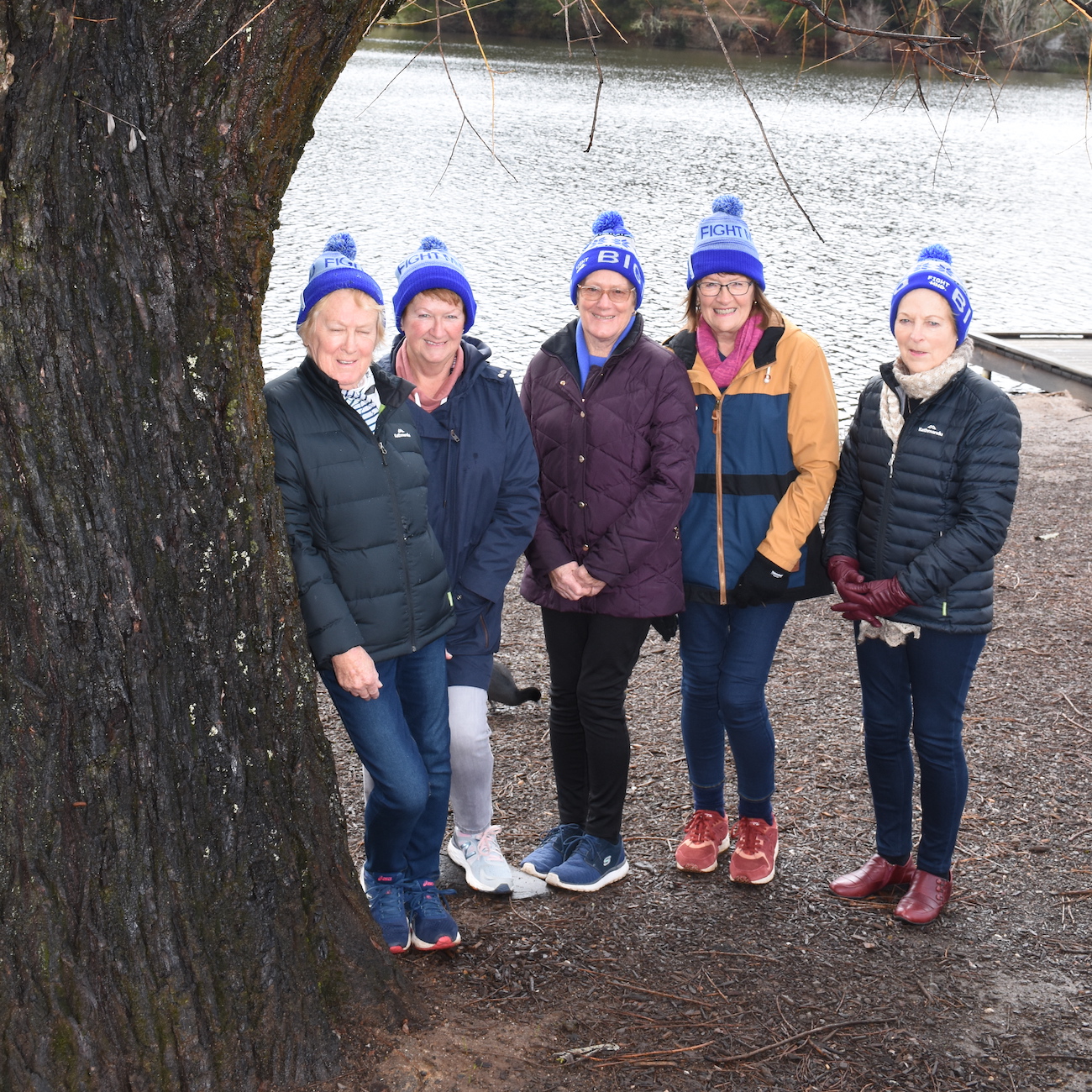
A GROUP of sisters, and their cousin, are walking every week in memory of their brother Tony Hill, who passed away 16 months ago with aggressive motor neurone disease.
The sisters, pictured from left wearing MND fundraising beanies, Carol Collins, Barbara Adam, Maureen Goldsmith, Sue Lafranchi and Judy Wilson, along with sister Jenny Tranter and cousin Joan Turner, are all passionate about fundraising to beat the disease.
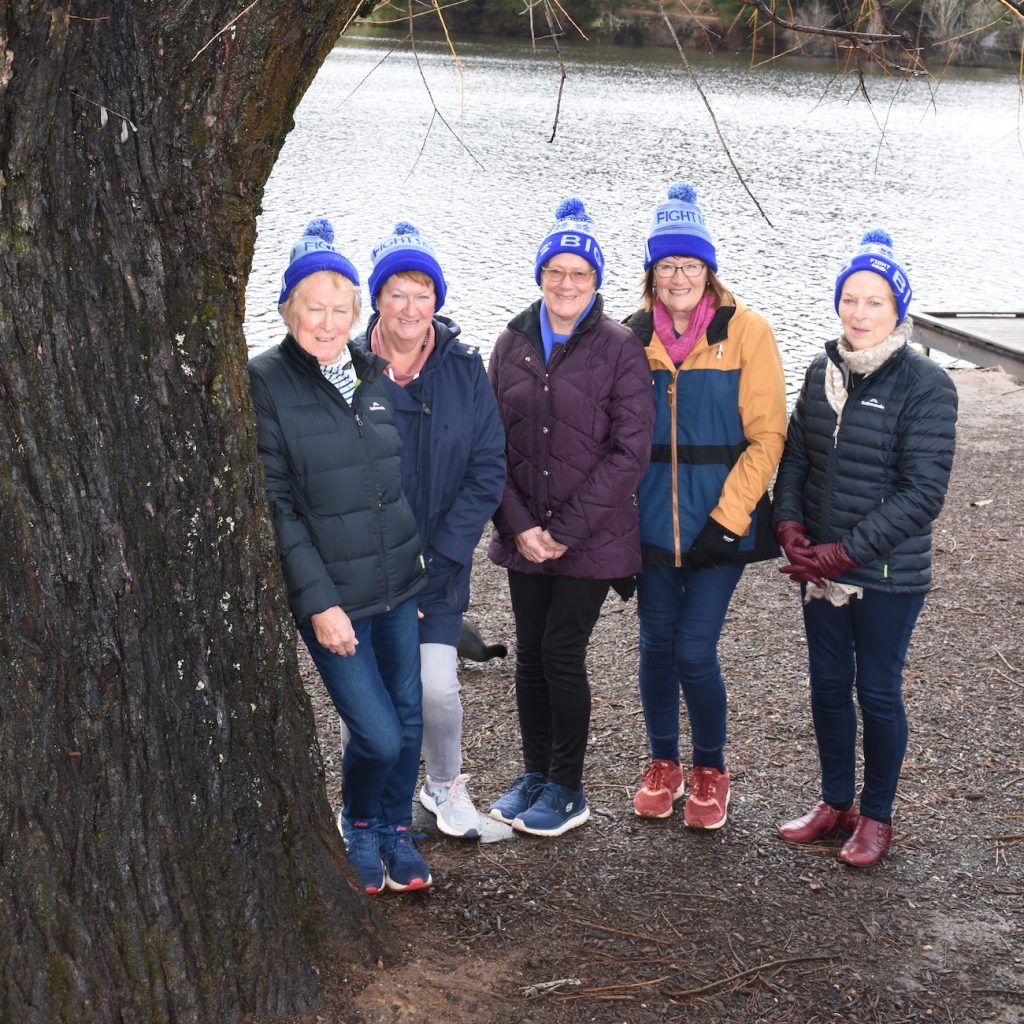
“We meet every Monday for a long walk, choosing a different area each week, and then meet for lunch,” Carol said.
“We all live in the area, within 25km of each other and are originally from Clunes, and are good mates. We talk a lot, and the walks are keeping us fit. We walk around 5km to 6km.
“Our handsome, talented brother is never far from our thoughts.”
Carol said Tony’s wife Andy Hill had recently gathered with family and jumped into a dam at Clunes to raise money as part of the Big Freeze.
“The kids all dressed up in Clunes football and netball uniforms. We just support as many fundraisers as we can.”
Anyone who wants to donate, or buy a beanie, can head to www.fightmnd.org.au
June 22nd, 2020#No Wombat Gombat Gold protest
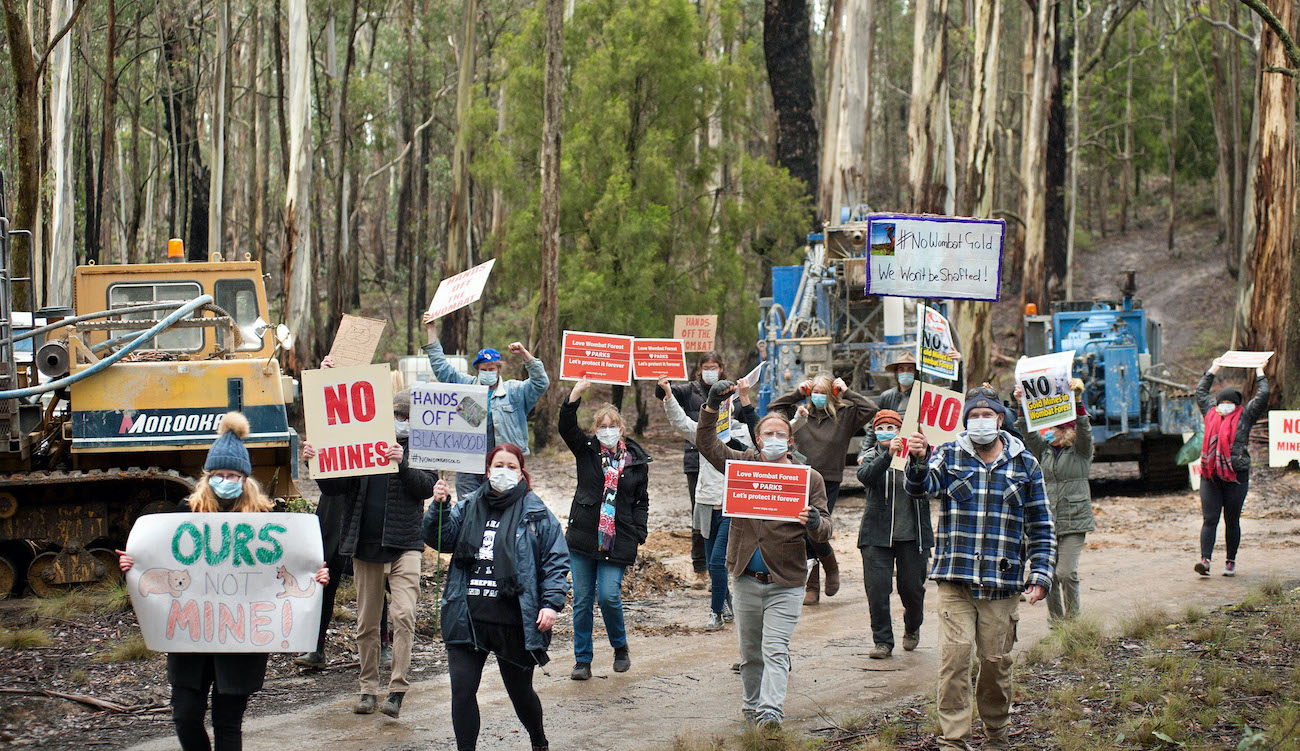
BLACKWOOD residents have taken up pickets and petitions to protest expanded mineral exploration on land under consideration for a new national park.
Residents say they had been given no warning or information about proposals to explore or mine in the Wombat State Forest around Shaws Lake until they awoke last week to the sounds of machinery. On inspection, they discovered large drilling rigs taking mineral samples from the side of a gully above Yankee Creek near the headwaters of the heritage-listed Lerderderg River.
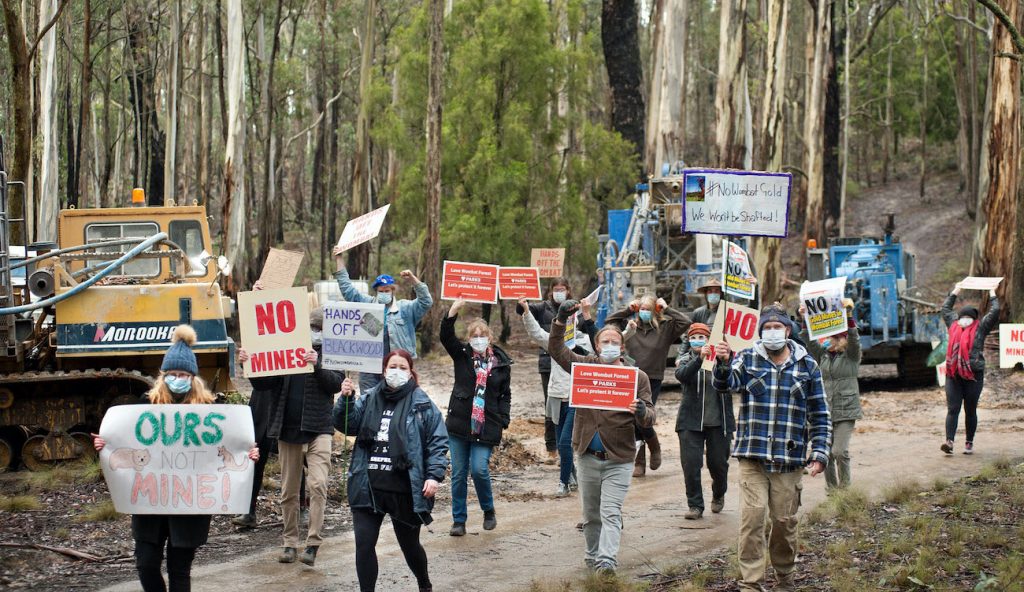
The land is part of a proposed 49,553-hectare national park recommended in a Victorian Environmental Assessment Council report tabled in Parliament in June last year. A response was due in February 2020 but has been delayed due to the bushfires and coronavirus.
Gayle Osborne, convenor of Wombat Forestcare, said the deferred decision and recent commencement of exploration drilling was alarming and raised questions over the Victorian Government’s commitment to protecting an area identified by VEAC as being high-value habitat for rare and threatened species.
“It is now a year since VEAC recommended a park structure for the Wombat State Forest to protect its environmental values, including many threatened species and the headwaters of six rivers. Is the real reason for the delay that the State Government intends to mine and log the Wombat Forest?” Ms Osborne said.
The drilling is believed to be conducted by Currawong Resources Pty Ltd, a wholly-owned subsidiary of Canadian-based Fosterville South which owns the Fosterville mine near Bendigo. Currawong, which holds mining exploration licences for the Blackwood-Gisborne area, has yet to comment publicly on its plans for the area. Calls from The Local to Currawong managing director, Neil (Rex) Motton, were not returned.
However, in its submission for the VEAC report the company noted that it has been negotiating a $5 million investment largely focused on the section of the licence held within the Wombat State Forest. The submission said significant indications, including previous exploration results from the 1990s, showed broad scale Fosterville-style gold mineralisation in the area. It noted that the company has gone to substantial expense getting the tenement application through the Native Title process and warned that if the project was blocked it would be looking to the government to recoup the cost.
“Should the Wombat State Forest section of our Exploration Licence be converted to a national park, we believe that significant financial compensation is due,” it said.
Meanwhile, Blackwood residents have formed a community activist group, No Wombat Gold, to fight any plans to mine the area.
Group organiser, Phaedra Morris of Barrys Reef, said members were concerned new gold mines will affect residents’ peace and the region’s water catchments.
“Locals are very concerned that the exploration will lead to a mining operation in their spectacular forest, destroying the very reason they live here. We’ve taken a closer look and are appalled to find that there are many more licences still active in this area.”
The Wombat State Forest is rich in biodiversity; and is the habitat of greater gliders, a species already listed as vulnerable to extinction, with numbers further reduced as a result of last Summer’s bushfires.
“Without the protection of a park structure, we will see a return to exploitation of the forest,” Ms Osborne said. “We call on the Andrews government to accept the VEAC recommendations and protect the Wombat State Forest for its biodiversity, water supply and recreational values.”
Words: Jane Williams | Image: Sandy Scheltema
June 22nd, 2020Hepburn House: a new beginning for Lillian
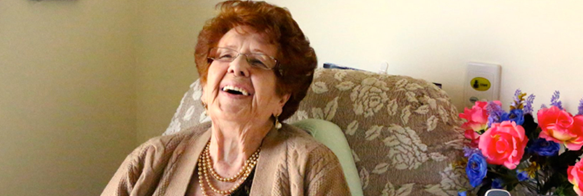
Lillian Curtis was born in Birregurra, Victoria, between the Otways and the Surf Coast, on January 22, 1927.
Some of her earliest childhood memories were of an aunty who wanted to adopt her and holidays in Apollo Bay with her grandparents.
Lillian remembers herself and her three brothers playing all week and standing on a carefully selected hill where they would try to throw rocks over one house’s chimney to the house below.
The family loved dogs and had plenty including one called Buster, with her grandparents owning sheep dogs.

Growing up, Lillian also loved dancing and was so light on her feet she won Belle of the Ball not once, but three times. Careerwise, she was an experienced weaver at the Valley Woollen Mills. She was married after World War II for 63 years.
The mum of one, grandmother of five and great-grandmother of one, has always enjoyed her hobbies including arts, craft and gardening. And as a resident of seven years at Hepburn House, she has kept up with all of them and especially loves tending to the pot plants on her balcony.
“Hepburn House meant a new beginning for the rest of my life! I was looking for a new home and found a place where I enjoy the friendly atmosphere of the staff but also feel very safe. I would highly recommend the move to anyone else!”
Hepburn House is a government-funded aged care facility that is set in beautiful surrounds and caters for all levels of care, from respite to permanent.
Residents are cared for by a full team of dedicated personal care workers and nurses, as well as regular visits from allied health professionals.
Home-style meals are cooked for residents in the on-site kitchen, which can accommodate not only dietary and religious requirements but also residents’ likes and dislikes.
Hepburn House has facilities to provide for couples – bedrooms with an adjoining private lounge and en suite. All the remaining rooms are single, private rooms with en suite and many also have private balconies with views of the surrounding countryside
Hepburn House is located at 1 Hepburn Road, Daylesford. For more information, please call 5348 8100 or visit www.hepburnhouse.com.au
Advertorial
June 22nd, 2020Mike finds bliss, after his fashion
“ISO,” as it inevitably became known, produced an extraordinary range of reactions.
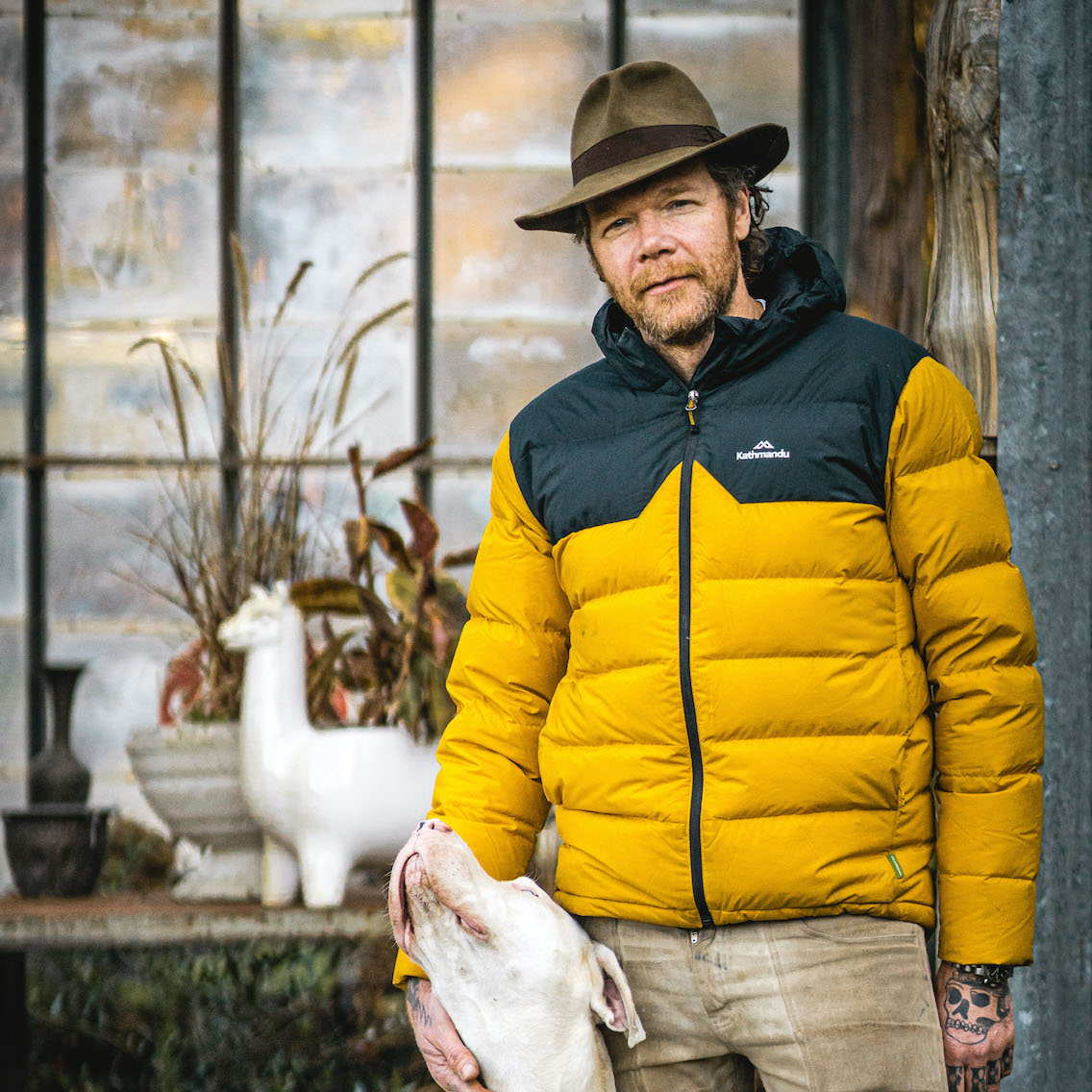
Over in Sailors Falls, Mike Lelliot could scarcely have been happier. “I find it so enlightening,” says the 49-year-old artist and creative designer, of the pandemic months. “How great is it to be out here! Awesome. It’s paradise after being globally focused for so many years.”
“Here” is 22 hectares backing on to Wombat State Forest, home to Mike, wife Cath and their children Noah, 17, and Tillie 13.
Then there are the Great Danes, Trip, Harriett, Elvis and Queenie, plus an equal number of horses, coloured black, grey, nearly white and bay.
All of this is some distance from his Melbourne childhood in bayside Black Rock. From there he went to the Victorian College of the Arts and basically living in the inner city from age 18 to 45.
Until the late 90s he was involved with four other artists in a North Melbourne warehouse called Fish, the scene for bands, parties, big events, lots of musos, artists and filmmakers. They included Glendyn Ivin, whose TV direction won Australia’s top award two years in succession and whose credits include Puberty Blues and Gallipoli.
With such forces firing it is little surprise that Mike took on the creative director role in Germany for the Australian-designed Crumpler messenger bags. After six years it was time for home. When the inner-city began to pall they hit upon the Sailors Falls house. After three years it is a home with gardens seemingly galloping off all around, a glasshouse, plants and shrubs galore.
In spite of such activity, Mike is sensitive to his surroundings. “We work with the land and not shaping it. We’ve learned how fecund the land is, how it is always changing.”
Their new home also changed their perspective as to what ‘local’ means. Such a change translates into action as he works on a new denim brand, called Black Bothy. Bothy is a term for a small hut or refuge in the Scottish Highlands and also the name
for the guest house they plan.
Once, the denim would have been a global brand, but now he will use local designers and artists and even foundry workers (for the buckles and studs) to produce the line here. Sales are likely to be in the scores rather than on a massive scale, which
leaves him happy.
An acre (0.4ha) of berries has recently been planted, they have a large old market garden glasshouse trucked from Adelaide to protect some plants from frost and find out about others. Crepe myrtle and English laurel are ready for planting in the rich soil.
Recycling abounds, while fence posts, mainly cut from fallen logs, are going in (a gash on Mike’s forehead – he stands at 202 centimetres – tells of the perils of cutting).
Inside their home all is relaxed with rows of sauces and preserved fruit, muddy boots and gumboots, paintings galore and a discarded Collingwood scarf. Here, over 10 days he perfected the baking of sourdough bread.
Nearby is a mountain bike and a glass cabinet of green China rabbits, while the big deck leading to a pond features a large roller-skating cat statue by artist David Bromley. A hammock hung between trees speaks of lazy days.
“I spend three or four days on the computer,” says Mike, “and the rest working outside.” He delights in the bush, finding it both incredibly alive and incredibly diverse.
Mike is now planning an art show. He makes a drawing, turns it into a file on his computer, then shapes it on thick plywood and cuts it to shape.
One of these is a woman with a dialogue balloon, singing the Kiss number, I Was Made for Lovin’ You Baby…much like its creator’s affection for his home.
Words: Kevin Childs | Image: Inkd Fotogrfa
The Local‘s artist series are supported by a grant from Hepburn Shire Council’s coronovirus community support program.
June 22nd, 2020Nature Diary with Tanya Loos
IT REALLY is a wonderful fungi season in central Victoria – both the Wombat State Forest and drier forests to the north are filled with an everchanging array of spectacular forms. This bounty represents the fruiting bodies of these organisms – and they also provide food for the forest inhabitants.
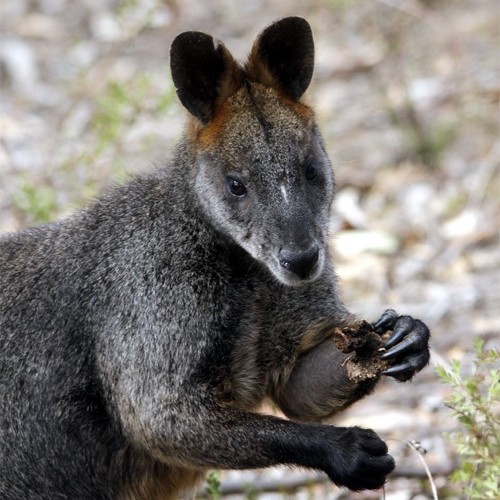
Much is known about the consumption of underground truffle-like fungi by small marsupials such as potoroos, bettongs and mammals such as bush rats. But the large external fungi popping up are munched upon by bigger mammals – the swamp wallabies.
The image, pictured right and taken by Geoff Park, captures a wallaby in the act, holding a mushroom in his or her front paw, much like we would munch on an apple.
Very little is known about the consumption of fungi by swamp wallabies. At the encouragement of Tom May, senior research scientist (mycology) for the Royal Botanic Gardens Victoria, Glenlyon resident Gayle Osborne has set up motion capture cameras to document this behaviour.
It is a tricky business, as it also involves the correct identification of the fungi – which can be difficult if the wallaby has consumed most of the specimen. Gayle must identify the fungi first, via photos and spore prints, often with the help of fungi-literate folks like Malmsbury naturalist John Walters. The camera is set up at an appropriate spot. And then wait – sometimes it is over a week before the fungi is eaten.
Although initially counter-intuitive, there is an advantage of being eaten by mammals such as swamp wallabies and possums. Like the smaller truffle species, large fungi are dispersed by spores, and these spores pass through the animal’s gut, to be spread widely, for the benefit of other animals, and of course the health of the forest.
So how do they taste? And are some of them poisonous?
Gayle writes: “Some of the fungi that were observed to be eaten taste very bitter for humans, especially armillaria luteobubalina and gymnopilus junonius.
“Other fungi belong to groups, which contain some toxic species, as is the case for Cortinarius, a few species of which are poisonous to humans as they contain the toxin orellanine, which can lead to kidney failure.
“Fungi that are unpalatable or toxic for humans may not have the same effects on animals.” ( June 2020 Wombat Forestcare Newsletter)
I am very curious as we have small numbers of the red and white fly agaric mushrooms (amanita muscaria) which grow near our oak trees. And each year they are munched enthusiastically – the huge caps consumed entirely with only the stems remaining. These mushrooms can make humans feel quite very sick, and very strange – and I wonder if wallabies are affected in the same way? Or if they are impervious to these effects?
My searches online have revealed nothing, except that swamp wallabies in Tasmania have reportedly been very much affected by the legal opium poppy fields down there. If anyone has seen their wallabies acting strangely this mushroom season, do get in touch via my blog! https://tanyaloos.com/
With thanks to Gayle Osborne, Wombat Forestcare, and Geoff Park for the fantastic photo.
PS. The state government was supposed to respond to the Victorian Environmental Assessment Council’s final recommendations to protect almost 60,000 hectares of central west forests in new national parks within six months.
The announcement should have been made by the end of February of this year.
The forests worthy of protection as national parks include the Wombat State Forest (near Daylesford), Wellsford Forest (near Bendigo), Pyrenees Ranges Forest (near Avoca), and Mount Cole Forest (near Beaufort).
Wombat Forestcare is asking concerned people to contact Mary-Anne Thomas and the minister to voice their concerns. http://www.wombatforestcare.org.au/
Tanya Loos is a keen field naturalist who spends a lot of time wandering around the bush in our beautiful region. She loves writing about nature and science – she blogs at https://tanyaloos.wordpress.com/
June 22nd, 2020Glen about the house -Orchids for all
It was once considered that growing the prized gem of the tropical forests, the orchid, was only for the very wealthy. So rare and valuable were they that governments actually financed botanical expeditions to the tropical forests of Central and South America to source them.
It was purely a stroke of fate that in 1836 a Spanish expedition, about to be led by my great-grandfather, was abandoned at the last minute when the ship’s crew was struck down by typhoid fever. Just by chance he was able to obtain passage on another ship, the Gottfrei soon to depart for Melbourne, and the rest, as they say…
There are basically two distinct types of orchid. Terrestrial, the ground dwellers with many native varieties which can be found in our forests and woodlands, and the epiphytes, those that grow on other plants but are not parasitic, unlike mistletoe which draws its energy from the lifeblood of the host plant. They are the most prolific and spectacular and are found growing in tropical and other rain forests, either among the branches of trees or among the decomposing leaf litter at their base. It is from this foliage detritis that they draw their nourishment.
For more than a century the availability of these epiphytic orchids continued to rely on a trickle of small offsets (plantlets) being imported from their native environment until 1922 when Dr Lewis Knudson of Cornell University discovered a method of germinating orchid seeds in a sterile culture.
Since then modern technology including single cell reproduction has enabled not only their mass propagation, but the development of many new hybrid forms. Orchid breeding and cultivation has now reached the point where established flowering plants usually cost no more than most other flowering trees and shrubs.
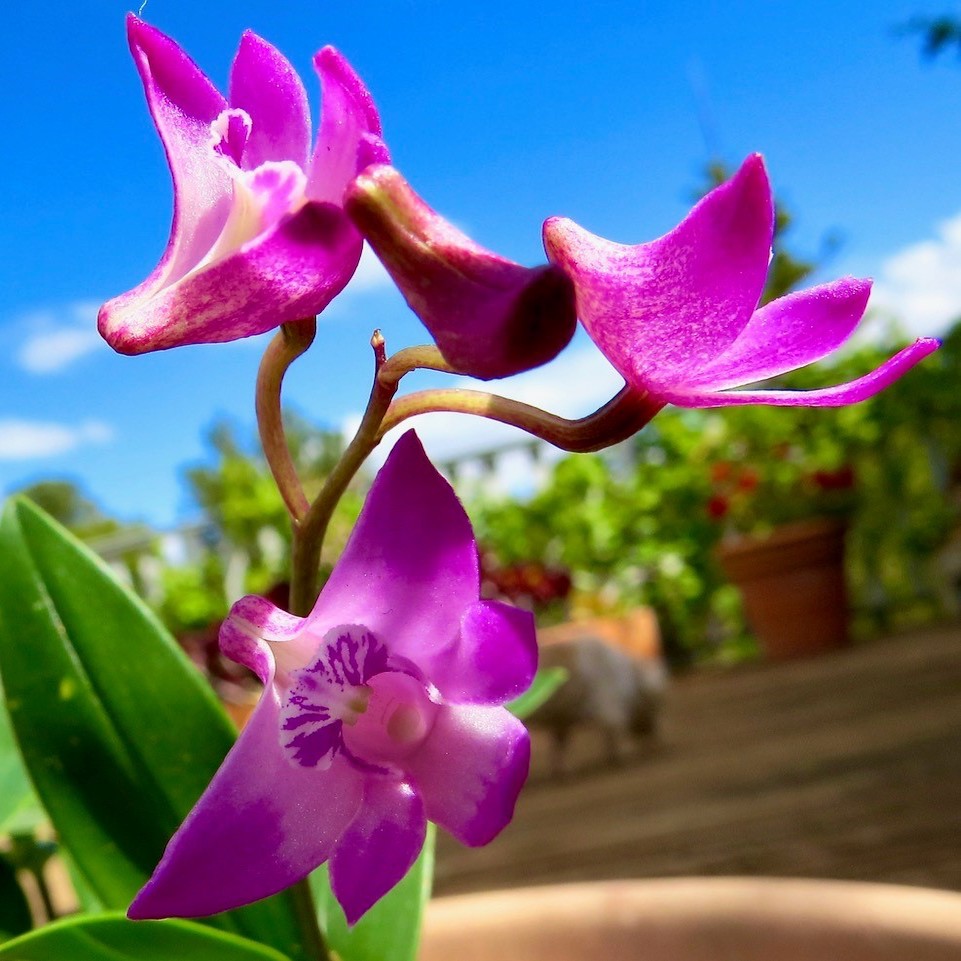
Most orchids prefer to be grown under conditions replicating their home environment, usually in a shade or greenhouse, but many thrive in a well-lit spot indoors.
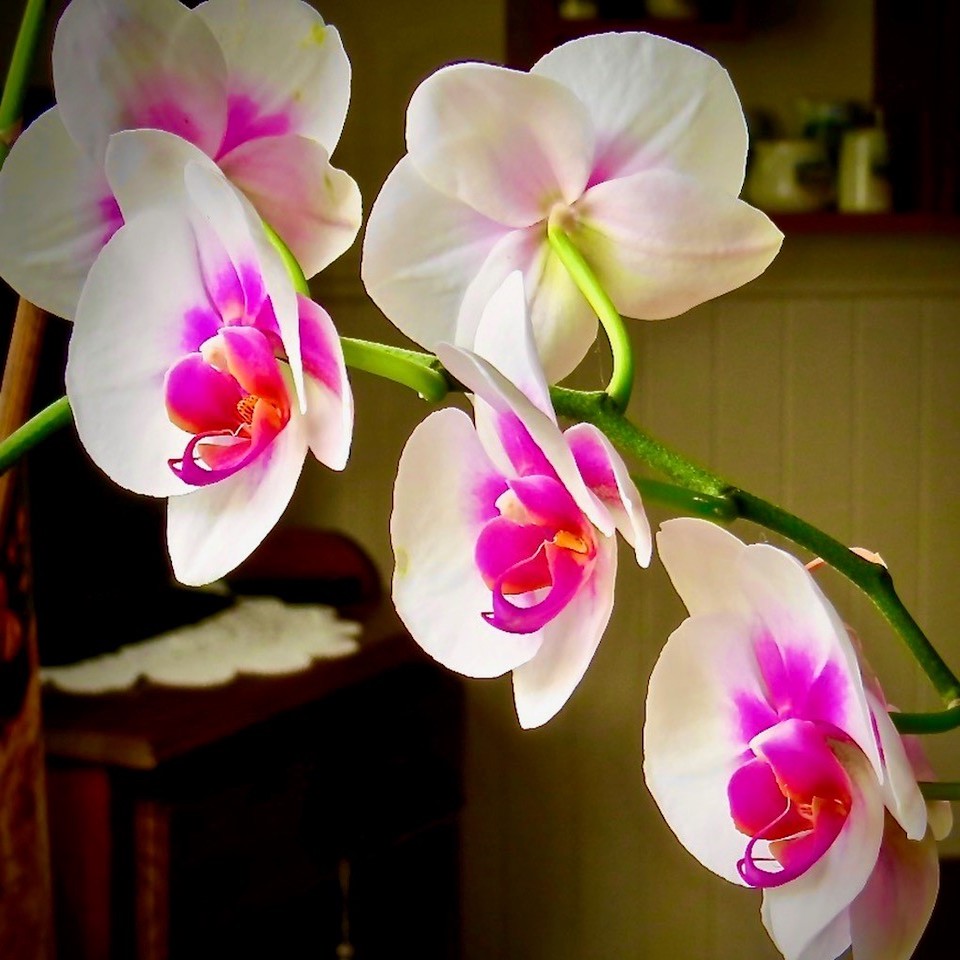
The most popular, in recent times, are the beautiful ubiquitous moth orchids, phalaenopsis blume, which magically appear on windowsills each Mothers Day and survive on watering via an ice cube placed in the top of their pot and a seasonal drop of liquid seaweed fertiliser to keep them flowering.
Orchids can be grown either in pots or baskets. The size of the container is important and should be only slightly larger than the root system of the plant itself. Generally the plant can be kept in the same container for several years before needing to be repotted into the next size pot. They thrive in an organically rich, open textured medium to avoid the risk of rotting.
Ideally the mix should be coarse-grained. One good mixture is two parts peat moss and rice hulls (I use the crumbled shells from my pistachio nuts), one part coarse sand and a light dressing of slow-release organic fertiliser pellets.
Regular feeding is essential for the development of healthy flower spikes, starting at the peak of flowering time and continuing until the new flower spikes appear.
It’s always a good idea to pick the flowers at their peak to give the plant a hand-up for the next season’s blooms. Besides, the flowers last longer in a vase.
As most orchids originate from rain forests, they grow best in a position of good air movement, filtered light and humidity. Water them by soaking the plant medium when leaf growth is active and a fine mist spray over the foliage in hot, drying weather. Keep them in a well-lit protected porch or warm shady corner of the garden.
Got a gardening question? Ask Glen. Email glenzgarden@gmail.com
June 22nd, 2020Design with Indre Kisonas – Pulling of the heartstrings
Mementos hold an emotional story that is often personal.
Many a room design and even a house style has been influenced by a memento, a keepsake or treasured piece of furniture. For example, a painting, an armchair or a cameo brooch. I have even had a set of African drums dictate the style of a family room addition.
It was Glen Heyne’s article from last week, with his potting shed reflections that led me on my own reflections. You see, I was flipping through some 50s furniture catalogues for an upcoming garage conversion when I began musing on my own 1950’s armchair.
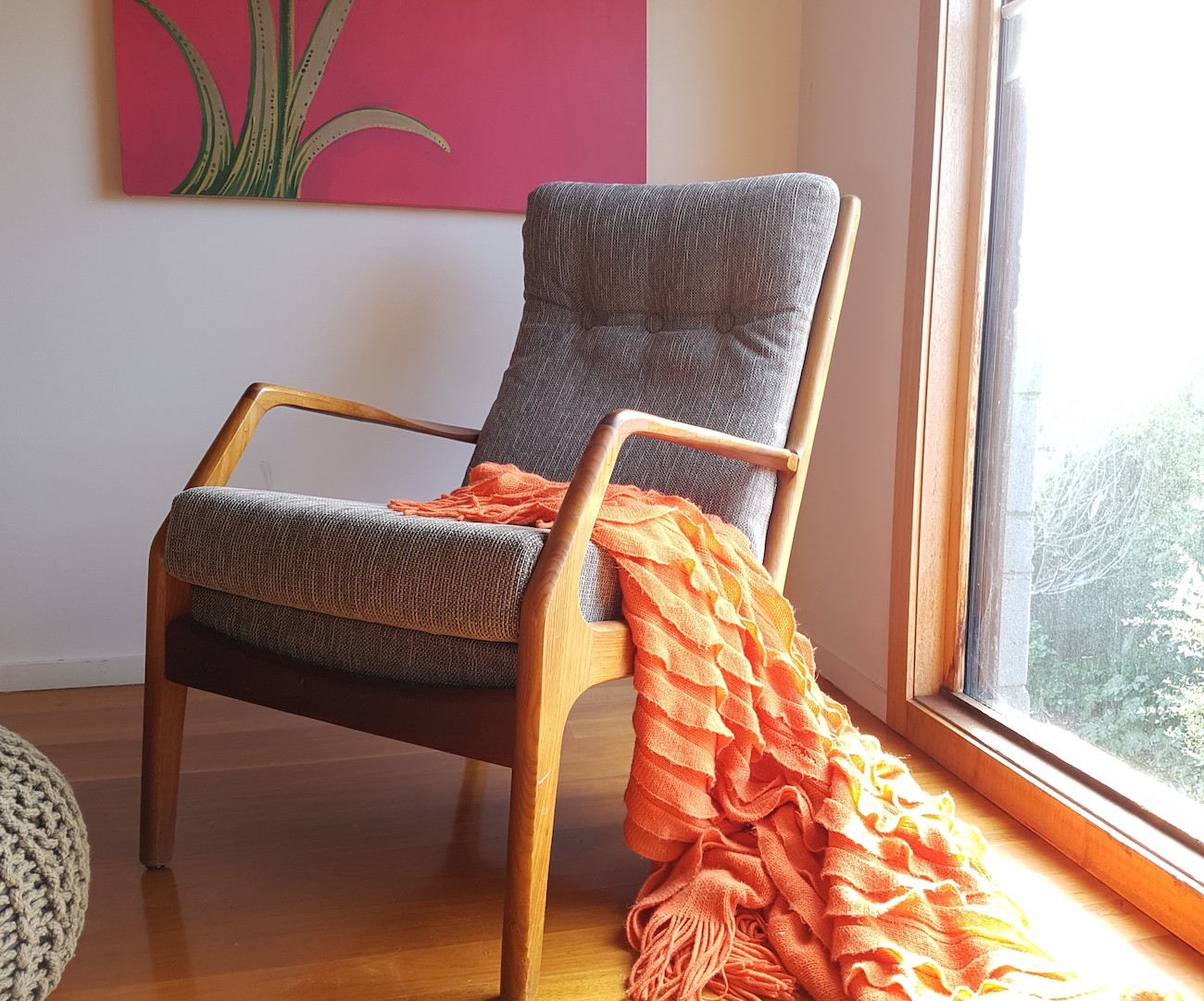
The simple Danish styling, comfort, use of texture and timber has lasted through the decades and is still a very popular design style.
My particular chair originally belonged to my paternal grandmother. Being immigrants from World War II and making the best of some very hard situations, luxuries were quite scarce. For my grandmother, her luxury of choice was a Danish armchair. She persisted with my grandfather until he relented and bought my grandmother her chair. By this time, she had persisted with my grandfather for long enough and was diagnosed with cancer. It was in this chair that she would sit by the window and convalesce. The disease seemed to take its time, but I was a kid and time moves quite slowly when you are young. It was in this armchair that my grandmother would sit when we came to visit. The same armchair we have a last photo of, with her in it.
I kept this chair for myself. It was getting a bit ratty in its upholstery. Especially when my puppy of the time thought the deteriorating foam made a good chew toy. The poor chair’s re-upholstery was forever on my ‘to-do list’ and now, I am proud to say, that it is as good as new. New foam, new fabric and chew marks on the timber arms have been filled and polished and are non-existent.
I was happy to have resurrected the treasured chair for myself, my grandmother and also for my father, whom I knew still missed his mother.
I sent him the photo of the new chair and explained that it had taken me longer than I had hoped but now the chair was finally finished.
I thought he would understand. His reply was one that I never expected. “Why didn’t you buy a new one instead?”
Tender moment gone and I realised that my memento and memories that came with the chair were mine alone.
The chair still has pride of place by my window in my house and you guessed it, the décor revolved around my grandmother’s chair.
www.iokdesign.com.au
June 22nd, 2020Vale John Madigan: July 21, 1966 – June 16, 2020
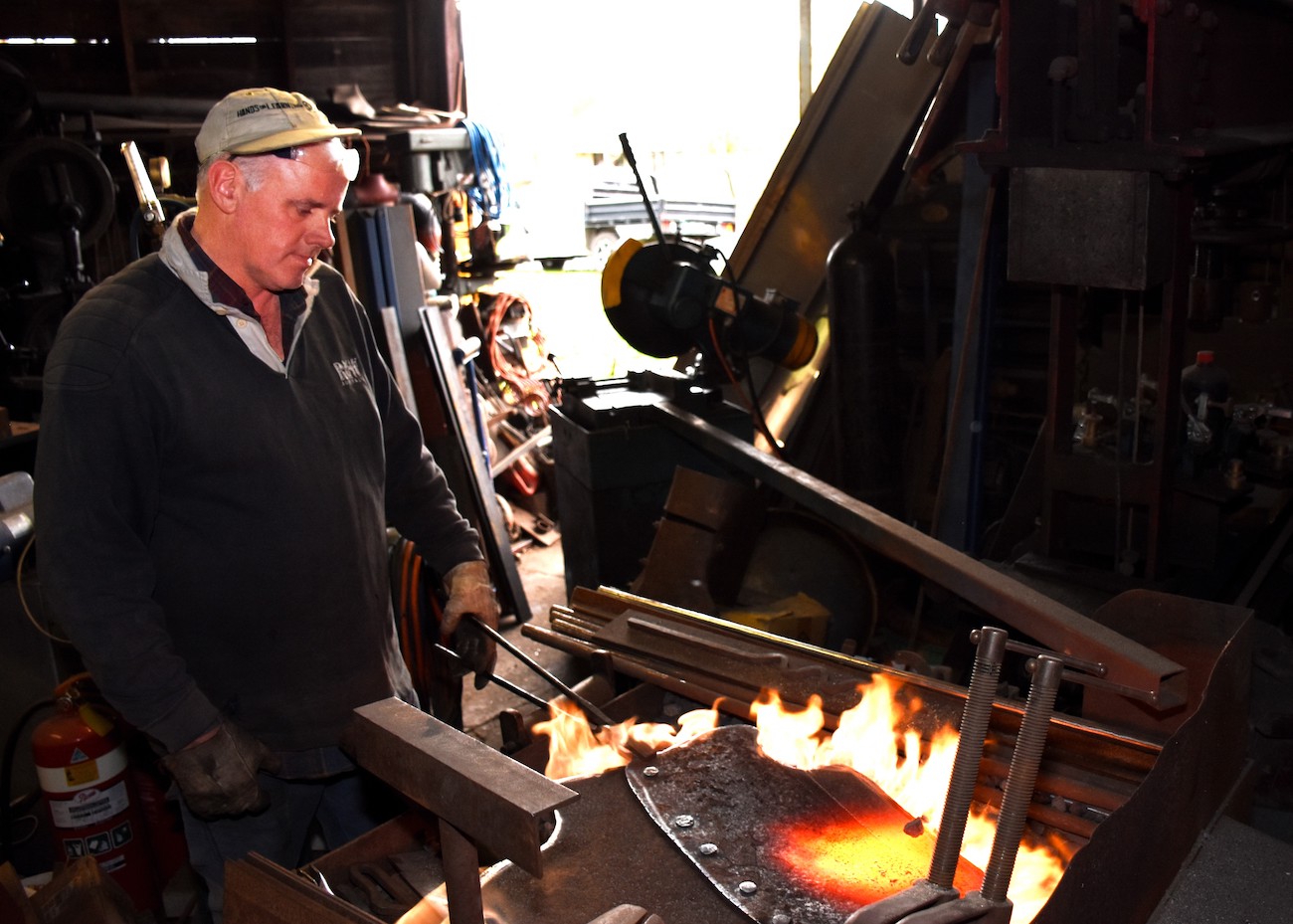
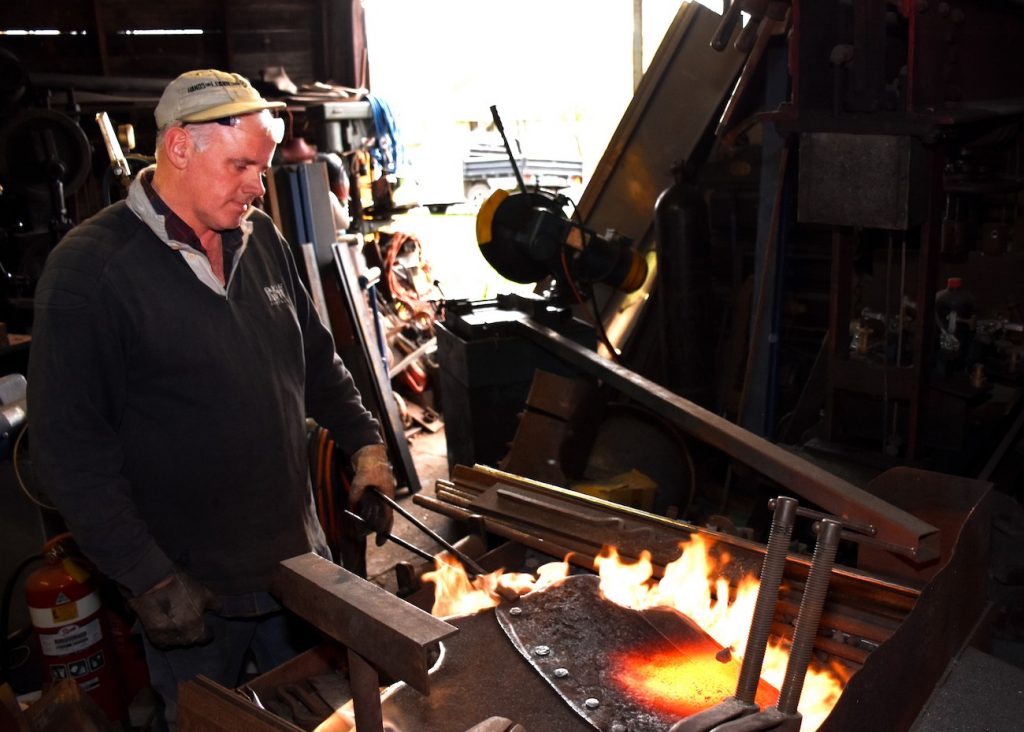
JOHN Madigan was born into a Catholic family and belonged to a youth group run by the National Civic Council founder, B.A. Santamaria, in Melbourne. He was a blacksmith and boilermaker from 1983 to 2011, self-employed in his own engineering workshop in Hepburn Springs.
He served as a Senator for Victoria from 2011 to 2016 after being elected to the Senate at the 2010 federal election as a member of the Democratic Labour Party. He resigned from the DLP to become an independent in September 2014, and later launched John Madigan’s Manufacturing and Farming Party in 2015 but failed to be re-elected at the 2016 double dissolution election, and the Manufacturing and Farming Party was voluntarily deregistered on September 13, 2016.
In December 2018 Madigan announced that he had cancer. After his death, former prime minister Tony Abbott eulogised Madigan as “a fine representative of a worthy political tradition” with an “old-fashioned sense of courtesy and respect for others”.
Mr Madigan was a friend of The Local, announcing in the Australian Parliament on November 27, 2014, that “The Local is the future of regional journalism…”
He is survived by his wife Teresa and two children.