


June 8th, 2020Special Lego delivery asks bank for funding
TWO very enthusiastic grade 4 Daylesford Primary School students are keen to start a Lego club, to help their fellow schoolmates to create new friendships and build positivity.
Arlo, pictured left, and Liam, right, put together a letter to ask The Daylesford & District Community Bank for some funds to help them buy Lego for the school.
They delivered their letter, below, to the bank by remote control Lego car, last Friday.

“Dear Bendigo Bank,
We are requesting a donation from you to start a Lego club at our school (which is Daylesford Primary School). We would invite kids that have trouble making friends and walk around by themselves at lunchtime, and any other kids that like playing with Lego. Some reasons we are requesting this donation are:
• That we could find Lego for people of all ages.
• The Lego club could help people find more friends.
• Lego could help kids get more creative.
• Some kids can’t afford to have Lego at their own houses.
Some of the things Lego can help with are:
• Getting kids more imaginative.
• If you are feeling sad it can help cheer you up.
• If kids don’t have many friends, they can make worlds with people and pretend the people are their friends.
We would be very happy to see kids making more friends and would be very grateful if you could donate some money to help start up the Lego club.
Sincerely Arlo and Liam, grade 3/4E”
Bank manager Simon Robinson said the bank was happy to fund the project.

June 8th, 2020Pride-Solation – celebrating Pride Month
CHILLOUT Festival is among 15 regional LGBTIQA+ organisations coming together to bring Pride-Solation, an online event to celebrate Pride Month.
The event will take place on Saturday, June 20.
Pride-Solation is an Australian first. COVID-19 isolation has inspired the organisations to come together online to celebrate the LGBTIQA+ community in a one-off live streamed event to celebrate the uniqueness of rural and regional Victoria and unify the community in pride.
The organisations participating are Koori Pride Network, OUTintheOPEN Festival Shepparton (Goulburn Valley Pride), Mallee Pride, Gippsland Pride Initiative, Wimmera Pride Project, Geelong Rainbow Festival (Geelong Rainbow), Ballarat Frolic Festival, Castlemaine Pride, Trans and Gender Diverse Bendigo and Beyond, ChillOut Festival and Thorne Harbour Country (part of Thorne Harbour Health) who will program health and wellbeing content. The event is being live-streamed on Facebook by LaNCE TV.
Each festival is programming content to highlight local artists and community members from their regions. This online event will truly be a ‘Best of LGBTIQA+ Victoria’ showcase featuring musicians, artists, burlesque, cabaret, interviews with community members, and plenty more exciting surprises.
Thorne Harbour Country Program coordinator Claudia Validum said she had heard great things were happening in rural and regional Victoria and she approached festivals with the idea of showcasing what every region of Victoria was doing in the LGBTIQA+ Festival space.
“With COVID-19 restrictions, an online initiative works well and with the technical power of LaNCE TV, everyone now has the chance to see the amazing things happening.”
LaNCE TV host Lance DeBoyle said they were excited to bring an Australian-first to highlight rural and regional LGBTIQA+ communities in a unique live-streamed event accessible by anyone.
“We know people are feeling disconnected from their community, but there’s plenty of pride to celebrate. Come celebrate Pride Month with us.”
Pride-Solation acknowledges all the indigenous peoples whose land on which the festival organisers and viewers meet. It is their hope that traditional owners will welcome festival viewers onto their country, and look forward to watching this pivotal moment of the festival unfold.
Pride-Solation will take place on Saturday, June 20 from 12pm to 6pm. It will be streamed on the Pride-Solation Facebook Page and LaNCE TV page.
Link: www.facebook.com/Pride-Solation-109276617445464/

June 8th, 2020Construction grants
THE Federal Government is supporting jobs in the residential construction sector with the introduction of the new HomeBuilder program.
Until December 31, HomeBuilder will provide all eligible owner-occupiers (not just first home buyers) with a grant of $25,000 to build a new home or substantially renovate an existing home. Construction must be contracted to commence within three months of the contract date.
HomeBuilder applicants will be subject to eligibility criteria, including income caps of $125,000 for singles and $200,000 for couples based on their latest assessable income. A national dwelling price cap of $750,000 will apply for new home builds, and a renovation price range of $150,000 up to $750,000 will apply to renovating an existing home with a current value of no more than $1.5 million.
The program is expected to provide around 27,000 grants at a total cost of around $680 million.
A media release said this increase in residential construction would help to fill the gap in construction activity expected in the second half of 2020 due to the coronavirus pandemic.
“In doing so, HomeBuilder will help to support the 140,000 direct jobs and another 1,000,000 related jobs in the residential construction sector including businesses and sole-trader builders, contractors, property developers, construction materials manufacturers, engineers, designers and architects.
“HomeBuilder complements existing state and territory First Home Owner Grant programs, stamp duty concessions and other grant schemes, as well as the Commonwealth’s First Home Loan Deposit Scheme and First Home Super Saver Scheme.
“This year, the Government delivered the First Home Loan Deposit Scheme to help eligible first home buyers to purchase their first home with a deposit of as little as 5 per cent, allowing them to get into the market sooner. HomeBuilder will create even more opportunities for first home buyers to enter the property market, as well as support other eligible Australians to build a new home or renovate an existing home.”
More information on HomeBuilder, including eligibility, can be found on the Treasury Coronavirus Economic Response website.
June 8th, 2020Glen, about the house -Moving experience
Sometimes trees and shrubs may need to be moved to another part of the garden, or perhaps even to another garden. The safest and best time of the year is now, Winter, when plants close down to protect themselves from the cold, some even shedding their leaves.
Deciduous trees and shrubs, while in the depths of their dormancy, can handle a lot more abuse than evergreens and don’t normally suffer any setback if transplanted during the cold months. Provided their roots aren’t allowed to dry out, they can even withstand having the soil completely removed from their root systems for short periods. Hence the ability to purchase “open-rooted” deciduous ornamental and fruiting trees, berries and vines, and the semi-deciduous roses. These usually come with their roots packed in sawdust or straw and wrapped tightly in black plastic. In pre-plastic time we used hessian cloth, which I think was much better because, apart from being more environmentally-friendly, you could delay planting out by keeping the hessian damp. Leave the plants too long in the plastic and the roots sweat, or worse, dry out.
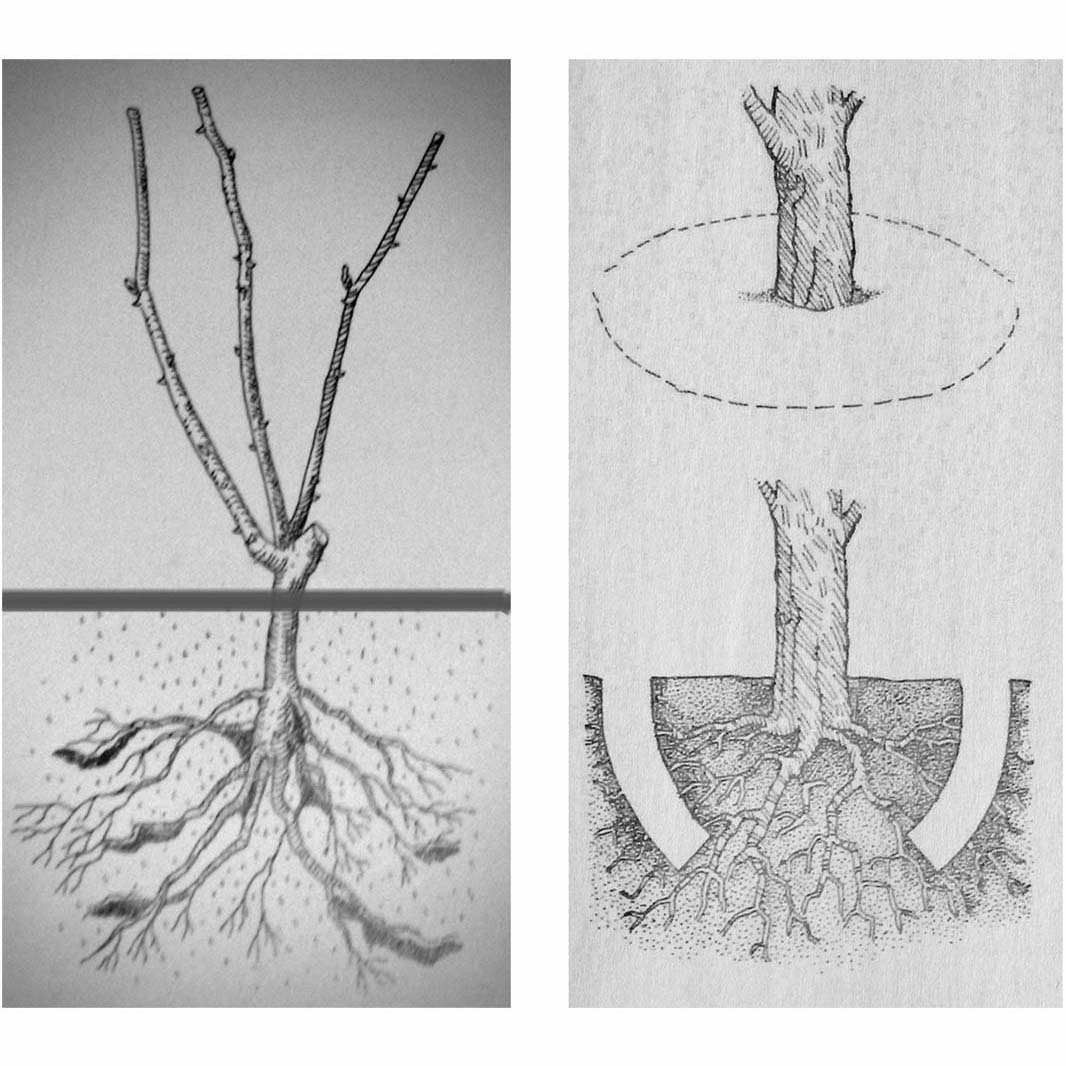
If you plan to shift a deciduous tree or shrub, water the soil thoroughly around it a few days beforehand. At the same time, with a spade dig down in a circle around the “drip line” – just outside the branch ends – to sever the roots to make lifting easier.
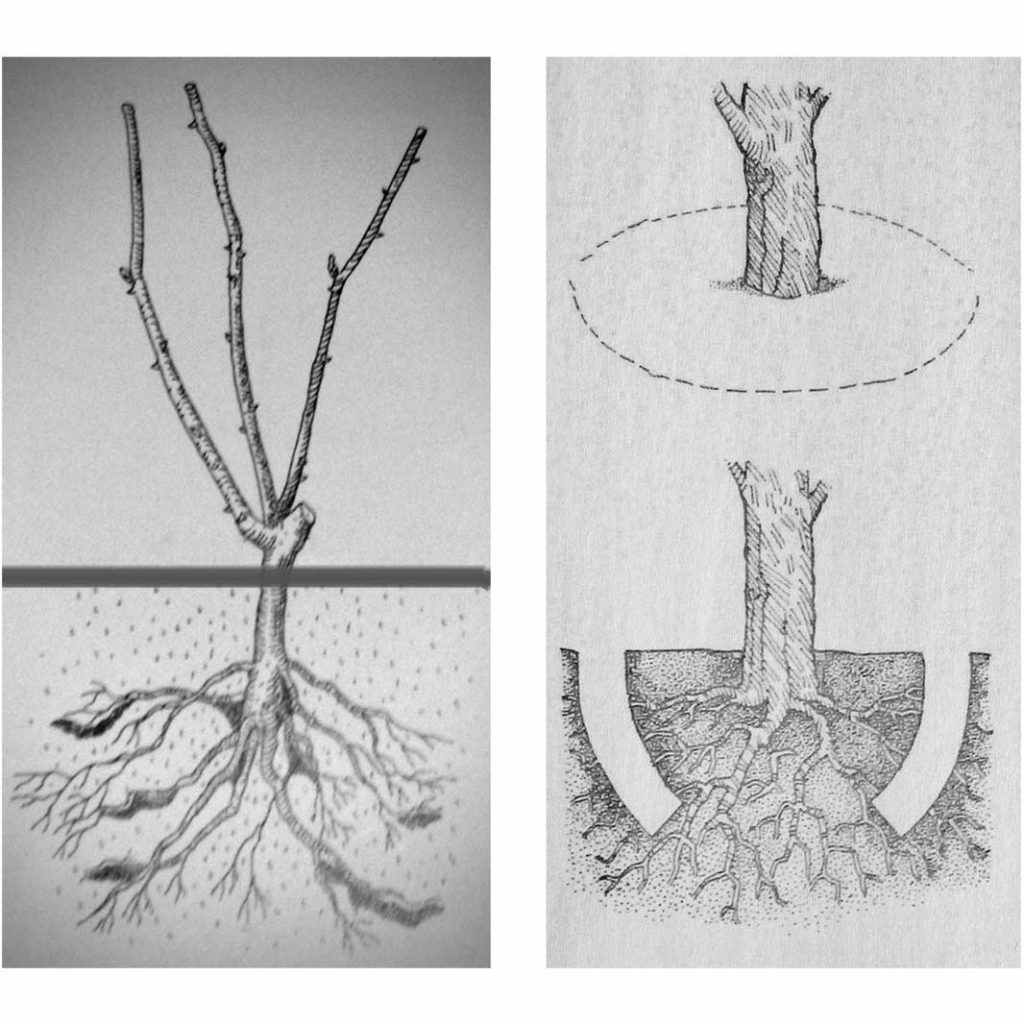
To give the plant a good start in its new location, trim any damaged root ends and use a good, friable potting mix to pack around them in the new location. This treatment obviously applies to planting out new deciduous trees or shrubs.
Evergreen trees and shrubs, especially the delicate magnolias, camellias or rhododendrons, need more care and need to be transplanted with a ball of earth packed tightly around the roots. Even if the plant won’t be out of the ground for any length of time, wrap the ball tightly in a sheet of sacking or an old tablecloth or bedsheet to prevent it breaking apart.
This way you can plant it sheet and all, merely cutting away any showing above ground to keep the roots intact. The cloth will soon erode enough for the roots to penetrate.
In the case of well-established plants, I recommend a little preparation to lessen the shock. Several weeks ahead of the move, mark out a drip line circle around the plant and dig a spade-depth trench about a quarter of the length of the circle and fill the trench with straw, sawdust…anything that will stay moist. Dig another section on a weekly basis until the circle has been completed for at least another week. Keep the soil moist with regular watering until it’s time to move. Pre-dig the new hole a week before the move.

To make the move, work the spade around each side to sever the roots under the ball before lifting the plant. Large ones will usually need several people with spades to get the plant out cleanly. Have the sheet ready for the plant and be ready to wrap it tightly at the top to keep it all together and slide, rather than carry it to its new home.
Be sure to pack the soil down around the root ball and water it in thoroughly even if it is raining, and then support the plant with three well-spaced stakes to prevent wind damage.
Got a gardening question? Ask Glen. Email glenzgarden@gmail.com
Words for images:
Image 1: Winter is a great time for planting deciduous ornamental and fruiting trees like this beautiful bronze-leafed crab-apple, malus x purpurea eleyi
Image 2: Right – Digging a hole to move a plant. Left – when planting roses and deciduous trees, always plant with the bud joint above ground

June 8th, 2020Design with Indre – Looking through the lens
To gain mastery you must have passion. You require hours of dedication and without a love for your subject or career, you just can’t fake it.
I want to introduce you to a school mate I admire – simply because he has dedicated himself to looking through a lens. He started as a photographer but he was always a first adopter of technology. He enrolled at Australian Film and Television school to study film editing and worked hard to get himself through. Link: www.montyphotos.com
The grass was greener for Ian in America, so opportunities were sought in San Francisco, the Bay Area, where Ian Montgomery still lives. A client challenged him many years ago to learn ‘one of those drone things’ as they were just gaining public attention. Ian spent many hours and many (four) cheap drones later, chasing the dog around the backyard, gaining footage whilst mastering the drone. The footage ended up being edited by Ian and becoming a GoPro video of the day. It happened to go on to win the Bay Area Drone film festival.
Much has changed since those days as Ian must now be licensed and insured. He has been able to work in many different countries flying his drones, for films, advertising, TV shows and his art.
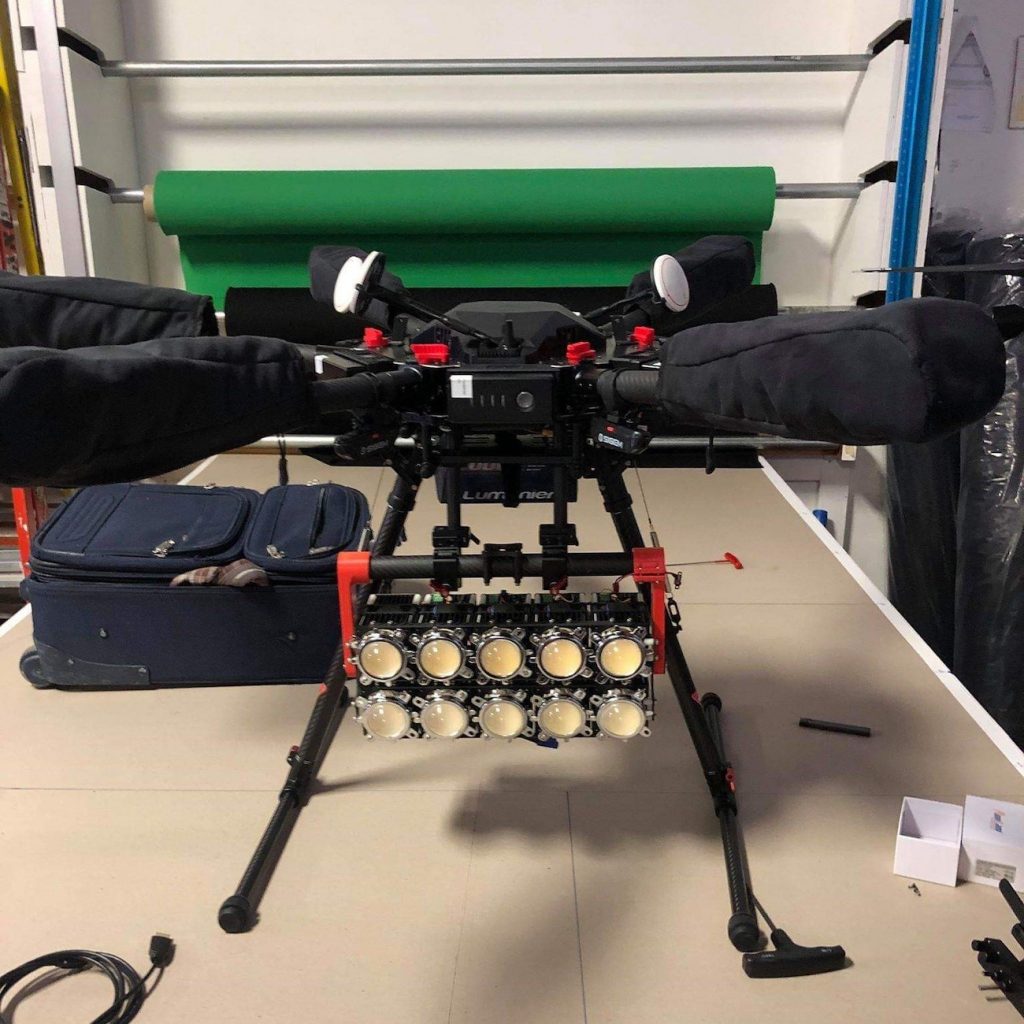
Along the way Ian explored ways of using this tool as an artist. In particular, he combined the developing LED lighting technology with his drone and has had some extraordinary results. Ian now has a heavy-lift hexacopter with LED aerial lighting that outputs around 130k lumens of light. It is able to light approximately half a football field and is currently the world’s brightest drone.
Ian says his first film shot with this light was in Utah where their rock formations are unique to the world. Ian set to challenge his viewers’ sense of scale and reality. Link www.sfdrones.tv/#5
Last year Ian used the drone to film glaciers in Iceland and Greenland, which to his knowledge, hadn’t been done before, and makes for a fabulous snapshot in the melting of the ice sheets. Making those films has been very rewarding for Ian and is a way for him to stay fresh for his commercial work. Staying fresh is something every artist needs to be able to do.
He collaborates with a core group of specialists, including colourists, audio engineers and composers. “Film is the most collaborative form of art and you have to have people on board who believe in the project because usually its a labour of love.” Link: www.sfdrones.tv/#0
Many an artist works for the labour of love. Fortunately, drones have a financial, environmental and statistical contribution to make. Not only are farmers embracing them for a view of their boundaries, troughs and stock but for mapping, government analysis and the CFA has started using them. Add infrared technology and you can see the extent of fires in hard-to-reach areas as well as hot spots on fire grounds.
With privacy laws firmly in place, learning to fly a drone can be used for good and not evil.
Indre Kisonas – principal designer – iok design
indre@iokdesign.com.au
www.iokdesign.com.au
Images: Ian Montgomery
Image copy: Ian says his first film shot with this light was in Utah where their rock
formations are unique to the world. Ian set to challenge his viewers’ sense
of scale and reality.
June 8th, 2020In from the cold to pick up a double
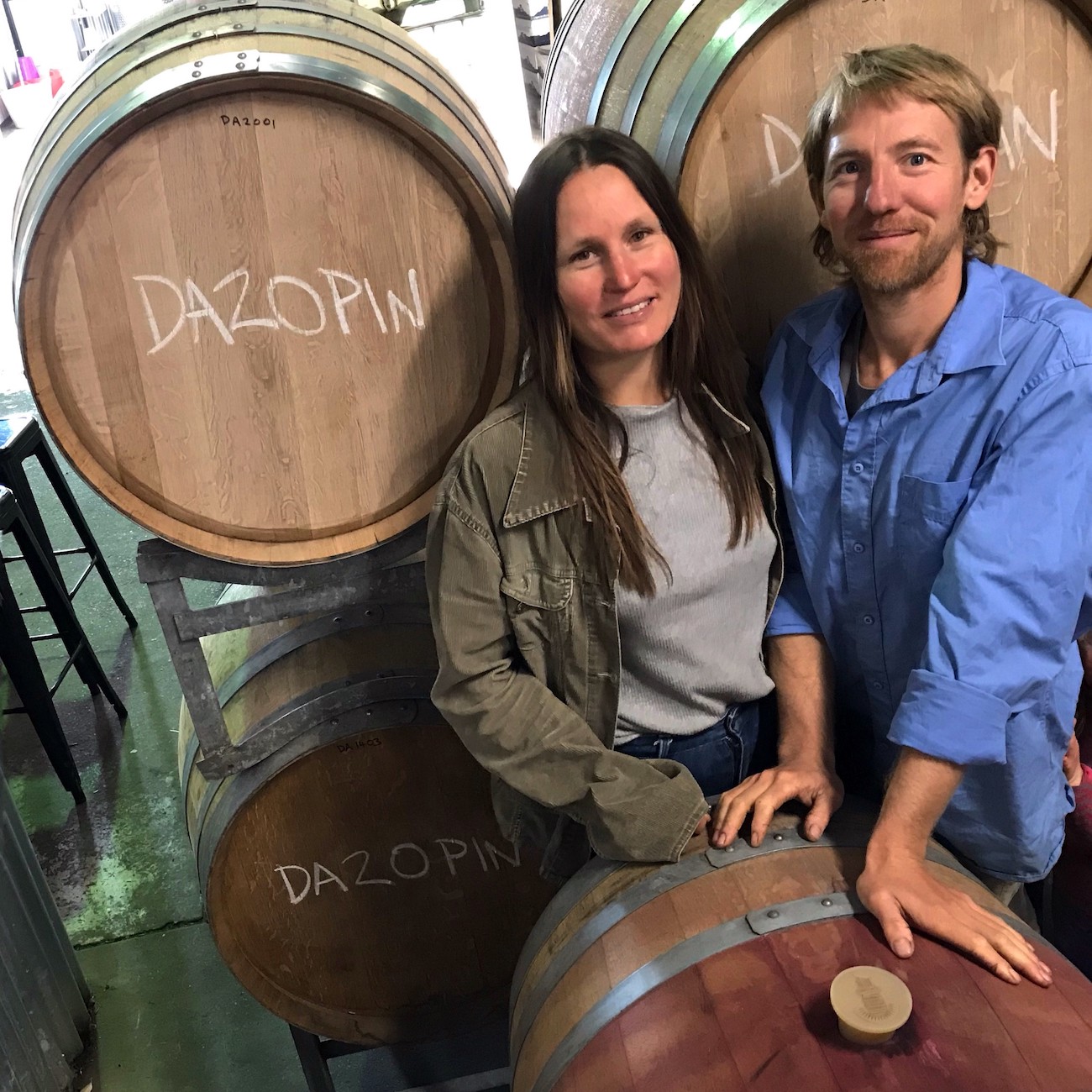
Loïque Allain and Chris Dilworth were settling in for a quiet night in Hepburn while keeping an eye on the streaming of national wine awards, when up came their names.
They thought they had a chance for Best New Act in the competition – and there it was.
Just then there was a knock at the door and, as they held their four-year-old and 18-month-old, there stood a messenger with the trophy.
Flabbergasted, the husband-and-wife team invited their visitor in for a cuppa, but she declined, saying she had to get back to Melbourne.
After settling the trophy in an appropriate place, they watched more awards when up came their names again, this time as the top Young Gun. Again there was a doorknock – for only the second time in 14 years a winemaker had won two of the five awards.
Dilworth & Allain is the name of their three-year-old label. They make a riesling, chardonnay and pinot noir from three vineyards, one of which they help farm organically.
The award’s founder, Rory Kent, said, “Loïque and Chris are a husband and wife team that do everything from farming and making truly exceptional wines, right through to the artwork that adorns the labels.”
According to Kent, Macedon may be one of Australia’s coldest regions but it is now white hot, with four makers in the top 50.
For Dilworth & Allain to win in their first year of entering was “phenomenal”, he said.
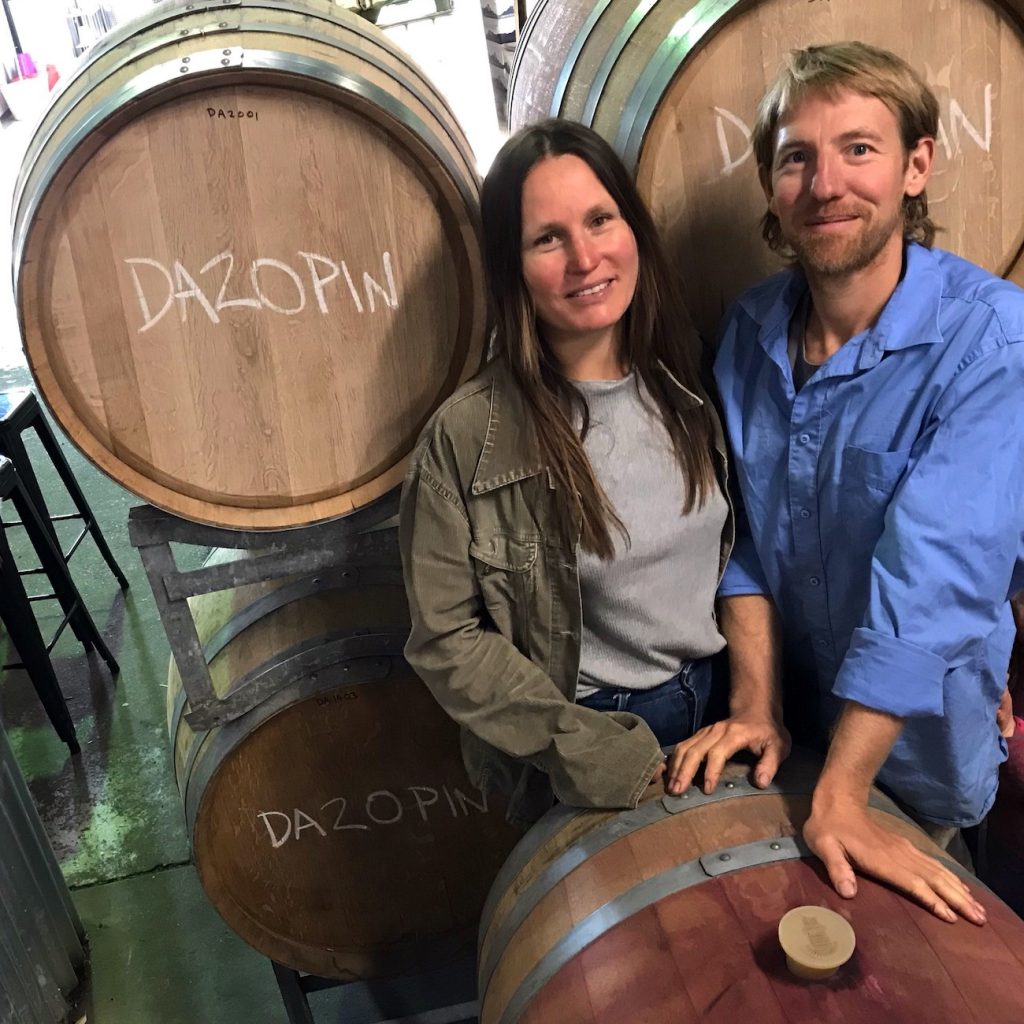
Chris, 37, had an early introduction to wine. His parents owned a restaurant in Willoughby in Sydney before buying a farm in Belford, in the Hunter Valley. Straight out of school he worked for legendary Hunter Valley chef Robert Molines in Pokolbin, before serving in restaurants in Sydney, Melbourne and London.
An interest from his Pokolbin days led him to study viticulture and winemaking in Adelaide. His career took him back to the Hunter Valley, then the Mornington Peninsula, Barossa Valley, Adelaide Hills, McLaren Vale, Tasmania, Tuscany and Burgundy.
His time in Tuscany changed his outlook. He saw a vineyard that had been farming organically since the early 90s, and then using biodynamic methods at the end of that decade.
“There is significant exploration in the cellar using different techniques and vessels and the wines are allowed to be expressive and reflective,” he says
Loïque, 33, is an artist whose parents are also artists. Graduating in fine arts, she undertook study trips through her homeland France, and to Italy. A love of wine led to vintage work in the McLaren Vale.
After a time in France, they moved to Hepburn when local Owen Latta offered Chris work at Eastern Peake in Coghills Creek, overlooking the Creswick Valley.
Says Chris, “Our philosophy has been to make wines that we would love to drink, wines that have a sense of place and are able to tell a story. We seek to make wine that is refreshing and interesting, allowing time for maturation and evolution in the cellar.
“We believe in producing wines that are un-fined, unfiltered, using natural yeasts and with sulphur being the only additive along the way.”
They make only 400 dozen bottles a year.
Loïque said their triumph was a boost for the region.
Now their dream is their own vineyard. “We’re going in that direction,” she says.
“Our philosophy has been to make wines that we would love to drink, wines that have a sense of place and are able to
tell a story.”
Words: Kevin Childs | Image: Contributed

June 8th, 2020Quarantini O’Clock with Leon – Lemon Meringue Pie
Welcome to Barry & Co. Travelling Libations Cocktail Hour.
We’ve finally been let out of the house and had a great time mixing up a cocktail storm for a few friends here and there over the last week. It’s been so nice to catch up with everyone, but still a bit awkward with the social distancing rules – going in to automatically hug someone, then remembering there’s a virus hanging around that stopped and changed the world, so no hugs allowed.
But we can still have cocktails and that almost makes up for no hugs, right?
A big hit from last week was this delicious Lemon Meringue Pie Cocktail, it really is just like the dessert and you might not be able to stop at one.
Lemon Meringue Pie
25ml lemon juice
15ml sugar syrup
15mls of Limoncello
30mls of Frangelico
30mls of egg white (approx 1 egg)
Method
Add the egg white to your cocktail shaker and shake vigorously for about 10 seconds. Add the rest of the ingredients into the cocktail shaker, along with a handful of ice and shake until the shaker becomes cold in your hand. Pour into a martini glass or a glass of your choice. Sprinkle some ground cinnamon to garnish. Enjoy!

June 8th, 2020Local Lines : Voluntary Service 1990
Voluntary Service 1990
Eighteen seagulls stand gawking
where yesterday we sat,
questions and myths about duty
prickly as the dry grass.
As I approach, the birds turn their backs,
disperse, perhaps nervous
of the artist’s intense gaze.
Or aware there’s no food in those hands.
One seagull limps.
Sometimes, during these three days
when I have touched my face,
the skin felt smoother, cleansed.
The others say they too feel
released, ready
to face whatever’s next.
They have given me words
that flew from my pen, sprang
onto paper, sometimes colliding,
other times rolling into
fluid lines.
I watch how the butterfly dares,
jitters around lawnspray’s sweeping arm swing,
avoids being drenched, leaps
through the damp air, as erratic
as my thoughts.
The butterfly works with water
without having to dive or swim.
I work with listening.
Red flowers, young men, common birds
pecking at the bases of tree trunks.
One woman on a seat, reading.
An elderly woman screws up her eyes
resisting sun. How open you must be
to let it in. How courageous,
to hold your face up, willing.
– Jennie Fraine
Jennie Fraine moved west of Melbourne (to Bacchus Marsh and then Ballarat) from the eastern side back in 2004 and has never regretted it. She is a prolific poet and the poem here was written when she had hired herself out as an “On-the-Spot Poet”, her business then was called Poetic Licence.

Poems for Local Lines come predominantly from a group of poets. However, other locals who would like a poem considered for publication can contact Bill Wootton – cottlesbreedge@gmail.com
June 8th, 2020Chrissy loving her saffron – and ice-cream
Although technically, it’s more of a ‘slope’ than a ‘hill.’ Still, Chrissy really is Austrian and in real-life, she’s more vibrant than any movie character.
“I am so incredibly fortunate and lucky that I am able to do this, you know. No, seriously!” Chrissy said. “I’ve always wanted to grow saffron, but I’ve never had the chance to do so.”
To be fair, she has been busy with other things since making the move from her home country of Austria 24 years ago. She moved to Australia for love, but when that ended, Chrissy stayed for the beautiful family and community she had discovered around her.
She first moved to Spring Hill and it was quite a learning curve.
“I come from the city, from Europe straight onto the farm – I had to learn how to use the tractor, working in rain, in snow, it’s totally different to the work I used to do before, mostly in hospitality. It’s very hard, different work.”
Chrissy is happily independent and has a strong work ethic, going on to work at the local bakery and the supermarket in Trentham before she bought the hardware store and ran it for seven years – now, she works at the community bank.
In the meantime she met Sweetheart, who goes by ‘Finn’ to everyone but Chrissy, owner of Autumn Joy garden centre at Newbury.
Chrissy and Sweetheart took a trip to Tasmania and popped into a saffron farm. That visit sparked something in Chrissy, and this bubbly, strong, hard-working Austrian woman brought saffron to Newbury.
“I did everything myself, all the ploughing with the tractor – I’m very independent so I wanted to do a lot of it myself.”
Chrissy has even written a small part in a new book, Red Gold, being published in Europe, all about growing saffron around the world.
“I told my sister, she is in Austria, she has to buy the book.”
It’s subject matter worthy of a book because saffron is so very, very temperamental. Surprisingly, the local climate is perfect because saffron loves a good frost, and Chrissy has planted it on a slope for good drainage and the full sun it also needs.
“Everything is grown by hand, every flower is hand-picked, that’s thousands and thousands of flowers, using tweezers to put them into little jars, laboratory-style, as it’s very little.”
‘Little’ is kind of the point when it comes to saffron. It’s famous for being expensive, more expensive per gram than gold. But a woman doesn’t need as much saffron as she does gold.
“You only need a little, tiny bit to go yonks to create products and not just saffron rice but saffron jam, cardamom and saffron cakes, orange saffron scones, it’s just delicious.”
This year marks her third harvest and in growing her saffron, Chrissy has worked closely with the community that she first fell in love with when she moved to this country – friends helped her put up the fencing and another friend’s bees pollinate her crops.
Now, her community has combined in the most delicious way.
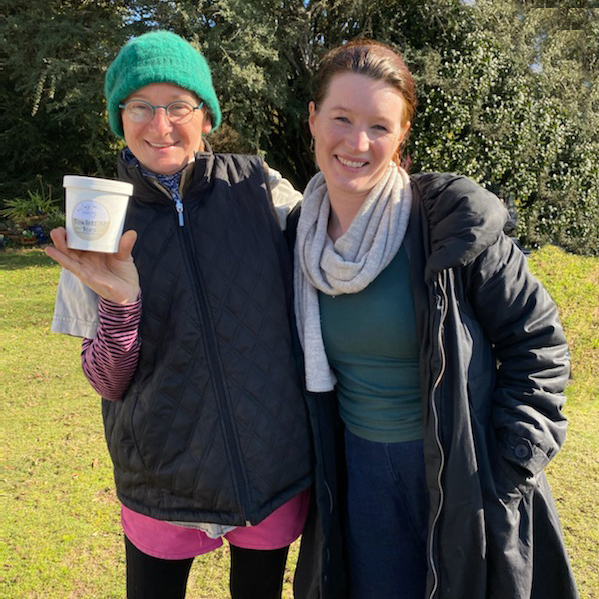
The divine folk at Powlett St. Ices in Kyneton, and at Dele Foodstore and Catering in Daylesford, have created a new saffron honey ice-cream, using Chrissy’s produce.
“It’s delicious, it’s fantastic.”
Chrissy has successfully pioneered growing saffron. But she still isn’t sitting back and relaxing. Now, she’s exploring making more produce to take to markets and she has sent off a sample to the ISO to be graded at the international standard.
From Austria to Newbury, Chrissy is a happy soul right where she is.
“Have a lovely, happy, jolly day.”
Editor’s note: Chrissy is well worth following on Instagram, @trenthamfields, featuring beautiful happy photos of everything from the snowman that Sweetheart made her to the stunning multi-coloured flowers of the saffron in bloom.
(This article is supported by the Judith Neilson Institute for Journalism and Ideas.)
Words: Kate Taylor | Image: Contributed
Image: Chrissy Rawson-Harris, left, with Dele Foodstore and Catering owner Adele Stevens, and the saffron ice-cream
June 8th, 2020Online works but face-to-face best for garlic grower
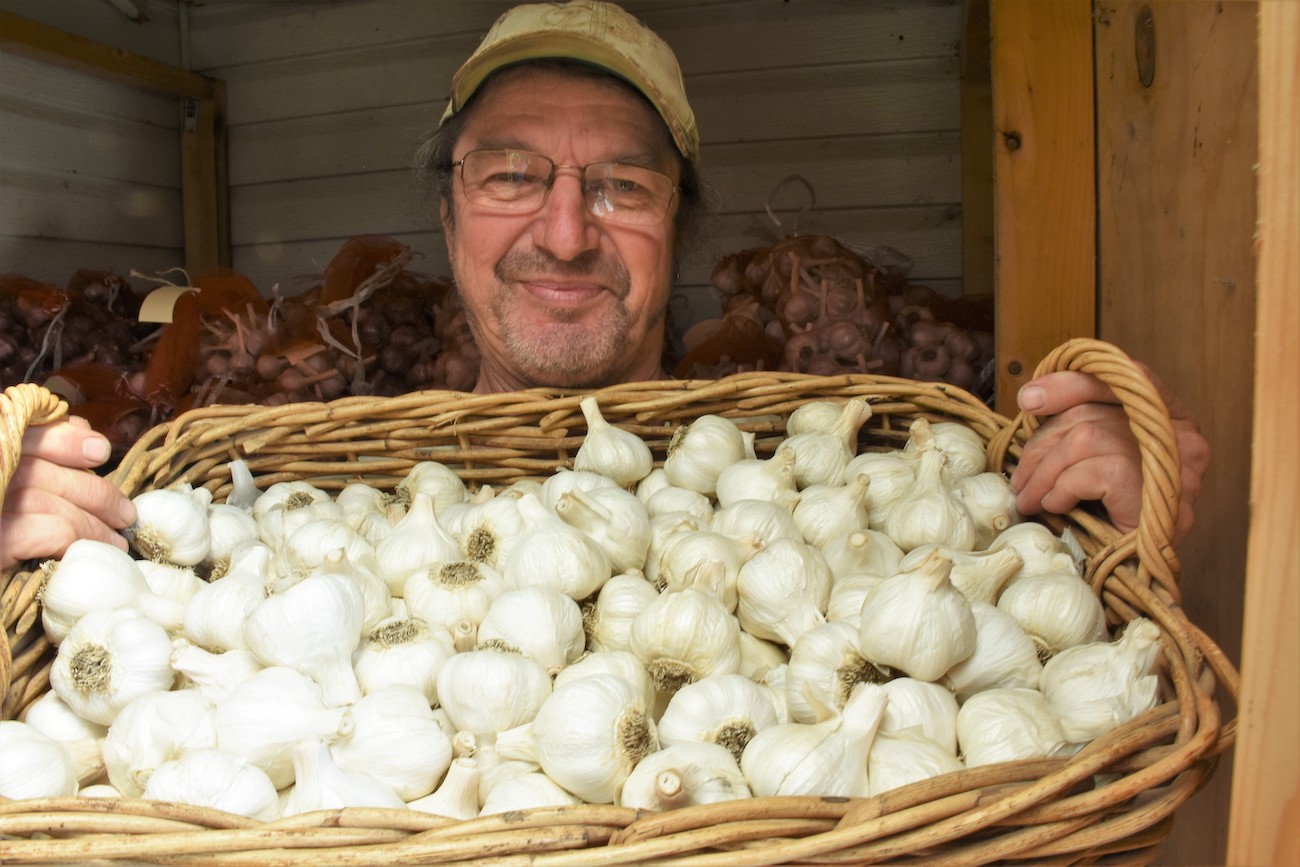
“COVID-19 hit pretty much in the middle of my garlic-selling season at the markets so yes, I was freaking out initially,” he says. “I had a lot of stock left but I simply put it online through Facebook doing home delivery to Ballarat, Daylesford, Clunes and environs. I moved it all in half kilo and one kilo lots and the response was phenomenal; I sold out in three weeks. Switching to online for me has been outrageously successful, better than my wildest dreams. I dropped it on doorsteps with my invoice details, working on a trust exercise and everybody paid. The interesting thing was nearly 80 per cent of them were new customers who had never dealt with me before, never been to a farmers market.”
Before moving into growing organic garlic, broad beans, snow peas and a few potatoes, Ross spent 20 years in the film and television industry including 10 years with the Blue Heelers’ art department. He moved to Creswick nine years ago to start Slaty Creek Organics, a certified organic farm with its produce sold at just a few markets in the Central Highlands area.
The 60-year-old said his first foray into growing garlic was during his film and television career when he bought a church in the Otways.
“A very good friend of mine, a marvellous gardener who just looks at things and they grow, suggested I grow some garlic. So I planted my first garlic in 1994 and showed it to my friend and he thought it was hilarious. I love a challenge so from then on I was going to become the best garlic grower in the world.”
Ross, a voracious consumer of garlic, said Creswick had the same perfect climatic conditions as the Otways.
“All through the Central Highlands you have great conditions, it is a dry land crop and I never irrigate, so as long as you get about 600mm of winter rainfall you are pretty good.”
Along with its flavour, Ross loves the “extraordinary health properties” of garlic, saying it is a natural antibiotic, a blood thinner and “there are probably things that garlic cures that they are not even aware of yet.”
“I never get a cold and am healthy as, I partly put that down to garlic. I swear by Kick A Germ Joy Juice, an old recipe handed down by hippies for years.”
Ross said there were about 700 different cultivars of garlic in the world and at the moment he has four growing on an economical scale with another six he is experimenting with. As for being an organic farmer, he never knew there was another way.
“I have always been an organic farmer and what I do now is just natural progression. I do like the credibility of that little piece of paper, it is outrageously expensive to be organically certified, but I like to say to people ‘I am for real’.”
Ross says organic is appreciated by certain demographs including older people and those demanding quality in their food.
“I find, especially here in the Central Highlands, that there is a very discerning, food-savvy clientele. I knew when I moved here, that they were pretty switched on and tended to support local organic farmers. And even when I shifted sales online over the last months, they continued that support.”
These days things haven’t changed much at the farm. Organic farming was never something Ross started doing to make a fortune, it was always a lifestyle option. However, that said, he is very optimistic for the future. None of his produce is coming on until October and he is sure the local markets will be back up and running as before, albeit with a few social distancing restrictions in place. And while it is very comforting to know he has a very loyal online customer base if public gatherings are closed again, he prefers the real thing.
“While the shutdown did make me consider how I do business, I thoroughly enjoy person-to-person interaction. I will keep the online option there but I still want markets to be my main business.”
Words: Donna Kelly & Tony Sawrey | Image: Kyle Barnes
June 1st, 2020Vale Betty 1932 – 2020
Betty Elaine Kelly, my mum, passed away on Friday, May 22. The funeral service was last Thursday. Mum was The Local‘s biggest fan and a frequent flyer to the Daylesford region. Here is what I said last Thursday.
OK, Mum is a true Frankston girl, born and bred.
She was born in Frankston Hospital on June 21, 1932 to Phyllis and James Oldfield. That year she won a Best Baby Award – and still has a silver cup to prove it. Although it became a little worse for wear during a house fire when her dad had to throw both her and her brother out of the window to save them.
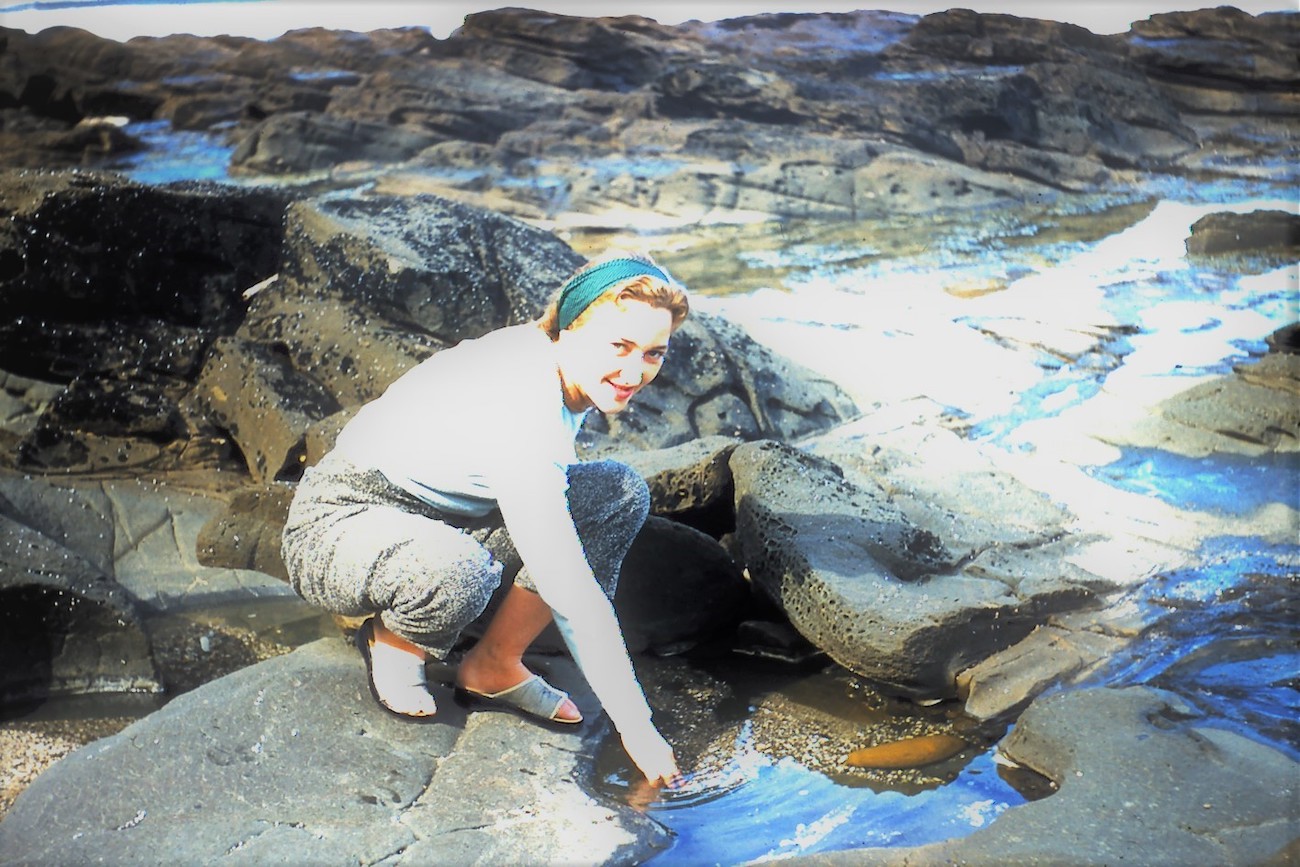
After a few years of being an only child, along came Graeme. I think they fought a bit as kids but she said in her teenage years he was quite protective of her and in later life they were best friends and talked every day. Graeme died a few years ago and that really hit Mum. She loved her little brother.
Mum was very much a beloved child and her dad called her Sam or Sammie. Lots of Samuels in the family, I think. He used to take her out fishing off Oliver’s Hill, tying her to the boat so she didn’t end up overboard. And that is where her ashes will be scattered, next year, on her birthday, on June 21, 2021. A much better year.
The family moved a lot, only around Frankston, as her dad James, among other things like starting up Bayside Holden and being postmaster at Frankston Post Office, was a builder. He would build a home, Nan would decorate and they would sell and move on to the next project. I think it might be why Mum stayed at her very own “Home on The Range” from when she married in 1956 right up until she moved to Baxter Retirement Village eight years ago.
Mum went to Davey Street Primary School and then Frankston High but was smart and was given a scholarship to Corowa Girls School. She loved school and had lots of friends and talked about catching trams in Melbourne. She also attended a radio school and was a proficient piano player. But she also loved being in Frankston and with her family so when she finished school, despite offers of employment in Melbourne, she just wanted to be close to home.
But she did have stints as a teacher, back at Davey Street, a nurse and even went travelling with a dentist as his assistant. She even kindly made a free set of false teeth for Nan, but they were so crooked nan threw them on the floor and they shattered.
Mum finally found her wings, and worked for Ansett for a while. And then she met my dad, John William Kelly, who was with the PMG or Post Master General, I guess what we call Telstra now.

She had a few beaux, or blokes interested, at the time, but Dad won her heart and they married on September 28, 1956 and bought two blocks of land in The Range. They sold one to the Browns, so they could build on the other and started with just a couple of rooms and added on as they could afford them. No McMansions happening there.
Mum always wanted four kids and it took a while but four children did come along. Peter, Jandra, myself and Richard, so mum had her hands full juggling four kids all aged two years apart. They were typical parents, loads of photos of the first two, a couple of me and then practically none of Richard, unless we were all in a group shot. We had a good family life. Not rich, not poor, just very middle class. Dad studied for an engineering degree at night so I think that helped. Although I do remember quite a few mince dishes. And apricot chicken and ki see ming – a cabbage-based dish – and disgusting.
Mum, who played tennis every Wednesday morning, also started her craft and art life, studying pottery – which she kept up with her own kiln and wheel until she was 80, along with painting, and even having a group of women over now and again to create silk scarves.
Mum’s father died just after she married but as the kids grew up Mum started travelling. A couple of times with Dad including to a recently opened China where the tour guide failed to show at the airport and I think he went into meltdown – remember, he was an engineer.
So she chose Nan as her travelling companion and between them they saw the world. The kids got to stay home with Dad as cook and his go-to meal of ham steaks and pineapple. Think every day. I think Jan and Rick to this day can’t eat that.
Sadly Dad died when Mum was just 55. She was grief-stricken but instead of closing down, she upped her travelling ante and headed to France for six months with Graeme and my aunt Jennie. She loved it. Popped across to London now and again and had lots of adventures we will never know about with Graeme while Jennie worked.
She came home, out of her grief fog, and encouraged me to apply for an English teaching job in Japan. I got the job and spent the next three years in Japan, with Mum turning up every few months for “eight weeks” or “six weeks” while my friends’ parents just came for a week.
Where I lived they had a group of Goodwill Guides, volunteers who took foreigners out to see Japan. They practically adopted Mum and while I worked she saw the real Japan. I remember one night going home and getting a call to say “your mother come home time now 7pm”, then “your mother come home time now 9pm”. After I received the final call “your mother come home time now midnight” I gave up, left they key in the door and went to bed. I think they were at an historic sake factory.
Meanwhile, Rick had met Dawn and moved to Queensland where mum travelled at least once a year and did fun things like fishing, driving boats, trying lots of restaurants and generally just was spoilt. Rick and Dawn travelled down from Queensland to be here today.
Jan stayed close by and had two children, Brett and Ryan, giving Mum grandchildren who she loved. Jan and Brett actually lived with Mum for the first five or so years or his life, so there was a real bond there. And then Ryan came along with his fun and dry humour. Certainly they got myself and Rick off the hook.
Finally Kyle got off his backside, left New Zealand, and came and found me. We met when we were living on Hamilton Island, me a Japanese tour guide, Kyle, a skipper. When Mum first met Kyle she said “he’s handsome, but it won’t last”. I can say they had a rocky start but ended up best of friends with Mum telling Kyle, usually after a couple of chardies, “I love you”.
Mind you, she often read his opinion pieces featuring her in The Local, a publication we run, and would call and say “I am going to kill him”. But she loved being known, in a funny way, by our Daylesford people and loved coming up when we moved there, and heading to restaurants and pubs to be greeted with lots of hugs. I know, the old days. Claire and Susanne from The Boathouse Restaurant are watching this today – and Claire gives the best hugs!
Kyle and I were also lucky to travel with Mum. We went to Japan when she was 80, after an illness many people thought was the end. Over the past two years we have cruised together as well. Mum had a bucket list which included Iceland and Norway. So we did that, and then she had another bucket list, Eastern Europe and Russia. So we did that too. And then, this year, if not for stupid COVID we would have been cruising around Japan, China and Hong Kong. We cancelled that one in January.
Mum was also very involved in the local Probus club, as a founding member, doing dinners out, the wine appreciation circle and travelling to heaps of places like Turkey and just around Australia. I often thought it was the best thing she had done after Dad died, just got her out and about with some like-minded fun people.
Mum said to me last week that this stint in hospital was just a little blip in her life. We all thought she would be home by now. Not to be and I am so sad. But really she was a little lady, just 5’4”, who lived a really big life. And that is what we must remember. Never the last bit. A big wonderful life with family and friends, and travel and lots of interests. Love you, Mum.
Words: Donna Kelly

June 1st, 2020The Great Divide: residents v. council on planning
Last week, The Local reported on the failure of 131 shire residents to get Hepburn Council to delay a crucial review of planning. In the second of a two-part series, Kevin Childs looks at complaints of lack of cooperation by the council and its response.
COMMUNITY satisfaction with the Hepburn Shire Council has seldom been high. A survey last year revealed that it had scored 51 per cent on its consultation and engagement satisfaction rating compared with 55 per cent for councils similar to Hepburn and 56 per cent for all Victorian councils.
According to Ross Ulman, it’s not the number of opportunities for community consultation that’s important, but the willingness of consultants and the council to genuinely listen to the community’s concerns and aspirations.

Mr Ulman, spokesman for the 131 ratepayers who sought the review postponement, said a “them and us” feeling had developed, rather than the spirit of cooperation the community wanted and expected.
Among the reasons for this were lack of consultation over removal of geese from Lake Daylesford, the highly controversial Local Law No. 2 and the planning permit for 17 Smith Street, Daylesford.
He said that there was no deadline to prevent the review being postponed until the pandemic abated and a regimen of genuine community consultation had been jointly developed by the council and the community.
The Mayor, Cr Licia Kokocinski, wrote to the upset residents, but Mr Ulman said she did not focus on their specific concerns.
A month after the group’s initial request, council CEO Evan King weighed in by quoting the newly proclaimed Local Government Act’s community engagement principles, while ignoring the request of the residents for a postponement of the review pending implementation of the much improved consultation and engagement provisions of the new Act.
“The community wants to work cooperatively with the council to achieve the best outcomes for the shire,” Mr Ulman said. “But, as they say, it takes two to tango.”
When communication, including face-to-face focus groups, became impossible, the residents sought a delay in the review until normal life had resumed.
Mr Ulman said the review would lead to a planning scheme for the next 20 years. “It is or should be, self-evident that [the scheme] requires genuine and thorough community consultation and not just activity that will allow a consultation box to be ticked”.
But the council denies this, saying, contrary to some common beliefs, a planning scheme is not a static document that would “be in force for 20 years”.
“Planning schemes should undergo regular updates in matters such as land use zones, local policy heritage and neighbourhood character and other matters,” the council said in a statement.
“Unfortunately, the Hepburn planning scheme has not had recent updates and there still remains a large amount of policy work to progress with in the immediate future.”
The 2019 Planning Scheme Review, for instance, found a need for township structure plans.
“In the case of Daylesford, matters such as a review of residential land supply, heritage and open space should be addressed. For the Shire’s five main townships this work is a priority that is intended to be progressed in 2021 and 2022. Each of these projects will include comprehensive community engagement that is specific to each township.”
Mr Ulman said, however, that the earlier authentic consultation occurred the more likely the scheme would represent the community’s interests and aspirations.
Once a draft scheme was sent to the minister and exhibited for community comment it was probably too late for significant changes to be made, he said.
The council’s view is that it is committed to producing an updated planning scheme and is working with the community and state government to ensure it met the standards ordered by the minister. Councils could spend two or more years on such a scheme.
“Hepburn Shire Council has not compromised community engagement for this project, however, we acknowledge that some parts of the engagement have had to be done a little differently due to the COVID-19 implications.”
The council says it has enough resources to make progress with the revised scheme and make sure it was a “more robust first step” in better planning.
Mayor Kokocinski said the State Government had changed planning laws, which covered some of the criticism.
“I understand that requests for Zoom meetings to further discuss concerns were turned down, so I am not sure what else we could have done. At the time, due to increasing the level of restrictions and isolation measures, all meetings were cancelled and replaced with Zoom where and when possible.”
Image: a packed Daylesford Town Hall with Local Law No. 2 on the agenda earlier this year.
Words: Kevin Childs | Image: Kyle Barnes

June 1st, 2020Trans & Gender group
A NEW peer support group is starting up in the Macedon Ranges for trans and gender-diverse community members and Cobaw Community Health wants to spread the word. If you or someone you know is TGD, Cobaw is looking for people to help shape the group.
Cobaw is pleased to have received funding through Trans Gender Victoria’s SPARK (Support for Peer-Support Activities that Revitalise Kinship) grant. The funding is aimed at increasing health and wellbeing outcomes for TGD Victorians by supporting the bright ideas of existing groups or the start-up of new groups.
Cobaw has a long history of working with LGBTIQA+ community members through its WayOut and CLIP programs which support both young people and older adults. Through this work and engagement with the broader community, a gap in the provision of TGD peer support has been identified.
“We are all very committed to supporting the TGD community across the life span,”’ said CLIP project worker, Belinda Brain. “By putting the call out for people to help get this group up and running we hope to better connect with our local TGD community.”
While Cobaw will be involved in the planning and start up stages of TGD Macedon Ranges, the direction, purpose and shape of the group will be driven by community members.
To keep within current COVID-19 guidelines, TGD Macedon Ranges will commence online with the aim to move to face-to-face catch-ups when possible. TGD Macedon Ranges will provide a safe and inclusive environment for members of the TGD community to come together, make connections and create a group that meets the needs of local people.
“Together we can raise awareness and increase the visibility of the TGD rural and regional experience within our local community,” says Rhani Dean-Talbett, WayOut project worker.
Cobaw continues to run a number of programs and support groups for LGBTIQA+ people of all ages and their families including WayOut, House of Awesome, Parents Empowering Rainbow Kids and CLIP.
Details: 5421 1666 or admin@cobaw.org.au
June 1st, 2020Newstead Arts Hub
NEWSTEAD Arts Hub is presenting its first online Artist Market, running from May 1 to July 30.
Due to COVID-19, the gallery and other spaces at the Arts Hub in the historic Newstead railway station are closed, but local artisans are still well and truly working. The initiative supports them while everyone is in ‘stay at home’ mode.
Ten artists are now showing their work on the hub’s online market. Each week, there will be different artists and styles, selecting two or more of the artists who have or were to exhibit at the Hub in 2019-2020.
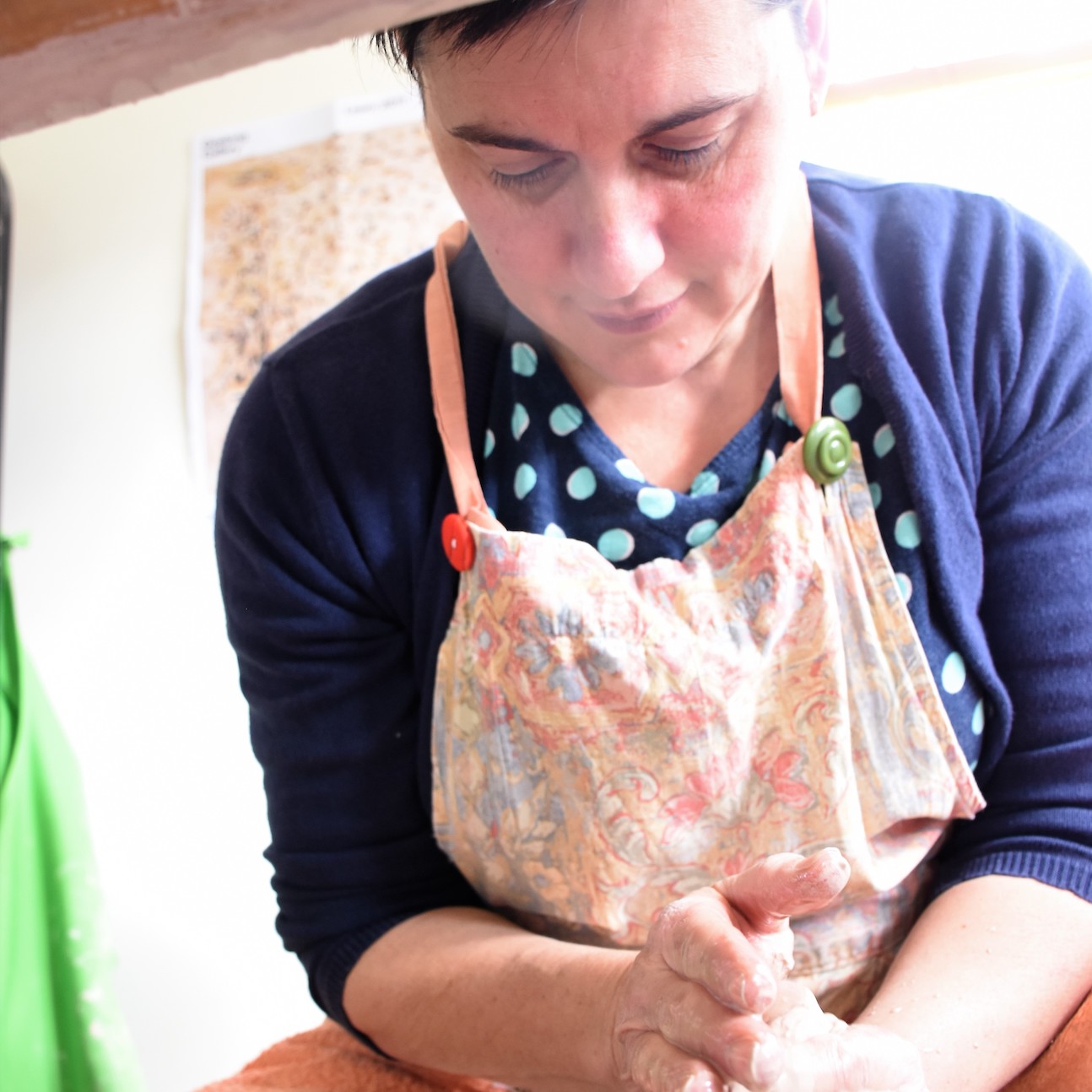
The past weeks have showcased Libby Noblet, Richard Sullivan, Sarah Koschak, Selina Wilson, Cherryl Fyffe, Kate Borradaile, Marcela Olea, Prue McAdam and Angie Izard, pictured.
The featured artists for next week are Diane Thompson, sculpture, and Carol de Graauw, jewellery and ceramics.
All of the artworks are available for sale directly through each artist and they will arrange delivery.
Link: www.newsteadartshub.org/welcome-to-our-artist-market/

June 1st, 2020Money with Matt
THE Australian housing market is a hot topic of conversation at the best of times, let alone in the midst of a pandemic. How will COVID-19 affect the Australian property market? It’s the question on everyone’s lips at the minute.
Over recent weeks I have listened to television broadcasters propose that the Australian property market ‘could’ decline by up to 30 per cent as a result of the coronavirus. I personally become concerned with these types of reports because the reality is that the property market ‘could’ also remain stagnant, or even perhaps increase.
The previous five years in the Hepburn region have seen an increase in prices to the tune of approximately 62 per cent. I also don’t think it’s outrageous to think there may be a natural correction in terms of a slight stagnation in prices simply due to the heavy increases we have recently experienced.

I’ll be honest though, this is speculation, and nobody can predict actual future results. The fact of the matter is, the housing market is susceptible to basic economics, and the theory of supply and demand.
In 2005, the Australian population was just above 20,000,000. In 2020, we are well over 25,000,000. To me, this tells us that according to supply and demand, the demand will continue to increase with population growth. As the demand increases (and with the help of natural inflation), so do the prices of dwellings that people want and need.
Housing affordability is another huge factor determining the ability of the average consumer to fund house purchases. As of today, the Reserve Bank of Australia has the official cash rate at 0.25 per cent. Allow me to remind you that this is an historic low, meaning that affordability with relation to lending has never been more achievable.

All of these factors create the perfect storm whereby people want and need houses, and can afford to buy them. This theory would suggest that at worst, prices would at least remain stagnant. I can honestly say that in my time as a public tax accountant, I struggle to think of a time where I’ve seen as many positively geared rental properties as I have recently, and further to this, rental vacancy rates in regional Victoria have also been reported at less than 2 per cent. This reinforces the notion that the investor market is as strong as it’s ever been. Additionally, I can’t see anyone selling their house for less than what they bought it for unless there are dire circumstances.
To quote Darryl Kerrigan, “A man’s house is his castle” and I think it’s reasonable to assume that nobody will give up their castle unless they absolutely need to. If you try to convince me otherwise, I’d tell you “you’re dreaming”!
Matt Richardson is a senior chartered accountant with Cooke & Foley in Ballarat.