

May 18th, 2020Confessions from the great Glenlyon Confest
THE Hare Krishnas were making meals. Just about everyone else was making love.
When the stories of festivals are written, there’s Woodstock, Glastonbury and even Sunbury. Add to that Glenlyon.
In the early 80s they came in their thousands to the Glenlyon Recreation Reserve: alternative thinkers, social change agents and community dreamers is what they now call themselves.
Back then, however, they were pretty much hippies. “Sex ‘n’ drugs ‘n’ rock‘n’roll…,” is how one festival-goer now describes the festival, “without the rock‘n’roll”.
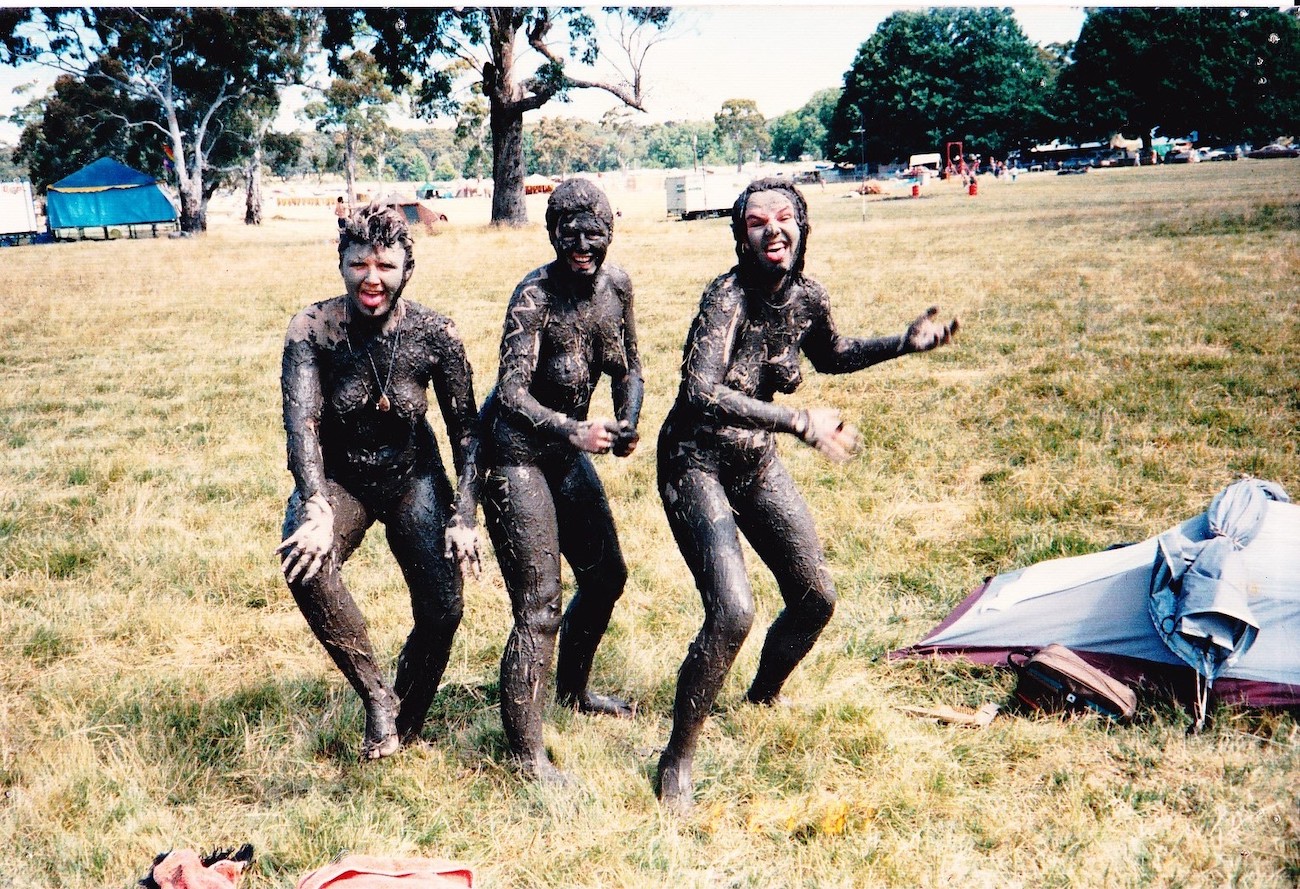
That’s the recollection of Daylesford wedding celebrant Beverley Risstrom, who remembers the Down to Earth Confest as a fabulous time when one of the few hiccups was after a kid in childcare aged about three requested and got a Mohican haircut. Then his mother arrived.
“There was so much angst,” she says, “we had to move to the healing circle.”
Beverly rocked up to the festival with her brother, her boyfriend and two girlfriends, camping in the warm weather, swimming, then rolling in the mud and freshly mown hay.
“I got an ‘elephant skin’ and also four or five straight lines on my arm, scratches either from a platypus or ‘a spirit animal’. It was pretty wild, but I don’t remember any violence.”
She does remember the local CFA coming out to hose the mud off the naked revellers…and the look on the face of a young kid on the firetruck as the mass of naked bodies among the 5000 were washed down. That kid may have been Damian Leonard, now a potato farmer at Glenlyon, who says he would have been 12 at the time, had a dad in the CFA, but doesn’t recall the incident.
Like Beverly, however, Shelley Beer remembers the festival pottery necklace which was the pass-out before wrist-bands. She harks back to the 1982 Confest, one of the hundreds held across the country since 1976.
“My most vivid memories? Nudity, rebirthing, noise. Swimming in the reserve creek. The view of all the campers set up above the oval among the gum trees of the amphitheatre hill. The smell of dope.”
At age 25, she enjoyed the exciting atmosphere – and the Chai Tent as a great place to gather. The Rainbow Chai Tent still operates.
Among the characters was a bloke who was prone to stand atop a bus with a warning sign while wearing a gas mask.
“My cousin played at Glenlyon for the Panton Hill Umbrella Club (PHUC), who were known for having performed regularly around the St Andrews area,” says Shelley.
She arrived in Daylesford in 1993, and moved to Glenlyon in 2006, living in the district for 25 years.
At 62, she now lives permanently on a catamaran. When interviewed by e-mail, she had been locked down in Spain for eight weeks.
“The plan was to sail into the Mediterranean this summer. We’ll be sailing until we can’t…so that’s semi-permanent. We plan to eventually sail across to the Caribbean, explore there, the Panama Canal, and Pacific Islands before maybe returning to Australia/ New Zealand in five to 10 years.”
When the Down to Earth Confest was set up all those years ago, one aim was to shape a future of choices where individual needs were not suppressed and people were encouraged to follow their own paths.
Clearly, Shelley Beer acted on that message.
Words: Kevin Childs Image: Contributed
Images: Image 1 – Beverly Risstrom at left with friends

May 18th, 2020Music to express emotions and experiences
D’ARCY Spiller is from a family of seven which moved around when she was young. They started in Sydney, then New Zealand, Melbourne and then moved to Smeaton when she was about seven. D’Arcy went to Smeaton Primary School – the same school her grandmother attended, although she didn’t know that at the time.
When she was 12 the family moved back to Sydney for a year where she started to love jazz music – D’Arcy learnt Lullaby of Birdland from her vocal teacher who was a Russian opera singer, and also received her first guitar that year which she still uses in gigs. D’Arcy says looking back it was a pivotal year for her musically. The family then moved back to Smeaton where she started writing originals and entered a national song-writing competition and came third. The ABC interviewed her and played her song on the radio and “I got a taste for it and my desire to make original music started there”.

At 15, the family moved to America and D’Arcy attended an arts high school and was admitted to a summer program at Berklee College of Music. Her taste in music grew and she developed a taste for alt blues, bluegrass, rock and grunge music, and she started going to big music festivals. Instead of prom, D’Arcy went to Coachella.
D’Arcy said her childhood included a lot of travel, freedom in the country, exposure to city life, many different experiences and she tries to keep all of that in her life now. She chatted with Donna Kelly.
Donna: That’s a great childhood. Is your family musical?
D’Arcy: When my mum was pregnant with me she was working on a festival in Hong Kong, she attended an Indian concert and when the tablah drums started playing she felt me kick with the beat. It was then she knew I’d love music. My dad, who was in advertising also introduced me to the sync world when I was around five, where I was able to dabble in how you can express emotion in voice. I started doing regular voice sessional work. So, while neither are “musically inclined” they both work around the arts and creative industries. My sister Gypsy plays the piano and we have started collaborating a little. My parents have always been extremely supportive and encouraged my siblings and I to do what makes us happy.
Donna: When did you first realise you had a real talent?
D’Arcy: I guess when I started having success in national and international song writing comps, that’s when I thought “hmm, maybe I could do this, maybe I could do song writing”. It’s a series of little things I guess. Being asked to perform at events, people acknowledging my voice or musicality. Of course, being signed to 100s + 1000s, a Mushroom group label, was the exciting, I must have some talent moment.
Donna: Are there any musicians or songwriters who inspire you?
D’Arcy: I really love LP as a songwriter she’s great at telling a story and so is Patti Smith, Alison Mosshart, Kaleo, Amy Winehouse and Hozier. Chris Isaak and Edwyn Collins I love because I grew up listening to them. My parents played them a lot.
Donna: What is your music about? How do you go about writing music?
D’Arcy: Sometimes I find it hard to understand what I’m feeling or I need to express an idea or story. The fire to understand or tell that story is where the writing kicks in. My music helps me to express emotions and describe experiences.
Donna: What is it like being in the industry?
D’Arcy: Oh man, I’m still trying to figure the industry out and I probably always will be. It’s constant change and new things to learn, but it’s exciting!
Donna: I saw you were a Triple J unearthed artist – what was that like?
D’Arcy: Being the Triple J unearthed feature artist was brilliant! I first started thinking about what it would be like to be the feature artist when I was about 20. So almost six years ago, I feel like I really achieved one of my personal goals.
Donna: What are you hoping for in the future?
D’Arcy: I’m hoping to travel more and have more experiences. It’s what fuels my music. I hope to be touring and meeting/collaborating with amazing artists and producers.
Donna: How has COVID-19 impacted on your career?
D’Arcy: On the down side, in simple terms, COVID-19 has created a loss of income. On the positive side, I have experienced something unimaginable and so far my family and friends have remained safe. It has given me valuable creative space and time. Doing writing sessions online though, it has been somewhat difficult not being able to really suss out the other person’s vibes but writing a new song has been achievable.
Image: Contributed
May 18th, 2020Red Cross connecting
RED Cross is offering a free national telephone service to help people maintain or improve their level of social connection.
Victorian director Sue Cunningham said COVID CONNECT allowed regular access to a friendly voice, a listening ear and tips to improve social connection.
“Red Cross volunteers are making these social phone calls to people wherever they are during the COVID-19 pandemic, helping reduce the stress of isolation.
“We acknowledge the incredible efforts of people who are staying at home and helping to save lives during the COVID-19 pandemic. As we all do our bit to prevent the spread of the virus, it can be easy to lose the connections that can give us meaning and make us feel part of a community.
“We know the one thing many of us are missing right now is human contact. For those who are living alone or who are in isolation this becomes more acute.
“If you or someone you know would like to start receiving these calls please register at https://connect.redcross.org.au/covid-connect/ or by ringing 1800 733 276. We’re looking forward to chatting with you!”
May 18th, 2020Hepburn Primary School: care and support
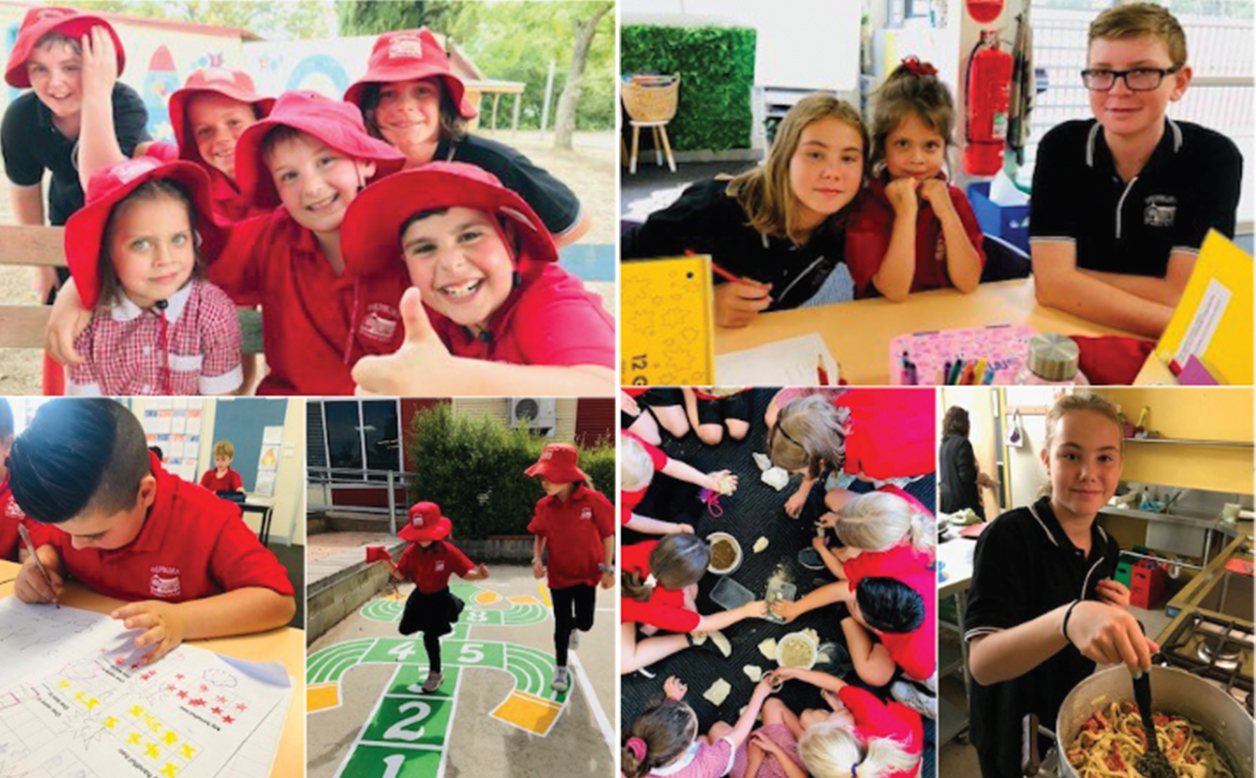
HEPBURN Primary School is the combination of a supportive community, talented and caring teaching staff and a real sense of inclusiveness and student connectedness. As I stated when I was first appointed as principal, Hepburn Primary School is the hidden gem of the area.
Student enrolments have increased over the past few years. This has meant we are able to provide students with the opportunities of a larger school, but remain small enough to maintain connections on an individual level.
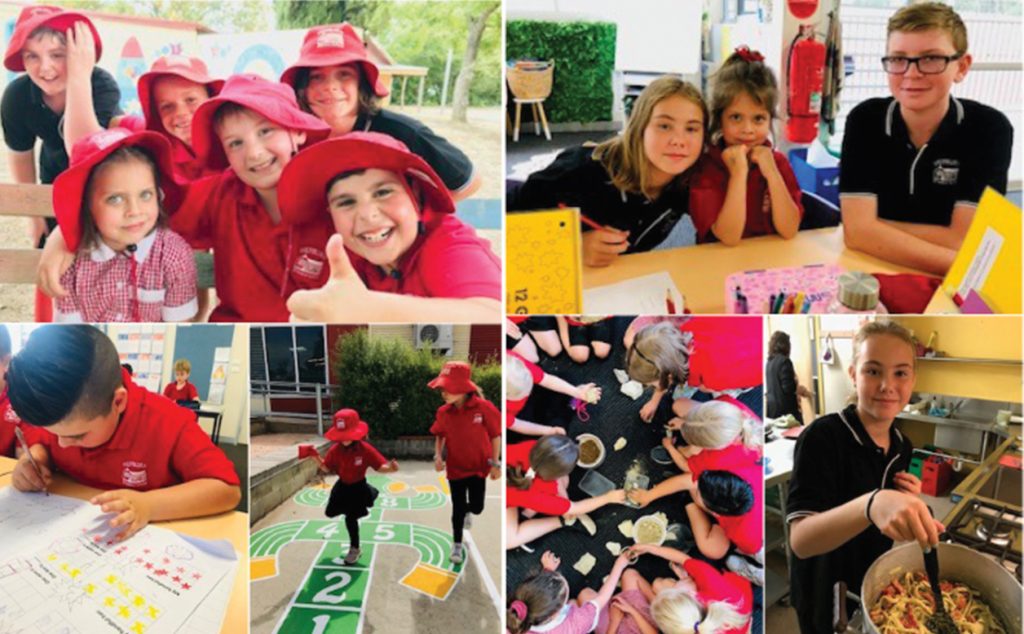
The school is currently operating four classrooms. We are in the fortunate position of being able to offer below-average class sizes.
The students have access to specialist programs in music, art, drama, physical education, library and Italian. We also offer the Extending Mathematical Understanding specialised mathematics support program, and an increased allocation of the MiniLit and MacqLit specialised reading support programs.
The implementation of clubs has been a positive initiative. During certain terms, the children select a club to be part of. This semester included knitting, drama, creative media, bike education and Eco Warriors.
Programs implemented over the years such as Cook in a Box, Move Dream Create, Robotics and private music tuition have enhanced engagement and have allowed students to flourish in a variety of curriculum areas.
The children have an extensive camp program. Camping opportunities include Canberra Camp, Camp Wyuna, The Sovereign Hill Experience and the Lady Northcote camp.
Hepburn Primary School recently joined the Wathaurung Sport Cluster. This enables children access to athletics, cross-country, tennis, basketball, soccer, netball, football and swimming competitions and the opportunity to progress to higher levels.
The school runs a range of special purpose events, including the enormously popular Book Parade/Grandparents and Special Friends day, Mother’s Day afternoon tea, Father’s Day barbeque and Education Week activities. The annual Walkathon and Mini Fete has become a highlight of the year, as well as being keen participants in the Rotary Music Concert, The Swiss Italian Festa, family barbeques and an annual Christmas concert.
The above strengths and programs have been reflected in the annual Attitudes to School Survey. This is offered by the Department of Education and Training to assist schools in gaining an understanding of students’ perceptions and experience of school in Years 4, 5 and 6.
The results below validate the strategic work we as a learning community have been focusing our energy towards. The areas below placed the school at and above the state and similar schools and schools in our network in:
• Sense of connectedness
• Sense of inclusion
• Advocate at school
• Managing bullying
• The teacher has high expectations for success
Over the past three years, significant resourcing provided by Equity funding, has resulted in staff having access to world-renowned educational consultants. Teachers have the greatest impact at school and are the school’s most valuable resource, so we invest in their development. The school provides a comprehensive curriculum across all learning areas, underpinned by literacy and numeracy. Significant investment in the area of Excellence in Teaching and Learning ensures evidence-based pedagogical approaches.
We continue to implement School Wide Positive Behaviour (SWPB) and the Bounce Back social skills and welfare programs. Bounce Back promotes positive mental health and student wellbeing, providing students with practical strategies and life skills to handle challenges and adversity encountered.
Hepburn Primary School continues to promote the values of Respect, Perseverance and Kindness. These values are incorporated into learning programs, which develop the children’s social skills. The School Chaplain plays a vital role in coordinating this work.
Hepburn Primary School has established transition programs with Hepburn Kindergarten and Daylesford College. The reading and play-based transition program between the local kindergarten and the Year 5/6 children is extremely rewarding for all involved. The local secondary school provides many opportunities each term for the Year 5/6 children to attend whole-day activities.
Prospective parents and caregivers are most welcome to contact the school on 5348 2342 for a tour.
– Robert Walsh, principal

May 18th, 2020Funding to stop violence
WRISC Family Violence Support, which provides services for women and children experiencing family violence in the Hepburn Shire region, has been given a grant of $329,050 by the Victorian Government.
The funding is part of a $40.2 million investment in crisis accommodation and specialist services for people suffering or at risk of family violence
Macedon MP Mary-Anne Thomas said for some in the community, home is already an unsafe place.
“Sudden unemployment, extended periods of isolation and the family at home together, can contribute to a heightened risk of family violence.
“Family violence frontline services, just like WRISC, continue to operate to support vulnerable women, children and families across our community.”
WRISC Family Violence Support executive officer Libby Jewson welcomed the funding and said it meant the organisation would be able to respond to women and children at risk during and after the COVID-19 pandemic.
“The funding will help to keep women and children safe during these uncertain times – when risk to women and children is higher.”
As part of the package, the government will invest $20 million in short-term accommodation for family violence victim-survivors who do not feel safe isolating or recovering from coronavirus at home.
An extra $20.2 million will help Victorian family violence services meet the expected increase in demand during the coronavirus pandemic and provide critical help for victim-survivors.
This includes nearly $10.4 million to help more women and children escaping family violence get access to safe accommodation and related support, and $5.1 million for more flexible support packages across the state.
Just under $5 million will go towards new technology and protective equipment for up to 120 family violence and sexual assault organisations, so they can adapt their services and keep their staff safe, while protecting and supporting victim-survivors and their families.
For help and support, and to find out more, visit safesteps.org.au or call safesteps 24/7 on 1800 015 188.
May 18th, 2020Father Neil streaming the words of a service
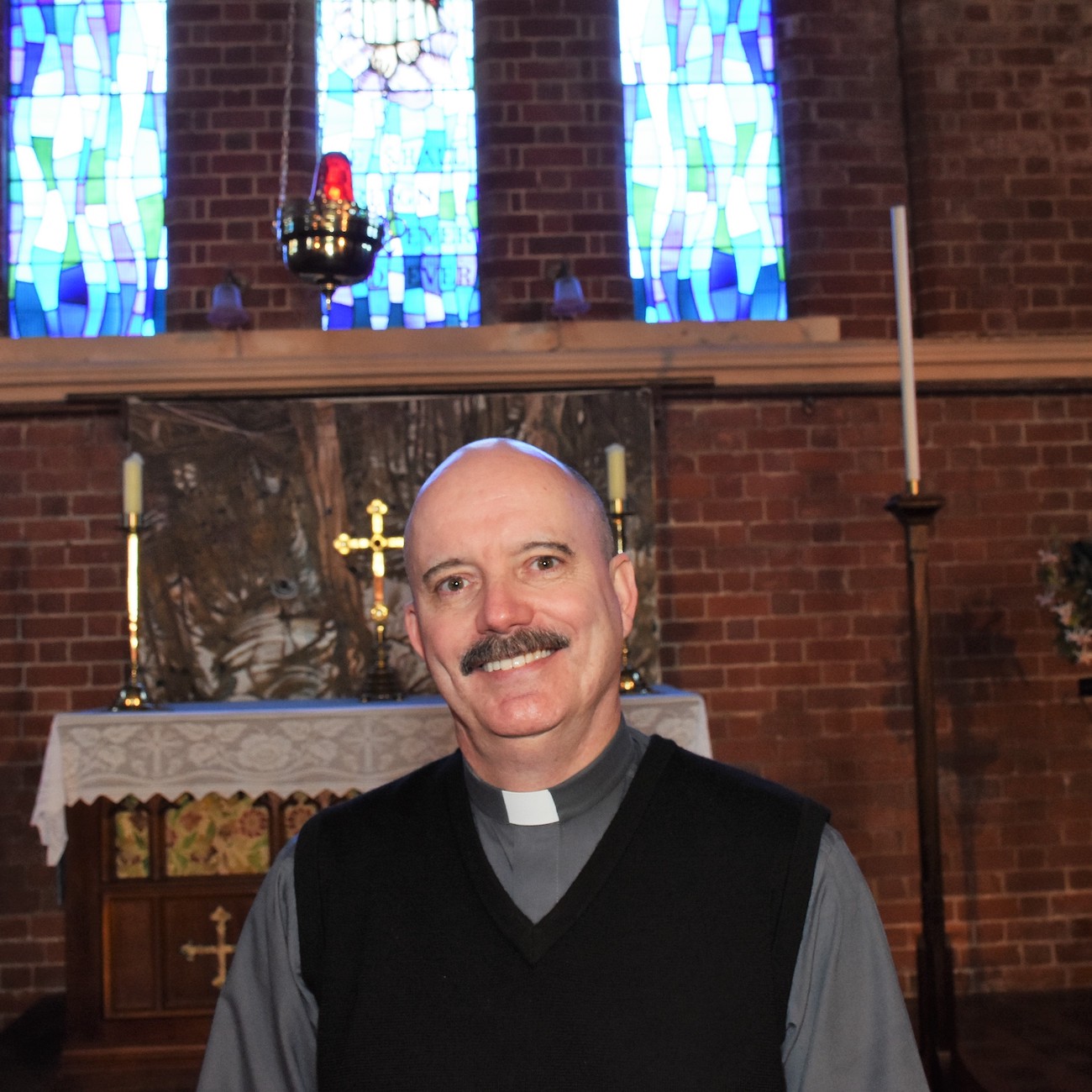
FATHER Neil Fitzgerald could be living in Wales right now. The vicar for Christ Church Daylesford was visiting his uncle with his partner and parents when COVID-19 hit and their airline left them “high and dry”.
Luckily, Father Neil’s other job is as a steward with Qantas so he cashed in all of his staff travel benefits and credits and managed to get all four of them on the last Qantas flight from London to Melbourne.
“When we checked in we were told it was 40 (seats) oversold with 30 staff on standby and I thought ‘OK, we are not getting out of here’ but miraculously we did. I was rapt to get home and I didn’t even mind the 14 days’ isolation, it was actually good to get some work done for the church. If we had not caught that plane we would still be in Wales, mind you we had a lovely cottage, but I think the family welcome would have worn out after a while.”
Father Neil said while all travel was now off the cards, he continued to be employed by Qantas for another month after his isolation, a position decided on seniority. But his only duty was to sit at the airport for seven hours a day on standby in case he was called out.
“There were just two of us in the crew lounge and nobody in the airport which was just bizarre to be in a place like Tullamarine and have no-one around and nothing going on. It was a bit apocalyptic in a way.”
He was officially stood down at the end of April, along with 95 per cent of crew. It’s not the first time Father Neil has been stood down, the other was at the start of his career when the end of his training coincided with the pilot’s strike of 1989. The irony, as he reaches the end of his career, is not lost on him.
Other cabin crew have taken on positions with supermarkets and delivery companies, but Father Neil has been retained by the church which he says has helped with finances.
It has also kept him busy with online streaming Sunday and Wednesday services and podcasting evening prayer four times a week. Podcast CDs have also been delivered to parishioners who are not online.
“The church is going really well. One of my first sermons at the church a couple of years ago was how a church was not just a vicar in a nice building, it’s about the community and the people who turn up each Sunday, whether that is in a nice building or a tin shed.
“We have really had to put that to the test and the response has been overwhelming. We were averaging on the streaming service well over 100 viewings and people have not only maintained but increased their giving which is humbling and incredibly supportive. We are doing food deliveries and still collecting food and clothing for the refugees and the homeless. People have really stepped up and thought outside the box.
“However it is strange to do a church service to an empty church and it’s not something I want to get used to. I feel like Father McKenzie in the Beatles’ song, Eleanor Rigby, ‘writing the words of a sermon that no one will hear’.”
There’s also a phone tree to make sure everyone is in contact, newsletters are still being published and people are meeting via Zoom. “We have actually been one of the most forward-thinking parishes in the diocese. I am incredibly proud of the congregation, they have really shown compassion and care to one another and to complete strangers and to me as well, it has been lovely. I have been overwhelmed by their support and it just goes to show a church isn’t just a building and a vicar, it’s a community. It has been heart-warming.”
So what does the future hold, both in the air and on the ground?
“We have been told by the airline that it will be a totally different animal on the other side of coronavirus so we are not sure what we will be going back to, we are just waiting to see.
“We keep our qualifications up and running either online or at the training centre but we have no idea what is happening from month to month. We are hoping there may be some domestic flights happening by July and perhaps trans-Tasman flights will be one of the first to open up, along with the domestic.
“With the church, we initially had to cut down on the social contact side, telling people just to make eye contact and smile rather than a handshake in a greeting of peace. And there will be more social distancing to come with this relaxation (of the rules) coming. How that will work? We have no idea. I may have to produce a ‘safety onboard card’ to hand out at the door. Or perhaps people can ring up and make a reservation for an aisle or window seat.
“What is it going to look like with 10 people per service and two per pew? Maybe we will have multiple services on a Sunday. But I am hoping the first 10 people are those who are not on social media because they will really be feeling the isolation. We have no idea how it is going to look but it is certainly going to be an interesting time.”
*Donations of food and clothing can be left at the church door.
Words: Donna Kelly | Image: Kyle Barnes
May 18th, 2020This Goat is all it’s quacked up to be
BEFORE COVID-19 some disasters overtook Melbourne restaurants, with places associated with former Masterchef judge George Calombaris and international celebrity Heston Blumenthal shutting up shop.
This left a noted duck farm at Port Campbell with a lot on their hands.
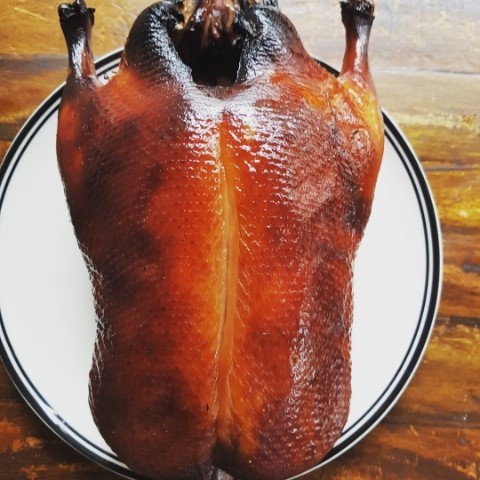
Enter COVID-19 and Hepburn’s David Willcocks, whose Surly Goat café/restaurant morphed into the Socially Isolated Goat. Through a chef friend in Melbourne, David heard about the ducks and, whoopee, here was one on our plates, delivered to the door and only in need of heating.

It had been blanched to tighten the skin and eliminate any nasties, then washed in a solution of Maltose, also called malt sugar, and vinegar, to crisp the skin and give a delicious lacquer effect.
Then the ducks are hung in a cool room for 10 days with some breeze. This makes the flesh both denser and more tender. Oven-roasted without a fan at a high temperature, the duck is a stunning meal, tasty, juicy and with a scrumptious texture.
A main course and sides for such a dish is $30 (three courses $45).
The duck came with a potato dish that lasted three nights. It’s called Pommes Boulangere. The spuds had been sliced and layered between caramelised onion, then baked with chicken stock, butter, rosemary, thyme and garlic. It could scarcely have been better.
David says one story has it that French bakers would cook this in the oven at the end of the night. Another is that people would get the baker to cook it for them, the “seal” of potatoes on top ensuring the baker didn’t pinch any.
The accompanying treacle and thyme tart was a ripper also, and was such a generous serve it lasted two nights.
Another little wonder is David’s self-saucing chocolate pudding, “just like Mum used to make”, except for the addition of cumquats and walnuts.
A further dose of bounty from the pandemic is the availability of Wagyu beef. Normally the price of this course is beyond reach (a single cow has brought $30,000). Its tenderness and flavour is no less than exquisite.
David also secured Oysters Appellation from the south coast of NSW. Truly succulent was our opinion on the dozen we bought for $40.
I could go on about the chocolate pretzel tart, but you get the picture that the Socially Isolated Goat is fired up in these trying times.
David says the pandemic has meant many personal things, such as spending more time with his family. Part of the restaurant resembles an abandoned classroom for his six- and nine-year-olds.
He had only run the restaurant for about 18 months before the pandemic hit. It was set up in mid-2016 by Simon Bevanda, himself a mine host par excellence.
As David puts it, he had no choice but to start again, helped by his 25-year-old cousin Morrison and a newcomer from Ballarat, Jake Gladman. Before COVID-19 he employed seven people, some of them part-time.
“The question was whether to run it normally or tailor it to home cooking. We’re not so much a pop-up and eat but prepared home courses, doing about 20 meals a day, Tuesday to Saturday.”
David, 41, describes the community support as phenomenal, considering his is not the cheapest place around. He predicts a difficult transition back to near-normality for many cafes and restaurants because some suppliers will be gone and some produce unavailable.
One big question is how will things go on (re) opening night? It may be a case of first in…because on a normal Saturday night the Goat just copes with in excess of 60 diners, coming and going. Before then, however, more duck is on the way. This time he will confit the legs and serve the breast separately. Please form an orderly queue.
“The duck came with a potato dish that lasted three nights. It’s called Pommes Boulangere. The spuds had been sliced and layered between caramelised onion, then baked with chicken stock, butter, rosemary, thyme and garlic. It could scarcely have been better.”
Words: Kevin Childs
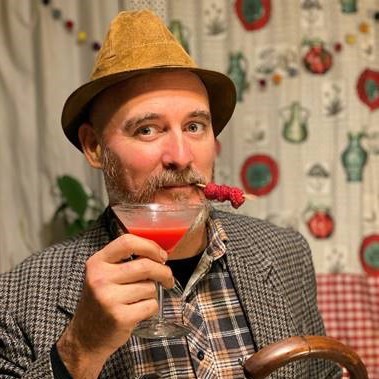
May 18th, 2020Quarantini Q’Clock with Leon – The Campari Nobile
Welcome to another Quarantini O’Clock, the print edition. Restrictions are beginning to ease in Victoria and we can now see people other than those we live with. Finally, I’ll get to see someone better looking than just my face in the bathroom mirror. If you like a tart and fruity cocktail, here’s one to try out when you all reunite. We made use of lovely fresh ripe raspberries from Daylesford Sunday Market. Cheers!

Campari Nobile
Ingredients:
20ml vodka
20ml Campari
15ml Limoncello
45ml orange juice
Handful of fresh raspberries
Ice
Method:
Muddle raspberries and alcohol in a shaker, add the orange juice and ice, shake and double strain into a martini glass. Garnish with a few raspberries skewered on a cocktail stick. Serve to your friends at a safe distance and enjoy each other’s company for the first time in weeks.
Sadly no hugging.

May 18th, 2020Venie poetry prize
THE 2020 Venie Holmgren Environmental Poetry Prize, in partnership with Rabbit: a journal for non-fiction poetry, has been launched.
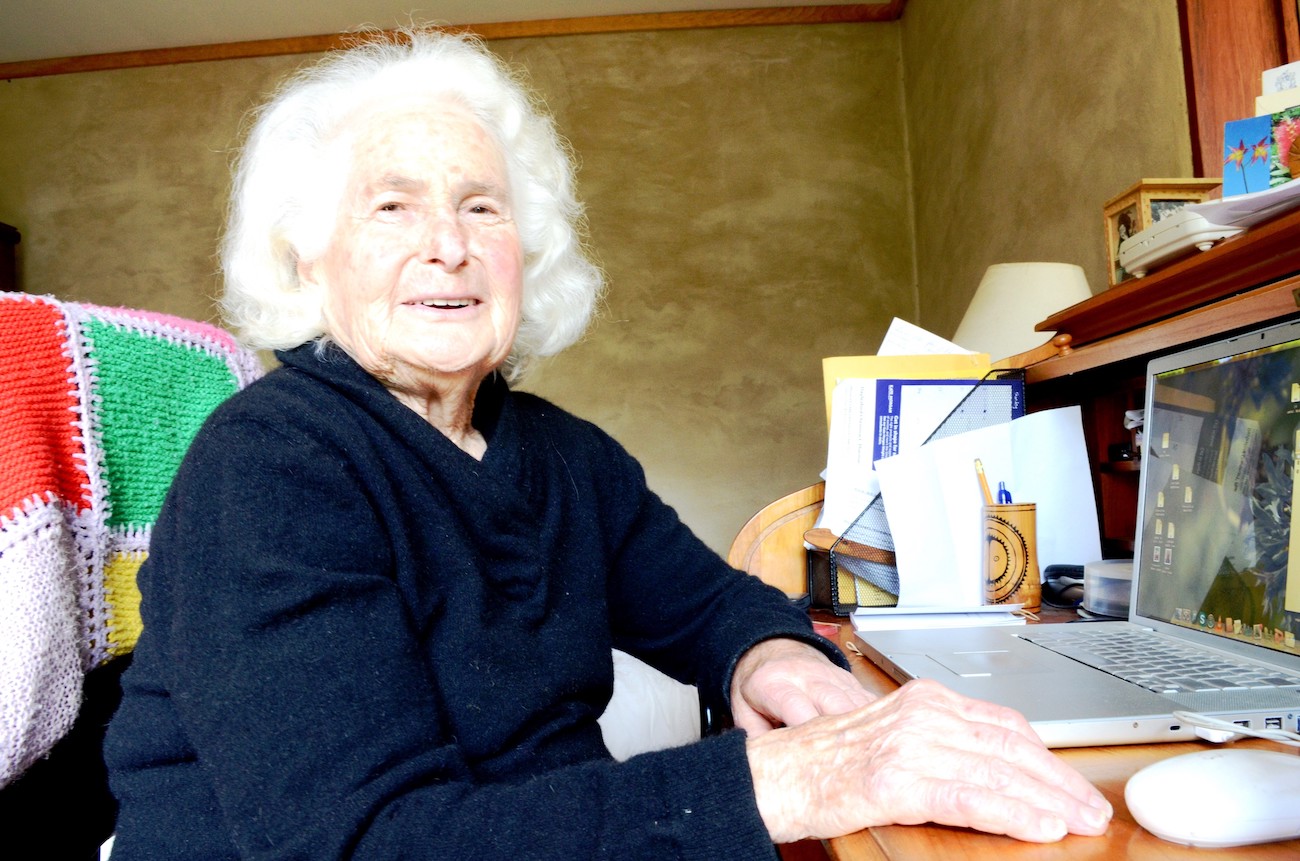
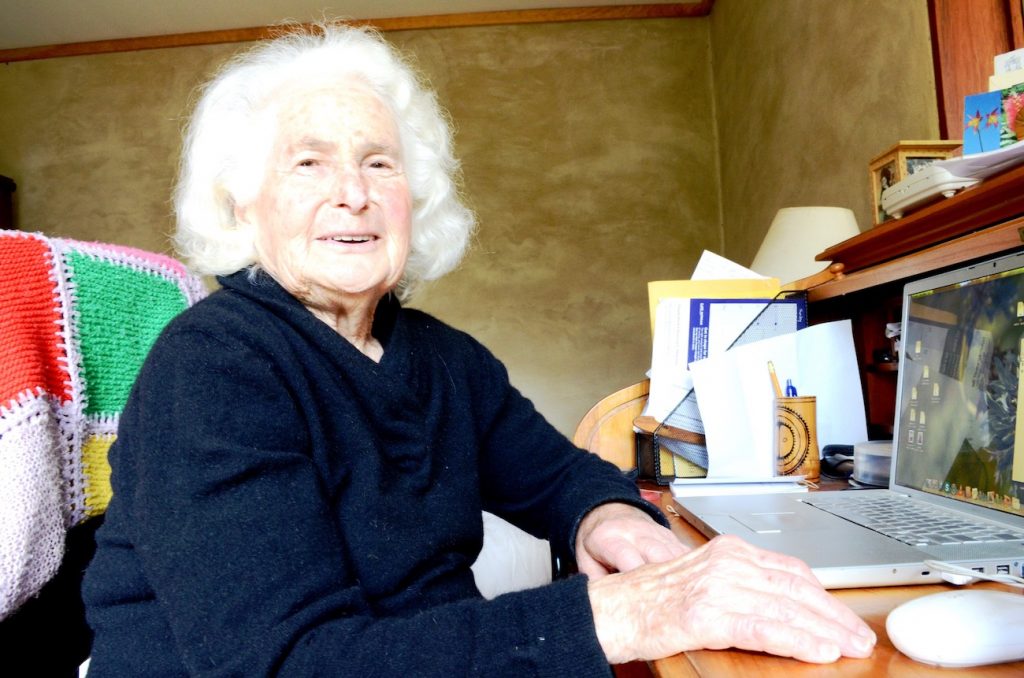
In her late 50’s Venie Holmgren began to write poetry and her first published anthology, The Sun Collection for the Planet in 1989, became a poetry best seller.
At the same time, she applied her environmental activist skills and commitment to the campaign to save native forests near her home on the far south coast of NSW, where she was arrested twice for obstructing log trucks.
After 16 years of solo self-reliant living she moved to the town of Pambula where she penned her travel memoir, several more books of poetry and travelled widely as a performance poet. In 2010 Venie moved to Hepburn where she wrote her last poetry collection, The Tea-House Poems. In January 2016, Venie ‘caught the bus’ at the age of 93.
The judges for the 2020 $1000 prize are Jeanine Leane and Michael Farrell.
Jeanine Leane is a Wiradjuri writer, poet and academic from south-west New South Wales. She has published widely in the area of Aboriginal literature, writing otherness and creative non-fiction.
Originally from Bombala in New South Wales, Michael Farrell has lived in Melbourne since 1990. His new poetry book is Family Trees, the follow-up to the Queensland Literary Award-winning I Love Poetry. He has also won the Peter Porter Poetry Prize. He co-won the Venie Holmgren Poetry Prize in 2017 and was runner- up in 2018.
Poems must have an environmental theme and all entries must be received by 11.59pm on Monday, July 20.
Link: www.holmgren.com.au/the-2020-venie-holmgren-environmental-poetry-prize/
May 18th, 2020Pandemic Poetry
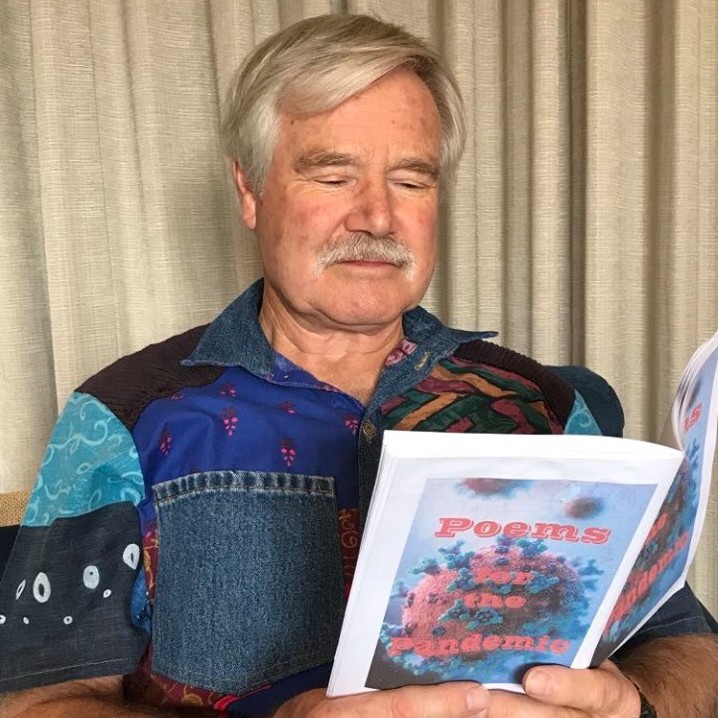
GORDON Nightingale has used the downtime of COVID-19 to assemble his poetry into a book, Poems for the Pandemic.
“I began writing 18 months ago when I joined a Hepburn U3A program called The Writers’ Group managed by Jude Brown and Millie Gouldthorpe, with a membership of about 20 who would meet on a fortnightly basis at the famous Old Coach House in Daylesford.
“Each of us would try to produce a poem or a story based on a single word as decided at the previous meeting. The very first word I had to write roughly 500 words on was ‘gift’.
“The rules were fairly simple; anything goes as long as the word was in there somewhere. No critical comments were allowed. No adverse reactions or jeering was allowed. It was all good fun and most inspiring.
“Inspired to write as much as I could outside the Writers’ Group I began posting stories and poems on my Facebook page. Every ‘like’, ‘love’ or comment was encouragement to inspire the creative juices.
“A regular “liker” was Anne Milton. It was her suggestion that prompted putting the poems into a book. Poems for the Pandemic is the result. Her original suggestion was Poems in Isolation. The only reason I switched was for the alliteration affect.
“I do have ambitions to become a published author, having recently submitted one of the three full-length novels I have written. It may never happen but we do live in hope.”

For a PDF copy of the book, email knighttime.drafting@bigpond.com
* The Local has had a sneak preview, well worth a read!

May 18th, 2020Local Lines : Catholics need not apply
Catholics need not apply
it read, the banner
when I was a boy
You can’t catch this bus the driver would say
Wait for the ‘Roman’ Catholic bus
Knowing there wasn’t one
We were like the Jews
A tribe, not trusted
Living in our own ghetto, Doveton
Our loyalties always
lay elsewhere
it was thought
We weren’t Australian enough
the children of ignorant
Irish, Poles, Dutch, Maltese, Poms
You have strange practices
they said, like confession, fasting
And we laughed
But it made us stronger
and we became a people
with something to prove
So we clawed our way up
and so did our children
breathing in their parents’ struggle
Over the years
we were accepted and included
And then we destroyed ourselves
The betrayal was of our trust
and never our fault
but that of our leaders
Between the age of eleven and twenty one
I knew five priests convicted of sexual abuse
and later the cardinal himself
Never a victim because I had a dangerous father
I went to school with victims
We deserved better for our loyalty
Yet I still taught for forty years in Catholic schools
And made lifelong friends
of good people
We don’t want outsiders howling from the wings
and jumping on our graves
The people will rebuild from the ruins
– Tom Perfect
Tom Perfect had a seriously privileged upbringing within a household of love and love for learning, for the arts, sport, and surviving, where people were always visiting.
Poems for Local Lines come predominantly from a group of poets. However, other locals who would like a poem considered for publication can contact Bill Wootton – cottlesbreedge@gmail.com

May 11th, 2020Life changed with simple diet and exercise
DAYLESFORD’S “Big” Dale Callahan is big no more. The 56-year-old has lost a massive 102kg in just 40 weeks.
Dale had a starting weight of 218kg and is now down to 116kg, off his Optifast diet and back on normal food and a maintenance program.
The catalyst for Dale, who had always carried a bit of extra weight, was the need for a hip replacement with his doctor telling him he first needed to lose weight and suggesting gastric sleeve surgery to reduce the size of his stomach.
Dale headed to Ballarat but was told by the specialist that while he was a good candidate, he needed to lose 20kg before he could even have that done.

“When I heard that, it was probably the trigger in my brain, the crossroads, that I was too heavy to be operated on. I went back and spoke to my doctor, Gerard Ingham, who had told me many times I could lose a bit of weight.
“I said I was not overly keen on them cutting me open and all that, and also I didn’t want to not be able to eat a meal with my family or go to a restaurant and have to order an entrée and take half of it home.
“That’s not me. I just loved my food, as most people do, and I thought if I can’t sit down with my family and have a meal, what’s the point of anything? So I said, let’s try a diet.”
Dale said Dr Ingham suggested Optifast shakes and soup meal replacements, providing all the nutrients, calcium, proteins and carbs, for breakfast and lunch, along with a dinner meal focused on vegetables and a small amount of protein.
It was a Friday and Dr Ingham asked Dale when he was going to start. Dale said the following Monday, May 25, which resulted in a wry look from his doctor.
“I told him I had to buy the shakes but I also had friends coming around on Sunday for what I called my last supper – roast pork and crackling. Then on Monday I went cold turkey. I made sure I stuck to the regime and never cheated once.”
He also started to walk, and the more he walked, the more weight he lost.
A school crossing supervisor, Dale said he spent the two hours at work, pacing. “People probably thought I was crazy but I walked the entire hour in the morning and at night and that really got the ball rolling. As I lost 20kg I pushed myself further and then suddenly it was 40kg and so on.”
Dale said the weight loss program was initially for just 12 weeks but he kept going for 36 weeks, with health and blood checks along the way. He also saw a dietitian at the Community Health Centre, Olivia Gourley.
“Olivia was absolutely amazing. I have been to dietitians over the years but she just said we should do a program that suited me and then just gave me suggestions on changing the menu. I never felt judged.”
Dale said he also started growing his own vegies so he would always have variety in the kitchen. Amazingly, as the cook in the family, along with his own vegetable- laden meals, he also made sure his twin sons, daughters and partner had their meals ready each night.
And after just 12 weeks he stopped telling people he was on a diet, changing, as he got his own head around what he was doing, to saying he was on a lifestyle change.
Dale said while he hoped to lose the three-figure mark, he never had a goal because he thought that would be setting himself up for a fail.
But as he lost weight, he hit little targets, firstly the weights of his children, Xanthe, 12, twins Eamonn and Liam, 14, and Micayla, 20, then his partner, Charlene, and then just kept on going, all the way to his 100kg mark. He is now eating 2000 calories a day, “a smorgasboard”, up from a daily 800 to 900 calories.
“The other thing is for the past 36 years I have been my brother’s bigger brother in weight, but now I am lighter than him. Little things have spurred me on.”
He has also encountered people in the local supermarket who can’t believe the weight loss, and have even worried he was ill, or the mother at the school crossing who asked after the six-week break over Christmas “where is the other man?”.
There’s also the new set of shirts, now tucked into the pants, finished with a belt. The old Dale wore baggy jumpers to hide his stomach from the world.
Then there’s last year’s Steptember, a cerebral palsy fundraiser. Hepburn Shire Council had asked employees to get involved with teams to reach the 10,000 steps a day goal.
Dale created his own team of school crossing supervisors and despite his hip holding him back a little, they won. Dale worked towards it with 3000 steps in August, 10,000 in September and now and again hitting 30,000 steps in a day.
“I feel it with the hip at night-time but sometimes you have to push through that pain to achieve what you want to get to. I said, imagine how many steps I would be able to do if I had two hips.”
Dale is on the list for surgery at Bacchus Marsh as soon as the hospital there is doing elective surgery again.
“I am now considered low risk. This year has changed my life – and if I can do it…”
Words: Kyle Barnes | Image: Contributed
May 11th, 2020From sport to army to hospitality: a great story
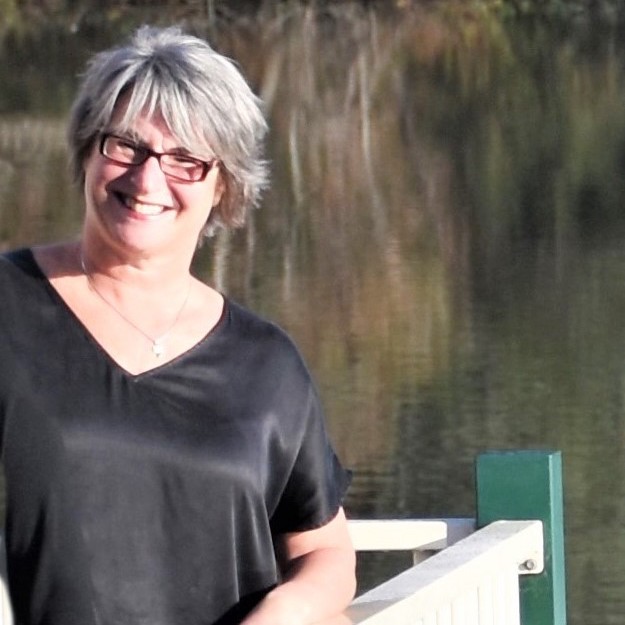
FROM international squash tournaments to the Israeli Army, to The Boathouse Restaurant, Claire Levine has a hell of a story.
To be fair, any story that involves “the valley of the crying” is set to be a good one.
Claire was born in South Africa and in the late 70s she moved to Israel, with her parents, before she had hit her teens.
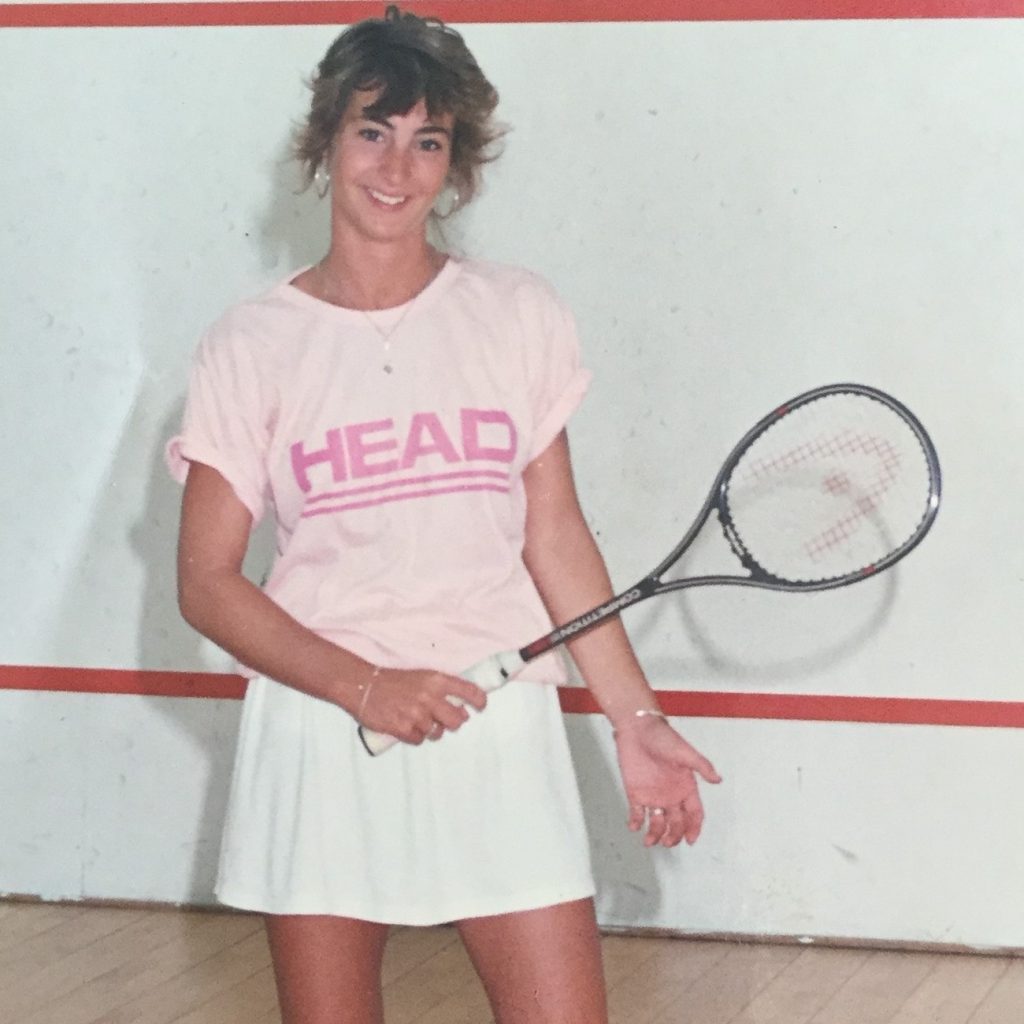
“I was playing tennis, and then I was introduced to squash and I started playing that and I quickly became Israeli champion…but I will say, at that point in time, there weren’t a lot of squash players,” she said.
“When I was a junior they took us to quite a few European countries playing squash tournaments and from there I started playing professionally – but then I had to go into the army.”
In Israel, two years’ national military service in the defence forces is compulsory and so, when Claire was 18, she began her service.

“It was lucky for me, because I was classified as an ‘excellent sportsman’ during my army service I was able to occasionally travel overseas and play in squash tournaments.”
Claire was extremely fit by then and became a combat fitness instructor on an air force base with 6000 soldiers. “It was a mini-city and I’d make them all run around and they’d all have to listen to me.”
The course to become an army instructor is just as hard as it looks in the movies – being woken in the middle of the night, forced to run into the ocean, back up the sand, weapons and all. It’s literally enough to make a grown man cry. But not Claire.
“There was the ‘valley of the crying’, for our natural disaster training, it was a massive sandpit which we had to run through, and there’s just so much sand, and you’re wearing your full army uniform, and your boots, and because of the thick sand, they just sort of break down, crying.
“It was great, I really enjoyed it and I’m proud to say that I actually finished first in the natural disaster course. And doing the army service, it was a good thing.”
It wasn’t such a good thing for Claire’s squash career though – her fitness was at its peak, but there wasn’t a lot of time to play enough to keep up her skills.
“I got to 28th in the world, but I could have been a bit better if I’d applied myself a bit more, but I had fun.”
She came out of the army at just 20 years old, with the added bonus of already having travelled to every continent except South America to compete in squash tournaments, also having met friends who she still keeps in touch with to this day.
Nearly 25 years ago Claire moved to Australia, then 12 years ago, with partner Susanne Devine moved to Daylesford, loved it and it’s now home. She and Susanne ran The Farmers Arms Hotel for a few years and now they have The Boathouse Restaurant and she’s hoping it will be able to re-open as soon as the pandemic is over.
“At the moment we’re walking the dogs every morning, they’re so happy to have us home. I’m doing a lot of cooking and a lot of cleaning, and I’m looking forward to seeing everyone on the other side of this.”
“There was the ‘valley of the crying’, for our natural disaster training, it was a massive sandpit which we had to run through, and there’s just so much sand, and you’re wearing your full army uniform, and your boots, and because of the thick sand, they just sort of
break down, crying.”
Words: Kate Taylor | Images: Kyle Barnes (inset) & contributed
(This article is supported by the Judith Neilson Institute for Journalism and Ideas.)
May 11th, 2020Testing under way
CORONAVIRUS testing is ramping up across the Macedon Ranges and Hepburn shires, with testing now available at Kyneton District Health, and a testing location to be established at Daylesford Community Health Centre by the end of May.
This follows an announcement from the Victorian Government of a major testing blitz across the state to better understand how the virus is spreading in the community and set the state up for the potential easing of restrictions.
Kyneton District Health’s new Respiratory Assessment Clinic is now open and will allow the hospital to safely assess patients who present with risk factors or concerns about the coronavirus.
The clinic will initially operate Monday to Friday between 1pm and 3.30pm, evolving with the needs of the community. Patients concerned about symptoms are encouraged to call ahead on 5422 9900.
Central Highlands Rural Health is also on track to open a testing centre at Daylesford’s Community Health Centre by the end of May – with works currently taking place to re-purpose part of the centre to make it fit for COVID-19 testing.
Common symptoms of coronavirus are fever, breathing difficulties, breathlessness, cough, sore throat, fatigue or tiredness. Anyone who has any symptoms, no matter how mild, such as a runny nose or scratchy throat, is encouraged to get a test.
Certain industries that are still operating at full capacity will be targeted for testing, including healthcare and aged care workers, construction workers, supermarket workers and agricultural workers.
Major employers and unions will be supported to actively promote testing to all staff and nurses will provide outreach support and advice around symptoms and help staff to access testing.
In addition, workers without symptoms in hospitals and other facilities with vulnerable residents will also be asked to voluntarily participate in sample testing as part of new research in line with the prerequisites set out by the National Cabinet.
Macedon MP Mary-Anne Thomas said the local testing centres made it as easy as possible for people across the Macedon Ranges and Hepburn shires region to be tested.
May 11th, 2020Nursery brings early cheer to Daylesford
WHILE the country may be in the grip of a pandemic, come Spring Daylesford will be flush with beautiful swathes of jonquils, thanks to nurseryman Jeff Thornycroft.
Jeff, who owns Wombat Hill Nursery with wife Donna, said he had the idea to bring Daylesford into a spectacular springtime celebration after the business closed for a week and then re-opened for two to three days.

“It was a crazy idea at the start. Being closed and then just open a few days gave me the time to think about things a bit more than usual.
“I was scratching my head and wanting to come up with something that was a symbol of the current times that we live in and what’s happening, so we could look back when we are on the other side of things.”
Jeff quickly pressed his son and son’s partner, Liam Thornycroft and Daniel Condon, into action and then Cliffy’s Café co-owner and Liam’s business partner Samantha Mackley joined the team and Daylesford Erlicheer was under way.
The idea was that as many Daylesford residents as possible get involved in a mass planting of erlicheer bulbs on Sunday, May 3 at 3pm – and get involved they did.
People also loved the idea of “collecting one bag for yourself, one for a neighbour and one for a public space”.
They ordered online and arrived at 15-minute intervals to collect their bags of 25 bulbs. An initial optimistic purchase of 10,000 bulbs sold out within 24 hours, with a further 5000 bulbs landing the next day and going out the door in the next 24 hours.
Liam Thornycroft said the project had served to remind him what a special community Daylesford was. “And this will give the community a chance to reflect back to the current times.”
Daylesford’s “sowing soiree” was hugely successful on May 3, with more than 10,000 bulbs planted by around 200 residents in front yards, on road reserves and in public places where people can “enjoy them from the street in the Spring and for many Springs to come”, says Jeff.
The Hepburn Shire Council will employ staff to plant the remaining community bulbs. Bulbs will be planted in areas including the vacant grass areas outside the Daylesford Primary School, at the main roundabout Howe and Vincent streets and around the ash trees in Vincent Street near the school and on the the other side of the roundabout past the former IGA up to Raglan Street.
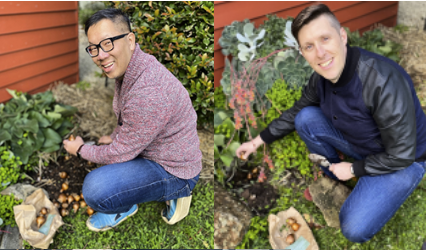
Among those who took up the idea were Adrian Thia and husband Craig Mutton. Adrian had already started a “Things you are grateful for” Facebook page for his company Le Yoga “to help keep everybody in a good headspace” and said he saw the project on the same platform.
“I think a lot of people who move to this region, are quite drawn to the whole community spirit sort of thing, so when the guys at the nursery started this it was almost a no-brainer to support what they wanted to do. And I guess plants always give such a positive light to a new event.”
Adrian said he was also impressed with the idea of a bag for yourself, a bag for your community and a bag for your neighbour.
“Sometimes we get too lazy to even pop next door and say hi so I thought that was quite a good idea. And it is also a positive way of using social media. Sometimes you can get overloaded with the same news, you live in your bubble, but then it is quite nice to have someone doing something different for a change.
“And it was a great day for planting as well.”
Jen Latta, owner of DOS Deli, got busy planting with staff member Jen O’Keefe.
“It was such a lovely initiative by Jeff and Donna. I think it pulled the community together because we all literally wanted something to ‘cheer’ for after a very tough few weeks,” Jen said.
“Whether your work or livelihood has been affected, or just your mental health from the world changing overnight, it was really nice to focus on something that will bring joy in the future rather than just kicking into survival mode.”
The erlicheer is from the jonquil family of flowers and has highly fragrant clusters of cream blooms. Also known as multi-headed daffodils, as their name suggests, they are generally one of the first of the Spring bulbs to flower, often beginning in late Winter. They are best planted in late April or early May and keep flowering for many years.
Words: Kyle Barnes | Images: Contributed
Pictured:
Image 1: left Adrian Thia, right, Craig Mutton
Image 2: L-R below, Jen Latta and Jen O’Keefe