


February 10th, 2020Council to water bosses: Please talk to the people
WITH much of its fortune built on mineral water, the Central Highlands has entered a phase where some locals are pitted against commercial exploitation of this water.
And as shockwaves from the climate crisis continue, Hepburn Shire Council has stepped in to ask an authority to open up to the community on water mining, a move welcomed by the biggest local water business, but decried by critics who say talks with the authority have been unsatisfactory.
The company denies that its extraction has an adverse effect. And already the council has talked with this company and says it “anticipates” full compliance with the extraction permit.
After protests at council meetings, councillors will meet the authority, Goulburn Murray Water, next month to discuss water mining, as well as how GMW could communicate to the community on groundwater resource management.
GMW was unable to say how many trucks take water day and night from the Highlands. Black Mount Spring Water, whose sites include Musk, Eganstown and Springbank, says it draws less than 100 million litres annually. If the figure were 94 million, equivalent to about 37 Olympic-sized swimming pools, that would mean almost seven trucks every day.
According to GMW, less than a quarter of the legal limit has been extracted for the last eight years. This limit was set after consulting “licence holders and stakeholders,” it says.
Tim Carey runs Black Mount Spring Water, his family’s 33-year-old national business and says water for bottling accounts for about 0.5 per cent of the 1090 million litres extracted annually, with most going to irrigation, plus domestic and industrial use, including vineyards. “We’d be battling to get to 100 megalitres (100 million litres).”
Both Mr Carey and Matthew Pethybridge, of GMW, say meters are regularly monitored, a point disputed by those who oppose the mining.
Mr Pethybridge, GMW’s Groundwater and Streams manager, says any changes would involve the Loddon Campaspe Regional Water Services Committee, while variations in rights of access to water would involve “groundwater licence holders and other affected stakeholders”.
Asked when the sustainability of groundwater in the Central Highlands was last checked, he said: “The last annual reporting process was completed in August/September 2019.”
Mr Pethybridge said GMW worked with the Department of Environment, Land, Water and Planning on developing long-term sustainable water strategies, using state guidelines to assess the impact of climate change.
GMW placed high importance on the long-term sustainability of groundwater resources in the Daylesford mineral spring region, he said.
As an authority, GMW gets its money from water entitlement holders (including irrigators, urban water corporations and environmental water holders) who pay for access and use of water delivery systems and associated infrastructure.
The Local asked GMW if it knew of intense agitation among landowners near bores, including questions in State Parliament.
“GMW is focused on ensuring the future prosperity of our region by sustainably managing one of the region’s most precious assets: groundwater,” was Mr Pethybridge’s reply. “We know that water is the lifeblood of our region. GMW is aware the community places a high value on groundwater in the Daylesford area.”
Hepburn Shire Council’s Infrastructure and Development Services director Bruce Lucas also sought to reassure The Local about the monitoring and reviewing of bores. “If the review identifies an unsustainable drop in water levels due to reduced recharge or over-extraction this is reported back to the Loddon Campaspe Regional Water Services Committee and the community.”
Council staff officers recently attended an information session on groundwater management run by GMW and advocated for similar sessions to be held for the general community.
The soothing words from GMW and the council did not, however, satisfy the local group, Protect Our Waterways which wants: more information on the mining and its effect on waterways, rivers and streams; the council to enforce curfews on the B-double water tankers; and answers as to why mineral water should be treated differently to “plain” groundwater.
Black Mount’s Mr Carey insists that GPS monitors on his 38,000-litre trucks refute “mischievous” claims that they were breaking the 10pm-7am curfew. He said he had asked the council to come to Musk and see his curfew monitoring.
Mr Carey expressed frustration at what he says is uninformed criticism from “activists” who have not approached him but whom he is prepared to meet for “reasonable” talks. “We’re farmers,” he said. “We have potatoes and cattle (at Musk) and we work sustainably.”
Besides Musk, he draws water at Buninyong, the Yarra Ranges, NSW, WA and Queensland.
“Ours are the most scrutinised water licences in the country and we’ve never had an issue with them.” He said there was no evidence that his extraction was drying aquifers.
POW lobby group member David Moore said his group met two GMW staff in mid-2019 but not all questions were answered. “Environmentalists and geologists agree that the effect of water mining long term is unknown but there is evidence of effects on streams, vegetation, and wildlife,” says Moore.
As POW gears up for a sustained and intensive campaign, a truce in this war over water appears doubtful.
Words: Kevin Childs

February 10th, 2020Kyle’s Rant
SO FAR 2020 has been a tough year for not only Australia but the world. Everyone is a bit stressed over the whole coronavirus outbreak on top of climate change and let’s throw in Trump being acquitted.
But a little closer to home, I posted a photo of my black ute after the last dust storm, simply because it was black and showed up the red dust. On the Instagram and Facebook post I stated I was over the third dust storm for 2020 and hash-tagged it climate change.
Didn’t that bring out keyboard warriors. These guys were trying to crucify me online saying that the poor farmers out west had it tough and it was their topsoil that had dropped on my car. They even told me to get a life. Thanks, but I have one. All I was trying to say is that dust storms are shit, however they affect you, and I am sure the farmers out west would agree with me on that, and that climate change is real.
Something else that happened to me last week was a request for boat training which I regularly do in Melbourne. Yes, I train people on how to drive their new powerboats, a skill I picked up in another life a long time ago. But I do like to keep my feet wet.
So this particular request was nothing special except when I accepted the offer my contact who sold the folks the boat commented: “That’s great. My Chinese customers will be very happy.”
I wondered why he mentioned their lineage at all and then the penny dropped. I asked if these clients had recently flown in from China to buy the boat. “Yes,” was the answer. I then queried when they had flown in. “Oh, last Saturday,” was the reply. Sorry, I said, unless I have a 12-day clearance and a letter from the doctor I am unavailable. It turns out this guy didn’t feel comfortable training these guys himself because of the coronavirus and decided to handball me the task. Now I know some people think the coronavirus is all media hype, but tell that to the poor bastards stuck for 14 days on that ship now moored off Japan. How’s the cherry blossom viewing going for them?

And then, not so close to home, but still in Australia it seems there are real scumbags in the world trying to take advantage of good people. How about the bunch of mongrels who set up a fake fundraising page to raise money for those poor kids’ families who were killed while doing something as innocuous as going to get ice-creams. What sick and twisted bastards.
It really does shake your belief in humans. Up here in the Central Highlands it is like we live in a bubble with most people, apart from the aforementioned keyboard warriors, being of a “do unto others” attitude and a lot more giving more back to society in a week than our suburban counterparts give in a lifetime, but maybe that’s why we all live here, because the vast majority of us share the same mindset.
People – not a fan, rant over…

February 10th, 2020Just sayin’…By Donna Kelly
THE world has gone mad.
Well, maybe just this part of the world, the rest is too busy worrying about coronavirus.
This morning I went and took a photo of some women who are very worried about the draft Local Law No. 2 that Hepburn Shire Council will most likely vote in on February 18. The women had, along with others, written letters to The Local, with a variety of very valid concerns. Check out pages 10 and 11.
Reading the letters, the rational person would think “it can’t be that bad” but then you read the draft. And it’s crazy.
Some of the laws are just dumb. Like you can’t put a disposable nappy in a council bin “unless they have been cleaned of solids”. Hmmm. Last time I looked harried parents just removed the nappy, rolled it up and popped it in bin. And who is going through the rubbish to check? The Shit Police?
Then there’s the one that says you can’t put a car for sale on a public place – like a nature strip. What do you do, keep it under wraps inside your fence and hope someone flying a drone overhead wants your 1990s Falcon? Got three dogs and live on less than one acre? Then get ready to choose your favourites. You can only have two. Same with cats – even if you have a couple of hectares or more and keep them inside – as you should.
And one of my favourites, no more unsightly properties. Now the draft law does list what constitutes unsightly but one of the items, “any other thing making the land visually repugnant”, could see anyone come undone. Personally I think two-storey McMansions are pretty unsightly, maybe others don’t like old schools. Is there a uni degree in unsightliness?
But jokes aside, there are some which are just wrong – which are what some very sane, rational and intelligent people have been trying hard to change. But so far with no luck.
So, if the law goes ahead: without a permit, no more gathering fruit, flowers or wood from public areas, no more gathering up bits and pieces from the tips to recycle, no busking, no street gatherings, no growing any trees on nature strips. WTF!
There will be one last-ditch effort to change councillors’ minds at 6pm on February 18 at the Daylesford Town Hall. People are being asked to bring signs or evidence of what they have created or foraged. It’s going to be difficult but I will try to bring our shower base.
And finally, in a continuing ‘it’s a mad world vein’, the Daylesford Field & Game Club has been told to stop, for now, its monthly shoot at the Glenlyon Reserve, after 40 years. Seems lead has been found in the soil in the middle of the track. But not enough to stop the Glenlyon New Year’s Day, or the daily walkers, or free range dogs, or the kids at the playground, or antiques fair. Just the shooters. Everyone else seems to have dodged a bullet. Strange. Just sayin’…
February 10th, 2020Nature Diary with Tanya Loos
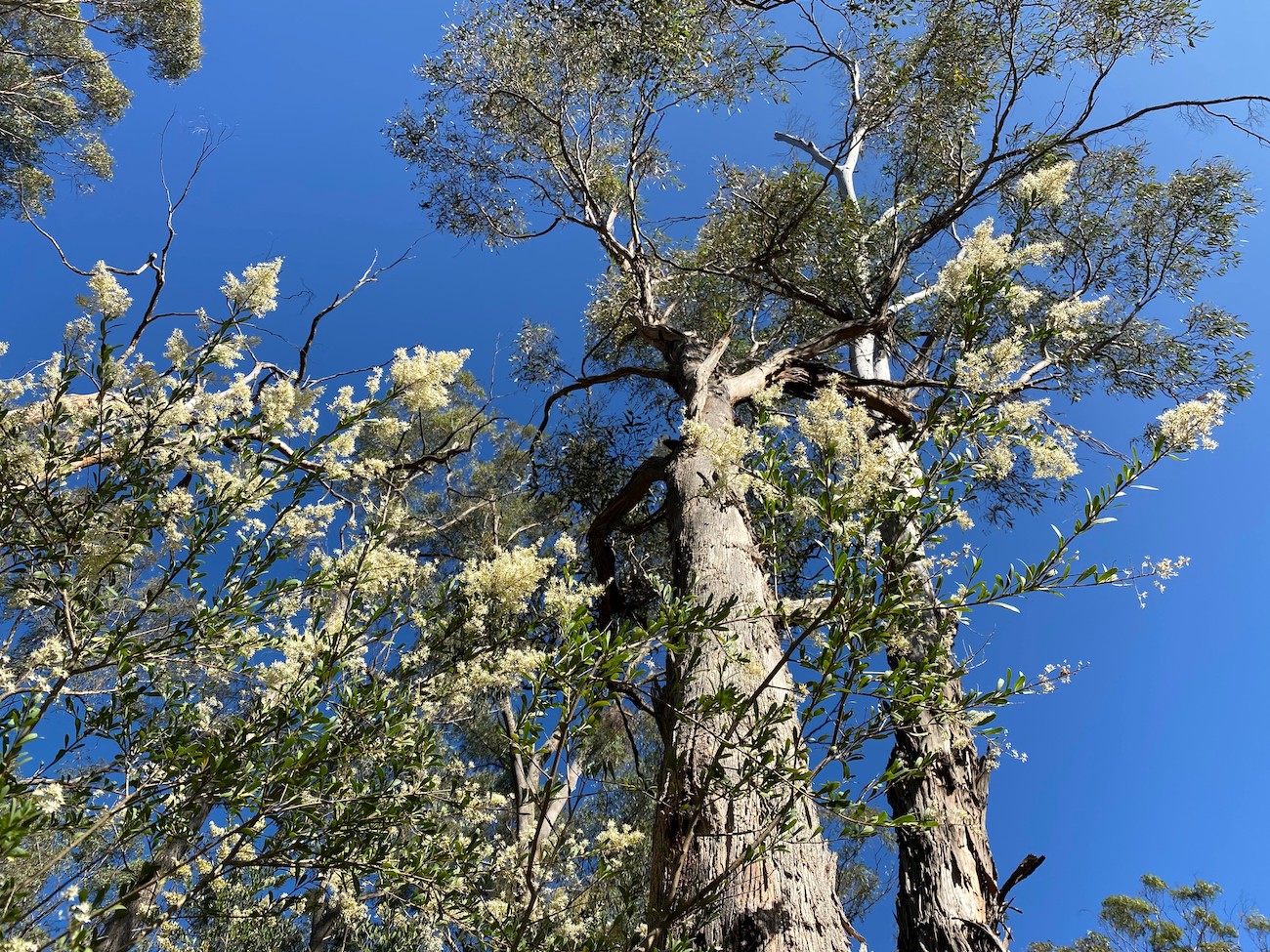
THIS summer has seen a spectacular flowering of sweet bursaria.
In mid-January I visited Tipperary Springs and the creek-line vegetation was all aglow with creamy white flowers. The air smelt sweet and hummed with the buzzing of flies and bees.
Sweet bursaria is a very widespread species – growing in all states except WA and NT, and its form varies from shrub to tree, depending on the soil and rainfall of its habitat.
In the Wombat State Forest, sweet bursaria is tree-like with a rough trunk. They are surprisingly long-lived at 25 to 60 years. Some of the oldest specimens I have seen are at Tipperary, but who knows – these hardy survivors can resprout from their trunk after a bushfire has gone through, so some of the plants which look just like a small shrub could actually be decades old.
Sweet bursaria is a simply wonderful habitat plant, playing a multitude of roles in forest and woodland ecology.
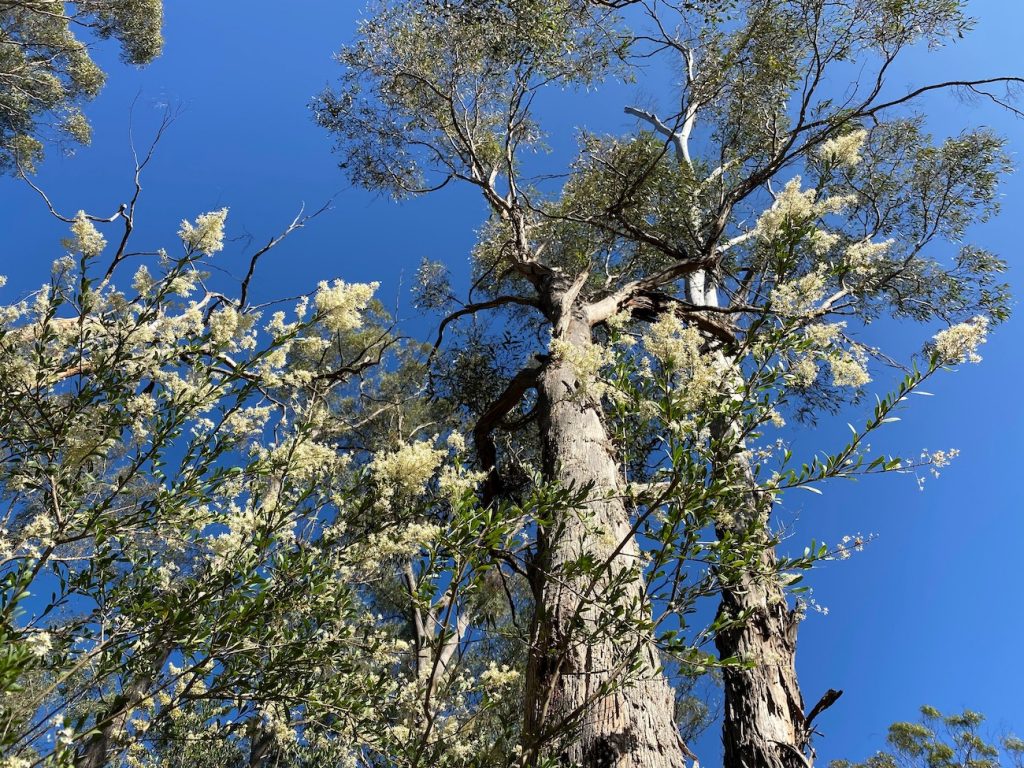
The flowers are tiny and white, growing in large bunches at the tip of the branches of the plant – providing easy access to a wide array of pollinators. European honeybees seem to relish the pollen, but there are a host of other native insects that love their sweet bursaria.
Beetles such as jewel beetles, tumbling flower beetles, longicorn beetles and scarab beetles have been recorded with the most pollen – and therefore the most useful pollinators. The appropriately named flower wasps are also good pollinators.
At present many of the flowers have been pollinated and the characteristic seed pods are forming – these will be bright green at first, then turn to brown as the seeds ripen. The seeds then feed birds such as bronzewing pigeons.
Some larvae of jewel beetles tunnel in the dead branches, feeding on the wood. Caterpillars of several moth species feed on the leaves, and one moth caterpillar specialises on the abundant lichen that grows on the bursaria trunks.
Sweet bursaria also has a very close relationship with a few species of copper butterflies (paralucia), most famously, the somewhat misnamed Eltham copper butterfly – the largest remaining populations of which are in Castlemaine, in Kalimna Park.
There are also copper butterflies in the Wombat Forest, probably the bright copper.
The butterflies have a very close relationship with small black ants. The adult butterflies lay their eggs on the sweet bursaria. While the caterpillars feed on the leaves, the ants tend to the caterpillars, protecting them from predators such as birds and wasps, and in turn the ants feed on sugary exudate from the caterpillars’ rear ends.
The caterpillars even spend the night in special chambers in the ant nests at the base of the shrub, and when the time comes, this is where they pupate, in a lovely safe, climate-controlled environment.
Due to its prickly nature, the sweet bursaria is also a great nesting site for small birds. I have seen the delicate and mossy cup nest of the yellow-faced honeyeater woven among the spiny branches.
Landcare websites, wildlife-friendly gardening and farming books all rave about the virtues of this wonderful plant – a must for any revegetation project.

February 10th, 2020In Your Local Garden – With Glen Heyne
February in the garden – a sort of on the cusp time of Summer’s almost over but Autumn isn’t quite here yet…and what a roller coaster of weather we have had over the past months. February is also the month when our gardens are “mid gear-change” and slowing down in readiness for the cold months ahead.
It’s a critical time for fruit trees and vines, recovering from the stress of producing fruit and now trying to store up energy to see them through the dormant months ahead. Don’t rely on future rains whatever the forecasts, give them a good soaking drink using either a drip watering system around the drop line of the trees or bank up the soil around their base to fill via a slow-running hose until the soil is soaked each time. Insufficient moisture at this time of year not only causes premature leaf drop, but also reduces the necessary stored material for the next season’s crop.
It wouldn’t hurt, at this time, to also give them a light dressing of slow-release organic fertiliser.
After what has been a remarkably good Summer season of roses, they are now readying for the Autumn flush. Give them a boost by giving them a light trim, removing any stray spent blooms. At the same time you should cut out any dead or diseased wood and remove the worst of the mass of undersized stems that may be crowding the centre of the bush. Shorten the branches growing from the main canes, leaving them at a strong leaf bud – making sure that this is one pointing in the right direction to provide an even, well-shaped plant.
Gradually increase the watering after pruning and give each plant a handful of blood and bone or your choice of organic fertiliser. It’s always wise to clean up under the bushes, removing any old, especially diseased, leaves to minimise any fungal attacks once the weather turns cold and hopefully damp.

Once the tender new growths and flower buds appear, keep a watch out for pesky aphids and other sap-suckers. If, like me, you have your own team of “security staff” (pictured left) you may need to only help the affected plants with one of the now many natural sprays or dusting powders.
I know that Spring is a few long, cold and hopefully wet months away until we celebrate the return of the glorious Spring-flowering daffodils, tulips, hyacinths…but now is really a great time to start planning and preparing your bulb beds. If you haven’t already, take a good look to check the health of any existing dormant plants. If they have been in situ for more than several years they could be overcrowded with young corms (bulblets) in which case you should carefully lift and separate them. The parent bulb, unless plump and healthy, should be discarded and the new ones kept to increase your stock.
There’s still plenty of time to plant out the Spring flowerers but it’s always a good idea to prepare the soil for them. Any bed with deep, friable soil will do, whether it be clay or sand, providing it is well-drained and well-worked at least a month beforehand. Work in a thick layer of well-rotted compost or aged cow or horse manure. Because the bulbs are completely self-contained capsules, they won’t need any extra feeding until they are about to flower.
Liliums (pictured below right), apart from a few late bloomers, are all but finished but could still need a little protection from any late Summer heat. Cut the heads off those that have finished flowering, leaving only one or two seed pods, if you plan to try raising some seedlings. Leave the rest of the plant to take in and store moisture for next season’s growth. Any plants that have become overcrowded can be lifted, divided and planted next month. The seeds can be sown from the middle of March.

February 10th, 2020Mad Cow steaks at Daylesford Bowling Club
THE Daylesford Bowling Club and Bistro is tucked away in Camp Street where there is always plenty of parking, great views and, thanks to partners Lee Littlepage and Jo Best, awesome food.
They offer lunch (noon to 2.30pm) Wednesday to Sunday and dinner (5.30pm to 8.30pm) from Wednesday to Saturday. There is also a Sunday dinner offering on long weekends.
Amanda and I went to their new Mad Cow Steak Night on Wednesday where you can choose from the special steak menu as well as the regular dinner menu. We got some beers on tap from the bar at only $3.90 a glass and set about choosing our starters.

I went for the saganaki cheese with toasted sourdough bread with lemon and currant chutney ($16.50). Amanda choose the bruschetta with creamed feta, basil, cherry tomato and balsamic glaze ($14). Both starters are perfect tasty complements to the mains on offer.
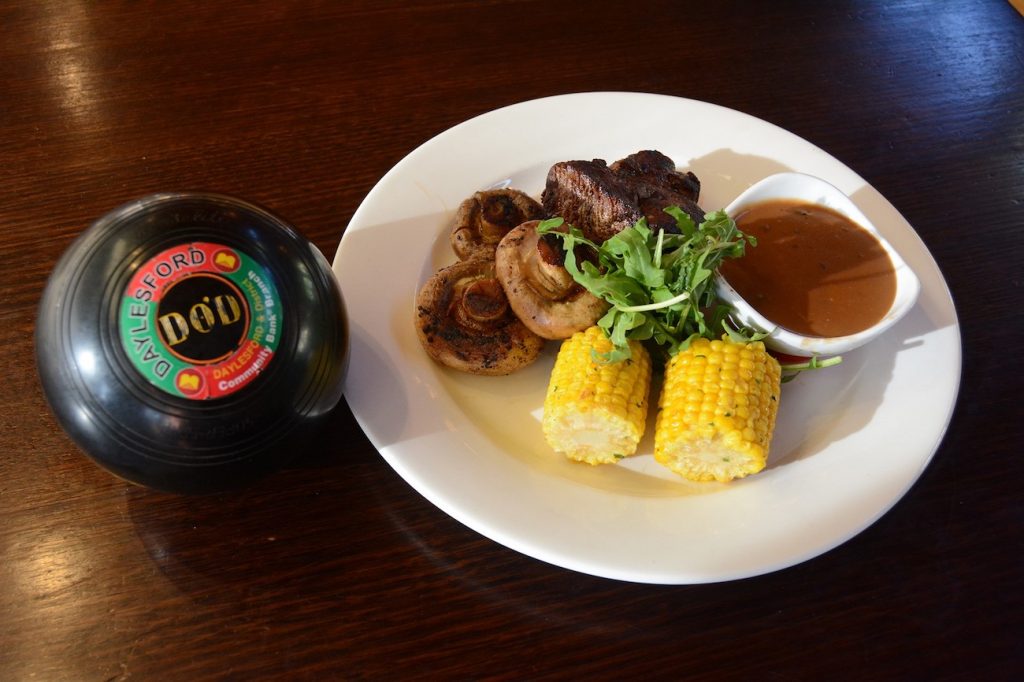
For our mains I chose the eye fillet ($25) which, at 180g, is the smallest steak portion you can select, but it came with pepper gravy, mushrooms with garlic butter ($4), parsley and buttered corn cobs ($4). Perfect, and no need for the 250g porterhouse or 350g scotch fillet steak, unless you were really hungry.

Amanda decided on something from the regular menu, selecting the lemon pepper calamari with chips and salad ($25). A wonderfully presented club classic that’s hard to beat. Our choices were only a fraction of what’s available.
There is something for everyone from vegan burgers to barramundi. For cosy atmosphere and great value, you can’t go past the Daylesford Bowling Club Bistro.
Words & images: Anthony Sawrey
February 10th, 2020Bridie Australian Championships winner
And while motorcycle trials (otherwise known as observed trials) may not be familiar to many people in Australia, it is the country’s most popular participatory motorcycle event with around 1000 regular competitors from year to year.
But it is one of the few motorcycle events where being fastest is not the goal. It is instead a sport where fine balance, clutch control and concentration are more important.
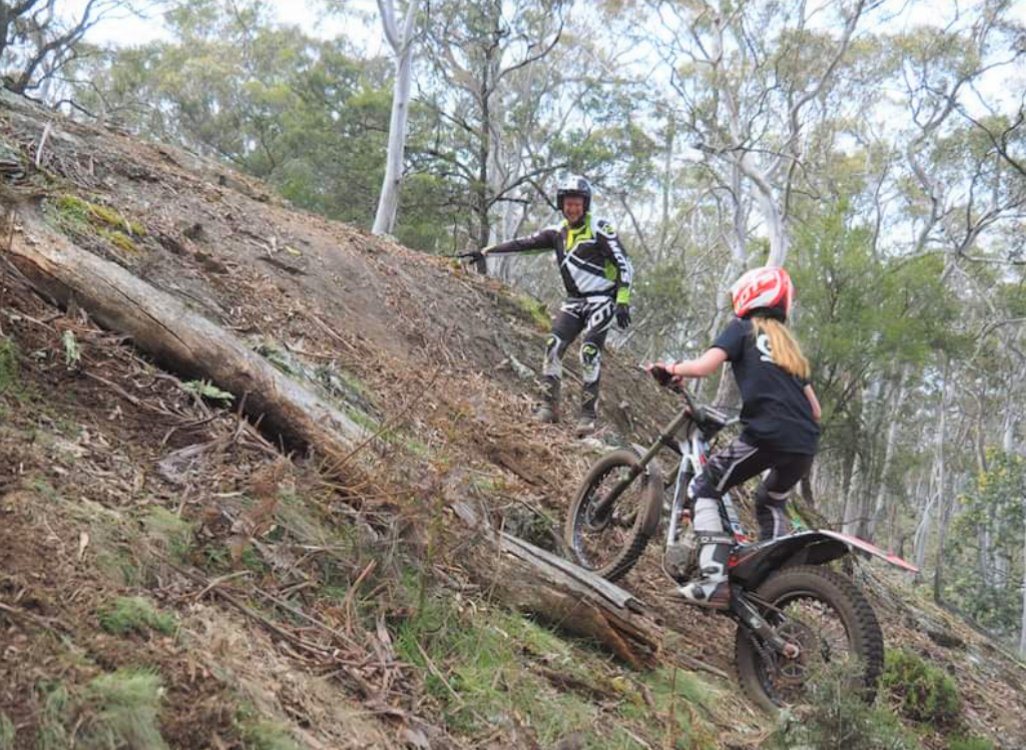
One by one, competitors will enter a taped-off section of ground full of obstacles from water and rocks, to steep climbs and slippery logs, riding in all conditions. They try to clear a section without putting a foot down. If they do, they accrue a penalty point. Essentially the one with the lowest amount of points at the end of the meeting is the winner.
It is a close-knit scene which tends to leave the uninitiated mystified as to its strange machines, odd traditions and rules but its best riders in Europe and Japan are stars with legions of fans.
At the topmost levels it is highly compelling, if not for the impossible obstacles the riders scale, then for the spectators fixated on their favourites, holding their breath as they negotiate a course, gasping at technical errors and cheering when things go right.
Bridie Sutton of Trentham is 13 years old and has been riding competition trials for five years. Recently she returned from the Australian Championships in Tasmania where she won the junior women’s trophy. To her trials is not some obscure pastime but something as natural for a country girl to take part in as pony club.
“I like it because it is different,” says Bridie. “And I was brought up with my dad doing it. So I guess you could say I’m carrying on the tradition.”
Her father Pat Sutton has been doing trials competition for many years and is Bridie’s mentor and trainer. He has coached her through her early years in junior competition and is now ready to help her as she moves into the C grade category. Like with most sports, trials has different levels of skill and C grade is a big step up.
“C grade is kinda scary. You have to go over bigger obstacles, harder turns and more of them and you have to think more about what you have to do and make sure you are not missing any markers because there are way more markers you have to go through,” Bridie says.
To get ready for her first season and the first round of the Victorian Trials Championships next month, Bridie does a lot of regular training. Her backyard features an obstacle course of large rocks, logs and mounds of dirt to work with. But often she spends an hour a day on the bike just practicing her turns.
“It is all about the balance,” she says, “but if I get tired of just being in the back- yard we can go to my grandma’s farm. The old Carlsruhe railway cutting goes through there and we can practice on the slopes.”
Words: Anthony Sawrey | Images: Contributed
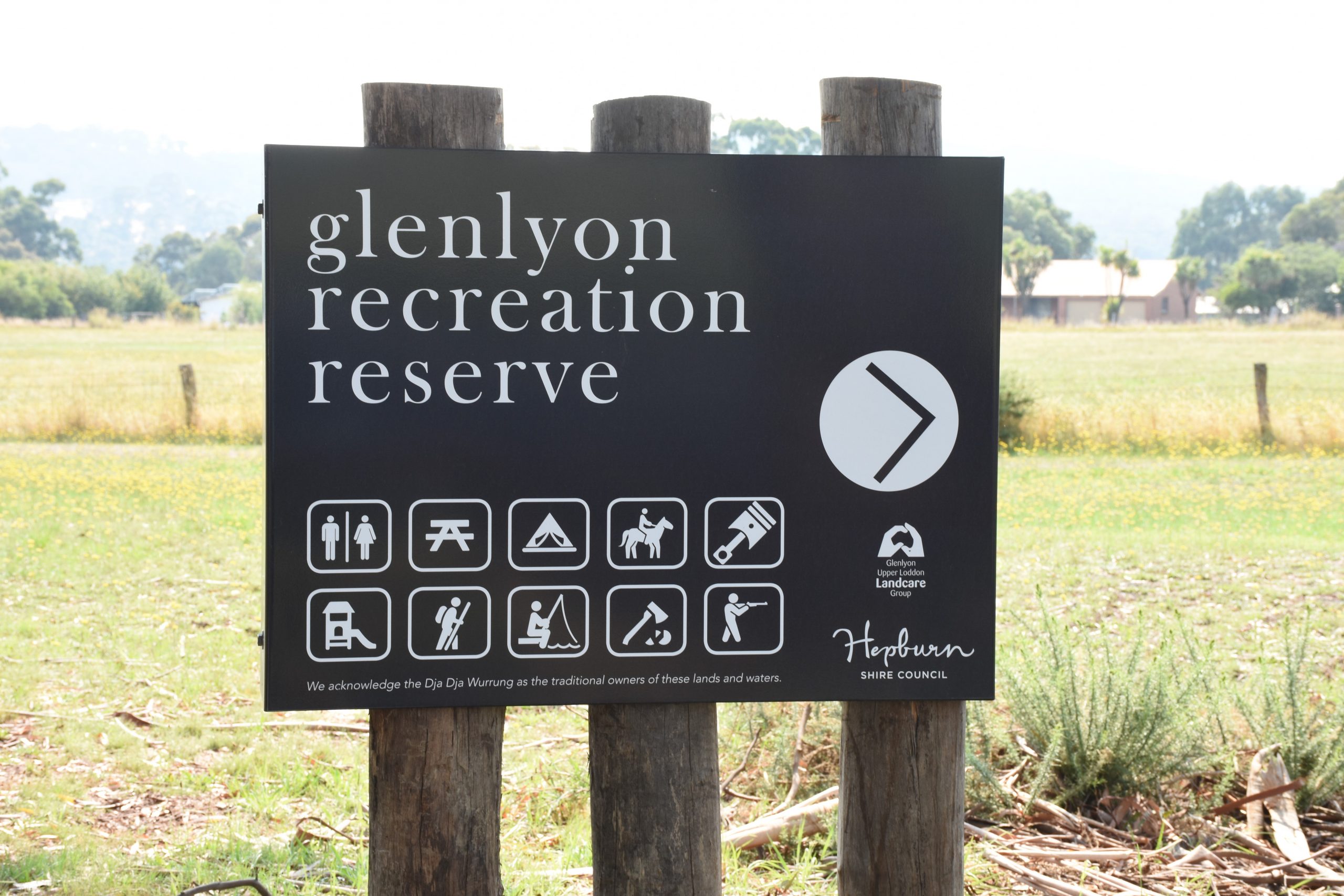
February 10th, 2020Gun club out after 40 years due to lead scare
The move is despite a Hepburn Shire Council spokesperson saying the source of the lead has not been identified – and other user groups are still able to use the reserve.
Club president David Collins said the club was gearing up for its biggest shoot in December, with competitors coming from interstate, when it was given two days’ notice.
The club’s 40 members now find themselves without a home, after 40 years at Glenlyon.
Mr Johnson said over the past year there had been a number of “agitators” against the club “and probably guns” but believed most locals were happy enough for the monthly shoot to take place.
“The only way lead can affect you is if you eat it or breathe in dust. The lead there, and the reserve was a swamp when we started, is probably about a metre underground.
“It’s a naturally occurring mineral and it’s come from the ground and gone back to the ground. It hasn’t caused any problems for 40 years but now, all of a sudden, it is dangerous.”
Mr Johnson said the club’s members were disappointed at both losing their ground and the way the issue was handled.
“We realise that Glenlyon today is not the Glenlyon of 1979. There are houses all around the reserve now, and we were probably eventually going to be forced out, but really, it’s not the right way to go about it.
“Shooting is a pretty popular sport even though some people might not like it. And we only have so many areas we can use. So, if you lose one it is disappointing to many people.”
Mr Johnson said the club had produced champions over the years including Colin Johns, who has been a national champion many times over and also competed overseas.
“These agitators have been making calls to the EPA saying there are rivers of lead running around the track. But we shoot over the track.
“We really can’t see the issue, and we are surely the ones most in contact with the lead. It’s not like the coronavirus and going to just jump out and get you.”
A council spokesperson said the council had been contacted by members of the community and had engaged an independent specialist to carry out a preliminary investigation.
Council had then “self-notified to the EPA in December that there were contaminants, lead and polyaromatic hydrocarbons, at the reserve”.
“There are a number of interim and future measures at the reserve and council is being guided on these by the EPA. The EPA has indicated that public use could continue provided some precautionary measures were taken. The risk to the public is low if they avoid the area, but if using the area, don’t eat soil, avoid playing with dirt and generating dust, washing off dirt and dust if you have it on you.”
The spokesperson said the council had been issued with a clean-up notice by the EPA and will undertake an environmental site assessment to understand the level and extent of contamination in soil and groundwater on the site.
“Post the soil contaminant investigation, the council will again discuss with land owners, DELWP, and the EPA, the results and seek advice/recommendations from them.”
The spokesperson said no decision had been made to close down the gun club and the current suspension was only temporary.
Asked how the lead could be a danger, an EPA spokesperson pointed The Local to an EPA website which said “lead exposure may occur from ingestion of contaminated soil or dust or from drinking contaminated water”.
“The hazard posed by PAHs (found in some types of clay targets) varies between compounds. Some PAHs are classified as carcinogenic to humans and can be absorbed through ingestion, inhalation or skin contact. Potential health effects are largely linked to levels of exposure – the more exposed you are to PAHs, the more likely are the risks to your health.”
Words & image: Donna Kelly
February 10th, 2020Local Lines : Daylesford in Summer
Hamlet:
“…for there is nothing either good
or bad, but thinking makes it so.”
Despite the summer heat the Anne Boleyns, Audrey Hepburns, Barbra Streisands, Benjamin Brittens and Botticellis are still blooming in the garden.
And the dark green foliage of the Chanticleers and Laurels are maintaining the garden as A Little Chaos.
And the short drive from Glenlyon to the pretty little French village of churches and trees on the hill is taking me past Monet’s Haystacks on one side of the road, and Van Gogh’s Haystacks of Provence and Pissarro’s The Harvest and Market on the other.
The smoke from recent fires is filling the sky like Turner’s Rain, Steam and Speed, and soon Millet’s Gleaners will be picking over the potatoes on Gooch’s hill.
In Vincent Street girls on school holidays wander with their families and answer to the writers’ names Collette, Harper, Virginia, and Charlotte, or the mythological characters Persephone, Artemis, Penelope and Cassandra.
Cars pass by named Apollo, Electra, Titan, Odyssey, Taurus, and even a vintage Mercury.
Tourists seem to come in all seasons up here, in the season of mists and mellow fruitfulness, when summer’s lease hath all too short a date, in the time of blow, blow, thou winter wind, and in just spring, when wee and bettyanddisbel come dancing from hopscotch and jump rope…
But I am not a tourist.
I live here, but stand outside, observing,
like the Flaneur, part of and not part of the landscape.
I am at the centre of the order of things of my own making.
The sovereign in control of a world of my own definition,
defining the beauty of things for myself
and not allowing them to be defined for me.
I can move anywhere and be unseen behind my mask.
– Tom Perfect
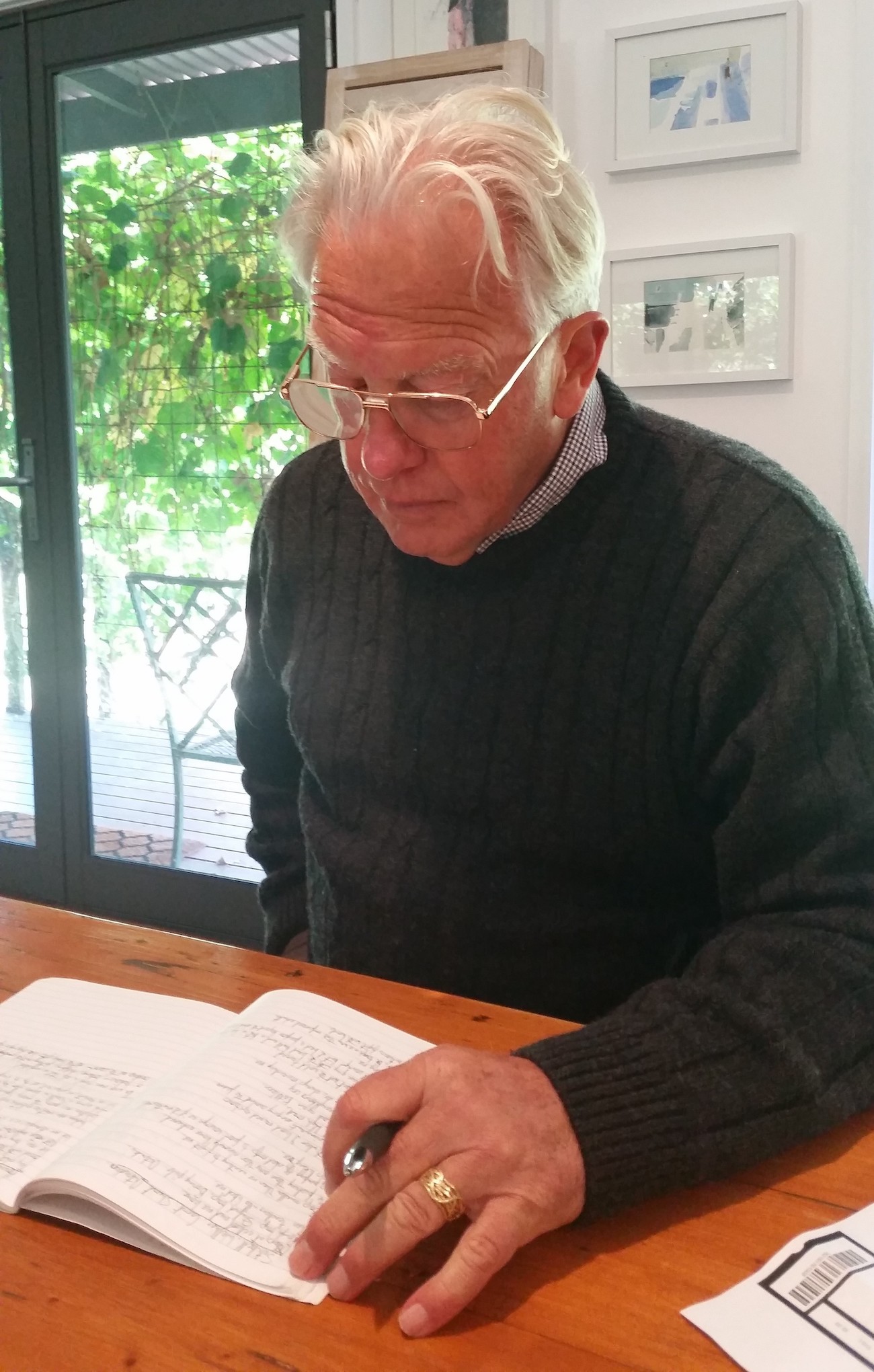
Tom Perfect lives in Glenlyon and loves the very active local community, and the General Store, Adsum Farm, and The Local magazine, which all contribute to the wonderful place that Glenlyon is.
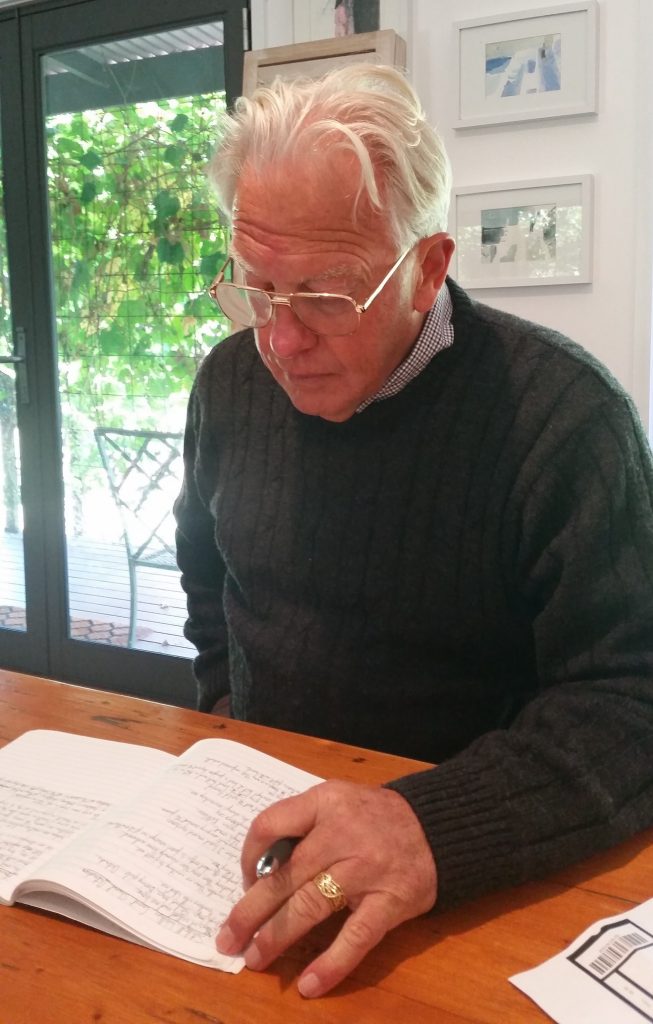
Poems for Local Lines come predominantly from a group of poets. However, other locals who would like a poem considered for publication can contact Bill Wootton – cottlesbreedge@gmail.com
January 27th, 2020Our Newest Australians
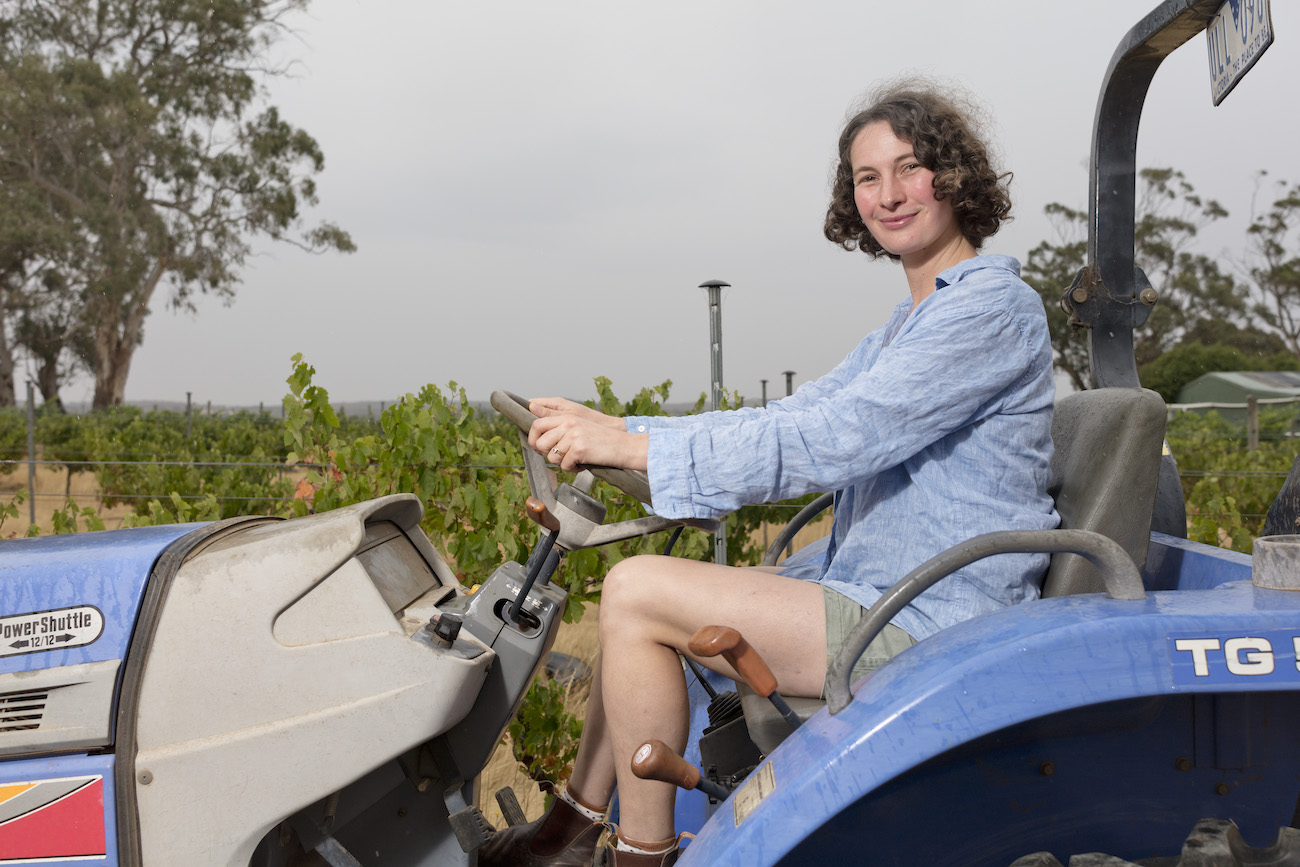
ZIG Zag Wines owners Harriet and Henry Churchill became some of the nation’s newest citizens on Saturday night – but not until they had given their son Albert, aka Albie, his second birthday party that morning.
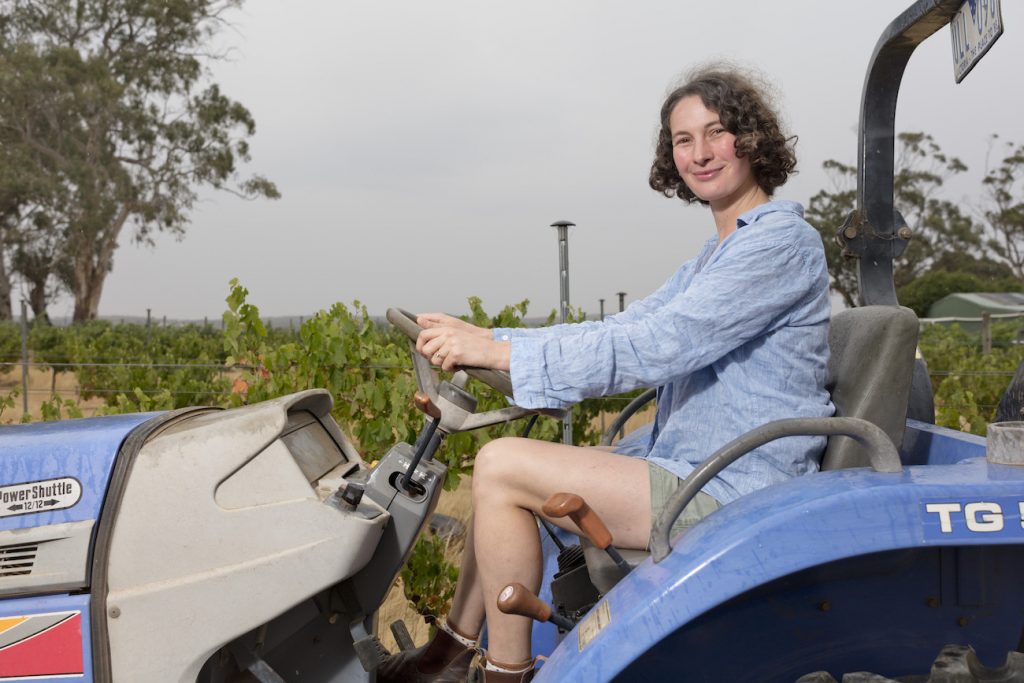
The pair, originally from England, have been in Australia for almost eight years, and bought their farm and vineyard, just outside Malmsbury, two years ago.
Harriet said becoming Australian citizens was a natural step towards fully embracing their new home.
“We obviously love Australia and love living here and are just so delighted to be a part of this Australian story. We live just outside Malmsbury and it is an incredible community in every sense and I just feel like we are a part of that bigger story now.
“Our livelihood is our farm and vineyard and winery and we look forward to that being our permanent home – and of course we already have an Australian son.
“The other thing is to also have a political voice and a vote. We are really connected to the community, we live in regional Victoria and have a business and a stewardship of our land, and we really want to be able to have a voice.”
Harriet comes from South London while Henry is from Oxfordshire but the couple met in Bangladesh while working in sustainable agriculture.
“So we have known each other nearly 10 years. Henry came over here to Australia and I followed him and he wined and dined me on the Great Alpine Road. We went camping and swimming in rivers and I just fell in love with the country and it was a pretty easy choice to make to live here. Now it’s home – although it breaks my heart a little bit to say that.”
The couple moved to Melbourne which Harriet says she thought was like “Utopia” with affordable and uncrammed public transport and everyone being very polite, but it was the country life that was calling.
“We bought the business 13 days before we had Albie and it was terrible timing. The previous owners let us move in a few weeks early just in case I went into labour. And I was 38 or 39 and we were new to viticulture, new to wine making and new to parenting. But we just thought ‘let’s go for this’. We couldn’t be happier than where we are now.”
Harriet said the Malmsbury and Macedon Ranges community had been incredible with both personal and business support – and two years on, Zig Zag Wines is thriving with the cellar door open Thursday to Sunday from 10am to 5pm.
“We genuinely really love the business. The only things that tug at the heart is family (being in England) and I am particularly close to my mum and dad and brothers, and a host of cousins.
“They have said we are doing a personal Brexit but I am lucky that they are the sort of people who understand we have to make a go of it here. And we travel there once a year when the vines are dormant and they come here in February when it’s freezing there.”
But Harriet said while family was far away there were many people who were willing to dig in when needed. Not just for the “glamorous jobs like picking” but all year round.
To honour those people, Harriet and Henry have created a new label, Kind Folks, which is all about what it says. A more natural, down to earth wine. Just like those kind folk they are surrounded by. “Without them we couldn’t do what we do.”
Harriet said Saturday’s plans included Albie’s party, an afternoon break, a drink with close friends, the ceremony itself and then dinner in Daylesford – with Albie being looked after by a “kind folk”.
The second celebration will be a walk, hike or overnight stay in the country – something to take in and appreciate the Aboriginal heritage and significance of their new land.
“We have been doing a lot of research, because we are new here, and will hopefully also get some guidance for something we can do as a family to take in this ancient land and culture. Albie was conceived on the Larapinta Trail in the Northern Territory so he already has this kind of story and we want to celebrate this together, as a family.
“We have so much to learn, coming in from the outside but we have been so welcome and embraced by the community, we are really keen to learn what we can.”
Words: Donna Kelly | Image: David White

January 27th, 2020Australia Day awards
AUSTRALIA Day ceremonies were held by Macedon Ranges and Hepburn shire councils with recognition given to both citizens and events.
Macedon Ranges Shire’s Citizen of the Year is Lisa Richards.

Lisa is the team leader and driving force behind the Waste Action Group that is part of the Macedon Ranges Sustainability Group. The group has a vision to reduce waste and litter to achieve a cleaner, less wasteful world.
Lisa set up and ran the Wash Against Waste at the Macedon Ranges Sustainable Living Festival. Lisa has worked with the council to perform rubbish audits, as well as many organisations across the region to help guide them in reducing their waste.
Young Citizen of the Year is Georgie Garvey Hawke, a young person who connects with the Woodend and Newham community in a huge range of ways. Georgie supports both groups and individuals, and has an incredible rapport with those she meets.
Examples of Georgie’s engagement in the community include how she is able to confidently welcome community members to a community lunch, support young children to develop an interest in reading, or to support adults in gaining skill with using social media or to communicate on various IT platforms.
Finally, the Community Achievement Award went to Lloyd (Neil) Pomroy who has been involved in many community groups. Neil has been volunteering at RM Begg Aged Care in Kyneton for five years assisting at meal times and with various leisure activities.
As president of the Woodend Lifestyle Carers group, Neil has supported and mentored members. Neil has been a long time member of the Newham CFA Brigade, where Neil is known as a cheerful firefighter, providing strong support and leadership. Regardless of the activity, Neil gives time, talents and support generously.
At Hepburn Shire, the Citizen of the Year is David Hall, the Young Citizen of the Year is Lachlan Wrigley and the Community Event of the Year is the Clunes Ceramic Awards.

January 27th, 2020Tom says ‘yes’ to Saffron’s Trentham invite
WHEN the Thek family went to the Northern Territory for a camping holiday escaping the rain and cold of the Central Highlands, they didn’t know their trip would be the catalyst for one of Australia’s top country music stars to come to Trentham.
They had attended the Katherine Outback Experience hosted by Tom Curtain with an array of performing horses, working dogs with music intertwined and they had a chance to chat with him afterwards.
“After the show he was talking to us about the tour he usually does through the southern states during the wet season,” says Kylie Thek, “and we kinda joked about him coming to Trentham and left it at that.”
However, when they returned home, her 11-year-old daughter Saffron, as part of a school project creating persuasive texts, wrote to the entertainer and asked if he would be interested in doing his show in the town.

She told him all the things that were good about Trentham, some reasons why he should come and some helpful information he might need; like places for the horses and dogs to stay. No one was expecting the reply from Tom which arrived a few weeks later announcing he would be happy to include the town in his We’re Still Here tour.
“It was kinda cool, because I didn’t really think he was actually going to write back,” says Saffron. “But I was really happy and excited that my letter worked and that he is going to come here and perform.”
It is now a little over six months since they returned from the Northern Territory and Kylie is now part of group of locals including Melissa Hider, Matt Bourke, Adrian Tusek and members from Lions, the football/netball club, cricket club and the Trentham and District Primary School, assisting with the logistics
Tom Curtain likes to work that way and the tour is not your usual travelling concert that swings into town with its gear, does the gig and disappears the same night. At every place he performs he draws in the assistance of local groups to provide refreshments and amenities which also ensures that money earned on the night goes back into the community where it is most needed.
He is also the official ambassador to the Dolly’s Dream foundation, a charity set up to counter bullying and cyberbullying and provide help to those affected by it.
As part of his visit to the region he will be speaking to students from grades two to six from Trentham, Daylesford and surrounding areas at the Daylesford Town Hall and be singing his award winning song Speak Up which he recorded in 2018 to raise awareness of the issue.
“I think it is such an important message,” Kylie says, “and as tech changes we need to give our children the skills to manage their online friendships. And the fact that Dolly’s Dream foundation has actually changed laws around the states regarding cyberbullying, I think is incredible.”
Tom Curtain’s talk will be on Thursday, February 14 at the Daylesford Town Hall at 1pm and the evening show is at the Trentham Sports Ground Reserve from 6pm.
Words: Tony Sawrey | Image: Contributed
January 27th, 2020Council youth grants
FEEL like ditching the homework, some time out from the olds, a break from the siblings?
Then do what Caelli Greenbank did and hit the high seas.
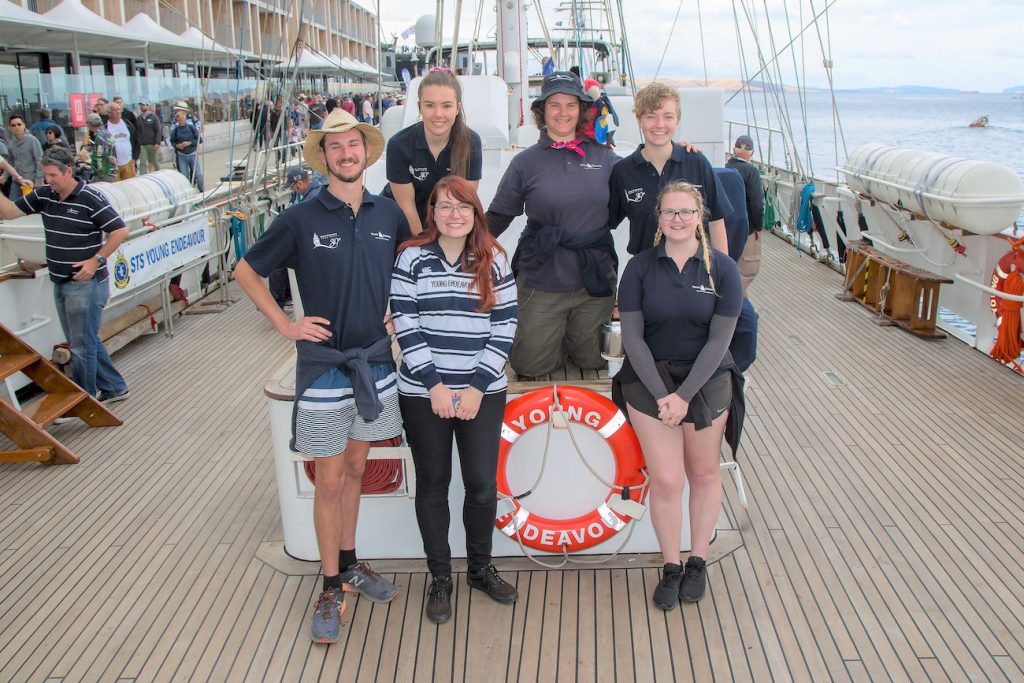
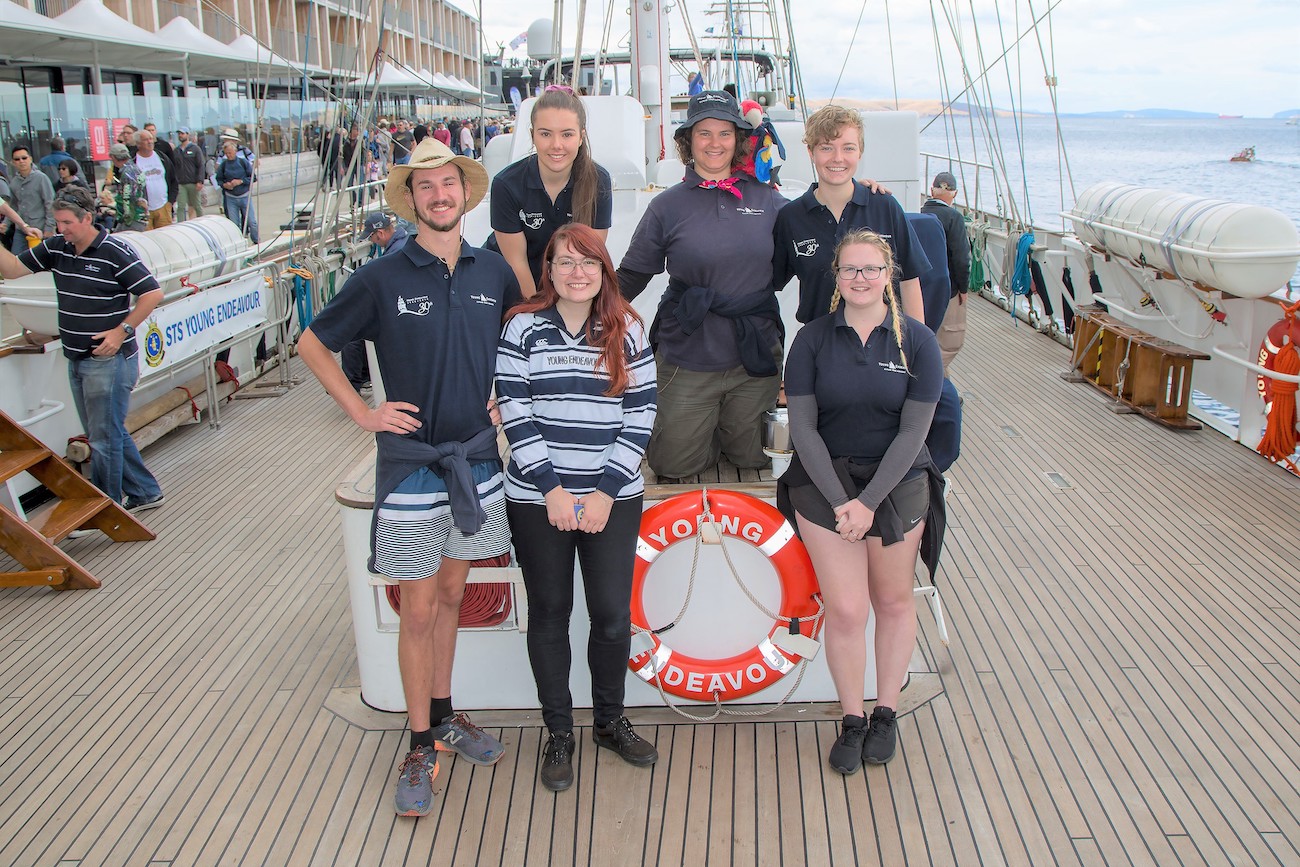
Hepburn Shire Council, under its Youth Development Fund, is offering one young person the change to take part in a Young Endeavour voyage. And they’re willing to foot the $4000 bill.
Former Creswick resident Caelli Greenbank, who is an ambassador for the Young Endeavour and helping spruik the trip for council, climbed aboard in 2010.
“I went as a trainee and had my 18th birthday onboard, which was pretty memorable. It was nothing like I expected but it was a huge challenge, particularly as I am terrified of heights and I had to climb a 20 metre mast in the dark, the rain…
“It is also physically and mentally exhausting, you get seasick, you get tired and wet and cold and grumpy, you have to live with all these strangers.”
(So far, not a great sell…)
“But the whole thing was a huge challenge and I loved it and I really loved sailing and I have been involved ever since.
“I guess I love the way the rest of world is locked away when you are at sea. Nothing else matters. You don’t care about homework, paying the rent, dramas with friends or family. Nothing matters except the wind and the waves and the sunshine and the ship. That is your whole world at that moment.
“And there is also that sense of accomplishment. Everyone hits the wall at some point, something gets to you, but the thing about being in the middle of the ocean is that you can’t just pull over and get out until you feel better. You have to keep going and push through, so when you get to shore and have that feeling that you stuck it out, that is incredible.
“It’s also the confidence. Sailing is something totally different to anything I had done in my life. I was at uni, working on my bachelor’s degree and then I was getting out, working with my hands and doing something that I couldn’t memorise or recite.
“I just had to start from the beginning and get good at it. I also like that sailing, while traditionally a masculine pursuit, welcomes everyone on board and if they can do the job, they do the job.”
Caelli said the main attribute needed to join a tall sailing trip was being able to “have a go”. “You will do a whole bunch of stuff you have never done before, you will face a few fears whether that is heights, water or strangers, and you need to be willing to have a go and overcome them. That’s the main thing. And everyone will get something out of it.
“For me, I work at Sovereign Hill at Ballarat and sail in my free time on the Enterprise in Melbourne and the James Craig in Sydney. I fly every month to Sydney to go sailing, that tells you how much I love it.”
Meanwhile, the council is also offering a young person a scholarship, also valued at $4000, for learning and development, through a state, national, or international conference, workshop or program of the applicant’s choice.
Applications for both the voyage and scholarship close on February 21.
Link: www.hepburn.smartygrants.com.au/YouthDevelopmentFund1920
Pictured: Caelli, back row, second from right, aboard the Young Endeavour
Words: Donna Kelly | Image: Contributed

January 27th, 2020Saucy request
THE Daylesford Good Grub Club needs your help.
Organiser Lorelle Thompson-Pope said the club gets produce donated from both Daylesford Coles and another Bendigo-based source, but a lot is pretty much at the end of it’s usable life when it arrives and sometimes there’s too much to be able to use it before it is past usability.
“For some time there have been discussions about how best to use this produce so it is not wasted and a couple of ideas have been developed.
“One of these ideas is to bottle some of the produce, tomatoes and fruit do well in bottles and last for a long time, and can be used in many ways from the bottles. Trouble is we don’t have a bottling system.”
Lorelle said she wondered if there were any locals who might have old Fowlers Vacola (or similar) systems that they no longer use.
“If anyone does I would like to put in a request for someone, or more than one person, to donate a whole system or some of the components, such as the bottles and clips, to the club so they can use it to preserve, and extend the life of, some of the produce received.”
The club offers breakfast and food parcels on Tuesdays and lunch and food parcels on Thursdays from the Uniting Church in Daylesford.
Contact Lorelle on 0448 037 314.
January 27th, 2020Gate Donation
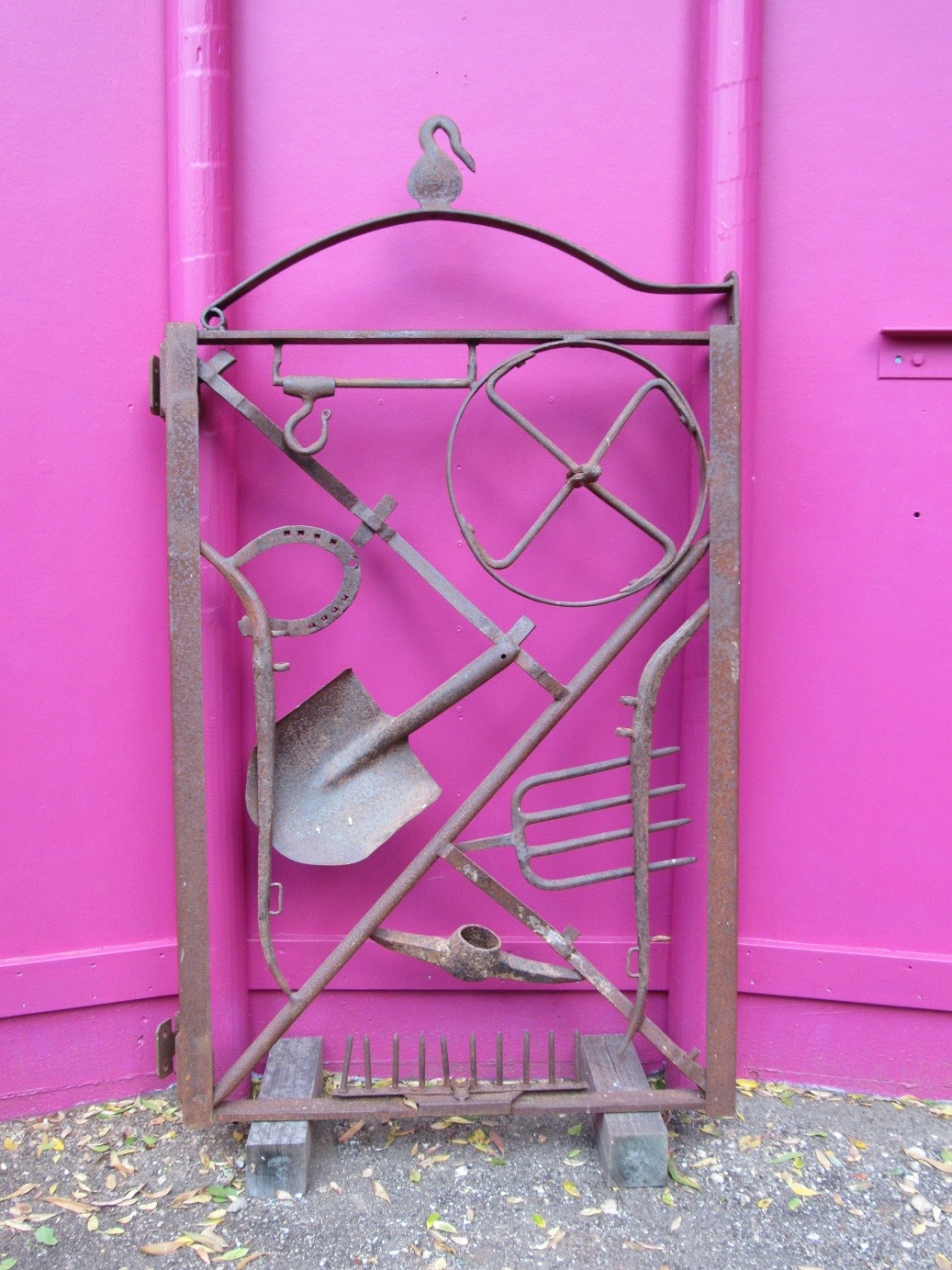
PARADISO Arts owner Stefan Nechwatal is doing his bit for the bushfire effort – donating the sale of one of his unique gates.
The Sailors Falls resident said the one-off, decorative heavy duty steel gate would be up for sale for one month for the price of $770.
“I will then donate that to the purchaser’s nominated, registered bushfire charity.
“After completing welding qualifications many years ago the first artwork I created was in this vein. A handcrafted gate from recycled materials and it sold at an exhibition in Eltham.
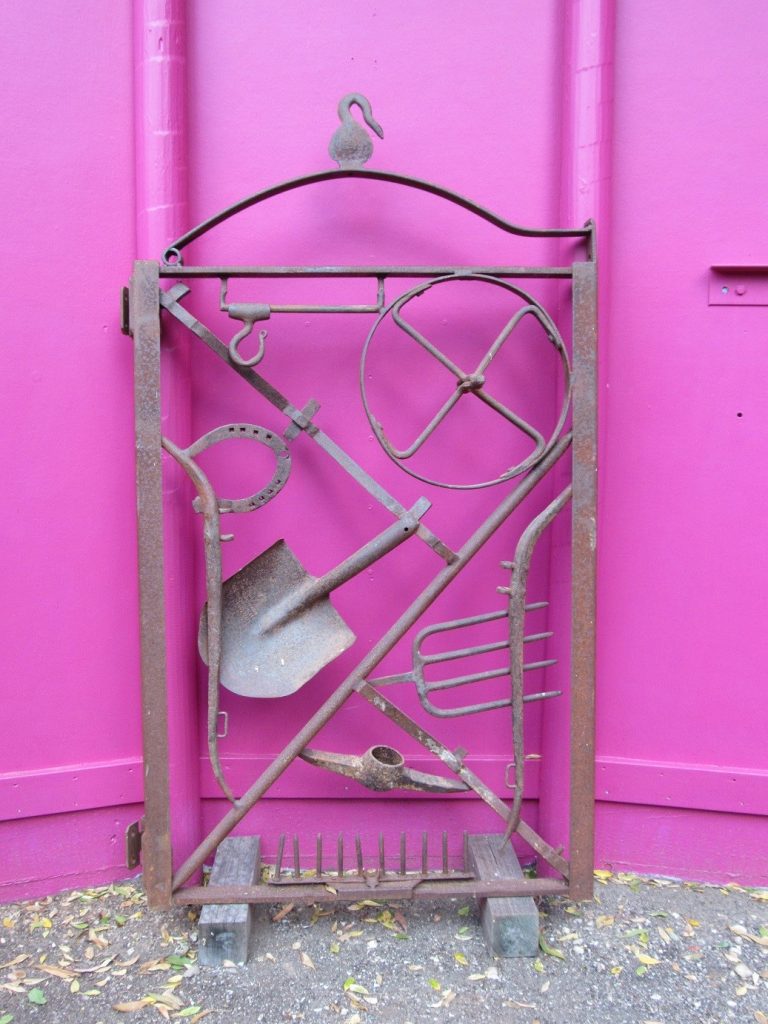
“My concept was to gather the various objects that a family of pioneers would load onto their steel-wheeled, horse-drawn wagon in the 1800s, or earlier, and set off into the New World to make a new life.
“I think there is a poignancy here in a link to the story of some bushfire victims who are regrettably about to begin a whole new life.”
Call 5348 6600.