


November 5th, 2024Planting the seeds for carbon farming In Victoria

The Victorian state government is supporting farmers to reduce their emissions and improve the productivity of their farm with free training opportunities on offer across the state.
Minister for Agriculture Ros Spence last month announced the start of the Carbon Farming Outreach Program which will deliver over 130 events in Victoria over the next two years.
This training was made possible with a $4.37 million Albanese Labor Government investment and will be delivered by Agriculture Victoria, Victoria’s Catchment Management Authorities, Melbourne Water and Landcare Victoria.
The program kicked off recently with the Wimmera CMA’s Chicks in the Sticks event in Moyston on October 23 with speakers Fiona Conroy and Dr Cassandra Schefe sharing their knowledge and practical experience of low emissions farming.
In addition to the Carbon Farming Outreach Program, the Government is also providing grants to landowners in the North Central CMA region as part of the Victorian Carbon Farming Program to support tree planting on private land.
The VCFP is supporting farmers across the region to diversify income streams and gain a range of co-benefits associated with growing trees, including for shade and shelter, erosion control and timber production.
The Allan Government has set an ambitious target of net zero by 2045 and is supporting farmers to reduce their emissions with a $20 million through the Agriculture Sector Pledge.
To learn more or register your interest in carbon farming training visit, agriculture.vic.gov.au/climate-and-weather.
November 4th, 2024Victoria’s finger on the pulse with new research

The Victorian Government is boosting Victoria’s pulse production with new research that will help solidify Australia as an industry leader and meet growing global demand for plant proteins.
Minister for Agriculture Ros Spence recently announced $2.4 million towards a new research project at the Horsham Smart farm with the Grains Research and Development Corporation (GRDC).
The Grains Research and Development Corporation invested $8.8 million on behalf of Australian grain growers, and $2.4 million from industry collaborators.
The four-year project will help Australian pulse producers develop varieties with traits that are driven by the market – supporting Australian farmers to market demand and ensure consumers are getting the product they want.
The national project will involve all parts of the pulse supply chain, including 13 subcontractors, food and ingredient manufacturers and processors, as well as an international partner.
The project will capitalise on the growing plant-based protein market, with demand for these foods forecast to surpass $250 billion globally by 2035.
Australia exports on average 2.5 million tonnes of pulses a year, making us the second largest pulse exporter in the world.
More than 90 per cent of Australia’s pulses are exported with prices defined by visual quality and used primarily for human consumption with a small proportion sold into the lower value, domestic livestock feed market.
Victoria is a major contributor to Australia’s pulse industry, generating $638 million in export income last financial year.
For more information about the project visit, grdc.com.au.
Words: Agriculture Victoria
November 4th, 2024Man charged following firearms incident

Armed Crime Squad detectives have charged a man following a firearms incident in Victoria’s south-east in recent days.
Investigators from the Illicit Firearms Squad attended a Foster-Mirboo Road address in Dumbalk North to execute a firearms warrant about 1.30pm on 24 October.
It is alleged a man who resides at the address fired shots at detectives.
They returned fire and were not injured during the incident.
The man was located injured at the property just after 5pm and he was taken to hospital with non-life-threatening injuries.
The 56-year-old man has been charged with:
• discharge a firearm at police officers
• reckless conduct endangering life
• 5 x assault emergency workers
• discharge firearm being reckless to the safety of a police officer on duty
• prohibited person possess firearm and ammunition.
He was remanded in custody to appear before the Melbourne Magistrates’ Court 20 January 2025.
November 4th, 2024On-Farm Drought Infrastructure Grants Program open

Victorian farmers impacted by the current drought conditions can now apply for on-farm grants to help manage and withstand current seasonal conditions and prepare their businesses for the future.
Minister for Agriculture Ros Spence recently announced the opening of the On-Farm Drought Infrastructure Grants Program that will provide financial assistance to farmers managing current drought conditions and build farm business preparedness and resilience for the future.
Eligible farmers can apply for co-contribution grants of up to $5,000 for on-farm improvements including water infrastructure upgrades, stock containment areas, grain and fodder storage and drought management tools.
The $12.1 million grants program is open to farmers in Local Government Areas in the south west that have been most severely impacted by ongoing drought conditions.
These Local Government Areas include Glenelg, Southern Grampians, Warrnambool, Moyne, Corangamite, Colac Otway, Surf Coast, Ararat, Pyrenees, Golden Plains and Greater Geelong, as well as the southern half of West Wimmera Shire.
These grants are part of a $13.53 million Drought Support Package which also includes a $1.43 million investment in farmer wellbeing, technical decision-making advice and a dedicated Regional Drought Coordinator who will help ensure support is reaching those who need it.
The grants build on the existing support services available for farmers including the Rural Financial Counselling Service, The National Centre for Farmer Health, farmer workshops, field days and practical information on the Agriculture Victoria website.
To attend an upcoming drop-in session being held across the south-west visit agriculture.vic.gov.au/dryseasons or phone 136 186.
For more information on the On-Farm Drought Infrastructure Grants Program, including the specific areas of eligibility, visit ruralfinance.com.au or call them on 1800 260 425 during business hours.
Words: Agriculture Victoria
November 4th, 2024Police seek information following fatality at Caramut

Police are investigating after a fatal crash in Caramut in recent days.
Emergency services were called to reports of a car rollover on Purdeet Road about 4.45pm on Sunday October 27.
The driver and only occupant, a 20-year-old Warrnambool man died at the scene.
The investigation remains ongoing.
Anyone who witnessed the incident, has CCTV, dashcam footage or any other information that could assist police is urged to contact Crime Stoppers on 1800 333 000 or submit a confidential report online at www.crimestoppersvic.com.au
For the current provisional lives lost tally please see – https://www.police.vic.gov.au/road-safety
November 3rd, 2024Enhanced surveillance for animal disease in Victoria
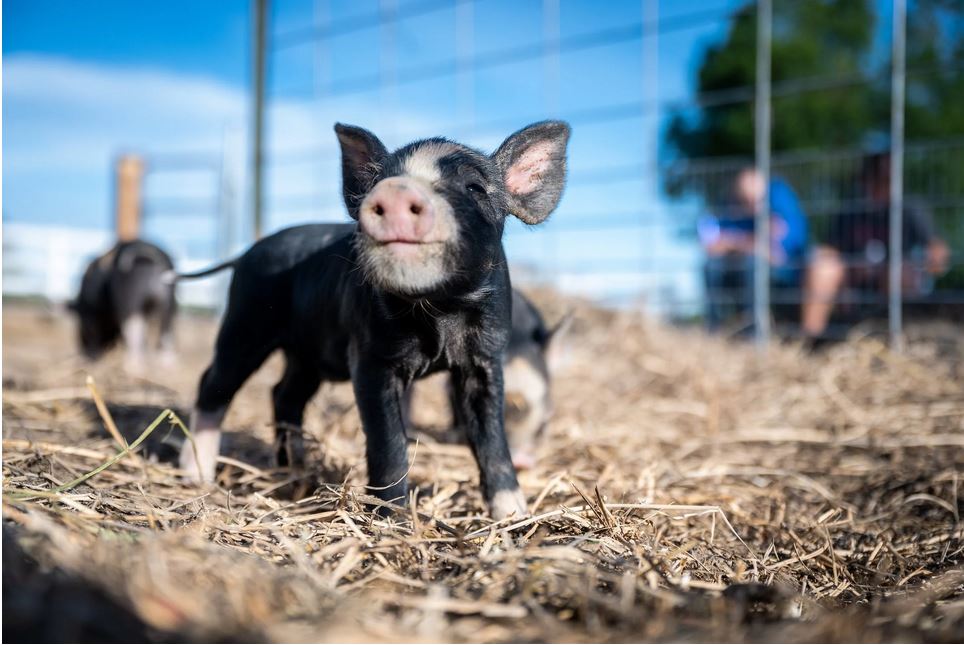
Victoria’s livestock industries are fortunate to be free of most of the serious diseases that affect animals in other parts of the world.
Despite this fact, ongoing surveillance for new or exotic disease is important to reassure our trading partners of Victoria’s favourable disease status and to ensure the early detection of diseases that might impact on trade, public health, and farm or regional productivity.
Agriculture Victoria has an initiative that allows veterinarians who investigate and report on outbreaks of unusual or significant animal disease to be paid a subsidy to help cover the cost of the investigation and associated laboratory fees.
This subsidy may be paid when:
- a large number of animals are affected or there is an unusual presentation of a disease
- an initial investigation fails to establish a diagnosis, or veterinary treatment does not produce the expected response
- clinical signs are consistent with an emergency disease without a clear alternative diagnosis
- findings suggest a possible effect on trade, public health or the viability of a farm, industry or region.
This will increase the likelihood of detecting a serious animal disease should one occur and assist in covering the cost to farmers of investigating and reporting an animal disease outbreak.
Payment of subsidies is conditional upon approval being given by Agriculture Victoria before the investigation begins.
When there is a genuine suspicion of an exotic or emergency disease Agriculture Victoria will undertake the disease investigation and cover the full cost of the investigation.
In summary, early detection of new or exotic disease depends on farmers, vets and government working together:
- producers and animal owners should call their vet when an unusual disease occurs in their stock
- veterinary practitioners must remain vigilant and consider the possibility of new, unusual or exotic diseases
- unusual disease incidents should be fully investigated, and appropriate samples should be submitted to veterinary laboratories.
Early detection of emerging or exotic disease is the key to their effective management.
If you suspect an exotic or emergency disease, please contact your local veterinarian, or Agriculture Victoria Veterinary or Animal Health Officer, or the Disease Watch Hotline on 1800 675 888.
Words: Dr Jeff Cave, Agriculture Victoria Senior Veterinary Officer
November 3rd, 2024Police investigate South Morang death

Homicide Squad detectives are investigating after a woman was located deceased in South Morang early last week.
Emergency services were called to a residential property on Reid Street about 10am.
The woman, who had yet to formally identified as at the time a police report was issued last week, was declared deceased at the scene.
The exact circumstances surrounding her death had yet to be determined and investigations remained ongoing.
Police arrested a 33-year-old South Morang man who was to be interviewed in relation to the incident.
It is believed both parties were known to each other.
Anyone who witnessed the incident or has information is urged to contact Crime Stoppers on 1800 333 000 or submit a confidential report online at www.crimestoppersvic.com.au
November 3rd, 2024Man charged following Geelong fatal stabbing
Homicide Squad detectives have charged a 26-year-old man following the fatal stabbing of another man in Geelong last week.
The 20-year-old was allegedly stabbed during an altercation on Little Malop Street about 5.30am on Sunday October 27.
The Corio man was taken to hospital where he later died.
A Colac man attended a police station last week where he was taken in custody and interviewed.
He was charged with one count of murder and was required appear in Geelong Magistrates’ Court last Monday afternoon.
Two other Colac men, aged 23 and 26, had self-presented at a hospital with non-life-threatening injuries last Sunday morning.
They were to be interviewed at a later date.
Anyone who witnessed the incident, with CCTV/dashcam footage or information that could assist police was urged to contact Crime Stoppers on 1800 333 000 or submit a confidential report online at www.crimestoppersvic.com.au
November 3rd, 2024Aussie attitudes to mining in the energy transition era

The CSIRO, Australia’s national science agency, last week released a comprehensive report on findings from one of the largest national surveys examining Australian attitudes towards mining.
Engaging over 6,400 participants, the survey included a focus on critical and energy transition minerals to measure community sentiment regarding the mining industry’s role in renewable energy efforts.
The transition from fossil fuels to renewable energy requires critical minerals such as lithium, silicon, high purity alumina and rare earth elements.
Conducted in collaboration with Voconiq, this latest survey marks the third instalment in a decade-long program of research, providing an update to the national surveys conducted in 2014 and 2017.
Dr Louise Fisher, Science Director and Deputy Director of CSIRO Mineral Resources, said the report provides important insights into levels of trust and acceptance, governance and fairness, as well as perceived benefits and concerns surrounding the mining industry.
“These insights are crucial for policymakers, industry leaders, and communities as they navigate the evolving social licence for mining operations, particularly in the context of the energy transition,” Dr Fisher said.
Key findings from the survey revealed:
- Public trust in the mining industry has improved.
- 73% of respondents acknowledge that access to critical minerals is essential for achieving net zero emissions.
- 71% agree that mining is important to the Australian way of life.
- 72% believe mining will support Australia’s future prosperity.
- Despite strong support for mining, 61% agree that mining has negative environmental impacts.
- 32% of respondents believe Australia should reduce mining activity, even if it delays the transition to net zero emissions.
- Whilst the economic contribution of mining and its importance in supporting the energy transition are widely recognised, building trust, ensuring fair distribution of benefits, and actively engaging communities are key to maintaining the industry’s social license (52% of participants agree that mining communities receive a fair share of benefit).
Voconiq CEO and Co-Founder, Dr Kieren Moffat, said that the survey reveals a nuanced understanding among Australians: they support mining for the minerals essential to the energy transition but expect rigorous regulatory frameworks and responsible practices.
This story based on a media release from the CSIRO. Image: CSIRO
November 2nd, 2024Experts convene to tackle complex global challenges

The critical role of research infrastructure in addressing complex global challenges – from climate change and food sustainability to pandemic preparedness and understanding the universe – will be explored in the world’s leading research infrastructure conference taking place in Brisbane, Australia, this December.
The International Conference on Research Infrastructures (ICRI 2024) has in recent days released its full program with 90 global experts speaking across more than 20 sessions from 3 to 5 December 2024.
ICRI 2024 will showcase the world’s best strategies and networks for efficient, effective and accessible infrastructure, and explore how it can help confront global challenges, improve collaboration, and deliver societal impact.
Australia’s national science agency, CSIRO, is delivering ICRI 2024 in cooperation with the European Commission and the Australian Department of Education.
Professor Elanor Huntington, CSIRO’s Digital, National Facilities and Collections Executive Director, said ICRI will bring together the world’s leading research infrastructure experts from across diverse geographies and scientific disciplines.
“By providing an opportunity for the ongoing exchange of information, ideas and talent it will increase the capacity of research infrastructures to respond to, and cooperate on, complex and global societal and research challenges,” Professor Huntington said.
Sessions will cover pandemic preparedness, how research infrastructure can address climate change over the next 30 years, the global energy transition, and developing new crops and management systems suited to changing climates.
For the first time ICRI will cover Indigenous knowledge.
Maori, Lakota, Sami, and Australian First Nations peoples will discuss how to build ethical, meaningful and respectful collaborations with local and Indigenous communities.
“Attendees will gain practical insights into fostering equitable and impactful research infrastructure alongside Indigenous communities,” Professor Huntington said.
“Speakers will describe how to develop partnerships that secure community buy-in, building capacity, and uphold Indigenous rights in data management while respecting traditional values and knowledge systems.”
Claire Sainsbury, Assistant Secretary of Research Policy and Programs at the Australian Department of Education said Australia was proud to be hosting this landmark event.
“Australia is hosting ICRI 2024 to ensure the greatest possible attendance from our Southeast Asia and Pacific neighbours, to increase their ability to network and collaborate with the global research infrastructure community,” Ms Sainsbury said.
“It is also a chance to showcase Australian research infrastructure and the globally recognised National Collaborative Research Infrastructure Strategy (NCRIS) model that underpins so much of it.”
The role and future uses of large-scale facilities such as synchrotrons, lasers, neutron sources, electron microscopy, quantum and high-performance computing (HPC), artificial intelligence, and astronomy will be highlighted.
ICRI 2024 will also consider the future RI workforce, with a focus on developing the next generation of leaders, and hear from global Early Career Scientists as they pitch their visionary ideas for the research infrastructures the world will need by 2050.
ICRI 2024 will be a hybrid event, held both in person and online, to ensure the greatest possible level of global involvement and benefit from the sessions held.
Those attending the conference in person will be able to make further connections through side events, meetings and site tours designed to enhance engagement, foster networking opportunities, and deliver valuable insights.
Words & Image: CSIRO
November 2nd, 2024Fossil sawfly discovery 16 million years in the making
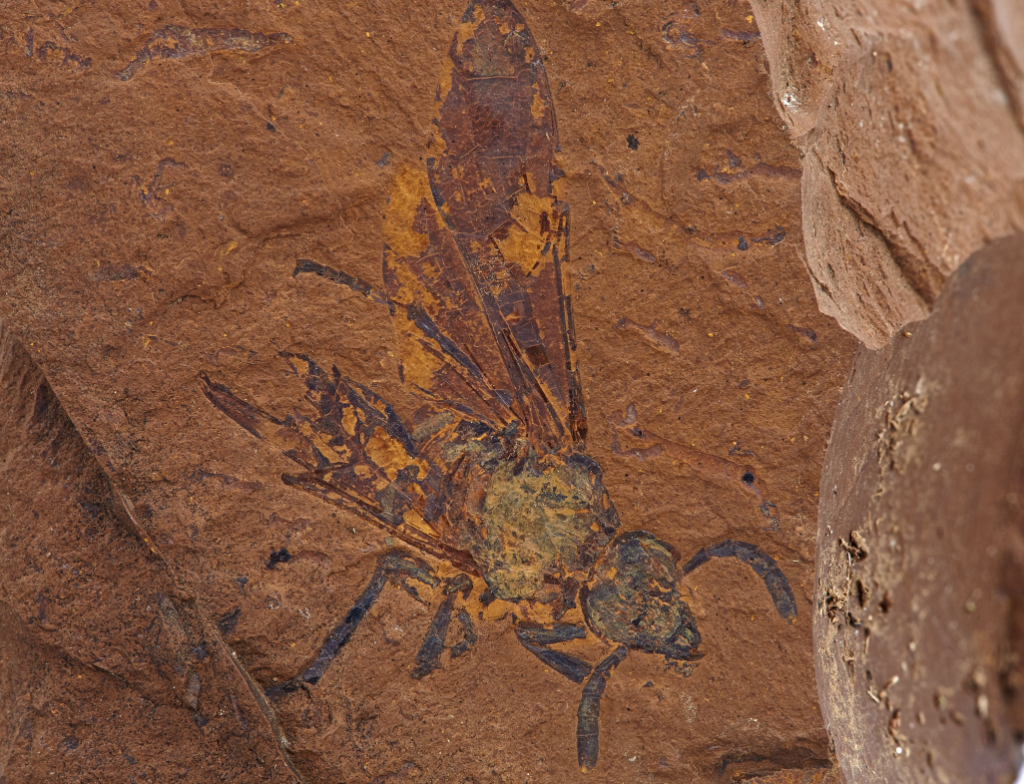
A team of Australian researchers has described a new species of now-extinct sawfly from an extremely well-preserved fossil found in central NSW.
This fossilised sawfly, which is between 11 and 16 million years old from the Miocene Period, was the first of its kind discovered in Australia and only the second discovered in the world.
It was found by a team of palaeontologists in 2018 who were exploring McGraths Flat, a fossil site in central NSW that has since yielded many other detailed fossils.
Despite the name, sawflies are not flies but a type of wasp, with spitfires the most widely recognised group of sawfly species in Australia. They are called sawflies because they have a saw-like ovipositor that is used to lay eggs, and they could be mistaken as flies because they lack a typical ‘wasp waist’.
With the approval of the Mudgee Local Aboriginal Land Council, Wiradjuri words were used to name the newly described species of sawfly Baladi warru. ‘Baladi’ means ‘saw’ and ‘warru’ means ‘wasp’. This name honours the Traditional Owners of the lands on which the fossil was located.
Researchers from Australia’s national science agency, CSIRO, the University of Canberra, Australian Museum and Queensland Museum have analysed the sawfly’s wing venation and other features preserved in the fossil and determined its taxonomic (scientific naming) placement within sawflies. This allowed them to describe it as a new species.
CSIRO research scientist, Dr Juanita Rodriguez, helped describe the new sawfly species.
“We looked at the fossil and its morphology and then put this information together with molecular and morphological data from a wide sample of current sawfly species. This helped us decipher the fossil’s placement in the sawfly tree of life,” Dr Rodriguez said.
“We used the fossil’s age and its placement to establish that sawflies originated in the Cretaceous Period, around 100 million years ago, which means their ancient ancestors lived in Gondwana. When this supercontinent split up, sawflies ended up distributed in Australia and South America.
“When we examined the fossil, we identified pollen grains on the sawfly’s head which revealed it had visited a flowering Quintinia plant. This helped our team trace complex species interactions in the palaeoenvironment of McGraths Flat.”
University of Canberra palaeontologist and CSIRO visiting scientist, Dr Michael Frese, who found the fossil sawfly, said this discovery would help researchers track evolution and distribution of sawflies.
Words & Image: CSIRO
November 2nd, 2024Jail term follows Bakers Delight, Daylesford, robbery attempt
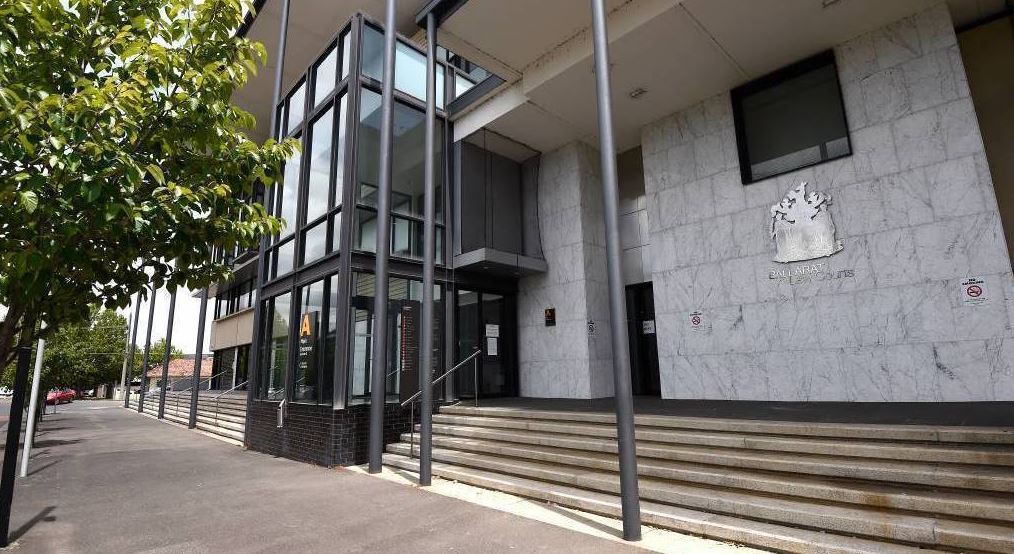
A Mount Franklin farmer who last year held a knife to the ribs of a staff member at Daylesford’s Baker’s Delight, in an unsuccessful bid to steal money from the business, has this week received a jail term.
At the County Court in Ballarat on Monday Gavan David Vendy, 51, was sentenced after pleading guilty to attempted armed robbery, property damage and illegal firearms possession.
The court had heard that at about 2.45pm on May 11, last year Vendy stood in a laneway near the Daylesford Bakers Delight store and waited for customers who were inside the store to leave.
Once the store was empty of customers Vendy had entered and pulled out a knife, demanding the worker behind the counter open the cash register, the court had heard.
When the staff member refused to do so, Vendy held the knife to her ribs and told her “it is not worth getting hurt”.
He had then jumped the counter and attempted to open the register himself. However he was unsuccessful.
He had then grabbed a phone from another staff member who was calling triple-zero and fled.
The staff member had pursued him into a nearby laneway, where Vendy threw the phone onto the ground, damaging its screen.
He was later arrested at a Mount Franklin property on June 27, last year where police had found an illegally owned air rifle.
Vendy had admitted the offence to the police, and had stated that he had hoped to steal $300 to help his son meet rent.
The court heard the 51-year-old was remorseful for the offending. In the County Court on Monday he was given an eight month prison sentence and was also required to pay a $500 fine and to complete a two year community corrections order.
November 2nd, 2024Smart solutions to tackling plastic problem

Australia’s national science agency, CSIRO, is gathering environmental entrepreneurs across the Indo-Pacific region in a Demo Day to showcase their innovative solutions to tackle plastic waste.
The rate of plastic production has grown faster than any other material since the 1970s, and today the world produces about 400 million tonnes of plastic waste every year.
Plastic waste flows into our riverways and into our oceans, with an estimated 11 million tonnes of plastic on the ocean seafloor.
To tackle this global problem, more than 20 international teams are taking part in CSIRO’s Indo-Pacific Plastics Innovation Network (IPPIN) Accelerator+ Program.
They will converge across Jakarta, Ho Chi Minh City, and Bangkok to prove how their solutions are transforming the way we produce, use and recycle plastic materials.
Ms Kirsten Rose, CSIRO’s Deputy Chief Executive, emphasised the critical role of international partnerships in addressing global challenges like plastic waste and enhancing Australia’s innovation ecosystem.
“Plastic pollution is a global crisis that knows no borders and we cannot tackle it alone,” Ms Rose said.
“Collaborating with our neighbours is crucial for advancing technology and business innovation, enabling us to weather economic uncertainty.
“By working together across borders, we can create a more resilient, healthier and prosperous region.
“Initiatives like IPPIN foster joint innovation, leading to sustainable and organic solutions to boost industry profitability.”
The innovations displayed at Demo Days will include advanced waste management systems, creative methods for repurposing single-use plastics, and initiatives to empower marginalised communities most impacted by plastic pollution.
Andrea Sosa Pintos, IPPIN Senior Program Manager said through CSIRO’s IPPIN program, innovative solutions to plastic pollution can accelerate rapidly and at scale.
“By 2040, global plastic use is estimated to double. Australia’s commitment to the High Ambition Coalition to End Plastic Pollution, as part of the negotiations for a UN treaty to end plastic pollution, firmly highlights our role as a regional leader in combatting plastic pollution,” Ms Sosa Pinto said.
“To date IPPIN has engaged with over 3000 people in program activities and supported 130 global entrepreneurial teams to scale-up sustainable and innovative technologies to find lasting solutions to address plastic waste.
“We have seen humble ideas grow into fully fledged, profitable innovations that revolutionise upstream and downstream plastic solutions. Continuing to support future innovators will be critical in tackling plastic waste regionally, together.”
One example is Greenhope, an alumni start-up supported by IPPIN, who have developed technology that utilises cassava starch to produce commercialised biodegradable bioplastic packaging.
Since their venture began, Greenhope has successfully replaced 12 billion pieces of conventional plastic into biodegradable plastic and improved the welfare of 179 Indonesia cassava farmers.
IPPIN highlights CSIRO’s ongoing commitment to ending plastic waste and changing how we reduce, reuse and recycle plastic.
Words & Image: CSIRO
November 1st, 2024Chance to join Hepburn shire’s Z-net roundtable

If you’re passionate about taking action on climate change and helping the community reduce greenhouse gas emissions, then the Hepburn Shire’s Z-NET Roundtable may be for you.
Hepburn Z-NET is a collaborative partnership that brings together community groups, organisations, community members, experts and the local council to help shift the shire to zero-net energy by 2025 and zero-net emissions by 2030.
Those interested in being part of the roundtable are currently being encouraged to submit an expression of interest by 12pm on Monday November 25 via the Participate Hepburn website participate.hepburn.vic.gov.au/hepburn-z-net
November 1st, 2024Funding boost for local emergency service volunteers

Volunteer emergency services organisations in the state electorate of Macedon have received a funding boost as part of the Volunteer Emergency Services Equipment Program (VESEP) grants.
The state’s Minister for Emergency Services Jaclyn Symes has announced the 2024-25 VESEP grant
recipients that will share in more than $15 million to purchase new equipment, improve emergency response capability and support community safety.
Eight grants, with a total value of $491,913 were awarded to volunteer emergency services organisations in Macedon including:
CFA Franklinford Thermal Imaging Camera $2,340
CFA Benloch Thermal Imaging Camera $2,340
CFA Bullengarook Ultra Light Tanker $140,833
CFA Malmsbury Field Command Vehicle – XLT $71,000
CFA Porcupine Ridge Station Extension $125,000
CFA Romsey External Station Renovations & Generator Upgrade $46,900
CFA Romsey Marquee & Table Clothes $2,000
VICSES Gisborne Toyota Hilux – Gisborne Support 2 (2014 Ford Ranger) Replacement $101,500
VESEP is an annual grants program that provides funding to Victorian emergency services
volunteer groups to purchase essential operational equipment, vehicles and appliances and
undertake minor facility improvements.
Through this round of grants, Country Fire Authority brigades have received more than $11
million, Victoria State Emergency Service units received more than $2.5 million, Life Saving
Victoria’s surf lifesaving clubs received more than $879,000 and Marine Search and Rescue
crews received more than $368,000.
There are 268 projects to receive a grant as part of the 2024-25 program.