


October 21st, 2024New future drought fund grants to support Aussie farmers

The Australian Government’s Future Drought Fund is looking for eligible Australian organisations to apply for two new grant programs.
These programs will trial innovative solutions with the potential to build the agriculture sector, landscapes and communities’ long-term resilience to drought and climate risks, through transformational change.
The $40 million Resilient Landscapes Program focuses on demonstrating how implementing and scaling of practices, technologies or approaches to manage natural resources on farm, builds drought and climate resilience.
The $40.3 million Long-term Trials of Drought Resilient Farming Practices Program Round 2 looks at investigating new practices and technologies that will improve productivity in variable weather through evidence-based trials, co-designed with farmers.
Both grant rounds are open to agricultural industries in Australia and will be delivered over six years. Applicants must form consortia, that is two or more organisations working together to develop and deliver an eligible project.
Applications close on 19 November 2024.
October 20th, 2024‘Forever I Live’ retrospective coming to Art Gallery of Ballarat

Sheduled to open at the Art Gallery of Ballarat on October 26, XSH MVIR: Forever I Live is the biggest retrospective of works by the late Josh Muir (1991–2022).
Josh was a Gunditjmara, Yorta Yorta and Barkindji artist, born in Ballarat who passed away suddenly at the young age of 30 in 2022.
His artistic career spanned 12 years, during which he became a prolific artist and was expected to continue on a meteoric rise.

The works in the exhibition reflect Josh’s ongoing artistic legacy, emphasising Josh’s love of family and community, drawing on a range of themes including cultural identity, the impacts and legacies of colonisation, mental health, addiction, personal loss and grief.
The exhibition is being presented by the Koorie Heritage Trust and Art Gallery of Ballarat and will run through to February 2, 2025.
October 20th, 2024Grants to boost fruit grower resilience and profits

More premium Victorian grown fruit and vegetables will make it onto local supermarket shelves thanks to grants awarded to install new netting on Victorian farms – protecting crops and increasing productivity.
The expanded $15.9 million Horticultural Netting Program – funded by the Australian Government and delivered by the Victorian Government – is now fully allocated with 190 grants delivered to 150 Victorian producers over 3 rounds.
The Program provided up to $150,000 to producers of commercial horticulture crops, excluding wine grapes, for the purchase and installation of new netting over established production areas.
The Commonwealth established the Horticulture Netting Program to help Australian growers, and their communities, recover from drought and the pandemic.
Besides protecting produce from environmental damage such as hail and sunburn, horticultural netting helps to keep out some pest animals and can reduce orchard water use by up to 20 per cent.
An increase in fruit quality, coupled with reduced impacts from adverse weather and animal damage means more dollars in horticulture growers’ pockets.
Among the grant recipients is Temhem Pty Ltd, a grower and packer of fresh fruit for the domestic and export markets based at Lemnos, near Shepparton.
The grant supported the installation of netting over 4 hectares of Nashi Pears to limit hail damage and protect against birds and bats.
For more information on how Agriculture Victoria is supporting the horticulture industry visit the agriculture.vic.gov.au/crops-and-horticulture
Words: Agriculture Victoria. Image: supplied
October 20th, 2024CFA creates ‘eyes in the sky’ aviation simulator

The CFA has created a world-first mixed reality fire aviation simulator which is expected to improve the training and skills of hundreds of the state’s eyes in the sky.
The aviation simulator has state-of-the-art mixed reality goggles with a 280-degree view of the surrounding landscape which provides real-world training and skill testing in a safe, controlled environment.
The simulator was officially launched this month (October 9) at the Victorian Emergency Management Training Centre (VEMTC) at Bangholme by Emergency Services Minister Jaclyn Symes alongside CFA Chief Officer Jason Heffernan, FFMVic Deputy Chief Fire Officer Fiona Dunstan and aviation specialists.
The $640,000 project was jointly funded by CFA and the Department of Energy, Environment and Climate Action (DEECA).
A prototype trailer of the aviation simulator was originally designed and developed by CFA Aviation Commander John Katakouzinos AFSM, who started the project in his garage during the COVID-19 lockdown in 2020.
This trailer-based prototype is still being used by aviation members across the state.
John said the need for a permanent aviation simulator became evident following the success of the prototype.
“The simulator allows aviation volunteers and staff to undertake mapping, air attack missions, direct aircraft and practise communication and radio skills in a simulated environment,” John said.
“It replicates the interior of an aircraft and uses photorealistic mapping software and communication technology to immerse pilots and students in the flight experience.
“It’s also designed to be programmed to train students in any scenario in any of the aircraft used for aerial firefighting in Australia, including re-enacting past operations for pre-season training.”
Both the prototype and new permanent aviation simulators have achieved successful training outcomes with over 300 Air Attack Supervisors, Air Observers and Airborne Mission Commanders trained or reaccredited over the past few years.
CFA Chief Officer Jason Heffernan commends John and everyone who worked hard to develop this world-first technology.
“The new aviation simulator at Bangholme as well as the existing simulator trailer are vital assets for aviation training across Victoria,” said Jason.
“Aviation is important for providing intelligence and support to our crews on the ground during a fire and we’re excited to be able to share this simulator with our partner agencies.”
There has already been further interest from our airborne partners with a portable aviation trailer being built for NSW Parks and Wildlife.

October 20th, 2024Autistic Artistic showing at Ballarat’s Post Office gallery

Vienna Drysdale Bischard explores her own experiences of living with autism in her exhibition ‘Autistic Artistic’ currently showing at Ballarat’s Post Office Gallery.
Continuing through until Saturday 26 October, the exhibition explores local female autistic creatives and Drysdale Bischard’s own personal experience of growing up with autism.
In a series of self-portraits, alongside friends’ portraits and objects of personal significance, Drysdale Bischard translates childhood memories and feelings of ‘difference’ as well as the way in which she sought comfort and connection.
The artist’s sense of ‘difference’ is also relayed though a series of line drawings depicting figures that are at once familiar, yet transformed by Augmented Reality (AR), triggering abstracted imagery with digitally enhanced voicescapes.
By distorting the viewers’ sense of familiarity, Drysdale Bischard expresses the process of daily masking and modelling techniques for those with Autism, in an effort to ‘normalise’ their emotional responses and appear ‘normal’ and acceptable to others.
A Federation University Master of Visual Arts candidate, Drysdale Bischard was diagnosed just before her 18th birthday and she says there’s scant research around women and autism.
‘Autistic Artistic’ forms part of Drysdale Bischard’s masters post graduate degree, including a thesis, and she is backed by a Federal Government research training program fee-offset scholarship.
Her work in this exhibition uses a range of media including acrylic and gouache on board and digitally created works with augmented reality used to symbolise the metaphorical mask someone with autism may wear at times in their life in order to fit in.
Federation University’s Post Office gallery is located on the corner of Sturt and Lydiard Streets in Ballarat.
October 20th, 2024Elders independent living village, Wada Warr Borella, opens in Ballarat

Central Ballarat now has a new independent living community for First Nations elders.
The Elders Independent Living Village, Wada Warr Borella (meaning come to stay and rest) has opened in recent days in Porter Street in Ballarat’s CBD.
The Wada Warr Borella living village is designed to provide a culturally safe space for elders aged 50 years and over to reside.
It offers room for 16 elders to live on site in eight self-contained one or two-bedroom units along with a central hall for shared meals, managers’ quarters, medical treatment rooms and a communal vegetable garden.
The facility is a partnership project involving Ballarat and District Aboriginal Cooperative (BADAC) and the state government, along with input from First Nations elders.
October 19th, 2024CFA women: seven influential captains

Seven trailblazing women leaders of CFA from the north-west and central parts of the state are helping shape the future for rural women this International Day of Rural Women.
The significant day on 15 October each year, is a special one for CFA to celebrate and honour the dedication and contribution of all the women in our organisation.
CFA has nearly 13,000 incredible women members, hundreds of those in leadership roles.
Six out of seven women Captains in CFA’s District 2 gathered recently and discussed the importance of women and diversity in their brigades.
Riddells Creek Captain Gill Metz AFSM, who is not only a long-serving volunteer but has also had a career in emergency services, said her brigade wanted her to become Captain to mentor and develop future leaders along with some succession planning.
“A lot of the work I’m doing is about knowledge sharing and giving the volunteers different experiences,” Gill said.
“Research has shown that having good diversity in emergency management makes us so much stronger.
“I’ve enjoyed developing minority groups for many, many years, and certainly having more women around helps bring those skills to the table.”
Closer to home, Walmer Fire Brigade Captain Julie Hough said she hopes she can inspire other people without an agenda.
“Having a great team behind you will hopefully encourage more women to take the opportunity to take on a role with CFA,” Julie said.
“It’s all about community, whether that is ensuring their protection or simply building rapport with them, it’s great that you can be a role model for other people.”
Axe Creek Fire Brigade Captain Sheryl Batrouney is a third-generation firefighter so for her, she was always going to join CFA regardless of gender.
“There’s a lot that women can bring to a brigade, no matter what role they’re interested in,” Sheryl said.
“I encourage people if they’re wanting to be part of their community and do something that’s fun, and also very rewarding, to join their local CFA.”
Deputy Chief Officer North East Region and International Day of Rural Women sponsor Ross Sullivan said it’s important for women to be celebrated all year round.
“Rural women are the backbone of their communities, often juggling various responsibilities to keep everything running smoothly,” Ross said.
“Women also play a crucial role in rural community development and throughout my career at CFA, I am endlessly impressed by the passion and commitment from our women members who put the community at the core of everything they do.
“It’s pleasing to see how CFA has broadened its diversity over the years and implemented change to ensure we’re not only increasing our women volunteer membership, but we’re empowering them to become leaders and inspiring more women to take on any role in CFA.”
October 19th, 2024Voting closes soon for Hepburn Shire council election

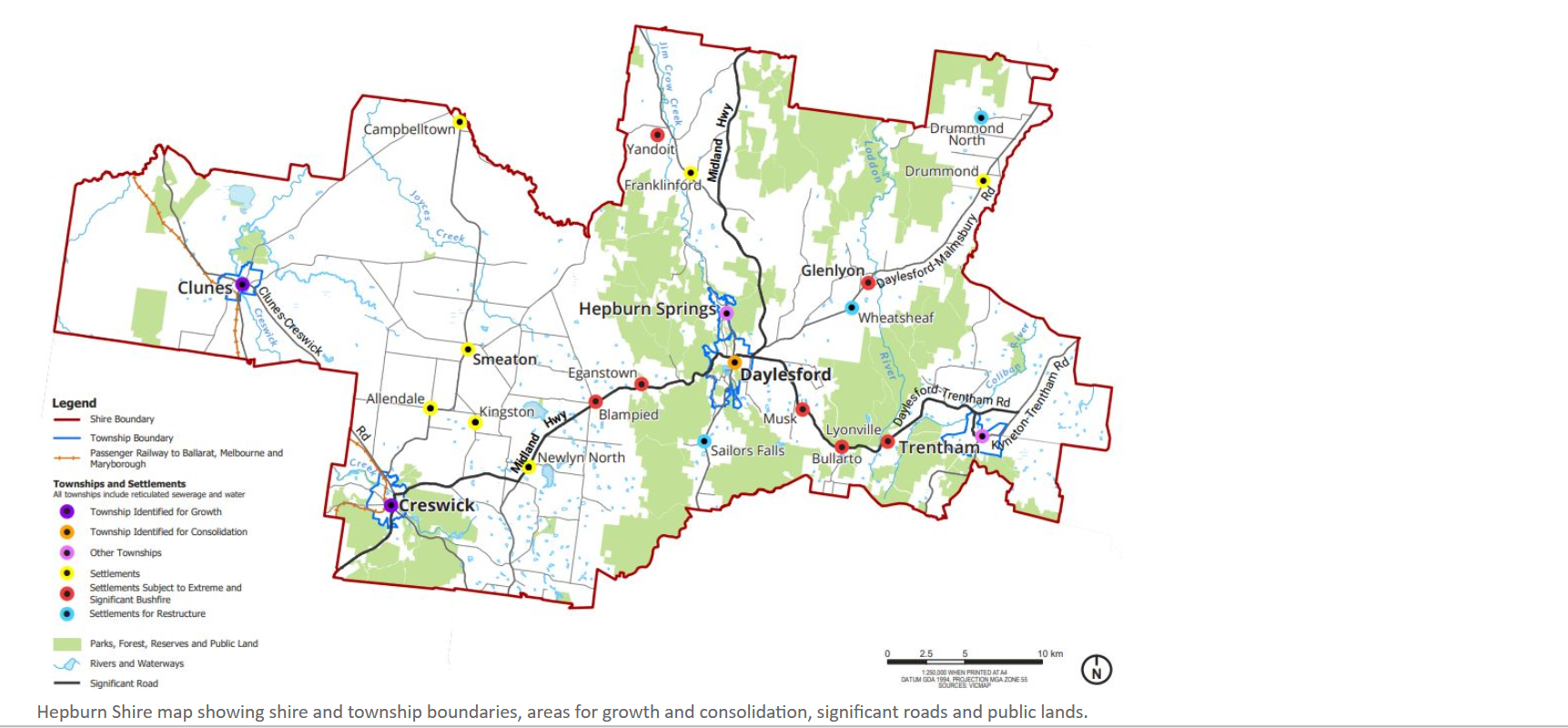
The Victorian Electoral Commission (VEC) is reminding voters in Hepburn Shire Council that they have until 6 pm on Friday 25 October to vote in the Hepburn Shire Council election.
‘You need to post your completed ballot pack before 6 pm on Friday 25 October, noting local clearance times may vary,’ Electoral Commissioner Sven Bluemmel said.
‘You can also drop your ballot pack off at the election office located at 79A Raglan Street, Daylesford before 6 pm on Friday 25 October.’
Any voter who still hasn’t received their ballot pack by Tuesday 15 October should go to vec.vic.gov.au to complete an online replacement ballot pack form.
Extended hours for voters to hand deliver their completed ballot pack apply from 9 am to 8 pm on Thursday 24 October and 9 am to 6 pm on Friday 25 October.
Voting is compulsory for voters who were on the state or council roll for this election at 4 pm on Wednesday 7 August. Enrolled voters who don’t vote may be fined.

October 19th, 2024Medieval to metal: new guitar exhibition strikes a chord

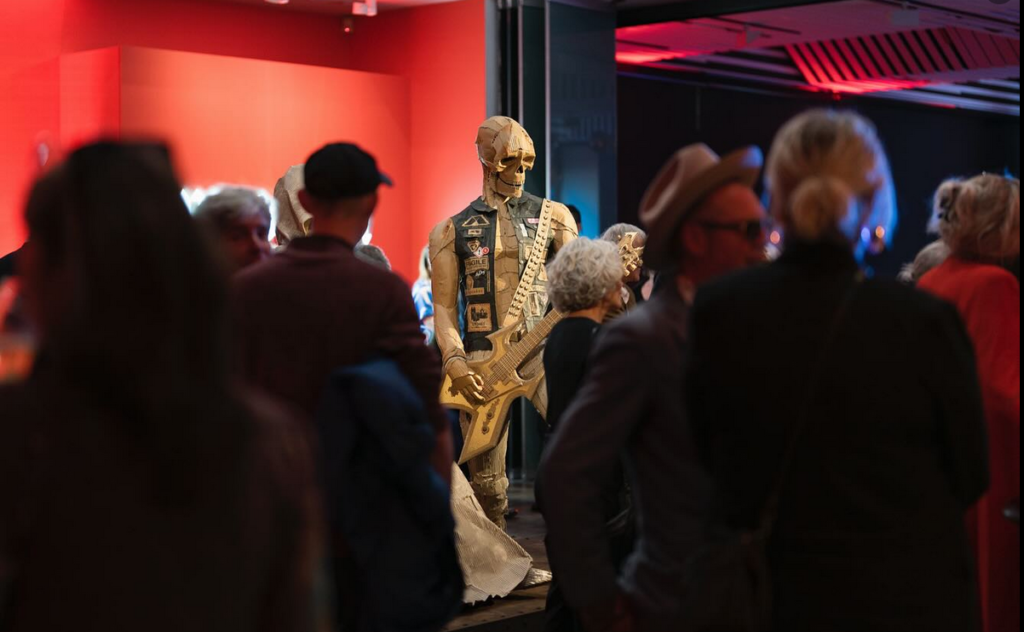
Exclusive to the Art Gallery of Ballarat, Medieval to Metal features more than 300 works, including 40 iconic guitars on loan from the National GUITAR Museum (USA) alongside an awe-inspiring assemblage of photographs, paintings, drawings, illustrative designs, and objects.
The new exhibition really appears to have been striking a chord with art and music lovers alike since it opened in recent days – and will now run through to February 2.
From medieval beginnings through to the guitar’s pivotal role in pop culture, the exhibition includes a collection of music-inspired masterpieces from Australian institutions and newly acquired works in the Art Gallery of Ballarat collection, representing almost two centuries of music symbolism in culture and art.
One for guitar nuts and musos as well as art lovers of all ages, Medieval to Metal: The Art & Evolution of the Guitar features photographs, paintings, drawings, illustrative designs, and objects
from the gallery’s collection alongside the iconic guitars.
The exhibition tracks the instrument’s medieval beginnings as ouds and lutes, to its current role in
society, with guitar makers and luthiers using different shapes, materials, accessories, and designs over time.

October 19th, 2024Haystack fire risk comes early: CFA

With hay season arriving early in western Victoria and parts of the state facing an increased fire risk this spring, CFA is urging farmers to take extra care to prevent haystack fires.
Between June 30, 2023, and July 1, 2024, CFA responded to 121 haystack fires in regional areas, with 66 per cent occurring in the west and northwest of the state.
Haystack fires are often caused by spontaneous combustion when hay is baled with excess moisture. High moisture levels, combined with the compact nature of hay bales, can create internal heat, leading to ignition.
Daniel Mibus, 1st Lieutenant of the Green Lake Fire Brigade and a farmer near Horsham, emphasised the risks associated with the early hay season and dry conditions.
“Compared to the last two years, because it has been so dry, hay season has started more than a month earlier, with bailing already having begun in some parts of the west,” Daniel said.
“Although haystack fires can occur in both wet and dry conditions, the drier conditions this year could make them more destructive if they spread.”
Daniel advised that the timing of hay baling is key to reducing the risk of spontaneous combustion and one of the best safety measures you can take.
“If you’re baling too early in the day when it’s dewy, or after it’s just rained, there could be too much moisture in the bales, which may lead to problems later,” Daniel said.
“Keep an eye on your stacks. If something smells off, check it out. Conditions within the bales can change quickly, so if you’re unsure, check them every day.
“Investing in a temperature probe to monitor the haystack’s condition is a great starting point, which could ultimately prevent your haystack from burning down.”
CFA Chief Officer Jason Heffernan reinforced that early preparation and proper storage are essential in reducing the risk of haystack fires.
“With over 120 haystack fires in the past year, the impact on farmers and their livelihoods is clear,” Jason said.
“Haystack fires can have far-reaching effects beyond individual properties, impacting neighbouring farms and emergency services.
“Make sure you store your hay in separate stacks or in sheds away from farm equipment and other buildings to prevent the spread of fire.
“Farmers need to ensure they’re well-prepared – regular monitoring can prevent a small issue from becoming a much larger one.”
For more information, visit CFA’s website or contact your local CFA brigade for advice on haystack safety.
Words & Image: Courtesy CFA
October 18th, 2024Study tour for winning GRDC award
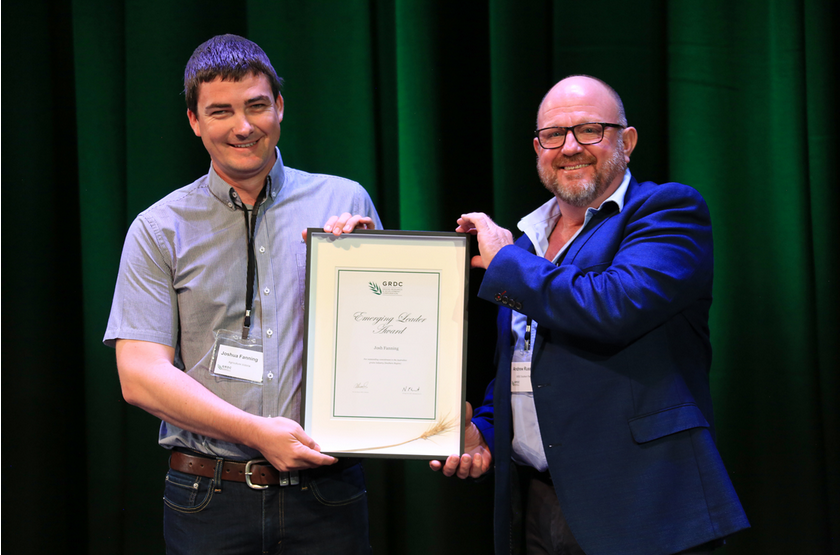
For Agriculture Victoria Plant Pathologist Dr Joshua Fanning, winning the 2023 Grains Research and Development Corporations (GRDC) ‘Emerging Leader Award’ was honour enough, but it was the icing on the cake to travel to America and Canada to tour leading research institutes and cropping regions.
Dr Fanning travelled to Canada and then USA in July this year visiting renowned research centres such as University of Saskatchewan and the Western Applied Research Corporation (WARC), then on to America visiting Montana and Washington State universities.
‘Many of these institutions are leading research organisations on pulse and legume pathology, with several pathologists focusing on similar diseases to Australia.
‘There were many key learnings from my tour, but highlights include having the understanding of key methodologies for disease control utilised in other parts of the world.
‘One key benefit for Australia is the longer growing season as we don’t have to be as reactive with disease control, when compared to North America,’ Dr Fanning said.
‘However, in many respects due to the longer growing season we need to ensure disease control is done well as we can have many more lifecycles of a pathogen in the season compared to North America.
‘Soil borne diseases including Fusarium and Aphanomyces root rots were the main constraints to their pulse production. There is some genetic resistance to these diseases, but it’s difficult to find and breed for.’
Dr Fanning said crop rotations were not controlling many of these soil-borne diseases. This was a key learning and highlights Australia’s need to get on top of these diseases early to prevent them becoming a major constraint to crop yield like in North America.
‘Many foliar fungicides were not effective due to fungicide resistance. This is a threat to Australian production that we are observing in cereals, but not yet in pulses.’
Words & Image: Agriculture Victoria
October 18th, 2024Warning on H5N1 bird flu strain

Do not be complacent. That’s the main message to Australians as the latest strain of bird flu virus is rated as representing a genuine health risk to people as well as to birds and other animals.
As Australia prepares for the forecast arrival on its shores of the H5N1 strain of avian influenza, the federal government says it will spend $95 million to help counter the threat.
The bird flu strain has reduced egg production, caused sudden death among wild birds and some mammal species in other countries and has also caused respiratory illness.
The H5N1 strain of avian influenza is different to the strain that led to egg shortages in Australian supermarkets earlier this year and, while Australia is the only continent without H5N, chief medical officer Paul Kelly is warning that it’s only a matter of time.
Director of the Biodiversity Council, James Trezise says the most pressing impact was on birds and mammals, but the flu does also pose “genuine risks to people”.
Mr Trezise says the strain of bird flu could be an extinction level event for a number of Australian wildlife.
“We’ve seen it basically collapse bird and mammal populations overseas,” he says.
“What’s really important is that people follow the guidelines around that have been developed by Wildlife Health Australia about what to do if they encounter dead or large numbers of dead birds that might be impacted by avian influenza,” Mr Trezise says.
“It’s really, really important that we don’t take it for granted, that it’s just isolated to birds, but we follow the guidelines to make sure that people don’t inadvertently contract or spread H5N1.”
October 18th, 2024Clunes booktown on Sunday returns

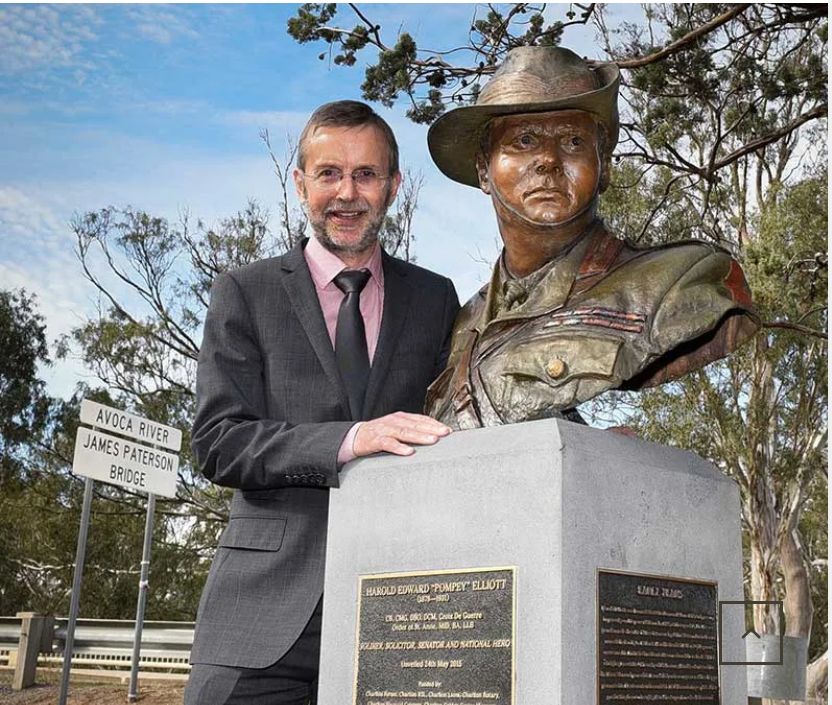
Coming up November 10, Clunes’ Booktown on Sunday series will feature Ross McMullin, author of “Life So Full of Promise: Further Biographies of Australia’s Lost Generation”.
Ross McMullin (pictured above) is an award-winning historian, biographer and storyteller.
His latest book, Life So Full of Promise, has been awarded The Age Book of the Year Award. It’s his second multi-biography about Australia’s lost generation of World War I, following Farewell Dear People, which was awarded the Prime Minister’s Prize for Australian History and the National Cultural Award.
McMullin’s free guest talk is part of the ongoing Clunes Booktown on Sunday series that Creative Clunes is hosting on the second Sunday each month, to tie in with the town’s Farmers and Makers Market.
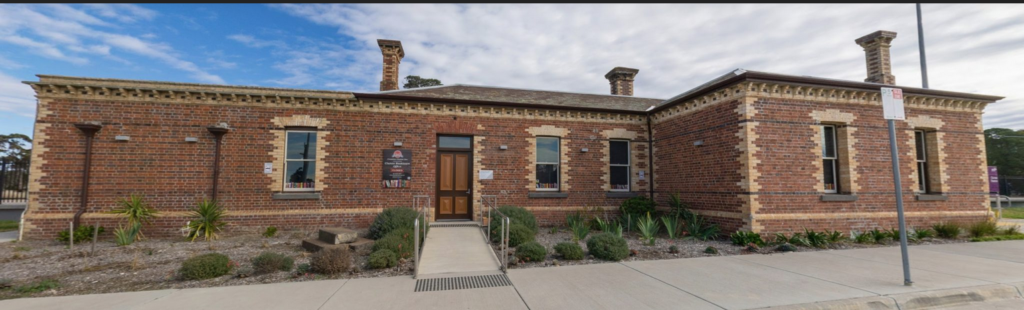
The series features guest author talks held in Creative Clunes’ historic home at the Clunes Railway Station (pictured above).
McMullin’s book features a rich cast of interwoven stories set in WWI era including a talented barrister whose outstanding leadership enabled a momentous victory in France, an eminent newspaper editor who kept his community informed about the war while his sons were in the trenches and an energetic soldiers’ mother who became a political activist and a Red Cross dynamo.
There’s also an admired farmer whose unit was rushed to the rescue in the climax of the conflict; the close sisters from Melbourne who found their lives transformed, a popular doctor who was more fervently mourned than any other Australian casualty, and a bohemian Scandinavian blonde who disrupted one of Sydney’s best-known families.
Clunes Booktown on Sunday with special guest Ross McMullin will take place at 1.30pm at the Clunes Railways Station building rooms with more information and bookings to the free event available through the Creative Clunes website.
October 18th, 2024Important results from crop rotation study

Agriculture Victoria’s long-term cropping research in the Victorian Mallee is unearthing important results which could impact agricultural land management in the region.
Agriculture Victoria Senior Research Scientist Professor Roger Armstrong said the research trial ‘MC14’, established at Walpeup in 1985, looks at the impact of different types of crop management on soil Carbon (C) and Nitrogen (N) stocks.
Professor Armstrong said the research has been testing 3 different crop rotation treatments – legume/wheat, legume/fallow/wheat and fallow/wheat, using either mechanical cultivation or direct drilling stubble management practices.
‘The standout treatment was the legume/fallow/wheat in terms of the significant productivity benefits of additional moisture and nitrogen added to the subsequent crop,’ he said.
‘However, this needs to be balanced with the finding of nitrate leaching, as well as a reduction in the accumulation of soil carbon compared to the other continuous rotations.’
Professor Armstrong said in the early years of the trial, the legume in the rotation was medic, a low-growing clover-like annual, but it’s now vetch, in keeping with modern farming practices.
‘Cropping farmers know that adding a legume into the rotation increases N in the soil.
‘When an annual legume phase is included in the rotation, we have recorded not only good grain yield responses but also large amounts of soil nitrate, a valuable commodity in low rainfall Mallee cropping zone,’ he said.
‘Most notably the amount of soil nitrate is greater in the crop rotations that exclude a fallow period.’
Professor Armstrong said the legume/wheat treatment has increased N in the soil by 21% compared to the legume/fallow/wheat treatment, which recorded 15% more N in the soil.
‘Another critical observation from the long-term trial is that fallowing (as opposed to maintaining continuous plant cover) resulted in a decline in soil carbon.’
He said the results suggest that whereas fallowing can produce short term benefits to productivity in terms of soil water and mineral N accumulation, it comes at the expense of a critical soil resource – organic carbon.
The study also highlights the value of trials such as MC14 in assessing the impact of different management practices on long-term productivity and agricultural sustainability.
Professor Armstrong said adopting a direct drilling approach can help minimise the reduction in soil carbon, but it will not completely stop its decline.
October 17th, 2024CFA’s Planned Burn Taskforce in focus

Comprised of more than 700 volunteers from brigades across the state, the CFA’s Planned Burn Taskforce (PBTF) is a “critical initiative to reduce the severity of bushfire, and protect lives, properties and the environment”, the CFA says.
Taskforce members have a variety of skills sets. Some have extensive burning experience and years of membership under their belts; others are newer CFA members who have recently completed their General Firefighter training.
At its core, the taskforce’s efforts aim to reduce fuel loads. However, the proactive, coordinated approach to the burns not only helps safeguard communities, but also preserves natural habitats and biodiversity, promoting rejuvenation and resilience.
Members interested in joining the PBTF must complete General Firefighter, Entrapment Drill and Tree Hazard Awareness and have their captain’s approval. For more information visit Members Online.
Rowville brigade firefighter Michelle Tie said being a member of the PBTF gave her the opportunity to be active across wider sections of the community.
A CFA member for five years and in the Planned Burn Taskforce for three, Michelle saw joining the group as an opportunity to get hands-on experience with fire after completing her General Firefighter training.
“I hadn’t done any planned burning prior to joining the taskforce. It’s a fantastic way to learn and build experience, and I have learned so much ‘on the job’.”
Michelle said she was initially nervous attending her first burn with the taskforce because she was the only member from her brigade, but she found the group to be incredibly supportive.
“By stepping outside of my comfort zone, I have learned so much about fire behaviour especially across different environments which are often very different to the usual callouts we get at Rowville,” Michelle said.
“I came away from that first burn a much more confident firefighter.
“I love working with different brigades and members from across the state – the camaraderie makes me incredibly proud to be a part of CFA.”
Michelle believes that the success of the PBTF lies in its ability to support brigades to achieve local and state goals.
“It’s so vital that brigades have access to the support, skills and experience of the wider CFA community to manage their fire risk,” she said.
“At the end of the day, this makes Victoria safer for everyone.”
With 21 years of membership under his belt, a change in career gave Bulla Captain Elvis Crook more flexibility in his availability so he put himself forward for the PBTF.
“I’ve participated in a number of planned burns over the years. I thought the taskforce would be a good opportunity to network with members from across the state as well as keep my fireground skills sharp,” he said.
“There is no better means of observing fire behaviour in a controlled environment which ultimately benefits your skills throughout an active fire season.
“An added benefit of having such a broad group of members together from across the state is being able to informally share information and ideas.”
Elvis said that without the taskforce many critical burns wouldn’t go ahead as regularly.
“I remember a burn earlier in the year where I was on a local truck with the brigade captain. The rest of the crew was from the PBTF.
“He was very thankful that we were there to crew the truck as the burn we were doing would help protect his land and that of other community members.”
Elvis says that if you are thinking of joining the taskforce – do it!
“The thing I enjoy the most is the camaraderie. The taskforce is like a family; I have made connections with other members who I now call friends.
“Attending a burn is also training in itself. I’d highly recommend any newer members who have not had a lot of fireground experience or might be with a brigade with low call numbers to join to build on their experience.
“I’ve been in the CFA a long time and haven’t immediately felt so at home like I do with this crew.”