March 26th, 2026Autumn mushrooms are here by Alison Pouliot

With their earthy scent and riot of colours, fungi signal the quiet arrival of autumn. They appear overnight on forest floors and garden beds – delicate mushrooms pushing through leaf litter after rain.
Many of us know them mainly as ingredients: sautéed in butter, folded into risottos, enriching the flavours of seasonal cooking. But there’s more! This visible flourish is only the smallest glimpse of a vast and vital kingdom. Beneath our feet, fungi underpin the living world.
What we notice above ground – the mushroom – is simply the sporing body, or the vessel that holds the spores. The actual fungus organism lies hidden below the surface.
There, fungi grow as intricate networks of microscopic threads called mycelia, spreading through soil like living lace. These filaments weave through organic matter, forming an underground scaffold that gives soil its structure and vitality.

Many fungi also form connections with a huge variety of plants known as mycorrhizal symbioses. In these subterranean alliances, fungi greatly extend a plant’s root systems far beyond its natural reach, helping it access water and nutrients. Fungi also improve the resilience and health of plants by increasing their drought tolerance and resistance to soil-borne disease.
In return, plants share a portion of the sugars they produce through photosynthesis – an elegant exchange of energy for resources. These symbiotic relationships are especially important in old and weathered, phosphorus-poor soils found in the Hepburn Shire, indeed throughout Australia.
In such nutrient-limited environments, mycorrhizal fungi become indispensable allies, enabling plants to survive and flourish where they otherwise might struggle.
But the story does not end with individual plants. Mycorrhizal networks extend relationships through the soil to other plants, facilitating nutrient transfer between them and uniting plant communities, promoting their growth and survival.

Fungi are also nature’s master recyclers. As organic matter falls to the ground – leaves, bark, branches, fallen trees – it begins a slow transformation back into soil. Fungi drive much of this process. By releasing powerful enzymes, they break down complex carbon compounds that most other organisms cannot digest.
While bacteria and invertebrates contribute to decomposition, fungi have a unique talent: they can degrade lignin, the tough compound that gives wood its strength. Every fallen leaf and twig is therefore part of a cycle of renewal. Healthy soils – and thriving gardens – depend on this invisible workforce.
Gardeners can support fungi by leaving organic matter in place – fallen leaves, sticks, bark, and limbs – creating a mosaic of habitats where fungi can thrive. Diversity matters: different species, ages, and sizes provide niches for different fungus species.

Equally important is minimising disturbance. Reducing stresses to fungi through physical disturbance to soils such as digging, compaction, over-watering, inappropriate use of fire, fertilisers or chemicals will allow fungi to reach their full potential in supporting your garden.
When fungi flourish, gardens do too. Beneath every vibrant landscape lies an intricate living network – an unseen fungal world supporting life from below.
Alison Pouliot is an ecologist and environmental photographer who runs fungus forays in Australia and internationally. She is the author of six books on fungi and her latest is Mushroom Day. Link: www.alisonpouliot.com.
Images, from top, author and ecologist Alison Pouliot (© Valérie Chételat)
Cortinarius austrovenetus: The stunning Green Skinhead (Cortinarius austrovenetus) grows throughout Hepburn Shire. (© Alison Pouliot)
Mycelium: Mycelia provide architecture in soils, underpinning their health and resilience. (© Alison Pouliot)
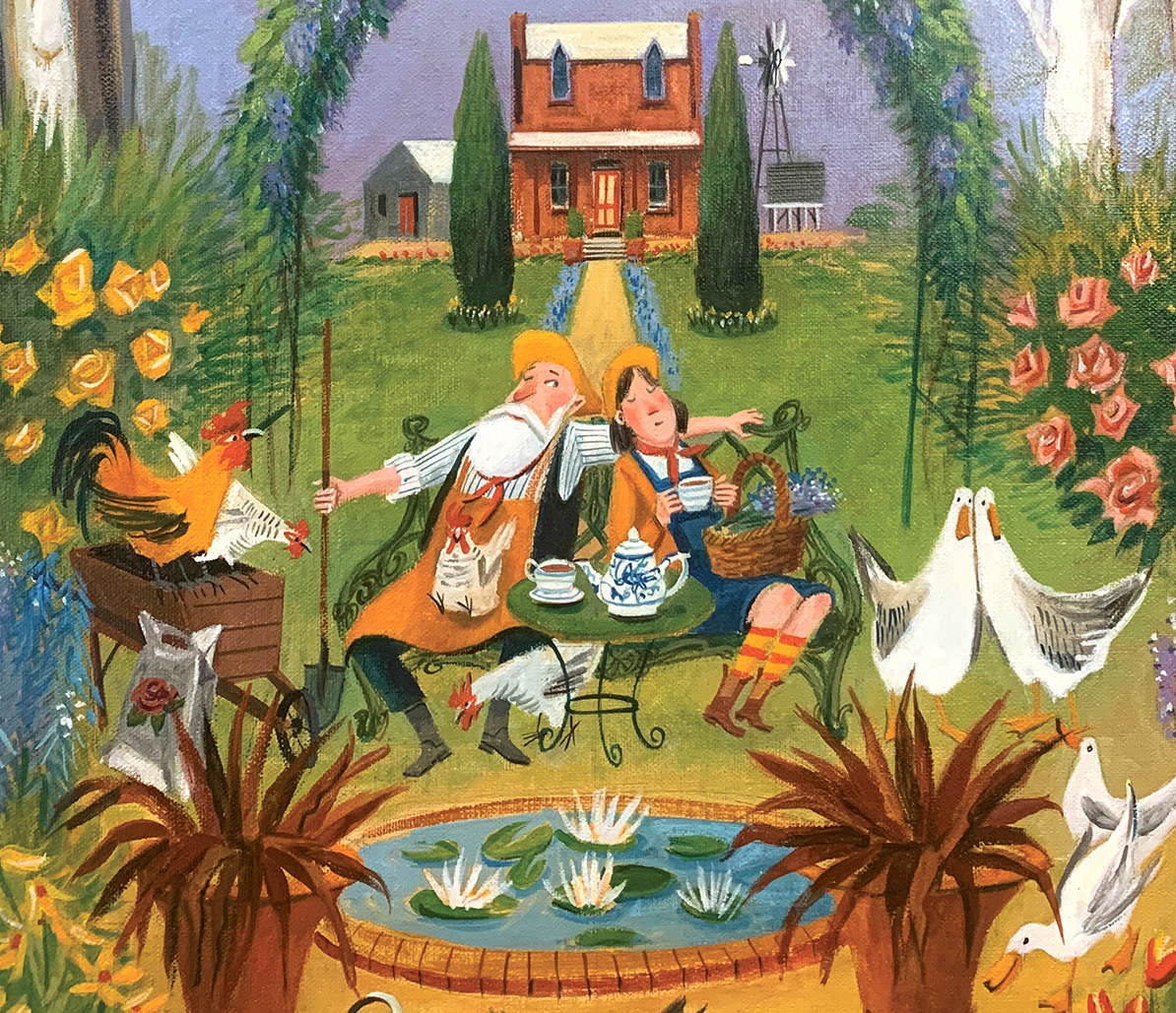
Below, Mushroom Day by Alison Pouliot