June 2nd, 2026Colour Me Happy

Colour dominates the life of the phenomenal Prue Acton. Her eyes sparkle when she talks about it.

From the age of 15 she learnt life drawing for four years, yet nothing about colour, before becoming the golden girl of Australian fashion.
“Colours are my alert system,” she says. “Not sound, vocal, or feel. Just colour.”
We last talked for a book a mere 42 years ago. Then she was almost full to overflowing with a passion for philosophy, politics, psychology and a love of surfing. That, plus a warmth for Japan and its food (which includes eating raw chicken). “She’ll eat anything!” said the locals.
Just as her zeal continues, so does her crown of curls.
Her early success was nothing short of astonishing. At 22, Prue was producing more than 350 designs a year, selling an average of 1000 dresses a week. By 1982 her worldwide sales were estimated at $11 million a year. The first Australian woman designer to show her range in New York, she sold 5000 frocks on Fifth Avenue in just a few months.
Her background reflects her drive. Her grandfather had seven sheep properties. Her grandmother had eight children, four of them orphans of relatives. Prue’s mother was a partner with her husband in self-service stores and supermarkets.
Prue won a media-bestowed unofficial gold medal at the Montreal Olympics (for uniform design). At the Los Angeles Olympics, the roar of applause from the crowd as the Australian team entered in bright yellow uniforms and Driza-bone hats stays with her. “It was the biggest day of my life.” This earned her another first prize.
Elevated to the Fashion Industry Hall of Fame, she was awarded an OBE in 1982 and honoured on a commemorative postage stamp in 2005.
She stepped away from designing in the late ’80s, saying there was more to life than making money.
“I was trying to save the Earth.” She campaigned to save native trees and chuckles as she remembers family land being sold to a timber company on the pragmatic basis that someone else would have done so anyway.
Prue vividly remembers leading artist Clifton Pugh returning from the Outback to show her the red-gold earth and green-blue foliage. These colours led her back to painting and being taught by Pugh, later accompanying him on 16-day Outback painting tours.
When we meet, she has been working for three days on a large work (“Eighty-four by eighty-four”). “By Monday I was buggered,” she candidly says. “I need absolute quiet, every ounce of concentration. Quietude.”
Her development as an artist was helped by other outstanding painters, all now deceased, including Andrew Sibley, Charles Blackman and Brett Whiteley. She tells of Whiteley’s wine-coloured Sydney studio and a conversation with him that revealed “his incredible brain. And unbelievable intelligence.”
She has exhibited at Pugh’s gallery and across Australia. Paintings are on the floor of her home, on a table and many walls: reclining figures, geometric figures, landscapes and still lifes. Two of her especially powerful works, often thought to be surreal, show the sky near Canberra after bushfires.
For 30 years Prue ran workshops with her partner, the late Mervyn Moriarty, an outstanding painter and legendary figure in Queensland art, famous for founding the Flying Art School, now the Flying Art Alliance. They met when he took over outback painting tours and Prue had decided to leave business for painting.
In 1976 Moriarty used prize money from an arts award to learn to fly so he could teach art in the outback. Some of his award-winning works are on her walls.
Through him, artists, educators and communities gained so much exposure to contemporary art, says Prue, that Queensland’s rural art standards are, for example, greater than those of New South Wales.
Her passion for the arts is clear as her arms go wide in anger at the destruction of the central state arts body, Creative Victoria, which suddenly cut funds for eight successful arts organisations, with seven others being given a chance to reapply. A total of $20 million has been cut from its budget since 2022. “There is no money!”
Prue, who turned 83 last month, moved to Daylesford from Tatura in the Goulburn Valley at the start of Covid, buying her house unseen on-line. She says she has always been a country girl, spending most weekends out of Melbourne.
Of all her homes she says she is a “regenerist” in that she allows her gardens to return to nature. One was 147 acres, the current one is a quarter acre. As we talk, there are tiny birds just an arm’s length away. It’s all about the amazing Central Highland’s volcanic soil.
We return to colour. She has long thought about it and developed a theory. During her next touring exhibition, called The Colour of Nature, she will talk on “Why Colours Matter”.
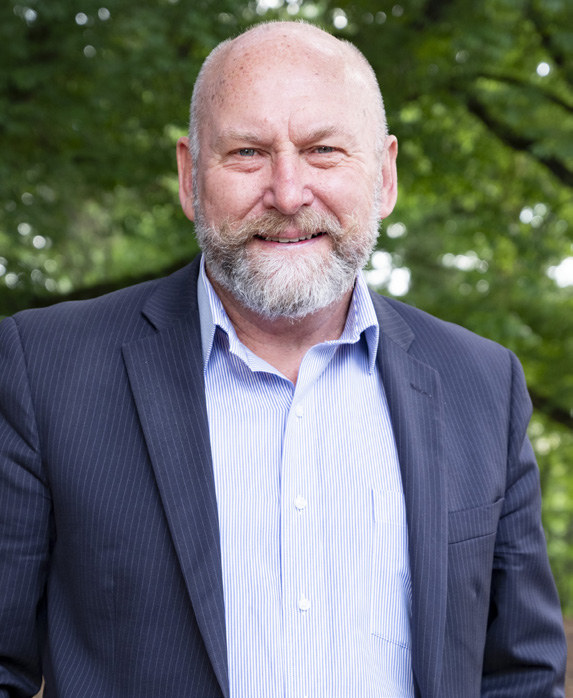
Words: Kevin Childs | Image: Richard Cornish