June 14th, 2026Historian Professor Keir Reeves awarded OAM

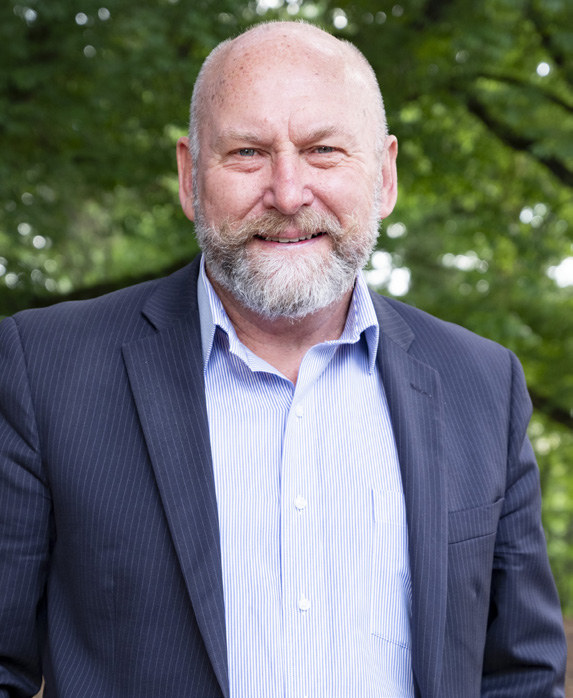
Professor Keir Reeves has spent the past decade working across the goldfields corridor of Ballarat, Creswick, Daylesford and Clunes – a stretch he describes as “a remarkable part of the country” – building upon an impressive career in higher education, history and preserving community identity.
The historian, and director of Federation University’s Future Regions Research Centre, has centred his work on how regional communities engage with history, while also advocating for broader access to higher education.
That work has been recognised with a Medal of the Order of Australia (OAM) in the 2026 King’s Birthday honours for his service to regional higher education.
Growing up in Castlemaine after moving from Melbourne in the mid-1980s, Professor Reeves delivered the morning newspapers and played local footy – an upbringing that grounded him in regional life and sparked an early fascination with the goldfields’ layered past.
“I grew up around people who were passionate about history. I loved the old buildings and the many wonderful stories of the goldfields personalities,” he said.
That early interest developed into formal study in history, heritage and economics and later into an academic career that wasn’t initially planned. His first role was tutoring at the University of Melbourne – an experience that, at the time, seemed far from the start of a profession.
“I never really imagined becoming an academic or a professor. I thought if I could just run a good tutorial, that would be enough.”
His career later included roles at the University of Melbourne and Monash University, as well as research fellowships in the United Kingdom, Japan and Europe. He has also worked internationally in tourism studies and historical interpretation, including projects in England, Belgium, Vanuatu, Turkiye and Fiji.
Returning to regional Victoria, and now living in Smeaton, became the turning point that has defined the focus and impact of his career.
“I’ve spent the past decade here at Federation, working on projects across the Ballarat, Horsham, Ararat campuses and the broader goldfields region. For me this award is not only a personal recognition but also reflects the support I have received from my students, colleagues as well as members of cultural and community organisations throughout my career,” he said.
His work explores how communities engage with history and heritage to shape identity, tourism and local development, alongside the vital role of universities in regional areas.
He maintains a strong focus on widening participation in higher education, particularly for students from regional and non-traditional backgrounds, reflecting a long-held belief that education should open doors rather than close them.
“I’ve always been interested in how people get on their journey and I’m inspired by people from the country pursuing higher education – it still drives what I do. What excites me is seeing people who might not have gone to university being able to start that journey locally and succeed,” Professor Reeves said.
“Like many I’m drawn to those experiences – the people who didn’t necessarily have the easiest run at education but found a way through,” he said.
At Federation, that commitment has translated into supervision of more than 20 PhD completions, many involving students who are the first in their families to enter higher education or who have taken non-linear pathways into academia.
Professor Reeves describes that aspect of his work – supervising and mentoring postgraduate researchers – as among the most rewarding of his career.
“In part this recognition also belongs to them. It’s a privilege to support their work and to see where they go with their careers.”
Beyond the university, Professor Reeves has been active in historical societies, festivals and heritage initiatives across regional Victoria, working to connect academic research with community outcomes.
He played a key role in convening the Australian Historical Association conference in Ballarat – the only time the national body met there – and has supported a range of regional cultural and heritage as well as economic development projects.
Professor Reeves said the role Federation played in its regional communities – expanding opportunities and strengthening communities through education – was central to his work and reflects the enduring value of the humanities and social sciences in helping people understand both their past and their place in the world.
“This honour, for me, reflects the regional higher education story and what it can make possible for people and communities,” he said.
“I’ve been fortunate to do this work in the goldfields, which is such a special place. It has shaped my research, my teaching and my sense of purpose – and it’s a reminder that that place still matters in both history and education.”
Words & image: Federation University