

February 3rd, 2024Artists of the Central Highlands

With Eve Lamb
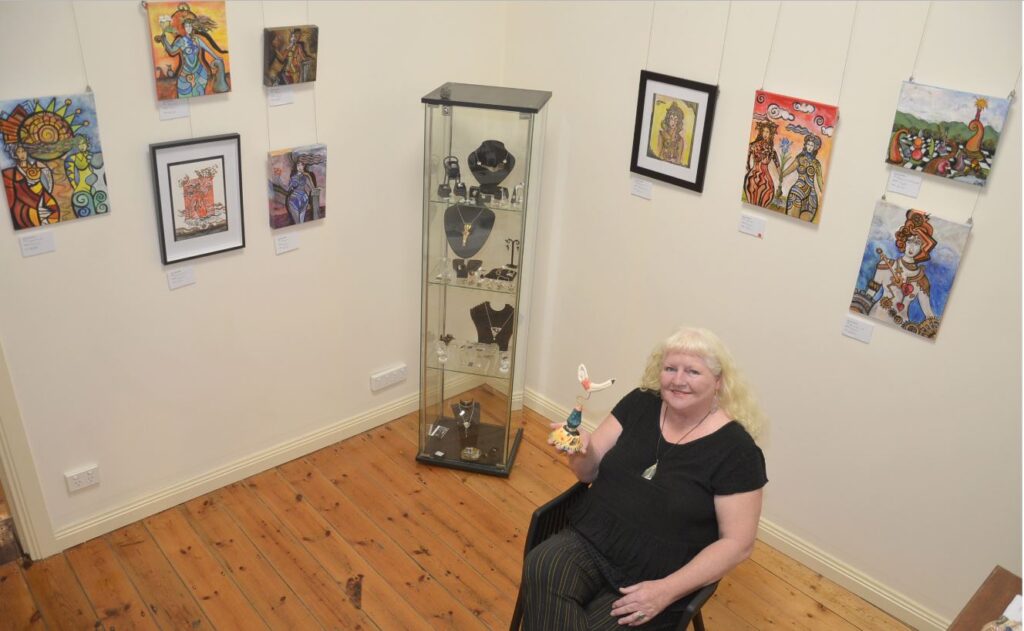
The artistic oeuvre of Newstead-based Carol de Graauw is impressively diverse. Jeweller, silversmith, ceramicist, sculptor, this mutli-talented local designs and creates jewellery using gold, silver, bronze, cloisonne enameling and resin. She is just as at home, however, working with clay to create functional and decorative pieces. De Graauw has described creativity as “an escape pad” that “engages the heart, mind, soul and body in the act of making unique pieces”.
Eve: G’day Carol you are clearly a woman of many talents. Can you tell us a bit about the various different genre and media that are part of your arts practice?
Carol: My main love is silversmithing but I also do painting and ceramics. I also do enamel work and I do work in resin as well – the colours are just gorgeous. Enameling is such an intricate artwork and requires more patience than usual.
Eve: Where is your home studio?
Carol: My home studio is in Newstead, and I’m part of the MANet Art Focus Maldon Artist Network gallery at 27 Main Street in Maldon. I’ve just had my Balance solo exhibition here but some of my work will stay in the gallery. This little gallery has been here in Maldon for 12 months now and we’ve got a strong following.
Eve: What is it about silversmithing that makes it your main focus?
Carol: I love making wearable art. That’s how I see the jewelry that I make. Oftentimes people will have it as a sentimental keepsake. I was always fascinated by the 3D aspect of it. I love manipulating the metal, and I really like working with stone too, natural gemstones. I think gemstones are so beautiful. That’s a passion. I traveled to Sri Lanka last year and they have beautiful stones over there which I have been able to incorporate in my new collection of silversmithing work.
Eve: How did you come to art?
Carol: I’ve always had an interest in art. Mum was also an artist and there was always a strong emphasis on creativity. It was my favourite thing at school and then I went to art school as an adult for two years in Adelaide and three years in Melbourne. The course I did was with the Chisholm Institute at Frankston at that time. It was a Bachelor of Arts/Crafts and it incorporated ceramics, stained glass, silversmithing, painting and drawing. It was a fantastic course and in my third year I specialised in silversmithing.
Eve: What factors influence or inspire your work Carol?
Carol: I love Egyptian art and most forms of architecture, particularly 1920s art and architecture, art deco. I’ve been fortunate enough to have travelled extensively when I was younger, through Turkey and Europe and Egypt so I got to see so many great architectural works and art and it enriched my life and work.
Eve: Have you been able to make a living through your own creative practice, Carol, or have you had to work in any other areas as well?
Carol: I was a secondary school teacher for 28 years. I taught art and design, ceramics, metalwork and textiles at Castlemaine Secondary College and before that in the Dandenong Ranges where I lived for a lot of my life as well. I’ve been in this area for 20 years now, six years at Newstead, and I built my studio at home about three years ago.
Eve: Do you have any special events or exhibitions coming up?
Carol: Yes. I will be part of the Open Studios in Newstead in March over the long Labour Day weekend and also the following weekend of March 16 and 17. Newstead has its own arts trail. Castlemaine has open studios at the same time. There are about 15 participating studios in Newstead and more artists involved than that. My studio will be open and I will also have two guest artists exhibiting with me. It’s an amazing event.
Eve: What do you enjoy most about your working life as an artist, Carol?
Carol: That I step into my studio and the day seems full of possibility. I just get excited about all the different things I can do. It’s my meditation.

December 23rd, 2023Artists of the Central Highlands

with Eve lamb
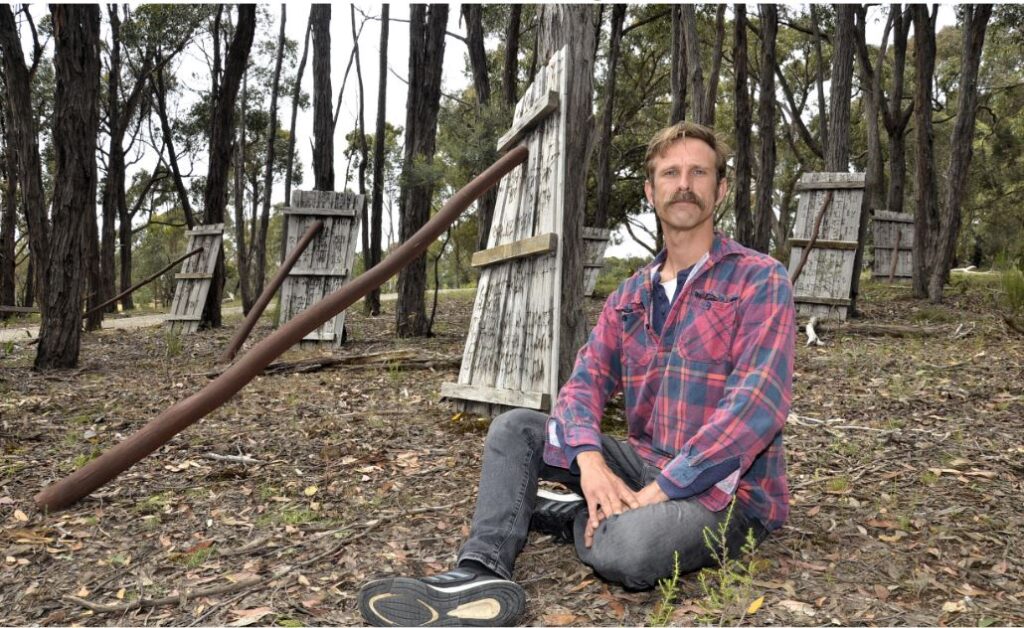
From his childhood in rural America, Ryan Kennedy (aka RFK) moved to New York City and worked in the fashion industry including textile design and runway installation. From there he pursued his own creative studio practice in Brooklyn and in 2009 hosted a tour group of Australian art educators, curators and collectors which led to him accepting an Artist in Residency at Melbourne Girls Grammar and a solo show at Forty Five Downstairs. Since his 2014 immigration to Australia RFK’s work in performance, installation and sculpture have won accolades including the 2018 Lorne Sculpture Biennale Land Art Sculpture-scape Award. Currently RFK is deeply ensconced in the Glenlyon landscape, where he resides and where his creativity continues to enrich the wider community and to inspire communal thought ‘outside the square’.
Eve: Hi RFK, Is that an American accent I detect?
RFK: It is. Yeh. I was born in Virginia on the East Coast. It’s known to be for lovers, Virginia. Where I grew up we had the Appalachian in the backdrop.
Eve: So how long have you been here, in Australia?
RFK: In Australia permanently, at least ten years now.
Eve: And what brought you here?
RFK: Work brought me here and love kept me here.
Eve: Did you meet an Aussie?
RFK: I did. Yeh (laughs).
Eve: That’s great.
RFK: Yeh. I initially came over as I’d been living in Brooklyn at the time and I had a tour group of Australians from the art world come through my art studio and the head of art at Melbourne Girls Grammar offered a month long residency.
Eve: So what is your area of work exactly?
RFK: I mostly work in performance, sculpture and installation. I call it PSI and the ratio of those three elements varies with the work itself. I mainly work these days by commissions and I take my time with the works. The last work was about three years in development.
Eve: And the genre?
RFK: I’d say I’m in the avant-garde. I like to really work with relationships whether that’s between ourselves and our history or the landscapes. They’re very site-specific these works. For instance, with the last piece I was asked to do a piece that celebrated the creators of the Great Ocean Road so I went down to the Great Ocean Road, began research….
Eve: Was that part of the Lorne Foreshore Sculpture Show?
RFK: Yes.
Eve: So can I ask you a little bit about what you’d rate as some of your career highlights as an artist?
RFK: The Lorne Sculpture Show was definitely a big one for me. I’ve worked with White Night, in Melbourne, which was a lot of fun and then I’d say my residencies, whether they’re at schools or libraries. I really enjoy engaging with youth as well as the general public.
Eve: What materials are you typically working with?
RFK: I almost always use found materials. I try my best not to buy them. I also came from fashion and was a bit disheartened by the amount of waste that was there. There is something really special about the stories that come with those materials. And no matter what subject matter I’m working with I do try to project a sense of a hopeful future.
Eve: Do you have a particular exhibition or show coming up that you are working towards at the moment?
RFK: Radical Fieldz. It’s an exhibition taking place in Glenlyon for myself and other artists, also involving several community groups. It uses a six-month timeline. It began in October and culminates on March 16 with our end of season harvest event.
Note: You can read more about the Radical Fieldz project that’s unfolding in Glenlyon in a separate article in The Local.
October 15th, 2023Artists of the Central Highlands

With Eve Lamb
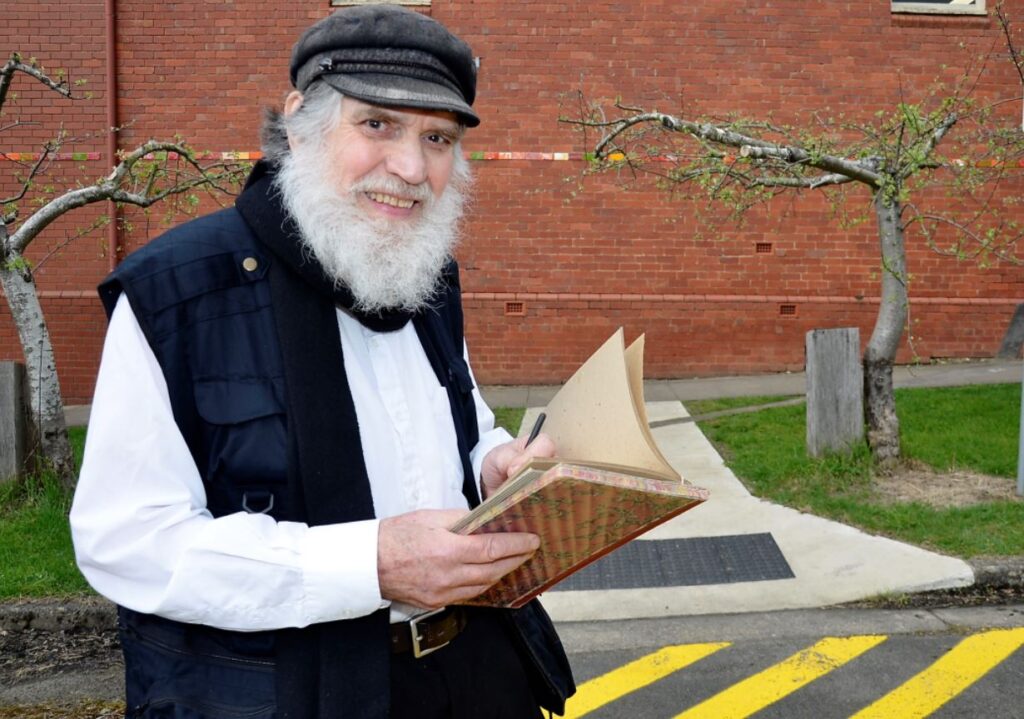
Long established artist and observing Jew, Daylesford’s Bill Meyer (pictured above) can name a multitude of diverse career highlights. They range from a painting commission for the Werdiger family, and their patronage over many years to having works included in the Hirsh collection and incorporated in multiple public collections. Further highlights include a touring exhibition of prints and drawings called Gapscape which, in the eighties, was showing in 26 state, regional and national galleries nation-wide. Today, while now in his 80s, this gifted local remains busy with digital arts and music.
Eve: How would you describe your style Bill? Does it fit a particular genre?
Bill: Art writers have described my work variously as related to German Expressionism, to lyrical abstract expressionism, to heavy metal girders rather than petit-point… I prefer to think of my visual work as landscape-in-metaphor.
Eve: How did you come to Art?
Bill: There was never any real alternative…I attended night classes in life drawing for several years until graduating from university when I was accepted as a full-time day student at the National Gallery Art School, which, by the time I graduated with a fine arts degree in painting and printmaking, had transformed into the VCA and nowadays is part of Melbourne University. Graduate studies in London followed and I spent the next decade in the Northern Hemisphere. Exhibitions lead to further development and encouragement from visiting artists to The Royal College and also curators and directors of the Institute of Contemporary Art where I exhibited, brashly, several times.
Eve: Where do you do most of your work? Where is your home?
Bill: I have lived and worked in Melbourne…also in London during the seventies. There have been multiple stays as a guest artist in Israel at the studios in Mishkenot Sha’ananim, Jerusalem, several years in America, again Australia as artist-in-residence at several university-attached art colleges and regional city galleries; rural accommodations for artist-in-schools projects, and now, for the past four decades mostly living and creating from my studio on the family property in the beautiful bushland of Hepburn Shire.
Eve: Which artists have influenced you?
Bill: The artist most valued by me would be Rembrandt for his philo-semitic intensity, his draftsmanship and composition, his use of light and shade, dramatically, aesthetically, and his tenaciousness towards creativity even under the worst of adverse times. My list of admired and influencing artists include the New York Greenbergian artists of the fifties through the seventies, including Morris Louis, Helen Frankenthaler, Rothko, Barnet Newman … also artists such as Modigliani, although I am not a figurative artist, I admire the poetry of his figuration, same for Klimt and the Viennese secessionists. Landscape influences include Turner, Caspar Friedrich David, and Hobbema.
In Australian influences I include Arthur Boyd, Fred Williams and my mentor with whom I learned so much about the philosophy and beauty of being an artist; Roger Kemp. The friendship extended to the entire Kemp family household. Victor Majzner, an artist friend to this day, has been part of both that world involving galleries, professional practice and education, and also the more spiritually focussed aspects of the Jewish art world. There are others…
Eve: Are there particular factors which have influenced your creative work?
Bill: Money was always an issue but somehow I have survived with the help of democratic governments, friends, family and patrons albeit that they complained often and frequently at length.. Networking and working on projects with other artists has been personally and creatively a great thing… In the past several decades, being located in the Central Highlands has given me a sense of much needed personal, spiritual and working space.The forests around Daylesford have contributed content and metaphor to my work.
Eve: What is your media of choice? Why so?
Bill: Printmaking as in fine art editions, initially as a conventionally analogue printmaker and more recently using digital technology. I also paint on canvas with either acrylic or oil, I draw, and have constructed multi-media installations with sound, light paper and natural organic materials. Recently, over the past decade, I have returned to musical composition, recording the finished works in digital formats.
Eve: What work, goals or projects do you have in mind for the future?
Bill: A large project on Trees in History, legend and Metaphor. Images, text and my dreadful poems. I’m also working on musical compositions which I had deferred for years whilst establishing as a professional visual artist. The music is very important to me.
Eve: What would you rate as the biggest challenge in being a professional artist today?
Bill: In some ways the challenges to professional artists today are similar to challenges to artists since the rise of mercantile civilisation from the Renaissance onwards. Money, creative head space and time, quiet creative time… The speed of life today however is destroying the creative head- space required for the truly competent and caring professional. We may ironically have to search out the scorned amateurs as in the C19th for a truly spiritual experience to be gleaned from the Fine Arts.
Eve: And for you, the greatest rewards?
Bill: The greatest rewards are that well- known ‘frisson,’ that delicious shivering when, in your soul, you know that something good has happened; a creation which has meaning…This is so rare but it is an affirmation that I am in the correct type of service and in the right place…
September 28th, 2023Artists of the Central Highlands

With Eve Lamb
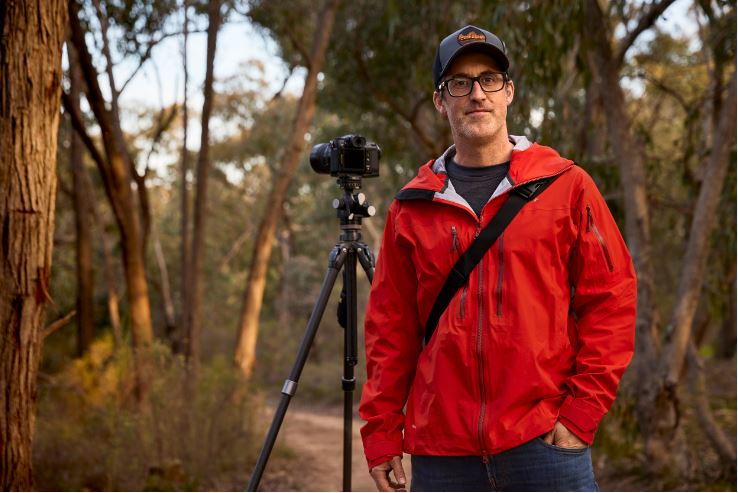
Renown for his photographic landscape studies and creation of gaze-grabbing images in the commercial realm, acclaimed Hepburn based photographer David Rosendale enjoys an ongoing love-affair with light and its transformative role in image-making. He currently has an exhibition taking place at Eastern Peake Winery Cellar Door, Coghills Creek as part of the wider Ballarat Foto Biennale happening now through to October 22.
Eve: Hi Dave. I’ll start by asking you how you initially found your way to becoming a pro photographer?
Dave: The first connection was in primary school in Melbourne. My parents had a bookshelf completely devoted to National Geographic magazines. I would sift through the photo essays and current affairs. I remember being amazed by the photography of the Volcano eruption of Mt St Helens and the Challenger Space shuttle in the early ‘80s. Capturing these epic moments in time. There were always incredible photographs and there were always these brilliant advertising campaigns by Canon, Nikon and Minolta in Nat Geo. I became fascinated by the potential of the camera and the medium itself. To be able to capture a moment. Fortuitously, opposite my primary school was a second-hand camera store, and in grade six I purchased my first camera, I think to take photos of all my mates as we were graduating and moving on. That summer holidays I photographed everything, and I think the first connection to the landscape was made there, spending time taking photos in Rye back beach on a family holiday. I chose art, studio art, and focused on photography in VCE at high school among the other core studies. I went straight to RMIT out of high school and did a BA in Commercial Photography and trained in film photography. It was three years for the BA. By the third I was already working as a photographer’s assistant. I worked for many great Australian photographers. This was film days… A different era. I was an assistant for five years, and it kind of simply occurred, when clients started asking if you can shoot certain jobs. You had the confidence to say yes.
Eve: Have you ever worked in any other areas besides photography?
Dave: No, I have worked in photography all my professional life, since my final years at RMIT as an assistant, then a professional. But before that I did the usual eclectic round of jobs to get by as a teen. I lied about my age and started working at about 12, first in a chemist, then a supermarket, then washed cars. Then a colour photo printer in a 60min photo lab, eventually dropping everything to be a photographic assistant. Then photographer.
Eve: How have you gone about developing your photographic abilities?
Dave: Learning doesn’t end. It is continuous. Every job I have, there is something random and unique I have to become proficient with, to adequately deliver a result. I constantly study lighting, how images in popular culture are made, and absorb visual media around me. I undertake workshops, on line webinars and the like. Attend talks.
Eve: What is your current camera, and other photographic go-to gear, of choice? The equipment you always have with you and wouldn’t be without?
Dave: I have had many camera systems over the years, Canon, Mamiya, Hasselblad, small, medium and large format film cameras. There is no one perfect tool. With the onset of digital I am currently using a Fujifilm camera… “Waiting for the light”, the one thing I can’t do without is my Gitzo Tripod. That, coffee and some kind of ski jacket and gloves cause its generally freezing where I shoot!
Eve: You are very well known for your superb landscape work. What is it about landscape that feeds your photographic soul so to speak?
Dave: Being in nature, hiking pre-sunrise in the dark and the freezing cold, and experiencing how the sun eventually rises and gives warmth, gives shape and dimension and life to everything. This is what I am connected to. I was always drawn to the light. The light is the mystery. It is responsible for all life in a literal sense, but gives meaning and purpose and context to all things. Trying to capture random events of light, the sun rising over a snow covered moonscape of Kosciuszko national park in winter (for example) are the fragments of time I seek to capture…
Eve: Are there any other focal subjects that particularly inspire you?
Dave: I love all aspects of photography, every situation requires something new. Though there are many sub contexts of photography, what I particularly love is light. Capturing light. Light in the landscape. Lighting an interior of a room, lighting a product for advertising. Lighting a face. Portraiture has always been a particular love as well… I also have a great love of still life and product photography. I specialised in beverage photography for years…
Eve: Where do you work? Travel? Although you live in Hepburn I understand you also have a Melbourne studio as well?
Dave: I still keep a studio in North Melbourne. This is perfect for all my commercial work, portraiture, products etc. Being on the west of the city, it is perfect to travel to from Hepburn. As most commercial work is now digital, I can work anywhere otherwise, on a lap top or at home. I constantly look for new locations locally in the goldfields, and travel to the alpine regions of Vic and NSW every year. I also have an on going project in Apollo Bay on the Great Ocean Rd.
Eve: What are the greatest rewards you derive through your work Dave?
Dave: Variety. Always learning something new. Opportunities to introduce you to interesting people and places. My career has connected me with notable Australians, athletes, actors, prime ministers,has taken me across Australia and the globe. Whilst all these opportunities have been incredibly rewarding, seeing your final artwork on a wall, or your work published, is an incredible reward. Having your work connected to a worthy cause is also most rewarding.
September 16th, 2023Artists of the Central Highlands
with Eve Lamb
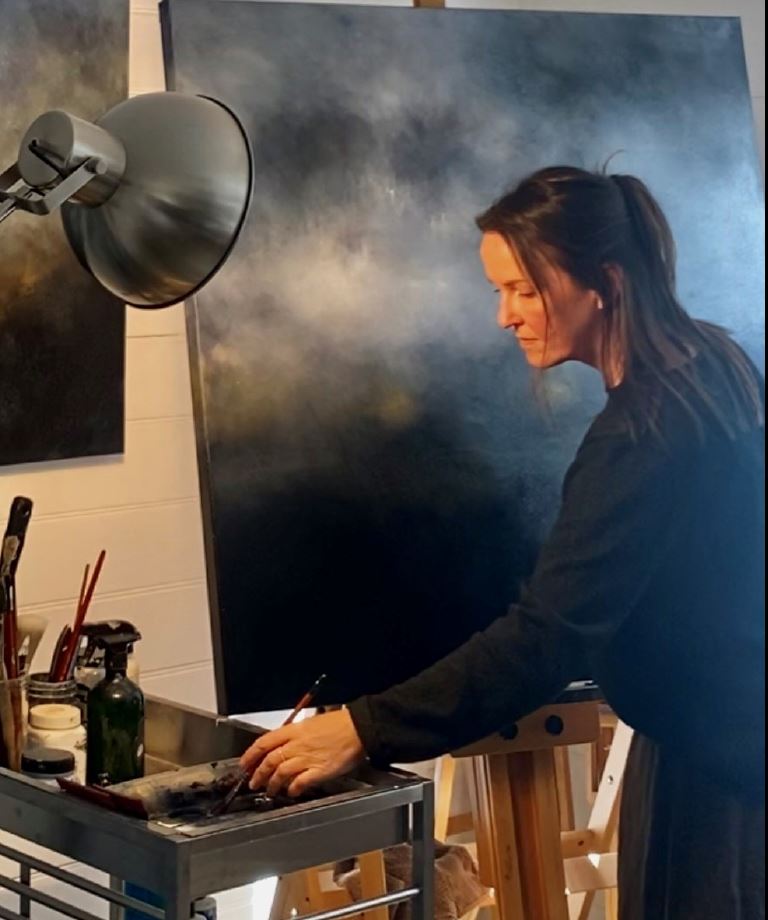
Glenlyon’s Julie Coyle, one of the many artists taking part in the upcoming Rotary Daylesford Art Show, says her artistic style leans towards abstraction and certainly impressionism. She looks for an emotional response to the landscape. Julie spared some time to tell The Local a bit about her creative practice.
Eve: How did you come to art?
Julie: Creativity, in so many forms, is a comfort zone for me. I’ve always been a maker and a drawer. Soon after moving to the Central Highlands, during a painting workshop in Woodend, someone suggested the Art Pathways course in Castlemaine. The teachers’ minds, and knowledge of the art world, the way they ‘lived’ creativity was incredibly inspiring. The visual arts diploma in Bendigo followed, and currently, the bachelor at Fed Uni, Ballarat. For me, being immersed in art feeds the soul.
The first painting I sold was in a group show at the Little Gallery, Trentham, about six years ago – the memory will stay with me forever. The girls are so supportive of us locals. The atmosphere of opening night, and the red dots. The idea that a painting can resonate enough with someone to bring it into their home, fills me with happiness. I’ve been painting ever since.
Eve: Where do you do most of your art work?
Julie: I work at home. I recently finished (almost) an owner-build, with my son and his partner, designing in a studio area, and a big open living space – room enough for walking around easels. I like the idea of being with works in progress. Time with them allows a new way of seeing. Being able to pick up a brush at any time can be great too.
Eve: Which artists have influenced your work?
Julie: Oh, that’s difficult. I’m constantly in awe of so many artists. Certain elements can be fascinating. I feel as though we subconsciously, to a certain degree, absorb, and are influenced by everything we surround ourselves with.
Turner is an artist who struck me in my teenage years, and continues to do so. I remember during a school National Gallery visit, being surprised when I first felt a connection to an art work. My world was smaller then, and the artists I had an awareness of, were historic giants.
My next love, later on, was Marshall Williams, a Mornington Peninsula artist, and painter of atmospheric skies meeting water, and small, still boats. I felt so drawn to his work, and my younger self couldn’t quite work out why. During an opportunity to meet him, and gush my admiration, he said: ‘They’re not really about the boats, it’s all about the emotion.’ It was a new concept for me.
Jennifer Riddle, another Peninsula landscape artist, is one whose work I’ve admired since early in her painting career. Her paintings are also beautifully still, serene, atmospheric scenes.
Eve: Are there any other particular factors that have influenced your creative practice?
Julie: I think life itself influences and informs our work, to a huge degree. Looking back at older paintings, I see my work changing, and slowly evolving. I’m searching for ways to convey a depth of calm, and I couldn’t possibly separate that from the idea of respite.
Eve: What is your media of choice?
Julie: Although there’s a richness in oils that I love, I’ve been working in acrylics for their ability to produce layers without the need for time in between.
I can work on a few canvases at once, returning to each one without pause, which is what works for me if everything is flowing well. I use a fixative between coats, to avoid disturbing the previous wash, and a gloss varnish when finished.
Eve: What are your subject matters of choice?
Julie: Our local, natural landscapes, and skies. I’m fascinated by the way we’re drawn to nature, and its restorative powers, and calming effects. I feel compelled to find a way to harness some of that.
Eve: Have you ever worked in any other areas?
Julie: Mostly I’ve worked from home, raising a family. Market stalls with wooden homewares led to making bespoke furniture through a gallery in Sorrento. I loved the design aspect, and working with timber, especially reclaimed. After moving to the highlands, renovating an old farm, then building a few years later, I’m cured of those desires, as rewarding as they’ve been.
The idea of reclaiming and reusing appeared again for me, when moving up here, in the form of a space at the Amazing Mill Markets, Daylesford.
There I’ve curated a collection of ‘gently worn’ clothing, with a few handmade linen pieces. I’ll always enjoy design. I love that these ways are kind to our planet, and that I can work around my painting.
Eve: What have been your career highlights?
Julie: I always feel enormous gratitude to buyers of my work. It’s an act of the greatest encouragement. When a viewer at an exhibition a while ago turned from my painting, put her hand to her heart, and looked at me, I felt I had achieved something of value. I’ve had some awards at local art shows, which have been so validating, and so appreciated. It all amounts to feeling worthy of continuing along this creative path!
Eve: Do you have any exhibitions or special arts events coming up?
Julie: Ideas are floating around a show with a friend next year in Ballarat, but for now, I have work hanging in the Falkner Gallery, Castlemaine, and the Clayfire Gallery, Daylesford. And there’s the Daylesford Art Show…
July 20th, 2023Artists of the central Highlands
Castlemaine’s Neil Tait has built up an admiring following for his artistry when it comes to decorative ironwork. This local creative – ably assisted by his team – designs and creates wrought iron pieces that are aesthetically pleasing works of art which frequently also serve the most functional of purposes. Neil’s well-established local business, Tait Decorative Iron, uses a variety of materials – including bronze, mild steel, copper and stainless steel, to create a unique range of sculptures and decorative pieces. Garden sculpture, wrought iron furniture, imposing gates, and beautiful balustrades that please the eye while providing a practical function are just a few of the sorts of pieces Neil creates at his local workshop. Neil took the time to chat to journalist Eve Lamb about his work.
Eve: G’day Neil. You’re renowned for your artistry with ironwork! Can you tell us a bit about what you’re working on at the moment?
Neil: I’m currently working on designing an interesting gate with a Waratah flower as a central focal point.
Eve: When you are creating a piece of work what does the process entail?
Neil: The process of commissioning sculpture or custom work involves discussing details of the commission with the client, a site visit, budgeting, material choices providing detail visuals and working drawings.
Eve: Can you tell us a bit about some of your most satisfying or exciting projects to date?
Neil: I’ve had a great range of satisfying projects, working on sculptures for landscape projects, playground elements, and custom gates. There have been so many for private properties but also for public spaces. I’ve done some sculptural works for the Victoria to New South Wales Long Paddock Project. The sculptural pieces were designed by the artist Geoff Hocking and every sculpture had a story with it. Also some interesting pieces for the Catholic Church throughout Victoria, designed by Jenny Steiner, including interior light fittings for churches and decorative installations. Another one was a piece made out of stainless steel for the Botanical Gardens conservatory at Fitzroy, behind Parliament House. We did all the elements in the Castlemaine Botanical Gardens children’s playground, and we’ve just built a giant frog for a public space in Caulfield!…
Eve: Have you ever, or do you currently, work in any other area besides your arts practice?
Neil: My other areas of interest are designing garden layouts incorporating the large range of product my company produces, from pizza ovens to garden sculptures, gates or furniture.
Eve: Where does all of this creativity take place?
Neil: My workshop at McKenzie Hill, Castlemaine.
Eve: What are some of the main challenges that you encounter in your creative practice Neil?
Neil: Some of the main challenges of any creative outcome are constantly having fresh ideas, working within time and cost restraints. To be viable is always a challenge but I’ve been making things and been self employed for over 35 years so I must be doing something right!
Eve: And the main rewards?
Neil: The rewards are many. I’m fortunate to have a very talented team of staff who can make almost anything I design. I also have a son with amazing skill in design and computer skills for the visual and computer work involved on large projects. One thing that always makes my day is seeing a project completed and the client has commented on how it was a good experience through the journey to outcome.