


March 27th, 2024Printed solar cell breakthrough
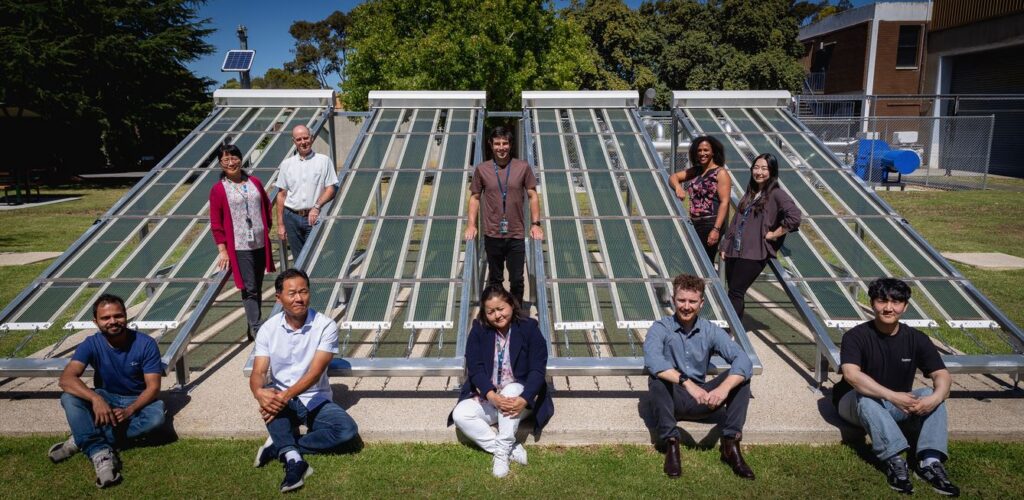
Scientists from Australia’s national science agency, CSIRO, have led an international team to a clean energy breakthrough by setting a new efficiency record for fully roll-to-roll printed solar cells.
Printed onto thin plastic films, the lightweight and flexible solar technology will help meet the growing demand for renewable energy by expanding the boundaries of where solar cells can be used.
Where silicon solar panels are rigid and heavy, the printed solar cells are highly flexible and portable, meaning they can be deployed in previously unimaginable ways across urban construction, mining operations, emergency management, disaster relief, space, defence and personal electronics.
CSIRO’s Renewable Energy Systems Group Leader, Dr Anthony Chesman, said the achievement was the result of more than a decade’s research and development.
“CSIRO’s thin and light-weight solar cells are now on the cusp of emerging from the lab to create clean energy in the real world,” Dr Chesman said.
“We’ve solved several engineering problems to achieve record results across a large surface area of interconnected modules.
“Roll-to-roll printing allows for the solar cells to be manufactured on very long, continuous rolls of plastic, which can dramatically increase the rate of production.
“As these methods are already widely used in the printing industry, this makes their production more accessible for Australian manufacturers.
“The successful commercialisation of printed flexible solar cells has the potential to create significant economic and environmental benefits for Australia and the world.”
The results were achieved in collaboration with researchers from the University of Cambridge, Monash University, the University of Sydney and the University of New South Wales, and have been published in the leading journal Nature Communications.
CSIRO Principal Research Scientist Dr Doojin Vak said that an automated system produced a comprehensive dataset that will pave the way to use machine learning in future research.
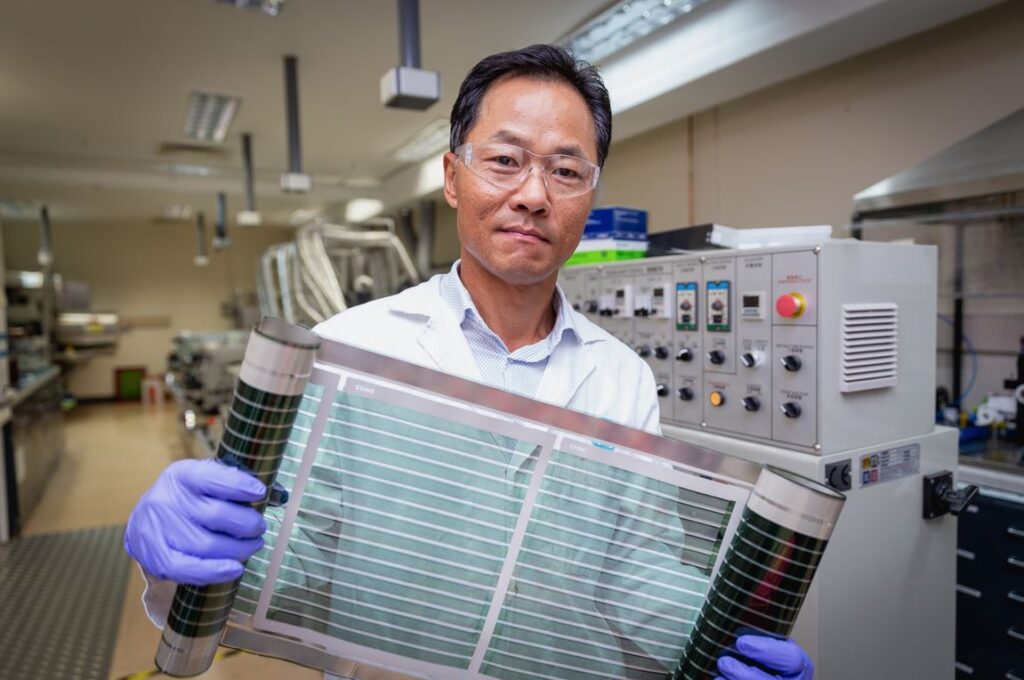
“We developed a system for rapidly producing and testing over ten thousand solar cells a day – something that would have been impossible to do manually,” Dr Vak said.
“This allowed us to identify the optimal settings for the various parameters in the roll-to-roll process and quickly pinpoint the conditions that deliver the best results,” he said.
Incorporating an advanced material called perovskite, CSIRO’s printed solar is different from the silicon solar panels found on Australian roofs.
“Perovskites are a class of emerging solar cell material. They’re remarkable because they can be formulated into inks and used in industrial printers,” Dr Vak said.
“We’ve also alleviated the need to use expensive metals, such as gold, in their production by using specialised carbon inks, which further reduces production costs.”
Acknowledging that perovskite solar cells currently trail silicon solar panels in efficiency and lifetime when produced at scale, Dr Chesman sees the application of flexible panels to be very different.
“As these perovskite solar cells are printed onto plastic films, they are very lightweight, highly flexible and portable,” he said.
“The rigidity and weight of conventional silicon solar panels can make moving them difficult. Our thin, lightweight solar can be easily transported anywhere there is sun.
The CSIRO is actively seeking industry partners to further develop and commercialise the technology.
Words: CSIRO
March 26th, 2024Digital divide: a matter of ‘life and death’

Today, almost 25 percent of Australians are digitally excluded. This means they miss out on the social, educational and economic benefits that online connectivity enables.
In the face of this ongoing “digital divide”, countries are now talking about a future of inclusive artificial intelligence (AI).
However, if we don’t learn from current problems with digital exclusion, it will likely spill over into people’s future experiences with AI. That’s the conclusion from new research published in the journal AI and Ethics.
Reserchers say decades of research has provided a rich understanding of who is most at risk. In Australia, older people, those living in remote areas, people on lower incomes and First Nations peoples are most likely to find themselves digitally excluded.
Zooming out, they say show that one-third of the world’s population – representing the poorest countries – remains offline. Globally, the digital gender divide also still exists: women, particularly in low and middle-income countries, face substantially more barriers to digital connectivity.
During the COVID pandemic, the impacts of digital inequity became much more obvious. As large swathes of the world’s population had to “shelter in place”– unable to go outside, visit shops, or seek face-to-face contact – anyone without digital access was severely at risk.
Consequences ranged from social isolation to reduced employment opportunities, as well as a lack of access to vital health information.
The UN Secretary-General stated in 2020 that “the digital divide is now a matter of life and death”.
Words & Image: CSIRO
March 26th, 2024CSIRO appoints new disease preparedness director

Australia’s national science agency, CSIRO, has this month announced Dr Debbie Eagles’ appointment as Director of the Australian Centre for Disease Preparedness (ACDP), after an extensive international search and recruitment process.
Dr Eagles will lead CSIRO’s high-containment facility in Geelong, Victoria, which helps protect Australia’s multi-billion-dollar livestock and aquaculture industries as well as our community from emerging infectious disease threats.
Prior to this, Dr Eagles was ACDP’s Deputy Director, and played a pivotal role in CSIRO’s response to the COVID-19 pandemic.
Executive Director, Future Industries, Ms Kirsten Rose, said Dr Eagles has held science leadership roles in CSIRO for many years, and has already helped guide and shape the future direction of ACDP.
“Our ACDP facility is an integral part of Australia’s biosecurity infrastructure and is vital in ensuring we can continue to protect and prepare Australia from biothreats and emerging infectious and zoonotic diseases,” Ms Rose said.
“Dr Eagles has an impressive track record and is well placed to continue to lead the work required to elevate ACDP further and keep us supporting Australia well into the future.”
Dr Eagles is a veterinary epidemiologist with a background in vector-borne diseases and brings a wealth of experience in animal health and biosecurity preparedness in Australia and the Asia Pacific region.
She is internationally renowned as a World Organisation for Animal Health (WOAH) Reference Laboratory Expert on Bluetongue Virus, and is a WOAH and Australian Qualified Expert on the UN Secretary-General Mechanism’s Roster for investigations of Alleged Use of Chemical, Biological or Toxin Weapons.
March 4th, 2024CSIRO breakthrough to boost disease resistance in crops
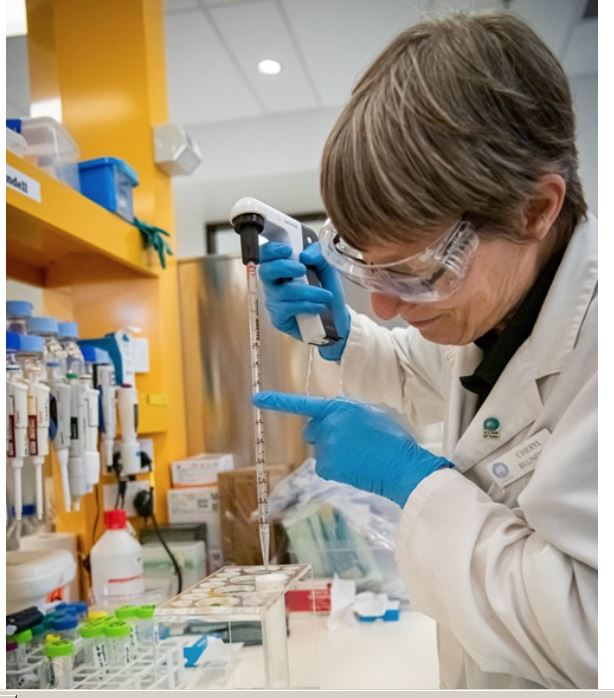
Scientists at CSIRO, Australia’s national science agency, have achieved a breakthrough in molecular plant pathology, marking a technological leap forward for breeding durable disease-resistant crops.
Plant pathogens – organisms which cause plant diseases – greatly reduce agricultural productivity and are a persistent threat to global food security.
Annually, rust pathogens lead to crop losses of US$1 billion worldwide.
The scientists developed a novel rapid gene-screening platform which can identify new avirulence (Avr) effector genes in plant pathogens, building on decades of CSIRO research in synthetic biology, genetics and molecular plant pathology.
CSIRO’s Dr Peter Dodds, co-lead of the project, said the new method will have a huge impact on future pathogen-resistant crop development.
“Our advanced screening technology represents a technological leap forward in our ability to study the processes that give plants enduring resistance to disease, enabling new genetic strategies to safeguard crop production and disease management in Australia and abroad,” Dr Dodds said.
“This method enables high-throughput screening of complex genetic libraries in a plant’s cellular environment at an unprecedented speed. This enhances the ability to select more disease-resistant crops and aids efforts in pathogen surveillance.
“This technology positions CSIRO to tackle important biosecurity challenges as climate change increases risks for disease outbreaks.
“We have been able to identify several new fungal Avr effector genes in the wheat stem rust pathogen, reducing the time from years or even decades to mere months.”
Words and Image: CSIRO