


May 22nd, 2025Trentham mourning loss of two stalwarts

Trentham, and the wider region, are in mourning after community stalwarts Kathleen Brown and her son Craig Brown died in a car accident on the Midland Highway in Eganstown on May 12.

Both Kathleen and Craig were dedicated members of the Trentham Fire Brigade, which posted on social media “with profound sadness”.
“Kathleen served our brigade and community with unwavering dedication for 34 years as our beloved communications officer. Her calm voice and steady guidance were a cornerstone of our operations, and her legacy of service, strength, and kindness will never be forgotten.
“Craig, a committed member for 35 years, a long-serving lieutenant, brought courage, loyalty, and a quiet determination to every task.
“He was a steady presence both on the fire ground and within our brigade family, always ready to lend a hand and stand by his mates.
“Together, Kathleen and Craig gave over five decades of selfless service to our community. Their absence leaves a deep void in our hearts and within the fabric of our brigade.
“Our thoughts and deepest sympathies are with Bill, the extended Brown family, friends, and all who were privileged to know and serve alongside them.
“We will honour their memory with every call, every training night, and every moment of service that lies ahead.” Kathleen’s grandson Ethan Brown, also a firefighter, told Channel 7 he had lost his “rock and best friend” and that his nan and uncle were “the spirit of what country communities are”.

May 14th, 2025Witnesses sought in wake of Eganstown fatality

Police are appealing for witnesses following the fatal two-car collision in Eganstown on Monday afternoon.
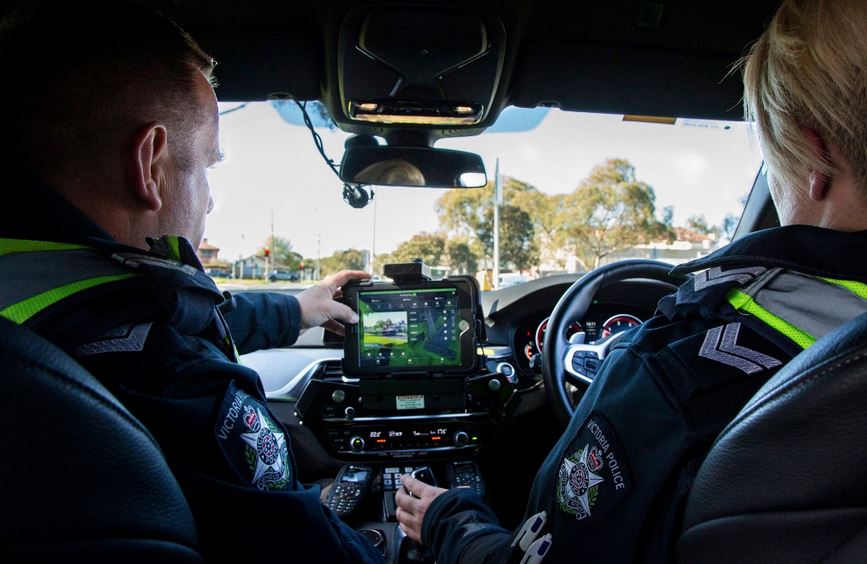
It’s believed two cars collided on Midland Highway just before midday on Monday (May 12).
The two occupants of one vehicle died at the scene, police said in a report issued on Monday.
The sole occupant of the other vehicle had been airlifted to hospital with serious injuries, police had reported.
The investigation into the cause of the collision remained ongoing.
Anyone who witnessed the crash or with dashcam footage or information was urged to contact Crime Stoppers on 1800 333 000 or submit a confidential report online at www.crimestoppersvic.com.au.
For the current provisional lives lost tally please see – https://www.police.vic.gov.au/road-safety
May 9th, 2025In a verdant grove it’s Vern v Parks Vic

As branches and leaves crackle underfoot it is hard to imagine a less likely site for a tussle between bureaucracy and those with a passion for the bush.

Yet a couple of dozen locals – said to be half of those concerned – turn out on a recent Sunday to hear defenders of this serene reserve.
The respect and affection for this oasis rings clearly from speakers with expertise as they acknowledge what is possible with land that has been burnt.
Thirty years ago Vern Howell, speaking, cleared blackberries from this land in Eganstown after its perimeter had been bulldozed and blackberries burnt.
Not only did he work to clear the blackberry curse, but he also planted now maturing Californian redwood trees whose leaves form a soft carpet, and he put in a waterway.
Over the three decades this has been a labour of love for 76-year-old Vern, whose background is in forestry, both working and teaching.
Imagine, then, his shock when he was told by Parks Victoria and the Department of Energy, Environment and Climate Action (DEECA) that, in their words, they want to “contemporise” the Streamside Reserve and scrap his 29-year-old licence to the land because he is not running stock.
Of course, he never wanted to run stock, but a grazier’s licence was the only one available. An $80-a-year grazier’s licence, renewable every five years, is typically issued to graze cattle on Crown land owned by the State government.
Vern’s aim is to save the reserve, not graze it, keeping clear patches for kangaroos and wallabies. Black cockatoos drop by, while shitake mushrooms sprout.
A gigantic pine tree still carries an ancient cubby. At its foot lies a big, rusting miner’s bucket, while a pile of stones tell of the remnants of the Menadue homestead.
“It would be a shame,” says Vern with fervour, “to have this turned back into a ‘bushfire farm’. I’d like to see Parks Victoria stop and let a local committee get involved. We want to talk to Parks Victoria about plans for the next 10 to 20 years.”
His understanding is that Parks Victoria may come through again to burn blackberries and so destroy the reserve. When asked by The Local about these worries, Parks Victoria says that it is “supporting local and wider community access” to the reserve, which is up a track off Basalt Road, near the Midland Highway.
It adds: “We’ve had positive discussions with Eganstown residents about the future of the reserve, including weed control efforts.
“If previous licence holders would like to continue their work protecting values in the reserve, we welcome the opportunity.”
Yet Vern’s question hangs in the air, just how would this work?
Words & Image: Kevin Childs

July 6th, 2024Magic of alpacas on show at Ballarat

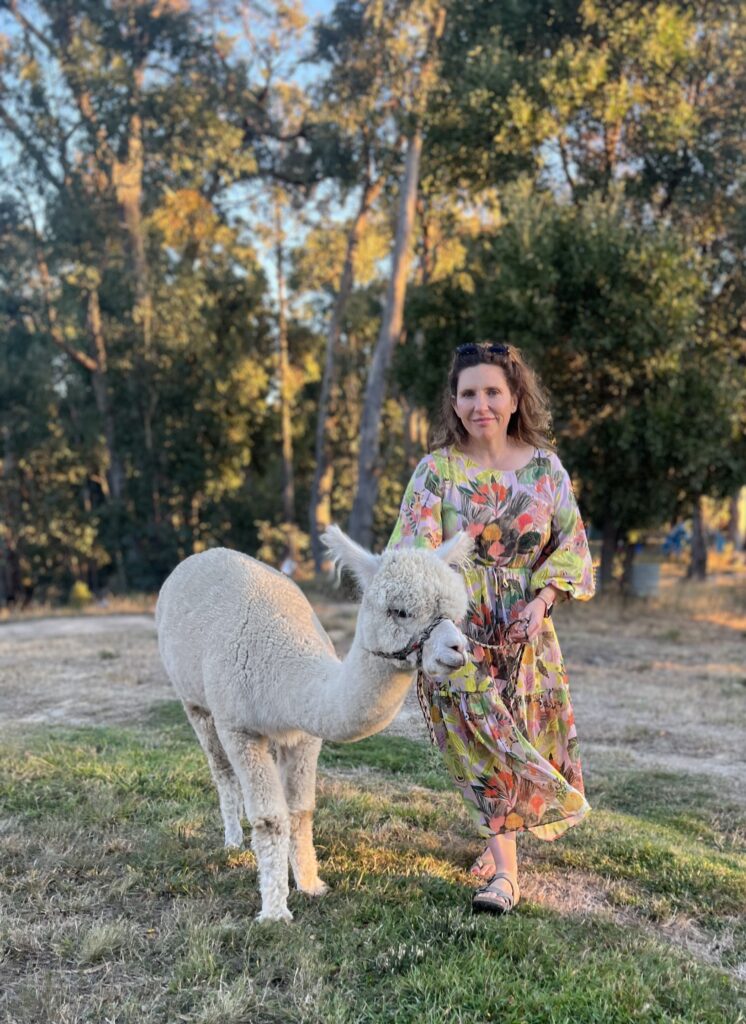
Eganstown artist and hobby farmer Louiseann King reckons there’s something just a little bit magical about alpacas.
The local creative makes no secret of the fact that she’s more than a tad smitten with the alpaca and its prized fibre.
Louiseann converts that passion into artisan product as she makes beautiful hand-woven items, weaving the fibre from the alpacas that reside on her family’s own local hobby farm property using her own loom.
Right now she is busy preparing to bring upwards of 30 of her beautiful hand-woven items to the upcoming Design Exchange Market taking place in Ballart’s Mining Exchange building over this Saturday and Sunday July 6-7.
Louiseann has made the shawls and scarves on her loom and will also be bringing the loom itself along to provide demonstrations of the creative process that she relishes.
“It’s a year’s work or more,” she says of the items she will bring to this weekend’s event.”
Also an artist and sculptor, Louiseann says she loves to bring the colour palette of the local landscape to her creations.
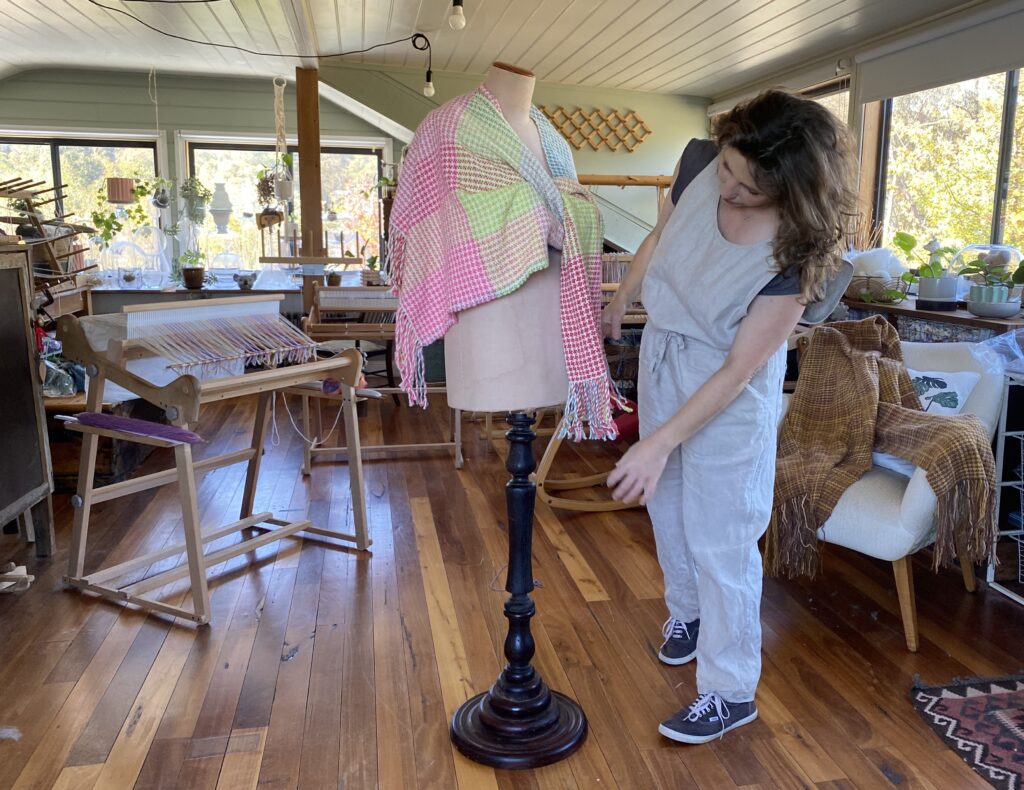
The Design Exchange Market will feature a diverse range of unique, quality handmade works by numerous independent artists and artisans, offering a chance also to chat to the makers about their work.
“We’ve had the alpacas for about five years now,” Louiseann said. “We have about 15. I fell in love with them and their beautiful fleece.
“I’ve come to the shawl in particular because it is so minimal in its shape yet so maximal in terms of potential function.”
The Design Exchange Market takes place in Ballart’s Mining Exchange Building on Lydiard Street this Saturday July 6 from 3pm – 8pm and Sunday July 7 from 10am – 3pm.
Words: Eve Lamb. Images: Supplied

May 29th, 2024Your say…

Sprawl: a serious threat to food security
While the Australian Food Sovereignty Alliance applauds Hepburn’s efforts in the Rural Hepburn Strategy to protect agricultural land from further inappropriate development for so-called lifestyle blocks we assert that the town structure plans as drafted will thwart this intent to the detriment of both valuable farmland and the character and liveability of our shire’s towns.
First, rezoning agricultural land to expand the Daylesford town boundary will merely open it up for inappropriate development wildly out of character with its historical development. Making the 14 hectares at East Street available to development is not ‘planning for predicted growth’, it is pre-empting growth – making it almost a certainty that the town will grow quickly and uniformly for the profit of some distant development company.
It will not benefit locals by delivering more affordable housing stock, including rental houses, and the developments are nearly guaranteed to be a mundane monoculture of drab and unsustainable design.
In the interest of brevity, we make a final point, looking to the loss of peri-urban agricultural land around Melbourne, such as at Koo Wee Rup and Werribee, and say that while it may be ‘only’ 14 hectares this year, how many next time, and the next?

Drawing a line to protect farmland to feed our communities must be a priority in all rural strategies. There is plenty of space within the town boundary as outlined by council itself, if subdivision permissions are eased and the 380 vacant lots developed instead of farmland.
A policy to discourage or even prohibit the proliferation of short-term accommodation that leaves up to 40 per cent of houses vacant on any given night would genuinely address the housing crisis, whereas cheap, ugly peri-urban development will not.
We recommend reading the Foodprint Melbourne reports to better grasp the long-term implications of allowing towns to sprawl, which presents a serious threat to food security and the well being of local communities.
From Tammi Jonas, president, Australian Food Sovereignty Alliance Co-custodian, Jonai Farms & Meatsmiths, Eganstown
January 18th, 2024Berry fine way to spend a day
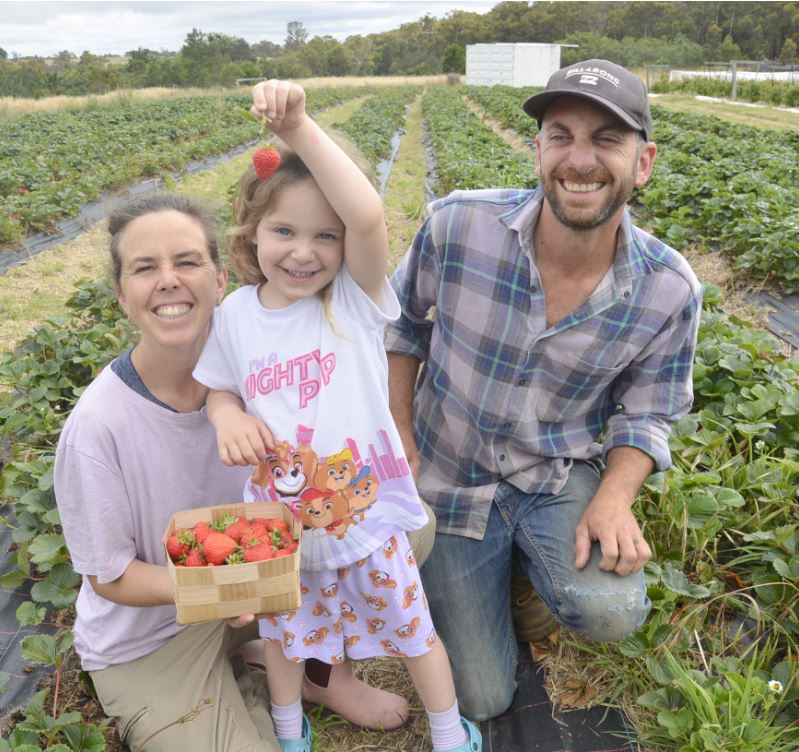
Going summer berry picking makes for an idyllic holiday activity whether you’ve got kids along for the fun or not.
At Eganstown just west of Daylesford, Claire Gunner and Peter Monea operate Morningswood Farm growing strawberries galore and plenty of different types of cane berries including raspberries, boysenberries, youngberries, loganberries and blackberries.
At any one time, they’ve got 20,000 strawberry plants growing on the property which, although not certified, is run as a spray-free organic operation.
Berry-growing season is in full swing right now with the season running right through to March and plenty of demand from locals and visitors to get out and pick the delicious ripe fruit, or snap some up pre-picked.
Claire and Peter say the recent deluge over the Christmas weekend didn’t cause as much damage as you might have guessed, because at that particular moment they’d just been temporarily picked out of strawberries, while the cane berries are growing under protective netting.
But since then there have been plenty of new berries ripening up to be picked, particularly strawberries, and a good range of different cane berries.
“It’s a big job,” says Peter, who has a background as an accountant.
“We do everything sustainably so we don’t use single-use plastics. We use heavy duty plastic for weed suppression so it can be re-used.”
Several years back, with a little creative input from a neighbour, the couple devised their own special compostable punnets for people who go fruit picking on their farm to use.
The neat little hand-made punnets are created using the sustainably sourced timber veneer discards of a Melbourne-based timber business, Peter says.
For the cost of entry to the farm to pick their own berries, visitors receive one of these nifty little punnets to place their haul in and take home.
As far as Claire and Peter are aware, they are the only people in Australia offering such punnets, although Peter says they are in pretty widespread use in Europe and Asia.
“Before we started sourcing it, the timber veneer was going straight into the rubbish bin. It’s taken us on a five year journey. No one else in Australia is using these timber punnets,” he says.
In an interesting twist, the little hand-woven punnets that they devised to help run their pick-your-own berries business, have since led to another additional enterprise and income stream, producing more elaborate natural packaging boxes using the same timber veneer industrial by-product.
“They’re used by a large online retailer and by Source Bulk Foods. It’s actually become as much of a business as the berries themselves,” Peter says.
“We also use the veneer under the mulch to help with weed suppression.
“We’ve had the berries in the ground here for the past seven years and the farm has been open for four years.”
During the summer berry season, picking your own berries at Morningswood Farm is available to the public on weekends (unless they’re picked out or they’ve been impacted by a destructive weather event) with updates going out on their Instagram and Facebook sites.
“This has been the earliest start we’ve ever had to our picking season,” says Claire who has an environmental science background and also works at local properties as a professional gardener.
“This year it went off with a bang in the second week in November.”
She says the berries they grow at Morningswood also go to supply local restaurants including some well known top end eateries.
Meanwhile, Peter is also on site “chief jam maker” cooking up a delicious range of berry jams, including triple berry options, which make for another source of income.
Peter says dehydrated berries have also proven to be a real winner for use in their own household.
He says rain in itself is not necessarily a problem at this time, providing it doesn’t hang around too long and is not accompanied by too much high humidity.
It’s been almost eight years since the couple have had the farm at Eganstown, and the berries they grow, and the pick-your-own activity they offer visitors during the warmer part of the year have won them a legion of fans and followers.
“We get a lot of locals and a lot of tourists who travel easily up to an hour from Bendigo, Ballarat and Melbourne, and a lot of regulars,” Claire says.
“Some of them will come and pick berries every second week.”
Words: Eve Lamb
April 15th, 2023Your say…
Abbatoir thoughts
A flyer in the letterbox entitled ‘Say No to an Abattoir in Eganstown!’ says “our
health, environment and way of life are under threat!”
The exclamation marks show the unidentified complainant clearly alarmed.
However, the nine reasons put forward seem exaggerated and inflammatory and
on examination specious, not very convincing.
The complainant claims drinking water will be contaminated. A bit insulting to
municipalities doing a good job at keeping water pure and potable.
Effluent and waste is to be put on paddocks. Shock horror. Sounds like a tree-
changer who doesn’t know that manure from ruminants is the best fertiliser for
regenerating soil, augmenting it with beneficial micro-organisms.
Other good and natural fertilisers are tree ash from fires, silt from floods, and
ground rock. In contrast, industrial fertiliser for growing grain in quantity lowers soil
quality – especially chemicals originally patented as an antibiotic. They deplete soil
and can create a dustbowl effect by killing micro-organisms thereby preventing plants
from absorbing minerals essential for health. Result? A booming supplements sector.
Noise and dust from trucks? How many additional trucks will be on the roads
every day, one or two? Flies, they cries. Flies are a tiny price to pay for the many
significant benefits of local production.
Every town needs its own meat processing facility.
The benefits will be obvious to all as time goes by: food security, local jobs,
reduced imports therefore lower food miles, therefore less greenhouse gas emission.
It’s neither cows nor rotting organic matter whether animal or vegetable that is
the number one producer of greenhouse gases but transportation.
So more power to Tammi and Stuart’s farm.
Localism and local produce, that’s the way to go, for security, sustainability, real
prosperity, and peace. Bankers, traders and internationalism not so much.
Which is why, to borrow the words of The Local editor from another context: “It
is so important you support them. At least buy local.”
At Least Buy Local. ALBL. And all will be well, O ye of little faith.
From: Peter Jenkins, Blampied