


August 4th, 2024Glen, about the house
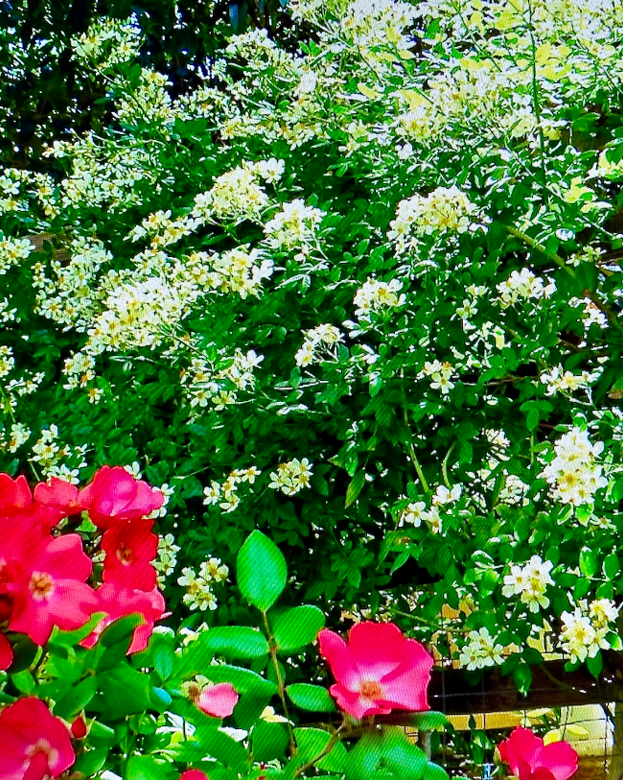
Last issue l tempted you (photographically) to venture into the world of vertical gardens – a place of many advantages and few, if any, disadvantages.
For a start, all growth is up and outwards in two directions – and it’s usually along a wall or fence. lf they are kept neat and tidy, even an adult fruiting plum or peach tree, if managed correctly and regularly, shouldn’t take up any more than a metre in width if all growth is encouraged up and laterally along supporting walls or a trellis.
So, if you have a bare wall or ugly fence alongside a driveway, or one covered by a rampant climber threatening to overbalance and topple the fence, the obvious answer is go espalier.
Or even if you just want to grow a couple of fruit trees that without going espalier could mean losing most, if not all, of the kids’ play space, or the car wash space.
It is simply a method of gaining bigger, healthier crops, in far smaller places and providing heaps more space for entertainment.
It also has the branches equally open to sun, wind and water giving the whole crop an equal chance of ripening together, to say nothing of depriving lurking pests of shelter from predators.
Your choice of a suitable espalier plant should be simple. Everyone else is looking to find a well-rounded, multi-branched compact tree, leaving the lanky flat-sided specimens to the suckers.
But they are blissfully unaware that these make for the best start for the bottom branches of the espalier outline.
After removing any foliage or branches on the side chosen to face the wall or fence (obviously the least attractive side) and, leaving the best ones likely to be grown into a large fan shape, cut the rest back to about 10cm.
With ornamental trees and shrubs, espaliering is quite simple, all you need to do is select a plant that is already flat and one-sided to start with and you are halfway there.
lf not, the branches can be tied back in a fan shape against the wall or supported on horizontal wires but most plants will respond to merely having the front branches removed and the side growth encouraged to spread along the wall.
Although it may be necessary to keep pinching and snipping off wayward branches in the early stages of growth, that will probably be all that is necessary.
The espalier method of pruning allows you to grow a wide range of deciduous fruit trees, especially apples, plums and pears.
They respond quite well to this treatment, as do most shrubs. Roses, especially the ramblers with their flexible canes, like the one pictured above, Wedding Day, in my garden, are fantastic.
It is probably a marginal espalier as it was one of the struggling remnants of our century-old garden and popped up under my new post and rail garden fence along with that beautiful as-yet unnamed heritage rose, at its feet.
Got a gardening query? Email glenzgarden gmail.com
July 22nd, 2024Glen, about the house
Pruning, the better way There’s a perennial gardening question that usually arises at about this time of year, that is after the “should we really get stuck into the tree with a saw and lop it right back?”.
And that is the “which format should we aim for – upright central trunk with branches radiating upwards, a neat, compact choice for smaller gardens, or the open centred, urn shape, pruned to allow plenty of light in for the fruit?”.
This works fine in the case of citrus, peaches, nectarines and other semi-tropical fruits, or where the fruit is sheltered by larger trees or buildings.
Pruning for the centre leader system really starts in the nursery, where the leader is not cut to encourage side shoots, but let go, and given proper nourishment it should grow up to 3-4 metres high, then produce four to six side shoots about a metre above the ground, in the same year. Four or five buds will develop to supply the side branches, and they will form the first crown.
This procedure, repeated every year, will make a multi-storey centre leader tree, leaving about a metre between crowns, and each crown having one less branch than the crown below.
This is a very economical and natural way to produce fruit. It also cuts out sun-scorch damage and splitting by excess crop or wind.
The centre leader always keeps the balance and acts as a safety valve. This shape suits all deciduous fruit trees which bear the crop on fruit on old wood, such as apples, pears, apricots, quinces, European plums, cherries etc.
Although cherries are best left alone unless it’s desperate, cherries loathe even the sight of secateurs or saws.
Nearly all the young trees produced and sold here were developed to grow as open, multi-branched trees especially for those deciduous trees that bear the fruit on young wood such as peaches, nectarines and Japanese plums, because of the more severe pruning needed to produce annual wood, which bears the fruit.
They do well on this system, providing some secondary branches are allowed to grow toward the centre of the tree to shield against sun scorch of the main limbs.
One more small but very important point that can have a great impact on the future success of the tree’s development is the necessity of its growing small spurs on the trunk below the first crown.
These are intended to strengthen the main trunk by preventing the sap from bypassing the main trunk. Usually these spurs bear the first fruit. After a few years, when they are no longer necessary, they can be cut off.
The main rule for pruning young trees is to see the main shape by cutting the main and side leaders to about two thirds so all the buds will grow without watershoots developing.
Fruitful fences
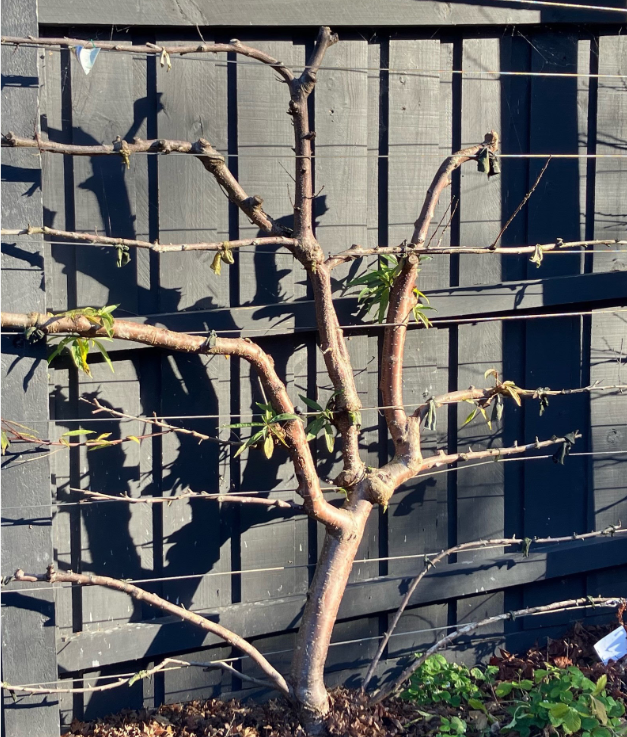
The espaliered orchard is God’s gift to space limited, would-be home orchardists. If you can’t spread out, then grow upwards and plant them up the fence, see above.
There is many an ugly garden fence that has been beautified by a trellis full of flowering or colourful-leafed vines.
So what’s to stop you from training a few fruiting apple, plum or other fruiting trees up along yours?
If you have the good fortune of having the timber framework and posts on your side you’re halfway there – use the rails to support the roll of sturdy galvanised timber or wooden lattice to support your choice of trees and plant them about three metres apart.
The rest is a cinch and I’ll give you the details in the next issue of The Local.
Got a gardening query? Email glenzgarden gmail.com