


September 15th, 2023Dogs’day out at Dean Recreation Reserve

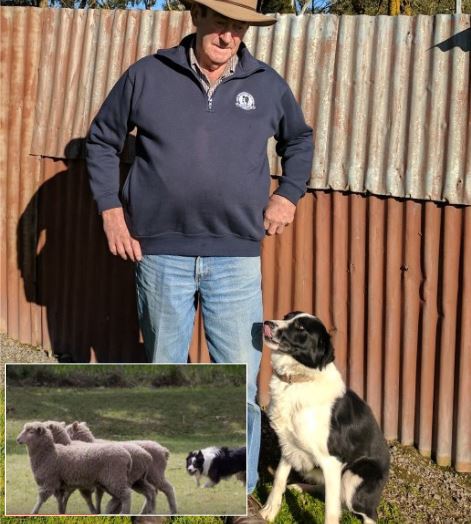
Words: Eve Lamb. Image: Supplied.
For champion sheepdog trainer John Tuddenham, training winning woofers is a bit like educating smart children.
“You don’t give them too much too early. You’ve got to let ‘em grow up a little,” says the renowned local sheepdog trainer.
John, from Ross Creek, is among the many sheepdog trainers who’ll be heading to compete at the upcoming annual Dean and District Sheepdog trials set for Sunday October 8.
“It’s a bit like teaching a young child,” says John whose dogs have come away with the silverware at many top competitions in Victoria and interstate.
“You’ve got to form a bond with the dog.”
John trains border collies, and at next month’s famed Dean trials it tends to mainly be the collie breed that competes.
Conducted under the rules of the Victorian Working Sheepdog Association, the annual trials have become a real favourite in the diaries of many of the state’s top trainers and draws many of the very best dogs from across Victoria.
They take place at the Dean Recreation Reserve and date back to 2013, says Recreation Reserve president Brian Maher who is keenly anticipating the day’s competition.
“The dogs work three sheep at a time and we’ll have up to 40 dogs competing for the day. Each dog gets 15 minutes,” he says.
“We get competitors from all over the state and in the past we’ve had entries from Tasmania and from South Australia.”
The trials missed a couple of years during the pandemic lockdowns but have since made a very successful comeback.
Funds raised through entry donations at the gate, many raffle prize draws that are held, and onsite refreshment sales all go to support important local causes and charities.
Brian says that this year funds raised will be benefiting Creswick Anglicare.
The day offers a great chance for people who have never watched sheep dog trials before to learn a lot.
Brian says he particularly likes to introduce newbies, first-time visitors, to a trainer so they can ask questions and learn about how point-scoring works during competition.
With some loyal sponsors backing them, the trials offer some great prizes and trophies for the winners and the event has become renowned for its country hospitality and good ol’ fashioned vibe.
Homemade baked goodies and refreshments on site are all part of the atmosphere, as is the vintage engine display.
And, just quietly, those who get along can also expect to be treated to a bit of live country bush verse as well.
By way of demonstration, while chatting to The Local about the upcoming trials, Brian recited the lyrics to a favourite Slim Dusty number – word for word.
“I call this event the Old Sniff Classic,” he says. “That’s a name I came up with ten years ago. It’s the name of a Slim Dusty song,” continues Brian, reeling off a few verses, a process which serves as useful practice before hitting the crowd with a bit more of the same over the trials PA system on the day.
“We are a small committee but we are very proactive,” says Brian, who is clearly a man who enjoys his work
Brian likes to be present on the day, to personally circulate and make new visitors and competitors feel welcome. But he is quick to credit veteran trainer and competitor John Tuddenham with being “instrumental” in getting the event off the ground from the outset.
“It’s a great event,” says John, himself. “And what Brian does is unbelievable in running it. The competitors just love it because of the atmosphere. It’s a very friendly event.” John and his dogs have been competing at the Dean and District Trials ever since they first took place, and this year he’s bringing Tintagel Peta and Mia – both border collies – to take on the competition.
John and Tintagel Peta were overall winners at last year’s trials so many will be watching them particularly closely this time ‘round.
“It takes you probably 12 months to train a dog to be able to do competition,” says the master trainer.
John has also bred winning working dogs at his Ross Creek property in the past, and has competed with dogs he has trained all over Victoria
and interstate, representing Victoria four times in the Australian Supreme Sheepdog Trials.
He is a life member of the Victorian Working Sheep Dog Association and has also judged the Australian Supreme Sheep Dog Trials on five occasions.
John and his wife Mary are also busy getting ready to host a sheepdog training school at their property, Belmonte over October 21-22.
“I’ve got nothing against kelpies at all,” says John. “But border collies are a little bit more steady and tend to get on with working just three sheep a little bit better because they are so calm.”
In the past the Dean and District Sheepdog Trials have benefited a wide range of local charities ranging from the local fire brigade to Shannon’s Bridge which helps terminally ill people to pass over peacefully in their own homes.
Brian says that when people donate $5 to get in the gate at next month’s trials, they’ll receive three raffle tickets into the bargain, with some great raffle prizes to be won.
The trials happen at Dean Recreation Reserve on the Daylesford – Ballarat Road, Sunday, October 8 from 7 am.


September 3rd, 2023Artists of the Central Highlands

with Eve Lamb
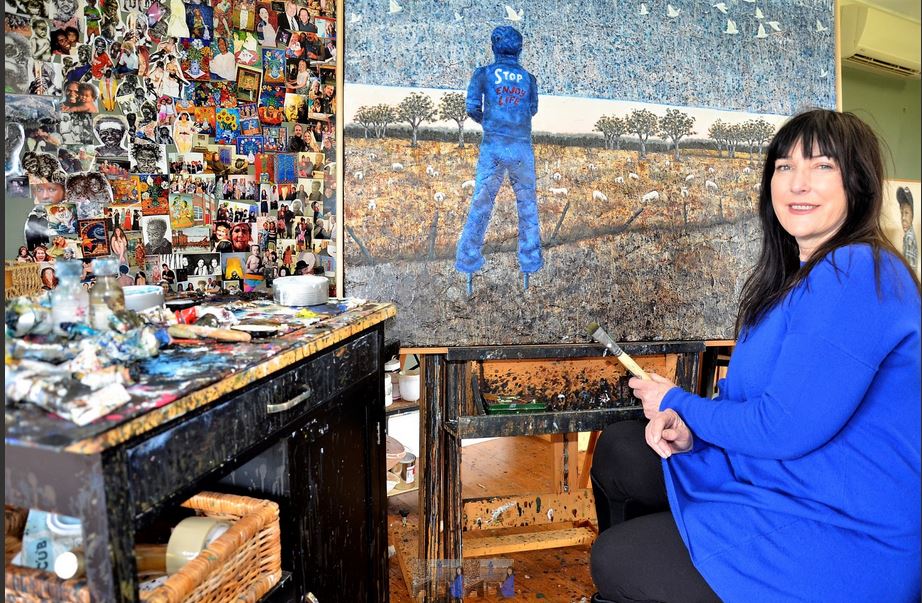
Rose Wilson’s prodigious artistic talent for creating captivating portraiture has seen her make the finals of some of the nation’s most prestigious arts awards including the Archibald Prize. This acclaimed Trentham artist is also renown for her impressionistic paintings paying homage to the natural environment and to the living creatures that inhabit it.
Eve: Hi Rose. When and how did you become aware that you have this wonderful capacity for creating art to which others respond strongly?
Rose: As a child I drew a lot, no different from most kids my age. But when I started getting paid with icy poles and vanilla slices for drawing other kids’ school projects I knew I was onto something. My fascination with the face and eyes started early as well. I was an average student so I’d doodle faces and eyes all the time especially during school. Unfortunately my passion for drawing was inhibited during high school and the thought of being an artist was a distant fantasy. I did what everyone else did back then, finish school and get a job.
Eve: What has your personal arts journey involved in terms of nurturing that innate talent?
Rose: My passion for art lay dormant for many years until I traveled to Italy to see the World Cup in 1991. Being a tourist I found myself visiting the Sistine Chapel. Once inside I found myself surrounded by magnificent frescos covering the chapel’s ceilings and massive religious paintings towering above me. I was in awe. Something was unleashed within me that day and that experience was the catalyst that paved the way for my artistic journey. When I returned to Sydney I enrolled in Darlinghurst Arts School and the rest is history. I travelled around Australia. I lived in Arnhem land. I studied at Darwin Uni and Newcastle, and then we moved here.
Eve: How do you happen to live at Trentham and how long have you had your home and studio here now?
Rose: My partner of 35 years is a pilot so we moved around the country a lot. We had a pact; we either live in the city or the country, but nothing in-between. After a two-year stint in an inner suburb of Melbourne, we decided to go country. We always thought we’d move again, but we fell in love with Trentham and its community. It’s been 20 years now and we are besotted with our little slice of paradise. Twelve years ago a group of like-minded local artists founded the Little Gallery, an artist-run space in Trentham that has been a wonderful addition to the town and is supported by all the locals.
Eve: Which artists have influenced your work?
Rose: My biggest influence was while living in east Arnhem Land. I would often sit with one of the elders from the Murrungun clan while he painted. He’d often tell the story of what he was painting, and I felt privileged to have had that opportunity. Frida Khalo was another, for her visual narrative and strong symbolism as well. Both artists had a major influence in my storytelling through art.
Eve: What is your media of choice?
Rose: Oil. When painting landscape I tend to under-paint with thick textured paint, and scrape back harshly so I need the paint to move slightly. With acrylic it is too hard. With portraiture I use my hands a lot to apply the paint. I’m sure it’s not good for me, but I’m still here and haven’t gone mad from pigments yet!
Eve: What are your subject matter of choice? Why so?
Rose: I flip between landscape and portraiture. I only started landscape when I moved here. The bush has a way of beckoning you, demanding you give it attention. Although my landscapes are more visceral and impressionistic in their execution, my portraits are more realistic as I try to capture the inner character of the sitter. They often demand more attention than the bush.
Eve: Have you ever worked in any other areas besides working as an artist, Rose?
Rose: I found my artistic vocation late. I was 28 when I visited Rome. Before then I worked in finance and sales, in the textile industry and consultancy of all things. I also wanted to become the next Prue Acton as I loved to design clothing. But pattern making did my head in so I dropped out of Tafe and went to Italy instead to see the soccer. Luckily I did as it changed my life! But perhaps it would have found a way to come back to me no matter what?
Eve: What are you working on at the moment?
Rose: I’m pushing my landscapes as far as I can, experimenting with different content and technique, as with my portraiture. My landscapes have been popular but I believe you need to challenge yourself. Painting the same thing over and over because there is a market for it may be great for the bank balance yet it’s appalling for the soul and I want to keep my soul intact.
Eve: What work, goals or projects do you have in mind for the future?
Rose: Portraiture is my first love and I will always continue to work on it and push it further. For years I worked monochromatically but now I’m enjoying new challenges especially using a coloured palette. I’d like to think painting in colour came naturally but there’s a technical side to it and I’m continually experimenting, and will continue to do so until I feel confident in that.
Eve: When you work in the studio do you like to play music and if so what is your music of choice?
Rose: I’m so, so eclectic. You could never tell my personality through my music. I play just about any genre yet sway towards the ‘70s, ‘80s and ‘90s, my era. The only thing I don’t listen to is Screamo.
Eve: To date, what have been your career highlights as an artist?
Rose: Being a finalist in the Archibald is right up there. That was a real hoot. I’ve been lucky enough to have been a finalist in many major portrait prizes, hopefully one day I’ll be the bride and not just the bridesmaid. Ha! It’s a tough gig, art competition, these days, with entries exceeding well over 1000 and I’m a realist. So if I never get into the Archibald again at least I can take solace that I did that once – in one of the biggest portraiture prizes in Australia.
The other highlight was painting the Disappearing Farmers Series highlighting the struggles of local farmers and how they are slowly diminishing. It first went to the MAMA gallery in Albury. It was nerve-racking to be exhibiting in my home town, but a proud moment for my family. The exhibition then came home to Trentham and was hosted at the Cosmo, the only place large enough to exhibit the 17 large paintings of farmers and their working dogs. It was attended by a ridiculous amount of people and the farmers felt like rock stars, rekindling the recognition they once had and deserved.
Eve: Do you have any exhibitions or special arts events coming up that you would like to let others know about?
Rose: The gallery that I’m affiliated with, Little Gallery, just had a very successful art fundraising exhibition called the Winter Show and we hope to do another exhibition for our Summer Show and invite artists to exhibit. So watch this space. I also will compete in various art prizes. It’s become a slight addiction, once you’ve been chosen as a finalist, but time restricts entering all the ones I want to.
Eve: What would you rate as the biggest challenges in being a professional working artist today?
Rose: The stigma around being an artist, and a female artist at that. It is often classified as just a hobby. It’s my life and my work. Finally, after painting for over 30 years, I’m gaining the rewards for my dedication. People often ask me ‘how long did that painting take?’ which pisses me off. But I answer, ‘mmmmm about a couple of days. But add 30 or so years on top of that’.
Another challenge is keeping the gallery afloat, especially through tough times. But fortunately it’s an artist-run space and it’s held together because of that. I’ve always said every town, no matter how small should have a gallery, not just to showcase local art, but to give a platform for country artists whom otherwise would find it difficult in the larger cities.
Eve: And, for you personally, the greatest rewards?
Rose: Personally for me, my art gives me great purpose and I can’t see my life without it. Even though I struggle with time and working in the studio is a luxury, once there I find it hard to leave. I get caught up with the moment, and I get totally lost in time. #
The greatest reward anyone can give me is when a viewer stands before a piece of art and they totally resinate with it and become emotionally moved by what they see, regardless if it’s mine or not. We paint and create to share our vision, our story and our love for the arts.
September 2nd, 2023Good life down on the woollen mill farm

Words and images: Eve Lamb
It’s a job many would envy and Creswick Woollen Mill’s Farmer Maddy says it’s one she’s not about to swap for a desk any day soon.
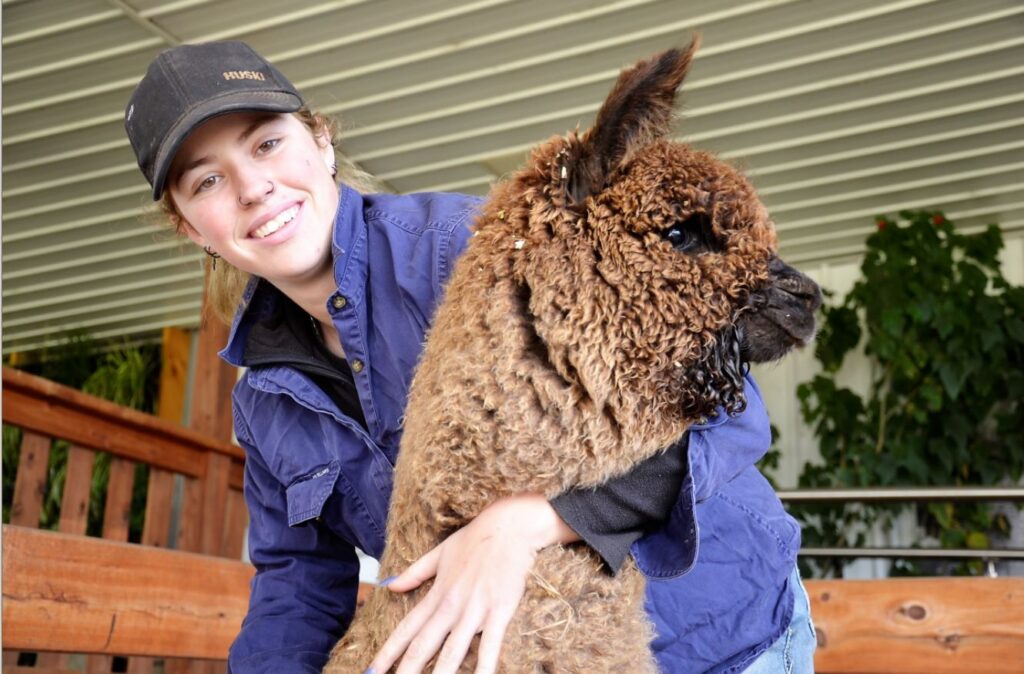
Maddy Viola – also known as Farmer Maddy when she’s at work – is one of two farmers at the Creswick Woollen Mills on site demo farm, the other being local resident, Lyn Wozny who is also a shearer.
Besides tending to all the basic needs and creature comforts of their four-hooved charges, Maddy’s and Lyn’s job is to talk all day long about one of their all time favourite topics – the critters in their care.
“It’s fun. I get to hang out with the animals all day and provide information about them – their names, their ages, their breeds,” Maddy says.
“It makes a lot of people happy, especially the little kids.”
The Creswick Woollen Mill, famed for its beautiful fibre products including fine alpaca and merino fleece luxury items, has been operating at Creswick for more than 75 years now, becoming an important tourism drawcard.
But the global COVID pandemic had an impact, with a significant drop particularly in the number of Chinese and other Asian visitors, who up to then had been visiting the Creswick attraction in droves. They’d often come in coach-loads after visiting Ballarat’s Sovereign Hill with the Creswick Woollen Mill a must-do on their Aussie itinerary.
“Before COVID we used to have hundreds of internationals every day, and yes they’re slowly starting to come back now,” Creswick Woollen Mill store manager Cassandra Ellis says.
She says that now the pandemic is over they’ve also been able to start bringing the animals back to the site, something that’s only happened over the last few months, although not quite to the same levels as pre-COVID.
“Pre-COVID we had forty-plus alpacas here and crias (baby alpacas) being born here,” Cassandra said.
Alpaca shearing demonstrations took place twice a year on the especially built demonstration stage, prior to the pandemic, and now, Cassandra says, management thoughts are once again turning to bringing these back as well.
“There’s a lot for love for the animals,” she says. “They’re all super-stars. People come up from Melbourne to learn about them.”
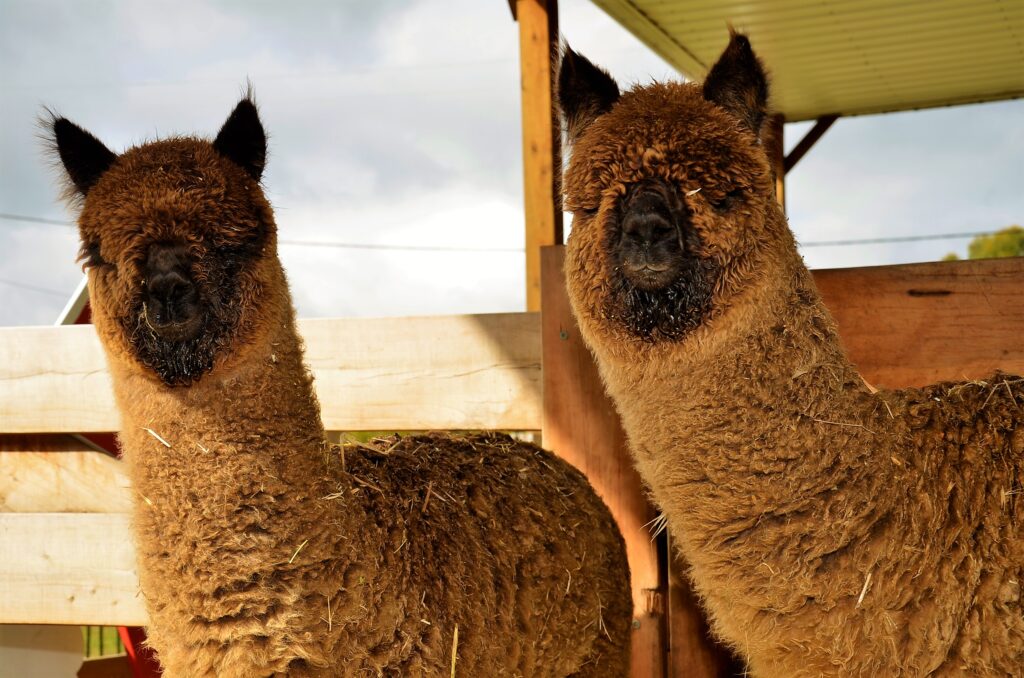
The animals at the Mill farm now include adorable seven month old chocolate male alpacas – Choc and Chip – whose very apt names are the result of a recently concluded naming competition.
There’s also full-gown alpacas – Solomon who is a Suri alpaca and who sports a particularly cool fleece that would look right at home on the head of a surfer, and his best buddy, Juicy Bear, who is a Huacaya breed alpaca.
Then there’s Babar the sheep and his mate Shawn the sheep who has just celebrated a birthday in style. In fact, Farmer Maddy and Cassandra say all of the animals get to have their birthdays properly celebrated with cakes especially prepared to their personal taste – think something along the lines of a tasty mixture of specialty pellets and lucern chaff.
Maddy says getting to know the unique personalities and character traits of the animals in her care is part of what she most enjoys about her work.
“Shawn is like a teenager. Every now and then he has temper tantrums and tries to head-butt me. Juicy bear and Solomon have brotherly fights over food. But they all love each other,” she says.
There’s also the super pretty little multicoloured Persian Cross Dorper lambs, Bill and Ted and, as of very recent weeks, two special new additions – rare Valais Blacknose lambs Milo and Timmy who have beautiful white fleece with charming black point markings.
Sometimes known as “the cutest sheep in the world,” the Valais Blacknose breed originates from the Swiss Valais region and there are still very few of them in Australia.
“Milo and Timmy are rare Valais lambs from the Alpine region and the breed is new to Australia,” Cassandra says.
Maddy, who also works on a local horse property, says chatting to children and educating people about the animals is a really rewarding aspect of her work at the woollen mill farm.
“I could never sit down for a whole day at a desk,” she says.
The farm at Creswick Woollen Mill is open to the public to visit, see the animals and chat to Farmer Maddy or Farmer Lyn, five days a week, Thursday-Monday from 11am-3pm.

September 2nd, 2023Here’s cheers: Great times ahead at The Pig

Words and Images: Eve Lamb
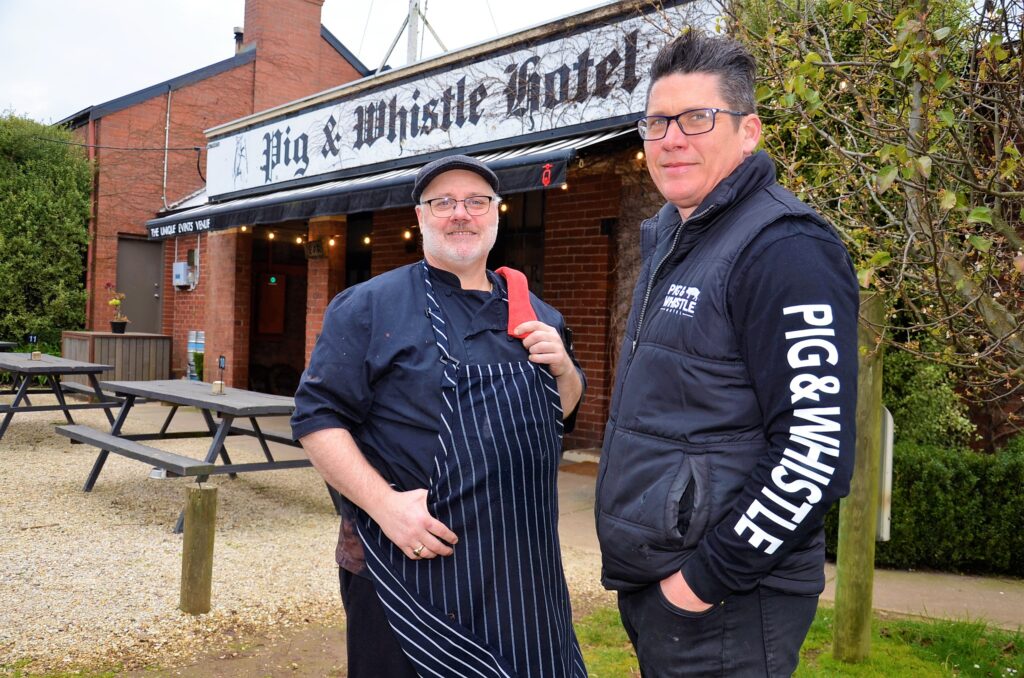
Eammon Hamilton was determined when he set about securing kitchen maestro Joel Reilly to be head chef at the Pig&Whistle.
“We’d been getting along here without a head chef for six months, just doing reliable pub fare, and I was looking for just the right person,” says Eammon, owner-manager at the Trentham East landmark.
The historic hotel dates all the way back to 1866, and after a colourful past, reopened 18 months ago under its current management.
Since then The Pig, as it’s lovingly known by many locals, began building an impressive legion of dining devotees.
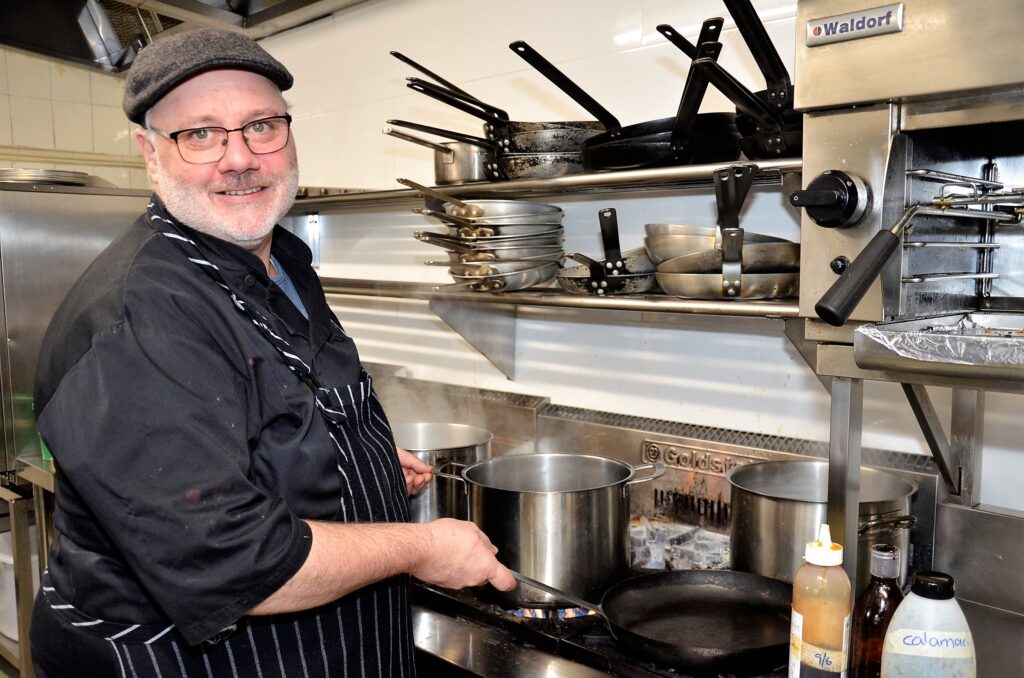
But since Joel accepted the role of head chef back in May, the Pig & Whistle Hotel Restaurant’s reputation as a must-do dining experience has ratcheted up a whole new level, with the formerly-Melbourne-based chef bringing his 27 years of cooking experience to lead the kitchen team.
“I had the pleasure of working with Joel in Melbourne in another hospitality venture for nearly 15 years, so I’d been slowly twisting Joel’s arm and enticing him with an opportunity in the country and eventually he kind of gave in,” Eammon recounts.
“We worked together for quite some time doing events at a place called Red Scooter Unique Events in Balaclava,” Joel says.
“And before that I was at Hotel Comme for a couple of years doing events. When I first arrived in Melbourne I worked at Marchetti’s Tuscan Grill. I worked at Matteo’s for a couple of years, and I worked at Cecconi’s at Crown Casino.
“So I had quite an Italian influence but I had also dabbled in other cultures and cuisines, a lot of work catering for large events and functions.”
Designing the Pig &Whistle new spring menu with a practiced eye to both seasonality and variety, Joel says taking note of what customers want is the main factor guiding his menu planning.
“You’ve got to cater for your clientele, working out what they like and what they want and catering towards that,” Joel says.
“My specials are my sounding board to find out what people like.
“The main focus here is still to provide good quality, wholesome pub food, but then I like to mix it up with weekly specials that will be from different cultures and different parts of the world, mostly to keep the locals entertained and interested.”
In a society full of special dietary needs it’s important to note that the Pig & Whistle caters for things like gluten intolerance, vegan and vegetarianism.
“We have a couple of vegan dishes on the menu and I’m hoping to run at least one vegan special every week,” Joel says.
“With our fryers we keep one completely gluten free and we maintain a lot of our products as gluten free so we’re utilising things like potato starch and rice flour.”
The wine list showcases many of the local wineries that the region boasts. But among all that is trendy and top shelf, the old favs still go down a treat and the management at this venue is noticing.
“A Carlton Draught and a parmi is still our number one selling product so it doesn’t matter how fancy you get,” Eammon says.
“We analyse the data a lot so we’re really looking at what’s selling.”
Working alongside Head Chef Joel, the kitchen crew currently includes three other full-time chefs, three part-time cooking staff and three additional staff, and the focus is on attracting and retaining top staff.
With this in mind, they’re building a brand new kitchen space adjoining the existing kitchen to improve both amenity for staff and work flow.
“We have used Tony Schindler Consulting. (Tony) is a chef but now specialises in commercial kitchen construction,” Eammon says.
The new kitchen is scheduled for completion in the next couple of months and complements the venue’s expanding capacity to cater for larger functions.
The rear beer garden is already an alfresco treat on warmer days and evenings, perfect for parties and functions, or simply kicking back to share quality times with friends.
All this is soon to be expanded upon further with the acquisition of an adjoining 0.7 acre parcel of land to accommodate more car parking, and to develop an onsite kitchen garden. Good times ahead look likely.
September 2nd, 2023Creswick Chorus in concert for healthy cause
Words: Eve Lamb. Image: Fiona Watson
It’s not a sound you’d generally expect to hear emanating from a little community hall in regional Victoria after dark.
Many voices raised together as they belt out some rhythmic pulsing songs of South Africa, followed by a traditional number or two from the Pacific Islands and chased down with a heart-wrenching Croatian piece – all sung in the languages of origin.
But this is exactly what happens pretty much every Wednesday night – other than term breaks – at the Creswick Neighbourhood Centre Hall.
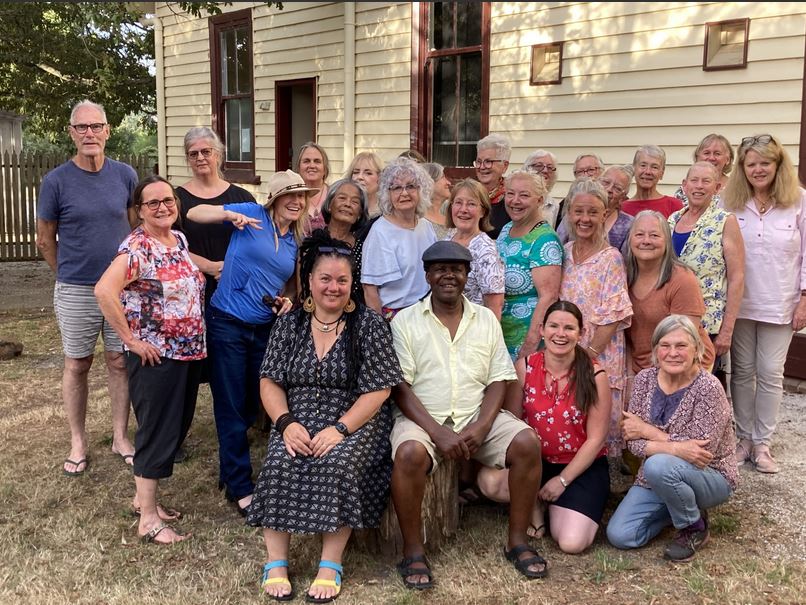
There, well known Ballarat-based musician, singer and choir leader Stella Savy puts the Creswick Chorus through its paces.
Group members say they themselves sometimes find it hard to believe that they’ve just got their tongues around a song in Zulu or French Creole, for example.
But Stella seems to have a gift for making music happen – in many languages – and for bringing people together.
“Within ten minutes of introducing a song to us Stella has us singing three-part harmony in a language that we’ve never seen before, and we even think to ourselves ‘Gee we sound good!’ and yet ten minutes earlier we couldn’t have imaged it,” says Creswick Chorus regular Julie Moten.
Chorus member, Creswick’s Jenni Sewell says singing in the group tends to be a wonderful confidence and wellbeing booster as well.
“I always like how I feel when we’ve just finished our session. I’m as high as a kite and sing all the way home in the car,” Jenni says.
With an emphasis on world music, they also do quite a few fun songs in English as well including some funky stuff and a bit of Gospel to boot.
There’s also a Creswick Kids Chorus group that Stella leads as well, and right now both the adult and kids Creswick Chorus groups are looking forward to being part of a special fundraising concert coming up in Ballarat on Sunday, September 10.
The Stand By Me concert is being presented by the Ballarat Dementia Alliance and the Bigger Hearts Choir with money raised going towards using music to support people diagnosed with dementia and aphasia, a cause to which the Bigger Hearts Choir is devoted.
The concert will feature singing groups from the Creswick and Ballarat areas with the Creswick Chorus joining forces with Ballarat’s Thursday Night Choir to perform together on the day, something Stella says is a real benefit for choir members.
“Other choirs do things slightly differently and so it’s great when you see choirs coming together and singing together,” she says.
“For all reasons singing is good. It’s good for your health it’s good for your mind, for your sense of connectedness,” Stella says, also mentioning that new members are always welcome to rock up and join the Creswick Chorus.
Ballarat’s Bigger Hearts Choir itself will be among the groups performing at the upcoming Stand By Me concert with tickets (that include afternoon tea) available through Humanitix or at the door.
The Stand By Me concert happens at 1.30pm-3.30pm at Ballarat’s York Street Church of Christ York Street Ballarat, Sunday September 10.

August 31st, 2023Amanda to compete in Deaf Bowls Champs, Scotland
Words: Eve Lamb | Image: Contributed
Hepburn’s Amanda Care is heading off to Scotland to compete in the International Deaf Bowls Championships.
It’s a major achievement for the local businesswoman who was diagnosed with severe to profound hearing loss as a very small child.
Amanda only took up bowls five years ago, but took to it instantly, after getting tired of merely watching from the sidelines as her husband Kevin enjoyed his bowling on the greens.
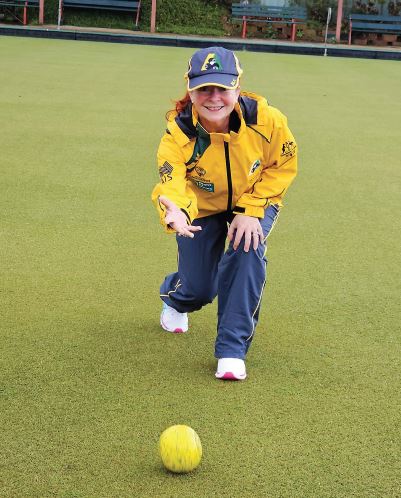
Amanda has flown out bound for Edinburgh and, once there, will travel about 20 minutes each day of the international champs, held over September 1-14, to compete on the Colinton Bowling Club greens.
There will be 85 bowlers in total competing, including bowlers from Ireland, New Zealand, Scotland, England and Australia, Amanda says.
It’s the first time the local bowler has ever competed in the world championships. It’s also the first time she has ever been to Scotland, despite recently discovering that she is genetically 45 per cent Scottish, and even boasts a family clan, the McLeods.
Amanda is one of 14 Australians – 12 of them competitors – who are making their way over to Scotland for the championships and once there she will find out which events she will compete in. These may include singles, doubles, triples or fours with men’s and women’s divisions.
Amanda says that despite being rated severe to profoundly deaf she is able to get by just fine with the help of technology including hearing aids, specialised apps and Bluetooth which enables her to use telephones for conversation.
Both she and Kevin are keen members of the Deer Park Bowling Club, although Amanda has also enjoyed playing pennants and socialising at the Daylesford Bowling Club as well.
“These world championships are held every four years but with Covid they got delayed. The last championships were held in New Zealand,” Amanda says.
Amanda also says Scottish greens are notorious for being “heavy” while Australian greens, conversely, generally tend to be “fast”.
So to prepare for the championships she has been playing bowls every day on the heaviest greens onto which she can readily find her way.
“I’ve been practising at Invermay because they’re heavier greens,” she says. She’s also been working hard on boosting general strength and fitness.
“I’ve been working out with Beth at Integrated Fitness in Daylesford, and bowling five days a week,” she says.
“Bowling is such a skilful game too. It requires a lot of headspace. You have your good days and your bad days. It’s quite a humbling game. Some days you just can’t get it together while other days you’re on fire.”
Amanda is in her early 50s, runs her own professional organising and decluttering business, which she loves, and also enjoys taking on the older bowlers who, just quietly, are known to be ferociously competitive at times.
“I love competing against the older bowlers, showing them what I can do. A lot of them have been bowling for 20 to 30 years,” Amanda says.
She loves the social aspect of the sport and is also looking to compete in the annual Australian Deaf Games set for Newcastle at the end of January.
“I have competed in them once before and got a bronze medal, but at the time I was a fill-in for a Sydney team because one of their girls broke a leg,” she says.
“I used to play golf. I’m much better as a bowler.”
Amanda has promised to let The Local know how she goes in Scotland.

August 20th, 2023Artists of the Central Highlands … with Eve Lamb
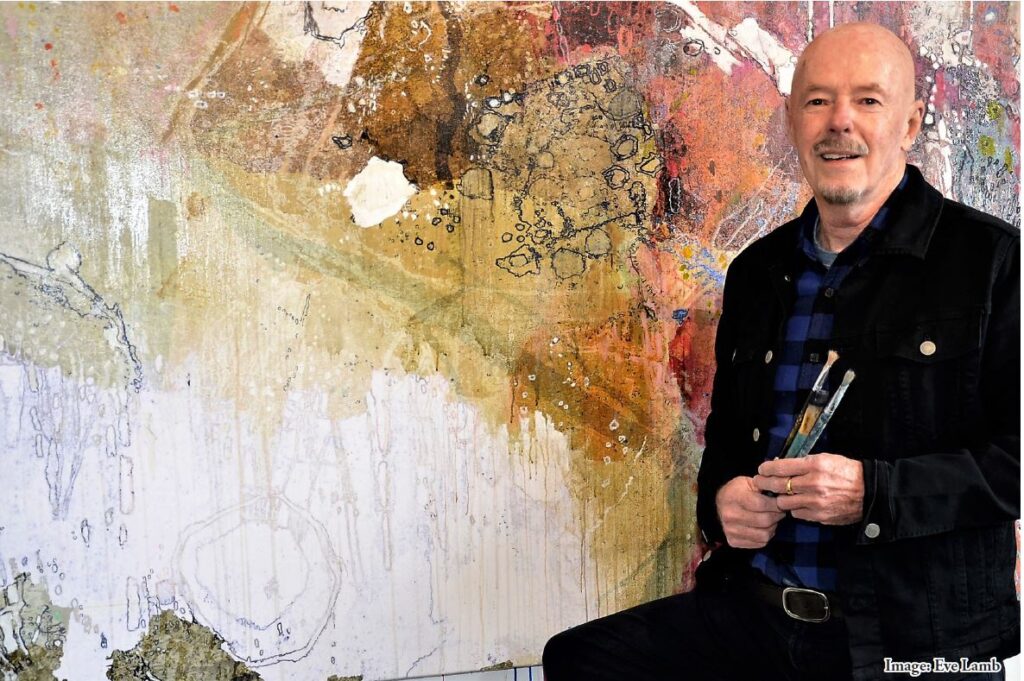
An enduring love affair with the Australian landscape, its power and diversity, underscores the work of much-collected Daylesford painter and printmaker Greg Mallyon. Greg’s abstract topographical images are inspired by an aerial perspective and his life story includes constant study, travel and rich exposure to European, Asian, Middle Eastern and our own Indigenous cultures. The many arts awards that this talented local creative has collected along the way include the 2021 National Capital Art Prize for Landscape and the Digital Art Award for the 2023 Queenscliff Art Prize.
Eve: Hi Greg. How should we best describe your artistic style? Does it fit into a particular arts genre?
Greg: My paintings and prints are abstract landscapes inspired by an aerial perspective, however they fall within the long Australian tradition of depicting our unique continent.
Eve: How did you come to art?
Greg: I won a fellowship to the Queensland College of Art when I was 17 so my fate was sealed at a very young age!
Eve: How did you nurture your innate arts talent? Further studies?
Greg: Since graduating from art school I have continued to study both formally, for example, studying fine arts in Italy and a Masters degree at UNSW, or through many informal workshops and courses over the years. This constant exposure to new techniques and ideas means my work continues to evolve and change.
Eve: Where do you do most of your art work? Where is your home studio?
Greg: My humble studio is a former school demountable and is located in my garden in Daylesford. Kangaroos, magpies and kookaburras are regular visitors.
Eve: Which artists have influenced your work?
Greg: My work is inspired by a variety of sources including satellite photographs but also other Australian and international artists who have explored the landscape from above. John Olsen and Fred Williams are two of the most important Australian artists who have changed the way we look at landscape but our own Indigenous artists also have an instinctive view of country from above.
Eve: Are there any other particular factors that influence your creative practice?
Greg: My training in printmaking and computer technology has strongly influenced my style as a painter and vice versa. I often incorporate digital imaging, etching, stencil and other print methods in to my paintings.
Eve: What is your media of choice?
Greg: I am very experimental so I paint or print on surfaces including aluminium, Japanese rice paper, wood, canvas and European papers. I love incorporating marble dust, ground pumice and raw pigments into traditional acrylic paints and varnishes.
Eve: What are your subject matter of choice? Why so?
Greg: The Australian landscape remains my major preoccupation as the diversity of the desert, coastal and alpine scenery is an endless source of inspiration. Other destinations such as India, The Middle East and Europe have also been the subject of past exhibitions.
Eve: Have you ever worked in any other areas besides working as an artist? If so, what did that work entail?
Greg: My working life has always been involved in either art education or arts management and so that has enriched my experience and knowledge and impacted on my career as an artist in a positive way. I have spent 10 years working with Indigenous artists in remote communities and this too was very inspirational.
Eve: What are you working on at the moment?
Greg: I have deadlines up until late 2024 so it is meeting one commitment after another, a mix of private and corporate commissions, art fairs and solo exhibitions both interstate and overseas. One important aspect of such a schedule is to stay fresh and inspired and not just churn out predictable works for the art market.
Eve: What work, goals or projects do you have in mind for the future?
Greg: My goal is always to keep refining my work so it gets better. I have no shortage of new ideas to explore if, and when, I get a break in deadlines.
Eve: When you work in the studio do you like to play music and if so what is your music of choice?
Greg: I am a big fan of Triple J so I am constantly downloading new artists and music. Before the pandemic I discovered a great Ballarat band called ‘Goldfields’ and as I was working on a series of goldfields landscapes they kept my spirits up during gloomy lockdowns .
Eve: To date, what have been your career highlights as an artist?
Greg: I have been fortunate to enjoy many highs over a long career. These include the usual barometers of winning art awards and artist residencies and having sell-out exhibitions… Sometimes the best highlight, however, is simply to see your work hanging in a beautiful space.
Eve: Do you have any exhibitions or special arts events coming up that you would like to let others know about?
Greg: I am working on a solo exhibition for the Horsham Regional Gallery in December. This will explore the landscape of the Wimmera and feature images inspired by drought, flood and bushfires, all of which produce their own unique beauty in amongst the devastation.
Eve: What would you rate as the biggest challenges in being a professional working artist today?
Greg: The Australian economy with its ups and downs always impacts on consumer spending and the art world has suffered from past recessions and downturns. That will always be an ongoing challenge for any creative industry. Professional artists must today be savvy with social media, bookkeeping, marketing, administration and all aspects of running what is essentially a small business. That is a big challenge to those of us who are happiest with just a paint brush in hand.
Eve: And, for you personally, the greatest rewards?
Greg: Being my own boss and doing what I love is a great reward.

August 18th, 2023Friday’s time to ‘get your uke on’ in Clunes
Words and Images: Eve Lamb
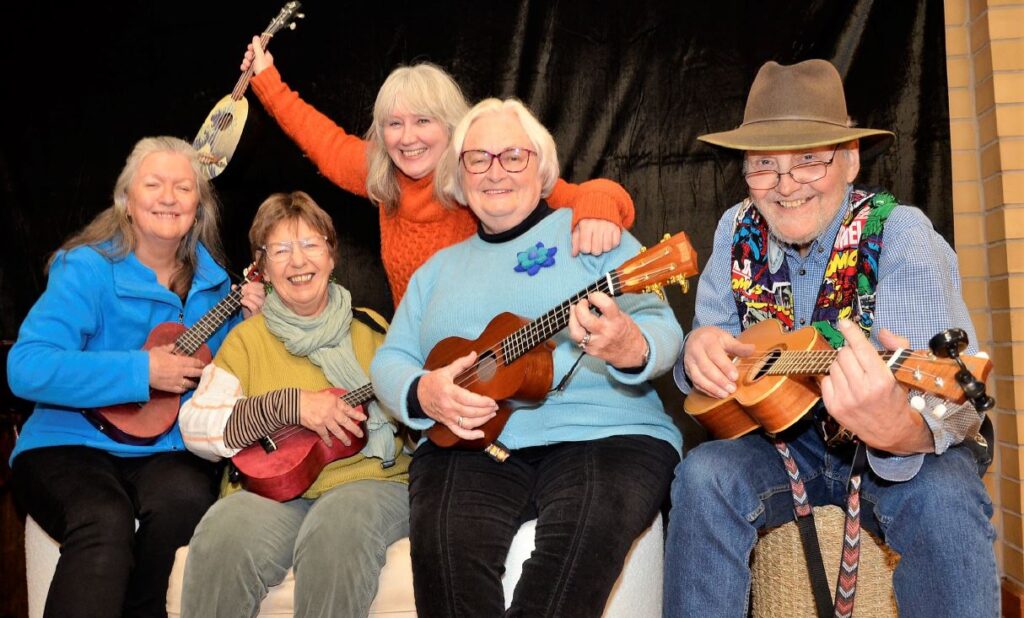
It’s Friday on a chill mid winter afternoon in Clunes but the sounds emanating from the town’s Attitude building have a distinctly sunny edge. The weekly ukulele group gathering is in progress.
This fun little group has been happening now for the past couple of years, ever since Attitude started and the pandemic lockdowns ended.
Attitude – Ageing Well (its full name) is a community-led initiative that provides a range of social, intellectual and physical activities for people aged 60 plus – but all ages are welcome.
“It’s lots of fun,” says uke group leader, Clunes’ Victoria Reeve who is blessed with a singing voice that can hold a tune. Several years ago now, she took up playing ukulele out of a long-held wish to learn a musical instrument of some type.
“I used to regularly go to the Ballarat group before the pandemic,” Victoria said.
A couple of years ago a friend, who wanted to learn to play this personality-packed little stringed relative of the guitar, urged Victoria to start a group anew in Clunes.
“At the time, I said ‘but I’m only a beginner myself and largely self-taught’, and she said ‘well that’s better than what’s currently available which is nothing’.”
The group started meeting informally at Victoria’s house but the response was strong and now it meets every Friday from 3pm to 5pm at Attitude Clunes headquarters in Fraser Street.
“We’ve now got a core group of about five or six who are pretty consistent and we always welcome new members,” Victoria says.
“Basically we just love playing and singing. We play a few songs from as far back as the 60s but mostly from the 70s, 80s and 90s and also a couple of modern ones as well.”
The focus is wholly on having fun, and socialising while enjoying music, but the weekly sessions do tend to reap results in terms of participants’ musical ability.
“It’s really good to have that regular meeting because it keeps you honest,” Victoria says as we discuss the importance of practice, practice, practice.
As group leader Victoria brings to the gatherings not just a love of music but also a professional background as an educator, albeit in the area of tertiary-level literary studies. She still works as a writing teacher for both adults and children, and also leads regular exercise classes as part of the Attitude program as well.
She says the reasons locals decide to pick up a uke and join the group sessions are many and varied.
“One of our members considers it her ‘me’ time and certainly singing together releases all of those positive brain chemicals. People learn best when they are happy and enjoying themselves,” she says.
“One of our members is a really good muso and had a career where she’s performed but everyone has their own reasons for coming along.
“One of our members just wanted to be able to play ‘Happy Birthday’ for family members, and another one likes to go caravanning and he wanted to be able to sit around the campfire and play.
“With the uke it’s such a fun little instrument. It’s hard to be dogmatic or didactic about it.”
For Victoria learning to play this fun little instrument was the fulfilment of a lifetime wish that began as a child. It helped that she could sing.
“There was a local group, since disbanded, that had started meeting here in Clunes back a couple of years before the pandemic and I took to it quite quickly. I went and bought my first uke and I now have five or six which is more than any human being needs,” she laughs.
“Because it only has four strings it is easier than guitar and it’s a nice portable little instrument.”
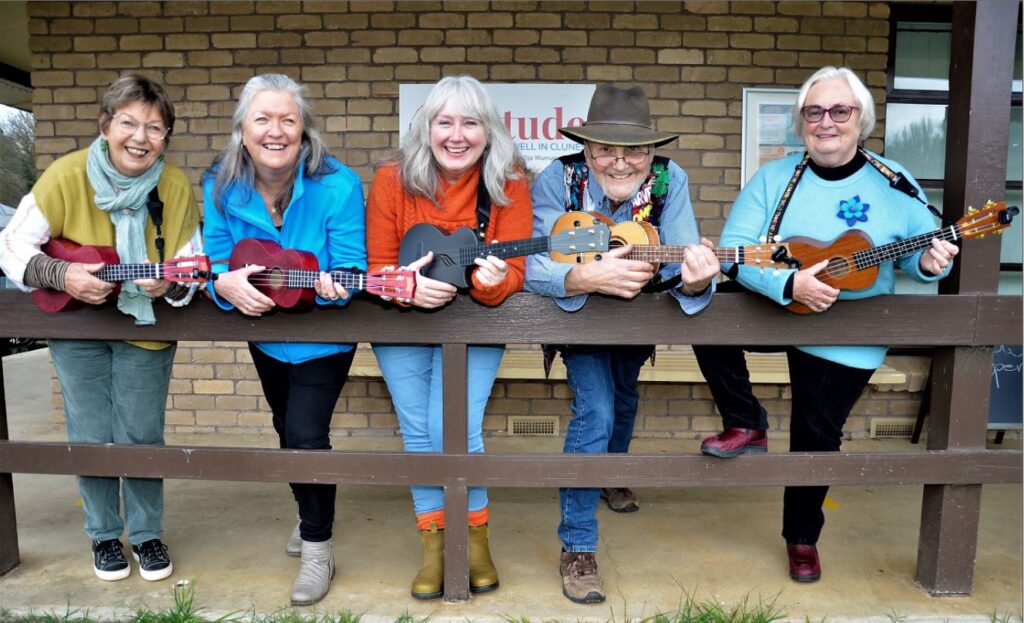
Those interested in taking on the uke may be inspired by the likes of uke super group, The Ukulele Death Squad, (Google it if you aren’t already familiar) which demonstrates what’s potentially possible with this slightly humorous and humble little instrument.
But there’s absolutely no pressure to perform at all for the Clunes group regulars.
“The group has a lovely social quality,” Victoria says. “There’s no pressure to perform. It’s a really nice way to make friends, sharing an activity. I would recommend it to anyone if they’re feeling a bit isolated.”
Group regular Sandra Nichols says that before the group started she had purchased a ukulele but had then left it sitting, unplayed, until the group came into being.
“I think playing a musical instrument is really good for the brain, and we sing as well which is really uplifting,” says Sandra who encouraged Victoria to lead the group.
All of the uke players agree the gatherings are a great mood boost.
“Music makes you feel good,” says Deb James who, like fellow group regular Graham Quemard, likes to take her uke on caravanning trips and take it out around the campfire.
If you’re interested in rolling up for one of the Friday arvo uke sessions at Attitude you don’t even need to possess your own ukulele as the group can provide spares for those keen to give it a go.
Those keen to place dibs on borrowing one and getting along for a session can contact Victoria on 0420-432-931.
August 17th, 2023Treehouse4Two: retreat for dementia couples
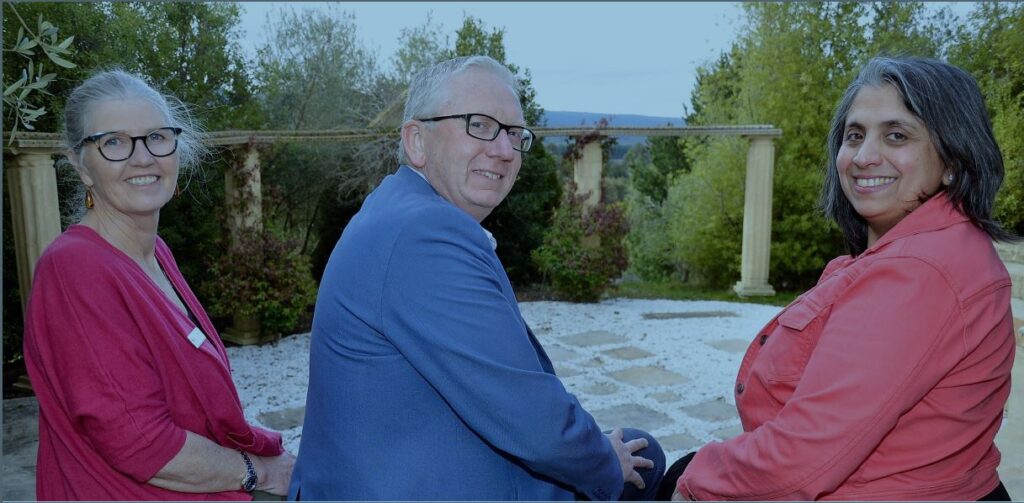
Words and Images: Eve Lamb
A diagnosis of dementia can be incredibly upsetting, and unfortunately the incidence of this lethal disease is rising across Macedon Ranges and Hepburn Shires.
However, some good news is that last week saw the local launch of a new federally-funded, free, three-day retreat offering people with dementia and their carers a valuable new source of respite and support.
Last Monday’s launch of the new three day (two night) Treehouse4Two retreat program follows Central Highlands Rural Health’s successfully securing $1.3 million in federal funding to make it happen.
They will now begin offering the new retreats in both the Hepburn and Macedon Ranges shires.
Launched at the Macedon Ranges Hotel and Spa, the retreats are designed to provide essential support, education and resources to navigate the difficult journey through dementia.
The specialised retreats are funded as an ongoing series through to mid 2026, and will take place in quality scenic local accommodation venues – with plenty of good food on the menu and an enjoyable “holiday vibe” as key aspects.
The first of the retreats are happening from this week with an initial intake of five couples attending.
Beyond this week’s, the retreats are then expected to accommodate six couples per retreat with all costs covered for participants.
“Sadly, there is quite an increase in dementia in both Hepburn and Macedon Ranges shires,” CHRH executive director Phil Catterson said.
According to a 2022 Australian Institute of Health and Welfare report, 517 people were living with dementia in the Macedon Ranges Shire, of which 204 were males, and 314 were female. In Hepburn Shire, there were 389 people living with dementia, with 240 females and 149 males diagnosed.
The Treehouse4Two retreat program builds on CHRH’s existing Treehouse program which, for the past five years, has been supporting people living at home with dementia.
“We have had Treehouse for over five years now and it has been a great thing for us to understand how important respite is for people who have dementia,” Mr Catterson said.
“If you are given a diagnosis and it’s happening to you, it scares the heebie jeebies out of you and you don’t know how to react.”
CHRH Treehouse and Social Support manager Dora Mansbridge has an extensive nursing background, including in palliative care, and will be a leader for the new retreats that are based on a similar successful program run by Sydney’s Hammond Care.
“There’s a stigma that comes with having a dementia diagnosis,” Dora says.
“But dementia is not the end of the conversation. It’s the start.”
Knowing where to turn and how to begin managing and coping following a new diagnosis can be challenging and the new retreat program will especially aim to help those contending with a recent diagnosis.
Dora says couples who attend the retreats will enjoy time out to relax in a beautiful safe location.
But while it will feel like “a holiday” a skilled team of health and support care professionals will use the time to meaningfully engage with those who have the diagnosis and to provide their carers with skills and knowledge needed.
“Our aim is to provide essential support, education and resources to help people navigate this journey. It’s a tough gig – 24/7,” Dora said.
Sharing the load is a main aim and friendships and other valuable support contacts are expected to result.
“It’s going to feel a little like an extended family,” said Treehouse4Two Retreat Coordinator Paula Weekley.
Paula says the retreats’ outcomes will be closely watched with the hope of seeing them gain funding to continue beyond the initial four years.
Following this week’s very first Treehouse4Two retreat, three more will be held this year – in September, October and November, with ten then scheduled for each of 2024 and 2025, and six scheduled for 2026.
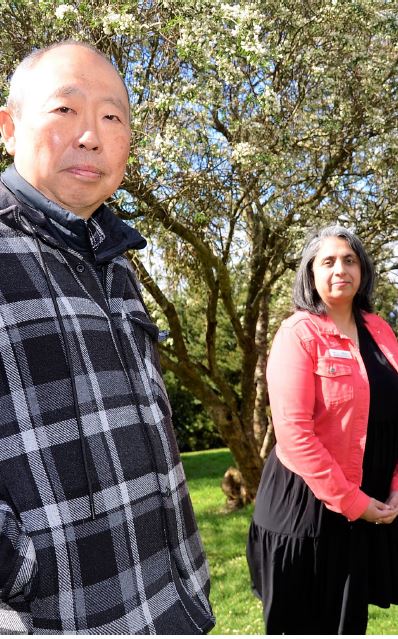
Among those keenly looking forward to attending one coming up soon is Hepburn Shire same-sex couple Chris Ling and Lewis Short, and Chris attended Monday’s launch.
“Lewis was diagnosed in 2016 and we have already been using the Treehouse program in Trentham,” Chris said.
The (pre-existing) Treehouse program is also offered at Kyneton and is now being launched at Daylesford with plans to make it available at Clunes into the future.
“With the retreat, I am looking forward to being with other carers and I’d like Lewis to be comfortable in a different place other than at home,” Chris says.
“For him it’s a chance to be with other people besides me and that will hopefully be a break for us from our normal routine.”
Dora says that additional suitable safe and scenic accommodation venues across Hepburn and Macedon Ranges shires are being sought as potential sites to hold the retreats.
More information about the Treehouse4Two retreat program is available through Central Highlands Rural Health.
August 17th, 2023Keep the legend simmering
Words and Image: Eve Lamb
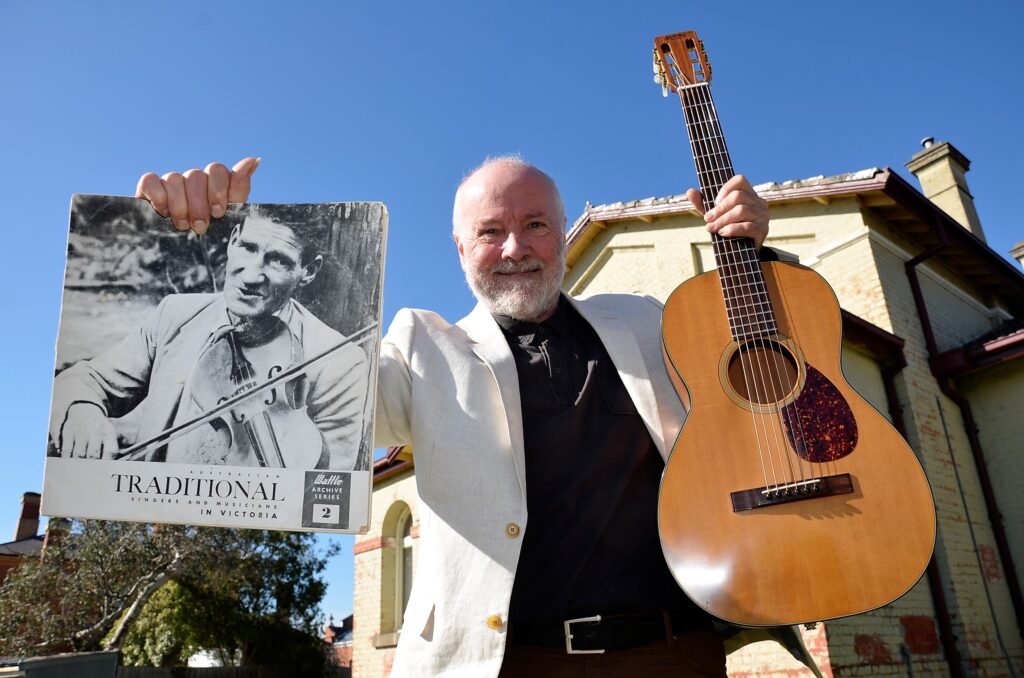
In his day yesteryear Creswick identity Simon (Simmy) McDonald was something of a household name in folk music circles.
The well loved local character lived on his family property at Springmount just out of Creswick, without electricity, all his life (1906-1986) eking out a living from gold fossicking and agricultural work.
But he was also a fixture at local pubs, particularly Creswick’s American Hotel, where he would sing for food and beer.
At a time when ‘The Folk Wave’ was on and folk music was the Rap of its era, Simmy was called ‘the best traditional singer in the British style ever recorded in Australia’.
Possessing a “fantastic voice” and a splendid repertoire of Irish and Scottish folk songs, he was also “a self confessed alcoholic” and no stranger to the town’s historic courthouse.
He even spent a night in the adjacent lockup, an experience about which, in true folk legend style, he penned a poem.
However, despite his misadventures with the law, Simmy’s folk music talent was so considerable that many hours of recordings from 1959-1967, featuring both his music and himself in conversation, ended up in the National Archives in Canberra.
And it was there that current day local Neil Adam (pictured above, outside the old Creswick Courthouse Theatre, with one of Simmy’s album covers) unearthed this rich recorded legacy, after learning about Simmy, who was in danger of becoming lost to the mists of time.
The result is The Simmy Show which is playing at Creswick Theatre this Saturday evening August 19 as part of the wider Words in Winter festival.
The show was sold-out when staged previously during Cresfest and features live music and discussion from Neil, himself a talented guitarist and singer songwriter, carefully curated excerpts from those precious archival recordings with Simmy himself, and also live music by Ballarat Irish folk singer Paddy Caulfield.
“Simon McDonald lived at Springmount just outside of Creswick, Victoria and became a bit of a household name in music circles during the Folk Revival of the 1950s and 60s,” Neil says.
“He made an LP of songs, a book was written about him, and there are hours of old reel-to-reel recordings of interviews with him. He had a fantastic voice.
“The old courthouse is a great place to stage this show because Simmy was an occasional ‘performer’ at the courthouse himself for public misbehaviours.
“He called himself an alcoholic and he wrote a poem about being locked up in 1939.
“He used to perform at The American (hotel in Creswick) where they paid him in food and alcohol. He had a great repertoire of songs and he kept these 200 songs alive in his head because it was helping him survive.”
Neil, who is also Creswick Theatre Company’s current president, describes this Saturday’s show as “half live music, half local history and half recordings from the National Library… So that makes it a show and a half,” he reckons.
Dollars raised from the show support the little courthouse theatre and tickets are available through Humanitix.
Neil says he’s also keen to get copies of the archival recordings with Simmy which are held in the National Archives made readily available at the Creswick library.

August 4th, 2023Artists of the Central Highlands …
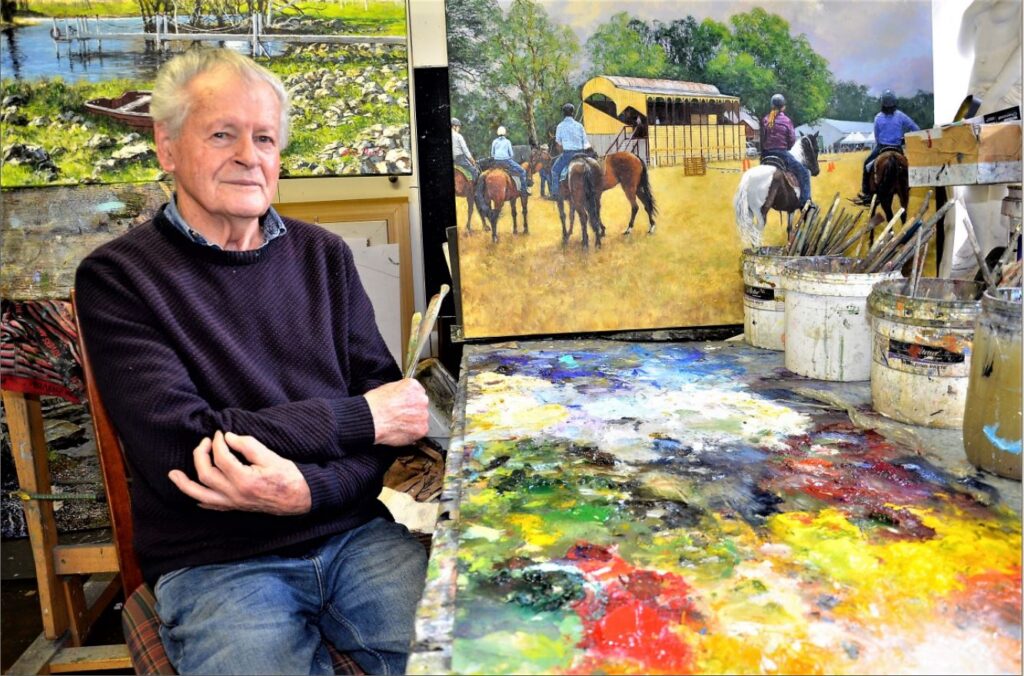
Daylesford’s Brian Nash has long captivated art lovers with his powerful interpretations of the world around him, particularly landscape. Right now his work, together with that of photographer Bec Walker, is part of a feature exhibition showing at the Convent Gallery. In recent days, Brian generously shared his time with journalist Eve Lamb to provide some insights into his creative process, sources of inspiration, and life as a professional artist.
Eve: How should we best describe your artistic style?
Brian: Realist, impressionist.
Eve: How did you come to art?
Brian: I didn’t come to art. It came to me. For as long as can remember I was always drawing and painting and I thought everybody could do the same.
Eve: How did you nurture your innate arts talent?
Brian: I am completely self taught, I nurtured my art through observation and practice.
Eve: Where do you do most of your art work?
Brian: Mostly in the studio although I sketch subjects as well, but I like to finish work in the studio.
Eve: Which artists have influenced your creative practice?
Brian: Quite a lot actually, but some of them are Andrew Wyeth, John Singer Sargent, Sorolla, Hans Heysen, and Edgar Degas.
Eve: Are there any other particular factors that have influenced your creative practice?
Brian: Not really but I have always been a keen observer of what is around me.
Eve: What is your media of choice?
Brian: I work in acrylic, oil, pastel and watercolour.
Eve: What is your subject matter of choice? Why so?
Brian: I am mainly a landscape painter and living here in Daylesford I find inspiration and diversity within Hepburn Shire and the Central Highlands.
Eve: Have you ever worked in any other areas besides working as an artist?
Brian: I worked in a large printing company in Melbourne for 18 years before I decided to make art my career.
Eve: What are you working on at the moment?
Brian: A series of paintings of the Hepburn Shire.
Eve: What work, goals or projects do you have in mind for the future?
Brian: I am in the process of producing a book of paintings featuring the many beautiful subjects of the Hepburn Shire. The book is called The Golden Shire and should be published by October this year; very exciting for me as I have been working on this project for over 20 years.
Eve: When you work in the studio do you like to play music and if so what is your music of choice?
Brian: I do listen to music in the studio. Mainly classical.
Eve: To date what have been your career highlights as an artist?
Brian: One of them was a painting trip to Tuscany with a group of prominent Australian artists that was followed up by an exhibition of the works in Melbourne.
Eve: Do you have any exhibitions or special arts events taking place that you would like to let others know about?
Brian: At the moment I have an exhibition at the Convent Gallery with photographer Bec Walker, that will be shown till the end of August.
Eve: What would you rate as the biggest challenges in being a professional working artist today?
Brian: The biggest challenge for me is for my type of art to be accepted by the public as there are so many different styles of art to compete with.
Eve: And, for you personally, the greatest rewards?
Brian: I think the greatest reward for any artist is to believe in what you do, in the hope that your work is appreciated now and long after you are no longer here.

August 3rd, 2023Good grub – gratis – beats the belly rumbles
Words and Images: Eve Lamb
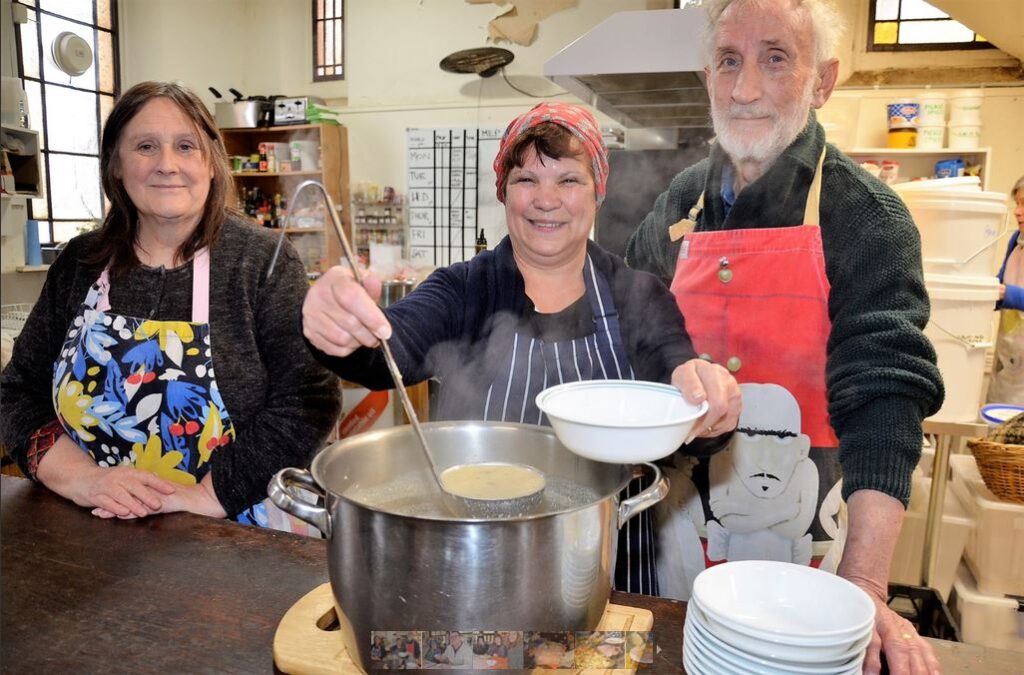
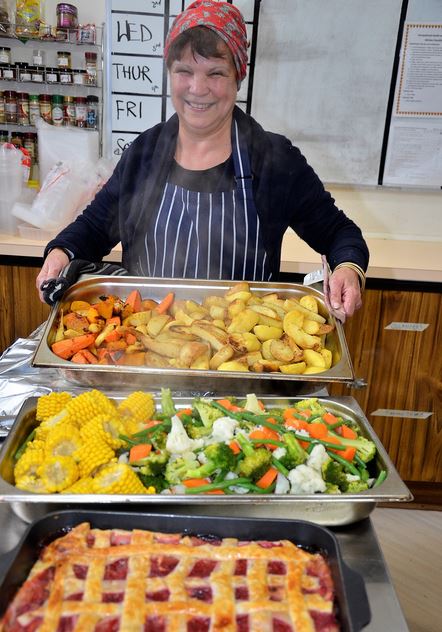
Potato and bacon soup, baked ham with roast seasonal veg, piping hot apple and rhubarb pie with cream… I could be at a cafe, pub or restaurant – or a good friend’s place about to be fed. But no I’m in the Uniting Church Hall on a Thursday surrounded by the Good Grub Club’s good deeds in action… and it’s all pretty yummo.
Everyone needs tasty nutritious nosh – and good company – in their life. But for an increasing number of local folk, getting a good square meal on a regular basis isn’t always easy. Or possible.
That’s where Daylesford’s Good Grub Club comes in to cheerfully help out, not just with the proverbial “good grub” but also with plenty of good companionship as well.
Every Thursday the club does exactly as its name suggests – dishes up hot nutritious lunches, free of charge, to those who are struggling to make ends meet.
These companionable sit-down three-course lunches are entirely free of charge and take place at the Uniting Church Hall at the corner of Central Springs Road and Camp Street, Daylesford, from 11.30am – 12.45pm. As volunteers point out, the only thing asked in return from diners is their first name.
And, that’s not all. The club also does food hamper and pre-cooked meal deliveries to those in the community who are unable to make their Thursday community lunch sittings in person.
Lately demand for the club’s services has been increasing, say stalwarts who volunteer with the club, people like Daylesford’s Cathy Walker, Gary Carter, Liz Bennett and the (retired) Reverend Jenny Hayes, who’s really anything but retired when it comes to making The Good Grub Club happen.
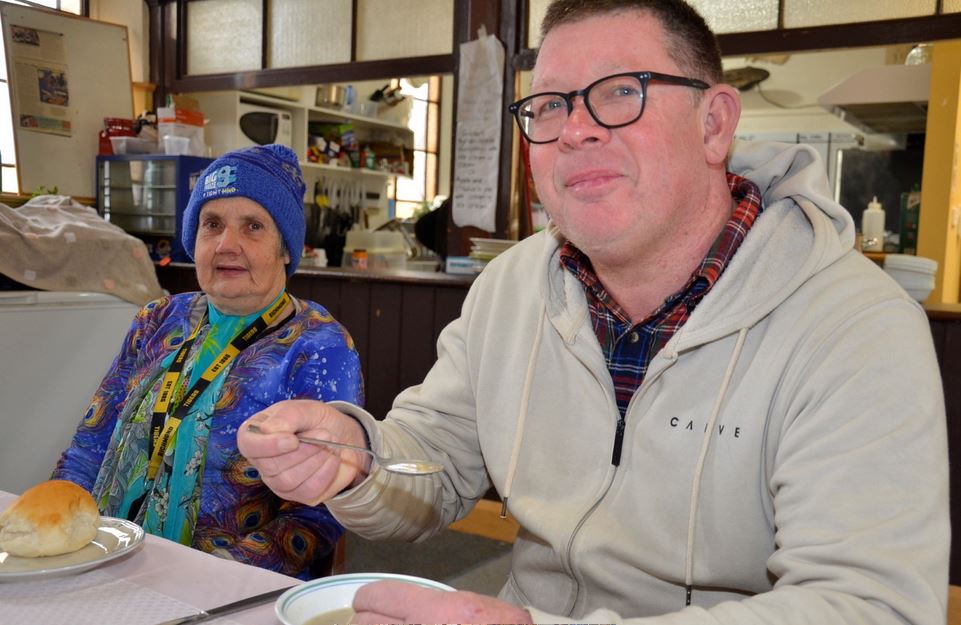
Cathy and Gary say that the type of social demographic represented among the diners has been changing in recent times.
“Every week there’ll be one or two new faces and it’s working people, which is the thing that’s disturbing, at the moment,” Cathy says.
“People will do anything to keep a roof over their head and sometimes that means no food.
“Some are regulars who come every week and there are some one-offs that we get. These are people who might just have had a big dental bill or something like that. That can throw the budget out. It’s a real mixed bag of stories.
“We deliver as well to 15 or 20 households, people who are isolated and elderly,” Cathy says.
“We probably have 15 to 20 people who sit down to lunch each Thursday but we also have others who aren’t looking for the social engagement as well, who will just get take-aways.
“All up at the moment we’d have about 60 to 70 households (using the club’s services) – or about 100 people.”
Gary, who’s the club’s acting secretary, says that sometimes it’s the need for social connectivity, a good chin-wag, that people are most in need of when they roll up to a Thursday lunch with the club.
“I love it because it’s something that is very direct and you can see the results of what you do,” says Gary when asked why he volunteers with the Club.
“There are no middle men, no bureaucracy, no means-testing of people, just a friendly and direct way of making a contribution,” he says.
Gary is “semi-retired” and has a background in the corporate world, in franchising. His professional background has left him with distaste for “bureaucracy”. It’s also left him with the ability to write successful funding applications, a talent which has very recently resulted in the Club’s receipt of a tidy $6000 grant from the Bendigo Community Bank Daylesford and District. The dollars are being bestowed on the Club at a rate of $1500 per quarter for the new financial year.
Marking that happy fact, two staff from the local Bendigo community bank, including branch manager, Melanie Tudball had also dropped in to visit the Club – and have lunch – while The Local was visiting.
Enjoying a seat at the Good Grub Club table, Melanie described the soup of the day – potato and bacon – as: “Great. Really good! Hitting the spot.”
In the kitchen, volunteers including former professional chef Rose Carrington, Robyn Zanon, who previously taught in a Stephanie Alexander Kitchen, and Robyn’s husband, Walter Zanon, were bustling about with delicious dishes featuring the aforementioned baked ham with roast veg and a dessert choice of apple and rhubarb pie or golden syrup, apple dumplings with cream or ice cream.
They were even happy and able to cater for special dietary needs, like gluten sensitivity.
“It’s very rewarding to do something for people who otherwise may not have a decent meal,” Rose said.
All of the diners that The Local chatted to gave the menu a decisive thumbs up, while many regulars mentioned that another main motivation for being there was the companionship.
“Basically it’s for the social interaction and it does get difficult cooking for yourself if you live by yourself,” said Hepburn local, Paul, enjoying the soup of the day.
“The food is very yummy and there is good community spirit. I’m a social butterfly. I like being with other people,” said fellow diner Sharon.
“The food is lovely,” added another regular, Nola of Daylesford.
The club runs on the goodwill and community-mindedness of its volunteers and more are always welcome, as are donations of in-date non-perishable food items.
“We currently have probably 15 to 20 volunteers. Some do the deliveries. We’ve got a couple of really good cooks, some of our volunteers pack hampers or help with serving lunch,” Cathy says.
The Good Grub Club is an independent registered and incorporated charity, and at times works quite closely with other community service organisations like the local Rotary club.
“Over the last 12 months, and especially since the pandemic, the demand has increased significantly, but surprisingly many people in our community are still not aware of the support services we provide even though we’ve been doing this for coming up ten years now,” Gary says.
“The (Thursday) lunches are cooked on site on the morning, and volunteers also cook on Mondays and Tuesdays and then we freeze so we can distribute,” says Rev Jenny who describes herself as “the general dog’s body actually”.
“We rely entirely on volunteers to keep the kitchen going. We also get good support from Coles through its Second Bite program. So every Thursday I go to Coles and pick up perishable fruit and vegetables that are left over.
“We can always do with more non-perishables and people can drop them off here (at the Uniting Church Hall) on Thursdays.”
Rev Jenny also says anyone keen to sign on as a volunteer and help keep the Good Grub Club dispensing its warming food and hospitality is more than welcome to contact her on 0408645248.
August 3rd, 2023Viva the vinyl retro revolution
Words: Eve Lamb | Images: Louise Gay English
There’s a moment of aural frisson, the needle dropping, the prelude crackle just before the soundwaves hit and transport you to…
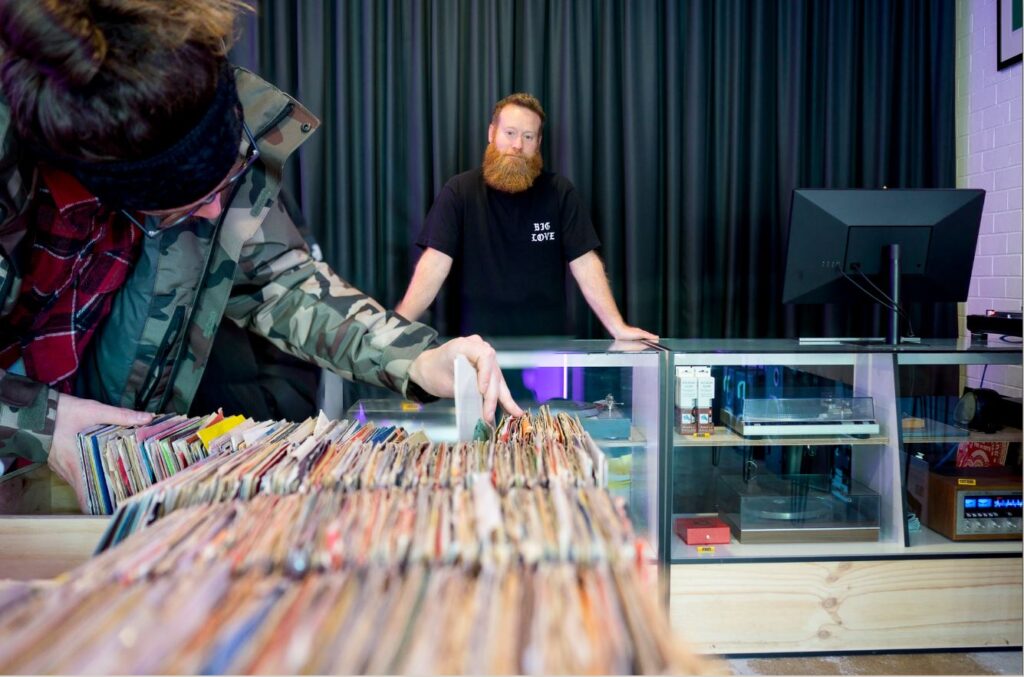
When the romance with retro vinyl began to bloom, Luke Cameron (pictured above) had something special to offer those smitten. A massive collection of vinyl records he’d been lovingly assembling over a quarter of a century, many of them coveted original press.
Last September this local music lover and former DJ turned his vinyl record collecting bug – that had begun at the tender age of 14 – into a flourishing business, opening Daylesford Records in the town’s Howe Street.
He has not looked back.
“I love vinyl and have for many years,” says Luke who lives just out of Daylesford.
“I’ve been collecting vinyl for about 25 years and my personal collection is about 15,000 records.
“The reason I started collecting was my mum gave me a crate of records when I was 14. From there I just started collecting.”
Offering between 1500 to 2000 highly collectable vinyl records in store at any one time, Daylesford Records has taken off and is now inviting music lovers to help it celebrate its first birthday with a special event on Saturday September 23.
“We’re having a really special day with DJs all day, and some other special things happening that we’ll be announcing closer to the day,” says Luke.
“It’s been amazing. We’re so busy and on weekends in particular we’re packed. We specialise in vintage vinyl. We’ve got new records as well.”
Much of the vinyl on offer in store is sourced from Luke’s own back-catalogue of collecting including many “holy grail of record collecting” first presses, made in the first year the record came out.
“We’ve got amazing records in stock and we can also source records for people,” Luke says.
“That’s been really popular with locals who are hunting for specific records. We can pretty much get any record in”
Luke says they also buy records from people who have them to sell and who may otherwise be unwittingly “sitting on a heap of money”.
“We’re basically cleaning and pricing records all day long,” he says.
“We grade the condition and we include the pressing year and the pressing location. We put a lot of detail into our pricing so you can browse through and know what you’re getting.
“We also sell turntables and amps, vintage turntables and new turntables and we can set people up with packs.
“I’ve always thought vinyl is fantastic, but what we’re getting now is young people who are picking up vinyl again. They have Spotify in their pockets but they’re loving the tangibility of vinyl.
“The sound of vinyl is so rich and deep, and full spectrum. People put on an album and listen to it from front to back the way the artist intended, and they discover tracks that they love but may otherwise not have heard. I love seeing it.”
Since the shop opened last September it’s been drawing music lovers and collectors from far and wide – Melbourne, as well as from close to home.
The gift cards are proving particularly popular. The act of physically browsing through all those collectible recording moments captured in time and in vinyl is a big part of what collectors love.
The shop situated at 8/11 Howe at is open Wed-Sunday 10am-4pm – and keep an eye out
for NBA Jam arcade game round robins happening soon on Friday nights.
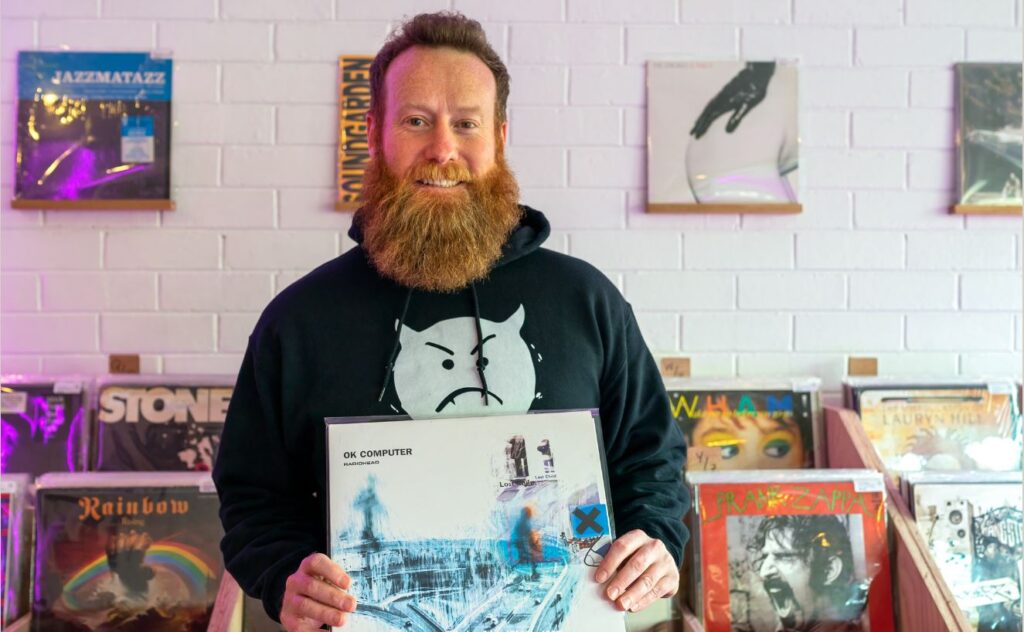
Vinyl facts
Manufacture of disc records began in the late 19th century. Price, ease of use and storage made the disc record dominant by the 1910s. The standard format of disc records became known to later generations as 78s after their playback speed in revolutions per minute. In the late 1940s new formats pressed in vinyl, the 45 rpm single and 33 rpm long playing LP, were introduced,
A new report published by the Recording Industry Association of America revealed that US music lovers snapped up 41 million vinyl records in 2022, compared to 33 million CDs.
In Australia, vinyl is the fastest growing category in music sales, increasing by nearly 23 per cent in 2022, according to the Australian Recording Industry Association (ARIA).

August 3rd, 2023Long walk to leave limbo

Words: Eve Lamb. Image: Supplied
Keep an eye out and you may just spot him hiking along the chilly, muddy Hepburn Shire roads this week.
While many of us stay rugged up indoors, much loved Ballarat-based Tamil refugee, Neil Para, 44, is this week walking through Hepburn Shire as part of his far bigger 1000 km trek all the way from Ballarat to Sydney.
Neil (pictured above) who with his family arrived by boat in Australian waters in August 2012, has set himself a target of covering 30 kilometres a day as he highlights the plight of refugees who have been left in limbo after their bridging visas were removed with no assurance of residential permanency anywhere sight.
Starting at 8am from federal minister Catherine King’s office in Ballarat this Tuesday, August 1, Neil aims to reach Prime Minister Anthony Albanese’s office in Sydney within a month.
There, he will intend to present a petition bearing 11,000 signatures and calling for “fairness for refugees who’ve lived here in Australia for more than a decade”.
Supporting him logistically will be groups like Ballarat Rural Australians for Refugees and others in the network.
Neil says the idea for the long walk came to him as he reflected on the response to a four-day sit-in protest that took place at Parliament House in Canberra in March.
“I feel we were seen, but we were not heard,” says Neil who lives with his wife, Sugaa, and their three young daughters in Ballarat.
“Every single politician – they were passing by – but they didn’t come and talk to us.”
Neil says that reaction has prompted him to launch the Union of Australian Refugees group and to tackle the walking challenge to draw attention to the plight of his family and those on bridging visas.
Before settling in Ballarat in September 2013, the Para family had spent months in offshore and onshore detention facilities, including in Darwin and Dandenong.
Neil says the move to Ballarat was part of what immigration officials told him was a program to “fast-track” visas for refugees and asylum seekers moving to regional Australia.
But he says the promise of a visa was later reneged on, and the family’s bridging visas were removed, leaving Neil and Sugaa in a situation where they struggle to survive without the ability to work.
Neil volunteers with the State Emergency Service in the evenings, while Sugaa, also volunteers in aged care and for a local community centre.
Refugee advocates say there are as many as 12,000 asylum seekers and refugees in Australia who were excluded from the federal government’s announcement in February on a pathway to a permanent visa.
Those eligible included 19,000 people – from the Legacy Caseload – who had been living in Australia on temporary protection visas (TPV) or safe haven enterprise visas (SHEV).
Neil and his family are now understood to be among the up to 12,000 people who missed out. Meanwhile, data released by the Department on July 13 shows it has approved 2740 applications from asylum seekers and refugees who pursued the permanent pathway option announced in February, while 15,676 claims are still being processed.
Of the 32,045 individuals in the Legacy Caseload group, 7725 are reported to have had their cases closed either through refusal, cancellation or expiration.
After leaving Ballarat this Tuesday, Neil plans to head on to Newlyn, and then to continue on Wednesday from Newlyn through Daylesford and on to Malmsbury.
Former members of the now disbanded Rural Australian for Refugees Daylesford are supporting him during the Daylesford section of his walk and locals are being encouraged to get out, welcome him and cheer him on.

July 20th, 2023A little black magic
Words: Eve Lamb. Image: Chloe Smith Photography.
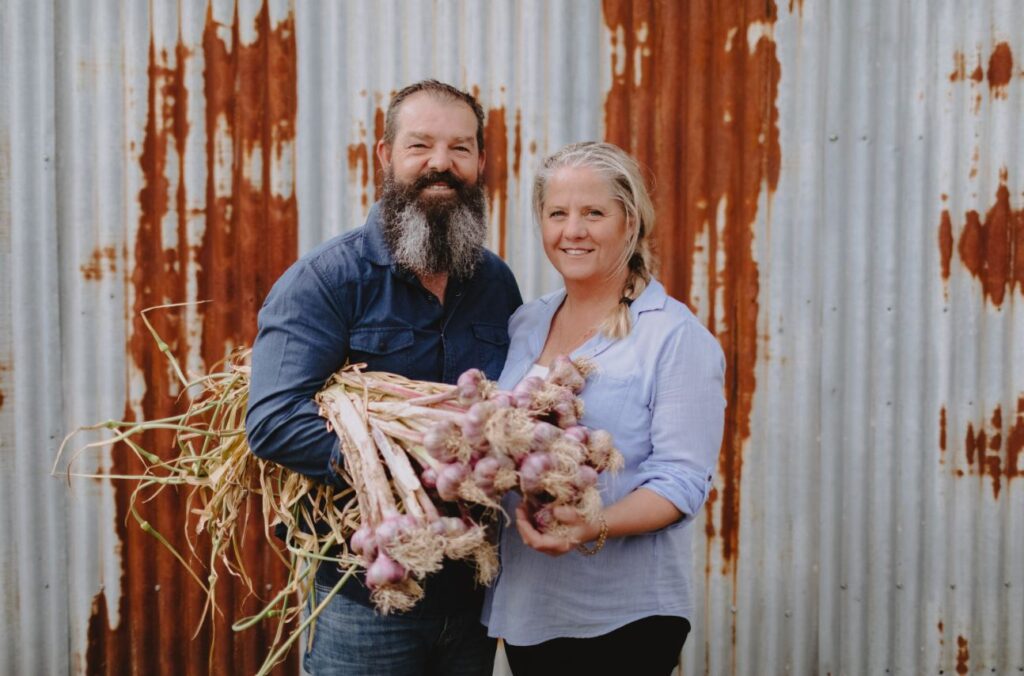
Theirs is a tale of taking a punt and following that inner vision. For Springmount couple Carmel and Brett Masterson it’s the sort of story that anyone dreaming of a new life direction and of becoming their own boss really likes to hear.
Carmel was working in admin at a local school when an episode of the popular TV series Masterchef caught her attention back in 2010. More specifically a certain special ingredient being used on the show caught her attention. That ingredient was black garlic and Carmel didn’t know it then, but the strong interest it piqued in her meant that by 2017 she and Brett would actually be supplying Masterchef with it themselves!
“I chucked in my job and went and bought an oven in 2014 and started making it,” Carmel recounts her daring move that would lead to the formation of their small batch gourmet edibles business, Springmount Fine Foods.
She admits that mastering the art of making black garlic took quite a bit of trial and error, and there was more than one batch that ended up in the compost before she mastered the art.
“Like most people I assumed black garlic was a variety of garlic, but after a lot of research we realised it was a painstakingly slow process of ageing the garlic in a low temperature oven for 40 days,” Carmel says.
This protracted and precise process creates the sweet, black, sticky delight that adds flavoursome interest – and particularly high antioxidant content – to all manner of fare. It’s perfect, for example, for cheese platters, folded through butter and served on a sizzling steak, scattered over grilled tomatoes or sautéed with mushrooms. It even pairs well with dark chocolate.
“Everyone that has tried it has fallen in love with the unique sweet yet savoury flavour and soft caramelised texture,” Carmel says.
When she bought that commercial oven, she was clearly doing something right as Brett also left his work as a landscape gardener and began working fulltime at their property-based Springmount Fine Foods business as well.
When Carmel and Brett established Springmount Fine Foods in 2015, growing garlic on the property at Springmount, between Creswick and Daylesford, was the main focus right from the start.
While they no longer supply Masterchef with black garlic, they’re producing more of this speciality gourmet goodie than ever as demand has gone from strength to strength. Springmount Fine Foods has become renowned for producing it, along with other specialty gourmet delights like their garlic drizzle range.
When The Local visited Carmel and Brett at their Springmount property and commercial kitchen in recent days, it wasn’t hard to spot the new garlic crop growing in a paddock.
It comprises 25,000 heads, or cloves, of garlic that the two of them planted – by hand! But harvest of the new garlic crop won’t happen until around the end of November – start of December.
“The planting is all done by hand and it’s massive work, just the two of us,” Carmel said.
”Harvest is a monumental job as well but we usually get family members involved with that.
“We also do sauces and vinaigrettes and we have a whole garlic range. One has smoked garlic, one as roasted, and aside from that we also do fruit pastes and relishes.
“Probably our biggest selling product is our garlic drizzle and we’re just about to launch two new versions – one with native mountain pepper and one with chilli oil.”
Other gourmet products of particular note include their fruity little flavour bombs called garnishing pearls which turn a glass of something good into something even better, perfect for special occasions.
“We’ve got our strawberry pearls for champagne, peach pearls for prosecco, and our lime pearls for gin and tonic – which are my favourite. I love them,” Carmel says.
“They have a fine gel coating and a liquid centre that pops with a burst of flavour in the mouth.
“We do a lot of food and wine festivals and it’s shown us how this new generation of foodies are not only looking for exciting food that’s beautifully presented but they are now craving that bit of theatre to accompany the experience.
“That’s why we developed our gourmet pearl range to be able to offer another unique product with a touch of sophistication. They’re for a bit of fun. No-one makes them the same as us and they’re all made with real fruit.”
Carmel and Brett purchase some of the ingredients, like the fruit, that they use to make some of the products in their commercial on-site kitchen, but they grow all their own garlic – and also their own mint – on the property.
Brett says that since COVID, Springmount Fine Foods has been growing each year – “to the point where we’re struggling to keep up with the manufacturing and growing sides of the business,” he says.
“Our daughter, Tia, now works for us part time,” Carmel says. We don’t want to grow too big. We want to stay small and boutique. It suits us.”
The Mastersons admit they’re proud that their products have picked up multiple medals at the Australian Food Awards, the Royal Sydney Fine Food Show and the Royal Hobart Fine Food Show over the past few years.
Suffice to say they’re busy people, working with an expanding list of retailers, chefs and lovers of gourmet foods, and the couple say they have ideas for new products yet to be created.
“Our main market would be wineries, cellar doors and specialty food shops but we’ve also just cracked into Sydney,” Carmel says.
“We’ve got into QE food stores in metro Sydney, and for the last year we’ve had a distributor in Melbourne so we’re getting into the Melbourne market a lot more as well. That’s gone berserk!”
Especially worth noting for locals, is the fact that they’re also preparing to be part of the first ever Kingston Food and Wine Festival scheduled to take place at Kingston, in October this year. In fact Carmel is on the organising committee and is pretty excited about this new addition to the region’s events calendar. She says the new festival is definitely intended to become a regullar annual highlight. So watch this space.