

July 20th, 2023Artists of the central Highlands

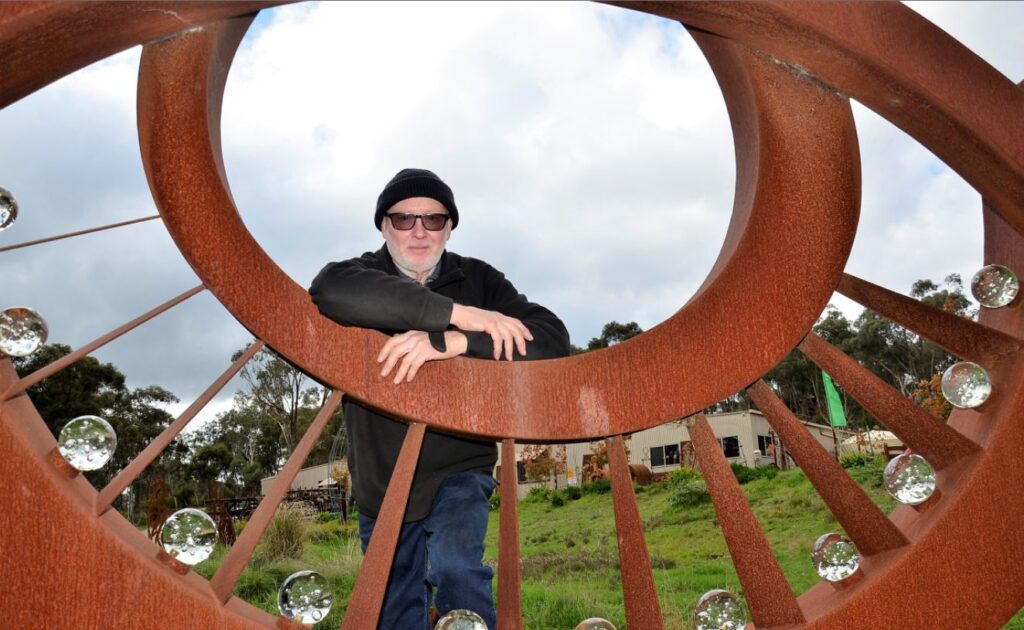
Castlemaine’s Neil Tait has built up an admiring following for his artistry when it comes to decorative ironwork. This local creative – ably assisted by his team – designs and creates wrought iron pieces that are aesthetically pleasing works of art which frequently also serve the most functional of purposes. Neil’s well-established local business, Tait Decorative Iron, uses a variety of materials – including bronze, mild steel, copper and stainless steel, to create a unique range of sculptures and decorative pieces. Garden sculpture, wrought iron furniture, imposing gates, and beautiful balustrades that please the eye while providing a practical function are just a few of the sorts of pieces Neil creates at his local workshop. Neil took the time to chat to journalist Eve Lamb about his work.
Eve: G’day Neil. You’re renowned for your artistry with ironwork! Can you tell us a bit about what you’re working on at the moment?
Neil: I’m currently working on designing an interesting gate with a Waratah flower as a central focal point.
Eve: When you are creating a piece of work what does the process entail?
Neil: The process of commissioning sculpture or custom work involves discussing details of the commission with the client, a site visit, budgeting, material choices providing detail visuals and working drawings.
Eve: Can you tell us a bit about some of your most satisfying or exciting projects to date?
Neil: I’ve had a great range of satisfying projects, working on sculptures for landscape projects, playground elements, and custom gates. There have been so many for private properties but also for public spaces. I’ve done some sculptural works for the Victoria to New South Wales Long Paddock Project. The sculptural pieces were designed by the artist Geoff Hocking and every sculpture had a story with it. Also some interesting pieces for the Catholic Church throughout Victoria, designed by Jenny Steiner, including interior light fittings for churches and decorative installations. Another one was a piece made out of stainless steel for the Botanical Gardens conservatory at Fitzroy, behind Parliament House. We did all the elements in the Castlemaine Botanical Gardens children’s playground, and we’ve just built a giant frog for a public space in Caulfield!…
Eve: Have you ever, or do you currently, work in any other area besides your arts practice?
Neil: My other areas of interest are designing garden layouts incorporating the large range of product my company produces, from pizza ovens to garden sculptures, gates or furniture.
Eve: Where does all of this creativity take place?
Neil: My workshop at McKenzie Hill, Castlemaine.
Eve: What are some of the main challenges that you encounter in your creative practice Neil?
Neil: Some of the main challenges of any creative outcome are constantly having fresh ideas, working within time and cost restraints. To be viable is always a challenge but I’ve been making things and been self employed for over 35 years so I must be doing something right!
Eve: And the main rewards?
Neil: The rewards are many. I’m fortunate to have a very talented team of staff who can make almost anything I design. I also have a son with amazing skill in design and computer skills for the visual and computer work involved on large projects. One thing that always makes my day is seeing a project completed and the client has commented on how it was a good experience through the journey to outcome.


July 19th, 2023A wonderful wartangu

Words: Eve Lamb. Images: Supplied
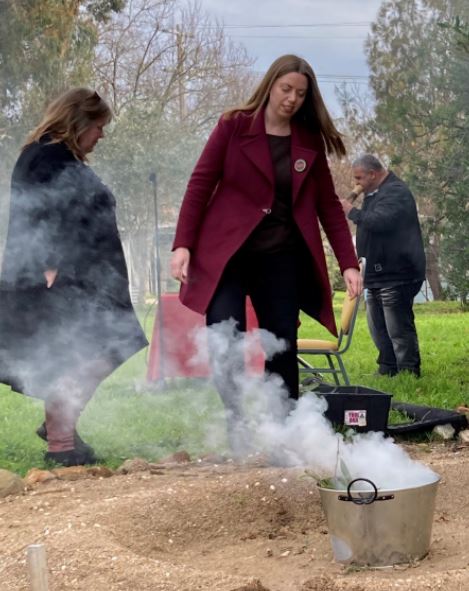
There was a fair bit of wartangu happening at the Creswick Neighbourhood Centre as part of an occasion worth celebrating recently.
Wartangu? I hear you ask… It’s the Dja Dja Wurrung, Indigenous word for ‘coming together’ and this particular coming together celebrated NAIDOC week with the naming of several significant rooms at the local neighbourhood centre.
Centre manager Chrissy Austin had invited the state Member for Ripon, Martha Haylett, Hepburn shire councillors, centre committee and friends to the event which launched the new Indig names in the language of the Djaara People.
“I approached the Djaara Language Centre to gain approval to name a number of our rooms in Dja Dja Wurrung words in order to begin the passage of integrating Indigenous words into our own everyday language,” Chrissy said.
As a result, the centre’s programs room has become the wartangu (we come – learning/coming together/being together) room.
The computer room/learning lab is now the nyakang nyernang (seeing and hearing – learning/education/getting education room.
The shared kitchen is now the djakitj (food) room while the library is the Djimbayang (teaching/learning) room.
“We’re really keen to see the embedding of the Indigenous language into our everyday language,” Chrissy said.
“A main aim for us is to be more welcoming and inclusive and one of the ways is through language.”
After the naming event took place, Chrissy said that the Indigenous Djarra naming of the CNC rooms was already proving to be a valuable means toward achieving that goal.
“It’s proving to be a really good tool for our teachers and for our volunteers. It’s the start of a journey for us. We’re just hoping to grow it as much as possible and bring people on the journey with us,” she said.
“I want to encourage people to not be afraid to make a mistake with the new names in the rooms. They’re absolutely fantastic.”
July 19th, 2023Care to tango: Ballroom dance beats the winter blues

Words and Image Eve Lamb
You know those couples. The ones who, when called upon, can trot out a mean foxtrot, waltz or tango at the rellies’ wedding while you – er – improvise…
They glide across the floor, demonstrating superb synchronicity, smile smugly into each other’s eyes as they execute a tricky manoeuvre the way it’s meant to be done.
Well, chances are there’s quite a few of these types happily residing in the Creswick area.
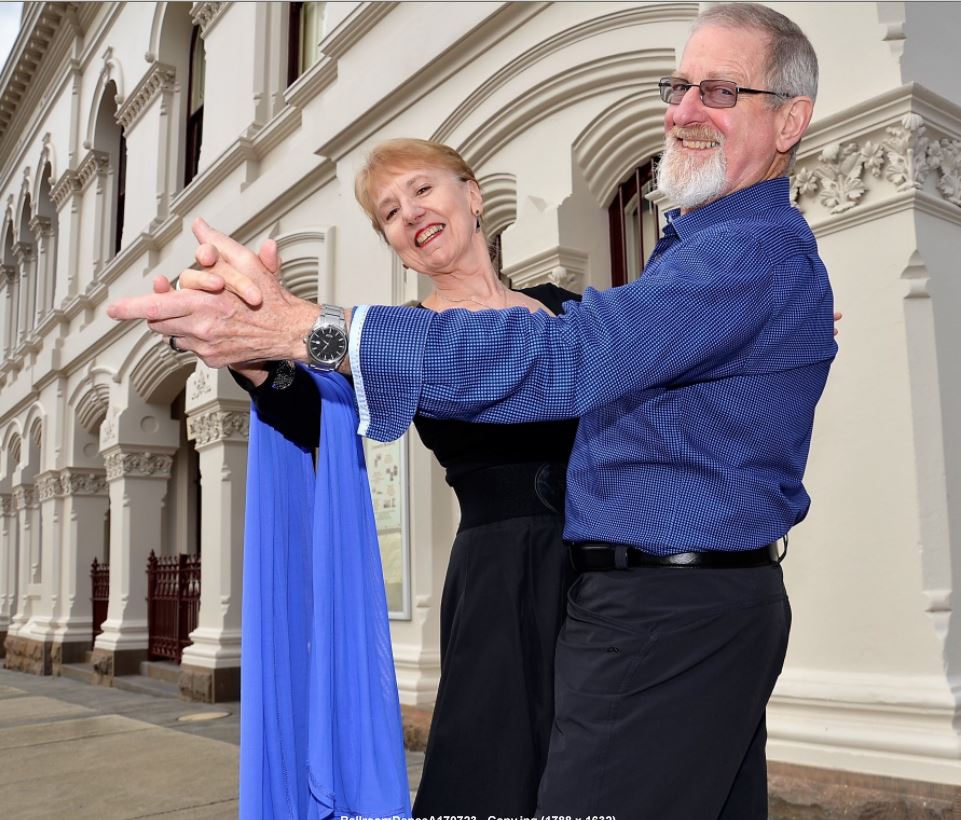
I say ‘happily’ because taking the ballroom dance lessons that local instructors, Elizabeth Howard and Andrew O’Connell dispense each week through Creswick U3A, tends to boost participants’ happiness quotient considerably.
Partners in life as well as in dance, Elizabeth and Andrew have been teaching ballroom dance to the locals here for the past ten years.
Now, through Creswick U3A, they volunteer their time to take ballroom dance lessons every Tuesday, for all levels right through from absolute beginners to advanced dancers who can cut up the floor.
In fact a couple of those who regularly attend their advanced lessons have recently introduced a new monthly social ballroom dance at nearby Clunes. A bit more on that later…
For Elizabeth and Andrew, teaching ballroom dance is something they simply love to do.
Both have professional backgrounds as teachers and bring this to their ballroom dance lessons, patiently adapting the pace to match their students’ abilities.
The Tuesday classes through the local U3A take place in the Creswick Town Hall with beginners from 10am, transition from 11.30am, improvers from 1pm and advanced at 3pm.
For the participants the cost of the lessons is covered in their annual Creswick U3A membership which is $25 a year and provides members (aged 50 and over) with a wide range of other classes and activities to participate in as well.
Elizabeth says the focus of their ballroom dance lessons is firmly on having fun and socialising.
“It’s a happy-making activity,” she says.
“We love it. We teach foxtrot, waltz, tango and quick step, new vogue sequence and old time dancing.”
“We get compliments all the time,” Andrew says.
The couple, who reside at nearby Springmount, both started dancing fairly late in life but quickly discovered a natural aptitude.
Besides teaching the regular lessons through U3A at Creswick they also do occasional private lessons, typically for events like weddings, deb balls and the like.
Those who learn to dance with them can then take their skills to any of the social dances that happen around the region and beyond.
Clunes’ Graeme Grigson and Ballarat’s Helen Wallis are regulars in Elizabeth and Andrew’s Creswick U3A advanced class. But both had also studio-trained in ballroom dance previously and they recently took the lead in introducing a regular series of social dances to Clunes. These now happen on the first Friday night of the month from 7.30pm-11pm.
Helen says the new Clunes social dance is not just a great way for people who like to dance to come together and do just that. It’s also a great way of bringing life, and sometimes a dash of glam, to the “beautiful Clunes Town Hall”.
“We wanted to bring dancing back to Clunes. We both have a passion for dancing and for the town hall at Clunes,” says Helen.
The new series at Clunes started in June with the next dance set for August 4, and despite the chill winter conditions, devotees have been turning out in good number for this new social series.
“When we held our first dance we had 35 people turn up, and we had 26 last time,” Helen said.
“Yes people can just roll up, but it is sequence dancing so you do need just a little bit of experience.”
Graeme, an accomplished ballroom dancer, is also a member of the Clunes Tourism and Development Association which is supporting the new Clunes series of social dances.
Helen says participants bring supper, and any money raised through running the dance goes back into the community.
The new Clunes dance is among multiple social dance opportunities around the region including dances at Ascot, Newstead and Maldon.
“We’re not affiliated with the new Clunes social dance but we encourage our students to go to it,” Elizabeth says when we get to talking about its recent introduction.
It’s true to say that ballroom dance played a vital role in Andrew and Elizabeth getting to know each other.
“I started learning to dance in 2010 and Elizabeth started three years before,” Andrew recounts.
“We didn’t know each other. We actually met through TAFE college in Melbourne.”
“When Andrew asked me out, I asked him could he dance, and he said ‘Yes’… and then went straight down to the studio (in Ferntree Gully) to get a lesson,” Elizabeth chuckles.
“I got lessons for two weeks. I worked extremely hard, and I was then able to do a fairly complicated waltz that I’d seen Elizabeth doing with another chap,” Andrew says.
“So when it came on at the little social dance we used to go to on a Thursday I said -‘OK. I can do this’. And she said ‘What!’ and I said ‘Yes. Let’s do the Honeysuckle Waltz’. And we did!”
Andrew’s sporting background may have assisted in his ability to pick up the coveted dance moves after just a fortnight of dedicated practice. The effort clearly paid off.
While it cannot be guaranteed that you’ll meet a new life partner by taking up ballroom dance, it’s pretty much a certainty that many other benefits will accrue.
“Co-ordination is one,” says Andrew.
“Actually getting up and exercising. You are moving quite a bit. Your spacial awareness is really heightened. Gets your heart rate going. Gets your breathing going. When I was first learning I forgot to breath!”
“People have to be over 50 to be in U3A but we have students over 80. We have an 83-year-old,” says Elizabeth.
“Also with dance you’ve got to think, move your feet, remember the moves, so it’s cognitive in so many ways. It’s fitness and thinking and social all at once.
“It’s heaps of fun and it feels beautiful to do, and you don’t have to have a partner to participate.”
“We joined Brian McDowell’s Ballroom Dancing Class at Creswick U3A soon after he started teaching in 2014, and became co-teachers with him,” Elizabeth said.
“He is also a musician. He reduced his teaching work as a result of our volunteering and retired from teaching several years ago, but he continues to play for our classes on a part-time basis. We may never have become dance teachers if he had not already got the ball rolling.
“Many (who take the Creswick U3A lessons) venture out to social dances in the region. There are many in Hepburn and Ballarat,” Elizabeth says.
“We put on two dances a year at Daylesford Town Hall. They frock up.”
Frocking up is part of the fun, Helen says, and right now she and other dancers who take Elizabeth and Andrew’s lessons are among the many particularly looking forward to the dance set for Daylesford Town Hall on October 7.
More information about Elizabeth and Andrew’s lessons is available through Creswick U3A or 0402777852. More information about the Clunes social dance series is available on 0417233373 or 0418536189.

July 8th, 2023Artists of the Central Highlands …

with Eve Lamb
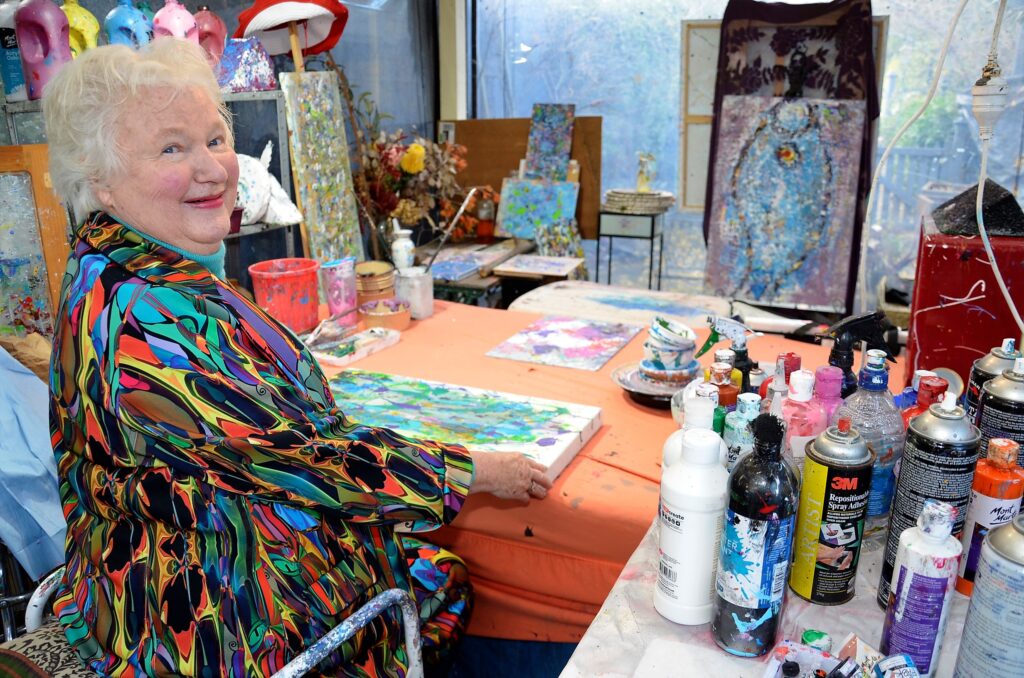
Formerly Sister Maleita, serving as a nun with a French Order in New Zealand, Daylesford’s Millie Gouldthorpe came to painting later in life than many, but once she did – Oh Boy! The canvas really exploded. Millie’s style which emerged in a torrent of creativity during the time of COVID lockdowns is vibrant, abstract expressionist, and the way she revels in the sheer joy of colour is all the more fabulous for the fact that she is classified as blind due to the development of a degenerative eye condition. When she makes art, sometimes literally in the dark, this local arts talent almost seems to be channelling some higher force.
Eve: How long have you lived in Daylesford now Millie?
Millie: Seventeen years. Came with my husband; he died in the front cottage. Then moved out to the back cottage with Jude who’d been a Loreto nun. And I also was a nun with Sisters of Our Lady of The Missions, a French Order, in New Zealand for twenty years in New Zealand. We entered the nun hood same day, same month, same year. Two different countries. Two different orders. We were both twenty years in the convent. She’s now my carer. I was Sister Maleita (that’s my real name). Born in Wales. Named after a cow. Entered the convent. They said ‘Can’t use that name’. I said ‘Oh. It’s a Holy Cow’.
Eve: Great story. When did you take up art?
Millie: I took up painting during the COVID period … and I suddenly had this burst of energy. I knew I had to paint. So I went out there (to the undercover space which has since become a studio) Pouring rain. Two o’clock in the morning, and got three canvasses at once. Got a yard broom, threw paint on the three canvasses, dragged the yard broom over the three at once. Could feel and see texture of blue and gold, and then I threw chalk paint and shoved a stick into the chalk paint… Later I was putting it outside and a friend, Miriam, came and said ‘Oh! You’ve drawn my homeland! The Wimmera!’. I said ‘Oh? Yes I have!’ (laughs) Anyway, she bought it! A triptych. But I was so driven with paint. And it sort of gave me a sense of independence. Of control and delight. Sheer delight with the colour. And because I wasn’t using a brush there’s no ego involved.
Eve: You obviously have a huge amount of fun. How do you paint? Do you just flick paint with the palette knife?
Millie: Yes. A stick, or anything.
Eve: Acrylic on canvas?
Millie: Yes. But I’ve gone through different stages. I went through a stage of mono-printing, just splashing and squeezing (marked surfaces together) and some amazing things happened with that!
Eve: People really love your work. It’s amazing that you only took up painting during COVID. What have been some of the highlights for you since then?
Millie: Well an artist, a real artist, and friend of mine, said ‘why don’t you enter the Castlemaine Art Exhibition?’ And so I put three in. I had an enormous one that went through so many metamorphisms. And the joy for me is that I’m not despairing. I know there’s something emerging and I can’t control it. I have to let it happen. It draws me. It paints me… So suddenly I’m seeing the browns and the blacks – and I began to just put handprints. Some white. Some brown. And I called it ‘Reconciliation’ . And it sold and I got such a shock! Then I donated a dancing dragonfly to the Zelman Memorial Symphony Orchestra here last year. U3A were sponsoring it. I said ‘would you like a raffle prize?’ So I did this big dancing dragonfly. At the end of the thing I got a tap on my shoulder and the conductor said ‘Are you Millie?” He said “I haven’t won the raffle but did you paint that?’
I said ‘Yes I did. Who are you?’ (I was upstairs and I couldn’t see). And he said ‘I was the conductor and I want to commission you’… I said ‘You don’t!’ He said ‘I have to’. So I’ve had three commissions from him.
Eve: So people are responding really strongly to your work and it’s an interesting irony, isn’t it Millie, that somehow with the loss of eyesight it’s really bringing to the fore an absolute passion and appreciation for vision and for colour.
Millie: Well. That’s exactly it.
Eve: So I have to ask you… What is the visual condition that you have?
Millie: It’s dry macular degeneration. The back of my eyes are covered over with whatever it is, so I can’t really see. I have to look up to catch you. So I’m relying on peripherals all the time.
Eve: How does the eyesight condition influence the way you go about creating work?
Millie: Well the other night the power went off. So I thought ‘Oh well I’m in the dark anyway most of the time’. So I reached across to where I knew there was a fresh canvas and I pulled it over and then I put my phone on, and got the light on the phone and just hovered over five colours with the light. Gold, verde, black, those sorts of colours. And I filled five little frisky tins with the paint. I got four, five sticks and I just sat there in the dark, and I just threw the paint blindly. In the morning Jude came in and said ‘Where did that come from!?” I said ‘Oh I was just playing around’.
She said ‘But the power went out. We had a brown out’. I said ‘I know, but I’m blind anyway’.
And then a neighbour came and saw it and said ‘Oh I have to have it Millie! I have to have it. I’ve got the place on my wall’… I really don’t know how to respond to you, other than that I have a passion, a feel, and I think that the fact that I can’t see gives me freedom from ego and thinking. And, well, I’m connected to The Source. My influence is God. My faith. And I know that I’m imbued with the source of creation. I didn’t come to art. Art came to me.
Eve: Can people visit you and your work here at your Daylesford studio by appointment?
Millie: Yes. Probably by appointment.

July 7th, 2023Warm welcome at the Daylesford Steakhouse
Words & images: Eve Lamb
On a recent chill winter’s evening, just after dark, the mellow light that issues from our dining destination – the Daylesford Steakhouse – is warm and inviting.
My worthy dining companion, Paddy H, and I climb the small flight of polished wooden stairs to enter this central Vincent Street eatery – and thaw out.
At the top of the stair we’re warmly welcomed by the venue’s manager, Mike, and by the equally warming wood smoke aroma that can only mean a real log fire is present. In fact, Mike tells us, there are two fires on site to warm diners, and we can seat ourselves beside either, he suggests.
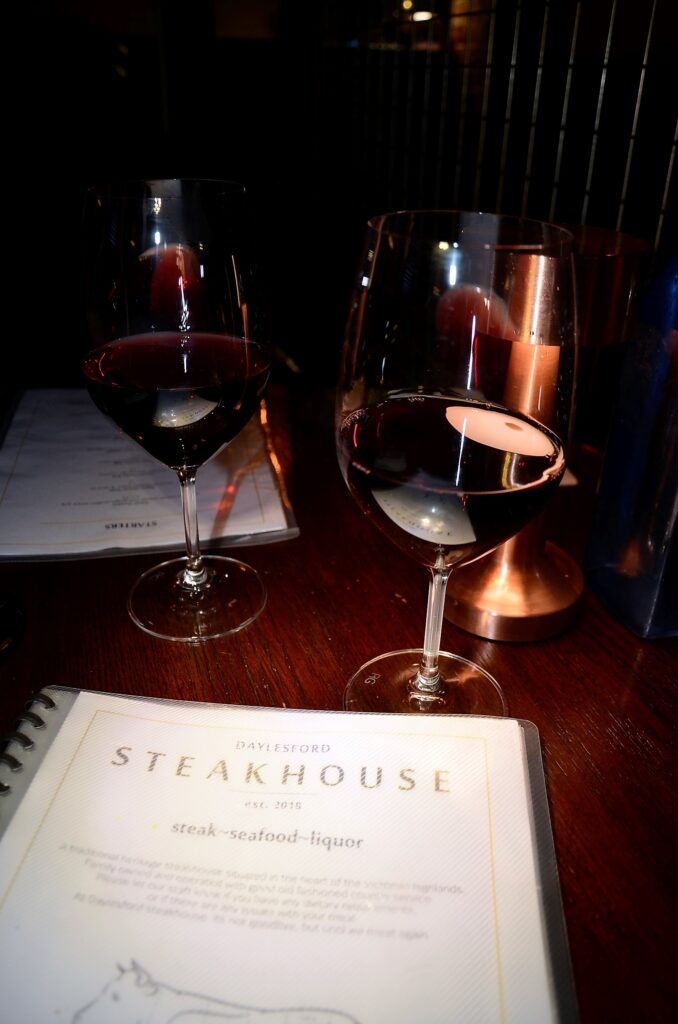
Whether you’re a carnivore or not, the Steakhouse gets full marks, straight up, for ambience. The lights are soft. The background music likewise, and the log fire that I strategically place myself beside, makes this a top spot to while away an extremely pleasant few hours. Particularly at this time of year.
Mike informs us that the new winter menu is just out – and we take our time perusing it over a generous glass of Geelong region pinot.
Now, let’s be clear, this is a steak house. It takes its steaks seriously. All of the Steakhouses’ steaks are local 100 percent pasture-fed Black Angus Beef, hormone and antibiotic free, the house literature tells us.
The menu contains an illustrated guide to ordering your steak, char grilled to your specific taste, with options ranging from “blue rare” to “well done” all technically detailed.
The char grilled steaks are, as you’d expect, a feature of the menu. The “standard house cuts” include Petite Mignon (200g), Eye Fillet (300g), Sirloin (400g), Scotch (400g), Highland Rump (400g), T-Bone (800g) and Cote de Boeuf (900g), and every steak comes with the diner’s choice of side and sauce.
Options for sides include: Grilled Asparagus, Stuffed Mushroom, Rosemary and Pumpkin Dauphinoise and more. Options for sauces include Truffle Sauce, Peppercorn, Béarnaise, Garlic Butter and more, while additional steak toppers include King Prawns, Grilled Vic Lobster Tail, Grilled Balmain Bugs – and more.
And If the standard house cuts don’t “meat” diner’s requirements, the menu suggests that they “see board for larger steaks cut to order”.
But don’t worry if you’re not a big meat-eater, or even a meat-eater at all. Besides all the multiple vegetable side possibilities, there’s also plenty of seafood options to choose from. These include: Apple Cider Mussels, Stuffed Lobster (half or whole), Atlantic Salmon Steak, Grilled Seafood Platter and Lobster and Seafood Pasta – to name some.
For starters I go with the Panko Funky Brie ($19). It’s crisply fried on the exterior and deliciously melted within, accompanied by a Tomato and Mango Chutney.
Paddy, recounting that his mother used to be a dab hand at making the traditional Scotch egg, nominates the Steakhouse Posh Scotch Egg with Truffle Aioli and Tomato Relish ($25) for starters and, on sampling, declares it to reward with “nostalgic” flavour.
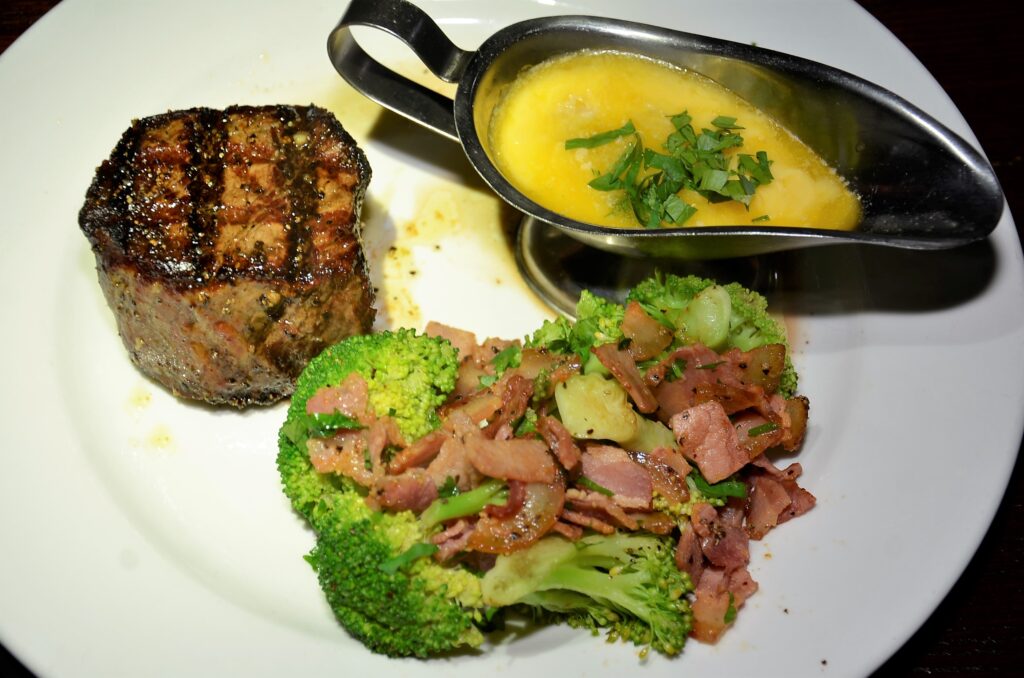
For mains Paddy opts for the Petite Mignon ($59) with Garlic Butter and a side of Broccoli and Bacon. The steak arrives swiftly, criss-crossed with char grill sear lines and the aroma of hot coals. Paddy declares it “Spot on! Beautifully tender”.
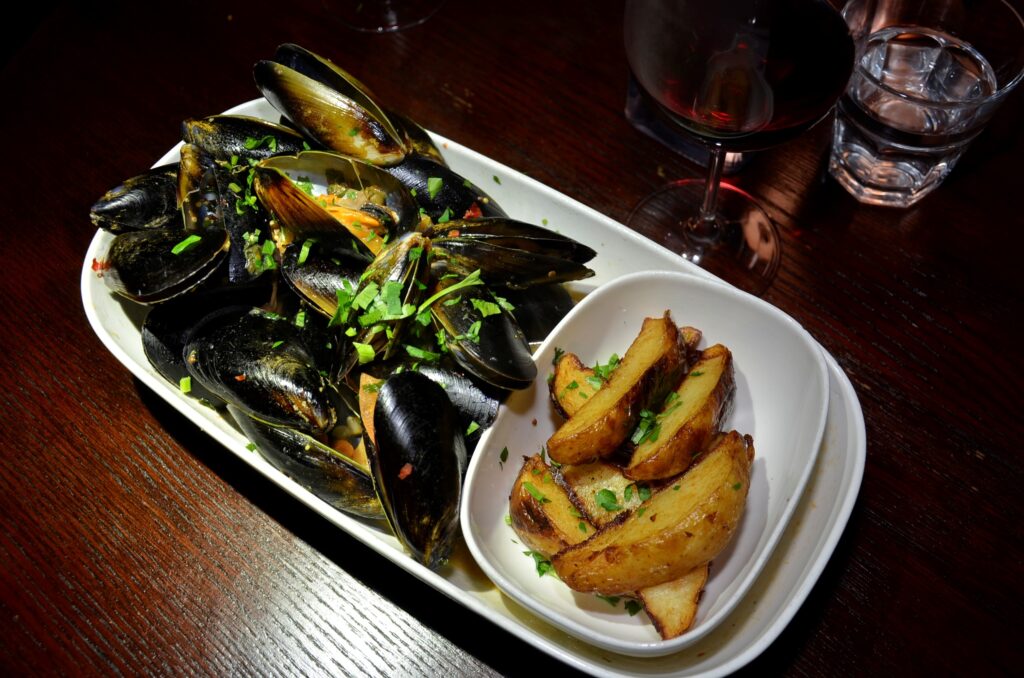
I go for the Apple Cider Mussels with Tomato, Butter, Mustard, Parsley and Dipping Fries ($39) as a main. While the menu informs that they come with dipping fries, my gluten intolerance is obligingly accommodated and, instead, mine is arranged to come with a locally grown, baked and deep-fried spud, which proves particularly satisfying. As to the mussels – the serve is generous and pops an instant and transportive taste of the sea.
When it comes to desserts ($16), Mike highlights the ‘Disco’ Crepes Suzette as a flambéed house speciality. Other possibilities include the Salted Caramel Fried Ice Cream Bombe, the Classic Affogato, or the Cheese Plate – Blue and Brie with Relish. But Paddy is a self-confessed cheese cake nut who once confided that, if on death row, he’d select cheesecake as his last mortal crumb. So no surprises that it’s the New York option here for him.
I’m very tempted by the Ultimate Choc Fudge Sundae – containing “nuts and awesomeness”. How could you not be? But my gluten sensitivity compels me to instead select the Vanilla Crème Brulee, a dessert choice that (I may have mentioned) I always find hard to ignore. This one has a really home-made, delicate quality beneath its crunchy toffeed top. Both desserts are accompanied by the Steakhouse signature “glorious whipped ‘schlag’ vanilla bean ice cream” … and following their arrival, are rapidly transformed into sweet memories.

It should be mentioned, here, that one of the ‘house attractions is the100-plus different cocktails – “and if there’s a cocktail that you really like and we haven’t got it, we’ll have a go at making it,” Mike mentions.
It’s true to say that we’re sorry to have to leave the warm embrace of our respective club chairs beside the log fire, but this place is clearly popular and, with a degree of difficulty, we bid its mellow ambience farewell. Until next time.

July 6th, 2023Produce with passion at Meraki Organic Farm
Words and images: Eve Lamb
Italian born Daniele Tarasco brings a personal passion for fresh, flavoursome food and his background as a high-end chef to running Meraki certified organic farm at Newlyn North.
Originally from Matera in southern Italy, he and his wife Liv Reppas, have had the six acre property on its rich volcanic soil at Newlyn North since 2015 when they began the three-year process of certifying the farm as organic.
Their ethos is captured in the name of their little patch of paradise – ‘Meraki’. It’s a word modern Greeks use to describe doing something with creative flair or passion — putting “something of yourself” into what you do.
“I’ve always worked with my hands from a young age,” says Daniele who left Italy in his late teens and worked for top notch eateries in London, Melbourne and Hepburn before getting into organic farming fulltime at Meraki.
“I’ve always been connected to food. When I was growing up food was a crucial cultural part of life and then I developed this passion for growing food. On school breaks in Italy I started to get into hospitality, into cooking.”
Since taking to culinary creation from the tender age of ten, he built a fine dining career with stints at Gordon Ramsey’s Maze and earning the title of Head Chef at No. 8 by John Lawson where he was nominated as The Age Good Food Guide’s Young Chef of the Year.
Liv (Olivia) has a professional background working as an organic auditor working for property certifiers and, in the lead up to their establishing Meraki, had been looking into organic gardening as something they too could pursue.
“We found this place and we wanted to turn it into a small farm. While we were setting up the farm I was working at Peppers. I did two and a half years as head chef at Peppers before shifting fulltime into farming,” Daniele says.
Right now they’re growing all manner of delicious fully certified organic vegetables and also producing and selling certified organic eggs courtesy of their Lohmann Brown layer hens.
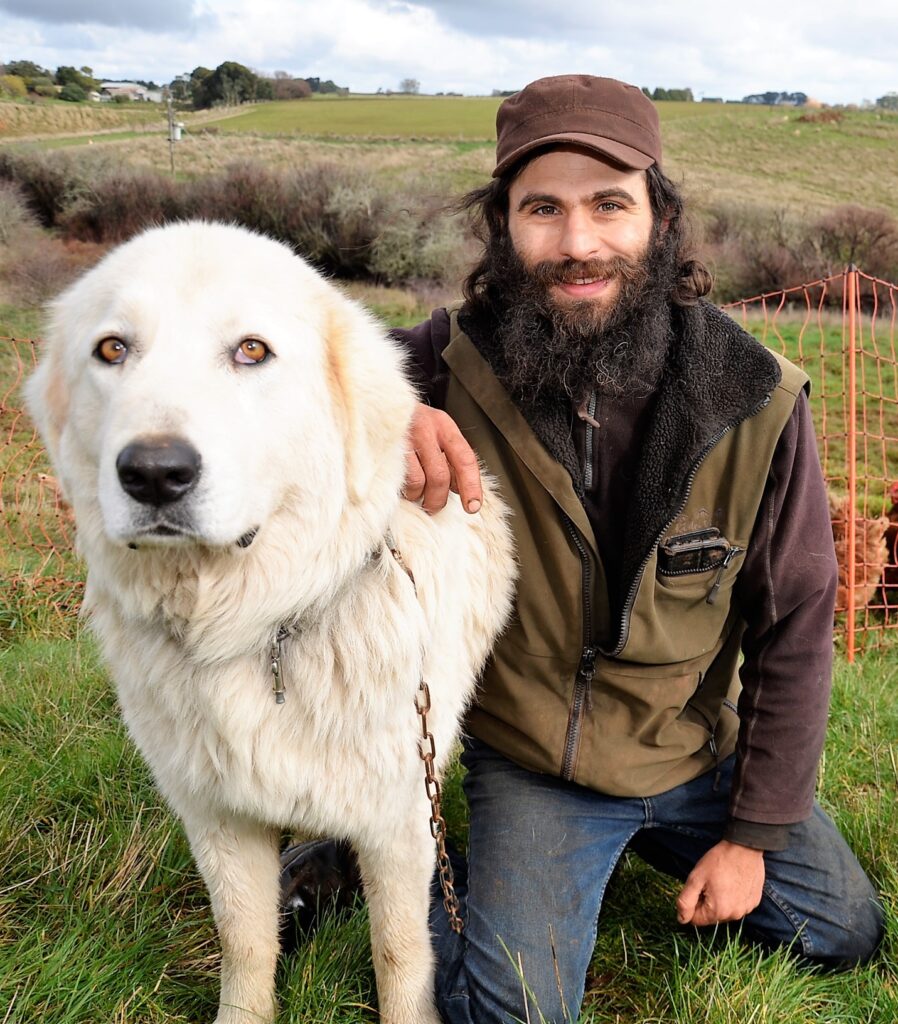
The layers are dutifully guarded by the couple’s two large handsome Italian Maremma dogs – Trajan and Luna.
A whole range of seasonal vegetables are currently flourishing on site and, when The Local visits for a quick tour on a recent drizzly winters day, Daniele lists what’s growing. It’s an impressive assemblage.
“At the moment there’s carrots, beetroot, Tuscan Kale, black cabbage, onions, garlic, turnips. swedes, potatoes, leeks, radicchio, pumpkin, brussel sprouts, celery, broccoli and we’ve also got some herbs – coriander and parsley,” he says.
He regularly does the local markets including the Daylesford Farmer’s Market on Sundays and also monthly markets at Creswick and Ballan, selling Meraki’s fresh organic produce direct to the public.
“I generally grow things I like to eat, and I grow mainly for flavour,” Daniele says.
“We’re also supplying Spade to Blade but my main focus is direct to the public either through the markets or home deliveries.
“Whatever is in abundance goes to a couple of local shops like Tonna’s in Daylesford, and Hepburn Wholefoods, and a couple of local restaurants.”
On the property there’s also a small, young apple orchard and a small, young olive grove. At this time of year the olives are just starting to colour up ahead of harvest time and Daniele says he has plans to pickle.
Edible flowers that play a useful role in the process of organic farming are also part of the bigger picture.
“I plant marigold and calendula to help with companion planting and to establish a niche for beneficial insects,’ Daniele says
Liv (Olivia) runs the couple’s other on-site venture – Little Luxe B&B accommodation –which particularly seems to go down a treat with city folk hankering for big skies, peace and tranquillity.
However, now, after about eight good years at Meraki, family circumstances have compelled Liv and Daniele to place their little certified organic patch of paradise on the market as they look to relocate to the Riverland area in South Australia.
The organic certification comes with the property, so the listing is a chance for someone else who is keen to move into this space to make their own dream of farming organically become a reality.
It can be hard work, particularly in cold blustery weather, but it’s something that they love at Meraki, as is improving the soil for future generations , a personal goal for Daniele,
“Over three or four years we have managed to raise the soil pH by 0.5,” he says.
Such a soil-sweetening movement, a reduction in acidity, may sound slight but it can make a big difference.
“When we moved up this way I also did a two year diploma in organic farming and it helped set up the farm,” Daniele says.
“Even if the work is not easy, you need to start thinking months in advance, and there are long hours, it is rewarding. I raise all my own seedlings from seed and at the end of it you’ve got this beautiful produce and you can actually taste the difference.”
The positive feedback they receive from fans of the Meraki produce is particularly satisfying.
“You get feedback from people saying things like ‘these are the best eggs you can get in town’ or ‘these are the best onions I’ve ever eaten!” Daniele says.
While Meraki is now on the market, Daniele says they will continue to grow and sell their nutrient-packed fresh organic produce for the foreseeable future – including at the usual regular local markets, throughout this winter.
July 5th, 2023Local ‘gold’ shines in ABC’s Gold Diggers
Words: Eve Lamb. Images: Supplied
There’s bound be quite a few local households glued to their teev screens for this evening’s premiere screening of new ABC comedy series Gold Diggers.
Not only does the new ABC TV and ABC iview series promise a uniquely comedic romp through the old central Victorian gold mining era, it also features many current locals from the wider Daylesford, Castlemaine and Ballarat area, who were extras for filming of the series that took place early this year.
The debut series was largely filmed at local locations including Maldon’s Porcupine Village which series producer Muffy Potter of KOJO Studios (that co-produced the series) says was just perfect as it’s already an 1850’s historical gold mining themed tourism attraction.
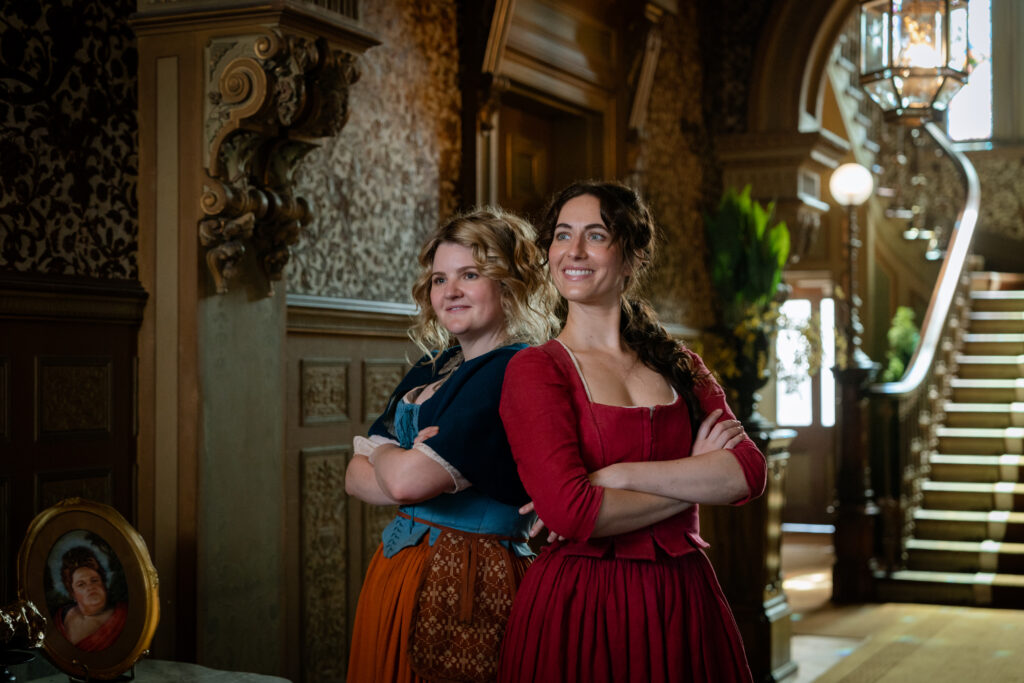
Gold Diggers is a riotous, rapid-fire, eight-part series that follows Gert and Marigold (played by Claire Lovering and Danielle Walker), two sisters who move to the gold fields in the 1850’s in the hopes of catching newly-rich idiots to marry.
The dialogue is modern and brilliantly witty, featuring modern day lingo that jars hilariously with the 1850’s setting.
“In total we had 72 extras from the local area,” said Muffy, speaking to The Local in recent days about what it was like filming in Regional Victoria amongst the rich gold rush history, and why it was important to cast some locals in the series.
“It was really important to us to find a group of locals from the area,” she said.
This was partly due to their ready availability on set when required, but the wealth of historical local knowledge held by those who reside in the area also came in extra handy during filming as well.
“Many of the locals (who were extras during filming) knew a lot about the gold rush and were happy to pass on that information,” the series producer said.
“We even had one local extra who was able to tell us that we weren’t using one of the props properly.”
Considerable effort was made to faithfully capture historical details and intricacies of the time with the production team also worked with local historian Fred Cahir.
“I should say that this is not a history lesson. It has a modern vernacular, but we were trying to stay true to history,” Muffy says.
“It (the gold rush era) was an incredibly exciting moment in history and a lot of story lines were very much inspired by actual events.”
Some of the shenanigans, that history indicates occurred on the old goldfields, are just one aspect that the series aims to honour.
“By all accounts there was a great deal of partying in the goldfields,” Muffy muses.
She also says it’s pretty interesting to see just how many issues from back then are still issues today.
“It’s surprising how relevant 1850s issues can relate to contemporary issues – like the evolution of feminism, society’s’ approach to equality – racial equality and gender equality. Also the distribution of wealth was very much an issue then as it is today.”
There is no doubt, though that Gold Diggers is “a comedic romp” the series producer says.
“Comedy pushes the boundaries and the envelope and goes to contemporary issues. Good comedy can push the boundaries when it comes to social issues.”
Muffy says about 50 percent of the filming for the series was done in the area, much of it at Maldon’s Porcupine Village with some scenes also shot at a couple of locations in Newstead and at a farming property at Baringhup West, just out of Maldon.
Muffy says filming had originally been planned to take place primarily at a location in South Australia, with the Maldon area initially down among the secondary alternative options. But when she visited Maldon and its unique historically themed Porcupine Village the series producer knew they’d struck gold.
“The (village) property had been put up for sale in 2020 and somebody sent me the ad,” she said.
“Once I walked down that street I knew that was our town. There are still diggings at the Porcupine Village. It felt really right”
While Gold Diggers premieres on ABC TV and ABC iview this evening, Wednesday July 5 at 9.10pm, Muffy says the series was always intended for an international audience. This means that the central Victorian goldfields locality is destined to be showcased far and wide.
“The intention of this show is for the global marketplace and to show off this part of the world is very exciting,” Muffy said.
“It’s been fantastic to explore that local area. It’s absolutely stunning.”
She says that the producers are also “very hopeful” that this first series of Gold Diggers will be followed by a second series. Should that turn out to be the case, there’s no doubt, Muffy says, that the cast and crew will be returning to Maldon and the wider goldfields locality.
“We hope to have a series two and we would definitely return to the area and to Porcupine Village. We couldn’t afford to build something like that.”
June 23rd, 2023Artists of the Central Highlands
with Eve Lamb
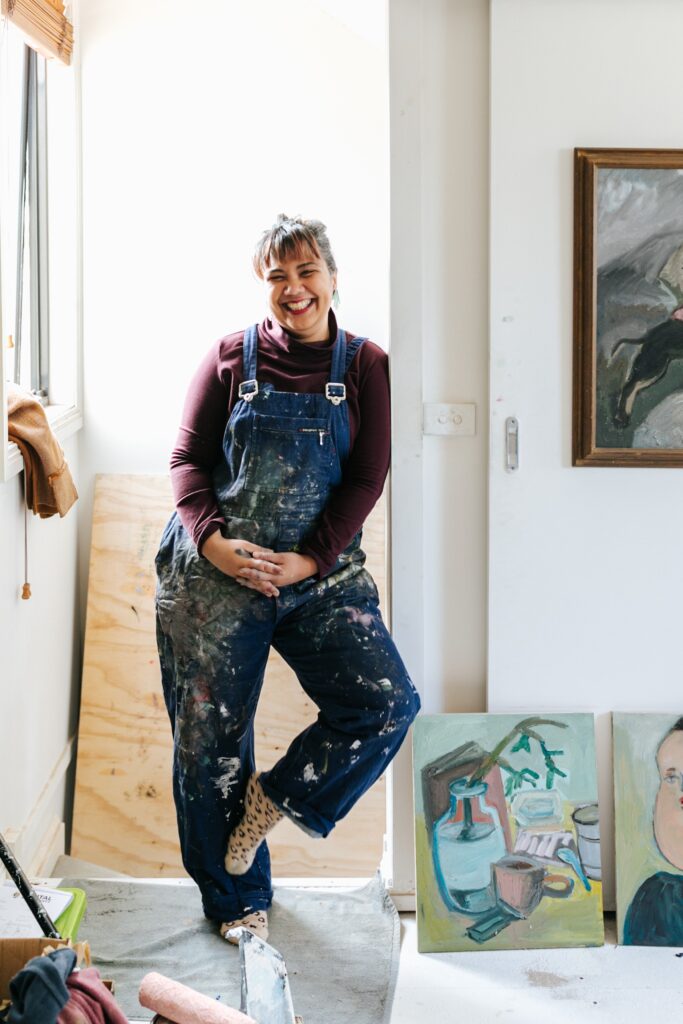
Armed with a personal attitude that “life is too short” Karima Baadilla (pictured above) ditched professional accounting to pursue her passion for art, and swapped life in the inner city for a tree-change at Clunes on the old central Victorian goldfields. She is now a multi-media artist whose prints create a narrative of everyday life, migrant identity and community that is fresh, vibrant and tends to bring instant cheer.
Eve: Hi Karima. It’s great to have artists like you enriching the community of Clunes with your work. How long have you resided in Clunes now and where did you shift here from?
Karima: Hello, thanks for reaching out. We came from the inner west suburb of Footscray and this past April it’s been two years now. Time sure does flies.
Eve: What attracted you to Clunes?
Karima: We got to know Clunes because of (local real estate agent) Angela Flowers actually. She was such a personable lady and speaks highly of our town of Clunes. When we actually saw it, we knew exactly what she meant.
Eve: How do you describe your artistic style? And how did you come to art?
Karima: I guess I would call my artistic style fun and a little weird. Haha!
I didn’t come to art the traditional way. I was a certified practicing accountant for about eight years before abandoning that. Long story, but basically life is too short not to do what you want.
Eve: I hear you are currently pursuing further studies at Bendigo. Can you tell us a little about that? What are you studying?
Karima: I have always loved studying; it’s an ongoing obsession of mine. Currently, I am pursuing my honours year in Fine Art, studying is a great way to enrich your art practice and learning the context in which my work sits in a wider realm of visual art.
Eve:What goals do you hope to achieve through your art at this stage?
Karima: The honours year is a research based degree, and I am working towards a mini thesis that scares the pants off me!
Eve:Which artists, current or past, influence your own work?
Karima: I love works by our First Nations artists such as Emily Kame Kngwarreye and the works of Rosalie Gascoigne (AM), the New Zealand-born Australian sculptor and assemblage artist.
Eve:What is your media of choice?
Karima: I am trained as a ceramic artist through RMIT, but my love is painting.
Eve:What do you find inspirational? Your subject matter of choice? … Why so?
Karima: Persistence and generosity are what I find to be inspirational, and people around me give me that all the time. People like (Clunes Neighbourhood House manager) Lana de Kort the way she gives to the community tirelessly, Marguerite Clancy who is a new(ish) friend of mine, who just finished her fourth(?) book and Christine Lethlean another Clunes resident who curates amazing exhibitions through Textile Palette.
Eve:Do you work in any other area besides your arts practice?
Karima: I am a bit of a bowerbird (LOL) I jump around. I was working for Renew Australia as an arts administrator and curator for about four years before I move to Clunes. Since then, I have dabbled with casual gigs – floristry, mural assistant, and teaching kids’ workshops.
Eve:Do you have any exhibitions or special arts events coming up that you would like to let others know about?
Karima: I am working to put more works through Boom Clunes with other community artists. Keep an eye out for ‘Dogs of Clunes’ merchandise!
June 22nd, 2023Leeanne socks it to us
Finding an enterprise that makes beautiful handmade socks in every colour of the rainbow in Clunes is really not so odd.
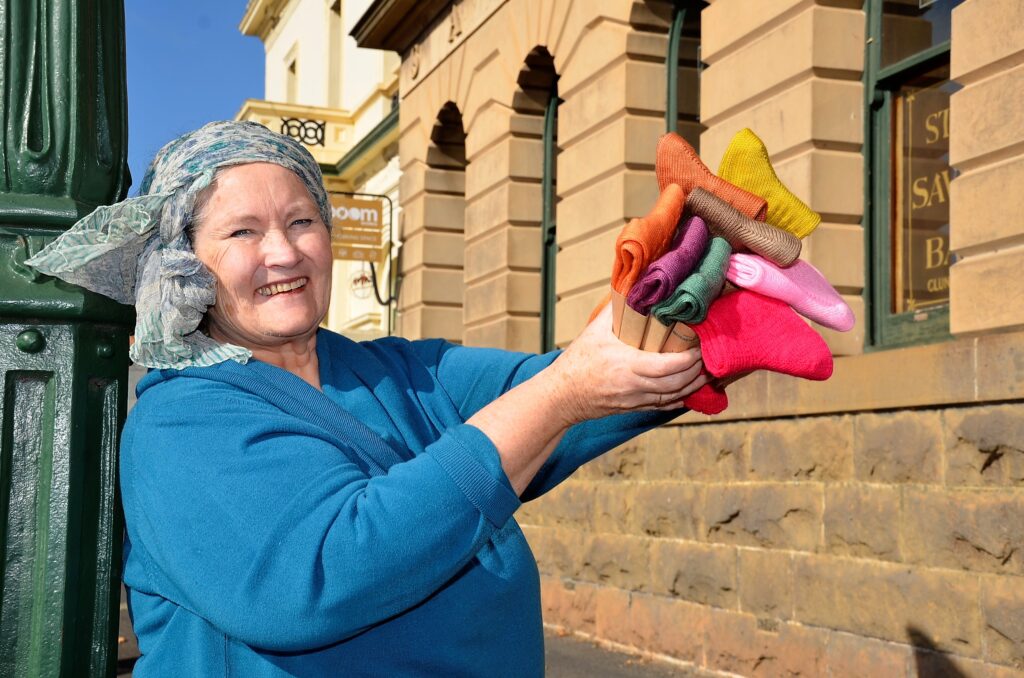
The Odd Sockery’s slogan is ‘Bringing Sock Making Back to Clunes one Pair at a Time” and, as owner and sock maker Leanne Wills (pictured above) says, that’s because commercial sock making actually happened here way back.
“The history does fascinate me,” she says.
“Historically Clunes did have a sock manufacturer here and that history really struck a chord with me, the fact that it ties in with the history of Clunes.”
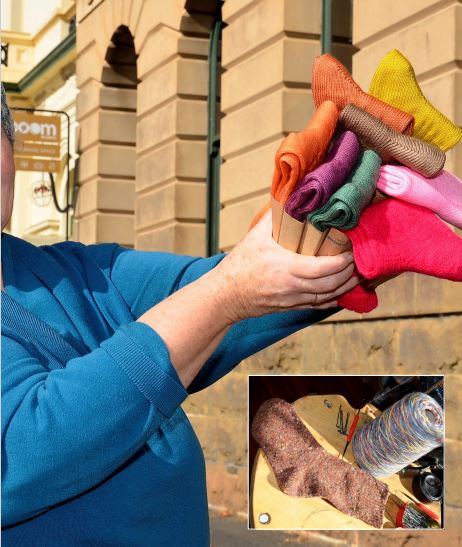
The Odd Sockery has now been bringing sock making back to Clunes since 2018, and to do so Leanne brought her own considerable background in textiles – and a vintage Gearheart Circular Sock Knitting Machine circa 1904.
“This is a circular sock knitting machine that I found on eBay. It had been in a museum home in America. It was in parts and when we brought it out we didn’t know if it was all there and we didn’t know if it was working. We took a punt,” she laughs.
Fortunately, it was a punt that paid off and now, from this machine and other restored and newly built machines, Leanne designs and creates a wide range of socks – all hand cranked and dyed.
They forge a link to the town’s rich history of sock manufacturing going back to 1939 when the Interknit Hosiery Company produced its first pair of socks in Clunes.
“I’ve been able to go on from there and develop into a whole array of experimentation. I’ve discovered the whole world of colour and my confidence has just burst through and I’m loving working with dyes,” Leanne says.
Visiting this rare little enterprise that has its main shopfront at BOOM Clunes in the town’s Fraser Street, is a sock fanciers’ dream come true as the colours come in just about every hue imaginable, striped and solid, and the yarns used are a tactile treat.
To reel off a few options in The Odd Sockery range, there’s merino hand-dyed numbers, there’s the striped sock, the ribbed top shortie, the possum merino, the custom sock designed to meet individuals’ health, circulation and colour palette wants and needs.
There’s the art gallery collection, designed originally by Leanne in collaboration with the Ballarat Art Gallery shop where they’re also stocked.
“They feature a loose rib top boot sock with contrasting cuff, heel and toes made using Nundle woollen mills Australian merino yarn – which I just love – and Danish self striping yarns that are processed in Italy,” Leanne says.
She says The Odd Sockery socks are all finished using the famed “Kitchener stitch” so named after the British Secretary of State during World War One.
“Commercial socks today have a ridge at the toe but the socks I make on this machine are the same as a hand knitted sock,” says Leanne who knows her sock history.
“The Kitchener stitch is hand stitching when the sock is being finished and it was developed to help prevent trench foot in the war because a big threat to the army was trench foot which was exacerbated by ridging on socks causing irritation and infection.”
She says the ultra warm merino possum range is a recent addition and has “a lovely story” behind it.
“I’d been asked a few times about possum but I wasn’t sure about it. Then unsolicited, I had a local Aboriginal elder approach me and she took me aside and said I give you permission to bring back possum.
“The possum wool we use comes from New Zealand where the possum is an environmental pest. We don’t get any of it from here where it’s protected. They’ve set it up in New Zealand as a way of controlling its numbers.
“I’m just delighted with the whole story of these. I feel very privileged to have had the Aboriginal elder’s blessing on that.”
Another new development is the very recent introduction of The Odd Sockery’s Donegal tweed range which Leanne makes using tweed yarn imported especially from Donegal, Ireland.
“It is the warmest sock – apart from the merino possum – that I’ve ever worn,” she says.
“These are a sock for those who are truly dedicated to warm feet. They’re more suited to being a dress sock and they also make wonderful bed socks.”
Leanne says having BOOM Clunes as a main shopfront has been great for her unique little enterprise.
BOOM also operates as a co-working space and also stocks a wide range of other creations made by local craftspeople, artisans, writers and producers. The money that comes in stays in the local community.
At this time of year Leanne is at full stretch meeting demand as many sock fanciers can’t wait to slip on a warming pair of The Odd Sockery’s lovingly hand cranked and hand dyed foot apparel.
“I do have trouble keeping up because everyone wants them at the same time,” she laughs.
“It is slow fashion. Yes I am using technology, but it’s industrial revolution technology.”
While the manufacturing process may be retro, the Odd Sockery’s sales mechanisms are more up to the minute, and the Clunes-made socks are now finding their way all around Australia via The Odd Sockery’s online shop.
Leanne has even started a Facebook group – Circular Sock Knitting Machines and Knitters of AUS – for those keen to learn more about the rare old trade. It has over 500 members and quite a few of them also regularly get together in person in Bendigo.
Words and Images: Eve Lamb
June 22nd, 2023All about women who launch… and brunch
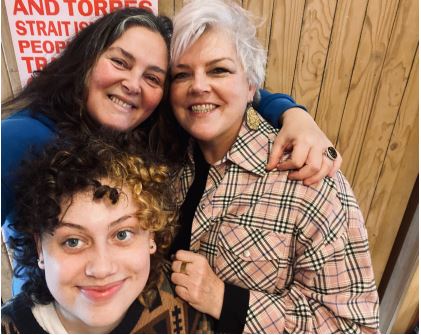
Tasha Robinson
Daylesford’s Women to the Front launched into the world in style on International Women’s Day back in March and is now busy preparing for it’s next local event in August.
Em Ireland is a main moving force behind the Women to the Front concept and is no stranger to many as Daylesford’s ChillOut festival director with over 25 years of music and events industry experience.
Em’s resume includes work on major fests like Big Day Out, Meredith Music Festival and Golden Plains and she runs her own events management company. In making Women to the Front a reality, with plans to ultimately see it take off nationally, Em is ably assisted by Tasha Robinson at their Daylesford HQ.
“Women to the Front is an event and forum that celebrates, supports and honours women in industry,” she said.
“It’s a multigenerational thing. I’m a 50-year-old woman and Tash is a 20-year-old woman and one of our aims is to connect new businesses with older businesses and provide mentorship.”
Em says Women to the Front aims to connect, support and mentor women from all sorts of business and industry sectors from food and agri business to the science, health, education and arts sectors.
Touring their enjoyable networking events – think brunch in pleasant setting with interesting guest speakers – to regional and metropolitan areas is a key aspect, and Em says that when they held their launch event in March a pleasingly wide cross-section of business and professional backgrounds were represented.
“We had midwives, local ice creamery and hot chocolate entrepreneurs, primary producers, musicians, teachers, and media professionals,” she says.
“Initially it’s a festival run event, promoting women. But behind the scene is an infrastructure created to share nationally, bringing women to the front of their industries and promoting and assisting other women through mentoring, socialising and connection to share valuable ideas and safe work practices.”
Em says the ultimate hope is to connect women in regional areas who are isolated, linking them both socially and within industry.
“Mental health issues are at an all time high and people have been forced into isolation,” she says.
At the moment Women to the Front are getting set to host another Daylesford event in August.
“We’ve invited women from across regional areas and some metropolitan Melbourne to join in a discussion about surviving the winter months and what the coming year looks like,” Em says.
For the annual Words in Winter festival they’re also planning to stage a women authors’ panel.
Making women in the community know they’re seen, heard and supported across all ages is a main motivator behind the formation of Women to the Front – “especially trans women and non binary persons who identify as they, them, femme,” Em says.
Enhancing the experience of people in the community and creating lifelong connections, and infrastructure, for people to use and enjoy for years to come are additional main motivators she mentions.
“We want women to not feel alone,” Em says.
For those keen to know more, they’ve set up an Instagram account with the handle @womentothe_front where they give recognition to women in industry.
Words: Eve Lamb | Image: Contributed

June 9th, 2023Equal the Contest to premiere at documentary film fest
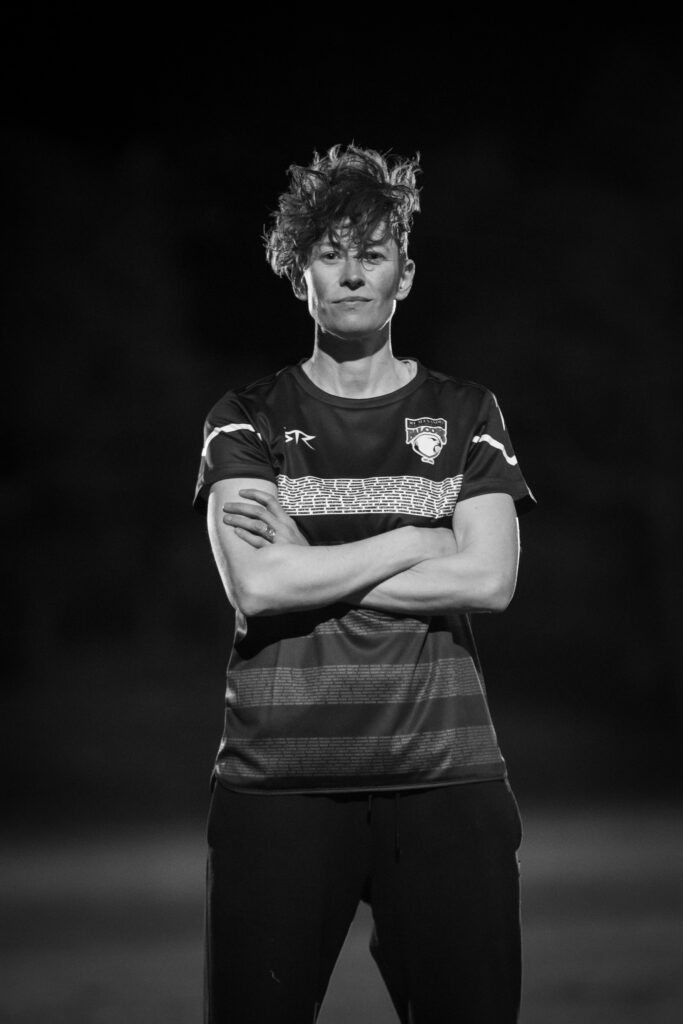
Words: Eve Lamb. Images: Mitch Nivalis
When documentary maker Mitch Nivalis contacted The Local a little way back requesting use of an article the paper had published in 2017, editor Donna Kelly was happy to oblige.
Mitch, who resides just out of Castlemaine, was keen to include the article as part of their new doco Equal The Contest to help “connect the dots for the history of women’s football in the area.”
“I’m making a self funded documentary film called Equal the Contest about my football club The Mt Alexander Falcons in regional Victoria,” Mitch told Donna at the time.
Now that documentary is about to have its world premiere as part of the ninth annual Castlemaine Documentary Film Festival happening this month.
The film synopsis provides a taste for what Equal The Contest is all about: “When the rules exclude you, rewrite them,” it states, and continues…
“When a filmmaker joins a new local women’s footy club in central Victoria, a simple desire to play becomes a complex journey of inclusion and belonging. An unexpected turn of events means the team has to fight to play. Their campaign challenges age-old traditions and joins the wider movement for gender equity.”
The documentary’s premiere screening happens Saturday June 17 at 5pm and will be followed by a panel discussion with Mitch who also co-produced Equal the Contest with Tony Coombs.
Mitch’s role in making the documentary was initially Director and Director of Photography, but that expanded when they realised their own lived experience was a key part of the story…”So I’m not only the maker, but the participant, which was extremely challenging, confronting and in many ways healing,” Mitch said.
“During the making of the film one of our executives, Sam Henty, sent me a link to a 2017 article that had been written by Heather Mutimer and published in The Local about two women’s football teams that played two games in 1947 / 48 – The Castlemaine Woollen Mill women’s football team, and a Daylesford women’s football team which was a combination of two teams that existed in Daylesford at that time,” Mitch said.
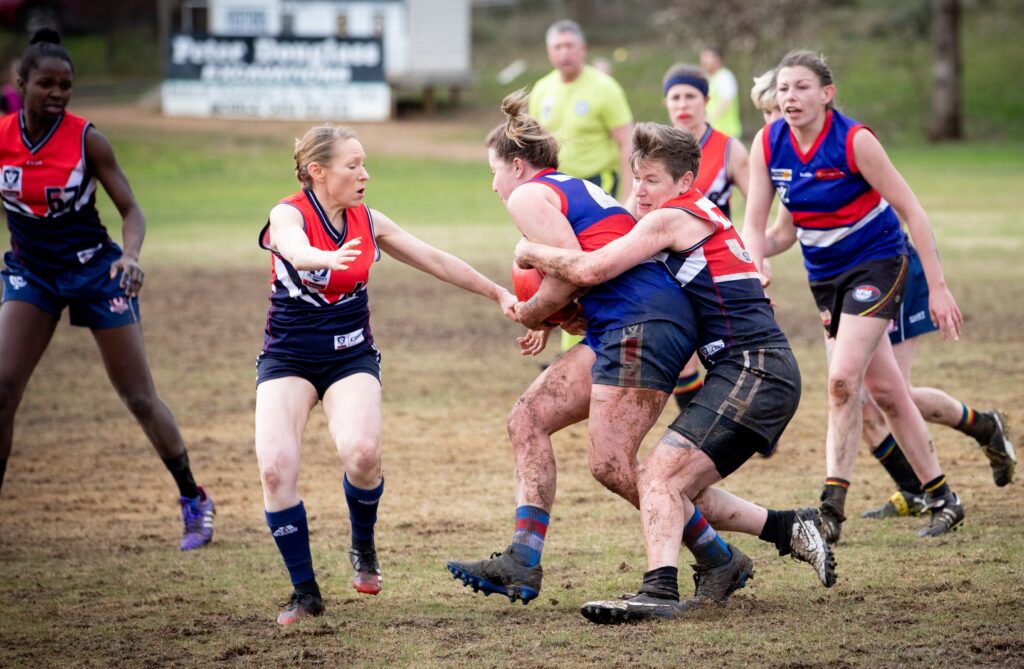
“So that sent me on a quest to find any surviving members from the Castlemaine team. I did end up finding a woman called Mavis, who ended up becoming a much loved part of our story. So I’m extremely grateful to The Local for celebrating women’s sporting history and shining a light on some of the pioneers of our local area.”
But Mitch saysbarriers still exist for women and gender diverse people to access and participate in sport across codes in Australia and hopes the documentary will contribute to positive change.
“I hope Equal the Contest creates an opportunity for people to understand how to create safe and inclusive spaces within clubs, particularly at the local level and to open up important conversations,” Mitch said.
“Conversations around fair and equal access to resources like gender neutral changerooms, playing and training times, distribution of club finances and allocation umpires, as well as conversations around access to safe spaces to participate for trans and gender diverse people.
“Historically, particularly male dominated sport, has focused on winning at all costs, on field aggression and making excuses for off-field incidences of violence and Equal the Contest shows how the Mt Alexander Falcons is leading by example to change club culture and provide a new model for community AFL.
“I’ve always been interested in documentary and I make short advocacy based doco style video content as part of my production company MDP Photography and Video.
“Equal the Contest has been my biggest undertaking to date though and the first time I’ve made a feature length film, although it comes off the back of a 35min doco called The Wonder of Improvisation that I made in 2017.
“Very quickly when turning up to the Falcons first ‘Come and Try’ day, I knew I had found a community unlike anything I’d ever been part of.
“The club and my teammates have become like a family to me and it has become a space where we are all able to celebrate each other, regardless of race, sexuality, gender identity, age, body size or ability.”
Those keen to get more information about Equal the Contest, the festival it’s part of, and to book tickets can head to: https://cdocff.com.au/2023-festival/equal-the-contest/
June 9th, 2023Artists of the Central Highlands
with Eve Lamb
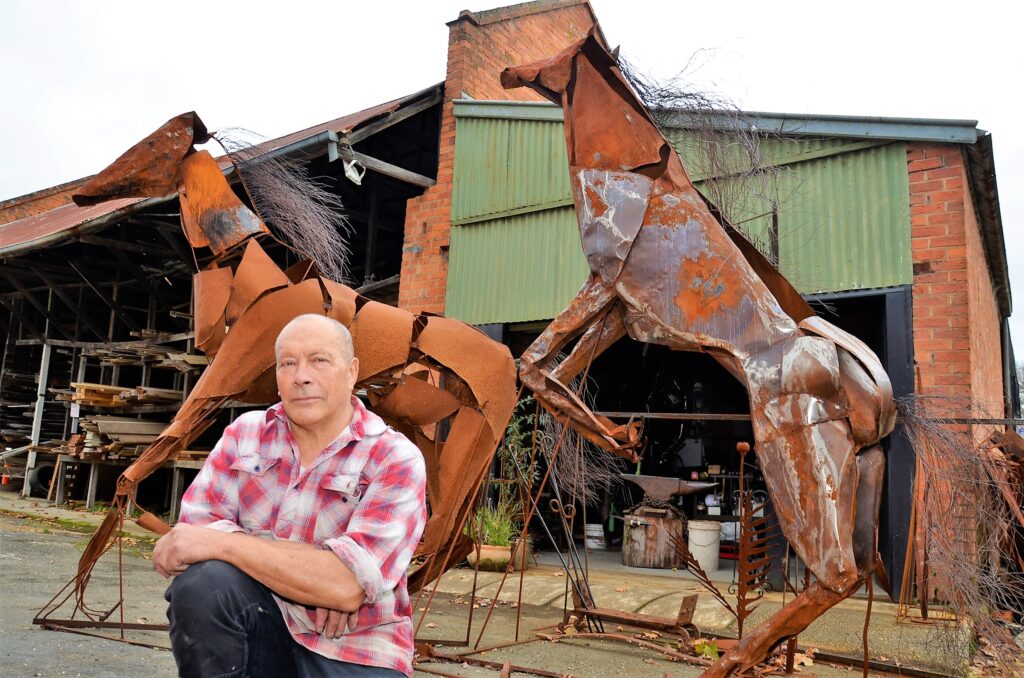
The creations of Creswick artist blacksmith Ernie Terry are the sort of pieces that stop people in their tracks and start conversations. Forged from fire, steel and beautifully burnished copper – among other metals – they’re imposing, frequently life-sized and capture a fiery elemental energy that’s been winning this local creative plenty of fans and commissions – functional and purely aesthetic – ever since he opened his Lucky Monkey Blacksmith workshop and gallery at Creswick in fairly recent times.
Eve: G’day Ernie. You’re pretty well known for your blacksmithing artistry. Can you tell me a bit about how you got into blacksmithing?
Ernie: Well years ago I bought a property with my now–ex, and on that property was an old-school forge, and I always hung on to that and thought one day I would like to do blacksmithing. So about eight years ago now there were classes being run locally in Creswick and I just went to them and started my journey from there.
Eve: I hear your background is actually in forest fire fighting and prevention. How does that background feed into your creative work?
Ernie: I think it’s the nature-based aspect of that environment. You get to appreciate nature’s beauty. I’m fascinated by eucalypts, the species and colours… A lot of energy out there.
Eve: What other subject matter inspires you in your creative work? I know your horses and whales are pretty imposing!
Ernie: Leafy sea dragons I find fascinating. Leaves. Birds. Native Australian birds. I’m working on a couple of Australian birds, brolgas in particular. Maybe it’s a shape. It just sort of seems to flow.
Eve: Are there any artists or other creatives , current or historic, that influence you?
Ernie: Nah. They’re all boring! Just kidding. Yeh there are a few artists that I really do follow. One is Kitty Woodhouse over in Perth. Amazing. Staggering work that she does with recycled materials.
Eve: What are you working on at the moment?
Ernie: I’ve got commissioned horses to do. Today is play day making leaves and trying an enamelling process which is fascinating. I’ve also got two whale commissions to make.
Eve: Blacksmithing looks like it can get a little physically challenging at times. Does it? What are the main challenges?
Ernie: Personally I don’t find it physically challenging at all. In summer when it does get really hot and windy, if I know it’s going to be a really hot day I light the fire early so I’ll be finishing the work on the forge by lunchtime. Then I’ll shape it with hand tools when it’s too hot. This is a far more comfortable place in summer with a fire going then it is at a bushfire!
Eve: And not a bad place to be, by the forge fire, at this time of year I notice! Have you sustained any blacksmithing injuries Ernie?
Ernie: A few burns. The worse one I got when I took my eye off what I was doing.Touched the forearm with mild round steel. It was black heat so I didn’t realise it was that hot and I brushed my arm against it. Got a fairly deep burn. Put my arm in the quench bucket but the water was a bit dirty so it got a bit infected…I’ve only burned myself badly twice, which is not bad.
Eve: To date, what have been the personal highlights for you in your creative practice?
Ernie: I think just meeting some really wonderful people.
Eve: Do you have any exhibitions, special events or workshops coming up that you would like to let others know about?
Ernie: I’m basically in here all the time making stuff and it heads out to the world from here.
Eve: What are the main rewards that you derive from your creative practice?
Ernie: To me it’s like starting with that bit of metal and going into that space and then coming back with something else. It is alchemy. It’s kind of a discovery as I go.
Eve: It sounds like a bit of a meditative process.
Ernie: It’s brilliant.
Eve: And you teach people as well? A few kids are learning from you at the moment I hear.
Edie: Yes. I’ve got three children who are learning at the moment… Adults as well. I’ve had one man travel over from Warragul and spend a week here.
June 8th, 2023New EV charge station up and running at Creswick

Words and image Eve Lamb
EV drivers have been well pleased to discover that the new fast charge station at Creswick is finally up and running. For some it can make the difference between getting home – or not.
The Local, using an all electric Nissan Leaf, put it to the test in recent days and found it reasonably fast and in useful proximity to the town’s supermarket across the main road.
The public PlugShare website, that lists the locations of charge stations Australia-wide and provides a constantly updating forum for EV drivers to share vital information, shows the new station has been in steady use since coming online mid-May.
One EV user commented on the PlugShare site: “very handy location especially as there are only 2 AC CCS2 plugs at RACV Goldfields”.
The 50 kW Chargefox station offers CCS/SAE type and CHAdeMO type charging with two dedicated parking spaces, and was installed beside the town’s Albert Street visitor information centre in December.
It had been expected to be up and running by late February, but Business Development Specialist with Chargefox, Zachary Whittaker confirmed that commissioning had been delayed by a couple of factors.
“This project was delayed due to construction not being finished at the visitor centre and vandalism that occurred just prior to opening,” he told The Local.
The earlier vandalism had included the cutting of thin retractable rope guide lines connected to the charge guns, and some graffiti which had been spray painted in the general area.
The vandalism appeared random, however, and did not appear to have been targeting the new station as it also encompassed wider infrastructure in the immediate area and had since been fixed or cleaned up.
In the May edition of their new sustainable issues e-newsletter, council staff provided some information about the project:
“Council and Hepburn Energy are working together with Chargefox, the Victorian Government, Central Highlands Water and Fells Electrical to install three 50kW fast chargers in Creswick, Trentham and Hepburn Springs.
“That will take the total number of public EV chargers in the shire to five …
“Watch this space for news on a public launch and full details over the coming months,” the council newsletter states.

May 27th, 2023Artists of the Central Highlands
with Eve Lamb
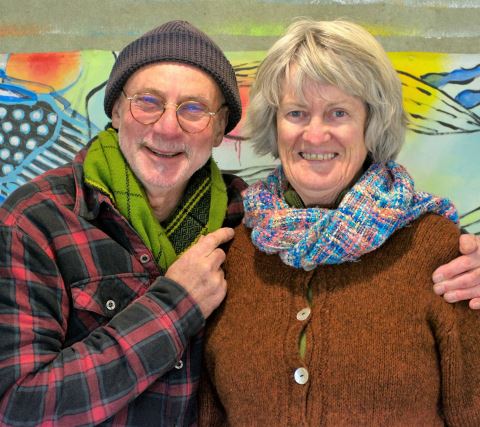
Acclaimed arts couple Julie McKenzie and Malcolm King (above) have further enriched the Hepburn Shire’s rich arts scene after moving here from interstate last year. Julie is particularly renowned for her landscapes and Malcolm for his travel poster works. They are both widely collected and exhibited, and their studio has screen-printed works for some of the biggest names in Australian contemporary art.
Eve: When did you move to Newbury, from where, and what motivated the move?
Julie & Malcolm: We moved in January ’22, basically to spend more time with our daughters in Melbourne and Ballarat.
Eve: What genre of art do each of you practice?
Julie: We both paint and Malcolm is also printmaker. I make landscape-inspired work and Malcolm is more eclectic, figurative and abstract – and mixed media.
Eve: Are you both full time professional artists?
Malcolm: We have been working as professional artists as long as we have been together – 40 years or so. Julie worked part-time in the music industry and community based services until 2002. Since then, until
last year, we had been operating our own artist run gallery, Kingstudio, in Milton and then Maclean in New South Wales.
I have an extensive career facilitating community-based art and artists in schools programmes over several decades, and also teaching printmaking and graphic design for TAFE NSW.
Eve: As a couple, how do the two of you get along artistically speaking?
Julie: There is no rivalry, mostly collaboration. Our work is so different, although we now have separate studios. Malcolm is my best critic. Over the years we’ve worked on a lot of community-based arts projects together, or separately, in Sydney, regional NSW, the Northern Territory and Western Australia. These projects have included murals, mosaics, graffiti, textiles, theatre sets and music production. The latest
collaboration was last year with a commission, painting a large honour board/mural at the Victorian Trades Hall – which got a bit feisty.
Eve: You each have your own studio at Newbury. Are they open to the public?
Malcolm: Yes. We’re at 538 Blackwood Road, Newbury and will open the studio on random weekends, the next being the King’s Birthday weekend in June, or by appointment. People can contact us on 0415 836 194 or 0432 719 402.
Eve: What motivates and inspires each of you in your personal creative practice?
Julie: Waking up each day. Landscape. I love the diversity of the Australian landscape, from the tropical to the pastoral and everything in between. I like to think my work is like a record of landscapes that are rapidly being destroyed by over development and now the impacts of climate change.
Malcolm: The relentless busy-ness of the world and a low boredom threshold, provides a rich canvas both to draw from and on.
Eve: Can you tell me what have your (respective) arts world highlights been?
Julie. Meeting the people that buy my work, people from all over the world from different cultures and socio-economic backgrounds. I’ve won a few prizes in exhibitions promoted by groups in all the places I’ve lived. Winning the Bentley Acquisitive was an unexpected highlight. Having the inaugural opening of the Milton ARTFest in NSW at our gallery was another.
Malcolm: Over the years I’ve been exhibited twice in the Wynne Prize and have received Australia Council funding for numerous projects, and had works in national, state and regional collections. Our print studio has screen-printed for other artists including David Boyd, Charles Blackman, Wendy Sharpe, Adam Cullen, Ken Done and others…
Eve: Which artists, living or past, do you each most admire?
Julie: So many. Kandinsky. The Blaue Reiter group. My knees went to jelly when I saw my first Kandinsky at the Tate in London in 1980. Margaret Preston, Margaret Olley. Too many to name here.
Malcolm: The German expressionists, Kandinsky, Klee, Matisse, (particularly the cut-outs), many contemporary indigenous artists, Rover Thomas, Judy Watson. Ian Fairweather, William Kentridge, Reg Mombassa. The list could go on and on, so I’ll stop there.
Eve: Do you have any special arts events or projects coming up?
Julie: We’re both working on new works in paint and print, interpreting our new surroundings here in the hills. The Macedon Ranges, Central Victoria and the Goldfields provide a rich social, political and natural history to inspire and comprehend.
Malcolm: The open studios for the Kings Birthday from June 10 to 13, and throughout the rest of 2023.

May 25th, 2023Sharing and repairing: more fixers welcome
Words and image: Eve Lamb
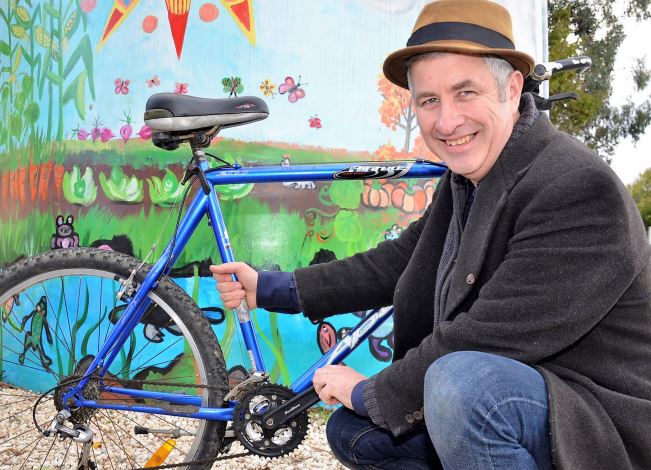
Creswick’s upcoming Repair and Share event is pretty much what the name suggests.
Organised by local sustainability group Transition Creswick, it’s all about repairing broken items, similar to the successful Repair Cafe concept that’s keeping serious volumes of perfectly fixable stuff out of landfill in many communities already.
To get the ball rolling, a couple of months back Transition Creswick tested the waters by running a Repair Cafe event at Creswick, with a little help from the established Daylesford Repair Cafe.
About 40 people turned up at the Creswick Neighbourhood Centre hall with things that needed repair, and many broken or not-working things were fixed. It all went so well that now Transition Creswick is getting set to hold another similar event.
The upcoming Repair and Share event is set for Sunday May 28 and will take place from 1 to 4pm, once again in the Creswick Neighbourhood Centre hall.
Transition Creswick facilitator Tim Drylie says everyone is welcome to roll up with items that need fixing – and, in this case, also with goodies to share.
He says the Repair and Share concept will incorporate a share table where locals can share and swap intrinsically valuable things like home-baked cakes, or that excess quince crop that would otherwise go to waste in the back yard, or those eggs the chooks have laid in over- abundance.
Tim says it’s hoped the concept will become a regular monthly fixture, and he also says more people with handy repair skills of all kinds are encouraged to get in contact as their abilities will be very welcome.
This includes things like the ability to provide basic bicycle repairs, mechanical repairs, ceramic repairs and even IT know-how. A volunteer fixer who is a qualified electrician would also be most welcome, Tim mentions.
“The Daylesford Repair Cafe has been very successful over several years and has made a big difference in terms of stuff not going to landfill,” he says.
“We ran our first Repair Cafe a couple of months ago in conjunction with the Daylesford Repair Cafe as a bit of an outreach. It was very successful and we had people with all sorts of repair skills including clothes mending, knife-sharpening, bike repairs, ceramics repairs and small appliance repairs
“Repair and Share is a slightly different approach but we have a strong affiliation with the Repair Cafe. At the moment we’re putting the structures in place to ensure it’s all done safely and the checks and balances are done. It’s with the broader idea of having a community exchange market down the track, enabling non-monetary trading.
“It’s also about good conversation. These sorts of events are very good for community connectedness.
“There is a natural abundance that we can all bring to our community that helps build resilience.
“I think a lot of people are experiencing frustration at having appliances break down. Built-in redundancy is an issue, and it might be something as simple as needing a bike tube changed or a sweater darned.
“We’re tapping into expertise that may not otherwise be valued as much in our current economy, and it’s often very satisfying for people who have these sorts of skills to give back in this way.
“Of course unfortunately some things can’t be repaired, and it may be a matter of referring people to someone else with the expertise to help.”
Transition Creswick is auspiced by the Creswick Neighbourhood Centre and some of the other projects with which it’s also currently involved include the Hepburn EV Bulk Buy scheme and the creation of an Indigenous food garden.
Those who would like more information, or who think they may have useful repair skills to contribute are encouraged to contact Transition Creswick at transitioncreswick@gmail.com