


March 30th, 2023From furniture to philandering: a fascination with fungi

Words: Eve Lamb | Images: Kyle Barnes
FOR countless years the mysterious world of fungi has been the domain of a fairly
exclusive handful of boffins.
But now it seems our world is undergoing something of “a fungal awakening” and many more are
beginning to realise the truly huge potential and importance of fungi.
From using fungi to achieve environmentally sound food production and incredible new medical applications, to furniture and building material uses that may avoid the felling of forests,
or use as alternatives to plastics to help prevent marine life choking to death, the
list of emergent applications for fungi is awe inspiring.
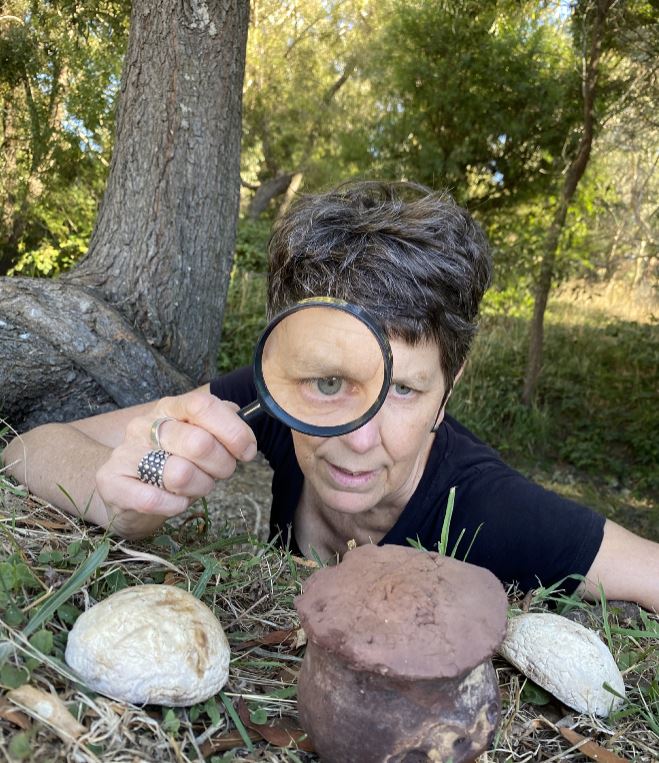
One woman who has for three decades marvelled at fungi and the way they fit into the wider ecological picture is ecologist Dr Alison Pouliot who has just launched Underground Lovers – her third
published book focused on fungi.
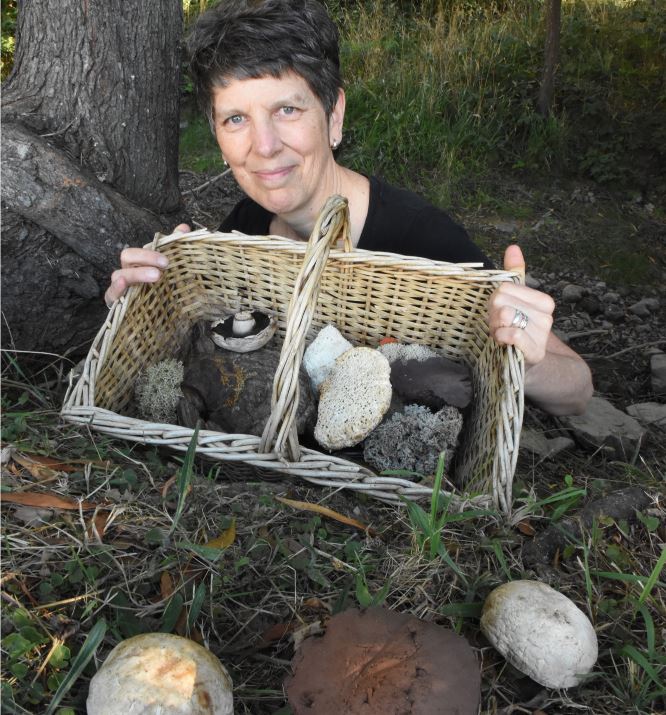
Through her extensive research, Dr Pouliot illuminates the crucial role fungi
play in our ecosystems, from transforming nutrients to make them bioavailable to
regulating invertebrate populations and even helping to prevent landslides.
Based at Mt Franklin near Daylesford when in Australia, Dr Pouliot launched
her new book in Daylesford this month. In it she explores why fungi are suddenly
infiltrating fiction, film, design, biotechnology and some interesting counter-cultural
movements.
She also charts the fascinating cultural histories surrounding women’s knowledge
of mushrooms, including which fungi cured the ailing – causing women shunned as
witches, and which ones used to subdue a philandering husband.
Having spent the last 30 years researching mushrooms, mycelia and their
interaction with all of life on earth, Dr Pouliot’s fascination with fungi has taken her
from the Australian desert to Iceland’s glaciers and America’s Cascade Mountains.
She’s particularly interested in what fungi can teach us about our wider natural
world. Could they, for example, hold answers to helping us tackle the climate crisis?
“I selected the themes in the book very carefully, identifying gaps in what’s been
written previously to include aspects like the indigenous uses of fungi, women and
fungi, fungi and fire, fungi and aesthetics, fungi and land restoration,” she says.
The role fungi may have in terms of cooling the earth, stabilising ecosystems
and helping avert runaway global warming is one important fungal facet explored in
Underground Lovers. Straight away it’s making a whole new audience sit up and take
notice of this emergent mega-science.

“If we can keep the fungal networks intact they can play an important role in
helping to stabilise landscapes,” Dr Pouliot says.
Following the launch of her new book, this very busy ecologist tells me how she
spends half her time in Australia catching the southern fungal season (just starting
now) and the other half in the northern hemisphere, generally based just out of Bern,
Switzerland, catching the northern hemisphere’s fungal season.
“Fungi underpin pretty much every ecosystem on the planet,” she says.
“If we continue to ignore these organisms then we’re not really looking at the big
picture of what nature is and how it works.”
Dr Pouliot has a long list of public appearances and talks scheduled ahead
including at The Moorabool Mushroom Festival happening in Ballan on April 15-16.
Underground Lovers is published by NewSouth Books.
The Local has a copy of Underground Lovers to give away. For your chance to
win email news@tlnews.com.au with your name, town and contact details by
April 4.

March 29th, 2023The Path well travelled

TURNS out simply hanging with horses is really good for your health
and happiness.
It’s a basic tenet that underscores the good things happening at The Path
of the Horse, just out of Trentham.
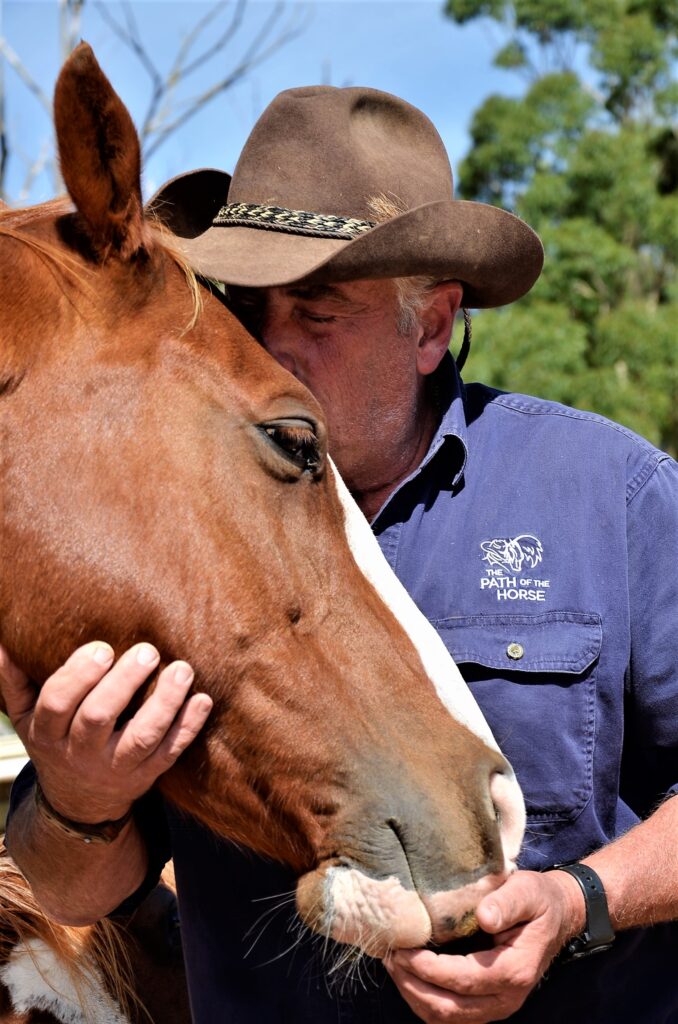
Here on his beautiful 11-hectare property embraced by the Wombat State Forest,
qualified psychotherapist and experienced horseman Dean Mighell and his horses are
helping make life better for all sorts.
Kids with ADHD, teens with autism, NDIS clients and traumatised emergency
service professionals and returned military service veterans with PTSD are among
those whose health and wellbeing is benefitting from what happens here.
Dean started The Path of the Horse as a registered charity back in 2016 and now
has 10 horses – think characters with big equine personalities.
With a background in the army and the trade union movement, and personal
experience of post traumatic stress disorder, Dean was inspired to start his unique
equine-assisted service after watching a documentary about two American ex-military
veterans who took a life-changing horse trek in Colorado.
At 50 and looking for a new direction in life, Dean was so inspired by what he
saw that he realised he could use his own many years spent around horses – and his
bushland property – to do something pretty special.
He also signed on to study with the Equine Psychotherapy Institute to become
an equine-assisted learning practitioner, and then after four years with Gestalt
Therapy Australia, he emerged as a fully qualified psychotherapist.
Joining forces with his equine friends, some of whom are rescue horses and have
themselves survived traumatic pasts, Dean has not looked back.
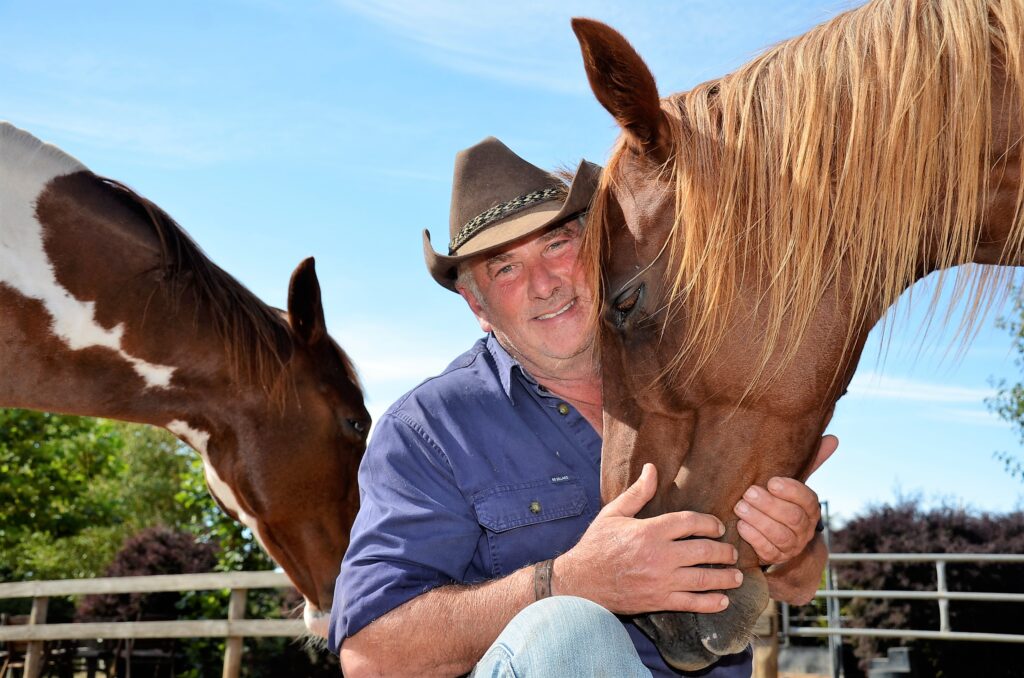
When The Local headed out to the forest to pay The Path of the Horse a visit
recently, Dean explained that the time clients spent hanging with the horses mostly
(95 per cent of the time) did not involve riding them – “except where fear is an issue
and it may help with this”.
Instead time spent at The Path of the Horse is far more likely to involve just being
with and near these dignified, cheeky, charismatic creatures.
This might involve leading a couple of horses through the forest, and just chatting
together with a client, Dean says.
Or it may involve grooming a horse. Or kicking back and shooting the breeze
in the excellent company of a horse. Photos capture clients and horses reclining –
literally flat out – just soaking up the sunshine and each other’s presence.
“It’s very client-led in terms of how they interact, and it’s a lot of fun as well,”
Dean says. “We call it invisible therapy.”
Confidence-growing, trust-building, and social skill enhancing are all typical
benefits Dean mentions.
Learning how to “self regulate” is something to which he repeatedly refers during
the course of our conversation.
“The horses are just beautiful at self regulation. They love affection and they give
it back. When we’re out there with the horses, our minds are in the here and now.
“It’s very grounding for people who are anxious. Our horses are treated with
respect and they are so calm that people will sometimes say ‘do you drug them?’ And
we say ‘no, we love them’. We get people of all ages, but our youngest regular is a
three-year-old boy with autism.”
A gentle giant of a horse named George has formed a special bond with this little
autistic boy, Dean says, noting that the formation of special connections between
particular horses and clients are quite common.
“The change in this little boy is amazing. He’s gone from non-verbal to verbal.
He’s learned how to self regulate,” Dean says.
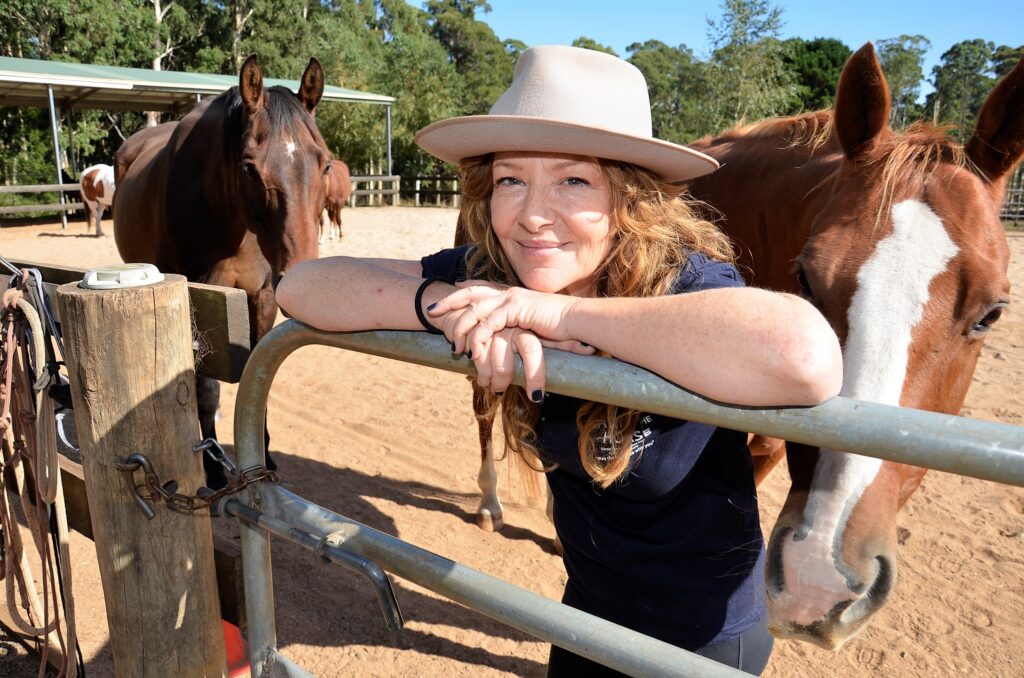
Among those who love what’s happening at The Path of the Horse so much that
they regularly volunteer here is Kyneton local Eva Parkin, inset.
With a background in local government economic development, Eva is now
completing an equine assisted learning course and ultimately hopes to become a
qualified psychotherapist as well.
“Being with horses is for me very therapeutic in and of itself,” she says. “It’s very
rewarding work helping others with life challenges.”
Like Dean, she too has personal experience with some of the issues clients may
be dealing with. “I have experienced severe anxiety in my past,” says Eva who was also
drawn to The Path of the Horse because she grew up with horses and loves just being
around them.
While this uniquely therapeutic enterprise does receive some payment for the
NDIS work it gets, it survives on donations and support including some it gratefully
receives from returned service organisations like the RSL, Melbourne Legacy and
Young Veterans.
“We’ve seen hundreds of veterans and we’ve assisted people from all walks of life,
but the Department of Veterans Affairs can’t fund us,” Dean says.
He says that right about now some more support from individuals or sponsorship
from businesses would make a huge difference.
Words & images: Eve Lamb

March 18th, 2023Artists of the Central Highlands …

with Eve Lamb
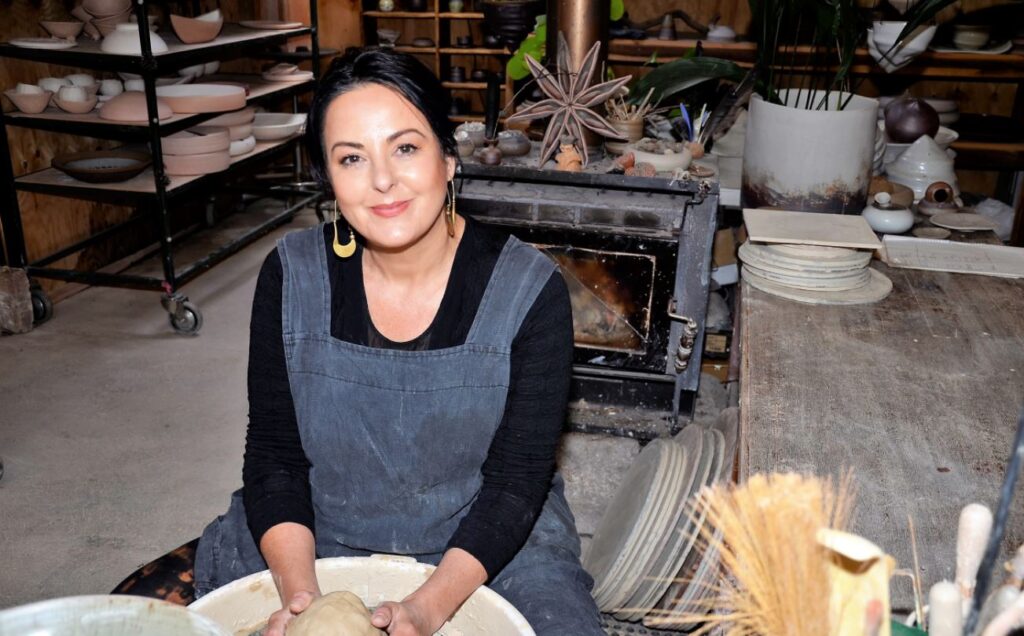
WORKING in her attractive little Springmount studio, just out of Creswick, ceramicist Kim Haughie
draws much of her inspiration from the region and its diversity of beautiful natural shapes and
textures. This talented ceramicist creates functional pieces that are as much purposeful, practical items
to be used and appreciated every day as they are unique works of art.
Eve: How do you prefer to describe your artistic style?
Kim: My artistic style can be defined as refined earthiness.
Eve: How did you come to art?
Kim: I have always been creative. My parents are creative too so it’s always been fostered. I spent endless
dreamy hours mucking in the sandpit as a kid and making mud pies.
Eve: Which artists have influenced your own work?
Kim: I love the forms of Australian sculptor Bronwyn Oliver and I will never forget the emotional
power of seeing American painter Mark Rothko’s Chapel series. Local artist Petrus Spronk has been
very influential for me from the very beginning of my ceramic practice. I have much respect for the simplicity of his beautiful blackened bowls.
Eve: What is your media or medium of choice?
Kim: Clay is my medium. I find its earthy smell and cool, pliable feel is dreamy and calming. When I find my centre at the pottery wheel everything else drops away. I love the elemental nature of making pottery.
Eve: What is, or are, your subject matter of choice? Why so?
Kim: I like the idea of art in motion, making things that have a use is for me rewarding; platters, bowls and vases.
Eve: Have you ever, or do you currently, work in any other area?
Kim: I have a background in the fashion industry which I loved being in as a
form of ‘art in motion’ too.
Eve: What are you working on at the moment in your current arts practice?
Kim: I am working towards a fabulous mid-year group show coming up in July
at the The Little Gallery in Trentham. It is a major highlight in the gallery’s calendar
year whereby regional artists are invited to exhibit and raise significant funds for a
local charity. I also have a contemporary Sydney homewares gallery interested in
featuring my work so am working on a body of work to send there.
Eve: When you work in the studio do you like to play music and if so what’s your
music of choice?
Kim: Music is essential in my studio and I am blessed to have an awesome sound
system so I like to listen to a lot of ambient, fusions of classical and electronic. I love
it when the birds outside sometimes chime in, it’s magical.
Eve: To date, what have been your career highlights as an artist?
Kim: As a graduate I was invited to exhibit in an international group exhibition
in South Korea which was incredibly solidifying as an emerging artist. I have much
admiration for Korean pottery and have returned several times.
Eve: Do you have any other projects in mind at the moment?
Kim: I am currently renovating my home studio and gallery to return to teaching pottery later in the year, which is exciting.
Eve: What are the main rewards that you derive from your arts practice, Kim?
Kim: The ability to make beautiful things of earth, from the heart, is incredibly rewarding for me.
March 18th, 2023Coffee? You’ll love Daylesford’s Brew Jays!
A TLPromo. Words: Eve Lamb. Images: Supplied
IF you like a good brew… Espresso, filter, pour over, batch or cold brew. If you like your coffee you’ll love Daylesford’s Brew Jays.
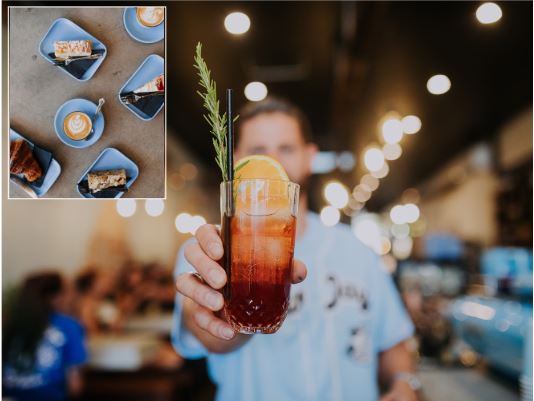
This new kid on the block officially launched in January and specialises in all things coffee – particularly roasting its own ethically sourced beans.
Sited at Shop 5, 22-24 Howe Street, it’s quickly become a magnet for the coffee connoisseur. It’s a place where you can watch the single origin beans being roasted, absorb the delicious aromas, enjoy a perfectly made coffee (accompanied by a croissant s’il vous plait!) and leave with a stash of freshly roasted and ground beans.
“All of our coffee beans are ethically sourced and a lot are directly sourced from the farm to the roaster, “says Brew Jay’s Jay Gaschk, a Hepburn Springs local with a love of top notch coffee.
Unique flavour profiles are created on site by teasing out the beans’ innate natural qualities in the roasting process to emphasise tones including caramel, chocolate and berry fruits.
The results include unique coffee blends paying homage to nostalgic delights like Kit Kat, Cherry Ripe, Caramello Koala and Killer Python.
By evening Brew Jays has something else special to offer. It’s also a fast-paced cocktail bar with 15 different coffee martinis on the list.
“Our main focus is coffee roasting and we use our vintage Probat UG15 coffee roaster which was handmade in Germany in 1967 and imported into Australia about a decade ago, and completely refurbished so it can now do computer programming,” says Jay.
“This means we can use probes to find out exactly what’s going on in the barrel so that we can make sure the roast is perfect every time.”
When it comes to high end coffee, Jay knows his stuff, having started out as a coffee barista at age 15 in the Macedon Ranges. From there he worked in the fast-paced Gloria Jean’s in the Qantas lounge at Tullamarine, before honing his craft with inner city boutique coffee retailers, learning from some of the best in the business.
In creating Brew Jays, he’s joined with co-owners – “local hospitality legend” Daylesford’s Rubi Stone, Bendigo’s Sam Arye and Paddy Cummins, Melbourne’s Ben Ward who owns The Coffee Mob, and famed barista Craig Simon, one of the world’s elite coffee Q Grade instructors.
“I’m super passionate about anything to do with coffee,” Jay says.
“At the moment particularly cold brew and exploring experimental coffees and liqueurs.
“Our cold brew coffee is a really big seller for us. It’s made with a hard tank machine especially imported from Poland. We sell our cold brew in-house and it’s also used in our coffee martinis.”
The vision for this new coffee kid on the block is big.
They’re already selling their cold brew retail bottles into bars across Central Victoria. Their roasts can be found in retail outlets from Bendigo to the Melbourne Convention and Exhibition Centre, with the launch of a website, enabling them to retail online Australia-wide, not far off.
There are also plans to offer coffee classes. “We’re looking to expand into offering classes like coffee cupping and coffee basics,” Jay says.
Noteworthy, too, is the fit-out at Brew Jays, custom built to create a space that envelops the coffee-needy customer like a warm hug.
“Once you step in you don’t want to leave,” Jay says.
March 17th, 2023Community batteries…the potentials and pitfalls

COMMUNITY groups keen to get their own community battery, fed by clean renewable energy, up
and going need to make sure they know their stuff first.
That’s the main message as Hepburn Energy releases a new booklet that carefully examines
the potential of community-scale batteries across Central Victoria – and offers clarity on their
opportunities and constraints.
“The community needs to be really cautious about the type of community scale battery they go for,” says key author Marie Lakey.
The booklet’s publication follows a Central Victorian Greenhouse Alliance-led project called Community Sparks, funded under the state’s Neighbourhood Battery Initiative, assessing potential of community-scale batteries across the region.

Hepburn Energy and Hepburn Shire Council were key partners on the project.
Drawing on technical analysis from independent consultants, Orkestra, legal research from the University of Melbourne and a social feasibility study from Hepburn Energy, the booklet offers in-depth information about community-scale batteries.
“Our social feasibility study highlighted that community members are interested
in community-scale batteries. With terrible grid reliability in many parts of Central
Victoria, lots of residents are being proactive and looking for a solution,” Hepburn
Energy general manager Taryn Lane says.
Community batteries are proposed as a tool to address this issue. Advocates
suggest they can improve reliability, enable more solar, cut greenhouse gas emissions
and help households save on bills.
But the team at Hepburn Energy have found a more complicated picture.
“When we received technical reports back from Orkestra, we were stunned,” Ms Lane said.
“The conventional battery that many people are advocating for (one located on
the street level, at an electricity transformer) doesn’t seem remotely viable.
“They’re just too expensive, so community members would face an ongoing cost,
rather than saving, and there is a risk of stranded assets with that model.”
The booklet offers clear cautions about some models of community-scale batteries
but other opportunities are presented.
“There’s lots of potential for behind-the-meter batteries. These can be located at
community facilities, or even at an industrial facility, but in a way that offers benefits
back to the community,” Ms Lane says.
The Central Victorian Greenhouse Alliance’s Dr David Gormley-O’Brien agrees
and highlights opportunities for community groups to install behind-the-meter
batteries on key infrastructure like community hubs.
“Installing behind-the-meter batteries on key buildings, using lots of solar on
the building, represents a real opportunity to help in emergency situations such as
bushfires or major wind events to enable emergency power supply,” Dr Gormley- O’Brien says.
“And if the battery is large enough we can get a surplus and participate in the
energy market.
“For a 300-kilowatt battery you are looking at something around $400,000 but we’re expecting prices to come down.”
Backup power systems are a “no-brainer”, Ms Lane says.
“Particularly for regional areas such as our shire, and another viable model is
batteries co-located at a community generator, such as what we’re proposing at
Hepburn Energy.”
The report examines these different models in detail, offering guidance on relevant regulations and case studies of existing community-scale batteries.
“We hope this booklet can answer lots of the questions we’ve been receiving about this technology,” Ms Lane said.
More information and downloadable copies of the report are available through Hepburn Energy.
Release of the report examining the community battery pros and cons comes as Hepburn Energy also facilitates a second heat pump hot water bulk buy from March 16.
Government rebates now mean premium heat pump hot water systems are cheaper than ever before, with bulk-buy participants able to save on a new hot water heater.
After the success of the 2021 round 1 sold-out heat pump bulk buy, Hepburn
Energy is now extending their round 2 bulk buy beyond the Hepburn Shire to
include neighbouring areas.
Hepburn Energy and installation partner t2zero will be running two webinars to
demystify the technology, explain the bulk buy process and give community members
an opportunity to ask questions.
Business executive with t2zero, Jürgen Rhyon says the benefits of heat pump
technology are clear as storage water heaters account for a substantial component of
household electricity consumption.
“Imagine being able to reduce this component of consumption by 80 per cent,” Mr Rhyon says.
“The Victorian Energy Efficiency Certificate rebate is at levels never seen before, making this a perfect time to transition to this technology.”
Those keen to find out more can join the Heat Pump Hot Water Bulk Buy webinar on Monday, April 3 from 6.15pm to 7.15pm.
Words & images: Eve Lamb
March 16th, 2023Move over Icebergers, we’re the Polar Bears
Words & Image: Eve Lamb
In the weeks since it was publicly floated as a thought bubble, the Calembeen Polar Bears swimming group has quickly caught on as Creswick’s inland answer to the coastal Icebergers.
You know them. That early morning hardcore swimming set that enjoys crisp dawn dips in the sea – even if it’s mid-winter with a wind chill factor of minus three.
Clunes’ Paul Payne, a keen cold water devotee himself, came up with the idea and took to local online community notice boards, inviting others to join the new Calembeen Polar Bears swimmers.
The Bears roll up for early morning dips in Creswick’s Lake Calembeen at 9am Wednesdays and 7am Sundays – regardless of weather – and all, going swimmingly, will continue doing so right through the year.
“I didn’t realise there’d be this much interest and I’m a bit humbled to be honest,” Paul says. “We couldn’t believe there wasn’t a group established already.
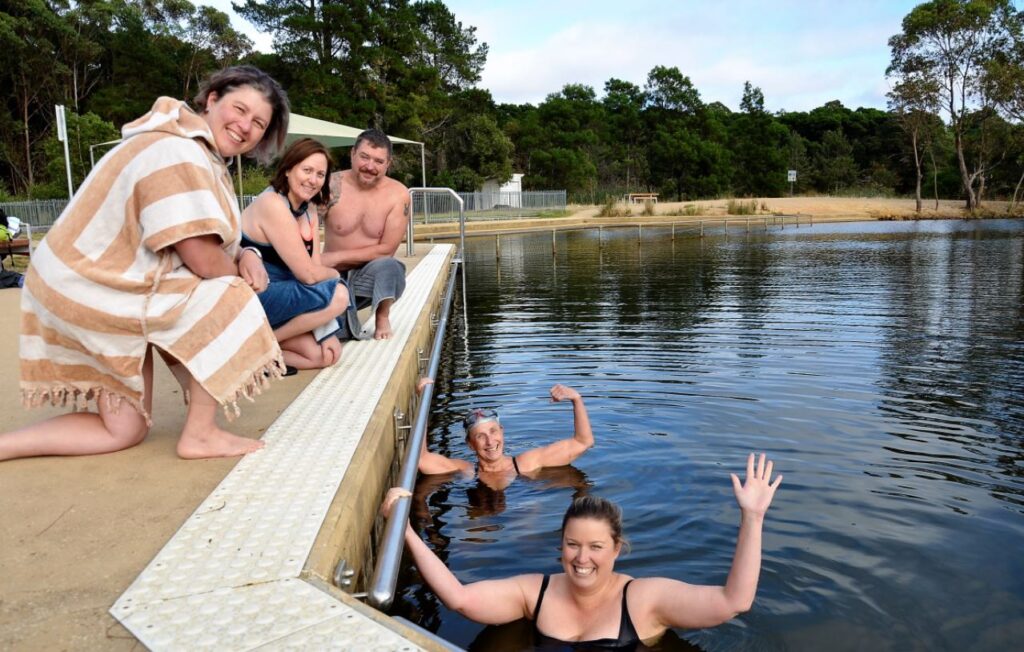
“I put an ad on the Clunes and Creswick (online) noticeboards and there was a big response. We’re getting about 15 people now, but I’m there every day at dawn.
“I got through to May last year. But this time we’re hoping to egg each other on and keep going as it cools off. The whole idea is that it’s a bit social.”
As with the Iceberger groups well established in coastal parts, the Polar Bears note the accepted science that a brisk encounter with chilled water – aka cold water immersion therapy – is really good for one’s general well-being.
“Cold water immersion therapy triggers the mammalian dive reflex,” Paul says.
You can look it up, but effectively it means that being exposed to a chilly dip in nowhere-near-warm H2O really makes you know you’re alive, slows the heart rate and improves mood.
Those who regularly practice it like the Bears and the ‘bergers swear by the glowing mood boost and enduring positivity that follows such brisk encounters.
While it’s a known fact that Creswick gets frosty in winter, Paul and the other Bears – even ones like Creswick’s Rowena Miller who just quietly admits “I hate being cold” – are prepared.
“I have lived in North America and I lived in New York for 20 plus years,” Paul said. “I used to show up every New Year’s Day to take part in the big swim to Coney Island. It’s good for the skin. It’s really good for everything.”
Among the regulars to show up lakeside on a recent mid-week swim is trauma psychologist Louise Earnshaw. Louise is currently residing at Sandon, and knows more than your average person about cool – and healthy – ways to enhance one’s sense of wellbeing.
“The tropics are my natural habitat. I’m from northern New South Wales but my house in the Byron Shire was destroyed in the floods,” Louise said.
“You could say I am an aquatic nomad. This is for my wellbeing. When cold water triggers the mammalian dive reflex the parasympathetic system kicks in.
“Thirty seconds with your face in a bucket of iced water will calm one’s emotional overload. It’s an aquatic meditation.”
Paul says Lake Calembeen is a great little swimming spot as it’s reputed to have some health-giving mineral qualities.
“And the steep drop-off means there’s no frozen mud to wade through in winter,” he says.
The group now has its own Facebook page and the Bears say all are welcome to get along and experience the pleasure for themselves.
March 13th, 2023Chance to make a splash as council develops indoor aquatics vision
The Hepburn Shire Council is keen to receive community input as it develops its Hepburn Shire Indoor Aquatics Provision Feasibility Study and Business Case.
Community members are now being encouraged to participate by completing a survey which takes approximately 10 minutes. But those hoping to have some input had better hurry as the survey closes on Friday 24 March 2023.
Last April the council had adopted the Hepburn Shire Council Aquatics Strategy which sets down a 10-year priority plan that will guide the future strategic direction, infrastructure development priorities and asset management planning for aquatic facilities.

A key part of the Aquatics Strategy was the identified need for access to indoor all year-round aquatics provision to support the needs of Hepburn Shire residents.
Hepburn Shire mayor Cr Brian Hood says the council is keen to hear from the community to help inform the Hepburn Shire Indoor Aquatics Provision Feasibility and Business Case.
“We need to carefully consider council’s ability to fund and operate any potential future indoor aquatics provision opportunities,” Cr Hood said.
“The community survey will help us fill in some information gaps and get community input into their proposed use of current indoor aquatics facilities and ideas on future indoor aquatics facilities and provision.”
Community members are encouraged to participate by completing a survey which takes approximately 10 minutes. The survey closes on Friday 24 March 2023.
Questions regarding the survey can be directed to Council’s Sport and Active Recreation Team at sportrecreation@hepburn.vic.gov.au.
And anyone keen to learn more can head online to https://participate.hepburn.vic.gov.au/aquatics-feasibility-study where they can also complete the survey.
March 2nd, 2023Blackwood hosts Australian Gold Panning Championships
Words: Eve Lamb. Image: Kyle Barnes
BASALT grandmother Verna Baker is flexing her forearms to compete
in the Australian Gold Panning Championships at Blackwood this
Saturday, March 4.
Verna is a dab hand with the gold pan. She’s been honing her gold panning
prowess since the age of five.
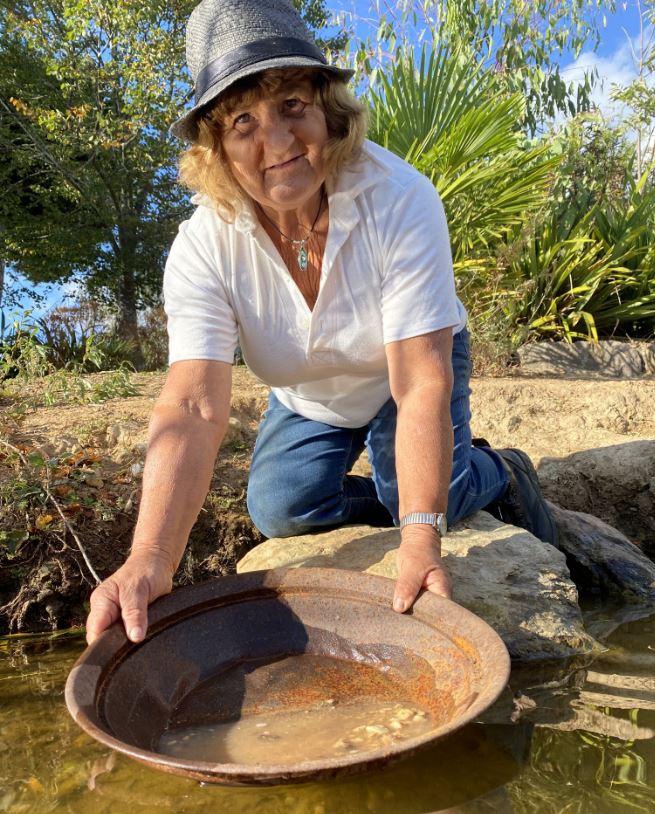
Over the years she’s found “probably 100 specks” of gold – enough to have turned
into a lovely little gold pendant.
“I’ll be competing in the women’s skilled, the veterans’ and the teams’ categories
on Saturday,” says Verna, 68, who has plenty of other “golden” aspects to her life as
well, including farming daffodils.
Another golden facet to Verna’s life is the fact that this year marks the professional
childcare educator’s 50th anniversary of working at local kindergartens.
“I love my work,” says Verna who has worked at pre-schools across the shire and
beyond, including Daylesford, Hepburn, Franklinford, Glenlyon, Creswick, Clunes
and Wallace.
And there’s no doubt the kinder kids at Daylesford Preschool, where Verna
currently works three days a week – and at all the other little local kinders where she’s
worked over the years – return the love.
For one thing, Verna not only teaches the littlies how to gold pan, sharing her
enjoyment of the sport that gets her out into some beautiful places, she also brings
in small animals from her Basalt farm to teach them about caring for critters and to
impart her own love of nature.
Verna has won many firsts and seconds in the women’s skilled gold panning
competition and team event prizes over the years she’s been competing in the gold
panning competitions.
The mother of three and grandmother of four – who also runs a native tree
nursery and volunteers with Franklinford CFA – is keenly anticipating this Saturday’s
competition.
“It’s a really, really fun day,” she says.
Run by the Victorian Gold Panning Association, the annual Australian Gold
Panning Championships are expected to draw around 100 competitors from near and
far.
Victorian Gold Panning Association president Marcus Binks is also keenly
anticipating the event which he says offers good competition for all skill levels from
established champs to those who have never wielded a gold pan before in their lives.
“It’s a great family event and really we’re trying to preserve the history of gold
panning,” says Marcus, a geologist by profession who has a couple of national gold
panning championship titles to his name.
“I’ve been gold panning since I was a kid and I started at the first Australian
championships that were held at Sovereign Hill in 1993,” he says.
This year’s event will see gold panners racing against the clock to find a number of
tiny golden pieces that have been carefully pre-counted and hidden in sand buckets.
“We even provide pans for those who have never panned before,” Marcus says.
At the top end of the competitive spectrum the competition is keen and close and
the addition of an electronic timing system in recent times comes in handy.
“We have a heap of prizes on offer including two metal detectors,” Marcus says.
The championships are taking place at the Blackwood Cricket Ground on
Recreation Reserve Road and getting along to watch the competition as a spectator is
free.
“It’s a great way to come and learn about panning,” Marcus says.
“We’ll have catering by the Ballan First Scouts and a coffee van. We’re affiliated
with the World Gold Panning Championships and we get competitors from New
Zealand coming over. They really like our competition. We also get them from
interstate – Queensland and Western Australia.”

February 18th, 2023Stage plays spotlight issues of age, health care
THE experience of losing her mother to a form of dementia inspired
Tylden creative Dawn Bamford to pen a play highlighting some pressing issues.
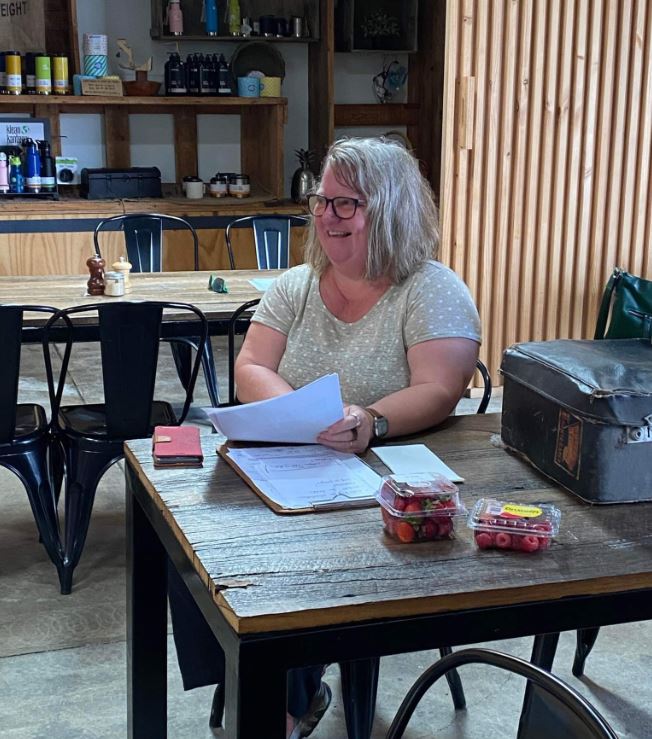
Next month that play The Vessel will be staged at The Social Foundry in Kyneton
featuring a cast and crew of impressive local talent while spotlighting some of the big
challenges around ageing and care-giving.
The 40-minute piece will be staged Saturday March 4, 8pm and Sunday March
5 at 2pm and at 5pm, and will be complemented by a 10-minute play Until Then by
Paul Canlan.
Like The Vessel, the shorter play similarly deals with intense familial relationships –
in this case a father-son relationship – that can arise amid significant health challenges.
“The cast and crew of The Vessel and Until Then are a very talented bunch of local
and regional performers and it’s a pleasure to work alongside them as part of the
creative process, which started some four months ago as a reading around a table, over
a glass of wine at Chaplin’s in Trentham,” Dawn (pictured above) said.
Besides her creative activity, Dawn works in social support with Sunbury-Cobaw
Community Health and hopes the new stage production will go on to tour and
prompt useful conversation and policy changes.
She says she wrote The Vessel last year after she was initially prompted to write a
poem as a personal reflective response to the experience of losing her mother in 2017.
The poem has been worked into the stage play, marking its beginning and end.
“In early 2018, I wrote a poem, around six months after the death of my mother
in aged care,” she said.
“Mum was about four years into her initial early-onset dementia diagnosis with
Lewy bodies when she was admitted into care.
“Over a very long time she lost most of her physical and mental capacity and was
both non-verbal and non-ambulant at the time of her death. Between 2007 and 2017
I was a constant visitor, volunteer and eventually, part-time lifestyle worker there.
“I had a first-hand view of the operational and logistical complexity of care in this
setting and the limitations of this large-scale business model in the industry sector.”
Dawn said many of the problems of institutionalised care had been highlighted
in the Royal Commission recently, as a result of the rise of Covid in the sector, but it
had always been an industry in crisis.
“The private business model is really an imperfect solution to what is really a
social and community health concern, as much as it is a housing resolution for an
older population with high care needs.
“It survives because of the rampant ageism and neglect that we all contribute
to as a society. I do not wish to demonise any individual, service, group of workers,
families or healthcare agencies through my play.
“The aim is to humanise the condition that is dementia and remind us all of
the fact that it is a human condition and that sufferers have not had their minds
and memories erased, rather redistributed and rearranged, and that their emotional
intelligence and hearing are as sharp as ever.
“There’s an element very much of social justice and after the three shows in
Kyneton we’d like to see if there are touring possibilities. I’d love to see it prompt
more conversations and maybe some action and policy changes in the aged care
sector.”
Dawn has a well established background in theatre, TV and screen including
acting and singing, but bringing The Vessel to the stage marks her debut foray into
playwriting and production.
“It is quite confronting but there are delightful moments as well,” she said.
“There are some moments of hilarity. Behind every single human being,
irrespective of age, there is a story that nobody knows.”
The Vessel features many local names including Suzanne Sandow (Mary), Kate
Moonie (daughter), Mel Thomas (PCA), Ian Rooney (nurse) and Rexine Perry
(clown), Paul Canlan (director) Tim Jones (poster and set design and construction),
Caroline Sarah (costumes) and Toby Dutton (graphic design and set construction).
Until Then features Paul Canlan (Rhys/son), Ian Rooney (Tony/dad).
Bookings through TryBooking online.
Words: Eve Lamb | Images: Contributed
February 16th, 2023Grassfire threatens homes: fire risk remains
Words: Eve Lamb | Images: Supplied
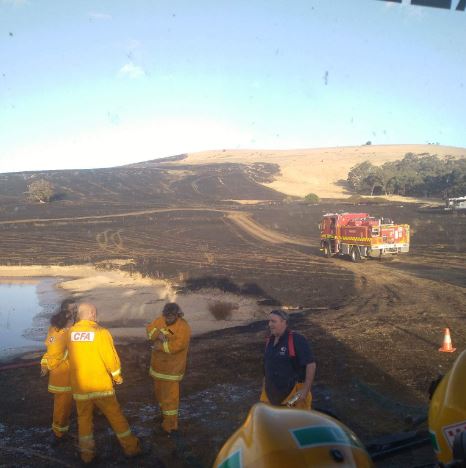
Several houses were threatened when a grassfire broke out on Mount
Glasgow near Clunes on the border of Hepburn and Central Goldfields
shires earlier this month.
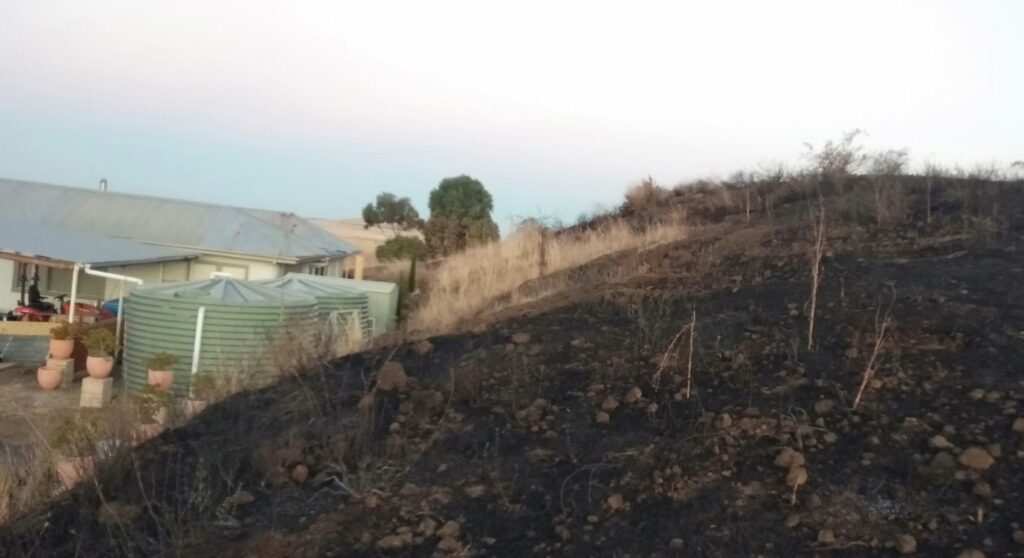
The cause of the fire at this stage remains subject to police investigation and, at
the time of writing, remained classed as undetermined.
Nineteen CFA brigades including those from Talbot, Clunes and Creswick, Air
Bendigo crews in Firebird 305 and Helitak 335, plus police traffic control and Forest
Fire Management Victoria were involved in the incident which began on Saturday
February 4 around 3pm.
Talbot CFA captain Ross Andrews said it was lucky that conditions were
not more severe, noting that the changeable whirling nature of the fire direction
complicated efforts to bring it under control. Several houses were threatened as the
fire burnt in hilly terrain off McCallums Creek Road.
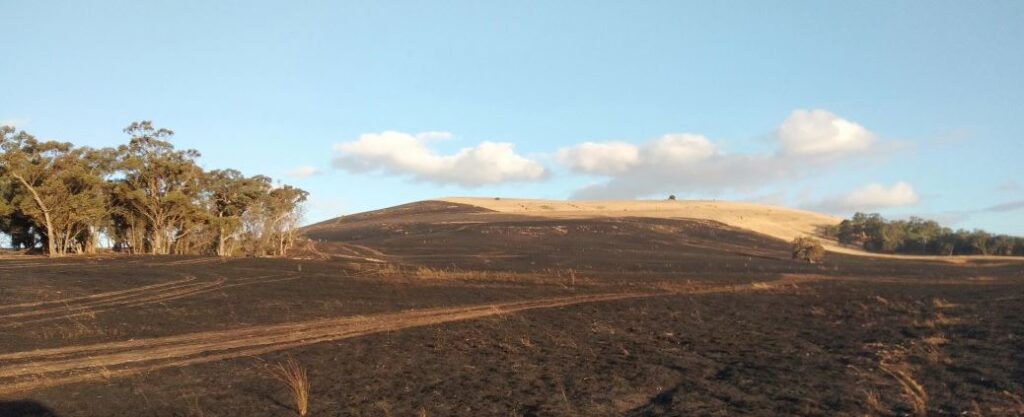
About 94 hectares, and one campervan, were burnt after fire crews had battled for
about an hour before being able to contain it.
“It would have burnt about 300 acres and travelled well over a kilometre,” Ross
said. “The cause is still to be determined. Looking at the wider picture, Daylesford CFA captain Alistair Grant says this
year’s milder season has been comparatively kind in the Daylesford patch of the state’s
central fire region – but cautioned against complacency.
“Daylesford is still relatively green but we could get a week of hot weather
and it could dry off quickly. We’ve had a grassfire at Yandoit a few weeks ago, and
we recently had a grass fire at East Street caused by mowing. The weather’s been
reasonably mild and we haven’t had either extreme or catastrophic conditions this
year.
“But north of Daylesford it is quite dry and CFA Region 15 will soon be running
some bushfire planning sessions – one at Daylesford and one at Eganstown. They will
be advertised.”
While the conditions have been milder this year, the next couple of months will
be telling, David Freelove says.
“February and March will be the tell-tale months,” he says, cautioning against
being lulled into a false sense of security by any cooler days.
“From the start of this year we’ve had four larger grassfires and calls to several
(illegal) burn-offs during the fire danger period,” he says.
“Although it’s been a mild season the grassfires we’ve had have run fairly fast and
have not been as predictable as in previous years. It’s been a different system.”
CFA brigade captains are all keen to remind landholders that restrictions remain
in force, and while ambient temperatures may drop it does not mean restrictions – or
the risk of serious outcomes – have ended.
DEECA (formerly DELWP) Midlands District manager David Watson said
FFMV were continuing to monitor forest and weather conditions and conduct
fuel management works, such as planned burning, slashing, or mulching whenever
conditions allow.
“We’re hoping to complete a series of high priority burns in the Daylesford,
Gisborne, Macedon and Blackwood areas over the coming months,” he said.
For planned burns head to www.vic.gov.au/plannedburns or call 1800 226 226.
February 16th, 2023Denver’s Stonefields fetches $11million+
Words: Eve Lamb & Donna Kelly | Main image: courtesy Q1
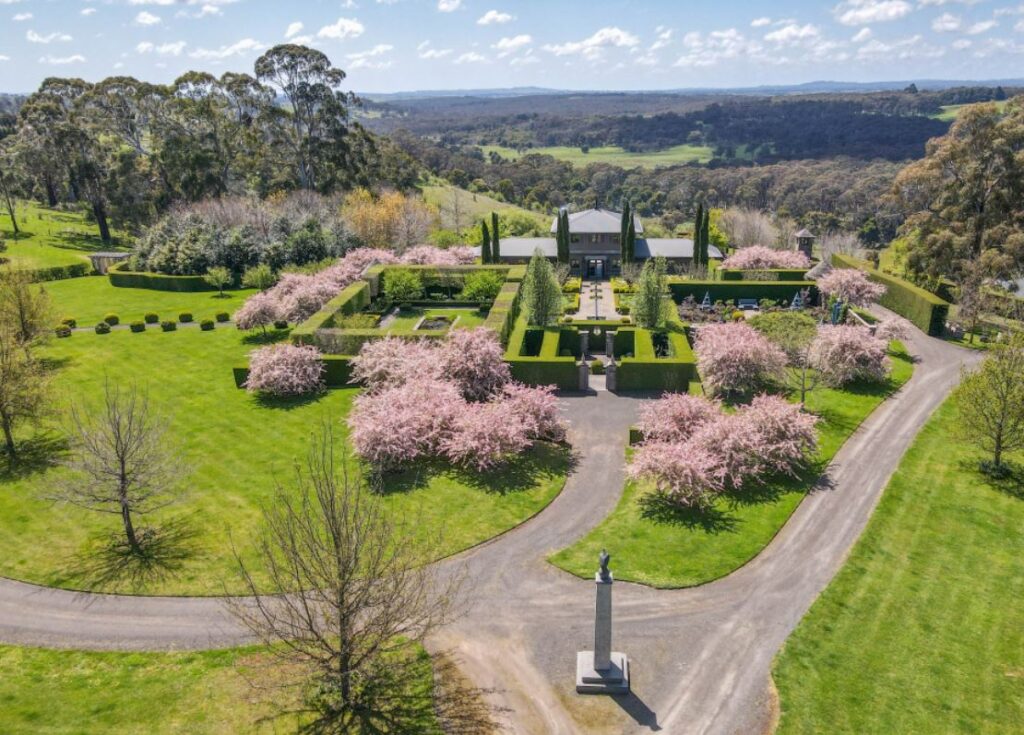
Celebrity gardener Jamie Durie has bought Paul Bangay’s famed Stonefields home and gardens in Denver for more than $11 million.
The TV personality, pictured below, and his business partners are now reported to be planning to convert the private home into a luxury accommodation venture.

“I am very happy and relieved that the garden which I believe is my greatest life’s
work will be in good hands,” Paul Bangay, pictured below, told The Local.
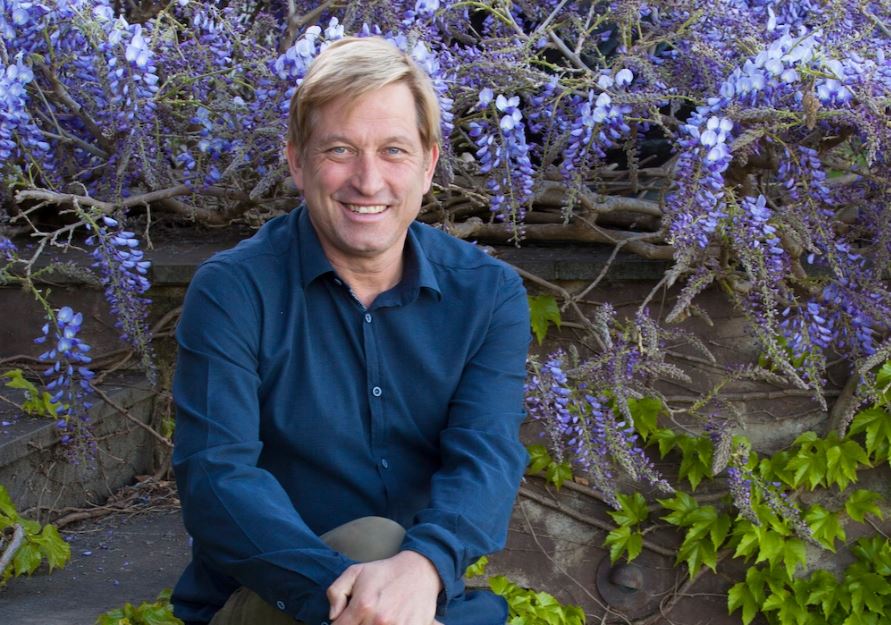
“Jamie Durie will be a worthy and able custodian of the garden,” Mr Bangay said.
The property was originally listed with a price guide of $8 million to $8.8 million
before an adjoining land parcel was included.
Forbes Global Properties’ Michael Gibson had the listing and has confirmed the
sale. He declined to comment on the price, however a source with knowledge of the
recent deal has put it at more than $11 million.
“It is going to be a world-class eco-resort,” Mr Gibson said.
In listing Stonefields, Forbes Global Properties Australia had described the Bangay
property as “without question, one of the world’s most celebrated private gardens”.
For almost two decades, it has been home to Australia’s pre-eminent garden
designer Paul Bangay, for whom “it has been both a spectacular showpiece and
cherished sanctuary,” the agents said.
“Spanning some 50 acres in the rolling foothills near Kyneton, just over an hour
from Melbourne, this exceptional countryside holding is home not only to its famous
gardens and magnificent oak trees, but also premium cattle grazing, superbly kept
pastures and a striking five-bedroom Tuscan-inspired residence, featuring dramatically
beautiful interiors curated by Paul Bangay, in partnership with (the late) Stuart Rattle.
“The home enjoys a strong connection with its surrounds, with stunning views
across the exquisite grounds, iconic hilltop pool and onto the mesmerising landscape
stretched out below.”
Following the sale to Durie and partners, Paul Bangay is now reported to be in
the market for another opportunity in the area to create his next dream home and
gardens together with husband Barry McNeill. With his business partners at Opulus Hotels, financier and hotelier Dominic
Lambrinos and investment banker Kim Jacobs, Mr Durie is now understood to be
planning an eco-resort opening in 2025 at Stonefields.
The group is reportedly planning to develop luxurious, sustainable free-standing
villas, investing $70 million in the construction.
Mr Durie described Stonefields as “one of the greatest gardens in the southern
hemisphere”, and was reported to have jumped on a plane to inspect it once he heard
it was for sale.
“We are pinching ourselves that we are able to secure it,” he said.
Mr Gibson said the property had attracted a substantial amount of interest and
inspections during the sales campaign. It was originally pitched as an ideal home for
either an owner-occupier or someone looking for a country retreat.
However, not everyone is happy about the sale, with a community notice being
sent out last week via the Glenlyon Progress Association, and posted on Facebook, on
behalf of a newly formed Denver Community Group.
The notice, which includes information about a public meeting, says the scale of
the proposal is “according to media reports, unprecedented for the Denver area, and
arguably the wider region”.
“In particular, a $70 million development including 50 villas, a celebrity chef
restaurant and health/wellness facility.
“This development raises a number of significant community concerns, from
ecology impacts to local infrastructure to noise impacts.
“The purpose of this meeting is to understand more keenly community sentiment
towards this proposal. This will help inform our ongoing engagement with the
Hepburn Shire on behalf of interested ratepayers and local residents.
“A Denver Community Group has been established, and it is anticipated that
a formal process will be established – including governance and communication
frameworks – to guide the group’s next steps.”
The meeting will be held at the Wombat Forest Vineyard on Sunday, February 19
from 10am. RSVPs to denvervic3461@gmail.com
Hepburn Shire Mayor Cr Brian Hood said he would be attending the meeting
and the first he, or any councillors, had heard of the proposal was reading it in The
Financial Review.
No contact had been made by the developers, he said.

February 16th, 2023Artists of the Central Highlands with Eve Lamb
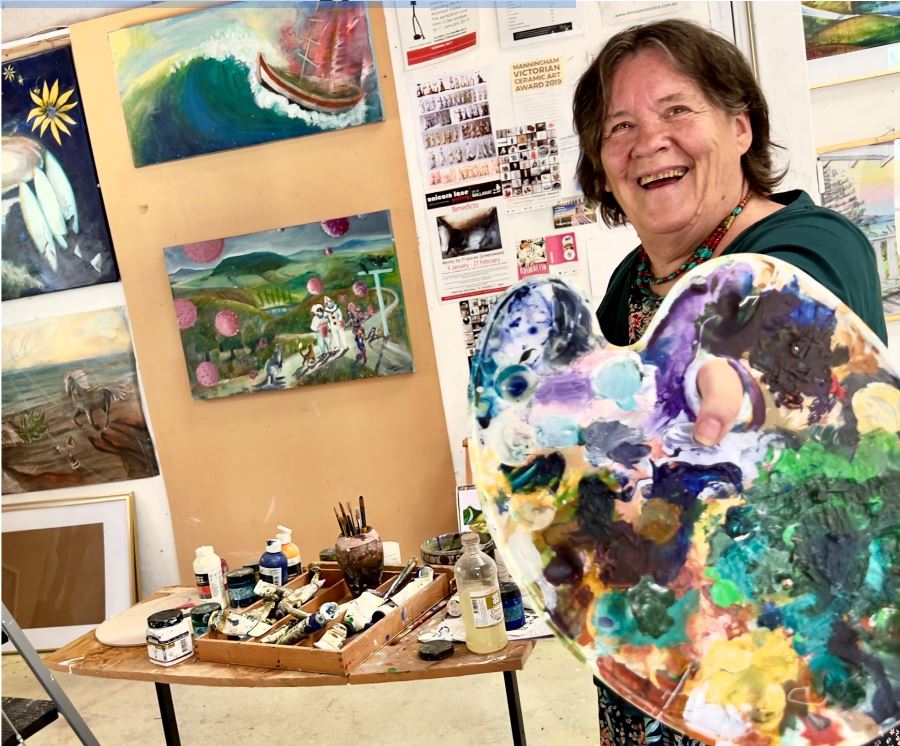
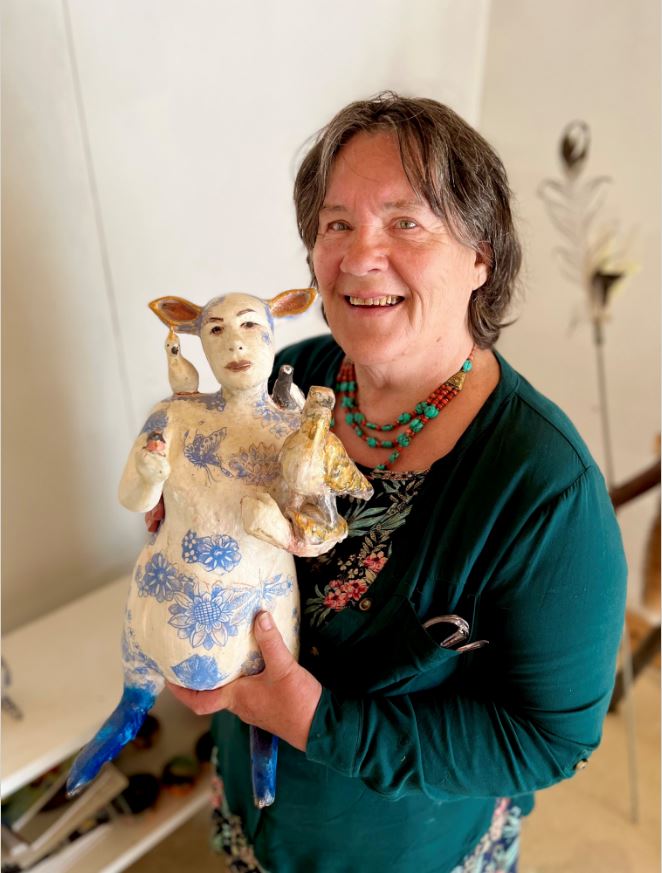
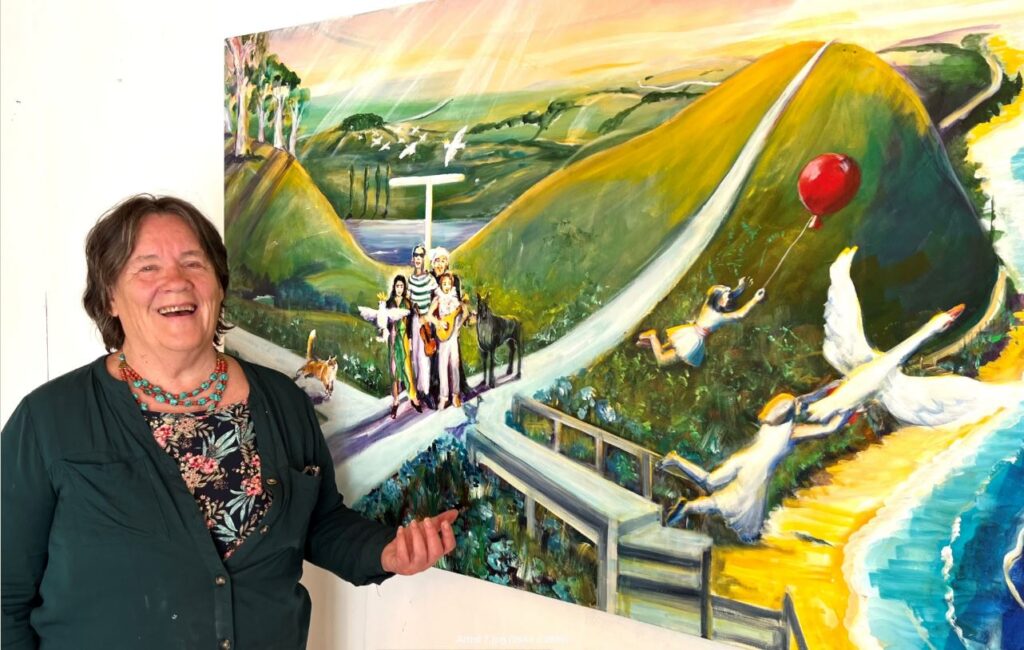
The prolific creative output of Wheatsheaf artist Frances Guerin is informed
by a background in philosophy and transpersonal psychology. Frances began solo
exhibiting in the early 1980s and today her whimsical “humaroos” are particularly popular
with collectors.
Eve: How do you prefer to describe your style?
Frances: My style is eclectic, encompassing ceramics painting and drawing and assemblage. After
retiring from human services in 2005, I completed a Diploma of Ceramics at Federation University, a
fantastic course, then graduated with a Masters of Visual Arts at LaTrobe Bendigo, focusing on Irish
contemporary art that drew links between pre- Celtic spirituality and the Australian First Nations
dreaming.
Eve: How did you come to art?
Frances: My father took me to Bendigo Art Gallery when I was about eight and I was hooked.
My mother had a selection of prints by French impressionists, classical works and a fine selection
of ceramic vases and figurines, and she would often encourage me to paint, probably to get me out of
her hair. I loved art history and did many journeys across Europe, Egypt and Asia trawling through
archaeological sites, museums and galleries, filling journals with sketches of Old Masters works.
Eve: Which artists have influenced your own work?
Frances: Early on I loved anything ‘trippy’ like Salvador Dali. Then the feminist
artists who opened the door for women, like Judy Chicago and Paula Rego. More
recently when I was travelling through Ireland, I saw the public art was both
enchanting and moving…
Eve: What’s your medium and subject matter of choice?
Frances: I move between drawing and ceramics. Ceramics is demanding, a week’s
work can be lost during a firing. The terrible ping of a cracking or shattering can put
me off for weeks. At the moment I work between large face pots, figurines, and small
animals. The humaroos are my ‘iconic’ best seller, so I like to keep a number in stock.
More recently after the Australian Ballet performed Harlequinade last year, I have
made several sets of the Commedia del’arte characters.
Eve: Have you ever worked in any other area besides your arts practice?
Frances: I worked as a therapist for many years, with individuals and groups,
after training in transpersonal psychology. Then worked as an education officer in
health and did some teaching at tertiary institutions. After establishing a vipassana
meditation practise, I taught hundreds of classes in Melbourne and Central Victoria.
On several occasions I had the opportunity to do some event management, including
two tours of Tibetan monks and nuns creating sand mandalas.
Eve: When you work do you like to play music and if so what is your music of choice?
Frances: Dead Can Dance, Buddha Bar, Clannad, Lisa Gerrard, classical music.
Eve: To date, what have been your career highlights as an artist?
Frances: Craft Lab Ballarat Mining Exchange 2022, UNESCO listing Folk Art
and Craft best exhibit Royal Melbourne Show and a Julia Gillard face pot purchased
by the Art Gallery of Ballarat.
Eve: Finally, do you have any exhibitions or special arts events coming up?
Frances: Immortal Diamond Exhibition is showing at the Southbank Vitrines,
152 Sturt Street, Melbourne until February 26. And I will have an open studio at 55
Whitegum Drive, Wheatsheaf during the ChillOut weekend, Saturday and Sunday from 11am to 4pm.
February 4th, 2023A stitch in time: the Textile Palette Exhibition’s back
Words & image: Eve Lamb
If you’re a nifty needleworker with a talent for textiles then the Clunes organisers of this year’s Textile Palette Exhibition want to hear from you.
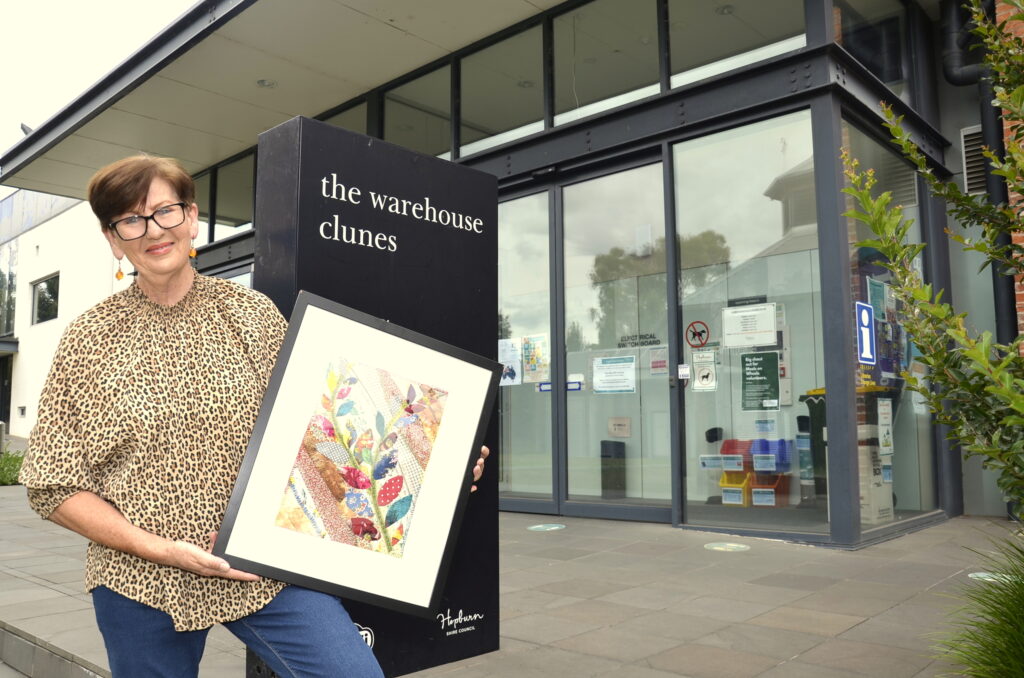
After a Covid-enforced break, the Textile Palette Exhibition is back, being staged in Clunes over April 1-29, in the Clunes Warehouse for the first time.
And the date for submission of work for inclusion has now been extended from January 27 to February 10, says the exhibition’s regional coordinator, Christine Lethlean (pictured above).
Christine, a talented textile artist who moved to Victoria from WA a decade ago, has called Clunes home for the past eight years, and runs regular workshops from her Clunes studio. She also teaches textile art Australia-wide.
“I’ve always loved stitching,” says Christine who is also a former health professional with a background that includes nursing, mental health nursing and art therapy.
Christine says submissions for this year’s Textile Palette Exhibition are being accepted from interstate as well as closer to home.
“We’re really talking about textile art as a visual art-form,” she says.
“The theme for this year’s exhibition is Time for Stitch. After the past few years
navigating the changes to our lifestyle and restrictions placed on us by the pandemic,
having endured long periods of isolation and separation, what’s spoken of now is how
the quiet time for creativity helped many of us cope.
“Sitting and stitching was a lifeline to maintaining a sense of normality, and keeping a focus and our creative motivation alive.”
With this theme in mind, textile artists intending to submit work for inclusion in the exhibition are being invited to work on ideas connected to their experience during pandemic restrictions – or simply a project highlighting a love of all things connected to textiles and stitching.
Submissions considered for this year’s exhibition may include framed and unframed works, sculptural pieces, wall hangings, costumery or surface design, with artistic soft furnishings and unique upholstered furniture also considered.
As regional coordinator of the upcoming exhibition Christine makes no secret of the fact that she’s aiming to lift the profile of the annual event, and will be applying for a Hepburn Shire grant for promotion, marketing and signage.
“When we held the first exhibition in 2016 – it was a roaring success,” she says.
“We started as a group of about 15 stitching enthusiasts and we’ve had about four
or five shows since the first.
“Now it’s going to be in April every year and I’m anticipating making it a bit
more formally recognised as part of the Hepburn Shire’s events calendar, bringing
visitation from curators, collectors, artisans and anyone interested in stitching as an
art-form. I’m aiming to put it on the calendar as a must-do event.”
Those keen to know more can go to www.textilepaletteexhibition.org and there’s also an Instagram page @textilepalette.
February 3rd, 2023Meet Stella Savy, conductor of the Creswick Chorus
Words: Eve Lamb | Image: contributed
Quite a few will know her as the friendly face up front conducting the Creswick Chorus, Creswick’s
own community choir for adults who like to sing.
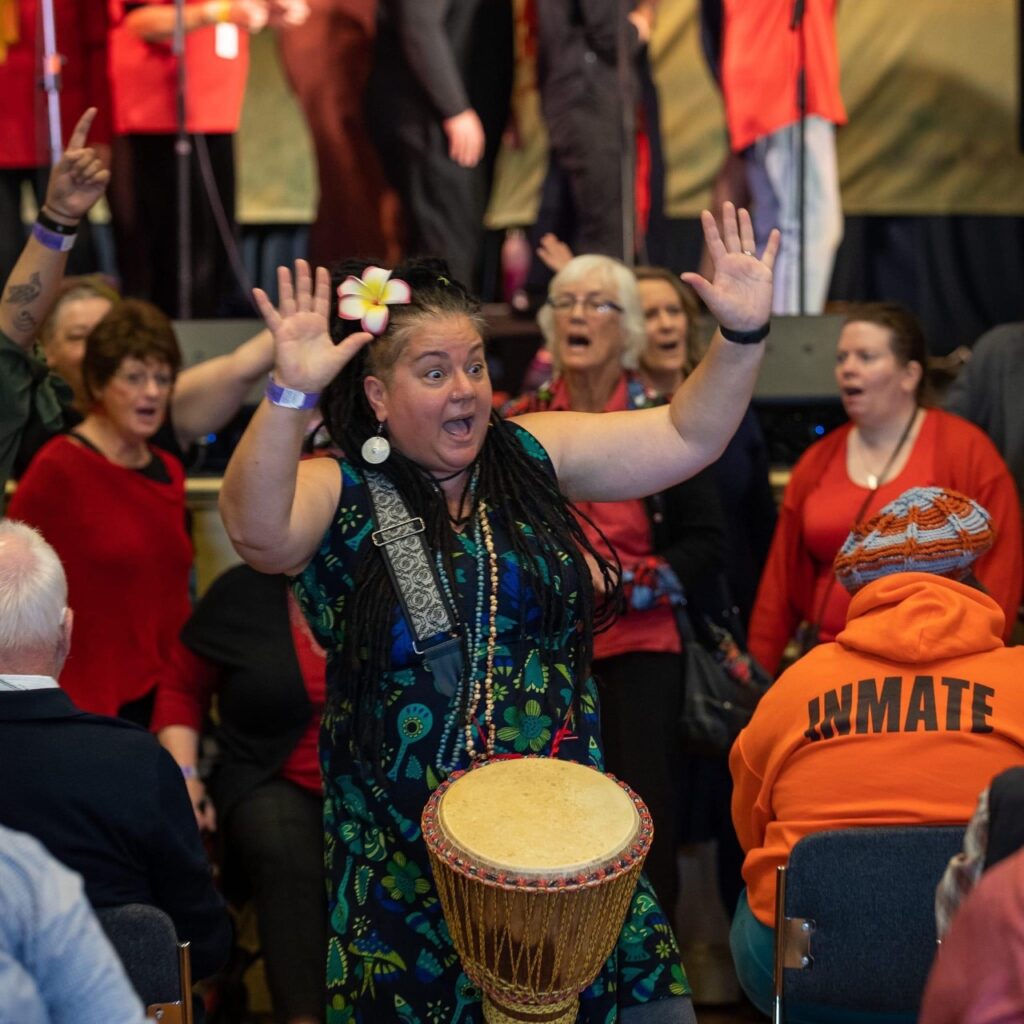
Stella Savy is the talented local muso whose unique blend of funk, soul, reggae and ska has won her fans
Australia-wide. Her original music is influenced by her Seychelle Island heritage – the sounds of the islands where her father was born.
Beyond performing with various combos – like Stella Savy Avek Frers – Stella derives plenty of soul food from her role as community choir conductor.
She says the Creswick Chorus formed about this time last year, initially specifically to perform at last year’s
inaugural CresFest.
But after eight weeks of rehearsals and then achieving their goal of performing at CresFest, none of the choir members were ready to see it all end there. So it didn’t.
Instead, Stella says Creswick Chorus now has about 25 regular members and after its term break, has now just resumed weekly Wednesday evening rehearsals (as of earlier this week February 1) as part of the Creswick Neighbourhood Centre program. And it will once again be performing at CresFest that happens March 31-April 2.
“The Creswick Chorus is open to everyone and you don’t need to have experience,” Stella says, also
mentioning the Creswick Kids’ Choir which will also be performing at CresFest this year as well.
Stella has been a musician and teacher for more than two decades and has taught many age groups and people of a wide range of musical abilities all over Australia.
She is an engaging storyteller and teacher and those who participate in her workshops tend to leave with a smile as well as some new musical skill.
Her live performances feature original works with contagious beats and her music career has taken her to
amazing locations around the world, including Africa and the Seychelle Islands, where she facilitates yearly tour groups.
Stella has also worked with choirs for many years, ranging from community – like the keen Creswick
Chorus – to professional, and her extensive skill set includes body percussion, harmony, hand-drumming
and singing.
“The Creswick Chorus is for adults,” she said, ahead of the local choir’s resumption of its well-attended
weekly rehearsals at the town’s neighbourhood centre as of Wednesday evening earlier this week.
“It’s a lovely group of people and it’s really fun. We sing a range of world music, contemporary, a bit of
gospel and a bit of African stuff,” Stella says.
“It’s such a great way to really connect with people in your community.”

February 3rd, 2023Central Highlands artist profiles
GLENLYON artist Pam Gleeson brings her background discipline as a professional photographer to her creation of imposing landscapes that reflect her deep love of the land and its stories. Pam is no slouch
when it comes to observing detail. She’s previously worked as a medical scientist. Here, she chats to The Local journalist Eve Lamb about her art.
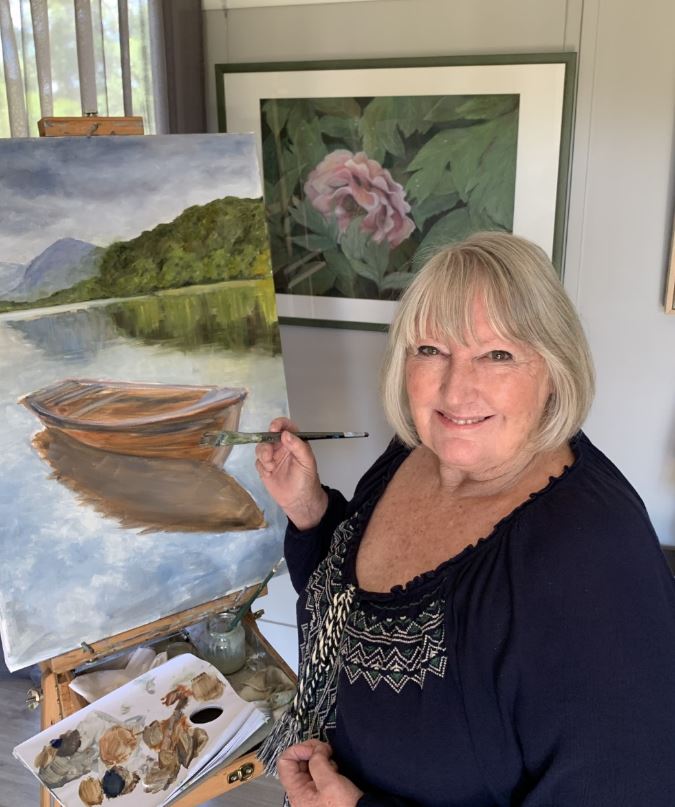
Eve: How do you prefer to describe your artistic style?
Pam: I would describe my style as a combination of realism and impressionism,
though at this stage I am still in the process of exploring other styles including more
stylistic representations of nature and abstraction.
Eve: How did you come to art?
Pam: I have always had an interest in art from a very young age and have pursued
some form of artistic expression over the years. I studied art at matriculation level
and later completed a Bachelor of Fine Arts at the University of Tasmania. My focus
at that stage was photography which I chose to follow professionally for the next
two decades. It is only recently that I have returned to painting as an art form and
my practice of photography has informed my painting on many levels, from the
importance of light and how it can totally change the mood of a painting, choice of
subject matter, colour, composition and perspective.
Eve: Which artists – current or historic – have influenced your own work?
Pam: I have mainly been influenced so far by the works of the Heidelberg School,
namely, McCubbin, Roberts and Streeton who all captured the quintessential essence
of the Australian bush. I currently use oils and pastels.
Eve: What is/are your subject matter of choice? Why so?
Pam: My subject matter has mainly been landscapes, often including partially
derelict sheds and houses and also seascapes. This reflects my love of the Australian
landscape which has been informed by travels around Australia and is an extension of
my landscape photography. I am keen to explore more stylistic representations of the
natural and man-made worlds.
Eve: Do you work in any other area besides your arts practice?
Pam: I spent much of my life working as a medical scientist in the fields of
forensic biology, pathology and research, though art was always there for me, albeit
often in the background.
Eve: What are you working on at the moment in your current arts practice?
Pam: I am keen to start on several series, whether using oils or pastels. These
series will involve exploring a particular element that will dominate the artwork, for
example birds in flight or stormy skies. The possibilities are endless.
Eve: To date, what have been your career highlights as an artist?
Pam: Since I have only recently returned to painting, the highlights have been
exhibitions as a photographer, the high point being a major fundraising event
that I held in Tasmania where auctioned art photography of my own and other
photographers’ works raised thousands of dollars for World Vision and Rotary’s fund
following the 2004 tsunami in South East Asia.
Eve: Do you have any exhibitions or special arts events coming up?
Pam: Not at present, but I am part of the Daylesford Regional Arts Co-operative
and we will be having regular group exhibitions.
Eve: What are the challenges and rewards for artists today?
Pam: The main challenges are finding a suitable place to exhibit works and
attracting people who will truly appreciate your work. The main rewards are fulfilling
the need to be creative and having others truly see the value in your work.