


January 16th, 2025Real estate trends impacting local market

A range of taxes are impacting property sales in regional Victoria, real estate agents say. Among them, Belle Property’s Will Walton lists four taxes that he identifies as making buying in regional Victoria a challenge.
“The four taxes making buying a challenge are land tax, vacant land tax (a wealth tax by default), the B&B levy and the fire levy increase,” he says.
“These state government imposed costs are compounding our market difficulties especially as we so heavily rely on tourism for our local economy and employment, including accommodation to house tourists.
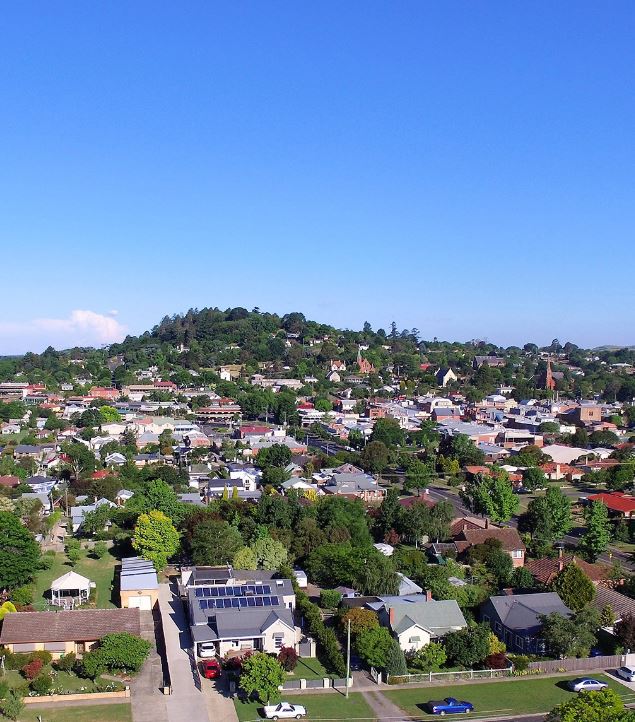
“The ratio of one buyer for every five homes is now one in 10 homes. Every property is competing with each other.”
Agent Kim McQueen of McQueen Real Estate says certain sectors of the market, especially the holiday-let segment, are being heavily impacted while other sectors – notably the higher-end segment in which her agency specialises – are flourishing.
“We tend to specialise in slightly more high-end properties and we’ve had an amazing end of ‘24 with very strong sales at the top of the range,” Ms McQueen said.
“Over late November to December we’ve sold more than $13 million in property. The really good, exceptional properties will sell well in any market and our region is blessed to have many of these properties.
“In our region we have a lot of subsets in the market, and the area that’s being mainly hit is the holiday-let investor stock. The reason is all the taxes. “Taxes have skyrocketed.”
In the holiday-let investor segment, in particular over the past 18 months, it’s been a “very tough market,” Ms McQueen says.
“That’s the one that has just been decimated. Investors used to be 50 per cent of our buyers. We now have very few investors. It’s Victoria-wide.”
Some observers now believe ditching Victoria’s big taxing approach should be a top priority in the government’s regional housing supply inquiry, while others believe the tax measures are needed to tackle the wider housing affordability crisis.
In regional towns, including those in the Hepburn Shire, many houses are sitting vacant, their absentee owners rarely visiting, while countless Victorians struggle to put any roof over their heads at all.
Over the past couple of years the Victorian government has brought in some new and expanded property taxes. In regional areas the most substantial have been the expansion of land tax, bringing Melbourne’s vacant land tax to the rest of Victoria, and the short- stay accommodation levy.
Early last year the state government introduced sweeping changes to land tax, lowering the tax-free threshold for general land tax rates from $300,000 to $50,000 for those who hold a second property.
Asked her opinion on whether the taxation measures may be going some way toward tackling the housing affordability crisis (by disincentivising additional property acquisition as investment), Ms McQueen says the broader picture is a complicated one.
“It is very complicated. People that own holiday homes in our region are generally average normal people who have saved a very long time to purchase an investment property so they can be self-funded retirees and not be reliant on the government.”
Meanwhile some analysts, like economist Alan Kohler in his recent book The Great Divide: Australia’s Housing Mess And How to Fix It interrogates the underlying notion of using housing as a vehicle for wealth-creation.
“It will be impossible to return the price of housing to something less destructive – preferably to what it was when my parents and I bought our first houses – without purging the idea that housing is a means to create wealth as opposed to simply a place to live,” Kohler states in the book.
Like Mr Walton, Ms McQueen believes the taxation measures, that agents say are particularly impacting the holiday-let investment end of the market, are having a damaging flow-on impact on tourism.
But despite the impacts of the taxation measures, Mr Walton remains optimistic about the year ahead.
“Belle Property has had a record month. The Daylesford office team has successfully sold 12 properties, four more than average per month.”
Words: Eve Lamb | Image: Kyle Barnes

January 8th, 2025Capture the vibe: new photography comp for CresFest

In a new initiative for this year’s CresFest, festival-goers will have a chance to win an attractive prize by capturing photographic images from the April event.
Organisers of the Creswick folk and roots music festival are introducing the new competition with visitors invited to enter up to three great images capturing the vibe of the 2025 festival coming up April 4-6.
By entering their three top images they’ll be competing to win two day passes or one weekend pass to CresFest 2026.
“We will be looking for funny, quirky, soulful, heart warming pics we can use in our reporting to partners and in marketing future festivals and you can help out,” CresFest founder and co-director Judy Turner says.
“All good quality images will be considered by a panel of local judges. Phone cameras of course accepted.”
Organisers say that full conditions and details for the debut CresFest photo comp will be announced on March 1.
Words: Eve Lamb

January 6th, 2025Double bill at Clunes’ Mulberry Manse

Clunes’ Mulberry Manse sets the scene for an evening of beautiful music featuring celtic harp this Wednesday January 8.
Multi award-winning Scottish singer songwriter and harpist Chloe Matharu (above) is on her second Australian Tour.
She will perform at Clunes’ Mulerry Manse alongside acclaimed folk-soul duo Andrea Kirwin and Claire Evelynn.
Matharu is an award winning Scottish-Indian singer songwriter and harpist from the west coast of Scotland.
Many of her songs draw on her time as a navigational officer in the merchant navy, inspired by the natural world as experienced at sea.
On tour she performs solo with her harp in English, Scots, and Welsh. She is now on tour with Kirwin and Evelynn enroute to Tasmania’s Cygnet Folk Festival.
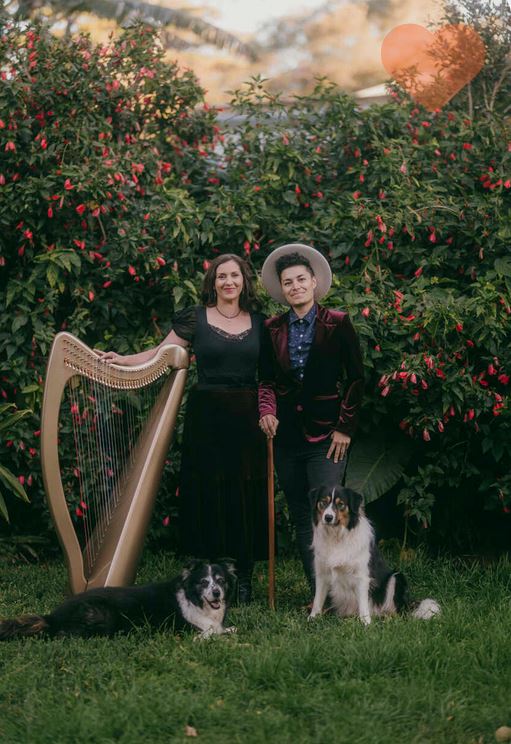
Australian/Fijian folk-soul artist Andrea Kirwin and her wife Claire Evelynn (above) have been performing as a duo together since 2021.
In this time they’ve developed a very special live show blending the ethereal sounds of the celtic harp with Andrea’s originals that feature guitar, cigar box guitar, harmonica and stomp and her rich, velvety vocals.
Date
Wednesday January 8, 2025 7:30pm
Location
Mulberry Manse
8 Roses Lane, Clunes, Clunes VIC 3370
Details
More details can be found through the Mulberry Manse Facebook page, with bookings online through Trybooking
Words: Eve Lamb. Images: Supplied
January 3rd, 2025Some fav walks that were wandered…
Looking back at the year that was, here are just a few snapshots from The Local’s continuing Walks of the Central Highlands Series featuring good walks of the region as tackled by journalist Eve Lamb in company with experienced local bushwalker Paddy H… and others.
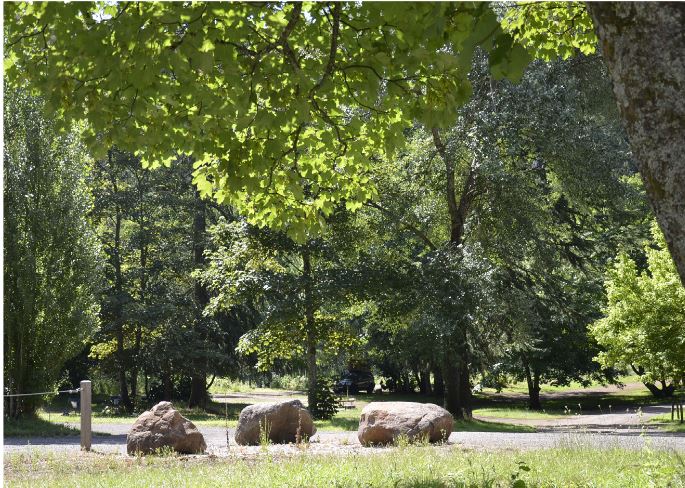
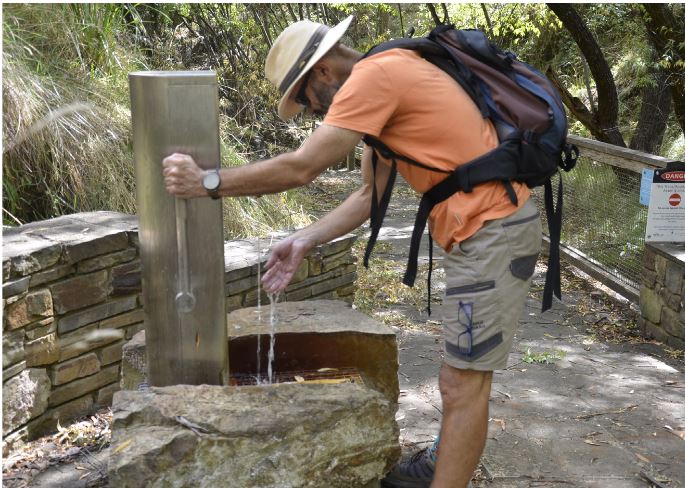
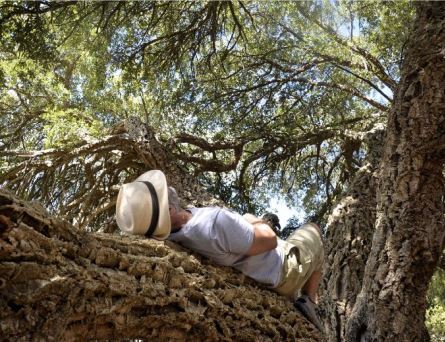
Track. Image: Eve Lamb. Read the full story at www.tlnews.com.au – Edition 294
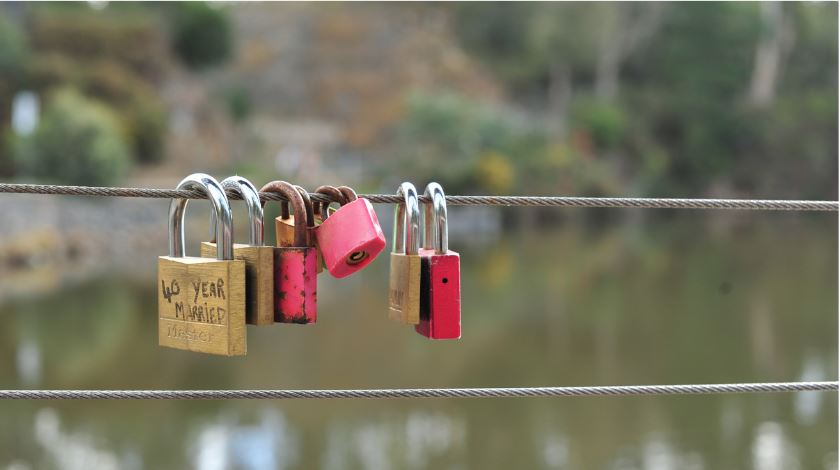
December 23rd, 2024Celebrating the Mount…
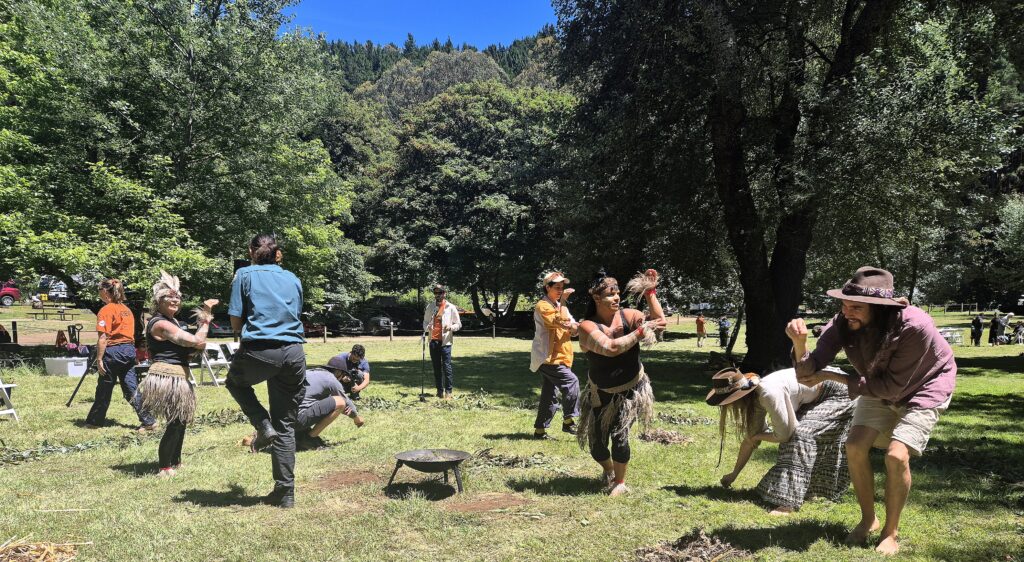
A crowd of 250 to 300 people gathered in perfect conditions in the crater of Lalgambuk (Mount Franklin) on Wednesday, December 11 to celebrate International Mountain Day at a special event hosted by DJAARA.
People, including school children, came together from throughout the region to learn more about International Mountain Day and particularly about the immense significance of mountainous landscapes to Indigenous cultures globally and through time.
Attendees took part in several educational and cultural activities including a guided walk that took them part of the way around the volcanic crater rim of Lalgambuk.
There was also a lively traditional emu dance that enticed quite a few to join in and try out the moves. The event also offered the chance to hear from Dja Dja Wurrung man, Harley Douglas who grew up on Djandak (Dja Dja Wurrung Country) not far from where Wednesday’s celebration took place.
Harley talked with attendees about his and his family’s long-standing connections to Lalgambuk. Dja Dja Wurrung Clans Aboriginal Corporation group CEO Rodney Carter also spoke, welcoming the crowd.
A traditional Indigenous smoking ceremony was a feature of the occasion that was celebrated as a day to come together as one people and connect with Country.
It’s now hoped that International Mountain Day will become a regularly celebrated fixture on the region’s calendar.
Words: Eve Lamb
December 22nd, 2024Cheque this out!
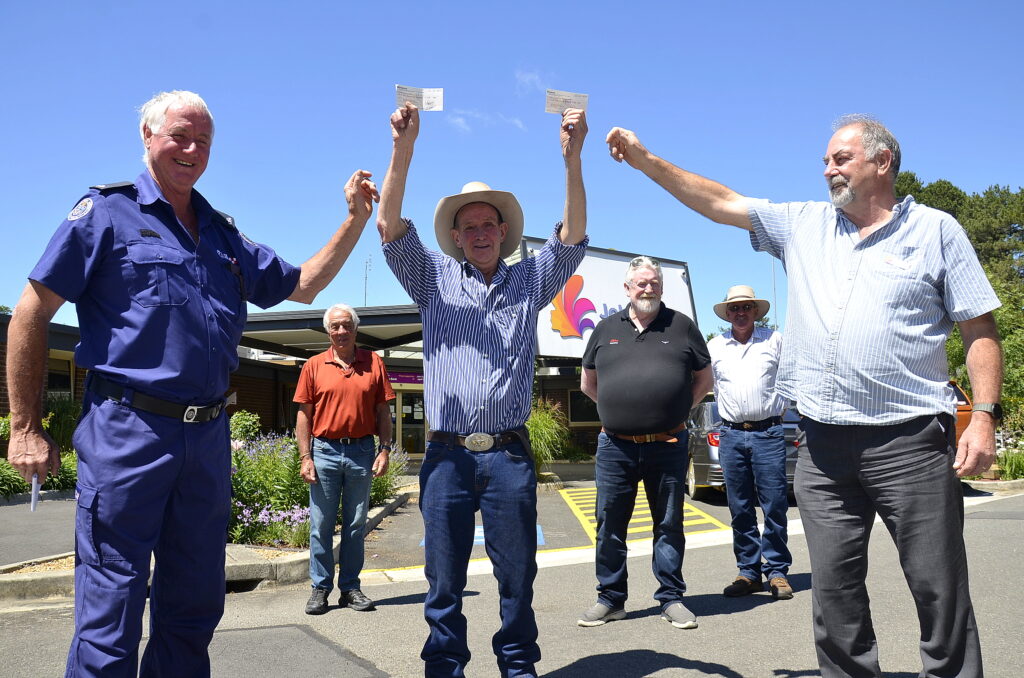
Dean Recreation Reserve president Brian Maher has presented a couple of cheques to some well deserving locals.
The cheques were the result of this year’s annual Dean Sheep Dog Trials, otherwise known as The Old Sniff Classic, and a must-do competition on the calendars of many of the state’s top sheepdog handlers and their highly trained working dogs.
First up was a $1000 cheque that Brian presented to Creswick’s John Curtin Aged Care via CEO Steve Bruechert followed by a $200 cheque for the Newlyn-Dean CFA Brigade accepted by the brigade’s Dominic Prendergast.
Mr Bruechert said the money would go toward ongoing efforts to raise funds to purchase a new minibus while Mr Prendergast said the money would likely go toward a new floor covering for a brigade shed.
Words: Eve Lamb
December 20th, 2024Dharma on a quest to gain digital wisdom

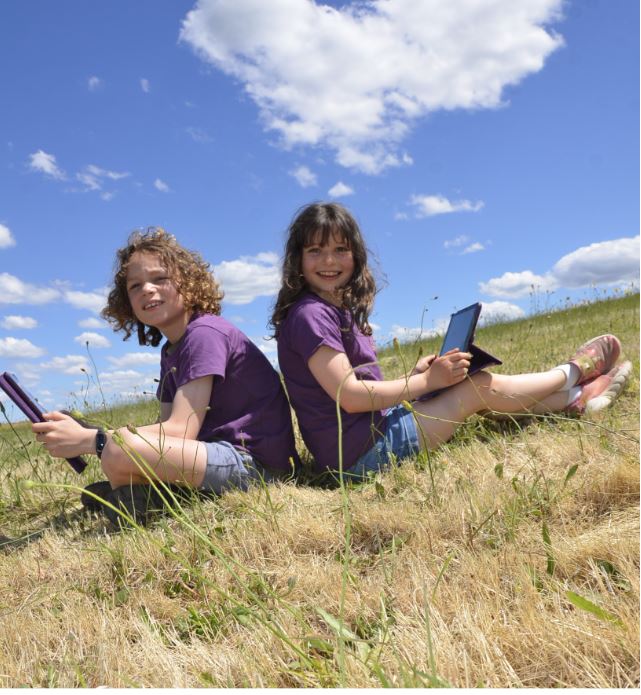
While Australia grapples to keep kids safe online, Daylesford’s Dharma School is embarking on a bold new project that uses a mindfulness approach to tackling the problem.
From the new year the school will be part of a Global Wisdom Project as it adapts the Victorian state government’s eSmart package in a way that it hopes will yield far better traction with children.
While the state’s eSmart package has much going for it, including the best of intentions, Dharma school principal Andrea Furness says that in practice they’ve found the children are not relating all that well to it.
“It’s a good resource but the children don’t engage with it. I’m guessing that the language isn’t right for them,” Ms Furness says.
Through their Global Wisdom Project they’re adapting the state’s eSmart package using the language and ethos that already underpins all they do at the school so as to guide every interaction the children – and their adults – have with social media and the online space into the future.
“These precepts, our values, are Reverence for Life, Generosity, Body Responsibility, Deep Listening and Loving Speech, and Mindful Consumption,” Ms Furness says.
eWise
“We’re applying the precepts to reframe the language of eSmart and calling it eWise.
“It’s part of the wider Global Wisdom Lab. We and two other schools in Victoria are part of it.”
It’s an undertaking for which they are receiving support from Monash University’s Professor Zane Diamond.
“This research is being conducted by our school with Professor Zane Diamond from Monash University as our Digital Wisdom project contribution to the larger international umbrella of the Global Wisdom Lab,” Ms Furness says.
“We are hoping we will launch the resource next year. The second stage will be a Community Participatory Action Research Project so parents, including those who are not part of our own school community, can then choose to participate in a series of groups facilitated by Professor Diamond.
“Groups of parents will have the chance to participate in action research alongside students, creating an opportunity to bridge home and school expectations in the digital world.
Ripple effect
“This has a lot of capacity for ripple. We will be inviting expressions of interest to be part of the CPARP on our website before the end of the year.”
Ms Furness said the school didn’t have any internet devices.
“We have some kids who have access to phones but while we’re at school we don’t have access to them. Even smart watches go into your bag while we’re at school.”
In terms of the new federal legislation aimed at protecting under 16s from the well-documented damage associated with social media use, Ms Furness says it’s well intentioned but, like many, questions how it will work in practice.
“I think it’s a great idea but I don’t think it’s being rolled out in a way that’s really set up to be successful,” she says.
“We need resources for parents and I think big tech companies really need to be on board as well.”
Algorithms
The algorithms operating behind the visible face of social media, and the enormous social pressures to remain connected within a social cohort, particularly among young people, especially need to be carefully factored into addressing the issue long-term, Ms Furness believes.
Story: Eve Lamb
December 18th, 2024Objector number a focus in planning decision: 18 month trial to start

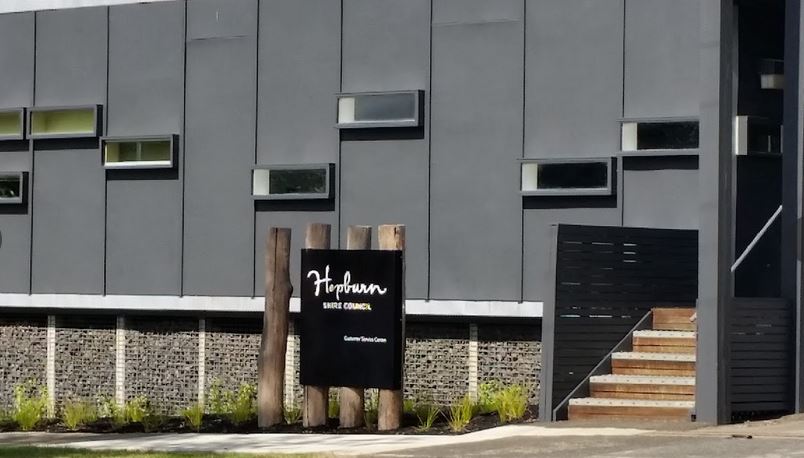
Some changes to the way in which planning applications are dealt with in Hepburn Shire will be trialed for 18 months following a decision by the Hepburn Shire Council.
Under pre-existing arrangements planning applications had been dealt with by the council’s planning officers guided by planning frameworks and policy, but have been required to go before the council for decision where there were at least five objectors.
An officer recommendation that went before the council meeting on Tuesday December 17 sought to increase this threshold from five to 15 objectors required before an application would need to be referred to the council for decision.
The reason for seeking the change was in order to streamline and expedite the processing of applications.
However at the meeting Councillor Lesley Hewitt presented an alternative motion requiring at least 10 (rather than the recommended minimum of 15) objections be required before triggering the need for an application to go before the council.
Cr Hewitt’s new motion also differentiated between the farming and urban or residential context, proposing that the limit for triggering the need for council determination should remain fixed at the current minimum of five objectors in the case of applications relating to land zoned for farming.
“Community feedback suggests that the change from five to 15 objectors is too high,” Cr Hewitt said in moving her alternative motion.
Cr Hood seconded Cr Hewitt’s motion and it passed 5:1 with only Cr Tim Drylie voting against Cr Hewitt’s motion and instead seeking a deferral of the matter and Cr Tony Clark an apology for the meeting.
“I support going from five to 10 objectors. I think 15 was a bridge too far and I fully support (Cr Hewitt’s amended) motion,” Cr Hood said.
Also supporting the motion, Cr Shirley Cornish said “the farming zone is so very different to a residential zone”.
The officer’s original recommendation had also sought to require that planning applications of more than $5 million in value should be referred to the council – up from the $2 million threshold for a referral to council which has been in place to date.
However, Cr Hewitt’s successful motion instead dropped reference to a dollar value threshold for triggering a referral to council, instead requiring an application to be referred to council where it meets one or more of five specific criteria.
These criteria included where “the planning permit application raises significant issues of public interest” and where it would result in a use or development contrary to the adopted Future Hepburn Strategies or a proposed planning scheme amendment which is supported by council”.
Formalising an informal practice which had already been in place, Cr Hewitt’s successful motion also requires that the council’s CEO implement a process where councillors can “call in” to a councillor briefing any planning permit if a minimum of three councillors seek such a “call-in”.
The new arrangements will now be temporarily in place for 18 months and after that time officers will present a report to the council on the outcomes and provide further recommendations on whether to continue with the changes.
During the meeting councillors heard that in the last 18 months only one planning decision made by the council had been different to the planning officer recommendation.
It also heard that over the last four year term fewer than 10 applications had involved the council making a planning determination that was different to the planning officer recommendation.
And in the 23-24 financial year of the five matters that had ended up being determined by VCAT, four of those had upheld the council’s decision while the only one that had not been supported at VCAT was one in which the councillors had overturned an officer recommendation.
Words: Eve Lamb
December 10th, 2024Walks of the Central Highlands

with Eve Lamb
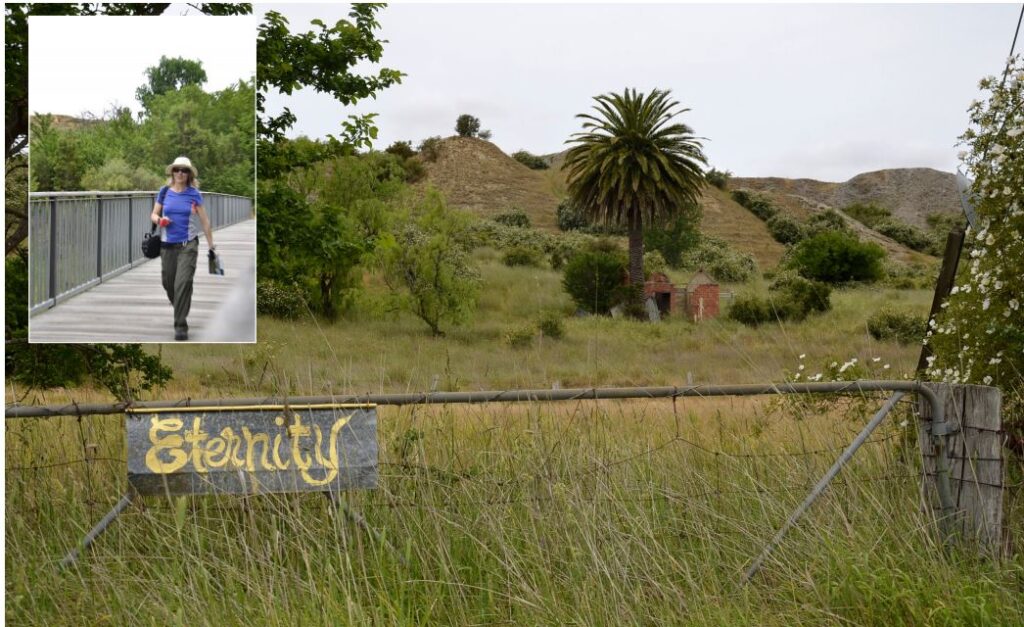
Clunes Original Homestead Creekside Walk. Loop. Distance 4.5 km.
This is one of my fav Clunes walks. It’s a slight adaptation of a loop walk that appears in a newly released brochure detailing several choice walks and saunters in and around the Clunes township. More on that later.
For this 4.5km loop my trekking accomplice Paddy H and I start out in Collins Place (adjacent to The Clunes Warehouse). We turn left and head roughly north along the town’s main (Fraser) street, until we reach Templeton Street where we turn right (east) and walk straight toward the Creswick Creek.
Once we reach the creek we turn left and make our way toward the timber-decked footbridge, less than 100 metres on, that takes us over the creek.
After crossing the footbridge we turn left and follow the creekside walking path roughly due north for a short way before turning left into the bottom of Scenic Drive to cross over the creek ford.
Once across the ford we turn right and head roughly north alongside Blackmores Road, again following the creek to take in the Blackmores Road Park. With its magnificent old National Trust significant elm trees, established gums and old fashioned picnic tables this little creekside park is surely one of the most underrated around. It is the perfect place for a picnic or barbecue.
Paddy H and I opt for a coffee break and then walk on to the end of the Blackmores Road Park. Here, we make our way up onto Blackmores Road and continue heading north-ish along the road parallel to the creek that’s to our right.
After about half a kilometer, in a paddock to our right we see the weather-beaten sign that IDs the site of the town’s original homestead.
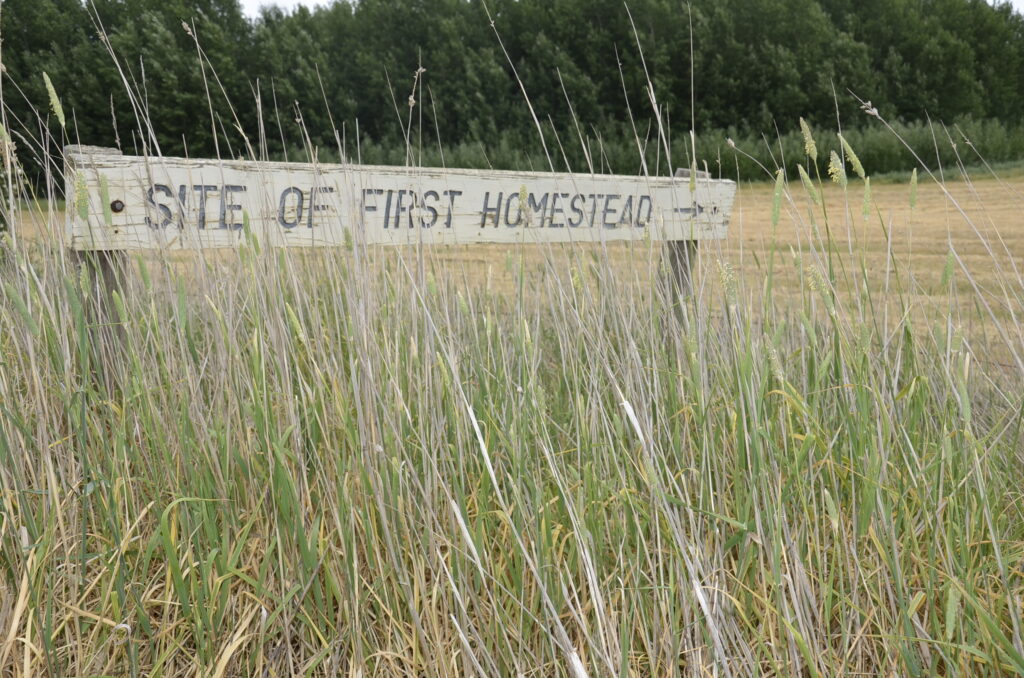
Scottish-born Donald Cameron, the original squatter, built his homestead in 1839. The Clunes Museum has a painting of the Cameron Homestead and the State Library of Victoria has a watercolour of the Station of Donald Cameron JP Esq done around 1844-1847 and available to view on Trove.
We continue on along Blackmores Road for another couple of hundred metres or so until just past the 40km advisory sign where Blackmores Road ends and sweeps up into Alfred Road. We instead turn right, taking a very short unmade track that leads down to a small steel footbridge to cross the creek.
I should mention here that we’ve seen quite a bit of wildlife at this point including a black kite, a black-shouldered kite, a family of grey fantails, and I strongly suggest that when doing this walk in the warmer months you keep a watchful look out for snakes when moving alongside the creek.
Anyway, back to the bridge. It’s a great little lesser known reach of the creek here, meditative just to stand and take in the scene. Once across and on the other side of the creek, if you haven’t already tuned in properly, the landscape now commands attention with its undulations and sweeping wide sky vistas.
The track weaves through an impressive patch of native poa tussock grass, heading roughly due east before we turn right into Station Flat Road, and begin heading along the creek back toward the township.
Clunes is a unique place (as you know) and one of the evocative things about it is the quirky Eternity sign to be spotted as you meander along Cattle Station Flat Road. There it is, painted in a kind of faded lemon yellow in a flowing yesteryear cursive script and afixed to a rusty gate that leads to … well eternity really.
I love this walk, too, for the landscape right here with its remnant mining mullock heaps plus palm tree. Makes you feel like you might be in Egypt or somewhere else fairly exotic… which of course, you are.
We continue along Station Flat Road, passing historic relics of the Port Phillip Gold Mine, until we again reconnect with the bottom of Scenic Drive. To neatly complete this walk you could either cross the ford again and turn left to take in the far end of Fraser Street headed back to Collins Place. Or you could just keep ambling along creekside for a beautiful leafy end to the loop, back across the first footbridge.
This walk is very similar to the ‘Original Homestead Walk’ included in the new Clunes Town Walks brochure that was produced as a collaboration between Clunes Neighbourhood House, Creative Clunes and the Clunes Tourism and Development Association.
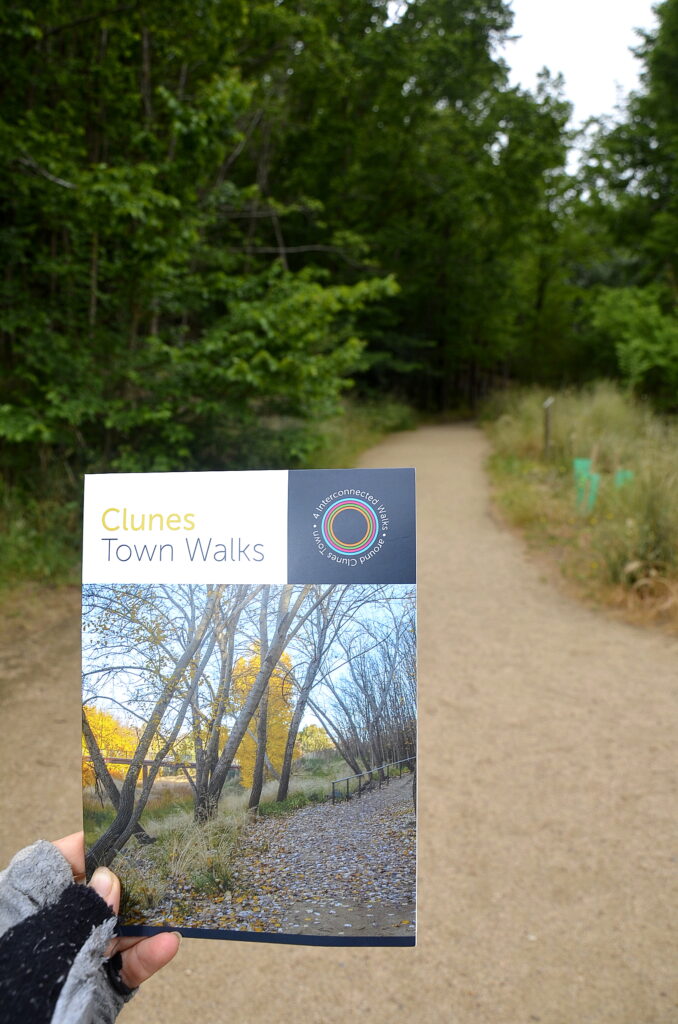
The new brochure details four good local ambles ranging from 1.5 km to 4.5km in length: the Clunes Creek Walk , Eighteen Miners Steps Walk, Gold Mines Walk and the Original Homestead Walk. It comes complete with historic insights, a handy map and QR codes giving extra info for each walk.
Clunes Neighbourhood House manager Lana de Kort says the Clunes Town Walks brochures can be picked up free of charge at various retail outlets throughout the town, and other outlets like the Neighbourhood House.
Words & Images: Eve Lamb

December 6th, 2024Local artists work featured in ‘Unfathomable’ exhibition
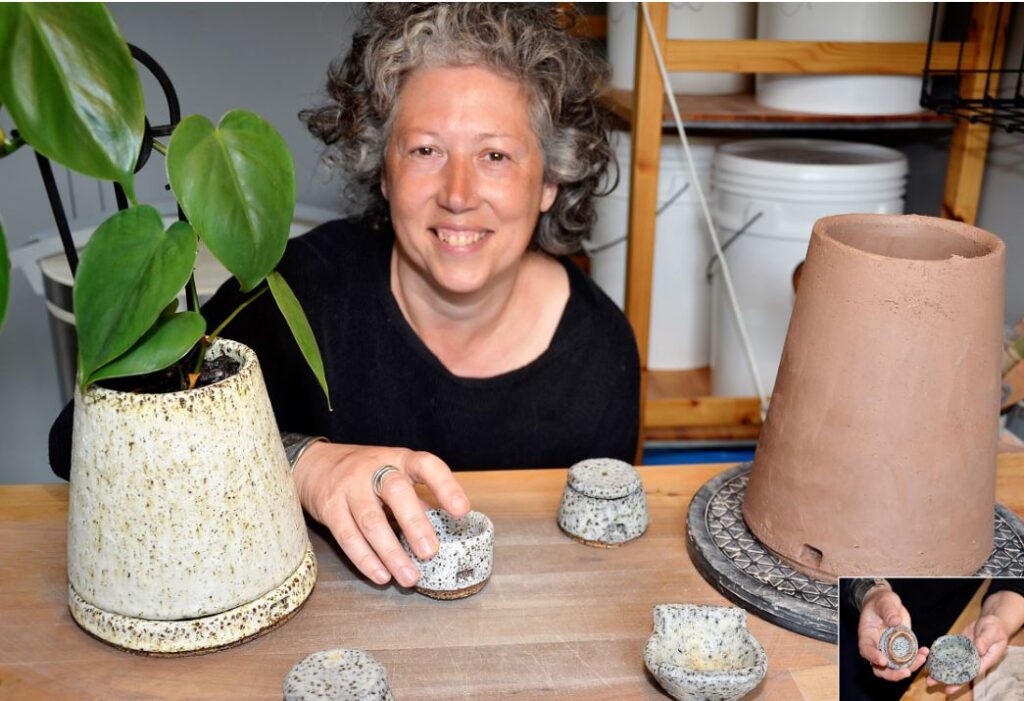
Ceramics by Musk Vale’s Minna Graham and Clunes’s Chandra Paul are part of a new group exhibition featuring new work by five Central Victorian artists.
The Unfathomable exhibition opening tomorrow at Lot 19 Art Gallery in Castlemaine aims to take that which is hard to explain and transform it into quality works of art.
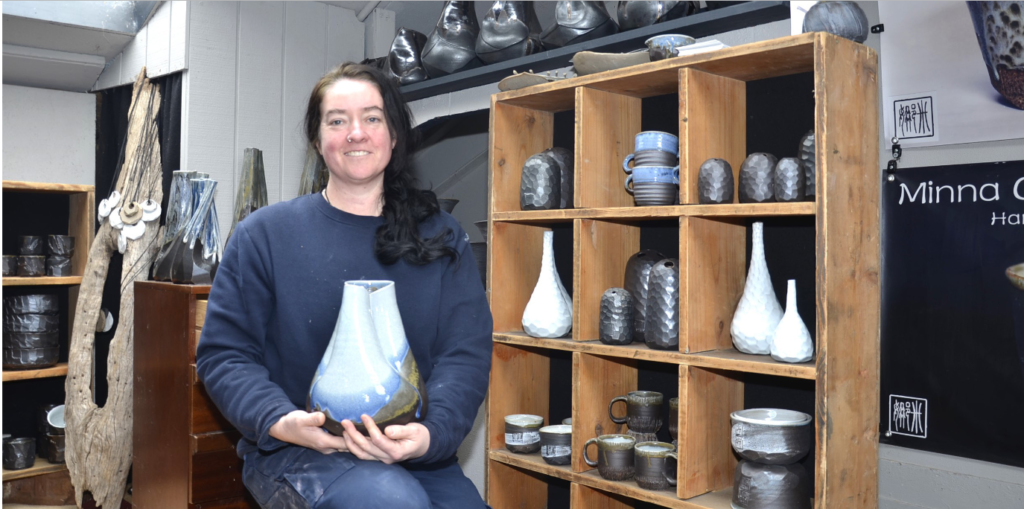
Represented artists include Minna Graham from Musk Vale, Jackie Gorring from Allendale, Ella Hughes from Guildford, Chandra Paul from Clunes and Dannielle Wilkinson from Castlemaine.
The exhibition opens tomorrow, Saturday, December 7 at 2pm then opens Saturdays and Sundays up to December 22 from 10am to 4pm.
December 5th, 2024Plenty of heavy lifting for this gathering
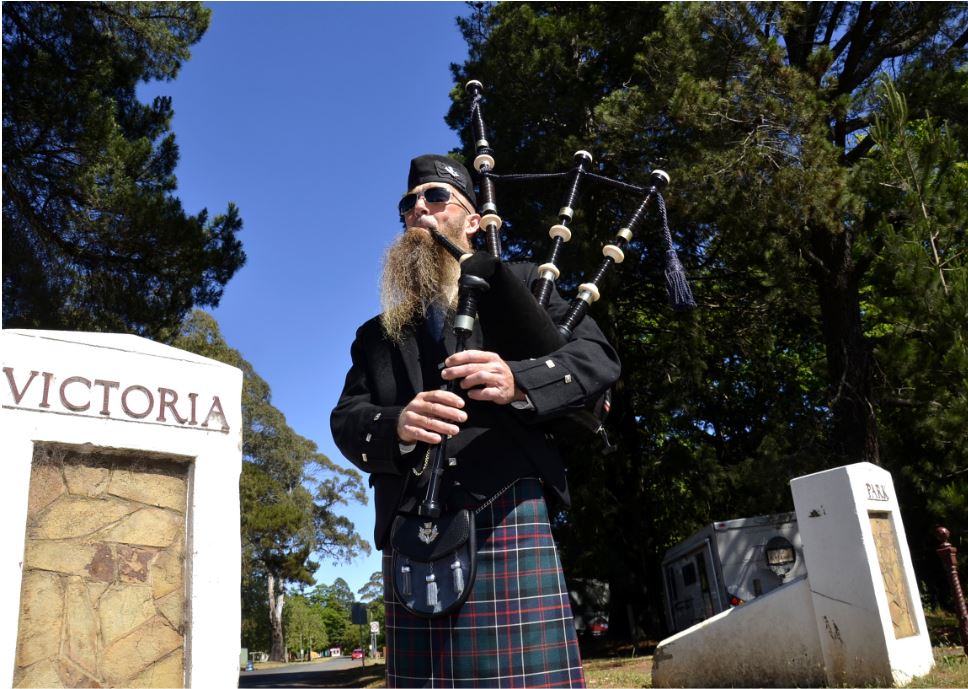
Mel Gibson is “to blame” for inciting a teenage Langley Rowbottom to play the bagpipes.
Fast forward a few years on from those teenage days and today Langley is pipe major with Daylesford and District Highland band.
Right now he’s among the many looking forward to being in the thick of the Celtic atmosphere at this Saturday’s Highland Gathering, Dec 7. Check out https://youtu.be/RqDF9vafwtA to soak up a bit of the Gathering vibe.
Quizzed as to what prompted him to take up the pipes, Langley recounts how, as a teenager, he switched from playing clarinet to the pipes after catching Mel in Braveheart.
Clearly something clicked. It may have been that certain percentage of Celts blood coursing through the veins.
“They’re a commanding instrument,” Langley chuckles.
This Saturday (December 7) the Daylesford and District Pipes and Drums will be part of the 9.20am morning parade involving some 250 bagpipes and drums marching down Vincent Street.
The focus then switches to Victoria Park where this year’s Gathering will feature the much anticipated return of the Highland Heavy Games after an absence of almost three decades.
Once at Vic Park, the bands competition gets going from 11 am, and Langley says Daylesford and District Pipes and Drums will play as part of the official opening ceremony at 1pm.
“The street march down the main street in the morning is fantastic,” he says.
“And then at Victoria Park we’ll be playing with other bands at 1pm as part of the opening ceremony.”
“I’m just looking forward to having a great day. It’s a really good community thing, catching up with other people who you might not have seen since the last event.
“We will also be playing as part of the massed bands performance in the closing ceremony.”
Highland dogs, Highland cattle, state championship Highland dance, clan tartan and kilts, foods and bevvies and plenty of Celtic heritage stalls and vendors promise to make the day an atmosphere-soaked way to reconnect with both personal and regional links to Scots heritage.
“We really want people to come up to Victoria Park and see all the action there as well as just watching the street march,” committee president Chris Sinclair says.
“For the first time in nearly 30 years we are so excited to announce the return of the Highland Heavy Games.”
After the two-year Covid hiatus, Chris says the committee today remains extremely keen to maintain the momentum to reinvigorate the Daylesford Gathering that dates back to 1952.
This Saturday’s notable return of the Highland Heavy Games competition including caber tossing, hammer throw, weight-over-bar and stone puts, is part of that push.
In fact, it will feature one of the biggest lineups of Heavy Games athletes ever fielded by Vic Highland Heavy Events, including open men’s and open women’s division events peppered with some very impressive world record holders.
And it won’t all just be about the kilts, cabers and haggis pie – although apparently they’ll be on offer too. There’ll also be some very lovely lassies milling about as Hi Paws Dog Training of Pipers Creek will be bringing a group of beautiful rough collie dogs (as in Lassie Come Home) and border terrier friends to go on show at 11.30am and 2pm.
Suffice it to say, the Gathering is dog friendly (on lead only) with the committee encouraging guests to bring along their Scottish breed pooches …
“We’ve had some cuties attend in the past, dressed in kilts and tartan, so don’t hold back.
“I’ve been going to the Gathering since 1975 when I was a teenager and played bagpipes in a band and the numbers back then were probably around the 3000 mark,” Chris says.
The aim is to see those sorts of numbers through the gate once more, and with widespread appreciation of Celts heritage enjoying a strong resurgence that goal is looking more than a wee dram achievable.
Entry on the gate is $15 for adults and free for kids under 16.
Link: www.daylesfordhighland.com
Words: Eve Lamb
November 30th, 2024Renowned artist Criss Canning in conversation at Clunes Booktown on Sunday session

Coming up Sunday December 8, Clunes’ Booktown on Sunday series is set to feature the acclaimed still-life artist Criss Canning OAM in conversation with Clunes creative Rebecca Russell.
The Booktown on Sunday series features writers and creatives in conversation in an intimate setting, providing audiences with rare insights into their work and oeuvre.
The upcoming session will take place at 1.30pm at the town’s historic Clunes Railway Station Booktown venue affording a rare chance to hear Canning discuss her new book, The Paintings of Criss Canning: The House and Gardens at Lambley.
For 35 years, Criss and her husband, acclaimed garden designer David Glenn, have lived at Burnside, the charming 1860’s farmhouse with the adjoining famed gardens of Lambley, a highly regarded nursery at Ascot situated between Clunes and Ballarat.
Canning is one of Australia’s finest and most celebrated still-life artists. She has explored flowers, textiles and decorative objects in her paintings over five decades.
Her husband’s great love of gardens has offered Canning visual inspiration at every turn. She paints the poppies, irises and sunflowers that grow in the garden at Lambley and explores Australian native plants, especially the banksia, in all its forms.
Canning – also a keen collector of jewel-toned glassware, vases, tea sets and vintage kimonos – is celebrated as one of Australia’s most exceptional still-life artists and her new 320-page book that was published in Australia in October is a fully illustrated monograph on the life and art.
With newly commissioned photography, and essays by Georgina Reid, Jenny Zimmer, Julie McLaren and Criss herself, the book strives to capture the garden, the studio, the house and the collections that are the basis of Criss’s paintings.
In an attempt to see what the artist sees, photographer Eve Wilson photographed the house and garden that make up Canning’s world, showing just how closely art can imitate life.
Entry to the upcoming Clunes Booktown on Sunday session is free but organisers say those intending to attend should book a ticket, which can be done online at https://linktr.ee/clunesbooktownfestival.
Words: Eve Lamb.
November 24th, 2024Artists of the Central Highlands
With Eve Lamb
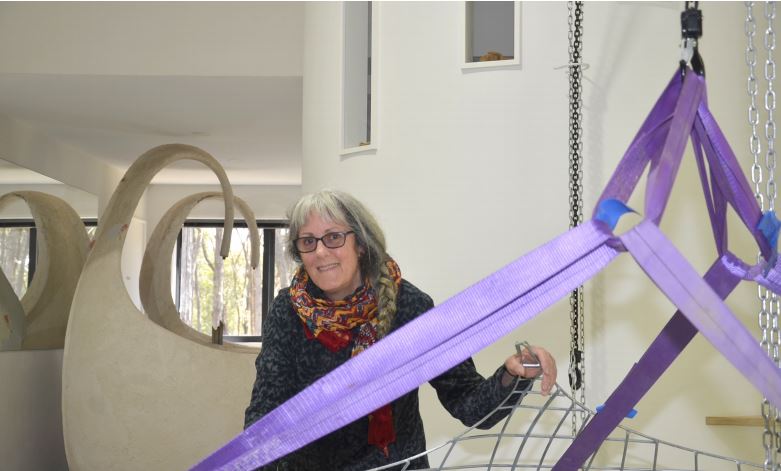
The large-scale sculptures that Jannie Alday make are sophisticated works of beauty as much as they are fully functional one-offs, designed to appeal to the connoisseur. Middle-eastern architecture is among the influences that ignited this talented creative’s passion for simple elegant form and fluidity of line. Alday deploys traditional fabrication methods, welding and rendering, alongside modern technology to make sculptures that are sensual, tactile and alluring. Right now she is preparing to celebrate the launch of her new Newlyn studio.
Eve: Jannie, your new studio here at Newlyn would be the envy of many an artist. How high is that ceiling?
Jannie: It’s about five metres. I need it to be that high to fit the the lifting equipment. This studio developed over COVID lockdown and now I’m ready to open it. My studio is rendered with a product made from recycled glass… Before, I had been building my sculptures in the re-purposed Railway Goods Shed in Creswick. But that was a short term solution. I needed a crane to move my work so I decided to build this purpose-built studio here.
Eve: Well, while we’re on the subject, we should take a look at why you need that lifting equipment. Your sculptural work is clearly large-scale.
Jannie: Yes all my sculptural work is functional as well. So that bathing sculpture you can see taking shape will be fully functional, as will the pool of reflection.
Eve: Your work is incredibly imposing.
Jannie: My work is for the right setting only. I’m really fussy about where they go. What I do isn’t for everybody. It’s for aesthetes, people who really invest in the environment they live in.
Eve: What materials do you use to make these imposing pieces?
Jannie: I use stainless steel, marine grade steel, mild steel for my armiture. All my fittings are marine grade stainless steel and it’s got to be absolutely bullet proof. Burnished marble, cement fondue… The armature for everything is hot-dipped galvanised which means there can never be any rust. With my materials I’m always trialing different products. At the moment I’m trialing silica sands.
Eve: Have you always worked in the arts sector, or do you have another background as well?
Jannie: I used to work in the health sector and in project management, but when my father died about ten years ago I decided it was time to get serious about my work. My father, Max, has been a major inspiration and influence. He was a fitter and turner and had a natural talent for all things engineering. When he died about ten years ago I realised the time had arrived for me to focus on my sculpture.
Eve: These pieces look incredibly complex. How much time goes into making them?
Jannie: The complexity is in the design and the research and development. Easily a month of design, and then the making-of and fabricating elements are probably an eight-month process. They’re all one-offs… A lot of problem-solving goes into them and there’s a lot of complexity that people don’t see, like the internal plumbing. It’s got to be absolutely bulletproof.
Eve: Who, or what, are your influences?
Jannie: I was captivated with renaissance drapery back in art class, the dramatic shadows created between the folds I found mesmerizing… Rembrandt and Leonardo’s use of chiaroscuro technique created a sensual intrigue… Middle Eastern architecture ignited my love of simple elegant form and fluidity of line. I am also fascinated by the qualities of water, the way it moves and flows.
I’ve come to realise my grandmother has been an enormous influence too. She was a potter with a wonderful sense of colour and form and worked frm a tiny studio in her garden… And my father taught me so many skills… I turned my hand to wood carving, furniture making, welding, building, painting, sculpture and drawing…
At the rubbish tip one day I found a section of a burnt out mannequin. I was excited and inspired. I knew I could use it to form part of the internal structure for a sculpture I had designed. Using my partner as a model I built my first serious sculpture ‘Arlechino’ (which became the Palais centrepiece during a Daylesford ChillOut Festival).
Eve: Do you have any special events coming up?
Jannie: Yes. I’m having a private showing here at my new studio in December.
Eve: Beyond that how can people see your work?
Jannie: By private appointment. People can reach me at jannie.alday@gmail.com
November 9th, 2024Walks of the Central Highlands
with Eve Lamb
Mount Greenock Geological Reserve summit and return
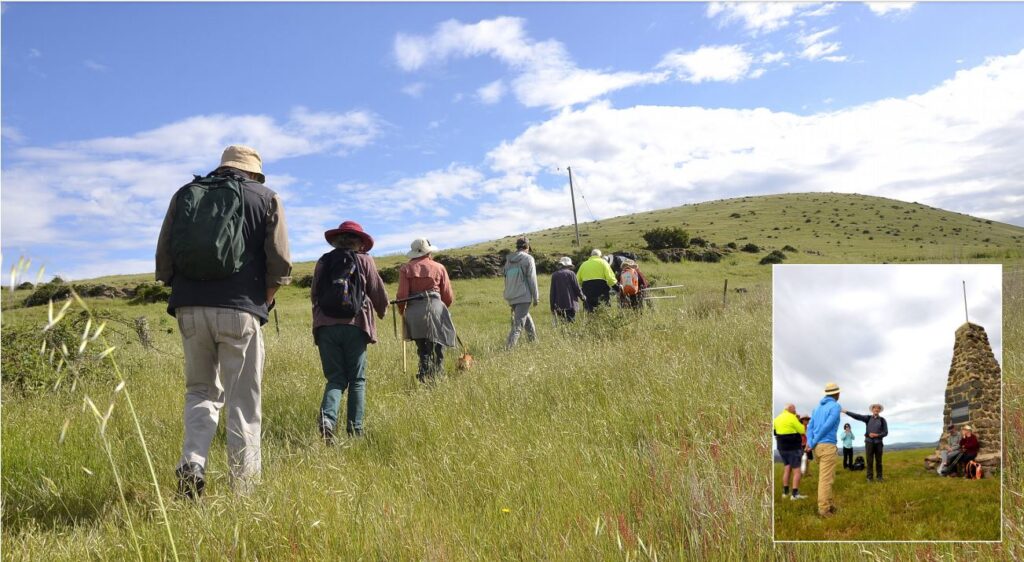
We’re “guinea pigs” today, joining the Great Dividing Trail Association on a walk led by Professor Barry Golding. It’s a kind of test run for a walk forming part of a fairly spesh little public tour series that Prof Golding will lead in early December. More on that later.
The walk we’re tackling this fine Sunday is described on the GDTA website as focusing on a number of lesser known legacies associated with Mount Greenock volcanic crater in southern Dja Dja Wurrung Country.
These include a Deep Time perspective, Major Mitchell’s visit, deep lead mining and a history of licenced and unlicensed grazing on the present-day Mount Greenock Geological Reserve.
After we climb Mount Greenock we’ll also visit the public Scenic Reserve across on neighbouring Mount Glasgow before we head on to nearby Merin Merin wetlands reserve, steeped in Aboriginal heritage going back thousands of years, for a lunch stop.
It’ll be 5km walking and 20km car travel between sites all up but for the purposes of this article, I’ll focus on Mount Greenock.
The Mount Greenock Geological Reserve is located between Talbot and Clunes, accessible off the Marybrough Road, on the right just past McCallum Creek as you head toward Maryborugh.
Paddy H and I roll through the gate of the public car park, entry to the 120 hectare Mount Greenock Geological Reserve, fairly early for a Sunday, to rendezvous with members of the GDTA including Prof Golding.
Prof Golding is soon to launch a book featuring six of the notable peaks of this wider region, Mount Greenock included, and the notable legacies that surround them.
There’s 15 of us walking today and after a bit of obligatory chit-chat we set off. It’s only about one km up to the top. Not far, but a really punchy little walk to the summit that stands 385 metres above sea level.
“There is no track. There is no right way up. Choose your path,” says Prof Golding, a tad Buddhist- koan-like, as we move off as a group.
As we slowly gain elevation, Prof Golding stops to tell our walking party about the volcanic rock we’re now seeing strewn about, while also keeping a careful weather eye out for snakes at this time of year.
“Once you get up here you get basalt,” he says.
“And this is ropey lava with a flow structure,” he says, picking up a largish chunk. The basalt to be found here is so light it can just about float in your bath.
There’s scoria and “tear shaped volcanic bombs” some containing the semi-precious gemstone olivine, ancient and dating back to the time of the volcanic activity that formed this landmark local peak “an estimated half a million years ago”.
“It’s quite young in geological terms,” Prof Golding says.
As we climb, the vista above is profoundly photographic, the sky huge.
Prof Golding talks about the importance of this place to the Indigenous people over many thousands of years, as all around us the view expands.
Below and beyond the grasslands stretch and sing.
“What you see now is what was here on contact,” Prof Golding says of the extinct volcanic cone that is Mount Greenock itself. “Major Mitchell who climbed up here in 1836 described a bald green hill…”
“The rich grasslands were like a highway for the Aboriginal people. There were emus, kangaroos, wallabies, lots of small mammals.. There were silver banksia, bulloak, sheoak.
The grassland “highway” could be followed all the way to the coast at Portland, something f which Major Thomas Mitchell also made good use, we learn.
About half way up, Mount Kooroocheang appears on the horizon and with each step we take toward the summit of Mount Greenock more volcanic hills and peaks can been seen all round.
“We’re high enough here at 385 metres to see back over the Divide to the south,” our guide says.
Here, at the top there’s a stone monument to Major Mitchell’s trek in 1836. We stop and Prof Golding talks about the impacts on the Aboriginal Traditional Owners that followed the arrival of the Europeans with their grazing ambitions in this area.
It’s not a happy history and is something that Professor Golding does not shy away from in his soon-to-be-launched new book, Six Peaks Speak: Unsettling legacies in southern Dja Dja Wurrung Country. He is also keen to highlight the rich Aboriginal legacies that remain in the landscape today.
In the days leading up to the book launch on December 11, Prof Golding will lead a series of walks associated with the six peaks that act as focalisers in the book.
Mount Greenock is one of the six, and the walk we’re on today will be repeated for anyone keen to sample it at first hand. You can find out more and register to participate in the upcoming led walks through the Great Dividing Trail Association website. Just go to ‘ Events’.
But now, we “guinea pigs” are finally standing atop Mount Greenock. And the view is amazing – 360 degree of shimmering panorama. Peaks, volcanic grasslands and hills.
“I suggest you download the PeakFinder app,” Prof Golding says. One of our party, a local teacher keen to know more so as to share that knowledge with his students, immediately does so – for a cost of $8 apparently.
From where we now stand, we learn, there are 180 “visible” peaks – weather and treeline dependent – including Mount Buninyong and Mount Warrenheip way off near Ballarat, and even Mount Cole and Mount Warrenmang roughly to the west.
It’s a view more than worth walking for. Be sure and pack a picnic.
Words & Images: Eve Lamb
November 8th, 2024Sneak peek at Six Peaks Speak
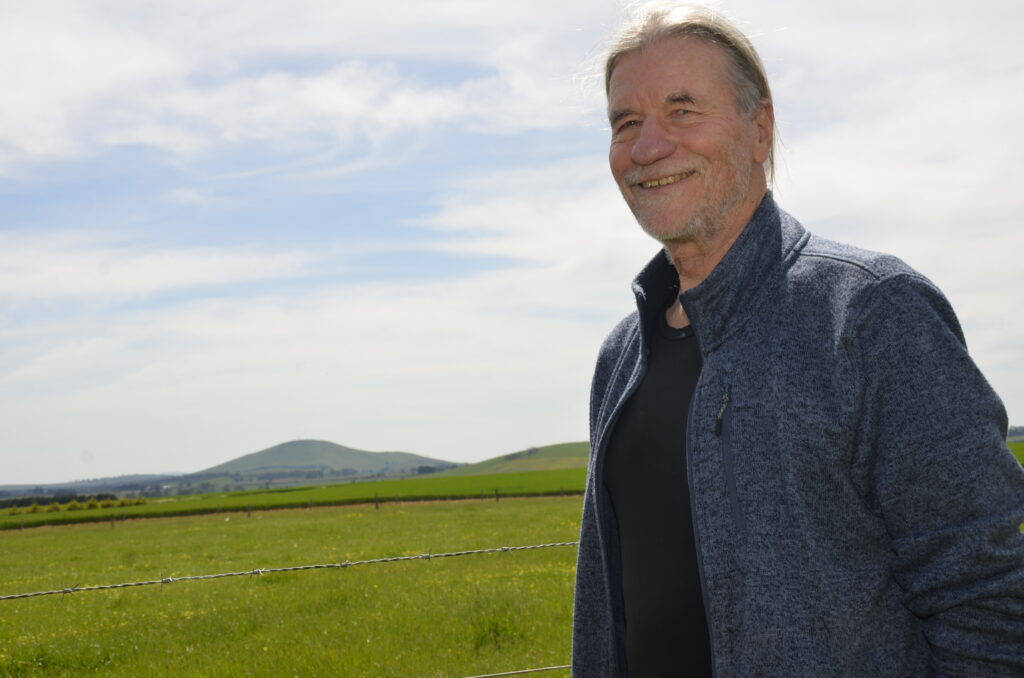
Gurutjanga (Mount Kooroocheang), Nyaninuk (Mount Beckworth), Mount Greenock, Dharrang Gauwa (Mount Tarrengower), Liyanganyuk banyul (Mount Alexander) and Lalgambuk (Mount Franklin).
If these ancient peaks of southern Dja Dja Wurrung country could speak they’d no doubt tell remarkable stories like those to be found in the significant new book by Professor Barry Golding.
In writing Six Peaks Speak: Unsettling legacies in southern Dja Dja Wurrung Country, Kingston-based Professor Golding collaborated with Castlemaine-based geologist Clive Willman.
He also had the backing of a State Library Victoria Creative Fellowship to help research and write the book that has potential to open many eyes afresh to the region’s immense natural and cultural significance.
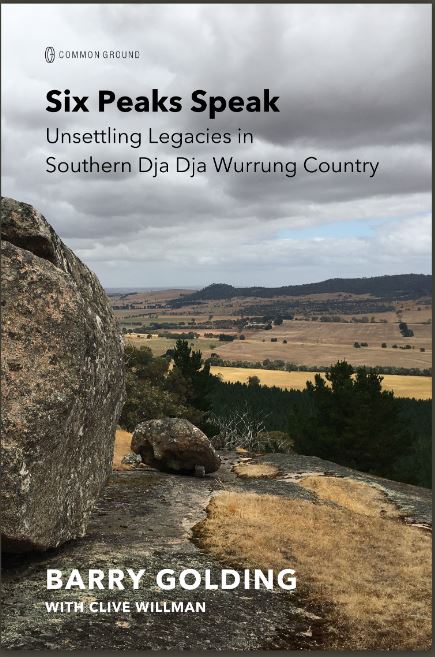
Six Peaks Speak is set to be launched by Dja Dja Wurrung Group CEO Rodney Carter on International Mountain Day, December 11, at Castlemaine.
As part of the International Mountain Day celebrations, a series of On Country Mountain walks and local, peak-specific community presentations are scheduled to take place during the week leading up to the launch.
The book bears witness to significant changes that have occurred over the past 200 years as though viewed from the perspective of the peaks that stand silent sentinel over this ancient volcanic landscape, including much of the Hepburn Shire area.
Professor Golding uses the term ‘unsettling in the book and its title in intentional contrast against the term‘settlement’ that’s often associated with the arrival of Europeans in the landscape.
“I’ve used the term ‘unsettling’ because a lot of this stuff is still unsettled,” he says.
“People were killed or displaced and removed from Country.”
The result of two years of dedicated work, Six Peaks Speak provides a revelatory peeling back of time and layers to gain an enhanced appreciation of the landscape’s remarkable past and present.
Besides delving into seldom-accessed archives, the book draws on Li-DAR remote sensing technology to help literally peel back the layers through time.
The work records and celebrates the presence of significant Indigenous cultural legacies that remain within the landscape. Legacies like the Indigenous communal oven mounds.
“I’ve had huge support from the Djaara Traditional owners,” Prof Golding says.
In writing Six Peaks Speak Professor Golding’s hope is that the significance of the region’s natural and cultural heritage may be better appreciated by the wider community, including policy makers, into the future.
“It’s a resource for the community including for the First Nations community to use as a springboard to acknowledge the unsettling, and to settle the unsettled,”he says.
The book’s contents are evidence-based with each chapter featuring over 100 footnotes. Professor Golding admits researching and writing it has been “a huge job”.
“It’s been good fun,” he adds ahead of the upcoming book launch, community events and series of associated walks.
The 420 page book is being published by Common Ground in the US and following its launch it will be available through selected retailers and online.
The book launch is set for 2pm, Wednesday December 11 at the Castlemaine Visitor Information Centre.
The launch will follow a special Caring for Country, Caring For People event taking place on the same day from 9:30am to 1pm at Lalgumbuk (Mt Franklin). It will be a chance to join with Djaara to celebrate International Mountain Day.
Community events leading up to the launch of Six Peaks Speak: Unsettling legacies in southern Dja Dja Wurrung Country include:
Friday, December 6, 8pm Gurutjanga Speaks presentation, Commercial Hotel, Kingston
Saturday December 7, 7:30pm Lalgambuk Speaks presentation, Daylesford Neighbourhood Centre
Sunday December 8, 2pm Dharrang Gauwa Speaks presentation, Maldon
Monday, December 9, 7:30pm Mount Greenock Speaks presentation, Maryborough
Tuesday, December 10, 7:30pm Nyaninuk Speaks presentation, Esmond Gallery, Clunes
The coinciding program of walks is being hosted by the Great Dividing Trail Association (GDTA) with registrations for the walks online through the GDTA website.
Walks
Friday, December 6, 9:30am Gurutjanga (Mt Kooroocheang) GDTA cultural landscapes tour & walk
Saturday, December 7, 9:30am Liyanganyuk banyul (Mt Alexander) GDTA walk
Sunday, December 8, 9:30am Dharrang Gauwa (Mt Tarrengower) GDTA walk
Monday, 9 December 9, 9:30am Mt Greenock GDTA walk
Tuesday, December 10,9:30am Nyaninuk (Mount Beckworth) GDTA walk
Words: Eve Lamb