


March 5th, 2023Glen, about the house…
Apologies if you have been so absorbed in the holiday mood or just so tired that, apart from the watering. you’ve hardly got around to doing much else in the garden but I’d like to point out a few seemingly unimportant tasks that would make an enormous difference to your plants.
Summer hygiene
For a start, don’t leave fallen fruit lying about the trees, it will breed pests and diseases by supplying a base for their complicated breeding cycle. Many of the fungal diseases such as brown rot etc., mature and disperse their spores from this fruit. The dried fruit beetle is one that breeds there, and so does fruit fly and a whole raft of other nasties.
Garden hygiene is the first step in controlling these pests by eliminating their breeding grounds. Collection of fallen fruit should be a continuous practice through the ripening season. Destroy the fruit or place it in a 60cm or more deep hole, covering each batch with at least 10cm of soil.
Summer pruning, or green pruning, is also an important maintenance program at about this time, especially in this high rainfall year. Surplus growth, mainly watershoots, should be removed just before they become a burden to the tree by overtaxing its reserves, causing overcrowding.
The main purpose of the removal is to save all nourishment, concentrate on that part of the tree where it is most needed and serves the best purpose at the time of fruit bearing. To let the useless watershoots and overgrowth develop and then have to cut it off at the winter time of pruning makes little or no sense.
All this nourishment can be diverted into and saved in the tree at this time, increasing the cropping ability of the tree. The removal can be done in stages or at one time. Besides getting rid of competing growth, limit most of the other young shoots by cutting them back to a strong, healthy growth bud at their end.
You should also keep an eye on young developing trees. They need every bit of foliage at this stage, so instead of cutting off any badly shaped or misdirected branches, tie them up into the proper position. Use either a wooden stake to hold them in place, or soft cord to tie them up. Don’t cut off all the trunk spurs – shorten them by only two or three leaves.
Feeding of fruit trees is very important. The formation of next year’s fruit or flower buds usually takes place at about this time. If the tree gets enough nutrients and water, just after the crop has ripened, a lot more of the ordinary developing leaf buds will turn into fruiting buds in the next few months.
Organic, animal manures or any general fertilisers, especially containing potash and phosphorous in particular, will play a big part in this transformation. So feed your trees and provide sufficient water in the hot weather so they can get the best use out of it. Contrary to some misguided belief deciduous trees don’t need a rest in the middle of the growing season. They get plenty of that in winter.
Trim roses
While you’re wielding your secateurs…at this time of year as soon as the spring burst of flowers has ended, it can be a good idea to give them a light trim to remove the remnants of the last flowers and tidy them up in readiness for good autumn flush of bloom. It doesn’t need to be excessive, just remove anything that’s untidy or looking as though it’s at an end.
When trimming back, make sure you cut just above a pair of leaves, and remove any which are obviously no longer functioning. You can leave the heavy pruning for winter.
One of the joys of having a fully organic, chemical-free garden is the amazing number of wildlife, both avian and and microscopic. Insect pestilence is almost nil because many of the inhabitants are carnivorous and tend to keep the sap-suckers down.
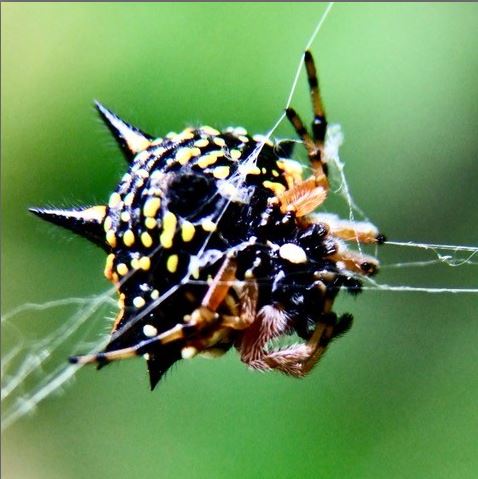
The latest arrival last week was this pinup girl Ms Austracantha Minax, commonly called the Christmas or jewel spider. I know it’s female because at 12mm across, the females trump their 5mm mates.
Absolutely harmless, these members of the orb webset sit at the centre of their massive tangled web and feast on all the flying insects that don’t pass by.
Got a gardening query? Email glenzgarden@fermigiohousegmail-com
February 19th, 2023Glen, about the house …
And so the La Niña blues roll on
And you thought (hoped)! we had seen the last of her. With the little girl still hanging around I figured these two very common problems of this season deserved sharing.
Hi Glen,
I have a 28-year-old walnut tree in the back garden. This year it has barely come into leaf and is looking sick. I am wondering if it is due to being a wet winter and the fact it was heavily watered last summer. Do you think it would benefit from a trim back? Or could I dig a trench out from the trunk and fill it with Seasol or something similar? I don’t want to lose the tree. Do you have any suggestions?
I also have had difficulty getting rid of the cherry slug by using copper spray at leaf burst, lime sulphur, and pest oil – to the extent that I have lost young trees including a weeping flowering cherry. I would value your opinion.
Thank you in advance, Marg
1 The Walnut tree
Walnuts grow best in deep, well-drained loam and do appreciate compost, organic manures etc. They are best planted on the high side of sloping gardens, not down the bottom where, in heavier-type soil, water tends to lie.
I can tell you that damned interloper Ms Niña’s re-appearance causing this awful, miserable and overly wet, and not to mention, violent weather, has caused my deciduous fruiting trees similar grief to yours. I only hope the rest of summer is a little benign, at least for long enough for everything to recover.
Hopefully your walnut’s roots didn’t suffer any great damage. The best course of action would be to dig a few shallow channels radiating from the trunk out to just past the “drip-line’ (just past the branch ends) making sure you don’t damage any shallow roots.
Don’t put any fertiliser around until you see positive signs of young growth, so you know it’s ready to get going again. Then you can let fly with the manures, Seasol etc.
Walnuts aren’t all that fond of pruning so wait until you see some real movement before you trim off any damaged or weakened growths.
2 Pear/cherry slugs
These little monsters are as persistent as blowflies around a picnic and will take constant action to clear up. So it’s useful to know their life cycle to understand the several remedies needed.
Pear/cherry slugs are larvae of one species of insect commonly called sawfly. The adult fly lays her eggs on the back of the selected tree’s leaves and dies. The eggs hatch and become the slugs, which gorge themselves on your tree’s succulent leaves, then head south to dig themselves a cosy spot in the ground at the foot of the tree to mutate into flies…which then proceed up to the next season’s succulent leaves to continue the life cycle.
So you have several chances of stopping them, as well as physically removing and killing the slugs – spray the pest oil as soon as the leaves are fully opened to get the eggs before they hatch.
Hit the slugs with the oil or water to knock them off the tree, and stop them either going down, or coming back up to eat, by placing a barrier ring of pest oil-soaked rag about 5-10cm above the ground. This not only deters the little blighters, if you regularly repeat dousing the rag and completely break the life cycle, you could be lucky enough to rid your garden of them – and maybe a few of their cousins for at least a couple of seasons.
Happy Hunting!
Got a gardening query? Email glenzgarden@gmail.com