


October 11th, 2024Something old, something new: the tale of a wedding dress

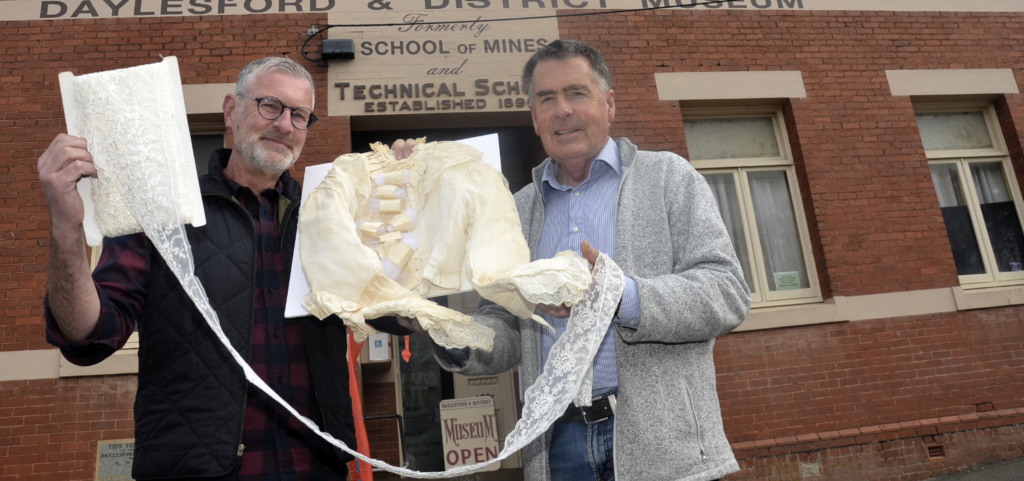
The story of a lavish 1880s wedding dress and its painstaking restoration is about to be shared as the historic Trewhella gown goes on display later this month at Daylesford & District Museum.
The 1885 wedding gown of Sarah Trewhella will go on display from Saturday, October 26. And in the lead-up to its public exhibition, professional textile conservator, Hepburn’s Larry Edwards will be giving a guest talk on the specialised processes used to bring this salvaged item of social history ‘back to life’.
Larry’s guest talk, at 11am on Thursday, October 24, will be open to the general public (following a similar booked-out presentation for D&DHS members).
The linen, cotton and silk tulle lace number was worn by Sarah Trewhella (nee Hosking) upon her marriage to Ben Trewhella on January 7, 1885 at her parents’ home at Simmons Reef, Blackwood.
For many decades after that special day it had languished in a box, its considerable beauty fading with each passing year.
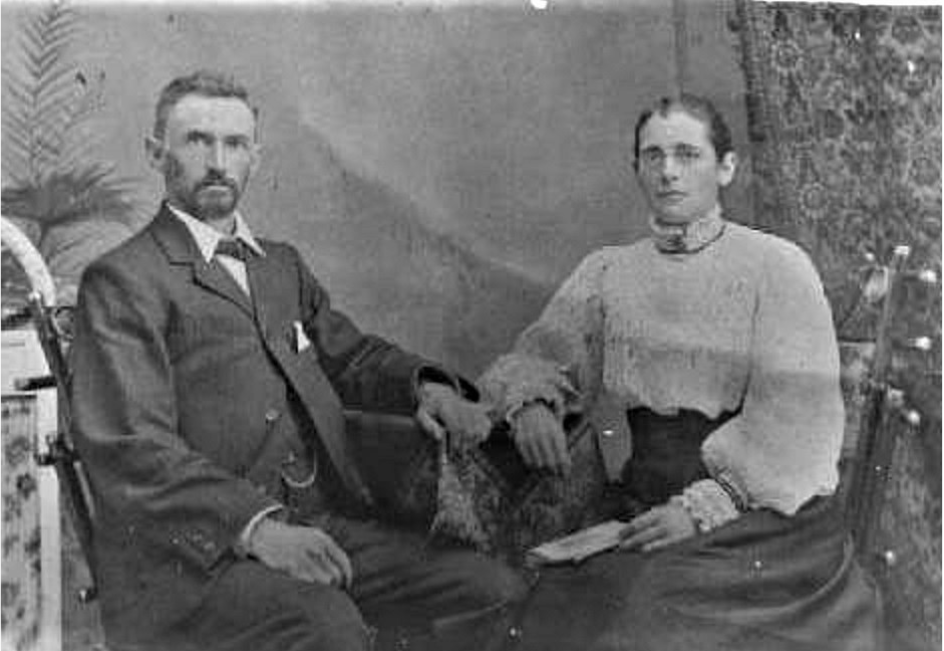
But in recent times, assisted by some funding through the Rosalind Pyers Memorial conservation support fund, the museum has been able to draw on Larry’s expertise to bring the glorious garment back to be publicly admired afresh.
The museum’s Gary Lawrence says the treasured retro wedding dress will be on display through to the end of the year, while Larry’s talk promises to be a must for anyone interested in textile and fabric conservation, vintage fashions – or social history.
Words: Eve Lamb


July 5th, 2024Banding together for restored practice room
There were several key reasons to strike up the band. No more leaky roof, no more underfloor damp woes, no more dodgy floor boards … to name but a few.
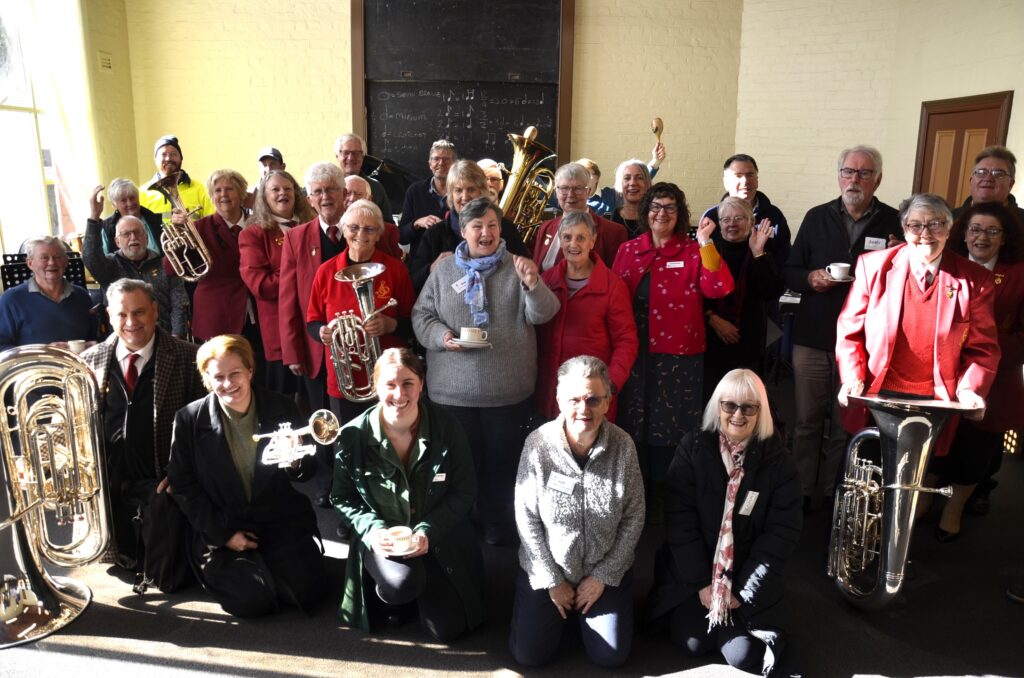
Very recently, Tuesday June 18, to be exact, Daylesford Community Brass Band joined with Daylesford Museum Reserve Committee of Management, museum volunteers, friends and VIPs to celebrate the opening of the town’s significantly upgraded, restored, and generally fixed band room.
The band has been serving the community for 160 years and rehearsing in the room at the back of the heritage listed museum building for over half a century, as co-tenants of the building, alongside Daylesford and District Historical Society that runs the museum.
But as upgrade works on the band room reached the pointy end over the past four months, the band had been temporarily using a front room in the building, made available to it by the historical society.
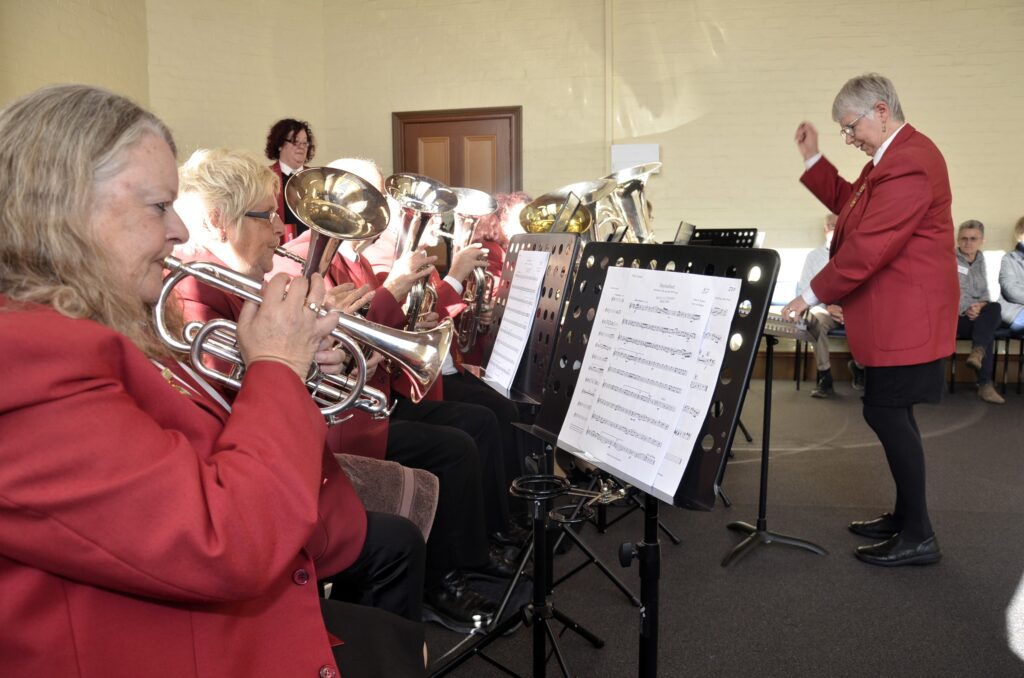
The major upgrade of the band room is part of a wider works project to maintain and restore the building, a project overseen by Daylesford Museum Reserve Committee of Management using funds from state, federal and local government tiers.
Works to the band room included underfloor excavation, drainage works, floor rebuild, replacement of the slate roof, upgrade of architraves and skirting boards, new lighting and more.
Secretary of the Daylesford Museum Reserve Committee of Management Sue Howard said about $600,000 in state and federal funding had been attracted and spent on the wider works project over the past three years, including just over $280,000 on the band room.
“These works have conserved the building and helped the tenants be in these spaces as intended,” Sue said, highlighting also the state heritage listing of the building in February this year.
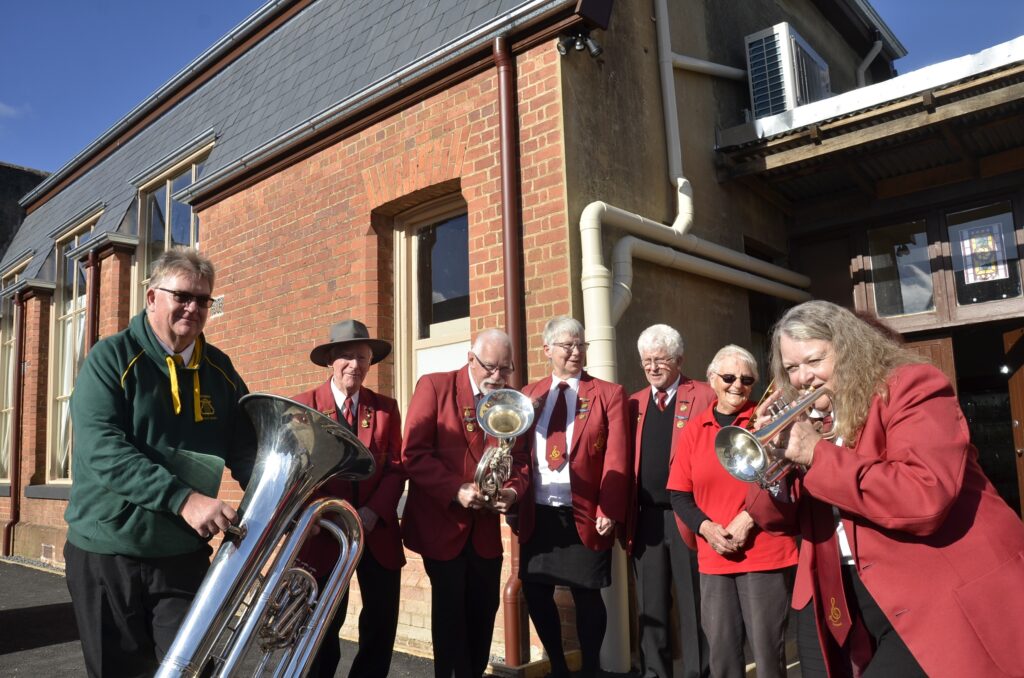
Band members like president and accomplished cornet player, Shani Clark made no secret of their delight at seeing the works on their rehearsal room done and dusted.
“It’s very hard to find the words to express what this means to the band,” Shani said.
“We no longer have to chase the raindrops around with a bucket or be in danger of falling through the floor boards.
“The band has been in this room for 50 years and we now have a space that’s going to last another 50 years.”
D&DHS president Barry Files also took to the mic to reflect on the significance of the works project, recalling a worrying moment prior to work beginning, when three sheets of roofing blew off.
“That’s all behind us now, and as co-tenants (of the building) we’re looking forward to many more years,” Barry said.
Barry also reflected on the band’s gratitude for temporary use of the room that the historical society had kindly offered to it for the purpose.
“The band said there’s a few notes in there… and I naturally thought they meant cash,” Barry mused.
“But when they left to move back in here, the floor was scattered with B-flats and G-sharps.”
Museum curator Gary Lawrence received a special recognition award, presented by DEECA regional manager Kylie Shanahan, acknowledging his vital role in seeing the upgrade through to reality.
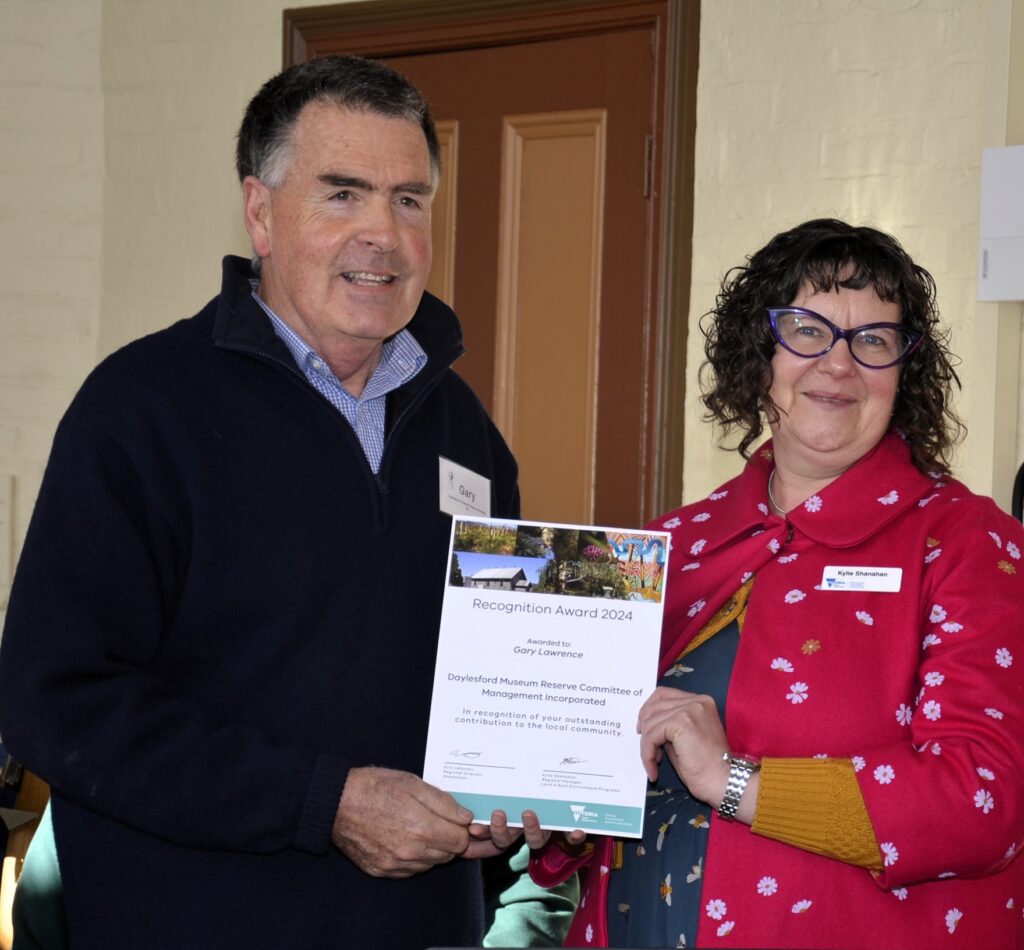
“Community is what it’s all about and a space like this is a point of connection,” Gary said, accepting the award, and suggesting that anyone in the community who was suffering from nothing to do could resolve their boredom by getting along to the museum and becoming part of the volunteer crew.
The contractors involved in the works also came in for special mention for the “many times they went over and above” during the major upgrade.
Shani says the band is now hugely enjoying using their beautifully upgraded space to rehearse in.
It will perform at the annual French celebration event in Daylesford Town Hall on July 14, and is also looking forward to a special performance as part of the Christ Church concert series on November 30.
At that concert the band will premiere an original composition which they have commissioned using a Rosalind Pyers donation made in 2022.
“The sound in here is much better too since we got a new floor and carpet,” Shani said.
She says anyone interested is welcome to get along to band rehearsals that happen every Monday evening, and consider joining the band and learning an instrument themselves.
“If anybody wants to learn, or has an instrument they haven’t played for a while, we have quite a strong training band that rehearses from 6pm to 7pm on Mondays and our main rehearsal is from 7.30pm,” she said.
“Just follow the noise.”
Words & Images: Eve Lamb

June 22nd, 2024Your say…
Mining speculation threat to proven mineral water wealth
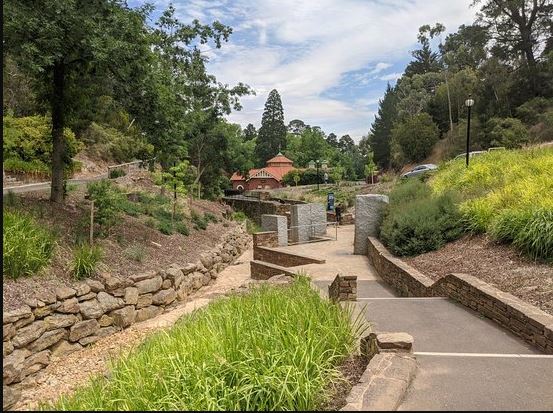
Large parts of Central Victoria are covered with mining exploration licences with potential to impact your home, property, our environment, our groundwater and waterways.
If you are in any doubt of the potential impact search out the Ballarat or Bendigo deep gold mine sites, check for the waste tailings dams, the huge pumping gear and then you might check what neighbours are experiencing.
For over a year local residents of Daylesford have attempted to alert the state government of the risk to our natural mineral water should a deep mine ever proceed anywhere within the groundwater aquifer.
A modern deep mine must de-water vast areas of underground groundwater to operate. De-watering will not only impact the flow and formation of mineral water but will increase acidity and activate the release of sulphates and heavy metals.
Over and again we are reminded that any risk will have to be managed somehow. A mine probably will never get off the ground. If there seems a risk then the mining operator will need to provide professional evidence that risks can be managed.
Not very comforting, when you understand how much the economy and employment of our area is underpinned by the culture of natural mineral water, or when all government departments suggest Earth Resources will ensure the mineral water is protected and they in turn call us to say it is nothing to do with them.
Our local MP Mary-Anne Thomas has still not found time to meet concerned residents.
We have several worrying concerns including that the local mining exploration company has excised parts of Daylesford and Hepburn Spring from their licence but it does nothing to protect mineral water in their target areas.
There is still a hold-up with MP Steve Dimopoulos approving the new Mineral Water Management plan. Perhaps this is because it mentions risks from deep mining.
The government states they are completely altering the new national park area in our region that did prevent any deep mining while state and federal governments are promoting the mining industry and the price of gold is ever increasing.
Natural mineral water is a resource already but is not given a financial value by our state government.
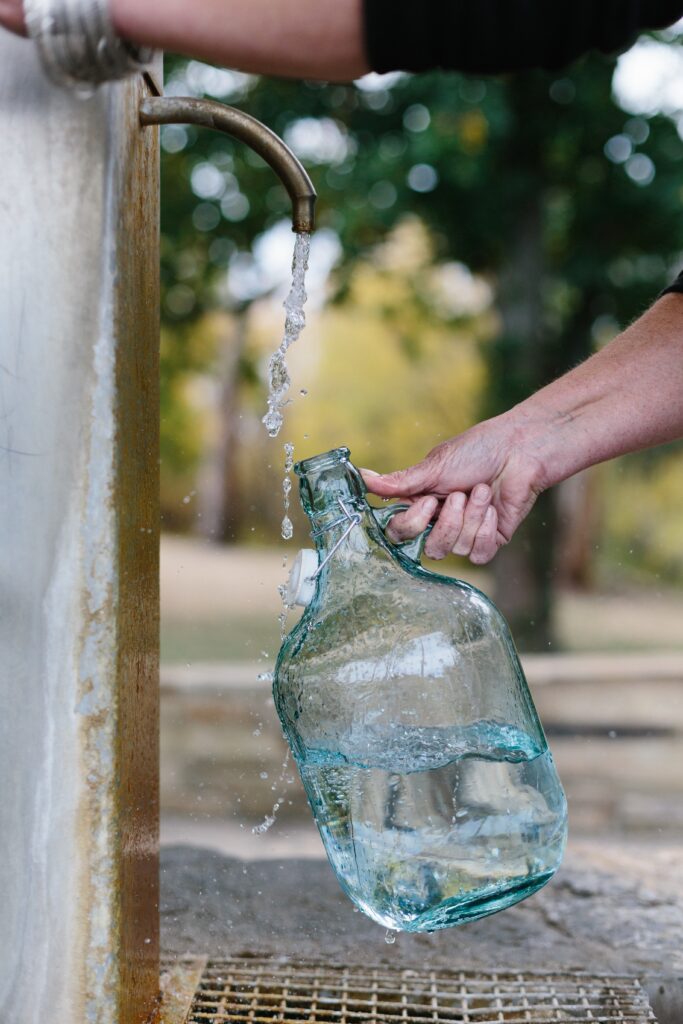
Potential impacts on iconic local mineral water springs are among concerns being raised over proposed gold mining exploration in the Daylesford area.
From: Gary Lawrence, Don’t Undermine Daylesford

June 8th, 2024Ceramics Collection launch at Daylesford
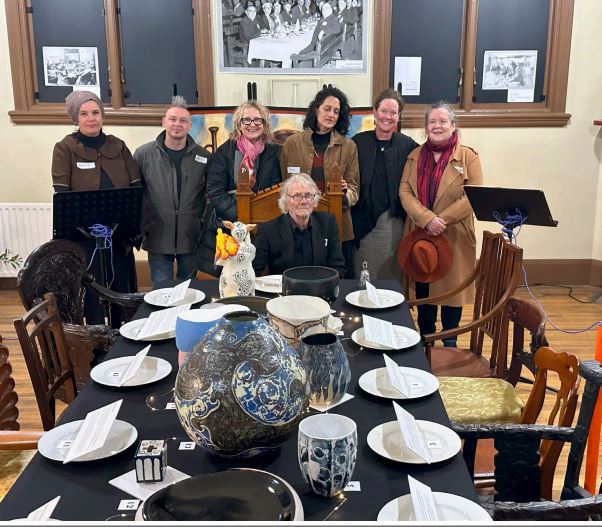
‘dinner party’ Image: Kyle Barnes
Daylesford & District Museum held a launch of its new Daylesford Ceramics Collection on Thursday, May 30 to thank the donors of works to the contemporary collection.
The exhibition will be open to the public each Saturday from today, June 8 from 11am to 3pm.
The exhibition is staged as a mock dinner party, set with white dinner plates, a unique array of rare and
unusual dining chairs.
The guest of honour is renowned creative artist, Petrus Spronk. His guests are 16 people from the
district’s past.
Their story was revealed at the launch by museum curator Gary Lawrence and will be available to be shared with visitors.
The room is completed with historic images of the community meeting and celebrating around their special tables together with some surprise artistic works.
May 23rd, 2024Bringing a 19th century wedding day beauty back to life
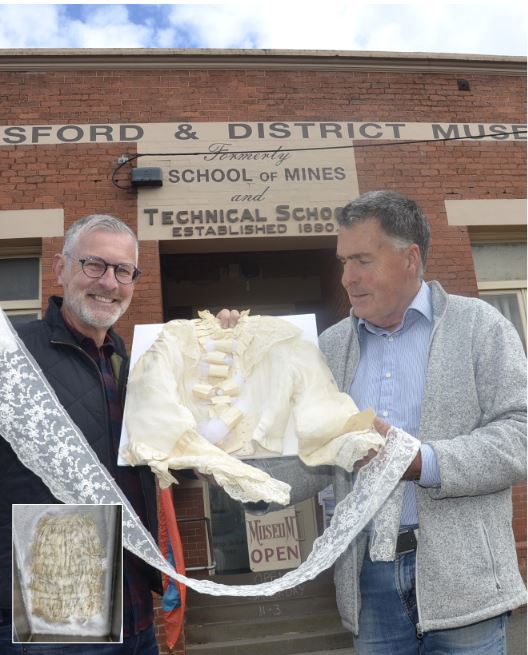
Qualified textile conservator Larry Edwards knows how to bring beautiful but time-worn vintage garments back to life and make them “talk”.
But when you’re talking a wedding dress made in the 1800s and stored for many decades, this is no easy process. One must really know their stuff as one false step could set the whole process back
– potentially irretrievably.
Right now this local expert in restoring and conserving valuable vintage textiles is midway through resurrecting a significant historic wedding dress held in the Daylesford & District Museum collection, ahead of its public exhibition later this year.
Museum curator Gary Lawrence says the beautiful historic dress was offered to the museum by the region’s Trewhella family.
The linen, cotton and silk tulle lace number was worn by Sarah Trewhella (nee Hosking) upon her marriage to Ben Trewhella on January 7, 1885 at her parent’s home in Simmons Reef.
For so many decades it had sat in a box, its considerable beauty fading with each passing year, but now, assisted by some funding through the Rosalind Pyers Memorial conservation support fund, the museum has been able to draw on Larry’s expertise to bring the glorious garment back to be publicly admired.
Larry has an extensive background in costume construction and had been working in the costume department with the Cirque du Soleil when Covid hit shutting down the circus’ big touring plans.
But Larry made good use of lockdown, using the disruption to the circus’ touring plans to take on masters studies in conservation of cultural materials, specialising in textiles, through Grimwade Conservation Services at University of Melbourne.
“As part of this I needed to complete a thesis so I asked to do one based around a significant assessment of the textile collection held with the Daylesford Museum,” says Larry who is also a volunteer with the local museum.
“(Fellow museum volunteer) Judy Files and myself both worked for over a year. We went through every box and categorized, catalogued and photographed every item… 1011 textile items. It was a wonderful project, an incredible collection.”
Items in the museum’s textile collection chart the decades and fashion eras from early European settlement of the area and the 1800s. They range from miners’ boots, which still had dirt from the gold rush era embedded in them, to beautiful silk wedding shoes, and from rare yesteryear men’s uniforms to a notable assemblage of Victorian ladies’ parasols.
All have a tale to tell, says Gary who is keen to see many of those stories shared
and made known.
Now Larry has not only completed his masters degree but the museum has a beautifully catalogued textile collection of remarkable historic clothing and textile accessories that can now be readily sourced for any exhibition they may relate to in the future, Gary says.
As the museum eagerly anticipates this June for the conclusion of a protracted major upgrade works project, it is planning three exhibitions beginning with a Daylesford Ceramics Collection exhibition over the June long weekend, Gary says.
Beyond that, the museum is looking to stage an exhibition celebrating winter in the gardens with Friends of The Wombat Hill Botanic Gardens.
Finally, an exhibition focussing on the collection of special occasion garments is envisioned for September with the painstakingly restored Trewhella wedding dress a highlight.
Larry says that already at least 50 hours have gone into the restoration of the vintage garment with the process to date focussed on assessment and cleaning, an arduous process involving pH analysis and washing separate parts of the garment with different treatments according to the fabric they’re made from.
The treatments that Larry has used to bring the gorgeous garment back to life are now set to be among those detailed at the Textile Conservation symposium at the National Gallery of Victoria on June 27.
“This dress was very thirsty. It had been in a box and folded into three. It had to be humidified first just to get it sitting straight,” Larry says.
The dress’ skirt is linen, its bows and accessories silk, its top cotton, and it features silk tulle lacework.
The garment also features a bustle which required specific analysis to restore to its former glory, while missing lace from elsewhere in the garment had to be carefully matched and replaced using lace imported from a company in the UK that still produces lace and trim made using original machines of the 1800s.
“My challenge now are the sleeves,” says Larry who’s anticipating “at least” a further 50 hours of very detailed work ahead to bring the dress up to a point where it’s ready to go on public display.
The fact that Larry is a man who loves what he does is revealed in the way he refers to the item he is working on.
“She has had five baths,” he says, admitting that the dress has revealed “herself” to have a character all her own and a story to match.
“This is a Victorian era dress, Queen Victoria’s era. I can tell she has been made by someone on a very early treadle machine. She was not made in a couture fashion house. The lace would have been imported.”
As the restoration progresses, Gary and the Daylesford and District Historic Society’s dedicated team of volunteers that run the not-for-profit museum are keen to share the story right through to “the big reveal”. So watch this space…
Words: Eve Lamb