


December 18th, 2024Glen, about the house…
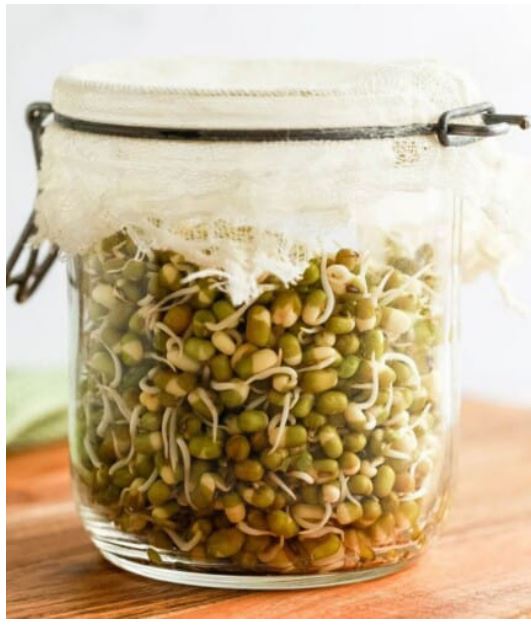
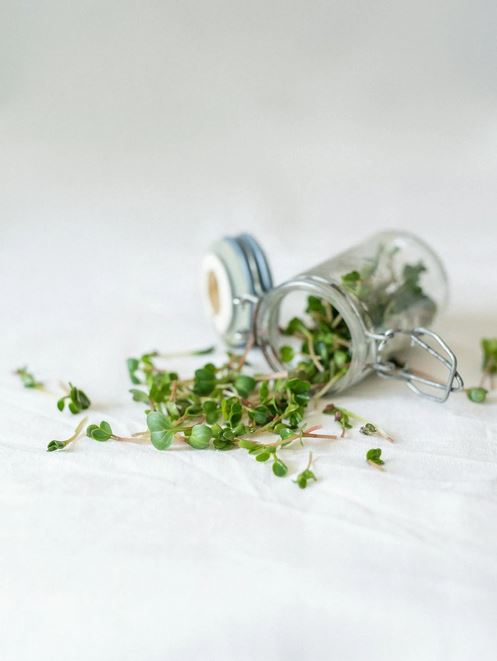
Salads in a jar – growing delicious, nutritious salad vegetables without the need to step out your back door.
It’s amazing it took so long for Western civilisation to catch on to one of the most nutritious, quickest growing and tastiest forms of fresh food that has been produced in the East for thousands of years.
From seed to ready-to-eat sprout takes only about four days and only a matter of a few minutes a day is needed to tend the ‘crops’.
From a food value point of view, seed sprouts provide large amounts of vitamins A, B and C. The nutrients in the seed multiply by something like 200 per cent when sprouting takes place.
It is claimed that a half-cup of any form of edible seed sprouts will provide the same amount of vitamin C as six glasses of freshly squeezed orange juice.
The sprouts can be served cold in a salad, cooked with other foods such as vegetables, baked in bread and cakes, or roasted, ground and used as a base in various recipes.
Practically any food plant seed can be sprouted and eaten, but care must be taken to use only seeds that have not been chemically treated against pest and diseases.
Healthfood shops supply untreated seeds and several of the major seed firms are now packaging sprouting seeds.
Among the most popularly grown sprouting seeds are lucerne, alfalfa, mung beans (the traditional Chinese restaurant ones), almonds, cabbage, barley, radish, lentils, chick peas, corn, cress, soybean and rice.
Growing sprouts is easy. Sow them at any time, regardless of the weather and they never need to be cultivated or weeded. When it comes to sprouting containers there are many options available as well as the glass ones, specially designed for the purpose.
I have found the best containers are those inexpensive, near indestructible plastic, seal-top freezer containers. All that is needed is a lot of small holes punched in the lid for aeration and to aid in drainage. But make sure they are smaller than the seeds, to avoid losing them down the sink.
The mung beans can be a little tricky because they tend to sweat if they’re jammed too closely together. The best container for them is a draw-string topped muslin or some other porous, fabric bag.
Preparing the salad
You do not need to use many seeds at a time, a tablespoon will do, because seeds produce anything from four to 10 times their original volume.
Wash and soak the seeds in lukewarm water. Mostly, this will take an hour or so but some varieties need to be soaked overnight.
Next, place them into the sprouting container and in a dark, warm spot. The only treatment then is to fill the container with water, shake it up well and then drain the water away.
This must be done every morning and evening to freshen the seeds and keep them slightly moist. Most seeds will take between three to five days to mature.
When this has happened wash the husks from the seeds and store them in a plastic bag until they are needed. The sprouts will usually last for up to a week if stored in this way.
My favourite way of eating the sprouts is to make them the feature of a salad, using plenty of oil, garlic and any other spicy salad vegetables.
Got a gardening query?Email glenzgarden gmail.com
October 28th, 2024Glen, about the house
Help your trees to health
Healthy trees growing in their native habitat rarely suffer seriously from insect attack. The trees’ in-built defences and the insects’ natural enemies provide a balance.
When the trees are taken out of their natural environment the balance is lost. Some insects, such as the gumtree scale, can multiply to the point where they can cause serious defoliation and sometimes kill the tree.
It becomes necessary in an artificial environment to help nature control those insects that reach plague proportions. When insect activity is noticed on a tree or shrub, the insect should be properly identified before any control is attempted.
Natural controls, such as for disease or predators, may prevent serious damage. Insecticidal sprays applied wrongly or at the wrong time may do more harm to the natural control than the pest.
If the insect is no longer present, sprays will be useless and other harmful and beneficial species could be needlessly killed. The presence of some insects such as borers often indicates a reduction in the health and vigour of the tree.
The insects enter trees dying from old age or trees damaged by humans or natural factors such as drought, frost, wind and intense summer heat. When the insects are finally discovered, it may be already too late to save the tree.
For control, insects fall into three major groups: leaf-eating insects, sap-sucking insects and bark- and wood-feeding insects.
Leaf-eating insects, such as grasshoppers, beetles and the larvae of some moths and sawflies attack most trees at times with little effect.
Control of leaf-eating insects may require spraying or injection at the right time with a suitable insecticide, or simply the removal and destruction of the offenders where they are accessible.
Sap-sucking insects such as gumtree scale, psyllids, mealybugs and gall-forming insects often affect young trees.
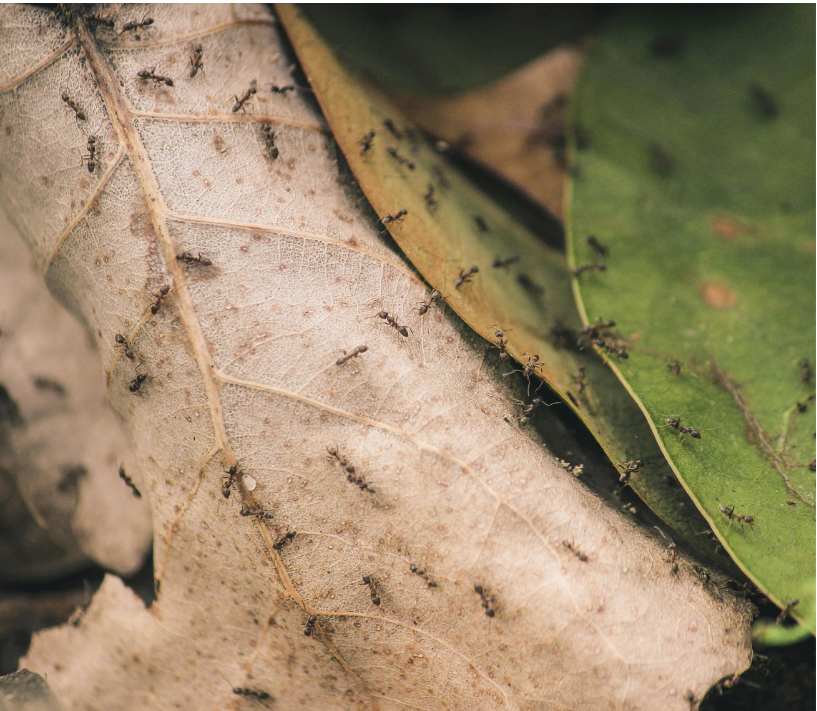
Natural predators usually control these in mature trees. Removal by hand from small trees is usually sufficient. Ant control is important here too.
The ants interfere with the insects’ natural enemies and help in the distribution of the pests to healthy new growth.
The presence of bark and wood-feeding insects such as alongicorn, wood moth larvae and the common auger beetle can suggest the tree is in a weakened state.
Attacks on healthy trees usually fail because of natural substances in the sap. Insecticides are not effective here because the pests are inaccessible.
Tree surgery is often required to repair the damaged part of the tree – that is, if the tree is worth saving.
October 13th, 2024Glen, about the house…
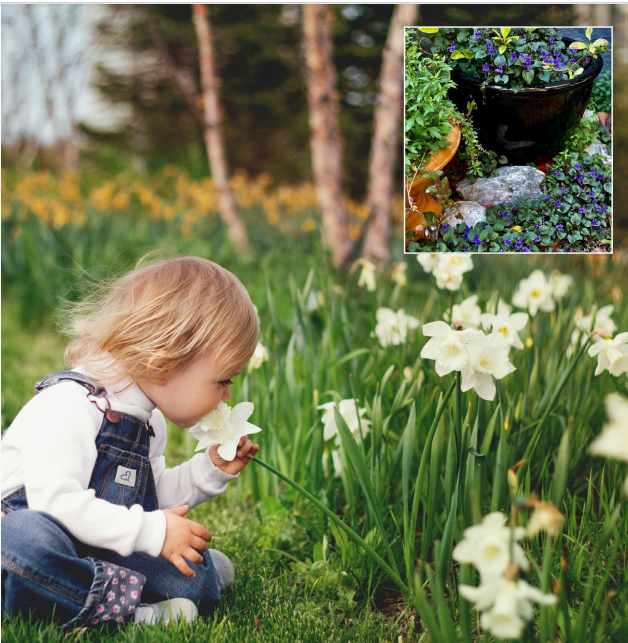
Hi Glen. My daff bulbs have been in the ground around 10 years. The garden faces east and they are protected from westerly sun and wind. I don’t dig them up, rather twist the leaves into a knot until they rot so that there is room for phlox, lavender shower, etc, but should I dig and divide them as there have been few flowers this year despite producing healthy leaves? Your advice would be appreciated, please.
PS. A gardening friend was telling me how she has great success with her bulbs by starting them in a sheltered place and once the plants begin to produce their flower buds, move them out and plant them, baskets and all. Do you think I should try this? Wendy, Trentham.
Hi Wendy Your request is more than timely. I’ve been thinking of that as yet another angle to talk about for the end-of season treatment of spring-flowering bulbs. I must say though the very image of you twisting and twining the poor things and leaving them to rot put my teeth on edge!
Spring-flowering bulbs such as narcissi and daffodils need to retain their leaves as long as possible to build up strong bulbs for next year and give any young bulblets a chance of developing a root system capable of supporting the new plant should you decide to separate and replant them in another bed.
This may mean your bed could be littered with untidy-looking brown clumps, but resist temptation to cut them back. If the leaves are interfering with other subjects in the border they may be tied up in bundles and still perform their function.
You could, of course, use them to fill any gaps in the existing beds, pot them up as reserves, or better still, use them for bartering with friends to expand your range of colours etc. Your bulbs, especially the replanted ones, should not be allowed to dry out prematurely.
When the dry weather begins, give them at least one good watering, in which you could include a weak dose of organic liquid food, before allowing them to become dormant.
Whilst you are in the midst of all this replanting, you should deal with any of the bulblets clinging to the roots of the plants that you judge to be advanced enough to be released to fend for themselves, and can be potted up either singly in small pots, or planted out in the bed with the others to fill up any vacant spaces in the bed.
When you mention in your letter ‘plant them baskets and all’ I assume that these ‘baskets’ are fabricated, water-proof or indeed suitable mesh-sided trough-like containers, that provide drainage and will sustain the conditions for at least a couple of seasons. Especially if these are going to be spending the whole season underground in rather tough conditions.
There must be loads of old wicker baskets, mesh-bottomed plastic sieves etc. going to waste in local op shops, just dying to be recycled.
The whole concept is that the spaces in the garden beds can filled with ‘other season’ plantings so that your beds are full of colour almost year round. At the same time, this gives your precious plants a better start in life. Cheers, Glen
August 20th, 2024Glen, about the house
What’s all the fuss about pruning deciduous fruit trees each year? Well, the simple answer is almost all deciduous fruiting trees produce their flowers in early spring, which coincides with the awakening of various flying, nectar seeking, insects.
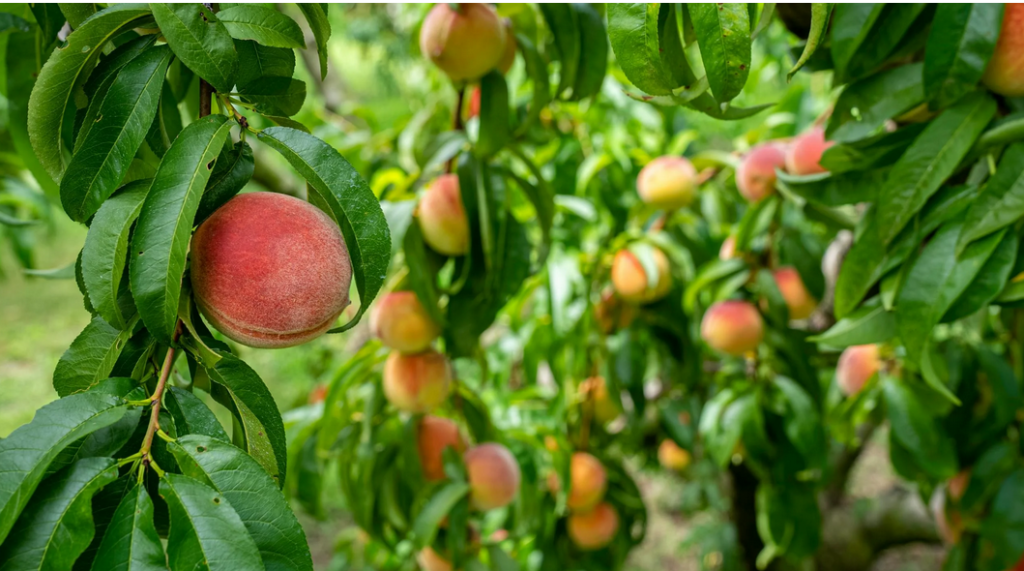
Most important of all the visitors are the hordes of hairy-legged aptly named honey bees who, while gathering their winter’s stock of nectar and pollen, are innocently catering for immensely larger appetites.
So, it’s up to us to see that our fruiting trees are given all the help they need to flower and bear plenty of healthy crops.
Best pruning methods for the most popular trees Apple/Pear – Ideally suited to a central leader shape they take several years to think about fruiting and bear most fruit on short fruiting spurs.
If left alone right from the nursery stage they will develop a straight stem with a first crown of 4-6 branches approximately 1 metre above the ground, and still retain the sturdy centre leader.
In another three or so years the tree will be nearing full size and should be showing signs of cropping. By then, pruning should be restricted to just shaping and light pruning.
Quince – Are prone to be shrub-like with no central trunk but multiple sturdy main branches supporting a framework of flowers/fruit.
Because the fruit is individually heavy and borne on the tips of branches, normal cup-shaped tree branches would soon bow to the weight and later break down.
After the heavy-duty, frame-building pruning is done, all that is needed is mainly thinning out of excess wood and eliminating any stray watershoots.
Because the fruit grows on the tips of last year’s wood, this should not be cut off, which makes regular pruning largely unnecessary.
Peach/Nectarine – They are closely related, with no basic differences in development and structure and near impossible to tell apart when they’re leafless.
Since they bear fruit only on young wood developed on the previous year, we have to force this each year by hard pruning.
If not they will soon become bare on the lower branches, and the crops start to appear only on the higher branches.
Then you will find the centre of the tree opening up, letting the hot summer sun in to scorch and ruin the main limbs.
Cut short alternate twigs on the branches to force new fruiting for next year but leave some to fruit now.
Apricot – Avoid pruning to the open centre, it will require drastic pruning to stop growing too far out and splitting with the weight of the crop – and the drastic pruning needed to rectify the problem can encourage the dreaded scourge, the deadly gummosis.
So if you are about to purchase a new apricot, choose one with a straight, healthy growth and stake it to take over the principal role.
The growth of the apricot is erratic and we can’t force it too long to shape it. The obvious answer is to choose a healthy tree with developed trunk and a central leader of four or five arms.
This is a liberal shape which should work out with a little guidance this should consist of taking off about half the length of the leaders to force out spurs which will carry most of the crop.
These will last for three to five years, but new ones will appear from time to time if the tree isn’t very dense.
Next issue I’ll conclude this saga with plums, cherries, almonds etc. Please let me know through The Local, if you want a specific tree or vine added to the list.
August 4th, 2024Glen, about the house
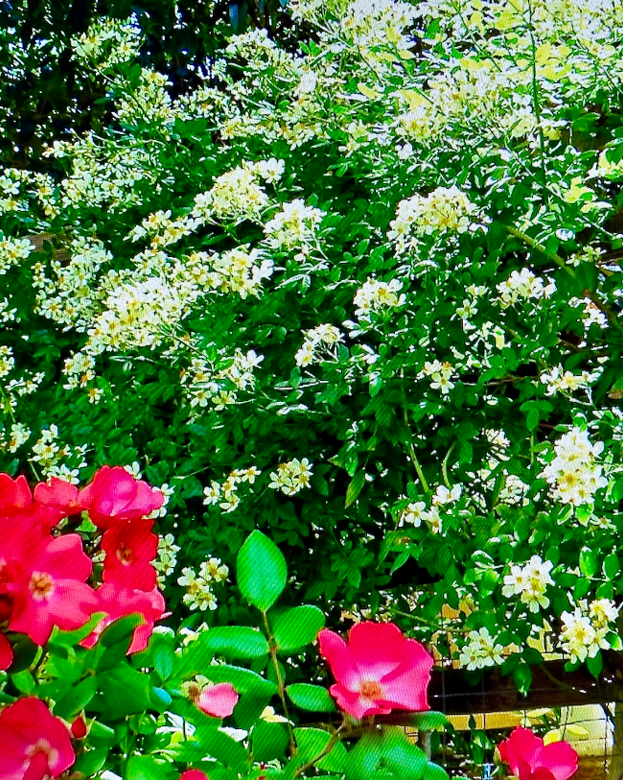
Last issue l tempted you (photographically) to venture into the world of vertical gardens – a place of many advantages and few, if any, disadvantages.
For a start, all growth is up and outwards in two directions – and it’s usually along a wall or fence. lf they are kept neat and tidy, even an adult fruiting plum or peach tree, if managed correctly and regularly, shouldn’t take up any more than a metre in width if all growth is encouraged up and laterally along supporting walls or a trellis.
So, if you have a bare wall or ugly fence alongside a driveway, or one covered by a rampant climber threatening to overbalance and topple the fence, the obvious answer is go espalier.
Or even if you just want to grow a couple of fruit trees that without going espalier could mean losing most, if not all, of the kids’ play space, or the car wash space.
It is simply a method of gaining bigger, healthier crops, in far smaller places and providing heaps more space for entertainment.
It also has the branches equally open to sun, wind and water giving the whole crop an equal chance of ripening together, to say nothing of depriving lurking pests of shelter from predators.
Your choice of a suitable espalier plant should be simple. Everyone else is looking to find a well-rounded, multi-branched compact tree, leaving the lanky flat-sided specimens to the suckers.
But they are blissfully unaware that these make for the best start for the bottom branches of the espalier outline.
After removing any foliage or branches on the side chosen to face the wall or fence (obviously the least attractive side) and, leaving the best ones likely to be grown into a large fan shape, cut the rest back to about 10cm.
With ornamental trees and shrubs, espaliering is quite simple, all you need to do is select a plant that is already flat and one-sided to start with and you are halfway there.
lf not, the branches can be tied back in a fan shape against the wall or supported on horizontal wires but most plants will respond to merely having the front branches removed and the side growth encouraged to spread along the wall.
Although it may be necessary to keep pinching and snipping off wayward branches in the early stages of growth, that will probably be all that is necessary.
The espalier method of pruning allows you to grow a wide range of deciduous fruit trees, especially apples, plums and pears.
They respond quite well to this treatment, as do most shrubs. Roses, especially the ramblers with their flexible canes, like the one pictured above, Wedding Day, in my garden, are fantastic.
It is probably a marginal espalier as it was one of the struggling remnants of our century-old garden and popped up under my new post and rail garden fence along with that beautiful as-yet unnamed heritage rose, at its feet.
Got a gardening query? Email glenzgarden gmail.com
July 22nd, 2024Glen, about the house
Pruning, the better way There’s a perennial gardening question that usually arises at about this time of year, that is after the “should we really get stuck into the tree with a saw and lop it right back?”.
And that is the “which format should we aim for – upright central trunk with branches radiating upwards, a neat, compact choice for smaller gardens, or the open centred, urn shape, pruned to allow plenty of light in for the fruit?”.
This works fine in the case of citrus, peaches, nectarines and other semi-tropical fruits, or where the fruit is sheltered by larger trees or buildings.
Pruning for the centre leader system really starts in the nursery, where the leader is not cut to encourage side shoots, but let go, and given proper nourishment it should grow up to 3-4 metres high, then produce four to six side shoots about a metre above the ground, in the same year. Four or five buds will develop to supply the side branches, and they will form the first crown.
This procedure, repeated every year, will make a multi-storey centre leader tree, leaving about a metre between crowns, and each crown having one less branch than the crown below.
This is a very economical and natural way to produce fruit. It also cuts out sun-scorch damage and splitting by excess crop or wind.
The centre leader always keeps the balance and acts as a safety valve. This shape suits all deciduous fruit trees which bear the crop on fruit on old wood, such as apples, pears, apricots, quinces, European plums, cherries etc.
Although cherries are best left alone unless it’s desperate, cherries loathe even the sight of secateurs or saws.
Nearly all the young trees produced and sold here were developed to grow as open, multi-branched trees especially for those deciduous trees that bear the fruit on young wood such as peaches, nectarines and Japanese plums, because of the more severe pruning needed to produce annual wood, which bears the fruit.
They do well on this system, providing some secondary branches are allowed to grow toward the centre of the tree to shield against sun scorch of the main limbs.
One more small but very important point that can have a great impact on the future success of the tree’s development is the necessity of its growing small spurs on the trunk below the first crown.
These are intended to strengthen the main trunk by preventing the sap from bypassing the main trunk. Usually these spurs bear the first fruit. After a few years, when they are no longer necessary, they can be cut off.
The main rule for pruning young trees is to see the main shape by cutting the main and side leaders to about two thirds so all the buds will grow without watershoots developing.
Fruitful fences
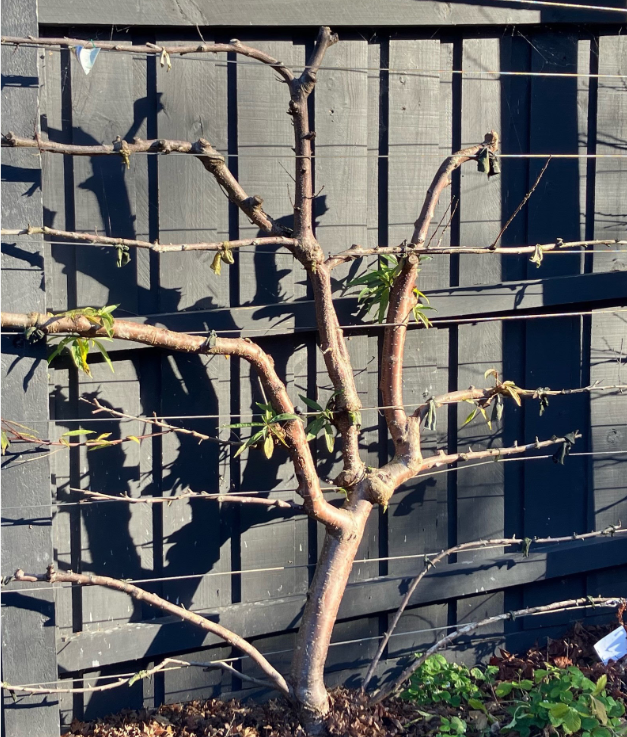
The espaliered orchard is God’s gift to space limited, would-be home orchardists. If you can’t spread out, then grow upwards and plant them up the fence, see above.
There is many an ugly garden fence that has been beautified by a trellis full of flowering or colourful-leafed vines.
So what’s to stop you from training a few fruiting apple, plum or other fruiting trees up along yours?
If you have the good fortune of having the timber framework and posts on your side you’re halfway there – use the rails to support the roll of sturdy galvanised timber or wooden lattice to support your choice of trees and plant them about three metres apart.
The rest is a cinch and I’ll give you the details in the next issue of The Local.
Got a gardening query? Email glenzgarden gmail.com
June 25th, 2024Glen, about the house…
Hi Glen,
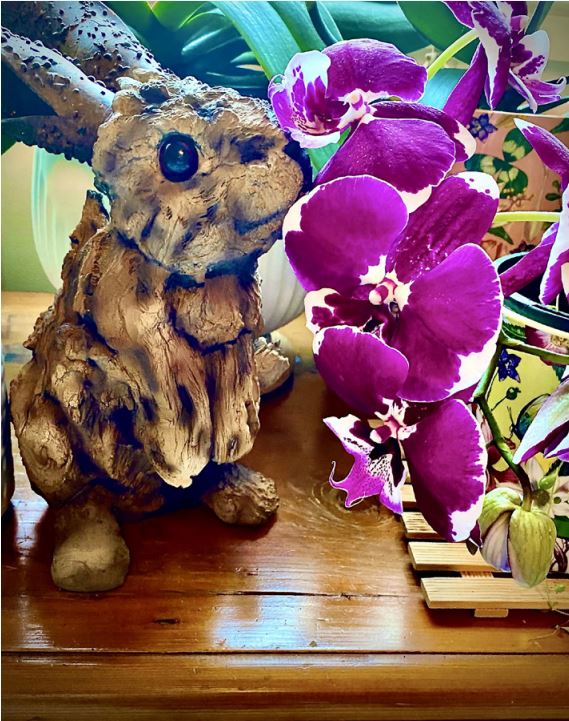
I am sure you are the one who can tell me whether those beautiful moth orchids really do live and flower for years, and if so, what am I doing wrong? Because mine flowered just once with two blooms on the same stem. Then after a couple of weeks they just shrivelled up and fell off, leaving behind a bundle of dry sticks amid a rosette of large green leaves.
Should I just grin and give up? Or can you point me in the right direction for success? This was my second year of failure but when I am confronted by those magnificent living carpets in the stores I can’t resist their call of “take me home, I’m yours”.
Hoping to hear positive words of encouragement, or should I just give up and plant some geraniums? Can’t wait for some good news. – Miriam, Kyneton
Hi Miriam,
As much as I like and grow geraniums, not really, the answer is quite simple – it is a patience and confidence. Moth orchids, phalaenopsis, are probably the most favourite orchids because of their multi-coloured, long lasting flowers.
They are sturdy and need little care in our climate and, as long as they are planted in a sheltered spot, they make ideal indoor plants when grown in a well lit window but out of direct sunlight.
When grown out of doors they will bloom just once, either spring or summer, but they can usually be encouraged to bloom several times a year if they are treated kindly and allowed to rest in a state of dormancy in-between time.
Moth orchids bloom along slender flower spikes which can often bloom more than once, so don’t be in a hurry to remove the spike because you can often encourage the plant to have extra flowers. So always keep an eye out for the buds on any healthy looking spikes but remove any that are starting to turn brown or wither.
Clip them off at the base with a pair of clean and sterilised flower scissors or sharp secateurs to conserve energy.
It is easy to confuse the flower spikes with aerial roots but these can be easily spotted – they are lighter in colour and have rounded tips. Their appearance is usually a signal that the plants’ root system is getting a little crowded and nourishment sparse.
There’s little need to remove any aerial roots unless they are overcrowding the plant and then it is maybe time to consider repotting them into larger homes. This will improve their health and make flowering more likely, especially if the plant is still in the pot your brought it home in.
Store-bought moth orchids are usually potted into various types of moss and placed into plastic containers which retain too much moisture which can cause roots to rot. This can be avoided by being repotted into a larger pot with drainage holes and using a bark-based orchid mix that allows the water to drain freely.
Fertiliser, especially developed for orchids and similar plants, can help maintain the health and growth of the plant, as can most organic liquid fertilisers made with kelp or fish emulsion, when diluted to one quarter strength with water. – Glen
Got a gardening query? Email glenzgarden@gmail.com
June 11th, 2024Glen, about the house…
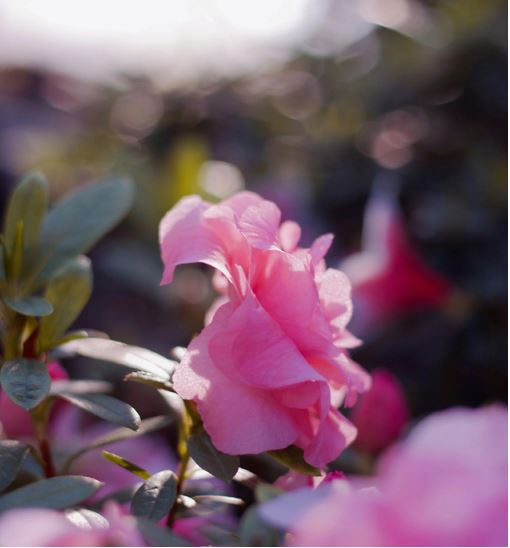
You have probably taken cuttings or slips and been astonished, if not pleased, when you discover that some of them have “struck”.
Better still, with persistence, care and attention the percentage of ‘takes’ increase and you are starting to feel a bit ‘green thumbish’ and it’s probably time to branch out and have a try with the various other methods of propagation and other less easily handled species.
In 1672 Robert Sharrock (1630–1684), an English churchman and botanist, published his treatise The History of the Propagation and Improvement of Vegetables, which showed the various methods of propagation in vogue at that time.
Interestingly enough many of the improvements are our principal methods of plant propagation. For instance, a branch that was to be taken off to become a cutting can be made a whole new plant by a method known as aerial layering or marcottage.
It’s done by removing a 1cm layer of bark with a razor-sharp knife. This is repeated about 1cm further down on the opposite side of the stem, so that between the two the stem is bare without completely cutting off the sap flow.
After dusting the cuts with a hormone rooting powder an ‘egg’ of a mixture of sphagnum moss and peat moss, barely damp, is broken in half and each half wrapped around the stem to cover the cuts.
Finally, clean polythene is then wrapped around the egg and secured, bottom first with adhesive tape.
The host plant will continue growing as usual meaning the graft is receiving continual nourishment. You will know the graft has taken when the new rootlets start poking their little noses against the window.
Once you feel sufficient root growth has been achieved the stem can be cut just below the egg and planted into a suitably sized pot of similar soil mix. The host plant’s stem can be cleaned up with a sharp blade for it to shoot again.
Inarching
This is a form of grafting which means, unlike cuttings, neither the root stock, nor the scion plant die in the process because it does not remove a portion of the parent plant until it has been established as a separate entity.
A long, thin inward cut is made on a branch which becomes the scion and a matching cut is made on a sturdy seedling planted in a container which is then moved into a position so that the scion and stock can be bound together.
The head of the stock is shortened and the plants left in position until growth recommences on the scion – indicating that it has taken with the stock.
The scion is then immediately severed below the junction with stock and a new plant is formed. Non-hardy rhododendron and camellia species are largely propagated by this means.
There are many other interesting forms of plant propagation with stems, not only hardwood, but also softwood and half-ripened cuttings.
The production of further lilium bulbs by their scales is a form of leaf cuttings for one. If there is a plant that doesn’t produce flowers and thus seeds for the next generation there’s always a botanist on
hand to find the way.
That’s why I’m proud of my botanist grandfather, E.B. Heyne who did much to design and establish Melbourne Botanic Gardens, before moving to Adelaide to establish what is now South Australia’s oldest
continuous and now, recently named, leading nursery.
I’m also proud of the achievements of my only recently late, younger brother Garry and now his son and daughter, whose capable hands will take the sixth generation business to even greater heights.
You can have a look at what they do at www.heyne.com.au
Got a gardening query? Email glenzgarden@gmail.com
May 31st, 2024Something fine and fragrant: Glen, about the house
Whenever the topic of bringing added fragrance to our gardens our thoughts go naturally to the old faithfuls – roses, daphne, lavender etc.
We usually overlook the many varieties of trees and large shrubs that could also bring added fragrance as well as shade and shelter for the smaller, less hardy varieties.
And we sometimes also forget about them for the protection they offer from the direct rays of our summer sun and the bonus of perfumed flowers or aromatic leaves.
This group is all the more important, particularly where you are anxious to have shade and, at the same time, perfumed flowers and/or foliage.
Despite the relatively small size of ground left to the garden after the carport or garage, clothesline and the all-important sandpit are given pride of place, there still should be space for at least one large, multi-purpose tree, and in my books that’s the Lisbon lemon.
They are evergreen, fast-growing, with thickly spread lush green leaves, a glorious fragrance and white blossoms, and best of all, they work their magic in drinks, salads and many other culinary delights.
For those who simply don’t have room for the Lisbon, check your local nursery and see if they stock smaller-growing varieties.
The diminutive size of the tree does little to the quality of the fruit or perfume of the flowers. If you wish to grow a Lisbon lemon but your backyard vegetable plot is already overcrowded there’s nothing in the rule books barring you from making it a front garden feature.
Another highly scented, scaled-down choice with miniature oranges for fruit is the cumquat. Highly perfumed flowers are followed by leprachaun cricket-ball sized fruit.
And according to young Paddington Bear it can produce impossible to beat marmalade. If you can’t find a suitable spot in the front garden beds there’s always room for a large potted citrus on a pathway somewhere, especially if it’s a cumquat.
Scented blossom
Amongst the trees which produce scented flowers probably the citrus varieties are the best known but least planted for that purpose.
More than likely that is because citrus have always been regarded as production units and belong in the kitchen garden.
Whilst the ordinary orange, lemon or grapefruit are a bit too large for the kitchen garden, they could certainly find their place in the front garden as a bonus to their lush, green foliage as their white flowers fill the air with a magnificent scent when the tree is covered with bloom.
A tall-growing deciduous tree, tilia, classically known as the Linden tree, is well known for its scented flowers and while perhaps a little large for small gardens (depending on the variety chosen) it is great for open spaces and park plantings.
The heart-shaped leaves, which depending on species, can vary from 5-12 centimetres in diameter, are followed by pendulous trusses of small, yellow, scented flowers. Despite the size of some species it is an attractive tree and deserves to be more widely planted.
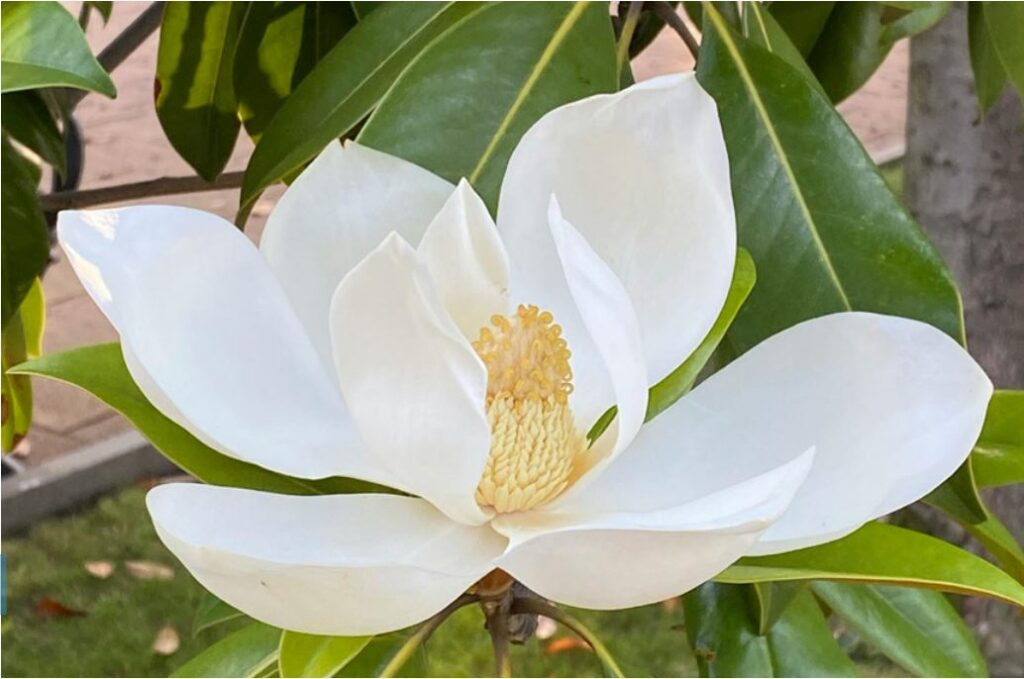
Outstanding amongst the scented flowered trees is magnolia grandiflora, a beautiful, highly perfumed tree with large glossy leaves and in summer a profusion of large, bowl-shaped, sweetly scented, ivory-coloured blooms.
Got a gardening query? Email glenzgarden@gmail.com
May 15th, 2024Glen, about the house…
Scent from south of the border
Shrubs can add beauty to your garden in so many different ways, be it colourful foliage, attractive flowers or habit of growth, but one of the most welcoming ways is in filling the air with waves of delicious perfume.
It should be no surprise that many of the trees, shrubs and climbers having this particular attribute originated in South America, particularly Mexico.
There the climate is closest to ours, meaning that with the right treatment and conditions they should thrive in your gardens but will obviously need some protection from winter frosts and cold winds until they are fully established.
One needing minimum protection is aloysia citrodora – the lemon-scented verbena – a sturdy, easily grown, compact shrub of 2 to 3 metres. The leaves are pale green in colour and are long with deep crinkly serrations.
In spring the plant is covered with pale, mauve/grey flowers. It is evergreen and fast growing. The perfume is in the leaves, which when crushed or bruised, give off an attractive, strong, citrus-like smell. If the foliage is picked and dried, it will give a long-lasting aroma to your linen closet or wardrobes.
Aloysia is easily grown and will thrive in any warm exposed position in any well-drained soil. Cut the shrub back hard each spring after flowering to keep it compact and bushy.
Choisya ternata (Mexican mock orange) is another attractive, perfumed (and one of my favourites) shrub. It’s evergreen and will grow quickly to a height of one or two metres. The foliage is dark green and glossy, and in spring the whole plant is covered in blossom, emitting a subtle, orange blossom-like perfume.
Wet feet is the arch enemy of choisya, so should be planted in a well-drained spot in the garden (especially in winter), or into a large pot of fibrous soil.
Heliotropium arborescens (cherry pie) is a compact evergreen shrub growing to a metre high. The leaves are oval and dark green with a furry texture. In spring the branches are covered with deep purple, lantana-like, subtle but sweet flowers.
Provided the plant is pruned each year after flowering, heliotropium will make a neat, round shrub or can be used as a low bordering hedge. If planted in any exposed area in light soil or heavy loam they would appreciate protection from frost in the first winter.
Philadelphus virginalis (mock orange) is another attractive shrub bearing the same common name and originating in Mexico but this time it’s deciduous and quickly attains a height of 2 metres.
It flowers mainly on second-year wood so care should be taken to ensure that this wood is cut back hard after flowering to be sure of plenty of healthy young wood for the next season’s crop of large single fragrant blooms to pick and take indoors.
Plumeria rubra v. acutifolia (frangipani) is another but please note I include this one with a note of caution. Frangipani is a widely grown native of Mexico and would require a glass greenhouse, well-lit sunroom or a decidedly frost-free position in a large but moveable pot to succeed in our local climate.
They need to be grown in well-lit and warm positions in very well drained soil. Their greatest enemies are collar rot and wet feet which are brought about by excessive water especially during their dormant periods.
So if you keen enough to try, use a large tub and sandy loam so that the amount of water they receive can be strictly controlled and fingers crossed. Oh, by the way, it would be best to wait until the warmth of spring.
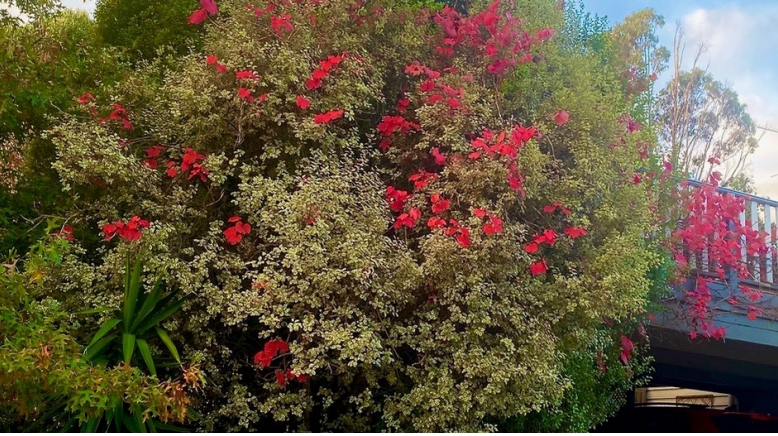
Above, our pittosporum teniufolium in the annual embrace of our fence-covering ornamental vine (vitis vinifera) before its annual “haircut” – this year it beat me to it by producing an early season festoon of beautifully coloured leaves.
Got a gardening query? Email glenzgarden@gmail.com
May 4th, 2024Glen, about the house
Movement in the garden
I’m sure I’m not the only one who makes a daily tour of our newly planted trees or shrubs, looking anxiously for any sign of new growth.
We all know, of course, that any new outward or upward growth, except in a few ‘Jack-and the beanstalk’ plants, and a few vines, can be too slow to be considered as movement at all – unless you live in Far North Australia or in the tropics. But, as always, there are a few exceptions.
Some plants have a regular cycle for opening their blossoms each day to attract with their fragrance, bees and other winged pollinators, but closing again at dusk to evade the scavengers.
Many other more miserly plants such as some iris only open for business for just one day before closing forever – apparently preferring the ‘fast trade’.
Others open at certain times of the day in order to attract particular patrons. These include the four o’clocks (mirabilis jalapa) which true to its name, opens at the same hour and stays open all night. ‘Morning Glories’, like a few others, open at first light and close again at noon.
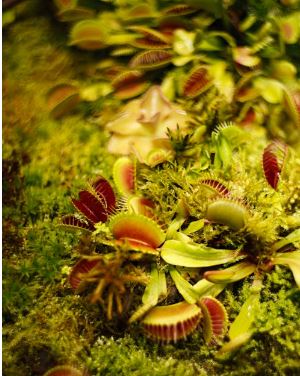
Many other more bloodthirsty plants are the insect trappers where you will see definite and fairly rapid movement, such plants as the venus fly trap (dionaea muscipula), a perennial herb from the swamps of North and South Carolina.
At the base of each 30cm long stem that produces white flowers, we will find a rosette of leaves consisting of two parts with a hinge between them.
Whenever an insect alights on a hairy leaf, the two parts of the leaf snap close to enfold the insect until it dies and its body juices are absorbed. The leaf closes within half a second after the insect touches it.
Twining
Twining vines present an amazing, although rather slow movement, with some twisting from left to right, while others prefer to twist from right to left.
No matter what you do in an attempt to reverse the natural direction of the twisting/twining the plant will persist in twisting around its support, but only in its own predetermined direction. This spiral twisting of a plant stem is called nutation.
Our good old garden friend, the sunflower, turns so that its large, flat blossom is at right angles to the sun. When each flower reaches maturity and its stem has become hard and stiff, no more movement is possible, but when it’s in bud it follows the sun across the heavens.
We can also see extremely fast movements in the method some plants use in dispersing their seeds. When a ripened balsam’s seed pod is touched, it seems to explode as the outer casing breaks into sections and curls back, sending the seeds flying in every direction over a wide area.
In late summer, violets develop pods that break open in three sections and send a great many seeds as far as one to two metres – and it seems that every one germinates, as we have found to our delight in the few years since we moved to our current garden.
But the king of rapid plant movement is the sensitive plant – mimosa pudica – which has entertained children and amazed adults for ages. The stems are spiny and the leaves are cut into many leaflets. Just the lightest of taps causes them to fold together – a heavier tap and the stem will droop down. A few minutes later they will resume their normal positions.
And finally, there are many other plants that close down for the night to reawaken in the morning sun’s light in what is called a sleep movement.
Got a gardening query? Email glenzgarden@gmail.com
April 14th, 2024Glen, about the house …
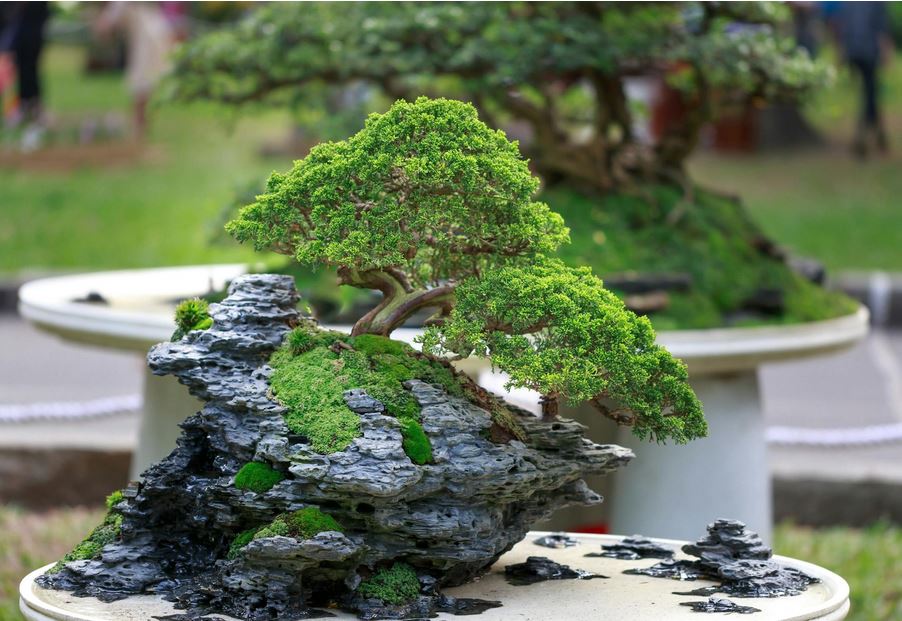
In search of the perfect bonsai
Despite popular belief, the practice of growing bonsai actually began, not in Japan, but in China when around the year 700, a group of avid gardeners began using special techniques to create miniaturised trees in small containers and so developed a practice called “pun-sai”.
It was quite some time later in the Kamakura period, that the Japanese adopted this bonsai and incorporated it into their culture alongside such related activities as suiseki (stone appreciation) and keeping koi fish (nishikigoi).
Popularity of bonsai grew, until the 14th century when they graduated from ‘outdoor ornaments’ to a highly regarded art form and became a fixture in affluent homes where they were placed on special indoor shelves for display.
It was about this time that Japanese garden artists, already famed for their delicate artistry and intriguing shaping of their gardens – took up the challenge and added bonsai to their own botanical culture.
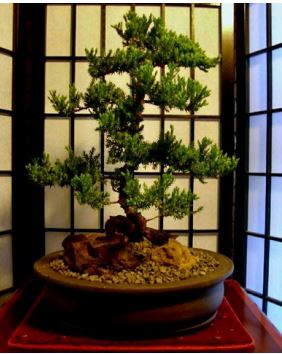
The beautifully trimmed and shaped young Japanese juniper (pictured above), has in a few years, already taken on the form and character of its older cousins – through a technique I’m yet to master.
In 1826, a Japanese nurseryman offered the famed biologist and world-wide plant collector, Philipp Franz von Siebold, a plum tree in flower, which was scarcely three inches (7cm) high. This little gem was grown in a small lacquered box of three tiers similar to those which the Japanese carried in their belts.
In the upper tier was this plum, in the second row, a little spruce fir, and at the lowest a bamboo scarcely an inch and a half (4cm high).
Not too many years after this a weeping willow, only 15cm in height, changed hands for about $3000 at today’s values – the Japanese did not hold their hobby lightly.
But for a bonsai to be of such value it must be perfect, and perfection means that not only each branch, but each twig and every leaf must conform absolutely in direction and proportion to the laws which govern the art.
Anything short of this perfection would be worth only so many cents, and thousands of beautiful bonsai are sold at the monthly sales all over Japan for no more than that. Perfection doesn’t come very often.
Although we may not seek so high a standard on our own bonsai, there are certain basic rules which must be observed, otherwise we are not entitled to call our efforts bonsai at all.
The natural dwarf conifers which adorn many rock gardens may be true miniatures but not by definition bonsai and this is equally true of any tree which is allowed to grow as nature intends, no matter how small it be.
Suitable trees for bonsai
It has often been suggested that any old hardwood tree or shrub would be suitable, especially if it’s a bit gnarled and distorted, but this isn’t always true.
Those with large leaves are useless unless they are deciduous, when the pattern of bare branches have an appeal and they start out again in spring with new leaves which will reduce in size in keeping with the proportions of the tree.
Conifers, especially those with small needles are the usual first favourites, as it is easier to ensure correct balance between the foliage and wood.
But most trees and many shrubs which bear smallish leaves and can be easily trained to grow on a single trunk will be suitable.
Got a gardening query? Email glenzgarden@gmail.com
April 3rd, 2024Glen, about the house …
Hi Glen,
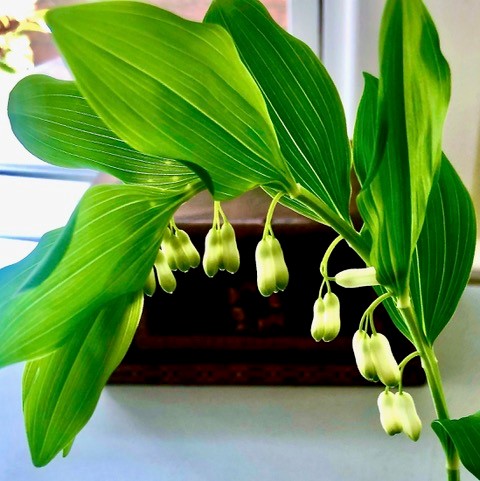
I wonder if you could identify the plant in the photograph for me? I was told it was probably a Solomon’s Seal. I think it might be but it looks a little different to others I’ve seen. This one was flourishing in a large pot on a shaded porch.
Thanks, an avid reader, Sheryl.
Hi Sheryl, it certainly is one of the many forms of polygonatum or Solomon’s Seal. This one appears to be polygonatum odoratum or angular Solomon’s Seal.
Polygonatum, also known as King Solomon’s Seal, is a genus of flowering plants placed in the asparagaceae subfamily. It was originally classified in the lily family, liliaceae.
Solomon’s Seal is a genus of elegant perennial plants native to woodland areas of several continents including North America, a genus distributed throughout the temperate Northern Hemisphere. Most of the approximately 63 species occur in Asia with 20 or so belonging to China.
Unfortunately, although a distant relative of our flavoursome asparagus, this bunch are certainly not safe for the table but very desirable for your garden.
The small, tubular flowers which can come in white, green or pink are charming. But it’s the slender arching stems and long, lance-shaped leaves that make Solomon’s Seal such a favourite in shady settings. Small blackish berries remain after the flowers fade, to be enjoyed by birds.
Once established, Solomon’s Seal slowly spreads and creates a blanket of foliage that turns a golden yellow in autumn.
Most of Solomon’s Seal varieties will grow from 30-60cm in height and rapidly spread in breadth. If planted at 60cm to 1-metre apart in beds you will soon have a beautiful carpet of colourful foliage and, in time, flowers.
Next autumn you will be able to divide the plants and take the new little plantlets from around their bases to replant in the gaps or other beds.
Dividing and tidying up your perennials
Between now and late April you can increase your stock of perennial plants by division. Clumps of aster, erigeron, penstemon, scabious, campanula, shasta daisies and similar plants can be lifted and split apart by the two-fork method using a pair of garden forks, or spades if necessary, to lever the clump apart.
The sturdiest younger portions can be replanted in good soil to which a fairly liberal dressing of blood and bone or similar fertiliser has been added.
One or two of the more popular perennial plants are best left until early spring. These include cannas and those that normally die back to a dormant crown during the winter months.
In spring, at the first sign of new growth, the plants can be lifted and divided without damage. At that time of year the warming soil will encourage rapid root growth.
As for the other perennials it is usual to cut them back and remove the dead leaves as soon as they have finished flowering. Not only does it make for a cleaner looking garden it also reduces the number of hiding places for slugs, snails and other leaf eating pests.
Obviously, in areas of severe frosts, these should be left until warmer weather. Many plants will begin to make new shoots when there are a few days of mild weather in late winter and a subsequent hard frost can damage that young growth.
If the old leaves and dry growth are left on, they protect these shoots and are just as well removed after frosts have finished and the new growths are well established.
Got a gardening query? Email glenzgarden@gmail.com
March 6th, 2024Glen, about the house
Australia’s overlooked bulbous beauties
In all the countless years that we Aussie gardeners have chosen to adorn our home landscape with true blue Aussie trees and shrubs, we seem to have overlooked the beauty and colour our own bulbous plants can bring to the garden.
And sadly I feel that not all who have planted and enjoyed them have fully realised their real heritage. Besides, being native they obviously have long been acclimatised to our soils and cranky climate and are sure to be a blooming success.
Unfortunately, the locals don’t even run in second place in the bulbous stakes to those long-loved, mass produced and mass marketed, foreigners – daffodils, hyacinths, tulips and co.
They’ve had a great head start. Ever since the first Europeans came and started their home gardens, and adventurous botanists such as Baron von Mueller and Ernst Heyne (my great-grandfather) established Melbourne Botanic Gardens and Arboretum, there was a move to include Australian flora into home gardens.
Led firstly by the great standbys including acacia, eucalyptus and grevilleas but at that time bulbs weren’t even thought of.
Over the years, particularly since the mid 1950s, the nursery industry in general awoke to the fact that gardeners were keen to grow a burgeoning collection of flowering native shrubs and trees to decorate their gardens, other than just the drought-resistant eucalypts and acacias purchased by country people for sheltering stock and farm buildings.
So for quite some time we have planted an ever-widening selection of Australian trees, shrubs and climbers. So why not our bulbs? Obviously, the answer is yes, but not always in any recognisable form such as that of tulips or daffodils.
If you take the broad definition of bulbous to mean swollen or distended, detachable root segments, then you can only imagine the multitude of plant varieties at your disposal and our sunburnt plains, where it seldom rains, is no place for any sensible plant to throw out seeds – and expect them to germinate and thrive.
Unfortunately, it’s taken quite some time for native bulbous plants to compete with the massive European ones, so even now it’s probably specialist nurseries and ardent fan clubs who can supply advice and plant stock.
This is a pity, because many of these plants are not only spectacular but certainly as easy to grow as many of the introduced species.
Whilst Australia has no native true lilies such as hippeastrums and freesias, it has a variety of other genera which make very attractive garden plants. The chocolate lilies, thysanotus, weather vane, hypoxis, milk maids and burchardia come into this category.
There are others, such as crinums and calostemma, which develop if they are thoroughly saturated at planting. This starts them into growth and a couple of months later they commence to flower, provided they receive additional water to enable them to do so.
One of the most spectacular of our groups are thysanotus or fringe lilies, so named because the petals are heavily fringed. They are either tufted perennials or produce a scrambling stem.
There are probably 18 to 20 species, all with flowers of pale yellow or pale blue through to purple, or very rarely, white. In some instances the fringe of hairs is of a similar colour to the flower.
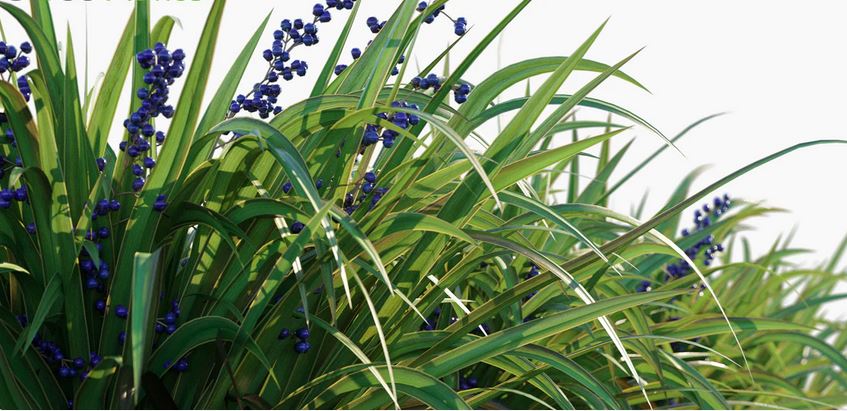
Another group is the flax lilies dianella, a genus containing about 24 species with thick, lanceolate-shaped leaves mostly varying in length from 15cm-50cm.
However one species, dianella tasmanica, pictured above, forms a tight clump of foliage up to 150cm and produces masses of glossy deep blue, cherry-sized, berries.
Got a gardening query? Email glenzgarden@gmail.com
February 7th, 2024Glen, about the house

Perennials
Among the multi-classified members of the plant world, one group, probably
the largest, are the perennials. More than any other plant group they, in their
thousand-plus forms, can offer a year-round rich palette of colour, fragrance
and texture, either by their flowers or foliage.
Although multitudinous in their shape, size and behaviour, perennials are
defined as non-woody plants which live for two or more years. Some, including the
helleborus (winter rose), are evergreen, but most are herbaceous and die back in
winter. All adding to the year-round broad spectrum of colour.
All perennials are easily propagated, in fact, many do it themselves, like the shasta daisy and perennial grass, pictured above, and simply produce plantlets around their perimeter, as do carnations, gerberas, cannas and a plethora of other perennials. They are then easily gently separated from the parent and replanted.
Some more adventurous than the rest make it easy for you to produce their little
plantlets on slender stems for you to simply snip the stem and plant, either in a small
container of fibrous loam, or into the garden bed, depending on the size and strength
of the little rootlets.
While the title perennial doesn’t apply to bulb producers, such as daffodil,
hyacinth etc, a whole range of plants multiply from a corm, or tuber – a short,
vertical, swollen underground plant stem that serves as a storage organ that some
plants use to survive winter. These include iris and the ever-loving country fence
(including ours) hugging blue, and occasional white agapanthus.
There are plenty of popular plants that you and I would never have thought of as
belonging to the perennials brigade but on browsing the Royal Horticultural Society
Plant Guide’s Perennials section I was stunned to find names I would never have
imagined. Plants like African violets, begonias, primulas, pelargonium, sansevieria, (snake plant), and on and on.
Time for division
Between now and late April you can increase your own stock of perennial plants
by division. Clumps of aster, agapanthus, shasta daisy, campanula and similar plants can be
lifted, split apart by the two fork method – two garden forks placed back to back used
to lever – or if possible, gently by hand.
The younger portions can then be replanted in good soil, to which has been added a fairly liberal dressing of blood and bone, or similar organic fertiliser.
One or two of our most popular perennial plants are best left until spring. These
include cannas, pampas grass and those which normally die back to a dormant crown
during the winter. In spring the new shoots can be seen and divided without damage,
while the warming soil will encourage rapid root re-growth.
It’s usual at this time to cut back perennials when they have finished flowering
and to remove any dead leaves. This is partly to make for a clean looking garden but
also to reduce the number of hiding places for slugs and snails. That is, unless you are
living in a high frost area.
Many plants will begin to make new roots when there are a few mild days in
winter, and a subsequent hard frost can damage such growths. If the old leaves and
dry growth are left on they will protect young plants and can be removed just as easily
once the frost season is over.
Got a gardening query? Email glenzgarden@gmail.com