


May 29th, 2023Glen, about the house…
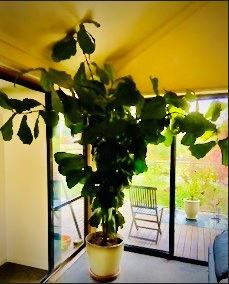
That’s not a ficus…this is a ficus!
Hi Glen,
I’ve just been reading your article in The Local regarding indoor plants in winter. Our ficus has been
slowly taking over the corner of our lounge room. I’m loath to trim it but seek your advice on the best
way of keeping it under control.
Kind regards, Wendy
Hi Wendy,
Thanks for the question. The fiddle-leaf ficus really should be called the finicky ficus – quite often difficult to get started but if placed into the right environment once they get going they’re almost bullet proof.
I’m glad you had the foresight to attach that (rather boastful) photo, because it enables me to give you a more detailed answer, which is yes, you can keep it under control and remove those mammoth arching branches.
As we are now entering the wintry season, and almost all growth slows to a stop, within reason you can really get going on the tidy-up. But it should be done in stages and with sharp secateurs, cutting just above a healthy stem, leaf or bud.
For starters take off the three or four long branches back to top of the cluster of leaves. That should be enough for the plant to take.
After a few weeks you might like to shorten the rest of them, perhaps even completely removing any spindly stems to encourage the rest. And generally tidy it up. I don’t need to tell you anything else, you are obviously already doing everything right.
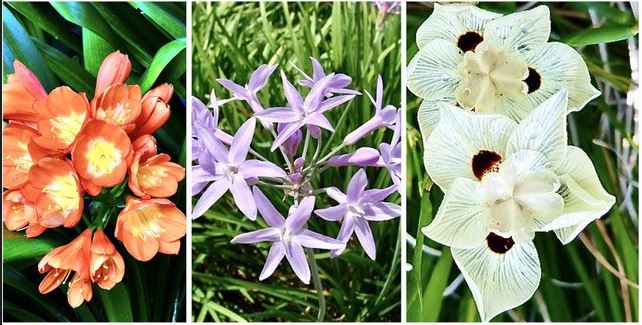
Evergreen bulbous plants
Generally when gardeners think of bulbs, it’s probably daffodils or tulips and all the
others with an annual resting period.
However there are a great number of bulbous plants with the advantage that,
being evergreen, their foliage is a permanent feature in the garden. No long months
of bare spaces.
The most common and most widely known of these, of course, is the ubiquitous
agapanthus in all of its forms and colours, from the stately A. Praecox, with its tall,
slender-stemmed crown of white or blue flowers, down to the dainty variegated-leaved miniatures. Widely known as African lily, agapanthus proudly grace many
an Australian country front fence, including our own, and thrive with little or no
attention.
An interesting and worthwhile evergreen is arthropodium cirratum, the New
Zealand Rock Lily. This bulb produces arching sprays of attractive little flowers above
slender, evergreen foliage. It will grow quite happily in full sun in cool climates, but
needs semi-shade in warmer areas.
An excellent evergreen which can be grown as a pot specimen is clivia miniata,
(left photo above), which produces 50-60cm stems, topped by large balls of vibrant orange,
trumpet-shaped blooms. Clivia comes in many forms and colours, all hardy and
thriving in shady conditions.
Extremely hardy and exceptionally free flowering is tulbaghia violacea (centre
photo). Its narrow foliage is quite neat and it quickly forms a reasonable-sized clump.
Small heads of lilac flowers are borne on 30cm over a period of many months. They
will tolerate a wide range of soil conditions and grow well in full sun or partial shade.
Dietes is a group producing luxuriant strap-like foliage. D. Bicolor (right photo)
have 5cm lemon-yellow, iris-like flowers with three distinct brown and orange spots
in the centre of each flower. Growing to a metre in height they are adaptable to easily
grow in sun or shade.
Got a gardening query? Email glenzgarden@gmail.com
May 17th, 2023Glen, about the house…
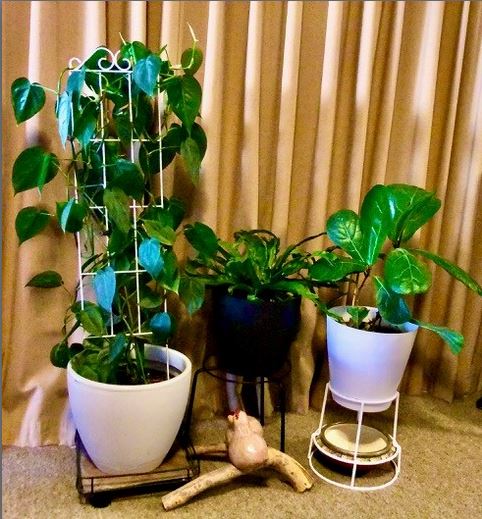
Indoor plants in winter
Many gardeners who have started a collection of indoor plants – like the
philodendron scandens, birds nest fern asplenium nidus and fiddle leaf ficus lyrata
– pictured above – and done well with them through summer, could be disappointed when
they suffer quite badly once the chills of winter are upon us.
Here’s why, and a few hints on how to avoid the worst of it.
Most of the plants we grow indoors originate from tropical and sub-tropical regions where winter temperatures are moderate and humidity relatively low.
Unfortunately this doesn’t apply to the greater part of Australia where
temperatures are generally rather low and the atmosphere is damp to dripping wet.
Added to this, the plants have invariably come straight from the warmth of an
often heated glasshouse, or in the case of the large chain stores, direct from NSW
or Queensland in a van, and will need some help to acclimatise. But more on that
another time.
It is under these conditions that indoor plants suffer most, usually from over-
watering and lack of light.
During the summer months the moisture content of pot soil will drop within a
few hours of watering, even in poorly drained soil, so the plant is unlikely to suffer
from wet feet.
In winter however, water stays in the soil much longer, leaving the plant open
to infection by root rot and other diseases brought about by micro-organisms.
Symptoms of over-watering are a general yellowing of the plant and drooping, and
the eventual dropping, of old leaves.
There is only one correct way to water plants during winter – or indeed
throughout the year – and that is to give them a good soaking drink when, and only
when, they are dry. Allow the water to soak right down through the soil and when the
soil is completely dry, soak it again.
When potted plants are watered lightly and frequently it is almost impossible to
assess their needs. Although the top soil is kept damp, the lower part where roots are,
could be either always dry or always wet. Both conditions are equally deadly for plant
life.
Other possible causes of leaf drop, especially at this time of year, are a sudden fall
in room temperature or fumes from gas fires.
Wherever possible, always place your plants in the best lit position away from
draughts.
Don’t feed them now, until the arrival of warmer weather because their need for
sustenance decreases until the arrival of spring. Unused fertiliser will only build up in
the soil and can cause root damage.
One of the few exceptions to this rule is the cyclamen, most of which would be
commencing growth and will need feeding as their flower buds form. Avoid repotting
until spring. They will take hold of the new soil much better when the new root
growths are developing.
A good spot to place indoor plants which appear to be suffering in some way
is in your bathroom. Here the steam from showers etc, raises the temperature and
humidity to a degree closer to that encountered in their natural habitat.
Keep their foliage clean and dust free by washing them with rain water or placing
them under the shower using the cold tap and a light pressure.
Keep a close watch for mealy bug or scale and treat them at the very first sign
because a very severe infestation can build up rapidly when plants are growing in a
warm, dry environment.
Got a gardening query? Email glenzgarden@gmail.com
April 4th, 2023Glen, about the house…
All foot and stomach
If any zoological name was totally descriptive ‘gastropod’ (stomach foot) surely
sums up the gardener’s oldest foe – snails and slugs – undoubtedly among the oldest of
the common garden pests.
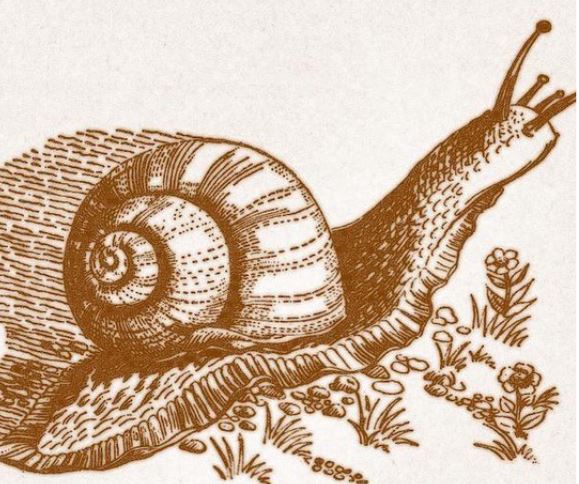
These terrestrial members of the mollusc family mainly consist of a long stomach-
supporting foot and, of course, obviously, a voracious mouth.
They slide along on this foot, in cool weather and mostly at night, aided by
exuding a slimy substance, leaving a silvery ‘snail trail’ as they go. A dead give-away
when hunting them down.
Snails are hermaphrodites, obviating the need for ‘two to tango’ and bury large
clusters of small tapioca-like eggs in the ground – often to be found when digging in
moist ground. After hatching they grow rapidly, devouring everything green and leafy
in their path, even climbing trees and citrus in particular, to feed on the young leaves.
They particularly love passion fruit, usually ringbarking them on their way up to
the foliage, to say nothing of your freshly planted flower and vegetable seedlings.
The bad news is that, if undisturbed, they have been known to survive for up to
10 years.
The good news is that they can be easily disposed of without the need for toxic
or expensive methods. Probably the oldest and most successful method is to find and
eliminate their hiding places, and maybe, persuade neighbours to do the same thing.
Once you know their favourite haunts, usually in long grass or at the base of
clumps of agapanthus, lilies etc, regularly inspect them and dispose of any slugs and/
or snails marauding there.
They will usually be on the move after a decent rain shower in autumn when
collection is quite easy and successful. You can activate them in drier times with your
sprinkler.
One of my boyhood weekend tasks around the nursery, was the Snail Patrol, after
every decent period of rain inspecting all the likely areas of the property, armed with a
bucket and a bag of garden lime. A goodly layer of the lime spread over the top of the
snails did the trick.
Common household salt has the same effect in the garden but you should make
sure to keep it from burning your plants. You can, however, use powdered alum,
dissolved in water, for the same results without any harm to the plants.
Alum can also be used, mixed with sawdust, and placed as a barricade around
your small seedlings or shrubs. The sawdust clogs up snails’ and slugs’ lubricating
systems and the alum will kill them.
Another good remedy is to place baits in strategic places to attract and dispense
with them.
My favourite is the glass jar, buried up to the rim in a strategic spot with a
centimetre or two of beer – I know, a great sacrifice – in the bottom. The trick is
that the snails fall in and are unable (perhaps unwilling) to escape. (The sounds of
drunken revelry are only faint and well worth the effort.)
Send in the cavalry
If, like Peta and I, you have eschewed the use of all things chemical in your
garden to do things naturally, you should look to our friendly helpers, the birds and
predator insects and the role they can play in keeping the pests at bay.
I know that there can be problems that nature can’t fix without a little help from
us but that still doesn’t call for the use of toxic materials.
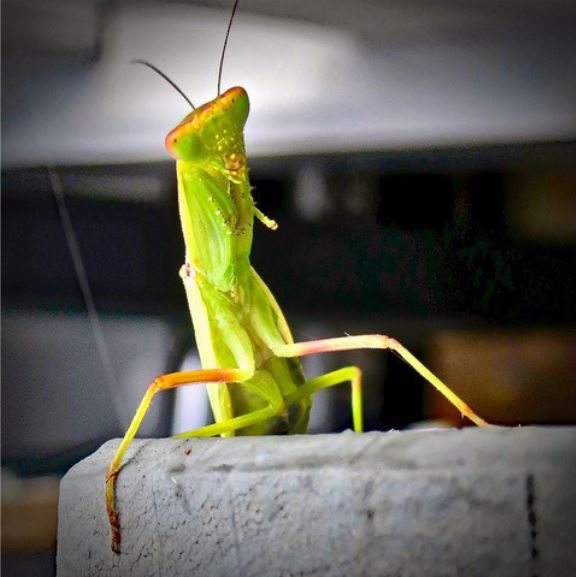
Among our own many useful insects is the praying mantis, like the ferocious-
looking, little aphis-eater, pictured middle, looking to ambush his next lunch.
Got a gardening query? Email glenzgarden@gmail.com
March 21st, 2023Glen, about the house
For love of a rose
The incredible story of the creation of a magnificent hybrid rose that brought love
to its creators, peace and new life to a war-torn world and, ultimately gave inspiration
for Antonia Ridge’s heartwarming novel…
It was a miracle that the rose ever saw the light of day.
It all began in 1935, when Francis Meilland, third generation of the famed
French rose breeders, selected a promising plant from that season’s crop, and tagged it
3-35-40.
Over the next four years, Francis and his father, Papa Meilland watched over its
development and eventually shared their enthusiasm with other professional rose
growers, despite the gathering war clouds.
World War II
Three months later Hitler invaded France, so with the nursery under threat of
destruction, three packages of budwood were hastily sent out of France, one of which
was smuggled out in a diplomatic bag to America.
Throughout the entire war, the Meilland family never knew if any had survived.
In America their agent planted the rose in his own trial beds and gave it to other
rose fanciers for testing in all the climatic zones throughout the states. The rose did so
well it was decided to release it so thousands of plants were propagated.
Despite the war still raging in Europe, the launch date was set for April 29, 1945,
in Pasadena, California.
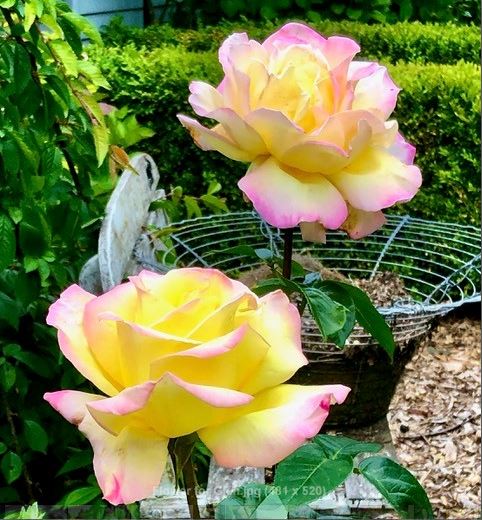
Peace
On the same day that two doves were released into the American sky to symbolise
the naming of the rose, Berlin fell, and truce was declared. By sheer coincidence, the
rose was named with these words: “We are persuaded that this greatest rose of our
time should be named for the world’s greatest desire: Peace.”
Meanwhile, back in France, the rose had been named “Madame Antoine
Meilland” in memory of Francis’s mother who had died, tragically young, of cancer.
At the same time, news came back from the other recipients of the budwood. In
Germany the rose had been named “Gloria Dei” (Glory of God) and in Italy it was
named “Gioia” (Joy).
“Peace” went on to receive the All American Award for roses, coincidentally on
the day war with Japan came to an end.
United Nations
On May 8, 1945, when Germany signed its surrender, each of the 49 delegates
who met to form the United Nations were presented with a bloom of “Peace” and a
message of peace from the secretary of the American Rose Society.
But the tale doesn’t end there, the story of “Peace” seemed to breathe new life into
the gardening world, which needed a lift after the devastation of war. Because of its
dependability, vigour and perfectly shaped large blooms it has been used in breeding
programs world-wide. Records show that “Peace” was a parent in more than 600
modern roses – and still counting.
Must-have
It is said that “Peace” is in every park and the must-have variety for every garden.
Francis Meilland died in 1958, but his children still continue the Meilland
tradition of breeding beautiful, prize-winning roses.
After “Peace” became so well known, Francis wrote in his diary: “How strange to
think that all these millions of rose bushes sprang from one tiny seed no bigger than
the head of a pin, a seed which might so easily been overlooked or neglected in a
moment of inattention.”
For Love of a Rose, Antonia Ridge’s delightful story of the Meillands and Peace
rose was first published by Faber in1961 and my copy was printed in 1968. There
have been paperback editions much later than that because they are still listed by
online booksellers.
Got a gardening query? Email glenzgarden@gmail.com
March 5th, 2023Glen, about the house…
Apologies if you have been so absorbed in the holiday mood or just so tired that, apart from the watering. you’ve hardly got around to doing much else in the garden but I’d like to point out a few seemingly unimportant tasks that would make an enormous difference to your plants.
Summer hygiene
For a start, don’t leave fallen fruit lying about the trees, it will breed pests and diseases by supplying a base for their complicated breeding cycle. Many of the fungal diseases such as brown rot etc., mature and disperse their spores from this fruit. The dried fruit beetle is one that breeds there, and so does fruit fly and a whole raft of other nasties.
Garden hygiene is the first step in controlling these pests by eliminating their breeding grounds. Collection of fallen fruit should be a continuous practice through the ripening season. Destroy the fruit or place it in a 60cm or more deep hole, covering each batch with at least 10cm of soil.
Summer pruning, or green pruning, is also an important maintenance program at about this time, especially in this high rainfall year. Surplus growth, mainly watershoots, should be removed just before they become a burden to the tree by overtaxing its reserves, causing overcrowding.
The main purpose of the removal is to save all nourishment, concentrate on that part of the tree where it is most needed and serves the best purpose at the time of fruit bearing. To let the useless watershoots and overgrowth develop and then have to cut it off at the winter time of pruning makes little or no sense.
All this nourishment can be diverted into and saved in the tree at this time, increasing the cropping ability of the tree. The removal can be done in stages or at one time. Besides getting rid of competing growth, limit most of the other young shoots by cutting them back to a strong, healthy growth bud at their end.
You should also keep an eye on young developing trees. They need every bit of foliage at this stage, so instead of cutting off any badly shaped or misdirected branches, tie them up into the proper position. Use either a wooden stake to hold them in place, or soft cord to tie them up. Don’t cut off all the trunk spurs – shorten them by only two or three leaves.
Feeding of fruit trees is very important. The formation of next year’s fruit or flower buds usually takes place at about this time. If the tree gets enough nutrients and water, just after the crop has ripened, a lot more of the ordinary developing leaf buds will turn into fruiting buds in the next few months.
Organic, animal manures or any general fertilisers, especially containing potash and phosphorous in particular, will play a big part in this transformation. So feed your trees and provide sufficient water in the hot weather so they can get the best use out of it. Contrary to some misguided belief deciduous trees don’t need a rest in the middle of the growing season. They get plenty of that in winter.
Trim roses
While you’re wielding your secateurs…at this time of year as soon as the spring burst of flowers has ended, it can be a good idea to give them a light trim to remove the remnants of the last flowers and tidy them up in readiness for good autumn flush of bloom. It doesn’t need to be excessive, just remove anything that’s untidy or looking as though it’s at an end.
When trimming back, make sure you cut just above a pair of leaves, and remove any which are obviously no longer functioning. You can leave the heavy pruning for winter.
One of the joys of having a fully organic, chemical-free garden is the amazing number of wildlife, both avian and and microscopic. Insect pestilence is almost nil because many of the inhabitants are carnivorous and tend to keep the sap-suckers down.
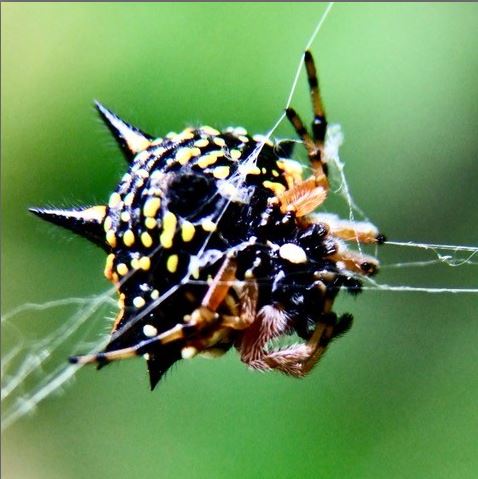
The latest arrival last week was this pinup girl Ms Austracantha Minax, commonly called the Christmas or jewel spider. I know it’s female because at 12mm across, the females trump their 5mm mates.
Absolutely harmless, these members of the orb webset sit at the centre of their massive tangled web and feast on all the flying insects that don’t pass by.
Got a gardening query? Email glenzgarden@fermigiohousegmail-com