December 9th, 2023Your say…

Country driving
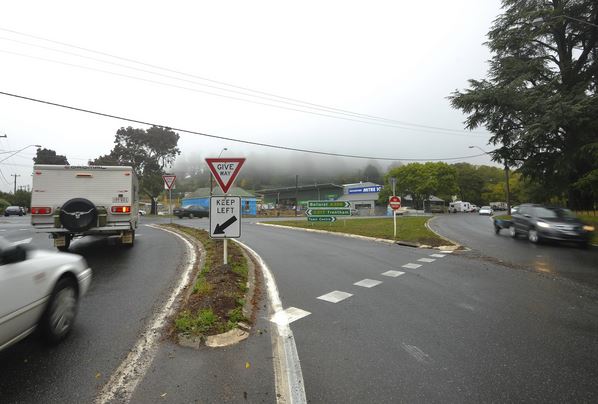
The most obvious difference about moving to the country from inner-city Melbourne is that pedestrians are at the bottom of the food chain when it comes to road use in towns.
Many inner city and city fringe Melbourne councils have imposed a speed maximum of 40kmh on all roads. In Daylesford the speed limit is 50kmh.
Some statistics may illustrate the point. Eighty per cent of pedestrians hit by cars travelling at 50kmh will die from the impact. At 40kmh 26 per cent of pedestrians will die from the impact. And at 30kmh 10 per cent of pedestrians will die from the impact.
Studies also reveal that social interaction and social use of streets along the footpath and crossing the road, increases as car speeds are reduced.
The third point to make is that motorists see pedestrians in a different light when driving at higher speeds compared to lower speeds. At 60kmh drivers see an outline of a figure. At 40kmh drivers can tell whether the pedestrian is male or female, young or old, carrying a child, or even pregnant.
From now on I will be the old motorist who, when driving in Daylesford, brings the world economy to a standstill by giving way to pedestrians at the upper and lower roundabouts. And I invite the council to do the maths on visitors from Melbourne.
Are they welcome or not? From Tom Perfect, Glenlyon


November 26th, 2023Deva launch at Royal Yacht Club of Victoria


Words: Donna Kelly
Former Glenlyon resident Jill de Vos has written a cat book. But this is not about any ordinary cat, nor an ordinary life.
Deva the Bengal Boat Cat is about sailing around Europe, being caught in ports through Covid lockdowns, with Deva, originally from Spain, finally ending up an Australian moggy.
Jill left Hepburn Shire in 2017 with her partner Shelley Beer and headed off to France to pick up their twin-engine catamaran the following year.
Jill said Deva was adopted after two years on the ocean, the longest she had ever gone without an animal. “I wanted a cat and usually in Spain or Greece or Turkey there are a million running around the streets. But of course, with Covid and lockdowns, there were none to be found.
“So, the only one I could find was a Bengal from Spain. There was a Burmese in Hungary, but we couldn’t cross the border. But Bengals are, I found after much research, good boat cats and very pretty, so we got Deva.”
Jill, Shelley and Deva, had to leave Spain when that country’s lockdown ended, their time in Schengen having run out and not wanting to pay a huge tax to remain they decided to sail 2200 nautical miles to Turkey, one of the few countries where you can get a resident visa without going back to your home country. Two years later they were still there.
“There were numerous lockdowns and we got all our vaccinations there. In fact, the person who worked on the Pfizer vaccine is from Turkey. We were living in Finike, an agricultural town on the south coast, that is renowned for its citrus – and it is exported all over Europe. Finike’s symbol is the orange of which they are rightly proud. We had a wonderful community at the marina and we have made lifelong friends from around the world.”
Eventually it was time to return to Australia which involved selling the boat to an American couple “for pretty much what we paid for it” and then the complicated and expensive quarantine procedures for Deva, and another puss, Albert the Turkish stray.
Jill said she would head back in a heartbeat despite in the early days at times being “absolutely paralysed with fear” before leaving the marina.
“It is all about planning. The weather is what you watch constantly, occasionally you will be caught out and hopefully you will always have a plan b or c. Friends have offered to have me onboard on passages heading back to Australia and I may even consider joining one. It is difficult settling back into life at home but there could always be another adventure around the corner.”
Deva the Bengal Boat Cat, with illustrations by Mel Corrigan, is being launched at the Royal Yacht Club of Victoria at Williamstown on Saturday, December 2 from 11am to 1pm. Tickets are free but reservations are needed via Eventbrite.
A launch will also be held at the Glenlyon General Store on Wednesday, December 6 at 2pm in the courtyard.

September 16th, 2023Artists of the Central Highlands

with Eve Lamb
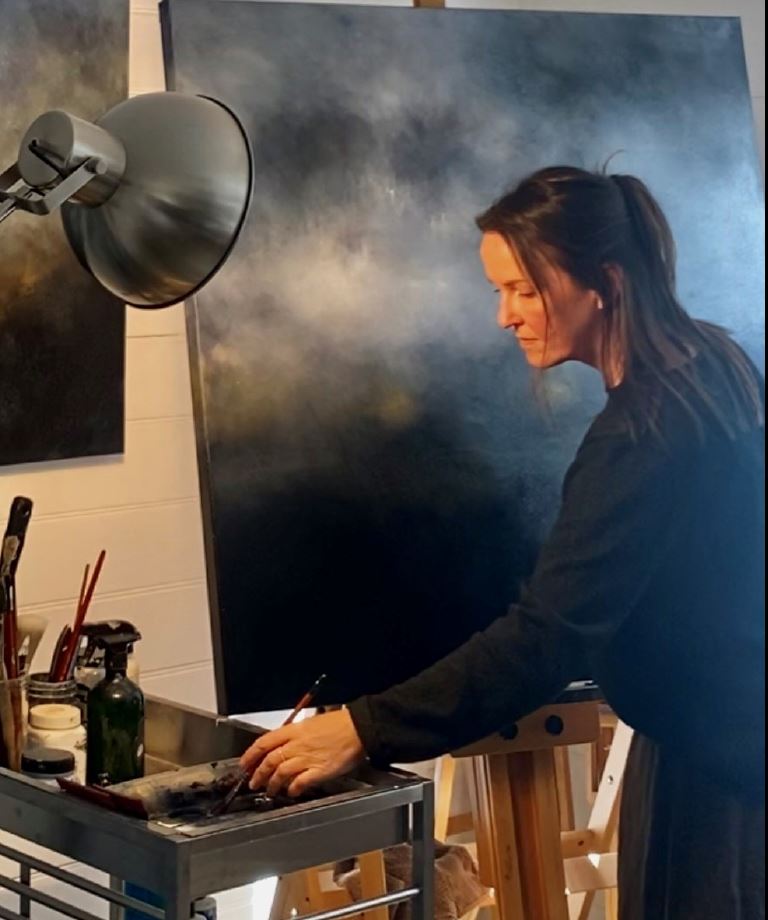
Glenlyon’s Julie Coyle, one of the many artists taking part in the upcoming Rotary Daylesford Art Show, says her artistic style leans towards abstraction and certainly impressionism. She looks for an emotional response to the landscape. Julie spared some time to tell The Local a bit about her creative practice.
Eve: How did you come to art?
Julie: Creativity, in so many forms, is a comfort zone for me. I’ve always been a maker and a drawer. Soon after moving to the Central Highlands, during a painting workshop in Woodend, someone suggested the Art Pathways course in Castlemaine. The teachers’ minds, and knowledge of the art world, the way they ‘lived’ creativity was incredibly inspiring. The visual arts diploma in Bendigo followed, and currently, the bachelor at Fed Uni, Ballarat. For me, being immersed in art feeds the soul.
The first painting I sold was in a group show at the Little Gallery, Trentham, about six years ago – the memory will stay with me forever. The girls are so supportive of us locals. The atmosphere of opening night, and the red dots. The idea that a painting can resonate enough with someone to bring it into their home, fills me with happiness. I’ve been painting ever since.
Eve: Where do you do most of your art work?
Julie: I work at home. I recently finished (almost) an owner-build, with my son and his partner, designing in a studio area, and a big open living space – room enough for walking around easels. I like the idea of being with works in progress. Time with them allows a new way of seeing. Being able to pick up a brush at any time can be great too.
Eve: Which artists have influenced your work?
Julie: Oh, that’s difficult. I’m constantly in awe of so many artists. Certain elements can be fascinating. I feel as though we subconsciously, to a certain degree, absorb, and are influenced by everything we surround ourselves with.
Turner is an artist who struck me in my teenage years, and continues to do so. I remember during a school National Gallery visit, being surprised when I first felt a connection to an art work. My world was smaller then, and the artists I had an awareness of, were historic giants.
My next love, later on, was Marshall Williams, a Mornington Peninsula artist, and painter of atmospheric skies meeting water, and small, still boats. I felt so drawn to his work, and my younger self couldn’t quite work out why. During an opportunity to meet him, and gush my admiration, he said: ‘They’re not really about the boats, it’s all about the emotion.’ It was a new concept for me.
Jennifer Riddle, another Peninsula landscape artist, is one whose work I’ve admired since early in her painting career. Her paintings are also beautifully still, serene, atmospheric scenes.
Eve: Are there any other particular factors that have influenced your creative practice?
Julie: I think life itself influences and informs our work, to a huge degree. Looking back at older paintings, I see my work changing, and slowly evolving. I’m searching for ways to convey a depth of calm, and I couldn’t possibly separate that from the idea of respite.
Eve: What is your media of choice?
Julie: Although there’s a richness in oils that I love, I’ve been working in acrylics for their ability to produce layers without the need for time in between.
I can work on a few canvases at once, returning to each one without pause, which is what works for me if everything is flowing well. I use a fixative between coats, to avoid disturbing the previous wash, and a gloss varnish when finished.
Eve: What are your subject matters of choice?
Julie: Our local, natural landscapes, and skies. I’m fascinated by the way we’re drawn to nature, and its restorative powers, and calming effects. I feel compelled to find a way to harness some of that.
Eve: Have you ever worked in any other areas?
Julie: Mostly I’ve worked from home, raising a family. Market stalls with wooden homewares led to making bespoke furniture through a gallery in Sorrento. I loved the design aspect, and working with timber, especially reclaimed. After moving to the highlands, renovating an old farm, then building a few years later, I’m cured of those desires, as rewarding as they’ve been.
The idea of reclaiming and reusing appeared again for me, when moving up here, in the form of a space at the Amazing Mill Markets, Daylesford.
There I’ve curated a collection of ‘gently worn’ clothing, with a few handmade linen pieces. I’ll always enjoy design. I love that these ways are kind to our planet, and that I can work around my painting.
Eve: What have been your career highlights?
Julie: I always feel enormous gratitude to buyers of my work. It’s an act of the greatest encouragement. When a viewer at an exhibition a while ago turned from my painting, put her hand to her heart, and looked at me, I felt I had achieved something of value. I’ve had some awards at local art shows, which have been so validating, and so appreciated. It all amounts to feeling worthy of continuing along this creative path!
Eve: Do you have any exhibitions or special arts events coming up?
Julie: Ideas are floating around a show with a friend next year in Ballarat, but for now, I have work hanging in the Falkner Gallery, Castlemaine, and the Clayfire Gallery, Daylesford. And there’s the Daylesford Art Show…

August 4th, 2023Winter sounds returns for more


Words: Darren Lowe
Following its sell-out success last year, Winter Sounds is returning to Daylesford in August with a great line-up of Australian artists performing in a range of local venues.
From August 17-20 the line-up including Mo’Ju, Gareth Liddiard, Jen Cloher, Tex Perkins & Matt Walker,
Adalita, Watty Thompson, Jess Ribeiro, Martin Frawley, Leah Senior, Coda Chroma, Skyscraper Stan and Jarrah Olive will play gigs around the region – Daylesford, Glenlyon, Bullarto and Clunes.
Winter Sounds is produced by the team behind the successful Riverboats Music Festival and supported by Visit Victoria and the event’s director Dave Frazer says: “Winter Sounds is about providing audiences with the opportunity to experience extraordinary performances in extraordinary spaces, and we are so excited to be rugging up and returning to the Daylesford region this winter.”
For one of the unique shows in the series, take the train to the Bullarto Hall for sets by Gareth Liddiard, Adalita, Martin Frawley and Jess Ribeiro. After a half hour journey through the Wombat State Forest on the Spa Country Railway, wander up the bush track to Bullarto Hall, where the fire drums will be roaring and the Mountain Goat tinnies will be on ice.
Alternatively, audiences can take a leisurely drive to Clunes, where Watty Thompson and Leah Senior will perform in the Clunes Town Hall.
In Daylesford, the phenomenal vocals of Mo’Ju, supported by Ballarat’s Coda Chroma, will play the Daylesford Town Hall on Saturday night, while Jen Cloher and Tex Perkins & Matt Walker will take over St Peter’s Catholic Church for two evening concerts.
Both buildings will be spectacularly lit by the team from RTR Productions to showcase the buildings’ architecture. Tickets on sale at www.wintersounds.com.au

July 23rd, 2023Sports day donations
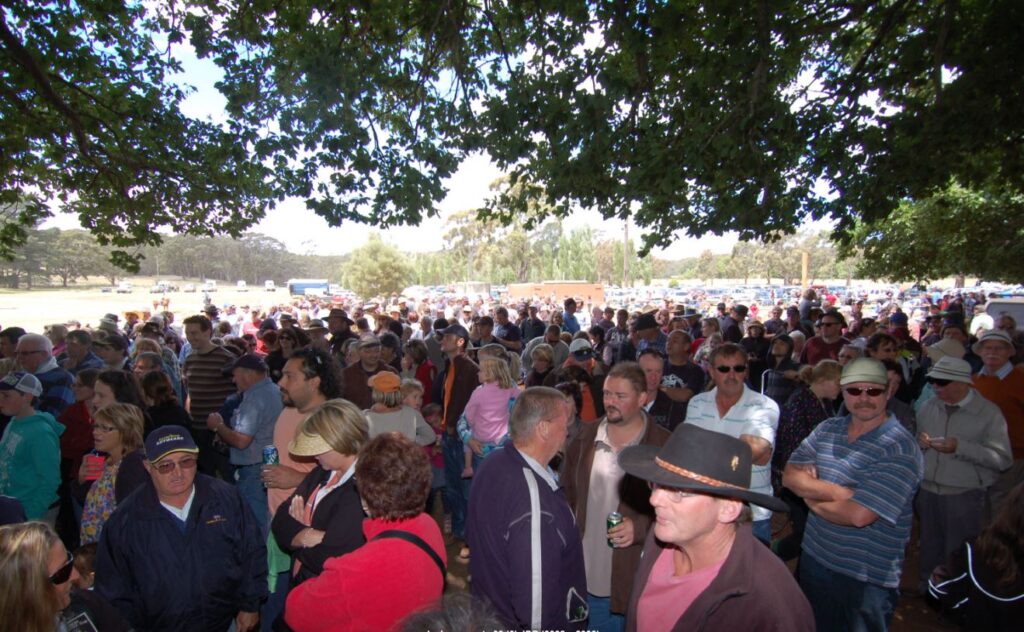
The Glenlyon Sports Club New Year’s Day raised $13,700 and the proceeds have now been distributed to community groups.
Club secretary Evan Davis said the club thanked the generosity of the sponsors who made the day possible, the volunteers for their tireless efforts and Hepburn Shire Council for the upkeep of the ground prior to the day and other administrative support.
“Finally, we would like to thank the patrons who come along and create the atmosphere for the day. Without any of these, the day would not be as successful as it is year after year, we thank you all.”
Recipients were: Ballarat Cancer Research Unit – $500, Central Highlands Rural Health – Daylesford Health – $4000, Central Highlands Rural Health – Trentham Health – $1000, Daylesford Christmas Cheer – $800, Daylesford Community Brass Band – $400, Daylesford Girl Guides – $400, Daylesford Junior Football and Netball Club – $400, Daylesford Junior Tennis – $400, Daylesford Preschool – $400, Daylesford Riding For The Disabled – $400, Daylesford Senior/Junior Pipe Band – $400, Daylesford Volleyball – $400, Denis Beddoe Boxing Gymnasium – $300, Glenlyon & District News – $200, Glenlyon Adult Riding – $400, Glenlyon Pony Club – $400, Glenlyon Recreation Reserve Upgrades – $500, Grove of Gratitude – $400, Hepburn Junior Football and Netball Club – $400, Hepburn Preschool – $400, New Year’s Eve Gala Daylesford – $200, Royal Children’s Hospital – $200, St Johns Ambulance – $400 and Trentham Junior Football and Netball Club – $400.

June 10th, 2023Gun club back at Glenlyon Reserve

Image: Kyle Barnes | Words: Donna Kelly
AFTER it was shut down more than three years ago, the Daylesford Sporting Clays club is set to return to the Glenlyon Reserve.
The closure came after a couple of people raised lead contamination and high PAHs (polycyclic aromatic hydrocarbons) level concerns around the reserve from the club’s activities.
But after lengthy investigations and testing, it was found all of the figures were well within any legal requirements or cause for concern.
Vice president Jody Wallace said the club and its around 40 members were keen to get back to their home of 43 years.
And with the change to a biodegradable wad and steel shot, and pretty much PAHs-free clay targets, they were probably the most environmentally friendly gun club in Australia.
“The wad is made out of starch from potato skins and breaks down into the ground within a month of being fired – and they are nontoxic and can even be added to compost. And while the clay targets are
not biodegradable they are environmentally friendly, and we all love anything good for the environment.”
Jody said over the past three years some members had moved to other clubs “they had to shoot somewhere and we didn’t know if we
would be up and running again” but it was hoped they would return once shooting started again in July.
“We’ve probably got about 39 members now and before we had about 60 so we would definitely like some new people too.”
The club had been given the green light to hold a shoot last Saturday, June 3 but had been notified by Winchester that the shells would not make the deadline.
Jody said the first shoot would now be Saturday, July 1 with the reserve grounds inside the oval/racecourse closed to the public from 9am to 5pm. “It’s pretty much closed all day Saturday because of the set up and then cleaning up but the playground, carpark and camping ground are still open to the public. They are safe as houses because we only shoot towards the centre of the ground.”
Jody said there had been fantastic support from the Glenlyon community along with other reserve user groups like the Glenlyon Pony Club.
“I had to do a letter drop recently and talked to about 40 people and everyone I spoke to was happy for the club to be back.
“And we had huge support from the community after we were closed down with petitions and things like that. We are going to hold a barbeque once we are up again to thank the community for helping
us out.”
Jody said he joined the club about 15 years ago after “starting off like everyone just turning up to have a shot”.
And anyone who wants to do the same is welcome. “The club has a couple of try guns and on a sporting ground people can fire a gun under the instruction of a licenced gun shooter.
“If you do follow it through you’ll need a gun and a licence.”
Shoots will be held on Saturdays on July 1, August 5, September 2, October 14 and November 4. Details: Jody Wallace on 0417 592 952.
June 10th, 2023Greater purpose in growing clean, healthy food
Words: Kevin Childs | Image above: Contributed | Image below: Kyle Barnes
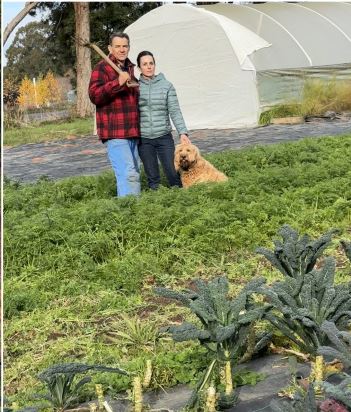
WHEN Edward Benedict lived in a bedsit in East Melbourne, his neighbours called him The Farmer. He had a small patch opposite the MCG, where his veggies grew and grew and grew.
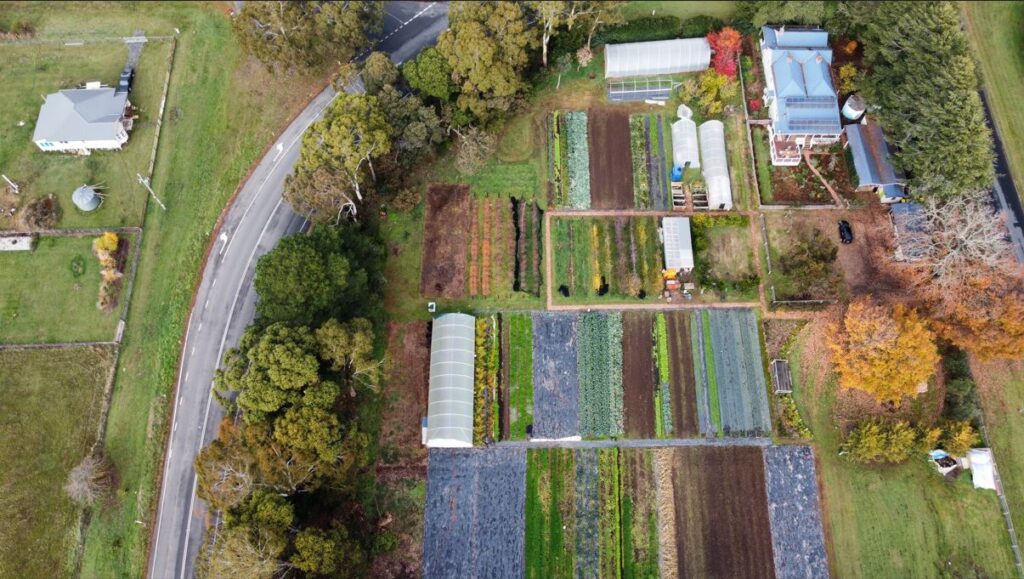
Today, he grows even more at Adsum Farmhouse, a thriving market garden in Glenlyon and his produce has keen followers at the Daylesford Sunday Market and local restaurants. His property is three acres of which an acre is under cultivation.
“It’s great to know that you can make a living on an acre of land. You don’t need 100 acres. Think of this as a vitamin shop. This is the preventative stage of health care.”
He elaborates: “There are four keys to longevity: nutrition, exercise, sleep and emotional health.” He tracks both his calorie intake and his 15,000 daily steps.
For 53-year-old Edward, who previously worked in sales for an organic food company, there is greater purpose in growing clean, healthy food for the community.
His market garden is meticulously ordered. All beds are standardised at 20 metres by 7.5 metres wide, which allows drip irrigation to be interchangeable. To continue the maths: where there was nothing nine years ago, there are 18 sections in six rows.
Add up all his plants and they would just about stretch from Daylesford to Hepburn. He shows an area. “Three months ago, this was gherkins. My pickled gherkins
have a terrific local following.” Once the frost comes, the gherkins are out. Nothing is planted in the same spot for three to four years.
He points to a section, from this garden came a tonne of pumpkins and further on, capsicums and jalapeños. He shows beds of coriander and rocket, long stretches
of still-selling broccoli, an orchard of nashi pears and apples and, after one attempt, manages to wrench a carrot from the earth and chew on it. “You need a pitchfork,”
he explains. Once the garlic is out, in goes the basil, and now parsley, which he says grows like a weed.
Here are three varieties of blueberries, then asparagus, some spinach, rainbow chard in a greenhouse, tomatoes for next year. Oh, and he had rocket, onions and
chillies, plus a rhubarb patch and some leeks. There are 3000 garlic plants readying themselves for the harsh winter ahead to emerge after spring into rich fat bulbs.
We look at the handsome lavender cauliflowers and cabbages that seem to be almost bursting with life. “The soil,” he says, “is like chocolate cake.”
Also under cover are the last of the tomatoes and baby spinach. We gaze at a massive mulberry tree. “The farm is like a wild beast…something coming at you from every angle…insects, weeds, weather and wild life.”
Among his attributes is a lot of re-using. For instance, now that his daughters are aged 11 and 14 their playground has become a nursery, home to two worm farms. He rakes his hand almost lovingly through thousands of worms. A bucket catches their juice. “Black gold,” he says. The juice is diluted to water the plants.
Another nursery is for seedlings but is now holding pumpkins and firewood. A repurposed wash station incorporates sinks and timber rescued from the tip. All of this is tracked on A2 sheets of paper.
Just to add variety, and perhaps to show it’s not all deadly serious, a replica blue British police box stands nearby, just like the Tardis in the Dr Who TV series. “If I make a mistake I just get in the Tardis and fix it.”
There is no tractor, just a tiller which uses little fuel and doesn’t have much impact on the ground. What’s more, he can listen to podcasts, gaining more knowledge and philosophical insights, while he works.
He has a commercial kitchen for the pickled and sliced jalapeños and jars of traditional gherkins with dill and garlic that he sells at the market. The label of the gherkins says it is “packed by the gherking and his family”.
Sitting in the shade of a massive Himalayan cedar, their 1880s house is a former blacksmith’s shop (horseshoes are still uncovered while cultivating the soil as well as blue and white china). The front room of the house hosted lunches for local
councillors when they met down the road in the Glenlyon Hall. Some visitors remember being in the house as children when the great fire of the 1930s burnt out a third of the town. Now part of it is an AirBnB run by Fiona, Edward’s wife.
Spectacular bird and animal themed murals enliven the house and fences. Adsum Farmhouse was a title given to the property many owners back. Edward found it literally means to be present. When Latin was still taught in schools, students responded with “adsum” at roll call. It seems to fit: all present and correct.
April 12th, 2023New public art installed at Glenlyon Dam
Words: Donna Kelly | Image: Kyle Barnes & contributed
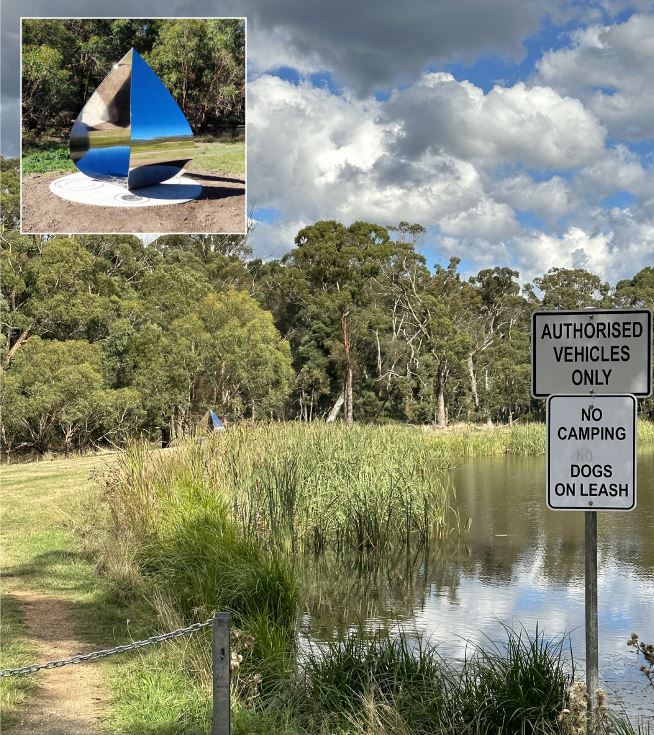
THE Drop, a $30,000 Hepburn Shire Council public art commission by artist Yu Fang Chi, has been installed at the Glenlyon Dam.
The sculpture is a 2.5 metre high reflective stainless steel sculpture in the form of a giant water droplet.
The work was chosen from a shortlist of artist proposals by members of the council’s Public Art Advisory Committee.
A media release said the committee felt the artist’s concept connected on many
levels to the local area “through the environment, climate change, community
interaction with the dam, springs and river, the Djaara people and the overall
importance of water to our community”.
“A series of circular inlays on the concrete base of The Drop provide clues to the artist’s intentions. The Dja Dja Wurrung word ‘wanyarram’, (meaning ‘water’) connects the work to the importance of water to First Nations peoples. The colour of the inlaid details references the role gold played in the area during the 19th century.”
Mayor Cr Brian Hood said the internationally renowned artist had created an
important addition to public art in the shire.
“This piece fits so beautifully in the landscape. It reflects the surrounding area and
is placed where it is visible right across Glenlyon Dam,” Cr Hood said.
“Public art is meant to be accessible and engaging. It starts conversations and I
expect this will get people talking.”
The track to the artwork is blocked by a locked chain on both sides of the dam.
A council spokesperson later said as “a water production reserve” vehicle access was
restricted.
The council will host an official opening on Thursday, May 4 at 2pm. Yu Fang Chi is a Taiwan-born, Melbourne-based artist working within textile, silversmithing, sculpture, and spatial installation.
Chi gained a doctorate from RMIT University and received the Diana Morgan
Gold & Silversmithing Prize in 2018. In 2019, she received Career Development
Grants from the Australia Council for the Arts and International Cultural Exchange Grants from Taiwan National Culture and Arts Foundation.

October 13th, 2022Battery power to the rescue: Daylesford CFA
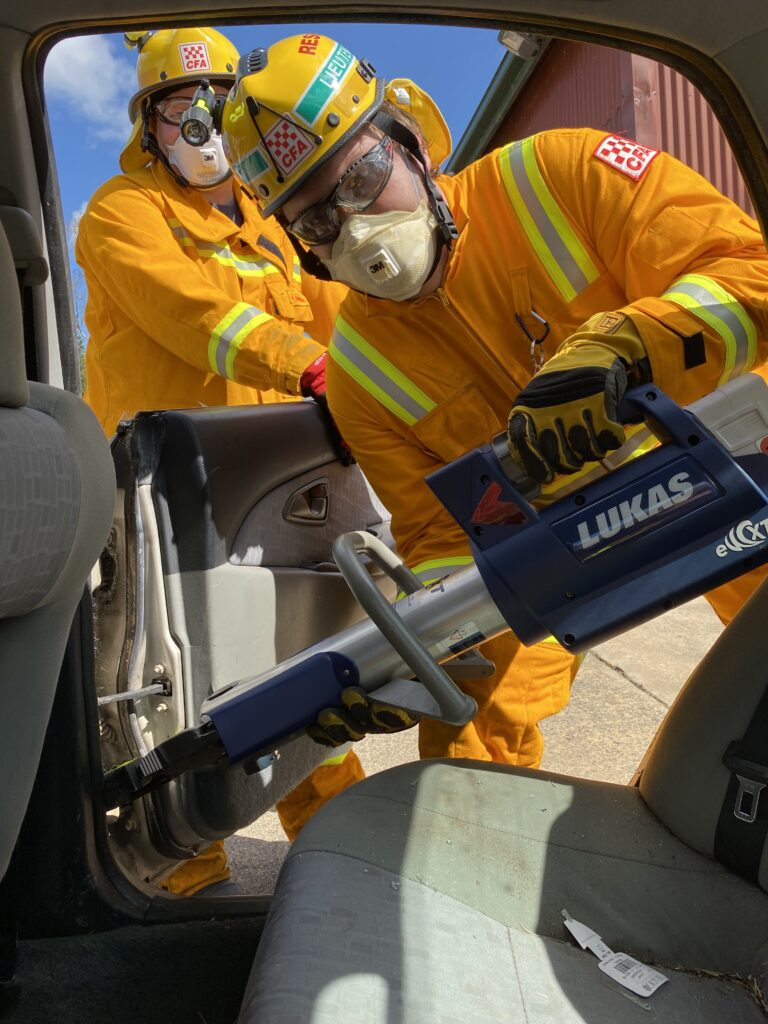
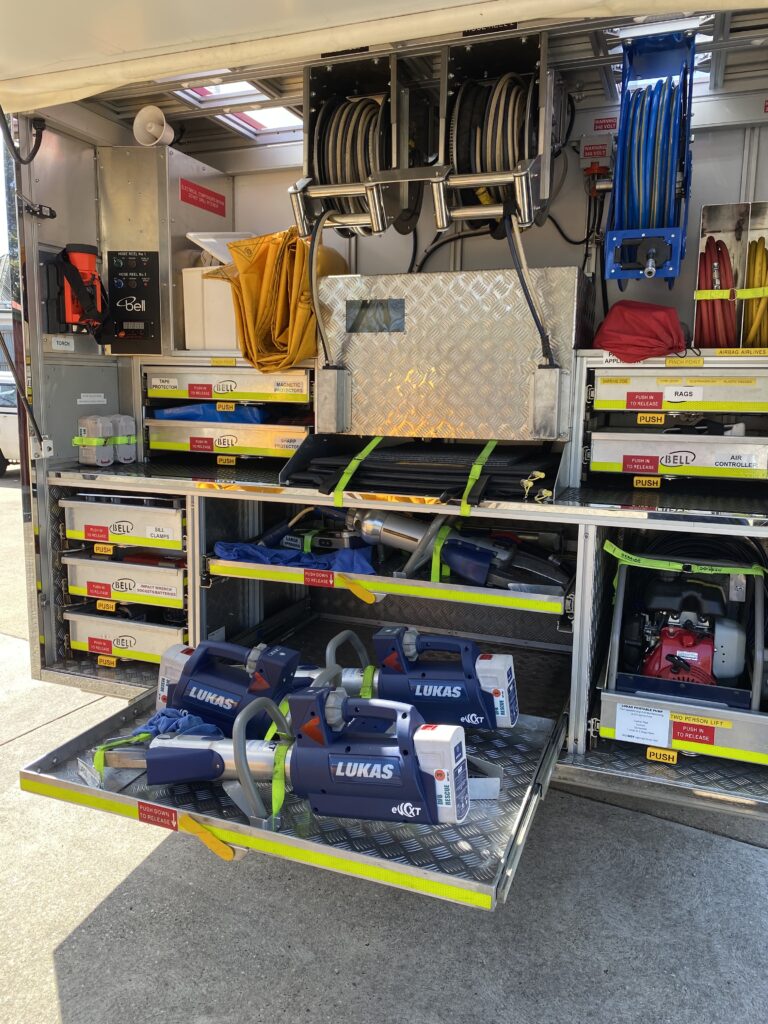
THE value of forking out a cool $100,000 or so to upgrade the Daylesford CFA rescue truck was well demonstrated in recent days. When the truck was called in to help free a man trapped in a crushed utility following a head-on collision near Glenlyon, the new addition of battery power to run its critical lifesaving equipment proved a massive help, members of the volunteer brigade say.
“Our rescue truck has had a complete workover and the ‘jaws of life’ have all been changed from hydraulic powered to battery power, which helps tremendously at a rescue, not having trailing hoses,” brigade secretary and treasurer Paul Anderson says.
“We do still have hydraulics on board but it’s been significantly boosted by also having battery power for our spreaders, cutters, rams and lights, which are now all battery powered,” adds the brigade’s Glenn Webster. “It makes it a lot easier at a rescue scene so it’s a big step forward,” says Glenn, training coordinator for both the Daylesford Brigade and Glenlyon Group of brigades of which it’s a part.
“A few weeks ago we had a very serious crash just out of Glenlyon, truck versus ute, and we were able to use both the battery operated tools and the hydraulics. “It was a technically involved rescue, and it was very comforting to have both.”
Glenn says the Daylesford CFA rescue truck is called on to cover a large area, and now 19 of the brigade’s 50 volunteer members are trained up as qualified rescue members.
“Glenn has been instrumental in the training of the crew, who now would be one of the best equipped and most professional in Victoria,” Paul says.
While the battery power enhancement of the rescue truck was funded via the state’s fire services levy scheme, Paul says the eight CFA brigades of the Glenlyon Group are also very grateful for the fundraising support of Daylesford cafe, Cliffy’s.
“Cliffy’s year ran their 2021 Christmas coffee morning again which raised over $17,000 which was split this year among the eight local brigades, who were then able to purchase essential equipment,” he says. The money, which Glenn notes has been spent on vital items like UHF radio, is a great help ahead of the new fire season.
“We’re expecting at this stage that the declaration of the fire danger period may be a little later than most years,” he says. The wet La Niña conditions are more conducive to creating grassfires as distinct from forest fires and they’re also hoped to make for a potentially “quieter” fire season overall.
Words: Eve Lamb | Images: Kyle Barnes