


August 25th, 2023Enticing rare glossies back to mainland
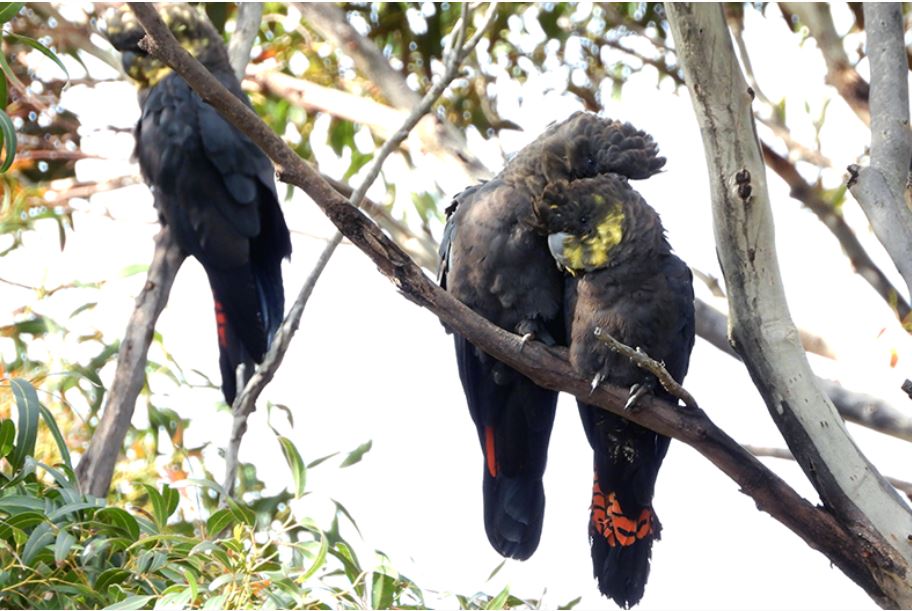
Greening Australia and the World Wide Fund for Nature-Australia are teaming up to plant more than 19,000 food and nesting trees to entice one of the nation’s rarest birds back to the mainland.
Kangaroo Island is the last refuge for the South Australian subspecies of glossy black-cockatoo – which is smaller but has a bigger bill than glossies in Queensland, New South Wales and Victoria.
In 1995 the subspecies was heading towards extinction with fewer than 200 SA glossies left on Kangaroo Island. The Kangaroo Island Glossy Black-Cockatoo Recovery Program, with local community support, turned that around boosting the population to about 454 by 2020.
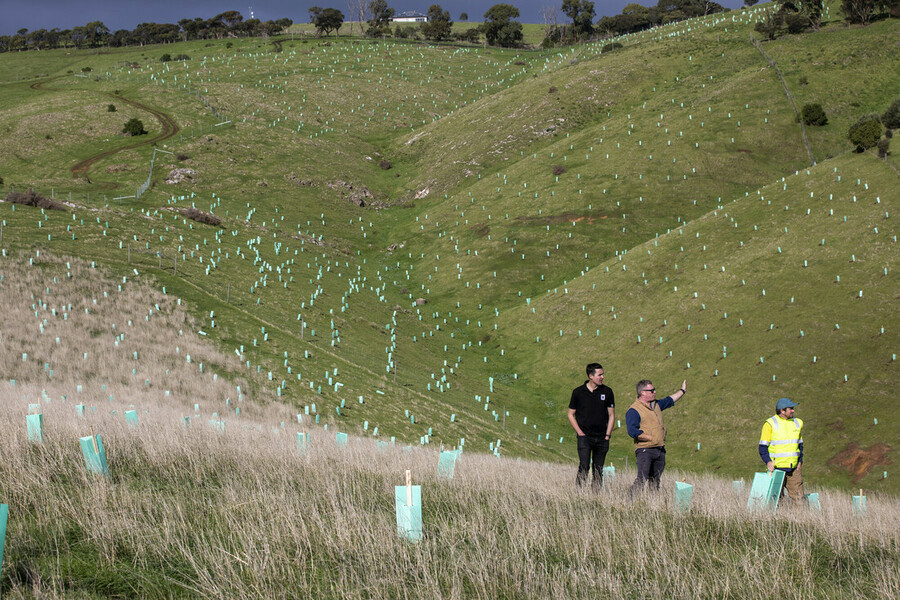
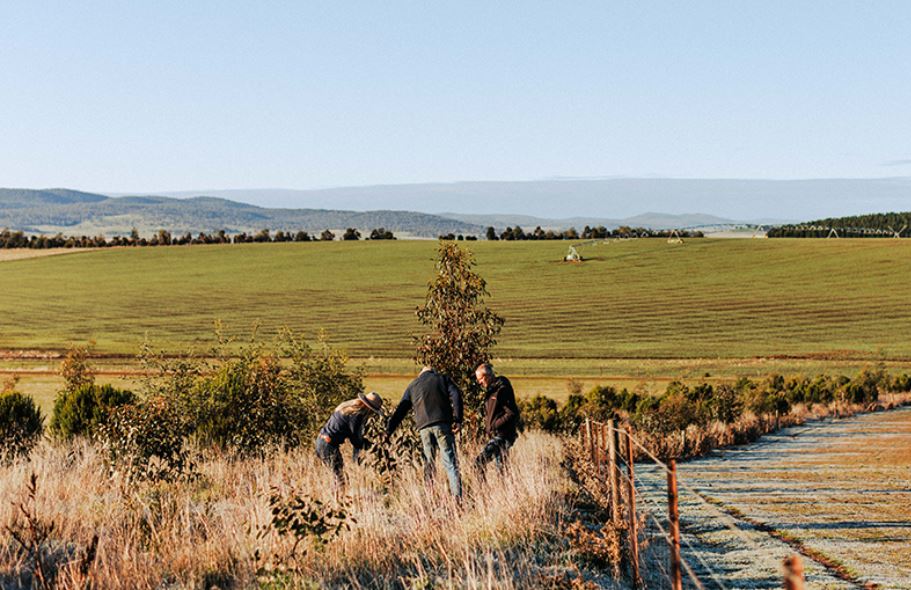
From left to right: Ben Sanders (WWF-Australia), Ed Vercoe (landholder), & Andrew Woodroffe (Greening Australia) among thousands of newly planted sheoaks that will hopefully entice glossies back to the mainland. © WWF-Australia / thinkMammoth
But in a major setback, the 2019-20 fires burned 54% of feeding habitat and 38.5% of known nests on Kangaroo Island, according to the KI Glossies Recovery Program. With reduced food supplies, flock sizes in some fire impacted areas on western Kangaroo Island are now smaller.
The fires highlighted an urgent need to re-establish habitat for glossies on the Fleurieu Peninsula, just across from Kangaroo Island.
It would improve the species’ resilience by providing additional foraging and breeding grounds, hopefully increasing numbers and spreading out the population.
The glossy flock on eastern Kangaroo Island, unaffected by the fires and closer to the Fleurieu, continues to grow and it is hoped they will expand their range across Backstairs Passage if enough habitat is created.
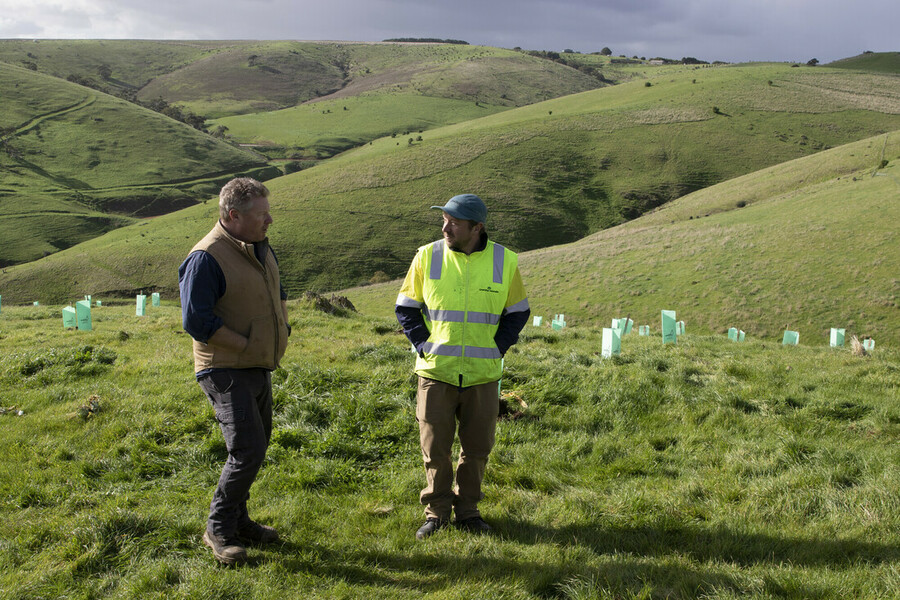
Ed Vercoe talks to Greening Australia’s Andrew Woodroffe. © WWF-Australia / thinkMammoth
The SA Glossy Black-Cockatoo – which feeds almost exclusively on seeds from drooping sheoaks – disappeared from the mainland in the 1970s after decades of clearing decimated sheoak woodlands.
“On the Fleurieu alone, there were 22,000 hectares of sheoak woodland but only about 2% remains. Greening Australia and WWF are rebuilding quality habitat and we’re really excited that this could potentially bring glossy black-cockatoos back to the mainland,” said Ben Sanders, forests program manager, WWF-Australia.
The timing is right with a confirmed sighting of a Glossy Black-Cockatoo visiting Fleurieu Peninsula last year, likely in search of a new food source following the fires.
“If we plant it, hopefully they will come, make little cockatoo babies, and then spread out and multiply,” said Andrew Woodroffe, Senior Program Officer with Greening Australia.
In total 19,000 trees, across three sites, are being planted. They’re a mix of drooping sheoaks for food and eucalypts such as the river red gum and pink gum to one day provide nesting hollows.
August 12th, 2023Engineer’s lasting legacy to improve land
Respected environmental engineer John Mann was born and raised on a farm near Geelong, where he first discovered the profound impact of environmental conservation.
“My uncle was always involved and giving advice,” said John’s nephew Lance Mann. “He was big on planting trees … we’ve planted over 4,000 trees on the farm, and it has dramatically reduced our salinity problem, just as he said.”
John ascended to the role of Chief Engineer Manager at the Dandenong Valley Authority (DVA) at its inception in 1964, leaving an indelible mark on the water and flood management of the Dandenong Valley. His responsibility spanned designing infrastructure, maintaining existing structures, and predicting potential flood risks.
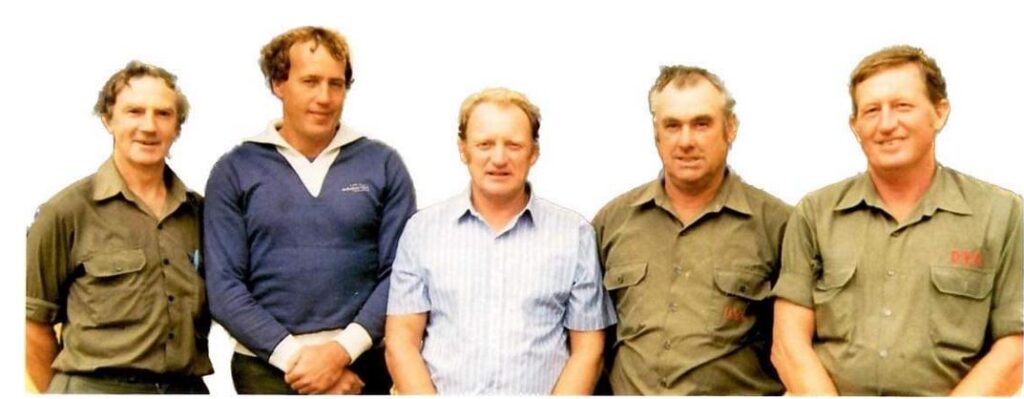
John Mann (pictured above far left) with colleagues from DVA Engineering. Photo courtesy Jim Jarvis.
In his first decade with the DVA, John was instrumental in allocating over $100 million (in today’s terms), towards river improvement works, drainage channels, pipelines, pumping stations, tree planting, and grass sowing.
These initial works were maintained and improved over the subsequent 10-year program, also designed by John. Importantly, he ensured the preservation of significant swamp and bird habitats. John’s work both safeguarded the ecosystem balance and public safety in the rapidly developing southeast suburbs of Melbourne.
Described by a colleague as a “true gentleman with an always-open door”, John’s influence was deeply felt.
John didn’t just keep his expertise to himself; he made numerous contributions to the field of Flood Plain Management and shared his knowledge globally. Accompanied by his wife Bette, who shared his passion for environmental preservation, John left a legacy that spans beyond borders.
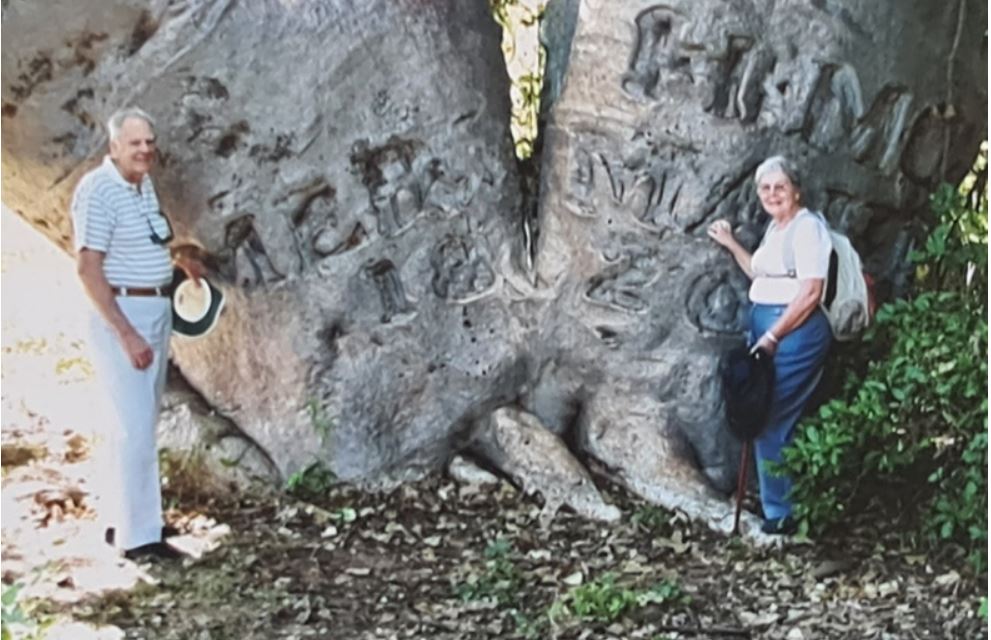
John and Bette (pictured above) with the colossal 12-metre-wide “mermaid boab” at Careening Bay in WA’s Kimberley region. Photo courtesy Lance Mann.
Today, John and Bette’s dedication to environmental restoration continues to inspire and assist others through the John and Bette Mann Landholder Grant.
Administered by Greening Australia at the bequest of John and Bette, this fund symbolises their enduring commitment to a greener future, providing an annual grant to Victorian farmers and landholders to positively impact land conservation, soil improvement and land productivity.
The inaugural grants have been awarded this year to recipients Anthony Pelchen, and Anthony Dufty and Cate Kirk-Dufty. They’ll use the funds for activities that will deliver strong biodiversity and habitat connectivity value across a total combined area of 30 hectares.

July 31st, 2023Can we cope? workshops for a changing climate
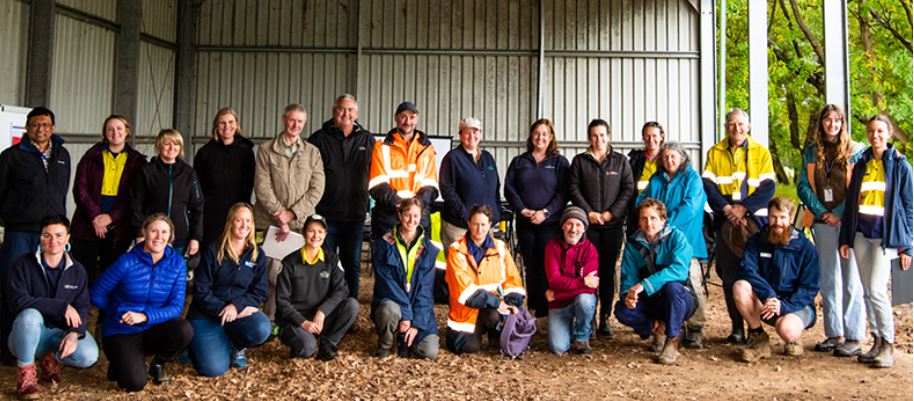
Sustainability, conservation and restoration practitioners from Melbourne and Yarra Valley regions recently gathered for a recent workshop facilitated by Greening Australia at Haining Farm to explore practical and innovative approaches to managing landscapes for future climates.
Knowledge exchanges to support effective, practical and immediate action are increasingly vital as Australia is seeing the largest documented decline in biodiversity of any continent.
“The more we learn about what’s driving biodiversity loss, the more complex it is for land managers to navigate ways forward for protecting and restoring Australian ecosystems – for example, ensuring that populations have the genetic diversity and adaptive capacity to survive in changing climates,” said Greening Australia’s Zoe Birnie, who organised the workshop.
“Applying climate-adjusted approaches in the real world is challenging. There’ll be compromises and trade-offs – but we really wanted to encourage practitioners to share their experiences and see that even putting a few principles from science-based tools and guidelines into practice is better than none.”
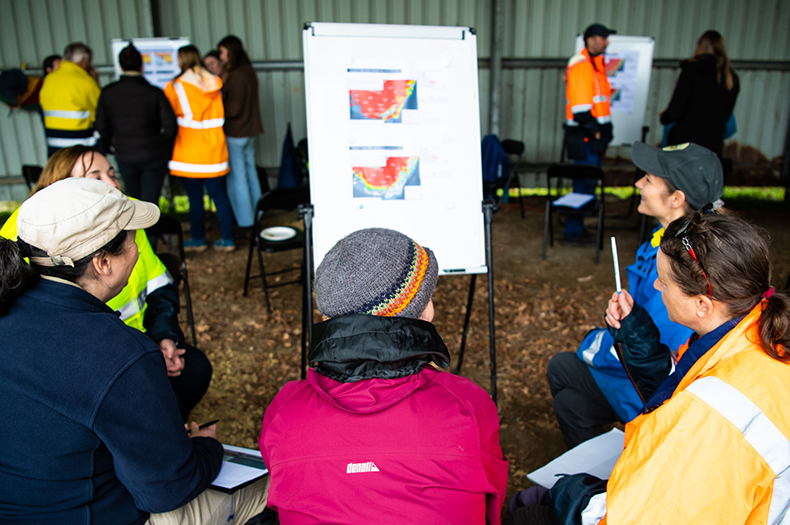
Sharing ideas and experiences can help inspire environmental practitioners with new ways to approach managing climate impacts on landscapes. Photo: Annette Ruzicka.
Those attending on the day included representatives from state and local governments, universities, utility companies, and natural resource management organisations.
Workshop participant Monique Miller from Bush Heritage said: “Unpredictability is one of the biggest challenges. There’s a cascade effect of biodiversity breaking down. How can we make restoration sustainable with those missing puzzle pieces that are becoming evident all of the time?
“Workshops like these are helpful because we can discuss different approaches and experiment – which in turn helps with feeling like we’re dealing with the unknown. Cross-pollinating knowledge between restoration practitioners is essential to effectively do our jobs. Innovation doesn’t happen in a vacuum.”
Workshop participant Geoff Lockwood from Southern Fauna Resources said: “It’s useful to know there are future planning tools available for site rehabilitation; it’s challenging to know how to choose a strategy for the future if we can’t be sure what’s going to happen with such a variable climate. But it’s how you look at it: do we see sites where rehabilitation has not worked as a failure, or as a learning and keep adapting?”
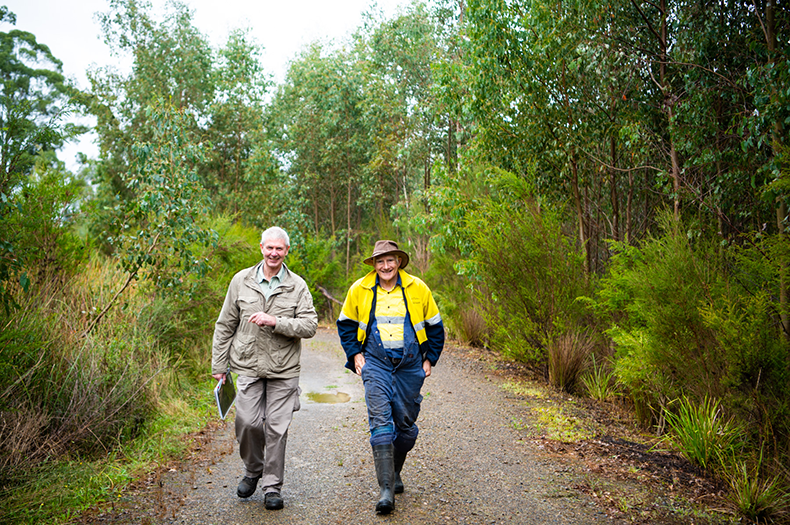
Workshop participants Geoff Lockwood (L) and Alan Scoble (R) in conversation, walking among thriving revegetation at Haining Farm. Photo: Annette Ruzicka.
Melinda Pickup, Greening Australia’s Manager of Seed Science, presented to the group on emerging seed tech that will feed into practical climate-adjusted approaches to conservation and restoration.
“We really believe in the sense of collective momentum that’s gained when you get people together to share knowledge and experiences and brainstorm ways forward. In the seed science field, for example, we’ll soon be seeing approaches that bring together a practitioner’s on-ground understanding of an ecosystem with the underlying genetics of a species.
“We’re talking about finding parts of the genome that are relevant to climate adaptation, and unlocking that potential by relating that back to the practicalities of what we can do on ground.
“There are always limitations to any approach, but that’s where bringing people together is so valuable – so we can fill in the gaps and form a more holistic solution.”
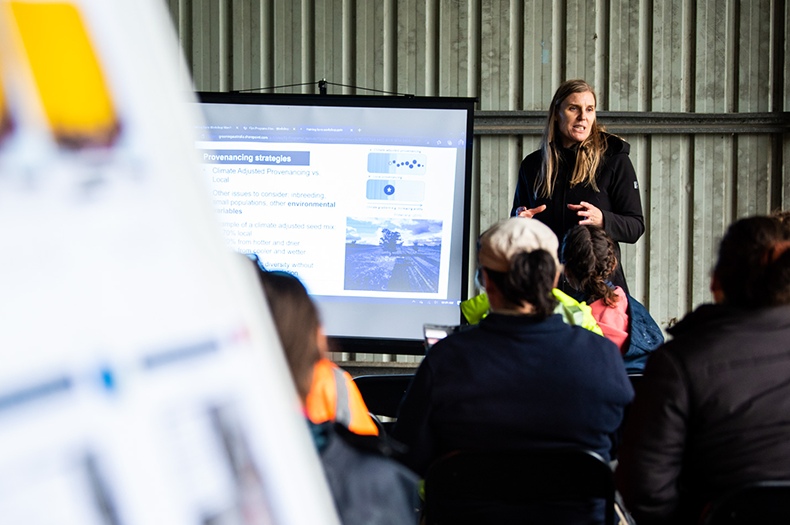
Greening Australia’s Melinda Pickup explains to attendees how seed genetics, influenced by their provenance, can support practical approaches to climate ready revegetation. Photo: Annette Ruzicka.
Haining Farm provided the perfect setting for these discussions. It exemplifies the opportunity to use restoration sites as knowledge hubs for practitioners, where new ways of working can be tested and the learnings shared to improve conservation and restoration efforts.
Parks Victoria Ranger and workshop participant Melissa Tuliranta said: “Haining Farm has a long history as an environmental education centre, so it’s great to see a workshop like this with people from various organisations unpacking a complex topic and sharing ideas.”
“It’s exciting to be working in a space where we are looking into implementing a whole new approach to future revegetation projects to create climate resilient habitat. It is truly inspiring to see so many organisations and individuals interested in the topic and making their way to Haining Farm to learn more about it.”

July 30th, 2023Greening Australia’s record-breaking carbon project for 2023
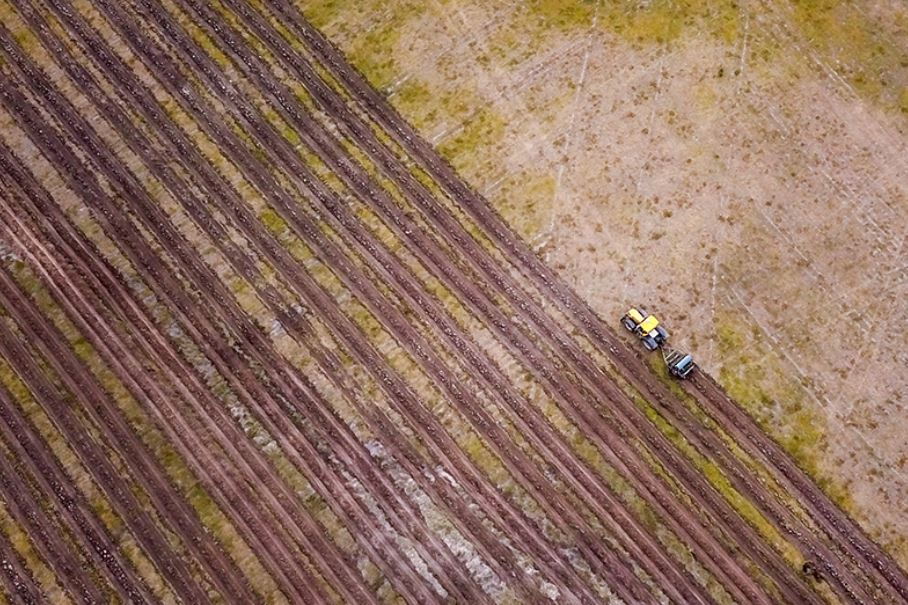
Greening Australia and its nature-based solutions business, Canopy, have responded to rising demand for high-integrity carbon projects from corporate Australia with a reforestation carbon aggregation, which will see over 2.26 million native biodiverse plants established across 1,228 hectares in 2023 – that’s almost three times the size of Melbourne’s CBD.
The project, registered with the Clean Energy Regulator, brings together 14 landholders from across Western Australia, South Australia, New South Wales and Victoria, doubling the number of landholders engaged in our previous 2022 record-breaking aggregation.
While the wider carbon industry navigates increased public scrutiny, heavy-weight corporates are craving reliable, trusted partners to help meet their ambitious environmental commitments. The strengthening of the Safeguard Mechanism – the first successful national reform to cut Australia’s emissions in a decade – is expected to further contribute to growing demand in the carbon market, with approximately 30 percent of Australia’s total emissions falling under the scope of the revised law.
Greening Australia Acting COO and Canopy Executive Director Paul Della Libera says that while less than one percent of the carbon market is currently made up of Australian Carbon Credit Units (ACCUs) generated by native environmental plantings, this method is critical to delivering tangible biodiversity restoration outcomes alongside carbon sequestration.
“The year-on-year growth of Greening Australia and Canopy’s carbon aggregations is a testament to our position as a market leader delivering high-integrity carbon projects that unlock positive outcomes for nature at scale, while driving financial returns for local landholders and helping large businesses meet environmental commitments.
“We don’t have a moment to waste tackling the environmental challenges we collectively face. We’re committed to continuing our leading role in delivering innovative nature-based solutions that tackle climate change while simultaneously restoring Australia’s unique biodiversity,” says Mr Della Libera.
July 16th, 2023Growing best practice in native seed production
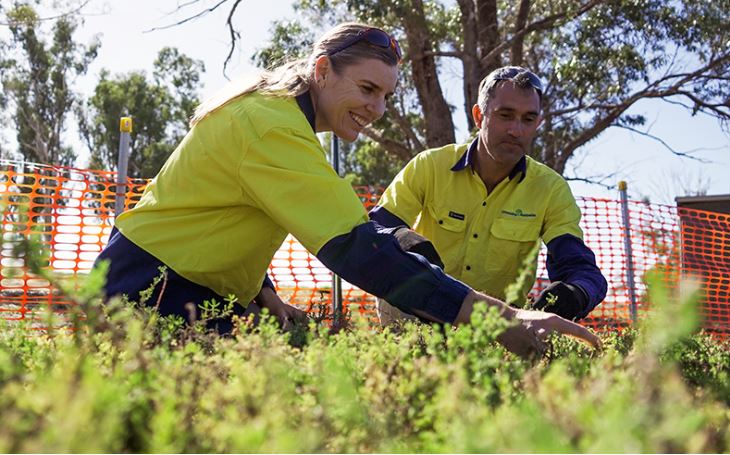
A research project led by Greening Australia and funded by The Ian Potter Foundation is set to significantly expand the national native seed sector’s practical knowledge on how to establish and manage effective, climate-ready seed production areas (or SPAs, as they are known in the industry).
The project comes at a crucial time, as shortages in native seed significantly hamper Australia’s efforts to address biodiversity loss and climate change through ecosystem restoration.
The authors of Australia’s first national native seed strategy, released in 2021, acknowledged that wild collection of native seed would not be able to meet the increasing need for seed. They recommended establishing SPAs to help fill the growing gap between supply and demand.
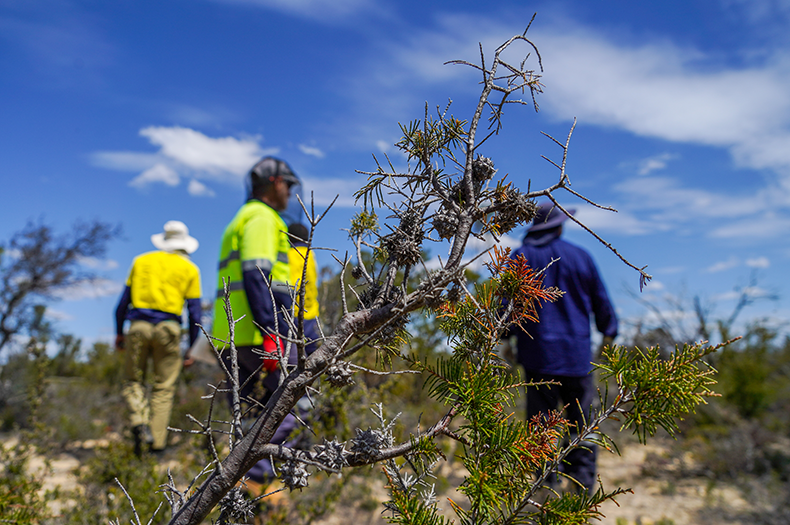
Most of Australia’s native seed supply comes from wild harvest. However demand is outstripping sustainable collection limits. Photo: Jesse Collins.
A snapshot of seed production in 2021 found that only a very small proportion of the native seed sector is working to establish and develop SPAs. Factors driving the low uptake include a lack of resources, and lack of confidence in how to establish a SPA to produce healthy, high quality and genetically diverse seed.
“Establishing an effective SPA can be very complex, as it involves understanding genetics, ecology (e.g. pollinators), horticulture and plant ecophysiology,” said Melinda Pickup, Manager of Seed Science at Greening Australia.
“So we need practical research and development to help ensure that the planning, establishment and ongoing operations of SPAs will contribute to, and be based on, the best available science for restoration in a changing climate. That, in turn, will guarantee the seed produced is resilient and healthy in future climates.”
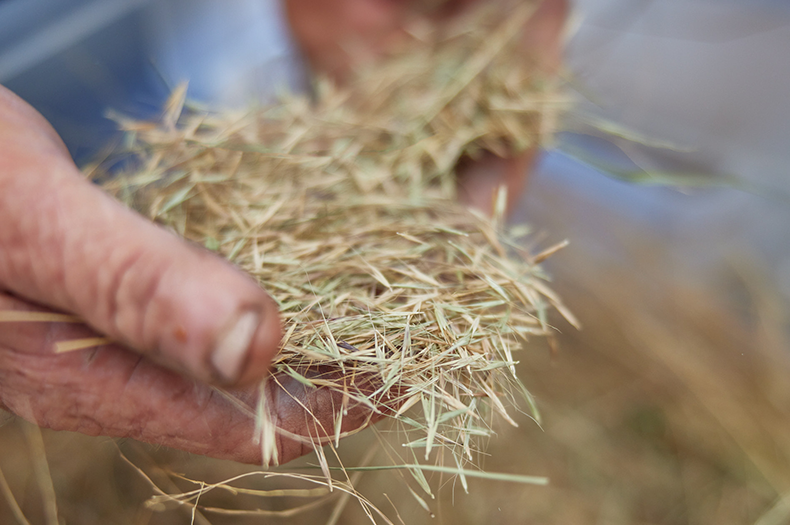
Seed production areas could support restoration in a changing climate by producing high quantities and qualities of native seed. Photo: Toby Peet.
With its current investment in SPAs, Greening Australia is in a unique position to provide a live testing and training ground, bringing together key skilled collaborators and research partners to plug core practical knowledge gaps in all aspects of SPA development and how this relates to on-ground restoration.
The five-year project has several objectives, including:
- Developing science-led seed quality assurance and control frameworks for SPA-produced seed to provide certainty on its quality
- Developing resources to help standardise and guide SPA development to improve the likelihood of success and the production of genetically healthy seed appropriate for changing climates
- Developing and testing seed treatments to increase germination and establishment success
- Researching how to optimise production and seed yields through horticultural practices and create optimum environments for pollination.
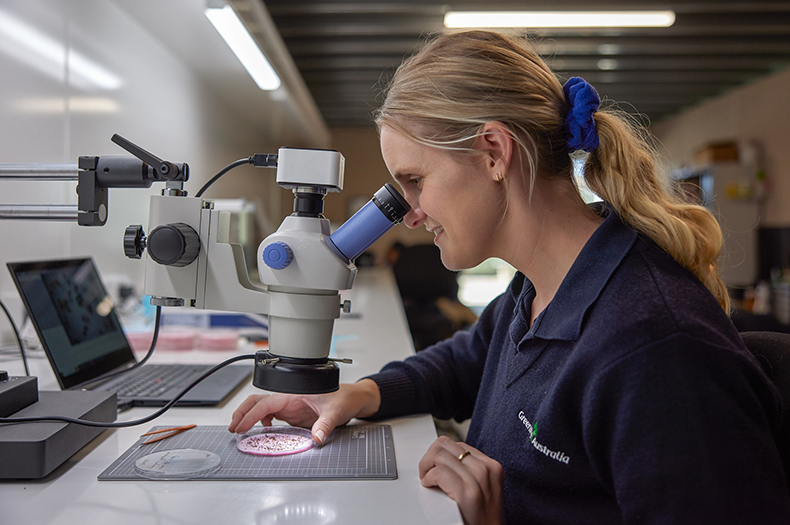
Research and development is needed to increase practitioner and investor confidence in establishing SPAs and to improve seed supply for restoration. Photo: Toby Peet.
Insights from this project will be shared across the whole native seed sector to help make developing and managing SPAs less complex and more accessible for practitioners, ultimately improving seed supply and science-led restoration outcomes in a changing climate.
July 15th, 2023Some helping hands for endangered woodlands
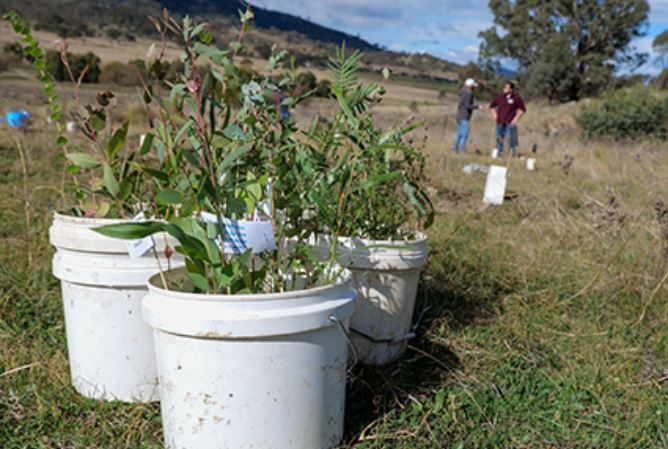
Over the past five years, Greening Australia has partnered with ACT Natural Resource Management to improve, restore and connect critically endangered Box-Gum Grassy Woodlands in the capital region.
Funded by the Australian Government’s Regional Land Partnerships Program (a core component of the National Landcare Program), we worked with 21 private landholders and on public lands to plant diverse trees and shrubs, exclude livestock, and control environmental weeds. Together, these activities totalled over 900 hectares of targeted action.
The 900 hectares included 425 hectares of revegetation designed to restore and connect remnants of this important ecosystem. When it came to planting those hectares, we had help from many people in the community – First Nations groups, schools, community and corporate groups, public servants – who got their hands dirty at almost 40 different events!
This includes the particularly amazing support of Greening Australia’s Green Team volunteers, who planted over 15,000 diverse trees and shrubs in the ACT for the project over the past five years.
More than 50 of Greening Australia’s nursery volunteers also helped to grow, thin, weed, transplant and pack all the seedlings used in these plantings each year.
Engaging all these people in the project is a great result, since raising awareness about Box-Gum Grassy Woodlands and alerting Canberrans to this treasure in the capital region has been a key objective of the project.
Lowland woodlands have been extensively cleared across eastern Australia with less than five percent of the original extent remaining. The ACT has managed to buck this trend, retaining over a third of its original extent of lowland woodlands, much of which is the Box-Gum Grassy Woodland vegetation community.
While this vegetation community is threatened both in the ACT and nationally, the ACT has some of the best quality patches of this habitat type in Australia.
As well as providing habitat for native species, these woodlands play an important role in maintaining the productivity of agricultural land, providing shelter from wind, heat and cold for pastures, crops and livestock.
The impact is already being seen, with bird surveys recording many threatened birds at our revegetation sites, including the Scarlet Robin, Gang-gang Cockatoo, White-winged Triller and Southern Whiteface.