


March 16th, 2025Just sayin’…

By Donna Kelly
Congratulations to the five women inducted onto the Heather Mutimer International Women’s Day Honour Roll. They are Mary Harvey, Jessie Leggatt (posthumous), Mary-Faeth Chenery, Lynda Poke and moi.

It was an absolute honour to be included among these women – and many more who have gone before them – on this prestigious roll.
I hope to follow up with stories about each of the new inductees in later editions. I must admit to having a bit of impostor syndrome but when I heard my citation I thought “wow, she’s done a bit”.
I also listened to a very inspiring speech by guest speaker Shae Graham, a wheelchair rugby Paralympian and world champion.
Apart from making me wonder what the hell I had been doing with my life compared to hers, Shae also said sharing stories was very important. So that was a nice justification.
I reckon if you read this column, even now and again, you have heard enough about me so I will use this as a thank-you opportunity, as I did with my speech last Wednesday night.
First up, thanks to former Hepburn Shire councillor Heather Mutimer. Heather spent many years as the only woman on the council and handled her role with aplomb, strength and kindness. I saw her in action a lot and she was impressive. So thanks for paving the way for many more women councillors and also for starting the honour roll.
Secondly thanks to Hepburn Shire Council for running the annual event, and to the IWD committee for their hard work throughout the year.
Thanks also to Mayor Cr Don Henderson. I did not realise it but when the continuation of the roll was looking a bit dodgy Don stepped in to keep it running.

Fun fact. On the night, Don reminded me of a letter to the editor, anti all the parks etc named after men, I ran in The Advocate – in my former life there. He called to ask if I would run a letter from him and I apparently had a go at him over the phone.
The letter duly arrived, and I ran it, despite Don writing that people could be assured, that if another tip was ever opened it would be named after a woman, the Donna Kelly Tip, for my services to journalism. Very funny really.
Also thanks to Cr Lesley Hewitt for her wonderful MC-ing of the event. Even though I was a little disappointed that when I ended my speech – and I was last up – with “I am sure, like everyone here, you are looking forward to a glass of wine so let’s finish up and enjoy the refreshments” and Lesley leaned over and whispered “I don’t think there’s any wine”.
And thanks to Cr Brian Hood for saying I should end my speech with a Just sayin’… which I did. Oh, also thank you to Aunty Sandra for a great, and her first, Welcome to Country – great job and really interesting speech. Don’t you love wombats.
And thanks to Ballarat MP Catherine King for coming along. Catherine certainly attends events when she can.
Finally thanks to the young people from Daylesford College for their music and speeches on feminism and what it means to them.
Jamie Martin-Lukoszek performed Anything by Adrianne Lenker while Zara Drogriski performed Teenage Dream by Olivia Rodrigo, accompanied by Arlo Schwarz-Deakin.
Hayley Smith and Stevie Rigby talked about this year’s IWD theme which calls for action that can unlock equal rights, power and opportunities for all and a feminist future where no one is left behind. If they are representative of our young people, the future is bright. Just sayin’…

Damn, I just read this to Kyle and he reminded me to thank him, as I did on the night. So thank you Kyle – for sharing the passion of sharing the stories of the community.


April 25th, 2024Heritage listing for Daylesford’s old school of mines building

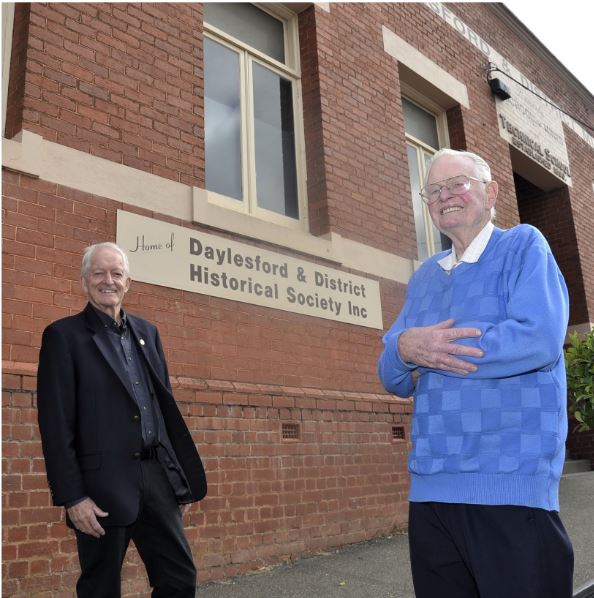
The recent inclusion of the Old Daylesford School of Mines building on the Victorian Heritage Register has significant positive implications for the future of the building.
It means that the building that now houses the town’s museum will be able to attract crucial funding through Heritage Victoria for maintenance works into the future.
It also recognises the significant place that the 1890s brick building at 100 Vincent Street occupies as part of the state’s mining and education history.
The nomination was lodged by the former Daylesford Museum Reserve Committee of Management back in 2019.
Its successful listing on the register was confirmed in February this year providing much cause for celebration particularly among locals who played a key role in lodging the nomination.
Former Daylesford Museum Reserve Committee of Management chair Ken Warren is among them and delighted with the result. He notes how rare and difficult it is to have such a nomination succeed.
“We’re very, very fortunate to get this up on the register,” Mr Warren said.
“Everybody worked so hard to get there.”
Mr Warren says the listing has major implications for the ability of the current and future committees of management to attract ongoing funding required for upkeep of the building.
“It also preserves well into the future the building as significant for the shire and the state so it doesn’t disappear,” he said.
“Lots of places disappear because people don’t appreciate their sense of significance.
“This listing mean there is a sense of permanence and a line of funding into the future and it makes it even better as a site for the museum.”
Current repair and upgrade works are continuing on the building that today houses two much loved cultural institutions, the Daylesford and District Historical Society and the Daylesford Community Brass Band.
The museum building dates back to the early 1890s when it was used by the School of Mines to teach classes on science and art.
The building retains many of its original features including one of the earliest and most intact School of Mines laboratories and metallurgical laboratory interiors in Victoria.
The Victorian Heritage Database Report associated with the new listing notes that the School of Mines is historically significant as a forerunner of the technical schools that were a key part of the state’s education system for many decades.
The database records that: “The Daylesford School of Mines is architecturally significant as it retains a combination of fine features that are characteristic of an early technical school – roof lanterns for daylighting, distinctive brick assay chimney, furnaces, fume cupboards, and 1890s joinery”.
The old Daylesford School of Mines comprises the laboratory building with chimney and the art department building dating from 1890, and the technical school addition of 1914.
Local resident Graeme Orr was a student at the technical school in the late 1940s and the 1950s and said he was delighted to see the building gain heritage listing.
“I think it’s wonderful,” said Graeme who attended school there from 1949 to 1951, starting at the tender age of 12.
“This is really exciting as there are not many Daylesford buildings on the State Register,” says Heather Mutimer who was secretary with the committee of management that lodged the successful application for listing.
“A lot of work went into the nomination and was underpinned by the completion of a detailed Conservation Management Plan,” Heather said.
Words & Image: Eve Lamb
December 10th, 2023Madame Borovansky and 46 West Street, Daylesford
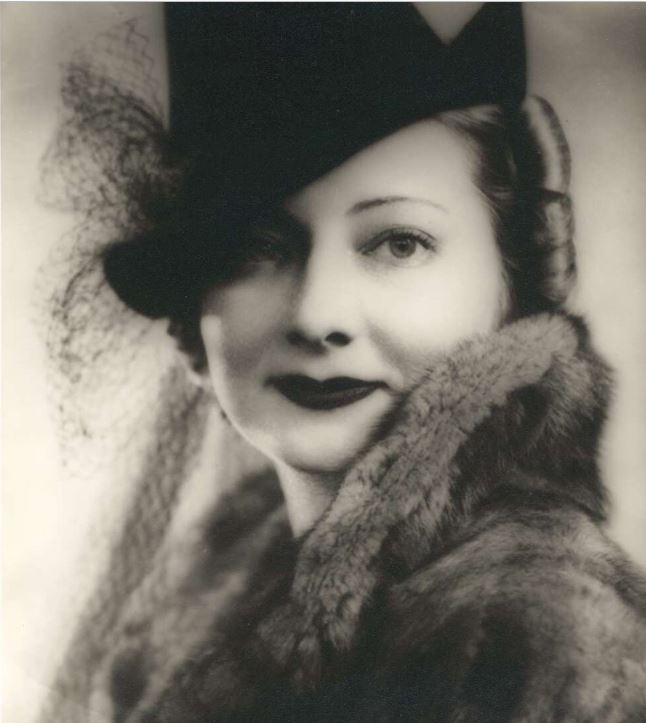
WHO’S BEEN SLEEPING IN MY HOUSE was the title of an ABC television series which researched the fascinating history of a selection of Australian homes and the people who once inhabited them.
With our district’s long and colourful history, we have our fair share of interesting stories attached to local houses and the people who once occupied them. Some of these stories go back to the gold rush era or even earlier. Others to more recent times.
An example of a house with an interesting story from more recent times is No. 46 West Street, Daylesford. This simple Californian bungalow style house sits on a large block with a spectacular view to Wombat Hill. It is currently a holiday rental named ‘Churchills’.
In 1973 the property was purchased by a woman named Xenia Borovansky. It is her story which adds such a colourful layer to the history of this Daylesford house. Who was Xenia Borovansky? Those with some knowledge of the history of the Australian Ballet may be familiar with the name Borovansky.
Xenia Borovansky was born Xenia Nikolayena Smirnova in 1903 in Russia and was the niece of the great Russian ballerina Anna Pavlova (pictured below). Xenia was taught ballet at the Bolshoi Theatre and after her family migrated to Germany she joined Anna Pavlova’s troupe. It was there she met Czech-born dancer Edouard Borovansky whom she would later marry and thus become known as Madame Borovansky.
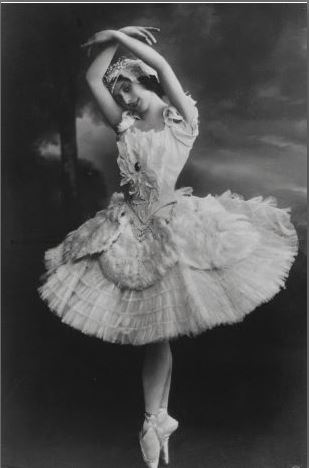
In 1938 the couple travelled to Australia with the Royal Covent Garden Russian Ballet. At the end of the tour and with the outbreak of WWII imminent, they decided to stay.
Together they established a ballet school in Melbourne which they named ‘The Melbourne Academy of Russian Ballet’. The academy grew and in 1940 they established the ‘Borovansky Australian Ballet Company’.
With its various reincarnations the Borovansky Australian Ballet Company became the precursor to
Australia’s National Ballet Company – ‘The Australian Ballet’ which formed in 1962.
Edouard choreographed a number of works for the Borovansky Australian Ballet Company, often with Australian themes. One was titled Terra Australis, which is credited by some to be the first all-Australian ballet, and the first with an Aboriginal theme. It premiered in Melbourne in May 1946 and was focused on Australia’s colonisation by white settlers.
‘Boro’ as Edouard was called by those who knew him, was a colourful extrovert renowned for being a strict disciplinarian and somewhat of a womaniser. He would become known as the ‘Father of Australian Ballet’.
Xenia, a far more reserved personality, became the head teacher of the Borovansky Ballet. She also choreographed some works and designed costumes. It is said it was because of her height that she never became a great ballerina, so turned to teaching instead.
Australia’s first ballet dancer of Indigenous heritage Noel Tovey AM was a pupil of Xenia’s. She provided him with free lessons and in his book titled Little Black Bastard he writes: “When I look back at all the teachers I had in my career, I would have to say that when it came to teaching style there was no other better than Madame Boro”.
The late Barry Kitcher, an ex-Borovansky Company dancer who was interviewed by ballet historian Michelle Potter, spoke of his impressions of Xenia Borovansky in a National Library oral history interview.
“She was very tall, extremely tall – she towered over Boro – and she wore high heel shoes as well. She was so regal and elegant and when she walked into a room it was like a star. She had rather bulbous eyes. You really stopped and looked at Madame Boro as she came in…she was a very impressive lady. Her carriage and her stature were outstanding.”
In an article which appeared in The Argus newspaper on June 25, 1955 we are told: “…Russet-haired Madame Borovansky, an artist from her fingertips to her dancing toes, is a serious withdrawn personality, content with her pupils, her home and piano studies…she still takes lessons. But there is a lighter side. Last night she was a witch in Carnival Fantasy at Chevron to help the Red Cross…”
Edouard and Xenia became well-known identities in Melbourne and lived in a grand old mansion ‘Strathnaver’ in Hawthorn. Edouard died suddenly whilst on tour in December 1959. After Edouard’s death Xenia continued teaching and running her Melbourne ballet school.
Xenia would have been around 70 years old when she purchased 46 West Street. Why she decided to buy this particular Daylesford property and at this stage of her life is unclear.
Daylesford in the 1970s was a quieter and very different place than it is today. It became the home of many creative and bohemian-type figures who fell in love with its beauty, tranquillity and affordable real estate.
Perhaps this also attracted Madame Borovansky to Daylesford in her retirement. Daylesford may have also been a place that held nostalgic memories of holidays spent with ‘Boro’ and friends. The drawcard
for this particular property was very likely that magnificent view to Wombat Hill along with the spacious grounds.
After Xenia Borovansky died in 1985 her house in Daylesford was put up for sale. An article appeared in the Daylesford Advocate and was headed; ‘Borovansky’s House Under the Hammer’. The article tells us that “… Many of Madame Borovansky’s former pupils shared time with her in what became an ideal retreat…”
Some of these former pupils may have included famous dancers who became the nucleus of our national ballet company – names such as Garth Welch and Marilyn Jones.
When visiting a local woman in her West Street home some years back, she told me as we were chatting, that there was a connection to Anna Pavlova and a house nearby. I was intrigued, although I
wondered how true this was. A few years ago when I came across The Advocate article, I carried out some further research and I found it was indeed true.
It is not hard to conjure up an image of an ageing but still graceful and elegant Madame Borovansky relaxing on the front porch at 46 West Street. As she gazes across to that beautiful vista of Wombat Hill perhaps she is reminiscing about days long ago when she danced with her aunt – the great Anna Pavlova.
Xenia Borovansky died on the 25th November 1985 at the age of 82 and is buried with her husband Edouard in the Box Hill Cemetery. Their gravestone reads: DOYENS OF THE RUSSIAN SCHOOL OF BALLET IN AUSTRALIA. FOUNDERS OF THE AUSTRALIAN BALLET.
So who’s been sleeping in your house? Words: Heather Mutimer | Images: National Library of Australia