December 8th, 2024Kyle’s travel memories

“Let’s wander where the wifi is weak.” – Unknown
“Yeah, nah. That’s a great idea unless you have a business to run and quite a lot of MBs to upload.” – Kyle Barnes
It is day 13 of a 17-day cruise aboard the Norwegian Jewel, a cruise liner on the Pacific side of Central America with around 2000 guests and 1000 crew, a cruise by most standards considered long.
Ask most of the passengers what the highlight of the trip will be and the answer is overwhelmingly our transiting of the Panama Canal – and the day had finally arrived.
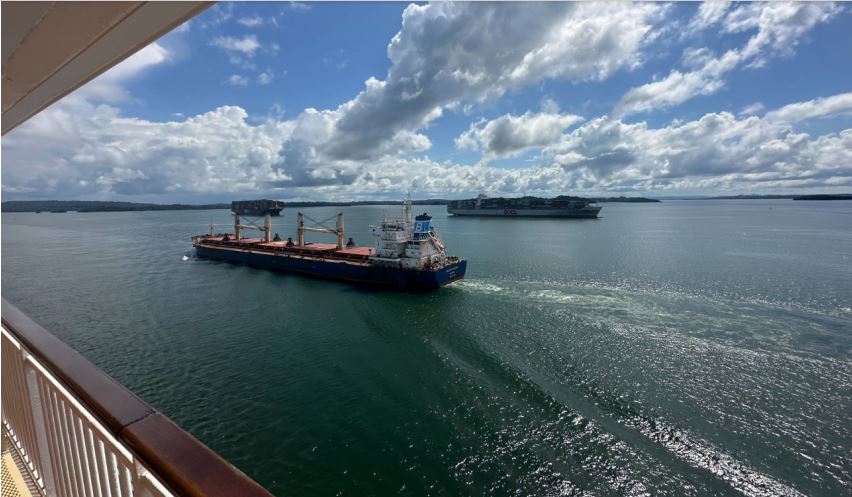
Despite the partying of the previous 13 nights many were on deck around 5.30am to soak up as much of this incredible “bucket list” day as possible. A line of ships as far as you could see dotted the horizon, all waiting for their turn to cross the canal, and I was told that the same was true on the Atlantic side.
A few fun facts
The Panama Canal is an artificial 82-kilometre waterway in Panama that connects the Atlantic Ocean with the Pacific Ocean, cutting across Panama, and is a conduit for maritime trade. It saves around 8000 nautical miles point to point, plus the rigours of the ocean around Cape Horn, which has laid rest to many a ship.
The French began construction in 1881, but the project failed by 1890. The project was plagued by disease, floods, mudslides, and financial and engineering problems. The French lost an estimated 22,000 people and sold the unfinished project to the USA, which decided after a couple of years on the project to rethink things.
The canal was meant to be a sea level project ocean to ocean, but the engineers decided to only dig out the ends and use what was already there – a system of great lakes in the Highlands.
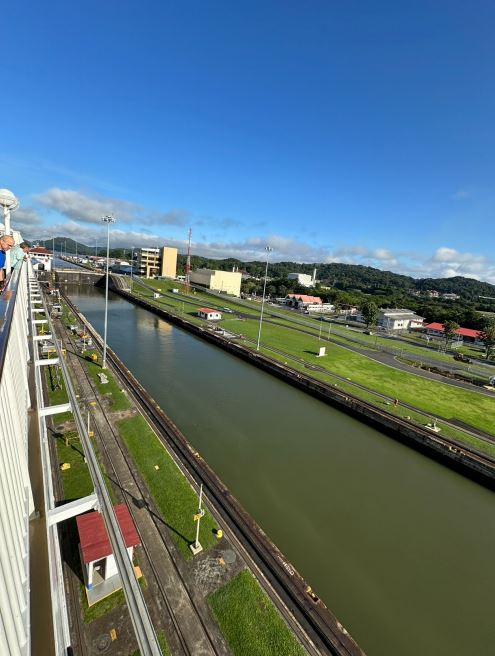
So, the problem became more about how to get the ships up into the lakes from the Pacific side and mark out and create navigable channels within the lakes. And then get the ships back down to sea level on the Atlantic side and back out to sea.
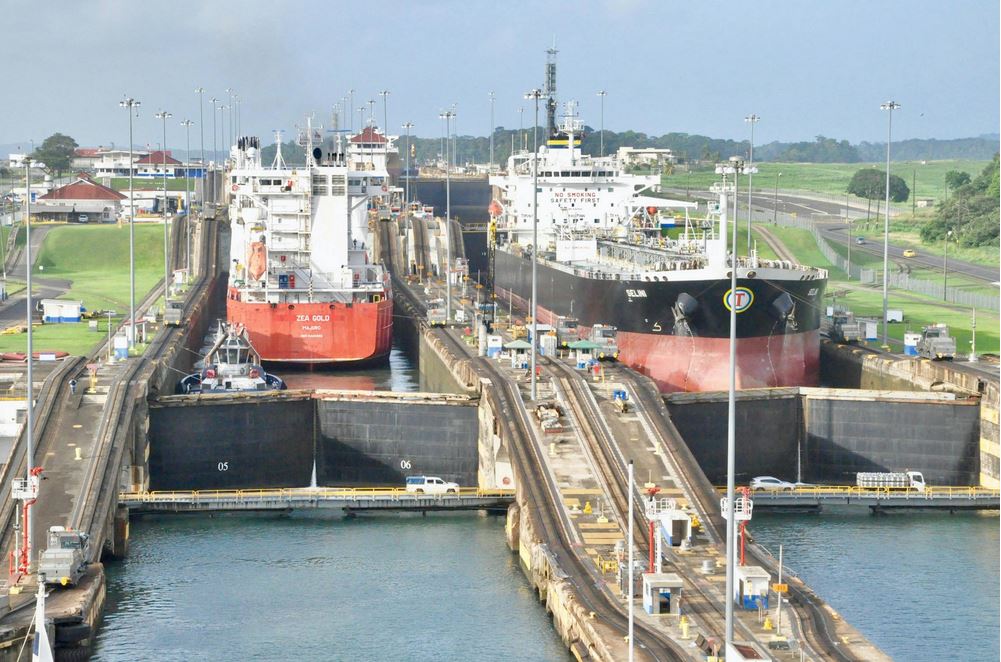
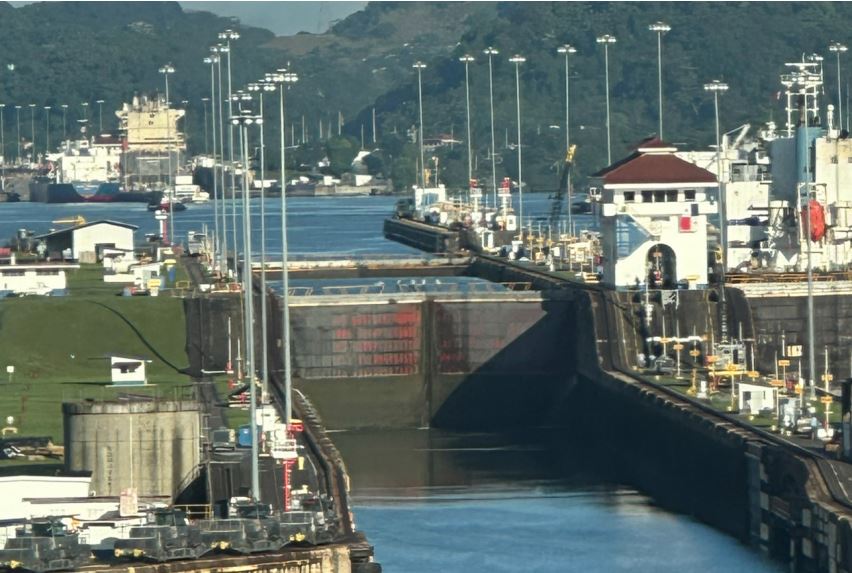
Most impressively for mine is the simplicity of the locks, pumps and machinery, which was a big consideration in this area where sabotage and tribal wars were a regular part of what went on. And the magical thing is no pumps are used here – the entire operation of equalising the water levels between the locking chambers depends on the principles of gravity to move the water and on the fact that water seeks its own level.
Back to the Jewel
Our ship is tugged along the lock using locomotives. Tied into place, the lock door behind our vessel is sealed and the lake water spills in using underground tunnels beneath the ship and up we go. We exit the lock and sail for another hour or so, repeat the steps in the next lock and up we go again. A total lift of 26 metres hauling our 294 metre/93,558 gross tonnage, using nothing more than the theory of the natural state of water and a 25-horsepower engine to open the lock gates – brilliant.
It was seriously a boater’s wet dream of close quarters ship manoeuvring, tug boats and also when our giant ship leant into the corners of the channel. I later found out they disengage the stabilisers to make her more manoeuvrable and by its very nature more tender.
We arrive at the last two locks to repeat the process and down we go. In summary, if you get your kicks from engineering, find yourself drawn to the “mighty machinery” channels on TV or simply like to boat through one of nature’s true wonders of the world, while in a multi-restaurant five star hotel, a trip down the Panama Canal is certainly one worth putting down on your bucket list.
But maybe, if you are a publisher, check the wifi…
Words: Kyle Barnes. Images: Kyle Barnes & Donna Kelly


November 25th, 2024Kyle’s Rant

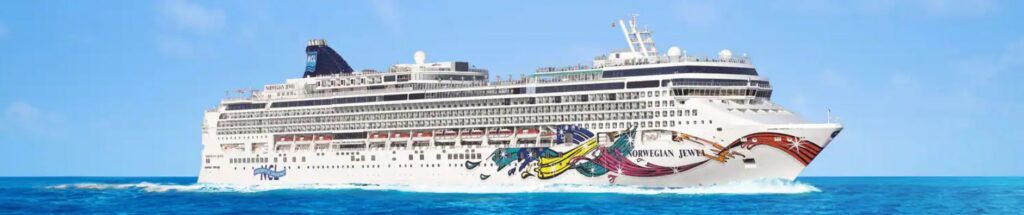
The cruise so far…
We picked up the ship in Los Angeles on November 7 for a 17-night voyage, down the west coast of south America through the Panama Canal and eventually onto Florida – where there is a bit of concern about a hurricane visiting the port at the same time we dock.
Anyway, we have just left Antigua and find ourselves at the half way point. And to steal a line from Good Morning America “it is hot, dam hot, hot and wet, which is okay if you’re with the ladies but not so good if you’re in the jungle.” And this is their autumn, and according to the locals summer is “hell”.
The food halls onboard, particularly the buffets are full of huge Americans, an older mob, mainly an eat-in crowd.
But you can’t let the copious consumption of canapes fool you, although half of them are electric chair bound, as it turns out they can move fast. Even faster if they are on their feet, as two couples from either side of the Trump camp found out.
There was a bit of lip to one another followed by a bit of biffo, and then the wives joined across the buffet.
Their cruise ended the next day with an unceremonious departure from the boat, after being locked up, while everyone else went onto their shore excursions.
One thing that has left me gob smacked and with a feeling of throwing my hands up in the air in terms of climate change is the pollution. This seems to be due to the rich getting richer and the poor getting the picture. Thanks Midnight Oil.
Most of these countries however seem to be rich in resources with oil, jade, silver and coal to name a few, being hauled out of the earth. Where are the royalties going?
Then there was an information session on the ship, just asking the usual questions like how many eggs do you need onboard and what happens to the food we don’t eat. All I suppose in an effort to justify the never ending whirring of the turnstiles at the buffet.
But Donna piped up and asked a beauty with the 20-minute answer from a senior officer flooring me. She asked “what happened during Covid?”
So they had left Sydney in early March with a full complement of passengers aboard. They got word that the world was starting to shut down and tried to re-enter Sydney with their mainly Australian passengers to no avail.
So, they bounced up and down the Pacific eventually tying up in Hawaii. The company chartered planes for the passengers and then took off for Miami where they sat for months.
By this time, they were onboard distancing with the crew maintaining the two-metre rule wearing masks 24/7. All but a couple of decks had been closed to preserve power and all the bars, restaurants and meeting rooms were covered with sheets.
Eventually in October, 2020 the Norwegian Jewel, which we currently call home, was ushered to a private island in the Caribbean where she was pressed into action as a quarantine ship.
Most of the crew went home via other ships leaving a skeleton crew of 98 keeping things going for two years while some of their family members died back home.
This has got me thinking about the bad old days of Covid and how there has never actually been an end, it just kind of drifted away.
It has not exactly been like the celebrations around the end of WWII and we have no way to mark the event, and process our feelings. Long lockdown days that drove us all spare and tore families apart.
Extra-long rant over…