


December 9th, 2023Six years in the making: Trentham community garden opens for use

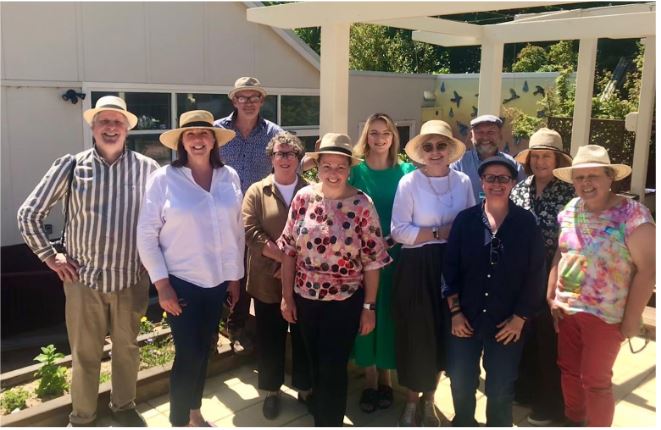
The new Trentham Neighbourhood Centre Community Garden was officially opened on Saturday, November 18, after six years in concept and development phases.
About 35 people attended the opening with speakers including Hepburn Shire Mayor and Coliban Ward Cr Brian Hood, Ballarat federal MP Catherine King, Little Gallery Trentham’s Kim Haughie, TNC Committee of Management treasurer Corina Sabo, garden project manager Michelle Leeder, TNC manager Richard Goodman and previous president and long-term Trentham local Ina Bertrand.
Funding for the garden came from the federal government – $30,000, Hepburn Shire Council – $8000 and Little Gallery Trentham – $5200, along with donations of funds and assistance from other organisations and individuals.
TNC president Anne-Marie Pedeau said the garden was partially designed, and then built, by Anthony Morrey.
Features include four wicking beds, two of which are planted with vegetables, a herb garden, beds filled with ornamental flowers, a pergola planted, a sculptural artwork made by the TNC Youth Group on one wall, playing areas for chess or draughts (designed into the paving), a decking area for a table and chairs and a heritage woven wire fence.
Ms Pedeau said she hoped people would come, use and enjoy the garden in a variety of ways from just somewhere to sit and relax, to playing a game of chess, or a place for organised groups to set up various hobbies and events.

December 8th, 2023Celebrating extraordinary lives with Simone Kaplan

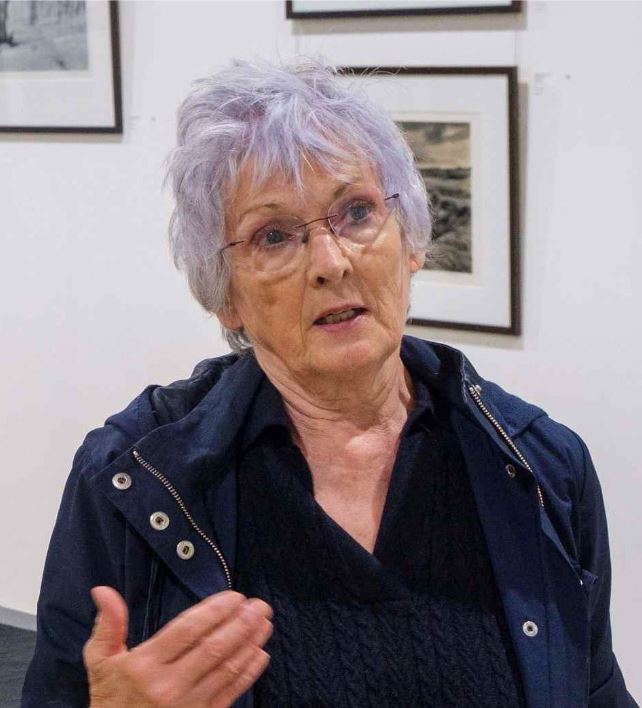
Ellie Young of Trentham was born in New Zealand. Her father was a lighthouse keeper, and her mother was a schoolteacher.
The culture of living by the sea with her parents and brother and not many other people at all, until she was 10 years old, taught her to appreciate the ocean, the mindful details of nature and to be comfortable in her own skin. The ocean in particular always provided peace and stillness for her.
Her dad always loved photography and often had the camera out documenting his kids as they were growing up. After leaving the lighthouse service, her parents had more children, she is one of five, but it’s interesting how different their upbringing was. Ellie and her elder brother were always drawn to nature.
Ellie met her husband Alan in Dunedin where they lived down the road from each other. They got together when they were about 17 years old. Together they still enjoy jumping in their van and taking off travelling. When their daughter was young, they travelled like gypsies, up to 10 months at a time. She too has the travel bug now.
Ellie’s Gold Street Studios workshops was established in 1999 and developed out of a passion and concern that many early photographic processes and techniques were losing their place in the photographic institutions and art world.
In 2000 Ellie attained the National Gallery of Victoria Trustee Award for her work in gum bichromate printing. After some years of research, her Salt Printing Manual was published in 2011. She constantly exhibits her work locally, nationally and internationally.
Pre-covid Ellie was teaching in Beijing, Tianjin and Nanjing in China. She describes the experience as magical, providing beautiful connections with people, amazing food and countryside.
Originally set up in Collingwood, Ellie’s experience of the commercial side of the business was one of it being cut-throat. It took away the joy of “passing down the techniques” and impeded on her time to take photos herself.
Trentham became an escape, with no mobile phone reception at the time, beautiful nature, and she fell in love with the area. She and Alan found a beautiful house and in time set up the workshop and studio space on site.
Today, her passions for travel, photography and family are threaded through her daily life. Ellie feels very lucky she gets to do what she loves every day. For her the photography techniques and art are about “sharing not about selling”.
“It is an honour if people buy your photos, the ultimate compliment if someone wants to hang your art in their dining rooms.”
Her main passion is macro close-up photography, mindfully zooming in on insects, butterflies and other organic things. “A fly’s wing can turn into a church window, refracting light, different shapes and shadows – quite beautiful.”
It is the craft that is not always understood. For example, a carbon print can take 2 to 3 days to complete. “You really have to be passionate about the process and the outcome takes your breath away. Online doesn’t do it justice.”
Four years ago, during Covid lockdowns, one of her grandsons committed suicide at just 14 years old. Ellie said William was a huggable, gorgeous kid who suffered from a high-functioning autism spectrum disorder. He had an affinity with friends, loved animals and photography.
Although it felt raw and painful to talk about the loss, Ellie said she felt it was important to talk about it more. It was a terrible shock to the family without any warning signs.
As it was during Covid lockdowns the family were so grateful to the police for being so compassionate and even received a beautiful letter from Daniel Andrews, expressing his condolences.
“People don’t know what to say or do to support you in grief, but it always meant so much when someone could acknowledge and chat.” Ellie and Alan hug their family even more tightly now and together they mark each anniversary of his passing and the birthday of William. At Ellie’s next photographic exhibition, they are planning on raising money for youth suicide.
Although Ellie loves living in Australia, coming from NZ, she finds things so different with regard to indigenous culture. She recalls as a young child, Māori culture being celebrated and taught in schools
– Māori Poi dancing for example was part of the curriculum.
It saddens her that the same respect is not given to Aboriginal culture. In NZ they had the Treaty of
Waitangi signed in 1840 honouring Māori culture and integrating the country so there was less division. She believes Australia is behind in this way.
“The Aboriginal culture can teach us so much – respect for land. It could have and still can look different in Australia.”

November 22nd, 2023Seasoned performer to play the Cosmo, Trentham
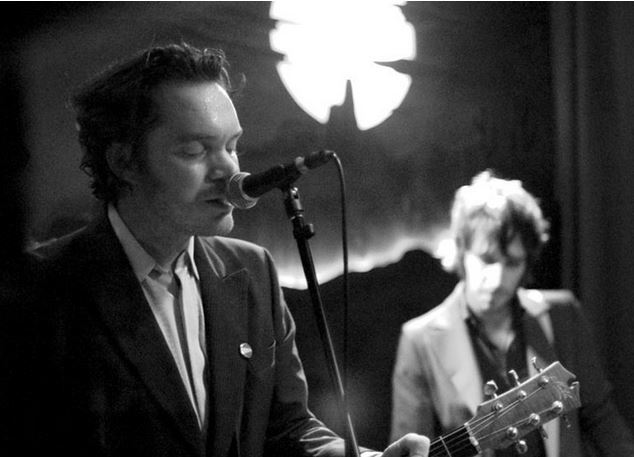
Headed to Trentham to perform at The Cosmopolitan Hotel next month, Charles Jenkins is a Melbourne songwriter/musician, producer and performer with more than 30 years experience in the Australian Music Industry.
He has released 21 albums, toured Europe and the USA several times and been nominated for two ARIA awards with the Icecream Hands. In 2014 he won the AGE/Music Victoria award for best folk/roots album and in August 2020 Icecream Hands released their first album in 13 years – No Weapon But Love. In Dec 2022 he released his latest solo album Radio Sketches 2 – the Death Of Stars.
A published songwriter of more than 30 years, his songs have featured in local and international television and film and have been recorded by other artists.
Charles has run songwriting, vocal and performance workshops over the last 20 years with a wide cross-section of the Victorian community.
His Trentham gig happens Saturday evening, December 9 with more info through Trybooking and The Cosmo.
November 12th, 2023Walks of the Central Highlands…

with Eve Lamb
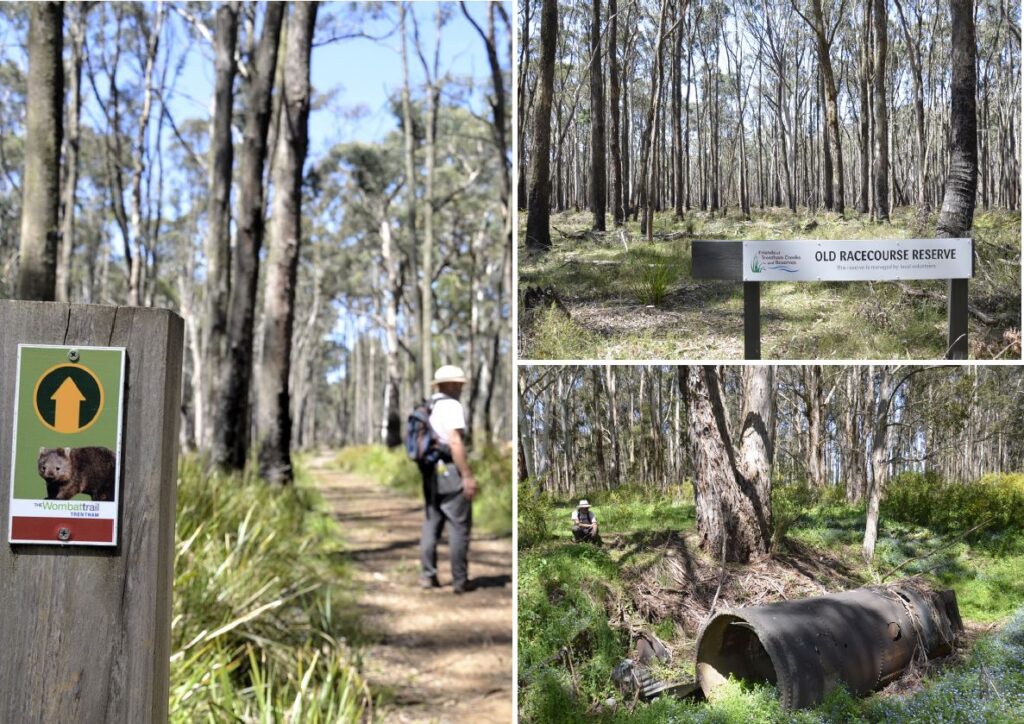
It’s a sterling Spring day, late October, as we set off to walk the nine kilometre Wombat Trail that sets out from Trentham’s pretty little Quarry Street Reserve.
While this little ripper of walk starts here in the township itself, crossing High Street and entering the Stony Creek Reserve, and then meandering through lifestyle-property-land, it doesn’t take too long before you’re in the forest with plenty of impressive eucalypts for company.
Today, I also have the company of my excellent walking companion, Paddy H, plus a packed lunch which is fairly quickly dealt with before we even leave the Stony Creek Reserve section.
So we’ve only covered about a kilometre by the time we hit the sandwiches and coffee, but we’ve already seen plenty of native birdlife and an unexpected sculptural monument entitled Inter-stelae.
Located at the edge of the Wombat Forest, this top little loop walk is both flat and well signposted and moseying along, we soon reach the historic Trentham Cemetery, alongside which the trail passes.
The cemetery itself is worth a quick stop to visit the grave of one of Trentham’s larger than life yesteryear characters, the former inimitable Dr Gweneth Wisewould. Signage shares a little of the good doctor’s eventful history (there’s her memoir ‘Outpost: A Doctor on the Divide’ to look up if you’re interested) and points out her final resting place here, facing the forest as she’d requested.
Leaving the cemetery behind, there’s a short section of trail ahead before we cross the Trentham-Blackwood Road, after which we enter the forest.
But just before we do, we encounter a couple of surprises: the first being the remnant chimney of a long-crumbled dwelling ensconced in a weedy but pretty swamp of forget-me-nots, and the second a large rusted historic boiler, a relic from the area’s past that features both gold mining and forestry. The latter helped to keep Dr Wisewould plenty busy.
At this point the canopy above us starts to become pretty impressive with some remarkable tall trees.
Crossing the Trentham-Blackwood Road, we enter the forested section of the walk and soon find fresh evidence of the trail’s namesake animal in residence. From here the trail offers a good bushland experience and further on ahead, the historic site of the former 1800s Trentham Racecourse – unused since 1907.
This is like no racecourse site you’ve ever seen before. In fact, were it not for the signage, you’d never pick this as having been a racecourse, let alone a 1.6km course that once boasted a grandstand.
Here, we’re surrounded by forest, an under-story featuring native grasses and a eucalyptus canopy through which the wind rushes in bursts like a restless inland sea. Myriad tiny white and purple native violets, sprinkled like micro fairy lights are abundant along this section of the trail.
We walk on, now navigating the forest-engulfed 1.6km racecourse loop that once hosted pounding hooves – anticlockwise as they would have raced – stopping where the grandstand once stood to imagine long-gone mug punters losing their pennies on punts and pints.
Having completed the racecourse circuit we stop for a well-earnt trail side tea break imagining ghost horses with flaring nostrils and thundering hooves… Perhaps it’s just the canopy zephyr?
From here it’s not far back to the township and the Quarry Street Reserve with its handy amenities, parking and proud new wood duck families enjoying the pond. Reflecting that we only encountered three other people along the entire trail, Paddy H and I celebrate the satisfactory completion of this little gem of a walk with a couple of bags of crisps. At 9kms, Trentham’s Wombat Trail is just the right length to tackle if you want a walk that gets you into the forest, with some unique points of interest in the mix, even if you’re strapped for time.
October 13th, 2023Church wearing the Heart on its walls

Words & image: Contributed
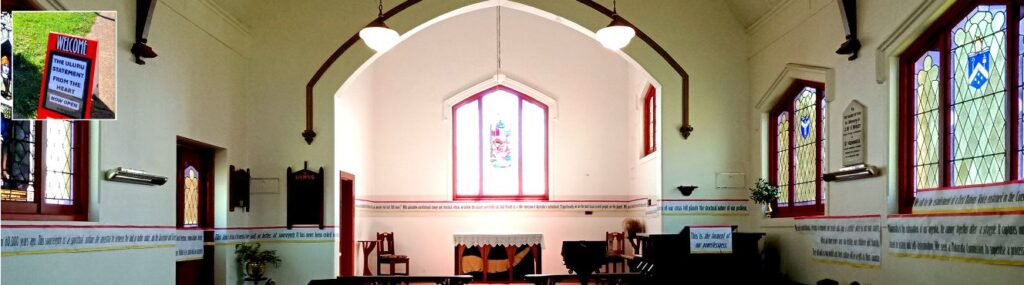
A word-art installation of the Uluru Statement from the Heart is all around the walls of St George’s, Trentham. Put up by locals, it was dedicated by Bishop Matt Brain, the Anglican Bishop of Bendigo, on September 24.
“Jesus calls us to open our hearts to receive from and share with everyone,” he said. “I am delighted to bless this local initiative, which places the Uluru Statement in a space set aside for reflection and inspiration.
“The Statement from the Heart is a generous invitation from this land’s ancient peoples for more recent newcomers to walk with us in a movement of the Australian people for a better future. I pray that our hearts are open to respond.”
The Reverend Dr Charles Sherlock AM is the locum minister at St George’s.
“This referendum is very significant for our nation,” he said. “God calls us to live on the basis of truth. Yet much debate seems unaware of where the Voice proposal comes from – the Statement from the Heart.
“A parishioner came up with the idea of placing the Statement around the walls of St George’s, so that anyone can come in and engage with it in a safe space.”
Measuring the space available, planning how to fit the words in, then printing, cutting and pasting them up took some thinking. Finding a font large enough to make the word readable on A4 sheets saw Binner Gothic at 256 point do the trick.
“The practicalities were not only fun they made us look at the Statement closely. It is challenging and deeply thoughtful, and also a beautiful piece of English. That a large group managed to get it together on one page is amazing.
“We look forward to locals taking the opportunity to visit St George’s to engage with the Statement. We’re not telling people how to vote, but want everyone to be informed of what is being asked of us in the vote.”
During the day in St George’s, the Statement is read aloud by a variety of recorded Aboriginal and Torres Strait Islander voices. St George’s is at 58 High Street, Trentham. It is open daily, except from 3pm Saturday to 10.30am Sunday.
September 30th, 2023Little gallery raises tidy sum for local centre
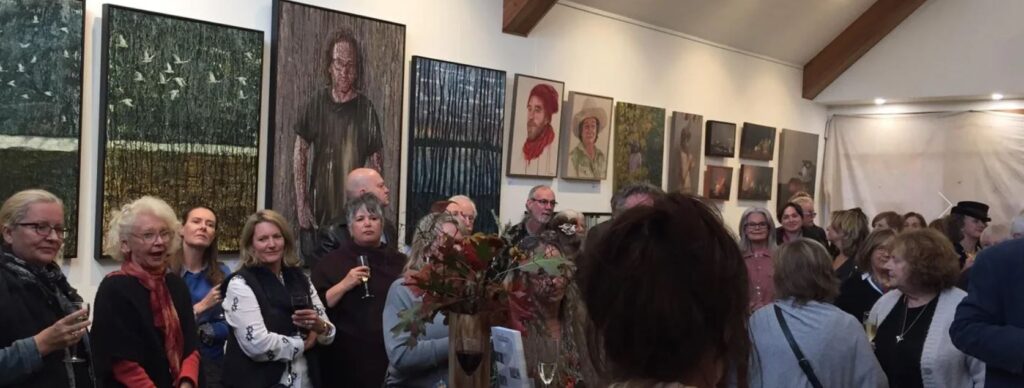
Trentham’s Little Gallery Winter Show held in July has this year raised more than $5000 which will be donated to the Trentham Neighbourhood Centre.
The Little Gallery, in Trentham, is a not-for-profit, artist run co-operative, that hosts the Winter Show as an annual fundraising exhibition to gather and strengthen community connection.
The local gallery’s purpose is to showcase new and emerging artists along side mid career and established Artists.
It was established in 2012 and sought to provide a venue for locals and tourist to connect with local art and artists.
September 15th, 2023Sharing your stories
with Simone Kaplan
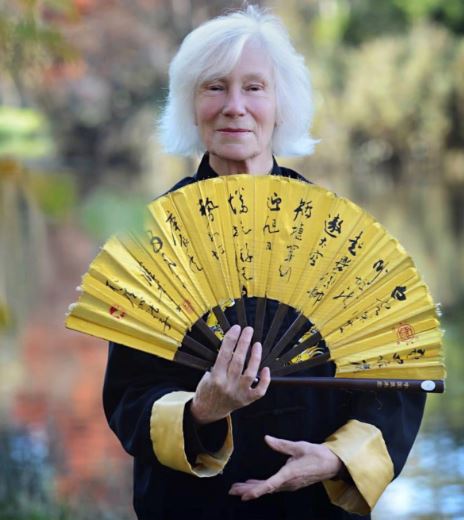
Patricia Kent was born in London in the mid 1940s and spent her childhood years playing in the bombed rubble of the East End. She read the book A Town Like Alice when she was a teenager and knew that she wanted to live in Australia. She emigrated to Adelaide in 1968.
At the age of five, her father started taking her to the training hall, dojo, where he practiced judo. She sat on a mat and watched him. This is where she found her “calling”. Her purpose and life journey has been to “shine a light on the body, mind and spirit connection through her love of martial arts”. This has been central to all she does.
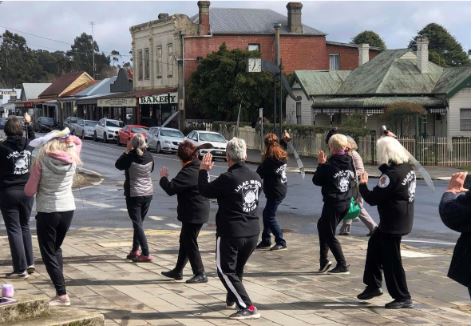
Nearly 40 years ago, when her children were teenagers, Patricia’s tai chi training began, with the Australian Federation of Wu Style Tai Chi. She trained extensively with Kentokan Martial Arts School and with Master Liu Wan Chun in Melbourne, as well as doing numerous trips to also train in China.
“In 2019 Master Liu took an Australian team to China to compete in an international tai chi competition with 34 teams and nearly 400 participants.
“We were awarded gold, not for technique but for demonstrating the soft, internal strength of tai chi.”
In providing service, Patricia “just shows up” but the powerful stories of her students are really that of inspiration, community and miracles. A young dad, for example, broke his back and found Patricia’s classes to help with his rehab. He was committed and practised what she taught every day. When he didn’t turn up for Term 2, Patricia followed up and found he had recovered enough to get back to work. The doctor managing his recovery was dumbfounded. She also has “mature goddesses”, students in their 80s and a 90-year-old, reporting health benefits.
Even during Covid, Patricia and the community never stopped training. One-on- one outdoor sessions by the lake, even in the snow. People knew the benefits.
Patricia has a grace and humility that is inspirational. Her philosophy trickles out to the Trentham community. She keeps an old tradition of tithe, where 10 per cent of student class fees go into a special box. Every month the class decides which charity or community business needs support. This warmth and giving is full of love and generosity. When the 2021 storm happened, Billie with the coffee cart, set up in town to offer free coffees for the SES and CFA. Patricia’s class donations were given to Billie that month. “The greatest exercise for the heart is to reach your hand into the darkness and lift someone up,” she says.
Patricia found Trentham by chance, when searching for a special gift for her daughter’s 21st present. She had a recommendation to visit Helen at Jargon who designed a cape to “wrap her daughter in a mother’s love”. It was years later, after living in Tasmania for some time that Patricia and her husband Raoul decided to move to Trentham.
Patricia and Raoul, who sadly died in 2013, certainly lived a love story for 20 years. They trained, taught and were devoted to each other. When Patricia introduced Raoul to her parents, they discovered an incredible connection. Both her father and Raoul had trained with the same sensei (teacher) in London, her dad in the 50s and Raoul in the 70s. Raoul was skilled in the hard, external karate while Patricia in the soft, internal tai chi and chi gong. They set up a beautiful cottage together which exudes warmth, humour and humanity.
“When we reach outside of ourselves that’s when we find contentment within. It’s not about needing, wanting and looking for it,” Patricia says.

September 3rd, 2023Artists of the Central Highlands
with Eve Lamb
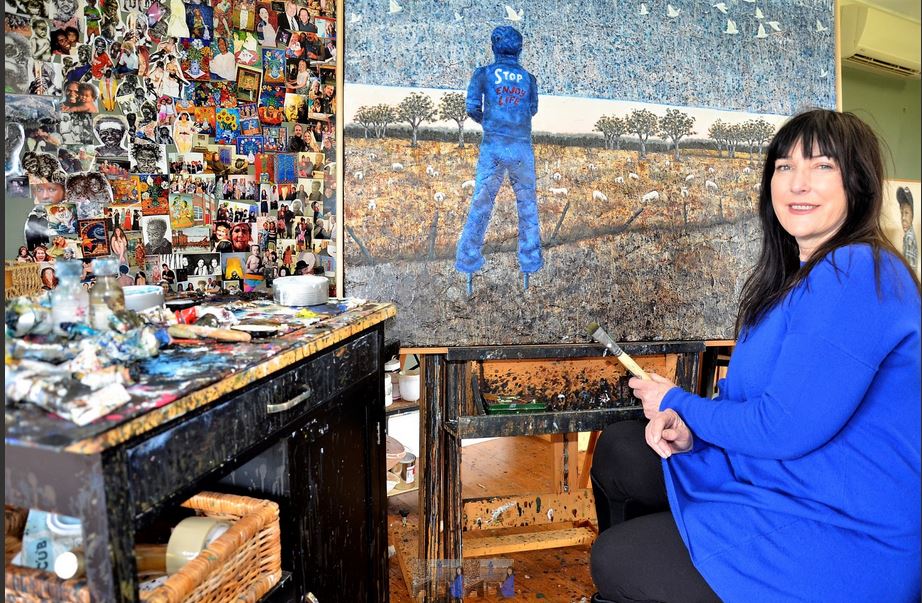
Rose Wilson’s prodigious artistic talent for creating captivating portraiture has seen her make the finals of some of the nation’s most prestigious arts awards including the Archibald Prize. This acclaimed Trentham artist is also renown for her impressionistic paintings paying homage to the natural environment and to the living creatures that inhabit it.
Eve: Hi Rose. When and how did you become aware that you have this wonderful capacity for creating art to which others respond strongly?
Rose: As a child I drew a lot, no different from most kids my age. But when I started getting paid with icy poles and vanilla slices for drawing other kids’ school projects I knew I was onto something. My fascination with the face and eyes started early as well. I was an average student so I’d doodle faces and eyes all the time especially during school. Unfortunately my passion for drawing was inhibited during high school and the thought of being an artist was a distant fantasy. I did what everyone else did back then, finish school and get a job.
Eve: What has your personal arts journey involved in terms of nurturing that innate talent?
Rose: My passion for art lay dormant for many years until I traveled to Italy to see the World Cup in 1991. Being a tourist I found myself visiting the Sistine Chapel. Once inside I found myself surrounded by magnificent frescos covering the chapel’s ceilings and massive religious paintings towering above me. I was in awe. Something was unleashed within me that day and that experience was the catalyst that paved the way for my artistic journey. When I returned to Sydney I enrolled in Darlinghurst Arts School and the rest is history. I travelled around Australia. I lived in Arnhem land. I studied at Darwin Uni and Newcastle, and then we moved here.
Eve: How do you happen to live at Trentham and how long have you had your home and studio here now?
Rose: My partner of 35 years is a pilot so we moved around the country a lot. We had a pact; we either live in the city or the country, but nothing in-between. After a two-year stint in an inner suburb of Melbourne, we decided to go country. We always thought we’d move again, but we fell in love with Trentham and its community. It’s been 20 years now and we are besotted with our little slice of paradise. Twelve years ago a group of like-minded local artists founded the Little Gallery, an artist-run space in Trentham that has been a wonderful addition to the town and is supported by all the locals.
Eve: Which artists have influenced your work?
Rose: My biggest influence was while living in east Arnhem Land. I would often sit with one of the elders from the Murrungun clan while he painted. He’d often tell the story of what he was painting, and I felt privileged to have had that opportunity. Frida Khalo was another, for her visual narrative and strong symbolism as well. Both artists had a major influence in my storytelling through art.
Eve: What is your media of choice?
Rose: Oil. When painting landscape I tend to under-paint with thick textured paint, and scrape back harshly so I need the paint to move slightly. With acrylic it is too hard. With portraiture I use my hands a lot to apply the paint. I’m sure it’s not good for me, but I’m still here and haven’t gone mad from pigments yet!
Eve: What are your subject matter of choice? Why so?
Rose: I flip between landscape and portraiture. I only started landscape when I moved here. The bush has a way of beckoning you, demanding you give it attention. Although my landscapes are more visceral and impressionistic in their execution, my portraits are more realistic as I try to capture the inner character of the sitter. They often demand more attention than the bush.
Eve: Have you ever worked in any other areas besides working as an artist, Rose?
Rose: I found my artistic vocation late. I was 28 when I visited Rome. Before then I worked in finance and sales, in the textile industry and consultancy of all things. I also wanted to become the next Prue Acton as I loved to design clothing. But pattern making did my head in so I dropped out of Tafe and went to Italy instead to see the soccer. Luckily I did as it changed my life! But perhaps it would have found a way to come back to me no matter what?
Eve: What are you working on at the moment?
Rose: I’m pushing my landscapes as far as I can, experimenting with different content and technique, as with my portraiture. My landscapes have been popular but I believe you need to challenge yourself. Painting the same thing over and over because there is a market for it may be great for the bank balance yet it’s appalling for the soul and I want to keep my soul intact.
Eve: What work, goals or projects do you have in mind for the future?
Rose: Portraiture is my first love and I will always continue to work on it and push it further. For years I worked monochromatically but now I’m enjoying new challenges especially using a coloured palette. I’d like to think painting in colour came naturally but there’s a technical side to it and I’m continually experimenting, and will continue to do so until I feel confident in that.
Eve: When you work in the studio do you like to play music and if so what is your music of choice?
Rose: I’m so, so eclectic. You could never tell my personality through my music. I play just about any genre yet sway towards the ‘70s, ‘80s and ‘90s, my era. The only thing I don’t listen to is Screamo.
Eve: To date, what have been your career highlights as an artist?
Rose: Being a finalist in the Archibald is right up there. That was a real hoot. I’ve been lucky enough to have been a finalist in many major portrait prizes, hopefully one day I’ll be the bride and not just the bridesmaid. Ha! It’s a tough gig, art competition, these days, with entries exceeding well over 1000 and I’m a realist. So if I never get into the Archibald again at least I can take solace that I did that once – in one of the biggest portraiture prizes in Australia.
The other highlight was painting the Disappearing Farmers Series highlighting the struggles of local farmers and how they are slowly diminishing. It first went to the MAMA gallery in Albury. It was nerve-racking to be exhibiting in my home town, but a proud moment for my family. The exhibition then came home to Trentham and was hosted at the Cosmo, the only place large enough to exhibit the 17 large paintings of farmers and their working dogs. It was attended by a ridiculous amount of people and the farmers felt like rock stars, rekindling the recognition they once had and deserved.
Eve: Do you have any exhibitions or special arts events coming up that you would like to let others know about?
Rose: The gallery that I’m affiliated with, Little Gallery, just had a very successful art fundraising exhibition called the Winter Show and we hope to do another exhibition for our Summer Show and invite artists to exhibit. So watch this space. I also will compete in various art prizes. It’s become a slight addiction, once you’ve been chosen as a finalist, but time restricts entering all the ones I want to.
Eve: What would you rate as the biggest challenges in being a professional working artist today?
Rose: The stigma around being an artist, and a female artist at that. It is often classified as just a hobby. It’s my life and my work. Finally, after painting for over 30 years, I’m gaining the rewards for my dedication. People often ask me ‘how long did that painting take?’ which pisses me off. But I answer, ‘mmmmm about a couple of days. But add 30 or so years on top of that’.
Another challenge is keeping the gallery afloat, especially through tough times. But fortunately it’s an artist-run space and it’s held together because of that. I’ve always said every town, no matter how small should have a gallery, not just to showcase local art, but to give a platform for country artists whom otherwise would find it difficult in the larger cities.
Eve: And, for you personally, the greatest rewards?
Rose: Personally for me, my art gives me great purpose and I can’t see my life without it. Even though I struggle with time and working in the studio is a luxury, once there I find it hard to leave. I get caught up with the moment, and I get totally lost in time. #
The greatest reward anyone can give me is when a viewer stands before a piece of art and they totally resinate with it and become emotionally moved by what they see, regardless if it’s mine or not. We paint and create to share our vision, our story and our love for the arts.
September 2nd, 2023Here’s cheers: Great times ahead at The Pig
Words and Images: Eve Lamb
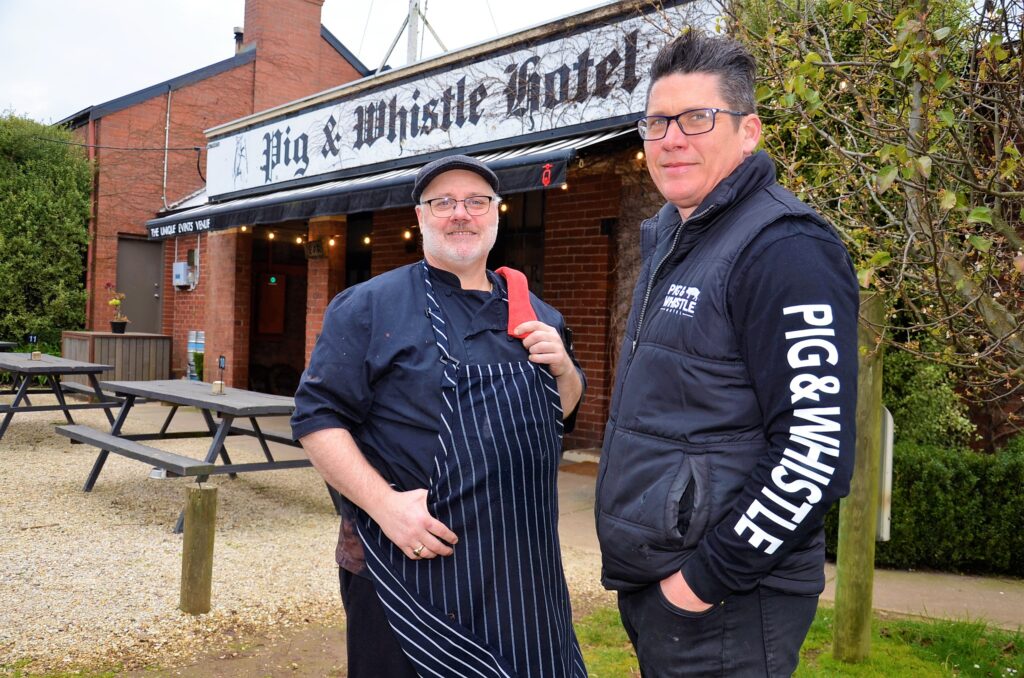
Eammon Hamilton was determined when he set about securing kitchen maestro Joel Reilly to be head chef at the Pig&Whistle.
“We’d been getting along here without a head chef for six months, just doing reliable pub fare, and I was looking for just the right person,” says Eammon, owner-manager at the Trentham East landmark.
The historic hotel dates all the way back to 1866, and after a colourful past, reopened 18 months ago under its current management.
Since then The Pig, as it’s lovingly known by many locals, began building an impressive legion of dining devotees.
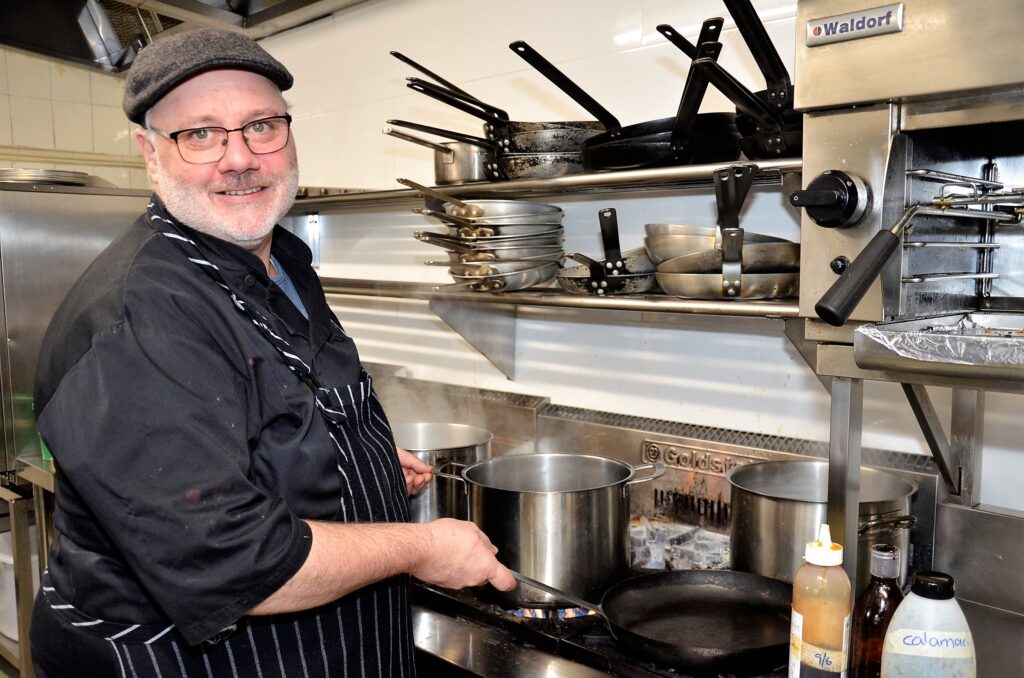
But since Joel accepted the role of head chef back in May, the Pig & Whistle Hotel Restaurant’s reputation as a must-do dining experience has ratcheted up a whole new level, with the formerly-Melbourne-based chef bringing his 27 years of cooking experience to lead the kitchen team.
“I had the pleasure of working with Joel in Melbourne in another hospitality venture for nearly 15 years, so I’d been slowly twisting Joel’s arm and enticing him with an opportunity in the country and eventually he kind of gave in,” Eammon recounts.
“We worked together for quite some time doing events at a place called Red Scooter Unique Events in Balaclava,” Joel says.
“And before that I was at Hotel Comme for a couple of years doing events. When I first arrived in Melbourne I worked at Marchetti’s Tuscan Grill. I worked at Matteo’s for a couple of years, and I worked at Cecconi’s at Crown Casino.
“So I had quite an Italian influence but I had also dabbled in other cultures and cuisines, a lot of work catering for large events and functions.”
Designing the Pig &Whistle new spring menu with a practiced eye to both seasonality and variety, Joel says taking note of what customers want is the main factor guiding his menu planning.
“You’ve got to cater for your clientele, working out what they like and what they want and catering towards that,” Joel says.
“My specials are my sounding board to find out what people like.
“The main focus here is still to provide good quality, wholesome pub food, but then I like to mix it up with weekly specials that will be from different cultures and different parts of the world, mostly to keep the locals entertained and interested.”
In a society full of special dietary needs it’s important to note that the Pig & Whistle caters for things like gluten intolerance, vegan and vegetarianism.
“We have a couple of vegan dishes on the menu and I’m hoping to run at least one vegan special every week,” Joel says.
“With our fryers we keep one completely gluten free and we maintain a lot of our products as gluten free so we’re utilising things like potato starch and rice flour.”
The wine list showcases many of the local wineries that the region boasts. But among all that is trendy and top shelf, the old favs still go down a treat and the management at this venue is noticing.
“A Carlton Draught and a parmi is still our number one selling product so it doesn’t matter how fancy you get,” Eammon says.
“We analyse the data a lot so we’re really looking at what’s selling.”
Working alongside Head Chef Joel, the kitchen crew currently includes three other full-time chefs, three part-time cooking staff and three additional staff, and the focus is on attracting and retaining top staff.
With this in mind, they’re building a brand new kitchen space adjoining the existing kitchen to improve both amenity for staff and work flow.
“We have used Tony Schindler Consulting. (Tony) is a chef but now specialises in commercial kitchen construction,” Eammon says.
The new kitchen is scheduled for completion in the next couple of months and complements the venue’s expanding capacity to cater for larger functions.
The rear beer garden is already an alfresco treat on warmer days and evenings, perfect for parties and functions, or simply kicking back to share quality times with friends.
All this is soon to be expanded upon further with the acquisition of an adjoining 0.7 acre parcel of land to accommodate more car parking, and to develop an onsite kitchen garden. Good times ahead look likely.

August 19th, 2023That’s a lot of bull!
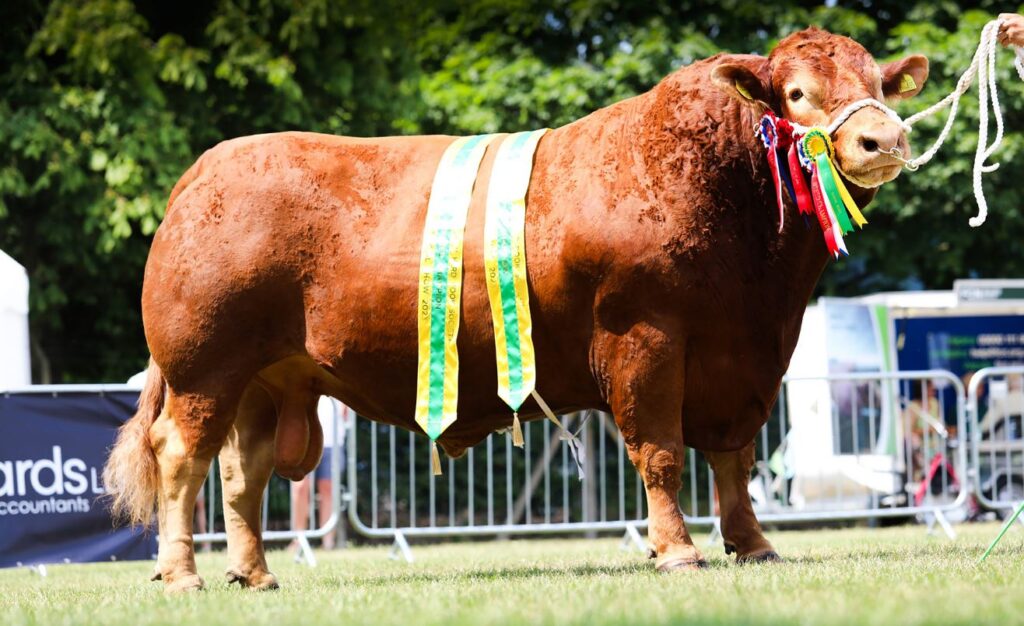
Trentham’s John and Sue Harvey, on the cusp of their retirement, are delighted with the recent news that a son of their bull Torr Down Marvel 3, AI Z Providence Dr Octopus (pictured above) has won Supreme Exhibit and South Devon Breed Champion at the UK National Show.
Dr Octopus, named after a Marvel cartoon character, is owned by the Tucker family of West Prawle Farm, East Portlemouth, South Devon. Sue said she and John wanted to take the opportunity to thank past and recent clients for their faith in the Torr Down bloodlines and wish them all the very best with their future breeding “while enjoying the many wonderful attributes of the South Devon, and meeting and making new friends along the way, as we have done”.
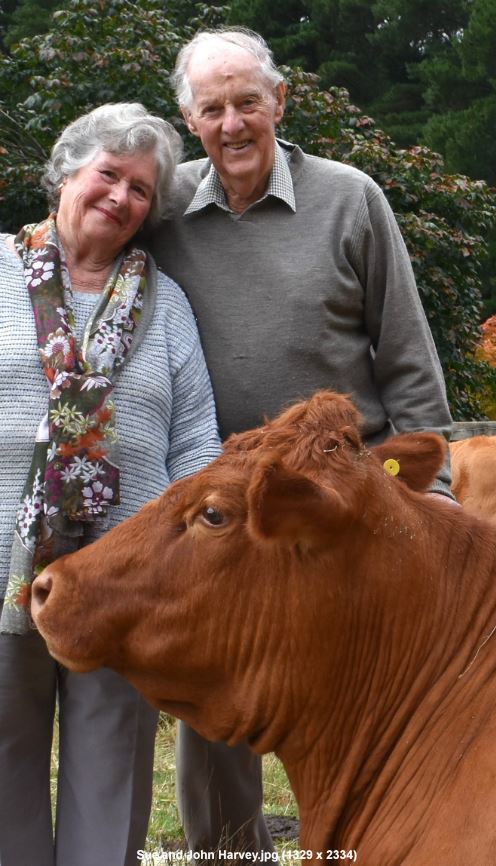
“With gratitude to our lovely cattle we will miss you, and bless you for a memorable lifetime. It has been an interesting and wonderful ride.”

August 5th, 2023Your say…
RE Just Sayin’… – July 3, 2023 Issue 283
I enjoy and appreciate The Local, thank you for providing this free publication. I look forward to getting to the back pages of The Local so that I can be annoyed or buoyed by Kyle’s rant, and entertained, informed and at times provoked by your Just Sayin’… column.
In this issue I was deeply disappointed. You wrote that you don’t know enough about the Voice, and you say the answer to the referendum question should of course be Yes, yet you advise voting No, based on not enough information.
I wonder how much detail the general public have been given in past for constitutional change? This is the first time First Nations people will be enshrined in our constitution and yet you advise to continue to wait? I’m not sure exactly what detail you want?
It is intensely upsetting that you echo and amplify Peter Dutton’s very loud and very privileged arguments, someone who has done nothing significant to improve the lives of Aboriginal people.
I’m not a First Nations person, but white people stole their lands, killed Aboriginal people, stole children and ruined their culture and now prevaricate about ‘letting’ them have a voice, when we are the ones on stolen lands. Enough information is out there to start the process, and the referendum is just the first step in the process.
I’m really upset that you are in a position of influence and are advising readers to vote no, whilst also saying you don’t know enough. Read The Voice To Parliament handbook, listen to podcasts, talk to First Nations people.
Are you hearing the voices of Aboriginal people? Are we used to being in a position of power and not able to see how truly devastating this would be if we voted against the referendum? If people vote ‘no’ then governments will think they have the authority to continue to do nothing of consequence, and nothing will change and nothing will improve the lives of Aboriginal people. Nothing.
From: Mez Lanigan, Trentham
(Ed’s note: For the record, I said the vote should be yes but I fear it will be no. Not to vote no.)
Letters and musings are always welcome. Email news@tlnews.com.au
Any addressed Dear Sir will be deleted – you know why 🙂

August 4th, 2023Sharing your stories …
with Simone Kaplan
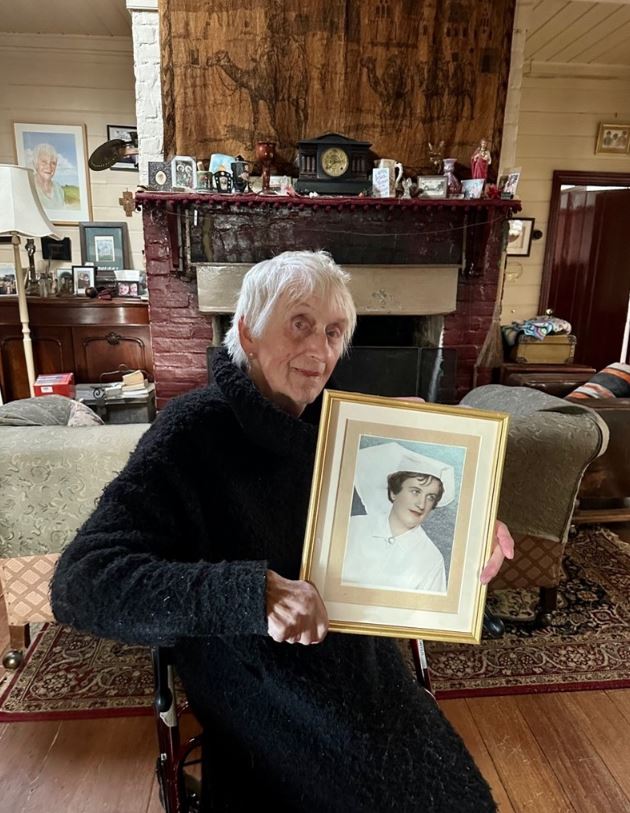
TRENTHAM’S Mary Walsh describes herself as a simple Irish girl, from a farming family, in Brideswell. She doesn’t like talking about herself and her mum used to say “self praise is no praise”. Even still, we had so much to talk about and the essence and wisdom of Mary Walsh was abundant.
Mary, 90, and a mother of nine and grandmother of 21, lives in the Walsh family
home on Railway Farm, built by her late husband Tom’s grandfather. After marrying
Tom in 1963, Mary moved into the house and they were happily married for 60 years
until his passing in 2018.
Mary possessed a unique sense of confidence and independence as a young woman, long before the feminist movement gained momentum.
Mary was inspired by her neighbours who were doctors. Although she couldn’tpursue medicine, she saw nursing as the next best thing. She studied nursing in Manchester, England and then went on to study midwifery in Winchester.
Although Mary’s parents would have loved for her to continue farming on their property, Mary had a drive for adventure and persisted with her dream.
After nursing studies, Mary’s peers were all travelling abroad to work. Mary applied for a job at the old Kyneton Hospital and after six weeks travel by ship, landed in her new town. Mary loved Australia and appreciated the lifestyle, job opportunities and wonderful people.
She started her career as a midwife bringing babies into the world and completed her nursing years working in palliative care – the full life cycle. Her favourite was caring and looking after the dying – she called it “soul work”. For her, providing a friendly touch and giving hope was incredibly rewarding. Mary’s faith, believing in the hereafter, assisted with this and gave her an inner strength.
During her early career, as a curious young woman, Mary also took opportunity to join the Flying Doctors in Queensland for seven months or so, when she was 23 years old. She describes it as “quite an experience”. And if it was a different time, Mary would have gone back to study as a mature age student and complete medicine.
Mary loves drumming up a conversation up with anyone in Trentham, always opening with “Do you live in Trentham?” – getting to know locals and tourists alike.
She fondly recalls a lovely encounter when she missed a train in Woodend one day, making a lifelong new friend.
Mary’s attention to detail of people’s names is remarkable, even at 90 years young. She has the art of making people feel special by showing genuine interest in them and their stories.
Mary appreciates her upbringing and feels her Irish values were a beautiful foundation on which she launched. In her “old fashioned village”, her mother always encouraged visiting people for a cup of tea. And Mary loves it when people pop around without rushing. “People don’t do this enough anymore.”
Being friendly, welcoming and having a warm house was central to life. Her heritage instilled you “can’t go with your hands by your sides” – always remembering to take something and not go empty handed to visit someone.
After returning to Ireland for a visit after 20 years away, Mary remembers the traditional food – bacon, cabbage and potato – and recalls how much she loved it.
“Nobody cooks like that.”
Mary’s late husband brought into the house Irish music and philosophy. Mary enjoyed and encouraged this, even though she says she’s not musical herself.
Mary met Tom at a dance in Kyneton. Although they connected and he showed interest, Mary had the opportunity to go on a work adventure and did this before reuniting and getting married.
Mary describes Tom as kind, very special, a gentle soul and a farmer. She loved their time relaxing around their farm kitchen, dirty boots and all.
They did some travelling and Mary really appreciates how Tom organised these trips. She feels her strengths lie in the kitchen at home where “meals are important”.
Like any relationship, the marriage wasn’t all rosy “hills and winds” but the values of empathy, patience, communication and being serious and committed, allowed them 60 years of fond memories. Mary states it was a “joy looking after Tom” when he was unwell with osteo-arthritis after knee surgery. He died at home with her.
Tom and Mary tried to give the kids every opportunity during their childhood. They worked very hard and were social. They would sit in their “big room” lounge around the fire and enjoy music with lots of people.
There were usually at least five kids home at any one time. Some were at boarding school and the other children visited aunts and friends for the holidays.
When the kids were young Mary had a lovely woman who helped the busy household. The kids’ school friends and acquaintances were always welcome if they didn’t have anywhere to stay. It really was a welcome place.
“I always loved entertaining, cooking and gardening. Taking time to set the table nicely. People are my forte, they are everything.”
Mary says ageing is teaching her “acceptance”. Back issues are getting in the way now but she has “to accept my lot”. She has learnt with age, to accept others’ hospitality, something which she found difficult when younger. She loves the odd overnight stay with friends and appreciates being taken care of so well.
Sitting in the sun in the garden is also lovely on a sunny Trentham day, Mary says. Her passion in life remains offering help to others, being generous and caring. Smiles, Mary says, are important. “They light you up and show people you are friendly and warm. I love being greeted by a smile.”
Take homes from Mary: A cup of tea breaks down everything; Be yourself; Be grateful for the
small things; Get into people’s hearts; Always say nice things; It’s about the people and
places; and Deal with things as they come.
Writer Simone Kaplan wants to hear and share stories of love and connection, accomplishment and meaning and death and loss. “I’m always curious about people and love getting to know their stories. The region seems to attract people with such a wealth of knowledge, experience and backgrounds and I’m excited to have a cup of tea and a chat with some locals to hear their story.”
Email contact@simonekaplan.com.au

July 9th, 2023Big show coming up for Little Gallery
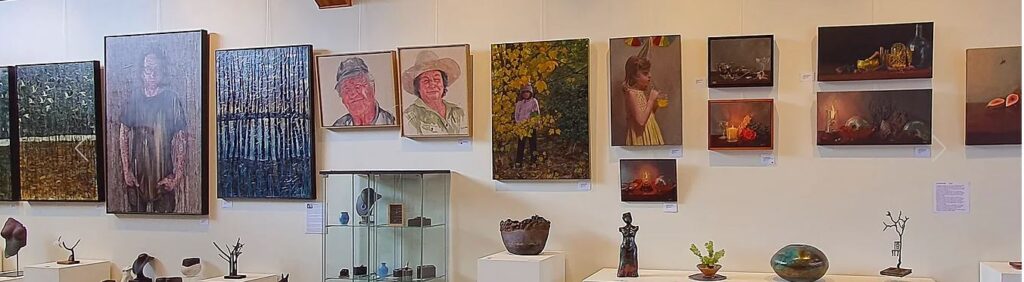
The Little Gallery in Trentham is no stranger to fundraising as over the past 11 years of its existence it has donated proceeds from its many exhibitions to local charities and interstate communities in need.
Rose Wilson, one of the founding artists says: “Fundraising is the core of the Little Gallery’s philosophy and partly its success as a small regional gallery by way of giving back to an ever-supportive community.”
The proceeds from this year’s annual Winter Show will be donated to Trentham’s Neighbourhood Centre, the central hub of Trentham’s community. The centre is vital for a small rural community as a place for connection and offers a variety of programs and facilities for all age groups.
Along with the fundraising element, the Winter Show offers 16 invited artists a platform to exhibit locally. It is a much anticipated event that gallery patrons, locals and art collectors look forward to every year and attracts many visitors to the gallery and the town during the colder months. The exhibition comprises emerging and high profile prominent regional artists and offers a diversity of works.
Alongside Little Gallery resident artists Rose Wilson, Helen Cottle, Ri Van Veen, Kim Haughie and Larissa Gray, this year’s show will feature artworks from Mike Portley, Freya Maclaren, Gayle Cykner, Louise Otten, Julie Coyle, Lawrence Finn, Garth Henderson, Jimmy Rix, Emma Jimson, Maria Coyle, Trefor Prest, Jordan
Koster, Ahmet Kandemir, Janae Paquin-Bowden, Helen McRae and Deanne Gilson.
The Winter Show will also offer an art raffle with full proceeds going to the charity. The Winter Show raffle has become a popular chance to win artwork donated by the Little Gallery collective and other prizes donated by the community.
The generous donation of an historical Joseph Banks framed print, donated by Curtis and the late Jim Sinatra will also be on offer. Jim Sinatra was a widely respected designer, author and educator and a great supporter of the Little Gallery who sadly passed in May. The Winter Show 2023 will be held in honour of Jim’s generosity and contribution in support of the arts. Multi-award-winning, locally-based director of
theatre, musicals and opera, Simon Phillips will officially open the show.
The opening night is Friday, July 14 from 5.30pm to 7.30pm, with the show running until July 31.
Link: www.trenthamlittlegallery.com
May 31st, 2023Trentham’s Path of Horse to share in veteran projects funding
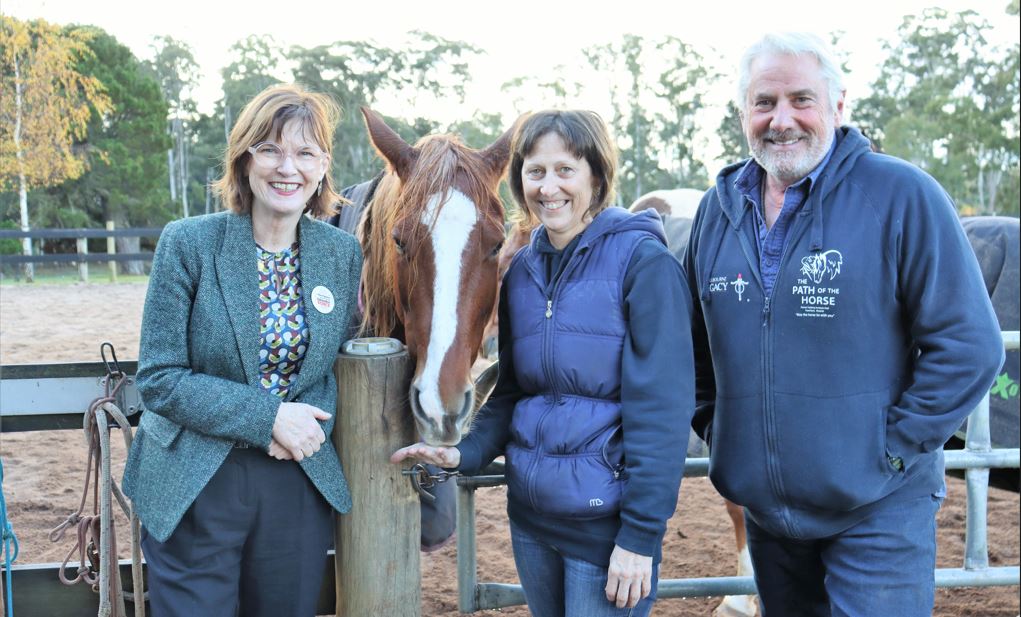
Unique Trentham business Path of The Horse is among those to benefit after the state government announced more than $1.4 million in funding for 55 projects offering practical support for the veteran community, statewide.
The funding, announced last week, is being distributed through three grant programs focused on veterans and their families.
Mary-Anne Thomas MP said she was proud that the following projects will each receive a $50,000 grant:
Path of the Horse, Main Arena Shed Building Project: Under the Veterans Capital Works Program, Path of the Horse in Trentham will increase the use of their existing facilities so that they can assist more Veterans and their families year-round, by establishing a covered area away from the existing arena. This will ensure they can work with multiple clients whilst maintaining privacy.
Riddells Creek Primary School and the Riddells Creek Lions Club: The Riddells Creek War Memorial.
The Riddells Creek War Memorial was installed in 1950 with a plaque detailing those who died in
WWII. It was opened by Sir Edmund Herring. It is the town’s sole war memorial. In 2000 the gates
were hit by a vehicle and were badly damaged. This application seeks to repair the gates, the
bluestone pillars and fence.
Across Victoria, there are a total of 31 projects receiving funding through the Veterans Capital Works
Grant Program, which funds facility upgrades of up to $50,000 for not-for-profit and ex-service organisations.
Another 13 organisations are sharing in more than $324,000 of funding through the Restoring
Community War Memorials and Avenues of Honour Grant Program, which funds projects that
restore or improve war memorials, honour rolls and avenues of honour across our state.
There are also 11 organisations across the state receiving funding through the Victoria Remembers
Grant Program, which provides grants of up to $30,000 for projects commemorating veterans’
service or educating Victorians about the contributions that veterans and their families have made.
Applications for Victoria Remembers are assessed by the Victorian Veterans Council, an independent
body that provides advice to the Government on issues affecting the Victorian veteran community.
Mary-Anne Thomas, Member for Macedon: “This funding will help ensure we continue to honour the service and sacrifice of the veteran community in Macedon. I commend the Path of the Horse in Trentham and the Riddells Creek Lions Club and primary school, for their important work across our community.”

April 28th, 2023Artists of the Central Highlands
with Eve Lamb
TRENTHAM’S Morag Turner hails originally from Lanarkshire, Scotland and it was her love of art that led to her completing a degree in textile design which then led to her moving to Australia. Today she’s inspired by the landscape and natural beauty she sees around her. But this well-established local artist is equally at home turning her talent to life drawing and portraiture, and to realism or abstractionism.
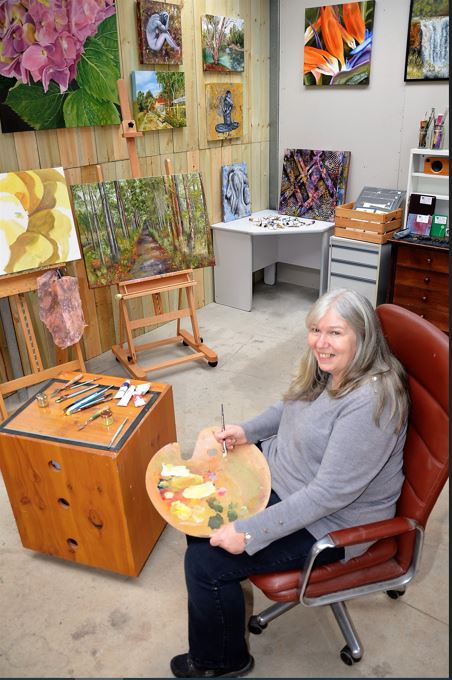
Eve: How do you describe your artistic style?
Morag: I work mainly in artistic realism, without trying to be photographic. I also
do abstract, life drawing and have been practising pencil portraits.
Eve: How did you come to art?
Morag: As a child I loved creating and drawing. I won art prizes at school. I
got my degree in textile design and built a career. That’s what got me to Australia.
It was a desired profession. I didn’t practice art for over 25 years. Life got in the
way, immigrating three times, being a working mum and a marriage break-up. The
kids flew the nest and I got remarried. My husband is extremely supportive and
encouraging. He is building me a studio and comes to all the exhibitions I enjoy
when travelling.
Eve: Which artists have influenced your work?
Morag: Dali’s imagination and drawing skill and Van Gogh’s use of colour and
movement. Like Monet, I use my garden as an endless source of subjects. I was lucky
enough to visit his gardens in Giverny and stood under the wisteria on the bridge
over the lily pond. A very special moment.
Melbourne artist Paul Borg taught me a lot when I attended his art school. One
of the reasons we moved to Trentham was because of the art in the area. I am now
privileged to be part of a local life drawing group. I draw alongside very inspirational
artists Rose Wilson, Helen Cottle and Louise Otten. Great artists and lovely people.
Eve: What is your medium of choice?
Morag: Traditionally I’ve used watercolour, but more recently I love painting with
oils and drawing with graphite. My dad always wanted me to use oils like he did, but
I preferred watercolour.
On holiday here 10 years ago he left his oil paints behind and gave me a quick
rundown before leaving for Scotland. My husband gifted me lessons with Paul Borg
and I have never looked back. I like to experiment with different mediums in travel
sketchbooks.
Eve: What is your subject matter of choice?
Morag: Nature, flowers, trees, landscape and the human form. Nature is so varied.
No two trees are the same. I love drawing the human form as it’s so unique.
Eve: Have you ever worked in any other area besides your arts practice?
Morag: Yes, I’m a public servant. I work full-time. Roll on retirement.
Eve: What are you working on at the moment in your current arts practice?
Morag: I am putting together a collection of flowers. I am playing with the
composition and using close-ups to give a different aspect, making the subject not
obvious at first glance.
Eve: Do you like to play music when you create your art?
Morag: I like to listen to gentle, but not elevator, music. My own playlist or
Spotify café list.
Eve: To date, what have been your career highlights as an artist?
Morag: Selling paintings. It’s a thrill when somebody wants my artwork in their
home.
Eve: Do you have any exhibitions or special arts events coming up?
Morag: We are in the process of renovating my studio. I am planning an open
studio for the Melbourne Cup weekend. I am considering an exhibition in a local
gallery.
Eve: What do you think are the main challenges for practicing artists today?
Morag: The digital world. Photography, photoshop, CAD. Look what has
happened to animation. Computers have taken over people skills.
Eve: And the rewards?
Morag: I find art relaxing and de-stressing. I appreciate that many of the
traditions in the art world no longer exist. I enjoy working from photographs. I
experiment with mixing mediums – unlike the impressionists who were shunned for
being different.