May 6th, 2026WWII: A story of death, survival and life…

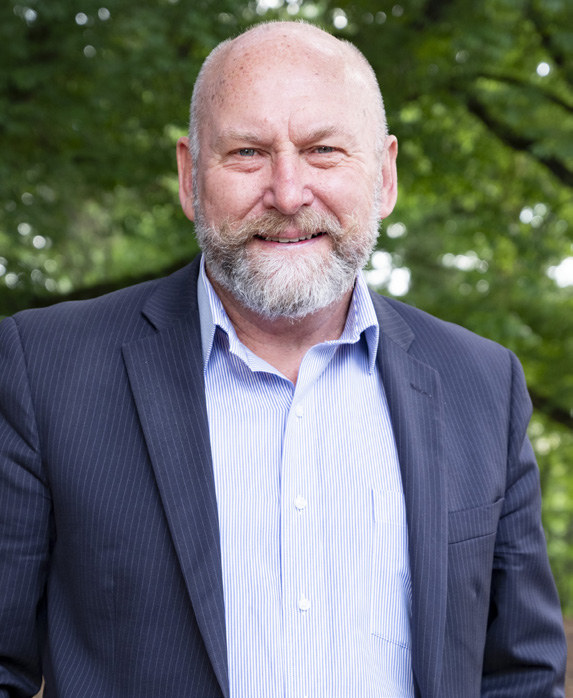
Sometime this year, a memorial service for Thomas Burrowes will be held, 83 years after his death. Tom was a wireless operator and air gunner on the Beaufort Bomber A9-211, when it was hit during a bombing mission to Rabaul during World War II on December 14, 1943. It was his first, and only, mission. Tom was 20. Of 10 aircraft to fly out on that mission, only one went down. Among those attending the service will be Daylesford couple Robert Burrowes and Anita McKone – and many other family members. Robert is Tom’s nephew, pictured. Sadly, his father, and Tom’s twin, Jim, died in July, 2024 at the age of 101, always wondering what happened to his brother. Worse, Tom was not the only member of the family to die during the war. Robert takes up the story with Donna Kelly.

“My father was born in 1923, he was a twin, and he grew up through the Depression, a pretty tough time as you can imagine, like it was for everyone in that era.
But then of course war broke out in Europe in 1939 and came to Australia in January 1942, a few weeks after the Japanese attacked Pearl Harbor.
Some months previously, Dad’s older brother volunteered, his name was Bob, and he’s the uncle I’m named after. Bob ended up in the 34th Fortress Engineers, deployed to Rabaul as part of Lark Force to put guns up at Praed Point to defend the entrance to Rabaul Harbour, or Simpson Harbour as it’s called in Rabaul.
Dad’s twin brother, Tom, had been an RAAF cadet from the age of about 16 so once the war started in the Pacific, he joined up but couldn’t become a pilot because he had rheumatic fever as a kid, but he was happy to be a wireless air gunner.
Not long after that, Dad had been looking after his mum and the family but he joined as well He said you went down to the barracks and they said if you’re a schoolteacher, an office worker…put up your hand. A few of them put their hands up, and the rest were infantry.
Dad ended up learning wireless and became a coastwatcher. So you’ve got these three brothers, and they’re all sent up to PNG rather than Europe, because at that stage the Japanese were working their way down the islands, the Philippines and Singapore.
Bob, the older brother, was in Rabaul on the morning the Japanese invaded, which was overnight on January 21, 1942.
Unfortunately, the commanding officer had given the order to make your own way, every man for himself type of thing, which wasn’t very good because there wasn’t any planning at all for the contingency.
It was an overwhelming Japanese force, and they came into Rabaul Harbour, and Bob, pictured below, was captured at Kokopo just out of Rabaul. He was imprisoned at the Malaguna Road Camp in Rabaul for about five months before being put on the Montevideo Maru, which was a Japanese POW ship that had come in to take prisoners back to Japan.

That ship was sunk. The Americans didn’t know it was a POW ship, and they torpedoed it, 1053 POWs and civilians were lost. It’s always been Australia’s greatest maritime tragedy, and it was a friendly fire, as they call it.
For three years the family wondered what had happened to Bob because there was nothing definite. It was not until after the war they found out.
Then on April 18, 2023, a search party combed the South China Sea out of Luzon and finally found the wreck in 4000 metres of water. All those men were in their graves at the bottom of the sea.
Dad’s twin brother Tom was doing his Air Force training and ended up being deployed to Goodenough Island, which is just off the south coast of PNG.
He was deployed for his very first mission on December 14, 1943, and the family’s got a coded letter he wrote that day, saying he was finally going on a flight. One got shot down of the 10 planes, it was the one my uncle was on.
The family was advised he was missing in action.
Dad had been deployed various places but ended up in the Banning Mountains sending back intelligence on radio about what the Japanese were doing in Rabaul.

For example, warning headquarters in Port Moresby or other coastwatching parties of Japanese aircraft and shipping movements.
The irony is he was overlooking Rabaul, and the place his twin brother had crashed years before was the Banning Mountains.
Dad was there for 10 months right until the end of the war and he’d sought permission from his superior officers to go into Rabaul and look for evidence of his brothers. His superior officer said it was just too dangerous.
He finally came back from the war, while he was away his father had died, and Dad headed straight to Bendigo because that’s where his older sister was having a baby. But he was just hours too late.
She died in childbirth, and so did the baby. He’d gone to war, with a family of seven, and came back to a family of three.
And then he waited 80 years for news in the case of the Montevideo Maru – we found out on 18 April 18, 2023 where it was. It’s not a big deal in a sense, but it’s funny what closure means.
Dad, who was a very successful business man, died on July 7, 2024. By 2021 we knew they’d found another Beaufort in PNG but with Covid and other things, there was a bit of a delay in checking out the site.
It wasn’t until last year they finally got a team up there in October and I got a call on December 6 from a flight lieutenant who asked me lots of questions, and about a week later, I got a phone call from Captain Grant Kelly, the head of Historic Unrecovered War Casualties of the RAAF.
He said he was ringing to officially inform me on behalf of the Royal Australian Air Force they have found my uncle’s plane. They’d found the compliance plate of the plane’s manufacture date.
Dad was the last living coastwatcher, one of the older World War II vets still alive because he was so young when he joined the war. And he was one of the last coastwatchers who played such a crucial role. US Admiral Bull Halsey said the coastwatchers saved Guadalcanal and Guadalcanal saved the South Pacific. You don’t get too many higher accolades than that.
The tragedy is Dad waited all his life to find out about his twin. Hopefully Dad and his brothers are up there having a good yarn.”

From top, Thomas Burrowes, wireless operator and air gunner on the Beaufort Bomber A9-211, the compliance plate of the plane’s manufacture date, Bob Burrowes – Tom’s older brother, Jim at
Box Hill Cenotaph, and Robert Burrowes and Anita McKone – also volunteers at Rea-Lands Park in Daylesford
Images: contributed
thelastcoastwatcher.wordpress.com