November 18th, 2025AusNet vs. Farmers: All about staying power


AusNet
AusNet’s Western Renewables Link project has committed $55 million to deliver what it calls lasting benefits to regional communities along the proposed 190-kilometre route of the 500kV transmission line, from Bulgana to Sydenham.

The money will recognise the role of communities in enabling Victoria’s transition to renewable energy.
Of this, $15 million has already been made available during the development phase in response to community feedback calling for earlier benefits. The remaining $40 million will be delivered if the project is approved and proceeds to construction.
Of the $55 million commitment, $30 million will fund community partnerships and investments in projects such as renewable energy upgrades, improved mobile phone connectivity and new community infrastructure.
Through this early funding the project has partnered with local groups to identify and plan community-led projects, including a new safe and modern playground at Waubra and funding for solar panels and batteries to be installed at key community sites in western Victoria, improving community energy resilience, reliability and reducing power bills. $4 million has been allocated to a Local Grants Fund to support community-led initiatives.
$25 million will be provided to deliver a co-designed Community Benefit Fund if the project is approved, with decisions as to how the funding is allocated to be made by the community.
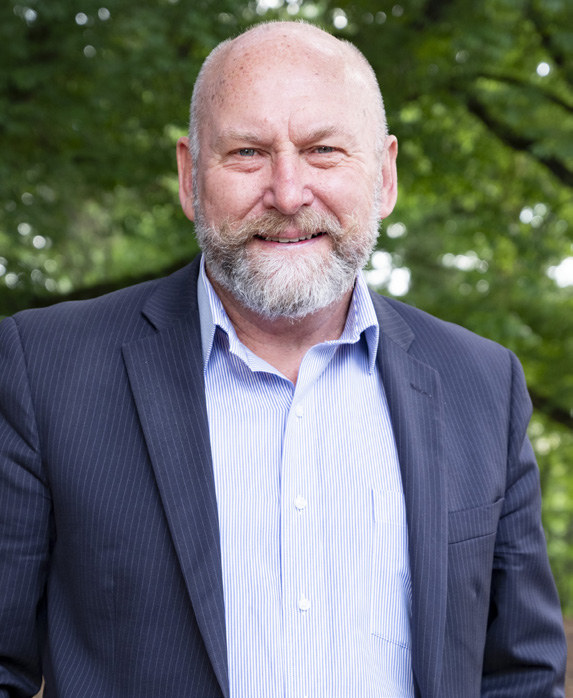
Gerard Carew, AusNet General Manager, Major Projects and lead for the Western Renewables Link project, said the funding package followed strong community feedback emphasising the importance of delivering early benefits.
“A reliable energy system is essential for all Victorians and the Western Renewables Link will play a critical role in securing our energy future. The communities that host this vital infrastructure are at the heart of making it possible and will see new investment, funding and job opportunities as part of this once-in-a-generation change.
“The WRL Benefit Sharing Program is designed to support the essential role communities play in delivering this transformative project. It will back local projects, improve public infrastructure and invest in First Nations initiatives, creating meaningful impact and lasting positive legacies.”
The funding is in addition to the Voluntary Hosting Benefit for landowners of $46,000 per hectare of easement hosted on their properties. The hosting benefit recognises the critical role that host landholders play in the energy transition and is in addition to the $8000 per kilometre per year for 25 years (indexed to CPI) transmission line hosting payment announced by the state government in 2023.
These payments are also separate from the legally required compensation for host landowners, which ensures they are fully compensated for any impacts to their properties and farming operations.
There is also a landmark Near Neighbour Benefit Program where neighbouring landowners with a place of residence within one kilometre of the proposed easement may be eligible for a one-off payment of $20,000 or $40,000, depending on proximity to the edge of the easement.
The Western Renewables Link’s Environment Effects Statement and community submissions are currently being examined by an independent public panel.
Farmers
Chatting with Piss Off AusNet Facebook page moderator Will Elsworth is a bit like reliving the much-loved story of The Castle.
But rather than wanting to build a bigger airport, the government wants to pay farmers to have huge powerlines placed on their properties. Like The Castle, they have the money, and probably the law on their side but the vibe is all wrong.
Will says the wrong piece of land was chosen for the project but it was chosen for a reason.
“They just drew a line on the map and they said ‘oh, yeah, it’s not near Ballarat, there’s only a few houses there. Those people, they’re a pushover, they will roll over.’
“So they have straight away insulted people. A lot of farmers have been there for five or six generations and their houses are never to be sold.
“They (the homes) have real signifiance to the family. It’s not the money, they’ll just never sell. And the politicians and AusNet people don’t understand that. They think they can just put a figure on it, but there’s no figure.”
Will said the longer the project took to get off the ground, the more it was becoming “a complete and utter joke”.
“It’s going to destroy some of the best farmland in southern Australia. It’s going to destroy some of the best habitats in southern Australia. If the powerlines go through you can’t irrigate those paddocks, so they become worthless in terms of horticulture. And if you rip down trees and disturb them to put up wind and solar and batteries and transmission lines – that’s not green.”
Will said the farmers were now being told they could be fined if they refused consultations but “nothing’s changed”. “The gates are still locked. They’re not coming in. They can threaten all they like and they can jump up and down like a spoiled brat. But it’ll take five years through the courts to get to the front gate and they know it well.
“Then they’re going to demand to come into our places. Well, we all know how that unfolds in a socialist economy. The people revolt.
“And people have had enough of this crap. All we want is to be left in peace and not be taken for a ride and the people are getting taken for a ride.
“The reason they haven’t got anywhere is because the people, they’re not going to be rolled over and bullshitted to. It’s got nothing to do with money.”
Hepburn Shire Council
CEO Bradley Thomas said since 2021, the council had been in strong opposition to the project due to its route, above-ground configuration and the devastating effect it would have on Hepburn Shire, and farming and wider communities.

“Council had legal representation at recent hearings and has been cross-examining Ausnet’s various expert witnesses. The Minister for Planning has appointed a joint Inquiry and Advisory Committee to advise the Minister on the environmental effects of the proposed Western Renewables Link Project. The Minister will make the final decision on the project, which may be around the middle of 2026. Our submission to the committee will commence on December 8, and will include expert witnesses on the topics of agriculture, tourism, visual impact, and undergrounding.”
Words & Piss Off AusNet image: Donna Kelly
Above left image: www.ausnetservices.com.au