October 10th, 2026Concern over Hepburn Shire Council finances

Hepburn Shire Council has an independent review of the 10-year Long Term Financial Plan underway with the second part of the review taking a detailed approach to developing fresh key financial sustainability assumptions to underpin a revised Long Term Financial Plan.
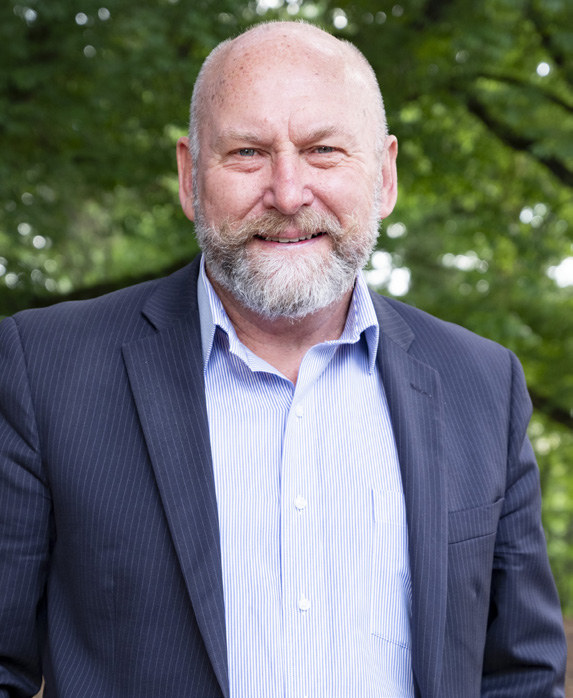
However, Cr Brian Hood said the LTFP, first developed in 2024, was used when developing the 2026/27 budget but many aspects were now out of date.
“The report noted that Hepburn is below average on most metrics in comparison to like councils. The key challenges that Hepburn faces include low levels of cash, lower than average spending on asset renewal and upgrade, high outstanding rate debtors, low revenue levels due to low fees and an operational net surplus below the average for the group.
“Cashflows are constrained and underlying deficits continue to be incurred and are forecast to continue into the future. If council is to be financially sustainable, costs must be reduced, new revenue streams identified, capital works programs reduced and cashflows improved.”
Cr Hood also spoke on a report to the September council meeting on unpaid rates. “I moved a motion that council brings forward a review of its Revenue Collection and Financial Hardship Policy, which is to be informed by community input, with the objectives of supporting community members who may be experiencing financial hardship and improving cash flows through appropriate payment plans and tailored assistance.
“The review is in response to the ongoing challenge in collecting rate revenue in a timely manner. Unpaid rates were approaching $6m at June 30, 2026 and that balance has grown steadily over recent years.
“With over 1000 residential ratepayers overdue, that outstanding balance represents over 20 per cent of council’s annual rate revenue. This is a serious concern from two standpoints.
“Firstly, some community members must be experiencing genuine financial hardship and, secondly, council as an organisation is impeded in its service delivery and capital works program through constrained cashflows. It is of significant concern that only around 200 of 8100 residential rate-paying properties are benefiting from payment arrangements or provisions of the hardship policy.
“This creates the extra burden of penalty interest charges and highlights the urgency in reviewing the collection policy and procedures.”
Cr Hood urged any ratepayer experiencing difficulties in paying rates on time to contact the council to discuss an appropriate payment arrangement to negate the application of penalty interest charges.
The meeting also included a report comparing the council’s unaudited financial results with the budget for the 2025/26 financial year.
Cr Hood said the audit work was underway and not expected to cause any material changes to the draft financial statements which have disclosed a number of unfavourable outcomes.
“In comparison to a budgeted surplus of $0.5m the actual result is expected to be an underlying deficit of $3m. (As well) unrestricted cash finished the year at negative $6m – a very long way from the budgeted positive balance of $0.4m.
“Capital works expenditure totalled $9.7m, well short of the budgeted $15.4m, with obvious implications for the timely delivery of commitments made in the budget and Council Plan.
“The single largest item explaining that underspend was the grant-funded road safety program of $2m but those works are expected to be carried out in 2026/27. Cash at June 2026 was $2.1m less than the assumption underpinning the 2026/27 budget’s opening position.
“All of these adverse results accentuate the need for an urgent review of the (recently adopted) 2026/27 budget.”
Words: Donna Kelly | Image: Contributed